Another Way to Open Dali: Finding Your Own "Heart Blossom Road" by Erhai Lake

Another Way to Open Dali: Finding Your Own "Heart Blossom Road" by Erhai Lake
A friend sent me a photo: crystal-blue water, white clouds reflected on the surface, and the Cangshan Mountains in the distance, dark and misty like an ink painting. She asked me if it was Saipan or the Maldives. I laughed — this was simply Erhai Lake in Dali, Yunnan. A place put on the map by the movie Heart Blossom Road (Xin Hua Lu Fang), a highland lake that has captured the dreams of countless travelers.
In that film, the "Wutong Inn" and the "Sea-View Romance King-Size Room" became symbols of romance for millions. But when I actually settled down in Dali for two months, I realized this small city is far more complex — and far more real — than the movie ever showed.
This article isn't about movie filters or selling you a dream. From the perspective of someone who actually lived there, I'll talk about Dali's food, lodging, and daily life. About the rooms with a view by Erhai Lake. And — most importantly — how to find your own "Heart Blossom Road" on a limited budget, surrounded by this highland landscape of mountains and water.
Erhai Isn't a Sea, But It Moves You More Than One
Let's start with the most basic question: where exactly is Erhai Lake?
Erhai is a highland freshwater lake — essentially no different from the lake back home in your hometown. Except that highland lakes, due to minerals and light refraction, display a deep, penetrating blue — a common feature of almost all plateau lakes. Inland lakes, by contrast, tend to be green.
How big is Erhai? A full loop around it is about 120 kilometers (75 miles). It's located in the Dali Bai Autonomous Prefecture in Yunnan. To get to Erhai, you first need to reach Dali City, then transfer to your specific destination — the east bank, west bank, or some lakeside village.
Of course, Dali isn't just Erhai. But let's be honest: Erhai is Dali's most impressive attraction. Cangshan Mountain, the Tianlong Babu Film City, the Three Pagodas, Butterfly Spring... these sights — well, you know how it is. They're pretty similar to tourist spots everywhere. Only Erhai changes hour by hour, the lake's color shifting — pale blue at dawn, deep azure at noon, shattered gold at dusk. So beautiful it leaves you speechless.
But stare at it every single day, and even that gets old.
The Truth About the "Wutong Inn": Movies Are Movies, Life Is Life
Many people come to Dali because of the "Wutong Inn" from Heart Blossom Road. But the truth is: there is no place called "Wutong Inn" in Dali.
The movie's main filming location was the "Yundu Inn" in Longkan Village, with a few scenes shot at other guesthouses. So don't expect to find an exact replica of the Wutong Inn.
After the movie became a hit, the lakeside guesthouses along Erhai went crazy. New inns sprouted up everywhere, prices soared, but service quality often lagged behind. Office workers who'd saved up a few precious days off, spending over a thousand yuan a night on a sea-view room, only to find damp bedding, construction noise, and restaurants miles away — that kind of letdown is painful just to think about.
So before you hand over your money, there are a few practical questions you need to sort out:
Location and Season Determine Your Experience

- East Bank vs. West Bank: Come to the east bank in summer, and it's so humid you can barely live — blankets feel wet to the touch. The west bank? Forget about sunrise — the mountains are behind you, so you won't see the sun until noon.
- Wind Season: The wind by Erhai Lake is terrifying, especially in Xiaguan (downtown Dali). It blows fiercely year-round — just look at the wind turbines on the mountains. You'll have to hug a lamppost to stay upright. Forget about sea views, romance, hipster vibes, or just zoning out — all nonsense.
- Construction Noise: Many sea-view guesthouses are tucked away in villages, where more inns are still being built. The noise and dust from construction can make you want to leave within a minute.
- Transportation and Food: Most sea-view rooms are inconvenient to reach and have few dining options. Whether you drive or take a taxi, you'll need to plan ahead — and don't forget to budget for that.
Is a Sea-View Room Worth It? My Personal Take
Honestly, I don't think sea-view rooms offer good value. For rooms that cost over a thousand yuan a night, you could stay at a five-star hotel by the actual ocean — and what kind of service would you get there? Here, most guesthouse owners are just trying to cash in while the hype lasts. Sometimes they can't even match the service of a budget chain hotel.
Of course, if you have plenty of money and don't care about these issues, that's a different story. But if you're a budget-conscious traveler, I suggest you check Meituan (a Chinese review app), read the reviews carefully, and find something that offers decent value.
If I had to recommend one place, it would be Shuanglang. It's relatively convenient, has better services and facilities, and is a great spot to watch the sunset — not too humid, with less wind. There's some truth to the saying, "The best scenery in Dali is in Shuanglang." It's pricier, sure, but if you're already spending on a sea-view room, you might as well go all the way.
As for the "Sea-View Romance King-Size Room" — don't get your hopes up. Most guests are couples, and the inns have very few rooms. You'll be lucky to even see another person, let alone have a romantic encounter.
The 25-Yuan Happy Life: Dali's Most Authentic Face
Now that we've talked about the expensive stuff, let's talk about the cheap side.
In Dali, there's a way of life called "25 yuan of happiness":
- Accommodation: 10 yuan per bed at a hostel, with WiFi and 24-hour hot water included
- Lunch and dinner: 5 yuan for an all-you-can-eat vegetarian meal at "Yirantang" (a local vegetarian restaurant)
- Breakfast: 2 yuan for a bowl of soybean jelly (稀豆粉) at the farmers' market, 1 yuan for a fried dough stick
- Not enough from the vegetarian meal? A 6.5 yuan buffet includes meat dishes
If you can find a roommate, renting a basic room for 300 yuan a month brings your accommodation cost down to 5 yuan per person per night. No cooking, no cleaning, no housework.
I knew a guy who lived like this for months. In the afternoons and evenings, he'd set up a stall on Renmin Road (People's Road), save up enough for travel expenses, and then head off to the next destination.
This is the essence of Dali at its best — it lets you return to a simpler life, giving you time to examine your own interests, hobbies, and dreams. Vacation days and money are always limited, but here, you might just find your own "Heart Blossom Road."
Living in the Old Town: From a 10-Yuan Bed to a Thousand-Yuan Sea View, Something for Every Budget
Dali's old town has four gates. The area from South Gate to North Gate is the center — that's where Yangrenjie (Foreigner Street) and the pedestrian streets are. West Gate is near the bus station, also a good location. East Gate is the least popular, and also the cheapest.
For long-term visitors, East Gate offers the best value.
East Gate Guesthouses: Two Options
Budget tier (dorm beds): For example, a guesthouse called "Old House" (老房子) — only dorm beds, no private rooms, from 10-person dorms to 4-person dorms, starting at 10 yuan a night (maybe 15 yuan now). The conditions are basic, but it's perfect for budget travel. I met two young guys who stayed there for months.
Mid-range tier (private rooms): For example, the place we stayed — only private rooms, priced at 80-100 yuan per night, or 1,000 yuan per month. The conditions were average, but it had a courtyard, a terrace, a self-service kitchen, and good internet and hot water. We stayed for 20 days, and the owner only charged us 750 yuan.
Honestly, I don't recommend guesthouses that mix dorm beds and private rooms — when there are too many people, internet and showers become a problem. Private-room guests end up paying for conditions they don't fully enjoy.
Huge Price Differences Between Low and High Seasons
Dali's old town has clear high and low seasons. Holidays and school breaks are peak season — almost every guesthouse at East Gate fills up.
During the low season, East Gate mostly hosts long-term guests (15 days or more), and guesthouses offer monthly rates: - Dorm bed monthly: 300 yuan - Basic room (no private bathroom): 500 yuan - Private room with bathroom: 1,000 yuan
Prices go up in peak season, with mostly short-term guests.
Honestly, I haven't found any guesthouse in the old town that's a real steal — most owners are just playing at running a business. I suggest checking reviews on Qunar (去哪儿网), then looking for deals on Meituan to find something with decent value.
Caicun Village: The Closest Sea-View Option to the Old Town
Caicun is the village closest to Erhai Lake from the old town — just a 10-minute ride on bus No. 2.
There are also quite a few guesthouses here, including some with sea views. There's also a co-renting model — someone rents a large Bai-style courtyard house and then finds roommates to split the cost.
Room prices in Caicun are much cheaper than in the old town — you can rent a private room with bathroom for 500 yuan a month. The advantage is that there's a vegetable patch where you can grow your own food.
But the downsides are clear: few restaurants, only one convenience store, no vegetable market, and hardly any bars or cafes. Life is very inconvenient. Personally, I still prefer living in the old town.
Shuanglang: The Truth About the "Super Unbeatable Sea-View Rooms"
Shuanglang was already popular before the movie, but it exploded afterward. The better sea-view rooms need to be booked many days in advance — they're expensive and hard to get.
The Advantage: Just One — Great Location
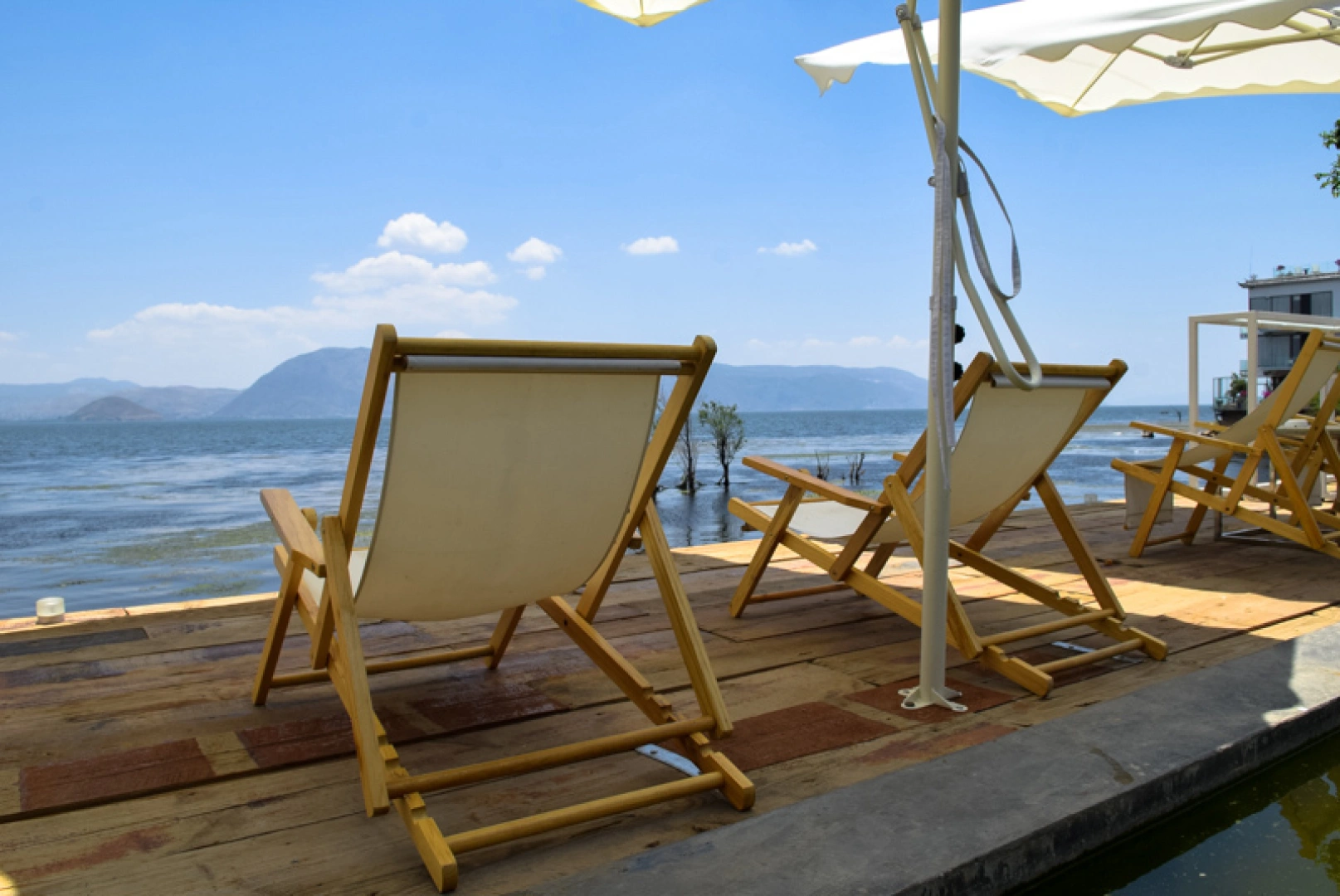
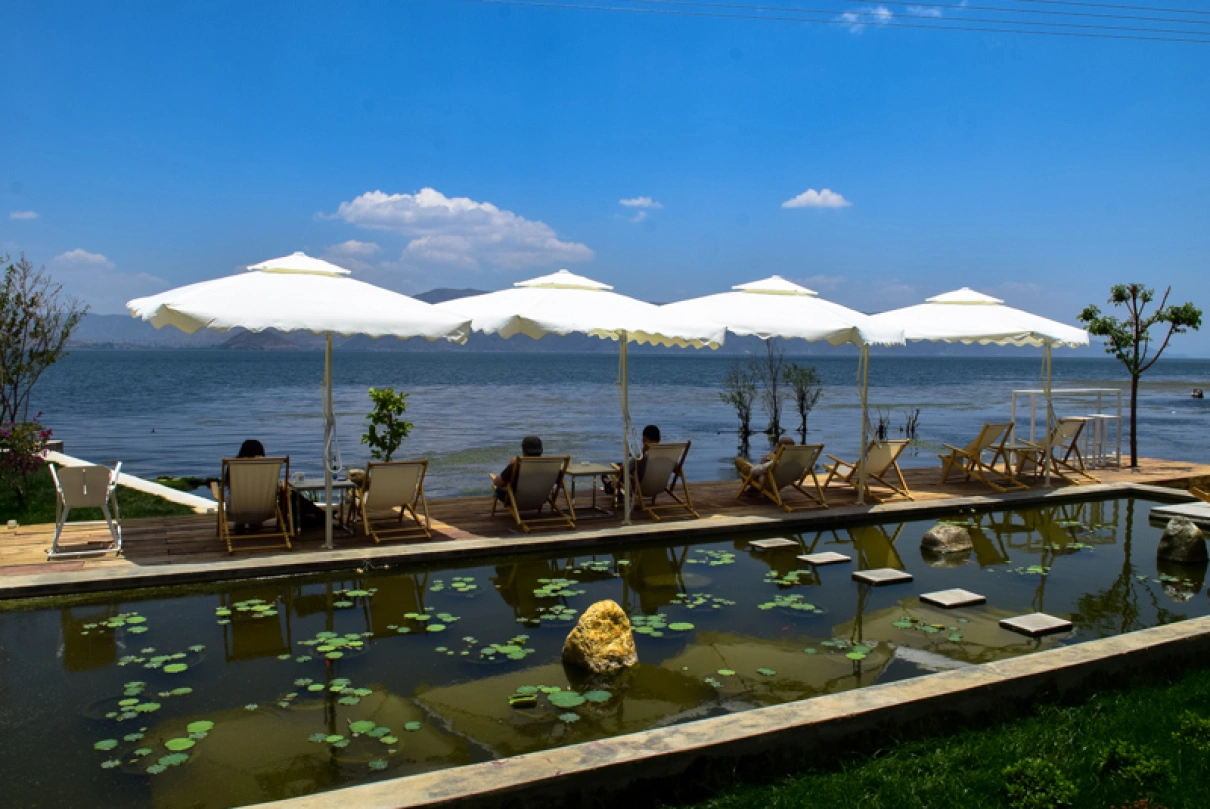
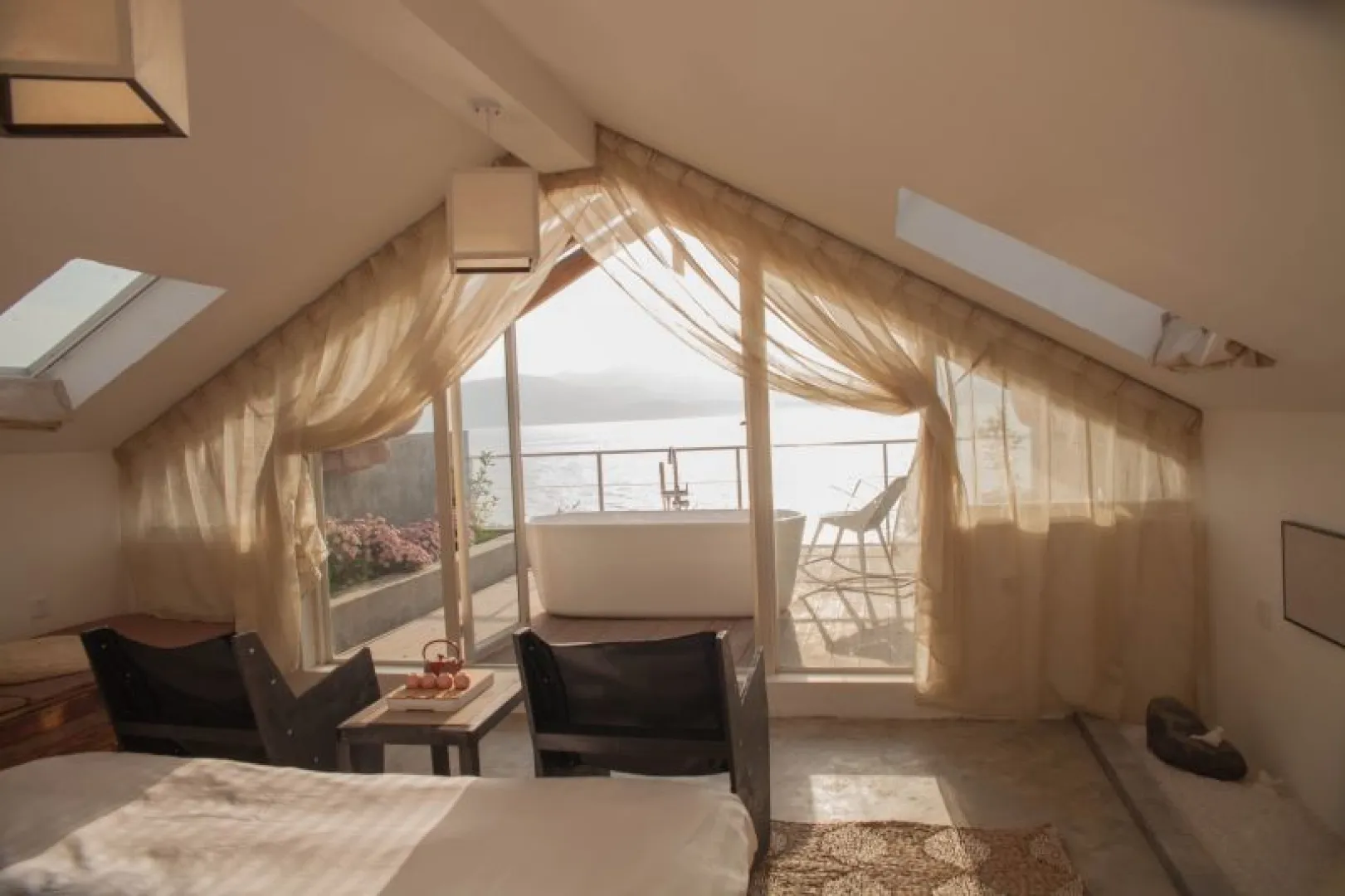
In Shuanglang, the buildings are right next to the water. Open your window, and you're looking directly at Erhai Lake — truly "super unbeatable sea-view rooms." And the wind is mild, nothing like Xiaguan where you feel like you're clinging to a lamppost.
The Disadvantages: Quite a Few
First, it's a giant construction site. The entire Shuanglang area is building new guesthouses — walk two steps, and you'll find another one. Noise and dust are everywhere. If you're unlucky enough to be next to a construction site, you won't want to stay a minute longer. With all these new inns, I worry about future competition — supposedly it'll be better in two years.
Second, prices are high. Lots of people, few guesthouses, even fewer restaurants. A mother and son staying at our guesthouse left after a few days for the old town, saying, "Breakfast cost 48 yuan — we had to run away."
What to Do in Shuanglang?
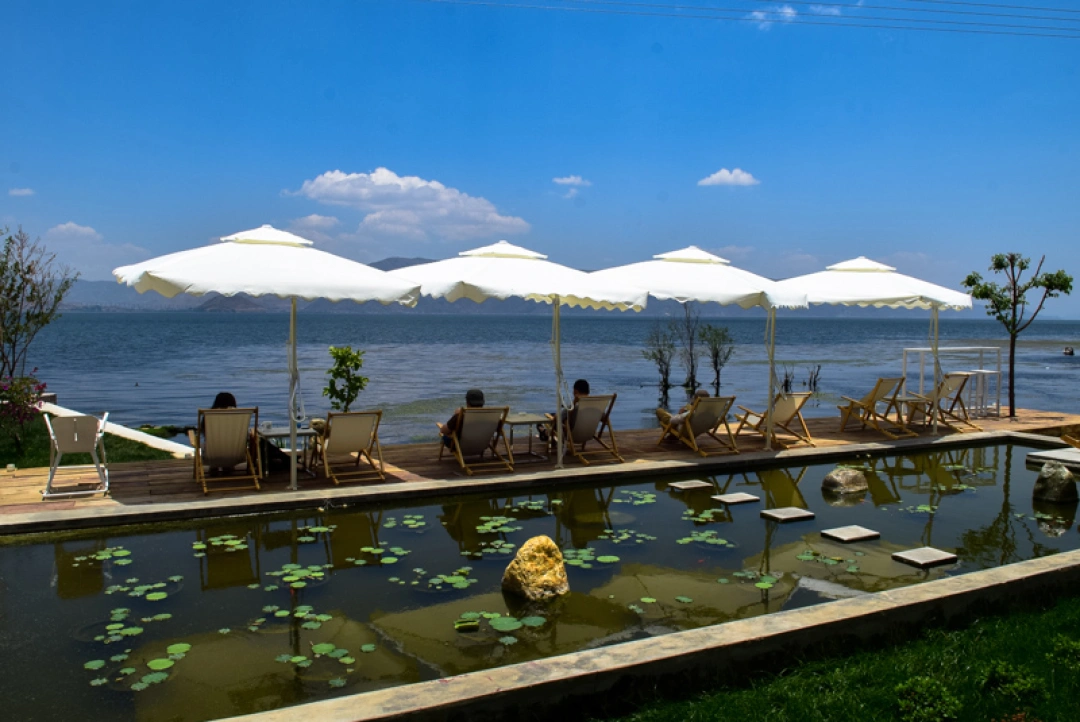
I've asked many people, and most answers are: "Just zone out. Zone out at some guesthouse. Or zone out at some charming, atmospheric guesthouse."
This is pretty similar to what some people say in the old town. It seems like zoning out is one of the purposes of coming to Dali.
I only spent a short time in Shuanglang, so I really only know about sitting by the lake and zoning out or cycling along the shore. But the old town has some more interesting things to do.
Shuanglang Guesthouse Recommendations
Guesthouses in Shuanglang fall into two categories: sea-view rooms and those farther from the water.
Sea-view rooms are limited — there are only a few, and the famous ones are well-known online. One of them is a YHA-affiliated hostel called "Shuanglang Life" (双廊生活), which is incredibly popular. The owner had great foresight — the location is right by the lake, with a boardwalk, a swing, a lawn, a large courtyard, and very stylish decor. They have several phases of buildings, and reportedly they're still building more.
We stayed there last year in a dorm room (not sea-view), for about 20-30 yuan a night. But walking around the courtyard, I felt like a successful person for a moment. They had a few dogs, all more timid than people, spending every day zoning out in the sun with the guests.
Many people think zoning out and sunbathing in Shuanglang is the ultimate life dream — different strokes for different folks.
Sea-View Room Recommendations
Splurge type: Money is no object — there are countless online guides. Just book your favorite room.
Budget-friendly type: You don't have to stay in Shuanglang. Rent a bicycle and ride along the newly built lakeside road (not the original vehicle road), getting as close to the water as possible. You'll discover many guesthouses in excellent locations — absolute sea views that will surprise you.
Backpacker type: I recommend dorm-style sea-view rooms, like at "Shuanglang Life." But sea-view dorm beds need to be booked many days in advance.
On Food: The Vegetable Market Is Dali's Soul
When I was in Dali, we cooked almost every day. Going to the vegetable market was endlessly entertaining.
Not only are there some vegetables you can't find in northern China, but the quality is also better than in big cities. In large cities, with so many people, produce is shipped in from all over the country — quality can't be that good. Here, some elderly women sell vegetables they've grown themselves, incredibly fresh. Meat, pork ribs, and small river crabs also taste much better than in big cities — probably because they're fresh too.
Guesthouses in Dali usually have self-service kitchens. You can buy groceries and cook with other guests, trading cooking tips. My Dali-style pork ribs were a hit — of course, I shared the recipe. But I also picked up a dish in return: twice-cooked pork (回锅肉), made by a girl at the guesthouse. It was delicious, and I've mastered it now.
Note: During peak season, owners usually don't allow use of the kitchen — too many people, too chaotic.
For Those Who Dream of Opening a Guesthouse: Dreams Are Grand, Reality Is Harsh
When you travel for a while, you often hear: "My dream is to open a guesthouse, facing the sea with spring flowers in bloom."
Let's look at the current state of guesthouses in Dali's old town.
Take the "Old House" (老房子) where we stayed — English name Mr. Ten (I nicknamed it "Ten-Yuan Inn"). The owner had a clear target: budget travelers. Only dorm beds, no private rooms. Minimum 10 yuan, maximum 20 yuan. No fancy decor, iron bunk beds, basic conditions. But they guaranteed clean sheets, acceptable internet speed, and hot water whenever you needed it.
A friend of mine moved from another 15-yuan guesthouse to the Ten-Yuan Inn because he couldn't stand the slow internet and inconsistent hot water.
So opening a guesthouse isn't a casual hobby. You need to think clearly: Who is your target customer? What can you offer? What are you willing to put up with?
Final Thoughts: Dali Is Worth It, But Keep Your Expectations Low
Dali is a great place. Erhai Lake is beautiful, the old town has real character, and the lifestyle of the new migrants is enviable. But don't be fooled by movies and marketing — this isn't a utopia, not a paradise.
Sea-view rooms might not be worth the price, but the lakeside cycling road absolutely is. The old town might not bring you romance, but the vegetable market can show you the real warmth of daily life. Guesthouse owners might not be warm and attentive, but you can be the interesting person yourself.
Vacation days and money are always limited. I sincerely hope you can find your own "Heart Blossom Road" in Dali.
A few practical tips to end with:
- If you want a sea-view room, think carefully about the season and location — don't go to the east bank in summer, and avoid the lakeside during wind season.
- For budget long-term stays, head to East Gate or Caicun Village. Look for guesthouse promotions on Douban (a Chinese social platform).
- For short-term tourism, stay near Renmin Road or Yangrenjie — convenient transportation and plenty of restaurants.
- Cycling the lakeside road is far more interesting than staring at the lake from inside a room.
- Don't get your hopes up about "romantic encounters" — you can have a great time on your own.
After all, the most beautiful scenery in Dali has never been that sea-view room. It's the version of yourself you rediscover here.
You should also read:
Dreaming of Lijiang, Dreaming of Shangri-La: A Journey That Lets Your Soul Breathe Deeply
Dreaming of Lijiang, Dreaming of Shangri-La: A Journey That Lets Your Soul Breathe Deeply Life is like a long trek. We're always rushing through the concrete jungle, searching for a glimmer of light in the monotony of our days. Then one autumn, I heard the…
Continue reading...
Tengchong·Heshun: Finding Life as It Should Be in a Border Town Where Time Stands Still
Tengchong·Heshun: Finding Life as It Should Be in a Border Town Where Time Stands Still The long journey of over twenty days was over. On my first day back at the office, I was still in a daze. My fingers couldn't find the keys on…
Continue reading...
A Spiritual Journey to Lugu Lake in Lijiang: Experiencing the Legend of the Kingdom of Women! (Reproduction and Hotlinking Prohibited)
A Spiritual Journey to Lugu Lake in Lijiang: Experiencing the Legend of the Kingdom of Women! (Reproduction and Hotlinking Prohibited) Off-road自驾, food, hotel and民宿 reviews, Featured Traveler, Tank 300 owner, 200,000 km of self-driving experience. WeChat: y01294987 Ninglang Yi Autonomous County 2010.11.08 · 7 days…
Continue reading...