Atop the Colors, South of the Clouds: A Spontaneous Road Trip Through Southern Yunnan
Atop the Colors, South of the Clouds: A Spontaneous Road Trip Through Southern Yunnan
Departure is always the most beautiful beginning.
On the last day of the May Day holiday, my husband and I had a sudden spark of inspiration and decided to take a trip during the off-peak season. From choosing the destination to booking flights, hotels, and a rental car, and then finalizing the itinerary, the entire process took only half a day. Even though I've been retired for nearly five years, the efficient execution skills I honed in the workplace haven't faded a bit. And so, we set off on our journey to the colorful land of Yunnan.
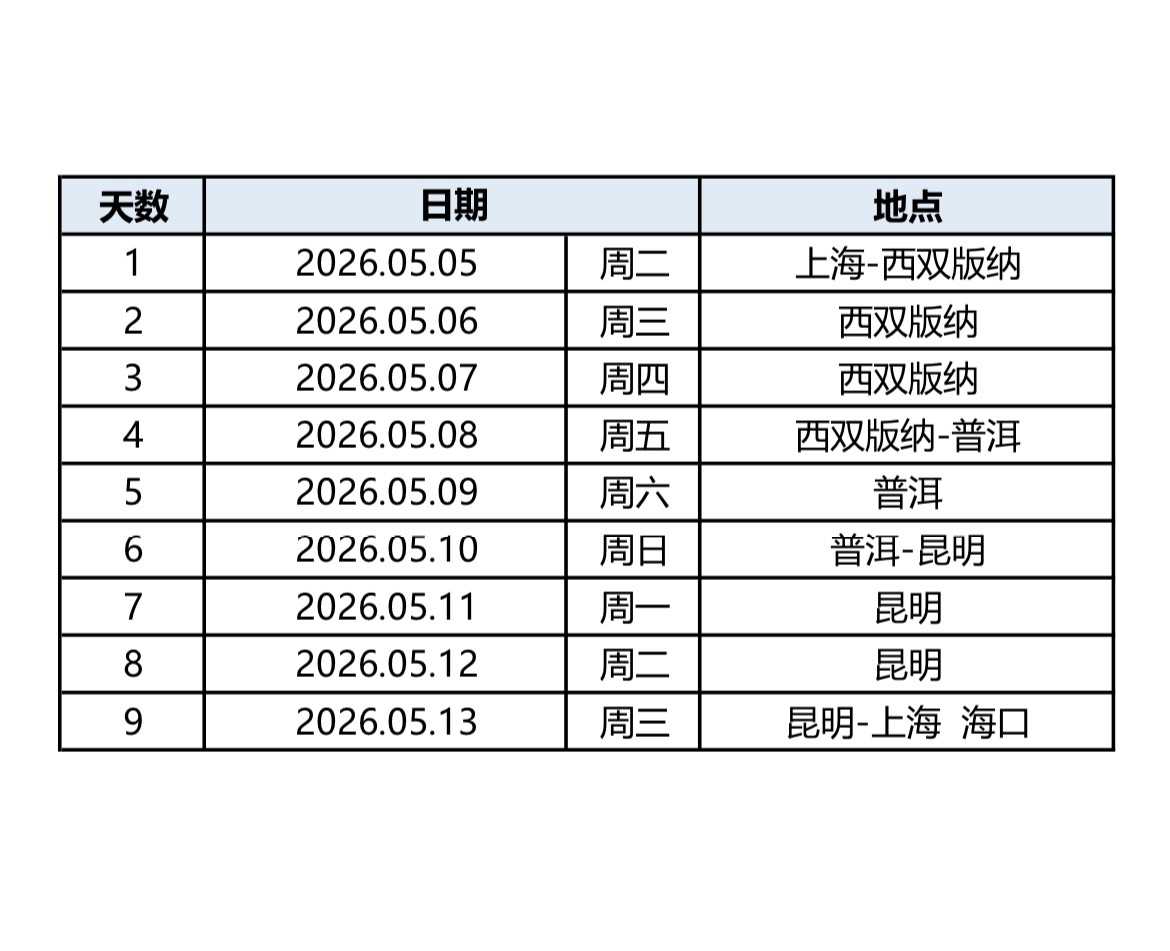
This time, we planned a 9-day, 8-night self-driving itinerary: 3 nights in Xishuangbanna, 2 nights in Pu'er, and 3 nights in Kunming. Everything was recorded on my phone—text first, photos to follow.
Day 1: Arriving in Xishuangbanna, First Encounter with Tropical Charm
At 5 a.m., the pre-booked airport transfer arrived punctually downstairs. We were taking the Juneyao Airlines flight HO1037 departing from Pudong Airport Terminal 2 at 8:10 a.m. When we arrived at the airport at 6 a.m., the terminal was packed, and long, winding queues snaked in front of the check-in counters. Fortunately, we had already checked in on our phones, so we headed straight to security. The crowd at the security checkpoint rivaled the queues at the Shanghai World Expo back in the day. However, my husband, using his veteran's ID card, took us through the VVIP channel, and we breezed through, saving us from the long wait.
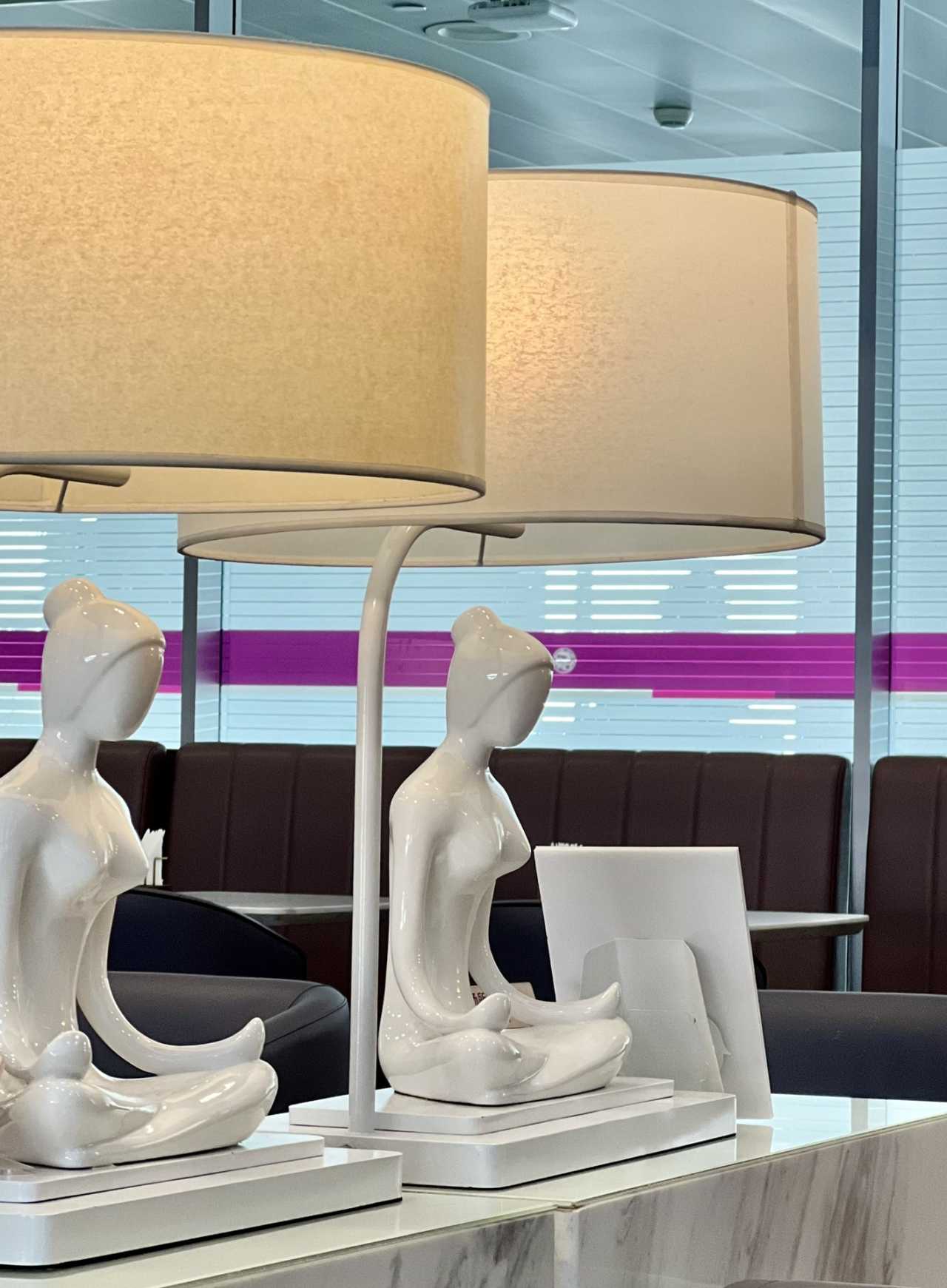
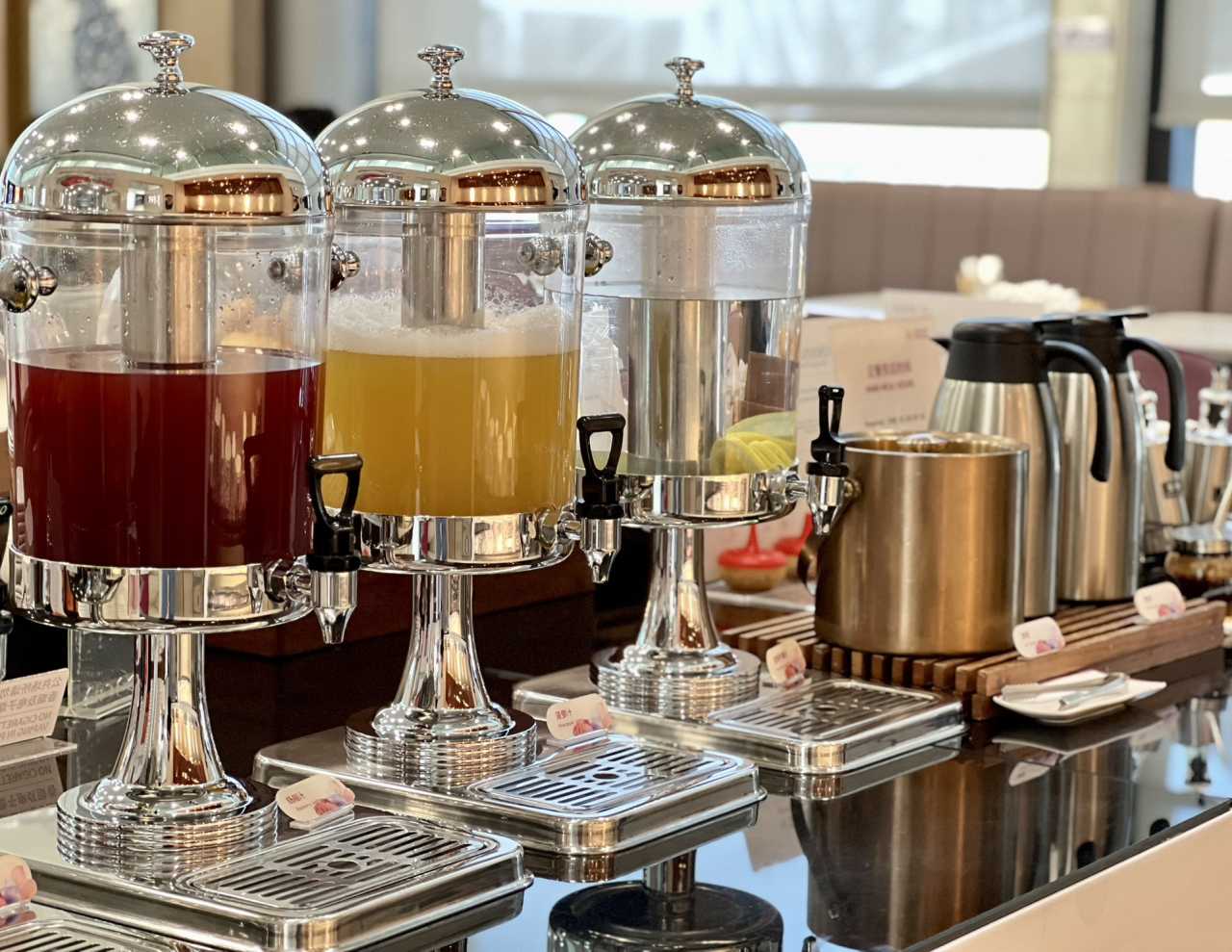
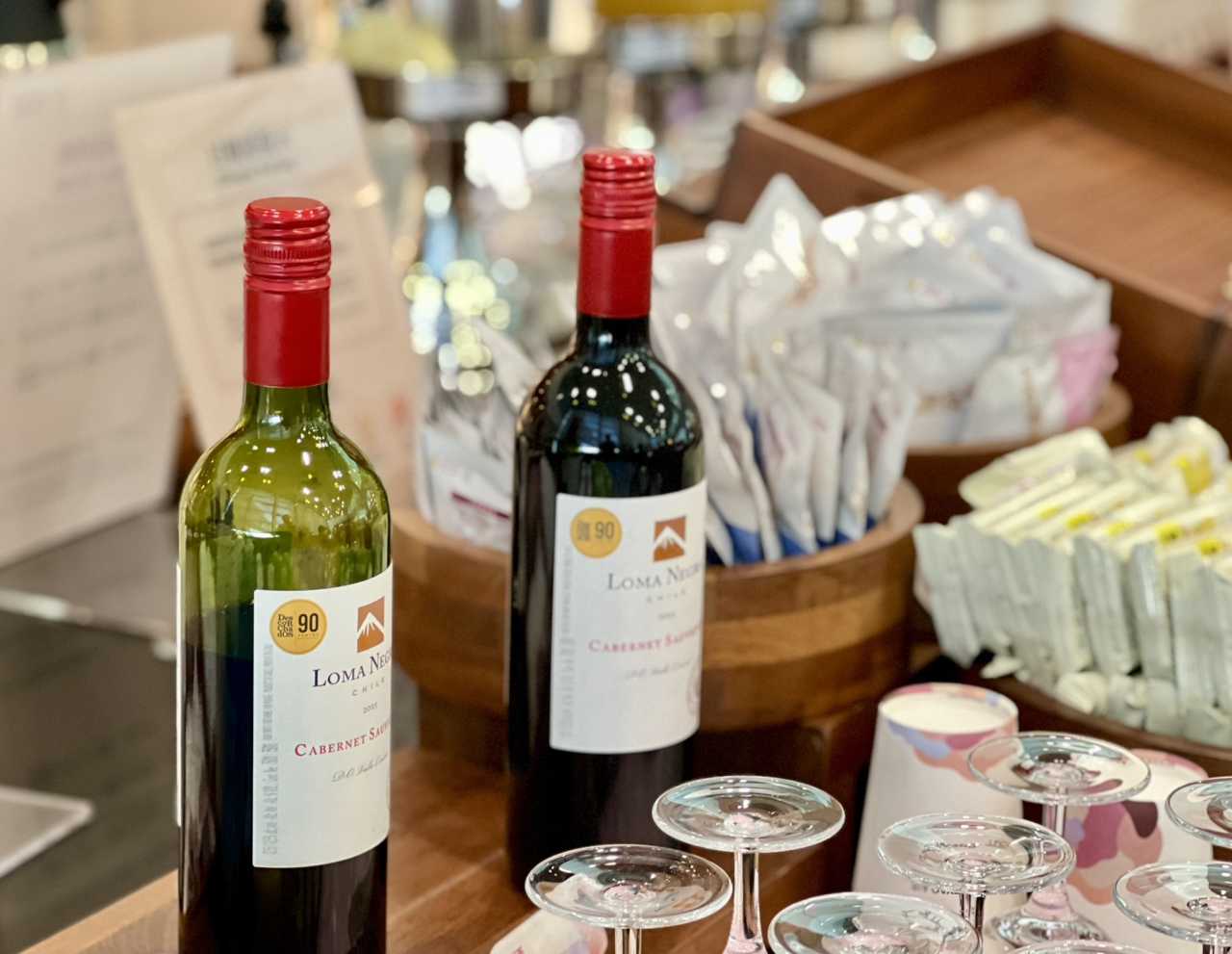
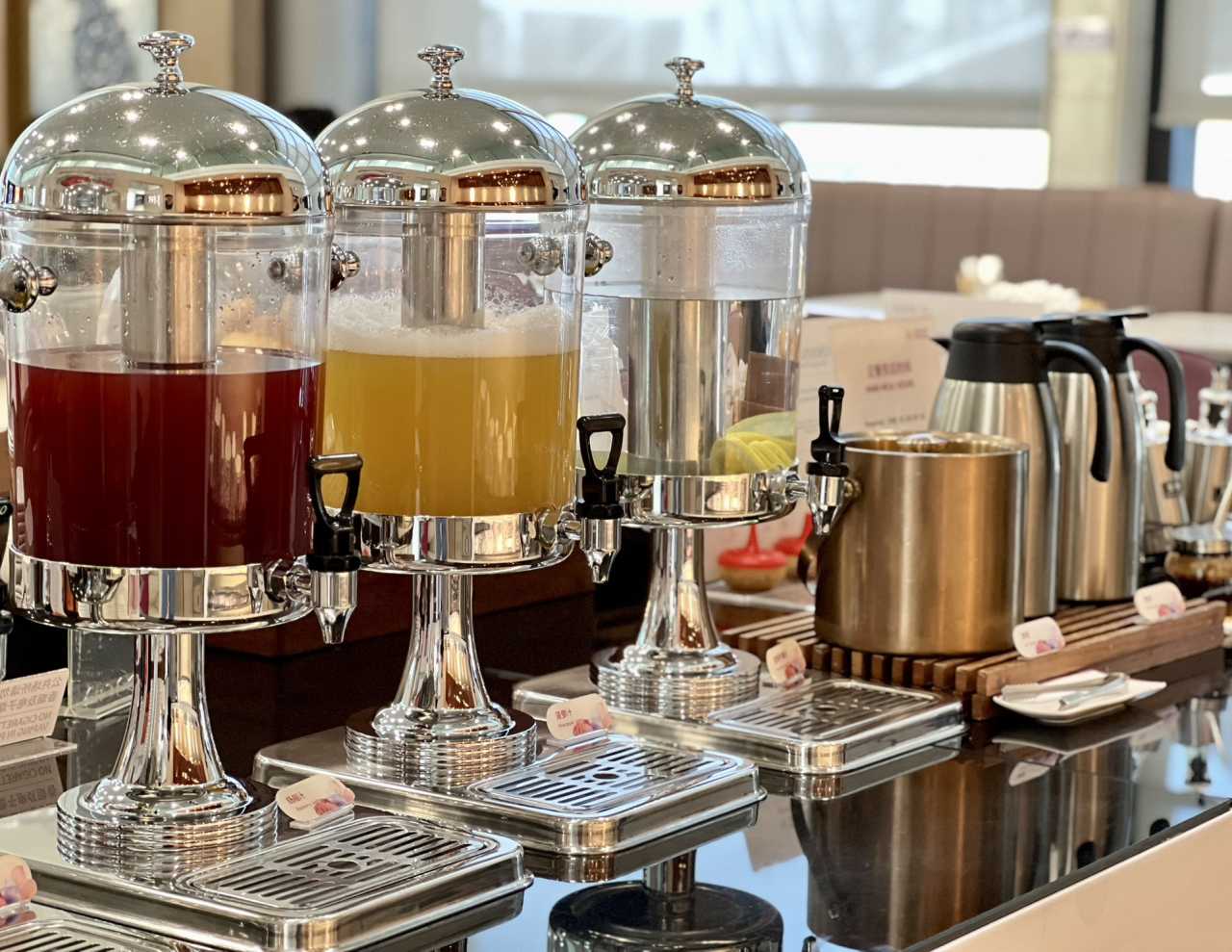
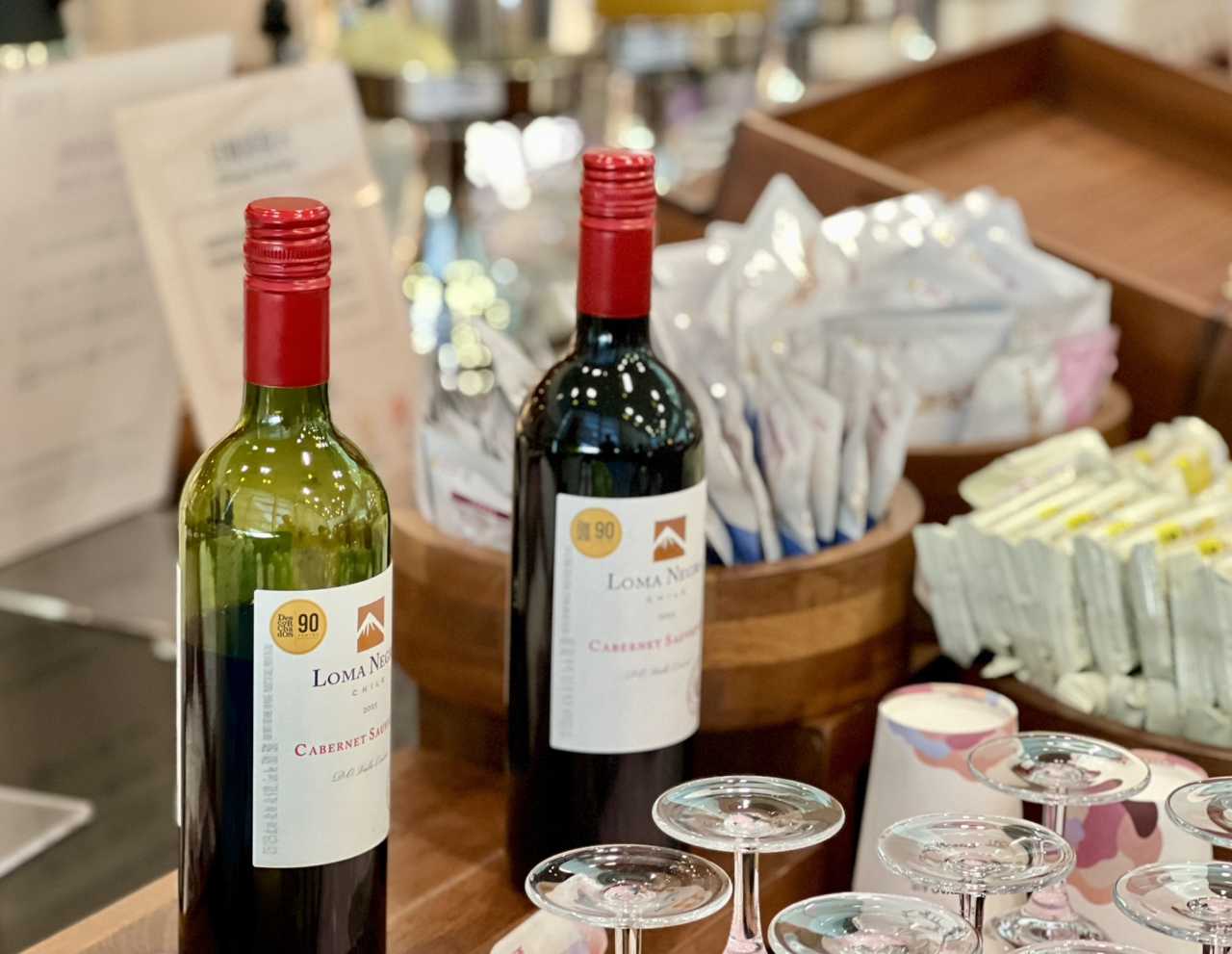
The Juneyao Airlines VIP lounge was near Gate C80, about a 5-minute walk away. It couldn't compare to China Eastern's famous "bowl of noodles," but a cup of coffee, a few Chinese-style pastries and fruit, along with a spacious seating area, made the VIP experience gifted by a travel app well worth it.
After a 4-hour flight, the plane touched down on time at Xishuangbanna Gasa Airport. As soon as the cabin door opened, a wave of heat hit us—summer in an instant. Looking back, the Dai-style terminal gleamed strikingly under the sun.
The car rental process at a local service point was completed in just a few minutes—fast and convenient. After a 20-minute drive, we arrived at our first hotel: the InterContinental Xishuangbanna Resort. Without taking time to explore the hotel fully, we first solved the lunch problem. The hotel's Thai-Dai restaurant had a courtyard full of Dai ethnic charm, giving off a strong exotic vibe.
Our first meal in Xishuangbanna had to be Yunnan rice noodles. The broth was so deliciously savory that I couldn't stop, finishing an entire large bowl in one go.
Banruo Temple: The Serene Beauty of a Pure White Stupa
After lunch and a short rest, we drove to Banruo Temple (pronounced bō rě). In Buddhism, "Prajna" (Banruo) means the wisdom that sees through all things. The temple sits on a hill behind Manzhen Village in Jinghong City, far from the noise and bustle, visited only by independent travelers following maps.
The entirely white stupa complex glowed with a pearl-like luster under the sun, visible even from the foot of the mountain. Among the many golden Buddhist temples in Xishuangbanna, this one stands out like a breath of fresh air, which is why we made it our first check-in spot after landing. The temple was originally built in 833 AD. Legend has it that envoys of King Ashoka of the Maurya Empire brought the teachings through Thailand and Laos to Xishuangbanna, where this white stupa was constructed, with two strands of the Buddha's hair buried beneath it. During a renovation in the Ming Dynasty, four Buddha relics were enshrined at the base of the stupa.
InterContinental Hotel: A Luxurious Night on the Site of the Dai King's Palace
Returning to the hotel in the evening, we began to explore every corner of the property. The hotel is built on the site of the once-thriving Dai King's Palace from 1160 AD. The overall design blends the opulent style of a Dai-Thai royal palace, with gold as the dominant color, nestled within a tropical rainforest setting—peaceful and secluded. The lobby is magnificent, the courtyard offers a new scene at every step, and colorful flowers dot the landscape. The room was incredibly spacious, and with our post-holiday off-peak stay, the value for money was simply unbeatable.
Day 2: Coffee, a Buddhist Temple, and Handmade Tea
In the morning, the hotel's buffet restaurant offered not only delicious food but also an array of ethnic decorative items that dazzled the eyes—gleaming golden peacock figurines, bronze-colored statues of Dai girls, all incredibly lifelike.
Bean Great: A Hidden Coffee Paradise in the Village
After breakfast, we found a hidden gem called Bean Great in Manhe Na Village. The moment we stepped inside, we couldn't move. The array of coffee options was dazzling. My husband ordered a latte (using Bean No. 5), and I had an iced Laotian coffee. We spent the entire morning leisurely smelling and tasting the different coffee aromas. We also bought a bag of Bean No. 5 to take back to Shanghai and savor slowly.
The General Buddhist Temple: A Thousand-Year-Old Royal Monastery
We had lunch at "Dai Twelve · Four Seasons Yunnan Cuisine" in Gaozhuang Xishuangjing Scenic Area. The food was delicious, and the atmosphere was refreshing. Afterward, braving the scorching sun, we visited the Xishuangbanna General Buddhist Temple, known in the Dai language as "Wa Ba Ji." According to legend, it was built by two Theravada Buddhist monks who came from Myanmar to spread the teachings around the mid-7th century AD, giving it a history of over a thousand years. This is the highest-ranking temple in Xishuangbanna. From its very establishment, it served as the royal temple for the Dai kings, overseeing all the other temples in the region.
Handmade Tea: A Tea Cake Made with Our Own Hands
Back at the hotel in the afternoon, we participated in a scheduled handmade tea experience: weighing the tea, steaming it, shaping it into a cake, pressing it, wrapping it, and drying it. By the next morning, we would have our own handmade tea cake—a truly satisfying sense of accomplishment.
Gaozhuang Night View: The More the Night, the More the Charm
In the evening, on a whim, we wanted to see the night view. We drove across the Lancang River to the VOCO Gaozhuang Xishuangbanna, an InterContinental Group hotel. The 9th-floor Ta Bar offered the best vantage point for viewing the Gaozhuang Great Golden Pagoda Temple. As night fell and the lights gradually came on, Xishuangbanna's night became more and more dazzling.
Day 3: Flower Garden, Mushrooms, and the Golden Pagoda Temple
In the early morning, in the hotel's garden, the king of birds—the peacock—was strolling leisurely. Sunlight streamed down, making its blue-green feathers shimmer with a metallic luster.
An Unexpected Encounter with "Five Trees and Six Flowers"
We had originally planned to find a scenic spot called "Far & Near – Five Trees and Six Flowers," but the navigation app took us to the Xishuangbanna Tropical Flower Garden instead. Since we were already there, we decided to make the best of it and have a cup of coffee. At noon, we returned to the hotel, and the front desk thoughtfully gave us a tea gift. The service at InterContinental is truly impeccable.
Mushroom Princess: A Feast of Fungi from the Must-Eat List
In the evening, we went in search of food and chose "Mushroom Princess," a restaurant from the local must-eat list. It was so popular that it had five sections, A through E. Luckily, it was the off-peak season after the holiday, so we didn't have to wait. We ordered a set meal for two, which included six types of mushrooms: jian shou qing (a type of Boletus, known for its psychoactive effects if undercooked), fresh bamboo fungus, ji song rong (himeola matsutake), ji you huang (chanterelle-like), bei feng jun (a cold-weather mushroom), and hu zhang jun (tiger paw mushroom). Out of caution regarding the legend of jian shou qing causing hallucinations ("seeing little people"), we asked the restaurant to remove it. The mushrooms had to be boiled for a sufficient amount of time; the server gave us a 15-minute timer, and we couldn't start eating until it went off. Once cooked, the mushroom broth was incredibly savory. My husband and I just kept our heads down, drinking bowl after bowl. After the meal, we paired it with a bag of traditional Laotian iced coffee—perfect.
The Great Golden Pagoda Temple: Exotic Charm Under the Night Sky
After dinner, we went for a walk to aid digestion. Last night, we had admired the Great Golden Pagoda Temple from a distance on a high floor; tonight, we changed our perspective and got a closer look. This Theravada Buddhist temple is the landmark building of Gaozhuang Xishuangjing. The main pagoda is 66.6 meters tall, surrounded by four solid smaller pagodas, representing Kengtung (Myanmar), Chiang Rai (Thailand), Chiang Mai (Thailand), and Luang Prabang (Laos). The pagoda body is a reddish-brown color, with gold-plated tops. Elements like white elephants, golden dragons, and peacocks adorn it, creating a strong sense of exotic charm.
Day 4: Manting Park and a Coffee Journey to Pu'er
Manting Park: The Secret Garden of the Dai Princess
We had to drive to Pu'er in the afternoon, but we had some time in the morning, so we went to Manting Park. This 1,300-year-old park is the oldest garden in Xishuangbanna and was once the royal backyard garden of the Dai royal family. Legend says that a Dai princess was captivated by the scenery when she visited, hence its name. We arrived at 9 a.m. to avoid the crowds of tourists taking portrait photos, quietly walked around and took pictures, and even caught a "Dai King's Procession" performance—perfect!
Tip: Manting Park and the General Buddhist Temple we visited the day before are connected. The park entrance fee is 40 RMB, and the temple is free. They can be visited together.
Driving to Pu'er: A 130-Kilometer Coffee Journey
We checked out at noon and drove to Pu'er. The total distance was 130 kilometers, taking about an hour and a half to reach the Holiday Inn Express Pu'er, also under the InterContinental Group. The room had Yunnan drip coffee bags and tamarind candies placed on the desk—full of thoughtful details. After checking in, we unanimously decided to go drink coffee! We drove 30 kilometers, took a stretch of highway, then wound our way up a mountain road until we reached Bean Great Estate. What does it feel like to drink coffee in the mountains? Utterly refreshing! Blue sky, white clouds, coffee, beautiful scenery—this is the true meaning of travel.
Day 5: The Slow Life in Pu'er
Today, we embraced a full day of slow living in Pu'er. A few minutes' drive from the hotel brought us to Simao Old Street. Clever touches were everywhere in the alleys and corners, making for a very pleasant stroll with plenty of photo opportunities. Simao Old Street and the Daijia Alley historic building complex are connected, blending the old with the modern. In this small city, where coffee in one hand and tea in the other is the norm, you can find rich, fragrant Yunnan coffee in almost any small shop you enter.
Wuqi Old Pu'er Cuisine: Delicious Food Amidst a Downpour
For lunch, we found a restaurant called "Wuqi" deep in Daijia Alley, specializing in traditional Pu'er cuisine. Just as we sat down, a torrential rain began to pour outside. We ordered a few signature dishes, and they were all delicious. In Yunnan, no matter what type of mushroom you use in a stir-fry, it's always incredibly flavorful. We ordered mushrooms with every single meal.
Slow Time in the Rain
In the afternoon, the rain pattered against the window. We holed up in the hotel to update our travel journal, writing and recording as we went along, planning to publish it on the day we returned to Shanghai. For dinner, we found a highly-rated creative Yunnan restaurant called "Eggplant Just Right." The Pu'er tea served in a glass bottle was a novel touch, and the crispy little sesame duck tasted similar to roast duck.
Day 6: From Pu'er to Kunming
The distance from Pu'er to Kunming is over 400 kilometers, and the navigation showed a driving time of 5.5 hours. We chose to take the train. Before leaving, we returned the rental car at the local service point near Pu'er Railway Station. We had split the car rental into two segments: 5 days in Xishuangbanna and Pu'er, and 3 days in Kunming. The service and the car's condition were both good.
A minor complaint: On the highway from Xishuangbanna to Pu'er, we encountered a border checkpoint (to this day, I still don't understand where the border was supposed to be there). They checked our IDs and vehicle information. After exiting the highway, we hit another random checkpoint where they checked our driver's licenses. And in Pu'er city, we were stopped for a drunk driving test. Three checks in one day—in over twenty years of driving, this was a first for us.
We arrived at Kunming Station around 2 p.m., picked up our rental car, and drove about 20 minutes to the InterContinental Kunming. The familiar InterContinental fragrance lingered in the lobby, and the room was, as always, spacious. We used the complimentary drink vouchers provided to members to have two cups of coffee at the Caidie Bar, then curled up on the sofas, listening to the rain and whiling away the time. For dinner, we chose "Congshui Ju · Yunnan Specialties" across from Haigeng Dam, just a few minutes' drive from the hotel. After a few non-heritage specialty dishes, we had to admit: in Yunnan, mushrooms are still the best.
Day 7: Slow Travel in Kunming
Today, we slept in naturally. The spring rain was drizzling outside the window. We woke ourselves up with a hearty InterContinental breakfast. Since it was Monday, the two attractions we wanted to visit were closed, so we had to go to some lesser-known spots first.
Yu Garden: A Private Garden from the Republic of China Era
Yu Garden is located in the southern section of Kunming's Daguan Park. It was the former residence of Yu Enxi, a former mayor of Kunming, and also the ancestral home of Taiwanese singer Harlem Yu. The "Double Ninth Corridor" within the garden is built with Republic of China-era elements like blue bricks and round arches, with nine archways on each side. Viewed from different angles, it creates a sense of depth—circles within circles—a quintessentially Chinese aesthetic captured perfectly on camera.
Kunming Old Street: A Pleasant Surprise on a Rainy Day
From Yu Garden, we headed to Kunming Old Street. Even on a rainy day, browsing the specialty shops can yield pleasant surprises. A drip coffee bag featuring a wide-mouthed Wacat (a roof-tile cat charm) symbolizes "eating iron and spitting out gold"—meaning it takes in iron and excretes gold, representing the idea of keeping wealth within the family and attracting fortune. In another small shop, we tasted a few different coffee beans before choosing some Yunnan Arabica small-bean coffee to take back to Shanghai. Tired from walking, we stopped for a bowl of "Great Ambition Specialty Cross-Bridge Rice Noodles"—extremely satisfying.
Hotel Courtyard: The Surprise of Jacaranda Blooms
In the afternoon, the rain stopped, and we took a stroll through the hotel's courtyard. The bougainvillea was in full bloom. Then, turning a corner, we were greeted by a large patch of blooming jacaranda trees—no need to search for them; they were right there, a surprise at every step.
Day 8: A "Gold Shop" Tour at the Yunnan Provincial Museum
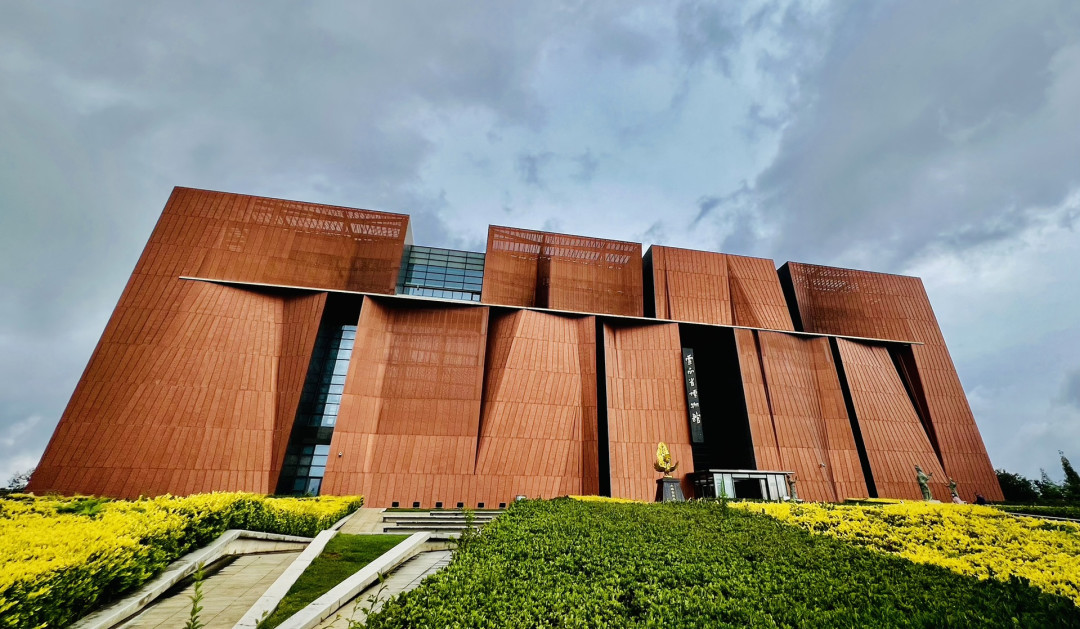
The highlight of today was visiting the Yunnan Provincial Museum. We made a reservation in advance on their official WeChat account and entered using our IDs or the reservation QR code. As soon as we entered, a replica sculpture of the museum's treasure—the Golden Winged Mahakala Bird—greeted us.
A Tour of Gold and Silver Treasures
My mission for today was to see the gold items, to experience the museum like a "gold shop"!
Silver Gilt Garuda with Inlaid Pearls: Unearthed in 1979 from the main pagoda of the Chongsheng Temple in Dali. The Garuda, known in Sanskrit as the "king of birds," is revered as the protector deity of Dali and is one of the eight guardians in Buddhist cosmology. The bird's head is adorned with a feathered crown, its wings curl inward as if about to take flight, and its hollow, flame-shaped halo is set with five crystal beads. The craftsmanship is exquisite, and the design is beautiful.
Gilded Copper Five-Pronged Vajra: Also unearthed from the Qianxun Pagoda of Chongsheng Temple, measuring 20.8 cm in length. This double-sided five-pronged vajra has a handle decorated with lotus petals, beaded patterns, and spiral motifs. A silver ring is fitted around the handle, and the two ends feature four claws and one prong, with the claws shaped like dragon heads—a very vivid design.

Silver Standing Avalokiteshvara with a Golden Halo: The bodhisattva wears a jeweled crown and has a serene expression. In one hand, she holds a pure water bowl; in the other, a willow branch. The golden halo creates a striking contrast with the silver body of the statue.
Silver-Haloed Golden Acarya Avalokiteshvara: Made of pure gold, this statue features a high bun and double braids, with a small Buddha hidden in the bun. The hands form the Saddharma mudra. Behind it is a silver, long-gourd-shaped, openwork carved halo. This is considered one of the earliest Avalokiteshvara images to have been brought to Yunnan.
Gold Crown Inlaid with Rubies and Sapphires: Unearthed from the Mu family cemetery in Wangjiaying, Kunming. Made of four layers of thin, lotus-petal-shaped gold sheets stacked together, it is inlaid with over twenty precious stones in red, blue, green, and white. The crown radiates brilliant light.
Zhuang Ethnic Silver Openwork Cloud Shoulder Ornament: A late Qing Dynasty ceremonial garment for Zhuang noble weddings. The main body is made using silver sheet openwork engraving and filigree splicing techniques. Hanging from it are multiple layers of silver chains, silver flowers, pagoda pendants, and bell ornaments, which jingle softly when the wearer walks.
Tired from our "gold shop" tour, we stopped for a coffee at the "Yunbo Coffee" on the first floor. I ordered a "jian shou qing coffee," and it was delicious! Yunnan really is full of mushrooms everywhere—even the coffee cups had a unique style.
Regret and Surprise
In the afternoon, I wanted to visit the Yunnan Military Academy Museum, only to find out it had started a 35-day renovation on May 10th—a missed opportunity. Nearby, Huanggong East Street, with its bright yellow and red walls, has become a popular photo spot. The adjacent Cuihu (Green Lake) Park has beautiful scenery, so we took a walk around the park. For dinner, we chose "Grandma's Taste" across from Haigeng Dam. A dish called "Watery Lass" had a refreshing texture. Returning to the hotel around 7 p.m., the sky finally cleared. The azure sky and cotton-candy clouds were perfect!
Day 9: Saying Goodbye to Yunnan
Today, our journey was coming to an end. For lunch, we found a Western restaurant for a change of pace. We checked out at 2 p.m., taking one last photo of the blue sky and white clouds. We drove to Kunming Changshui Airport and returned the car at the local service point. The total rental cost for this trip was about 1,200 RMB. While more expensive than taking taxis, the convenience and comfort were undeniable.
Our 9-day, 8-night Yunnan trip was drawing to a close. I flew back to Shanghai, and my husband flew to Haikou. We've already started planning our next trip. On the road, we capture beautiful memories with words and photos. Years from now, I hope that when our hair is white, we will still have a heart that loves to travel.
Travel Tips
- Travel Off-Peak: Traveling during the post-holiday low season offers incredible hotel value for money and fewer crowds at attractions.
- Split Car Rentals: Renting a car in two segments—one for Xishuangbanna and Pu'er, and another for Kunming—is flexible and convenient.
- Border Checks: You may encounter checkpoints on some roads in Yunnan. Just make sure to have your documents ready.
- Mushroom Safety: Always ensure mushrooms are thoroughly cooked. Undercooked ones can cause poisoning, and restaurants will strictly time the cooking process.
- Museum Reservations: The Yunnan Provincial Museum requires advance reservations through their official WeChat account.
- Coffee Lovers' Must-Visit: Bean Great café and Bean Great Estate are paradises for coffee enthusiasts.
Colorful Yunnan is a place worth visiting again and again.
You should also read:

Into the Hidden Valley: A Solo Journey Through the Mysterious Dulong River
Into the Hidden Valley: A Solo Journey Through the Mysterious Dulong River Deep in the northwestern corner of Yunnan Province, tucked away from the modern world, lies a place that feels like a secret whispered among mountains. The Dulong River Valley is not just a…
Continue reading...
God’s Abandoned Palette: A Self-Drive Journey Through Yunnan’s Dongchuan Red Land
God’s Abandoned Palette: A Self-Drive Journey Through Yunnan’s Dongchuan Red Land Travel has never been about reaching some distant geographic coordinate. It’s about encountering, along the way, the version of yourself buried beneath the rubble of daily routine. During this May Day holiday, I finally…
Continue reading...
Two Girls' Graduation Trip: Dali and Shuanglang – A Poetic Farewell to Mountains and Sea
Two Girls' Graduation Trip: Dali and Shuanglang – A Poetic Farewell to Mountains and Sea Preface: Catching the Tail of Youth, Heading South During our senior year of college, my roommate and I – two girls studying in Beijing – decided to bid farewell to…
Continue reading...