Autumn Journey in Western Yunnan: A Gentle Encounter with Time from Shuhe to Ginkgo Village
Autumn Journey in Western Yunnan: A Gentle Encounter with Time from Shuhe to Ginkgo Village
Prologue: A Single Thought, a Thousand Mountains and Rivers
As autumn deepens, I find myself searching for a place where my soul can rest. A friend casually mentioned "Tengchong Ginkgo Village," and those three words struck me like a spell—ginkgo, paired with the word "village," was enough to haunt the dreams of a southerner who had never experienced a true autumn. The trees in our southern homeland stay stubbornly green all year round; the changing of seasons seems to happen only on calendars, invisible to the naked eye. The image of "the city bathed in golden armor"—just imagining it was enough to set my heart racing.
So this autumn, I gave myself to Yunnan—first to Shuhe in Lijiang, then on to Tengchong Ginkgo Village, and finally ending in Heshun Ancient Town. This was a journey about autumn, about distant lands, about self-imposed exile.
Pre-Travel Musings: Gear and Mindset
The "Grand Spectacle" of Photography Equipment
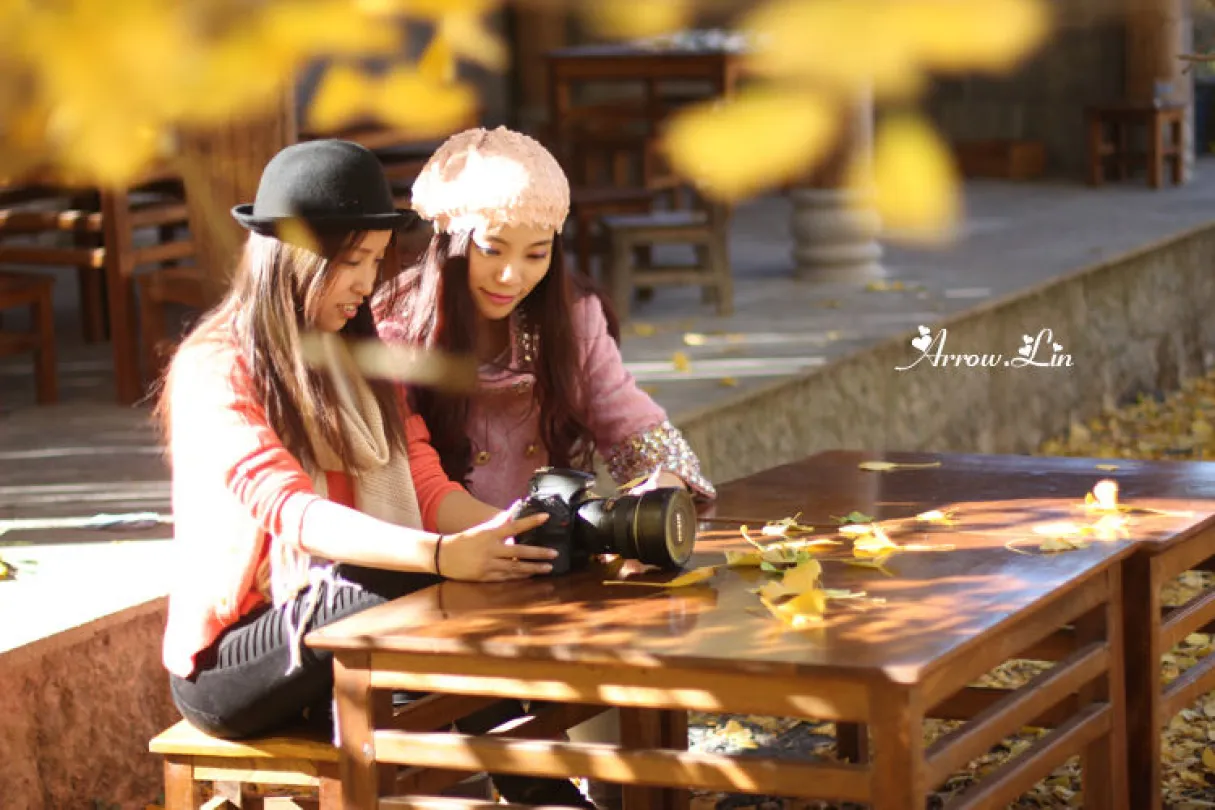
For someone like me who usually travels with "one camera, one lens," this trip was a serious equipment upgrade. My friend quietly brought a Canon 60D with both a prime lens and a zoom lens, while I lugged a Nikon D700 with a wide-angle and a zoom. After rotating through them for a day, we had an epiphany like Columbus discovering the New World: prime lenses for portraits, wide-angle for landscapes—the other lenses? Too heavy. My hands were nearly breaking! Unless you're a professional photographer, don't put yourself through that. Combining people and scenery? You'd need a tripod plus a zoom lens. We're just "pretentious enthusiasts," not pros.
On Travel Mindset
They say that once you arrive in Lijiang, time stops. But it's not that time stops—it's that the time here is meant for you to while away, not to rush through in a panic or with tension. What we call "distant places" are both impossibly far and intimately familiar, like home. People pack their bags and wander everywhere, believing that at the center or edge of the world, there's always a "distant place" we long to reach. We yearn to heal our inner voids in foreign lands, and we always store others' stories in our thoughts, treating them as hope.
Shuhe Ancient Town: A Quiet Overture
Arriving in Shuhe: A Battery-Induced "Crisis"
By the time we reached Wang Family Courtyard Inn in Shuhe, it was completely dark. We dropped our luggage, starving, and grabbed the D700 to shoot some night scenes—only to find the camera was "dead." No response no matter how we pressed the buttons. I called my mom for remote troubleshooting. She insisted the lens wasn't attached properly. We took it off and put it back on repeatedly, but the camera kept playing dead. My friend lamented, "We hauled this thing all the way to Yunnan, and it goes on strike!" Finally, Mom suggested we find a fellow photography enthusiast in the town center for help. Sure enough, a man with a tripod calmly handed us a battery, and the camera sprang back to life—it had just run out of power. Probably every photography lover has done something this stupid at least once.
"Rough Tea and Simple Meals": Unexpectedly Delicious
That night we ate at a restaurant in Shuhe called "Rough Tea and Simple Meals" (粗茶淡饭). The name sounded humble, but every dish was a classic. Two dishes and a soup—the portions didn't look huge, but they seemed to "stand firm like a mountain." We ate until we were stuffed, and the food looked untouched. This kind of "understated" portion size gently chokes you with its generosity.
Wandering the Ancient Town: Sunlight and Time

The next morning, under a blazing sun, we roamed through the alleys. All kinds of small shops blended seamlessly with the ancient architecture. The shopkeepers kept company with cats and dogs, quietly soaking up the sun in this border town. When we got tired, we found a café and sat there zoning out—for me, if I can sit, I won't stand; if I can lie down, I won't sit. My favorite activity is "not moving."
The afternoon's light and shadow, warmth and chill—all of it was meant to disturb. Awake, it disturbed the eyes and ears; asleep, it disturbed dreams; reading, it disturbed the words; speaking, it disturbed the conversation. Afternoon is the middle of the day, a waiting period near the end of hope. Impatience and melancholy come one after another. The heart feels old, yet life seems like it hasn't even begun.
Wang Family Courtyard Inn: A Peaceful Haven
The inn was near Shuhe's north gate, close to the Banyan Tree resort, in a quiet area. At night, it was utterly silent—not even the sound of living creatures. For someone who can't sleep with light or noise, this was a sanctuary for relaxation and sleep. The inn was a courtyard house. The owner used to be a mountaineering enthusiast and opened this place at the urging of fellow travelers. Travel is strange like that—it can change the direction of your life, even shape the way you choose to live.
The room had an electric blanket, air conditioning, a bathroom heater, and free Wi-Fi. But the most unforgettable thing was the scalding hot water. At this time of year, Lijiang drops to near freezing at night—cold enough to make your internal organs tremble. Taking a hot shower before bed, treating yourself like "a dead pig not afraid of boiling water," was the ultimate happiness. The bathroom was spacious and upscale, and the hot water came with force—it won me over completely.
Under the moonlight, a few bamboo chairs, a cup of fine tea—who cares about the passage of time? Far away is desire; close at hand is tranquility.
Dayan Ancient Town: A Symphony of Bustle and Melancholy
From Shuhe to Dayan: A "Long March" with Luggage
Taking a taxi from Shuhe to Dayan, the driver dropped us off far away, claiming there was construction outside the old town. We dragged our luggage for half an hour, our hands nearly destroyed, only to discover there was a parking lot all along, with cars weaving in and out cheerfully. At that moment, I silently recited "I am a lady, I will not curse" ten thousand times.
Lijiang Impressions: A "Heartthrob" Burdened by Fame
Lijiang seems to have become one of those places everyone feels they must visit in their lifetime. The first time I heard its name, I imagined a Jiangnan dream of "blue stone lanes and high gates with green tiles." But it's like being introduced to a tall, rich, handsome idol—only to find upon meeting that he has one nose, one mouth, and two eyes like anyone else. Not disappointing, exactly, but inevitably falling short of expectations. If someone invited you to meet in a park, and under a bright sun you saw a strikingly handsome man, you'd think: in this chaotic world, I've finally found you.
Lijiang suffers from its own fame. In terms of looks and atmosphere, it should be my type, but it never quite made it into my heart. Sometimes, your feelings about a place are swayed by your state of mind. If I had never heard its name and stumbled upon this dusty pearl by accident, I might have shouted in joy: This is paradise!
Nightlife: The Ancient Town's "Lower Half"
By day, we explored the ancient town's "upper half"—lively, bright, scenic. By night, we wandered through the long and short alleys, glimpsing the town's "lower half"—tempting, sensual, drifting. I heard there was a river that once wound gracefully through the gaudy glamour, carrying the town's most flirtatious gaze and most wanton soul.
Shuhe had concerts every night. The singers and bands weren't famous, but they were all original artists. Passersby and audience members stood in front of the stage, joining in the interaction. Every round of applause and cheer was support and comfort for them. I always stopped to show my encouragement.
The "Gift" of Dryness
Lijiang's dryness was unforgettable. Waking up, my lips were peeling white, cracked like a riverbed, as if I hadn't had water in three months. Someone who never uses lip balm, I slathered it on like lard, coating my mouth layer after layer, going out with a greasy, shiny pig snout. This place was drier than Gansu—even the desert would hang its head in shame compared to it.
Ginkgo Village: The Unadorned Riverside Maiden
First Sight: Love at First Glance
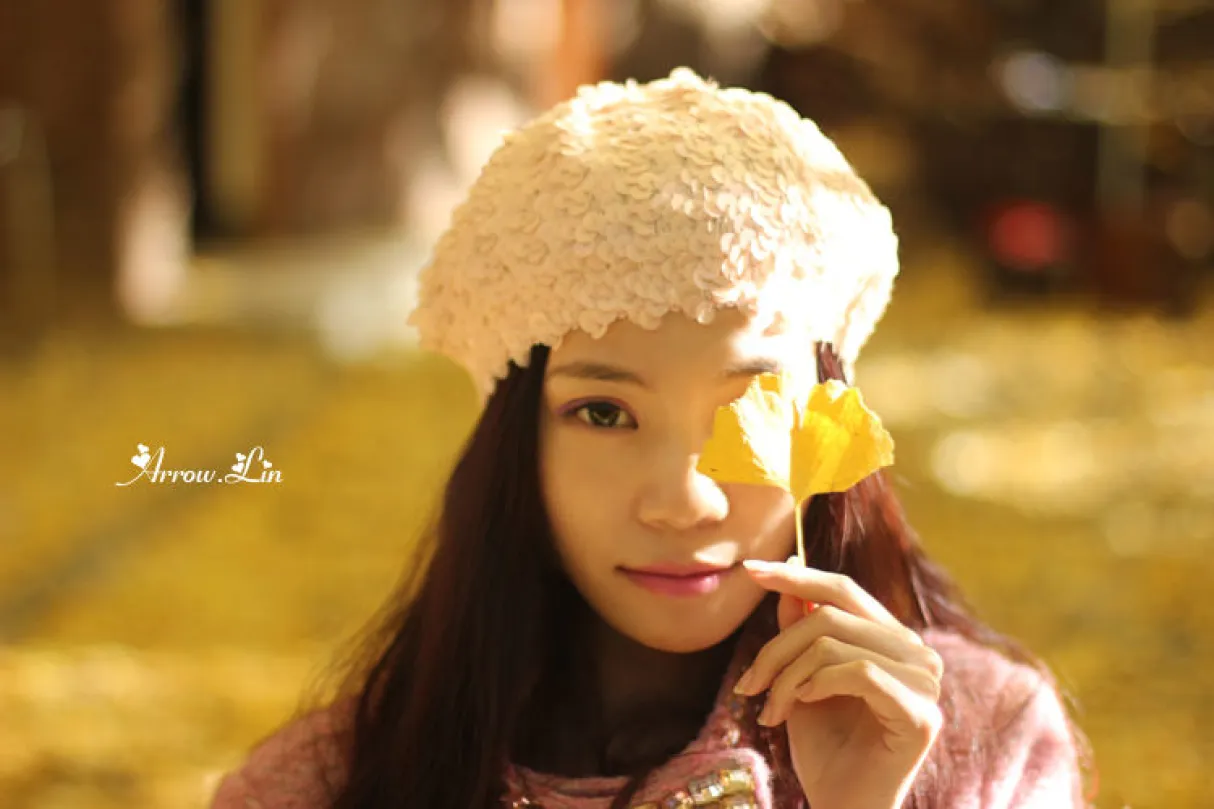
If the vast Gobi Desert is my "empress," the boundless grasslands my "imperial concubine," and the blue seas my "favorite consort," then Ginkgo Village is more like a chance encounter—glimpsing a maiden washing clothes by the stream. A village girl has her own charm—not grand or noble, not breathtakingly beautiful, but simple and elegant, standing apart from the crowd. Even in plain clothes and bare-faced, her beauty shines through, with a grace like orchid fragrance, unpolished and unrefined—a true uncut gem.
Time Under the Golden Armor
Autumn in Ginkgo Village is a scene of "the city bathed in golden armor." Golden leaves cover everything, sunlight filtering through the treetops in dappled patterns. Walking through the village, your feet sink into thick layers of fallen leaves, and the rustling of wind through the trees fills your ears. There's no urban clamor here—only time flowing quietly. The villagers live at a leisurely pace, basking in the sun, chatting about daily life, as if the outside world has nothing to do with them.
Photography: The Perfect Pairing of Prime and Wide-Angle
In Ginkgo Village, prime lenses for people, wide-angle for scenery—perfect match! Combining people and scenery? You'd need a tripod and a zoom lens. We're not professionals—just pretentious. "If fate brings you together, you mate; if not, you'll meet a gay guy instead of a date"—crude as it sounds, it fits the way we paired our camera gear.
Heshun Ancient Town: The Final Tenderness
Heshun Impressions: The Sediment of Time
Heshun Ancient Town is quieter than Shuhe and more rustic than Dayan. Its stone paths have been polished shiny by time, each stone recording stories of the past. The town nestles against the mountains and borders the water—white walls, black tiles, small bridges, flowing streams—like an ink-wash painting. There are few locals and not many tourists, only the occasional dog bark breaking the afternoon stillness.
Tea and Books: The Philosophy of Slow Living
In Heshun, find a tea house, order a pot of Pu'er, flip through a casual book—that's the best way to while away time. Sunlight streams through the window lattice onto the table, tea fragrance wafts gently, the scent of paper lingers faintly. At this moment, time seems to stand still, leaving only inner peace and contentment.
Epilogue: On Distant Lands and the Self
The Meaning of Travel
People travel to release themselves—to say goodbye to familiar surroundings, throw themselves into unfamiliar crowds, and seek novelty in places they've never set foot. Like all those who come to Shuhe to meet, by day they immerse themselves in the lingering ancient atmosphere of the old town, trying to converse with their naked souls. When night falls, they put on their urban shells again and rush toward unspeakable glamour.
Ancient towns are also havens for romantic encounters—city dwellers used to loneliness, weary city dwellers—just a bunch of "love-impaired" patients. On a journey of self-forgetting, if you're lucky enough, someone might appear who reawakens your capacity to love. Even in Shuhe, touched by modern civilization, there remains the power to restore pure ideals. Beneath the cold of night, what glitters are the fragility and longing of youth.
On Life
Between heaven and earth, we are born alone, die alone, come and go alone, bearing our own joys and sorrows. When emotions stir, love with all your might; when hurt, slap on a band-aid and you're good as new. Love itself is futile—what's the use of persistence? But alas, living in this world, we inevitably disappoint some people and are disappointed by some. Life is at its most brilliant, most precious, and never repeats. Honor it, fear it, cherish it, value it.
The charm of spring, the splendor of summer, the fruit of autumn, the bleakness of winter—these are cycles we cannot escape. A person's life is destined to grow in loneliness, to find substance in monotony, to thrive in helplessness, to be reborn through hardship. Looking back at my younger self, I feared nothing and always achieved what I set out to do. But as time passes, I've come to understand that prosperity and decline are the natural order of things. Everything in this world is like a dream, destined to fade and vanish. So in this brief moment we linger on earth, let's enjoy ourselves to the fullest.
Whatever you want for yourself, go and do it—whether you can achieve it or not. That is your own path.
Practical Tips
Transportation
- From Shuhe Ancient Town's main gate, take a minibus to Lijiang for 5 RMB per person
- Taxi from Shuhe to Lijiang: 30 RMB per car
- Plan your route in advance to avoid dragging luggage long distances
Accommodation
- Wang Family Courtyard Inn in Shuhe: Quiet and comfortable, ideal for those who prefer peace
- Mention "Red Hair's Recommendation" (红毛推荐) for a discount (specific terms to be confirmed with the inn)
Food
- "Rough Tea and Simple Meals" (粗茶淡饭) in Shuhe: Every signature dish is a classic; portions are generous
- Lijiang's cross-bridge rice noodles (过桥米线): Generally not highly rated; try other local dishes instead
Photography
- Prime lenses for portraits, wide-angle for landscapes—perfect match
- Keep an eye on battery levels; bring spares
- Avoid shooting directly at the sun for long periods—it can damage your camera
Climate
- Lijiang is extremely dry; be sure to bring lip balm and moisturizing skincare products
- Large temperature difference between morning and night; dress warmly
Conclusion
This autumn journey from Shuhe to Ginkgo Village felt like a gentle dream. In the dream, there were golden ginkgo leaves, tranquil ancient towns, scalding hot water, and those thoughts about distant lands and the self. Travel isn't about escape—it's about returning better than you left. When you've crossed a thousand mountains and rivers, you'll realize that the most beautiful scenery has always been within your heart.
May everyone on the road find their own "distant place."
You should also read:

God’s Abandoned Palette: A Self-Drive Journey Through Yunnan’s Dongchuan Red Land
God’s Abandoned Palette: A Self-Drive Journey Through Yunnan’s Dongchuan Red Land Travel has never been about reaching some distant geographic coordinate. It’s about encountering, along the way, the version of yourself buried beneath the rubble of daily routine. During this May Day holiday, I finally…
Continue reading...
Cloud Travelogue · Dali of Wind, Flowers, Snow, and Moon: A Three-Day, Two-Night Journey of a Free Spirit
Cloud Travelogue · Dali of Wind, Flowers, Snow, and Moon: A Three-Day, Two-Night Journey of a Free Spirit I am a cultured female foodie with a touch of rogue charm. I slung on my backpack, took my lover's hand, and set off on a spontaneous…
Continue reading...
The Meaning of Travel – A Tengchong Story: A Journey of the Heart and Personal Growth
The Meaning of Travel – A Tengchong Story: A Journey of the Heart and Personal Growth Setting Out, Only to Return a Better Self Some say travel is nothing more than leaving a place you're tired of, only to go to a place where others…
Continue reading...