Autumn Wanderings in Western Yunnan: Drunk on the Golden Fairytale of Tengchong, Awakening to the Romance of Dali
Autumn Wanderings in Western Yunnan: Drunk on the Golden Fairytale of Tengchong, Awakening to the Romance of Dali
As autumn breezes begin to stir in the north, the southern sun still holds its gentle warmth. I packed my bags and set off to keep a date with Yunnan's autumn—to lose myself in the golden fairy tale of Tengchong, and to wake up in the wind, flowers, snow, and moonlight of Dali.
Preface: Every Journey Is a Love Letter Written to Yourself
Some say travel is nothing more than leaving a place you're tired of living in to visit a place someone else is tired of living in. But I've always believed that every departure adds a unique leaf to the tree of life. Some of these leaves have clear veins, recording the surprises and emotions of the journey; others have slightly curled edges, carrying small accidents and regrets.
Yunnan, the land known as "the South of Colorful Clouds," holds a magic that lingers in your memory. Six months ago, I wandered through the ancient alleys of Lijiang and rowed a boat on the sapphire waters of Lugu Lake. Six months later, I set foot on this land again, just to keep an autumn date—the ginkgo season in Tengchong.
Essential Pre-Trip Reading: Practical Tips and Friendly Reminders

Best Time to Travel
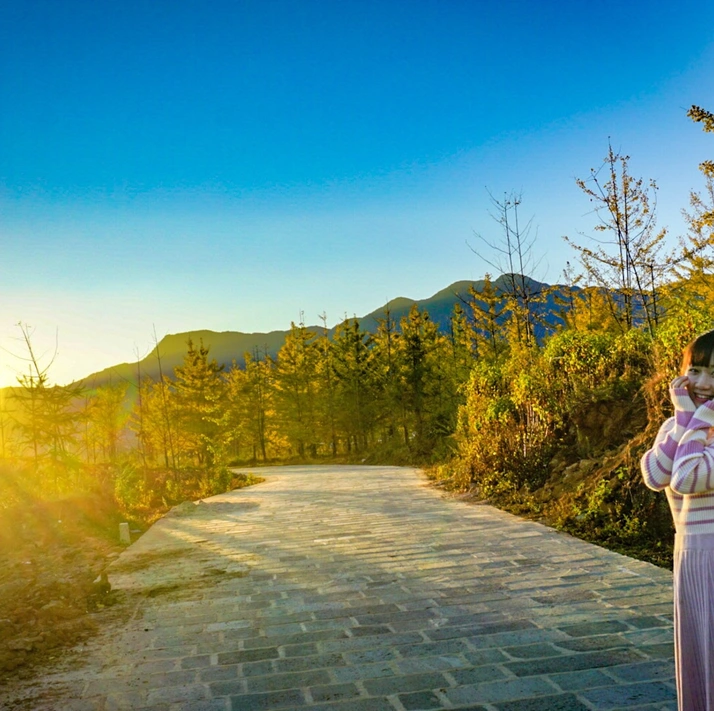
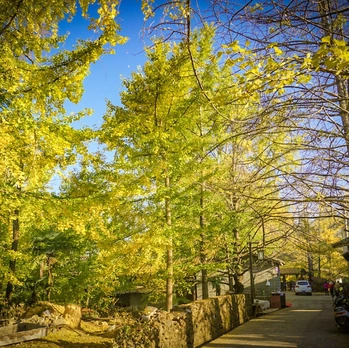
From late November to early December is the prime viewing period for Tengchong's Ginkgo Village. At this time, Güdong Town looks as if God has overturned a palette—golden everywhere, with fallen leaves carpeting the ground.
Itinerary Overview (8 Days, 7 Nights)
- Day 1: Guangzhou → Kunming (Haigeng Dam)
- Day 2: Kunming → Tengchong → Güdong Town Ginkgo Village
- Day 3: In-depth exploration of Ginkgo Village
- Day 4: Ginkgo Village → Dali → Dali Ancient Town
- Day 5: Caicun Flower Sea → Majiuyi → Taoyuan Village → Xizhou Ancient Town → Haisho Park
- Day 6: Shuanglang → Wase → Xiaoputuo
- Day 7: East Lakeside Road → Kunming
- Day 8: Kunming → Nanping Pedestrian Street → Guangzhou
Transportation Guide
External Transport: Guangzhou currently has no regular direct flights to Tengchong; you need to transfer or stop over in Kunming. The flight from Kunming to Tengchong takes about 1 hour. Alternatively, you can fly to Baoshan (45 minutes) and then take a bus.
Internal Transport: Kunming, Dali, and Baoshan all have direct long-distance buses to Tengchong. Departing from Kunming West Bus Station, the ticket price is about 214 RMB. From Tengchong Tuofeng Airport to Ginkgo Village, you'll need to hire a car. It's recommended to contact your innkeeper in advance or book a car service.
Accommodation Recommendations
- Guangzhou: Meizhili Apartment (near the airport, with pick-up service, fresh environment)
- Kunming: Changshui Airport Yuandong Hotel (new facilities, heated bathroom, friendly owner)
- Dali: Cangshan View Mansu Boutique Inn (located in Shuidui Village near March Street, affordable and cozy, with a distant view of Cangshan Mountain)
Pre-Trip Packing List
Clothing: Yunnan has huge temperature differences between day and night. You can wear light clothes during the day, but you'll need a thick jacket in the morning and evening. The UV rays are still strong in November, so be sure to bring sunglasses, a hat, a scarf, and sunscreen.
Skincare: Western Yunnan is extremely dry—even drier than spring. I recommend bringing: - Rich moisturizing cream (toner and lotion are simply not enough) - Lip balm, eye drops (artificial tears type) - Hydrating face masks, facial mist - Saline nasal spray or cotton swabs (to prevent dry nasal passages and nosebleeds)
Medicine: Cold medicine, stomach medicine, painkillers, allergy medicine, motion sickness medicine, band-aids. Special reminder: Always apply eye drops to moisten your eyes before removing contact lenses; otherwise, you risk corneal epithelial detachment.
Chapter One: Travel Troubles—Kunming, an Unexpected Overture
At 5:30 in the morning, the streets of Guangzhou were still wrapped in darkness. My friend Xiaomin and I had already dragged our suitcases onto the road to Baiyun Airport. The pick-up time we'd booked the night before was a bit late, causing us to almost miss our flight—at the first-class counter, we were like ants on a hot pan, begging the staff to expedite our check-in.
We finally boarded, thinking everything was fine, but at the luggage carousel at Kunming Changshui Airport, we waited a full forty minutes without seeing a trace of our bags.
"What? All four suitcases—left behind in Guangzhou?"
At that moment, we looked at each other, caught between laughter and tears. We'd planned to change into thick socks and coats at the airport, but instead, we stood shivering in thin clothes under Kunming's overcast, chilly sky.
With no other choice, we gritted our teeth and headed to Haigeng Dam. On the subway, I wrapped myself in Xiaomin's cape-like shawl—a mismatched outfit that was an eyesore, like a moving Christmas tree. To make things worse, when I got out of the Didi car, I left my small backpack behind. Fortunately, after some hassle, we got in touch with the driver and retrieved the bag.
"Why am I so unlucky today?"
"Ah..."
After a long sigh, we decided to heal our mood with food. At Deshengqiao Old Restaurant, we ordered a bowl of 豆花米线 (tofu pudding rice noodles)—the tofu pudding mixed with chili oil was salty, spicy, and delicious, instantly making us Cantonese feel like we might be from Sichuan or Chongqing.
Chapter Two: Tengchong—Stumbling into a Grimm's Fairy Tale at Ginkgo Village
First Sight: A Golden Dream Beneath the Blue Sky
At 6:00 in the morning, we were up early again. A delay at Kunming Changshui Airport kept us waiting on the runway for an extra hour, but the moment our plane landed at Tengchong Tuofeng Airport, all the frustration was left behind—the sky was so pure blue, a stark contrast to Kunming's gray overcast.
"Our luggage should be on the same flight this time, right?"
"Shh! Don't say that."
Thankfully, this time we were reunited with our bags.
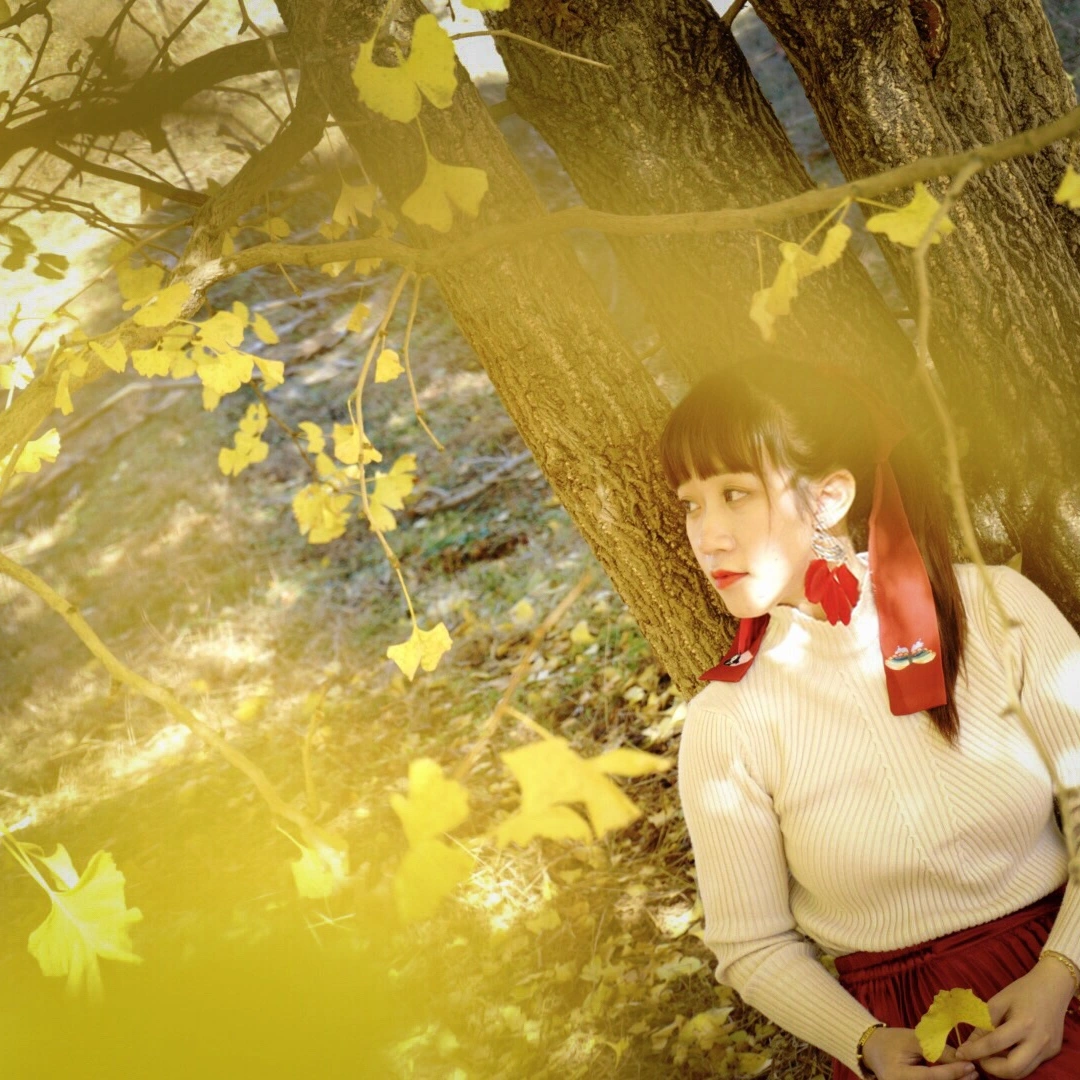
Ginkgo Village looked like a village straight out of a Grimm's fairy tale. The soft sunset, the colorful clouds, the mountains lying on the horizon, the village built against the hillside, the curling smoke from chimneys... There was no traffic or bustle of the city—only the peace of retreating into the mountains and forests.
Wandering: Getting Lost in the Gold
After dropping our luggage at the inn, we lay on the bed pondering life.
"Where are we? What are we doing? Are we hungry?"
"Even if I'm hungry, let me lie down for a while."
Two lazy people lay there for an hour before slowly dragging ourselves out the door.
At a roadside snack stall, we ordered two bowls of 肉酱饵丝 (minced pork sauce rice noodles). Xiaomin started adding chili sauce like crazy—one spoon, two spoons, three spoons...
"You weren't like this before."
"Can't help it. We have heavy tastes."
After eating and drinking our fill, we were energized like we'd had a shot of adrenaline and began exploring the village.
At the village entrance stood a giant ancient tree, covered with red prayer ribbons. In Yunnan, such old trees are often seen as "tree spirits," carrying the faith and reverence of the locals. I stood under the tree, imagining how this tree had weathered a hundred years of wind and rain—what a blessing that must be.
We pushed aside the roadside fence and carefully walked into a grove of ginkgo trees.
"Be careful, don't disturb anyone."
"Is there anyone else here?"
"Look to your right."
—It was someone's ancestral grave.
"Oh, sorry to disturb you."
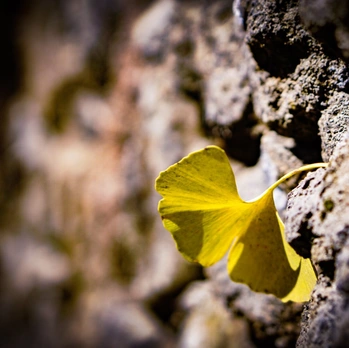
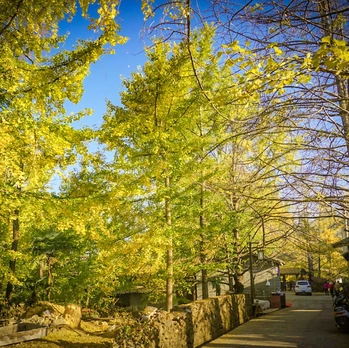
The ground was covered in brilliant golden ginkgo leaves, like a soft carpet laid over the earth. The leaves swirled in the air, sometimes flying up, sometimes falling down, like golden butterflies.
The Market: Warmth in the Haze of Daily Life
The village women sat in the small square, skillfully weaving fallen ginkgo leaves and wildflowers into garlands, attracting many tourists to buy and take photos (reference price: 5 RMB each). A gentle breeze blew, and the ginkgo leaves on the trees swayed like wind chimes.
A vendor selling fresh 石斛 (dendrobium, a medicinal herb) saw us taking photos and enthusiastically struck up a conversation: "This dendrobium can boost immunity, improve memory..."
"10 RMB a bundle, and I can add you on WeChat for home delivery."
"Not right now, thanks. We have too much luggage, and it's inconvenient to carry it to Dali."
"Okay, keep in touch!"
And so, we wandered aimlessly back and forth through the village, soaking in the warmth of the autumn afternoon.
Chapter Three: Morning in Ginkgo Village—A Symphony of Light and Poetry
Jesus Light: The Magic Hour of Dawn
The next day, before dawn, a thin white mist shrouded the farmhouse courtyards. I got up early and saw an elderly woman in the next yard lighting a fire to keep warm. Shamelessly, I went over to warm myself by the fire.
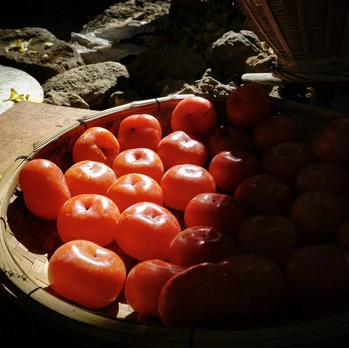
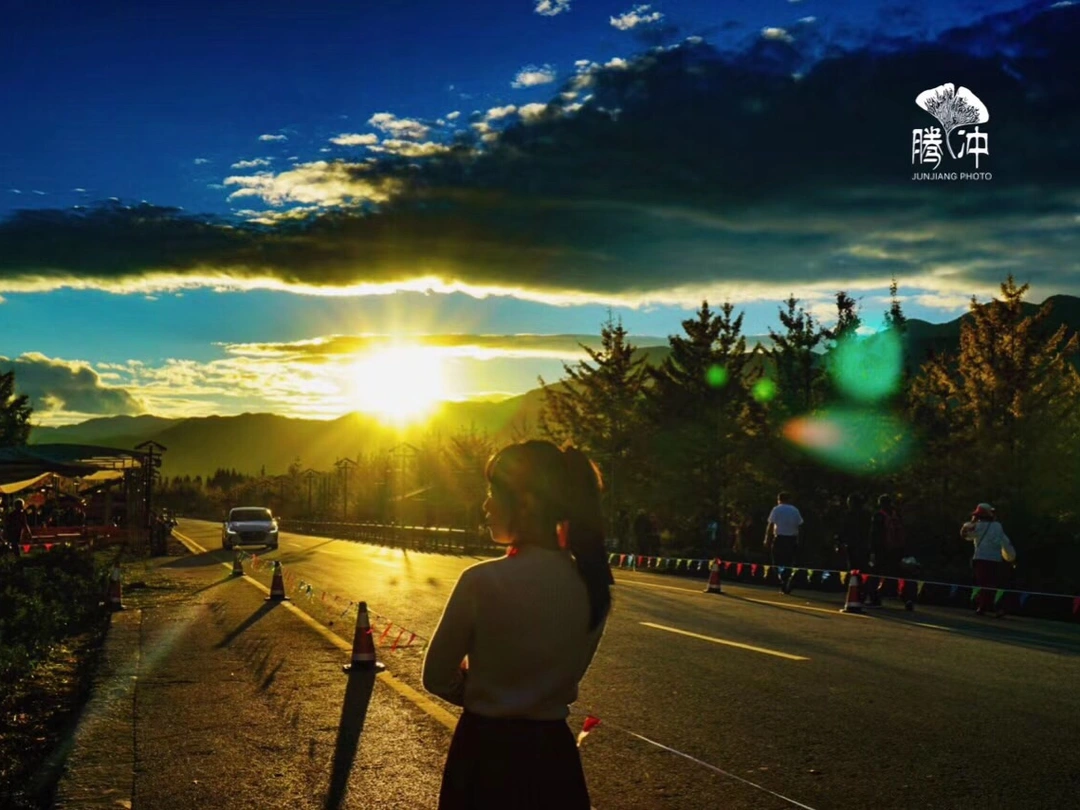
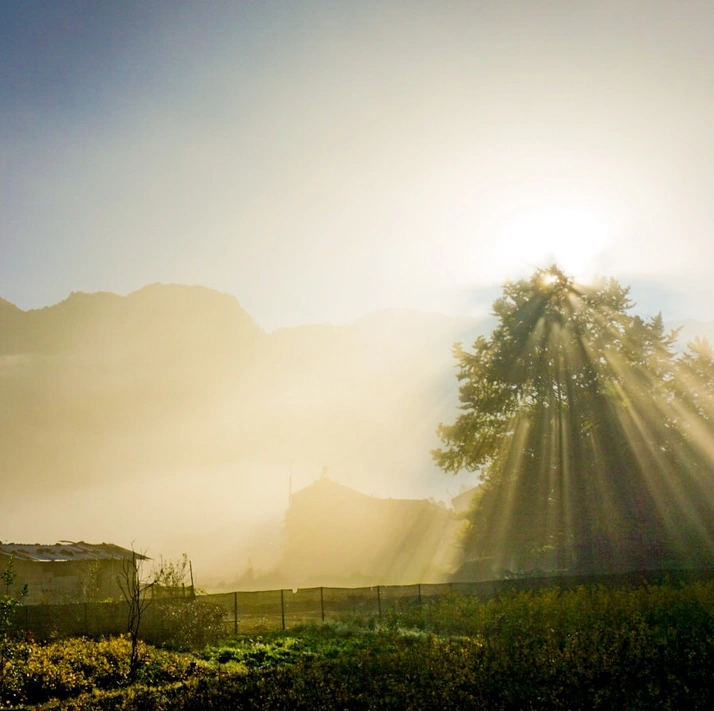
Near the village entrance bridge, there was a patch of cleared forest. The morning sun pierced through the clouds, casting beams of "Jesus light"—the scientific term for this is the "Tyndall effect," which requires mist or dust particles in the air to create visible shafts of light.
I captured Xiaomin's most satisfying silhouette: backlit, her outline traced by golden rays against a background of hazy forest and mist.
Tips for Photographing Jesus Light: - Time: Best within 1 hour after sunrise - Obstruction: Gaps in clouds or trees - Background: Choose a dark background (like a shadowy forest) to highlight the light beams
The Market: The Bustling Hearth of Autumn
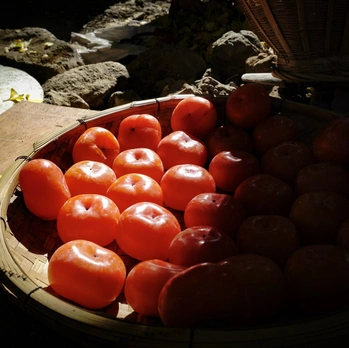
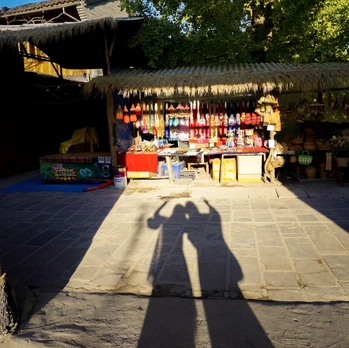
The village began to come alive. Auspicious "福" (fortune) characters, antique trinkets, various snacks, and the rising and falling calls of vendors... During the ginkgo season, the market was filled with a festive atmosphere.
The deep autumn sky was a clear, pure blue, without a single cloud floating by—a slow, peaceful tranquility. Van Gogh might have been captivated by such gold—not just his sunflowers, but also the brilliant ginkgo trees. I can't paint, so I just raised my camera, not wanting to miss a single beautiful scene.
Cuisine: Tengchong on the Tongue
At lunchtime, we returned to that same snack stall. This time, we ordered 粑肉米线 (braised pork rice noodles)—just a bit of broth, cool to the touch, as if meant to be mixed. We also had some fried vegetables, crispy and delicious, with a lingering aftertaste.
Chapter Four: Dali—Slow Time in Wind, Flowers, Snow, and Moonlight
From Tengchong to Dali, we chose the bus. Along the way, the scenery outside the window shifted from golden ginkgo forests to the grandeur of Cangshan Mountain and Erhai Lake.
Dali was not unfamiliar to me. Six months ago, I had felt the breath of spring here; this time, I wanted to see if autumn still held its romance of wind, flowers, snow, and moonlight.
The Ancient Town: Time Slows Down Here
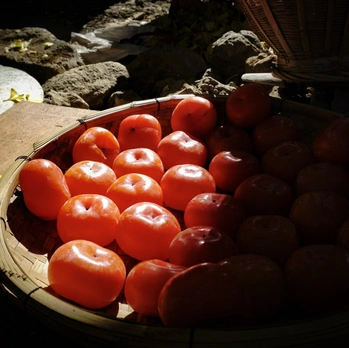
We stayed in Shuidui Village near March Street, at a boutique inn called "Cangshan View Mansu." Opening the window, we could see the vast expanse of Cangshan Mountain.
Autumn in Dali still had warm sunshine. Walking on the stone-paved streets of the ancient town, the white-walled, gray-tiled Bai ethnic houses stood in orderly rows, their painted murals telling ancient stories. The pace here was slow—so slow that you could sit in a tea house, order a cup of Pu'er, and stay there for an entire afternoon.
Lakeside Cycling: Poetic Dwelling by Erhai
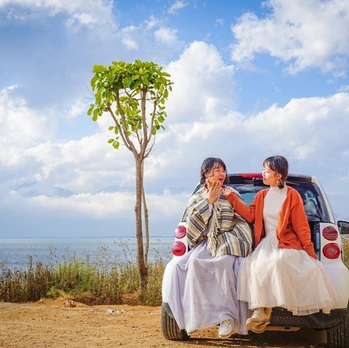
After the restoration efforts, the waters of Erhai Lake had become clearer and bluer. We cycled along the East Lakeside Road, stopping to take photos at every turn.
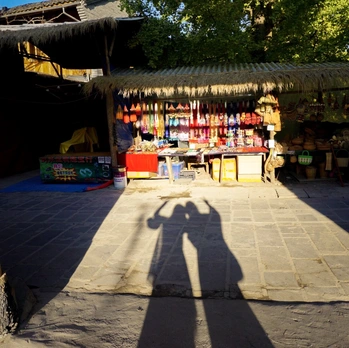
The flower sea at Caicun, the tranquility of Majiuyi, the pastoral scenery of Taoyuan Village, the Bai architecture of Xizhou Ancient Town, the wetlands of Haisho Park—every spot was like a painting.
The sunset at Shuanglang was the most beautiful I had ever seen. The sun gradually sank, crossing over Cangshan Mountain, leaving behind a deep twilight and stillness; the afterglow spread across Erhai Lake, dissolving the deep gray dusk into the murmuring waters.
"I want to sit here and watch the scenery until the end of time," I said to Xiaomin.
An Unexpected Challenge: The Test of Dry Climate
Dali was even drier than Tengchong. Every time we went out and the wind hit our faces, the freshly applied skincare seemed to evaporate instantly. My skin was unbearably dry, and my eyes were parched and painful. When I removed my contact lenses without first applying eye drops, some of my corneal epithelium detached, and tears streamed down my face from the pain.
On top of that, eating too much spicy food gave me a toothache from internal heat, and a cold joined the party. The last few days were sheer agony.
So, once again: If you come to Yunnan, make sure to bring plenty of moisturizing products and medicine!
Epilogue: Every Leaf Is a Mark of the Journey
And so, the eight-day journey came to an end.
From the golden fairy tale of Tengchong to the romance of Dali's wind, flowers, snow, and moonlight; from the embarrassment of travel troubles to the emotion of beautiful scenery—every journey is like a leaf, taking root and sprouting in my heart.
In this world, there is no such thing as a true "faraway place"—every faraway place for you is someone else's hometown. But it is precisely these faraway places that make us pause our hurried steps, use our eyes to discover the myriad beauties of an unfamiliar world, use our hearts to understand different attitudes toward life, and use our tongues to taste the countless flavors of foreign lands.
Find some time to look closely at these leaves, to quietly recall the most beautiful moments of each journey. Then, gather your thoughts, and wait for the next departure.
Postscript: If you also want to visit Yunnan, consider going in autumn. The ginkgo trees of Tengchong, Erhai Lake of Dali, the blue sky of Kunming—every place is worth keeping your appointment.
You should also read:
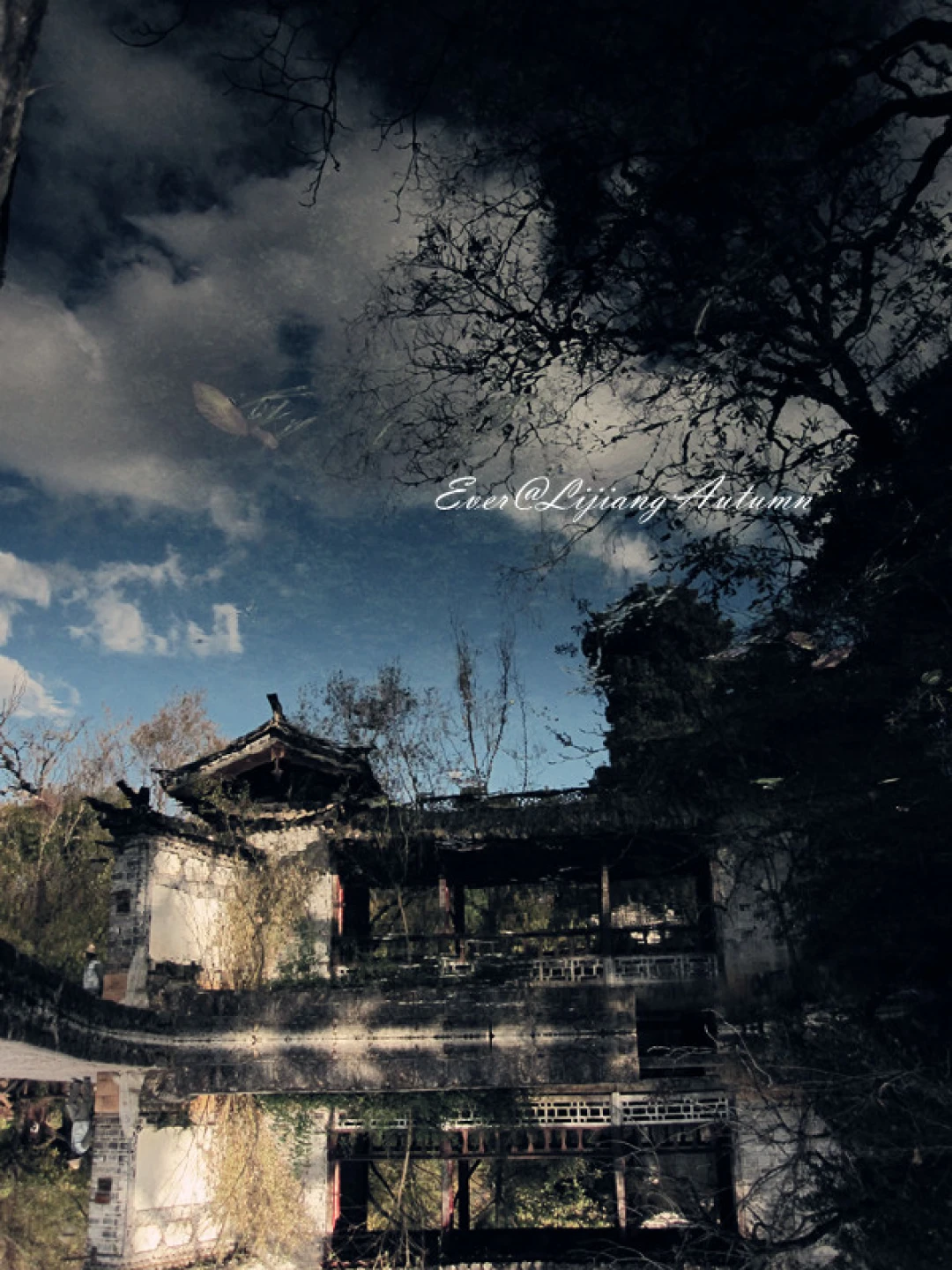
Idle Clouds in Autumn, a Moonlit City: A Slow Travelogue Through Lijiang and Shuhe
Idle Clouds in Autumn, a Moonlit City: A Slow Travelogue Through Lijiang and Shuhe When the autumn wind brushes across the ancient city's eaves, when sunlight spills onto the mottled cobblestone streets, when the melodies of folk songs mingle with the aroma of plum wine…
Continue reading...
September: Finding Unexpected Warmth in Yunnan (Kunming, Dali, Shuanglang, Lijiang, Lugu Lake)
September: Finding Unexpected Warmth in Yunnan (Kunming, Dali, Shuanglang, Lijiang, Lugu Lake) Foreword: One Person's Journey, A Crowd's Story Before I set off, like every first-time solo traveler, I printed out a thick stack of travel guides and rehearsed countless possible scenarios in my head—getting…
Continue reading...
A 9-Day Yunnan Journey: From Lijiang to Dali to Tengchong – A Trip Toward Self-Reconciliation
A 9-Day Yunnan Journey: From Lijiang to Dali to Tengchong – A Trip Toward Self-Reconciliation Some say travel is simply going from a place you're tired of to a place other people are tired of. It stings to hear, but it's painfully true. Yet there's…
Continue reading...