Be a Person as Free as the Wind: An 11-Day Soulful Journey to Yunnan
Be a Person as Free as the Wind: An 11-Day Soulful Journey to Yunnan
The earth is a circle, and I want to walk all the way around it.
In November 2025, as the northern winds began to swirl dead leaves through city streets, I boarded a flight to Yunnan. Eleven days, 2,368 kilometers—from Zhengzhou to Pu'er, from Pu'er to Xishuangbanna. This wasn't a perfect journey, but it was a passionate enough pursuit. Because I know that the meaning of travel has never been about arriving—it's about the moment you set out, when you choose to become that person as free as the wind.
Prologue: Why Set Out?
Ask a thousand people about the meaning of travel, and you'll get a thousand answers. Some see it as recharging, a way to breathe new life into a weary existence. Others treat it as a remedy, escaping the noise to find inner balance. For me, travel is more like what writer Shu Guozhi described—wandering, stopping, and letting the scenery find you.
You don't need to measure the world with your eyes; you need to feel it with your heart. The scenery will find you on its own, as long as you're willing to pause.
This southern Yunnan trip was originally planned as a month-long stay within 300 kilometers of Pu'er. But my travel companion had to return home early due to a family emergency. Regret? Of course. Yet the roads I walked, the people I met, the flavors I tasted—they've already taken root in my memory.
About Me: A Traveler Measuring the World One Step at a Time
I'm Xia Meng, a "wanderer" who treats travel like breathing. I've visited every province in China, set foot in 19 countries, and gone from hitchhiking solo and trekking to self-driving road trips. Over the past decade, I've left 187 travelogues on Mafengwo.
In this era of short videos, I stubbornly choose to record my journeys with words and photos. Because I believe the warmth that settles between the lines can never be replaced by a 30-second clip.
My ultimate dream? The earth is a circle, and I want to walk all the way around it.
Itinerary Overview: 11 Days from Pu'er to Xishuangbanna
- Day 1: Zhengzhou → Kunming → Pu'er
- Day 2: Pu'er → Ancient Tea Horse Road Heritage Park
- Day 3: Pu'er → Sun River National Forest Park
- Day 4: Pu'er → Daijia Alley → Simao Old Street → Government Compound → Daoshenggen Park
- Day 5: Pu'er → Pu'er Museum → Pu'er Science Museum → Tea City Fitness Trail
- Day 6: Pu'er → Xima River Park → Meizi Lake
- Day 7: Pu'er → Tea Expo Garden → Meizi Coffee Estate → Nakeli Ancient Town
- Day 8: Pu'er → Northern Wetland Park → Xima Lake Wetland Park → Wild Duck Lake
- Day 9: Pu'er → Mojiang → Purple Rice Grand Canyon → Keman Village → Bixi Ancient Town → Mengbo Hani Village → Mojiang Confucian Temple
- Day 10: Pu'er → Xishuangbanna → Manting General Buddhist Temple → Lancang River → Starry Night Market
- Day 11: Xishuangbanna → Tropical Flower Garden → Fly back to Zhengzhou
Chapter 1: First Impressions of Pu'er—Slow Time in the Scent of Tea
Departure Day: The Confidence to Leave on a Whim
November 5, 2025. Plane, subway, high-speed rail—six hours later, my classmate and I stood in Yunnan, 2,368 kilometers from home. China's ultra-fast transportation network has turned "leaving on a whim" from an empty phrase into reality.
Ancient Tea Horse Road Heritage Park: Hooves Crushing the Moon of a Thousand Years
On the second morning, we walked eight minutes to a breakfast shop near our guesthouse and ordered a bowl of sour vinegar rice noodles (suan cu mi xian). Chicken broth base, shredded bone meat on top—one word: fragrant. This was a Pu'er morning, simple yet satisfying.
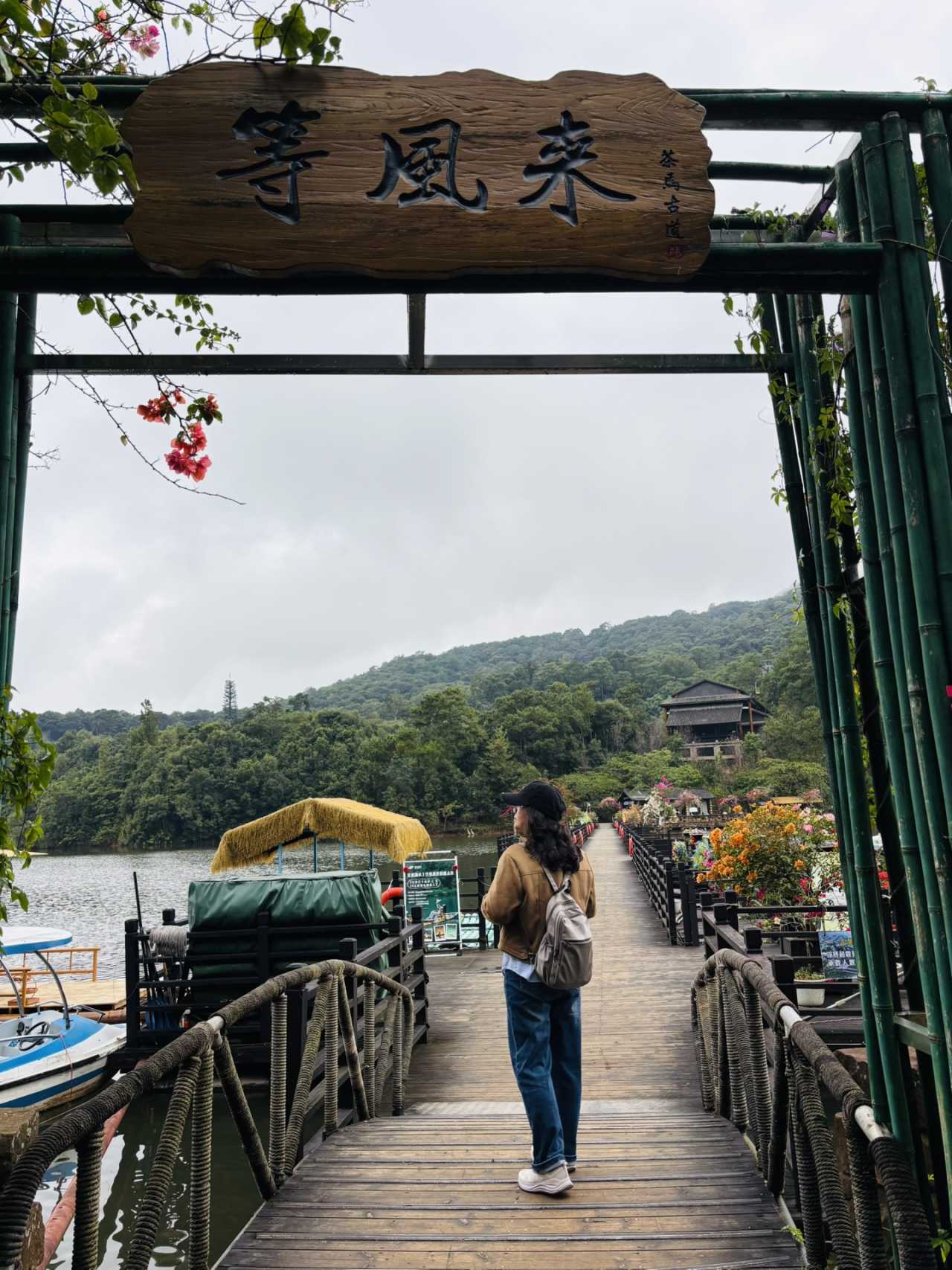
The Ancient Tea Horse Road Heritage Park was our first stop. It's not just a simple stone path—it's a vast network crisscrossing southern Yunnan, like a bloodline carrying the fragrance of tea from the borderlands to the central plains and the snowy plateau.
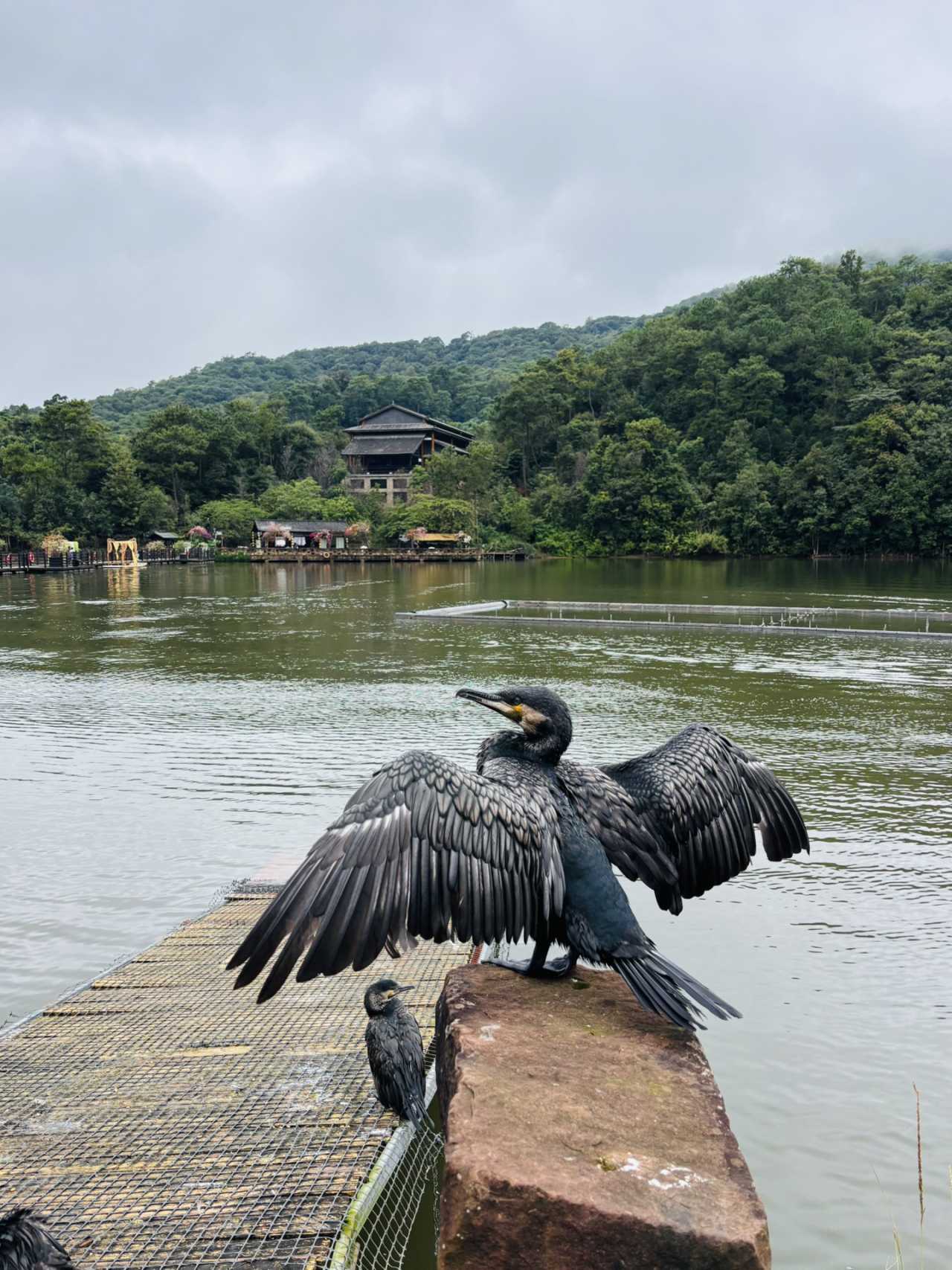
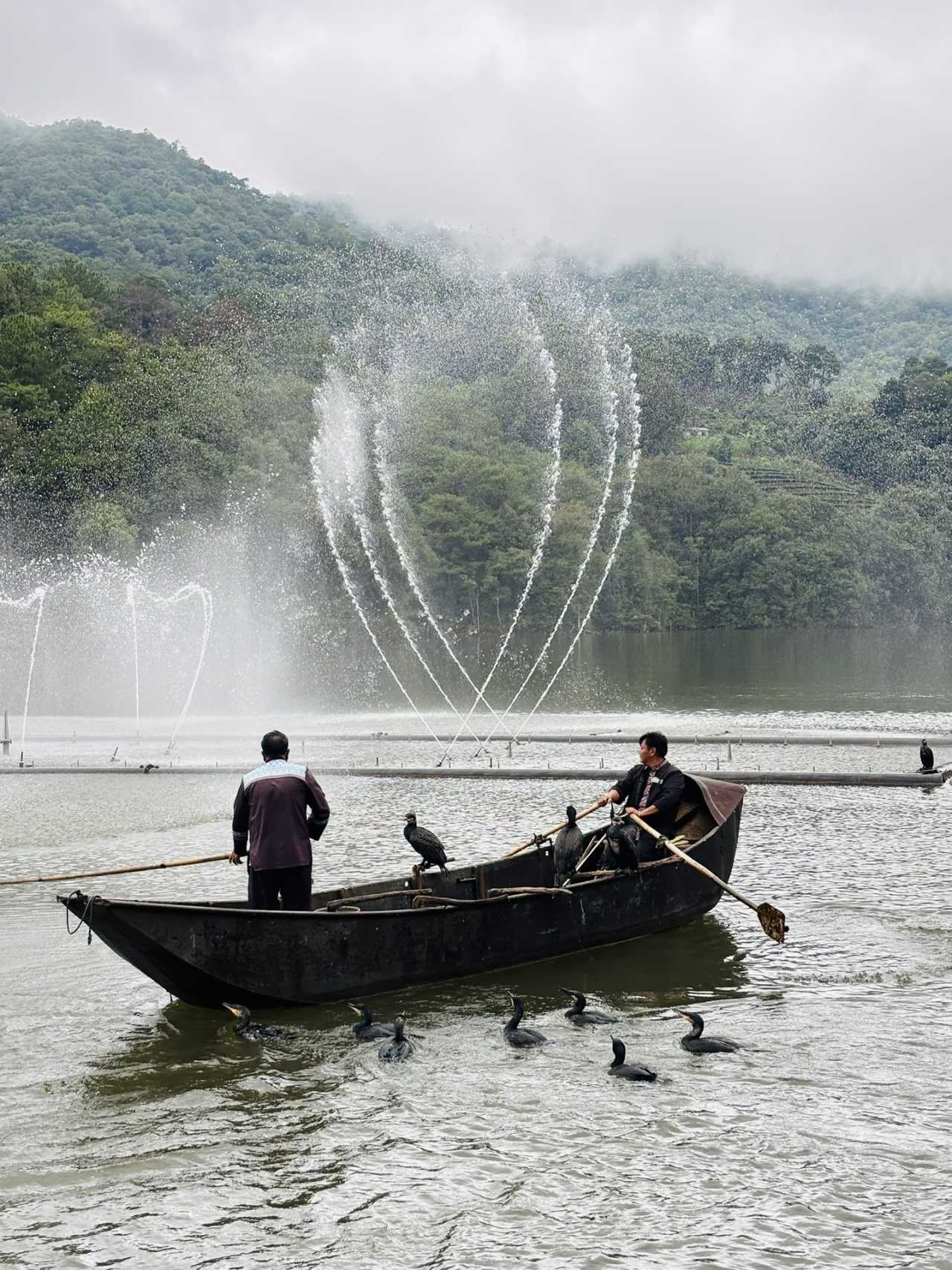
Practical Info: - Address: Simao District, Pu'er City, Yunnan Province—Pu'er Ancient Tea Horse Road Scenic Area - Transport: Self-driving recommended; we took a taxi - Tickets: Available on Meituan; single ticket includes electric cart from visitor center to Dingbo Lake, rainbow cable car, Zhongyi Post Station Museum, Tang Tea Hall, Song Tea Pavilion, etc. - Performances: Large-scale water dance show "Horse Caravan Love Song" at Dingbo Lake (Monday–Friday 16:00, weekends and holidays 11:00 and 16:00); Yunnan intangible cultural heritage cormorant fishing show (11:00, 14:30, 17:30, plus every 30 minutes at other times) - Tip: Limited dining options inside the park—best to have breakfast or lunch before entering
Standing on the mountain, looking down at hoof prints overlapping with those from a thousand years ago, I could almost hear history whispering in my ear. The Ancient Tea Horse Road was never just a trade route—it was a road of civilization, a road of the spirit.
Sun River National Forest Park: A Real-Life Emerald City
On the third day, we took a bus from Hongfeng Bus Station and arrived at Sun River Forest Park in about an hour. For the return trip, the same bus waited at the park entrance at 1:30 PM.
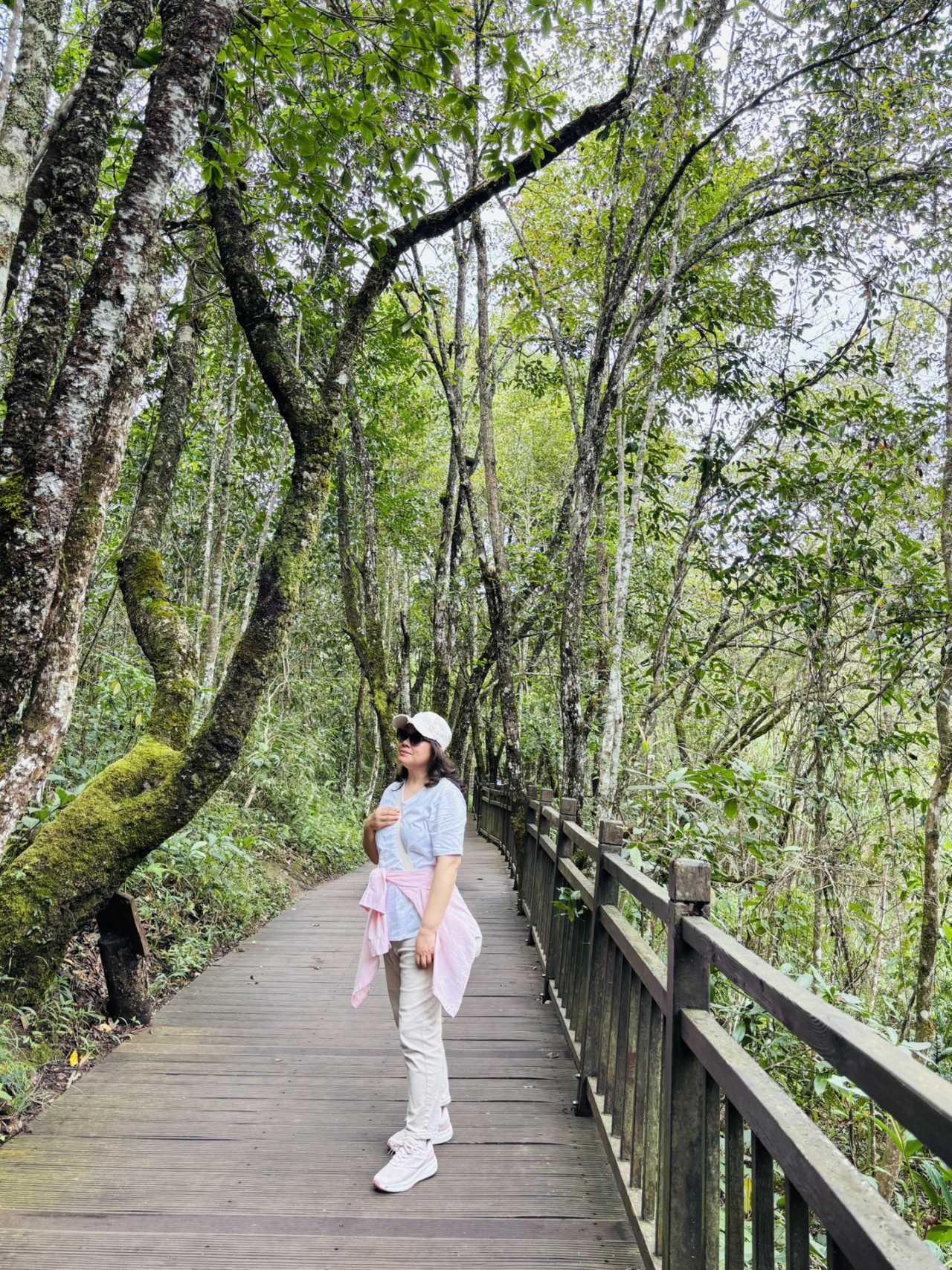
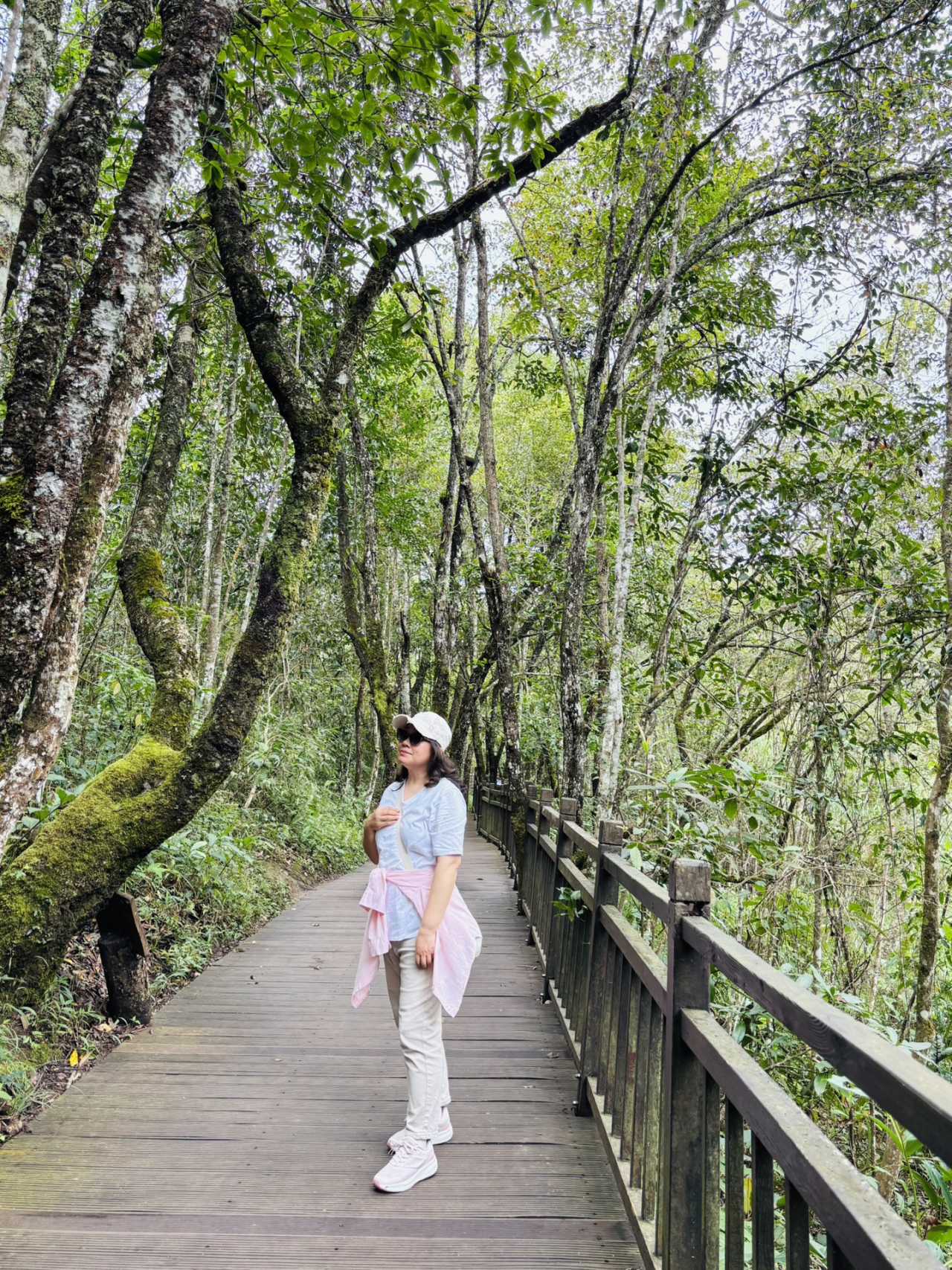
As soon as we entered the park, we were surrounded by the fresh scent of plants. Towering ancient trees blocked out the sky, sunlight filtering through the leaves to cast dappled shadows, while birdsong and the sound of a stream filled our ears—like stepping straight into The Wizard of Oz.
This place feels more like a natural classroom. Every staff member enthusiastically explains plant and animal knowledge. Watching children earnestly take nature notes, you truly feel the meaning of harmony between humans and nature.
Compared to the crowds at Xishuangbanna, here you get a rainforest adventure within arm's reach and complete, relaxing tranquility. If you're looking for a healing trip, Pu'er's forest park is the answer.
Chapter 2: Pu'er's City and Lakes—Poetic Living in the Urban Landscape
Simao Old Street: Time Slows Down Here
On the fourth day, we embarked on a City Walk. Stepping onto the uneven stone slabs of Daijia Alley felt like stumbling into a time N years ago.
Around a corner, we found a coffee shop where the owner was roasting small-bean coffee (xiao li ka fei). My feet stopped without thinking. Pu'er's slowness is hidden in the everyday life of this alley.
We accidentally wandered into Yangji Sour Vinegar Rice Noodles main branch (Yangji Suan Cu Mi Xian Zong Dian). Seeing the crowd inside, we went in to try it. It lived up to its reputation—huge portions, plenty of meat, incredibly affordable. And that apple cider vinegar—sweet and tangy—I drank three big bowls.
Daoshenggen Park: A Landscape Held Up by One Tree
In the center of Pu'er, there's a unique street-corner park called Daoshenggen Park. It's dominated by a single高山榕 (mountain banyan tree) about 300 years old. Its thick roots grow downward from above; after centuries, the aerial roots have become sturdy trunks supporting the massive canopy.
The tree is majestic yet graceful. Beneath it, grass and plants thrive, with benches and tables for residents to rest. Resting here on a hot afternoon feels like sitting under a bodhi tree—your mood suddenly opens up.
Pu'er Museum: A Must-See Hidden Gem
On the fifth day, we visited the Pu'er Museum. Located inside the Cultural Center on Binhe Road in Simao District, it's free (bring your ID), open Tuesday to Sunday 9:00 AM–5:00 PM, closed Mondays.
Exhibition Highlights: - First Floor, Ethnic Hall: Displays clothing and musical instruments of Pu'er's 14 indigenous ethnic groups—a chance to experience multicultural heritage up close - Second Floor, Pu'er Tea Hall: Two walls are built from 1,729 Pu'er tea bricks (symbolizing the establishment of Pu'er Prefecture in the 7th year of Qing Emperor Yongzheng's reign). Exhibits include ancient tea tree fossils, traditional tea-making tools, and the museum's crown jewel—a Qing Dynasty Pu'er tea cake weighing five jin (about 2.5 kg), reserved for imperial consumption - Ancient Tea Horse Road Exhibit: Uses dwarf horse sculptures and road artifacts to recreate the history of horse caravan transport
Allow about 1–2 hours to tour. Across the street is the Pu'er Science Museum—worth a visit too.
Meizi Lake Boardwalk: A Hidden Treasure
On the sixth day, we visited Xima River Park and Meizi Lake. Xima River Park centers on the Xima River Reservoir. Legend has it that during the Three Kingdoms period, Zhuge Liang washed his horses here during his southern campaign—hence the name.
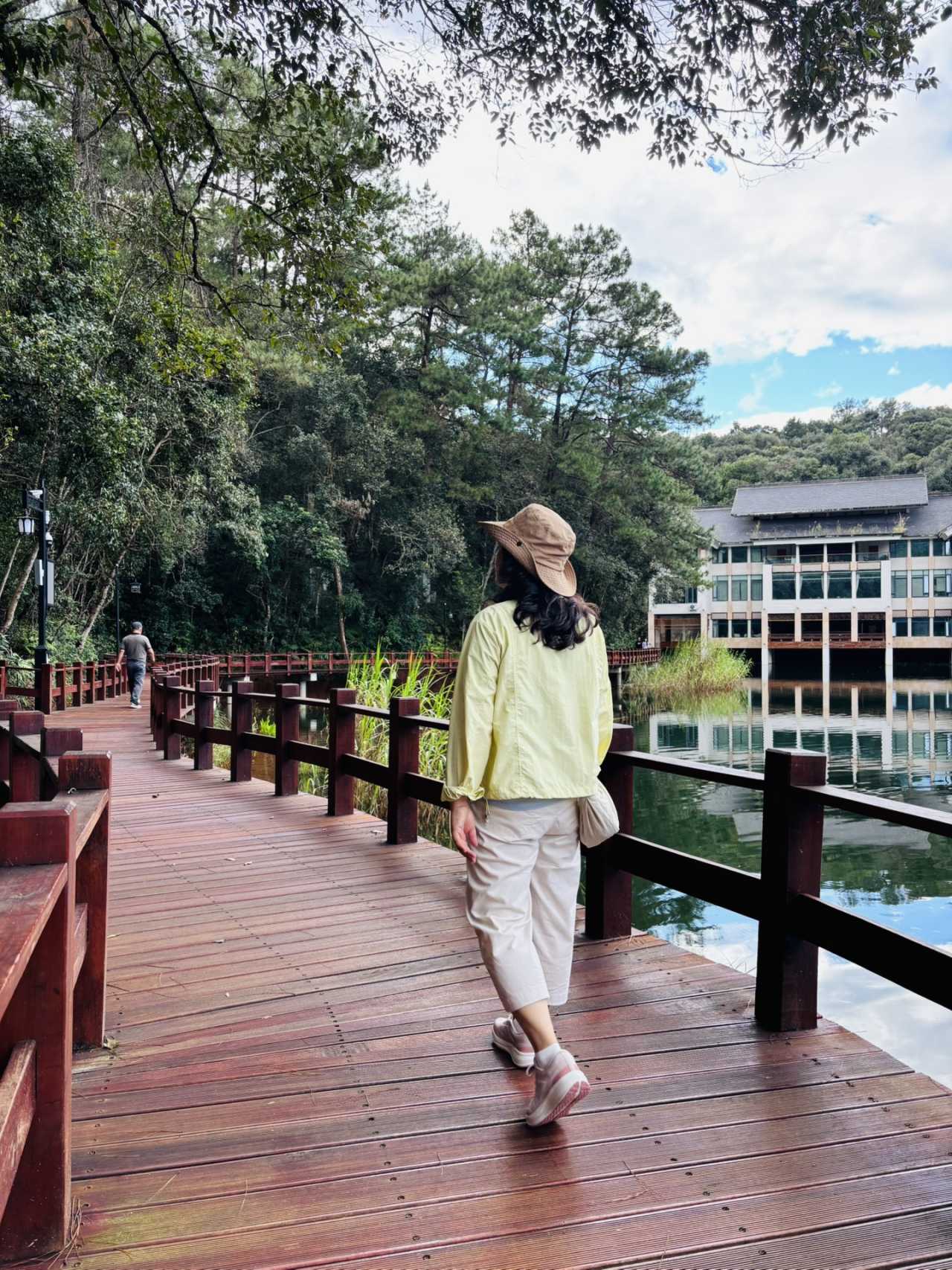
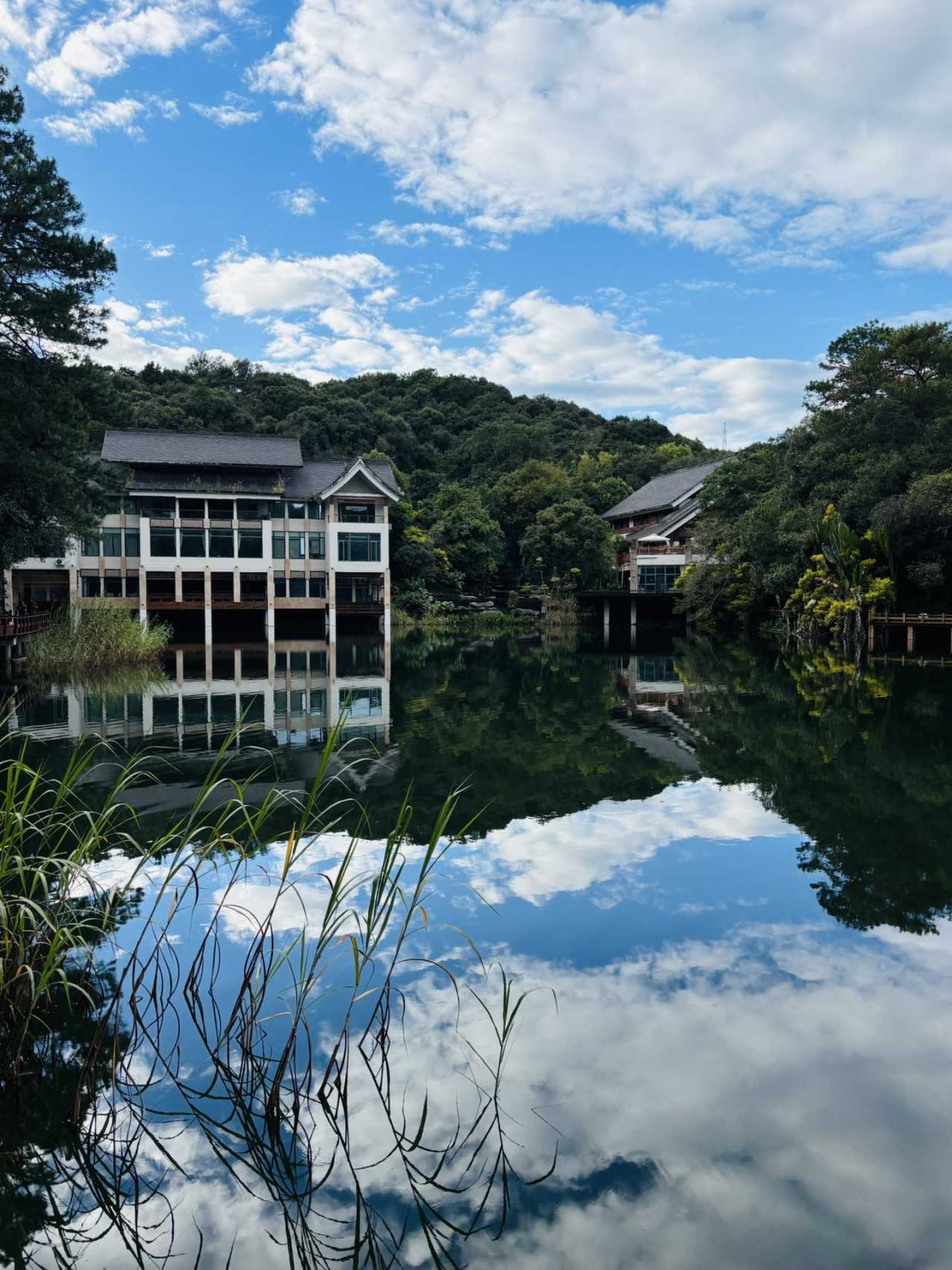
But the Meizi Lake boardwalk is an absolute hidden gem! It stretches 4 kilometers, with mountains on one side and the lake on the other. Blue skies and white clouds reflected on the water—every shot is wallpaper-worthy.
The boardwalk is unusually wide (about 3 meters) with a solid surface, perfect for running. I have to give props to the Pu'er city government—building such a comfortable and beautiful boardwalk benefits both residents and visitors alike.
Chapter 3: Tea and Coffee—The Soul of Pu'er
Tea Expo Garden: The Awe of Ten Thousand Mu of Tea Plantations
On the seventh day, we hired a car to visit three spots. First stop: the China Pu'er Tea Expo Garden, built on Yingshan Mountain 29 kilometers from the city, set against a backdrop of ten thousand mu (about 667 hectares) of ecological tea plantations.
Stepping into this tea mountain felt like entering a green wonderland. Terraced tea ridges stretched to the horizon like waves, and the air carried a faint tea fragrance. At the ancient tea workshop, we experienced traditional tea-making. The tea master brewed tea for us to taste for free—and if you like it, you can buy some to take home.
Meizi Coffee Estate: A Healing Journey from Seed to Cup
Second stop: Dakahe Meizi Coffee Estate. This estate has been sustained by three generations of the Meizi family. From the grandfather's generation partnering with Nestlé to trial coffee cultivation, to Meizi herself giving up her city job to return home and promote specialty coffee—every cup embodies the coffee farmer's craftsmanship and the passion of rural revitalization.
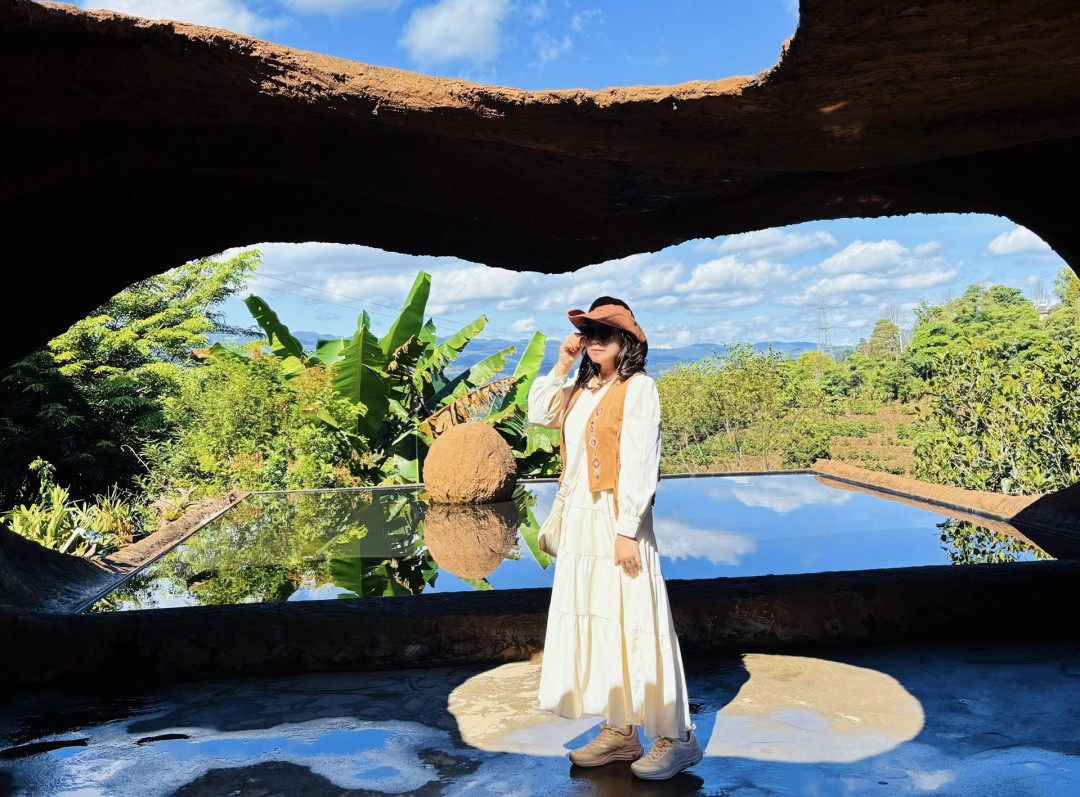
What surprised me most was the meditation hut made from coffee grounds—an absolute photo spot. Sitting in meditation there, feeling the tranquility amid coffee aromas, was a rare experience.
Coffee lovers must try the origin coffee made from Catimor beans, paired with a delicate dessert, enjoying pure coffee time surrounded by green mountains and clear waters.
Nakeli Ancient Town: Simplicity Tempered by Time
Last stop: Nakeli Ancient Town. I've visited many ancient towns across China, and Nakeli still surprised me. It has little commercial atmosphere—just a simple beauty shaped by time.
Nakeli was an important post station on the Ancient Tea Horse Road. Legend says that horse caravans had to cross a river on foot, and the exhausted horses would shed tears at the sight of the water—hence the original name "Ma Ku Li" (Horses Cry). Later, the caravan leader petitioned the authorities to build a covered bridge, and the town was renamed Nakeli.
The town itself is small—an hour is enough for a quick tour. But if you wander, take photos, try making tea cakes at a tea house, daydream in a coffee shop, and chat with locals—you could easily spend a fulfilling day here.
Chapter 4: Time Alone

Northern Wetland Park: Where Plants Take Center Stage
On the eighth day, my companion rested at the hotel while I went out alone with my selfie stick to visit three parks.
Northern Wetland Park, in northern Pu'er, combines marshes, ponds, grasslands, and constructed wetlands into an ecological network. There weren't many people—mostly locals with kids fishing or picnicking. With the rich aroma of coffee and a clearing sky after rain, it couldn't have been better.
Xima Lake Wetland Park: A Park That Doesn't Feel Like a Park
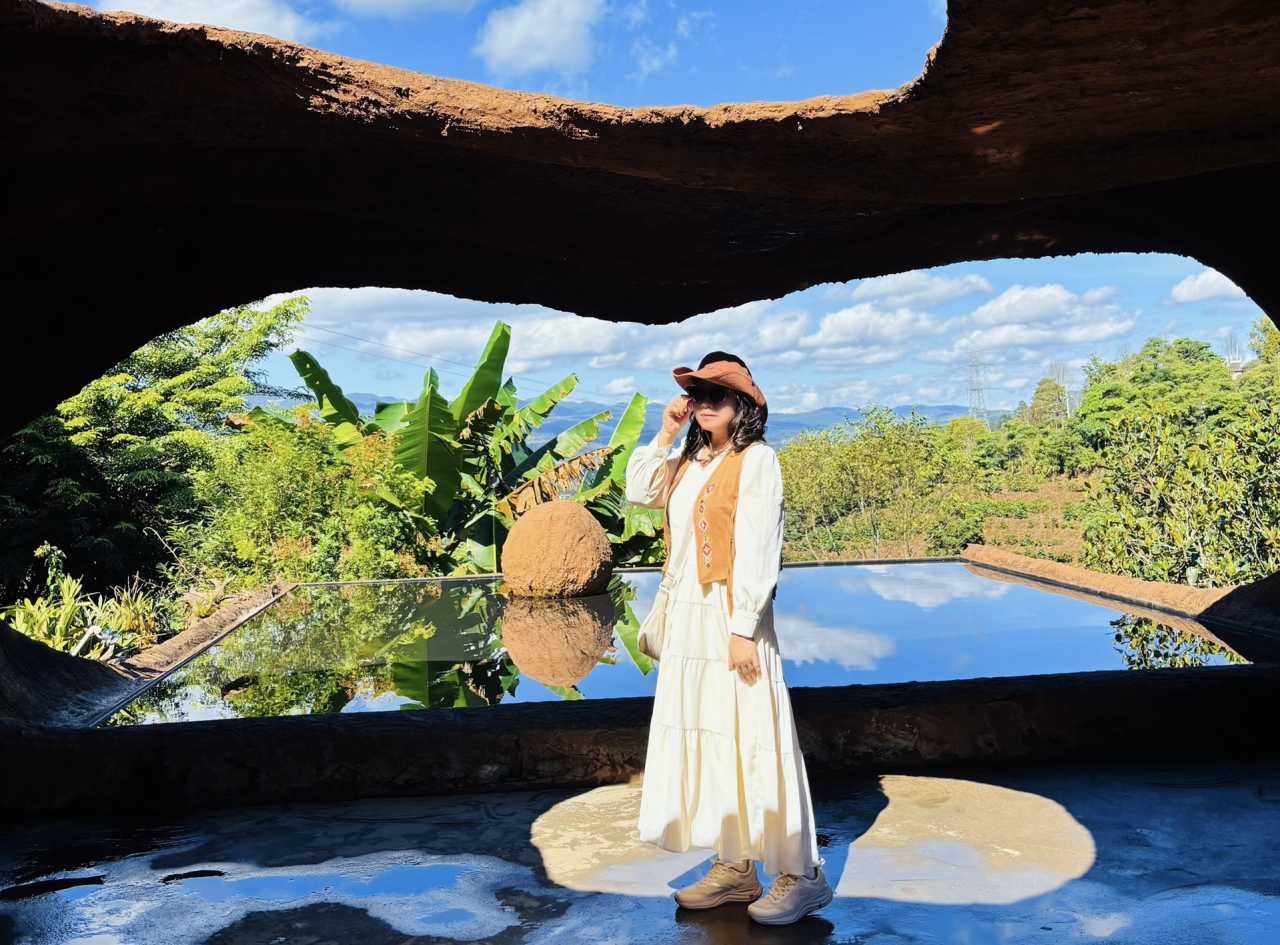
Xima Lake Wetland Park became a personal favorite. Note: Xima River Park and Xima Lake Wetland Park are two different places—the former is small, while the latter is vast.
What makes this place special is that it feels less like a park built for humans and more like a precious green space given the name "park" to protect it. Here, plants are the true protagonists—growing freely, occupying most of the space.
Walking through it, the paths are full of uncertainty—sometimes a sudden clearing, sometimes a dead end in the depths of green. This seemingly "imperfect" park reminds us that humans are not the sole masters of the earth. Living in harmony with all things is our proper stance.
Wild Duck Lake: Slow Time for One
Wild Duck Lake is large and quiet, with just a few scattered anglers. The scenery at the lake's center is especially beautiful—a beauty hard to put into words.
That day was cloudy, with no harsh sun, and I could see distant clouds merging with the mountains. Walking alone, enjoying the slow time—the landscape was lush and gentle, as if frozen in stillness.
Chapter 5: A Day in Mojiang—Terraces and Ancient Villages
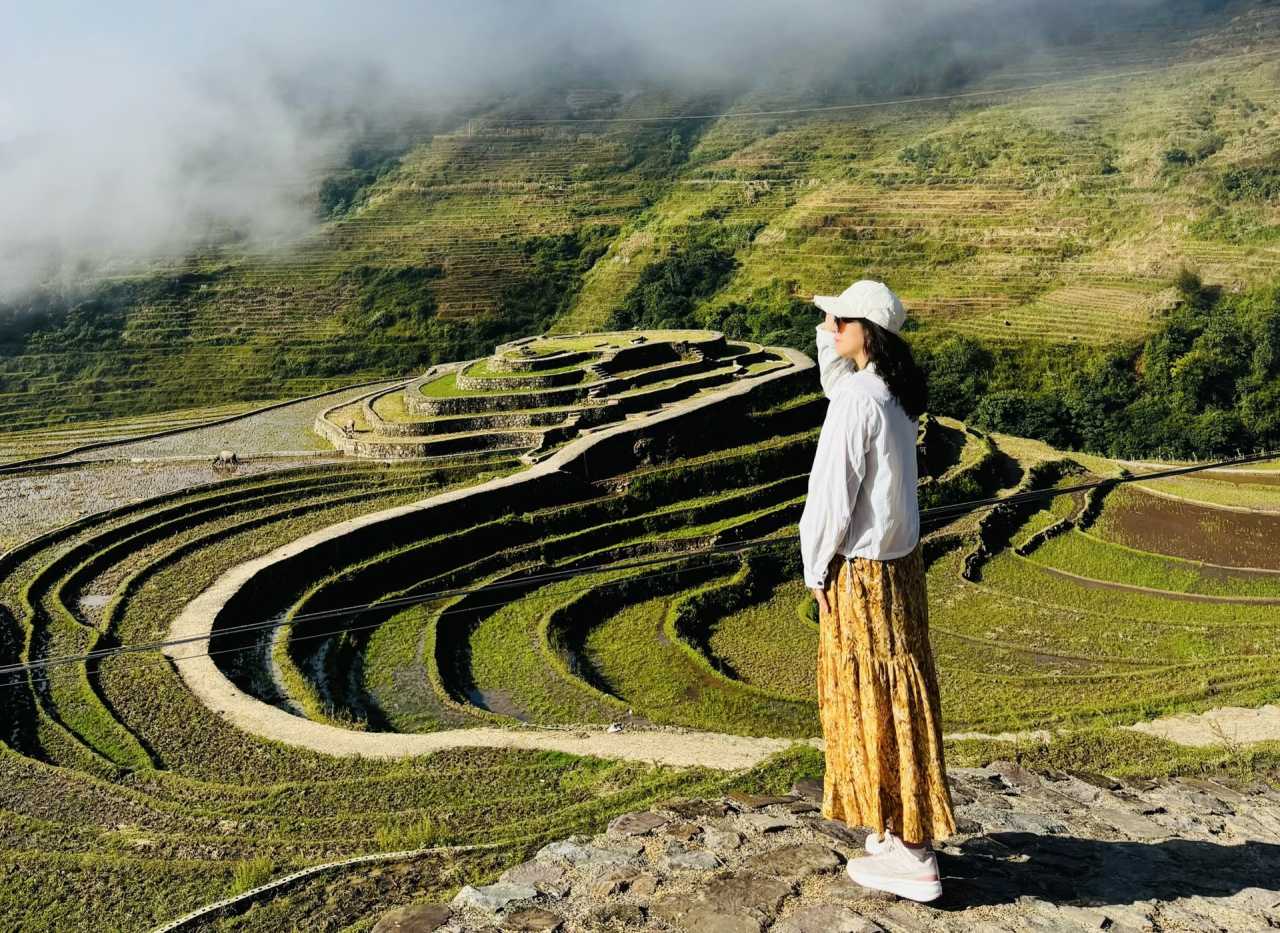
Purple Rice Grand Canyon: The Earth's Fingerprints
On the ninth day, we caught the 7:00 AM intercity train to Mojiang Station, arriving in 50 minutes. Our hired driver, Xiao Zhou, was already waiting at the exit. The route he recommended let us visit two extra spots—huge win!
At dawn, a thin mist draped the mountains like gauze. Terraced fields appeared and disappeared in the sea of clouds, with leisurely water buffalo in the ridges—a splash-ink landscape painting.
The lines of the terraces are the earth's fingerprints. When the first rays of sunlight fell, golden light flowed slowly along the ridges, as if time itself had frozen. Standing there, my soul felt washed clean.
Keman Village: A Time-Slow Paradise
About 10 kilometers down from the Purple Rice Grand Canyon lies Keman Village. Surrounded by rolling rice paddies, terraced landscapes, and rich Hani ethnic culture, it forms a tranquil pastoral picture.
The village has only a few farmhouse restaurants, none open due to the lack of tourists. The terraces aren't huge, and the rice had already been harvested—apparently, it's most beautiful before harvest. Still, on a good day, the scenery is lovely.
Bixi Ancient Town: A 600-Year-Old Tea Horse Post
Bixi Ancient Town is a 600-year-old key post on the Ancient Tea Horse Road, hidden deep in the Ailao Mountains. It has no over-commercialized noise, preserving a simple, peaceful atmosphere.
The town has a unique cross-shaped layout, with streets paved in smooth bluestone. The iconic Octagonal Tower sits at the town center, once a gathering place.
What surprised me most was that this is also the ancestral home of Taiwanese singer Harlem Yu—the Yu family residence was the home of Yu Enyang, a "Protector General" during the Republic of China era. Note: The Yu residence is usually only open on weekends.
Chapter 6: Xishuangbanna—Tropical Flavor
Manting General Buddhist Temple and Starry Night Market
On the tenth day, we traveled from Pu'er to Xishuangbanna. Manting General Buddhist Temple was solemn and majestic; the Starry Night Market along the Lancang River blazed with lights—this was another side of Yunnan, passionate, vibrant, full of exotic charm.
Tropical Flower Garden: The Final Farewell
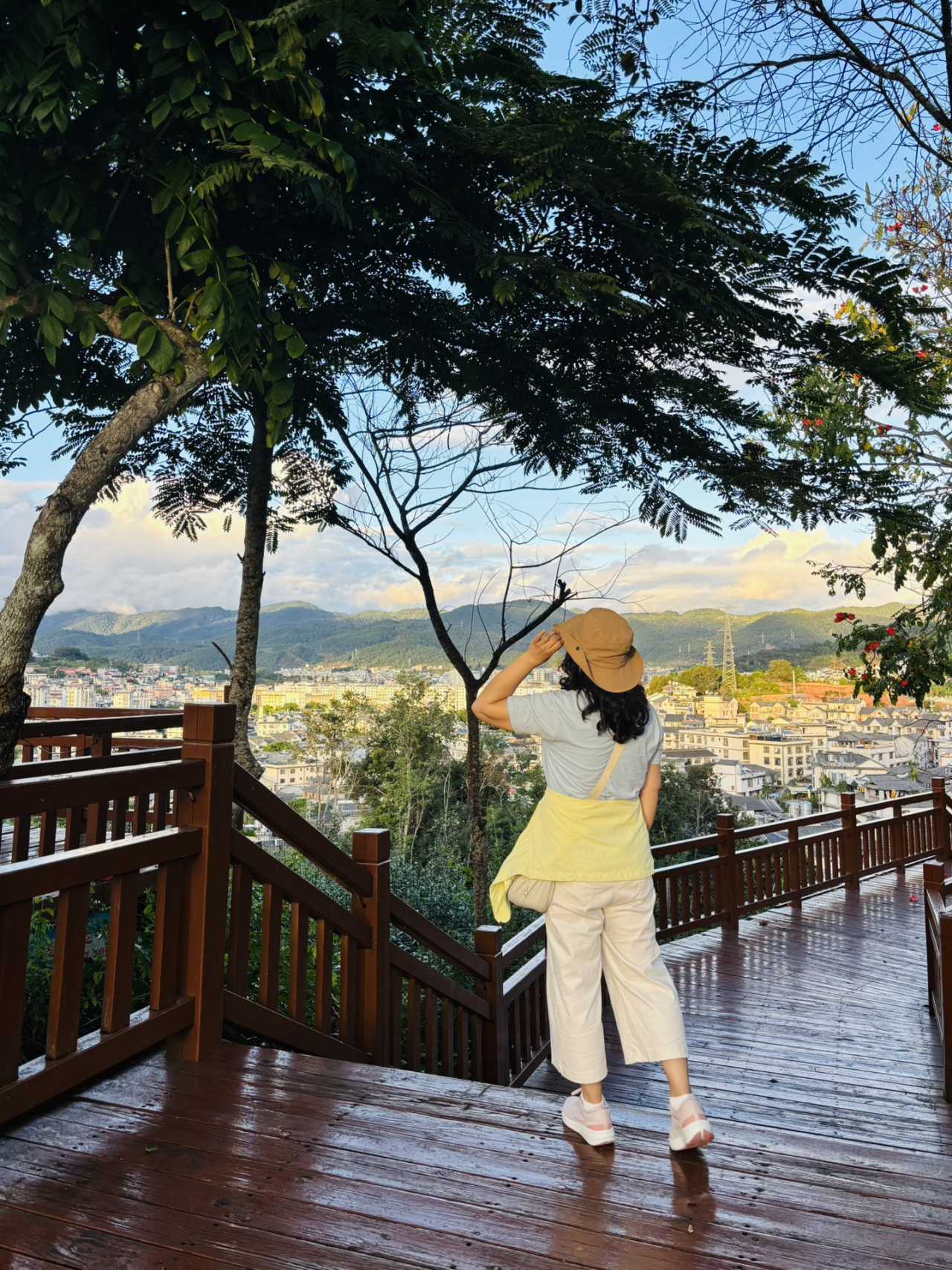
On our last day, we strolled through the Tropical Flower Garden, then flew back to Zhengzhou. A three-hour flight carried us from the tropics back to early winter, as if waking from a long dream.
Epilogue: The Meaning of the Pursuit
This southern Yunnan trip had plenty of regrets—the planned month became 11 days, and many places I wanted to visit remained unvisited. But as Su Shi wrote: "We are but mayflies between heaven and earth, a single grain in the vast ocean."
A human life is nothing more than a mayfly in the universe, a grain in the ocean. So what are we busy with all our lives?
For me, travel is the answer. It lets me experience infinite scenery in a finite life, touch a vast world from a tiny existence.
Be a person as free as the wind. The pursuit of this very moment is the most passionate meaning of all.
Practical Tips Summary: 1. Transport: Taxis are convenient within Pu'er; for outlying attractions, consider hiring a car or self-driving 2. Food: Sour vinegar rice noodles (suan cu mi xian), steam pot chicken (qi guo ji), Wa King's Feast (wa wang yan), Jingdong clay pot goose (jing dong sha guo e), Dai ethnic set meals—every one worth trying 3. Best Season: November in Pu'er has pleasant weather, similar to early summer—perfect for travel 4. Note: Xima River Park and Xima Lake Wetland Park are two different places—don't confuse them 5. Driver Recommendation: For Mojiang, contact Xiao Zhou (message me for contact info)
The earth is a circle, and I want to walk all the way around it. Next stop—where will you go?
You should also read:

God’s Abandoned Palette: A Self-Drive Journey Through Yunnan’s Dongchuan Red Land
God’s Abandoned Palette: A Self-Drive Journey Through Yunnan’s Dongchuan Red Land Travel has never been about reaching some distant geographic coordinate. It’s about encountering, along the way, the version of yourself buried beneath the rubble of daily routine. During this May Day holiday, I finally…
Continue reading...
Cloud Travelogue · Dali of Wind, Flowers, Snow, and Moon: A Three-Day, Two-Night Journey of a Free Spirit
Cloud Travelogue · Dali of Wind, Flowers, Snow, and Moon: A Three-Day, Two-Night Journey of a Free Spirit I am a cultured female foodie with a touch of rogue charm. I slung on my backpack, took my lover's hand, and set off on a spontaneous…
Continue reading...
The Meaning of Travel – A Tengchong Story: A Journey of the Heart and Personal Growth
The Meaning of Travel – A Tengchong Story: A Journey of the Heart and Personal Growth Setting Out, Only to Return a Better Self Some say travel is nothing more than leaving a place you're tired of, only to go to a place where others…
Continue reading...