Beyond the Southern Clouds: Eight Days Adrift, An Elopement with the Sky
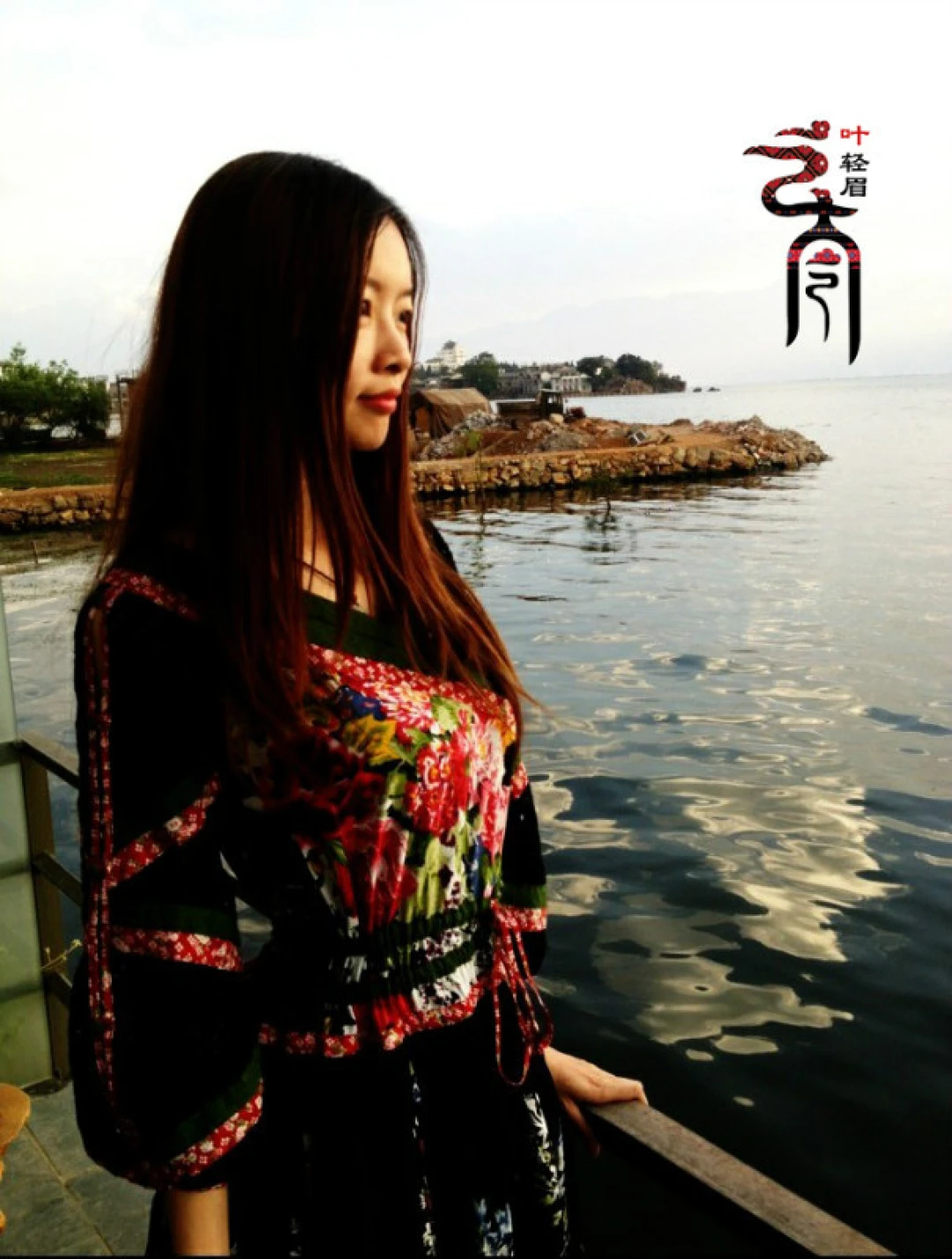
Beyond the Southern Clouds: Eight Days Adrift, An Elopement with the Sky
Some places captivate you with their name alone. Yunnan—"South of the Clouds"—feels predestined for those yearning to escape the concrete jungle. In early April 2013, just before the Qingming Festival, my friend Beike and I packed our bags, left Shanghai, and traced a gentle arc across the Yunnan-Guizhou Plateau over eight days. This wasn't a spur-of-the-moment whim; it was a long-planned rendezvous—a date with blue skies, snow-capped peaks, ancient towns, and a canopy of stars.
Departure: Crossing from Gray to Blue
All winter, I'd been trapped under the city's gray haze. Occasional sunlight filtered through the smog, and squinting, I could only recall the piercing clarity of last September in Tibet—the golden leaves shimmering over the Lhasa River, the Sanskrit chants drifting from temple halls, prayer flags snapping in the wind. Those memories were addictive, intoxicating.
So when a friend asked, "When are you writing your Yunnan travelogue?" I knew this journey deserved to be recorded.
Itinerary Overview: - March 29: Shanghai → Kunming - March 30: Kunming → Dali Old Town - March 31: Dali Old Town → Shuanglang - April 1: Shuanglang → Lijiang - April 2: Lijiang → Shangri-La - April 3: Shangri-La → Shika Snow Mountain → Meili - April 4: Meili → Shangri-La - April 5: Shangri-La → Shanghai
Kunming: Crossing-Bridge Noodles and the Unexpected Gift of a Traffic Jam
A Bowl of Noodles Starts the Journey
Woken at 8:30 AM by the honking traffic below, I found Kunming's sunlight already flooding the streets. Women in short skirts clicked past on high heels—warmth, truly, is one of life's greatest pleasures.
After a bowl of crossing-bridge noodles (过桥米线) at Jianxinyuan, we hailed a taxi to the western bus station. The queues were terrifyingly long, so we quickly found a shared ride. Departing at 11:30 AM, destination Dali—320 kilometers, an estimated four hours.
Chuxiong Gridlock: An Accidental Spectacle
Outside Chuxiong, we hit an epic traffic jam—a serpentine line of cars with no end in sight. We got out and scrambled up a nearby hillside. The mountain wind was fierce; white clouds drifted across a sky so blue it was almost transparent. Patches of wild white flowers swayed on the red earth. The sun cast cloud shadows across the hills—a scene so beautiful it felt like a love letter from the sky to the land.
Two and a half hours later, the convoy finally crawled forward. For miles, the roadside was littered with instant noodle bowls and water bottles—the aftermath of a jam that had stretched from 6:00 AM to 4:00 PM.
Dali: Wind, Flowers, Snow, and Moonlight—A Belated Encounter
First Impressions of the Old Town
We arrived in Dali just as the sun was sinking behind Cangshan Mountain, catching only the last sliver of its golden rays. A warm-hearted Bai woman pulled us toward her guesthouse—tucked away in a lane deep within Foreigner Street. A courtyard bursting with red flowers made me fall in love at first sight.
The old town at night was perfectly temperate. Cherry blossoms were in full bloom, their layered petals weighing down the branches. Beneath the city gate, a singer performed "Fleeting Fireworks" (烟花易冷), the melody echoing off the stone streets:
The clamor of the world fades into the empty temple, overwhelming all who hear Dreams grow cold, a life of wandering, how many debts of love remain? Let me wait for history to turn, for the wine to age, for you to play one more tune on the zither
In that moment, Dali was no longer just a dot on a map—it was a poem.
Cycling Erhai Lake: A Cloud Made of Rain in the Wind
The next day, we slept in. Across from the inn, we ordered a bowl of rice noodles (饵丝) topped with mint—cool and oddly refreshing. Yunnanese breakfasts always have character.
We rented bicycles with no destination in mind. We circled the old town, ducked through overgrown alleys, and passed groups of Bai women in traditional dress. Then we pedaled out of town, watching clouds churn over Cangshan. Below the mountain, the old town with its gray tiles and white walls sat quiet and gentle, like a sash tied around a Bai woman's waist.

The ride toward Erhai Lake was smooth—gentle downhill slopes curving into S-bends. I let go of the handlebars and let the wind blow in from the lake. That wind had the power to scatter every worry.
Trees grew along the lake's edge, some even rising from the water. A few had died, standing in the lake like solitary sentinels of a century. Over Cangshan's summit, distant clouds drifted—a landscape of eternal change.
The return was brutal—all uphill, with the midday sun burning down. But a sudden downpour during lunch brought joy to the drought-stricken locals. Watching the Bai people run through the rain, shouting with delight, I realized happiness can be very simple.
Shuanglang: Between Destruction and Beauty
A Town Awakened by Bulldozers
At 3:00 PM, a rattling old bus dropped us in Shuanglang. A vast expanse of dark blue water unfolded below—Erhai Lake, finally revealed in its truest form.
But I regretted arriving too late.
In China, the moment something beautiful is discovered, destruction follows. Bulldozers and excavators roared, dust filled the air. Old houses were knocked down one by one; steel-and-cement hotels were rising in their place. Those intricately carved Bai mansions with their upturned eaves were reduced to half-ruined walls.
Thank Heaven for That Room
We walked in silence to Shuanglang Primary School, turned left, and reached our booked guesthouse. The moment we pushed open the door, all frustration vanished. Three sides faced the lake, all glass walls. A bamboo rocking chair, a spacious terrace. A horse grazed quietly by the water. I pulled open the curtains—facing Erhai Lake, with spring in full bloom.
The sunset over Erhai was the moment my journey truly began. The sun cast a thick column of light across the lake, like a heavenly road, right up to the final second. I swayed in the rocking chair, half-closing my eyes, watching small boats cast their nets in the shimmering twilight—beautiful enough to make you drunk.
The innkeeper was a gentle middle-aged Bai man, a primary school teacher who, with his wife, managed six rooms. His orchids were exquisite, and his wife's cooking was divine—generous chunks of cured pork, fresh fava beans, free-range eggs, and wild toon shoots. Dinner on the balcony was a feast for both eyes and stomach.
As night fell, someone lit a bonfire by the lake. Countless stars appeared in the sky, flickering on and off. How many years had it been since I'd seen so many stars? I drifted back to childhood nights on a bamboo bed in the countryside, starlight filtering through the shadows, fireflies darting into dreams. My grandfather's palm-leaf fan stirred a cool breeze that carried me across the Milky Way.
The gentle lapping of Erhai's dark waters against my lakeside room lulled me to sleep beneath a canopy of stars.
Lijiang: A Petit Bourgeois Paradise Pelted with Flowers
A Festival in Full Splendor
Morning sunlight woke me. I slipped into a flowery dress and wandered the stone streets. It was an important local day—everyone was dressed in their finest. Several fat pigs had been slaughtered in the street, and incense and candles were placed outside shop doors. I didn't ask what festival it was. Their joy was their own; if I could avoid intruding, I would.
I climbed a small peninsula where a dozen tables of food were spread under a giant banyan tree. Festively dressed locals chatted and laughed loudly in a language I couldn't understand. I watched a Bai song-and-dance performance. Apart from Beike and me, the only other audience member was an elderly Bai woman. Her expression was focused, unruffled.
Lijiang's Spring
At noon, we boarded a bus to Lijiang. Past fields of garlic and wheat, the road began to climb. High-altitude primeval forests spread before us, sunlight making the edges of clouds translucent.
When fields of rapeseed flowers and peach blossoms appeared by the roadside, we had arrived.
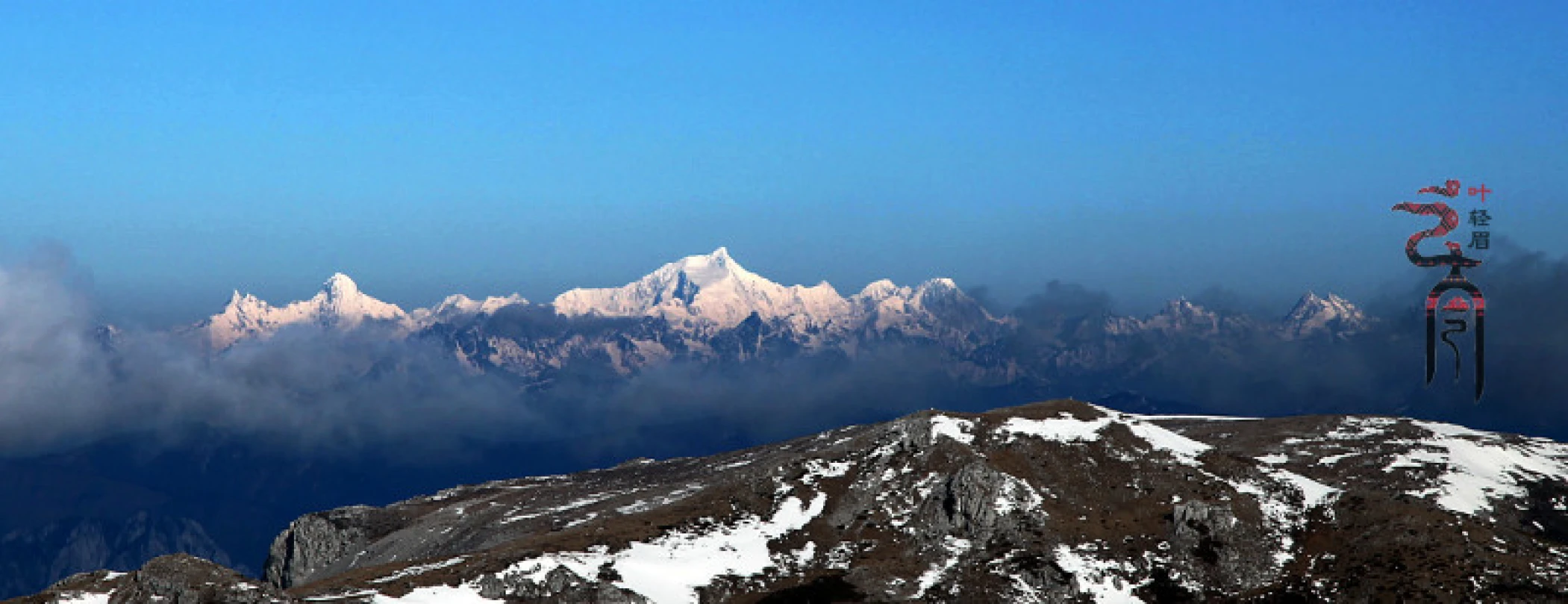
Early April, and Lijiang welcomed us with flowers—cherry blossoms, peach blossoms, roses, wisteria. A warm breeze sent petals of every color tumbling down on us. This petit bourgeois paradise, where the balmy air makes visitors drowsy, isn't a place to linger long—but it's worth a short stay.
We were drawn to a restaurant whose courtyard was overflowing with wisteria. We ordered a preserved rib hotpot and wild mushrooms. The wind kept blowing wisteria petals into our bowls and plates. We gave up trying to pick them out and ate them instead—not bad at all.
Our courtyard guesthouse was a quiet retreat in the midst of noise: a flowering tree, a pot of tea, a swing, and a set of calligraphy brushes and ink. We followed the streams that ran from Jade Dragon Snow Mountain through the town, carrying petals of every color. Lijiang's spring had been brewed into a clear, fragrant wine.
Shangri-La: The Lost Horizon, Never Lost
From Lijiang to Shangri-La
We woke early. Few lights were on in Lijiang—just a handful of tripods and a few silhouettes. Dawn light fell on the stone streets, polished smooth by countless footsteps, stretching our dark shadows behind us.
As the bus headed toward Shangri-La, sunlight flooded the land again. So many peach blossoms—a pink ocean beneath snowy peaks and white clouds.
Past the First Bend of the Yangtze River, the weather turned overcast. The mighty Yangtze, having surged down from the Tibetan Plateau, runs alongside the Mekong and Salween Rivers through the Hengduan Mountains. At Shigu Town, blocked by cliffs, the river makes a sharp U-turn to the northeast, forming a massive V-shaped bend—a sight you can only fully appreciate from the air.
Tiger Leaping Gorge: The Roar of the Earth
Crossing a precarious bridge, everyone had to get out and walk. This was Tiger Leaping Gorge. Haba Snow Mountain to the left, Jade Dragon Snow Mountain to the right, and the Jinsha River between them. The cliffs on both sides were steep and nearly barren, with boulders occasionally tumbling into the raging river.
Where the Jinsha River widens, it's as gentle as a maiden—green waters, willows on both banks, reminiscent of the Jiangnan water towns. Where it narrows, it roars like a caged tiger, waves crashing against the rocks. At Tiger Leaping Rock, a 13-meter-high boulder stands defiantly mid-river, battling the torrent. Snowy spray churns, and the roar sounds like a thousand armies.
We hiked the middle section of the gorge—not too high, not too long. On the way back, we ate potatoes and corn roasted by Tibetan villagers. No oil, no salt—but utterly delicious.
Heading North: Songs and Faith
As altitude climbed, I grew drowsy. Our Tibetan driver, Basang Tsering, told me that dozing isn't the best way to adapt to high altitude. He told us about Tibetan faith, living Buddhas, life and death, marriage and funeral customs. Then he began to sing:
Long hair, dark eyes It feels like I've seen you somewhere before The mountain galsang flowers are blooming so beautifully I'll pick one and give it to you with my own hands
If I'd heard this song in Shanghai, I'd have kept my distance. But here on the plateau, facing such vastness, what other song could express emotion? So we joined in. More people followed. Soon, a whole busload of strangers from different regions and ethnicities were singing together:
Dear girl, I love you Let me enter your world and be with you Life after life, I'll give everything for you And I will willingly
Primeval forests, alpine meadows, villages, prayer flags, free-ranging yaks and sheep—so beautiful it made my eyes ache. Tibet. For the third consecutive year, I had returned.
Dukezong Old Town: Prayer Wheels and Tibetan Pork
We reached Shangri-La county town at 4:00 PM. Above Dukezong Old Town, the giant prayer wheel glittered gold in the sunset. Flocks of birds flapped against the backlight, casting swift shadows.
We climbed a path lined with prayer flags to a temple at the summit. The sun was bright but not warm. Mountain wind whipped the flags. Peach blossoms were just about to bloom—pink petals, multicolored flags, blue sky and white clouds: the softest and the strongest together.
We slowly pushed the world's largest prayer wheel, over twenty meters high. Twenty of us chanted "One, two, three!" together, straining our bodies, using all our strength. Tibetan Buddhism doesn't focus on this life, only the next. I asked myself silently: I probably don't cultivate for the next life—only for this one.
As the sun set, we were invited to a Tibetan home to watch a performance. Before the roasted whole cow was served, we ran out to the grasslands, greedily chasing every second of the breathtaking light. A herd of Tibetan pigs (藏香猪) ran past like hunting dogs—lean and swift, nothing like the fat, lazy pigs back home.
That night was the wildest of the seven days. We shed all pretense: mixing roasted barley flour (糌粑) with butter tea, tearing into roasted yak legs with our hands, gulping barley wine from flasks, dancing arm-in-arm with Tibetan girls and boys.
At 10:00 PM, our voices were hoarse, our palms sore from clapping. The party ended. Outside, the wind was biting, the moonlight cold and clear.
Meili Snow Mountain: The Snow God's Honor Guard
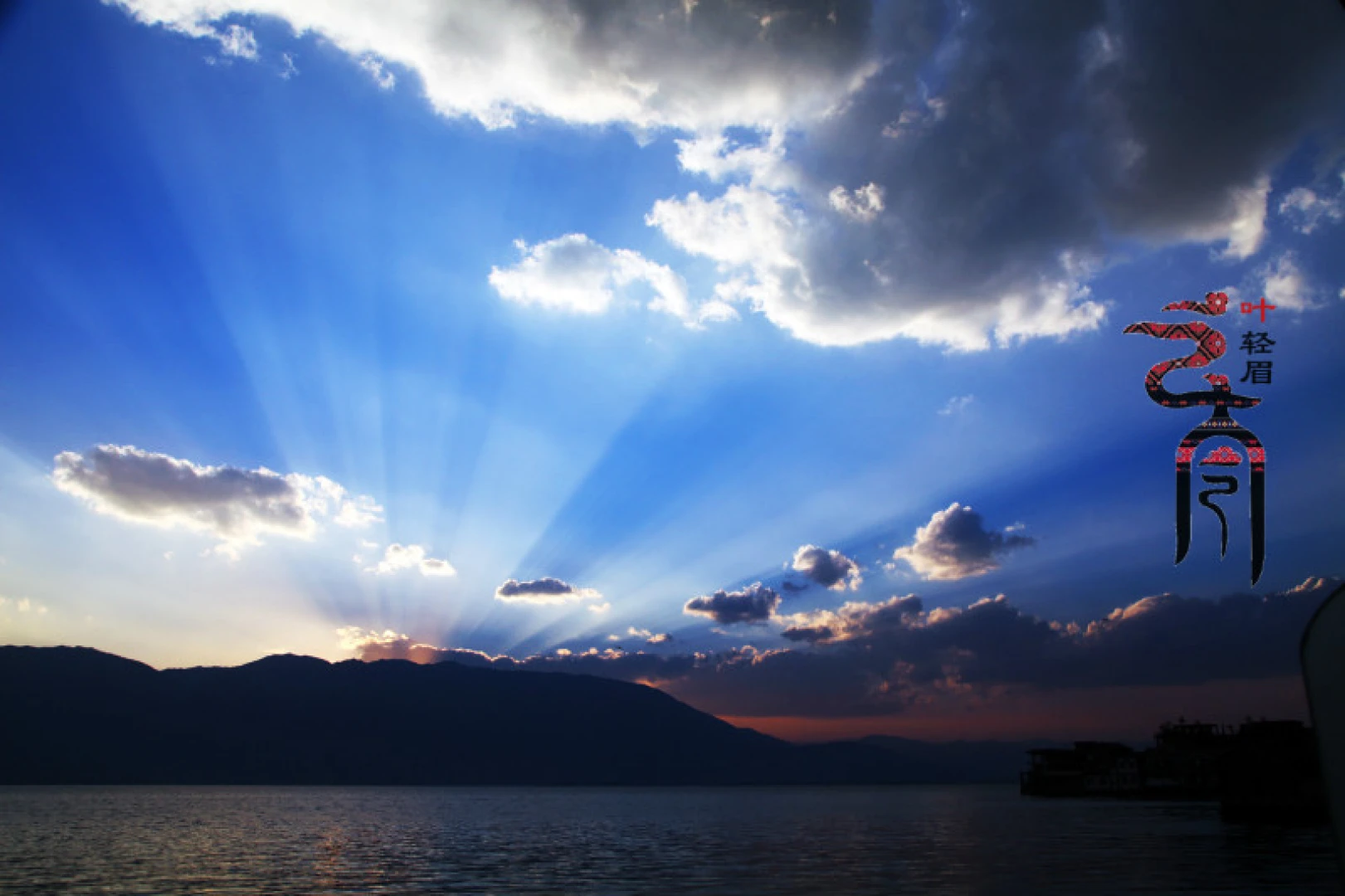
The Valley of the Blue Moon: A Secret Within a Secret
The moon still hung over the snowy peaks, their summits glowing with an ethereal blue light. We rose quietly and set out on a frost-covered road.
The Valley of the Blue Moon—the秘境 (hidden realm) from Lost Horizon. Fairy tales often say "Once in a blue moon," meaning something impossible. And here I was, standing in it.
Shika Snow Mountain—"Mountain of the Deer" in Tibetan. The deer is an auspicious animal, so Shika is considered the protector of Shangri-La. Since we didn't have time to visit Yading in Daocheng, we climbed Shika's summit to pay distant homage to Xiannairi Snow Mountain.
At 4,500 meters above sea level, the wind had frozen the snow's surface solid. I was wearing only thin jeans and a short down jacket. Beike was even more absurd—she was wearing crocs. We looked at each other and laughed. Dressed like this, we wouldn't even be prepared for a snow-viewing trip to neighboring Hangzhou, let alone a real雪山 (snow mountain).
Lost for Words, Lost in Wonder
We found a slightly sheltered spot. The moment I looked around, every adjective failed.
To the northeast, the morning sun was slowly lifting Shangri-La's veil of mist—peaceful, serene, like a fairyland. White cooking smoke rose from village chimneys. A silent blue lake lay perfectly still, reflecting the sky and mountains.
To the east, Xiannairi bathed in morning light—compassionate and serene, like a bodhisattva seated on a lotus throne. Clean lines, boundless cold.
To the south, Jade Dragon Snow Mountain was half-hidden in clouds. Heavy layers of mist lingered, lending it an inexpressible dignity.
To the north, the Thirteen Peaks of Meili floated above white clouds, against a blue sky—pure, holy, like mountains from another world. They seemed to have existed since time itself, utterly transcendent yet inseparable from this land.
Every snow mountain within hundreds of kilometers was laid out before us.
The wind still howled, but after seeing this, I could no longer hear it. The whole world fell silent. I gazed for a long time at this magnificent, solemn landscape—so many silent peaks, and the villages and ridges preserved within this hidden realm.
Until I felt too shallow to meet its gaze.
Journey to Meili
We descended, passing a high-altitude pasture. Herders' wooden cabins stood beneath snowy peaks, surrounded by tall rhododendron forests. The snow hadn't melted yet; spring had not arrived.
We found a car near the Shangri-La bus station, ate lunch, and set off for Feilaisi (Flying Temple). We shared the ride with a couple from Beijing who were heading to Yubeng for a trek—if I'd had two more days, I would have joined them in that roadless village at the foot of Meili.
Meili. I was coming.
First, we followed the Jinsha River upstream. At its lowest, the altitude was just over 2,000 meters—a dry, hot valley with sparse vegetation. The river's blue-green color came from copper and iron minerals in the water.
Then we climbed, passing through every ecological zone: mixed coniferous and broadleaf forests, subalpine dark conifer forests, alpine shrub and meadow belts, talus slopes with sparse vegetation—and finally, above 5,000 meters, the permanent snow and ice zone.
We stopped briefly at Benzilan. The First Bend of the Jinsha River had been fenced off and turned into a ticketed attraction—a disappointment. We bought lots of cherry tomatoes, which tasted especially sweet and tangy in the dry air.
Baima Snow Mountain: The Most Beautiful Road in the World
On the winding mountain road, our driver drove fast and steady—he'd been on this route for twelve years. Just as the high-altitude sun was making me drowsy, a snow mountain reflecting brilliant light caught my eye.
Baima Snow Mountain was near.
Crossing the连绵 (endless) Baima range took about two hours. Our little minibus crawled through the towering peaks, as tiny as a leaf on the ocean. The mountains were only two colors: white—dazzling snow—and black—bare rock and ancient fir forests. Seasonal snowmelt had frozen into cascading white waterfalls.
Snow on the mountains, clouds above the snow—white, full, and abundant. The snowfields were God's terraced fields.
This was the most beautiful road in the world.
The driver stopped at the pass. Wind gathered from all directions, howling in from Meili's direction. I placed a small stone gently on a cairn (玛尼堆). Did I have a wish? Not really—just to keep things as they were. For the people I care about to be safe and happy.
A moment of silence. Walking, standing, gazing. Waiting for every beginning and every end.
In Chinese National Geography's "Beauty of China" ranking, Meili Snow Mountain is the fourth most beautiful mountain, after Namcha Barwa, Gongga, and Everest. The book describes it as "the Snow God's honor guard." It straddles the border between Deqin County in Yunnan's Diqing Tibetan Autonomous Prefecture and Zayu County in Tibet, at the heart of the Three Parallel Rivers region—the Jinsha, Mekong, and Salween—within the Hengduan Mountains.
Epilogue: I Am a Cloud in Your Sky
Eight days. From Kunming to Meili. From 2,000 meters to 4,500 meters. From noise to silence. From stranger to familiar.
Watching seagulls soar over Dianchi Lake. Listening to the wind sing beneath Cangshan Mountain. Watching the sun sink into Erhai Lake. Following petals drifting through Lijiang's streams. Gazing at stars beneath Shangri-La's prayer flags. Feeling small before Meili's snowy peaks.
What Yunnan taught me wasn't how to travel—but how to feel.
When I'm overwhelmed by city trivialities, I remember the Tibetan pigs running across the grasslands, the prayer flags snapping in the wind, the snow peaks glittering in the sun. I remember that moment on Shika's summit when the world fell silent, leaving only the wind and my own heartbeat.
Beyond the Southern Clouds, I am a cloud in your sky. Even though I was only passing through, it was enough.
A Few Practical Tips: - Camera: Canon 5D2 with 24-105mm lens; many photos taken with iPhone - Clothes: From Taobao store "Aka's" — value for money, judge for yourself - Shuanglang guesthouses: Popular ones like Haitian Life and 63 Degrees were booked, but many others are excellent - Photos: Most have had saturation and sharpness adjusted - Background music: "The 36th Story" by Lei Guangxia
If you're planning a trip to Yunnan, remember: don't rush. Feel. Because the most beautiful scenery often appears when you put down your guidebook, turn off your GPS, and follow your heart.
You should also read:
A Soulful Journey to the South of the Clouds: A Love at First Sight
A Soulful Journey to the South of the Clouds: A Love at First Sight Prologue: When Destiny Took a Detour Some journeys are meticulously planned; others arrive as unexpected gifts from fate. I had always believed that Tibet was my soul's true destination—the lover to…
Continue reading...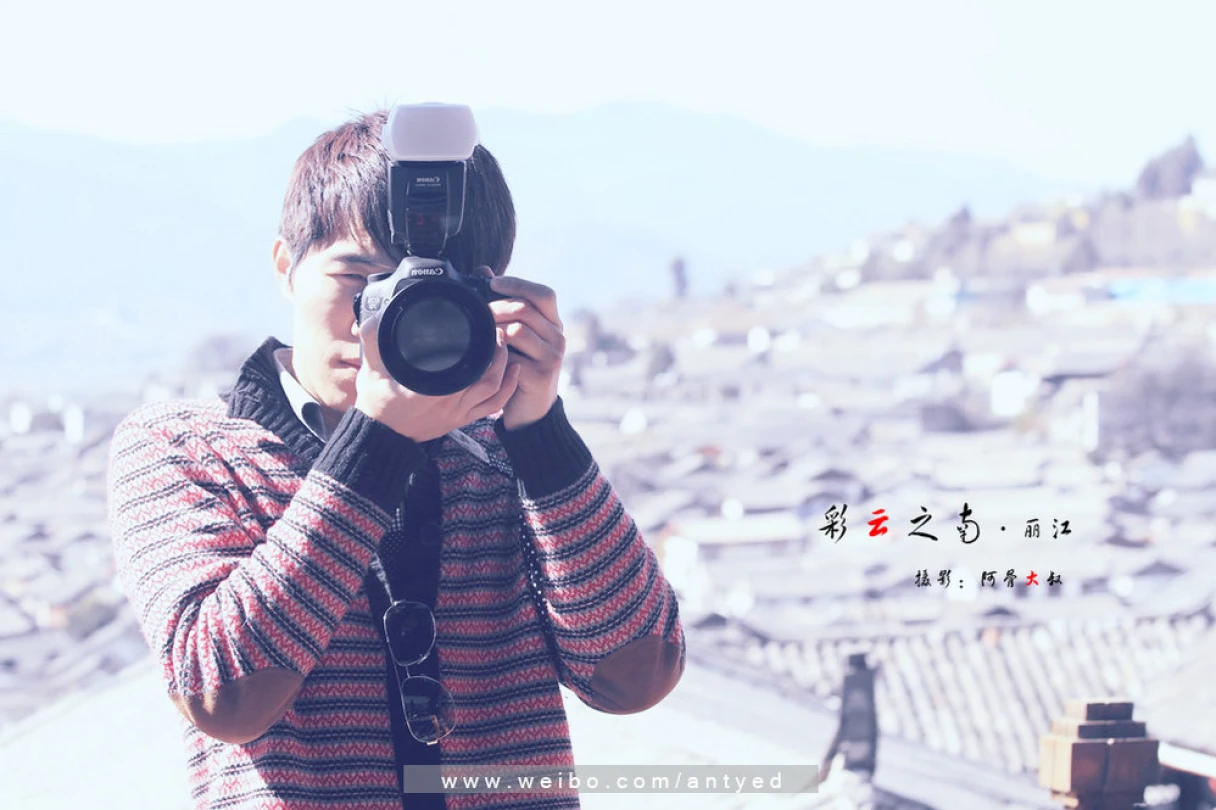
South of the Clouds: A Spontaneous Lijiang Wanderlust
South of the Clouds: A Spontaneous Lijiang Wanderlust Prologue: When the Soul Meets Freedom Some places have names that alone stir the heart with longing. Lijiang is one such place. It exists like an unfinished poem, a melody left hanging in the air, echoing softly…
Continue reading...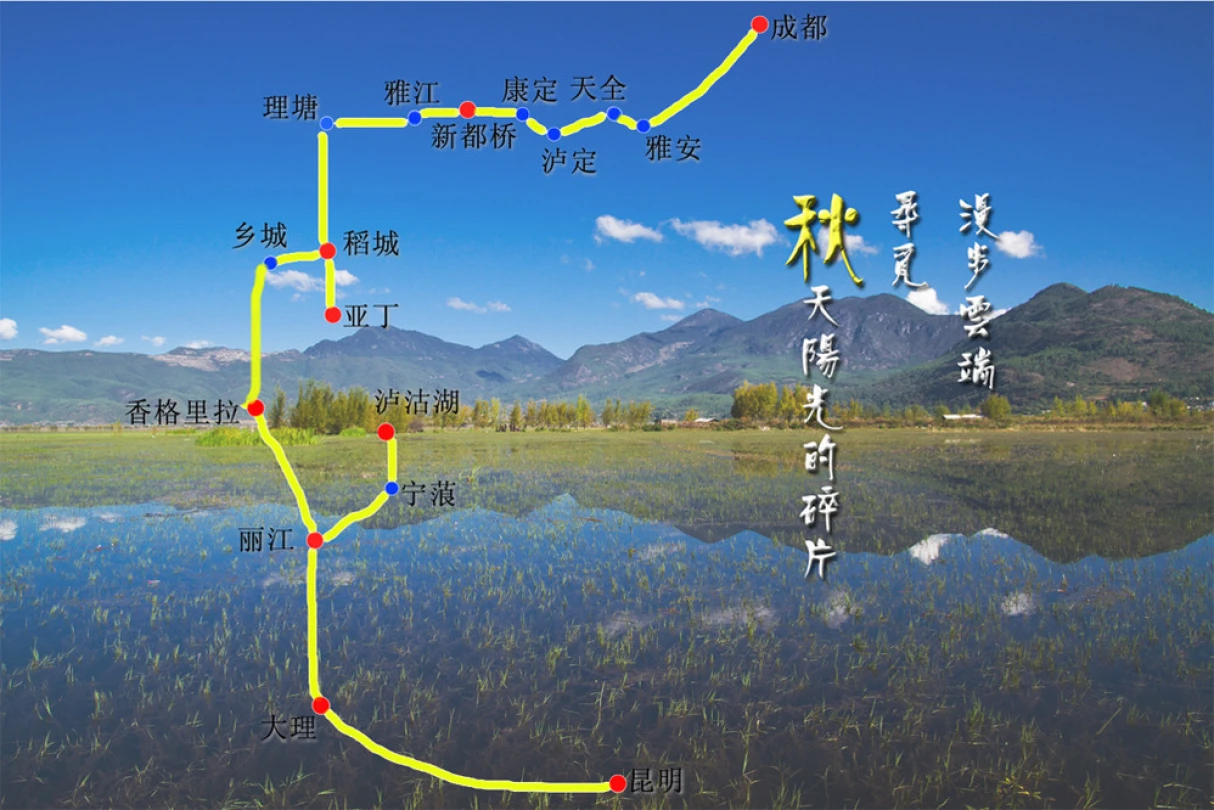
Strolling Among the Clouds: Gathering Autumn's Light on the Western Sichuan Plateau
Strolling Among the Clouds: Gathering Autumn's Light on the Western Sichuan Plateau Prologue: A Sun Chaser's Journey Autumn sunlight is like a gentle painter, using golden brushstrokes to smear the last traces of warmth across the earth. It slips through the gaps between your fingers,…
Continue reading...