Beyond the Vanishing Horizon: A Journey of Redemption on Meili's Northern Slopes
Beyond the Vanishing Horizon: A Journey of Redemption on Meili's Northern Slopes
There are moments in life when the weight of the ordinary becomes unbearable, when the noise of daily existence drowns out the whispers of something deeper. For me, that moment arrived with a throbbing knee, a stiff neck, and a heart full of questions I couldn't answer. The answer, it turned out, lay hidden in the shadow of an unclimbable mountain.
The Call from Shangri-La
Somewhere between the chaos of city life and the quiet desperation of routine, I found myself dreaming of Gandalf charging into battle on a white horse. The enemy was always the same: the orc hordes of the modern world—deadlines, expectations, the slow erosion of purpose. But unlike the movies, there was no script waiting for me. No guarantee of victory.
This journey to Meili's northern slope wasn't just another trek. It was a pilgrimage. A redemption arc for two souls lost in the mundane.
My companion, whom I'll call Biaozi, was still nursing the wounds of a previous defeat. Last year, on the summit of Siguniang Mountain's Second Peak, altitude sickness had robbed him of his triumph. He needed to reclaim his crown. As for me? I was Gandalf falling into darkness with the Balrog—aching joints, mounting anxiety, and the creeping fear that I had nothing left to prove.
But as Tolkien's wizard reminds us: "All we have to decide is what to do with the time that is given to us."
So we decided to walk.
The Road to the Sacred Mountain

A Kingdom Forbidden
Our journey began in Lijiang, a city that serves as a gateway to dreams. From there, we wound our way through the heart of Diqing Tibetan Autonomous Prefecture, past the shimmering expanse of Napahai—not a sea, but a seasonal wetland that transforms into a vast lake after summer rains. The road climbed through the White Horse Snow Mountain range, and then, without warning, it appeared.
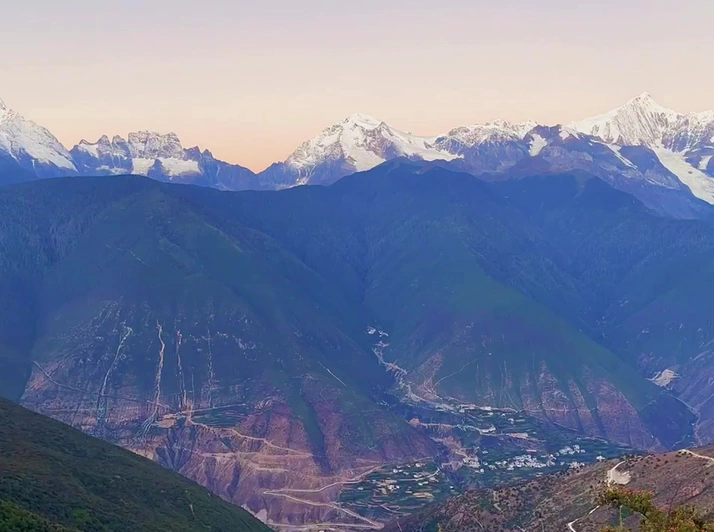
Kawagebo Peak. At 6,740 meters, it is not just the highest peak in Yunnan—it is the grandfather of all mountains in Tibetan Buddhism. Since the tragic 1991 Sino-Japanese expedition that claimed 17 lives, this sacred peak has been permanently closed to climbers. Standing before it, I understood why. Some places are meant to be worshipped, not conquered.
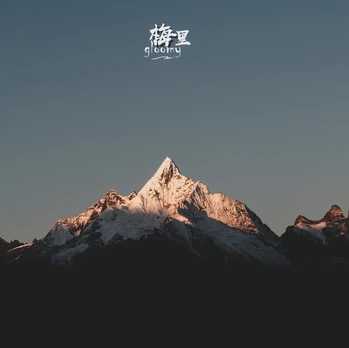
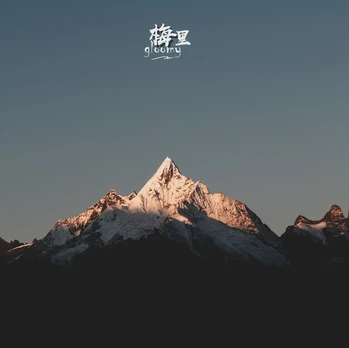
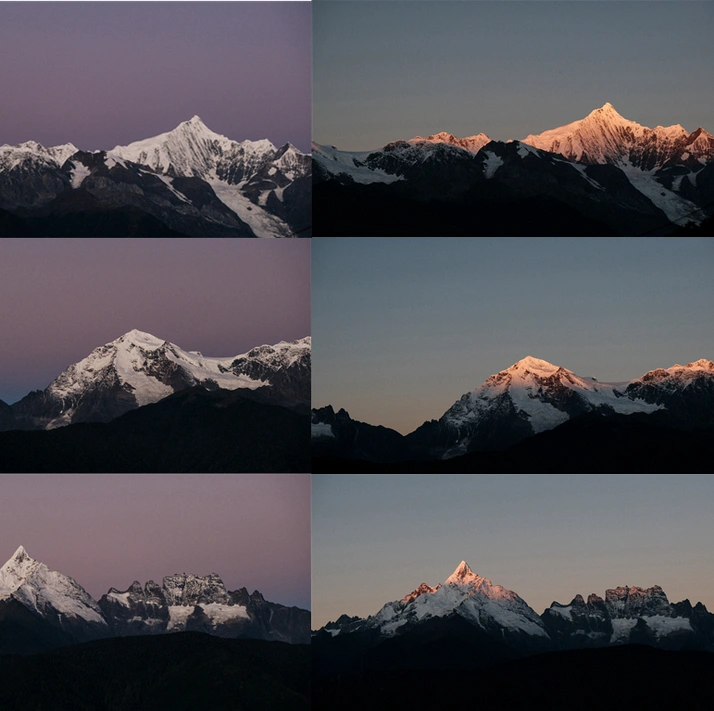
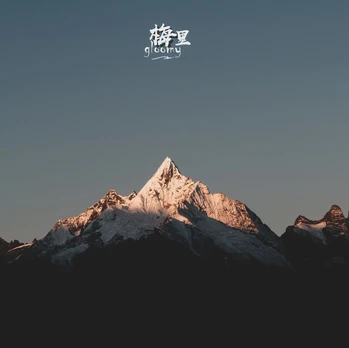
But my heart belonged to another. Miancimu Peak, at 6,054 meters, rises like a goddess beside her husband Kawagebo. The "Sea Goddess Daughter" embodies everything I imagined a mountain should be—graceful, ethereal, impossibly perfect against the dawn sky.
The Gathering of Souls
Our group assembled in Feilai Temple, a small town perched at 3,300 meters. The hotel that cost 150 yuan (approximately $21 USD) tonight would skyrocket to 600 yuan (approximately $84 USD) tomorrow, once National Day crowds descended. We signed waivers that felt more like death warrants, and met our guide, Laden—a Kangba man who had grown up in the very valleys we would traverse.
Around the dinner table, I made a rookie mistake. Two glasses of local liquor, and the familiar throbbing returned. Altitude sickness, on top of my already complaining knees. Biaozi felt it too, a ghost of last year's failure. But the woman beside us, Xuejiao, drank freely and laughed loudly. Social confidence, I noted, is its own form of altitude adaptation.
At 2 AM, Biaozi shook me awake. "The stars," he whispered. I rolled over and went back to sleep. The stars would have to wait.
Into the Forest of Giants

The Day We Got Lost
October 1st dawned with the promise of gold. At 7:14 AM, the first rays of sunlight kissed Kawagebo's summit, setting the entire range ablaze. This is the famous "sunshine on golden mountain"—a phenomenon so breathtaking that it renders all photography inadequate. We watched in silence, knowing that the universe had given us a gift.
By 9 AM, we were bouncing along a road so narrow that vehicles with more than seven seats were forbidden. Two hours later, we arrived at Yagong Village, the official starting point. Here, I spotted a man in casual clothes, carrying a supermarket plastic bag in one hand and a camera in the other. "A local photographer," I thought. His name was Daizi Ge—"Bag Brother"—and he would become our most unlikely hero.
The trail began in primeval forest. Giant spruce trees reached toward heaven like cathedral pillars. The path followed a tributary of the Jinsha River, whose waters powered the tiny hydroelectric plants that supplied electricity to remote camps. For the first hour, we walked in wonder.
Then we got lost.
Biaozi and I found ourselves alone, surrounded by silence. No footsteps ahead, no voices behind. The trail seemed to loop back on itself. Panic whispered: You're going in circles. You'll die here. We stopped, ate a protein bar, and forced ourselves to breathe. The footprints in the mud told us we were on the right path. We just had to trust.
We emerged from the forest to find a river crossing, then a wooden bridge. A muleteer told us we were thirty minutes from camp. What he didn't tell us was that he walked like a horse. An hour later, we stumbled into Zhangjia Camp, exhausted and out of water.
"Eight hundred meters to Zhulin Camp," another guide assured us. He lied. It was at least two kilometers. We arrived at 4:35 PM, having walked for over five hours. Our first day was supposed to be 9 kilometers. We had covered 14.
The First Night
Zhulin Camp was a single wooden cabin at 3,400 meters. We pitched our new Naturehike tents—summer models, we soon discovered—and collapsed into camp chairs. Two women from our group, Xuejiao and Tiantian, had enough energy to help prepare dinner. Biaozi and I watched, our bodies fused to the chairs, and felt a profound respect for human resilience.
That night, I slept deeply. No altitude sickness. No nightmares. Just the sound of the river and the knowledge that tomorrow would be harder.
The Plateau of Lost Horizons
Meeting the Mountain
Day two began with a rooster's crow and an awkward encounter. While answering nature's call behind a boulder, I heard footsteps. It was Bag Brother, scouting for a photography spot. "I was trying to photograph the stars last night," he explained, "but the locals wouldn't let me." At dawn, he told me the Milky Way had been visible at 11 PM. Tonight, I promised myself, would be different.
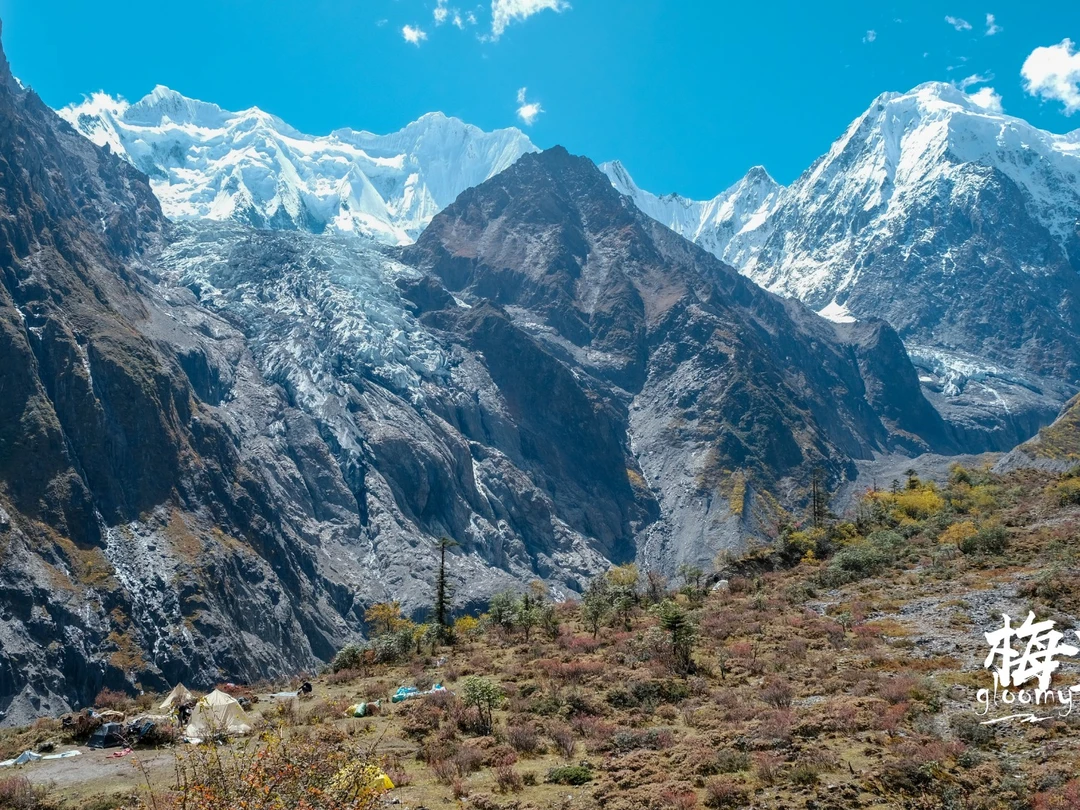
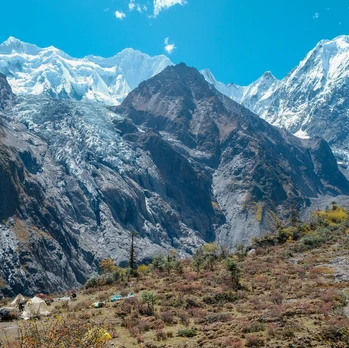
The trail climbed from 3,400 meters to 4,200 meters. Within an hour, we rounded a corner and saw it: Mangkula Ka Snow Mountain, rising like a sentinel before us. Somewhere beyond lay our destination—Pojun Camp, the "Plateau of Equal Opportunities."
The forest gave way to alpine meadows and scree slopes. We walked beside Hu Dahai, a 48-year-old veteran of countless expeditions. "You're just beginning," he told me when I mentioned my age. "I'm still going strong at 48." I felt a decade younger.
Bag Brother walked beside us, his plastic bag now replaced by a canvas sack he'd found on the trail. He was from Hubei, living in Hainan, speaking Cantonese-accented Mandarin. He had booked the trip two days before departure, bought nothing but snacks at a convenience store, and was now the most under-equipped person ever to attempt this route. He was also the happiest.
The Camp of Miracles
Pojun Camp appeared like a vision. Nestled in a valley beneath Miancimu Peak, it was everything the lost horizon promised. Here, the mountains embraced us from all sides. The air was thin but sweet. And the stars—oh, the stars.
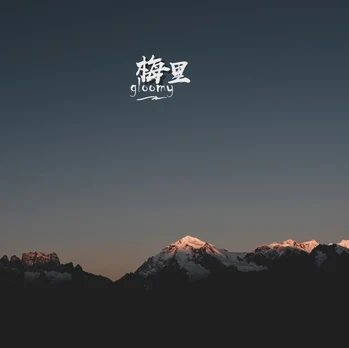
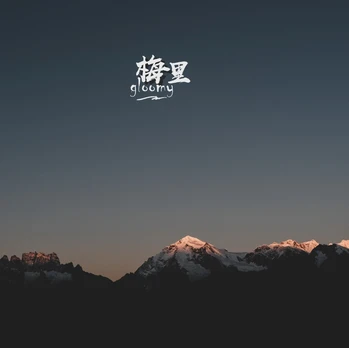
That night, I broke out my Fuji X-T30 with its 18-55mm lens. No star-tracking app, no tripod, no experience. But the Milky Way was so bright that it seemed to demand documentation. I pointed my camera at the sky and prayed. The resulting images were imperfect—I had no telephoto lens, no advanced technique—but they captured something real. Something true.
As I stood beneath the galaxy, I realized that this was my first western trip without missing the Milky Way to the Mid-Autumn Moon. Every journey has its checkpoints, its self-imposed deadlines. But here, in the shadow of Miancimu, time had stopped. The only schedule was the sun's arc and the moon's rising.
The Pass of Decision
Crossing the Threshold
Day three was the reckoning. We would cross the 4,700-meter pass that separated us from the northern slope proper. The altitude had already claimed one victim: Xuejiao, whose laughter had faded into labored breathing. She would turn back with the mules.
The climb began in earnest at 7 AM. The trail switchbacked up a scree slope that seemed to go on forever. Each step required conscious effort. Breathe in. Step. Breathe out. Step. The rhythm became a meditation, a mantra against the thin air.
At 4,500 meters, I stopped to rest. Behind me, the valley stretched like a green carpet unfurled by giants. Ahead, the pass was a notch in the ridgeline, barely visible through the haze. Biaozi was fifty meters ahead, moving steadily. Bag Brother was somewhere behind, his canvas sack bouncing with each step.
The final push was brutal. The trail disappeared into a field of loose rocks, each one a potential ankle-breaker. I crawled on all fours for the last hundred meters, my lungs burning, my knees screaming. And then, suddenly, I was there.
The View from the Edge
The wind hit me first—a cold, clean blast that seemed to wash away every doubt. Below, the northern slope unfolded in a panorama of glaciers, moraines, and unnamed peaks. Kawagebo stood to the south, his summit wrapped in a scarf of clouds. Miancimu was directly ahead, her icy face catching the morning light.

I sat down on a rock and wept. Not from sadness, but from the sheer overwhelming beauty of it all. This was why we had come. This was the redemption we had sought.
Biaozi arrived a few minutes later, his face streaked with tears and sweat. We didn't speak. We didn't need to. The mountain spoke for us.
The Descent
Coming Home
The descent was a different kind of challenge. The trail dropped 1,200 meters in just a few hours, punishing our knees and testing our resolve. But the landscape changed with every switchback: from alpine desert to rhododendron thickets, from glacial streams to pine forests.
We camped that night at 3,800 meters, beside a river that sang us to sleep. The stars were out again, but I was too tired to photograph them. I lay in my tent, listening to the water, and felt a peace I hadn't known in years.
The Final Morning
We reached the road on day four, emerging from the forest like survivors of some ancient ordeal. A van was waiting to take us back to Feilai Temple. As we drove away, I turned to look at the mountains one last time.
Kawagebo was hidden behind clouds. Miancimu was a ghost in the mist. But I knew they were there, standing eternal, waiting for the next pilgrim to seek their grace.
Epilogue: What the Mountain Gave Me
Back in the city, the noise returned. The deadlines, the expectations, the slow erosion of purpose. But something had changed. The throbbing in my knee was gone. The stiffness in my neck had faded. And the questions I couldn't answer? They were still there, but they no longer demanded answers.
The mountain had given me something I didn't know I needed: perspective. In the shadow of Miancimu, my problems shrank to their proper size. The orc hordes of the modern world were still there, but I had seen them from 4,700 meters. They were smaller than I remembered.
Biaozi reclaimed his crown. He stands taller now, with a confidence that comes from conquering not just a mountain, but the ghost of a previous failure. As for me? I am still Gandalf, still fighting the Balrog. But now I know that even in darkness, there is light. Even in falling, there is flight.
And sometimes, the only way to find yourself is to get lost in the mountains.
The journey was organized through a local trekking company based in Feilai Temple. For those considering the route, the best seasons are late September to early November, when the weather is stable and the skies are clear. Bring proper gear, respect the sacred nature of the mountains, and prepare to be transformed.
You should also read:
Dreaming of Lijiang, Dreaming of Shangri-La: A Journey That Lets Your Soul Breathe Deeply
Dreaming of Lijiang, Dreaming of Shangri-La: A Journey That Lets Your Soul Breathe Deeply Life is like a long trek. We're always rushing through the concrete jungle, searching for a glimmer of light in the monotony of our days. Then one autumn, I heard the…
Continue reading...
A 9-Day Yunnan Journey: From Lijiang to Dali to Tengchong – A Trip Toward Self-Reconciliation
A 9-Day Yunnan Journey: From Lijiang to Dali to Tengchong – A Trip Toward Self-Reconciliation Some say travel is simply going from a place you're tired of to a place other people are tired of. It stings to hear, but it's painfully true. Yet there's…
Continue reading...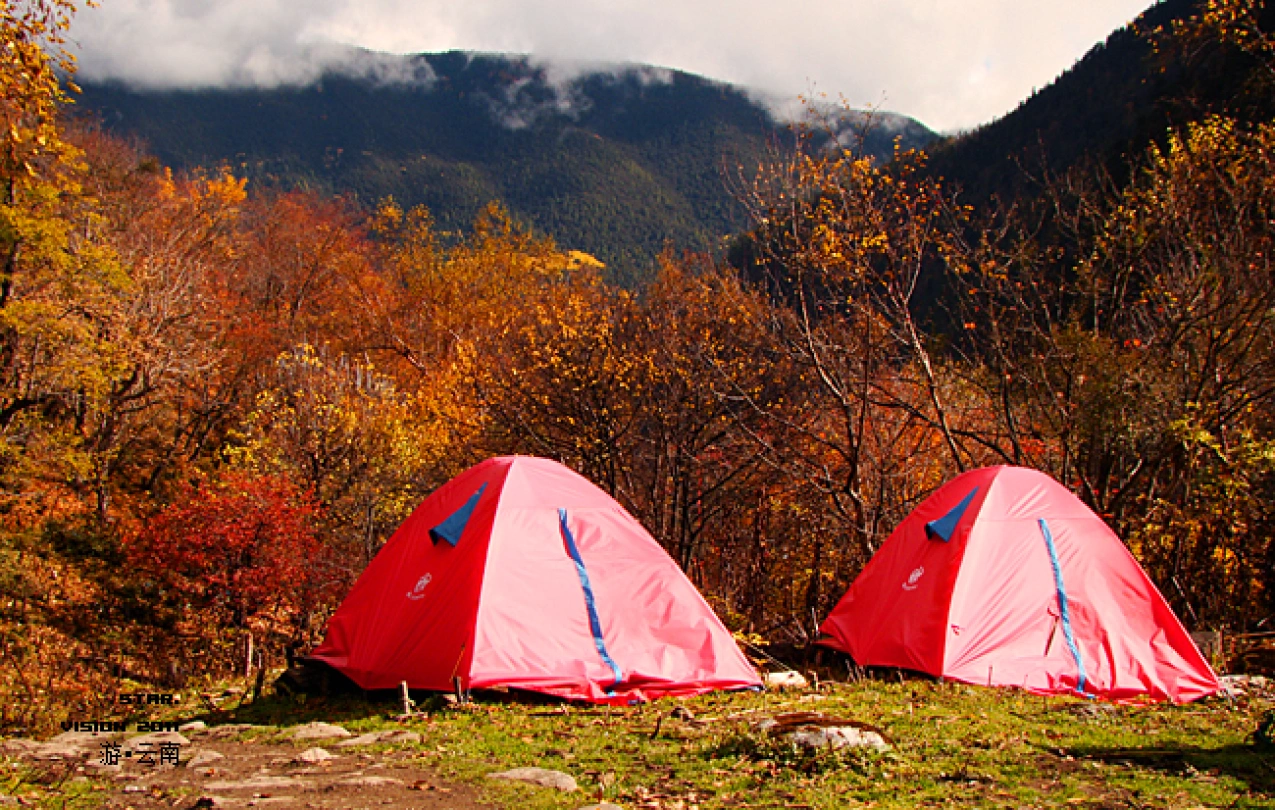
Yunnan! Paradise on Earth – The Yubeng Chapter: A Soul-Cleansing Journey into Seclusion
Yunnan! Paradise on Earth – The Yubeng Chapter: A Soul-Cleansing Journey into Seclusion Prologue: Why Yubeng? If you ask me which place in Yunnan is most worth hiking to, I would answer without hesitation: Yubeng. This is not an answer I give lightly. As a…
Continue reading...