Blue Yunnan: Reopening the World with My Parents, Season 7
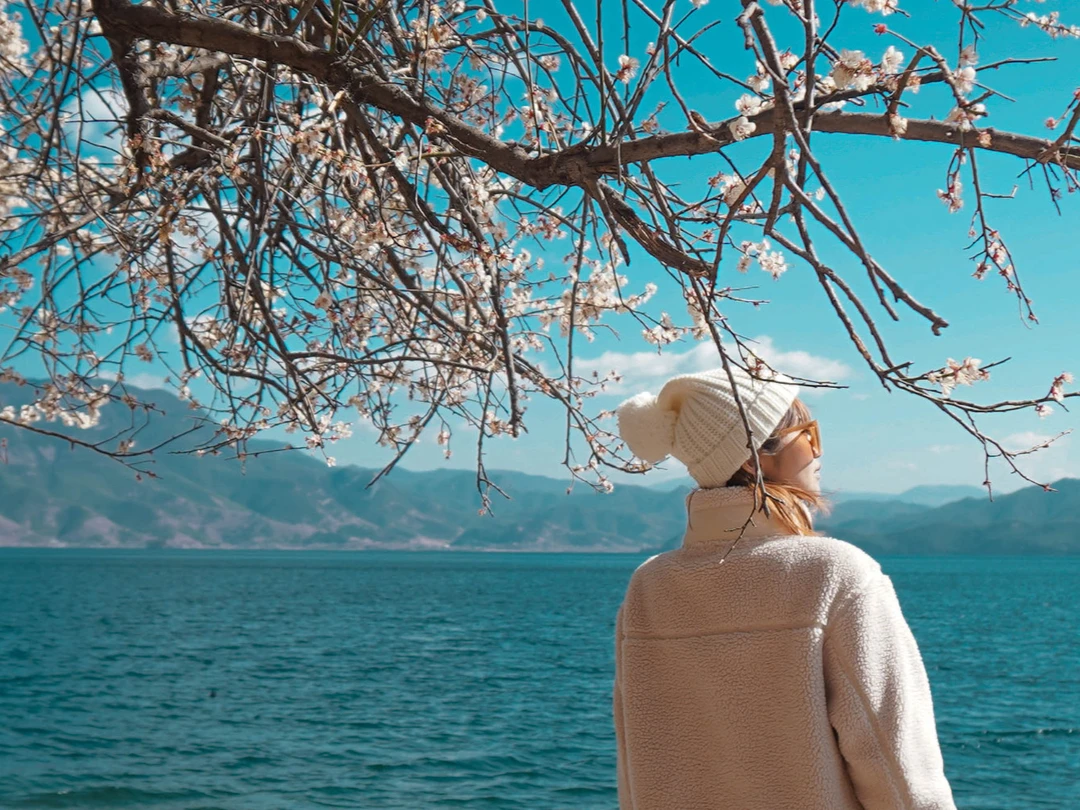
Blue Yunnan: Reopening the World with My Parents, Season 7
There's a strange disorientation that hits you when you return from a place that feels like a dream. For a full week after landing back in Guangzhou, I felt like I was still wading through Yunnan—my mind saturated with jade-green waters and towering mountains, my body jolting awake on the subway wondering how I ended up back in this concrete maze.
The air there was impossibly clean. The sun was so bright it hurt to keep your eyes open. Even the ripples on the lake were so clear you could see straight to the bottom.
Time had been playing tricks on us. First, everything stopped. Then, suddenly, it fast-forwarded. Within months, the world flipped upside down and settled back into something resembling normal—like a wave that crashes, then quietly recedes into the sea.
Our first post-restriction trip came together in a blur: four days to request leave, three days to book tickets, two days to plan the itinerary. Tight, but we made it work. This was the seventh season of my "Traveling with Parents" series, and after three long years, we were finally back on the road.
The Moon Over Dali Ancient Town
We arrived in Dali via Kunming, and our first stop was the ancient town itself. Nestled at the foot of the majestic Cangshan Mountains, Dali Ancient Town was once the capital of the Nanzhao and Dali kingdoms. Its streets follow a classic chessboard layout, making it the beating heart of the region's tourism.
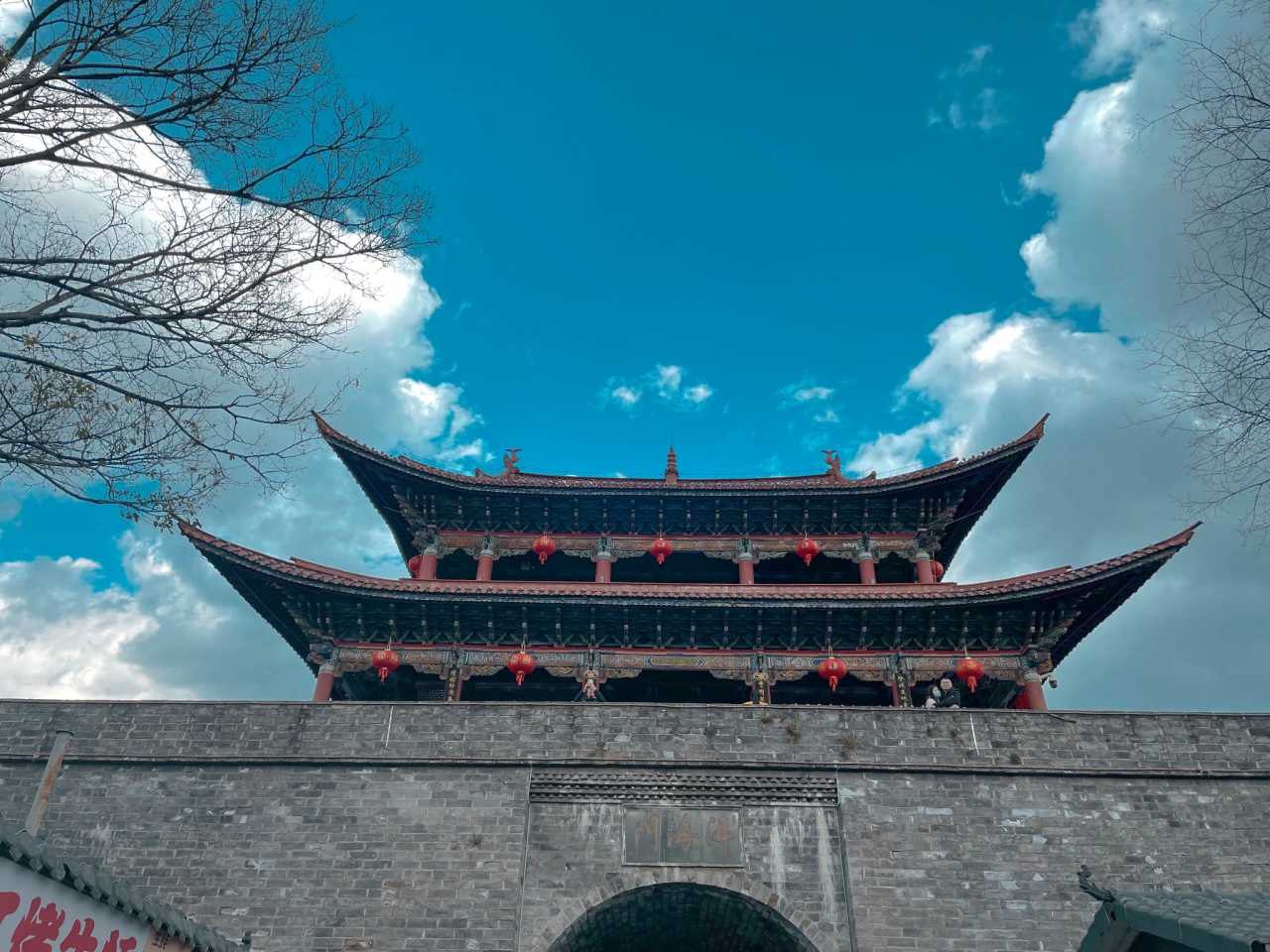
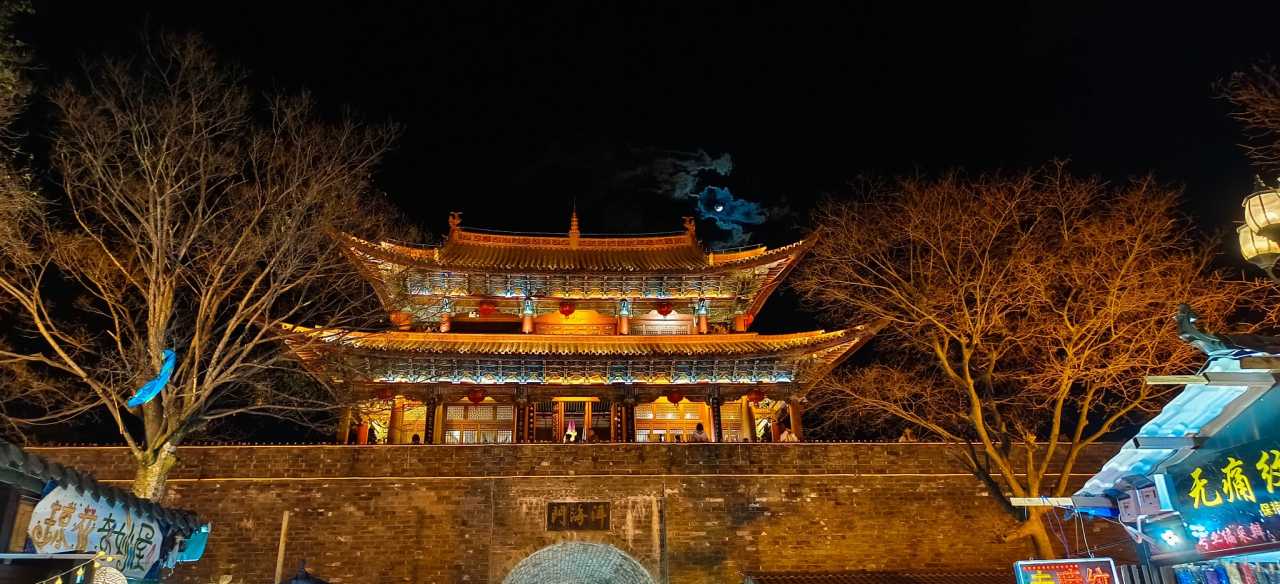
The city walls still stand, but inside, you'll find a heavy dose of commercialism—shops that feel like they could be from any tourist market in China. Still, the ancient architecture holds its own charm. At night, the gates transform into solemn old men watching over the chaos below.
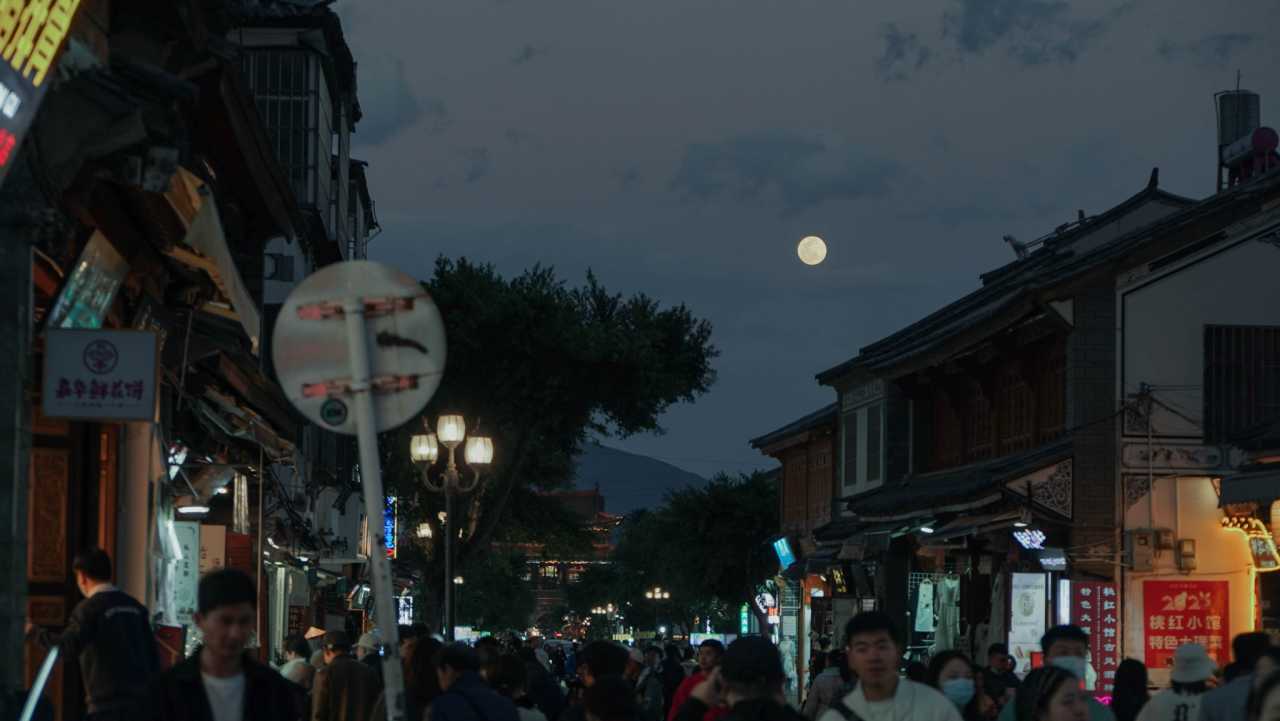
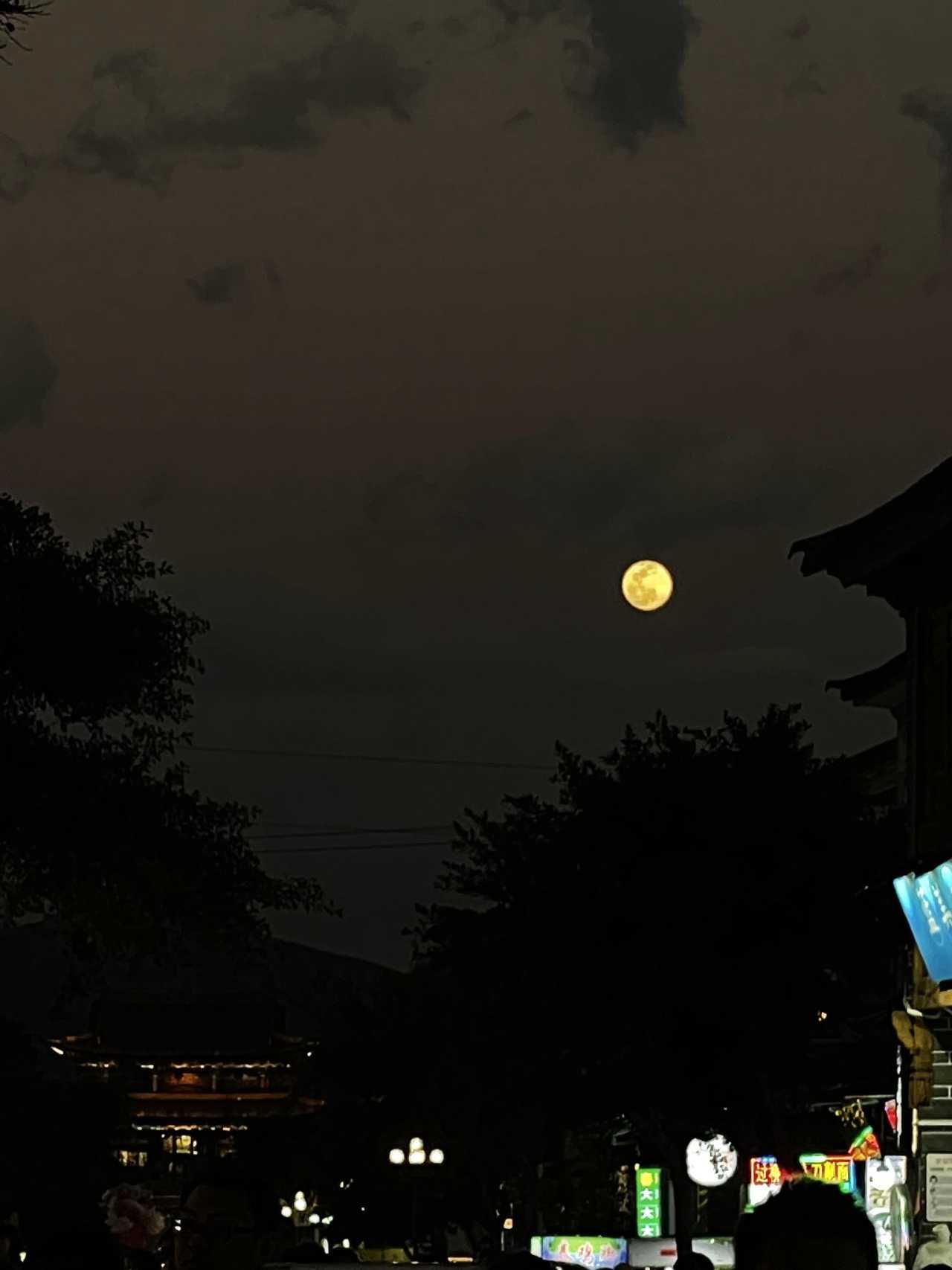
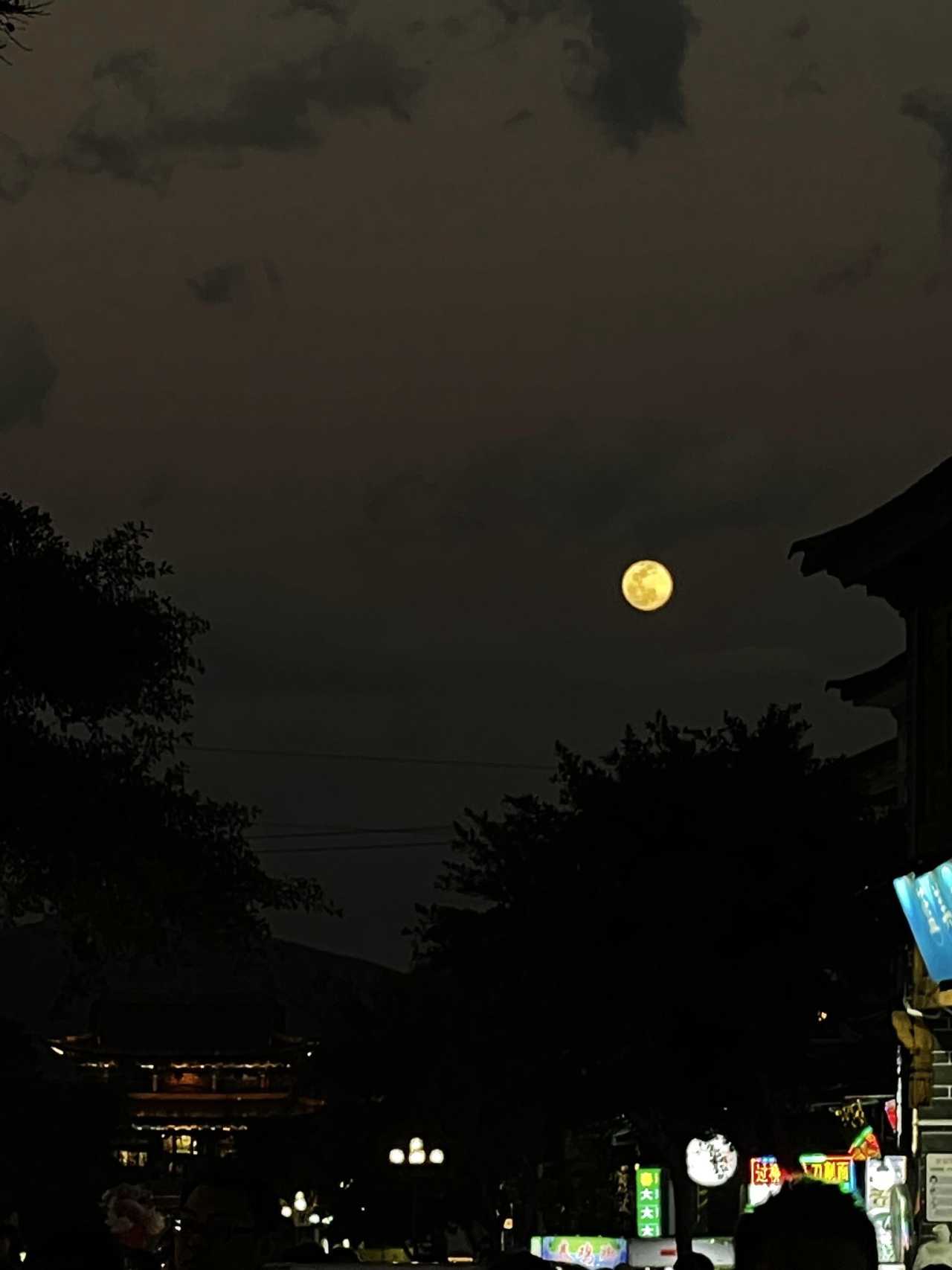
We arrived on the night of the Lantern Festival. A full moon rose slowly over the city, first veiled by clouds, then breaking through with a hazy glow that turned golden as the sky darkened.
Dali Ancient Town is enormous. One evening isn't enough to explore it all. Horse-drawn carriages clattered over uneven stone roads, their hooves striking a rhythmic beat against the cobblestones.
We had our hearts set on a famous mushroom hotpot, but by 5 p.m., the queue was already ridiculous. Exhausted from travel, we settled for a random restaurant near the Erhai Gate. A second-floor window seat gave us a perfect view of the bustling street below. We ordered a 189 RMB set meal—Sichuan-style, generous portions—and the owner even threw in an extra dish. Not a bad first dinner.
As night fell, the bars lit up, and live music spilled into the streets. My mom looked stunning in the photos I took—so much so that I had to share two of them here.
The Night the Water Disappeared
But here's the thing about travel: it loves to humble you.
After a five-hour train ride from Kunming to Dali, we checked into our carefully chosen guesthouse. The photos online were gorgeous. The reality? A dim room with a tiny window, no skylight in sight, and a landlord who shrugged and said, "This is the last room."
We decided to tough it out. My parents showered first. Then it was my turn.
The water pressure was weak from the start. I figured it would improve. It didn't. Dali nights hover near freezing, and the bathroom had no heating. I was already shivering when the water slowed to a trickle, then stopped completely.
I stood there, half-soaped, hair dripping, in a glass-walled shower that might as well have been outdoors. My parents ran around looking for help. Nobody was around. I called the landlord, who sounded groggy and suggested, "Why don't you boil some water? I have a basin I can bring over."
At that moment, I wasn't sure if I was shaking from cold or rage.
We negotiated a refund for one night and moved out the next morning. The walls were paper-thin anyway—I could hear someone packing plastic bags at 2 a.m., a toilet flushing upstairs, a door slamming that sounded like it was in our own room.
For the rest of the trip, every time we checked into a new place, I'd ask the puzzled host, "You do have hot water, right?"
(Photo: Dali Muxinli Guesthouse—welcome to pay for misery.)
The Great Erhai Lake Loop
Day two brought renewed energy. I booked a private driver through Xiaohongshu—a young, quiet guy with a pleasantly scented car. For first-time Erhai visitors, I highly recommend hiring a driver. The scenic spots are spread out, and parking can be a nightmare. Our driver dropped us off, waited while we explored, and picked us up when we were done. No wasted time.
Longkan Pier
My mom's number one wish was to see Erhai Lake. And it delivered. At 9 a.m., the water was a deep blue, and the sun on the opposite shore was blindingly bright. Longkan Pier is famous for sunrise views, but we were too tired to make it. If you go, go early—and brace for crowds on the narrow access road.
S-Bend at Panxi Village
The S-Bend looked similar to Longkan Pier—same lake, same crowds. It's famous on social media, but getting a clean shot of the curve is nearly impossible. The nearby rapeseed fields, though, were stunning in the midday light.
Xizhou Ancient Town

Heading north, we reached Xizhou. It felt more authentic than Dali Ancient Town—quieter, older, less polished. We arrived around lunchtime, so our visit was brief. I imagine it's even more beautiful when the rice fields are golden. We finally had Yunnan rice noodles, though they were a bit bland for my taste. The pounded chicken feet packed more flavor. My dad, meanwhile, was obsessed with taking photos of our backs.
Shuanglang Ancient Town
Shuanglang sits on the northeast shore of Erhai, offering panoramic views of the Cangshan Mountains. It was one of the spots I was most excited about. We wandered through winding alleys, climbed stairs, descended slopes, and eventually found a hidden café on the lakeshore—one that had appeared on the show Daughter's Love. It's technically a restaurant that requires reservations for meals, but afternoon tea was walk-in.
The place was small but breathtaking. Perched right on the water, it offered views of the mountains and shimmering sunlight on the lake. If you had snacks, seagulls would come by. It's famous for sunset views, so dinner slots fill up fast. Search for "Shinei Taoyuan Sunset Restaurant (Shuanglang)" on Dianping.
A Morning at the North Gate Market
Before catching a train to Lijiang, we revisited Dali Ancient Town. The North Gate Market was buzzing. We bought Xizhou flaky flatbread—4 RMB each, one savory, one sweet. The savory one had a bit of minced meat and tasted like scallion pancakes. The sweet version was filled with rose jam—fragrant, not too sugary, with a crispy crust. My dad bought two more for the road.
We also tried Weishan braised pork rice noodles and rice noodles—10 RMB each. The rice noodles were chewier and stickier than the regular kind, and the braised pork sauce was hearty.
Then there was Yang's Erkuai. We stumbled upon it twice by accident. The first night, I saw the long queue and thought, "Only fools wait for viral food." But after a light dinner, we became fools ourselves. Erkuai is made from rice, stuffed with sausage, pickled vegetables, and more. Rushan is a dried cheese made from fresh milk, grilled and spread with rose jam. I expected to prefer erkuai, but rushan won me over—it tasted like warm, cheesy flatbread with a floral sweetness. Yang's Erkuai sells erkuai for 5-8 RMB and rushan for 8 RMB. Sometimes the crowd is right.
We also wandered into Yuer Garden, a small park filled with colorful flowers, elderly men playing chess, children running around, and squirrels darting up tree trunks.
Baisha Ancient Town: Closer to the Snow
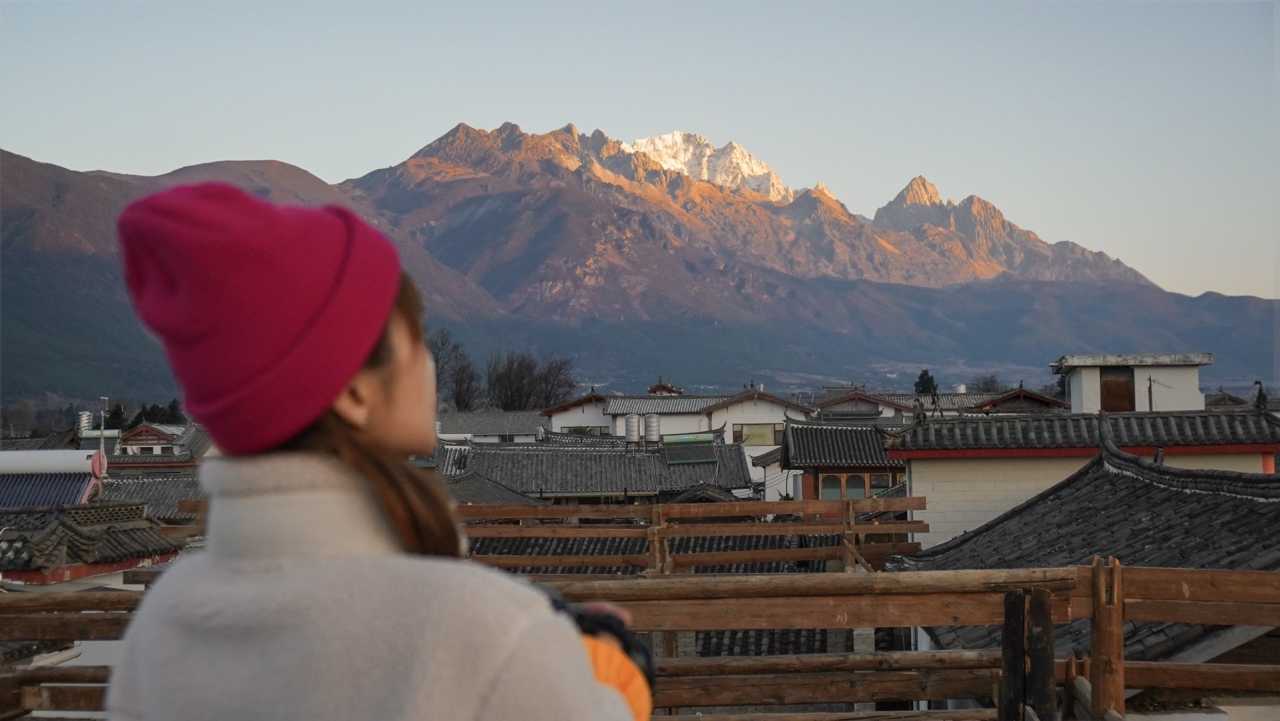
For Lijiang, most people stay in Lijiang Ancient Town. But I wanted to be closer to the snow-capped mountains, so we chose Baisha. Getting there was a challenge—few drivers were willing to go, and the narrow stone streets were barely wide enough for a car. But it was worth it.
Baisha is quieter, more authentic, and feels like a village that time forgot. The Jade Dragon Snow Mountain looms in the distance, its peaks visible from almost anywhere in town. We wandered through streets lined with local crafts, watched Naxi women embroidering traditional patterns, and stopped for coffee at a rooftop café with a view that made us forget our tired legs.
The town's famous murals in the Dabaoji Palace date back to the Ming Dynasty, blending Han, Tibetan, and Naxi artistic traditions. We spent an hour there, marveling at how different cultures had merged on these ancient walls.
Jade Dragon Snow Mountain: A Lesson in Altitude
Our final destination was the Jade Dragon Snow Mountain itself. We booked tickets weeks in advance—a necessity, as daily visitor numbers are capped. The cable car ride to Spruce Meadow at 3,200 meters was smooth, but the altitude hit us hard.
My dad, usually the most energetic of us, was the first to feel it. His steps slowed, his breathing grew labored. We took breaks every few minutes, sipping water and catching our breath. The wooden walkway stretched ahead, lined with prayer flags fluttering in the thin air.
At the Glacier Park cable car station, we decided not to push further. The summit at 4,680 meters would have to wait. Sometimes, knowing your limits is the wisest choice. We sat on a bench, watching clouds drift across the glacier, and shared a chocolate bar. It was simple, but it felt like a victory.
The Long Way Home
Our last night was in Lijiang Ancient Town, which felt like a theme park after Baisha. Water wheels, souvenir shops, and bars pumping pop music—it had its charms, but we were ready to leave.
The flight home was delayed. We sat in the airport for three hours, eating overpriced sandwiches and watching the sun set over the tarmac. My parents dozed off. I stared at the boarding gate, thinking about how three years had passed in a blink, and how this trip—flawed, exhausting, beautiful—had brought us back together.
Yunnan had changed. We had changed. But some things remain: the way my mom's eyes light up at a lake view, my dad's obsession with photographing our backs, and the quiet joy of being on the road again.
Until next time, Blue Yunnan.
You should also read:
Traveling with the Soul: Yunnan Under My Feet, My Heart in the Clouds
Traveling with the Soul: Yunnan Under My Feet, My Heart in the Clouds Prologue: A Spontaneous Escape Have you ever had that moment—sitting in a noisy city, staring at a screen full of dense text, suddenly yearning for a complete escape? As the K159 train…
Continue reading...
Dreaming of Nanzhao: A Gentle Encounter with Erhai Lake in Dali Shuanglang, July
Dreaming of Nanzhao: A Gentle Encounter with Erhai Lake in Dali Shuanglang, July Every summer, a voice whispers softly from the depths of my heart: it's time to go. No matter how tight the budget, no matter how precious the annual leave, the ritual of…
Continue reading...
2012, Conquering Lugu Lake and Lijiang: A World of Azure and a City of Splendor
2012, Conquering Lugu Lake and Lijiang: A World of Azure and a City of Splendor Prologue: Three Guys on a Youthful Expedition Just after the May Day holiday in 2012, my buddies Hui Ge, Xiao Chen, and I—three strapping young men—shouldered our backpacks and set…
Continue reading...