Border Town Xishuangbanna: Here Come the "Shao Duoli" (Beautiful Girls)!
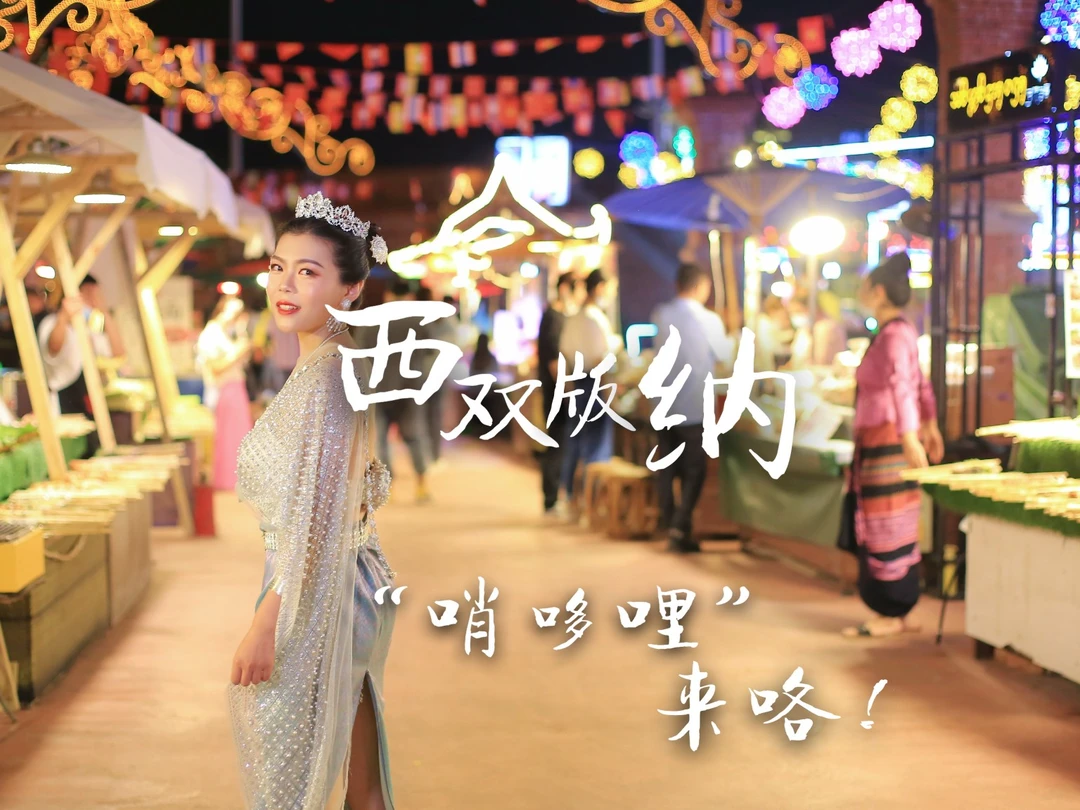
Border Town Xishuangbanna: Here Come the "Shao Duoli" (Beautiful Girls)!
In these days when international travel has become a luxury, where in China can you step into a foreign land without leaving the country? The answer is clear: Xishuangbanna. This small city on Yunnan's border quietly planted a seed in my heart with its tropical breezes, peacock wings, and the glow of night markets. In the Spring Festival of 2021, while the north was still shivering in the cold wind, I packed my bags and flew to this warm oasis, embarking on a four-day family trip.
First Encounter with Banna: Peacocks More Stunning Than Temples
From the Airport to the Grand Buddha Temple: An Unexpected Detour
My flight landed two hours earlier than scheduled. The moment I stepped out of the cabin, a wave of heat mixed with that familiar vacation scent hit me. When I left Guangzhou, I was still wrapped in a thick hoodie, but now I could barely wait to change into short sleeves. The driver who picked me up was a chubby local guy who spoke at a leisurely pace with a straightforward, down-to-earth charm. We chatted about Banna's weather, the Water-Splashing Festival, the food, and the high-speed rail that was about to open by the end of the year. He quickly steered the conversation in his own direction.

"Are you interested in peacocks?" The driver glanced at me in the rearview mirror. "Then you should go to the Mengle Grand Buddha Temple (勐泐大佛寺). We just passed it. If you go now, you'll catch the last peacock release of the day, and you can also see the water-splashing ceremony."
I hesitated. After all, this place had never appeared in any of my travel guides. But those four words — "peacock release" — hooked me like a spell. In the end, I somehow agreed.
As the car pulled into the temple's parking lot, my heart sank. The sparse number of visitors at the entrance made me feel like I'd fallen for a tourist trap. A beautiful peacock was tied up by the gate, but before I could get a closer look, the driver urged me on: "Hurry up inside! The peacock release is about to start. Make sure you stand in the front!"
Then he added, "It's cold in winter, so they won't do much water splashing. Also, you can only go halfway up the hill — the temple at the top isn't finished yet." I instantly understood: this really was a trap.
The Peacock Release: 15 Minutes of Pure Awe
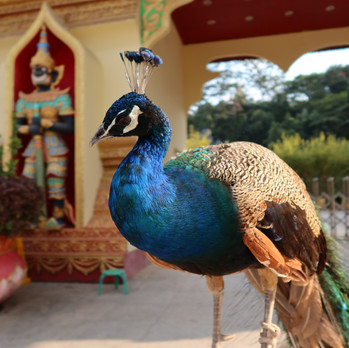
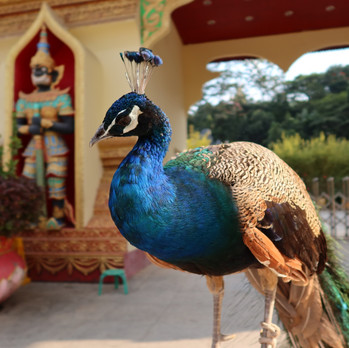
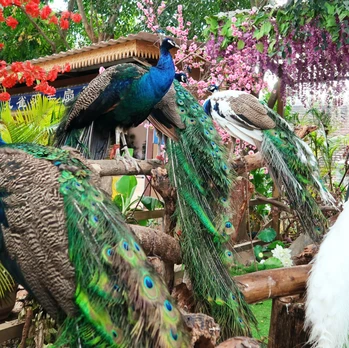
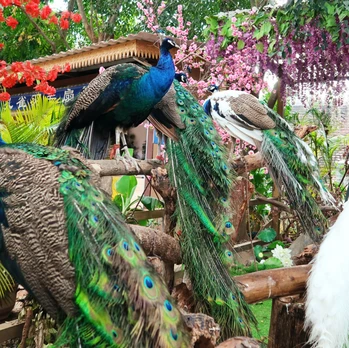
Behind a simple platform, four peacocks were tied up for photo ops. It was my first time seeing a pure white peacock; it seemed to glow in the sunlight, even its crest feathers were completely white. I approached cautiously but didn't dare reach out — its beak was too sharp, and its body kept fidgeting.
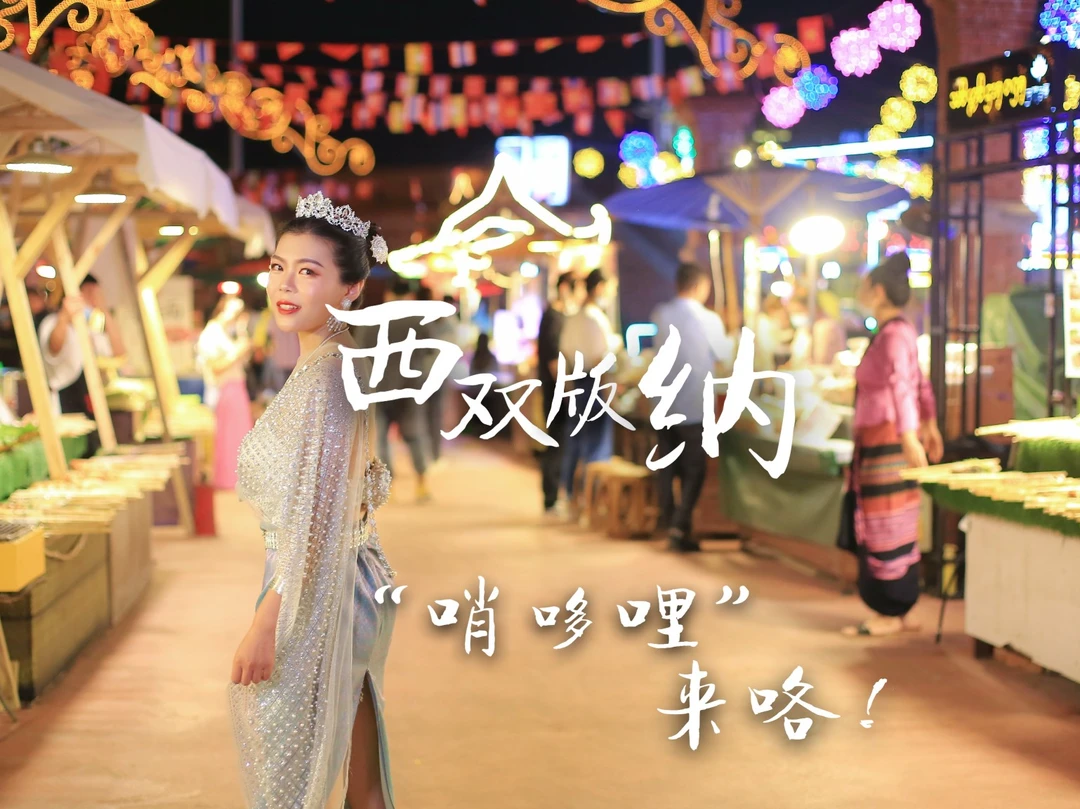
Suddenly, the crowd gasped. One peacock glided down, then a second, then a third... soon I lost count. My eyes were fixed on the spot where they emerged from the greenery. You could never guess where the next one would appear. The moment they spread their wings, only one phrase came to mind: absolutely breathtaking.
The setting sun gilded the peacocks' wings with a faint glow as they glided down in perfect formation. I noticed their feathers were quite short — perhaps to reduce weight? Hundreds of peacocks glided down one after another, lasting a full 15 minutes. Even more amazing: not a single one flew over the fence. They all landed perfectly in the designated area.
A staff member opened the gate, holding small boxes of peacock feed, waiting for tourists to come in and feed them. I had originally only wanted to take photos, but I was so stunned by the sight of over a thousand peacocks gathered together that I bought a box and rushed in. Quite a few peacocks had their tails fanned out, but their feathers were indeed pitifully short. The palm-sized box of feed was snatched up in less than a minute — peacocks eat just like chickens pecking at rice, their heads bobbing, and most of the food ended up scattered on the ground.
After the feeding, the aunties started shooing people away. "Hey, shao duoli (beautiful girl), you can leave now that you've fed the peacocks... shao duoli..." I dragged my feet until I was the last one to leave, watching the final batch of peacocks being herded back into the woods. On the empty ground, sparrows flew in to peck at the leftover crumbs, but my mind was still replaying the image of peacocks flying down. I had seen plenty of wild peacocks in India, but never a hundred of them flying together. That feeling was as strong as when I watched bats swarm out of a cave a year ago.
The Temple's Awkwardness: Hollow Grandeur
Leaving the peacock area, I passed by a huge water-splashing pool. It was completely empty. Even though Banna's winter temperatures are above 25°C (77°F), the locals still thought it was too cold for water splashing. I found it both amusing and baffling.
After a few turns, the Buddhist temple came into view. The trees along the staircase had been trimmed into a large Chinese character for "Buddha." The heavy hand of "indoctrination" was all too obvious. I'm not a Buddhist, so I only photographed the sculptures in front of the halls with a documentary mindset. Those "wide-eyed, furious" figures struck me as merely frightening.
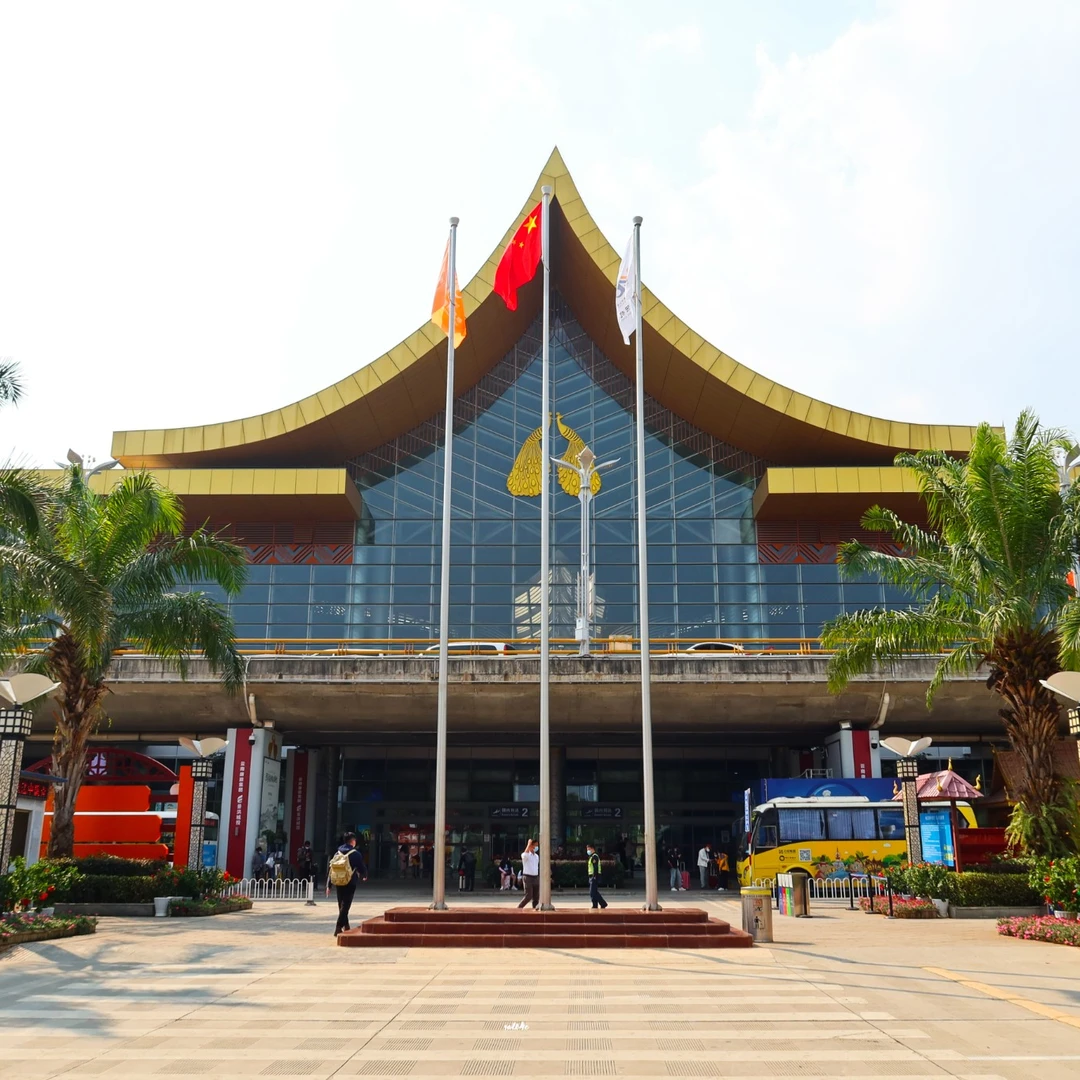
The golden door frames, door panels, and door faces reminded me of Thai palaces. The carving details were indeed exquisite, but I couldn't help wondering: Can gods made by human hands really see, hear, eat, or smell? Do the gods truly dwell within them?
Further ahead stood the towering吉祥大佛 (Auspicious Great Buddha), with the "Earth Goddess" at the foot of the staircase. The Week Hall and Longevity Hall flanked the sides, their designs clearly influenced by Burmese and Thai temples. Under the setting sun, the emerald-green decorations on the door frames sparkled, and the double-eaved, gable-and-hip roofs were stunning from every angle. But at the top of the hill, beneath the Great Buddha sculpture, there wasn't a single person praying. The only vendor, offering "photo ops with the Buddha's feet," was packing up.
I later looked it up: the Mengle Grand Buddha Temple was rebuilt on the original site of the ancient Dai royal temple "Jingpiao Temple," a symbol of Theravada Buddhism. But for a non-believer like me, it was just an empty building — no incense smoke, no monks, no worshippers. And it's a 4A-rated scenic spot? Using religion to charge over a hundred yuan for admission? I genuinely found it distasteful.
This unplanned temple visit significantly lowered Banna's standing in my heart. I knew drivers often push tourists to certain places, but I blamed myself for trusting him too easily. I just told myself the money was an "offering" to the peacocks — honestly, those peacocks were far more beautiful than the temple.
The Soul of Banna: Slow Time in the Night Markets
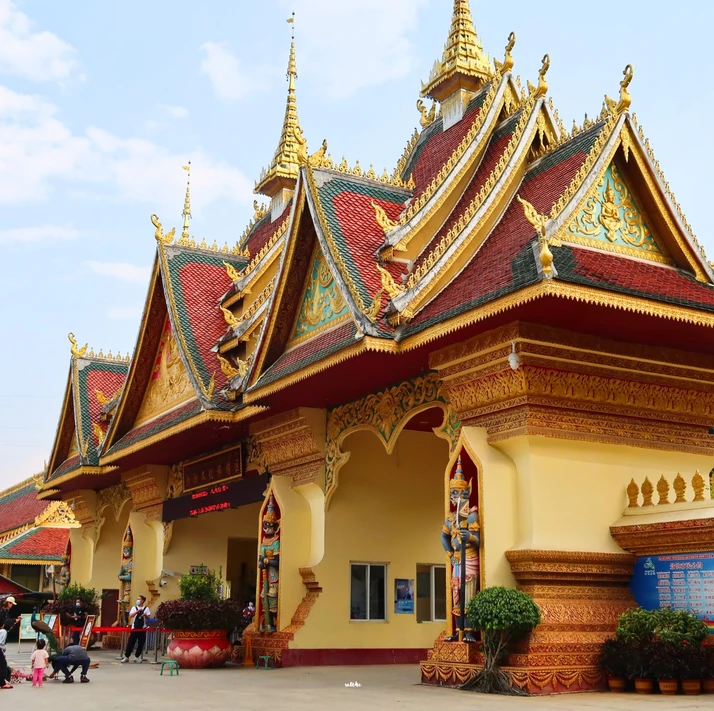
Starry Night Market: A Foreign Dream Lit Up by Lights
As a tropical city, Banna shares its neighbors' love for lively night markets. In the north, the streets go quiet by 7 PM, but Banna is the opposite — people only come out after the sun goes down. After leaving the Grand Buddha Temple, I asked the driver to take me to the Starry Night Market (星光夜市).
On the way, I asked him for food recommendations. He said, "Manfeilong Roast Chicken (曼飞龙烤鸡)." I had heard of this internet-famous restaurant, with mixed reviews. I specifically asked, "Don't a lot of people say it's not good?" "It's actually delicious. You should really try it." I chose to trust him again.
The restaurant wasn't busy. I ordered the roast chicken and a mixed vegetable soup. The chicken had crispy skin and firm meat. The first bite was good, but after chewing a bit, I realized it was nowhere near "I want to eat this again" level. The mixed vegetable soup — pumpkin shoots, enoki mushrooms, and pork skin — was ordinary but went well with the chicken. The service was average; many staff members were leaning against the railing, not bothering to hand out menus.
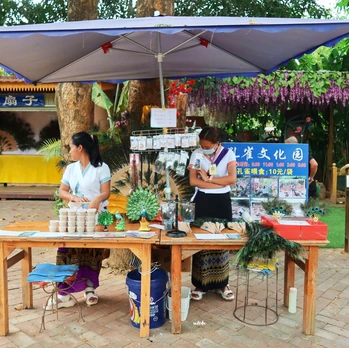
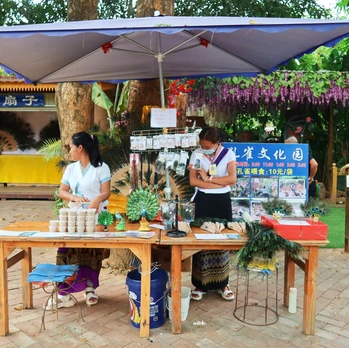
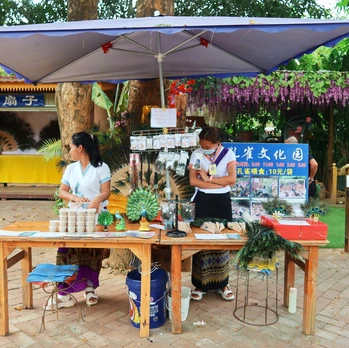
The rest of the evening belonged to the Starry Night Market. At the fruit stalls, watermelons, jackfruit, and papayas were neatly arranged, along with less common items like figs, Thai baby pineapples, and tamarind. Every stall had the same price — 10 yuan per box, 15 yuan for two boxes, no bargaining. At the snack stalls, ingredients were laid out on bamboo plates, and just looking at them was satisfying.
The Jinghong Grand Golden Pagoda (景洪大金塔), illuminated by the lights, looked even more mysterious at night. The most captivating sight was the young women in Thai costumes posing for photos. The winter night breeze was slightly cool, so some of them wore jackets over their outfits. The stalls on Ganbai Street (赶摆街) sold handicrafts and jewelry. Once the colorful little lanterns were lit, the exotic vibe was unmistakable.
The warm yellow lights of the main night market, filtered through sun umbrellas, created a starry effect — hence the name "Starry Night Market." It's best viewed from a distance; up close, it loses some of its charm. The nearby Mekong River was given an atmospheric glow by the lights, and the characters on the boats were in the Dai script of "Xishuangbanna," written the same way as Thai. Dragon sculptures adorned the river, but the tall hotels in the background were a bit of an eyesore.
I returned to the Starry Night Market several more times over the following days. I even saw the same middle-aged man doing a live stream in the same spot. To be honest, this market felt a lot like night markets in other Chinese cities — aside from the different fruits and snacks, the stalls selling barbecue, clothes, souvenirs, and trinkets would fit right in anywhere. 90% of the vendors spoke with non-local accents. Online, people say this place is like Thailand. I think that's overblown marketing. If there's any resemblance, it's only the women in Thai costumes posing by the Grand Golden Pagoda — but in real Thailand, ordinary women don't wear such outfits on the street.
Rather than wandering through the market, I preferred sitting by the Grand Golden Pagoda, letting the breeze wash over me. Banna's winter evening wind was neither hot nor cold — just perfect.
Binjiang Night Market: The Locals' Everyday Flavor
After a few days, I got tired of the Starry Night Market. On my last evening, I went to Binjiang Night Market (滨江夜市), where the locals hang out. Yellow lights versus white lights; sun umbrellas versus tents — these two simple differences made Binjiang Night Market feel more rustic, more down-to-earth, and completely free of tourists.
There were barbecue stalls here too, but a small bowl of stuffed tofu (包浆豆腐) cost only 5 yuan — half the price at the Starry Night Market. The vendor was incredibly laid-back, reading a book the whole time. I ordered a portion, and he unhurriedly placed the tofu on the grill. And you know what? It was really good — tender and juicy on the inside, unlike anything I'd had elsewhere. The tofu itself was bland, so you had to dip it in the sauce. I asked him how he made the dipping sauce. He just smiled and said, "How could I tell you that?"
Another difference between Binjiang and Starry Night: many stalls here sold Thai medicines. As soon as you got close, you could smell their strong herbal scent. Actually, when I think of night markets, my first association is Taiwan, not Thailand. In Thailand, you can encounter street vendors pushing carts and selling snacks even during the day. I had hoped to find the same mango sticky rice at Banna's night markets, but no — you could only get it in restaurants.
But Banna is Banna. For someone on vacation, is there really a better place to spend the evening than the Starry Night Market? Strolling between the stalls, picking a restaurant to watch Thai dance performances, drinking beer and chatting — that's how a night passes. The internet has painted Banna as a "slow-paced" place, and the night market perfectly fulfills that fantasy.
Banna's Scenic Spots That Didn't Click: The Higher the Expectations, the Bigger the Disappointment
Xishuangbanna Tropical Botanical Garden (Chinese Academy of Sciences): A Research Paradise, a Tourist Letdown
Banna's only 5A-rated scenic spot is the Xishuangbanna Tropical Botanical Garden, run by the Chinese Academy of Sciences. Before coming, I had seen all those Instagram-worthy photos online and my expectations were sky-high. But visiting in winter, the giant water lilies (王莲) had barely any leaves. The lotus flowers, on the other hand, were in full bloom across the ponds — but they were too common to be exciting. Since I live in the south, the garden's banyan trees, jackfruit, mangoes, and bougainvillea were all things I saw every day.
Once I got on the sightseeing shuttle, I realized I didn't need a guide at all — the driver would drop me off at each stop and tell me where to catch the next one. Honestly, I didn't enjoy walking around the garden at all. Still, every now and then, I'd spot something exciting: a mimosa plant as tall as a person, a "dancing grass" that swayed when you talked to it, a Buddha's belly tree (佛肚树), and national flowers from various countries. But it was only mildly interesting.
What I found most baffling: even on the shuttle, you couldn't just ride around and see everything. Some drop-off points and pick-up points weren't in the same place, forcing you to walk a certain distance. And the signage was terrible. Even if you followed the driver's directions, you might end up taking a detour. At one point, I clearly walked to the pick-up point, but the shuttle drove back the way I came! I wasn't the only one — other passengers were grumbling, "I just walked from over there!"
As for the hot air balloon, a popular Instagram spot, one photo from a distance was enough. Paying to ride it wasn't worth it — it couldn't fly far, just went straight up and down. Probably only appealing to kids.
My takeaway: if you've seen these plants before, unless you have a particular obsession with one species, there's no sense of novelty. My verdict on the botanical garden? A research institution turned into a 5A scenic spot — it fell short of expectations. I didn't enjoy it, and I wouldn't go again. If you do go, my advice: don't set your hopes too high.
As I was leaving, I saw some foreigners riding bicycles, and someone else on a motorcycle. A question popped into my head: "How did they manage to rent bikes here?" If I had the chance to cycle through the garden, the experience would probably have been much better. They say the west section is for scenery, and the east section for a primitive forest experience, but walking through it was exhausting — a full hike through the garden is definitely one of Banna's challenges.
Manting Park: Cruel History, Ordinary Scenery
Every city has its "must-visit" park, and in Banna, it's Manting Park (曼听公园). But the driver I met on the first day said, "Go if you have time, but it's no big deal." That didn't match what I'd read online. I stubbornly decided to go anyway.
In the Dai language, "Man" means "village" or "settlement," and "Ting" means "flower-planting slave." Manting Park was originally a slave village where people grew flowers and fruits exclusively for the Zhaopianling (召片领, the Dai term for "lord of the vast land") and his family to enjoy. Learning this history, I found it a rather cruel place. Today, it's also called "Chunhuan Park" (春欢公园), meaning "Garden of Souls."
To me, the park's scenery was quite ordinary. What I liked most was a river inside: bamboo rafts drifting on the water, backed by tropical trees, reminding me of Kerala in southern India. There was a little artsy café, a place for Dai-style pottery (where many kids were playing), a parrot performance square, and small ponies like something out of a children's playground.
At the far end was an elephant show. The park had three elephants, with the baby one being the most energetic. During the break, you could feed them bananas, and after the show, you could pay to ride them and take photos. The three elephants performed tricks like "shaking their heads," "sitting on a stool," and "kicking a soccer ball." There were also interactive segments where they balanced hats and gave massages with their trunks. Only two spots were available per session, and while the crowd wasn't large, many people rushed forward.
The show lasted about 30 minutes, perfect for kids and elderly visitors. For me, it was simply about enjoying the moment — watching the elephants' clumsy yet adorable movements, soaking in Banna's uniquely slow pace.
Final Thoughts: The Truth and Charm of Banna
My four-day trip to Banna was a mix of surprises and disappointments. The peacock release was the most breathtaking moment of the entire journey. The night markets were the soul of the city. But the so-called "must-visit" attractions mostly let me down. I learned not to blindly trust drivers' recommendations, and I understood the cost of setting my expectations too high.
Banna's "slowness" is hidden in its soul. It doesn't chase a fast pace, which is why it attracts young people tired of city life. But this "slowness" is something you have to discover for yourself — in the sunset as peacocks fly by, in the breeze you feel at the night market, in the aroma of stuffed tofu.
If you ask me, "Is Banna worth visiting?" I'd say, "Yes, but don't expect too much. Put down the guidebook, follow your instincts, and you might just find your own surprises."
After all, the charm of a border town is never in the guidebooks — it's in the unexpected moments.
You should also read:
Shooting Shuanglang: That Charming Little Town by Erhai Lake Where You'll Gladly "Waste Time"
Shooting Shuanglang: That Charming Little Town by Erhai Lake Where You'll Gladly "Waste Time" First Glimpse of Shuanglang: A Reversal from Disappointment to Amazement If you ask me what kind of vibe Shuanglang has, I might pause for three seconds before telling you—it's the kind…
Continue reading...
Lugu Lake Cycling Tour: When I Have Money, I'll Come Back to Marry You!
Lugu Lake Cycling Tour: When I Have Money, I'll Come Back to Marry You! If not now, when? If not me, who? Some places captivate you just by hearing about them. Lugu Lake is exactly that kind of place—the Kingdom of Women, the Mosuo people,…
Continue reading...
Before the Tongue: Discovering Nuodeng, the Ancient Salt Town Time Forgot
Before the Tongue: Discovering Nuodeng, the Ancient Salt Town Time Forgot There’s a peculiar magic in places that have been left behind by history. They don’t try to impress you. They don’t have polished welcome centers or laminated maps. They just are—worn, quiet, and utterly…
Continue reading...