Shooting Shuanglang: That Charming Little Town by Erhai Lake Where You'll Gladly "Waste Time"
Shooting Shuanglang: That Charming Little Town by Erhai Lake Where You'll Gladly "Waste Time"
First Glimpse of Shuanglang: A Reversal from Disappointment to Amazement
If you ask me what kind of vibe Shuanglang has, I might pause for three seconds before telling you—it's the kind of vibe that makes you willingly "waste" your time.
Don't roll your eyes just yet. I know the word "vibe" has been overused. Mention Beijing's 798 Art Zone, and you think of atmosphere. Talk about Shanghai's Tianzifang, and you use the same word. As for places like Lijiang and Xitang, "romantic encounters" have become synonymous with ambiance, so overdone that it's aesthetically exhausting. But Shuanglang's vibe is different.
Some say Shuanglang is a great place to zone out; others claim it can calm your mind like still water; still others say coming here lets you forget your worries, as if time stands still and you become completely lazy. The environment truly can affect your mood—when you're suffocating under the fast pace and high pressure of a concrete jungle, everyone needs a space to decompress. Some choose the outdoors, some head for the grasslands, and I chose Shuanglang.
To be honest, the moment I first arrived in Shuanglang, I almost thought I'd been fooled by Photoshopped pictures.
This small town on the northeastern corner of Erhai Lake is so tiny it only has one main street. As I dragged my suitcase and saw the dilapidated streets, construction sites everywhere, sewage flowing at my feet, and piles of building debris, my heart sank: "Great, I've been tricked by those retouched photos again." The air occasionally carried unpleasant smells, and villagers sat on the narrow roadside selling vegetables. The more I walked, the more I doubted—was this really the legendary, atmospheric Shuanglang?
But then something magical happened. As I zigzagged deeper into the alleyways, rough but handmade signboards began appearing at the corners. When the names of guesthouses I'd repeatedly seen in travel blogs came into view, the weight finally lifted from my chest—yes, this was it.
Getting to Shuanglang: A Bumpy "Treasure Hunt"
Starting from Lijiang, I drove south along the S221 Dali-Lijiang Highway. The road was excellent until Heqing County, making the drive a pleasure. But after Heqing, the road narrowed and turned into a bumpy, gravel-strewn path. Passing through Songgui Town and Xiyi Town, then Tenglong Village, I got closer and closer to Erhai Lake.
Here's an important tip: Shortly after Tenglong Village, you'll come to a three-way fork. To the right is a newly built wide road; straight ahead is a narrow path resembling a village lane. At the intersection stood a small blue sign—oddly enough, both directions read "Dali." I hesitated, thinking the new road must be more sensible, and decisively turned right. After driving four or five kilometers, something felt off. I stopped to ask directions and learned that to reach Shuanglang, you have to take the old, narrow road. Lucky for me, my instincts were sharp enough that I hadn't ended up on the west side of Erhai heading straight into Dali city. I quickly turned around.
Erhai Lake stretches north to south in an elongated shape. Coming from Lijiang on the S221, you reach a fork at Shangguan Town, with roads branching off to the west and east sides of the lake, eventually converging at Dali City at the southern tip. Shuanglang Town sits on the northeastern corner. After entering Shangguan Town along the S221, I spotted a sign for "Nanzhao Customs Island," indicating I'd reached the lakeshore, but I never saw a sign for "Shuanglang Town"—to this day, I don't know if I took a wrong turn or if the municipal infrastructure just hasn't caught up. I stopped to ask for directions, and a local pointed me down a village path, saying it would lead me there. I gritted my teeth and went for it.
Thankfully, after less than two kilometers of dirt road, a brand-new asphalt highway suddenly appeared before me—the Lakeside Ring Road! Fresh pavement, new wind-powered streetlights—my mood instantly lifted. And there, without any warning, was Shuanglang.
The Soul of Shuanglang: Guesthouses So Stunning They Leave You Speechless
One defining feature of travel in Shuanglang is its guesthouse culture. What stands out most is the interior design and decoration of each inn, each with its own unique style. For the views, floor-to-ceiling windows and various beach chairs are a given. The rooms use bold colors: purple sofas, emerald green curtains, white tables and chairs, bright red tablecloths. The decorative touches are carefully chosen: vintage tube radios, antique solid wood furniture, travel magazines, postcards, assorted flower arrangements, table lamps, and exposed brick-and-stone accent walls...
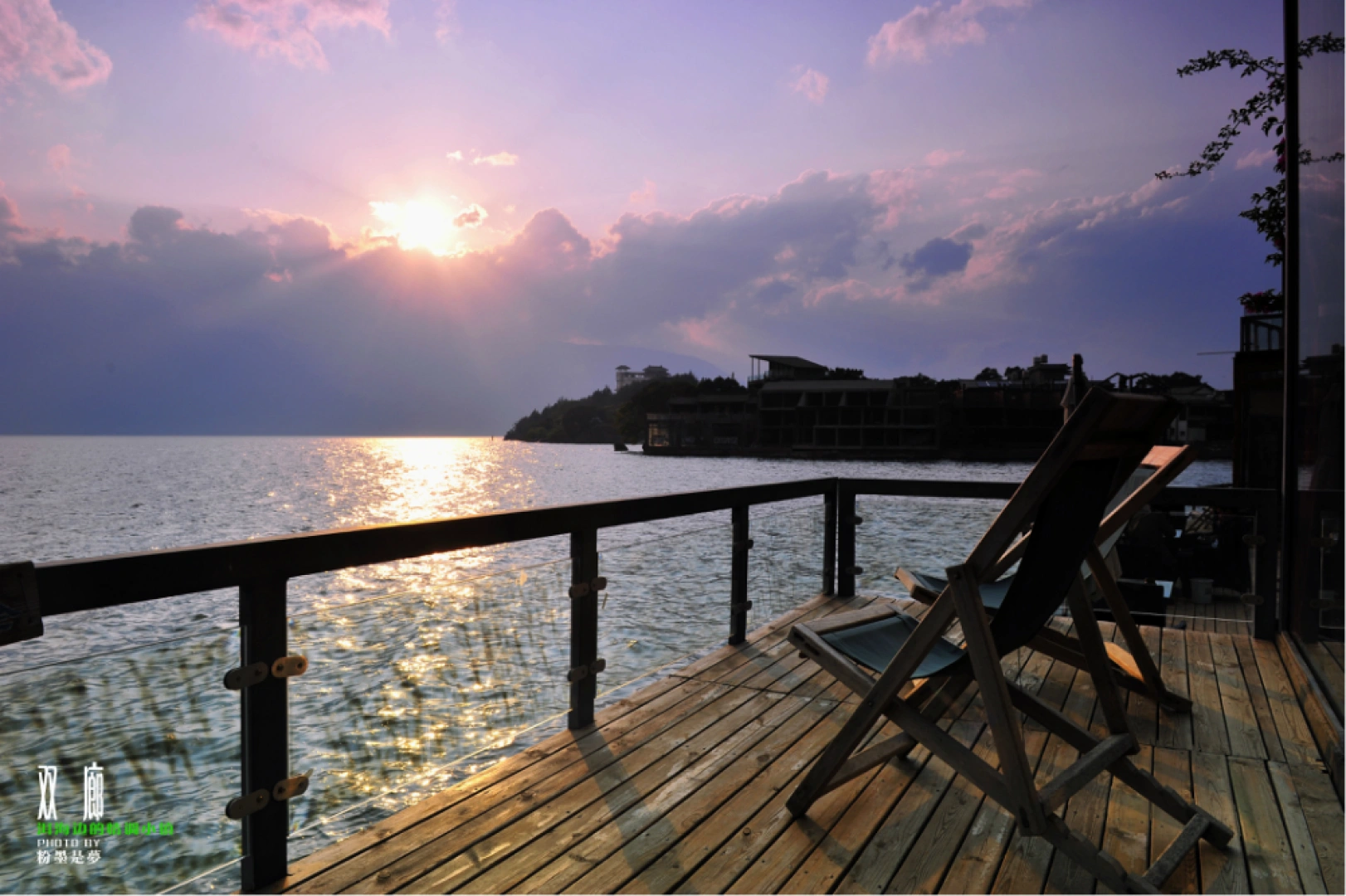
But the most distinctive feature is each guesthouse's unique viewing terrace. If you look closely, you'll notice they don't use expensive, luxurious materials—often the simplest, most minimal items—yet they create an unparalleled atmosphere.
Haiti Life: The Face of Shuanglang
The viewing platform at Haiti Life has practically become a landmark of Shuanglang. The designer boldly placed two bar counters and a few bar stools—that's it, so simple, yet incredibly stylish. Why? Because they're white, because they're minimalist, and most importantly, because they're set against the vast expanse of Erhai Lake on a protruding platform—simple, but not simplistic.
The entrance to Haiti Life's Courtyard No. 4 is strikingly small—you'd barely find it from the outside. But as you push open the door and step inside, everyone lets out a "wow." That's because it also boasts the most ostentatious, most impressive "Gate of Shuanglang"—arrogant and unparalleled!
Half Moon Trailing Blue: Bringing "Sailing" into the Guesthouse

The viewing platform at Half Moon Trailing Blue draws inspiration from ship railings, decks, and lifebuoys. Again, it strips away complexity, using the simplest techniques and objects to evoke a "nautical" feel, making you feel like you're on a cruise ship on Erhai Lake.
Lanting Bieyuan: A Perfect Blend of Nostalgia and Warmth
The reception hall at Lanting Bieyuan is filled with trinkets, exuding a strong sense of nostalgia. The flooring materials and finish are excellent, giving a warm, smooth feel. Its round bathtub is probably a favorite among young women.
Peninsula 63 and Blue Sail Mediterranean: Each with Its Own Charm
Peninsula 63's arched panoramic window is very distinctive and widely famous. Blue Sail Mediterranean boasts a massive viewing platform with white steel-framed architecture and many rooms, giving it a grand, spacious style overall.
In Shuanglang, Everyone Becomes Artistic
The main attractions in Shuanglang include Yuji Island and Nanzhao Customs Island, while those highly photogenic, atmospheric guesthouses are mostly concentrated in Dajianpang Village. Heading south along the Lakeside Ring Road, you first reach a three-way fork. Turn right for Yuji Island and Nanzhao Customs Island; go straight, and soon you'll see a large rock by the roadside inscribed with "Dajianpang Village." Several parking lots are scattered along the road, each marked with which guesthouses they serve—very user-friendly. In reality, no matter where you park, the guesthouses are all within walking distance.
Many visitors to Shuanglang stay for three or four days, even switching guesthouses each day just to experience different inn cultures and atmospheres. The highly acclaimed guesthouses, with their unique styles, have incredibly high occupancy rates, so booking in advance is essential. During peak season, rumors even suggest booking six months ahead—a testament to how successfully Shuanglang has marketed its guesthouse culture as a tourist attraction.
An Unexpected Tea Encounter
In the reception hall of Haiti Life's Courtyard No. 4, I met a young woman I'll never forget—I later learned she was the guesthouse manager, and we called her Sister Sun.
When I walked in to take photos, she generously said, "Go ahead, go ahead," and sat quietly by the tea table. After I'd taken a few shots and was about to thank her and leave, she politely said, "Why not sit down and have some tea?"
"Sure, what tea do you have?" I perked up at the mention of tea.
"What kind of tea would you like?"
Such a confident answer? I blurted out, "I usually like rock tea (yancha)." As soon as I said it, I regretted it—rock tea is considered high-end, and in a small lakeside town guesthouse in Yunnan, it sounded either like showing off or putting her on the spot.
To my surprise, her face lit up: "Really? I love rock tea too!"
Without a second thought, I sat down. I watched her skillfully rinse the cups, warm them, present the tea, wash the leaves, pour water, decant, and serve—each step of the tea ceremony performed with professional precision. As the fragrant brew touched my lips, the distinctive mineral notes and roasted flavor unfolded, leaving a lingering aroma.
"Mmm... narcissus oolong (shuixian)," I nodded.
She smiled in acknowledgment, her expression saying one thing: respect.
That tea session was pure comfort and delight.
Shuanglang Nights: Starry Skies, Erhai Lake, and Strangers
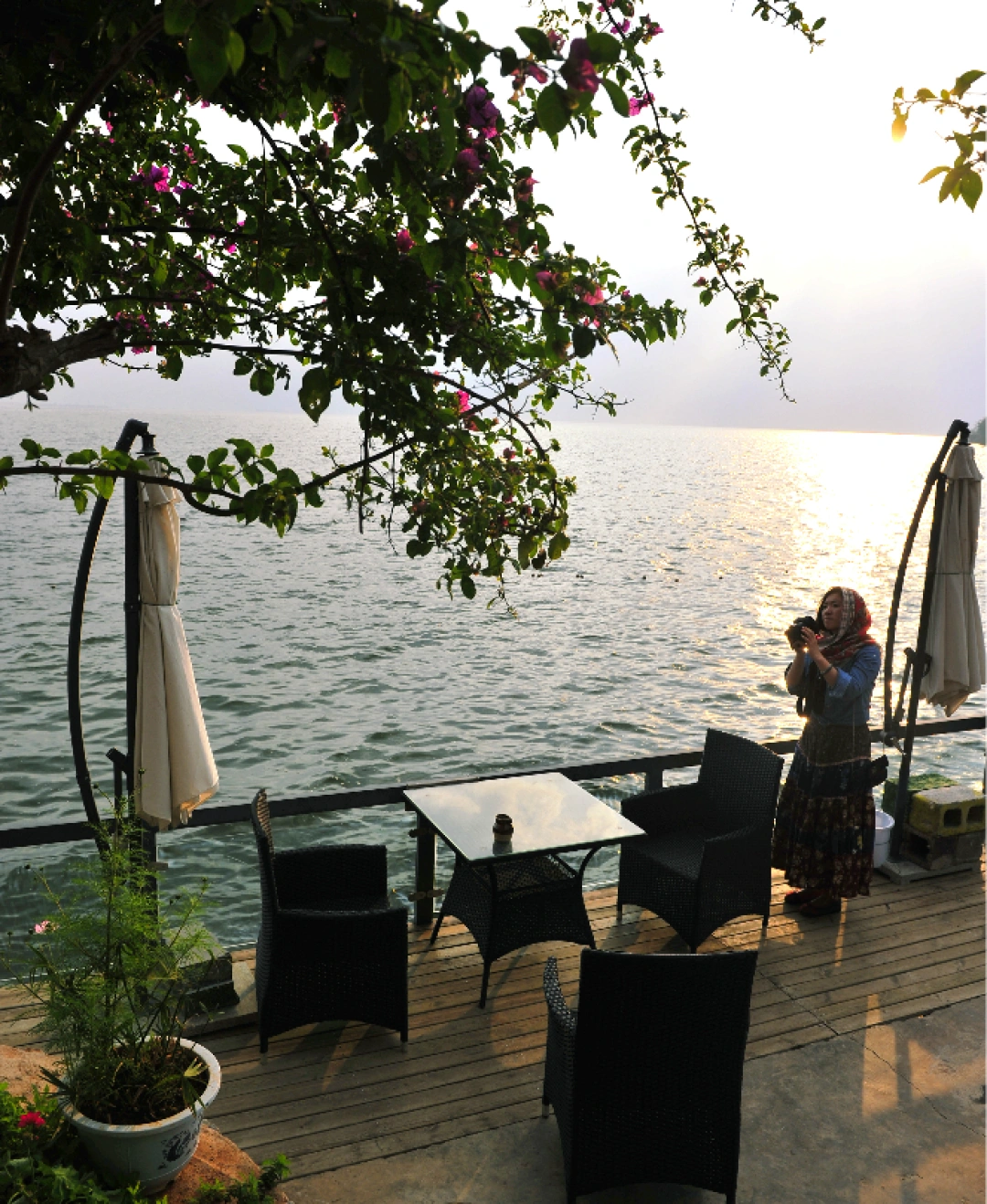
As night fell, the young woman in the reception hall began inviting guests in the courtyard to sit down for tea and conversation. Everyone felt like family, gathered from all corners of the country in this small town by Erhai Lake. The lounge chairs in the hall were uniquely designed, and the gathering space at Courtyard No. 4 offered a spot to count the countless stars, enjoy the lakeside breeze, and discuss philosophy over tea.
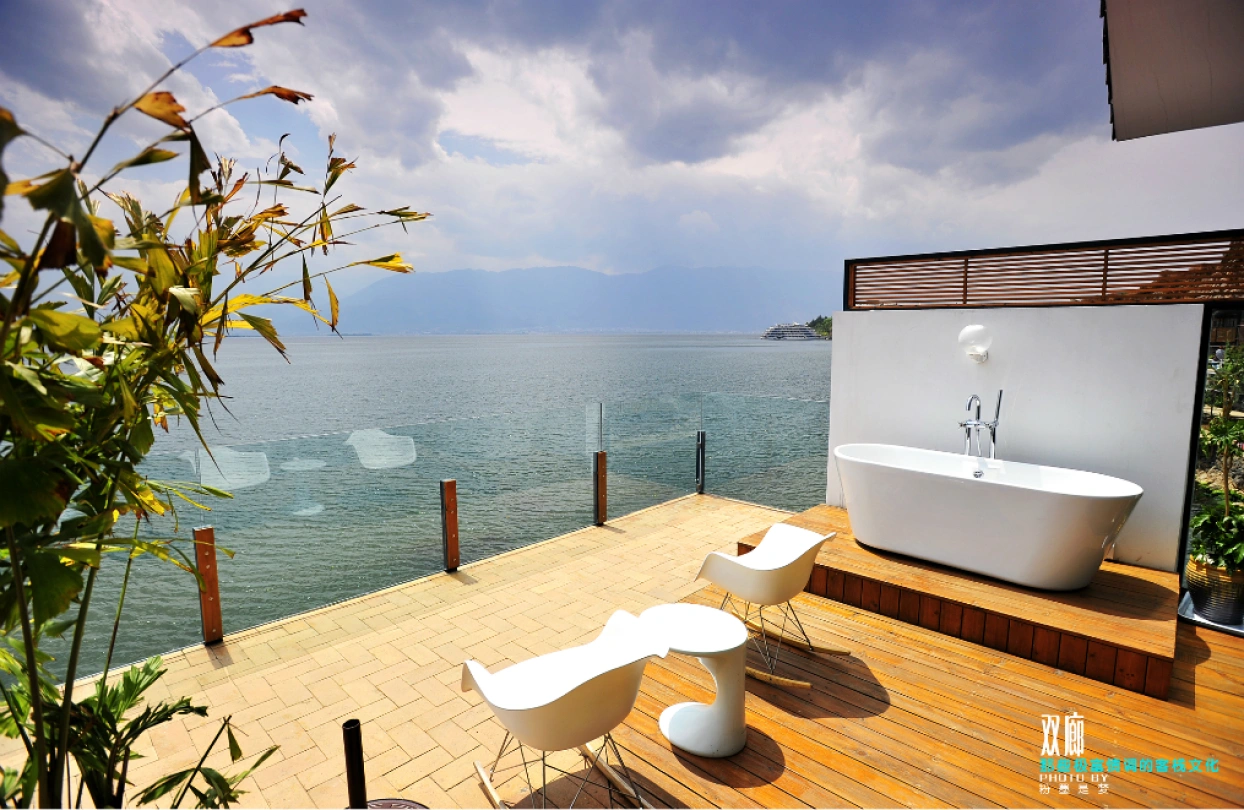
The terrace of Room 8 in Courtyard No. 4 featured an open-air bathtub—so sexy! So brilliant! Anyone brave enough to bathe there would have to be either a romantically extravagant, stunningly beautiful goddess or a charming, irresistible seducer. I could only imagine the scene.
How Shuanglang Differs from Other Places
I've been to Wuzhen, to Xitang, to Lijiang—if you're already dissatisfied with their overwhelming commercialism, if you feel those places have become oceans of tourists and battlegrounds of commerce, if you long for a moment of peace, visual delight, and physical relaxation, then Shuanglang might be your best destination.
In Shuanglang, there are no streets lined with souvenir shops, no guides waving little flags leading tour groups, no ear-splitting slow-bar music, no entrance fees costing dozens or hundreds of yuan, and certainly no crooked restaurants out to cheat you.
In Shuanglang, you can take a quiet stroll, curl up comfortably on a sofa to read a literary novel, count the stars while soaking in a petal bath, nurse a single cup of coffee from sunrise to sunset, and play with a cat until you both fall asleep from exhaustion.
In Shuanglang, you can "time travel" from a crooked, shabby, even grimy alleyway straight to the Mediterranean, push open a door and suddenly find the Aegean Sea before your eyes, or take an artsy, bohemian photo in front of a crumbling wall. Even under a cloudy sky, your heart can remain bright and clear.
In Shuanglang, you can spend days doing absolutely nothing without a hint of anxiety. You might suddenly think about coming back in another season, or a certain person might cross your mind, and you'll feel an urgent need to bring them here.
Practical Information: For Those About to Set Off
How to Get There
From Lijiang, take the S221 Dali-Lijiang Highway south. At Shangguan Town, watch for the fork and choose the old road leading to the northeastern corner of Erhai Lake. After the three-way fork past Tenglong Village, remember to take the straight path, not the new road to the right.
Recommended Guesthouses
- Haiti Life: Booking: 13708667441. Its "seaside bar counter" and "Gate of Shuanglang" are highly photogenic. Rooms are relatively top-tier, and the open-air bathtub on the terrace is incredibly seductive.
- Lanting Bieyuan: Booking: 13618808809. The round bathtub is a favorite among young women.
- Blue Sail Mediterranean: Booking: 13320552101. Features a massive viewing platform, white steel-framed architecture, and many rooms.
- Peninsula 63: Booking: 13320553949. Known for its distinctive arched panoramic window.
- Half Moon Trailing Blue: Design inspired by ship railings and decks, with a strong nautical theme.
Friendly Reminders
During peak season, book well in advance—popular guesthouses may require reservations up to six months ahead. If it's your first visit and you're unfamiliar with the roads, you can contact your guesthouse to have someone pick you up. The parking lot staff will also gladly help carry your luggage and show you the way. From the moment you step out of the car, you'll feel the warm hospitality of the guesthouse—it's truly comforting.
Final Thoughts
In Shuanglang, you'll hate that your camera isn't professional enough. You'll willingly shoot the same scene under different lighting conditions, again and again. You'll look forward to every sunrise and sunset. You'll want to capture your own version of Shuanglang, and suddenly you'll feel an impulse never to leave.
Shuanglang awakens the dormant romance within you. You'll want to sing a song, write a little poem, propose to your girlfriend, claim this place as your love nest, and spend the rest of your life here with your beloved.
In Shuanglang, everyone becomes artistic.
Shuanglang—that charming little town by Erhai Lake. It's not the kind of over-packaged, pretentious atmosphere you find elsewhere. It's a genuine vibe that makes you willingly slow down, quiet down, and lazy down. It's not perfect; it's even a bit rough around the edges. But it's precisely this authenticity that makes it so moving.
You should also read:

September: Finding Unexpected Warmth in Yunnan (Kunming, Dali, Shuanglang, Lijiang, Lugu Lake)
September: Finding Unexpected Warmth in Yunnan (Kunming, Dali, Shuanglang, Lijiang, Lugu Lake) Foreword: One Person's Journey, A Crowd's Story Before I set off, like every first-time solo traveler, I printed out a thick stack of travel guides and rehearsed countless possible scenarios in my head—getting…
Continue reading...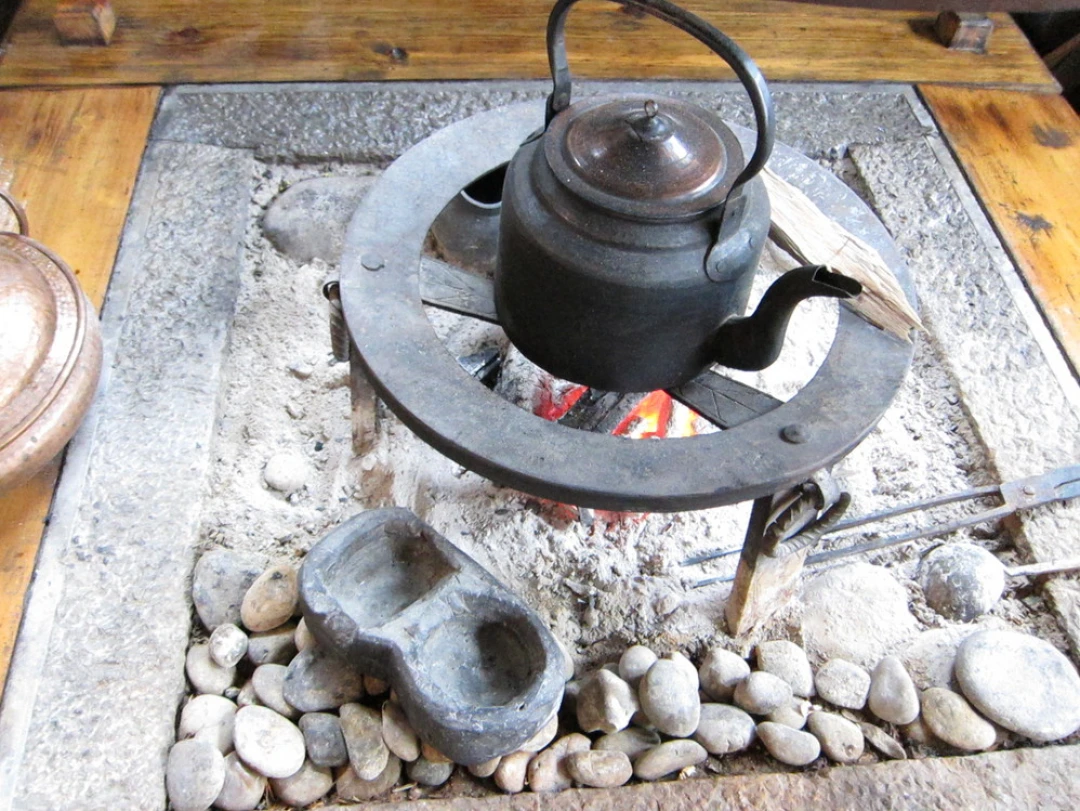
Dreaming of Lijiang, Dreaming of Shangri-La: A Journey That Lets Your Soul Breathe Deeply
Dreaming of Lijiang, Dreaming of Shangri-La: A Journey That Lets Your Soul Breathe Deeply Life is like a long trek. We're always rushing through the concrete jungle, searching for a glimmer of light in the monotony of our days. Then one autumn, I heard the…
Continue reading...
Tengchong·Heshun: Finding Life as It Should Be in a Border Town Where Time Stands Still
Tengchong·Heshun: Finding Life as It Should Be in a Border Town Where Time Stands Still The long journey of over twenty days was over. On my first day back at the office, I was still in a daze. My fingers couldn't find the keys on…
Continue reading...