Chasing Summer, Finding Winter: An Unforgettable Trip to Xishuangbanna
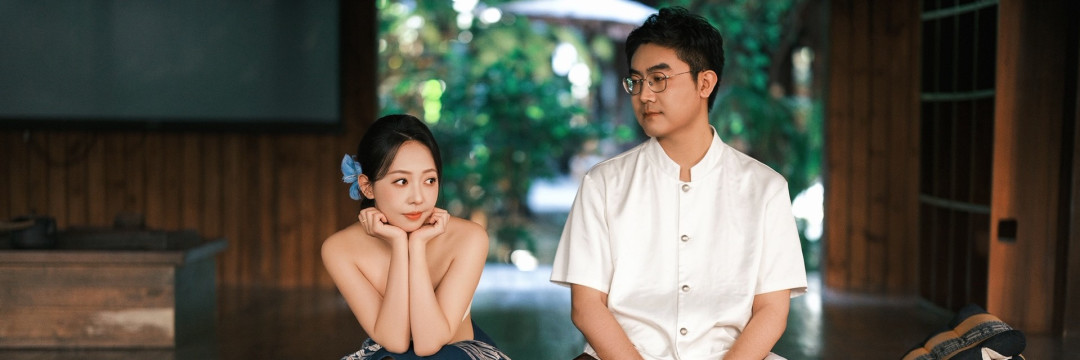
Chasing Summer, Finding Winter: An Unforgettable Trip to Xishuangbanna
As a child, I first glimpsed Xishuangbanna through the static of an old TV with rabbit-ear antennas. The melody of Moonlight Bamboo would instantly conjure images of water-splashing festivals, elephants, and peacock dances. Back then, this tropical paradise felt impossibly far from my home in Heilongjiang—a journey I could only dream of making.
Years later, Xishuangbanna has lost its mystery. Internet memes have dubbed it the "fourth province of Northeast China." Would it still hold the magic I imagined as a child?
Winter arrived in the north as always, and I found myself yearning for Yunnan's eternal spring. Then, on an ordinary Thursday evening, my life partner Sun Magua came home and said, "Let's take a vacation tomorrow."
My excitement lasted exactly ten seconds before I frantically requested time off, booked flights, and started planning. Destination: Xishuangbanna.
What followed was a rollercoaster of mishaps: last-minute bookings, itinerary changes mid-flight, the coldest winter in a decade, arguments with car rental customer service, flight cancellations, and me literally walking into a glass door. As we say in Northeast China, "This place definitely has something going on!"
Despite all the chaos, we packed three and a half days with unforgettable experiences—hiking through Jinuo Mountain, exploring botanical gardens at night, wandering local markets, and shooting couple photos. We tried everything: self-driving, e-scooters, chartered cars, and ride-sharing. In the midst of our tight schedule, we carved out moments of tranquility, collecting fragments of new experiences like puzzle pieces.
The Shining Puzzle Pieces
- Nantounani at dusk in Manting Imperial Garden
- Manyuan Village—the life we aspire to live
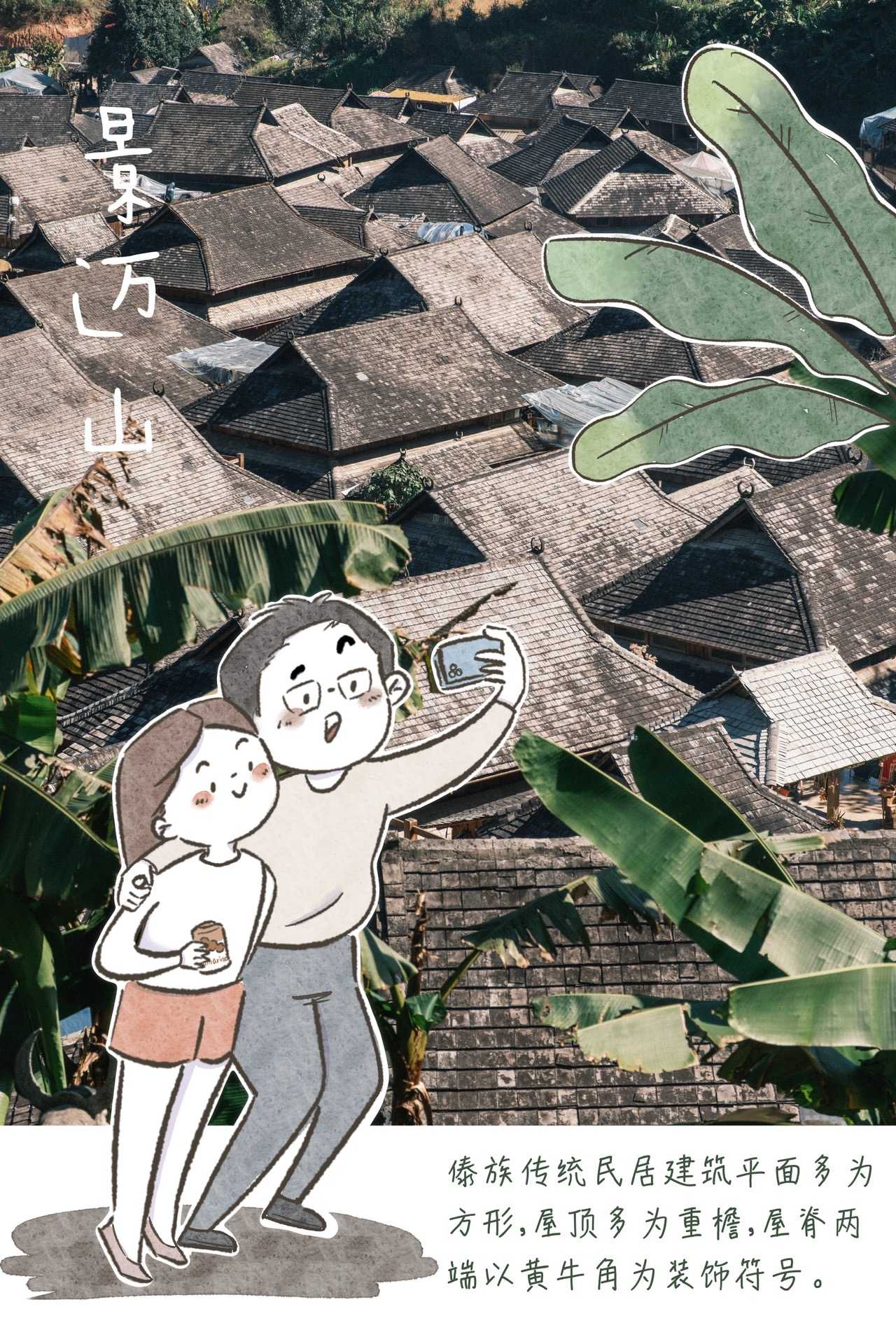
- The "ox horn" rooftops of Nuo Gan Ancient Village
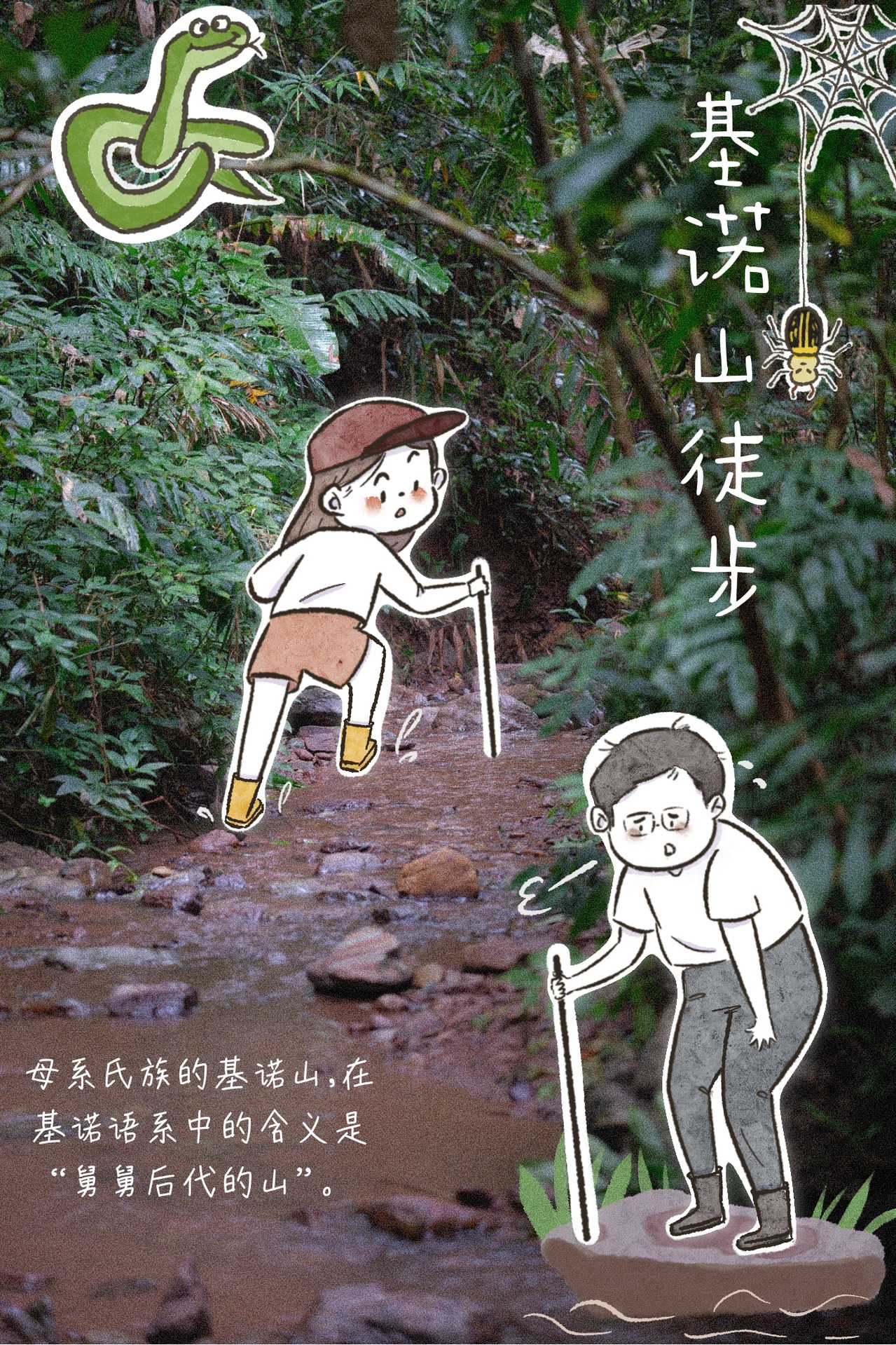
- Parasitic flowers and bamboo vipers in Jinuo Mountain
- Dai-style costumes perfectly matched at Manyin Guesthouse
- Bulang ethnic clothing on Jingmai Mountain
- Wengji Burmese Temple—a timeless gaze
- Rolling in the sea of clouds on Jingmai Mountain
- Climbing banyan trees in the rainforest
- Feeling like an explorer with painted stone faces
- Parasitic flowers reappearing after 30 years
- The aptly named "bottle palm" in the botanical garden
- Sun Magua's love for the hot air balloon
- Flame flowers that make everyone look beautiful
Our Itinerary
Day 1: Jinghong Farmers' Market – Manhena Village – Starlight Night Market
Day 2: Manyuan Village – Botanical Garden – Night Tour
Day 3: Jingmai Mountain
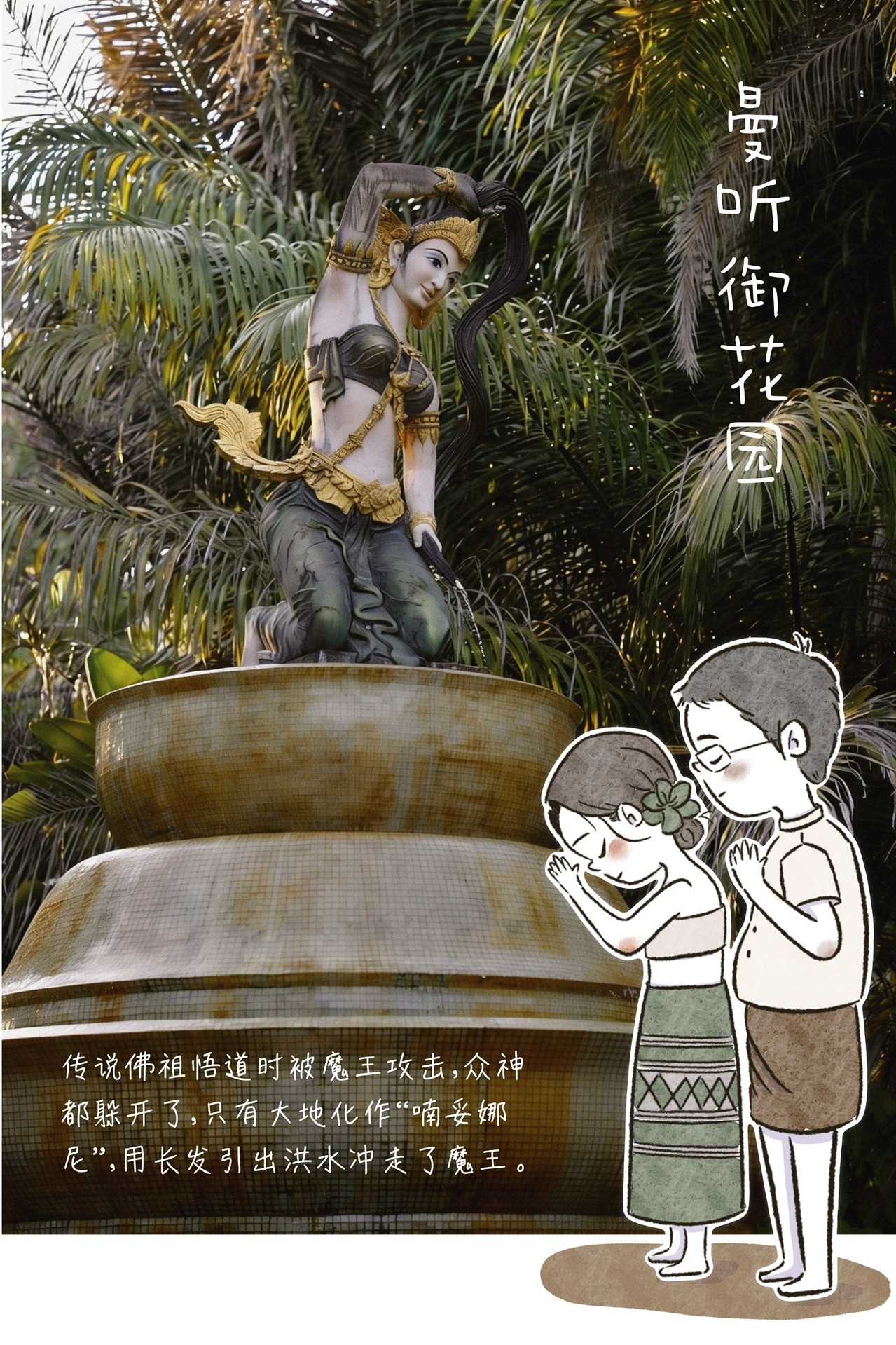
Day 4: Jinuo Mountain Hike – General Buddha Temple – Manting Imperial Garden
Day 1: Jinghong – Palm Trees and Flame Flowers
Xishuangbanna translates from the Dai language as "twelve thousand rice fields." The region has since consolidated into three counties: Jinghong, Menghai, and Mengla. In Dai, "Jing" means city, "Meng" means county, and "Man" means village.
Upon landing at noon, we picked up our rental car and drove toward the city. The streets gradually filled with lush tropical greenery and trilingual road signs. Towering palm trees and vibrant flame flowers lined every corner.
Sun Magua noticed a pattern: village names in Dai script appeared reversed on signs, with "village" placed first.
The sun blazed in a cloudless sky, but the weather wasn't as hot as I expected. Houses had distinct Dai architectural styles, many adorned with peacock motifs.
Jinghong Farmers' Market
While picking up the car, a loud event next door nearly drowned out my phone call with customer service. The only place where noise doesn't bother me? A farmers' market.
Our first stop was Jinghong Farmers' Market. Across the street, flame flowers framed the entrance against a brilliant blue sky. Even knowing street stalls might be pricier, the owner's perfectly arranged displays tempted me to buy.
At another stall, when I asked about a fruit, the vendor simply said, "Too sour for you."
The outdoor stalls were far more exciting than the indoor market. We wandered past fruit and mountain product shops, eventually reaching Jinghong Fabric Market. Since I hadn't packed suitable clothes, I bought a green tube skirt—though quality-wise, it couldn't compare to Starlight Night Market's offerings.
Old Vinegar Rice Noodles
Near the fabric market, we found Old Vinegar Rice Noodles (Lao Cu Mi Xian). Despite being a tourist-recommended spot, most diners were locals. The noodles were average, but the chicken tendon—crispy and incredibly flavorful—was a standout. Unfortunately, Sun Magua's low spice tolerance meant he missed out.
After eating, Sun Magua eagerly peeled the fruits we'd bought. Snake fruit felt rough like its namesake, with a crunchy, mildly sweet flesh. Dragon fruit (the yellow variety) tasted similar to regular dragon fruit but more aromatic.
Photo Shoot

By 1 PM, we arrived at the photo studio. While Sun Magua needed only 15 minutes for makeup, two stylists worked on me for a full 90 minutes. At 80% completion, I felt like a filtered version of myself. But the photographer's Fuji camera quickly brought me back to reality—all that beautiful makeup disappeared on film.
The strapless top was a challenge for my midsection and arms. "You get what you pay for" holds true, though even premium shoots have their limits.
The shoot took place at Manyin·Dai Thai Rainforest Resort Villa (non-guests pay 200 yuan entry fee—we chose to stay here, and it was worth it). Back in our room, we washed and tasted red fruits: sour, sweet, and crunchy—just my style.
Manhena Village
Before sunset, we explored Manhena Village, close to our hotel. Despite Google Maps directing us down a dusty path, the village was small and quiet, with few tourists. I spotted my first jackfruit tree—amazing how slender branches can support such heavy fruit.
Dai-Style BBQ
For dinner, we tried Dai-style BBQ at a nearly empty restaurant. The oil-fried beef tripe was outstanding—heavy on oil and spice, impossible to dislike. Eggplant was perfectly cooked, though the BBQ itself was average. Was I eating "Northeast-style Dai BBQ"?
We grabbed a local drink from a convenience store and sat outside, watching the street life of this place that was 3,000 kilometers from home just yesterday.
Starlight Night Market
The evening turned unexpectedly cold. After changing into warmer clothes, we headed out. The parking lot was farther from the market than expected, and a sudden stomach issue sent me rushing to the restroom.
The market's food didn't appeal much—I wasn't brave enough to try the insects. But I found clothes for the next day and happily bought them. The fire ginseng fruit (Huo Ren Shen Guo) tasted like cucumber seeds; without honey, it had no flavor.
Day 2: Driving to Mengla
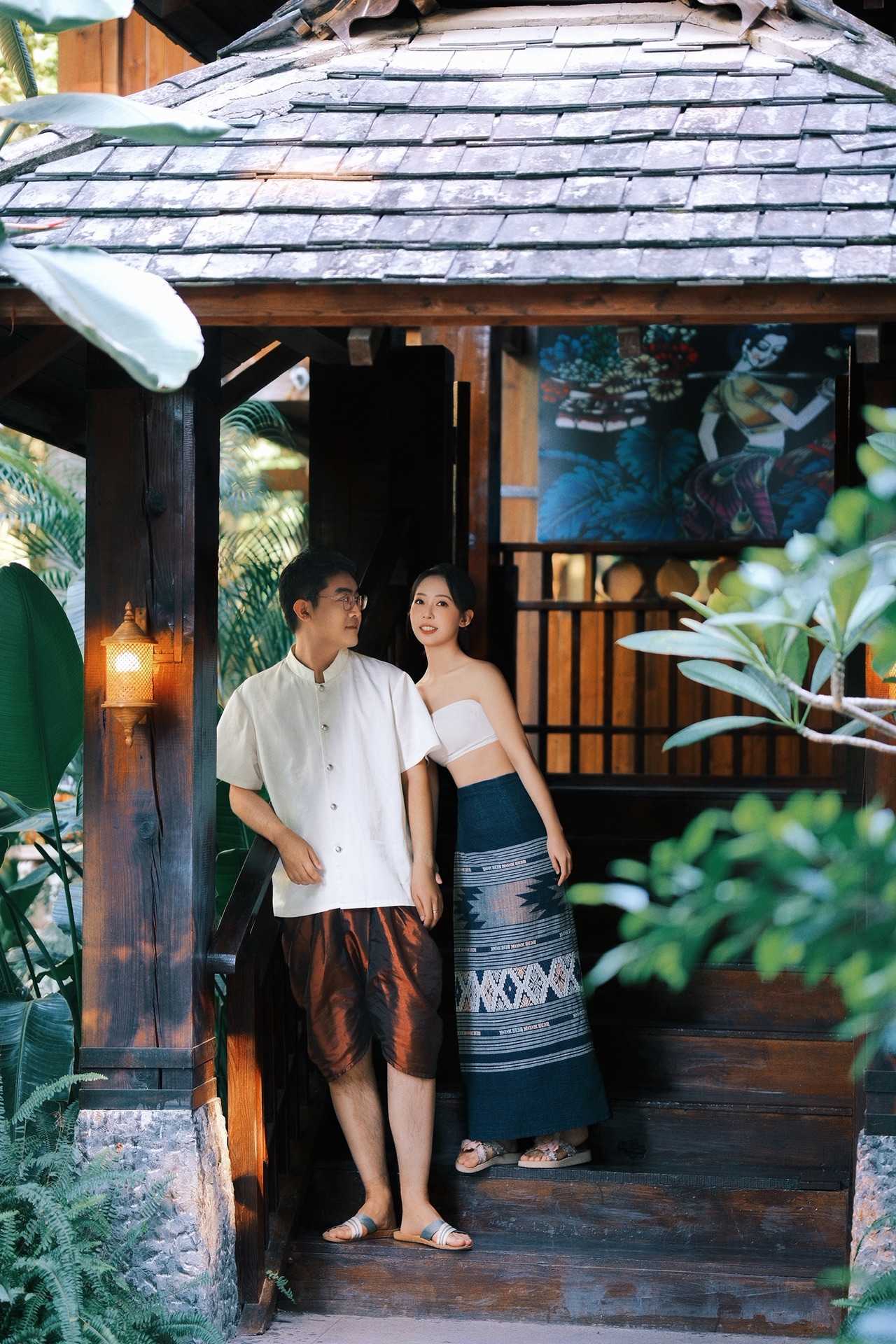
Our only non-early morning began with a leisurely breakfast before heading to Manyuan Village. Xishuangbanna doesn't get light early; morning fog made the sky gray until around 10 AM. The three-layer jacket was necessary—this decade's coldest winter lived up to its reputation.
Xishuangbanna felt different from Chiang Mai. Summer in Chiang Mai is humid and incense-filled. Winter here has dramatic temperature swings—scorching afternoons but dry air, nothing like I'd imagined.
Crossing Dawn Bridge (Liming Da Qiao), Sun Magua wanted photos of the Lancang River. We parked at the village committee office (free for one hour) and rented e-scooters to ride across the bridge. In the city, e-scooters reign supreme.
Manyuan Village
Entry fee: 10 yuan per car.
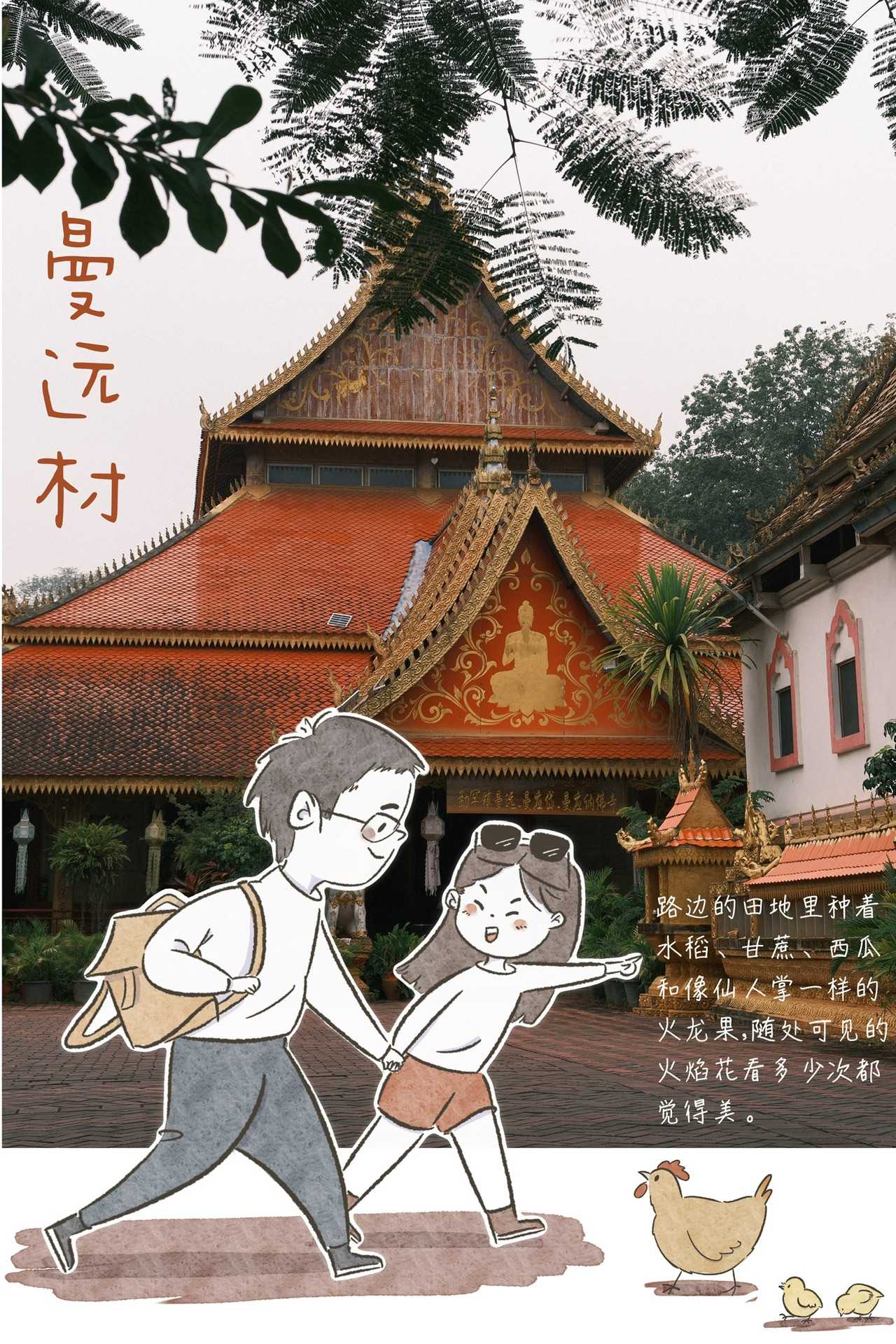
Wandering aimlessly through the village was the chill experience I'd hoped for. Manyuan is well-developed—visitor center, parking, paved roads. Commercialization isn't all bad when it brings convenience.
We photographed stilt houses, drank sugarcane juice, touched soybean pods, visited a temple, saw rubber trees, ate grilled chicken, and tried Lao iced coffee—all in under two hours.
The temples resembled those in Chiang Mai, but I'd never seen a statue like the one at the village's main temple—a golden Buddha seated beneath a multi-headed naga serpent, its coils forming a protective canopy. The craftsmanship was exquisite, every scale and expression meticulously carved.
As we left, an elderly Dai woman smiled and offered us freshly picked pomelo. The sweetness burst across my tongue—a small, perfect moment of hospitality.
Botanical Garden Night Tour
By late afternoon, we drove to the Xishuangbanna Tropical Botanical Garden. Daytime entry was crowded, but we had booked the night tour—a hidden gem. As dusk fell, the garden transformed. Our guide, a young botanist, led us through the darkness with only red-filtered flashlights.
"Red light doesn't disturb the nocturnal creatures," she explained.
We saw fireflies dancing above the lotus pond, their lights pulsing in synchronized patterns. A giant African land snail slowly crossed the path, its shell glistening with dew. The guide pointed out a sleeping bird, its head tucked under a wing, perched on a branch barely visible in the gloom.
The highlight came near the end: a flowering corpse plant (Amorphophallus titanum), its bloom just beginning to open. The smell was faint but unmistakable—rotting flesh, sweet and sickly. "It only flowers once every few years," the guide whispered. "You're lucky."
Sun Magua squeezed my hand. In the darkness, surrounded by the sounds of insects and rustling leaves, I felt a childlike wonder I hadn't experienced in years.
Day 3: Jingmai Mountain
We woke before dawn to drive to Jingmai Mountain, home to some of the oldest tea trees in the world. The road wound upward through misty hills, past terraced tea fields and bamboo groves.
Sea of Clouds
At the viewing platform, we joined a small crowd of early risers. Below us, a sea of clouds stretched to the horizon, soft and white as cotton. The sun rose slowly, painting the clouds in shades of pink and gold. Sun Magua stood at the railing, camera in hand, utterly still.
"I get it now," he said quietly. "Why people travel so far for this."
We spent an hour just watching the clouds shift and dissolve, revealing glimpses of distant villages and tea terraces below.
Wengji Ancient Village
Wengji is one of the best-preserved Bulang ethnic villages on Jingmai Mountain. Stone paths wind between wooden houses with thatched roofs. Old women in traditional headwraps sat weaving outside their doors, their hands moving with practiced rhythm.
At the village temple, a Burmese-style pagoda stood at the center, its golden spire gleaming against the blue sky. A monk sat in meditation beneath a banyan tree, completely still, as if carved from stone.
We bought tea from a local family—sun-dried raw pu'er, pressed into a cake. The grandmother brewed us a cup while her granddaughter translated. "This tree is over 800 years old," she said, pointing to a massive tea tree behind their house. "My grandmother's grandmother drank from it."
The tea was smooth, with a hint of honey and wildflowers. I bought two cakes to bring home.
Bulang Ethnic Clothing
In the village, we found a small shop renting traditional Bulang clothing. Sun Magua chose a dark blue jacket with silver buttons; I picked a embroidered vest and long skirt. The shop owner helped us tie the sashes properly, laughing at our clumsy attempts.
We walked through the village in our borrowed clothes, feeling like travelers from another time. Children ran past, chasing a stray dog. Smoke rose from kitchen chimneys. Life here moved at a pace that felt ancient and unhurried.
Day 4: Jinuo Mountain and Goodbyes
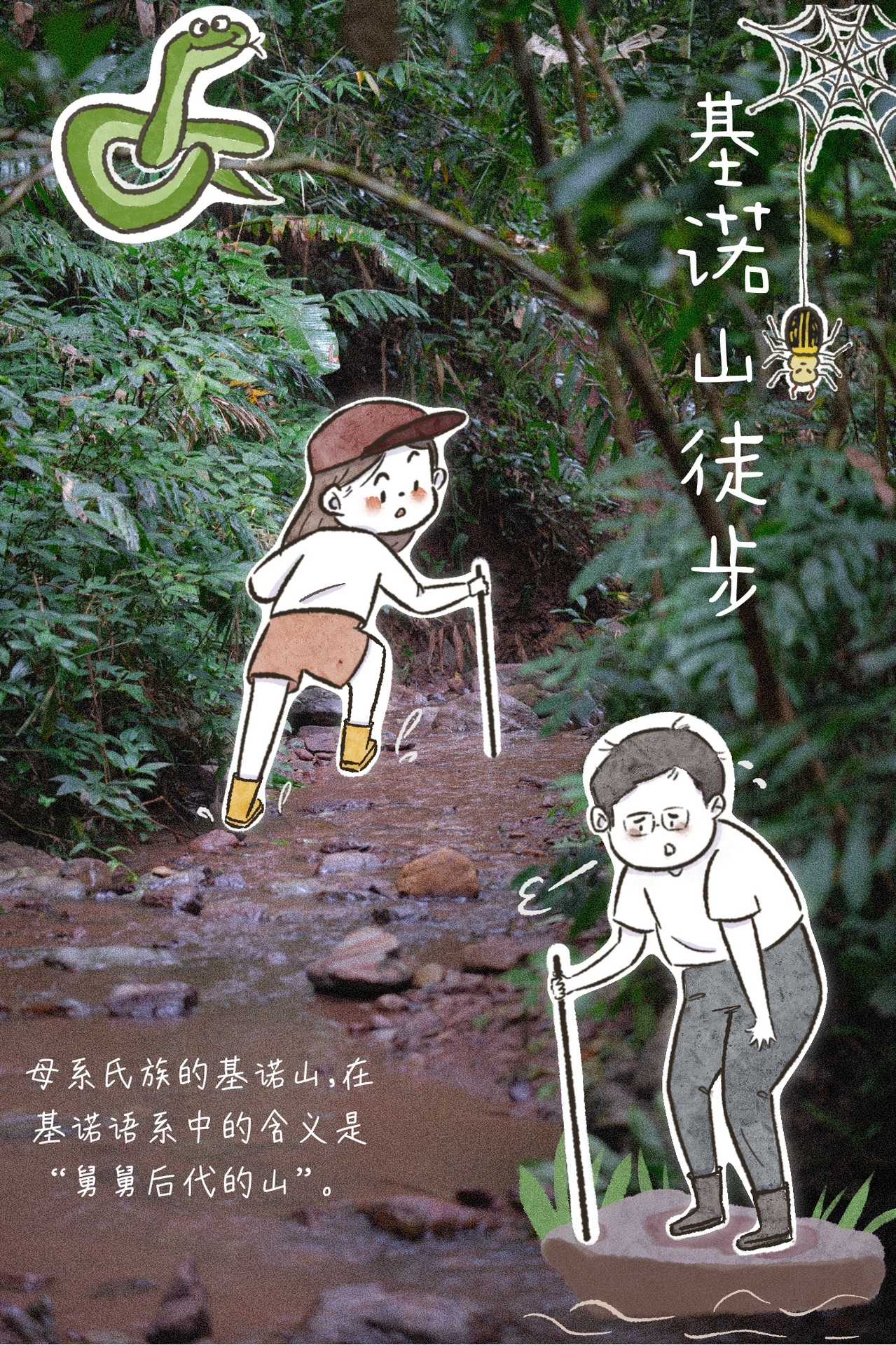
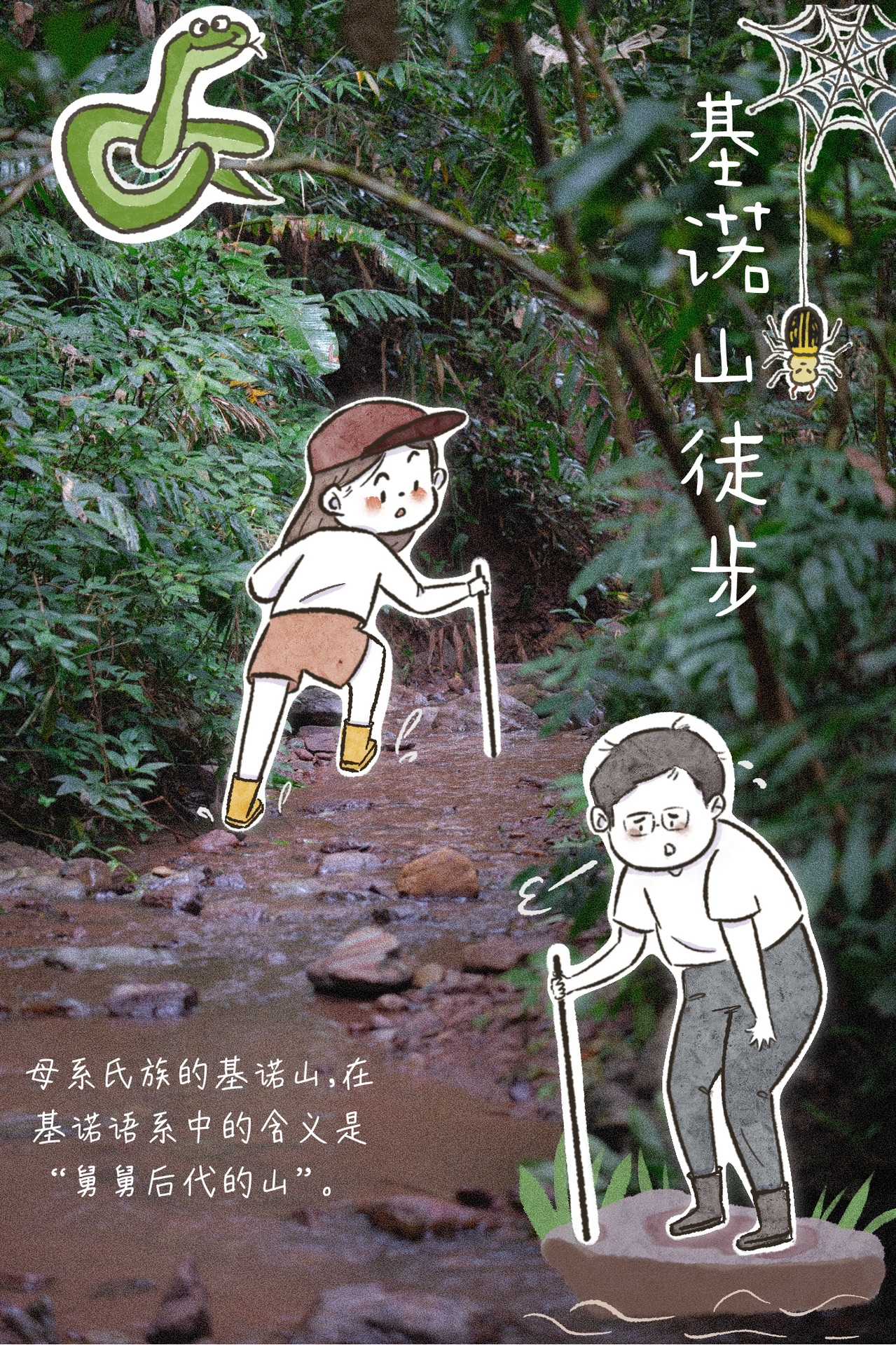
Our final day began with a hike through Jinuo Mountain, home to the Jinuo ethnic group—one of China's smallest officially recognized minorities.
Rainforest Trek
Our guide, a young Jinuo man named A Bu, led us into the forest. Within minutes, the city felt a world away. Giant banyan trees towered overhead, their roots forming natural walls. Parasitic flowers bloomed on branches—vivid orange and red, feeding off the host trees.
"See that?" A Bu pointed to a green vine coiled around a tree trunk. "Bamboo viper. Very poisonous."
I froze, heart pounding. The snake was perfectly camouflaged, its scales matching the moss exactly. Sun Magua zoomed in with his camera, keeping a safe distance.
We climbed banyan trees using rope ladders, our arms aching by the top. From the canopy, we could see the rainforest stretching to the horizon—a sea of green broken only by limestone karsts.
A Bu showed us how to identify medicinal plants, which mushrooms were edible, and how to find water in the forest. "My grandfather taught me," he said. "Now I teach visitors. It keeps the knowledge alive."
General Buddha Temple and Manting Imperial Garden
After the hike, we rushed to General Buddha Temple (Zong Fo Si) and Manting Imperial Garden. The temple's golden stupa gleamed in the afternoon sun. Inside, murals depicted scenes from the Buddha's life, painted in vibrant colors.
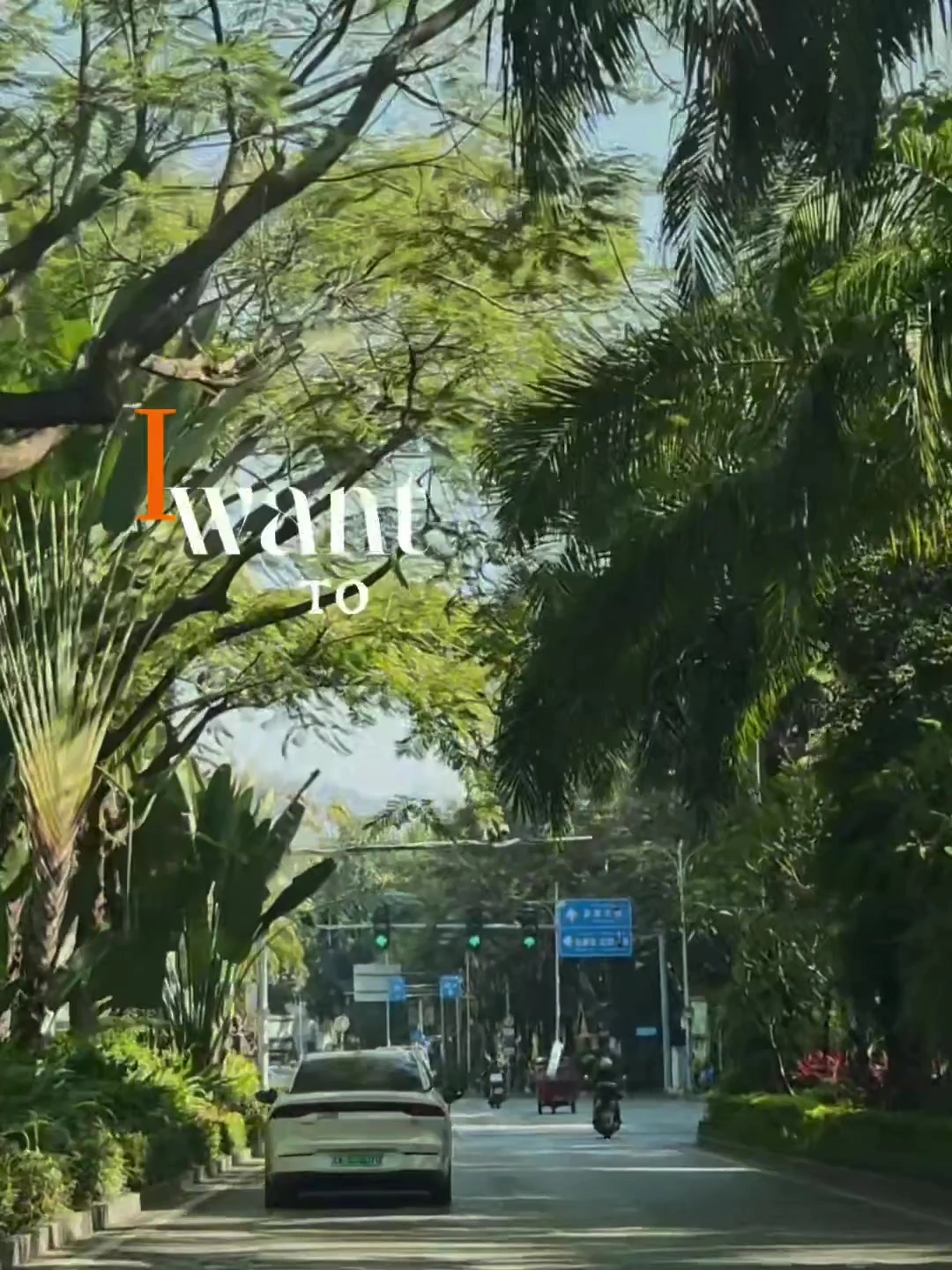
Manting Garden was once the royal garden of the Dai kings. We arrived just before sunset, catching the last light on the lotus pond. Near the water, a peacock spread its feathers, iridescent in the golden hour.
Sun Magua set up his tripod for our final couple photo. We stood beneath a flame tree, its red blossoms falling around us like confetti. The timer clicked. We laughed, knowing this imperfect, chaotic trip was ending—but carrying pieces of it home.
Final Thoughts
Xishuangbanna wasn't what I expected. It was colder, more commercialized, more complicated. But it was also more beautiful, more surprising, more alive.
We failed to chase summer—we found winter instead. But in that failure, we discovered something else: a place where ancient tea trees grow beside modern hotels, where Dai grandmothers weave cloth while tourists take selfies, where the coldest winter in a decade can't dim the warmth of a shared meal, a sunrise, a hand held in the dark.
Some trips are about perfect plans. Others are about what you find when the plans fall apart. This one was the latter—and I wouldn't change a thing.
You should also read:
September: Finding Unexpected Warmth in Yunnan (Kunming, Dali, Shuanglang, Lijiang, Lugu Lake)
September: Finding Unexpected Warmth in Yunnan (Kunming, Dali, Shuanglang, Lijiang, Lugu Lake) Foreword: One Person's Journey, A Crowd's Story Before I set off, like every first-time solo traveler, I printed out a thick stack of travel guides and rehearsed countless possible scenarios in my head—getting…
Continue reading...
A 9-Day Yunnan Journey: From Lijiang to Dali to Tengchong – A Trip Toward Self-Reconciliation
A 9-Day Yunnan Journey: From Lijiang to Dali to Tengchong – A Trip Toward Self-Reconciliation Some say travel is simply going from a place you're tired of to a place other people are tired of. It stings to hear, but it's painfully true. Yet there's…
Continue reading...
Tengchong·Heshun: Finding Life as It Should Be in a Border Town Where Time Stands Still
Tengchong·Heshun: Finding Life as It Should Be in a Border Town Where Time Stands Still The long journey of over twenty days was over. On my first day back at the office, I was still in a daze. My fingers couldn't find the keys on…
Continue reading...