Chasing the Light: A Gentle Encounter with Dali
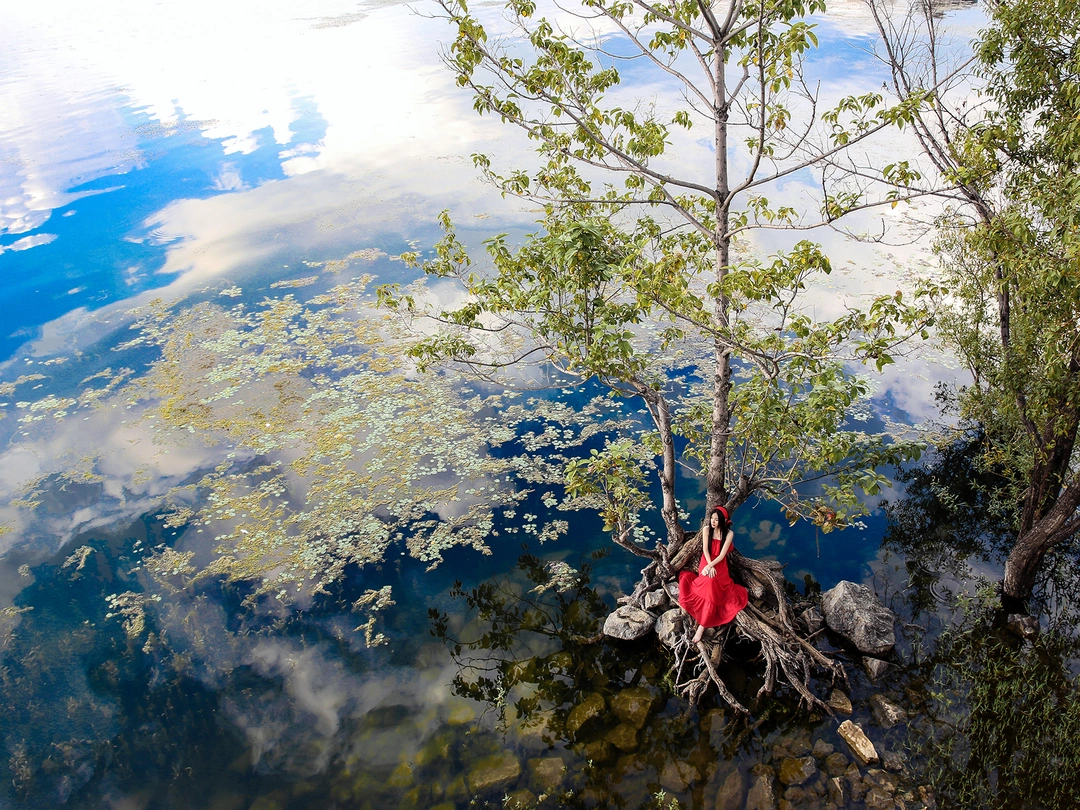
Chasing the Light: A Gentle Encounter with Dali
Prologue: When the Silver Screen Becomes Reality
Before the movie Breakup Buddies swept across the big screen, Dali was nothing more than a vague dot on the map for me. That film was like a key, unlocking the hearts of countless people to this ancient city. Suddenly, "You must go to Dali while you're young" became the most romantic declaration on social media.

But what exactly is Dali? Is it the poetic romance of wind, flowers, snow, and moonlight? Is it that intoxicating blue of Erhai Lake? Is it the neon-lit bar streets after dark, or the first rays of morning light on the ancient city's cobblestone paths?
With these questions swirling in my mind, my good friend Qi and I, amidst the National Day holiday crowds, nervously yet excitedly embarked on a journey south. We weren't looking for answers—we were looking to feel. To feel how light flows across this land, and how time slows down between Cangshan Mountain and Erhai Lake.
Chapter One: The Dilemmas and Wisdom Before Departure
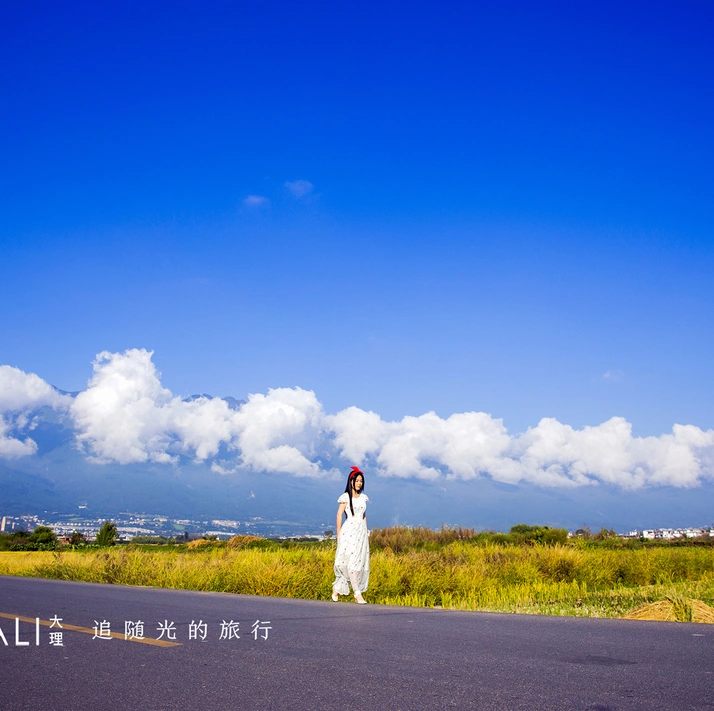
The Transportation Game: Beijing to Dali – A Battle of Cost vs. Time
From Beijing to Dali, there are essentially three options, each a trade-off between time and money.
Option 1: Fly Directly to Dali – Convenient, but expensive. A round-trip ticket alone can drain your wallet.
Option 2: Fly from Beijing to Kunming, Then Transfer by Train or Bus – Cheaper, but the timing can be maddening. However, as budget-conscious travelers, we chose this route without hesitation.
Option 3: Take the Train the Whole Way – The most economical, but it tests your lower back. Hey, we're young—consider it exercise.
Friendly reminder: Flights from Beijing to Dali are almost always at full price, stubbornly so. But if you book flights from Beijing to Kunming two weeks in advance, you can still snag a deal.
Kunming to Dali: Two Choices, Two Landscapes
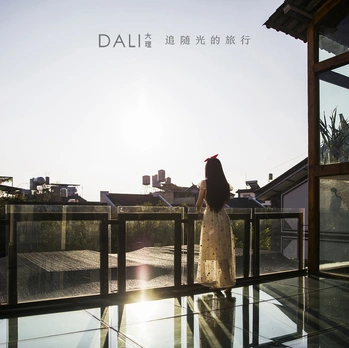
- By Bus: From Kunming's Western Bus Station to Dali's Xiaguan Bus Station, about a 5-hour ride. Be careful not to confuse it with the Northwest Bus Station. Private cars often wait outside the station; if you're traveling in a group, you can negotiate a price and get dropped off directly at your guesthouse.
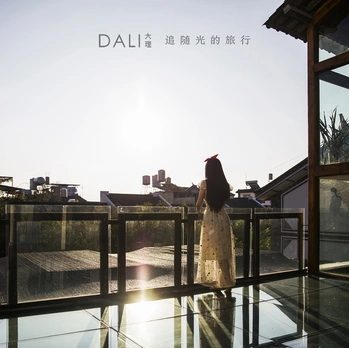
- By Train: Eight departures daily, the earliest at 8:15 AM and the latest at 11:15 PM, taking over 7 hours. The upside is the scenic route, plus the chance to meet fellow travelers.
Getting Around Dali: Countless Ways to Circle Erhai Lake
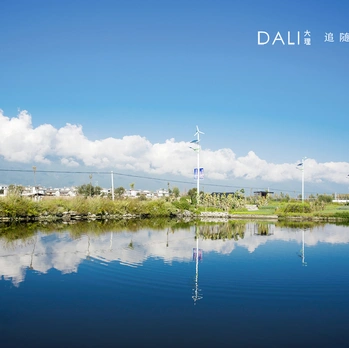
Dali's tourism infrastructure is well-developed, offering plenty of local transport options.
- Public Bus: Just remember route No. 8. Route No. 4 takes a detour through Xiaguan before reaching the ancient city—not recommended.
- Bicycle: About 30 RMB per day, great value. But cycling around the lake under the scorching sun can be brutal. Unless you're a seasoned cyclist, a full loop might leave you utterly exhausted.
- Electric Scooter: 40–60 RMB, depending on your bargaining skills. Two people can go several dozen kilometers at a steady pace, but watch the battery level—trust me, don't ask how I know.
- Motorcycle: Ideal for the western lakeside route. It costs about three times as much as an electric scooter, but you won't run out of power. Great for speed enthusiasts.
- Renting a Car: Smart cars are the most popular choice—cute, artsy, and perfect as photo props. Ideal for honeymooners or couples doing photoshoots.
Chapter Two: Living in Dali's Time
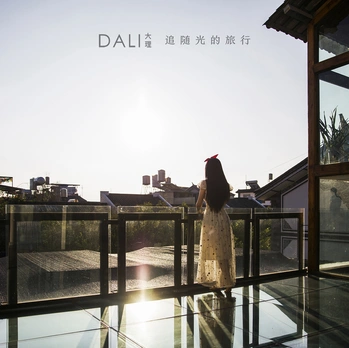
Where to Stay: Your Choice Shapes Your Journey
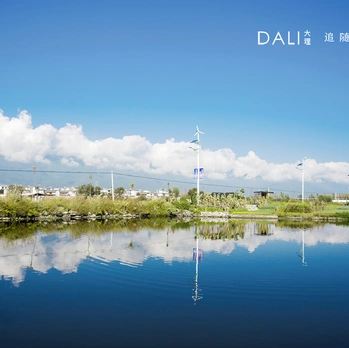
Accommodation in Dali can be broadly divided into: Xiaguan City Center, Dali Ancient City, Shuanglang, Caicun, Xizhou, and Xiaoputuo.
- Xiaguan City Center: Convenient transport, close to the airport and train station, but the scenery is average—not a top choice for tourists.
- Dali Ancient City: Guesthouses are everywhere, both inside and outside the old town. Centered around Renmin Road, prices range from a few dozen to several hundred RMB, making it convenient for sightseeing.
- Shuanglang: About an hour's drive from the ancient city. The accommodation is well-developed, but prices are high. Overdevelopment has robbed this former fishing village of its former tranquility.
- Caicun, Xizhou, Xiaoputuo: Newly developed areas with very modern guesthouses, perfect for those seeking peace and quiet.
- Around Erhai Lake: Scattered with high-end guesthouses, ideal for couples on vacation or honeymoon.
Our Choices: Xiyue Guesthouse and Shuanglang 117 Courtyard
Xiyue Guesthouse is tucked away near Renmin Road, with a bike rental shop right outside and Renmin Road just around the corner—convenience that warms the heart. The owner is a family from Guangzhou who fell in love with Dali during a visit, bought the property, and spent a year renovating it. All the furniture and decorations were shipped from Guangdong, many of them the owner's personal collections. The family lives on the first floor and treats guests like friends.
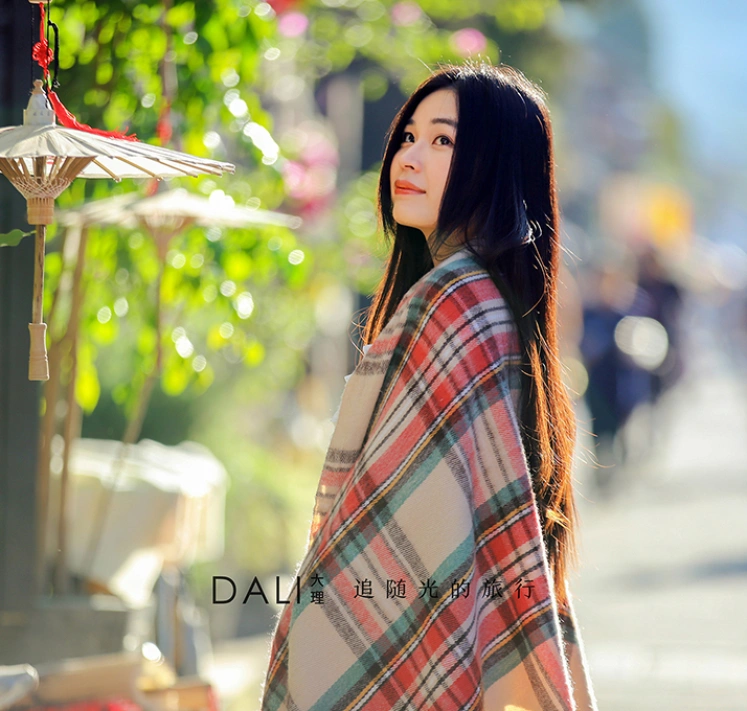
What touched us most: This guesthouse did not raise its prices during the National Day holiday! While similar places nearby doubled their rates, it stayed the same. We paid less than 300 RMB for such an environment—a gesture of sincerity that speaks volumes.
Shuanglang 117 Courtyard was booked just a day before the holiday, a compromise of sorts. Shuanglang is currently in a state of overdevelopment, with concrete and muddy roads everywhere. The quiet of the former fishing village is gone, which is a real shame.
Chapter Three: A Taste of Dali
As someone who has eaten countless plates of "authentic Yunnan cuisine" in Beijing, I have to admit: those ads claiming "all ingredients air-freighted in" are pure lies. The real taste of Yunnan can only be experienced locally.
Must-Eat List
- Rice Noodles, Ersi (shredded rice cake), and Erkuai (rice cake): The "three musketeers" of Yunnan, as common as rice noodles in the south or wheat noodles in the north. Ersi is made from Weishan's "Yellow Skin Valley" rice, giving it a soft, chewy texture reminiscent of hometown rice noodles.
- Posu Baba (Xizhou Baba): Available in savory and sweet varieties, found everywhere in the ancient city and Xizhou. Unfortunately, we were afraid of getting heaty from frying, so we missed out—a small regret.
- Three-Course Tea: Bitter first, then sweet, then回味 (lingering aftertaste). The most famous version is at the Yan Family Grand Courtyard.
- Cold Chicken Rice Noodles, Sour and Spicy Fish, Clay Pot Fish, and Raw Pork Skin: Local Dali specialties, now somewhat overshadowed by Yunnan favorites like flower cookies and grilled milk fan.
Recommended Experiences
Weishan Baba Meat Ersi: We headed straight to this shop from our guide. Qi was so hungry she devoured two bowls and still wanted more.
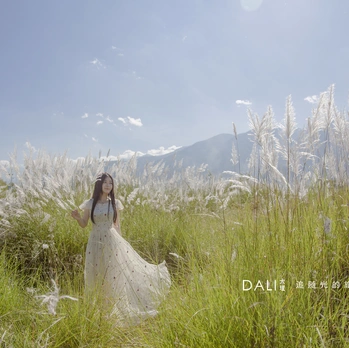
Grilled Milk Fan (Roasted Milk Curd): A grandmother near the ancient city's north gate is especially famous for this. Fresh milk is boiled, then curdled with acid, coated with rose jam. Though sweet and rich, the intense milky aroma is irresistible.
Mint Lemon Ice: A roadside stall advertised "Cangshan Spring Water." It tasted clean, sweet, and refreshing—far better than those "pure coconut waters."
Chapter Four: Dali's Weather and Gear
Dali's weather is like a fickle woman—both dry and wet, cold and hot. We went in late September and early October. After checking the forecast, we decided to pack clothes for both summer and winter, switching between the two with the help of a shawl and strategic layering.
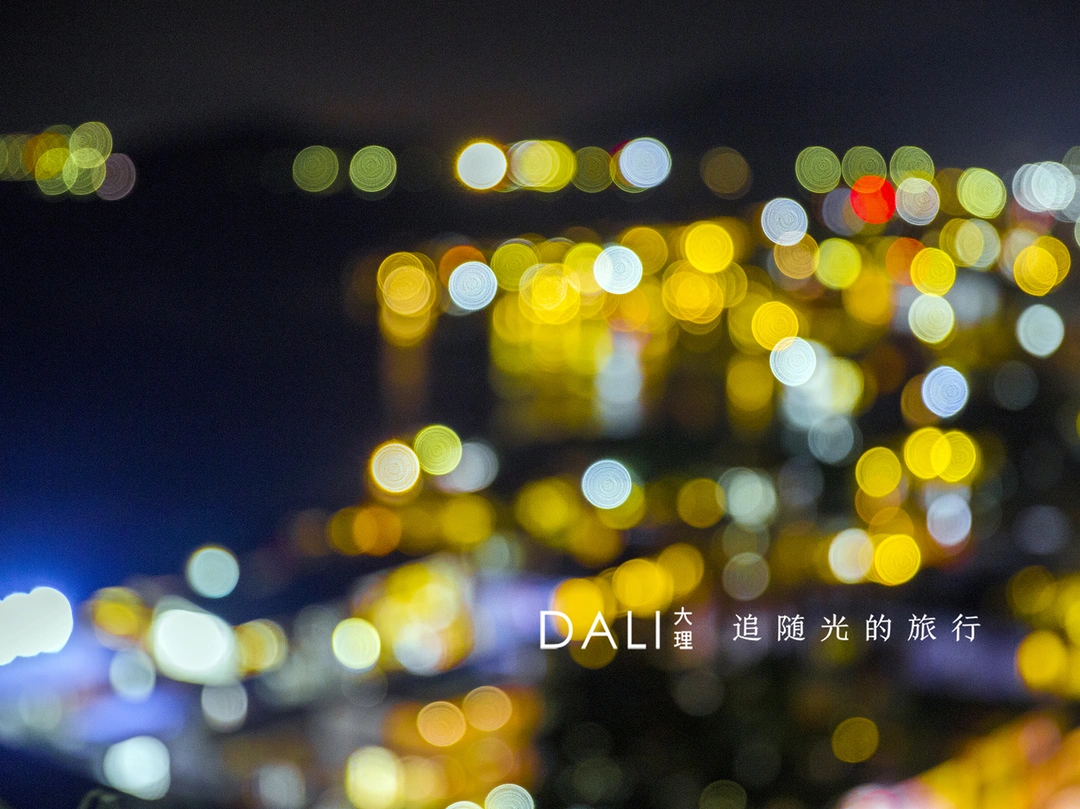
The most beautiful season in Dali is March, when endless fields of flowers can soften even the toughest woman and overwhelm any romantic heart.
As for photography gear, Qi upgraded from a Fuji X-E1 to a Canon 6D with a 24-70mm f/2.8 lens, and her arms got noticeably thicker. All photos were processed in Photoshop, so please stop asking about the equipment.
Chapter Five: Our Itinerary – No Attractions, Only Light
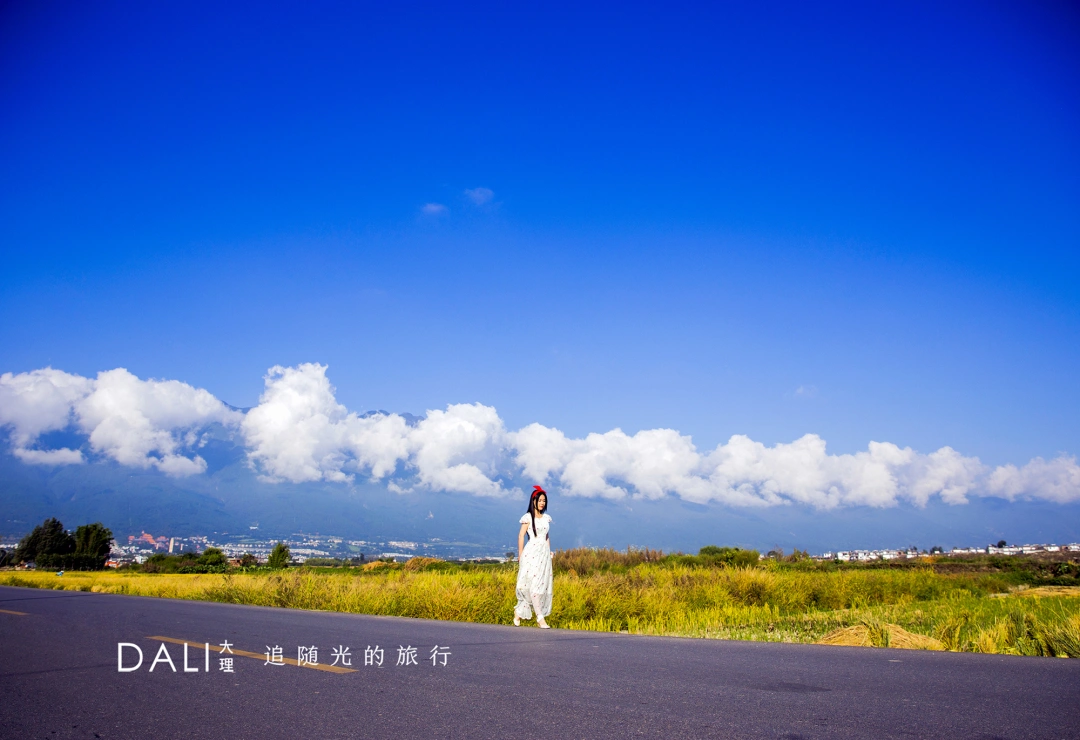
For anyone traveling during National Day, avoiding crowds and traffic jams is the best journey. So, we didn't plan a single attraction. Basking in Dali's sunshine and lingering along the shores of Erhai Lake was the perfect itinerary.
Day 1: Red-eye flight to Kunming
Day 2: Bus to Dali, explore the ancient city, take photos at the guesthouse
Day 3: More photos at the guesthouse, ride the western lakeside route, lunch, another ride, collapse into sleep, late-night snack
Day 4: Shuanglang, eastern lakeside route, pedestrian street, feel our way in the dark to Yuji Island
Day 5: Haidi, northern part of the eastern lakeside route, Shuanglang night views
Day 6: Bus back
Chapter Six: Day 1 – Even with Energy, It Was Useless
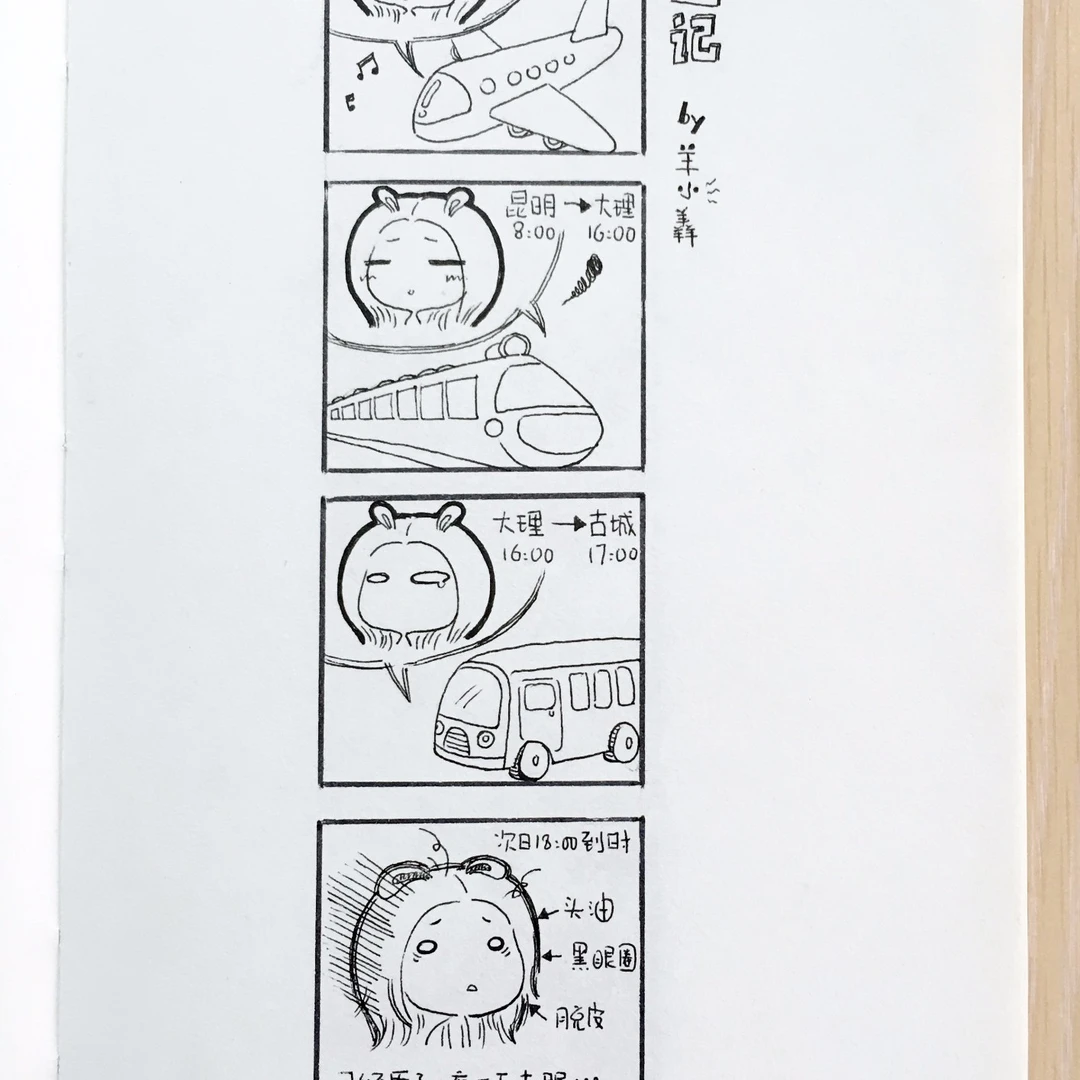
We decided to go to Dali only two weeks in advance. By the time we bought tickets, only a red-eye flight from Beijing Capital Airport to Kunming Changshui Airport was available, departing after 8 PM. We left work, grabbed our bags, and headed out. By 1 AM, we crashed at a random hotel near Kunming, only to get up early and head to the Western Bus Station.
The five-hour bus ride offered beautiful scenery, but we were completely unconscious, unable to enjoy it. When we arrived in Xiaguan, we took Bus No. 8 to the ancient city. Seeing that we still had to walk a bit to reach the guesthouse made my heart sink.
But Xiyue Guesthouse was a pleasant surprise. The afternoon sun streamed through the huge glass balcony into the lobby. The rooms had names like "Gazing at the Moon," "Hiding Dreams," "Fleeting Years," "Evening Glow," "Dazed," and "Fireworks"—full of atmosphere.
The Dusk of Renmin Road
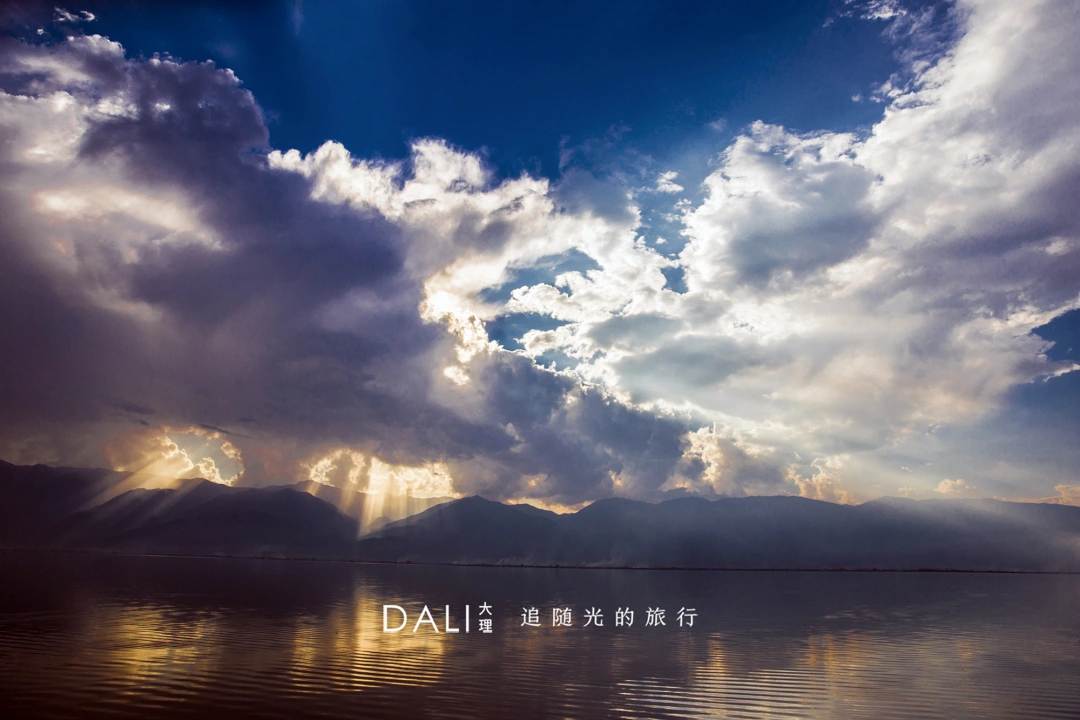
A turn from the guesthouse led to Renmin Road. This is a slow-paced pedestrian street, filled with a sense of freedom and peace. In the morning, local Bai people carrying baskets pass by; at noon, students with books under their arms; in the evening, artistic youth—some playing guitar under eaves, others drinking in bars, or reading in bookshops.
The setting sun lazily spilled over the cobblestones as we wandered, stumbling upon quirky shops, bookstores, and cafés. The guesthouse owner told us that most shopkeepers in the ancient city aren't locals—they're people who came to visit and decided to stay. One shop had a sign that read: "The owner is traveling for six months. For urgent matters, contact XXX." As a desk-bound worker, I suddenly felt a pang: so some people really do live just for their ideals.
The Ancient City at Night
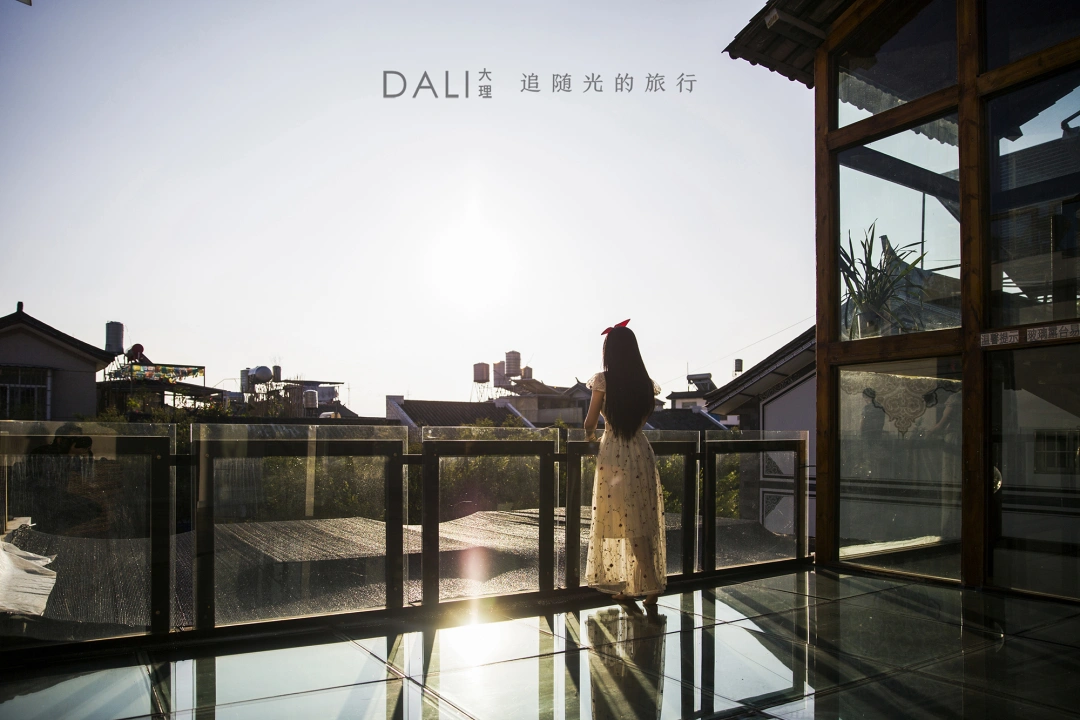
We rented a motorcycle, hoping to see the "Moon over Erhai." Braving the chilly wind, we rode through pitch-black gravel roads. When we finally reached the lakeside, we pulled out our tripod—only to realize we'd forgotten the base plate for the head! Utterly defeated, we snapped a random shot of Cangshan Mountain and trudged back.
Back in the ancient city, the bar street was lively, but we had zero interest in nightlife. Under the light of a big moon, we returned to the guesthouse, which glowed like a quiet pearl in the silent night.
Chapter Seven: Day 2 – A Day of Blues, Reds, Yellows, and Greens
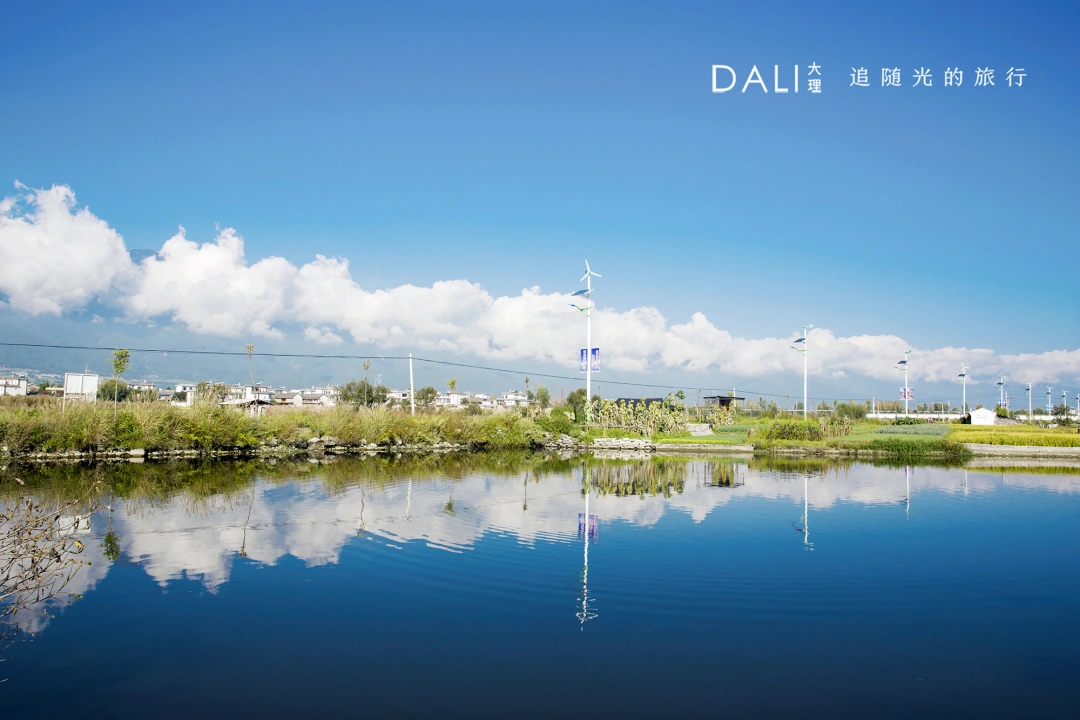
I woke up a little after 7 AM. Pulling back the curtains, the rising sun slowly bathed Cangshan in golden light. Standing on the balcony, I soaked in the first rays, letting my body and mind sink into Dali's rhythm.
The Western Lakeside Route: A Feast of Light
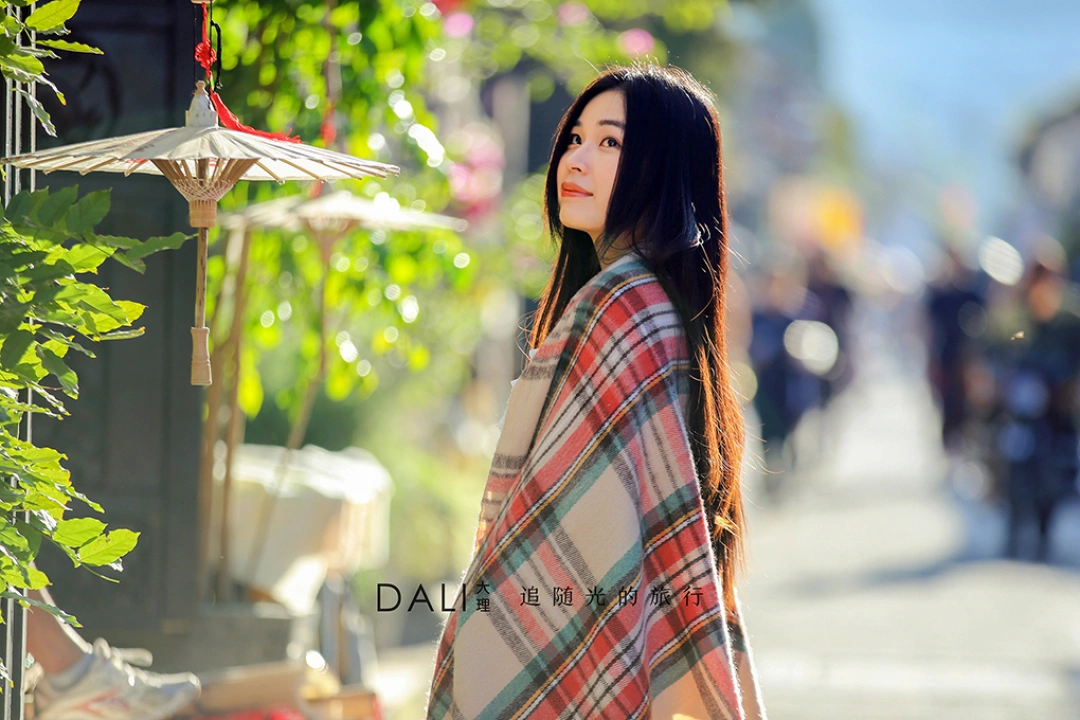
Renmin Road was quiet in the morning, with only local Bai people carrying baskets passing by. Autumn had already arrived in the north, but the bougainvillea in the ancient city was in full bloom. The light hit us directly from the front, warm and golden, while Cangshan behind was outlined in blue—a feast of light.
We rented a motorcycle and set off from Caicun, heading north along the western lakeside road. Dali's clouds follow a daily cycle: they form in the morning with the mist on the mountains, slowly rise, and by afternoon, combine with the sun to create the Tyndall effect—what people call "Jesus light."
Unexpected Discoveries
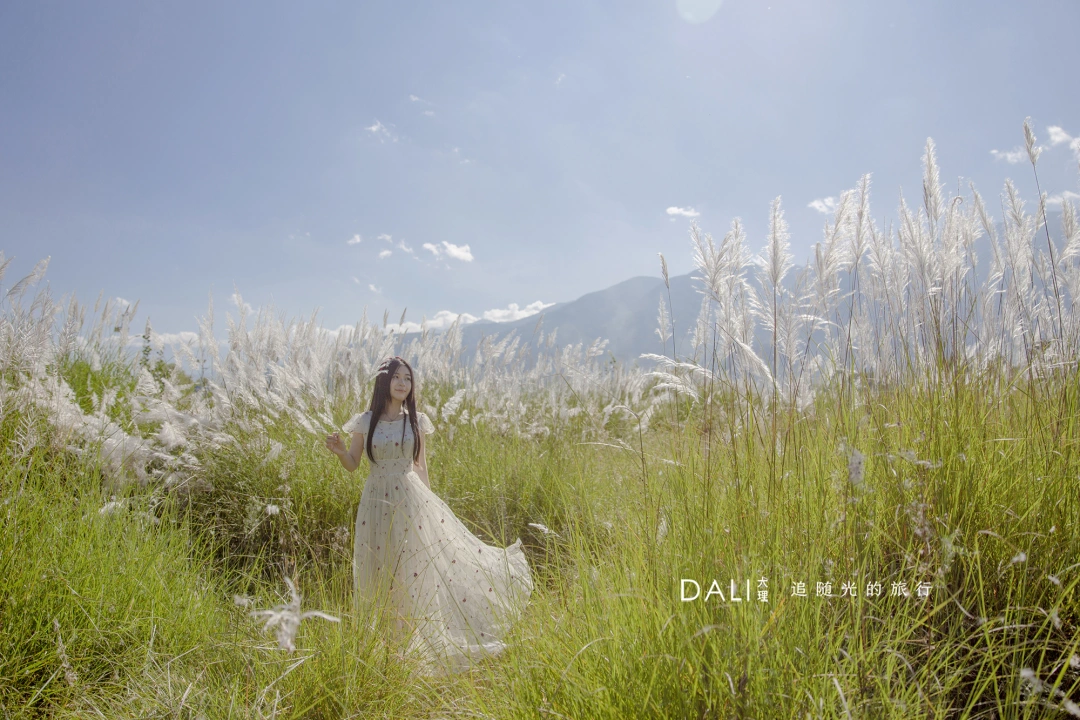
Passing through Caicun, we snuck into a quiet little garden called "Green Health Tourism Ecological Cooperative." It was bursting with flowers, with subtropical wooden cabins that felt like Thailand.
The western lakeside route has no attractions, yet it surpasses them. Every stretch of road has its own charm. The Bai people of Dali haven't abandoned their farming despite the tourism boom, so when no cyclists are around, you feel like you've wandered into a peaceful, beautiful village.
First Encounter with Erhai
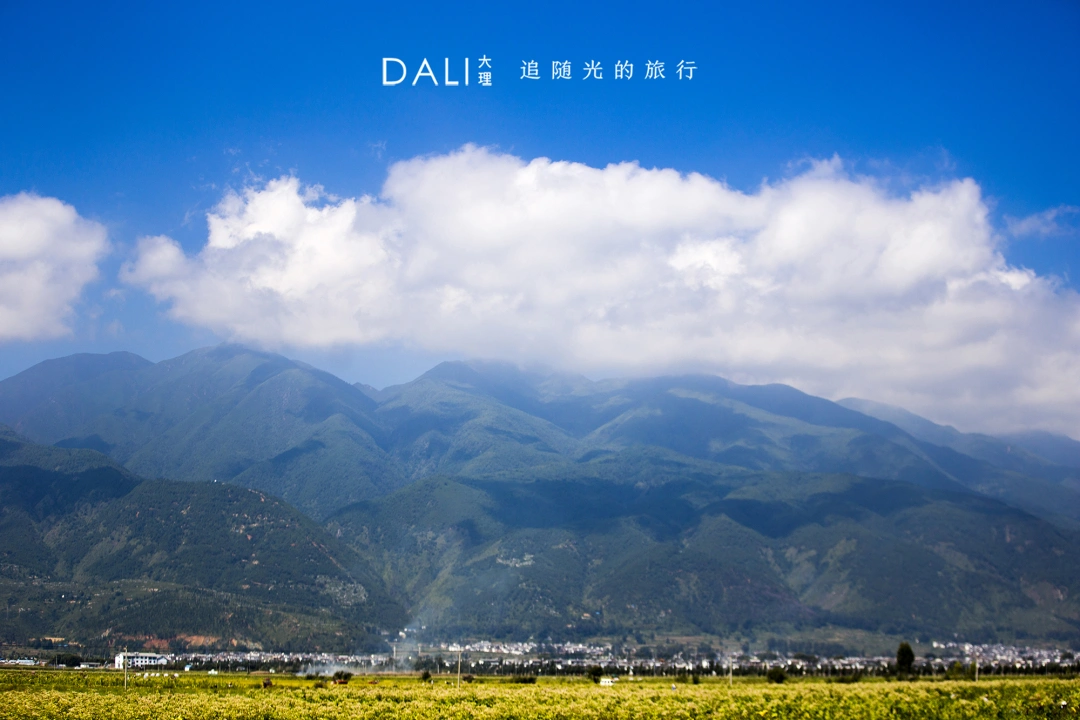
Parting the layers of light, Erhai Lake revealed itself to us for the first time. To take photos with the lake, of course, you need a pretty dress. But when there's no wind, a big skirt is useless. So I spent the whole ride swinging my left hand to fluff the skirt and my right hand to do the same—by the end of the loop, my arms were noticeably thicker.
Along the way, there were many guesthouses facing the lake. As long as they didn't restrict non-guests, we could go in for photos. Wooden boardwalks dotted the lakeside, perfect for stopping to watch people fish or sunbathe.
Touching Dali: The "Diehaiyue"
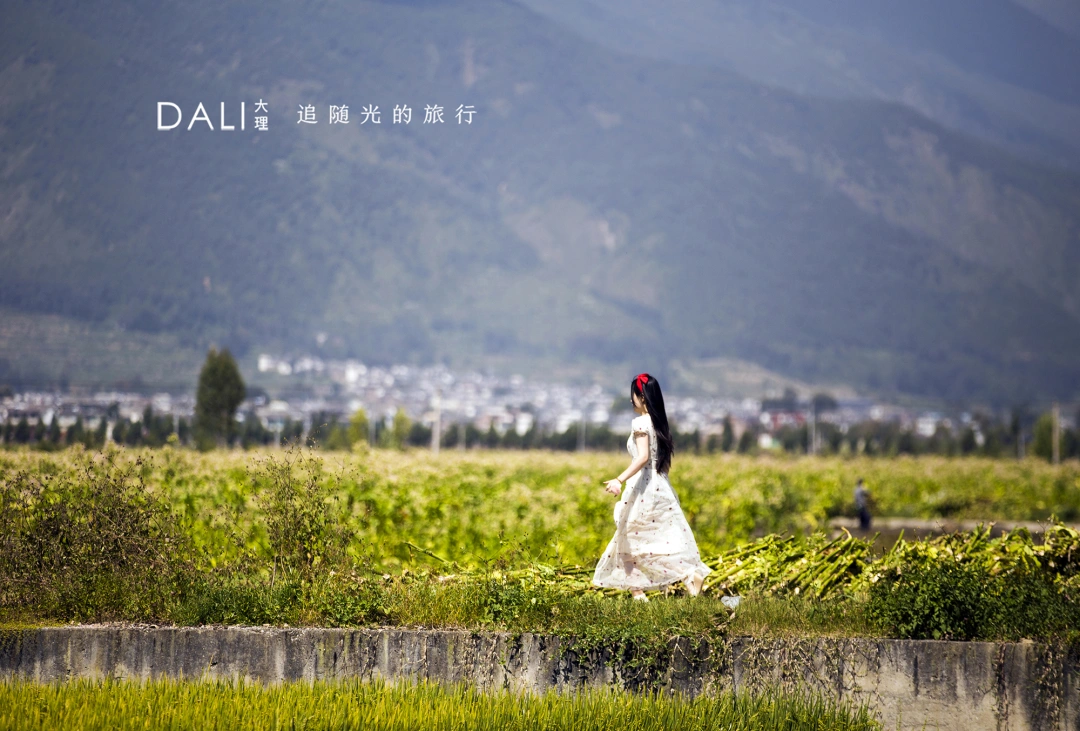
At an empty hotel's viewing platform, we shamelessly set up our camera. After a couple of shots, a young man walked out from the hotel without looking at us—we thought, "Here it comes, they're going to kick us out." Instead, he handed us a cup of black tea, smiled, and said, "Please enjoy!" before turning back to the front desk.
Touched, we checked the room rates—almost 1,000 RMB. We silently resolved: "When we have money..." The hotel was called "Diehaiyue." Even though we couldn't afford to stay, we believed that with service like that, it was worth every penny.
Lunch and the Turn Back
By 2 PM, we reached Taoyuan Pier. We had lunch at "Taoyuan Renjia." The authentic Yunnan food was fresher and sweeter than what we'd had in Beijing—broad ingredient selection, diverse flavors, with mountain delicacies and fresh aquatic products. The taste was tender, refreshing, and slightly sweet, with a balanced sour and spicy kick, somewhat similar to Cantonese cuisine.
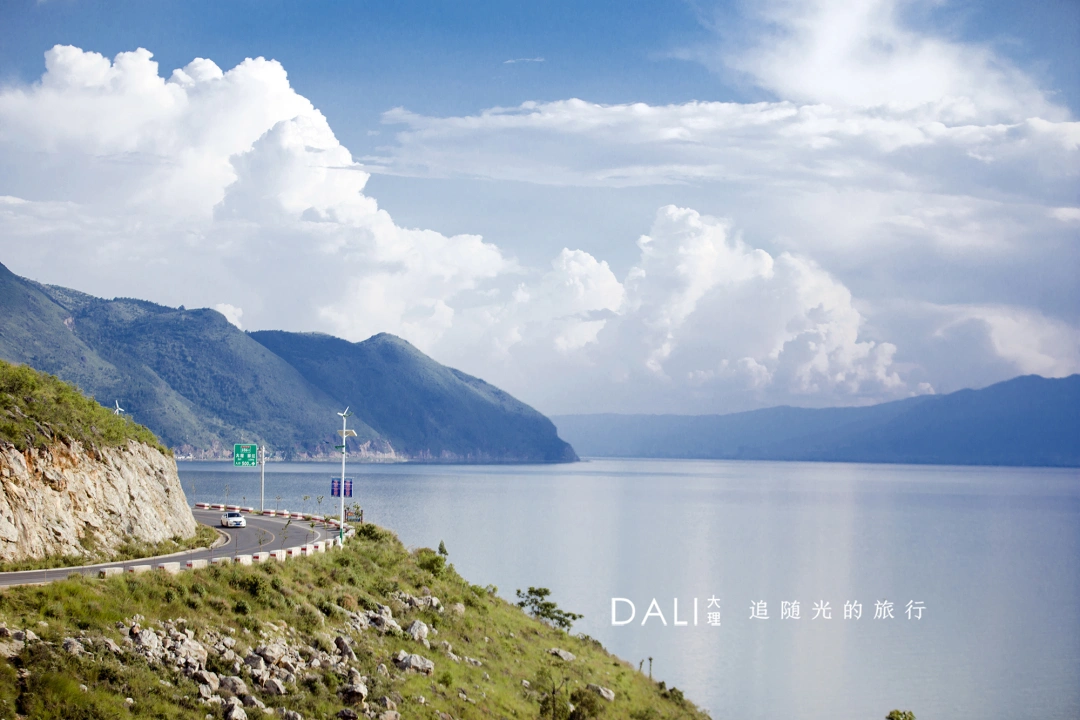
Full and satisfied, we started the journey back. We came across a large field of foxtail grass, climbed up a roadside irrigation channel, and took some uniquely styled photos. Following the channel toward the lake, we encountered a couple taking wedding photos. We huddled in the shade of a tree, waiting for them to finish. An old man fishing nearby asked Qi, "You guys are so professional. They struggled for ages, but you got it done in no time."
On the way back, we passed through Xizhou—one of the birthplaces of Dali's culture, already a Bai settlement during the era of the Six Zhao and Heman tribes.
Epilogue: What Dali Taught Me
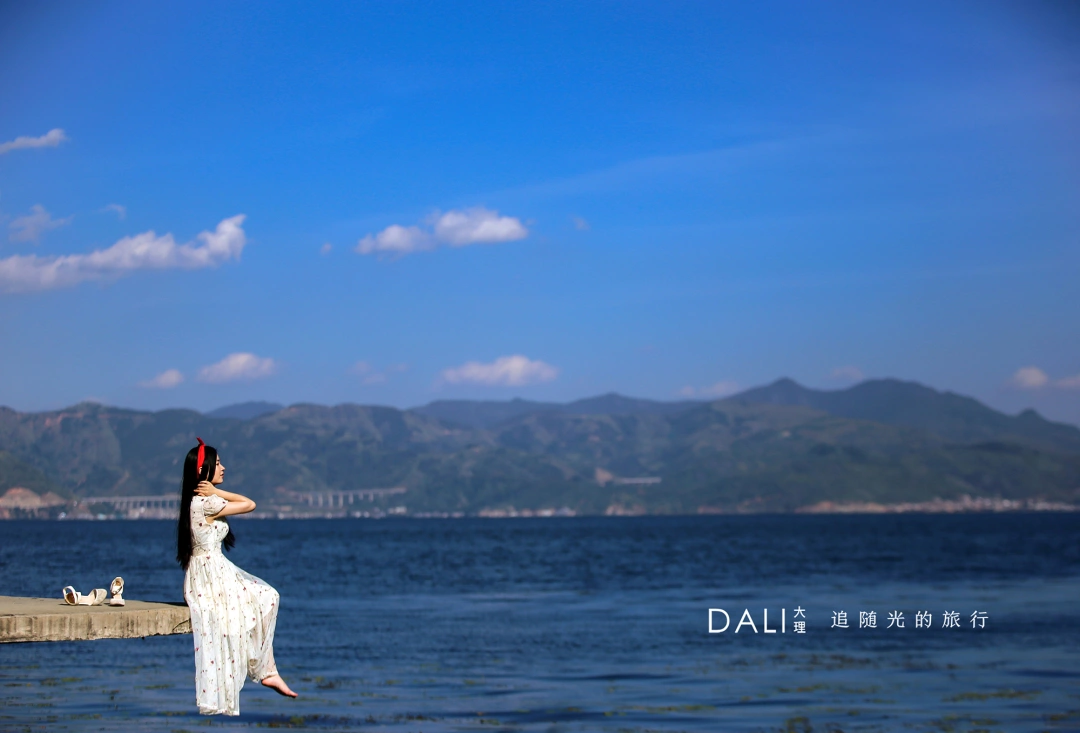
On this trip, we didn't visit any attractions, yet we saw the most authentic Dali. It's not a romantic symbol from a movie, nor an Instagram hotspot. It's a place with warmth and stories.
What Dali taught me isn't how to plan an itinerary—it's how to slow down. Slow enough to see the flow of light, slow enough to hear the sound of wind, slow enough to feel the weight of time.
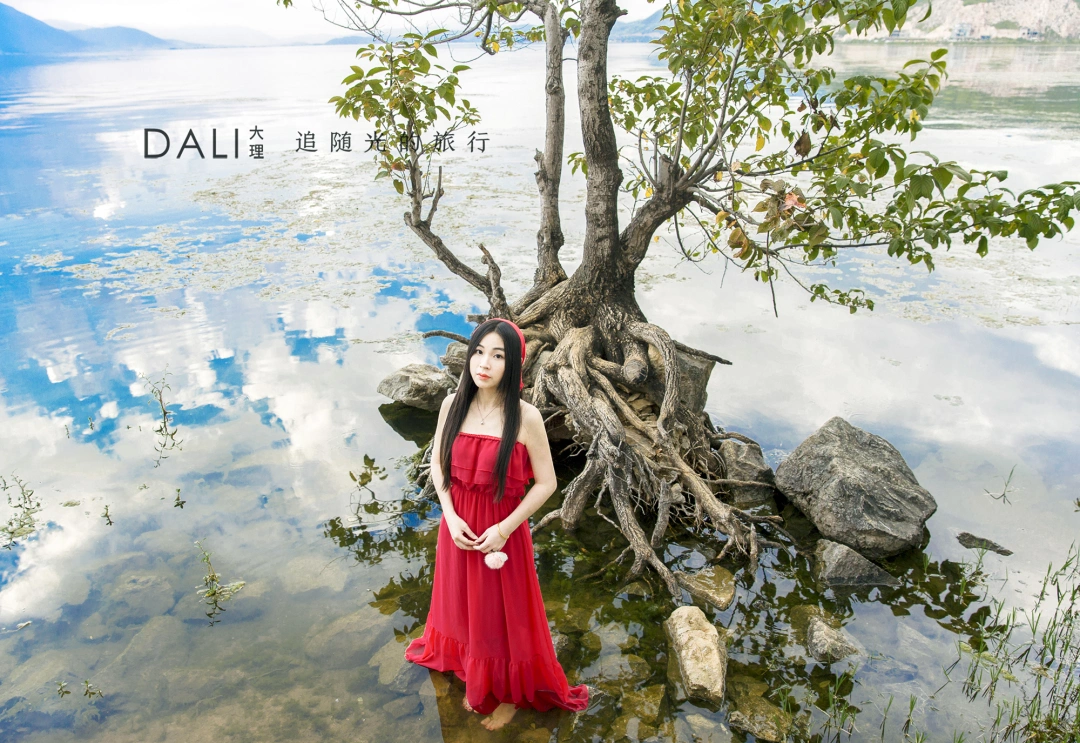
If you ask me, is Dali worth visiting? My answer is: Yes. But not for the check-in. It's for the encounter—the encounter with unexpected beauty, and with that part of yourself that, despite life's rough edges, still longs for tenderness.
Finally, a few tips:
- Book tickets early: Don't take a red-eye flight like I did, or you'll be half-dead on day one.
- Wear sunscreen: Dali's UV rays are no joke. Use physical sun protection.
- Keep an open mind: The most beautiful scenery often appears when you least expect it.
- Choose the off-season: If possible, avoid holidays. Dali's beauty needs quiet to be truly felt.
May your journey to Dali also be a chase after the light.
You should also read:

Dreaming of Nanzhao: A Gentle Encounter with Erhai Lake in Dali Shuanglang, July
Dreaming of Nanzhao: A Gentle Encounter with Erhai Lake in Dali Shuanglang, July Every summer, a voice whispers softly from the depths of my heart: it's time to go. No matter how tight the budget, no matter how precious the annual leave, the ritual of…
Continue reading...
Clouds Over the Rainbow: A Five-Day Soul Journey Through Kunming, Dali, and Lijiang
Clouds Over the Rainbow: A Five-Day Soul Journey Through Kunming, Dali, and Lijiang Prologue: The Decision to Fly into the Clouds In February, the chill of the North still lingered. A single discounted airfare sparked this spontaneous trip. Round-trip from Beijing to Kunming—1,700 yuan made…
Continue reading...
September: Finding Unexpected Warmth in Yunnan (Kunming, Dali, Shuanglang, Lijiang, Lugu Lake)
September: Finding Unexpected Warmth in Yunnan (Kunming, Dali, Shuanglang, Lijiang, Lugu Lake) Foreword: One Person's Journey, A Crowd's Story Before I set off, like every first-time solo traveler, I printed out a thick stack of travel guides and rehearsed countless possible scenarios in my head—getting…
Continue reading...