Chasing the Wind in Western Yunnan: Finding a Different Rhythm of Life in the Land of Colorful Clouds
Chasing the Wind in Western Yunnan: Finding a Different Rhythm of Life in the Land of Colorful Clouds
We’re always talking about what we own—houses, cars, savings. But how often do we ask ourselves: How many mountains have you climbed? How many seas have you crossed? How many sunrises and sunsets in how many places do you actually remember?
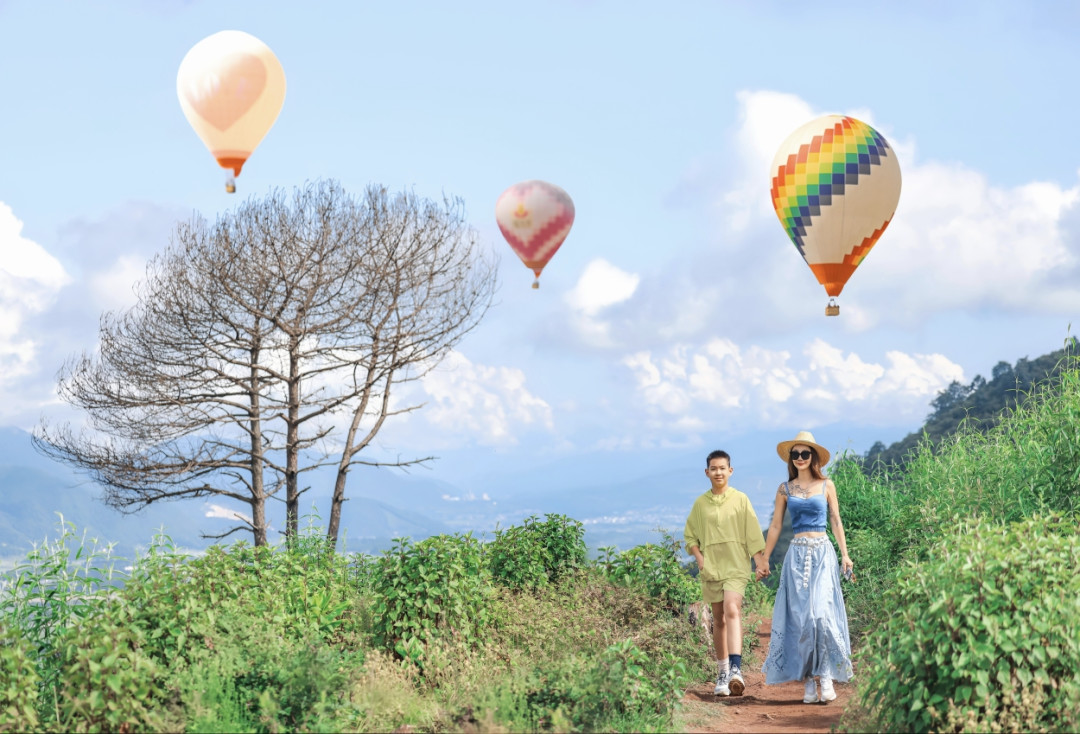
In August 2024, just before the summer break ended, I took my son Jiangbao on a journey to western Yunnan—a land time has always favored. Seven days, from Mangshi to Ruili, then to Tengchong. We weren't waiting for the wind to come to us. We were going to chase it.
Why Western Yunnan?
China has over 600 cities, but only one is named with a single character: Mang (芒). This ancient city, with more than 2,400 years of history, is called "Meng Huan" in the Dai language, meaning "City of Dawn." Legend has it that when the Buddha came here to preach, it was just before daybreak, with roosters crowing—and so he gave it this name.
Western Yunnan is the most raw and untouched part of the province. Mangshi and Ruili are steeped in everyday life and烟火气 (the vibrant energy of ordinary people), while Tengchong overflows with the romance of living. We're always rushing from one place to another, but we rarely slow down enough to feel a place breathe. This time, we decided to find our own corner of slow living in western Yunnan.
Here, the blue skies and white clouds don't come with free shipping. The volcanoes and lakes are pick-up only. But it's exactly this lack of convenience that makes every encounter so precious.
Mangshi: Gold and Silver in the City of Dawn
Meng Huan Golden Pagoda: The Light of Faith
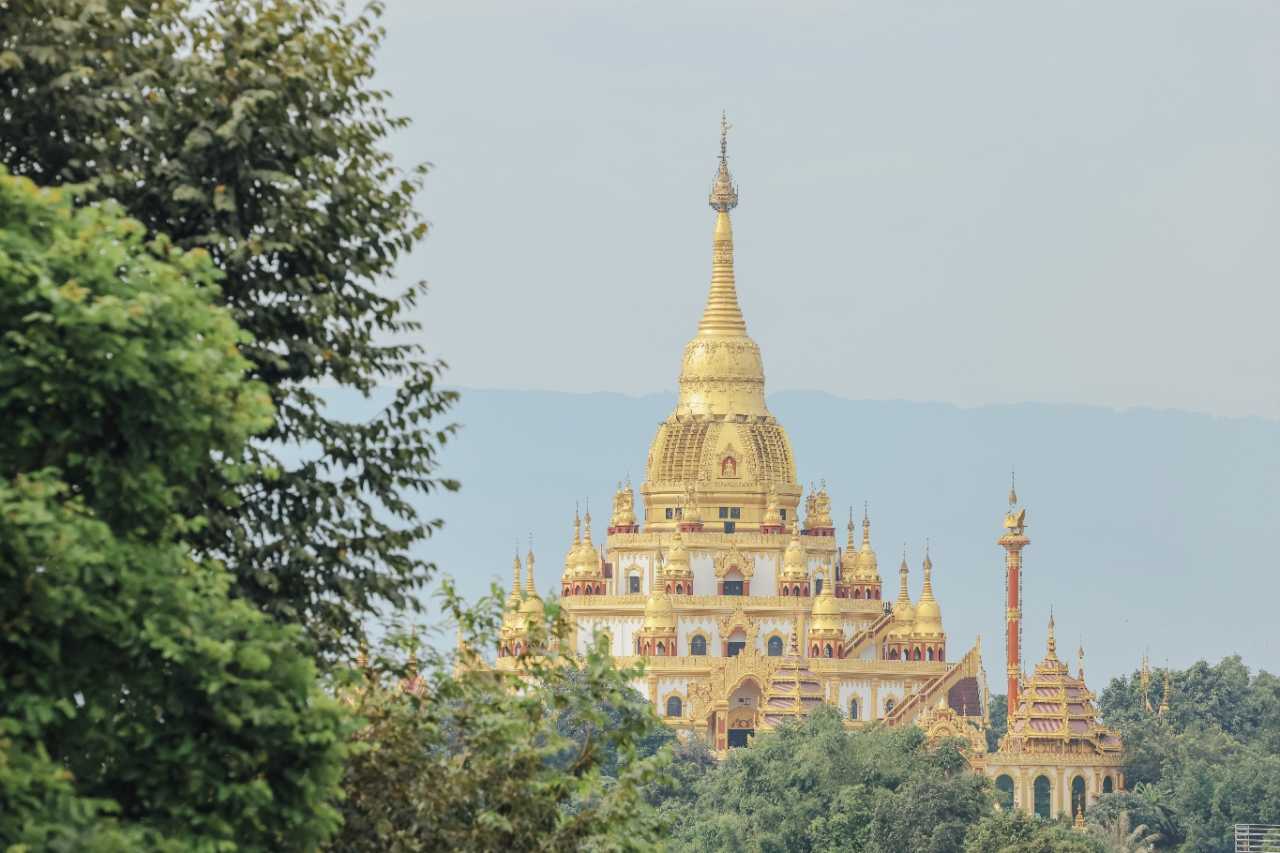
We arrived in Mangshi in the evening. In the distance, we saw a golden pagoda shimmering on the dark mountain ridge—and all the fatigue of the journey melted away. The Meng Huan Golden Pagoda sits atop Leiyarang Mountain, overlooking Peacock Lake. It's China's first golden Buddhist pagoda and Asia's largest hollow pagoda. Legend says that when the Buddha was reincarnated as the Golden Rooster A Luan, he once lived here. This is a sacred site for the Dai people.
As we climbed the steps, the last rays of sunset touched the spire, sending golden light in every direction. Around the pagoda, golden roosters, elephants, wisdom birds, and the twelve zodiac animal guardians protect this holy structure. The Golden Rooster A Luan is the centerpiece—chest out, head high, crowing at dawn, as if waking the City of Dawn below every morning.
Standing before the pagoda, walking in the Buddha's footsteps, bathed in the glow of faith, you feel a peace that's hard to put into words. Whether you're shooting landscapes or portraits, every shot looks like a magazine cover. This is absolutely the number one stop in Mangshi.
Meng Huan Silver Pagoda: The Beauty of Simplicity
The Silver Pagoda stands facing the Golden Pagoda from a distance, but it has a completely different personality. It's a solid pagoda—you can't go inside—but its pure white form against the blue sky is stunningly solemn and elegant.
The history of the Silver Pagoda is a bit blurry. According to some accounts, a merchant funded its construction during the Ming Dynasty, but it was later destroyed in war. The Silver Pagoda scenic area we see today was rebuilt by the Mangshi Cultural Tourism Group. The lotus-shaped central axis at the entrance symbolizes "lotus blooms with every step." The sign language area features 24 gestures, each with its own meaning, and the Eight Zodiac section showcases the unique Dai tradition: your zodiac sign is determined by the day of the week you were born. A week has eight days here, corresponding to eight zodiac animals.
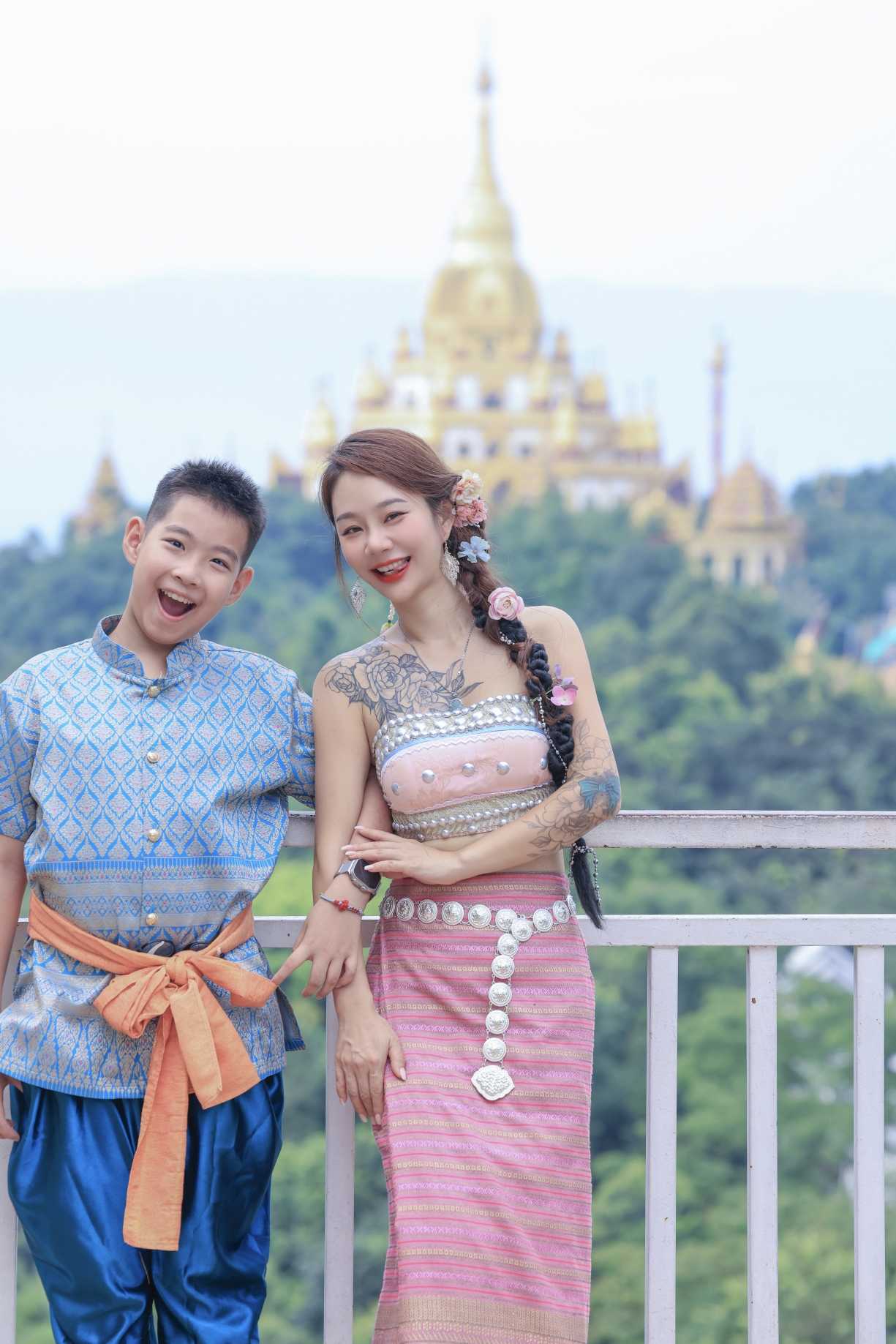
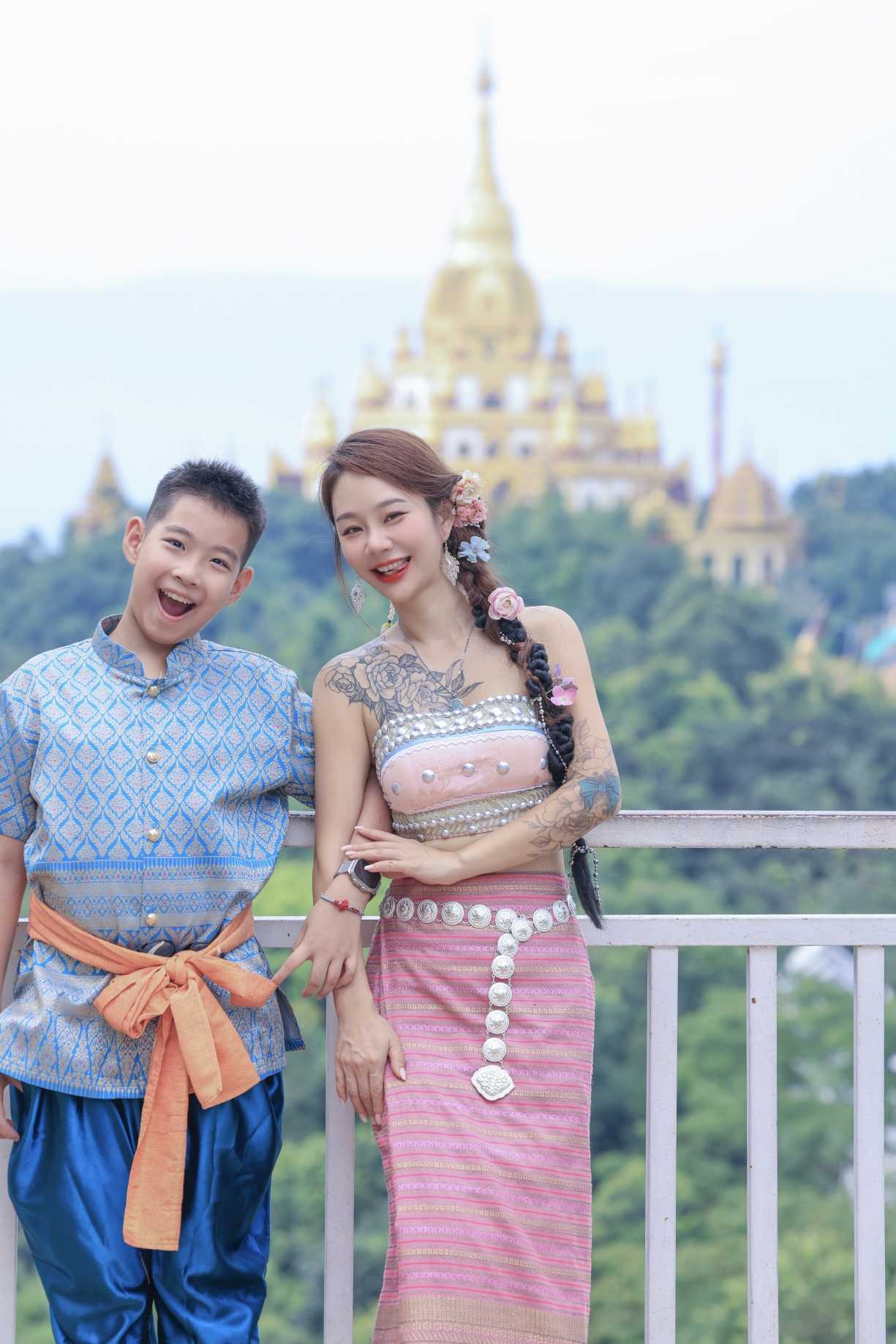
If most people who go to the Golden Pagoda are there for faith, then those who come to the Silver Pagoda are definitely there for beauty. The pagoda looks different from every angle and under every light—it's truly a photographer's paradise. We had to bribe and beg little Jiangbao to put on Dai ethnic clothing, but we got some unforgettable family photos in front of the Silver Pagoda.
Unity Avenue and Meng Banaxi Rare Garden
Walking down Unity Avenue, you're hit with a wave of Southeast Asian vibes. Palm trees line both sides of the road, colorful buildings frame the view, and suddenly you feel like you've been transported to Bangkok on vacation. Tall palm and banana trees half-hide Buddhist temples and golden pagodas, giving off an air of mystery from within.
Meng Banaxi Rare Garden is another surprise in Mangshi. "Meng Banaxi" in Dai means "a神奇美丽富饶 (magical, beautiful, and bountiful) place." The garden holds four national records: the largest collection of ancient trees and the oldest specimens, the finest collection of rare stones and fossilized wood, the highest-quality large root carvings, and the highest survival rate for transplanted large trees.
Peacocks roam freely everywhere in the garden. Getting "blocked" by one is part of the experience. The garden's crown jewel is a massive piece of rough jade, valued at 300 million yuan, casually placed by the roadside. The owner says whoever can move it can take it—but no one has managed to yet. Nature's craftsmanship is something you have to see to believe.
Xinwan Factory: New Life in an Old Factory
The Xinwan Factory district is a hidden gem for young people. The old state-owned factory workshops coexist with modern culture, nostalgia and passion intertwined. It preserves the youthful struggle of the older generation of entrepreneurs while embracing the curiosity of today's youth about old Mangshi. At night, the place comes alive with the scent of street food and the buzz of people—a perfect spot to experience the everyday life of Mangshi.
Ruili: One Village, Two Countries—A World on the Border

What first made you aware of Ruili? Its rich ethnic culture? Its brilliant history? Or its unique border culture?
Ruili borders Myanmar to the northwest, southwest, and southeast, making it China's golden gateway to Southeast Asia and South Asia. In 2019, the Dehong Area of the China (Yunnan) Pilot Free Trade Zone was officially established. Ruili has become the busiest national port for cross-border travel between China and Myanmar.
One Village, Two Countries: A Transnational Life Divided by a Bamboo Fence
The Mangxiu Dai village in Myanmar and the Yinbing Dai village in China look like one single village, but they're split by the "China-Myanmar Boundary Marker No. 71." The Dai people living across the border have coexisted peacefully for generations, intermarrying and trading freely. They walk the same roads, drink from the same well. Chinese melon vines climb over onto Myanmar's bamboo fences and bear fruit. Myanmar's hens wander into Chinese homes to lay eggs. This is just everyday life here.
The Grand Buddhist Temple and the Dai King's Palace
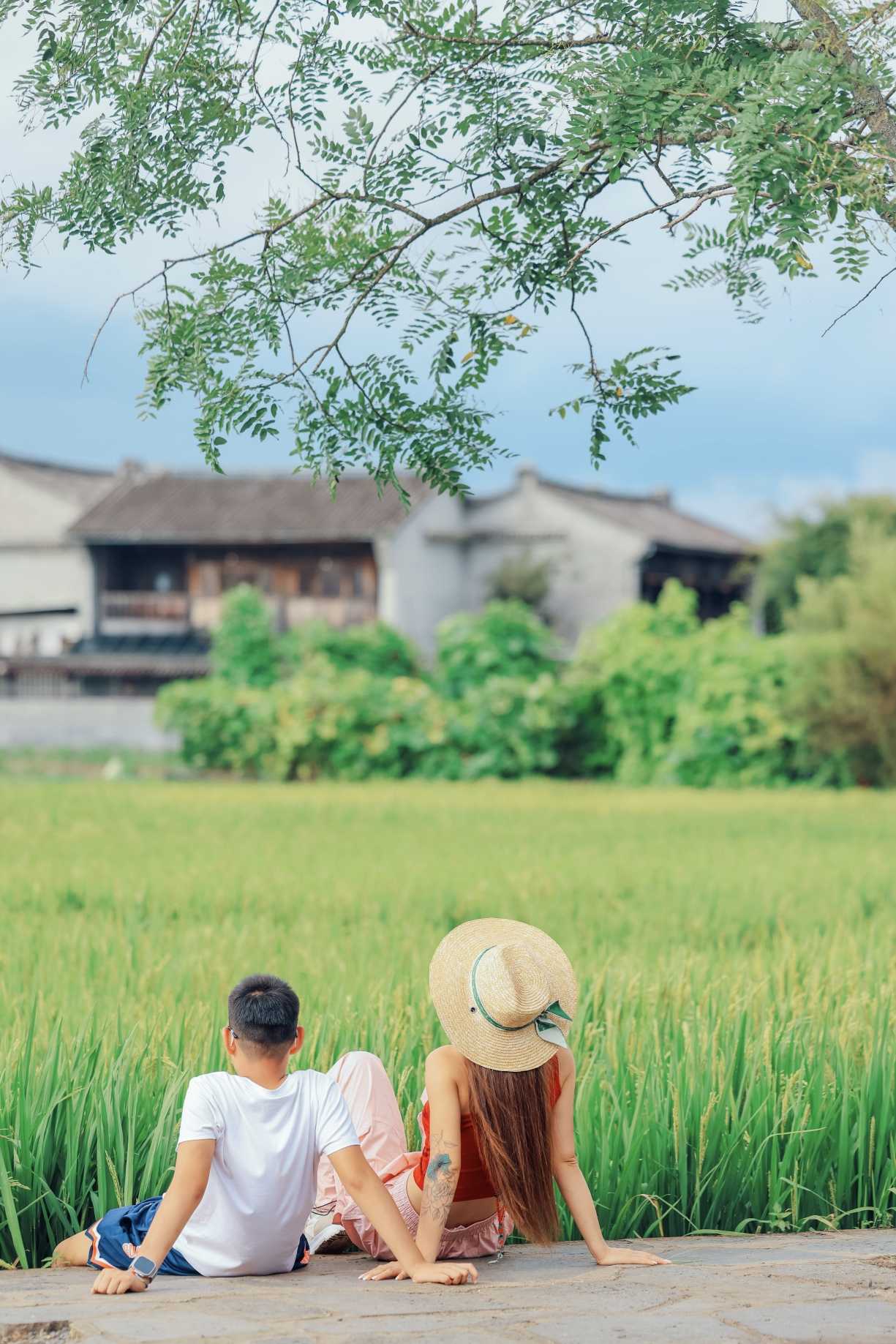
At the Grand Buddhist Temple in Ruili, we sat quietly and watched the sunset. Feeling the wind, the light, the dust—in that moment, life was at its most peaceful. The Dai King's Palace sits in lush green jungle, its red walls and golden tiles gleaming in the sun. Legend says it was built hundreds of years ago. Every brick, every tile, seems to whisper stories of the past.
Tengchong: Volcanoes and Hot Springs at the "First City at the Edge of the Sky"
Tengchong was praised by the Ming Dynasty traveler Xu Xiake as the "First City at the Edge of the Sky." Winters are never harsh, summers never scorching. The rivers flow gently, and clouds wrap around the mountains.
Heshun Ancient Town: Half Poetry, Half Everyday Life
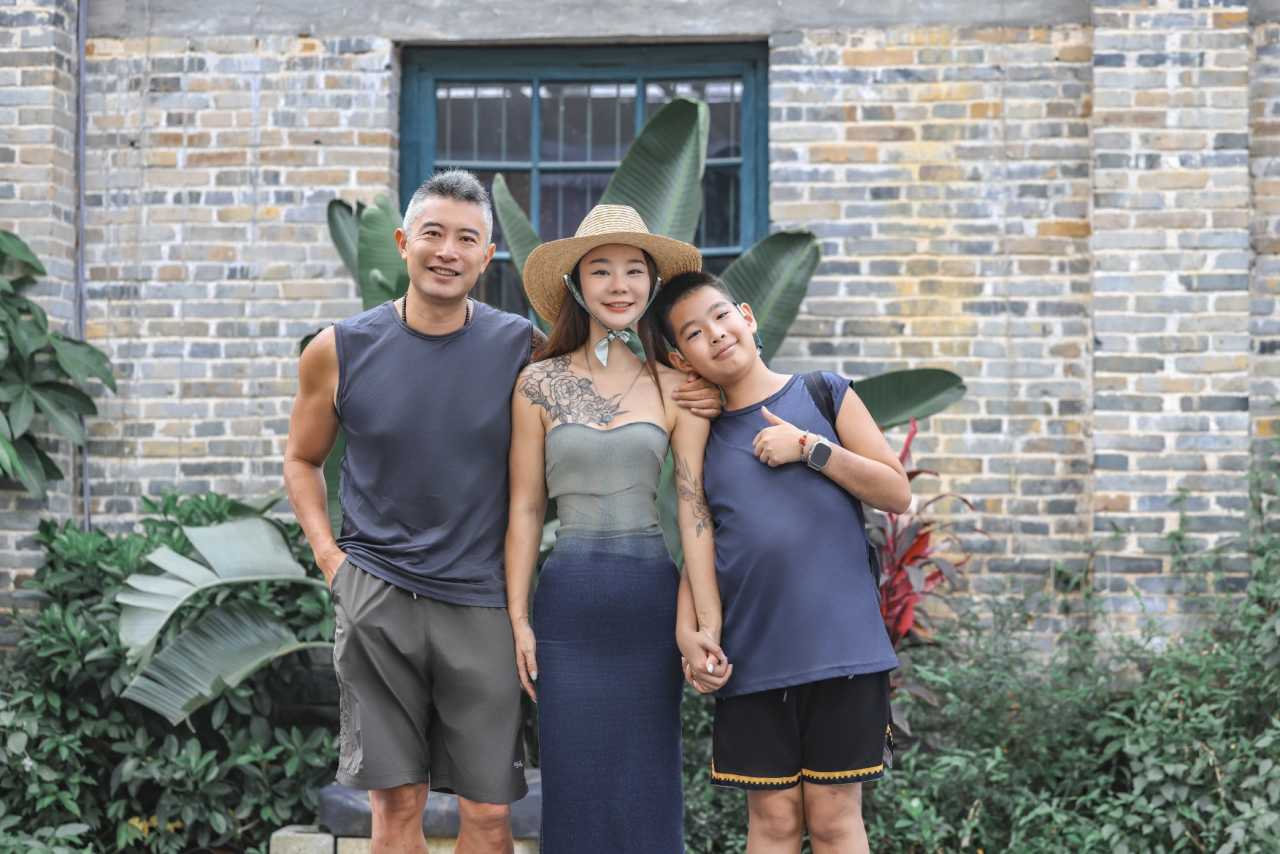
Heshun's beauty lies in its character. Blue stone paths, gray roof tiles, small bridges over flowing water, withered lotus flowers swaying, laundry pavilions standing silently... It's half poetry, half the rhythm of daily life—a hidden paradise. From dawn to dusk, there's always a new story unfolding in Heshun Ancient Town.
Volcanoes and Hot Springs: The Pulse of the Earth
Tengchong is a rare place where volcanoes and geothermal activity coexist. 97 volcanoes stand tall, and 88 hot springs bubble and steam. Tengchong's volcanic cluster is one of China's four major volcanic groups. A local saying goes, "Ten mountains, nine without peaks"—the most vivid description of Tengchong's volcanoes. Their summits are flat, gentle, or concave—never sharp.
In a forest not far from the Black Fish River scenic area, a group of wild macaques live. You might spot them by the roadside before noon. After noon, you'd have to follow the villagers up hills and across streams to "visit" them. There are about 20 to 30 monkeys in the troop. They're generally gentle, though some like to play pranks—snatching fruit right out of your hand. But most of the time, they'll take food from you gently.
Simola Ancient Village: The Quiet Beauty of Time
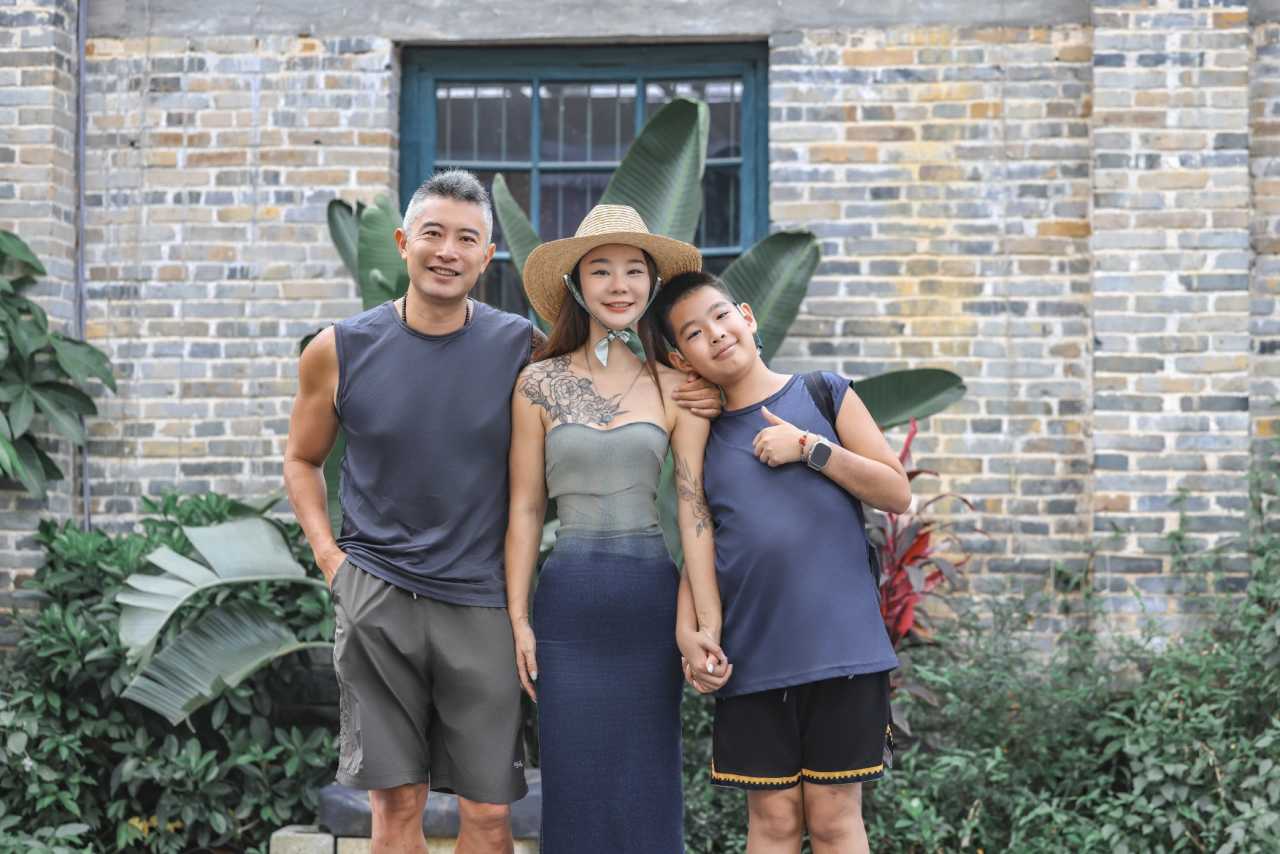
Simola is an ancient village steeped in history. Old stone paths, weathered mud walls, carved wooden windows—every corner tells a story. Surrounded by green mountains and clear waters, the village transforms with the seasons: rapeseed flowers in spring, the chorus of frogs in summer rice paddies, the joy of harvest in autumn, and warm chimney smoke in winter.
Rehai (Hot Sea) and Beihai Wetland: Nature's Gifts
Walking into the Rehai scenic area, you're surrounded by green mountains, the roar of countless hot springs, steam rising everywhere, clouds and mist swirling. The "Big Boiling Pot" at Rehai reaches 98°C (208°F). Eggs, peanuts, and potatoes cooked in this natural geothermal heat are a must-try. The Ming Dynasty traveler Xu Xiake once wrote in his Travel Diary of Yunnan about Beihai Wetland: "The sea is about a thousand mu (about 165 acres) in size, covered in lush green grass..." Walking through this vast wetland, soft grass underfoot, mountains stretching around you, breathing the fresh air—this is not a dream. This is Beihai Wetland in Tengchong.
The Memorial Hall of the Expeditionary Force: Peace Was Not Easy
The moment you step into the Memorial Hall of the Chinese Expeditionary Force, you are struck by the statues of the soldiers and the wall covered in steel helmets. They represent the 3,346 Chinese Expeditionary Force soldiers and 19 Allied heroes who died in the Battle of Tengchong. Living in this time of peace, how fortunate we are! Remember history, never forget the shame—peace was hard-won. We must strive to be strong.
In the End: Waiting for the Wind, or Chasing It?
The poet Wang Guozhen wrote in Travel: "Every distant place holds a temptation for us. Either the beauty tempts us, or the legend does. Even if the scenery far away isn't perfect, we don't care—because this is, after all, a charming mistake."
Our journey through western Yunnan wasn't really about chasing the wind. It was about chasing an attitude toward life. In Mangshi, we found our corner of slow living. In Ruili, we witnessed the wonder of the border. In Tengchong, we felt the gifts of volcanoes and hot springs.
Along the way, we walked in the Buddha's footsteps, bathed in the light of faith. We walked through golden and silver pagodas, feeling the power of belief. We ate natural hot spring snacks by the Big Boiling Pot. In Heshun Ancient Town, we listened to the stories that time tells.
Waiting for the wind? Better to chase it. Instead of waiting in the noise of everyday life, go find it on the road. Western Yunnan—this land under the colorful clouds—is worth setting out for.
Practical Tips
- Best time to visit: Year-round, but August is a great time for family trips during summer break.
- Getting around: Renting a car or hiring a driver is recommended, as attractions in western Yunnan are spread far apart.
- Packing essentials: Sunscreen, a hat, a light jacket (temperature differences between day and night can be significant), and comfortable walking shoes.
- Food recommendations: Dai-style barbecue, cross-bridge rice noodles (过桥米线), Tengchong rice shreds (腾冲饵丝), and hot spring boiled eggs from Rehai.
- Where to stay: Mangshi and Tengchong have great guesthouses. The inns in Heshun Ancient Town are especially charming.
"We don't talk about the house and car you own. We talk about the mountains you've climbed, the seas you've crossed, and the places you've been." May you find your own answers on the road.
You should also read:

God’s Abandoned Palette: A Self-Drive Journey Through Yunnan’s Dongchuan Red Land
God’s Abandoned Palette: A Self-Drive Journey Through Yunnan’s Dongchuan Red Land Travel has never been about reaching some distant geographic coordinate. It’s about encountering, along the way, the version of yourself buried beneath the rubble of daily routine. During this May Day holiday, I finally…
Continue reading...
Cloud Travelogue · Dali of Wind, Flowers, Snow, and Moon: A Three-Day, Two-Night Journey of a Free Spirit
Cloud Travelogue · Dali of Wind, Flowers, Snow, and Moon: A Three-Day, Two-Night Journey of a Free Spirit I am a cultured female foodie with a touch of rogue charm. I slung on my backpack, took my lover's hand, and set off on a spontaneous…
Continue reading...
Xishuangbanna: Encountering an Ideal and Magical Paradise in the Green Wonderland at 21° North Latitude
Xishuangbanna: Encountering an Ideal and Magical Paradise in the Green Wonderland at 21° North Latitude If you ask me which place in China most resembles Southeast Asia, I would answer without hesitation: Xishuangbanna. This is not Thailand, yet it possesses an even richer Buddhist ambiance…
Continue reading...