Chronicle of the Bee's First | A Light Summer in Dali, Two Days on Cangshan and Erhai
Chronicle of the Bee's First | A Light Summer in Dali, Two Days on Cangshan and Erhai
Opening: One Mishap, Two Surprises

Life has those moments when you want to flip the world the bird, then find yourself laughing out loud anyway.
Dali—that place hoisted onto a pedestal by legions of artsy wanderers. I'd only planned it as a quick stopover after a work trip. Twenty years ago, my mother first set foot here, back when Dali hadn't been swallowed by the tourism tide, when Lijiang still held its primal quiet, and when Shangri-La was still called "Zhongdian." She carefully documented every frame with her film camera, afraid to waste a single negative. She said it was a true paradise on earth.
Over the next two decades, my mother returned to Yunnan five more times. After her most recent trip from Lijiang, she simply said, "I don't recognize it anymore." Turns out, the places that once shook your soul—the most luxurious reunion you can hope for is merely to say, "You haven't changed a bit."
And me? I started this journey with a phone that had taken a dive into a toilet—kicking off a two-day farewell to smart living.
Farewell to Smart Living: Starting with a "Toilet Disaster"
In July, Shanghai hit 40°C, a giant steam cooker. The moment my feet touched Kunming's soil, that "not-hot-at-all, light summer" breeze hit me, and I instantly decided: I'm not going back to Shanghai to be a shut-in.
Train tickets, guesthouse—all sorted in no time. Traveling solo is ridiculously easy. But just before boarding, fate played its joke—my phone slid into the toilet pit.
Yes, you read that right. That meme that only exists in your social feed landed on me with a smug grin. The details are too embarrassing to recount, and it even involved the police—because the waterlogged phone was short-circuiting, getting so hot it was about to explode, and I didn't dare take it on the train. The Kunming station staff kept reassuring me: "Miss, just bring it on board, it won't explode." It hit me later—who'd want to touch a phone that fell in a toilet?
Lying in my sleeper berth, I stared at the ceiling. More amused than frustrated, I even started to look forward to it—what would two days without a smartphone be like?
Xizhou (Xizhou Ancient Town): Unexpected Purity
I've wandered through countless ancient towns across Jiangsu, Zhejiang, Shanghai, and Anhui—from heavily developed to relatively primitive. See enough, and they all blur together. But Xizhou, with zero expectations, gave me a surprise.
Red-hot charcoal, roadside horse carts, tangled cables, signs that weren't overly commercialized—these details piled up, hitting me with a raw, pure texture. The "Cool Little House" (Qingliang Xiaowu) here is Xizhou's internet darling. People rent electric scooters from the old town just for its unassuming popsicles. The owner is gloriously aloof—closes shop once they've made enough money, travels, then comes back to earn more. The tiny shop is packed. Worth it? Back in 40°C Shanghai, I can only drool at the memory.
Xizhou flatbread (Xizhou baba) is famous, but my stomach was conquered by the sensational rushan (grilled goat milk cheese). Every stall roasts it fresh over charcoal—that freshly grilled energy is worth bookmarking. Xizhou is full of grand courtyard mansions, testaments to its historical wealth. Stroll down any random alley, and you're met with rustic charm. If you have time, half a day in Xizhou—checking out Bai architecture, riding a horse cart, nibbling on snacks—is well spent.
Rushan: A Dying Tradition
In Dali's old town, rushan (goat milk cheese, sold in sheets) is everywhere, marketed as "Yunnan's 18 quirks: milk sold in slices." It always tempts tourists, but few actually find it delicious.
Deep inside a grand courtyard in Xizhou, an old master makes rushan by hand daily, letting visitors witness the entire process from scratch. No flashy name, not even a proper sign—just an inconspicuous piece of cardboard hanging at the entrance. Walk in, and you'd think it's a shop selling tie-dye goods, until you spot two pots, a stool, and the master working on his cheese. Then you know you're in the right place.
The master works and narrates throughout, emphasizing the importance of his homemade lactic acid starter and freshly milked milk. The process looks simple. If interested, for a small fee, you can try it under his guidance. Wash hands, roll up sleeves, get to work. When the formed milk ball lands in my palm, it's so hot I jolt. With the master's help, I fumble through and produce a rather shoddy raw rushan.
The finished raw cheese is cut into pieces by the owner's wife, served with not-too-sweet rose jam. It's subtly sweet, chewy like gum, with no raw milk smell. The dried, grilled version, also with rose jam, cut into small slices, is stunningly tasty. Compared to this, the rushan sold elsewhere is just "cheap thrills."
As I left, I asked the master if he had apprentices. He chuckled: "What young kid nowadays wants to learn this?" Besides, to protect the environment, Dali's livestock industry might change in the future. Passing on the tradition? It may never happen. I left with lingering fragrance in my mouth and a heavy heart—the chance to taste such authentic rushan is already on a countdown.
Erhai Lake: Beautiful Expectations Amid Restoration
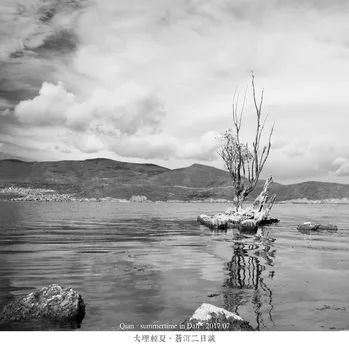
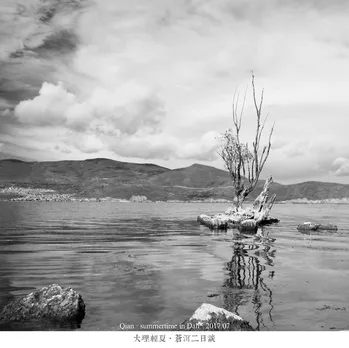
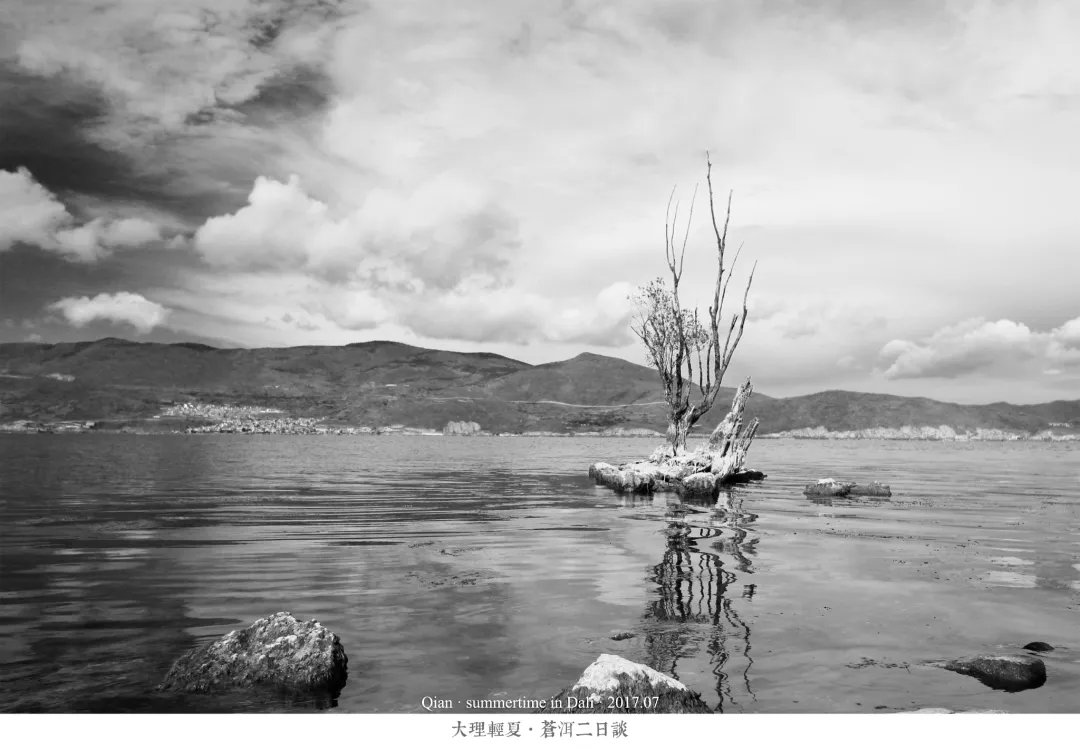
This year, Dali's biggest keyword is the restoration of Erhai Lake. Ride-hailing drivers and restaurant owners all say tourist numbers have plummeted because of it. Some things you can't understand until you see them. Whether on the east or west road around the lake, when you witness the water pollution firsthand, you instantly grasp why restoration is so necessary.
All sorts of restoration slogans line the lake—crude but true. Every waterfront guesthouse and restaurant is sealed shut, and many under-construction inns have halted work. Some say Erhai isn't beautiful during restoration—true, sewage pipes have dug up many roads, and closed lakeside inns mean you can't lounge right on the water. But all this fills you with anticipation—you can be sure that next time, Erhai will be even more gorgeous.
Haidong (East Erhai): The Ultimate Water Hue
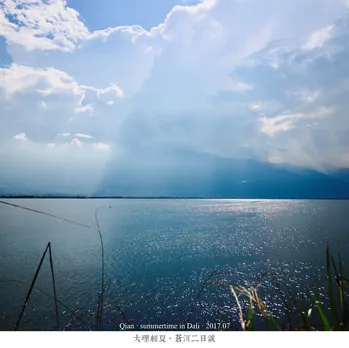
Driving on the expressway, bypassing the already "dug-up" Shuanglang, I exited at Wase and reached Erhai's east bank. If the weather's clear, you'll witness the ultimate color of Erhai's water.
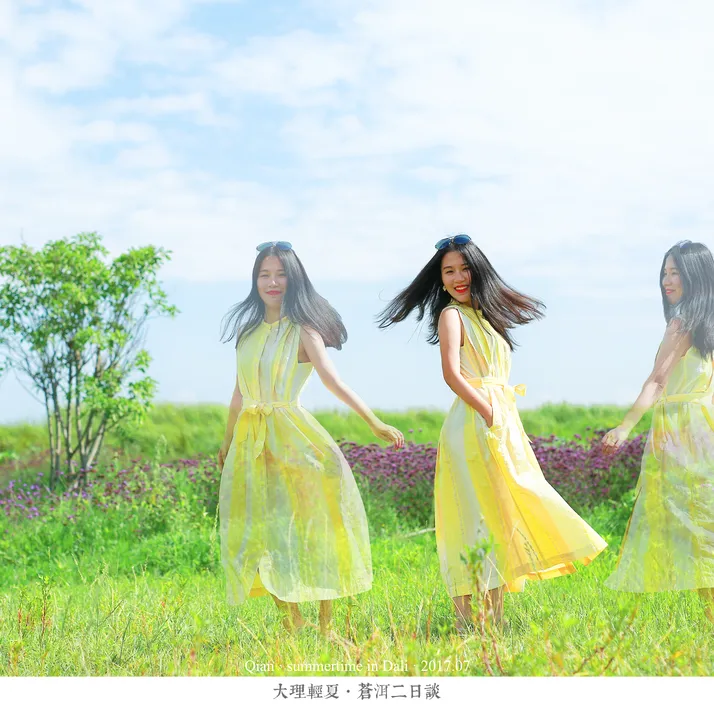
Wase Pier is a famous wedding photo spot. Sitting on the pier facing Cangshan and Erhai, with an unobstructed panoramic view, you feel a vastness no wide-angle lens can capture. Ignore the messy aquatic plants near the shore, and Erhai is flawless in my eyes. Around the pier, local kids splash in the water, their dark skin glistening in the sun.
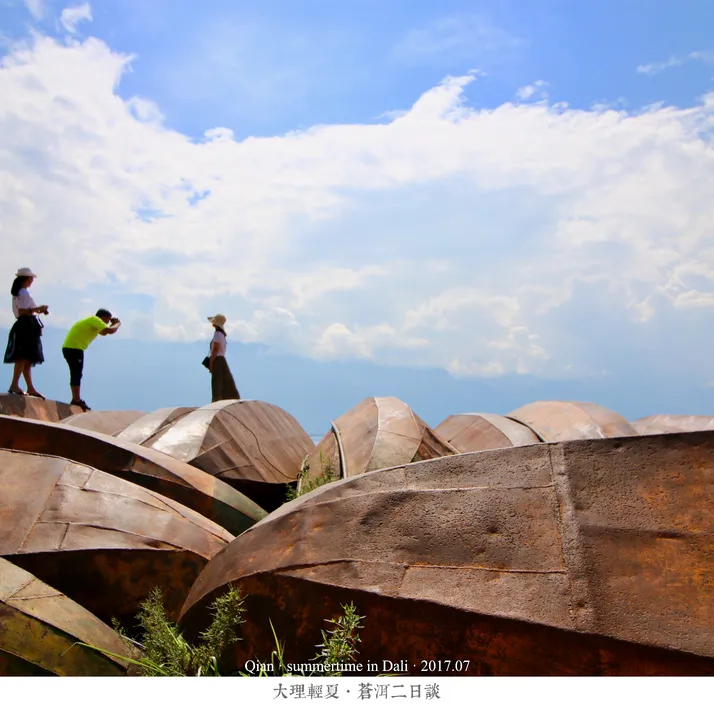
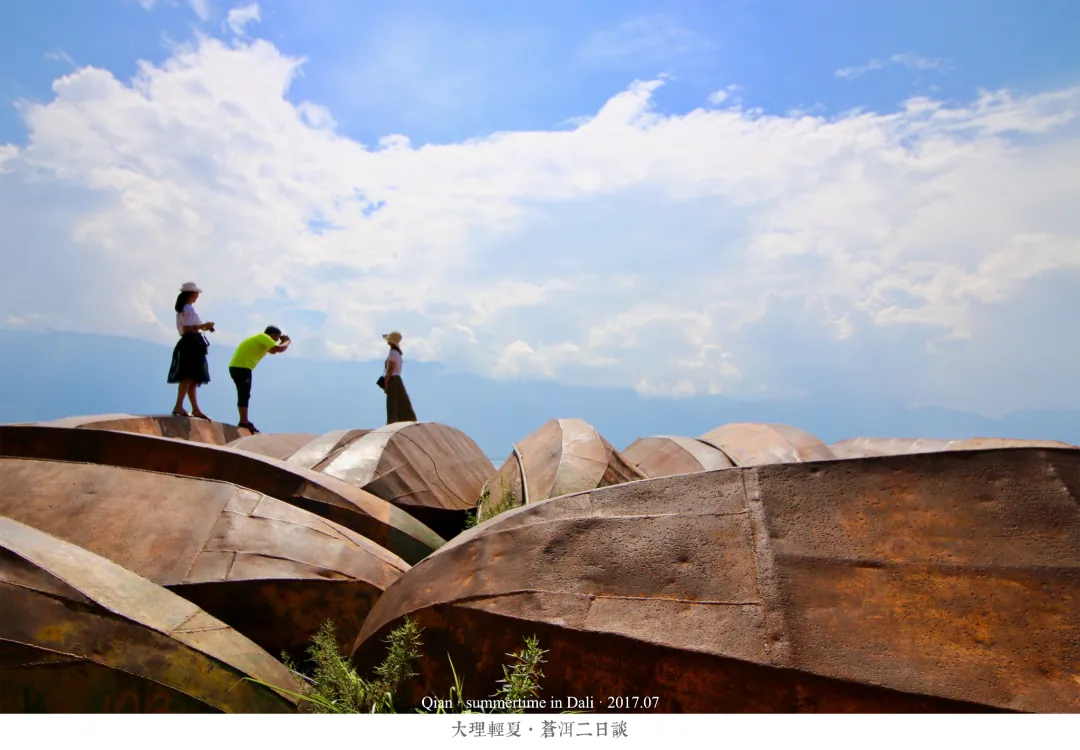
The iron-hulled boats are another iconic wedding photo backdrop. Abandoned fishing boats left by the lakeside—quirky and charming. If you visit in the afternoon, the light is perfect for beautiful silhouettes. But I must say—how hot does real iron get under direct sun? Ask anyone who's steadied themselves with a hand on it.
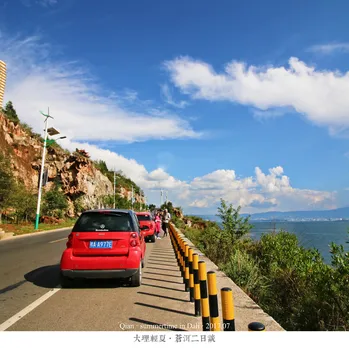
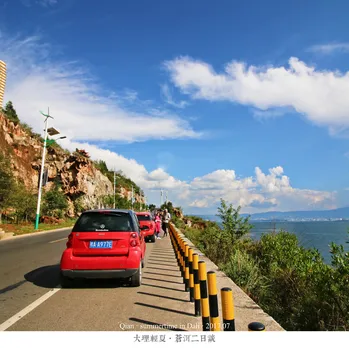
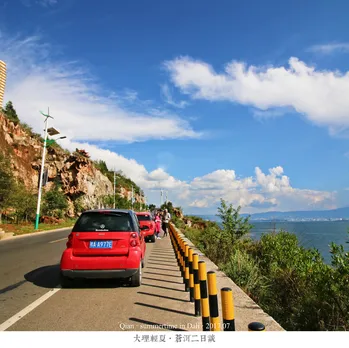
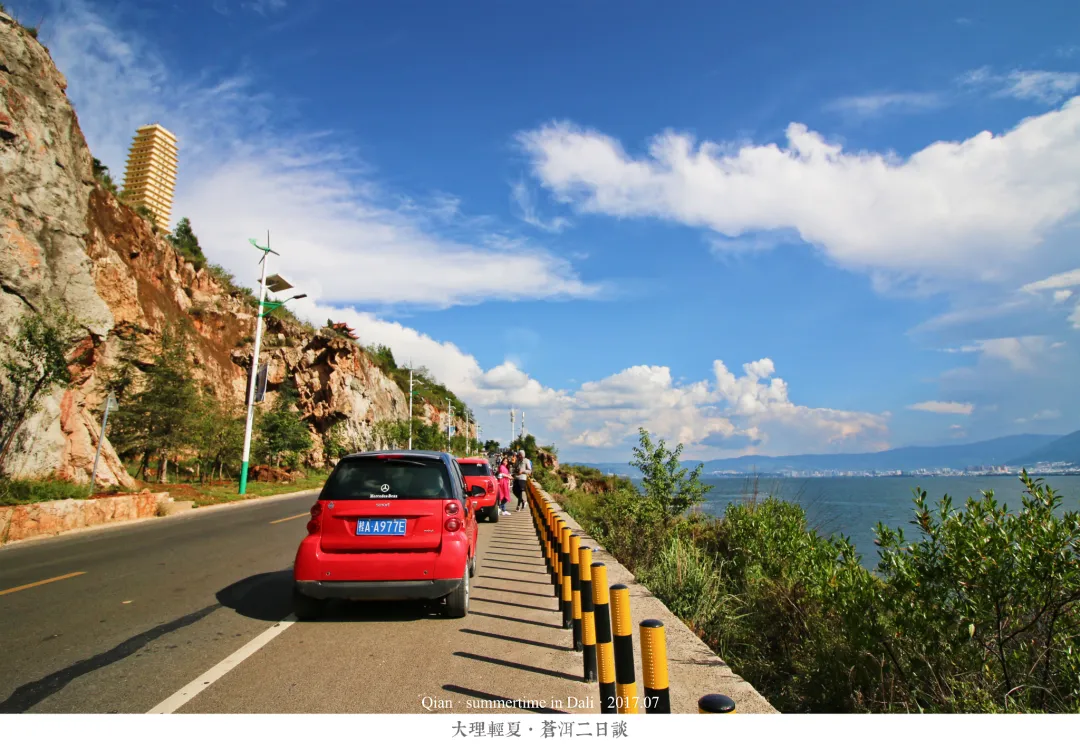
From the iron boats to Xiaoputuo (Little Putuo Island), you pass a particularly open and beautiful stretch of the East Ring Road. The road hugs a cliff on the left and Erhai on the right, with no extra buildings. The guardrails are black and yellow—bright yellow dots accenting the Cangshan-Erhai landscape, a perfect touch of lightness. Can't goof off on the road? Then climb onto the car roof—just don't rent a soft-top, and be prepared for a hot seat.
Haixi (West Erhai): Fragmented Impressions

Compared to the relatively intact east section, the West Ring Road seems chopped into pieces by sewage treatment work. With limited time, I couldn't fully explore the west bank's scenery, and I missed the highly praised Haishé Park (Tongue of the Lake).
Caicun Village is a snapshot of the west bank. The entire village has entered a quiet, waiting-to-be-restored state because of its "lakeside" status. All waterfront businesses are closed, with only a few stalls outside the pier. The whole place feels bleak. I wandered aimlessly and spotted a sign: "Viewing Platform, 10 yuan per person." Guesthouses and restaurants can't operate, but sitting up there to gaze at Erhai should be fine.
The old man running it was talkative. Turns out he's from the "package delivery circle" (Jiangsu/Zhejiang/Shanghai). A friend called him to Dali, and once he arrived, he couldn't leave. He built the small viewing platform himself—perfect for zoning out and letting the Cangshan-Erhai breeze wash over you. Funny thing: standing up, you overlook the sewage treatment project below; sitting down, you only see the beautiful lake and mountains. Maybe the price paid now is the hope that, in the future, from any corner of Erhai, you'll see what you see from this platform when seated.
Cangshan Mountain: A Thousand Words for One Corner
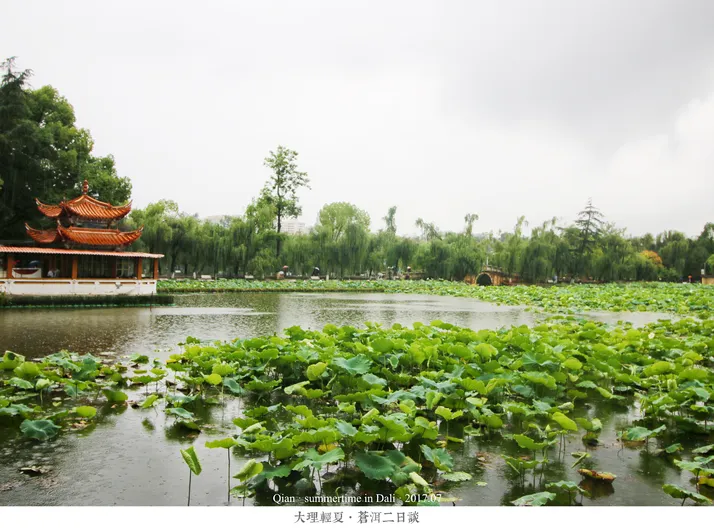
If you only have half a day for Cangshan, what do you do? I had no preparation—normally, with a phone, I'd have guides, routes, tickets, and transport info at my fingertips. Without it, I was flying blind.
Cangshan's beauty: the concrete beauty lies in its sweeping views over Erhai; the abstract beauty lives in people's hearts, in its touching "role" of embracing and protecting the lake. No idea how to explore? Then just wing it. I went entirely on foot, took no cable cars, and visited no famous spots. Luckily, my guesthouse gave me some tips, and local girls out for a hike led the way. Half a day later, I was thoroughly satisfied.
On the way down, the girl who guided me asked, "Sister, what do you think of Dali?" I paused, and she continued, "I've grown up here, and I don't think anywhere is better than Dali." I laughed—yeah, that's exactly how I feel about my hometown. Whatever way you play—cable car, hiking, climbing high peaks, visiting temples, sipping tea, eating vegetarian, or just zoning out—do what you like. Because no matter how long you stay or how you do it, you can only experience one corner of Cangshan.
Jizhao Nunnery: A Flawless Little Gem
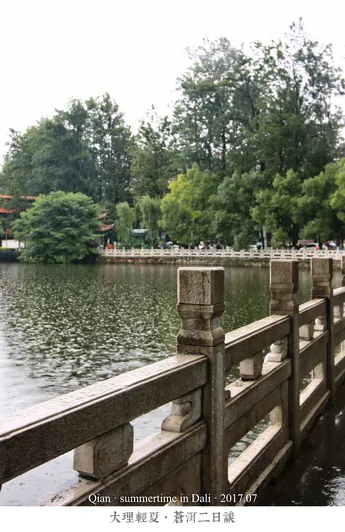
My guesthouse strongly recommended this off-the-beaten-path spot on Cangshan. "Off the beaten path"? Seems like plenty know about it. "Famous"? I spent two hours there sipping tea without it ever getting crowded. On Mafengwo, reviews are at least 3 stars, mostly 5—truly a flawless little gem.
After a tricky ride-hailing experience, I arrived at the "Cangshan National Geopark" entrance. One side leads to the Gantong Cable Car ticket office; the other has a footpath and a vehicle road up the mountain. Either because drivers don't want to navigate the mountain road, or because certain vehicles have a monopoly, my Didi driver said he couldn't take me up. So I just walked—20 minutes and I was there.
I arrived at lunchtime. Mention Jizhao Nunnery, and nine times out of ten, someone will bring up its vegetarian meal. Currently, free vegetarian meals are offered on the 1st and 15th of each lunar month, plus every weekend on the Gregorian calendar. On other days, it's 20 yuan per person. Another highlight is the courtyard full of succulents and flowers. I'm not a succulent enthusiast, but I couldn't help admiring the plant displays. The resident laywomen were very kind—guiding photographers, gently coaxing unruly kids. Before I knew it, two hours had passed. Where to next, how to get there—all unknowns. With no itinerary, I felt perfectly entitled to waste time.
Gantong Temple: Stumbling into Stillness
Leaving Jizhao Nunnery, I headed downhill. Following a few figures ahead, I spotted an inconspicuous footpath. I walked quietly for over 10 minutes through the mountain trail, amusing myself—if someone suddenly popped out, it'd be scarier than being alone.
I stumbled into Gantong Temple. Though not as stunning as Jizhao's succulent kingdom, Gantong was also bursting with flowers. Again, small groups of friends sipped tea and chatted, with the occasional curious wanderer like me drifting through. A kitten hid in the back courtyard, hard to spot. Even pressing the shutter felt cautious, afraid to disturb the afternoon's Zen stillness.
Dali University: A Gentleman's Abode
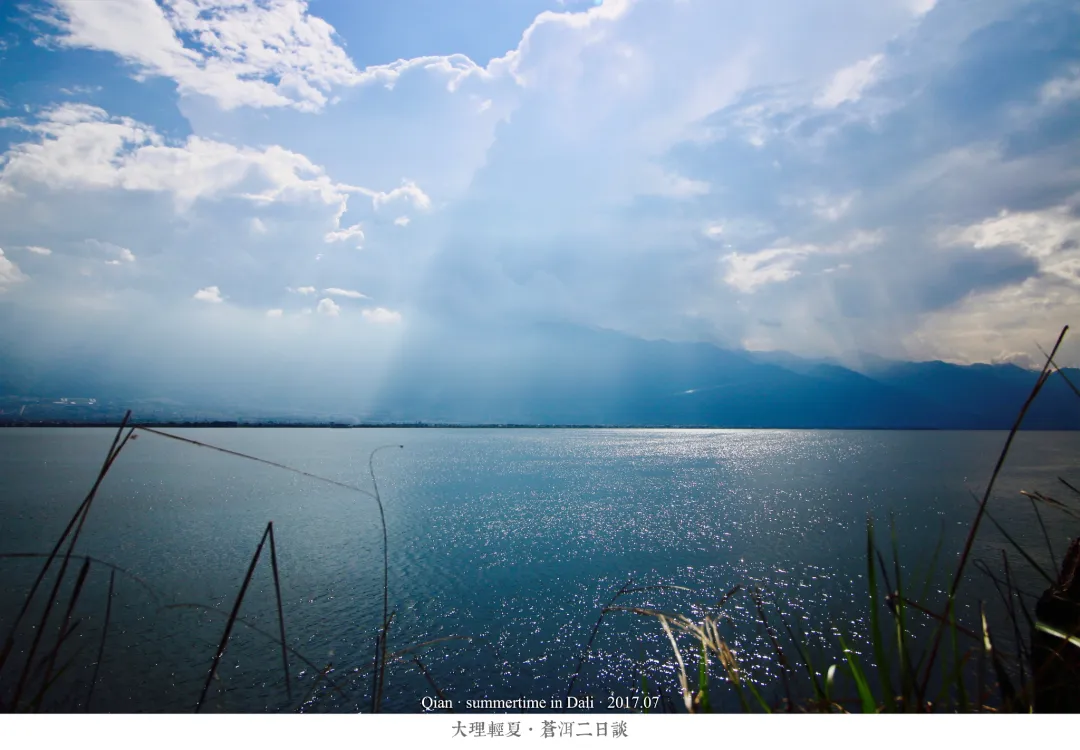
Which is the most beautiful university in China? Nonsense—it has to be my alma mater! As a pseudo-scholar proud of my own school's architecture and history, I'm not easily impressed by other campuses.
Riding along the East Ring Road, I was drawn to the cluster of white buildings on Cangshan's west side. Asking around, I learned it was Dali University. Hard to say why I'd spend limited time on a "non-attraction"—maybe I wanted to see if studying with Cangshan at your back and Erhai before you is really as enviable as it sounds.
From the old town, I took bus C2 to Dali University stop. Before even entering the gate, I was stunned. A central axis ran straight uphill, with symmetrical buildings on both sides—like a giant two-courtyard complex on Cangshan. From any terrace, looking back: low-hanging clouds, sprawling villages, the expanse of Erhai—a feeling of "the whole world is mine" surged up. The steps along the axis were no joke—basically like climbing Cangshan itself. Maybe because there were no students, the entire campus felt exceptionally open and clean. What moved me wasn't the unremarkable architecture, but the thought of studying in such an environment—you'd graduate with a gentleman's heart. After all, facing such a vista, if your mind isn't broad and open, you'd be wasting heaven and earth's kindness.
The Old Town: Starting Point Isn't in the Past
For my mother, the starting point of Dali's old town impression was 20 years ago. Every subsequent visit compared to that, naturally breeding disappointment like "commercialized" and "all the same." For me, the starting point is now. I never witnessed the past, so every first-time visitor might as well pretend it doesn't exist. Can't go back anyway, so why not appreciate the present beauty?
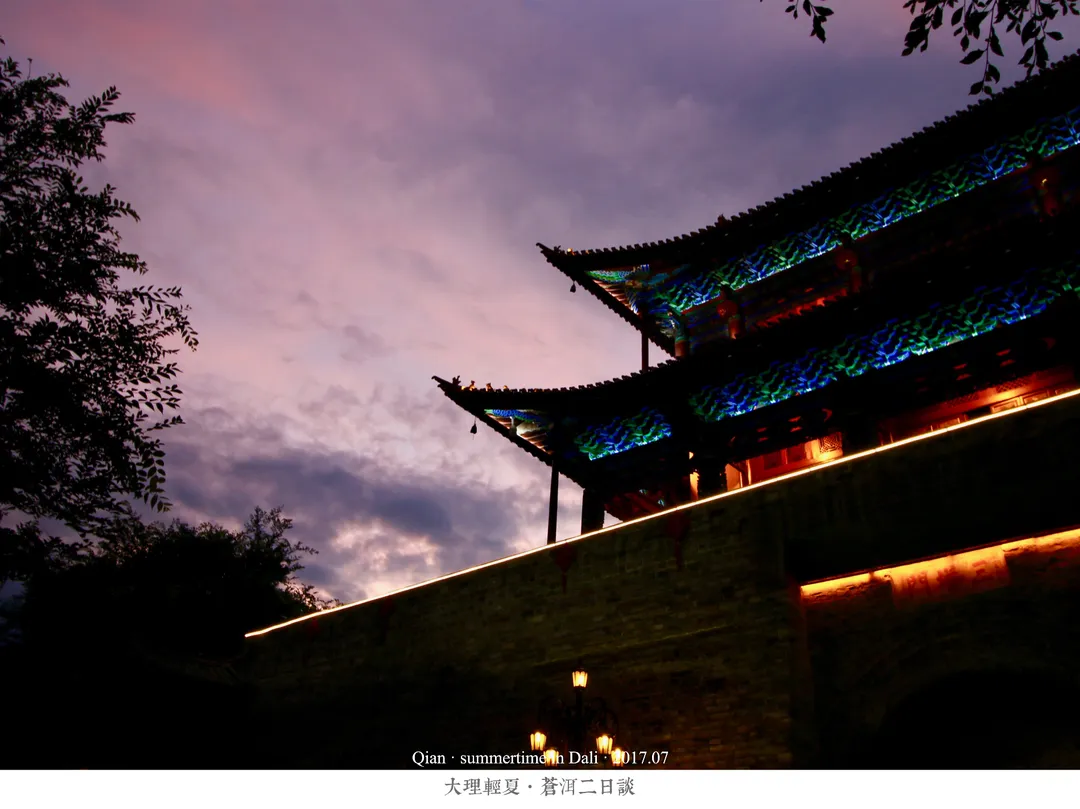
The old town is different from all those little ancient towns. The sheer majesty of its gates and walls instantly overrides any preconceived notion of "delicate ancient town." Stone is the top element in my mind. Unlike the wood-heavy structures of Jiangnan water towns, this feels like an upright, tough guy—sealing away the weathered, rebuilding what's missing.
I gave myself plenty of time. Entering from the South Gate, I climbed the city wall, strolling all the way to Honglongjing (Red Dragon Well) and back. On both sides of the gate tower, couples posed for wedding photos, mostly in traditional Chinese attire—the colors and mood matched perfectly. From the wall, I looked down: traffic bustling outside the city, lively tourists inside. Cangshan stood guard to the side, and to the east, Erhai shimmered gracefully. I let out a maternal sigh—what a life the ancients had!
Conclusion: You Haven't Changed a Bit
Two days, a fleeting glance. Undeniable: even if life throws you curveballs, encountering these small joys is the best proof and meaning of being alive.
From Xizhou's purity to rushan's endangered tradition; from the anticipation in Erhai's restoration to the openness of Cangshan's corner; from Jizhao's stillness to Dali University's majesty—Dali gave me not a perfect trip, but a real, changing, vibrant place.
The moment my phone fell into the toilet, I thought it was a disaster. Instead, it became my chance to say goodbye to smart living and embrace the real world. Without phone navigation, I got lost—but met a girl who led the way. Without phone guides, I wandered freely—and discovered unexpected beauty. Without phone photos, I recorded everything with my eyes—and remembered it more clearly than ever.
Turns out, the places that once shook and moved you on your travels—the rarest reunion is still being able to say: You haven't changed a bit.
Dali, next time we meet, you'll surely be more beautiful. And I'll surely know better how to meet you.
You should also read:
Let the Knight's Soul Take Flight in Shuanglang
Let the Knight's Soul Take Flight in Shuanglang Prologue: Yunnan, a Journey of the Soul Some places, once you set foot in them, take root in your heart and grow. Yunnan is that kind of place for me. Two years ago, I set foot on…
Continue reading...
Strolling Among the Clouds: Gathering Autumn's Light on the Western Sichuan Plateau
Strolling Among the Clouds: Gathering Autumn's Light on the Western Sichuan Plateau Prologue: A Sun Chaser's Journey Autumn sunlight is like a gentle painter, using golden brushstrokes to smear the last traces of warmth across the earth. It slips through the gaps between your fingers,…
Continue reading...
Golden Autumn: A Poetic Tapestry of Light and Shadow in Tengchong's Ginkgo Village
Golden Autumn: A Poetic Tapestry of Light and Shadow in Tengchong's Ginkgo Village A Belated Autumn Rendezvous Everyone harbors a dream about autumn somewhere in their heart. For me, that dream once belonged to Jiuzhaigou—that palette of colors hailed by the world as a "fairy-tale…
Continue reading...