Golden Autumn: A Poetic Tapestry of Light and Shadow in Tengchong's Ginkgo Village
Golden Autumn: A Poetic Tapestry of Light and Shadow in Tengchong's Ginkgo Village
A Belated Autumn Rendezvous
Everyone harbors a dream about autumn somewhere in their heart. For me, that dream once belonged to Jiuzhaigou—that palette of colors hailed by the world as a "fairy-tale kingdom." Yet when I journeyed thousands of miles to reach it, I happened to encounter a nationwide cold snap and could only return in disappointment, staring at the gray sky. The autumn colors had not yet faded, but I was already weary. That lingering regret took root like a seed buried deep within me.
A month later, fate offered me a second chance. An opportunity to run an errand unexpectedly set me on a journey to Tengchong. As the plane landed at Hump Airport, shaped like an aircraft carrier deck, I had a faint premonition that the dream of a golden autumn might finally come true here.
Departure: From Heshun to Ginkgo Village

Arriving in Tengchong
The driver I had booked in advance, a local man named Xiao Cun, was already waiting in the arrivals hall. He was a simple, unpretentious local, speaking with the gentle, melodic accent typical of Yunnan. Once we were in his minivan, we headed straight for our accommodation—the "His and Her Story Inn" in Heshun Ancient Town. Along the way, Xiao Cun proved to be a living map, introducing me to Tengchong's attractions and local customs as he drove. From the Volcanic Geopark to the Rehai Hot Springs, from jade culture to border-region charm, his words brimmed with love for this land. I, meanwhile, quietly sketched out the itinerary for the days ahead in my mind.
A Dawn Appointment
At 6:30 the next morning, before the sky had even brightened, Xiao Cun's van was already parked at the inn's entrance. Today's destination was the most important stop on my trip—Jiangdong Village in Gudong Town, commonly known as "Ginkgo Village."
To my surprise, there was an extra passenger on board. It turned out to be a weekend, and Xiao Cun's son, upon hearing that his father was taking a travel-loving uncle to see the ginkgo trees, had insisted on coming along. Unable to refuse, Xiao Cun brought the "little shadow" with him. The van pulled out of Heshun Ancient Town and headed along the road toward Gudong Town. The early morning highway was nearly empty of traffic—I was clearly one of those "early birds."
Just before reaching Gudong Town, Xiao Cun turned right at a signpost and veered onto a narrow path between the fields. The sky was still dim, and he stopped in front of a breakfast shop. Although I had already downed a cup of strong coffee and some biscuits at the inn, Xiao Cun warmly insisted I try a bowl of a local specialty—"Ersi" (a Yunnan-style rice noodle dish). One steaming bowl of Ersi later, warmth spread from my stomach to my heart. Drivers here were indeed as genuine and kind as legend had it. I immediately offered to treat him and his son to lunch—reciprocity is the basic rule of the road.
Just then, a taxi pulled up in front of the same breakfast shop. A traveler carrying a camera recognized me—we had crossed paths briefly in Heshun Ancient Town the day before. They got out and asked if there was a high point in the village where they could capture a panoramic view. Clearly, everyone had come for the same expanse of gold.
A Sea of Gold: The First Stunning Glimpse of Ginkgo Village
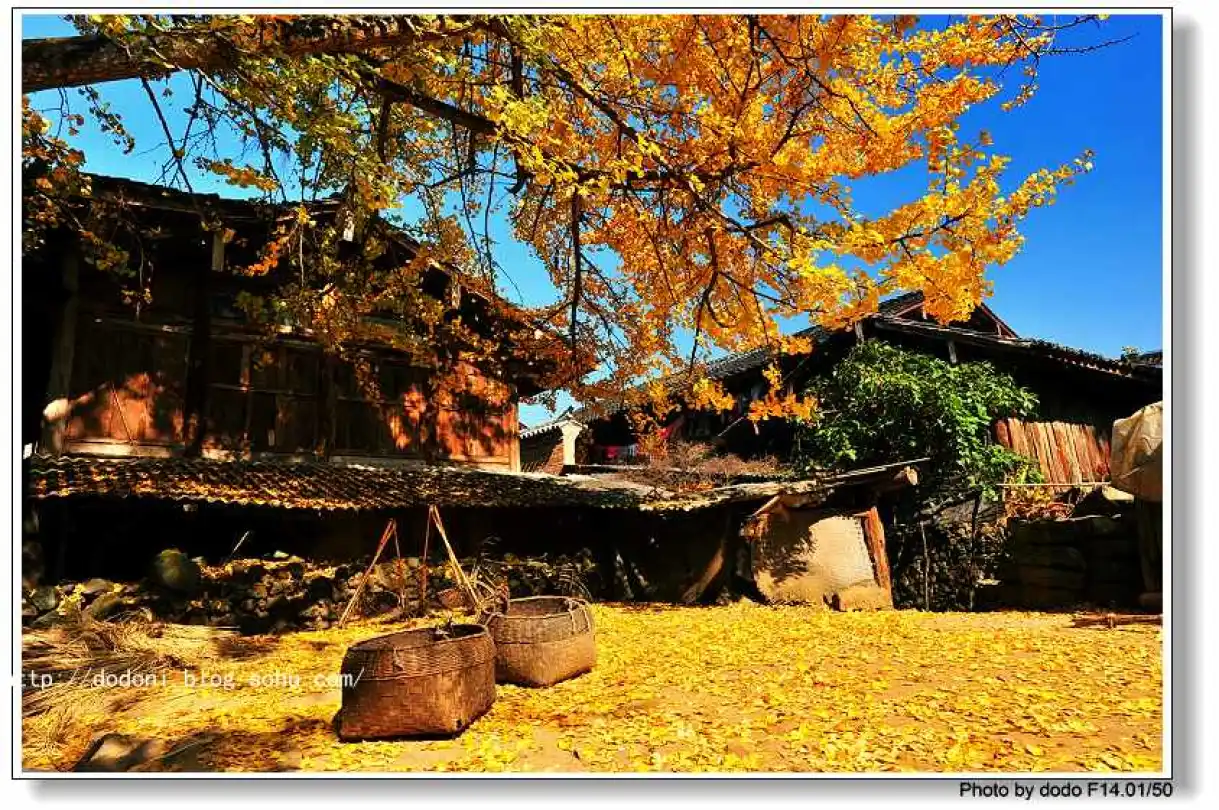
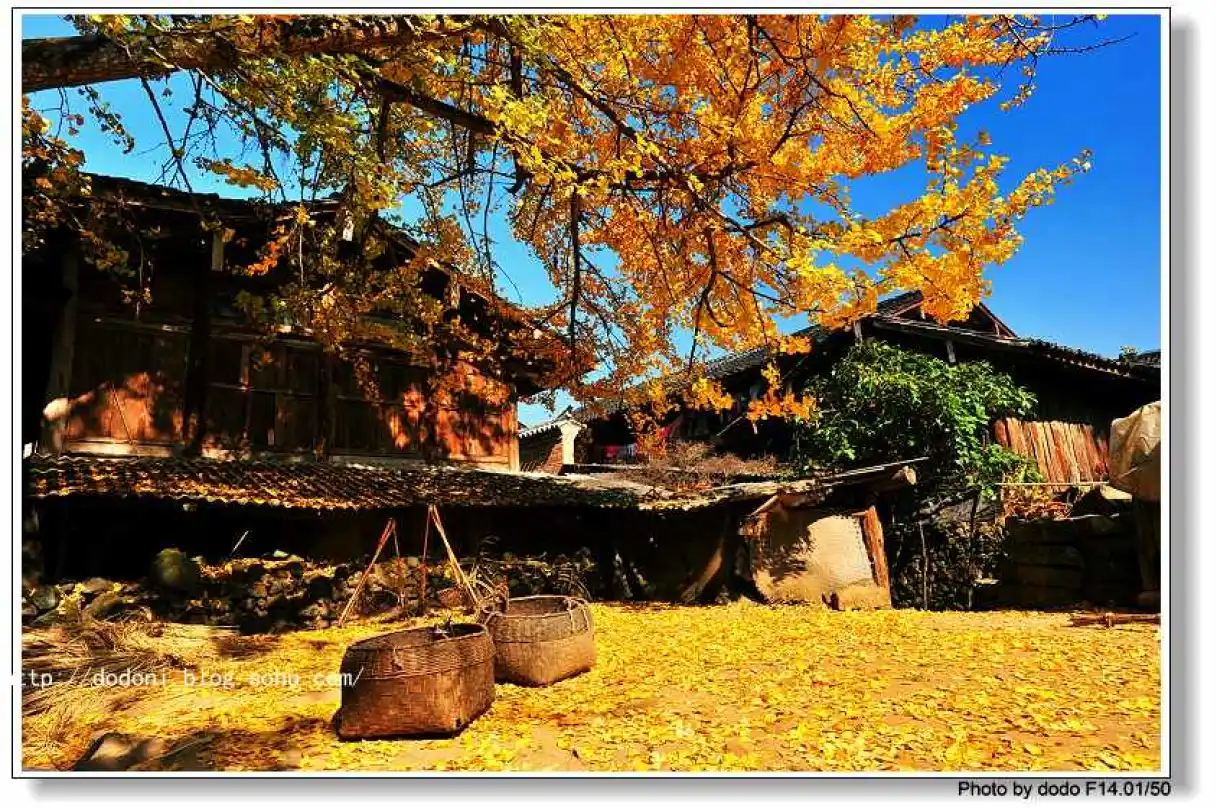
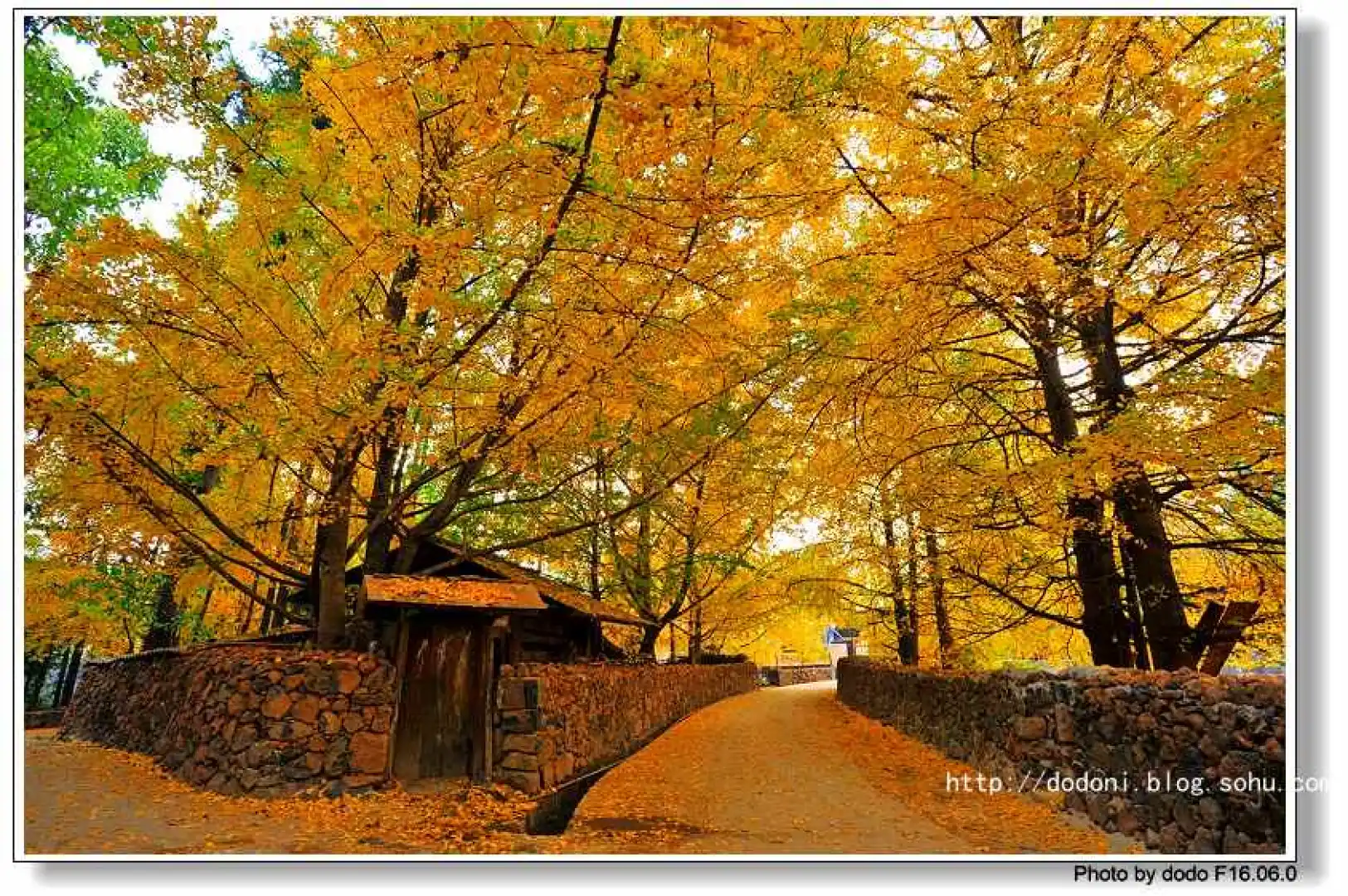
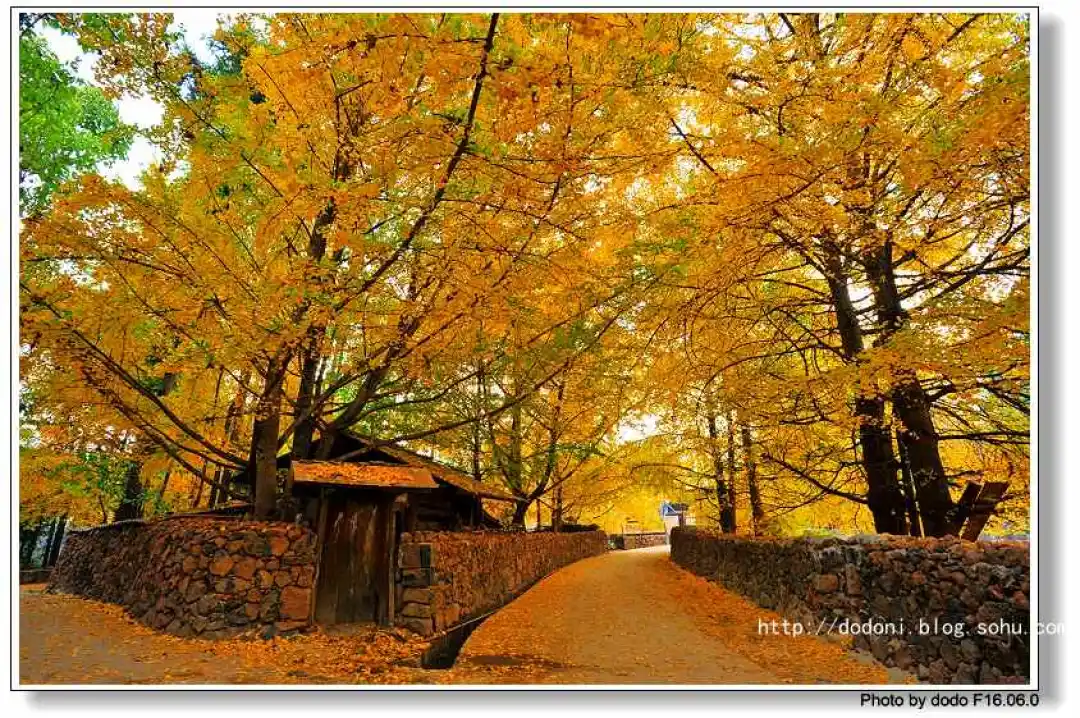
As the van slowly entered the village, the sky just began to lighten. When the first rays of dawn pierced through the mist and spilled onto that ocean of golden yellow, I nearly forgot to breathe.
Jiangdong Village, located in Gudong Town, Tengchong County, Baoshan City, Yunnan Province, sits adjacent to the famous Tengchong National Volcanic Geopark and columnar jointing formations, about 40 kilometers from Tengchong's county seat. This village is known as the "Hometown of Chinese Folk Art," and although I didn't experience much of that folk art atmosphere during my visit, this ginkgo forest alone is enough to make it world-renowned.
The village is home to 820 households and boasts over 2,000 mu (approximately 330 acres) of contiguous ancient ginkgo trees, totaling more than 3,000 specimens. Among them, over 50 trees are more than 500 years old, over 70 are more than 400 years old, about 150 are between 200 and 300 years old, over 600 are more than 30 years old, and 2,100 are more than 20 years old. In addition, there are 1,000 mu (about 165 acres) of young and middle-aged forests, roughly 33,000 trees. Thanks to the unique highland climate, the ginkgo trees here have a longer "viewing period," with the best time to see them running from late October to mid-December.
I had always considered my writing skills decent, but faced with this overwhelming sea of gold, any words felt utterly inadequate. So I'll let my camera do the talking—though there are too many photos to share all at once, so I'll split them into two parts.
The Obsession with Unraked Leaves
The village sanitation workers were far too diligent. We pleaded with them repeatedly to only pick up the trash and leave the fallen leaves untouched. Those golden leaves were the most moving part of this autumn scene. If they were swept away, it would be like erasing the brightest color from a painting.
The "Golden Sanctuary" for One Yuan
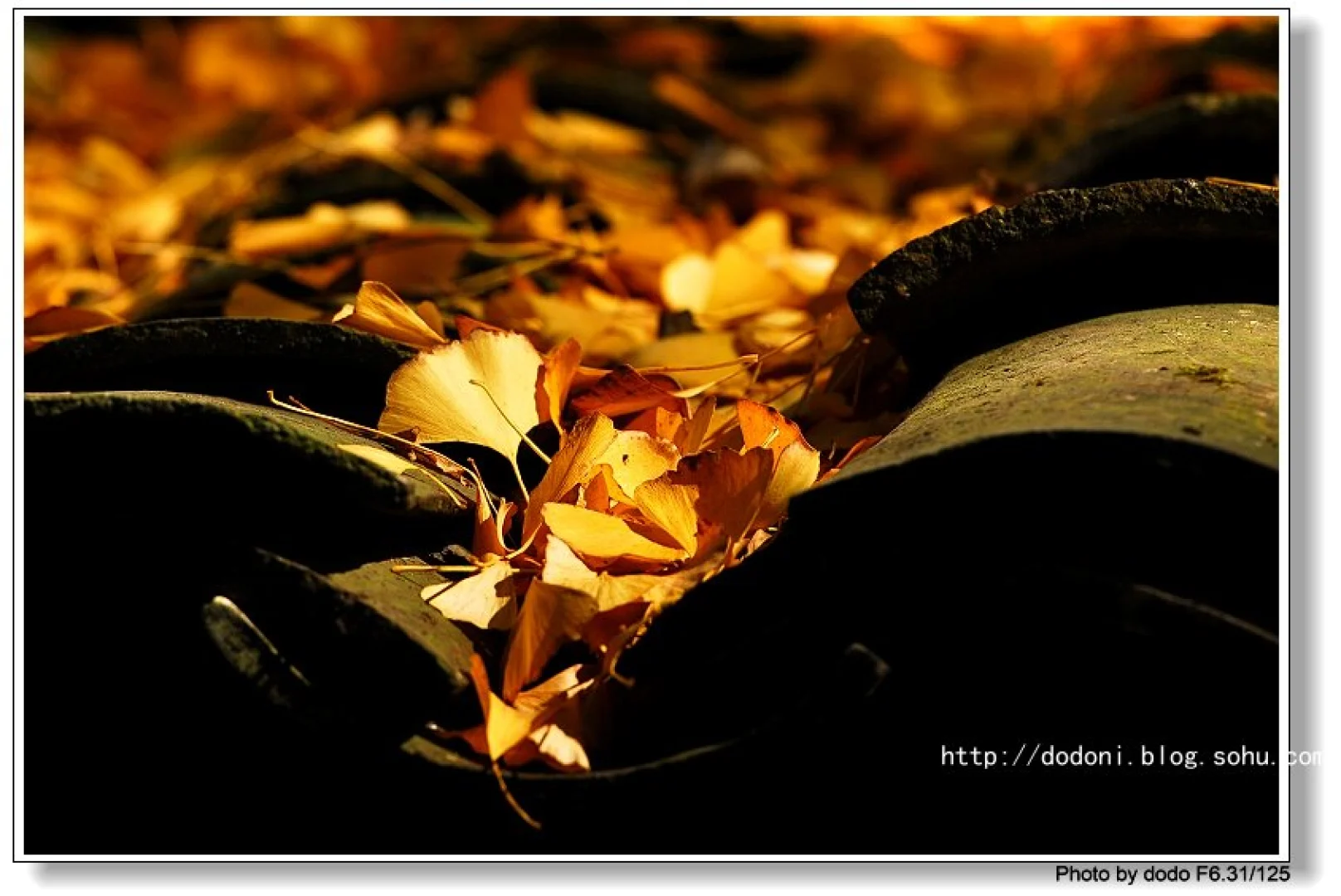
In the village, there was a small garden covered in ginkgo leaves. The owner charged one yuan (about 15 cents) for entry to take photos. At first, it felt a bit commercial, but on second thought, it made perfect sense—the villagers maintained this beautiful spot and kept too many tourists from trampling it. That one yuan was both a token of respect for their labor and a way to protect the scenery.
Sunlight Sprites
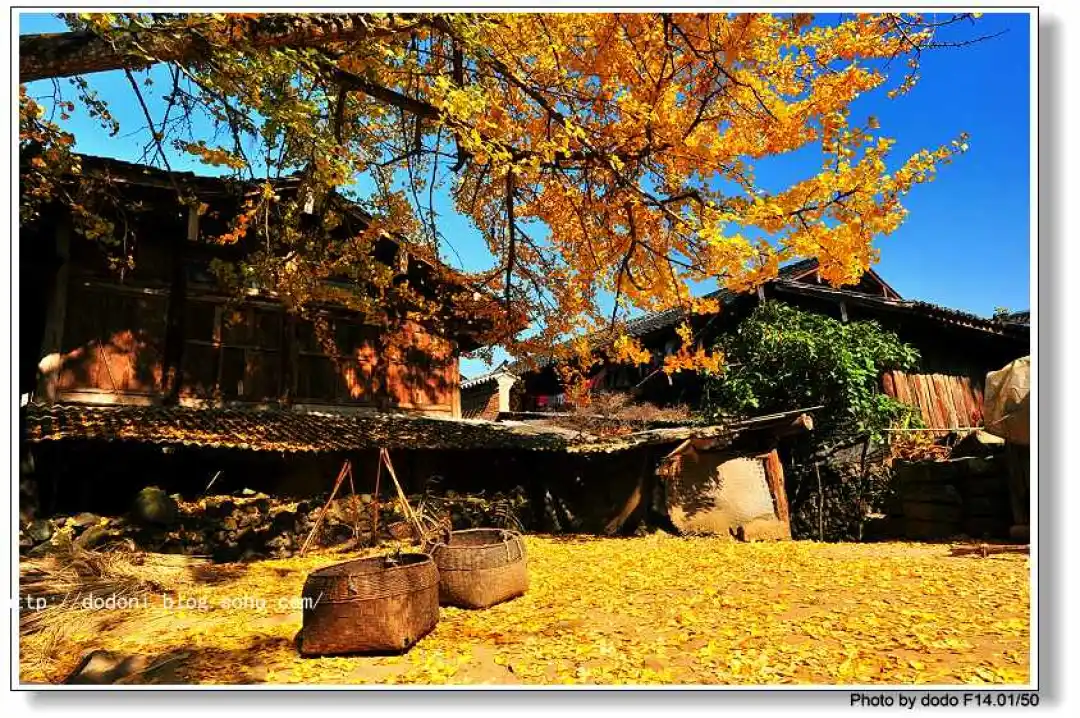
When sunlight filtered through the trees, the ginkgo leaves danced like ethereal butterflies before my eyes. A gentle breeze swept through, and the leaves fluttered down in a cascade, landing on my shoulders, my hair, and my camera lens. In that moment, I felt as though I were standing in a golden rain.
Genuine Hospitality
In the village, I met a simple local family. They warmly invited me to sit down and have a cup of tea. That tea might not have been a rare or expensive variety, but the sincerity and warmth were more unforgettable than any costly brew.
At noon, we ate at a farmhouse restaurant. A full table of delicious dishes cost only 130 yuan. Later, when I realized I didn't have exact change, the owner cheerfully said, "Just make it 100 yuan." That simplicity touched me deeply. I especially recommend the ginkgo-stewed black chicken—this is the local signature dish. In the lower right corner of the table was another delicacy: crispy fried bee pupae from a local species of small bee. Unfortunately, they were sold out by the time I ordered, but I managed to "borrow" a plate from a group of locals at the next table.
After the meal, a group of older women and aunties broke into joyful local dances. Their faces beamed with smiles—a happiness that came from the heart. Perhaps this is the truest charm of Ginkgo Village: not only breathtaking scenery but also genuine human warmth.
Practical Tips
If you, too, want to embark on a golden autumn rendezvous, here are some tips that might help:
- Transportation: You can fly into Tengchong's Hump Airport from various cities. From there, hire a car to Tengchong county seat or Heshun Ancient Town. A minivan to Heshun Ancient Town costs about 50 yuan.
Accommodation: Heshun Ancient Town offers a wide range of lodging options, from 60 to 300 yuan per night, suiting all budgets.
Chartered Tours: From Heshun Ancient Town to Jiangdong Village in Gudong Town, hiring a minivan costs about 240 yuan per day. If you want to start shooting at dawn and return around 6 p.m., as I did, you may need to add a little extra.
Best Viewing Period: Late October to mid-December, when the ginkgo leaves are at their most brilliantly golden.
Things to Keep in Mind: Once you enter the village, respect the labor of the local residents. If you want to enter a private courtyard to take photos, be polite, ask permission, and pay a reasonable fee.
Epilogue: Autumn Colors Wait for No One
As I left Ginkgo Village, the setting sun was painting the sky in warm shades of orange. Xiao Cun's son had fallen asleep in the back seat, a satisfied smile still on his face. I thought to myself that this weekend would surely be an unforgettable memory for him.
And for me, the dream of a golden autumn had finally come true. The regret of Jiuzhaigou had found its compensation here. Tengchong's Ginkgo Village, with its brilliance and simplicity, had drawn a perfect close to this autumn.
Autumn colors wait for no one—beautiful scenery must be seized in time. If you, too, long for that sea of gold, why not take a spontaneous trip this season? Trust me, when you stand beneath those ginkgo trees, watching sunlight filter through the golden leaves, you'll understand—every moment of waiting was worth it.
You should also read:

Take Me to the Distance: Ten Days in Yunnan, a Poetic Journey Through Our Youth
Take Me to the Distance: Ten Days in Yunnan, a Poetic Journey Through Our Youth Prologue: Setting Off, Just to Be Together Some trips are planned for ages, yet always lack that final spark of spontaneity. We were students, with a tight budget but limitless…
Continue reading...
Drunk on Autumn: An Unexpected Surprise in Shangri-La
Drunk on Autumn: An Unexpected Surprise in Shangri-La Preface: When Plans Go Awry Some journeys are destined to go off course before you can truly discover the scenery. As an ordinary office worker who loves photography and travel, I didn't have high expectations for this…
Continue reading...
Let the Knight's Soul Take Flight in Shuanglang
Let the Knight's Soul Take Flight in Shuanglang Prologue: Yunnan, a Journey of the Soul Some places, once you set foot in them, take root in your heart and grow. Yunnan is that kind of place for me. Two years ago, I set foot on…
Continue reading...