Clouds of Dali, Rain of Lijiang: Two Girls' 11-Day Yunnan Adventure
Clouds of Dali, Rain of Lijiang: Two Girls' 11-Day Yunnan Adventure
Prologue: A Spontaneous Journey of Two Free Spirits
They say Yunnan is the ultimate destination for soul-healing travel. When two best friends decided to combine their annual leave, pack their cameras, and follow their wanderlust, an 11-day journey through wind, flowers, snow, and moonlight—through ancient towns, winding alleys, and snow-capped mountains—began. Starting from Nanning, our train cut through mountain ranges as we cycled beneath Dali's clouds, strolled through Lijiang's rain, and gasped for air on the high plateaus of Shangri-La. This isn't just a travel guide—it's a story about friendship, scenery, and growing up.

Itinerary Overview: The 11-Day Rhythm

July 30 Nanning → Kunming → Dali (overnight train)
July 31 Dali Old Town + Caicun Village (stayed at seaside guesthouse in Caicun)
August 1 Caicun → Xizhou → West Coast cycling route (stayed in Xizhou)
August 2 Xizhou → Haishe Park → Shuanglang (stayed in Shuanglang)
August 3 Shuanglang → Lijiang (stayed in Lijiang Old Town)
August 4 Wandering Lijiang Old Town (stayed in Old Town)
August 5 Lashihai day trip (stayed in Old Town)
August 6-7 Shangri-La two-day trip (stayed in Shangri-La)
August 8 Free time in Lijiang (stayed in Old Town)
August 9 Lijiang → Kunming → Nanning (return trip)
Total cost: Approximately 3,000 RMB per person (transport 500 + accommodation 500 + food and activities 2,000)
Before You Go: Hard-Earned Lessons and Practical Tips
Luggage: Backpack Over Suitcase
Lijiang Old Town's streets are paved with centuries-old stone slabs—uneven, slippery in the rainy season. We watched a girl struggle with her suitcase on Lion Hill, wheels stuck in the cracks, her face a picture of misery. A backpack is essential—especially if you're staying on the hillside, where staircases will make you question your life choices.
Accommodation: Don't "Wing It" During Peak Season
July and August are peak season in Yunnan. Good guesthouses get snapped up a week in advance. We used Qunar (a Chinese travel booking platform), and every booking came with cashback. The funny thing? For the same hotel, my account got 50 RMB back, while my friend's got 120 RMB. Comparing prices across multiple accounts is a smart move.
Weather: Four Seasons in One Day
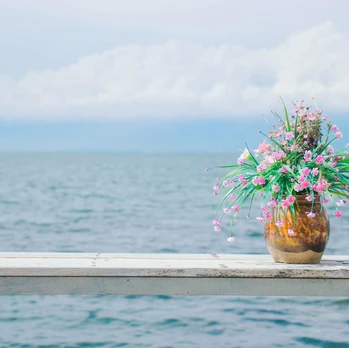
During the rainy season, Yunnan serves up blazing sun in the morning, torrential downpours in the afternoon, and bone-chilling cold by evening. Must-pack items: umbrella, long pants, light jacket. Locally sold shawls (10-50 RMB) are lifesavers—they work as sun protection, warmth, and photo props all in one. I'm a flip-flop person, so rain doesn't bother me. If you're wearing sneakers, bring shoe covers.
Chapter One: Dali—Poetic Living Amid Wind, Flowers, Snow, and Moonlight
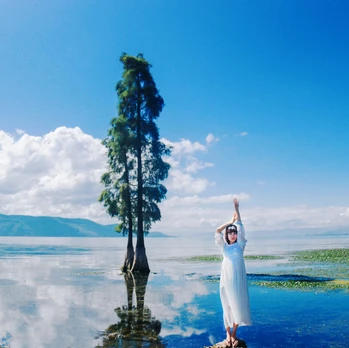
This was my sixth trip to Yunnan, but Dali remains my favorite. The stone streets of the old town, the cool breeze along the west coast cycling route, Cangshan's clouds, Erhai's sunrises and sunsets, the sweet aroma of rose-grilled milk fans (rosu), the soft chewiness of Xizhou rice noodles (ersi), rooms with lake views by Erhai, and the old ladies braiding colorful hair on Renmin Road—these fragments make up all the reasons I love Dali.
Caicun Village: The Closest Erhai Settlement to the Old Town
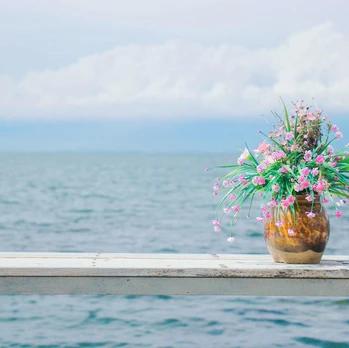
July 31, overcast with occasional drizzle. Our train dropped us at Dali Xiaguan Station, where we took bus 8 to the old town's east gate, then bus 2 to Caicun Pier. We stayed at 2 Hai Seaview Guesthouse (108 RMB for a standard room), whose slogan was bold: "I'm Leaning on Erhai!" The rooftop offered a view of the lake. Even though the sky wasn't blue, the purity of it all was deeply calming.
In the afternoon, we explored the old town. My friend's first move was to get her hair braided with colorful threads—10 RMB for three braids in Dali, compared to 10 RMB for eight in Lijiang (double the price). Then came my absolute favorite: rose-grilled milk fan (meigui kao rusuan) at 5 RMB each. The tangy milk fan wrapped in rose jam, grilled until fragrant and slightly charred—you can't find this anywhere outside Dali.
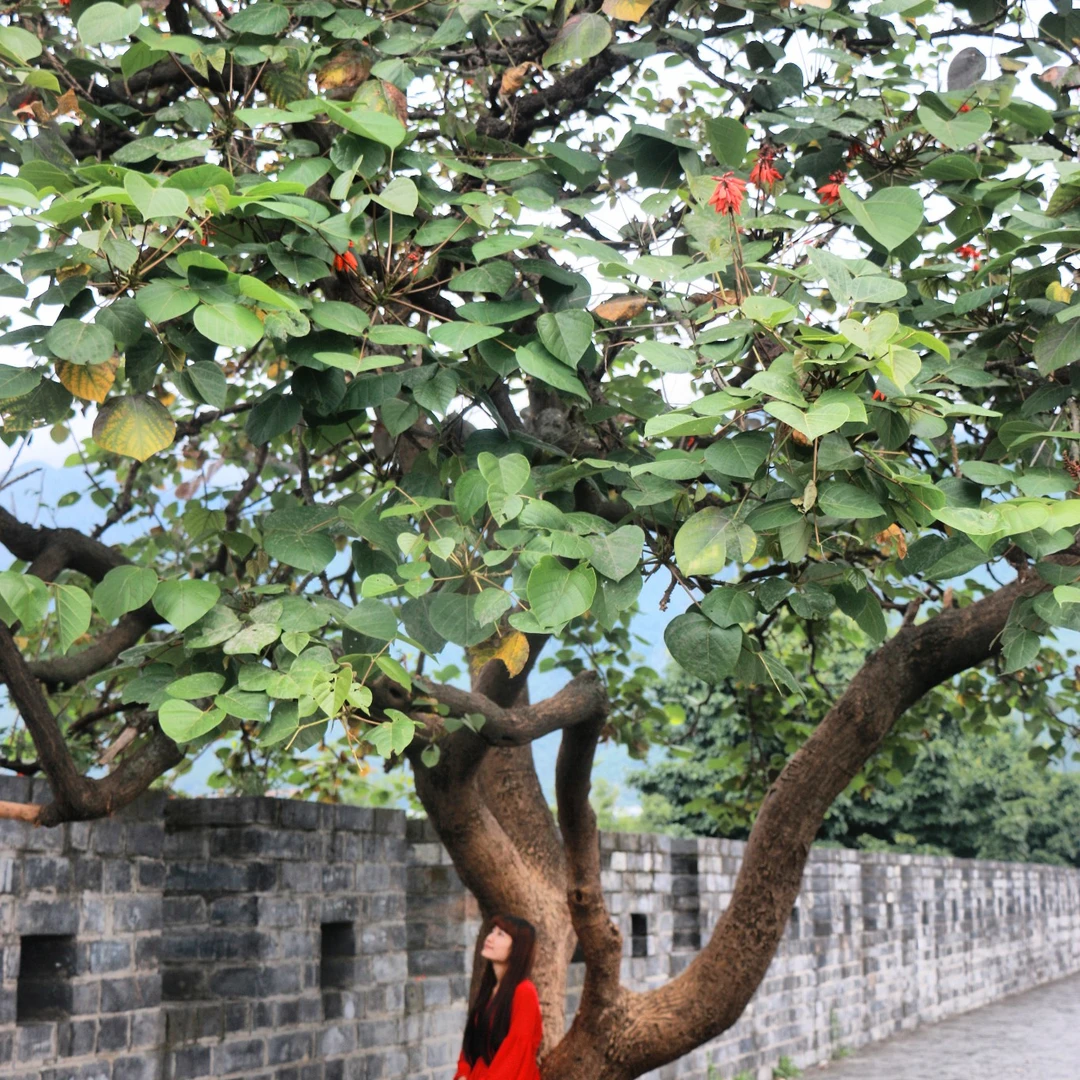
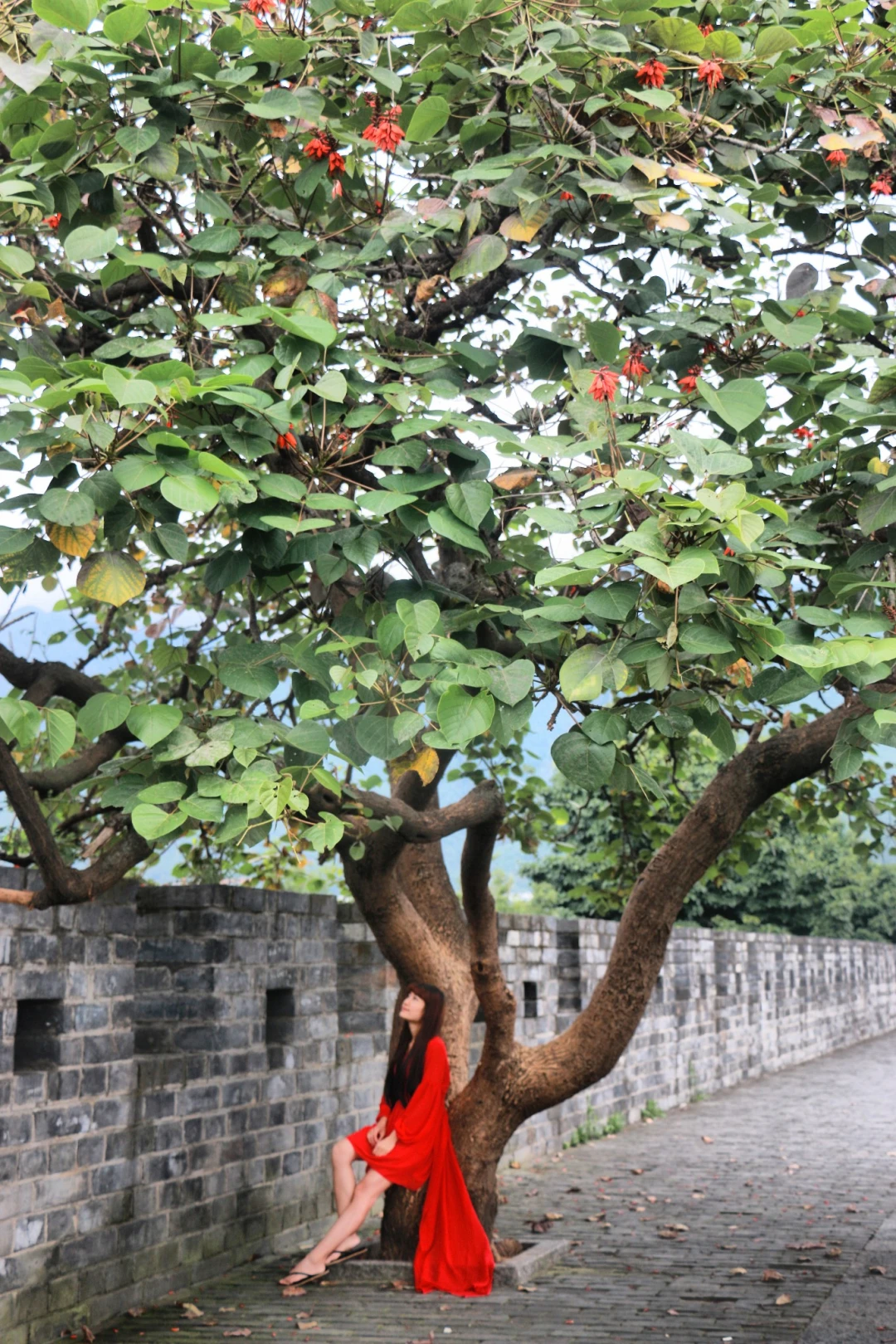
At the central Wuhua Tower, peak season meant a sea of heads as far as the eye could see. When it suddenly started raining, we got trapped under the eaves and turned it into a selfie session. On the South Gate wall, there's a so-called "internet-famous tree" that we hugged for nearly an hour—a lone girl leaning against the ancient wall, gazing at Cangshan, imagining the sunset over the ancient Nanzhao Kingdom in the rain. By 8 PM, the sky finally darkened into an impossibly deep blue. The wandering street musicians on Renmin Road were gone, replaced by the noise of bars.
The West Coast Cycling Route: A Poem Ridden Through Wind and Rain
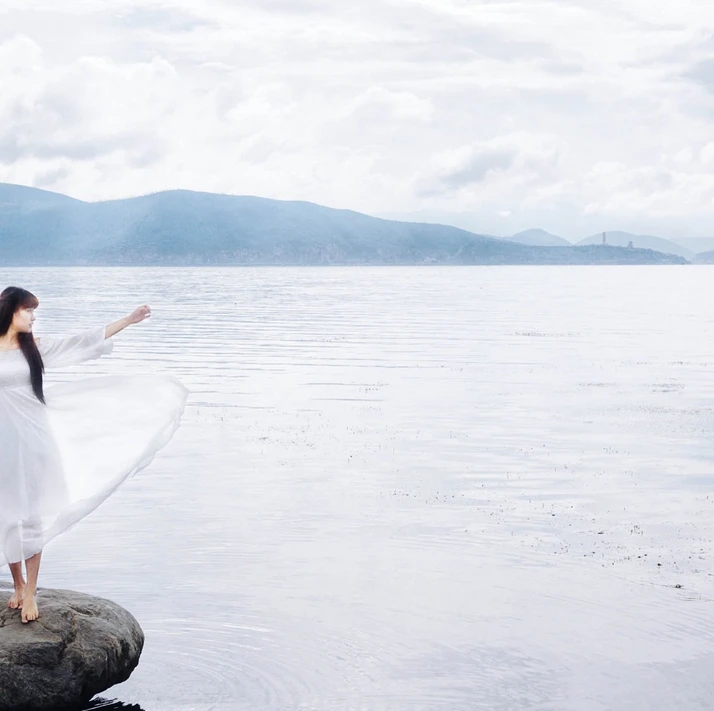
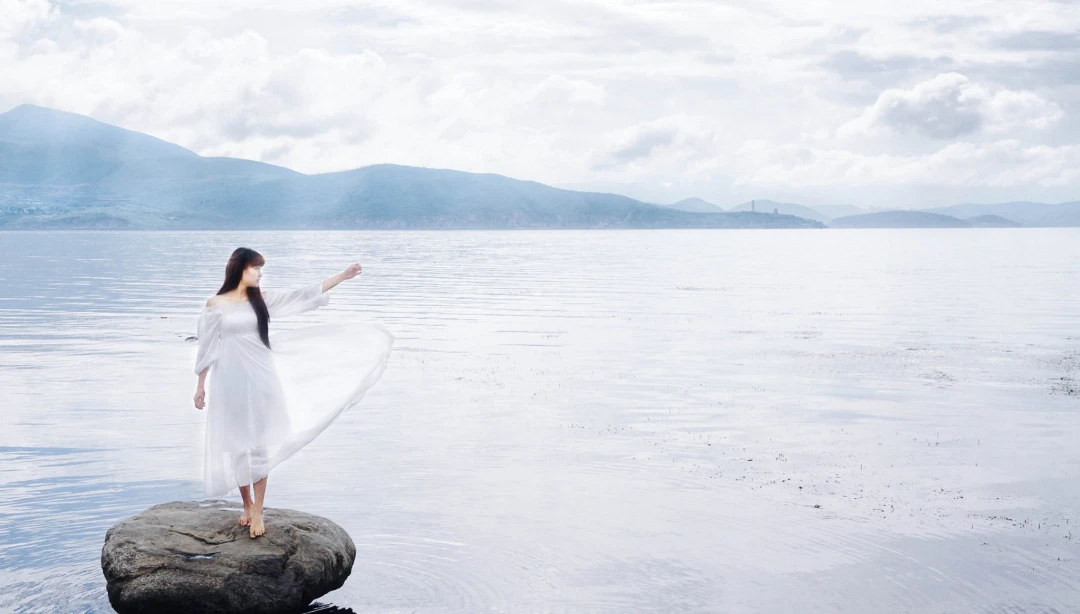
August 1, still overcast. Right outside our guesthouse was Caicun Wetland Park. Those few rocks in Erhai are my must-visit spot every time—they change shape with the seasonal water levels, like nature's ink wash painting. This year, all the little boats on Erhai were banned, which took away some of the poetry but added a layer of tranquility.
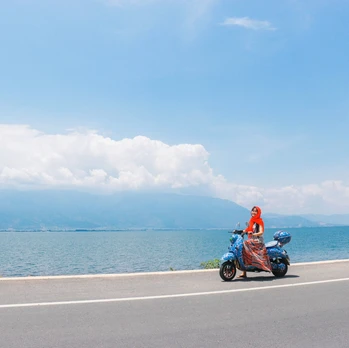
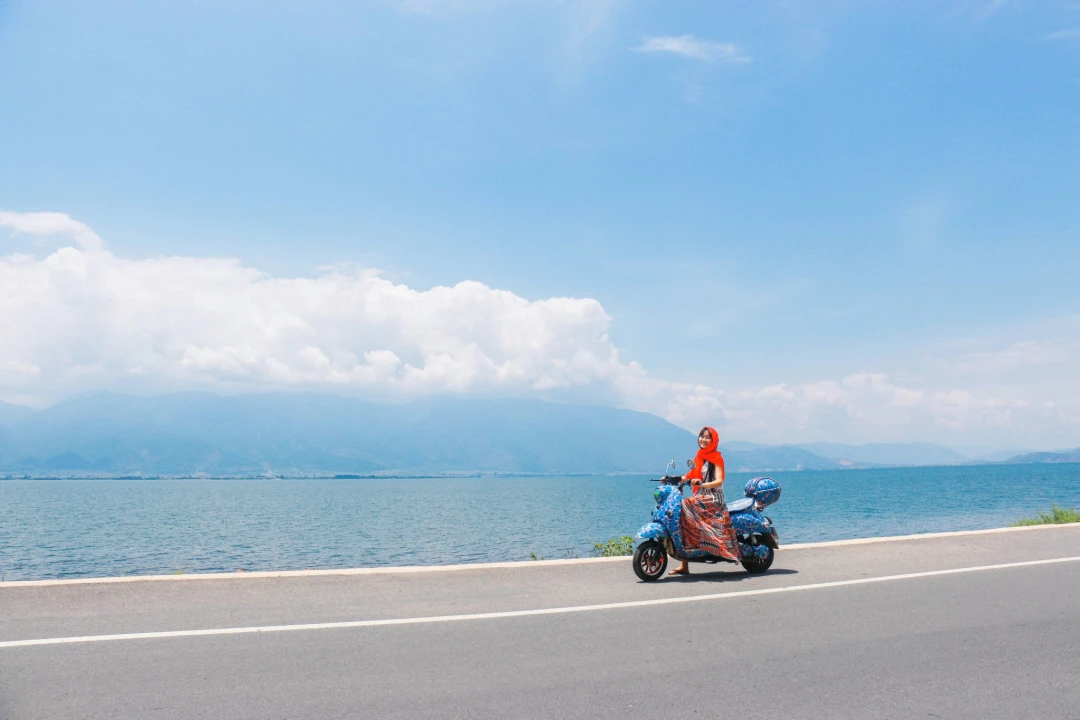
At noon, we moved to Xizhou's Water Moon Holiday Guesthouse (320 RMB for a king bed room). The owner was an art collector, and the whole place felt like a gallery. In the afternoon, we rented a small electric scooter—my friend drove while I took photos—and set off on our lakeside ride. Erhai isn't a sea, but Dali's best scenery is all along its shores. The west coast route stretches 125 kilometers; we only did the 40-kilometer round trip from Xizhou to Caicun.
Dali's weather changes faster than my mood. Even without blue skies, Erhai under a blanket of dark clouds had its own charm. We passed endless green rice paddies, and the song "I Will Remember You" by Lijiang Xiaoqian played in my head: "By Cangshan and Erhai, you're by my side, this summer is different from before..." In Taoyuan Village, we found a quiet corner called "Langqiao" (the Corridor Bridge), only to learn later that the best photo angle was from underneath.
At 6 PM, near Caicun, we stumbled upon a stunning surprise—a sea of cosmos flowers, sunflowers, and lavender. August in Dali is the season of flower fields. Though we missed the Cannes-style town I'd been dreaming of, regrets are part of travel's meaning. That evening, we had a hotpot with Nuodeng ham in Caicun and charged the scooter. At 10 PM, we rode back to Xizhou through the cold drizzle on a dark, slippery road, nearly ending up in Erhai—thankfully, my friend was a seasoned driver from Nanning, the electric scooter capital of China.
Xizhou and Haishe Park: The Lazy Charm of an Ancient Town
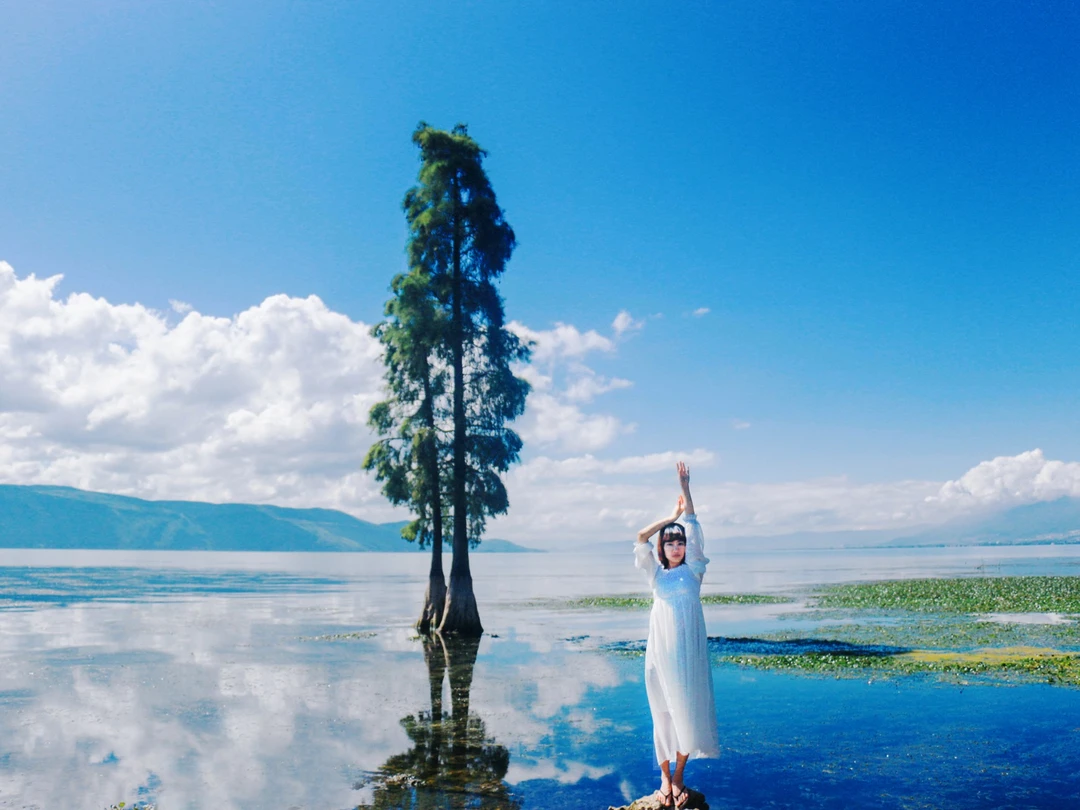
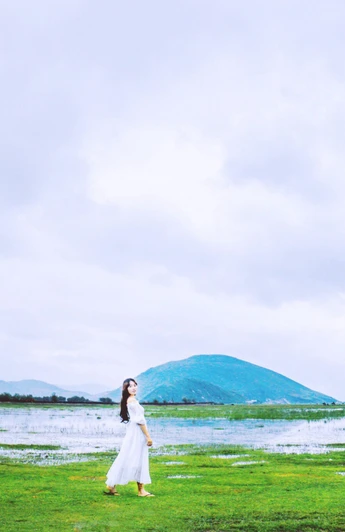
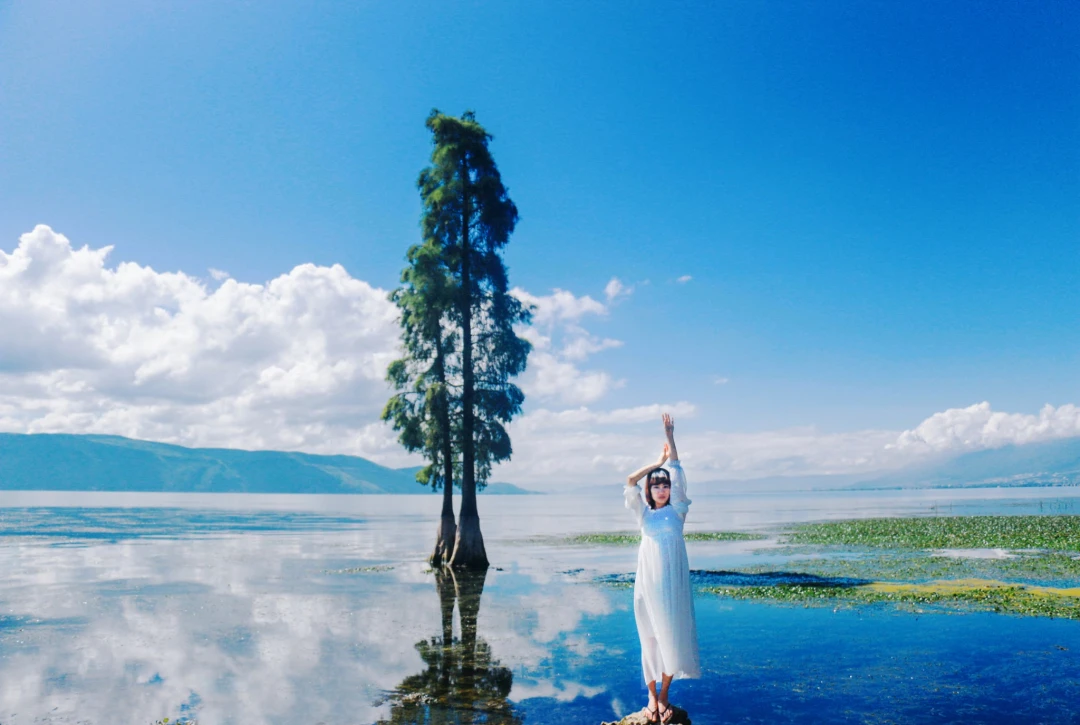
August 2—finally sunny! The sky was so blue it was worth getting sunburned. In front of our guesthouse was a wetland park, quiet and uncrowded. One lake, two trees, one world—the trees along Erhai's shore looked like natural art, more like a "couple tree" than the famous one at Haishe Park.
We took a rickshaw to Haishe Wetland Park, which, true to its name, is Erhai's "tongue"—surrounded by water on both sides. Dead trees and stumps submerged in the water reminded me of the poplar forests in Ejina Banner. The water was like a mirror, reflecting the blue sky and white clouds in perfect harmony. A Y-shaped dead tree became my personal photo spot.
In Yunnan, flatbread is called "baba" (a local savory pancake). Xizhou's version is famous, but it didn't wow me. What I loved was the thick, chewy erkuai noodles—made from pressed cooked rice, sticky and springy, served with tangy pickled vegetables. We ate five bowls of the side dishes.
Shuanglang: The Truth Behind the Hype
In the afternoon, we headed to Shuanglang. There used to be a sentimental saying: "Go to Shuanglang, and you'll discover what life really is!" Back in 2010, it was a quiet little village. By 2013, seaside rooms had skyrocketed to over 1,000 RMB, requiring bookings months in advance. Now, Shuanglang's first impression? Traffic jam! Two kilometers from the old town, we were stuck for half an hour.
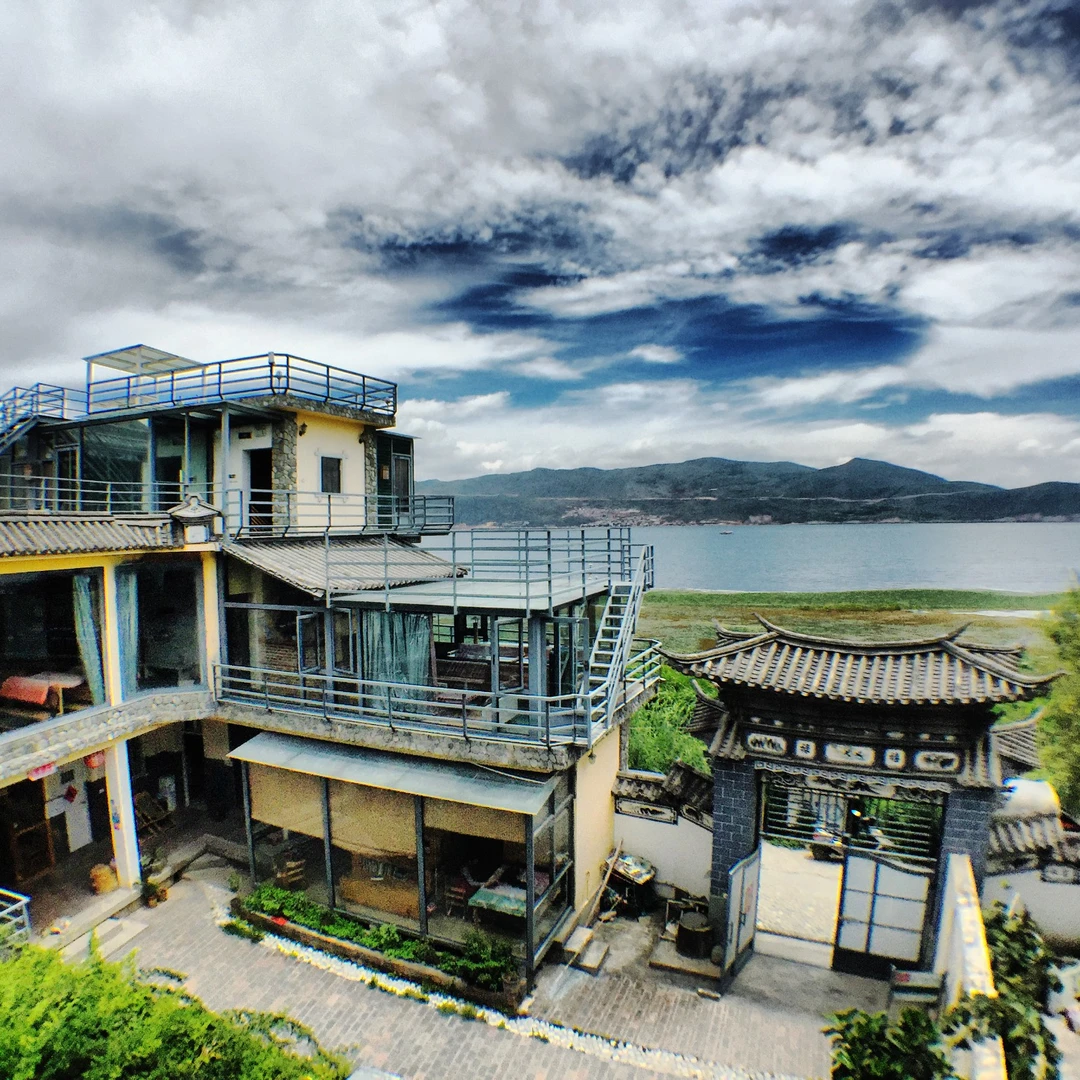
We stayed at Guanlu Guesthouse in Dajianpang Village (76 RMB for a king bed room). Surprisingly, the courtyard and room were both nice. That evening, we ate barbecue at a night market stall by the shore, feeling the lake breeze as the lights across the water twinkled—Shuanglang's night view was unreal. But the next morning, from the rooftop, all we saw were half-finished buildings around us. Shuanglang had become one giant construction site.
The famous Shuanglang landmark—a white bench—had a constant queue of people waiting to take photos from dawn till dusk. We gave up and instead found a knockoff "internet-famous" photo spot that charged 2 RMB per photo. We were thrilled, like we'd found a treasure. The 10-kilometer stretch from Shuanglang to Wase is considered one of China's most beautiful cycling routes. We rented a scooter and rode right along the shore, with no buildings blocking the view—just Erhai. We passed a sea of water hyacinths—an invasive species, but one that had bloomed into its own strange beauty. My friend got sunburned, so don't skip the sunscreen!
Chapter Two: Lijiang—Rain and Sunshine in the City of Romance
At 4:30 PM, we took a bus from Shuanglang to Lijiang (70 RMB, two and a half hours). The bus got a flat tire, and Lijiang greeted us with a torrential downpour. The guesthouse staff came down the hill to pick us up, and we didn't arrive until 8:30 PM. People say Dali is for seclusion, Lijiang for forgetting—but in peak season August, Lijiang felt more like "welcome to the sea of people."
Impressions of the Old Town: From Noise to Peace

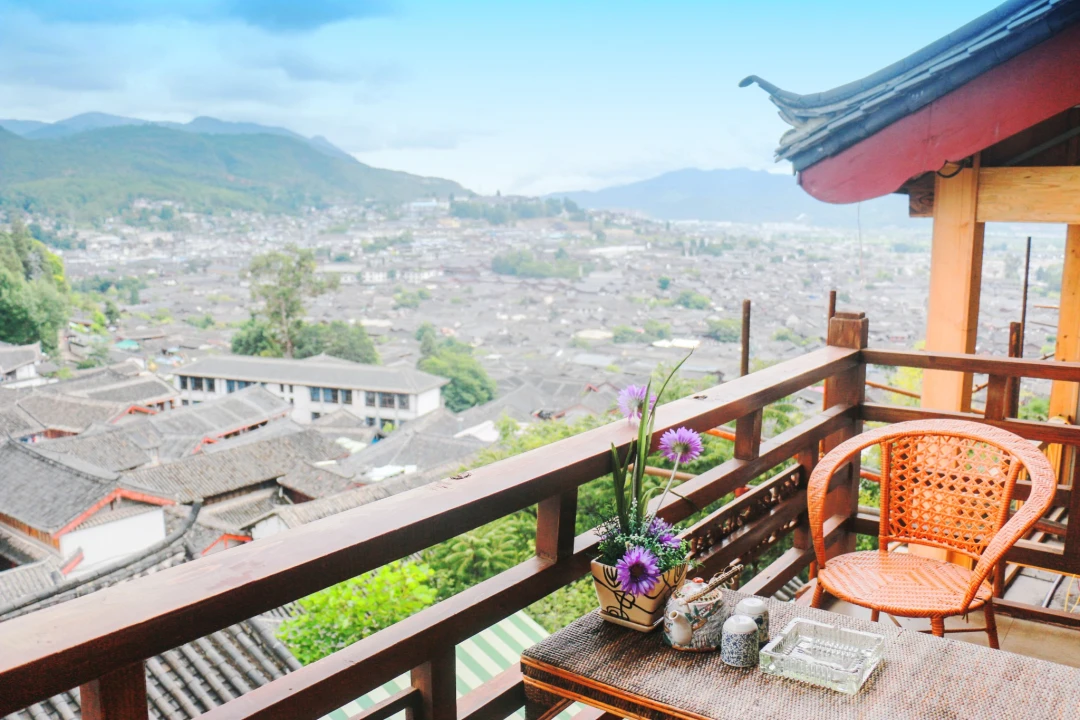
Lijiang Old Town consists of three ancient towns: Dayan, Shuhe, and Baisha. When people say "Lijiang Old Town," they usually mean Dayan, the only historic Chinese town without city walls. The Big Waterwheel is the iconic landmark, surrounded by colorful Dongba prayer wind chimes. Sifang Street is the busiest spot, but I prefer the old town at 7 AM—wet, cobblestone streets, misty mountains in the distance, no commercialization, just pure tranquility.
From Lion Hill's observation deck, you can see the entire old town nestled among mountains. One song, one glass of juice, one lazy afternoon—that's Lijiang's rhythm. At night, the old town comes alive. The bar street's speakers blare music, but the quieter folk music bars with genuinely good singers are surprisingly empty. We found one, and the highlight was the handsome lead singer—beer was 70 RMB a bottle.
Guesthouse Diaries: A New Home Every Day
We spent five days in Lijiang, switching guesthouses every day, all on Lion Hill:
- Three Bears View Guesthouse (95 RMB): Five-star value, with a newborn kitten at the entrance
- Rose Pavilion View Guesthouse (36 RMB per bed in a four-bed dorm): The lobby was a café with two adorable huskies, but the bathroom floor sprayed water everywhere
- Fate Encounters Guesthouse Sifang Street Branch (89 RMB): They were overbooked and upgraded us for free to a 260 RMB room with a viewing deck and a giant hammock
- Shaofu Shishan Renjia Guesthouse (238 RMB, but actually paid 120 RMB due to a platform issue): Convenient location, small room
- Tile Blue Guesthouse (109 RMB): The new owner didn't want to raise prices; the tatami-style room was very comfortable
Food Map: The Joy of Eating Our Way Through
Naxi rice cake (naxi migao, 5 RMB per serving), chicken bean jelly (jidou liangfen), cured pork rib and chicken hotpot (120 RMB), Two Cats Hotpot (with a viewing deck), "water hyacinth" vegetable (shuixing yanghua, a water plant that tastes pretty good), Lijiang steam pot chicken (qiguo ji), fried glutinous rice blood sausage (zhami xuechang), Yunnan cross-bridge rice noodles (guoqiao mixian), and Ah Hu's Restaurant near Sifang Street (70 RMB for a feast)—every bite was pure Yunnan.
Chapter Three: The Truth About Group Tours—Don't Be Cheap
Lashihai Day Trip: The Cost of 60 RMB
Lijiang Old Town is lined with travel agencies, their blackboards advertising jaw-droppingly low prices: Lashihai day trip for 60 RMB, Shangri-La two-day trip for 280 RMB... We caved and booked the Lashihai trip. Big mistake. Never sign up for ultra-cheap tours! You'll rush through attractions and spend forever in souvenir shops.
We boarded the bus at 9 AM and arrived at the horse ranch an hour later. It was pouring rain, the roads were muddy, and the horse ride lasted only about 30 minutes. The mountaintop observation deck was completely fogged in—we couldn't see a thing. Lunch was a meager "horse caravan meal," followed by a 20-RMB horse-drawn carriage ride to Lashihai Lake. Eight people crammed into one carriage; the horse was exhausted and barely moving, but the driver kept whipping it. It was heartbreaking. Lashihai itself was tiny, and the boat ride lasted just 15 minutes. The most shocking sight was white trash everywhere—shoe covers, plastic bags—left behind by tourists.
Shangri-La Two-Day Trip: Exhaustion at High Altitude
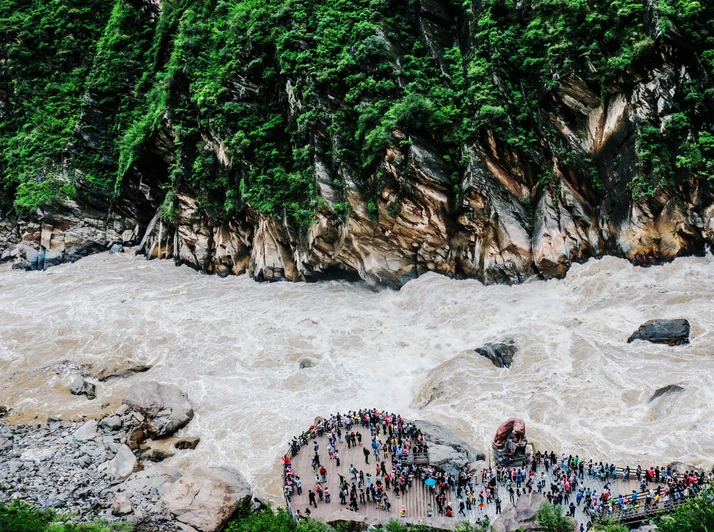
The 240-RMB Shangri-La trip included the First Bend of the Yangtze River, Tiger Leaping Gorge, Moonlight Ancient Town, and Napahai Lake. We gathered at 6:30 AM and drove an hour to the First Bend—shrouded in clouds, we couldn't even see the famous sharp turn. Tiger Leaping Gorge is one of the world's three great canyons, with the Jinsha River cutting through it, but our guide gave us only one hour. Over a thousand steps down and back up, with rushed photo ops—it felt like a race.
The "Tibetan home visit" was really a silver jewelry sales pitch. Dinner was part of the home visit, but the free food was a miserly portion of baba (flatbread) and butter tea. If you wanted meat, you had to pay extra (50 RMB per plate). The included accommodation was terrible—we kept bothering the owner to change sheets and replace the kettle. The next day, we visited Dukezong Moonlight Ancient Town, home to the world's largest prayer wheel. But after the fire that destroyed much of the town, we couldn't even see the ruins—travel while you can; beautiful places don't wait.
Epilogue: The Meaning of Travel
Eleven days, from Nanning to Dali, Lijiang, and Shangri-La, then back to Nanning. We experienced Dali's clouds, Lijiang's rain, and Shangri-La's altitude sickness. We also endured the pitfalls of cheap tours, the surprises of guesthouses, and the freedom of cycling. We spent 3,000 RMB and gained a collection of stories and photos.
The meaning of travel isn't about how many places you visit—it's about those unexpected moments: that rock by Erhai, the sudden flower field on the west coast cycling route, Lijiang's wet cobblestones at dawn, and the colorful prayer flags of Shangri-La fluttering in the wind. And above all, braiding hair with your best friend, eating grilled milk fans, cycling in the rain, and watching the sunrise from a guesthouse rooftop—these moments are the true treasures of travel.
Finally, three tips for anyone planning a trip to Yunnan:
1. Book accommodation early in peak season—don't believe in "just winging it"
2. Use a backpack, not a suitcase—the old town streets will break you
3. Never book ultra-cheap tours—independent travel is the only way to experience Yunnan properly
Dali's clouds are still drifting, Lijiang's rain is still falling, and Shangri-La's prayer flags are still chanting in the wind. So, are you ready to set off?
You should also read:
Escaping Nanning, Falling Under Lijiang's Spell: Our Four-Person, Ten-Day Yunnan Dream
Escaping Nanning, Falling Under Lijiang's Spell: Our Four-Person, Ten-Day Yunnan Dream Before We Set Off: No Pain, No Obsession Have you ever had that impulse—suddenly tired of the office fluorescent lights, the crush of the subway, the endless parade of identical takeout boxes, and just…
Continue reading...
Solo in Yunnan: A Wanderer’s Guide to the Land of Eternal Spring
Solo in Yunnan: A Wanderer’s Guide to the Land of Eternal Spring There’s something magical about traveling alone. No compromises, no schedules to keep, no one to please but yourself. I’ve been on the road for nearly three months now, and not once have I…
Continue reading...
God’s Abandoned Palette: A Self-Drive Journey Through Yunnan’s Dongchuan Red Land
God’s Abandoned Palette: A Self-Drive Journey Through Yunnan’s Dongchuan Red Land Travel has never been about reaching some distant geographic coordinate. It’s about encountering, along the way, the version of yourself buried beneath the rubble of daily routine. During this May Day holiday, I finally…
Continue reading...