Clouds Over the South: Twin Cities of Dali and Lijiang, with an Unexpected Gift from Lugu Lake
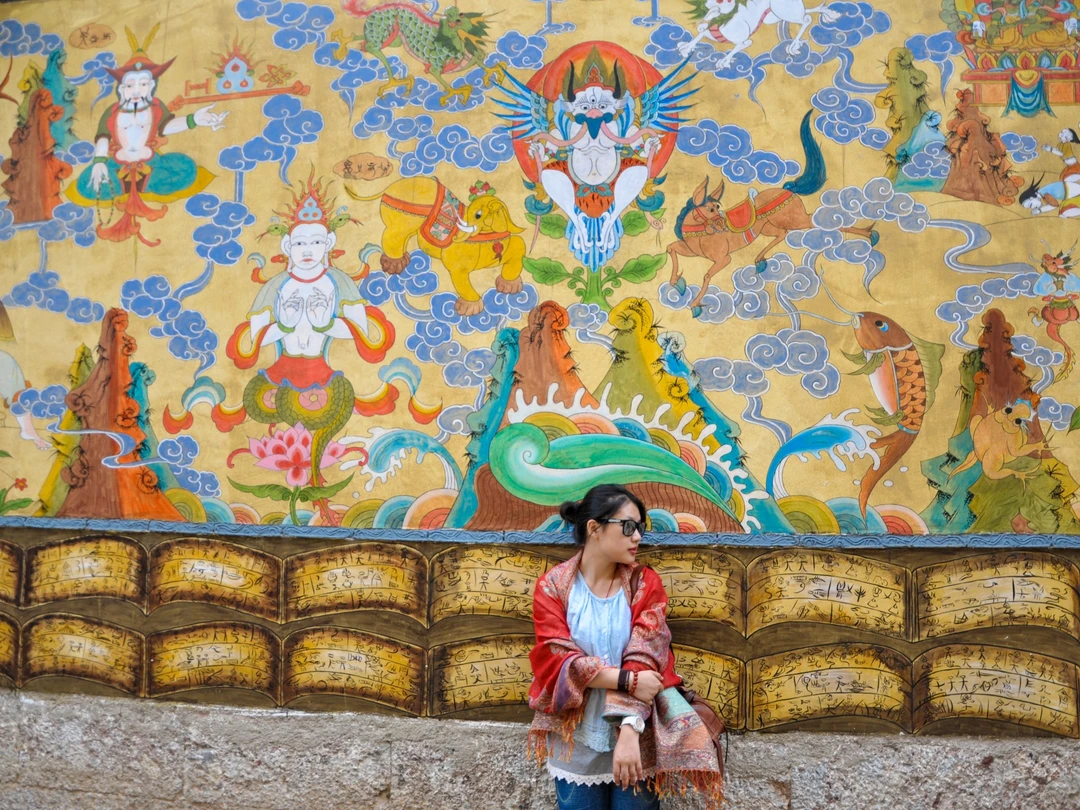
Clouds Over the South: Twin Cities of Dali and Lijiang, with an Unexpected Gift from Lugu Lake
Some places, once visited, take root in your heart. It's been over a year since that Yunnan trip, but whenever I flip through the few remaining photos, memories come flooding back like a tide. That was the first time I truly picked up a camera, clumsily capturing the light and shadow of the journey—and it was also the beginning of my three visits to Yunnan. You might ask: why write about it now, so long after? The answer is simple—some journeys aren't meant to show off. They're meant to remind you of who you once were.
Why Yunnan?
Dickens began A Tale of Two Cities with: "It was the best of times, it was the worst of times." The same rings true for travel. When we have life, we have everything; but too often we lose life, grasping only at its broken fragments. For me, Yunnan is exactly that kind of place—it let me meet my truest self at the best age.
In July 2015, my partner and I set out from Chongqing, spending nine days traveling through Dali, Lijiang, and Lugu Lake. I had just started photography back then—I didn't know what RAW format was, only shooting in JPEG. Out of over 1,600 photos, fewer than 200 survived. But those "imperfect" images became the most precious fragments of memory.
Itinerary at a Glance

- Day 1: Chongqing → Dali → Caicun Village, exploring the old town and Erhai Lake
- Day 2: Caicun → Shuanglang, a full-day tour around Erhai Lake
- Day 3: Dali → Lijiang, strolling through Dayan Old Town
- Day 4: Lijiang → Lugu Lake
- Day 5: Circumnavigating Lugu Lake
- Day 6: Lugu Lake → Lijiang, staying overnight in Shuhe Ancient Town
- Day 7-8: Shuhe Ancient Town and surrounding areas
- Day 9: Lijiang → Chongqing
Total cost: Approximately 10,000 RMB (for two people), including flights, accommodation, meals, transportation, and miscellaneous expenses.
Dali: Where Wind, Flowers, Snow, and Moon Begin

From Chongqing to Dali: A Dawn Departure
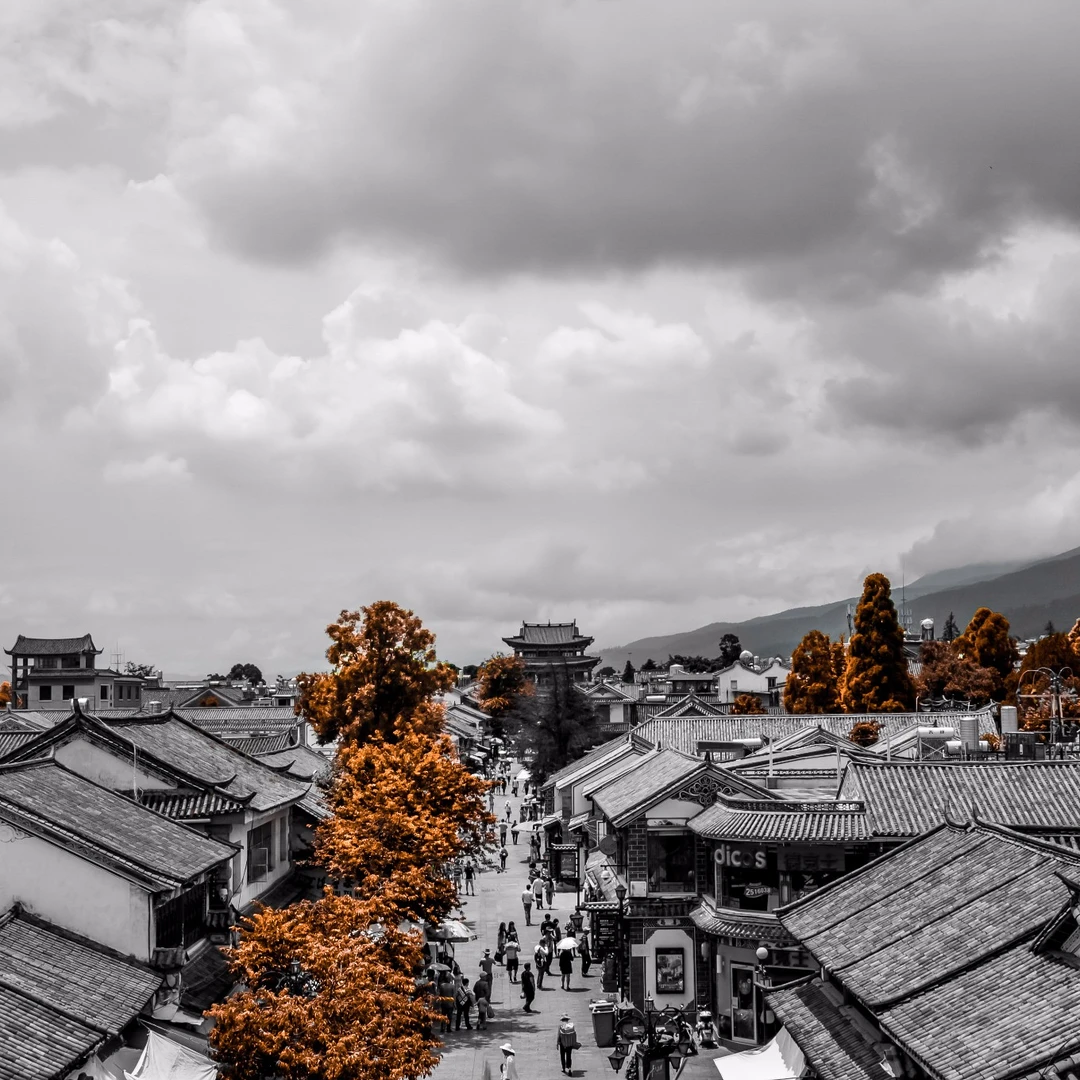
There are only two direct flights from Chongqing to Dali each day, both in the early morning. We dragged ourselves out of bed at 4 a.m., bleary-eyed, and made it to the airport. An hour and a half later, the plane touched down at the foot of Cangshan Mountain. A taxi from the airport to downtown Dali cost 100 RMB; to Caicun Village, 130 RMB—the driver didn't use the meter, but he was a fellow Chongqing native. He'd stayed here after his military service, married a Bai woman, and along the way, he told us all about the "wind of Xiaguan, flowers of Shangguan, snow of Cangshan, and moon of Erhai"—the four wonders of Dali.
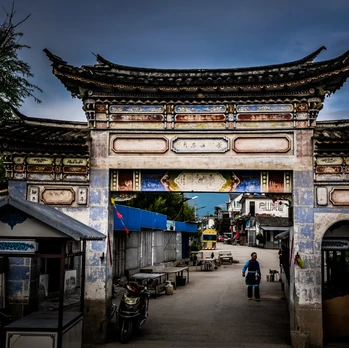
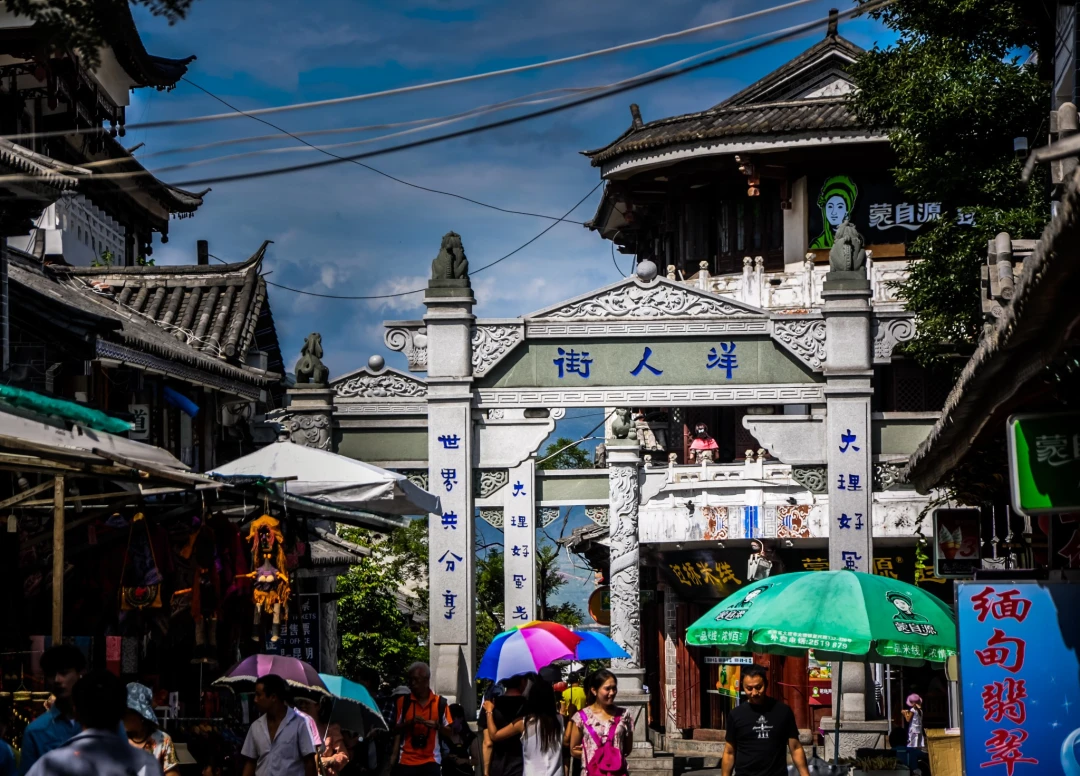
We stayed at the Huafang Inn in Caicun Village. Opening the window, we were greeted by a sky full of stars. After dropping our bags, we headed straight for Dali Old Town. Bus No. 2 from Caicun took us to the North Gate in 20 minutes. The main road of the old town runs north-south, with Yangren Street (Foreigner Street) and Wuhua Tower in the middle.
Strolling Through the Old Town: Life Around Every Corner
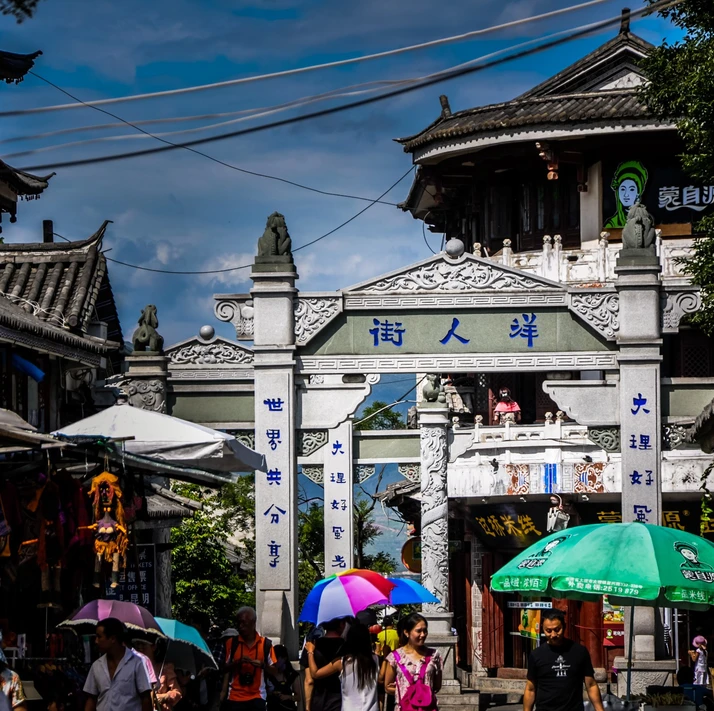
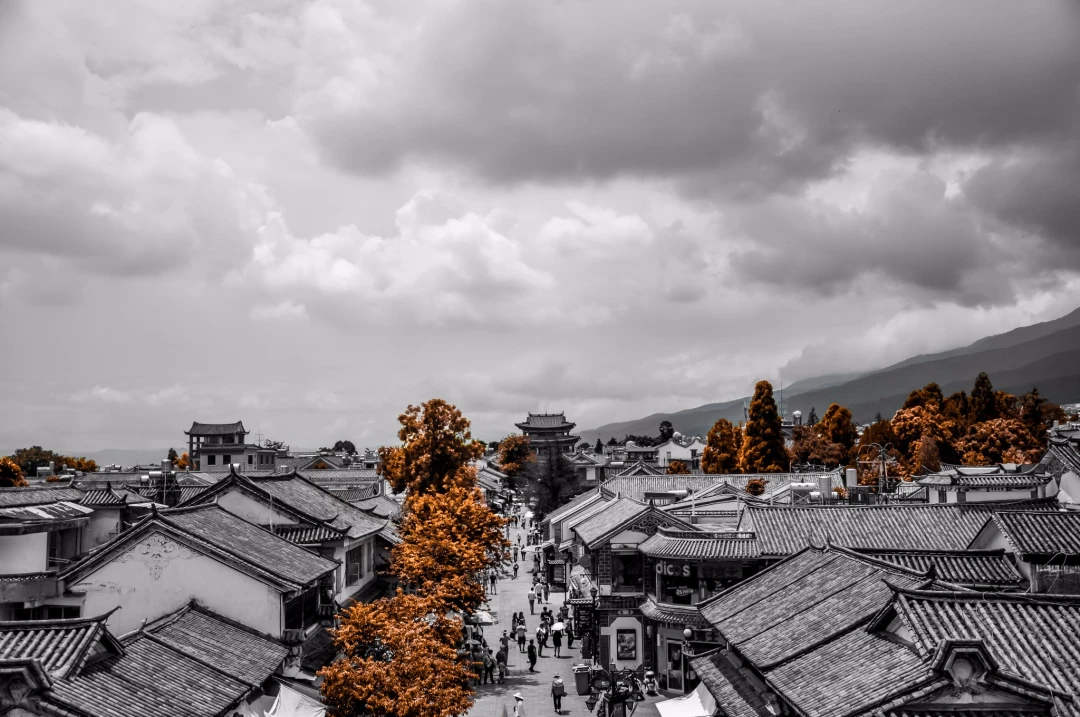
From the top of Wuhua Tower, the old town looked like a mottled painting. Bai grandmothers carried large baskets on their backs, selling cheap trinkets from assembly lines in Wenzhou; bougainvillea peeked over the walls, and colorful tie-dyed cloth fluttered in the wind. We stepped into a bar on Yangren Street and ordered a glass of "Wind, Flower, Snow, Moon" beer—a taste I still remember vividly.
The Dali Royal Palace has been converted into a hotel, but it still exudes an air of former grandeur. "Once inside the marquis's gate, it's as deep as the sea"—and this was once a royal gate. Lion statues, narrow alleys, carved window lattices—every corner tells a story of the past.
Shuanglang: Slow Time by Erhai Lake
The next morning, we waited for sunrise at the Caicun pier. The clouds were too thick; the sun only showed its face for a moment before retreating. From Caicun to Shuanglang, you can take a bus (15 RMB per person) or hire a car (20 RMB per person after bargaining). The water in Shuanglang was a bit dirty, but the bougainvillea still bloomed passionately.
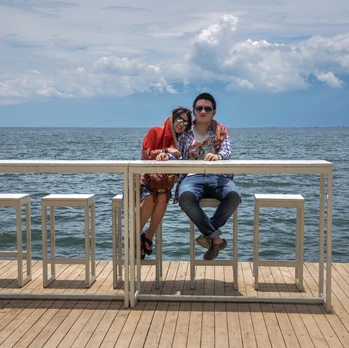
The white tables and chairs at Haitian Life (Haidi Shenghuo) are a signature photo spot in Shuanglang. The queue was long, but when you finally sit there, facing Erhai Lake, it all feels worth it. We rented a small scooter and rode along the lakeside road toward Xiaoputuo Island. The sun was brutal, so we stopped at a roadside spot with an umbrella for shade. Xiaoputuo is a tiny island in the lake—reportedly covered entirely with barbecue stalls, so we gave it a miss.
Yang Liping's villa on Yuji Island isn't open to the public, but catching a glimpse of the Moon Palace and Sun Palace from afar was enough to feel the artist's way of life. On the way back to Caicun, we stumbled upon Xizhou Ancient Town—quiet, rustic, and charming. Living here wouldn't be bad.
Lijiang: The Double Life of Dayan and Shuhe
Dayan Old Town: A Contradiction of Commerce and Art
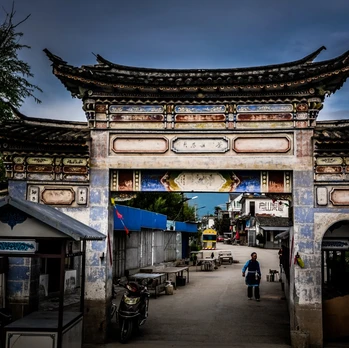
From Dali to Lijiang, we chose the train. The scenery along the way was beautiful, but the train spent most of its time in tunnels. If you want to enjoy the views, taking the highway is a better bet. At Lijiang Railway Station, we hopped on a small blue minibus for 10 RMB per person, which dropped us at the entrance to the old town.
People say Dayan has become too commercialized, but once you're inside, its charm still catches you. By the Big Waterwheel, there's an inscription by Grandpa Jiang (former Chinese leader Jiang Zemin), and the Wishing Wall was covered in red cloth strips. We skipped Lion Hill Park (130 RMB per person) and went to Wenchang Palace instead—it's free and offers a better view.
Meeting an Artist: The Story of Woodcarving Paintings
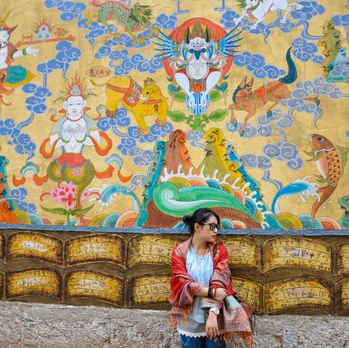
We got lost in an old alley. Asking for directions, we wandered into a woodcarving shop. The owner was a quiet artist who didn't talk much. His woodcarving paintings were all hand-carved, each with its own meaning. We fell in love with one piece, priced at 2,600 RMB. Seeing how much we liked it, he offered to make a smaller version at a lower price.
I know a bit about solid wood, and the materials he used weren't cheap. Maybe that's what art is—the price tag is just to make a living; the carving itself is what he truly wants to do. If you're interested, you can add him on WeChat: hyclz2005. His username is "Clouds on the Way Home."
Shuhe Ancient Town: A Place to Just Be
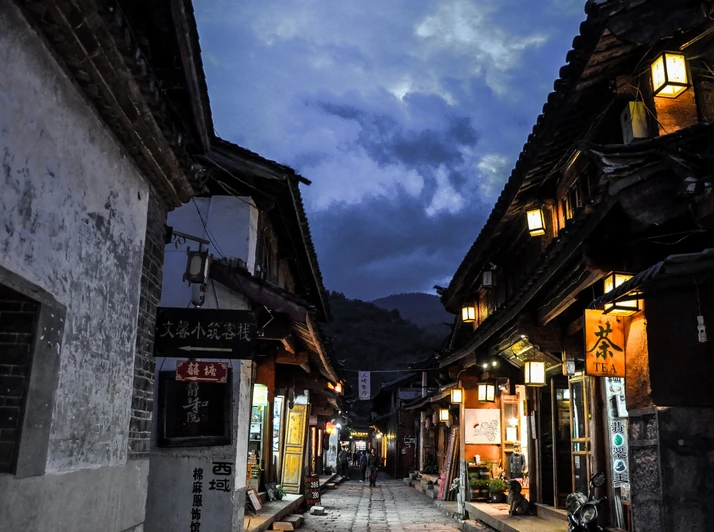
After returning from Lugu Lake, we stayed at the Caotang Bieyuan Inn in Shuhe Ancient Town. It had a Japanese-style interior, and the tatami mats felt wonderfully cozy. Compared to Dayan, Shuhe was much quieter, with none of the heavy commercial atmosphere—perfect for zoning out.
We set out to photograph the old town's panorama, but it started raining. We took shelter in the pavilion of a hotel halfway up the hill, where a group of aunties from Xi'an saw how soaked we were and offered us hot tea. By evening, back in Shuhe, the rain had stopped, and the lights were just coming on. Wang Yao'er dragged me to a bar—my first time ever in one. The only song I remember from that night is "Escape from the Tiger's Mouth."
Lugu Lake: A Hidden Pearl
The Hardship and Beauty of the Journey
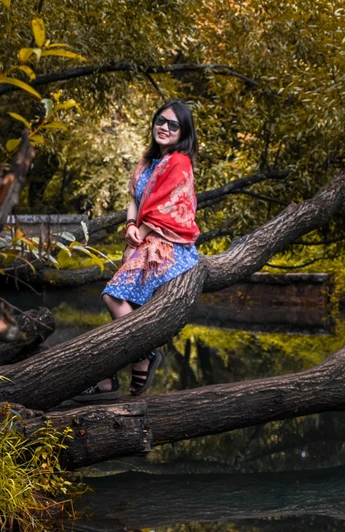
From Lijiang to Lugu Lake, we took a state-run bus (100 RMB per person). The road was rough—eight hours of winding mountain passes—but precisely because of that hardship, Lugu Lake has kept its tranquility. At the viewpoint just before entering the scenic area, the farthest peak is Goddess Mountain, the small island in the middle is Liwu Bi Island, and the crocodile-shaped peninsula lies stretched across the lake.
The entrance fee was 100 RMB per person, with half-price for student and military IDs. It came with a complimentary "Passport to the Kingdom of Women"—legend has it that drinking the water of Lugu Lake will make you pregnant.
Cycling Around the Lake: Getting Close to the Sacred Waters
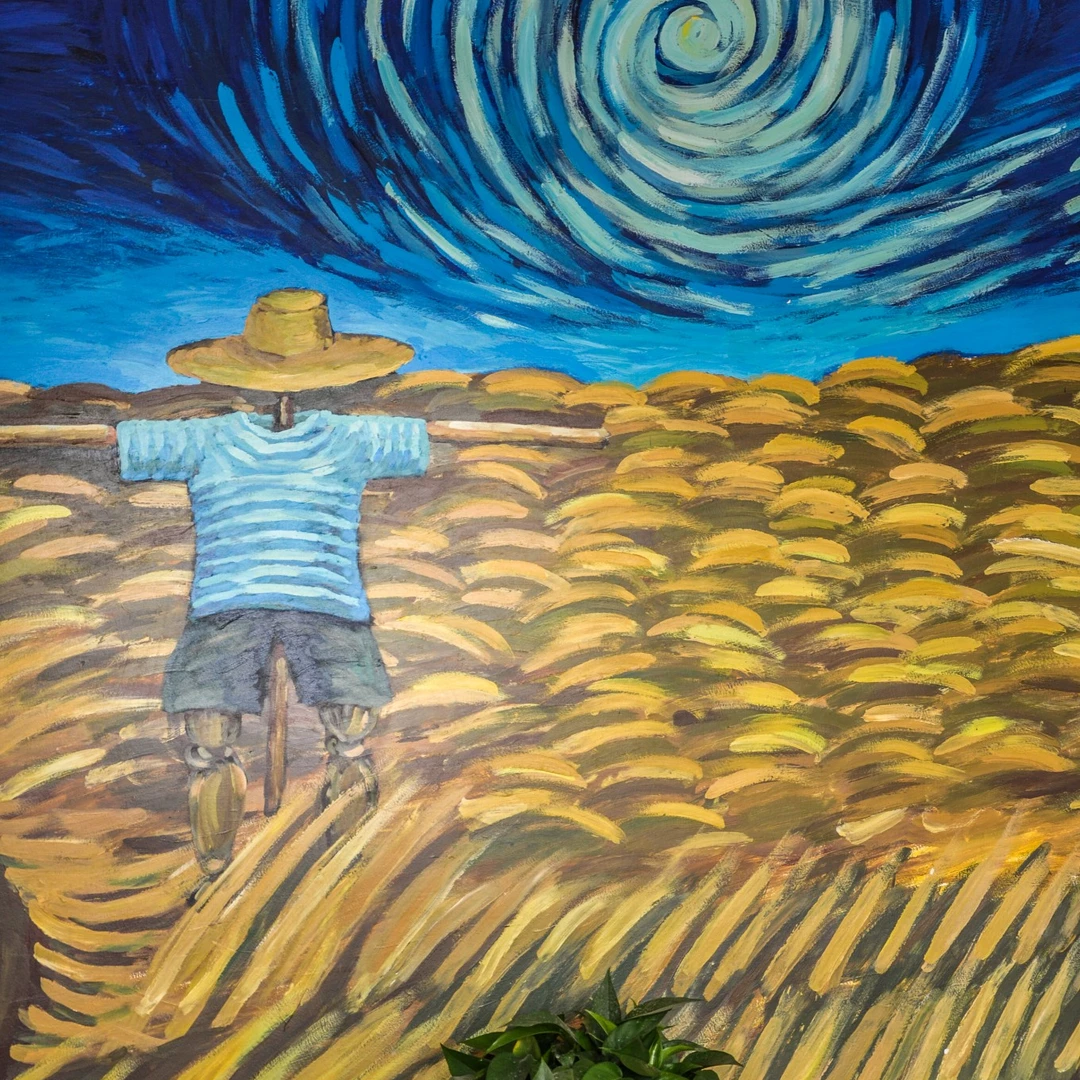
We stayed at the Yunlü Business Hotel's east wing. From the window, the sunset over Lugu Lake looked like a postcard. The next day, we rented an electric scooter to circle the lake (100 RMB per day). The full loop is about 75–80 kilometers, with two backtrack sections at Goddess Bay and the Walking Marriage Bridge.
Just two kilometers in, a light drizzle started. The weather on the plateau is like a child's face—unpredictable. Half an hour later, the rain stopped. Lige Peninsula sat like a pearl embedded in the lake, and a horse herder was tending his animals on a mini farm. Every time I saw a prayer flag, I thought of Tsangyang Gyatso, the Sixth Dalai Lama: "In that moment, I raised the wind horse, just to wait for your arrival."
At Nisai Village, we found the Lover's Trees. Wang Yao'er joked that from a height perspective, they matched us perfectly. The stillness of Goddess Bay made me want to use a filter for a slow shutter shot—but I didn't know how back then. The Grass Sea, which lies in Sichuan, was a picture of peace: horses grazing leisurely, like a poem.
Farewell to the Kingdom of Women
We took a pig trough boat out to the island—50 RMB per person round trip. We didn't circle the island; we just sat quietly on the boat, watching the water. Goodbye, Kingdom of Women—maybe one day, I'll return.
Afterword: Yunnan, My Starting Point
Yunnan could be called my second home. The first time I ever left Chongqing as a child was with my parents, coming here. My first road trip in middle school also brought me to Yunnan—I even spent 5 RMB to cross the border into Myanmar for a quick visit. Within one year, I visited Yunnan three times. I know this place better than I know Chongqing.
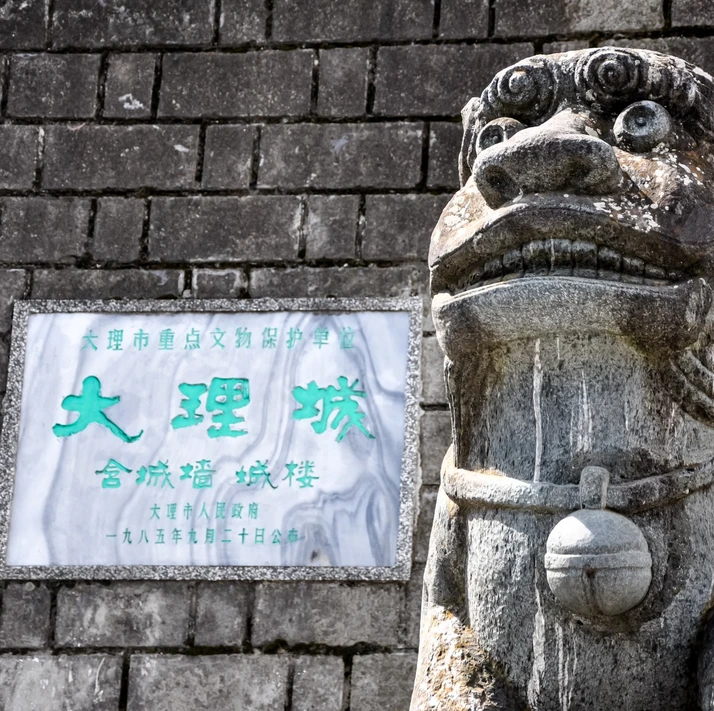
If Chongqing feels like "home," then Yunnan feels like my "starting point." Every time I look back at this place, I remember why I set out and where I'm going. From a single point, I can go anywhere and trace whatever path I want.
That, perhaps, is the most precious gift this land of beautiful southern clouds has given me.
Practical Tips
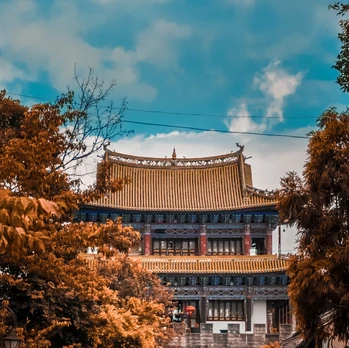
Food Recommendations
- "Jingji Ban Xiaoshi" in Shuanglang Town: Try the "Country Bumpkin Eggplant" (xiangbalao qiezi) and "Heartbreaking Fatty Beef" (shangxin feiniu)—funny names, even better flavors.
- "Nanzhao Yuan" Restaurant at Caicun Pier: Authentic Yunnan cuisine, far better than Ruituifeng.
- "Xinyuan Xiaochi" in Lijiang Old Town: Their Naxi grilled fish is top-notch—simple-looking but absolutely delicious.
- "Dreamer Salmon" on Huama Street, Dayan Old Town: Rainbow trout and golden trout salmon are a must-try.
Things to Keep in Mind
- Weather: July is the rainy season. A sun umbrella or a waterproof jacket is essential.
- Sun Protection: Maximum SPF sunscreen, sunglasses, and long-sleeved jacket—even in the rainy season, UV rays are relentless.
- Clothing: Layer short sleeves under long sleeves, and take off the outer layer for photos. Disposable underwear and socks are a lifesaver—nothing dries in the rain.
- Footwear: One pair of slippers (for puddles) and one pair of sturdy hiking shoes.
Budget Reference
- Flights: Chongqing → Dali 2,200 RMB, Lijiang → Chongqing 1,750 RMB
- Accommodation: 9 nights, approximately 1,300 RMB
- Meals: Approximately 2,700 RMB
- Transportation: Approximately 1,200 RMB
- Other: 1,500 RMB
A Final Thought
Some say travel is about escape. But I believe travel is about coming back better. My Yunnan trip taught me that the best of times is when we truly live; the worst of times is when we forget how. And the clouds over the south—that's where I relearned what it means to live.
I'll go again. Until I once more return to where it all began.
Original article by the author. Reproduction without permission is prohibited.
Keywords: Yunnan travel, Dali, Lijiang, Lugu Lake, Tale of Two Cities, road trip, travel guide, wind flowers snow moon
You should also read:
Yunnan Travel Mastery: From Beginner to Pro-Level Player – A Complete Guide
Yunnan Travel Mastery: From Beginner to Pro-Level Player – A Complete Guide "Either travel or read, but your body and soul must be on the road." This quote has been repeated countless times, but very few people truly manage to be "on the road" and…
Continue reading...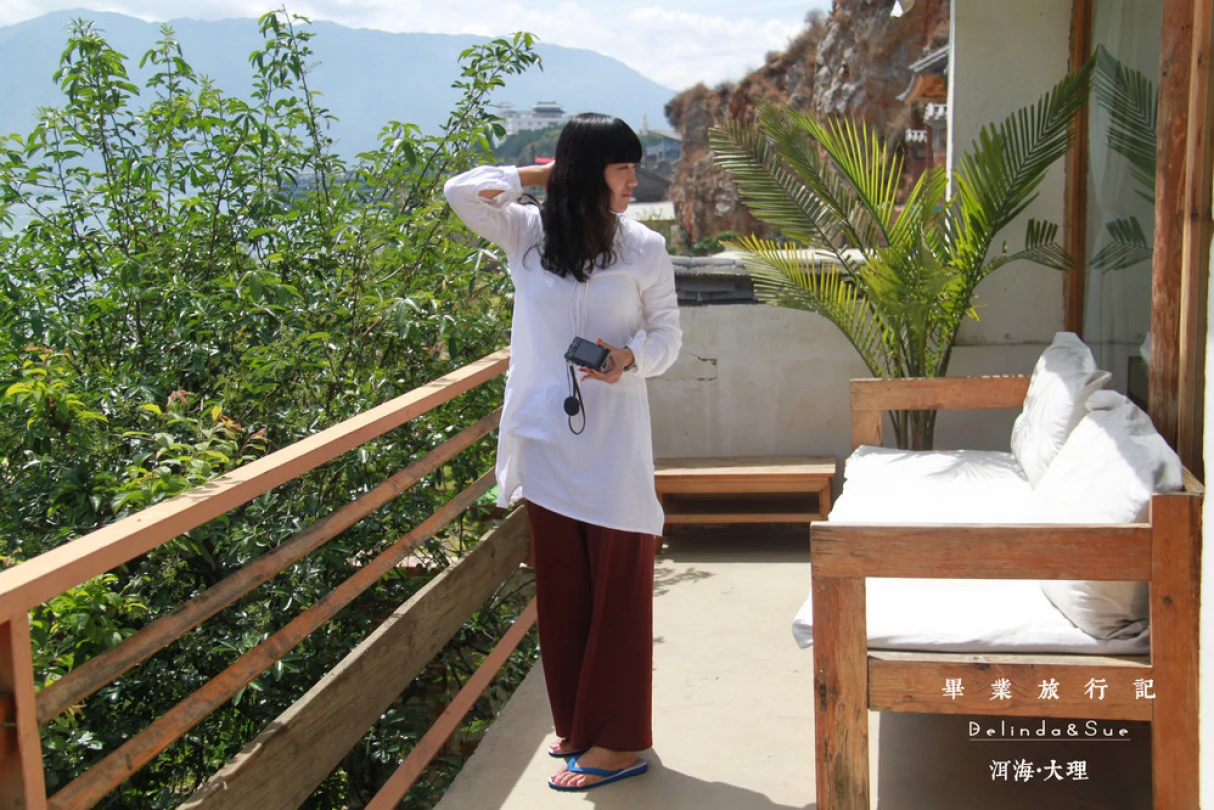
Two Girls' Graduation Trip: Dali and Shuanglang – A Poetic Farewell to Mountains and Sea
Two Girls' Graduation Trip: Dali and Shuanglang – A Poetic Farewell to Mountains and Sea Preface: Catching the Tail of Youth, Heading South During our senior year of college, my roommate and I – two girls studying in Beijing – decided to bid farewell to…
Continue reading...
Cloud Travelogue · Dali of Wind, Flowers, Snow, and Moon: A Three-Day, Two-Night Journey of a Free Spirit
Cloud Travelogue · Dali of Wind, Flowers, Snow, and Moon: A Three-Day, Two-Night Journey of a Free Spirit I am a cultured female foodie with a touch of rogue charm. I slung on my backpack, took my lover's hand, and set off on a spontaneous…
Continue reading...