Colorful Yunnan: A 15-Day Immersive Slow Living Record in Dali

Colorful Yunnan: A 15-Day Immersive Slow Living Record in Dali
When the heatwave of the city sweeps in with anxiety, when the pace of life becomes so fast that it takes your breath away, have you ever fantasized about a place like this—where the temperature stays at a constant 20°C, where the sky is a brilliant blue, where the Cangshan Mountains are forever green, and where a vast expanse of turquoise water called Erhai Lake awaits you in the golden sunset?
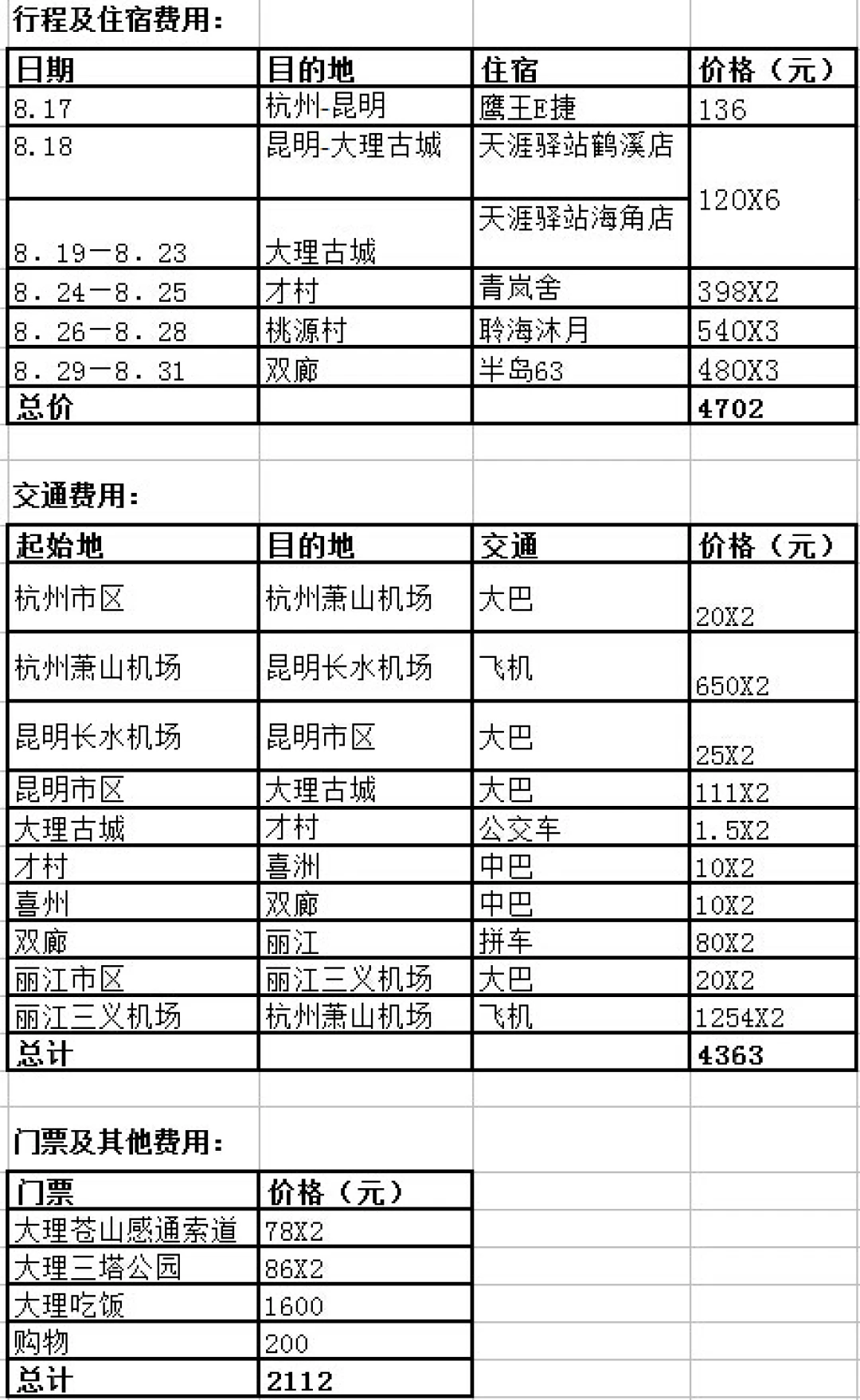
In August 2014, I escaped the 40°C "steam room" of Hangzhou and headed to Yunnan, embarking on a 15-day in-depth journey through Dali. This was not a superficial sightseeing trip, but a spiritual retreat of self-dialogue. No crowded tourist spots, no rushed itineraries, not even a return ticket booked in advance. I simply let my heart settle down, slowly experiencing the scenery across four towns along Erhai Lake, giving my soul a thorough cleansing.
If you, too, are tired of the "get on the bus, sleep; get off the bus, take photos" travel mode, if you also want to find inner peace amidst the Cangshan Mountains and Erhai Lake, then follow my steps and walk into this 15-day slow living journey.
Pre-Trip Preparation: Practical Information at a Glance
Itinerary Overview
- D1: Hangzhou → Kunming (Yunnan University, Cuihu Park, Jinma Biji Square)
- D2: Kunming → Dali Ancient Town (South Gate, Wuhua Tower)
- D3-D7: Dali Ancient Town (Renmin Road, Yangren Street, Three Pagodas Park, Cangshan Mountains)
- D8-D9: Erhai Caicun Village (Pier, Wetland Park)
- D10-D12: Erhai Taoyuan Village, Xizhou
- D13-D15: Erhai Dajianpang Village, Shuanglang
- D16-D18: Dali → Lijiang (Dayan Old Town, Mu Mansion, Shuhe Old Town)
- D19: Lijiang → Hangzhou
Transportation Guide
- Kunming Changshui Airport → City Center: Airport shuttle bus Line 1 to Xi Yi Hotel (Xiaoximen)
- Kunming City Center → West Bus Station: Bus 138 to Huangtupo Overpass West Entrance, then walk
- Kunming → Dali Ancient Town: Take a bus from West Bus Station to Xiaguan North Station (about 4 hours, fare 111 yuan), then transfer to Bus 8 or 4 to the Ancient Town South Gate
- Dali Ancient Town → Caicun: Take Bus C2 from Bo'ai Road to Caicun Pier
- Dali Ancient Town → Xizhou: Take a minibus (10 yuan) from Cangshan Gate or Feng Huaxue Yue Hotel to Butterfly Spring or Xizhou Town
- Caicun → Xizhou Taoyuan Village: Take Bus C2 to Nanguocheng Station, walk to the Dali Highway intersection, and flag down a minibus heading toward Shuanglang (just wave to stop)
- Xizhou Taoyuan Village → Shuanglang: Flag down a Xiaguan-to-Shuanglang minibus by the roadside (last bus at 17:30), get off at the terminal and walk to Dajianpang Village
Photography Gear
Sony NEX-7, lightweight and practical, enough to capture every beautiful moment of the journey.
Chapter 1: First Impressions of Kunming—The Art and Everyday Life of the Spring City
Yunnan University: A Century of Time Within Red Brick Walls
Whenever I visit a new city, I always like to wander around its local university. There are no crowds of tourists, yet it holds the deepest historical layers. Yunnan University is no exception. The Huize Hall and the Yunnan Examination Hall are its soul.
Huize Hall is a French-style building. Its red brick walls glowed with a warm luster under the sunlight, grand and dignified. It has witnessed eighty years of Yunnan University's ups and downs; every brick seems to whisper stories of the past. Behind Huize Hall lies the Examination Hall, whose history can be traced back to the Ming Dynasty. It once served as the venue for the imperial civil service examinations during the Ming and Qing dynasties. Standing there, you could almost hear the sound of candidates writing furiously a hundred years ago—a profound sense of history washes over you.
Cuihu 1923: Stumbling Upon the "Erlang Temple"
Leaving Yunnan University, we stumbled upon a peculiar building by the roadside—yellow walls, black tiles, and upturned eaves, looking from a distance like a small earth god temple. Upon closer inspection, we realized it was actually a restaurant, with the words "Cuihu 1923" written boldly at the entrance. It was said to have been built in memory of an honorary president of Yunnan University.
The more I looked at this building, the more familiar it seemed. After thinking for a while, it suddenly dawned on me: "Isn't this the Erlang Temple that Sun Wukong transformed into in Journey to the West!" My companion and I stood by the roadside, exchanging smiles, imagining how, amidst a bustling modern city, there could exist such an otherworldly "earth temple." The mix-and-match feeling was delightfully amusing.
Cuihu Park: A Different Take on Square Dancing
Cuihu Park was much larger than I had imagined. Everywhere in the park, you could see locals who loved music and dance. What impressed me most were the people dancing in ethnic costumes—not only enthusiastic middle-aged women but also young handsome men and beautiful women "accompanying" them. Their supple bodies and graceful dance moves were a world apart from the stiff, "calisthenics-style" square dancing we have down south.
After an afternoon of strolling, from cloudy skies to clearing clouds, Kunming's weather changed unpredictably. As evening fell, we tasted the local steamed chicken soup (汽锅鸡), and before the night grew dark, we rushed to Jinma Biji Square to capture night photos. That day, our time in Kunming came to a perfect close.
Chapter 2: First Sight of Dali—An Instant Stunning Impression
From Kunming to Dali: Scenery and Songs Along the Way

Early the next morning, we packed our bags and set off from Kunming's West Bus Station. After a five-and-a-half-hour ride, we finally arrived in Dali Ancient Town.
My first glimpse of Dali and Erhai Lake came through the window of the bus, a flowing landscape. A road, not too wide, lined with lush green farmland, dotted with white farmhouses with upturned eaves. To the left, in the distance, were the majestic Cangshan Mountains under white clouds; to the right, the Erhai Lake stretching for hundreds of kilometers. Compared to the delicate beauty of Jiangnan, the scenery here could only be described as "grand and magnificent." The sunlight was perfect, the sky blue with white clouds, and a gentle breeze brushed our faces—from that very first stunning impression, I knew we had made the right choice.
First Exploration of the Ancient Town: South Gate and Wuhua Tower
We settled into an inn outside the South Gate of the ancient town. For miles around, it was all countryside—no shops, hardly any tourists, eerily quiet. But inside the ancient town, it was a different story—streets lined with imitation-antique shops, bustling with tourists, lively and crowded.
We strolled from the South Gate to Wuhua Tower. This ancient city of the Nanzhao Kingdom still retains its four city gates intact—east, south, west, and north. By day, it was imposing; by night, outlined in neon lights, it appeared even more dazzling and splendid. That night, visibility was high, and a bright, clear moon accompanied us. We set up our tripod and captured the most beautiful night scenery of the ancient town.
We had dinner at a restaurant called "Bamu Xuan" near our inn, ordering preserved beans, spicy stir-fried snails, and clay pot chicken. The crisp, sour, and spicy flavors stimulated our taste buds again and again—this was the most authentic Yunnan food we had eaten since arriving. Perhaps "first times" are always the best, but at least starting with food, Dali gave us another reason to fall in love with it.
Chapter 3: Slow Living in the Ancient Town—Eating in the Town, a Game of Brand vs. Taste
Changing Inns, Slowing Down
On the third day, we moved from the inn outside the South Gate to "Tianya Inn" inside the ancient town, where we would stay for the next week. Every morning, I studied and wrote my journal; in the afternoon, I took a nap; and in the evening, we went out—just in time for Dali's best weather.
Dali's weather is strange: it's always cloudy or rainy in the morning, but the skies start clearing up after 3:00 PM. So, resting during the day and going out in the afternoon became our fixed routine.
The Ancient Town Food Map: What's Worth Eating?
During our week in the ancient town, my companion and I would wander around Yangren Street and Renmin Road every day. We couldn't miss the "Eighteen Oddities of Yunnan" items like grilled rice cakes (烤饵块), grilled milk fans (烤乳扇), and Li Ji savory pancakes (李记酱香饼).
- Grilled Rice Cakes (烤饵块): A rice flour pancake wrapped around vegetables, savory and spicy, very filling.
- Grilled Milk Fans (烤乳扇): Thin milk cheese sheets wrapped around Yunnan's special rose sugar and grilled. It has the sweetness of roses, and the texture is soft, chewy, and Q-Q (elastic).
- Li Ji Savory Pancakes (李记酱香饼): The aroma hits you before you even reach the stall. Freshly baked hot pancakes are sold by price and snapped up within minutes. I can say with confidence: if you come to the ancient town, you can skip other snacks, but missing this one will definitely make you regret it.
- Zaihuishou Cold Noodles with Shredded Chicken (再回首鸡丝凉米线) and the neighboring Zhuozhuo Fengwei (卓卓风味): The mix of peanuts, sesame, and cilantro in a rich, flavorful sauce—the rice noodles in Kunming city center are simply weak in comparison. A small bowl leaves you half full, with a lingering aftertaste.
The Bakery 88 Incident
When I went looking for the famous "German Grandma's Bakery 88," I made a hilarious mistake. I had always thought "88" was the street number, but after searching for a while, I only found a small shop on Bo'ai Road labeled "60-something" and named "Bakery 88." Stubbornly convinced this was the place, I rushed in and ordered their signature cake. Halfway through eating, it suddenly hit me that the street number didn't match. And looking at the décor, it didn't seem like the one from the travel guide either—and there was no German grandma.
So, I quietly told my companion: "We've been 'tricked.' We're eating a knockoff cake." He was completely baffled.
Later, it was confirmed: the Bakery 88 I had gone to was absolutely authentic, and there was no second one in the ancient town. For days afterward, whenever food came up, my companion would tease me: "So, were you eating the brand or the taste?" I wanted to crawl into a hole.
Authentic Yunnan Cuisine: Cang'erchun and Bai Ethnic Flavors
If you want to order dishes, I recommend Cang'erchun (苍洱春) on Renmin Road. The way of ordering in Dali is quite peculiar—almost every restaurant has no menu, just vegetables and seafood displayed at the entrance. You simply go to the door and call out the names of the dishes you want. We ordered plum braised pork, papaya stir-fried chicken, and tofu stir-fried with arugula, all for just 88 yuan. The food was delicious and incredibly good value. It's said this restaurant is run by locals and has been around for years—business is booming.
Bai Ethnic Flavor Restaurant (白族风味餐馆) on Bo'ai Road is also worth a try: rose flower scrambled eggs, rice cake stir-fried with fish, and "Water Lily" (水性杨花, a local aquatic green). These strange-sounding dish names have an irresistible appeal to out-of-towners. Whether or not you like the taste, ordering them always brings surprises.
Actually, if you enjoy Yunnan cuisine, you don't necessarily have to follow the travel guide's recommendations. We randomly found a nameless restaurant right outside our inn. The environment wasn't great, and it wasn't particularly clean, but the food was tasty and the price reasonable. Sometimes, the more rundown and shabby the roadside eatery, the more authentic the home-style cooking. When it comes down to it, taste beats brand—don't you think?
Chapter 4: Miscellany of the Ancient Town—The Lovely People and Things
The Little Girl Next Door: Bright Sunshine
During our week in the ancient town, I spent every morning doing homework with the neighbor's child—I read and wrote my journal, and she did her numbers and arithmetic. The little girl was five and a half years old, named "Mingmei" (Bright Sunshine). Her rosy cheeks and big eyes were as bright as her name. According to her mother, the two of them came here every summer to escape the heat; by the time we met them, they had already been staying at the inn for over 20 days.
Mingmei became my companion's and my best playmate. She was in charge of smiling, and I was in charge of taking photos. After my companion got off work, he would play with the little girl endlessly—singing contests, swinging on the swings, teaching her to make rose tea, writing calligraphy with water on the ground, or playing with the inn's dog, "Chocolate." The things he came up with! The two of them were like a couple of kids who never grew up. But it also made me realize something completely: besides myself, there are adults out there with even more childlike hearts.
Flowing Landscapes: The Wonderful Experience of Slow Travel
From our observations, most tourists who come to Dali are the superficial type, staying in the ancient town for no more than three days. So, during our entire week at the inn, aside from us and the neighbor Mingmei's family who were "stationary," everything around us was a flowing landscape—neighbors came and went, came and left. Maybe you'd just met a new friend next door in the morning, but before you could have a proper chat, by the next day, the room was empty.
This feeling was like a cinematic montage: people passing by in a blur, and in the midst of it all, only we seemed still. This sensation of slow travel was something I had never experienced before—it was particularly magical and interesting. After returning home, it was precisely this that solidified our future travel philosophy: if we can travel independently, we will never join a tour group; if we can go in-depth, we will never be superficial.
Local Life: The Market and Fresh Flowers
If you want to experience the most authentic local life, the morning market is a great place to go. The ancient town's market is near the Meizijing Restaurant (梅子井酒家) on Renmin Road. There you'll find fresh live fish caught from Erhai Lake, as well as many local vegetables you've never seen before. The market isn't large, but it's crowded, with the sounds of hawking and bargaining rising and falling. The women and elderly selling vegetables in ethnic costumes, and the locals carrying small bamboo baskets to shop—to me, they were the most beautiful sight in the market.
If you wake up early, you should also check out the flower stalls on the street corner near the market, at the intersection of Fuxing Road and Huguo Road. Bunches of flowers for just a few yuan are incredibly cheap. Buy a few during your trip—even if you just stick them in an empty cup, waking up to see and smell them every morning will put you in a good mood.
Lessons and Experiences in Street Photography
One day, I was looking at other people's street photography of Dali at the inn and felt inspired. I decided to go out and capture some real local life in the back alleys. I had just said, "Where's the street life?" when we spotted an old barbershop by the roadside with a barber inside cutting hair. My companion volunteered: "I'll take the shot!" But before he could even focus the lens on the barber for a few seconds, the owner noticed: "What are you taking pictures of? What's there to take pictures of!" And we were chased out.
The two of us stared at each other, speechless, and then burst into laughter.
After this incident, we summed up our experience for street photography: use a telephoto lens whenever possible, never a short one; focus, compose, and press the shutter as quickly as possible; either be sneaky and take a candid shot, or have the guts to chat with the owner for a bit, and only press the shutter after you've gotten familiar.
An Unexpected Encounter at the Ancient Stage
One evening, as we strolled along a small path, we suddenly heard beautiful folk music coming from ahead. Following the sound, we discovered a large ancient stage tucked away in a corner, with a folk music band performing live. The stage was on the second floor of an imitation-antique pavilion. The musicians were all dressed in traditional Bai ethnic costumes—some playing the sanxian (three-stringed lute), some playing the flute, some the guzheng (zither), and other instruments I didn't recognize. Although I couldn't identify the type or name of the music, its style was unmistakably Bai—lively and passionate.
There weren't many spectators. Aside from a few locals sitting with their children on the side, only two foreigners and us were standing below, completely absorbed. But that didn't hinder their passionate performance. We stayed until the music ended before leaving, applauding as we went, which drew knowing smiles from those around us.
If you want to hear Bai ancient music, try your luck in front of the Sakura House at the Yangren Street Central Square.
Chapter 5: The Erhai Lake Loop—From Caicun to Shuanglang, Scenery and Songs Along the Way
Caicun: Quiet Time by Erhai Lake
From the ancient town to Caicun is just a few bus stops away. Caicun Pier and the Wetland Park are perfect places to space out and gaze at the lake. There's no hustle and bustle of Shuanglang, no commercial feel of the ancient town—just the wind from Erhai, the clouds over Cangshan, and a rare piece of tranquility.
Taoyuan Village: The Place That Changed My Impression of Dali
Speaking of Dali, I have to mention Taoyuan Village in Xizhou. It was because of this village that I completely changed my impression of Dali. From Taoyuan Village, I learned about Renmin Road and Yangren Street in the ancient town, heard about the famous Shuanglang, and discovered Caicun and Longkan, which were not yet well-known to tourists at the time.
Later in the journey, it was proven: people who know about Shuanglang may not know about Xizhou; people who know about Xizhou generally don't know about Caicun yet. So, for this half-month trip, I ultimately chose the ancient town and four places along the Erhai Lake shoreline—rather than calling it a "trip," it's more appropriate to call it a "vacation."
Shuanglang: Art and Hustle Coexisting
Shuanglang is one of Dali's most famous artistic little towns. Although more and more tourists are coming now, it still retains its unique charm. Here, you can find a lake-view inn, sit on the balcony, and watch the sunrise and sunset over Erhai Lake. Or you can go to Dajianpang Village and experience the unique charm of Bai ethnic residential architecture.
Conclusion: Slow Down, and You'll See the True Scenery
My 15-day journey through Dali had no superficial sightseeing, no rushing from spot to spot. I simply let my heart settle down, walking slowly amidst the Cangshan Mountains and Erhai Lake, feeling every ray of sunlight, every breeze, every smiling face.
If you want to experience a trip like this, remember a few key words: slow down, go in-depth, don't join a tour group. The beauty of Dali is not in the tourist attractions, but on the road. In the alleys of Renmin Road, on the pier of Caicun, between the fields of Taoyuan Village, in the sunset of Shuanglang—as long as you slow down, you will see it.
Finally, I'd like to end this article with Xu Wei's song "Warmth":
"I sit in my room, flipping through your photos, and it reminds me of Dali. The sun is always so brilliant, the sky is so azure, the Cangshan Mountains forever green. I love the blue Erhai Lake, dotted with white sails. My heart beats slowly with the wind. In the golden sunset, among the green grass, your smile is so warm."
Dali, see you next time.
You should also read:

September: Finding Unexpected Warmth in Yunnan (Kunming, Dali, Shuanglang, Lijiang, Lugu Lake)
September: Finding Unexpected Warmth in Yunnan (Kunming, Dali, Shuanglang, Lijiang, Lugu Lake) Foreword: One Person's Journey, A Crowd's Story Before I set off, like every first-time solo traveler, I printed out a thick stack of travel guides and rehearsed countless possible scenarios in my head—getting…
Continue reading...
A 9-Day Yunnan Journey: From Lijiang to Dali to Tengchong – A Trip Toward Self-Reconciliation
A 9-Day Yunnan Journey: From Lijiang to Dali to Tengchong – A Trip Toward Self-Reconciliation Some say travel is simply going from a place you're tired of to a place other people are tired of. It stings to hear, but it's painfully true. Yet there's…
Continue reading...
Solo in Yunnan: A Wanderer’s Guide to the Land of Eternal Spring
Solo in Yunnan: A Wanderer’s Guide to the Land of Eternal Spring There’s something magical about traveling alone. No compromises, no schedules to keep, no one to please but yourself. I’ve been on the road for nearly three months now, and not once have I…
Continue reading...