Colors of Yunnan: A Healing Family Trip, Finding Poetry and the Horizon in Dali and Lijiang
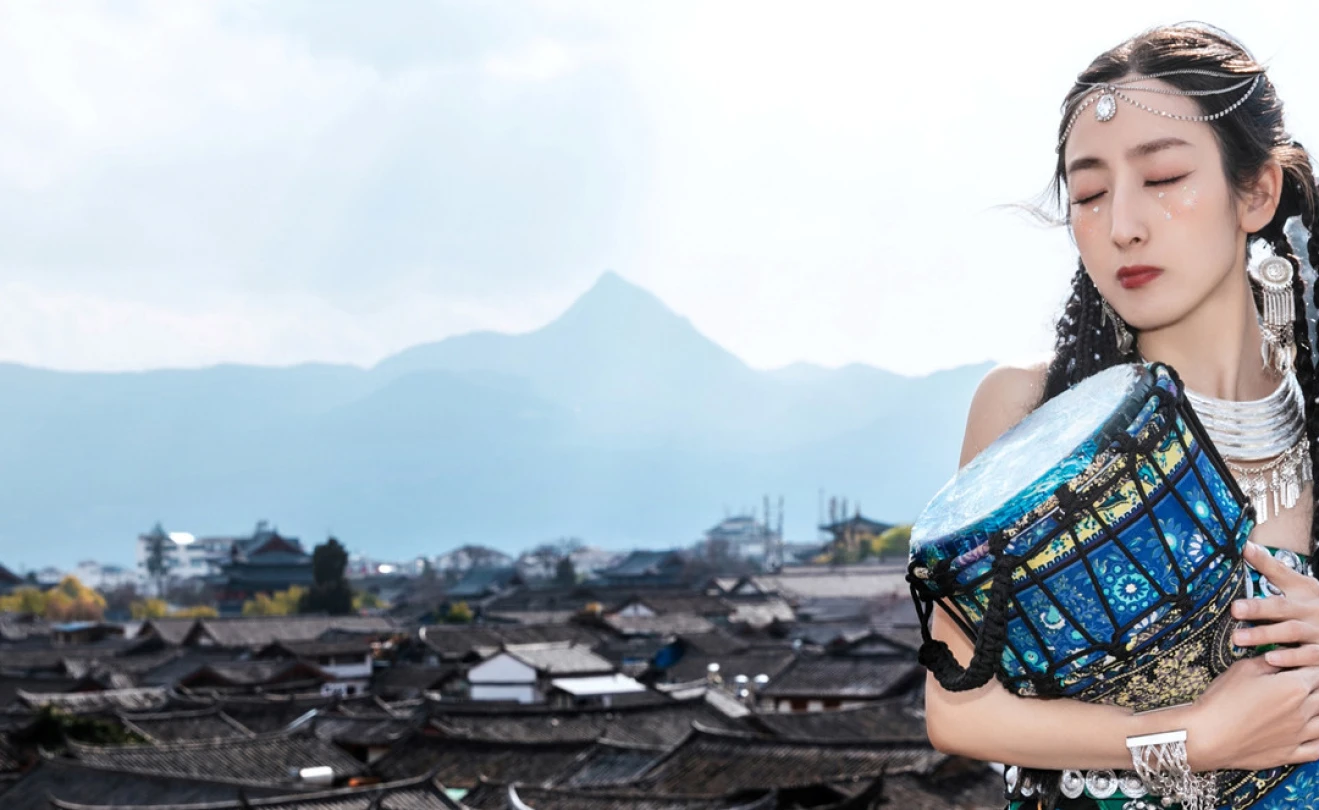
Colors of Yunnan: A Healing Family Trip, Finding Poetry and the Horizon in Dali and Lijiang
Prologue: Three Years of Waiting, a Spontaneous Journey
When the New Year's bell rang in 2023, I silently made a wish: may every place my heart desires be within reach. The three years of the pandemic—from the sudden outbreak at the end of 2019 to the nationwide immunity by the end of 2022—felt like a long dream finally waking up. During those years, we mustered the courage to plan trips countless times, only to cancel them due to various restrictions and concerns. Now that the threat has finally subsided, the feeling of "freedom" is so real it brings tears to your eyes.
And the place I've always wanted to go most is Yunnan, the "Land of Colorful Clouds." Perhaps it's because of that long-cherished song—"Only when Dali in Yunnan keeps its memories does it all make sense." Or perhaps it's because I've heard so many stories of people quitting their jobs to move to Dali, lie low, and chase their own poetry and horizons. There are mountains, seas, fields, flower meadows, wind, and leisure—all the beautiful imaginings are gathered in this name.
So, I took annual leave, brought along my husband, our child, and my in-laws—four adults and one child—and set off from Xiamen for this long-awaited trip to Yunnan.
Pre-Trip Essentials: Practical Guide to Dali and Lijiang

Dali: The Gentle Embrace of Wind, Flowers, Snow, and Moon
Dali Bai Autonomous Prefecture is located in western Yunnan Province, on the Erhai Plain of the Yunnan-Guizhou Plateau, at the foot of Cangshan Mountain and the shores of Erhai Lake. This was once the capital of the ancient Nanzhao and Dali Kingdoms. With an average elevation of about 2,090 meters, it has a plateau monsoon climate. Traveling in February, daytime temperatures can reach over 20°C, while nighttime temperatures drop below 10°C. The temperature difference between day and night is significant, but aside from being a bit dry, the comfort level is extremely high.
Dali's attractions are mostly distributed around Erhai Lake, divided into two parts: - West Erhai (Haixi): Zhoucheng Tie-Dye, Haishe Park, Xizhou Ancient Town, the Corridor, Panxi Village's famous S-Bend, Hongsheng Road, Dali Ancient Town, Caicun Village, Longkan Pier, Chongsheng Three Pagodas Temple, Xingsheng Bridge, etc. - East Erhai (Haidong): Shuanglang Ancient Town, Nanzhao Customs Island, Luwo Mountain, Wase, Xiaoputuo, Lixiangbang, etc.
To be honest, if I had enough time, I would love to stay in Dali for a month and savor every single scenery.
Lijiang: A Shining Pearl of World Heritage
Lijiang City sits at the junction of the Yunnan-Guizhou Plateau and the Qinghai-Tibet Plateau. It was an important passage on the ancient "Southern Silk Road" and the "Tea Horse Road." This is the only prefecture-level city in China that boasts three World Heritage sites simultaneously—Lijiang Old Town (World Cultural Heritage), the Three Parallel Rivers (World Natural Heritage), and the Naxi Dongba Ancient Manuscripts (World Memory Heritage). Jade Dragon Snow Mountain, Tiger Leaping Gorge, Laojun Mountain, Shuhe Ancient Town—each place is worth a stop.
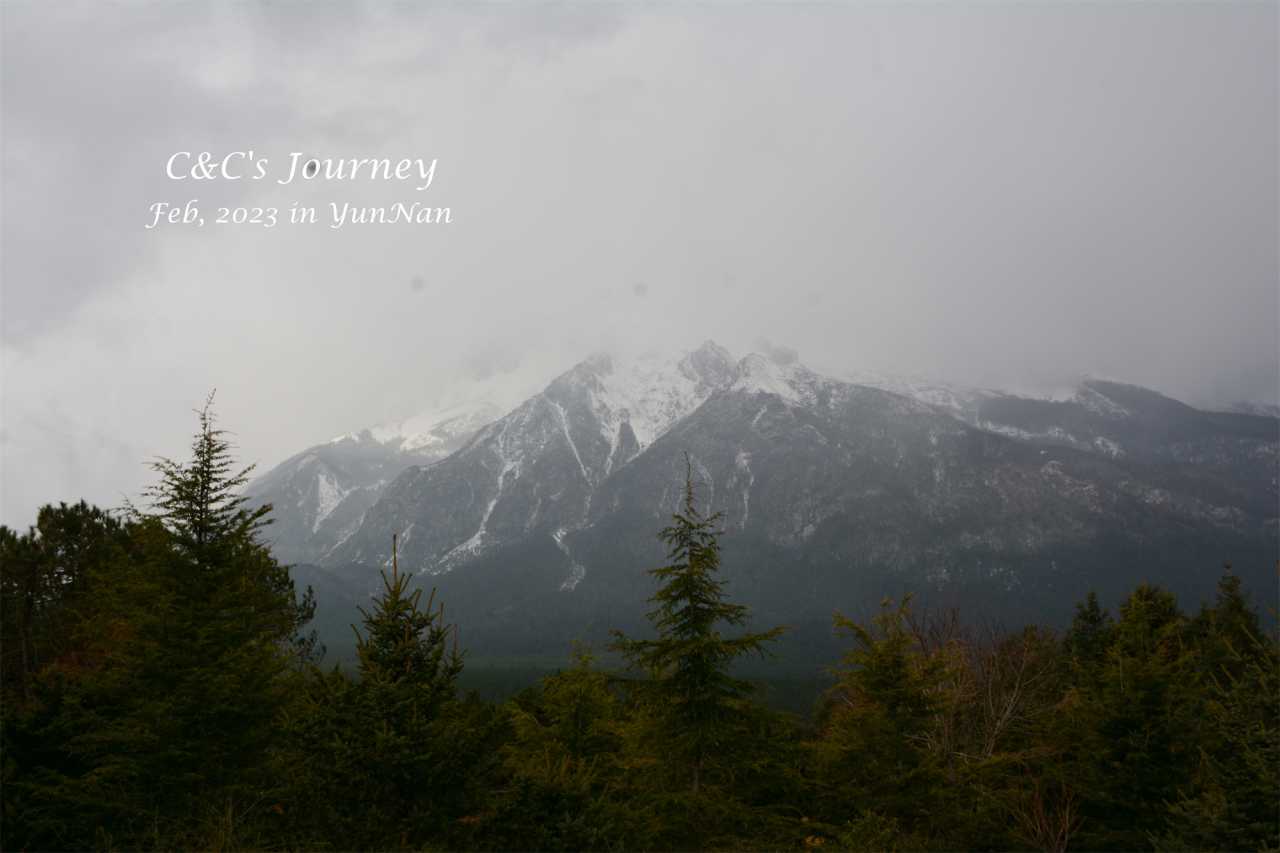
Jade Dragon Snow Mountain is called "Oulu" in the Naxi language, meaning "Heavenly Mountain." Its thirteen snow-capped peaks stretch continuously, like a giant dragon soaring and dancing. The highest point is 5,596 meters above sea level, and the highest point tourists can reach is 4,506 meters. The Glacier Park, Ganhaizi, Blue Moon Valley, Yunshanping, and Maoniuping are all unmissable attractions.
Transportation Guide: How to Efficiently Connect Dali and Lijiang
Getting There: Xiamen to Kunming Round Trip
We chose China Eastern Airlines. Traveling in mid-to-late February, we booked tickets about three weeks in advance. The round-trip fare was about 1,500 RMB per person. The outbound flight took about 3 hours, and the return flight about 2.5 hours. Post-pandemic airfares aren't cheap, so planning and booking early is essential.
Kunming to Dali: High-Speed Rail is the Best Option
From Kunming to Dali, the high-speed train takes about two hours. There are frequent departures and plenty of seats, making it very comfortable. We arrived in Kunming at around 12:30 PM and immediately transferred to a high-speed train to Dali—a seamless connection.
Dali to Lijiang: A Surprising "Hidden Route"
Originally, we planned to take the high-speed train from Dali Station to Lijiang, which takes about 1.5 hours. But when we were leaving Shuanglang, our ride-hailing driver told us: driving directly from Shuanglang to Lijiang via the expressway takes only 1 hour and 40 minutes, and it saves the hassle of transferring midway. For us, traveling with a child and a lot of luggage, this was fantastic news!
We immediately canceled our train tickets and changed our destination. We booked a minivan from Shuanglang to Lijiang Old Town for about 700 RMB, which dropped us off right at our guesthouse. Four adults, one child, and tons of luggage—the whole journey was comfortable and worry-free. I highly recommend this route: first stay in Dali Old Town to explore West Erhai, then stay in Shuanglang to explore East Erhai, and finally take a car directly to Lijiang. It saves time and effort.
Lijiang Back to Kunming: Three Hours by High-Speed Rail
From Lijiang to Kunming, the high-speed train takes about 3 hours. It's a bit farther but still convenient.
Getting Around Locally: Ride-Hailing as the Main Option
In Dali and Lijiang, we mainly relied on ride-hailing apps or taxis. We considered self-driving, maybe renting a vintage Beetle—it would be convenient, stylish, and a great photo prop. But we thought about potential scratches or disputes when returning the car, which wouldn't be worth the trouble. In the end, we stuck with ride-hailing, and it turned out to be the most hassle-free way.
Accommodation Recommendations: Four Guesthouses, Four Experiences
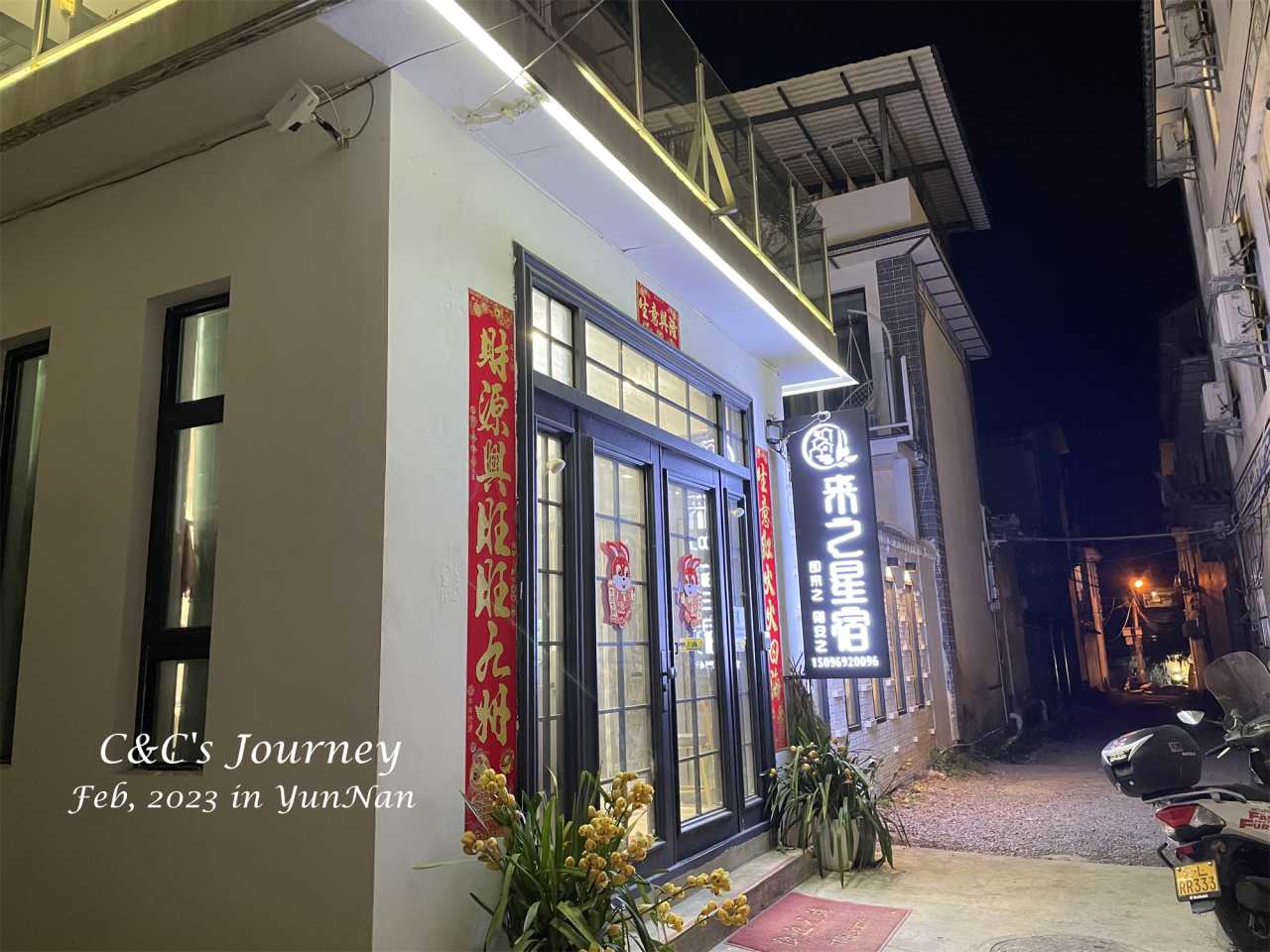
First Stay: Laizhi Xing Su (Lai Star Inn) near Dali Old Town—Best Value for Money
Location: Near Dali Old Town
Room Type: Courtyard-View Family Room + Twin Room (both on the first floor)
Price: About 500 RMB per night for both rooms
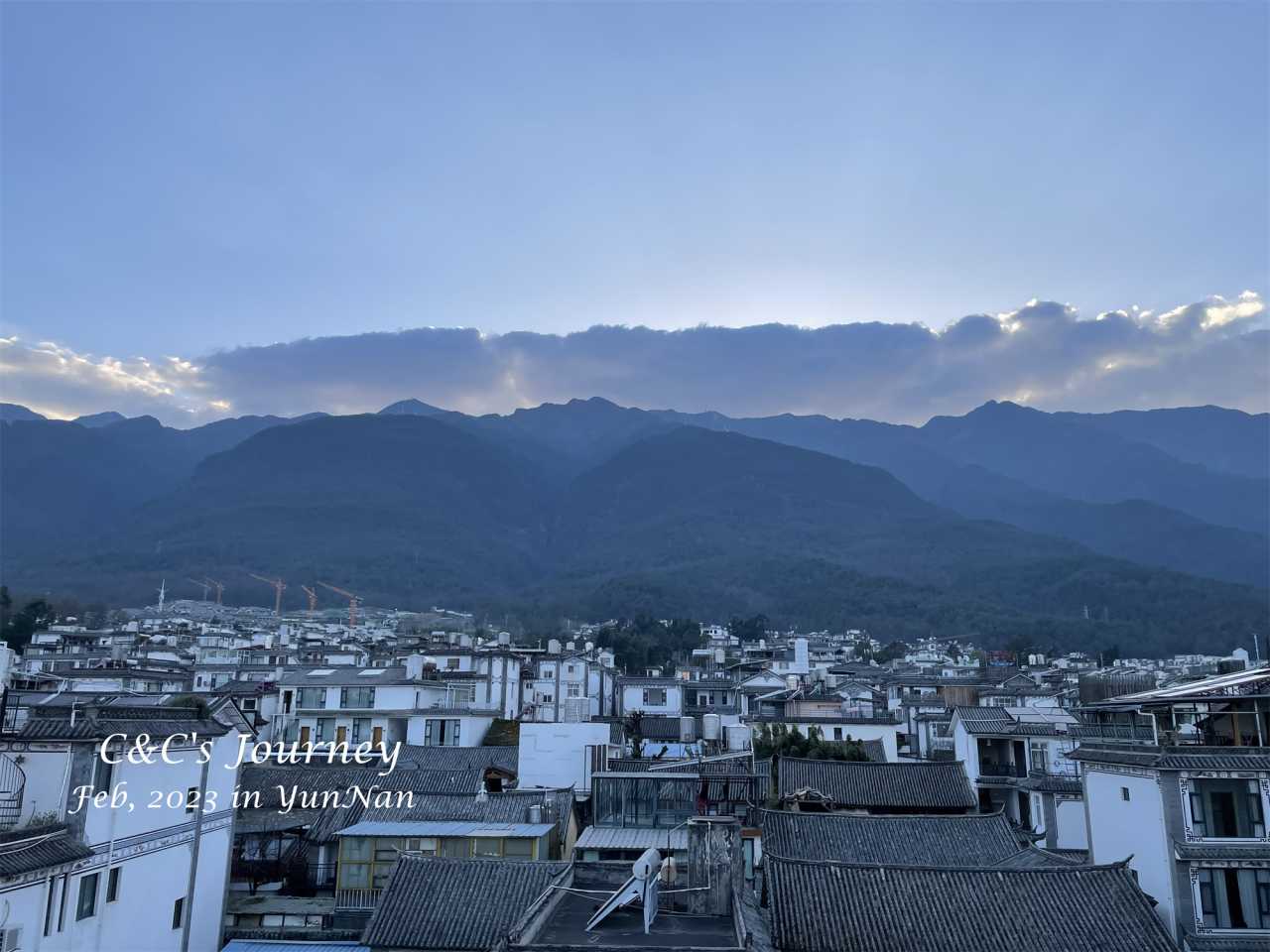
The rooms were spacious, the beds were large (important for families with kids), and the decor was warm and cozy. The facilities were fairly new and clean. The most stunning feature was the rooftop—a view of Cangshan Mountain against the backdrop of traditional Bai-style architecture, with a distant glimpse of the blue Erhai Lake. The view was wide and spectacular. The owner had set up photo spots like a "sky ladder" and a "mirror of the sky" on the rooftop—every shot looked like a professional photo.
Second Stay: Sanse Yunhe Chain Inn (Three-Color Cloud River Inn)—My Favorite "Healing" Guesthouse of the Trip
Location: Shuanglang
Room Type: Loft Double-Bedroom, Double-Bathroom Sea-View Family Suite (third floor, duplex with two levels, both with balconies and terraces)
Price: About 1,900 RMB per night
This was the most expensive but also the most worthwhile guesthouse of the trip. For a waterfront guesthouse in Shuanglang, this price isn't considered high. The duplex layout allowed the family to stay together while having our own spaces. From the balcony, we could feed the seagulls, watching them fly around us and play on the water—the healing feeling was beyond words.
The public areas of the guesthouse had many beautiful photo spots, including a网红 (internet-famous) swing, which produced excellent photos. Additionally, the guesthouse provided shuttle service within Shuanglang Town, breakfast, afternoon tea, and a late-night snack. Upon departure, they even gave us a local specialty gift from Dali. The butler was very attentive and warm—he greeted my little girl every time he saw her, and even helped inflate her balloon when it deflated. It made us feel truly at home. My family said I made a great choice—haha.
Third Stay: Lijiang Bajie Jiujiu Guan Quanjing Shejishi Du Jia Mei Su (Lijiang Eight Streets Nine Alleys Panoramic Designer Vacation Guesthouse)—Stunning Views
Location: Near Lijiang Old Town
Room Type: Duplex Family Room + Garden King Room
Price: About 660 RMB per night for both rooms
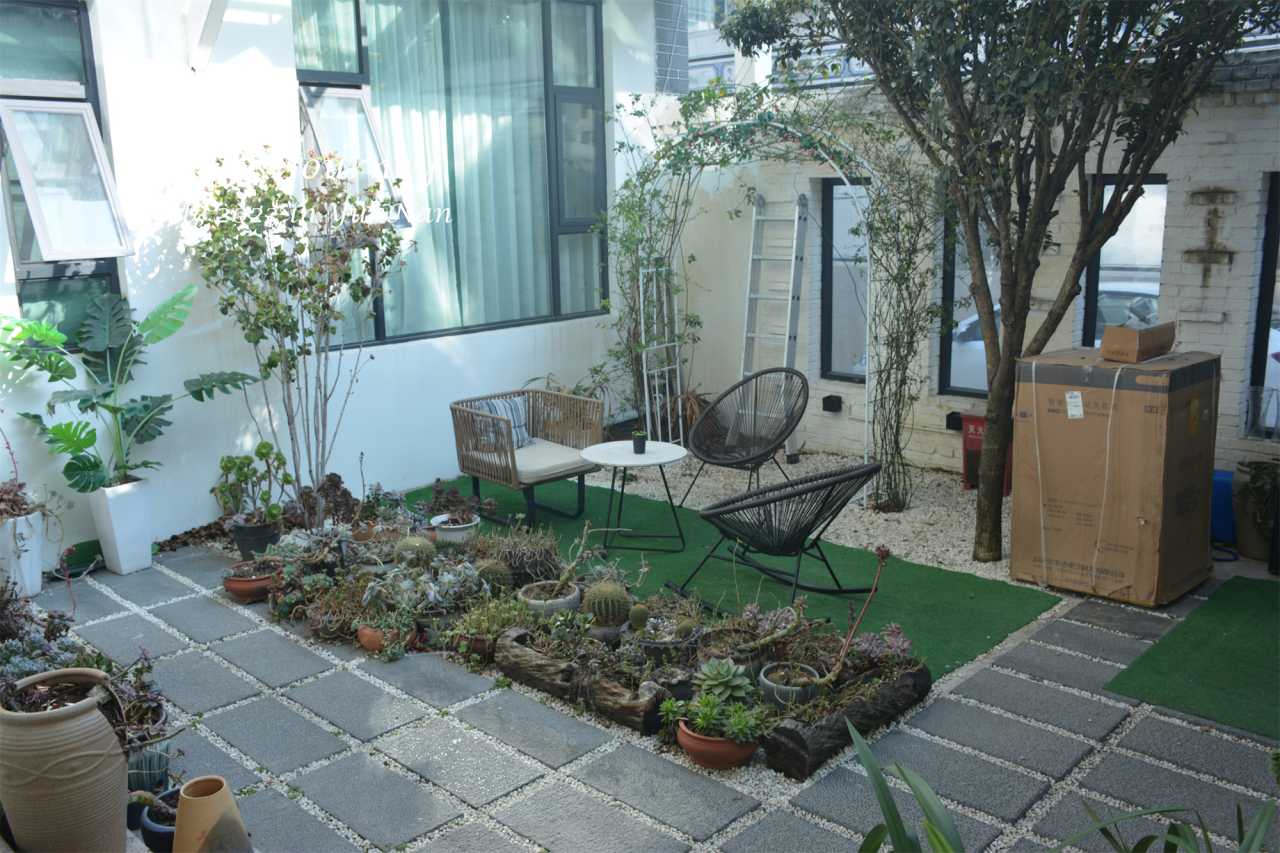
The decor and facilities were fairly new, and there was air conditioning (useful since Lijiang gets cold in winter). The rooms were decent in size. We stayed for three days, and it was overall comfortable. The rooftop offered views of the distant mountains and a panoramic view of the old town—the vista was excellent. It wasn't usually crowded, so I often took my daughter up to the rooftop to play on the seesaw, enjoy the scenery, and admire the owner's succulent plants.
Fourth Stay: Lavande Hotel (Kunming)—Best for Transfers
In Kunming, we chose a hotel near the train station for one night, just for convenience—to minimize walking or taxi time with luggage. For a transit stop, it was a good choice.
Day 1: Yunnan, the Land of Colorful Clouds, We've Finally Arrived
The day before departure, I packed until late into the night after work. Four large suitcases and countless backpacks—that's what traveling with a family is like.
On Saturday, February 18th, we woke up early, had a simple breakfast, and our group of four adults plus one child headed to the airport. This was my daughter's first real trip. When she was little, she couldn't sit still on the plane—she refused to fasten her seatbelt and wanted to bounce on our laps. Now that she's a bit older, she's much more sensible. She fastened her own seatbelt, ate her plane meal, and passed the time watching her iPad. At that moment, I realized she had truly grown up and could now travel with Mom and Dad.
Departing from Xiamen, we flew over Guangdong and Guangxi, and landed in Kunming at 12:30 PM. But Kunming wasn't our destination—we continued by high-speed train, heading straight for Dali. The train wasn't crowded. Our little one snacked on treats and watched cartoons, perfectly content.
Dali, the place I had been longing for, finally arrived. Around 5 PM, we booked a minivan to our guesthouse. The driver was very friendly and chatted with us the whole way. After checking in, we dropped off our luggage and went up to the rooftop to see the view—the real Cangshan Mountain, Erhai Lake, and Dali Old Town, magnificent and clear. The wind was strong, blowing us wide awake. This was the real Dali, and it didn't disappoint.
The first day was the most tiring—we woke up at 6 AM and didn't arrive at our accommodation until 6 PM, spending all 12 hours in between on the road. I even wondered if I had a touch of altitude sickness—from the moment I got off the plane, I had a headache that lasted until evening. We went to bed early, and luckily, I was fine by the next morning.
Day 2: Xizhou Ancient Town and the Famous S-Bend—The Romance of Wind in the Wheat Fields
On the second day, we slept in and took our time getting ready. I never wear makeup in daily life, but when traveling, I make a point to put in contact lenses and apply some light makeup—so the photos don't reveal my age too much, haha.
Xizhou Ancient Town: Spring in the Wheat Fields
Our first stop was Xizhou Ancient Town. It took about half an hour by ride-hailing from Dali Old Town. When we got out, we told the driver we had come specifically to photograph the rapeseed flower fields. He told us there weren't any rapeseed flowers at this time—my heart sank a little. But as we walked into the old town, we discovered an even more delightful sight.
At the entrance to Xizhou Ancient Town, there was a large tree with a huge stone engraved with the words "Xizhou." As soon as we entered, Bai ethnic elderly women in traditional costumes, carrying bamboo baskets and holding colorful ribbons, asked if we wanted braids—10 RMB for 8 strands, 20 RMB for two colors. They worked incredibly fast, and it felt very authentically Yunnanese.
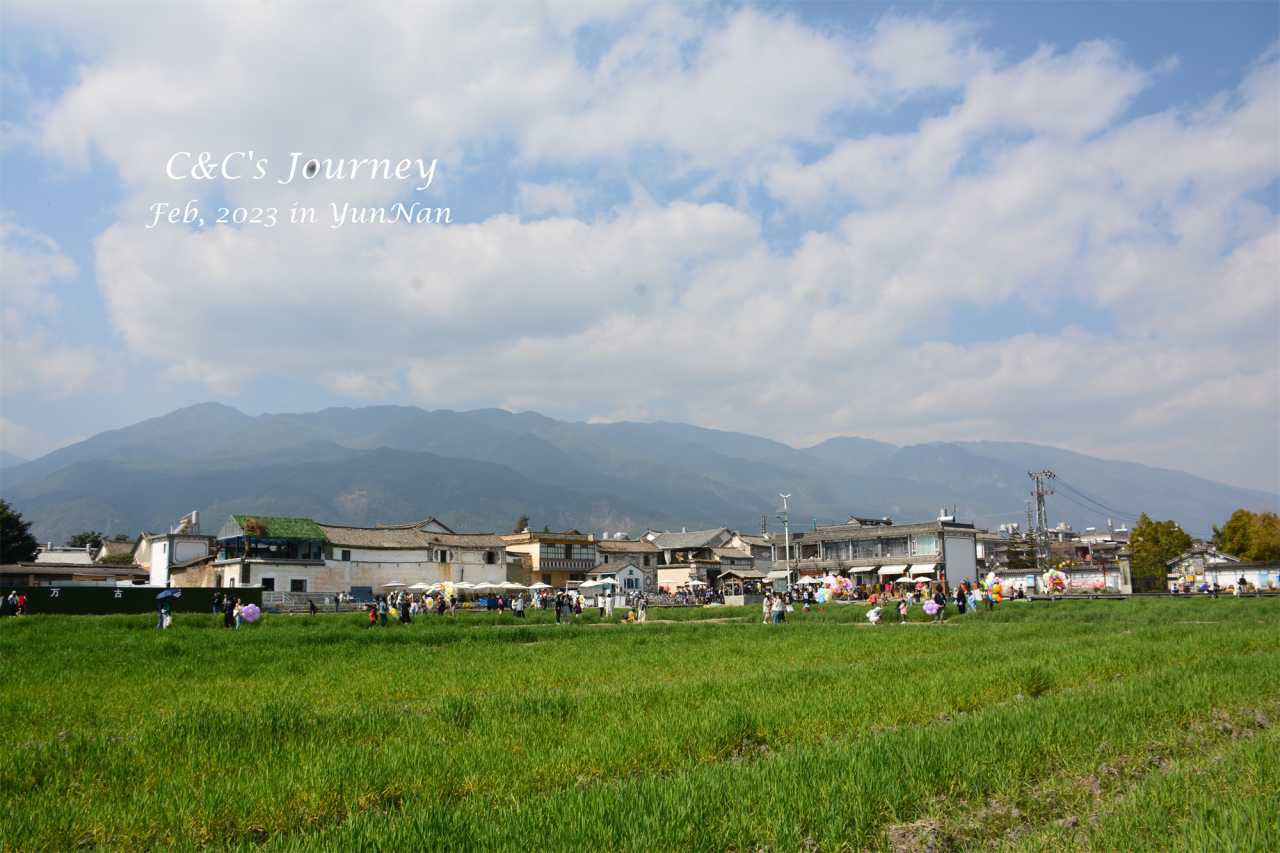
The old town was filled with shops selling flower cakes, Xizhou flatbread, and tie-dye crafts. Walking along the main road, we came across the iconic corner building—there were so many people crowded around taking photos that we quickly bypassed it. A bit further on, we saw the wheat field—a vast expanse of lush green. The spring breeze hit us, and it felt like a sudden opening up of the horizon. It was even more surprising than the rapeseed fields, and beautiful in a way that felt so "Dali."
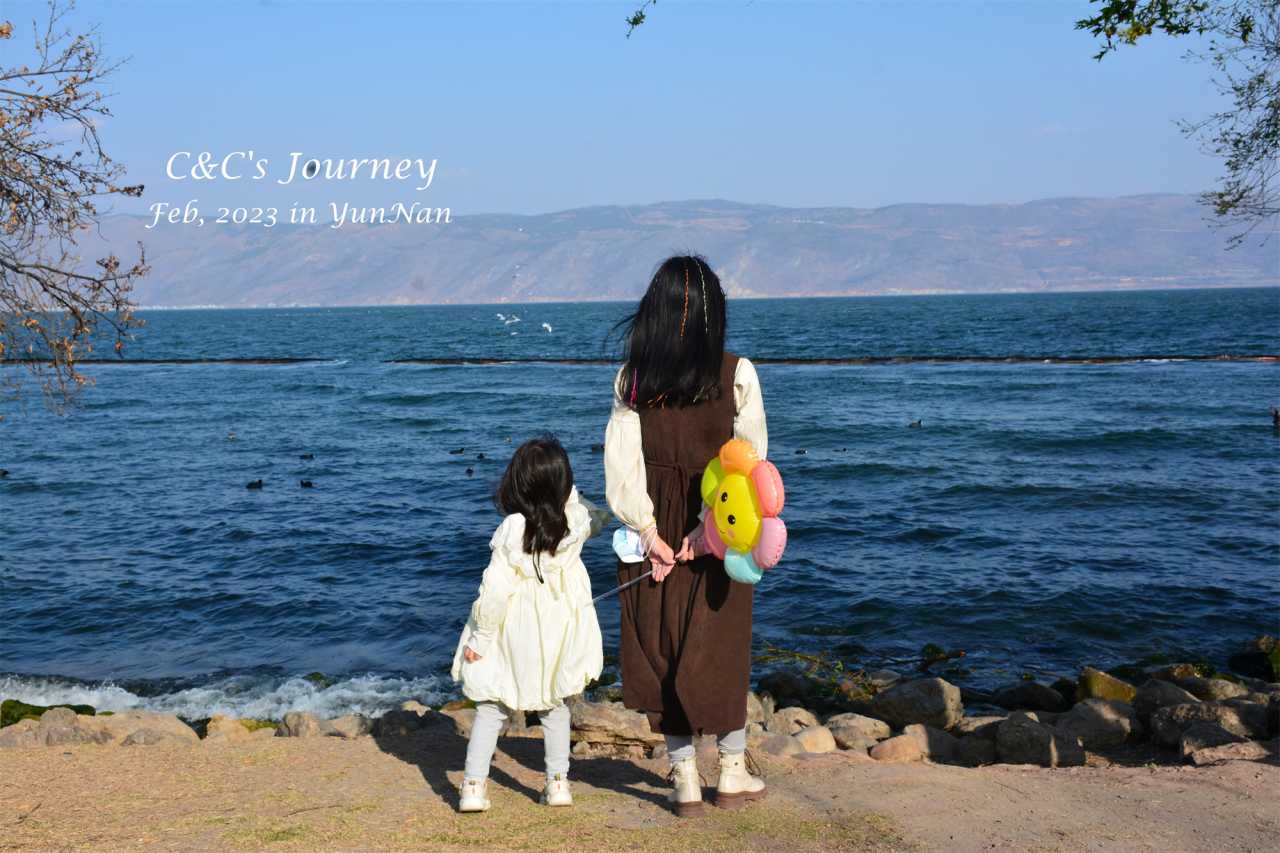
Beside the wheat field, there were coffee shops and Western restaurants, adding a different kind of romance to the countryside. There were also balloon vendors—balloons make great photo props, and the Dali wind whipped them around wildly. My daughter bought a small balloon in the old town. It couldn't fly, but it was perfect for a little kid to hold. She loved it and carried it around for the rest of our time in Dali.
We had lunch at the "Fushi Tianjian Kafei Xican Ting" (Field Coffee & Western Restaurant) next to the wheat field. Great ambiance, great view, comfortable seating, and the Western food was delicious—highly recommended.
The Famous S-Bend: A Surprise by Erhai Lake
In the afternoon, we returned to Dali Old Town, and the grandparents went to take a nap. We had originally planned to visit the "Catmi Garden," but when we called, we found out there weren't many flowers recently, and it wasn't even open on weekends—so we had to skip it. We also had to give up on Lijiang's "Tinghua Valley" because there were no flowers in winter. For flower viewing, spring, summer, and autumn are definitely the best seasons. Additionally, we had wanted to go to Zhemo Mountain (Dali's "La La Land"), but it was closed due to winter fire prevention measures and wouldn't reopen until May.
Our plans were disrupted, but we couldn't waste time. So we decided to go to the famous S-Bend at Panxi Village—it wasn't originally on our itinerary, but it made a perfect substitute.
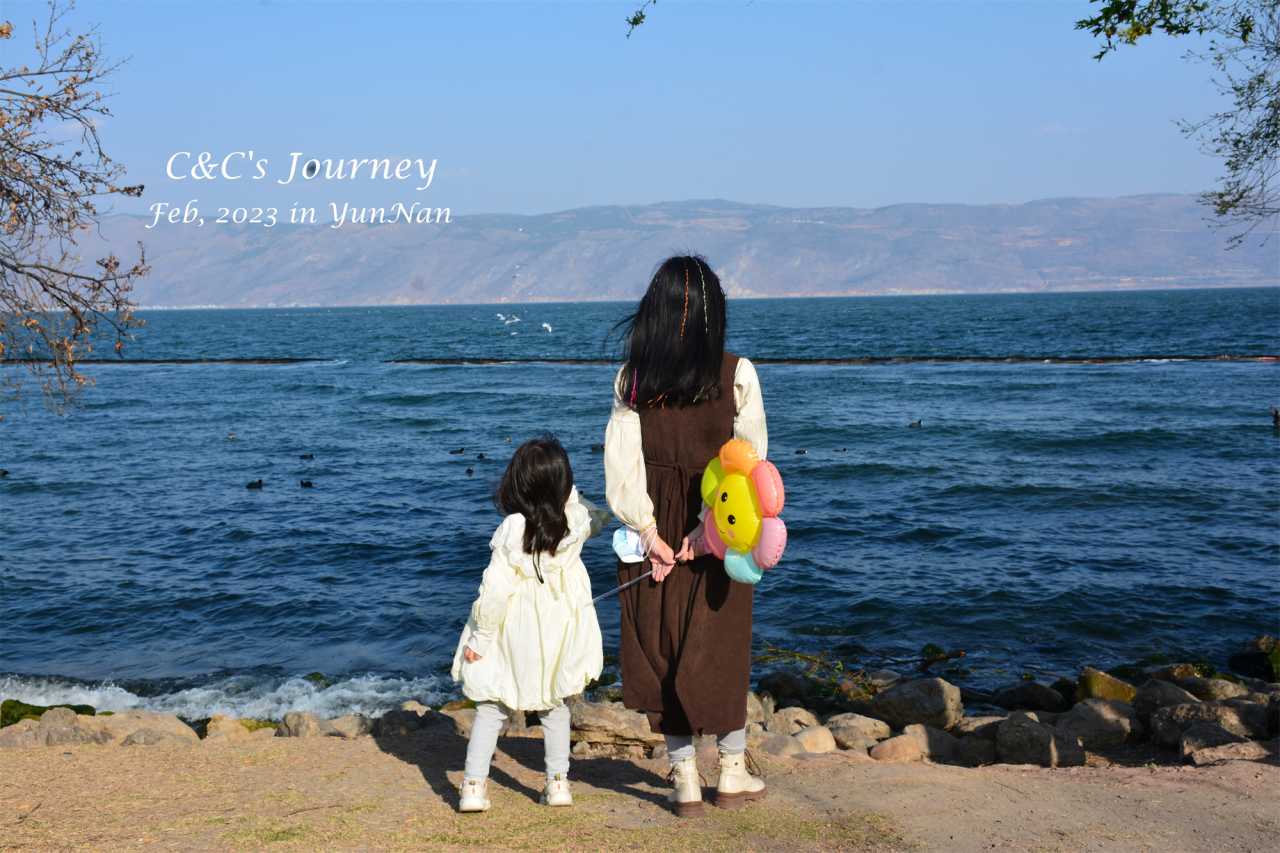
Here, for the first time, I saw Erhai Lake up close—it was truly blue. The lake breeze was cool and refreshing, and the opposite shore of Haidong was clearly visible. I had brought a toy telescope for my daughter, and she used it to seriously observe the seagulls. We met a pretty young woman who borrowed my daughter's silhouette for a photo and also took a group photo of the three of us—my husband was very impressed with her photography skills.
Scattered along the lakeshore were a few solitary trees, which created a very poetic atmosphere. My daughter stood under one of the trees and posed, striking one pose after another like a little model. She even took my phone to take pictures—and she did a pretty good job! She captured the colorful balloons, her mom, Erhai Lake, and the cyclists along the shore.
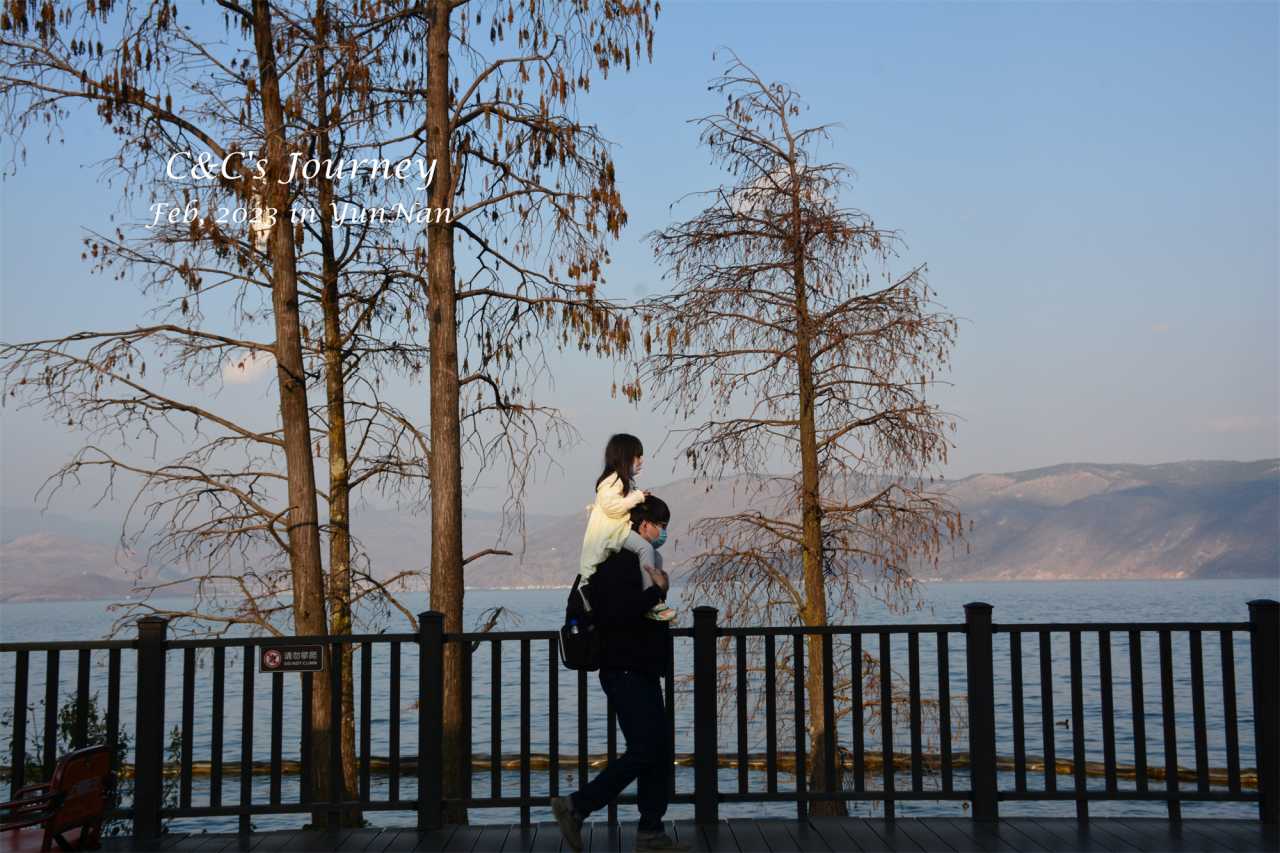
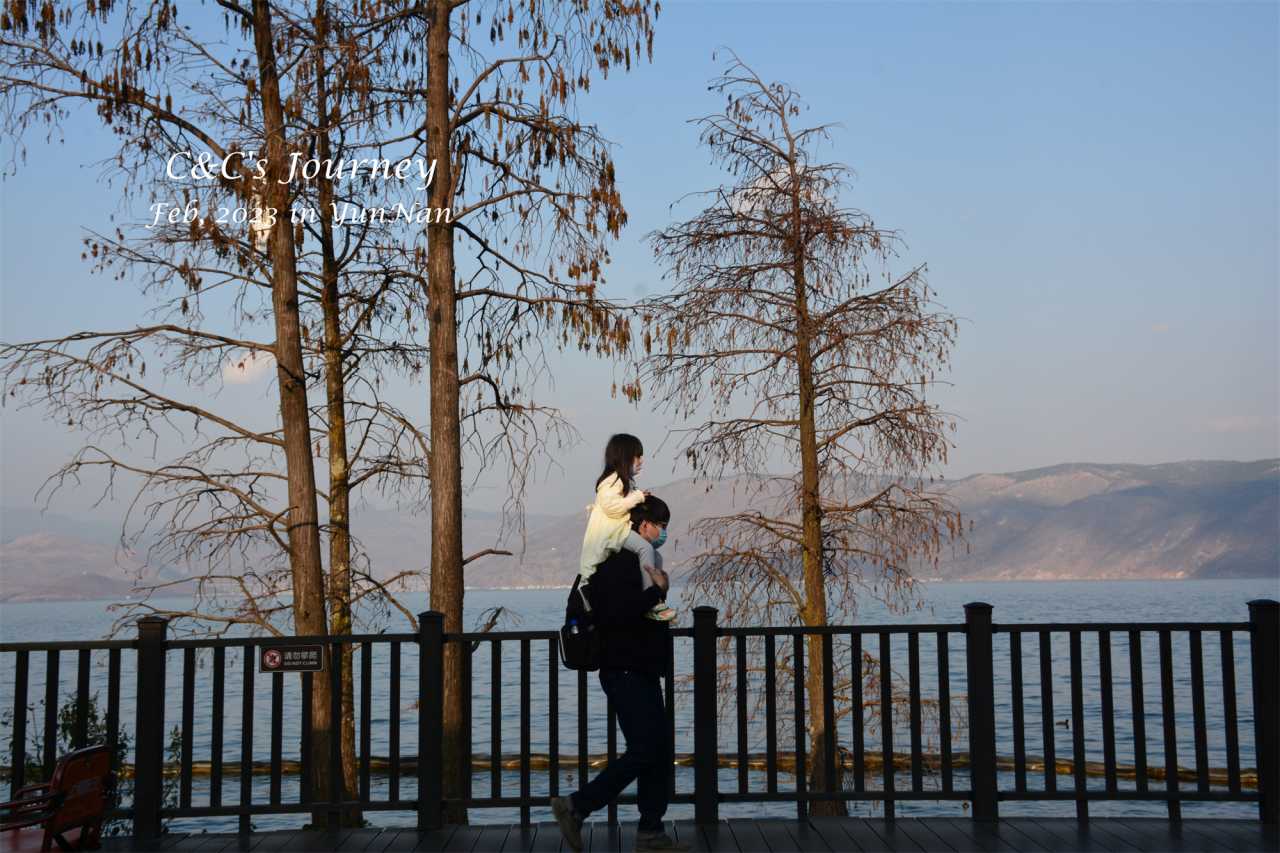
We walked and took photos along the S-Bend, and about two hours flew by. My daughter got tired from walking, so my husband carried her the whole way—Super Dad! I especially love those photos; they look so heartwarming.
Past the S-Bend, the view opened up to an even wider expanse of Erhai Lake and the majestic Cangshan Mountain. As night fell, Cangshan became a silhouette. It wasn't easy to get a ride from the S-Bend—waiting for a ride-hailing app took a long time. We walked while waiting. The countryside here actually looked a lot like our hometown—white walls and black tiles—except for the addition of Cangshan Mountain. Coming from the plains, Cangshan seemed incredibly tall.
In the evening, we briefly strolled through Dali Old Town. There were too many people, and my daughter couldn't walk anymore and needed to be carried, so we quickly headed back. We were tired from the day's outing and went to bed early.
Day 3: Cycling on the West Erhai Eco-Corridor—The Taste of Freedom
The plan for the third day was to experience cycling along the lakeshore in the morning and then head to Shuanglang in the afternoon.
Cycling: From Longkan Pier to Caicun Pier
We chose to start from Longkan Pier and cycle toward Caicun. Bikes couldn't be returned at a different location, so we planned to cycle there and back. We rented bikes at Longkan Pier—20 RMB per bike for the day, which was a bit more expensive than at the S-Bend.
My husband rented one with a child seat, and I chose the one with the lowest seat—I hadn't ridden in years and was a bit nervous. But the road conditions were excellent. Once I got on, wobbling a bit, I was off, and it felt incredibly liberating.
The cycling path was full of scenery, and we could stop anytime to take photos. There weren't many people, and the sun was shining brightly—but remember to wear sunscreen. My bike had a plastic flower tucked into the handlebars, which added a touch of charm. Along the way, we even encountered a "mobile bar" that looked really cool.
At the end of our ride, we returned to Longkan Pier. We walked a bit further to Longkan Ancient Ferry—it was even more beautiful and more crowded. The roadside was planted with cosmos flowers and large patches of succulents. By the lake, there was a big pink heart—very romantic and perfect for a photo op. My daughter posed among the flowers, but there were little bees, so we quickly took the photo and scooped her up.
Heading to Shuanglang: Relaxation on the Opposite Shore of Erhai
After the ride, we returned to our guesthouse at noon to check out and had cold chicken rice noodles at a nearby restaurant. The owner brought out the last two steamers of soup dumplings—they were really delicious.
We set off for Shuanglang. Located on the east side of Erhai Lake, Shuanglang is almost directly across from Dali Old Town. The ride took nearly an hour. The scenery along the way was beautiful—we essentially circled half of Erhai Lake. In February, the rapeseed flowers along the roadside were in full bloom, reminding me of spring in my hometown.
In Shuanglang, I had originally planned to visit Yang Liping's Sun Palace, but it required advance reservations, and by the time I tried to book, it was full. I also thought about hiring a car to tour the east Erhai attractions, similar to what we did on the west side. But after two busy days, we were a bit tired by the time we reached Shuanglang. Besides, our guesthouse was so amazing that we just wanted to stay in and enjoy the relaxation. In the end, we didn't visit any of the east Erhai attractions—we only took a brief walk through Shuanglang Ancient Town.
Our guesthouse was right on the water, with a balcony overlooking Erhai Lake. We had booked a two-story duplex: the grandparents stayed upstairs, and our family of three stayed downstairs. The room was spacious, and there was a huge bathtub—we didn't use it, but it felt like it could be used for a little kid to swim and play.
As soon as we checked in, the butler brought us afternoon tea. It was delicious and beautifully presented—we used it as a photo prop first. The recliner on the balcony was incredibly comfortable. We could lie there and watch the sunlight filter through the clouds onto the surface of Erhai Lake. The wide view, the cool breeze, and the sounds of seagulls and ducks all around—it was so close to nature, relaxing and stress-relieving.
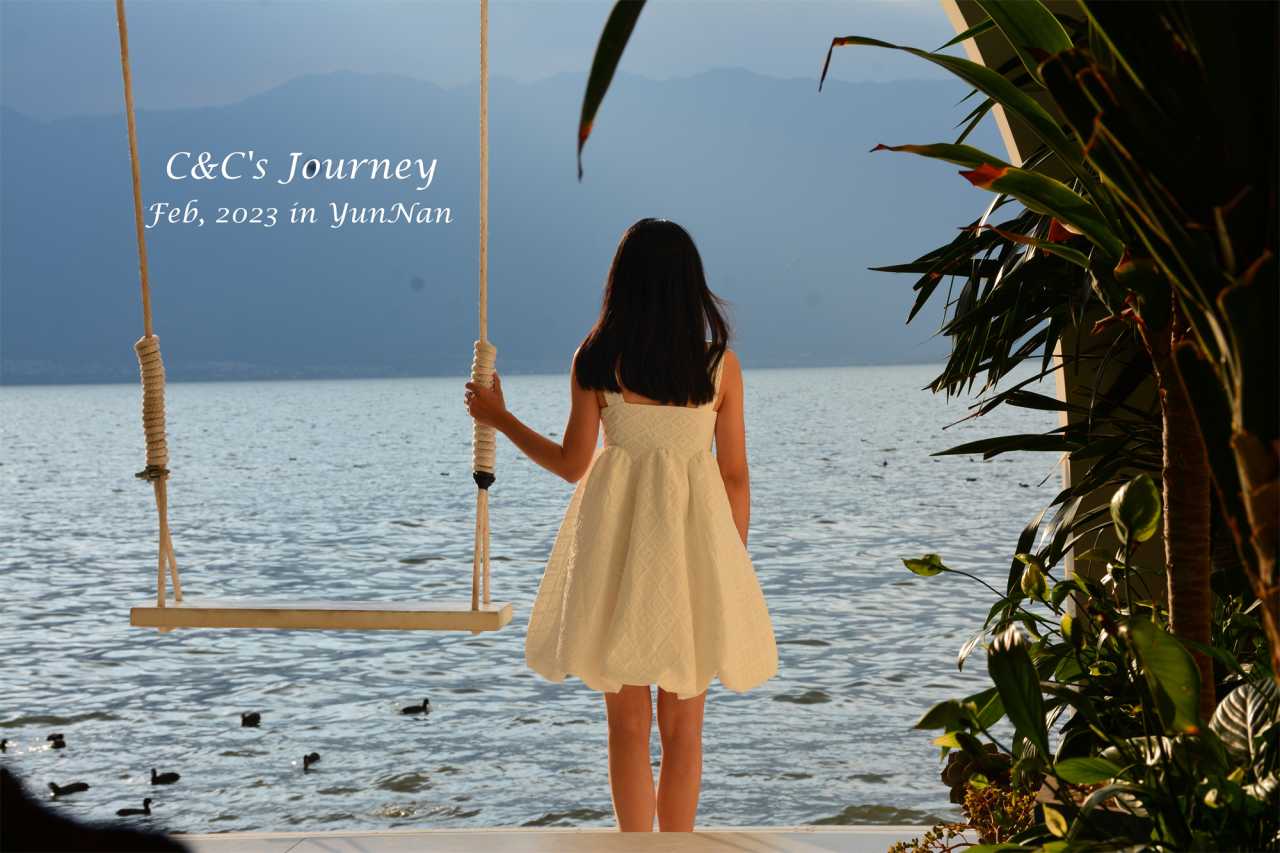
The guesthouse had a网红 (internet-famous) swing. Whenever I had a free moment, I took my daughter there for photos. Unfortunately, my photography skills aren't great, and the sun was hiding behind the clouds, so the photos came out a bit dark—but my little cutie still looked adorable.
In the evening, we found a restaurant in Shuanglang Ancient Town that served copper-pot beef hotpot. It was delicious.
Day 4: In Shuanglang, Spending a Day with Erhai Lake
We spent almost the entire fourth day at the guesthouse.
In the morning, I woke up and first went to the balcony to see Erhai Lake in the early light. I happened to see a boat approaching, which sent the ducks on the water scurrying away in a flurry—creating funny streamline patterns on the water, haha.
We went downstairs to the restaurant for breakfast. It was a set meal, one per person, with a good variety, including Yunnan-style rice noodles. My daughter was willing to feed herself—good girl!
The sun was shining brightly, and the large patch of white cosmos flowers downstairs was particularly dazzling. We tidied up and went down for photos. My daughter and grandma watched the lake together, with the west shore of Erhai visible in the distance. I took a commemorative photo with my daughter by the lakeshore in Shuanglang—I'll bring you to even more places in the future to see different sceneries.
The cosmos flowers were beautiful, but the little bees loved them too—be careful not to get stung.
At noon, my husband and I took a walk through Shuanglang Ancient Town. We came across a stage, with elderly Bai people gathered beneath it. The alleys were deep and narrow, leading down to the lakeshore. Deep inside one alley, we stumbled upon a café that was beautifully decorated. The old town was quite crowded. We walked all the way to Yuji Island, where Yang Liping's Sun Palace is located. The crowds were too dense, so we sat by the shore for a while and then headed back.
Back at the guesthouse, I changed into a dress and posed for photos on the网红 (internet-famous) swing. The timing was perfect—the sun came out, making the lake surface sparkle and bathing everything in warm tones. Thank you, sunshine, and thank you, husband, for capturing the photos I liked. Well, the sun disappeared again.
In the evening, we had authentic Bai cuisine at "Shuanglang Dizhu Jia" (Shuanglang Landlord's House). The flavors were very authentic—I recommend it. Back at the guesthouse, I wanted to go to the terrace to look at the stars—well, there were none.
Day 5: Saying Goodbye to Dali, First Encounter with Lijiang
On the fifth day, we had to leave Dali for Lijiang, and I was especially reluctant. I lingered on the balcony a little longer in the morning. Goodbye, Sanse Yunhe. Goodbye, Cangshan Mountain. Goodbye, Erhai Lake. Goodbye, Dali of wind, flowers, snow, and moon.
From Shuanglang to Lijiang, we decisively chose a ride-hailing car via the expressway. We stopped at a service area in the mountains along the way—it was so quiet, with hardly anyone around, and very cold, much colder than down below.
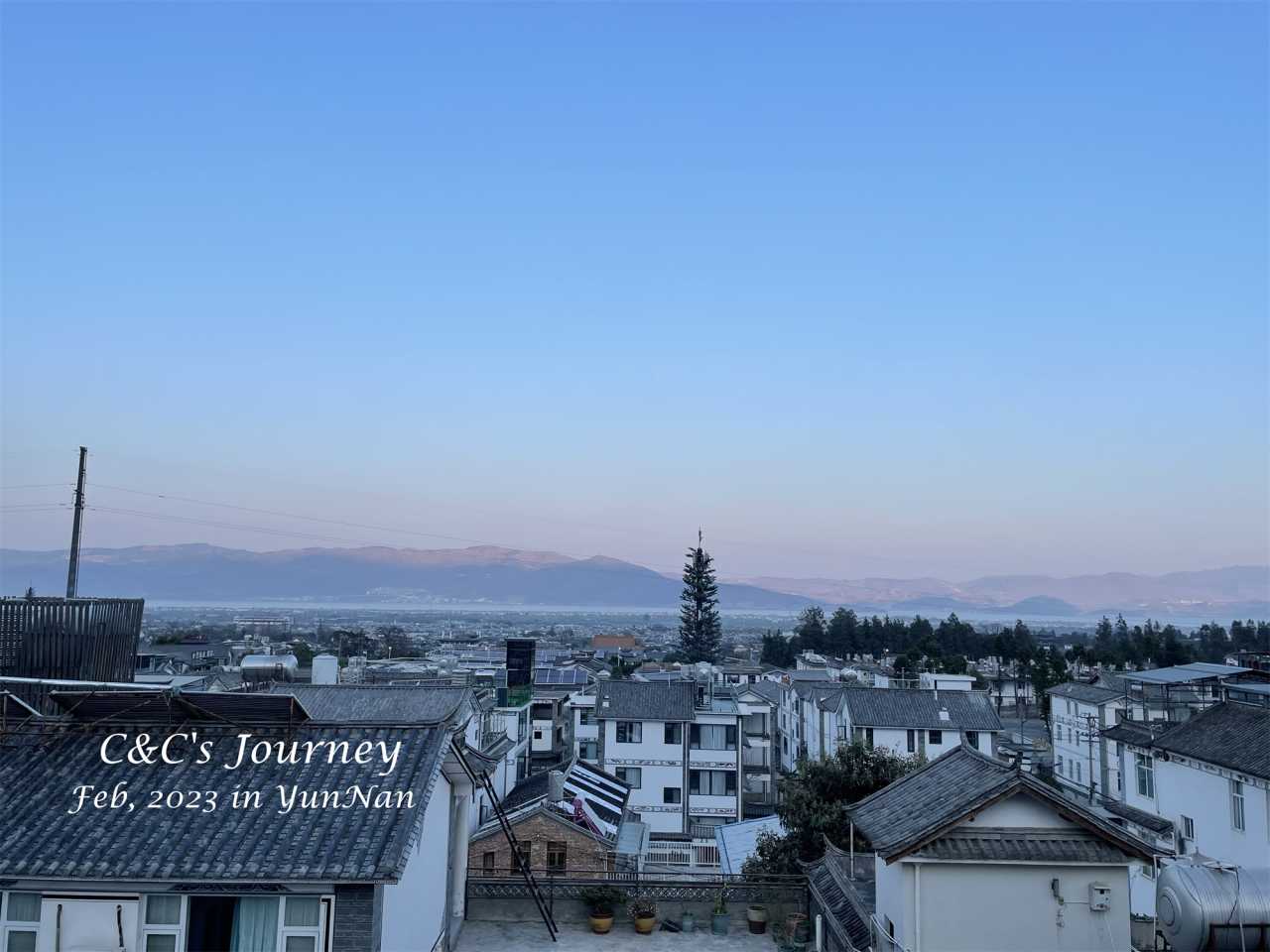
Our guesthouse in Lijiang was nicely decorated, clean, and had smart home features. It was located on a higher ground, and it was a quick walk up a small path from Lijiang Old Town. The rooftop had a great view, overlooking the old town.
After checking in, we went out for lunch. The butler at Sanse Yunhe had recommended "Apo La Paigu" (Grandma's Preserved Pork Ribs), and there happened to be a branch right at the entrance to Lijiang Old Town. The taste was decent.
After eating, we took a short walk through the old town. It was huge, and I figured my daughter would get tired quickly if we walked around with her, so we decided to come back in the evening. There were many people taking ethnic costume photos in the old town, and it felt like Lijiang Old Town was the perfect place for that kind of photography. So I found a highly-rated shop—"Yu Xue Qing Cheng" Travel Photography—and booked an appointment. I chose the 298 RMB per person package. Everyone except Grandpa wanted to do it—since we were here, why not leave with a special souvenir?
After booking the photoshoot, we returned to the guesthouse and asked the owner to book tickets for the next day's Lijiang Eternal Love show—280 RMB per person for VIP seats, which were centrally located.
In the evening, we cooked our own dinner at the guesthouse. Grandma bought the ingredients from the local market. I have to say, whether in Dali or Lijiang, the strawberries were so cheap and of excellent quality—large, plump, and sweet. We bought strawberries almost every day and finally achieved strawberry freedom.
In the evening, we left our daughter with the grandparents for a while, and my husband and I went to explore Lijiang Old Town. The night view of the old town was stunning, even more beautiful than during the day, and had a much better atmosphere—probably the most beautiful night view of any old town I've ever seen. Walking through the old town, there were singers in bars and cafés everywhere, making you want to stop and listen at every corner.
Day 6: Jade Dragon Snow Mountain and Lijiang Eternal Love
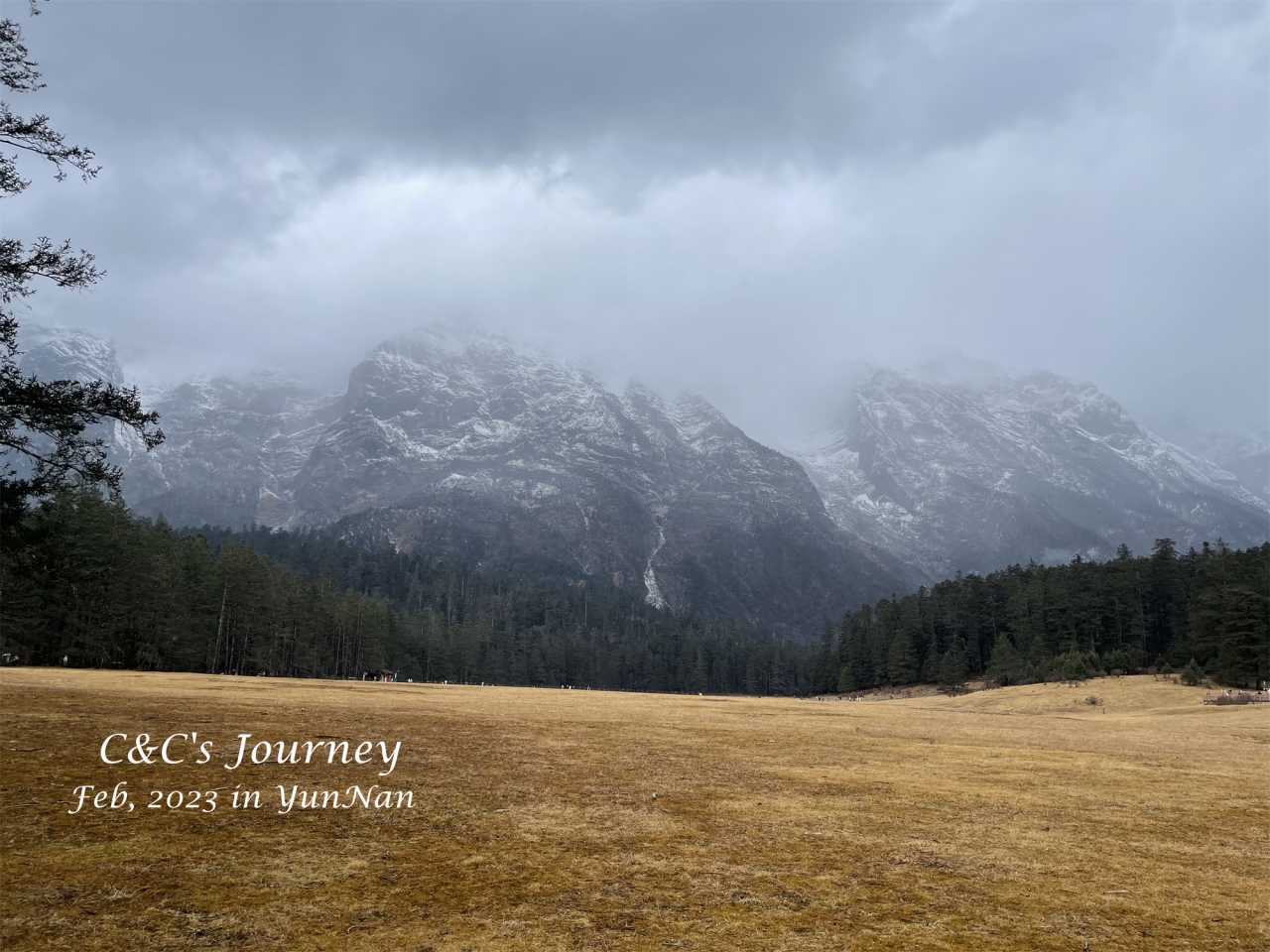
When I first arrived in Yunnan, I checked the weather forecast, which predicted rain for both of our days in Lijiang. But we were very lucky—when we actually got to Lijiang...
(Note: The original text ends abruptly here. Based on the planned itinerary, Day 6 would have included a visit to Jade Dragon Snow Mountain and the Lijiang Eternal Love show.)
Conclusion: The Meaning of Travel Lies in Meeting a Better Version of Yourself
This family trip to the Land of Colorful Clouds, though only a few days long, gave me so much.
In Dali, I witnessed the grandeur of Cangshan Mountain and Erhai Lake, experienced the freedom of cycling on the West Erhai Eco-Corridor, and felt the healing power of the waterfront guesthouse in Shuanglang. In Lijiang, I enjoyed the romance of the old town's nightscape and looked forward to the majesty of Jade Dragon Snow Mountain.
More importantly, I saw my daughter's growth—she was no longer the restless baby who couldn't sit still, but a little girl who could feed herself, take photos, and strike poses like a little model. I saw my husband's dedication—carrying our daughter the whole way without a single complaint. I saw the companionship of family—having the grandparents along made the trip even more heartwarming.
Some say travel is about going from a place you're tired of to a place others are tired of. But I think travel is about encountering different sceneries, meeting different people, and discovering a different version of yourself.
Yunnan, the Land of Colorful Clouds, I finally made it. And you are worth visiting again and again.
Practical Tips Summary: - Best Season: Spring, summer, autumn (best for flower viewing) - Transportation Tip: Dali → Lijiang: choose a ride-hailing car for a direct, time-saving route - Accommodation Tip: In Shuanglang, choose a waterfront guesthouse for an exceptional experience - Must-Try Foods: Cold chicken rice noodles, copper-pot beef hotpot, Grandma's preserved pork ribs, Bai cuisine - Must-Buy Souvenirs: Strawberries (achieve freedom), flower cakes, tie-dye crafts - Things to Note: Protect yourself from the sun, dress warmly, and rest adequately in the high-altitude area
You should also read:
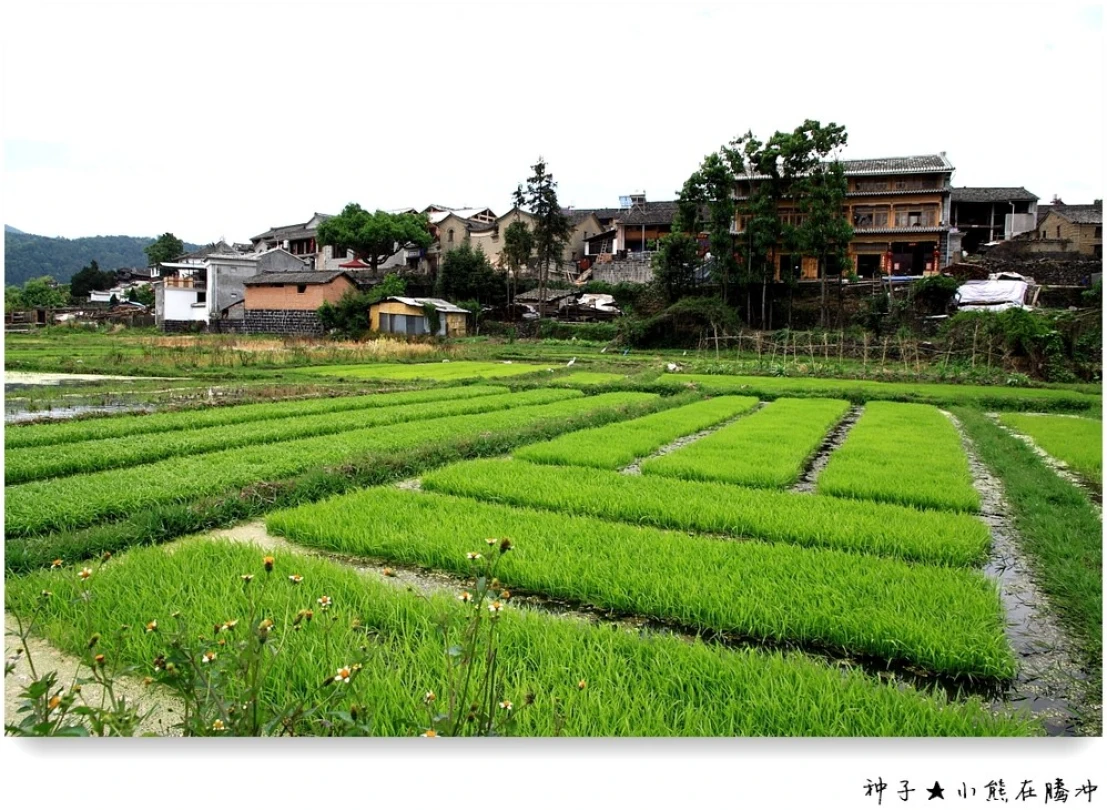
Tengchong·Heshun: Finding Life as It Should Be in a Border Town Where Time Stands Still
Tengchong·Heshun: Finding Life as It Should Be in a Border Town Where Time Stands Still The long journey of over twenty days was over. On my first day back at the office, I was still in a daze. My fingers couldn't find the keys on…
Continue reading...
Two Girls' Graduation Trip: Dali and Shuanglang – A Poetic Farewell to Mountains and Sea
Two Girls' Graduation Trip: Dali and Shuanglang – A Poetic Farewell to Mountains and Sea Preface: Catching the Tail of Youth, Heading South During our senior year of college, my roommate and I – two girls studying in Beijing – decided to bid farewell to…
Continue reading...
Cloud Travelogue · Dali of Wind, Flowers, Snow, and Moon: A Three-Day, Two-Night Journey of a Free Spirit
Cloud Travelogue · Dali of Wind, Flowers, Snow, and Moon: A Three-Day, Two-Night Journey of a Free Spirit I am a cultured female foodie with a touch of rogue charm. I slung on my backpack, took my lover's hand, and set off on a spontaneous…
Continue reading...