Crossing Mountains, Seeking a Different Kind of Beauty: A 7-Day Deep Dive into Lijiang and Lugu Lake
Crossing Mountains, Seeking a Different Kind of Beauty: A 7-Day Deep Dive into Lijiang and Lugu Lake
Some trips are long-planned romances; others begin with the impulsive words, "Let's go." In August 2014, my "nemesis"—someone I'd known for six years but only been with for a month—and I spontaneously set off on a journey to Lijiang. This trip had no textbook itinerary, no checklist-style sightseeing. It was just two hearts wanting to see the world together and a determination to cross mountains in search of a different kind of scenery.
Why Lijiang and Lugu Lake?
If you ask me which place in Yunnan is most worth visiting, I'll answer without hesitation: Lijiang's smoky warmth, Lugu Lake's ethereal beauty. One is an ancient town where tenderness hides within the bustle; the other is a "Kingdom of Women" so serene it makes you forget time. They're like two sisters with completely different personalities—one passionate and outgoing, the other cool and otherworldly.
This 7-day trip was relaxed and free. We flew from Guiyang to Lijiang, spent the night in Dayan Old Town, wandered through Mu Mansion (木府), strolled the alleyways, and sampled street food. Then we headed to Lugu Lake to experience the Mosuo people's walking marriage culture, watched the sunrise at Caohai (Grass Sea), and listened to stories at Nüwa Bay (Goddess Bay). Finally, we returned to Shuhe, lounged in our guesthouse soaking up the sun, and climbed Jade Dragon Snow Mountain one last time. Every day felt like opening a new book, each page filled with surprises.
First Glimpse of Lijiang: Slow Time in the Ancient Town
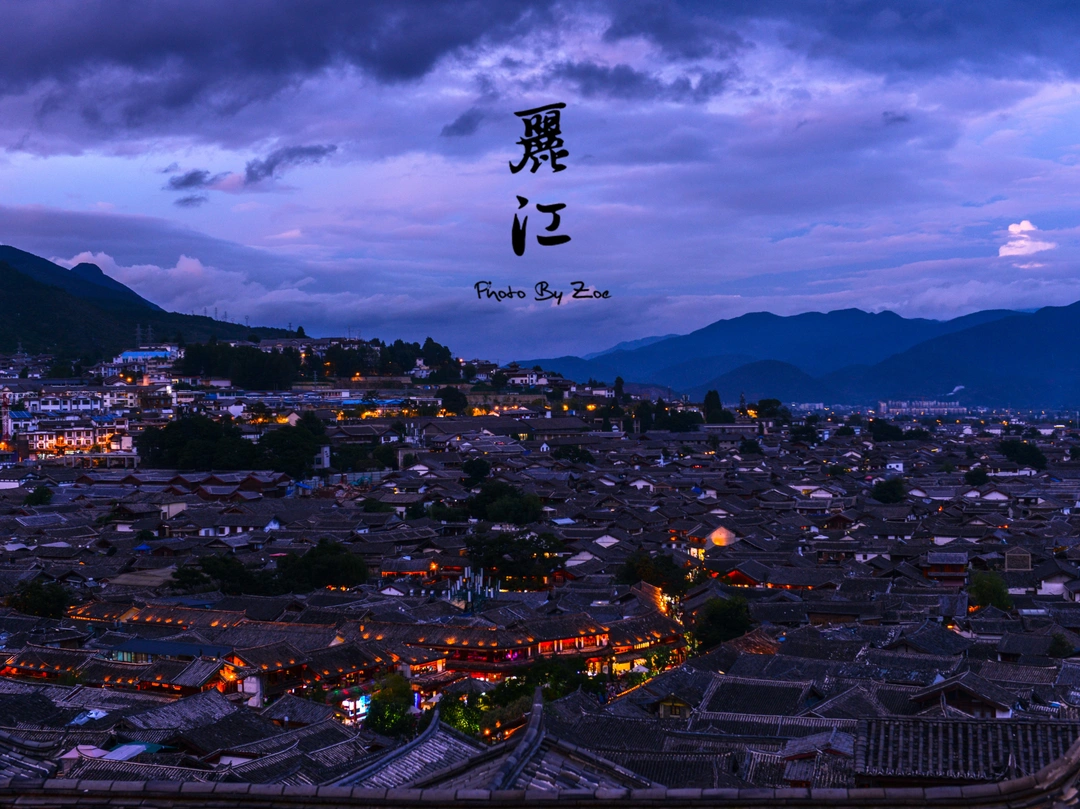
Dayan Old Town: Crowded, but the Heart is Calm
The plane landed at 7:30 PM. The guesthouse we'd booked, "Hongchen Jingtu" (Red Dust Pure Land), sent a car to pick us up. The owner was meticulous—each room had a different décor style, and the service was thoughtful. We dropped our bags and immediately plunged into the old town.
To be honest, my first impression was, "So many people!" The area around Sifang Street (Square Street) was so packed we could barely move. But oddly enough, if you turned into a small alleyway and got away from the main street's noise, you could find your own quiet corner.
Wind Bells and Mu Mansion: Little Objects with Stories
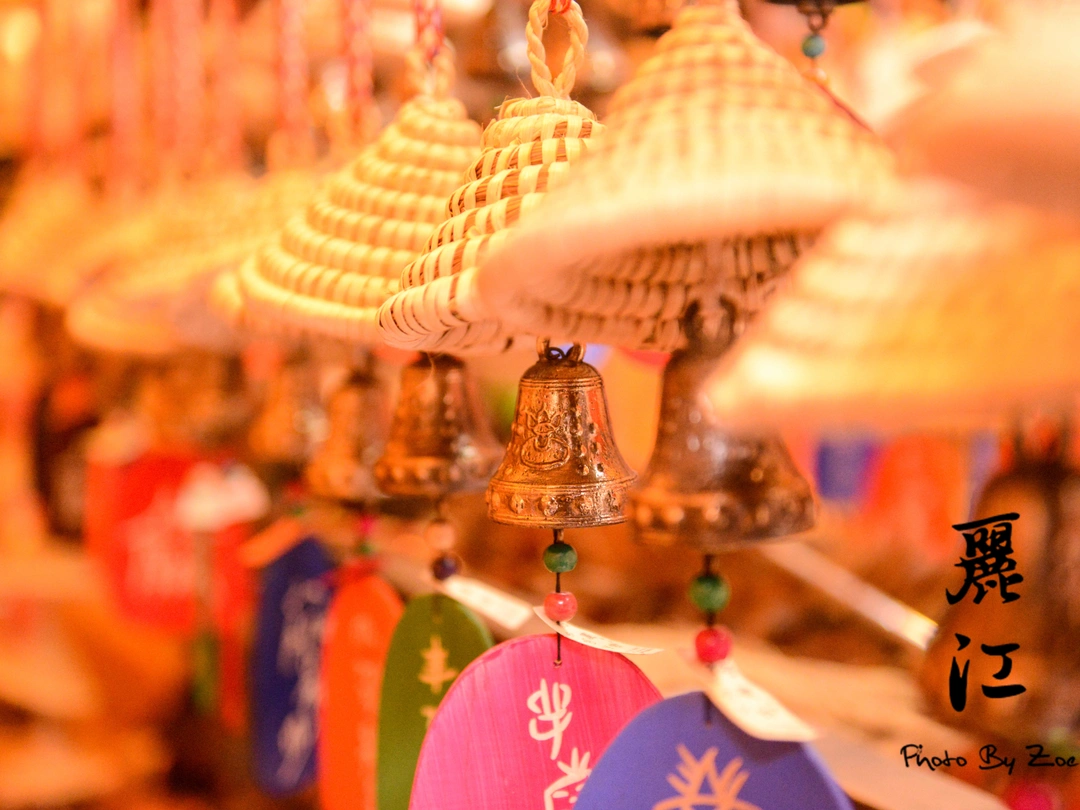
At A Xiali Wind Bell Shop (阿厦丽驼铃店), I bought him a wind bell. Originally, wind bells were used by horse caravans to chase away loneliness during long journeys. When the caravan men heard the sound, it reminded them of their wives and families back home, and they prayed for safety. Over time, the bells became tokens of love and wishes. I picked one engraved with Dongba script reading "Love · Only One." He said to me, "When school starts, I'll hang it by my dorm bed."
Mu Mansion was the residence of Lijiang's chieftains during the Ming Dynasty, often called "The Forbidden City of the South, the Mu Mansion of the North." We bought tickets from a local auntie at the entrance—80 yuan for two (Taobao had them for 30 yuan, but we couldn't be bothered). We spent the afternoon exploring, and what left the deepest impression were the exquisite architecture and the stories behind them. How many people came here because of the TV series The Mu Mansion Story (《木府风云》)? I know I did.
Eating in the Old Town: Where's the Smoked Pork Ribs?

A word of advice about food: Go to Xiangshan Market for smoked pork ribs (腊排骨). I've yet to find a decent place in the old town. Chicken bean jelly (鸡豆凉粉) is hit or miss—every shop has its own recipe. I recommend the chicken bean jelly at Shop 88 (88号小吃店) and the salmon hotpot set at Blue Papaya Restaurant (蓝木瓜餐厅)—definitely give that a thumbs up!
Tile Cats (瓦猫) are a folk tradition from Kunming's rural areas, placed on rooftops to ward off evil spirits. If your front door directly faces a temple or someone else's house, it's considered unlucky, so a tile cat is placed there for "protection." Near Wuyi Street (May First Street), there's a shop selling cartoonish tile cats. The owner said you have to use a marker pen to dot their eyes after buying them—that's how they're "consecrated."
Lion Hill at Night: Overlooking the Old Town, Listening to a Song
If you're not into bar-hopping, the cafés on Lion Hill (狮子山) are your best bet. Almost every one offers a panoramic view of the old town. We went to Three Bears Café (三只小熊)—great atmosphere, and the singer was leagues better than the ones next door. The food and drinks were average, but for just enjoying the night view and taking photos, it was more than enough.
On the way back to the guesthouse, I turned to look at you casually, only to find you already looking at me. We smiled at each other, and you tightened your grip on my hand. In that moment, the old town's lights sparkled, but my world was only you.
Lugu Lake: The Last Pure Land on Earth
The Journey: 7 Hours of Driving, Worth Every Minute
Before heading to Lugu Lake, the guesthouse staff tried to scare us: "The roads are bad," "There are landslides," "Some people sat for 10 hours." But we were determined. The day before, I booked tickets on Taobao for a 6:30 AM departure. Guess who was still in bed at 4:30 and almost made us miss the bus?
We stumbled from Wuyi Street to the parking lot before dawn. After a bowl of terrible rice noodles, we finally hit the road. Every two hours, the driver stopped to let us rest. When we neared the Lugu Lake viewpoint and saw that impossibly blue water, I instantly thought: 7 hours of driving, worth every minute.
Entering Lugu Lake costs a fee—100 yuan from the Lijiang side, 80 yuan from the Sichuan side, with a student discount for half price. They also give you a "Kingdom of Women Passport" (女儿国护照).
Lugu Lake's Beauty: Otherworldly and Untouched
I always felt the white clouds over Lugu Lake were close enough to touch. The driver said, "First-timers at Lugu Lake—how many don't scream?" I didn't scream, but I was shouting inside.
Luyuan Cliff (泸源崖) is the source of Lugu Lake. The mani pile (嘛哩堆) was draped in colorful prayer flags. Standing on the oddly shaped rocks and gazing at the lake, I slowly calmed down—no restlessness, no agitation.
Near Lover's Beach (情人滩) and the Walking Marriage Bridge (走婚桥), there are plenty of food stalls selling fried small fish and shrimp, grilled potatoes, wild greens, and bean jelly—all pretty tasty. When you're tired from walking, just stop for a meal and recharge.
Pig-trough Boats and Mosuo Culture
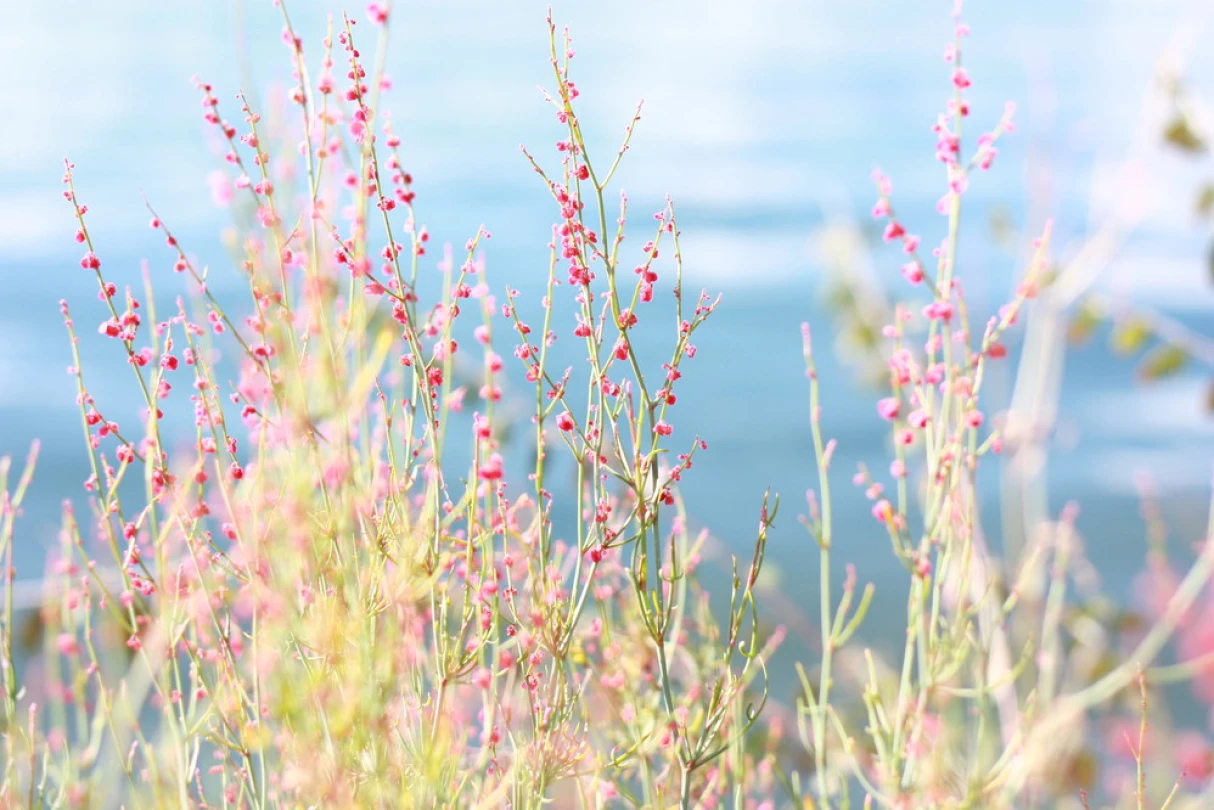
Pig-trough boats (猪槽船) are iconic to Lugu Lake. If you don't take one, you haven't truly been to Lugu Lake. Prices range from 30 to 80 yuan per person. I recommend the 80-yuan option—the boatman will take you into the Caohai (Grass Sea). If you're lucky with the season, you might even see a small patch of flowers.
The Mosuo people are China's only remaining matrilineal society, practicing a "walking marriage" system where men don't marry and women don't wed. The partners in such relationships are called "Azhu" (阿注) and "Axiao" (阿夏), so it's also known as "Azhu marriage."
Sige Huotang: Staying by the Grass Sea
We booked Sige Huotang (思格火塘), run by a Mosuo man named Li Sige. Every room has a small balcony overlooking the Caohai. Prices range from 400+ to 600+ yuan, with complimentary breakfast delivered to your room. The auntie tidied up the room every day after we left, restocking drinks and bottled water. We stayed two nights and really didn't want to leave.
Zhao Fahao and "Good People's Eatery"
At Nüwa Bay (Goddess Bay), there's a barbecue stall called Good People's Eatery (好人小吃). The owner, Zhao Fahao, is an internet celebrity. He once rescued two drowning people from the freezing lake water, but the effort left him with lung edema. The government gave him a "Bravery Award" plaque, but only 100 yuan in compensation. Later, he opened this small shop—30 yuan per person for all-you-can-eat: tomato salad, matsutake chicken soup, matsutake lake fish soup, and plain cabbage. The food is absolutely delicious. Every guest who walks in, he says, "Loosen your belts!" Ha, what a funny and warm-hearted guy.
Lugu Lake Sunrise: Woken by the Sun
At 7 AM, I was woken by sunlight. On reflex, I grabbed my camera and ran to the guesthouse entrance. The sunrise over Caohai was so beautiful it made me want to cry. In that moment, I told myself: I will come back here.
Shuhe: Even More Leisurely Than Dayan
Shuhe's Slowness: Perfect for "Nesting"
Shuhe (束河) has far fewer tourists than Dayan, with a special kind of tranquility. In Shuhe, time seems deliberately slowed down. We spent most days just wandering the old town or "nesting" in the guesthouse, soaking up the sun and sleeping. Locals like to use the streams by the roadside to chill their fruit and drinks—it keeps them fresh and cold.
Jade Dragon Snow Mountain: The Legend of One Meter of Sunlight
We joined a day tour for Jade Dragon Snow Mountain, costing 600+ yuan per person, including the ancient town maintenance fee and Impression Lijiang show. I recommend joining a tour—after all, at high altitudes, it's safer to have a professional team.
Ganhaizi (Ganhaizi Meadow) has a pond stocked with salmon. There's a wishing pool where, it's said, if you toss a coin in, your wish will come true. Impression Lijiang (印象丽江) is a must-see—raw, real, and breathtaking. Unfortunately, I forgot to bring my telephoto lens, so I couldn't get close-up shots.
I was so excited riding the cable car up the mountain, but that day was all fog—couldn't see a thing. The water at Blue Moon Valley (蓝月谷) is said to purify the soul; washing your hands and face can wash away bad luck.
There's a beautiful legend about Jade Dragon Snow Mountain: A Naxi woman named Kaimei Jiumingjin and a man named Zhubu Yulepeng fell in love, but his parents opposed the relationship. Kaimei Jiumingjin died for love, and Zhubu Yulepeng threw himself into the fire with her body, both turning to ashes. Later, a "lover's paradise" appeared at the peak of Jade Dragon Snow Mountain—the Third Kingdom of Jade Dragon. Legend says that every autumn equinox, the heavens send down a beam of sunlight, and those it touches find true love. But the Wind God, jealous, always covers the sky with dark clouds. The Wind God's daughter, pitying the people, secretly cut off one meter of sunlight and hid it in a cave on the cliff, so that only the brave could find happiness. That's the origin of "One Meter of Sunlight" (一米阳光).
Final Thoughts: Memories Left on the Road
This trip had countless unforgettable moments: riding an electric scooter around Lugu Lake, having my camera lens chipped when a horse bumped it while we were riding on the Walking Marriage Bridge, falling into the water together while walking through Caohai, and nervously riding back with only two bars of battery left... But the most unforgettable was watching my partner go completely crazy by Lugu Lake, looping the chorus of one song all the way to Zhaojiawan (Zhao Family Bay).
"The best version of yourself is on the road." I've always wanted to write this on a sticky note and put it up in some artsy café, but the two of us were too lazy to even leave the room when we didn't have to—so lazy we had no friends. Well, now I'm officially giving this line to you.
A Few Tips for This Trip:
- Don't rush Lugu Lake—stay at least two nights to truly appreciate its beauty.
- Shuhe is better than Dayan for accommodation—quieter, more relaxed, and cheaper.
- Join a tour for Jade Dragon Snow Mountain—bring extra oxygen, and don't push yourself.
- Go to Xiangshan Market for smoked pork ribs—don't waste money in the old town.
- Bring a telephoto lens—or you'll regret it forever (like I did).
Finally, let this photo from the Lugu Lake ring road commemorate those days: August 15, 2014 – August 22, 2014. Thank you for being there. Thank you for being on the road.
Reproduction in any form without permission is prohibited.
Weibo: @一颗西柚_
You should also read:
Escaping Nanning, Falling Under Lijiang's Spell: Our Four-Person, Ten-Day Yunnan Dream
Escaping Nanning, Falling Under Lijiang's Spell: Our Four-Person, Ten-Day Yunnan Dream Before We Set Off: No Pain, No Obsession Have you ever had that impulse—suddenly tired of the office fluorescent lights, the crush of the subway, the endless parade of identical takeout boxes, and just…
Continue reading...
Into the Hidden Valley: A Solo Journey Through the Mysterious Dulong River
Into the Hidden Valley: A Solo Journey Through the Mysterious Dulong River Deep in the northwestern corner of Yunnan Province, tucked away from the modern world, lies a place that feels like a secret whispered among mountains. The Dulong River Valley is not just a…
Continue reading...
A Spiritual Journey to Lugu Lake in Lijiang: Experiencing the Legend of the Kingdom of Women! (Reproduction and Hotlinking Prohibited)
A Spiritual Journey to Lugu Lake in Lijiang: Experiencing the Legend of the Kingdom of Women! (Reproduction and Hotlinking Prohibited) Off-road自驾, food, hotel and民宿 reviews, Featured Traveler, Tank 300 owner, 200,000 km of self-driving experience. WeChat: y01294987 Ninglang Yi Autonomous County 2010.11.08 · 7 days…
Continue reading...