Crossing the Yunnan-Tibet Highway: Welcoming the New Year in the Golden Dawn of Meili Snow Mountain
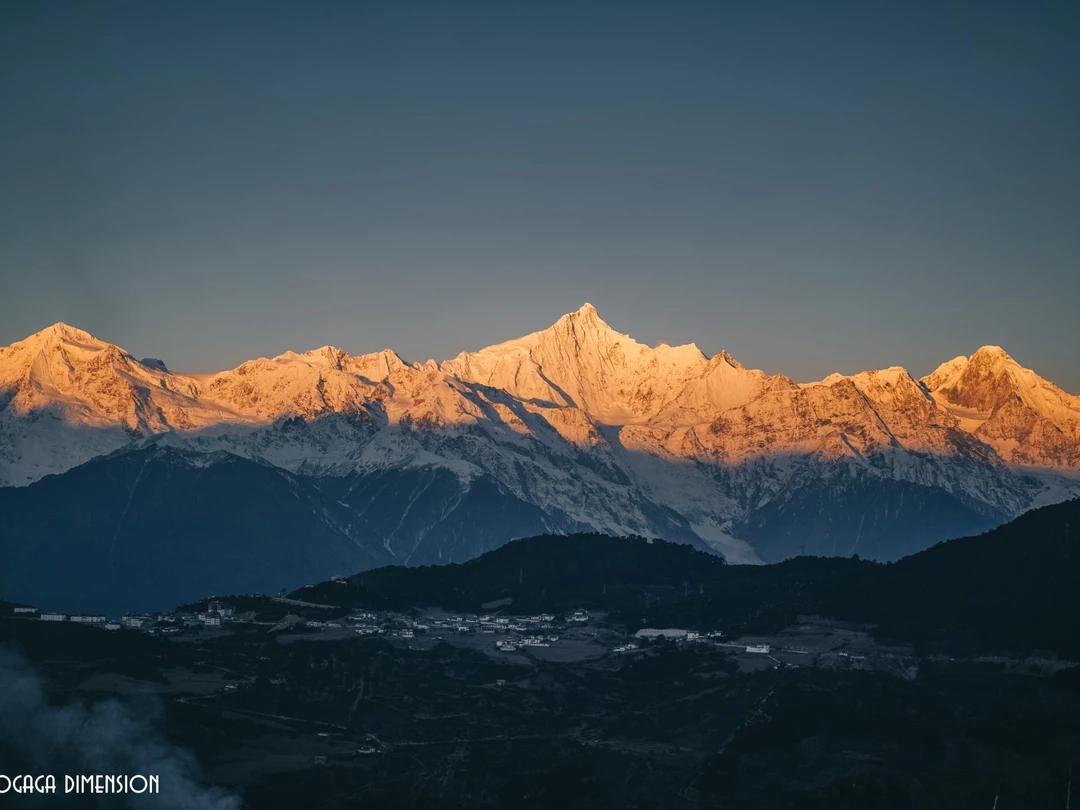
Crossing the Yunnan-Tibet Highway: Welcoming the New Year in the Golden Dawn of Meili Snow Mountain
A Promise Written in Snow and Fate
There's a line from the film Kora that stayed with me for years. Xiaochuan said that Meili Snow Mountain is a giant ice cream made from 175 milliliters of milk, 250 milliliters of heavy cream, and two tablespoons of sugar. That romantic, almost childlike metaphor planted a seed in my heart—a longing for this sacred peak.
Meili Snow Mountain is known as the "God of Snow Mountains." Its main peak, Kawagebo, is the highest point in Yunnan at 6,740 meters above sea level. To this day, it remains an unconquered virgin peak—not because climbers lack the skill, but because it has been designated a sacred mountain and placed off-limits to climbers. It is the only peak in the world that has been sealed for cultural preservation. Stretching across the horizon with its surrounding peaks, it forms what is called the "Thirteen Peaks of Meili." Standing at a distance and gazing upon them, any attempt at description feels utterly inadequate.
Most people first encounter Meili through the phenomenon known as "Sunrise Over the Golden Mountain." Type those words into a search engine, and the first result is always the dawn over Meili Snow Mountain. Locals say that out of 365 days a year, only about 40 offer a clear view of this spectacle. They believe that those who witness it will be blessed with a full year of good fortune.

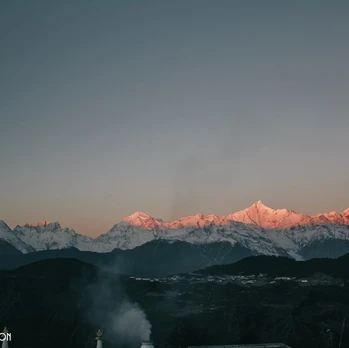
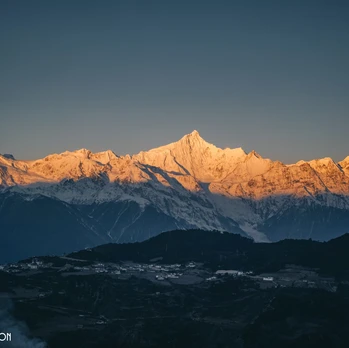
I decided to take the gamble. On February 12, 2021—the first day of the Lunar New Year, which also coincided with the first day of the Tibetan New Year—at exactly 8:05 a.m., the sun crested the surrounding mountains. Golden light began to pour down from the summit of Kawagebo, and the entire snow-covered range shifted from pink to orange, finally blazing into a dazzling sheet of gold. Standing there in the freezing wind, my eyes stung with emotion. Every mile of travel, every moment of waiting—it was all worth it.
I want to share this luck with everyone who reads this. If you've seen it through my eyes, you're part of it now.
The Yunnan-Tibet Highway: Another Face of the Land of Colorful Clouds
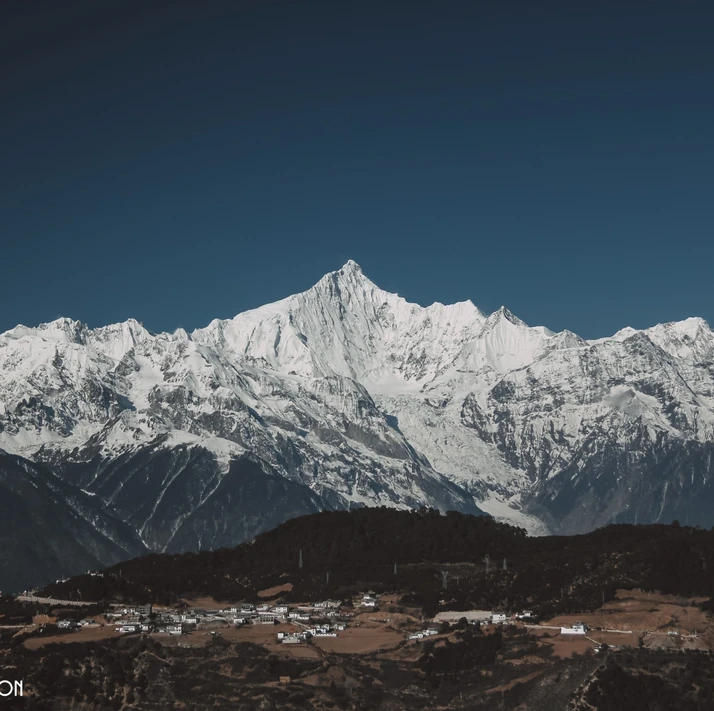
Yunnan is no stranger to me. My ancestors came from here, and I've visited countless times since childhood. But whenever I thought of Yunnan before, my mind conjured images of ethnic minority dances, warm weather, and abundant produce. Few people associate the words "snowy plateau" with the "Land of Colorful Clouds."
The Yunnan-Tibet Highway cuts through northwestern Yunnan, a region of snow-capped peaks, alpine meadows, highland lakes, and the largest Tibetan settlement in the province. National Highway 214 connects Yunnan and Tibet, and netizens have dubbed it the "most underrated scenic highway." It lacks the fame of the Sichuan-Tibet route, but its scenery is in no way inferior. Here, grandeur meets gentleness, and the cultural landscape is even richer.
Our journey began with a road trip from Chongqing. We drove first to Kunming, didn't stop, and headed straight for Lijiang. The official Yunnan-Tibet Highway adventure started from there.
Shuhe Ancient Town: Warmth in the Empty Streets
Before coming to Lijiang, I had high expectations for this ancient city. But due to the pandemic, we encountered the quietest Lijiang in two decades. The old town streets were nearly deserted; Jade Dragon Snow Mountain received only about a hundred visitors a day. There were more staff than tourists. One guesthouse owner posted on social media: "My competitors have finally been forced to go home."
We stayed in Shuhe Ancient Town, which is closer to Jade Dragon Snow Mountain than Lijiang's old town. From our hotel balcony, we could see the snow-capped peak. Plus, the inns on the outskirts of Shuhe had parking—no need to drag luggage up and down hills like in Lijiang's old town.
The streets of Shuhe are much wider than Lijiang's, but they were just as empty. We hadn't made any plans—most shops were closed anyway—so we just wandered. Turning into a narrow alley, the owner of a bubble tea shop suddenly called out to me, greeting me warmly and insisting on giving me something. He handed me three candies, three strawberries he'd picked himself, and three cups of homemade wine. That wine was genuinely delicious.
His name was Liu Xiaoshuai, known online as "Jian Xiaoyi." He had moved here from Henan the year before to open this tea shop. He'd studied interior design and had put a lot of thought into the shop's decor. We had nothing much to do that afternoon, so we chatted for a while. Later, after dinner, we passed by again on our walk, and he was still there reading books on business management. A young man with vision—I hope he does well.
Leaving the tea shop, we ran into three giant poodles. One black one spotted us and came bounding over, rubbing against us—clingy and adorable. They belonged to a nearby trendy guesthouse. In that moment, I thought, Shuhe has such a wonderful vibe.
That evening, we had a Yunnan-Tibet hotpot dinner. The owner gave us a bottle of homemade plum wine. I hereby declare: I love Shuhe, and I love the people of Shuhe even more.
Lijiang Old Town: Surprises Around Every Corner
Lijiang Old Town is only a few kilometers from Shuhe, a quick drive away. Inside the old town, you have to walk; cars are only allowed in the perimeter parking lots. The old town is vast and imposing. Wangu Tower, located on Lion Hill, offers a panoramic view of the entire city.
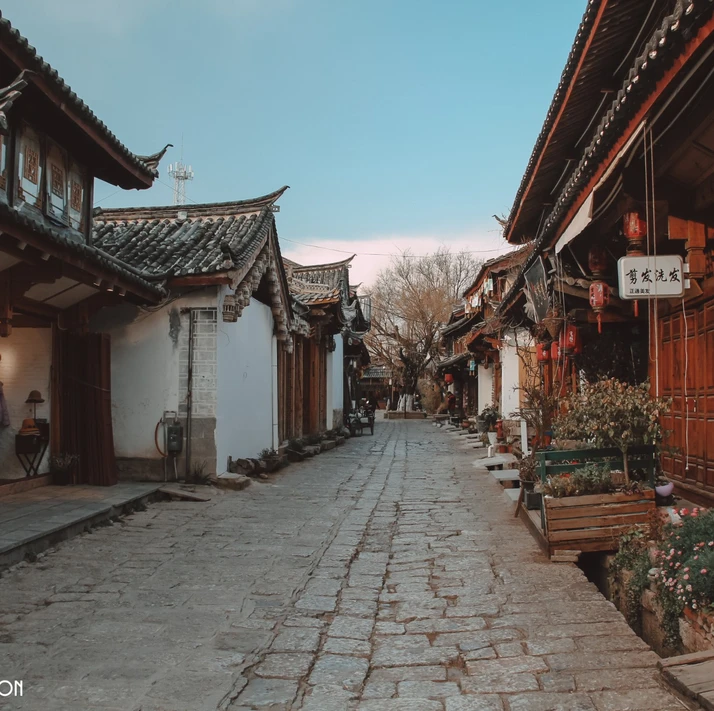
By the time we arrived, it was getting late. Determined to capture the panorama before sunset, we headed straight for Lion Hill. The climb took about ten to twenty minutes—not too strenuous. In the evening light, the layered rooftops formed a chaotic yet orderly pattern. Mu Palace sat on one side of Lion Hill—though the current buildings are reconstructions on the original site, they still convey the grandeur of the past.
From the top of Wangu Tower, the entire Lijiang spread out before us. From above, the old town looked incredibly dense; walking through the streets, it did feel narrow. Since the buildings are only two stories high, you can't see through them, so every turn brings a surprise. Some alleys are lined with flowers in every household, others are hung with lanterns, and still others are canopied with umbrellas—all steeped in ancient charm.
The alley full of lanterns is near the North Gate; I think it's called Zhenxing Lane. The street with umbrellas is next to Sifang Street, beautiful both day and night. The specialty shops in the old town are worth browsing. I especially love the bell shops—the sounds are crisp or deep, much more refined than the ones I bought in Nepal. There are also shops selling sachets and little windmills, all antique in style yet fresh and creative.
A word of warning: I bought fried yogurt from a small stall. The price was deliberately hidden, and the vendor only told me it was 35 yuan after he started making it. Way too expensive—not worth it.
Lijiang is primarily home to the Naxi people, and Dongba culture is their precious heritage. Dongba script is an adorable pictographic writing system, and Dongba paper is a rare specialty used to record Dongba scriptures and paint Dongba artworks. The old town has many shops selling Dongba paper crafts, so exquisite you can't help but admire them. I've always thought the Naxi were a romantic people just from seeing their script. After visiting Lijiang, that feeling only deepened.
Jade Dragon Snow Mountain: Riding a Cable Car to a Sacred Peak
Jade Dragon Snow Mountain is a sacred peak for the Naxi people. Its main summit rises to 5,596 meters and is covered in snow year-round. It's a mountain that feels "close" to ordinary people—no climbing skills required; you can take a cable car to the top.
The cable car goes from an elevation of 3,356 meters to 4,506 meters, spanning 2,914 meters with a vertical drop of 1,150 meters. It's one of the highest tourist cable cars in the world. A ticket costs 140 yuan, and each cabin holds up to eight people. When we visited, there were so few tourists that two or three of us could have a cabin to ourselves. The loudspeakers cycled through introductions to the scenic area and the cable car—the service was thorough.
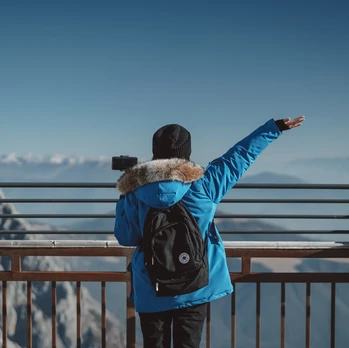
The upper station is a platform at 4,506 meters, where you can already see the main peak, Shanzidou. From there, the rolling Hengduan Mountains disappear into the clouds and mist, like an ink-wash painting.
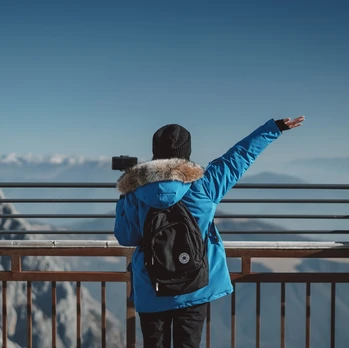
From 4,506 meters to 4,680 meters, you have to hike, but the path is easy—all boardwalks. That is, unless you're dealing with altitude sickness. I saw plenty of people clutching oxygen tanks and inhaling deeply. In winter, the oxygen levels are even lower, so you need to keep a close eye on your condition. It's windy and cold at the top; there are places to rent winter coats at the base, but the selection is limited. I wore my own down jacket and down pants, which were just right on the mountain but way too hot once we descended.
Along the way, you can see glaciers. Look closely, and you'll notice they're green. When we reached the 4,680-meter platform, we were very close to the main peak, Shanzidou. There, we witnessed a piece of "questionable behavior"—a tourist who was on the plateau for the first time actually challenged someone to a race. By the time I finished taking photos, he was half-collapsed on the ground, asking strangers for oxygen, his face pale. So, don't underestimate high altitudes.
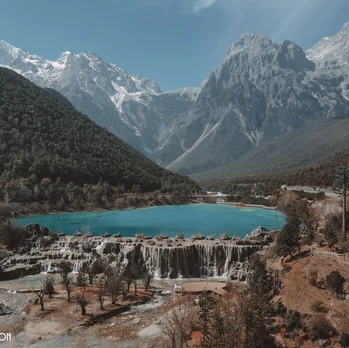
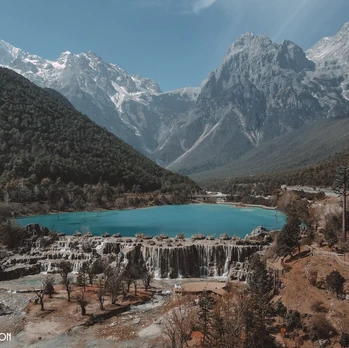
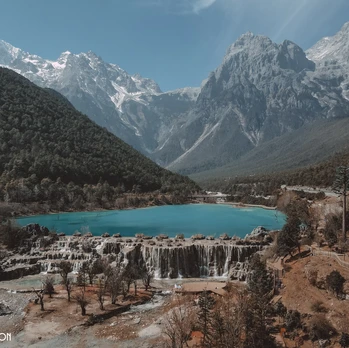
There's another spot worth visiting within the Jade Dragon Snow Mountain scenic area: Blue Moon Valley. After coming down from the mountain, you can take a sightseeing bus there without buying an extra ticket. Drones are allowed, and the footage is stunning—Blue Moon Lake, the snow mountain, waterfalls, and forests all come together like a painting.
Travel Tips: - The main cable car ticket costs 140 yuan. Buy it at 8 a.m. on the day of your visit through the "Lijiang Tourism Group" WeChat account. - You also need to buy a mountain entrance ticket for 100 yuan, paid offline. - Board the cable car at the Snow Kitchen Restaurant on the first floor; park at Ganhaizi Parking Lot. - The scenic area also has attractions like Yak Meadow, which require separate tickets. - Don't worry about oxygen—it's available for purchase at the site.
Shangri-La: The Sun and Moon in the Heart
Heading north from Lijiang along the Yunnan-Tibet Highway, you arrive at Shangri-La City—the largest Tibetan settlement in Yunnan.
The name "Shangri-La" comes from James Hilton's 1933 novel Lost Horizon, which describes a peaceful haven hidden in the eastern mountains. In Tibetan, "Shangri-La" means "the sun and moon in the heart." In 1997, the Yunnan government officially declared that the long-sought Shangri-La was right here in Diqing. From then on, Zhongdian had a new name. Whether the real Shangri-La is actually here is a matter of debate—Daocheng Yading would be the first to object, since the town outside its scenic area is also called "Shangri-La Town."
Still, Shangri-La City is undeniably beautiful. I have a particular fondness for Tibetan culture and Tibetan Buddhism, and for me, Shangri-La ranks among the top three most beautiful places in Yunnan.
Dukezong Ancient Town is the best-preserved and largest collection of Tibetan民居 in China. The buildings are much older than those in Lijiang—all ancient Tibetan dwellings. I had imagined it would be as lively as Barkhor Street in Lhasa, full of craft shops, restaurants, and tourists in Tibetan costumes. But when we arrived, it was even quieter than Lijiang. Few cars, few people, many shops closed. It was heartbreaking to see.
At one end of the ancient town is Turtle Mountain Park, which offers a panoramic view of Dukezong from above. At the top, there's a large Buddhist temple and the world's largest prayer wheel, which takes ten people to turn with full effort. We gave it a try. The wind was strong up there, making the prayer flags flutter loudly—it really felt like they were chanting.
At sunset, warm light filtered through the eaves of the ancient buildings, falling on the white pagoda and the prayer wheel. In that moment, it was the very picture of "peaceful times."
We stayed at a Tibetan-style guesthouse called "Deyanglang" near the ancient town. The owners were an elderly couple from Ningxia who had fallen in love with Shangri-La and opened the guesthouse five years ago. They had an English Bulldog named "Rourou" (meaning "meaty"), who was incredibly strong and loved to rub against my legs—well, more like slam into them. Compared to the dog, the cat was much more composed.
Songzanlin Monastery: Lighting a Lantern for the New Year
Lighting a lantern at Songzanlin Monastery for the New Year was a ritual I had deliberately planned.
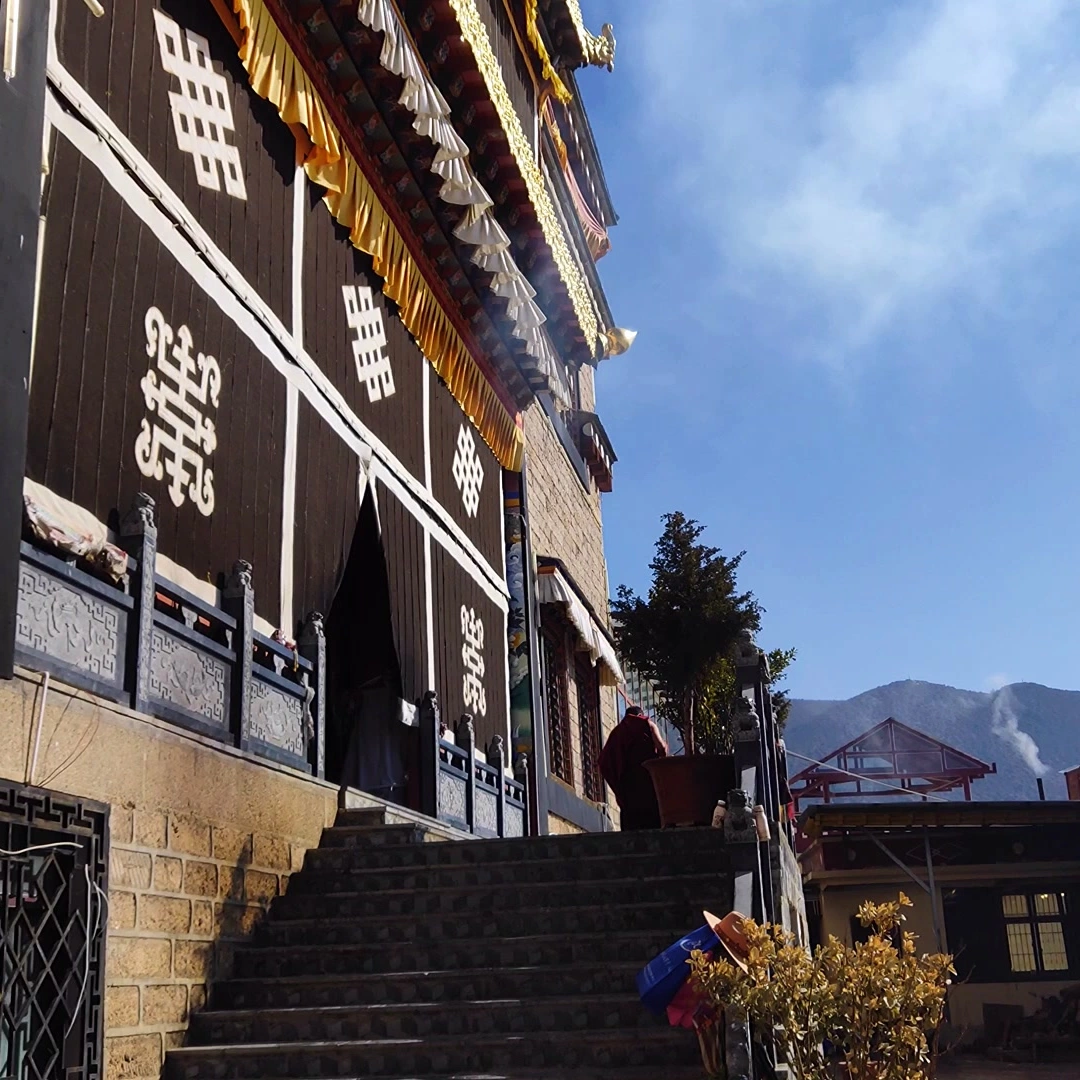
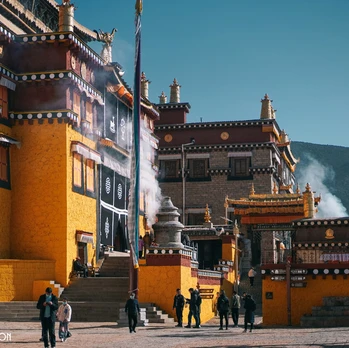
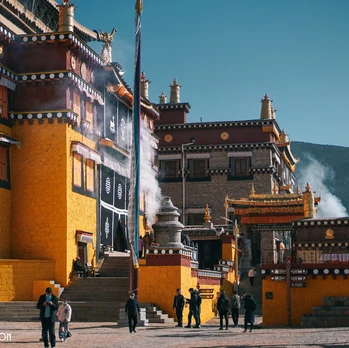
Ganden Songzanlin Monastery is the largest Tibetan Buddhist monastery in Yunnan and the center of the Gelug school in the region. Built into the mountainside, it's known as the "Little Potala Palace," with vivid colors and exquisite architecture. For photography enthusiasts, it's a prime spot for capturing Tibetan art.
Entering the scenic area requires taking a shuttle bus through the streets to reach the monastery gate. Tour guides lead groups in waves, and the fee is included in the ticket. We didn't want to wait, so we hurried to catch up with a guide who was already mid-explanation on the stairs. As it turned out, following him was the right call—he was a devout Buddhist, highly knowledgeable, and direct in his speech. Guides are supposed to finish a tour in 40 minutes; he took nearly an hour and a half.
Unfortunately, I was so focused on lighting the lantern that I forgot to ask his name. I remember his dark skin, sharp features, age around 30 to 40, and height about 1.7 meters. Other guides used portable microphones; he just talked naturally. After the tour, he hurried off to visit relatives, and I never saw him again. If anyone reading this ever visits Songzanlin Monastery, please ask for his contact info for me!
Next to the stairs leading to the monastery are small residential buildings, similar to the ones at the Larung Gar Buddhist Academy in Sêrtar—these are the monks' quarters. Tibetan Buddhism holds a very high place in the hearts of Tibetan people, and entering the monastic life is considered an honor. Sending children to monasteries or remaining a monk for life—we may not fully understand it, but that's what faith looks like.
From Songzanlin Monastery, you can see Shika Snow Mountain in the distance, known as the "Center of the Lotus Throne." On clear days, you can spot multiple snow mountains from this sacred peak, including Meili, Haba, and Daocheng Yading.
After climbing up to the monastery, the guide took us through three main halls. In the first hall, I bought a string of prayer beads from an elderly lama. The second hall left the deepest impression—the one with the white walls in the middle. It was incredibly ornate, with rows of monks' cushions neatly arranged, capable of seating over a thousand people for rituals. The largest gathering was during the Kangxi era, when 1,300 monks chanted sutras simultaneously—a scene that must have been magnificent.
The third hall, on the far right, was yellow and housed a statue of Shakyamuni Buddha. The statue was smaller than I expected—an ancient relic. I requested a candle lantern before the Buddha, and a lama guided me through the process. He told me to write the names of living family members on red paper slips and the names of the deceased on white ones. After I wrote the names, he straightened the wick for me and led me in prayer. As I bowed, he chanted softly beside me. When I placed the lantern, he brought a metal basin for me to burn the paper slips. I'm afraid of fire, so at the last moment, I reflexively tossed the slips into the basin without letting them burn completely. The lama picked them up, relit them, and made sure they burned to ash. He looked about my age, maybe a bit younger—I imagine his inner monologue was something like, "This girl is a bit clueless."
Each hall has a place for making offerings—cash (with change available) or mobile payments, all according to your heart. Songzanlin Monastery even has a WeChat public account where you can make virtual offerings online.
After lighting the lantern, I walked clockwise around the three main halls, feeling a profound sense of completeness. I heard that on the fifteenth day of the first lunar month, a grand ceremony is held here, and traffic is restricted for two to three kilometers around. Devotees have to walk to the monastery, filling every corner. What a spectacular sight that must be.
Songzanlin Monastery faces Lhamo Yangtso Lake. In winter, parts of the lake freeze over, but the ice melts by midday or afternoon. When there's no wind, you can capture clear reflections. There are many wild ducks on the lake, and a group of something—probably wild ducks too, just very lazy—sleeping on the shore.
In the small woods by the lake, we encountered a few calves. I'm not sure if it's a breed characteristic, but they were all about the same size, with already large horns. Maybe they just don't grow much bigger.
Almost every cultural site has cats, and Songzanlin Monastery is no exception.
Potatso National Park: The Colors of Winter
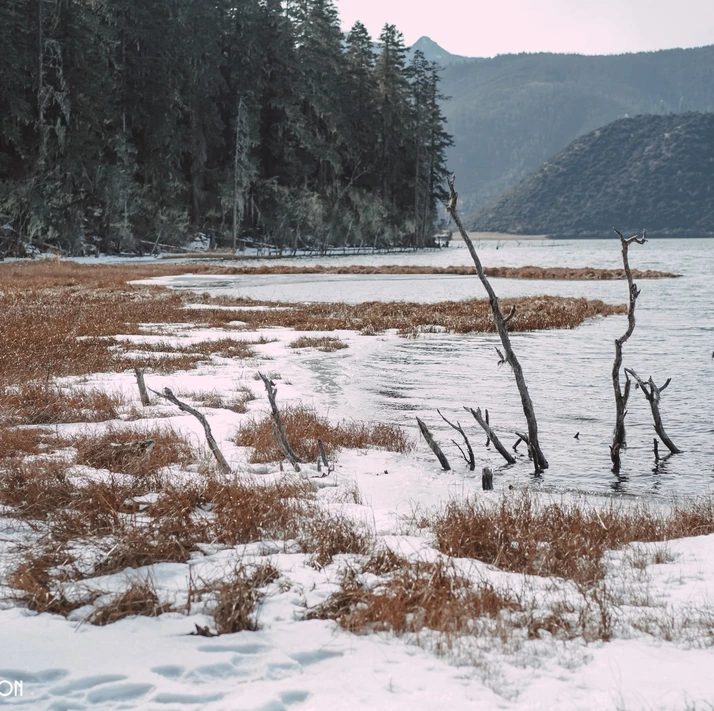
Potatso National Park is one of Shangri-La's most famous attractions and a core part of the "Three Parallel Rivers" scenic area. In winter, you can see deep greens, golden yellows, the white of snow and ice, and the blue of the lake—earth tones concentrated here in one place.
Walking along the lakeside boardwalk, you experience the serene beauty of the landscape. The quiet is so profound that it naturally makes you slow down.
National Highway 214: Scenery Heading North
Once you hit National Highway 214, the scenery becomes grand. The deep blue of Napahai Lake, the majesty of Baima Snow Mountain, the breathtaking sweep of the First Bend of the Jinsha River—each spot is worth lingering over.
Baishuitai was an unexpected delight along the way. It looks like layered terraced fields, but it's actually formed by travertine deposits. When we arrived, the Naxi people were holding a grand prayer ceremony. The mix of solemnity and lively celebration gave us a deep sense of the rich cultural heritage of this land.
Dali: The Journey's End
After reaching Deqin and witnessing the sunrise over Meili Snow Mountain, we began our journey back. Our last stop was Dali.
Between Cangshan Mountain and Erhai Lake, we brought the trip to a close. Dali's rhythm is much slower than Shangri-La's. The sunlight, the breeze, the shimmer of the lake—everything was gentle.
Final Thoughts
This journey along the Yunnan-Tibet Highway, from Lijiang to Dali, from snow mountains to ancient towns, from the solemnity of Tibetan Buddhism to the romance of the Naxi people—every stop brought its own surprises.
But what I'll remember most is those eight minutes of golden sunrise over Meili Snow Mountain. When the light began to pour from the summit of Kawagebo and the entire snow-covered range turned to gold, I suddenly understood why locals say, "Seeing the sunrise over the golden mountain means you have a connection with Meili."
I won that gamble.
I hope that everyone reading this can also share in that luck. Whether it's watching the sunrise at Meili, traveling the Yunnan-Tibet Highway, or simply finding a sense of ritual in your own life—may your 2024 be as warm and radiant as that morning's light.
You've seen it now—the luck is yours to share.
You should also read:
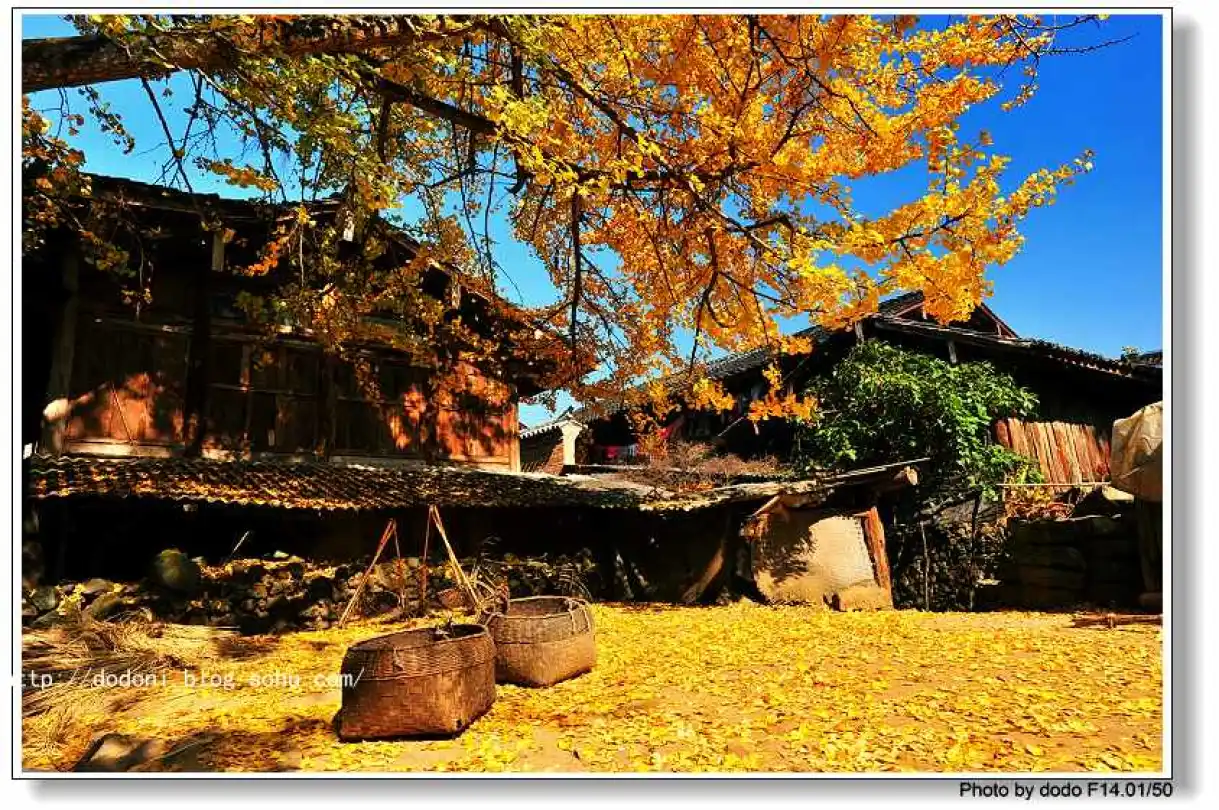
Golden Autumn: A Poetic Tapestry of Light and Shadow in Tengchong's Ginkgo Village
Golden Autumn: A Poetic Tapestry of Light and Shadow in Tengchong's Ginkgo Village A Belated Autumn Rendezvous Everyone harbors a dream about autumn somewhere in their heart. For me, that dream once belonged to Jiuzhaigou—that palette of colors hailed by the world as a "fairy-tale…
Continue reading...
Two Girls' Graduation Trip: Dali and Shuanglang – A Poetic Farewell to Mountains and Sea
Two Girls' Graduation Trip: Dali and Shuanglang – A Poetic Farewell to Mountains and Sea Preface: Catching the Tail of Youth, Heading South During our senior year of college, my roommate and I – two girls studying in Beijing – decided to bid farewell to…
Continue reading...
Cloud Travelogue · Dali of Wind, Flowers, Snow, and Moon: A Three-Day, Two-Night Journey of a Free Spirit
Cloud Travelogue · Dali of Wind, Flowers, Snow, and Moon: A Three-Day, Two-Night Journey of a Free Spirit I am a cultured female foodie with a touch of rogue charm. I slung on my backpack, took my lover's hand, and set off on a spontaneous…
Continue reading...