Crossing Tiger Leaping Gorge and Yubeng: A Seven-Day Trek Through a World Apart
Crossing Tiger Leaping Gorge and Yubeng: A Seven-Day Trek Through a World Apart
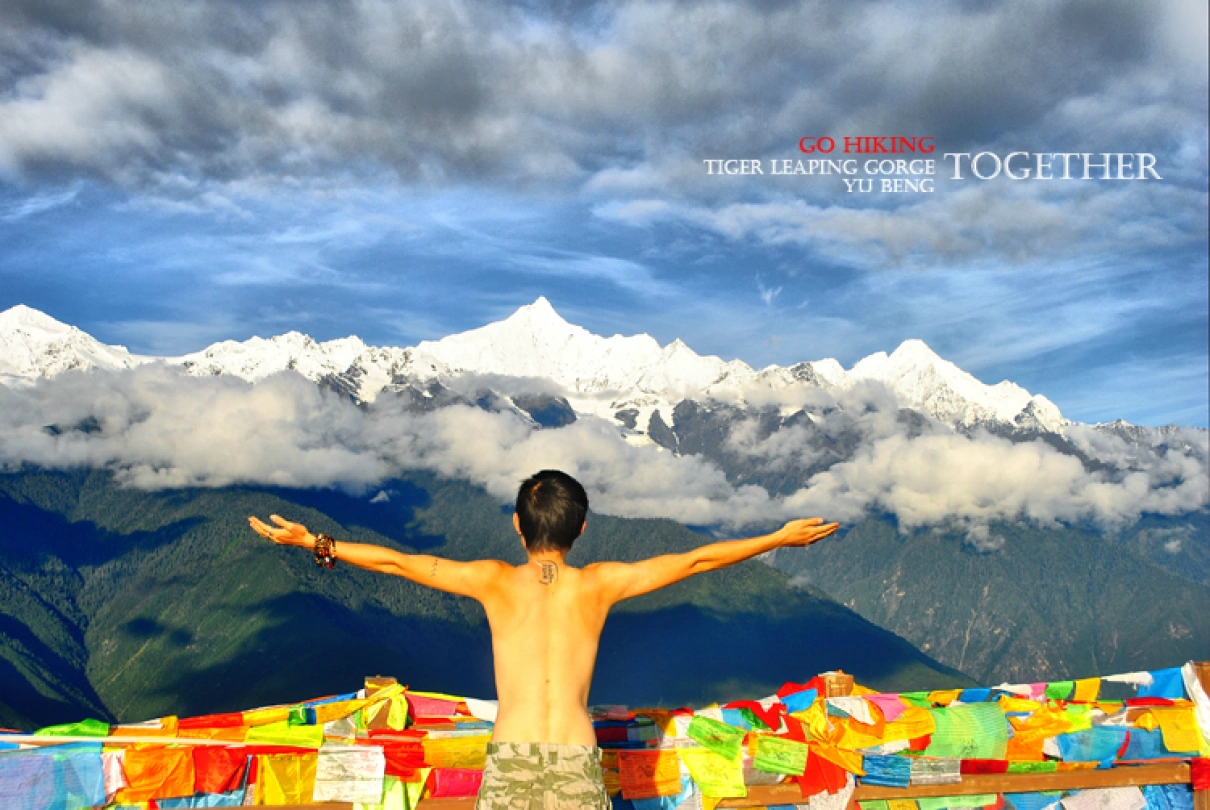
Hidden within the mountains of Yunnan lie two routes that have captured the hearts of countless hiking enthusiasts—Tiger Leaping Gorge and Yubeng. They are like gifts carefully crafted by nature, waiting for those willing to measure the land with their own feet to unveil their secrets. This is not a self-punishing outdoor challenge, but a walk filled with experience, warmth, and stories. If you, too, long to escape the noise of the city and find inner peace among snow-capped peaks, deep gorges, and primeval forests, then this account of the "Tiger Leaping Gorge · Yubeng 7-Day Continuous Trek" might just ignite the courage you need to set off.
Why Tiger Leaping Gorge and Yubeng?
Many people's impression of Tiger Leaping Gorge and Yubeng stops at the label of "outdoor sports." They sound like realms accessible only to professional climbers, and some outdoor forums even describe trekking Yubeng as a life-or-death ordeal. But the truth is far from that.
I once sat in a hostel in Feilai Temple at three in the morning, opening my phone to see my post about Yubeng had made it to the homepage. At that moment, I was standing at the foot of Kawagebo, preparing to enter Yubeng for the third time. This sacred mountain seems to possess a mysterious power that fills everyone who approaches it with awe.
In reality, the combined trek through Tiger Leaping Gorge and Yubeng is more like a leisurely hiking experience. Our group included a middle school girl, an auntie who had never done any outdoor activities before, and an uncle on his first long-distance trip. In the end, everyone completed the entire journey safely, with laughter and joy all along the way. The scenery made us forget our fatigue, and the fun we encountered on the trail gave us a constant surge of energy.
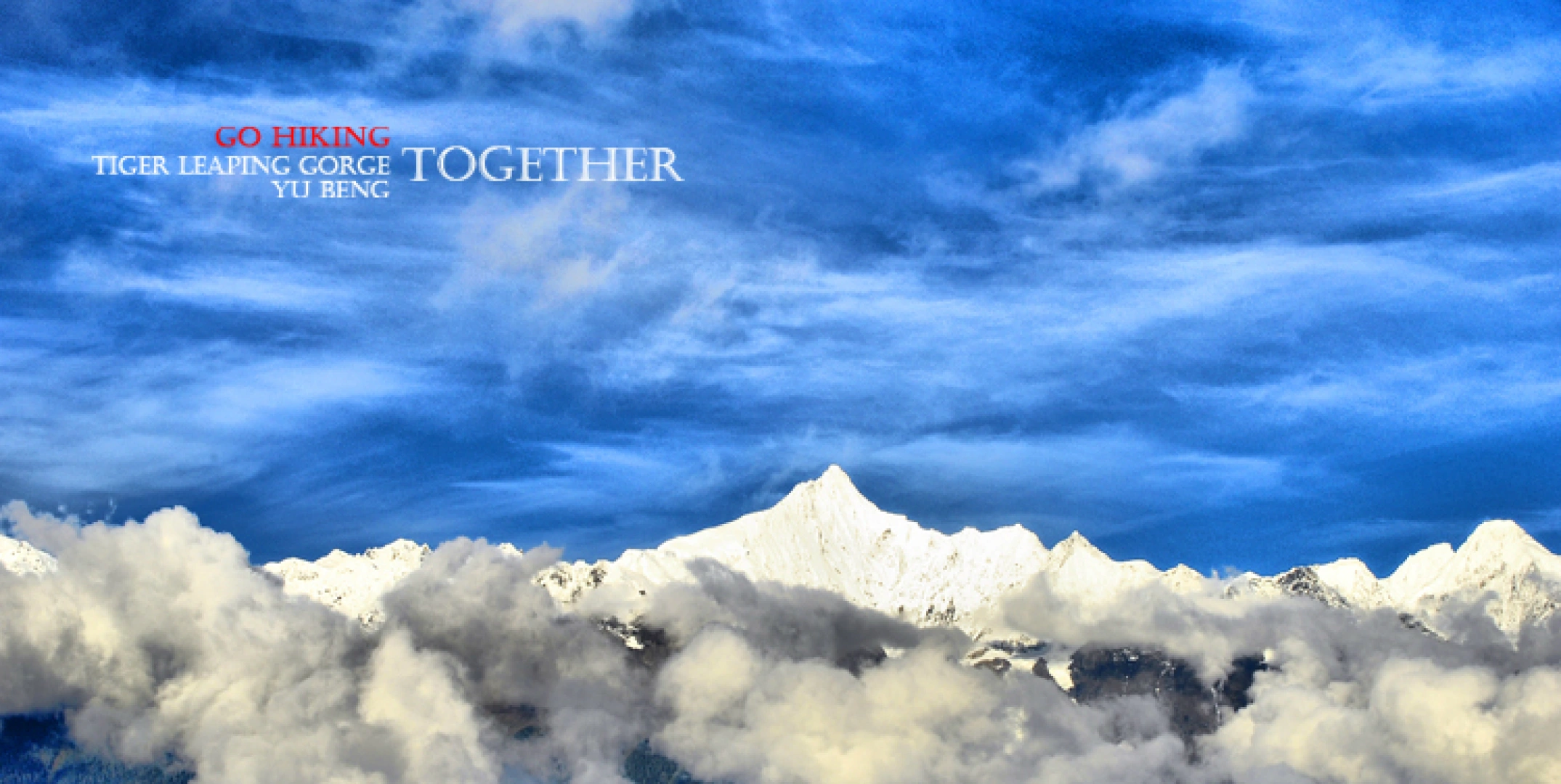
The thrill of the gorge, the vastness of the grasslands, the mystery of the primeval forest, combined with the emotional pull of Meili Snow Mountain and Kawagebo—this seemingly arduous journey allowed us, under conditions far from punishing, to discover a "hidden paradise" and glimpse a condensed version of "Shangri-La."
So, let's go wild together!
Itinerary Overview: Seven Days, from Gorge to Snow Mountain
This route brings together two of Yunnan's most popular hiking trails, from the ruggedness of Tiger Leaping Gorge to the tranquility of Yubeng. Each day offers different scenery and challenges. Here is the specific schedule:
- Day 1: Lijiang → Qiaotou → Naxi Family Inn → 28 Bends → Tea Horse Inn
- Day 2: Tea Horse Inn → HALF WAY → TINA'S → Middle Tiger Leaping Gorge Skyline → Shangri-La
- Day 3: Yila Grassland → Benzilan → Moon Bay → Feilai Temple
- Day 4: Feilai Temple → Xidang → Nanzong Pass → Upper Yubeng
- Day 5: Upper Yubeng → Base Camp → Ice Lake → Upper Yubeng
- Day 6: Upper Yubeng → Lower Yubeng → Divine Waterfall → Nilong Gorge → Feilai Temple
- Day 7: Feilai Temple → Benzilan → Shigu → Lijiang
The beauty of this route lies in how it allows the body to gradually adapt to high altitudes. Starting the trek at Tiger Leaping Gorge, steadily increasing elevation, and then moving on to the high-altitude walks in Yubeng—it's neither too rushed nor too exhausting.
Accommodation and Meals: Finding Warmth in Simplicity
During the trekking days, accommodation naturally can't compare to city standards. The guesthouses in Tiger Leaping Gorge and Yubeng mostly have simple wooden beds, clean and functional. But a tired body lying on such a bed can still have sweet dreams. So, don't expect too much from the lodging, and you'll be pleasantly surprised.

In Shangri-La and Feilai Temple, however, you can choose your accommodation more carefully. Yila Grassland in Shangri-La is the essence of the prairie. We stayed at a guesthouse called "Westward Manor"—a grand name, and its comfort matched the luxury of its name. The grassland felt like their backyard, where we could wander anytime. In Feilai Temple, of course, you should pick a guesthouse with a view, keeping watch over the Thirteen Peaks of Meili, waiting for the miracle of the golden sunrise.
As for meals, only a few truly satisfied us. One was a yak meat hotpot in Shangri-La, another was local cuisine in Benzilan. The rest of the time, especially in Yubeng, it was noodles almost every meal. Supplies are scarce—there's no helping it. So, be sure to bring plenty of snacks before you set off: chocolate, beef jerky, compressed biscuits, and some pickled vegetables and cooked meats. That makes all the difference.
Transportation and Gear: Travel Light to Go Further
Since you'll be hiking for several days, time in the vehicle is rest time. Forget about public buses—without good rest, where would you get the energy to walk? Lijiang has plenty of private car services, but most are run by individuals. The prices aren't high, but there are plenty of pitfalls, like forced shopping stops that are endlessly annoying. We spent a bit more on transportation and hired a reputable off-road vehicle company—Westward Off-Road—renting a nine-seat minivan for 900 yuan per day. The driver was as warm and knowledgeable as a Lijiang encyclopedia, answering every question, making the journey worry-free.
As for gear, this route doesn't have high demands. A decent pair of shoes is enough. A waterproof jacket and pants will do for show. Definitely don't bring a large hiking backpack—you won't need to camp or cook. A 35 to 45-liter pack is sufficient. If trekking poles are a hassle or easy to lose, you can skip them—just pick up a sturdy branch along the way.
Precautions: Sun Protection, Moisture, and Altitude Sickness
- Sun Protection: Sunglasses, a sun hat, and a lightweight windbreaker are essential. The UV rays on the plateau are no joke.
- Moisture: Bring lip balm and moisturizer. The air is dry, and your lips and skin can easily crack.
- Altitude Sickness: No one can guarantee they won't experience it. Taking Rhodiola rosea a week in advance can help prevent it.
- Respect Local Customs: When entering Tibetan areas, keep a low profile. Though conditions may be simple, don't look down on them—respect the local traditions.
Day 1: Lijiang → Qiaotou → Naxi Family Inn → Tea Horse Inn
The drive from Lijiang to Qiaotou takes about two and a half hours. Along the way, you'll pass Lashi Lake and the Xionggu Viewing Platform. With luck, you might see both Jade Dragon Snow Mountain and Haba Snow Mountain at the same time. Unfortunately, the weather wasn't on our side that day—we didn't even catch a glimpse of Jade Dragon Snow Mountain, which was a bit disappointing.
After lunch in Qiaotou, we began our trek. From Qiaotou to Naxi Family Inn, it took about two and a half hours. The elevation gain wasn't significant, but the weather was unpredictable—sun showers came and went, truly a case of "one mountain, four seasons." Past Naxi Family Inn, the climb began. Before we even reached the 28 Bends rest stop, everyone was already out of breath. The legendary 28 Bends, hidden from the sky, weren't as terrifying as imagined once we actually walked them. I learned a trick: don't count the bends. Just treat it like an after-dinner stroll, slowly making your way up. Sometimes, mental pressure is more exhausting than physical exertion.
After the 28 Bends, we reached the top, and from there, it was all downhill. At the Tea Horse Inn, we cracked open a beer—the most enjoyable moment. It felt like being in Nepal, sharing the experience with a group of travel-loving foreigners. Tiger Leaping Gorge was essentially carved out by foreigners, and even now, they make up the majority of visitors. All the trail markers and arrows are in English. Depending on how far you've walked, inns are scattered at different points for rest. The atmosphere in the inns is great for socializing—you can easily strike up a conversation with a foreign girl or guy.
That night, we drank, chatted, and soaked in the atmosphere of the gorge. It truly felt like Nepal.
Day 2: Tea Horse Inn → HALF WAY → TINA'S → Skyline → Shangri-La
The second day was relatively easy—four hours of hiking to the middle section of Tiger Leaping Gorge, mostly downhill. But today, we walked along cliff edges. It looked thrilling, but the path is well-established, so all you have to do is enjoy it. At TINA'S, after lunch, we descended to the Skyline to see the Tiger Leaping Rock. A few of the guys didn't want to go down, but we had come for the Skyline—how could we skip it? Climbing the ladder was a must.
After coming back up, we took a car to Shangri-La. Even as I write this, I'm still craving that yak meat hotpot.
Day 3: Shangri-La → Benzilan → Feilai Temple
Today, aside from an hour of fun on Yila Grassland in the morning, we spent the rest of the time in the car. Consider it a rest day, saving energy for the upcoming Yubeng trek. This itinerary is well-planned—Tiger Leaping Gorge serves as an acclimatization phase, letting the body gradually adjust to high-altitude hiking. If we had rushed straight to Feilai Temple and then into Yubeng, it would have been too hasty.
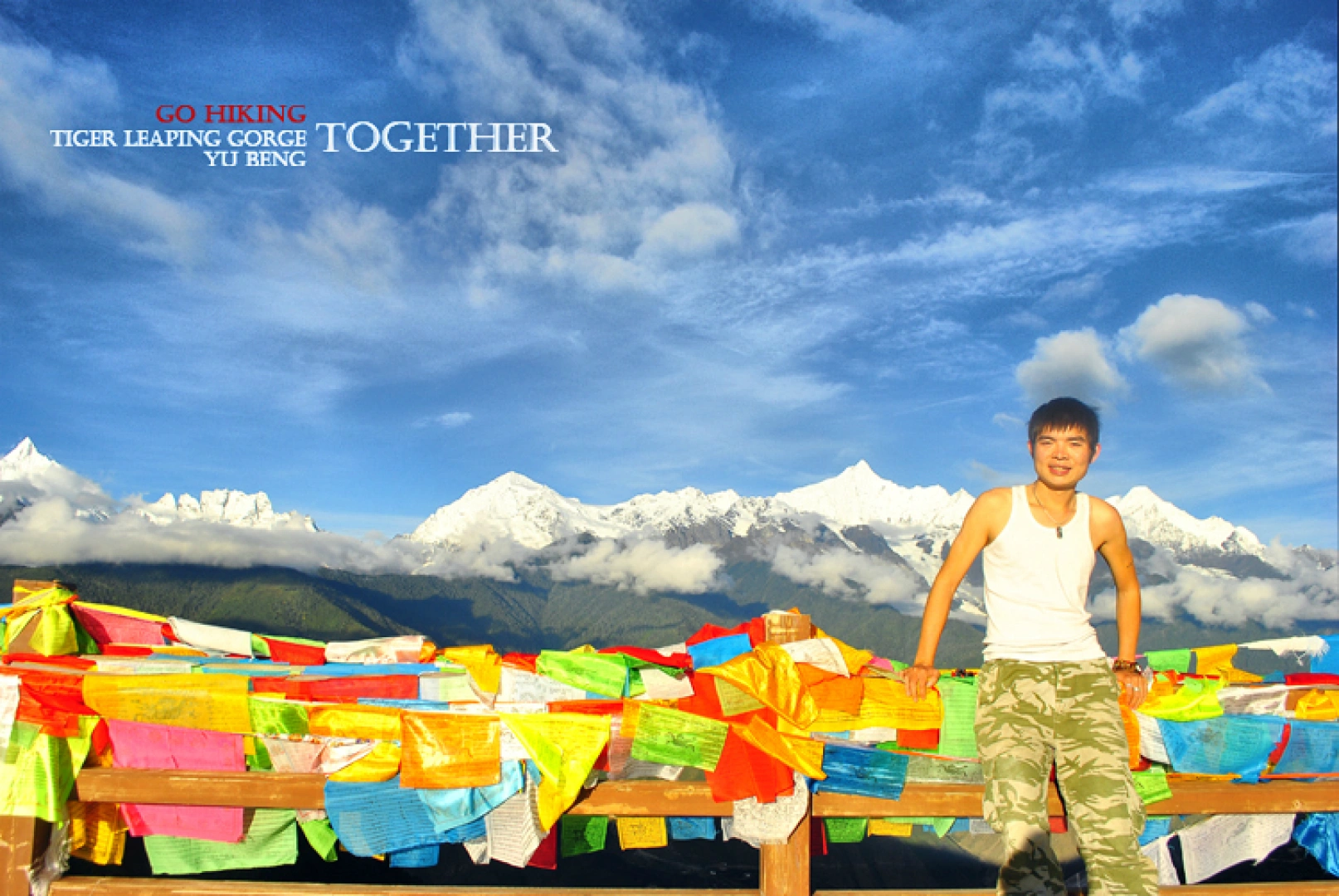
On Yila Grassland, facing Shika Snow Mountain, we debated where Napahai Lake actually was. We finally concluded: on this vast prairie, wherever there's water, that's Napahai. This is the place closest to heaven, where clouds look like cotton candy you could reach out and pluck.
Day 4: Feilai Temple → Xidang → Nanzong Pass → Upper Yubeng
Finally, it was time to enter Yubeng. At Xidang, our group shrank—three members went to Mingyong Glacier, and the rest rented horses together. Only Xiao Jin and I chose to hike. I walked ahead of the horse team, and Xiao Jin waited for me at Nanzong Pass for an hour. Good on him—he didn't let the civil servants down.
Nowadays, development in Yubeng is inevitable. Fortunately, the vegetation here is still well-preserved. When a place becomes as popular as this, some development is necessary—things like communication networks and roads. Even though the village paths are being repaired, it's not necessarily a bad thing.
Day 5: Upper Yubeng → Base Camp → Ice Lake → Upper Yubeng
Today's destination was Ice Lake and Base Camp. Da Yao and the others said they wanted to soak in the village life of Yubeng and wouldn't go to Base Camp. Only Xiao Jin, Brother Black-and-White (who started off on horseback), and I set out.
The trail to Base Camp was lined with blooming rhododendrons. We walkers led the way, with a long horse train behind us. I lost count of how many people were heading to Ice Lake. Two years ago, when I came here, I was the only one on the trail to Base Camp, and I got lost on the way back. The Yubeng of those days exists only in memories and photos now.
From Yubeng Village to Base Camp, once you enter the forest, there are many branching paths, making it easy to get lost—especially when descending. So, if you plan to go solo, make sure you're fully prepared.
Day 6: Upper Yubeng → Lower Yubeng → Divine Waterfall → Nilong Gorge → Feilai Temple
Today was a bit tiring—we had to visit Divine Waterfall and then leave Yubeng. But we chose to exit through Lower Yubeng, which was all downhill with no need to cross a pass. Although the distance was longer, it was relatively easier.
Only Xiao Jin, still full of enthusiasm, went with another group to Divine Waterfall. He set off at 6 a.m. and was the first to return. Later, we walked through Nilong Gorge. Having already been through Tiger Leaping Gorge, Nilong didn't offer much of a surprise. During the rainy season, this route is quite dangerous—high risk of rockfalls and mudslides, plus the fierce winds above the gorge make many people both love and fear this trail.
But in reality? It's not as idyllic as a hidden paradise, and the so-called "life-or-death line" is just a small slope to climb. So, I stick to my belief: if you want to go, don't let others' opinions or descriptions sway you. Their feelings are just their own—maybe they're just showing off how they went to some amazing place in some incredible way.
Conclusion: Go Now, Before It's Too Late
Yubeng—go now, before it's too late. That might sound exaggerated, but once you've walked this land, you'll understand what it means. As the number of tourists explodes, Yubeng's pristine character is slowly changing. A road might be built in, and village life is being eroded by commercialization. But even so, it remains a place worth every drop of sweat.
If you want to go, then go. Don't be intimidated by others' descriptions, and don't let your own hesitation hold you back. Pack your backpack, put on your shoes, and feel the wind in the gorge, the snow on the peaks, the breath of the forest. You'll find that the scenery along the way is worth every effort you make.
Finally, a few tips for you:
- Travel Light: A 35-45 liter backpack is enough. Don't burden yourself unnecessarily.
- Bring Enough Supplies: Chocolate, beef jerky, pickled vegetables, cooked meats—these will bring you immense happiness on the trail.
- Respect Nature: Don't litter, don't damage vegetation, so that those who come after you can see the same beauty.
- Keep an Open Mind: You'll meet all kinds of people on the road. Their stories will make your journey even more memorable.
Set off—let's go wild together!
You should also read:
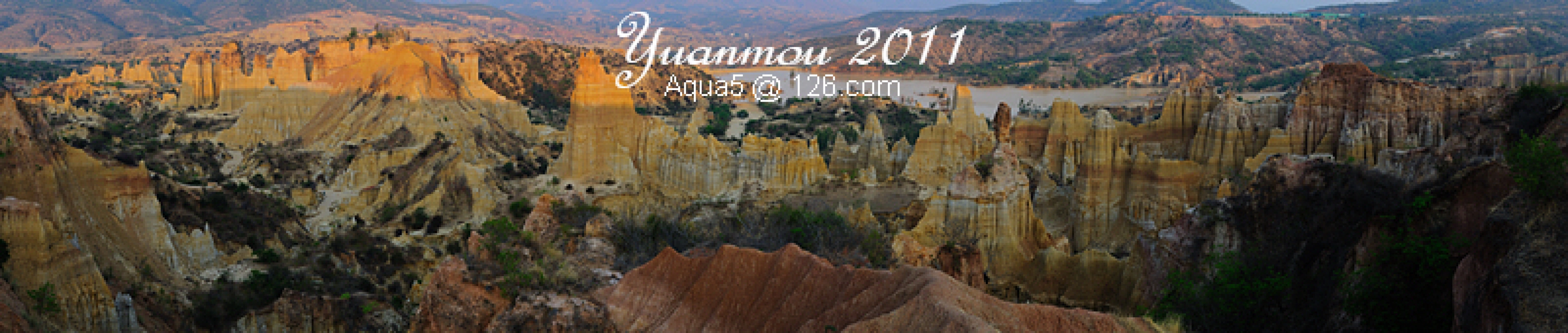
A Journey Through Time: The Earthen Forest of Yuanmou — April 2011 Chuxiong & Yuanmou Self-Drive Guide
A Journey Through Time: The Earthen Forest of Yuanmou — April 2011 Chuxiong & Yuanmou Self-Drive Guide Some journeys are destined to take root in your memory. In April 2011, I set out from Shuhe in Yunnan, heading north toward the Chuxiong Yi Autonomous Prefecture,…
Continue reading...
Into the Hidden Valley: A Solo Journey Through the Mysterious Dulong River
Into the Hidden Valley: A Solo Journey Through the Mysterious Dulong River Deep in the northwestern corner of Yunnan Province, tucked away from the modern world, lies a place that feels like a secret whispered among mountains. The Dulong River Valley is not just a…
Continue reading...
God’s Abandoned Palette: A Self-Drive Journey Through Yunnan’s Dongchuan Red Land
God’s Abandoned Palette: A Self-Drive Journey Through Yunnan’s Dongchuan Red Land Travel has never been about reaching some distant geographic coordinate. It’s about encountering, along the way, the version of yourself buried beneath the rubble of daily routine. During this May Day holiday, I finally…
Continue reading...