Dali: A City Floating in the Clouds
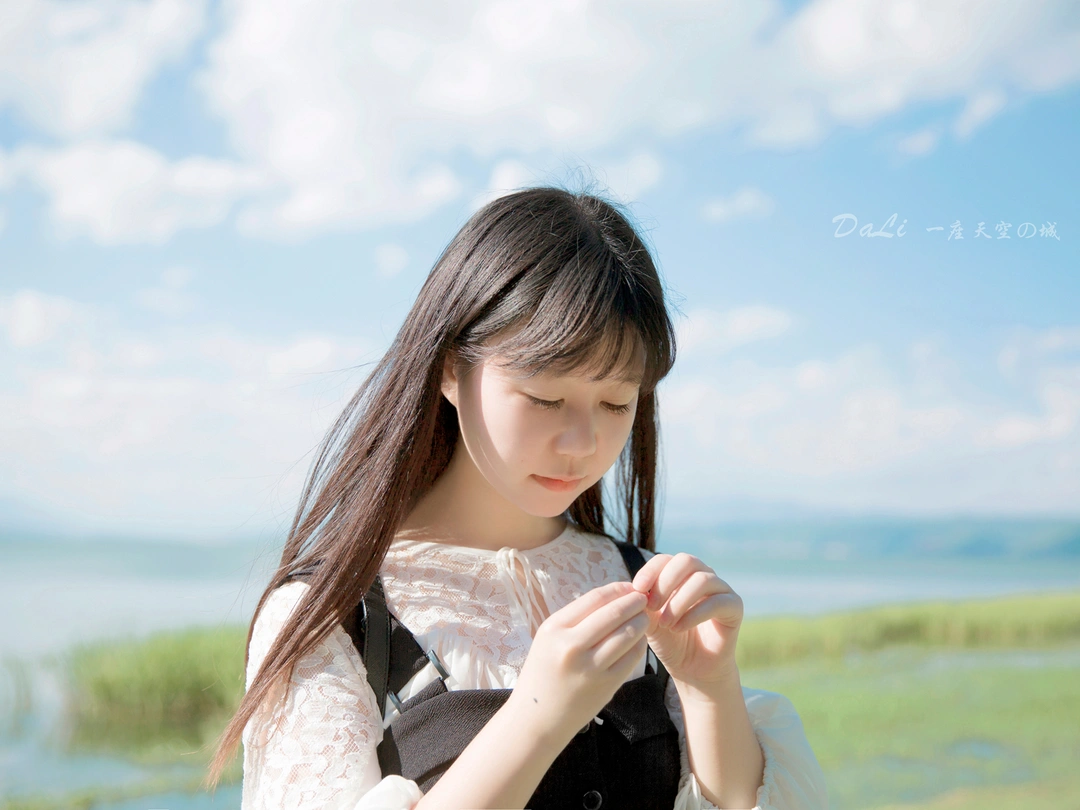
Dali: A City Floating in the Clouds
Why Is It Always Yunnan?
I'm a little embarrassed to admit it, but I've lost count of how many times I've been to Yunnan since I was a kid. In recent years alone, I've been to Lijiang twice, and Dali and Lugu Lake twice each. Every time I post photos on social media, a friend always comments: "Yunnan again? Are you on a once-a-year pilgrimage or what?"

Honestly, I've asked myself the same question. Why is it that every time I plan a domestic trip, Yunnan is the first place that pops into my head? Eventually, I found the answer—the weather.
I have a lymphatic system that doesn't circulate well, and to make matters worse, I live in a humid place like Chengdu. Every morning I wake up with a puffy face, like I've been wearing a hydrating mask all night. Lots of people complain that Yunnan is too dry, but for me, it's paradise. The moment I arrive in Yunnan, my face stops swelling. Sure, some photos might still make me look a little "puffy," but that's not water retention—that's just me being chubby. I'll admit it. Hahaha.
Rainy Season Anxiety and Surprises
During the National Day holiday, the rainy season in Yunnan hadn't fully ended. In the days leading up to our departure, I must have refreshed the weather forecast dozens of times a day. But my phone's forecast never showed anything but "rain, thunderstorm, rain, thunderstorm." I was almost losing my mind.
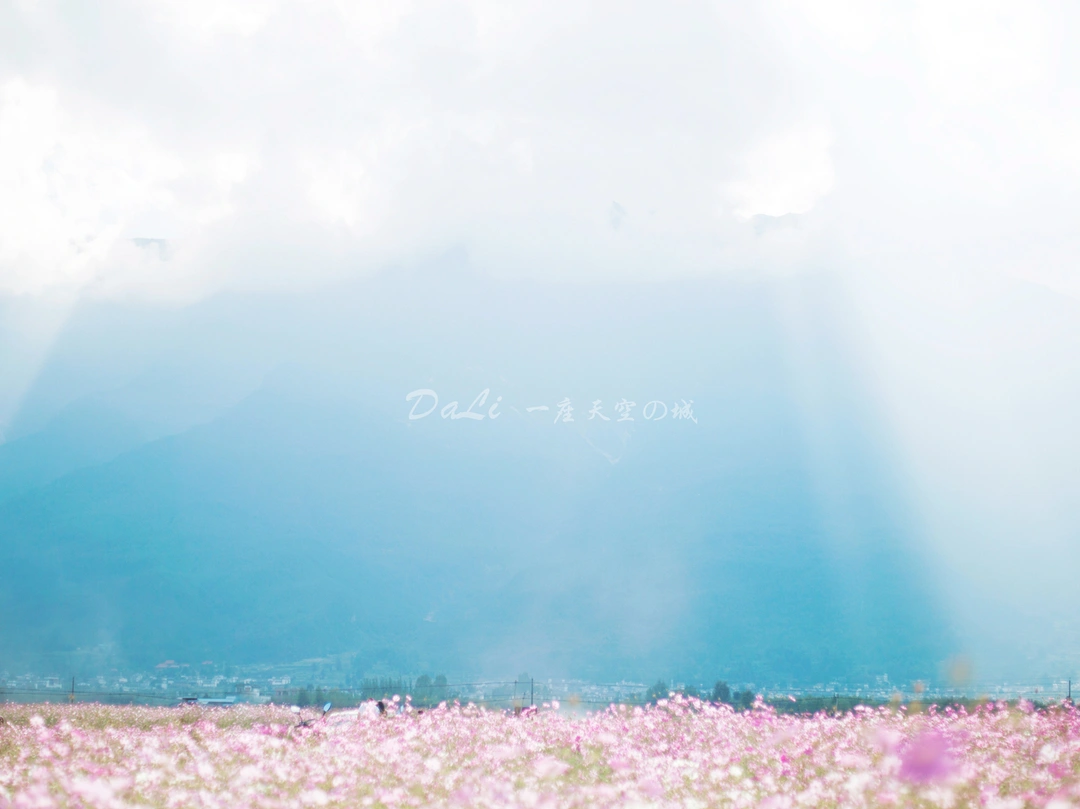
To figure out what the weather was really like, I pulled out all the stops: I frantically scrolled through the latest Dali travelogues on Mafengwo, searched "Dali" and "Erhai Lake" on Weibo for real-time updates, and even added the innkeeper on WeChat to ask directly. In the end, I came to one conclusion: weather forecasts? Totally unreliable! Completely unreliable!
This trip was a family vacation with my parents, so the route was pretty standard. But the same scenery with different travel companions becomes a different view; the same view with a different mood; the same mood with a different heart—haha, I'm just rambling.
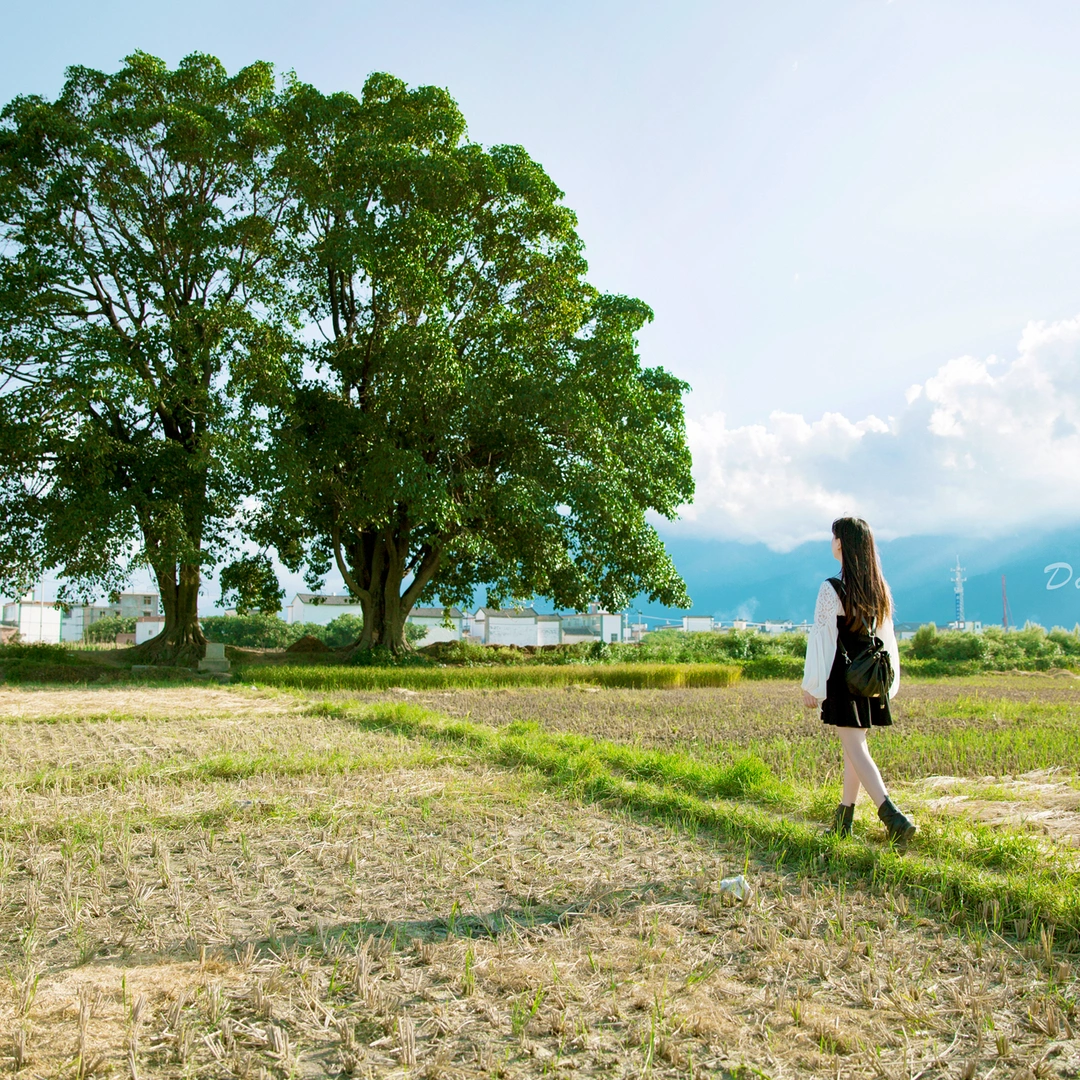
Since it was a domestic trip, language and culture weren't issues, so this isn't really a guide. It's more like a photo-filled journal. But I promise, every photo was taken with care, and every word was written from the heart. I want to show you the most beautiful side of Dali and Erhai Lake, for everyone who dreams of going there.
If you have any questions or want to know about details I didn't mention, feel free to leave a comment, and I'll try my best to reply.
Alright, enough chit-chat. Let's get started.
Pre-Trip Preparations: A Battle with Procrastination
This year was my husband's "business trip year." Just after the Spring Festival in February, he went to Hong Kong; he came back at the end of March, then flew to Beijing in April; before my father-in-law's birthday in August, he took another quick flight to Guangxi. Given this "on-call anytime" situation, when we booked our flights and inn in July, our top priority was: can we cancel at the last minute?
Our biggest wish was that nothing would go wrong before National Day. Thank the heavens—nothing did!
Flights: We booked a flight to Dali at 3 PM on October 1st and a return flight to Chengdu at 4 PM on October 6th. There aren't many flights between Chengdu and Dali, and since I'm the type who packs like I'm moving out even for a summer break from college, I didn't dare book an early morning flight. Round trip, including taxes, was a little over 2,000 RMB per person. We flew Lucky Air on the way there and China Eastern on the way back.
I have to complain about Lucky Air. For the first time in my life, I was on a flight where they only gave us one small bottle of water for the entire journey, and then started selling all kinds of paid food, souvenirs, and toys. Airports have already turned into train stations, and now the skies are getting just as "down-to-earth." These days, money is hard to earn.
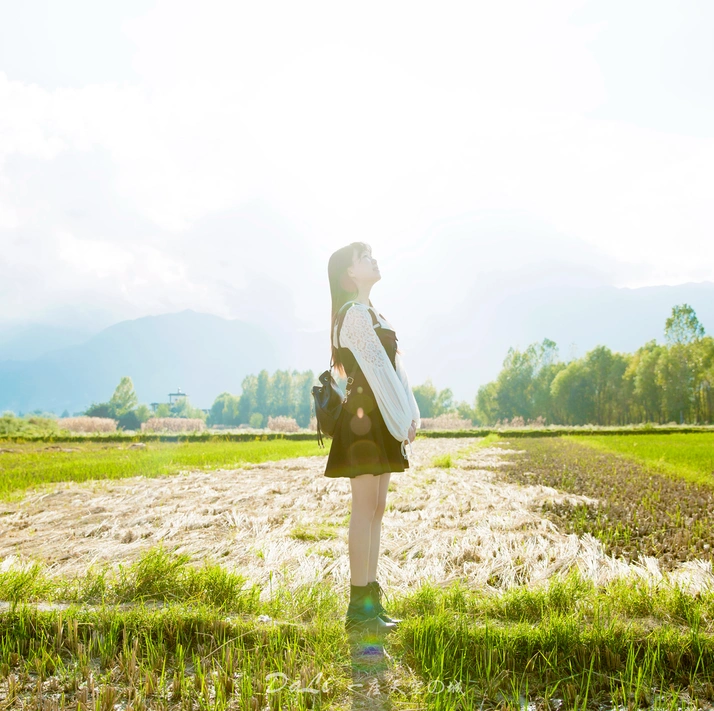
Route Planning: Even though we booked flights and accommodation in July, the detailed itinerary and preparations didn't start until mid-September. I referred to other travelers' posts on Mafengwo and planned a four-day trip. Since I was traveling with my parents, I kept the schedule relaxed. I'd always wanted to visit Wase Town, but it was too far from where we were staying, so I'll have to save it for next time.
Itinerary: - 10/1: Chengdu → Dali Airport → Anyang Inn - 10/2: Anyang Inn → Xizhou → Haishe Park - 10/3: Anyang Inn → Shuanglang → Yuji Island → Haidi Life - 10/4: Anyang Inn → Shuian Inn → West Erhai Lake Road → Flower Sea - 10/5: Shuian Inn → Dali Old Town - 10/6: Shuian Inn → Dali Airport → Chengdu
This route is quite relaxed and perfect for a family trip. To fully enjoy the beauty of Erhai Lake, we stayed mostly by the lakeside. Here's a super useful tool: Baidu Maps. Just enter your starting point and destination, choose your mode of transportation, and it automatically gives you several routes, distances, and travel times. We relied on it entirely for choosing how to get around this time.
Booking the Inn: We chose two inns on the West Erhai Lake Road, since most of our activities were on the western side of the lake. Shuanglang was crowded and reportedly a "big construction site," so we decided to avoid the hustle and bustle. The two inns were Anyang Inn and Shuian Inn, about 8 kilometers apart. We all agreed that Anyang was more recommendable—the rooms were well-designed, comfortable, and the service was great. The only downside was its remote location, with hardly any other inns or villages nearby. But because of that, it was incredibly quiet and perfect for a leisurely vacation.
During National Day, both inns were charging around 780 RMB per night. We booked through the inn's WeChat account. Initially, we tried booking on Ctrip, but the reservation was canceled just an hour after payment. When I called customer service, they said, "It's too early now; the National Day rates haven't been released yet, so we can't take bookings." My poor heart was hurt again. In the end, we found the inn's WeChat and even got a discount.
We booked two room types: the Private Garden Sea View Room and the Pool Sea View Room. The private garden was more secluded, with a small garden separated from the public one, furnished with a bamboo table and two chairs. The pool room was more open, with a direct view of the sunrise from the terrace—but remember to draw the curtains at night!
Not long after we arrived at the inn on the first day, it started pouring rain, so we ordered takeout from a Bai ethnic restaurant through the inn. It turned out to be amazingly delicious! Especially a dish of stir-fried beef with little millet peppers—I ate two bowls of rice. The three-ingredient soup was also good, mainly because the ingredients were fresh. We brought the two chairs from the small garden inside to use as a dining table.
If it weren't for the tall reeds by the roadside (I'm not sure what plant they were), we could have seen Erhai Lake directly from the small garden. I wondered why the innkeeper didn't cut them down, but my dad said, "Grass has its own kind of scenery too." Well… maybe.
Every day, the inn would put fresh fruit and flowers in the room. We stayed for three days, and the room featured carnations, roses, and wild lilies—a different flower each day. The pomegranates didn't look very red, but they were juicy and sweet. Every time we waited for breakfast or checked in or out, the staff would immediately bring out a plate of fruit.
Packing: I brought a camera, lenses, clothes, toiletries, makeup, snacks (a must for a foodie), mosquito repellent (the mosquitoes and spiders in Yunnan are huge), and sunscreen (an absolute must for Yunnan). This time, my little gold bottle of sunscreen worked wonders—my face didn't tan after days of exposure, but I forgot to put it on my scalp, which got sunburned, and my hands, which got tanned. I originally thought one suitcase would be enough for a few days, but I underestimated our ability to "prepare for every eventuality."
Speaking of suitcases, the wheels on my luggage broke during our trip to Japan last year. After returning, I bought a 29-inch suitcase that could hold 60% of our luggage for four people. I ordered it in mid-September and was still debating between pink and white. The seller said the white one was temporarily out of stock, so I agonized for a few more days. Luckily, the suitcase arrived before we left. Next time, I need to buy essentials earlier. This procrastination of mine…
On the first day in Dali, after a satisfying dinner and a strawberry milk-scented bubble bath, I felt incredibly comfortable. The night by Erhai Lake was so quiet. I slept soundly in the big bed until a ray of dawn light touched my face.
Day One: Xizhou Ancient Town and Haishe Park
This was the first official day of the travelogue.
I jumped out of bed excitedly, still in my pajamas and with messy hair, and took a photo of the sunrise from the room's terrace. Today was a good day! The following days were also beautifully sunny.
The weather on the first day was so cooperative—I was thrilled. Breakfast was rice noodles (米粉), with a little chili and cilantro, incredibly tasty, and they even had shredded meat and egg skin. Since we woke up late, the seats in the outdoor garden were all taken, so we ate at the front desk. The girl at the desk immediately cut open a few pomegranates and handed them to us. A happy day, starting with a delicious breakfast.
Today's route was Xizhou Ancient Town and Haishe Park. The inn we stayed at was less than 10 kilometers from Xizhou, and Xizhou was very close to Haishe Park, so we chose to rent electric scooters. Almost every inn offers scooter rentals, and their yards are filled with scooters covered in various patterns. Small ones cost 60 RMB per day, and larger ones cost 80 RMB per day. Our round trip today was less than 30 kilometers, so the rental shop owner said a small one would be enough. The scooters outside the inn were all reserved, so the owner brought two more over. I asked the owner to send me pictures of the scooters via WeChat, picked two flashy ones, and they were delivered to the inn's door in half an hour. Great service!
Before the trip, I'd read travelogues reminding people to check the scooters thoroughly to make sure the lights worked and the battery was sufficient. We checked everything before leaving, and the batteries were all full. One scooter had a broken taillight, so the owner told us to ride it to his shop to exchange it—conveniently located right at the crossroads of Xizhou Ancient Town. I was worried all the way about the battery running out, but it turned out to be unnecessary—when we returned at night, both scooters still had full batteries.
The scooter below, with the Big Mouth Monkey design, was mine and my husband's ride. You can tell from the scratches how many "accidents" it had been through. I'd never ridden an electric scooter before, and I really couldn't handle it. My husband practiced a bit and got the hang of it, though he was still a little nervous along the way. But we made it safely in the end. Actually, Chengdu is full of electric scooters, but on the first day we arrived in Dali, the driver who picked us up from the airport told us that many scooters had fallen into Erhai Lake along the West Lakeside Road—inexperienced riders get startled and just drive straight in. On the day we left, we witnessed a young guy's scooter crash into a wall by the roadside, narrowly missing a girl and scaring her half to death. It's genuinely dangerous for beginners. The West Lakeside Road has no guardrails, and one wrong move and you're in the lake. So, a reminder to anyone planning to ride an electric scooter around Erhai Lake: be careful and drive safely.
All along the way, sitting on the back of the scooter holding my camera, I was a bit nervous—after all, both the driver and the passenger were beginners. Our scooter didn't even have a backrest, so I had to sit up straight the whole time, which was tiring. We passed a more open area and stopped to rest, taking a photo of some cosmos flowers (格桑花). This season, Yunnan is full of flowers, though some were already starting to wilt.
First Stop: Xizhou Ancient Town
I took these photos on our way out of the ancient town. After exchanging the scooters, we entered the town through another small gate. Before coming to Dali, a friend told me that Xizhou flatbread (喜洲粑粑) was famous and much better than Lijiang flatbread. The ancient town was indeed full of stalls selling it. We found the busiest shop and bought one sweet flatbread and one meat flatbread, planning to take them to Haishe Park to eat. But my mom kept saying, "Eat it now, it's best while it's hot!" Before we even left the ancient town, both flatbreads were gone.
Low walls, about a meter and a half high. I instantly felt the urge to climb over them, but there were people around, so I gave up.
The charcoal stove for baking Xizhou flatbread looked a lot like the stove we used as kids to bake "jiao ber" (a type of snack). The flatbread looked good, but the texture was quite different from what I'd imagined. I personally thought it had a bit too much baking soda. I heard the brown sugar one was good, but I was waiting for a proper meal at the time, so I didn't try the sweet one.
Sifang Street (四方街) in Xizhou Ancient Town. Apparently, every ancient town has a Sifang Street—the place with the most people, the most shops, and a square, enclosed layout.
This braised chicken (黄焖鸡) was a dish almost every restaurant served during our trip. It tasted great—the chicken was fragrant and tender. Recommendation rating: ⭐⭐⭐⭐⭐⭐
In Yunnan, it's hot in the sun and cold in the shade. We ate at a roadside spot, and the food was mostly sour and spicy (which suited our Sichuan taste buds just fine). When the sun hit our backs, we'd start sweating. So the best way to dress in Yunnan is: wear less underneath and bring a thick jacket—take it off when it's hot, put it on when it's cold.
The weather in Yunnan is indeed dry. In the morning, I'd put on moisturizing toner, lotion, primer, sunscreen, and foundation. By noon, my face was so dry that the foundation was almost flaking off. But for someone with combination skin like me, the best part was that my face didn't get oily at all.
In the ancient town, we saw many horse-drawn carriages like this one, but not many people were riding them—probably because everyone had their own electric scooters. When I looked closely, I realized how fancy the setup was: a bag in front for food, a bag in back for… you know. Fully automatic!
There was also a cute little shop that looked like a small restaurant, but unfortunately, we'd already had lunch by the time we saw it.
We didn't really explore the ancient town much this time, and we didn't go to the must-take photo spot. Because I was dawdling before we left in the morning, we didn't arrive at Xizhou until noon. After lunch, it was already past 1 PM, so we headed straight for Haishe Park.
On the way from Xizhou Ancient Town to Haishe Park, we passed a section of unpaved gravel road. Every time a car went by, it kicked up a cloud of dust. We were feeling pretty miserable when suddenly our eyes lit up—a cluster of Bai ethnic buildings built over the water. Dust or no dust, we parked the scooters by the roadside and took a good look.
The photo above is what I saw; the one below is the actual half-finished scene. Once this road is paved, it should be much better. We couldn't stay there eating dust any longer, so we quickly got back on the scooters and sped through the area. I have to give a big shout-out to my husband—through all that dust, he didn't even blink and just drove on, constantly telling me to hide my head behind him, not to talk, and not to open my eyes. Here's a thumbs-up for him—awesome!
Haishe Park
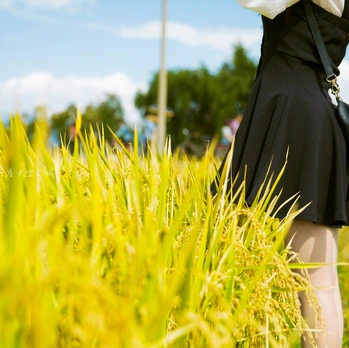
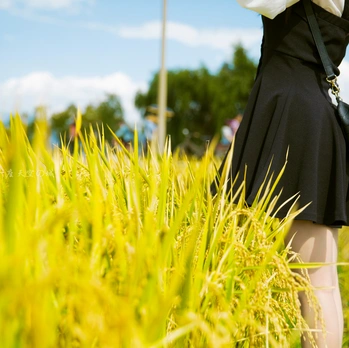
The entrance to Haishe Park is marked by the "Couple Trees." All day long, many newlyweds come here to take wedding photos. We waited until we were almost leaving, and when there was a brief moment with no one around, we quickly took a few shots. I didn't expect the sunset light to make them look so good. The trees were so big that you couldn't capture them fully while standing underneath them, and if you got the whole tree in the shot, you couldn't see the people. So I had a bright idea—go into the field! I followed my husband along the ridges and stepped right into the farmland. This angle was great, and my husband even said it looked a bit like a foreign commercial.
This photo is called "In the Field of Hope." Another bountiful harvest year.
Look at me, being silly, laughing without any regard for my image. The main reason was that the light was too harsh, and there were lots of bugs in the field. Anyone going into the fields should remember to bring insect repellent. I didn't notice until I was showering at night that I had several bites, which were both itchy and painful. The mosquitoes here are fierce!
As we were about to leave the field, we ran into two kids carrying a little puppy out to sunbathe. It was super cute. I liked the one with the higher "face value," so I took a solo shot of it. It was fast asleep and wouldn't wake up no matter how many pictures I took—adorable.
The cute one (on the right) was named Lily, and the one on the left was named Barry. They were actually biological brothers. Their mother had passed away shortly after giving birth to them. I really wanted to take that little puppy home…
Okay, I admit I have a thing for taking photos of trash cans.
The spider at Haishe Park was enormous—much bigger than what you see in the photo! Every time I looked up, I saw spiders everywhere. Is it because the ecology here is so good? I've never seen such huge live spiders before.
Erhai Lake has many trees growing in the water—some have already died, while others are still thriving. I heard the water level rose and flooded these trees. Regardless, they're definitely a unique feature of Erhai Lake.
The western shore of Erhai Lake was calm, as smooth as a mirror; but the eastern shore had constant waves. When we were in Shuanglang, the waves crashing against the rocks on the shore would splash up quite high. Amazing nature.
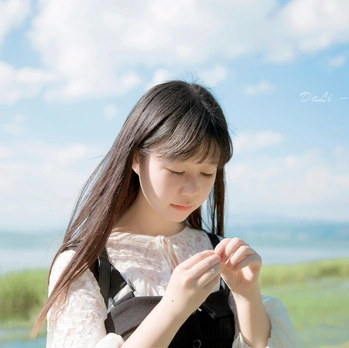
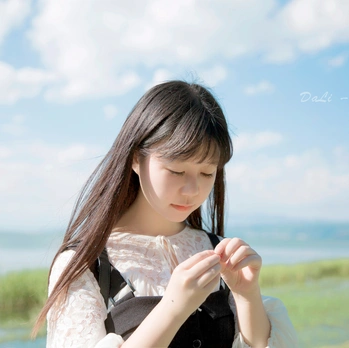
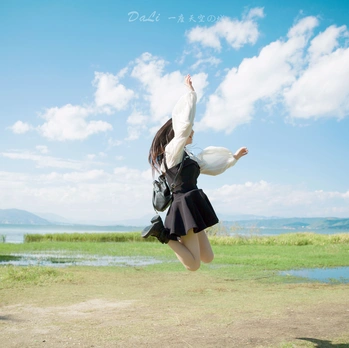
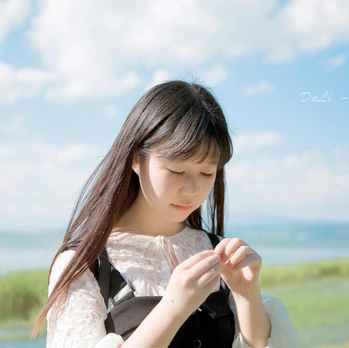
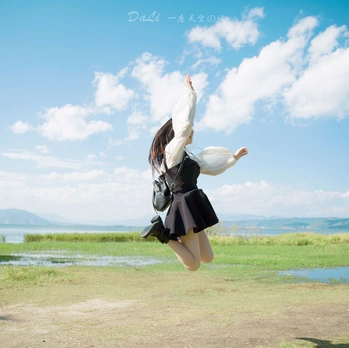
At the "tip of the tongue" (the end of the park), there were no trees blocking the view. This should be the most open area in Haishe Park. Quite a few people were taking photos there. By the time we slowly wandered over, there was almost no one left, so we started jumping around. My favorite was the candid shot my husband took of me picking at my nails—picking them so leisurely, hahahaha.
While others were taking photos, I just stood by and watched—all kinds of poses, all kinds of expressions. It was quite entertaining. I bet people watching me take photos were laughing hysterically on the inside too. After you read this travelogue, you'll realize that I have two little princesses living inside me: one quiet and one crazy. So I'm often a bit unhinged.
The sky was gradually getting dark, so we decided to head back. Go home, eat something delicious, take a hot shower, and get some sleep. Life is wonderful.
On the way back from Haishe Park to the inn, we took a wrong turn and happened to catch the sunset over the village. Farmers were chatting in the fields here and there, and some houses had already lit their stoves to prepare dinner. Suddenly, I felt like I was walking home as a child—everything was so peaceful, so serene, so warm and cozy.
Day Two: Shuanglang and Haidi Life
A beautiful day starts with a delicious breakfast. On the second day at Anyang Inn, breakfast was Western-style sandwiches. I have to highlight the bacon—it was so good! Really fragrant and not greasy at all.
We waited at the door for a car to take us to Shuanglang. Today, to match the vibe of Shuanglang, I actually wore a long dress for once. I got up at 7 AM because Shuanglang gets very congested during National Day, and it's best to leave early. If you arrive after noon, you'll be stuck in traffic for a long time. In the morning, the West Lakeside Road was almost empty of people and cars. I leisurely ate the leftover dragon fruit from breakfast and then, without realizing it, started spinning around—haha, the dragon fruit was so sweet and delicious.
Halfway there, the driver said traffic was light today, so he took us to an undeveloped lotus pond to play around. There was no one there, which was great, but unfortunately, it was too early, and the water lilies hadn't bloomed yet. The bougainvillea, however, was in full, fiery bloom.
I took this candid shot of the driver. He happened to be turning around, and it looked like he glanced at my lens. Everyone we met on this trip to Dali—the drivers and the locals—was especially kind and simple. Like this driver: the night before, we agreed on a price. He dropped us off in Shuanglang, told us how to get around, and then went back without even taking the money. When we returned that evening, we estimated our dinner time to be later than expected, so he waited for us at the entrance of the ancient town for over 40 minutes. When we got in the car, he didn't complain at all. We only paid him for the ride after we got back to the inn. He really wasn't worried that we might not take his car back that night.
The driver who picked us up from the airport and took us back was also a great guy. On the day we were leaving, my mom suddenly said she wanted to go back to the old town to buy some clothes. We asked the driver if we could stop by the old town on the way to the airport, and he agreed without hesitation. But then I made a careless mistake—I left a new pair of Martin boots at the inn. By the time we were almost at the old town, the driver kept calling his friend to help bring the shoes over. We ended up delaying the driver's entire schedule for the day, and we felt really bad about it. We wanted to give him extra money, but he refused. In the end, we managed to get him to accept an extra 20 RMB. It made me think about the city we live in now, where everyone demands payment upfront or adds extra charges, with no sense of trust at all. The more money people have, the more insecure and calculating they become.
Near the entrance to Shuanglang, there was a gap where you could go down to the lakeshore. The driver said, "Quick, while there are no traffic cops around, I'll pull over. Go down and take some photos—the scenery is great here." And that's how the two beautiful photos above came to be.
We chose to enter Shuanglang Ancient Town from the north gate. This area was still under development, with fewer people and much cheaper goods. I really liked this kind of ancient town.
All kinds of flashy electric scooters and small shops are a signature of Shuanglang. The color of this scarf actually matched my dress quite well.
When we passed by, the elementary school entrance was cordoned off, probably under renovation, so I just took a photo of the building itself.
A flower crown for ten RMB—made of real flowers. I also bought one made of fake flowers, and got two for 16 RMB. You can vaguely see my sunburned scalp in this photo. That night, it felt hot and painful. By the third day back in Chengdu, it started itching, and then the center part of my hair began to peel in flakes, like snow. Everyone, please remember to wear sunscreen!
We used Dianping to find a highly-rated Bai ethnic restaurant, and it was indeed busy. We ordered a famous Bai dish that was on every menu—Bai-style raw pig skin (白族生皮). We thought it was some kind of noodle "skin," but what came was a big bowl of pig skin with a dipping sauce, sour and spicy. If you like pig skin, you'll probably enjoy this dish, but in the end, I ended up eating tofu dipped in the sauce. Haha, surprisingly, it went quite well with tofu. Recommendation rating: ⭐⭐⭐⭐
I feel like all developed ancient towns look the same. Shuanglang Ancient Town, Dali Old Town, Dayan Ancient Town, Shuhe Ancient Town—they all have various handicraft shops, food stalls, and street vendors. But these days, the prices aren't as outrageous as they used to be, and you can still bargain a bit. But I'm not really the type to buy souvenirs—I only buy what I like, not what's recommended. That's always been my rule.
We paid ten RMB to enter Yuji Island, with Yang Liping's Sun Palace behind us. You can only see it from the side from the island; from a boat, you can stop in front for a while. If you want to experience the artistic vibe up close, you can stay there—the cheapest room is 4,880 RMB, or you can have afternoon tea inside for about 200 RMB per person.
My mom kept buying embroidered bags throughout the trip—big ones, small ones, wide ones, narrow ones. She said she'd give them to her aunts and sisters as gifts, perfect for carrying groceries. I wouldn't dare use one of those bags for grocery shopping—they're too flashy, like you're inviting thieves to notice you.
While my mom was picking out bags, I spotted a hairpin at a nearby shop, but I had no idea how to use it. The kind shop assistant demonstrated for me—one twist, one wrap, one insert, and it was done. Then I tried it myself, and I still couldn't figure it out. Ma'am, I'm just clumsy, sorry. Even if I bought it, I'd just leave it at home. Maybe next time, after I've learned how to use it, I'll come back and buy one.
The finished product looked like this ↓↓↓↓
Haidi Life has become a must-visit spot in Shuanglang. I just wanted to see what that famous white table and chairs that everyone photographs actually looked like. After weaving through many narrow alleys, suddenly the view opened up—blue sky, white clouds, red flowers, green grass, white umbrellas, lounge chairs. It instantly reminded me of a seaside vacation. And indeed, it was a "seaside" vacation.
As soon as we arrived at Haidi Life, there was already a line of people waiting to take photos. The sun was scorching hot, and we were parched from walking, so we decided to go inside and rest first, waiting for the crowd to thin out before joining the queue. We ordered some drinks, and my dad found a shady spot under a tree, where he opened up the snacks we'd brought from Chengdu and started munching. In the end, the queue never got any shorter—in fact, it got longer and longer. Looking at the long line and the setting sun, I decided to skip the photo. Facing east, the afternoon light was backlit, making faces look too dark and hard to correct.
The rest of the afternoon, besides snacking, was spent playing with Haidi's dog, Yangyang. It was very well-behaved, with a particularly sweet smile, and it was inseparable from its puppy. From the owner's accent, I could tell they were from Fujian.
The inspiration for this photo came from a Dali travelogue by Xiao A—the combination of wooden planks and shimmering light was really nice. So I extended that idea to the white wooden table and the shimmering light, and the silhouette and the shimmering light. Everything was perfect.
The walls of Haidi Life were covered in vibrant firecracker flowers. My dad really liked them and wanted to take a cutting back to plant in his garage. But in the old town, they were sold in big pots, and we couldn't take them on the plane. We'll have to wait until we drive down next time. Last time in Lijiang, I got a stem of something like a rose from a restaurant owner, and now it's blooming beautifully in our small garden. I guess I'll have to keep my eyes peeled for various plants to bring back for my dad to enrich his little garden.
The free photo spot at Haidi Life was too crowded, so my husband and I went to a paid photo spot not far away that cost 2 RMB per person…
Final Thoughts: What Dali Taught Me
This trip to Dali made me rethink a question: Why are we always longing for faraway places?
Maybe it's because, in the distance, we can temporarily let go of the anxiety and defenses of daily life and rediscover a sense of trust between people. Like that driver who let us go without taking payment first, or the airport driver who helped us find the shoes and didn't mind the extra time—they reminded me that life can be simple.
Dali isn't just a city; it's a city floating in the clouds. Here, time slows down, the sun feels warmer, and even worries seem lighter. You don't need to go out of your way to find scenery, because the scenery is all around you—in the morning rice noodles, in the evening sunset, in the little puppy by the roadside, in the smiles of strangers.
If you want to go to Dali, my advice is: slow down. Don't rush from one attraction to another. Rent an electric scooter and ride slowly along the West Lakeside Road. Stop whenever you find a place you like, take some photos, and just space out. Eat some authentic Bai cuisine, stay at an inn with character, and chat with the locals. You'll find that the most beautiful scenery in Dali isn't at the trendy photo spots—it's in the unexpected encounters along the way.
Finally, remember a few practical tips: - Sunscreen! Sunscreen! Sunscreen! Important things must be said three times. Don't forget your scalp. Don't ask me how I know. - Bring a thick jacket. The temperature difference between day and night in Yunnan is huge. - Renting an electric scooter? Make sure to check the brakes, lights, and battery thoroughly before you set off. Drive carefully, especially on the lakeside road without guardrails. - Book accommodation early if you're traveling during peak season, and try to contact the inn directly for better deals and flexibility. - Bring insect repellent. The bugs in Yunnan are no joke. - Pack light layers. The weather can change quickly, and you'll be grateful for the ability to add or remove clothing as needed.
Dali will stay with you long after you've left. It's not just a place on the map; it's a state of mind. A reminder that sometimes, the best thing you can do is to slow down, breathe, and let the clouds carry your worries away.
You should also read:
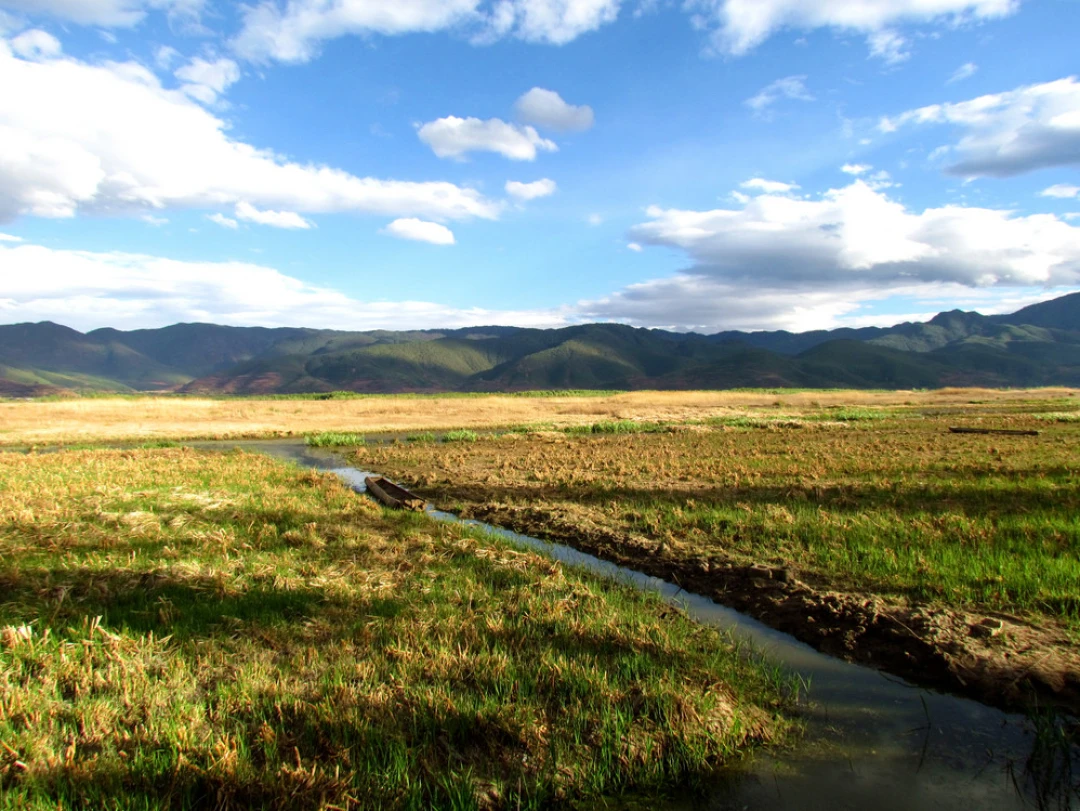
2012, Conquering Lugu Lake and Lijiang: A World of Azure and a City of Splendor
2012, Conquering Lugu Lake and Lijiang: A World of Azure and a City of Splendor Prologue: Three Guys on a Youthful Expedition Just after the May Day holiday in 2012, my buddies Hui Ge, Xiao Chen, and I—three strapping young men—shouldered our backpacks and set…
Continue reading...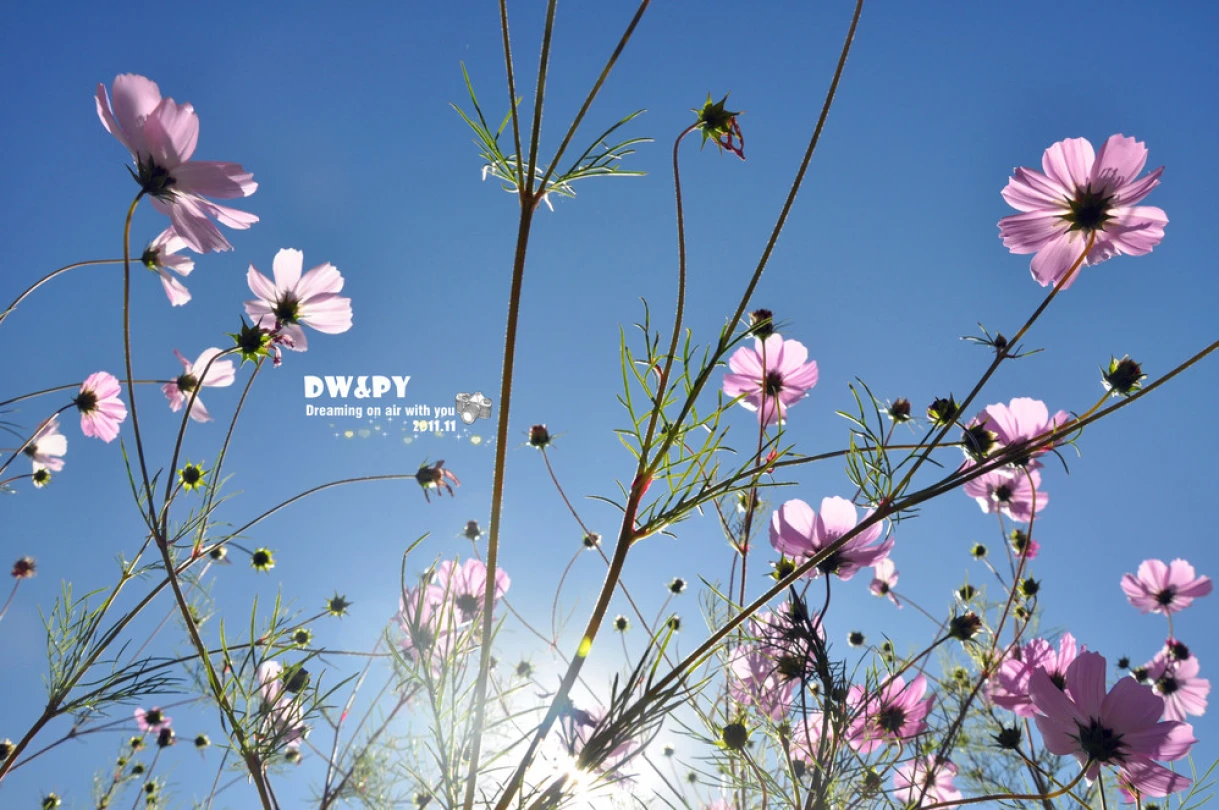
Heart Soaring Among the Clouds: A 20-Day Yunnan Dream Journey
Heart Soaring Among the Clouds: A 20-Day Yunnan Dream Journey From Lijiang's morning light to Meili's snow-capped peaks, from Yubeng's hidden realm to Lugu Lake's tranquility—this was not just a simple trip, but a soul's exile and homecoming. "Never forget why you started, and you…
Continue reading...
Yunnan's Colorful Clouds: Touching Shangri-La — A Dialogue with the Sky
Yunnan's Colorful Clouds: Touching Shangri-La — A Dialogue with the Sky If you ask me where in China is closest to heaven, I would tell you without hesitation: Shangri-La. The name itself carries a mysterious magic, as if every syllable whispers tales of distant lands.
Continue reading...