Dali Ancient City In-Depth Tour: One Day to Discover the Hidden Heartbeat of Everyday Life
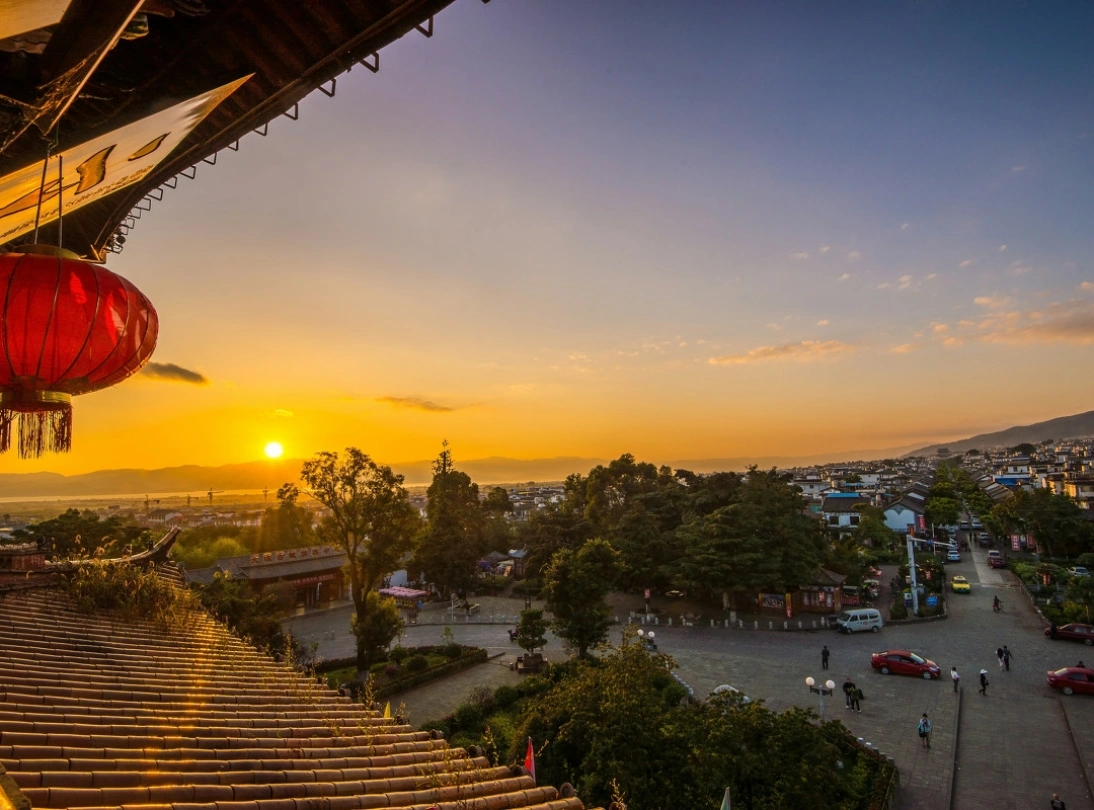
Dali Ancient City In-Depth Tour: One Day to Discover the Hidden Heartbeat of Everyday Life
Many people say Dali Ancient City has been swallowed by commercialization, losing its original character. They rush in, stroll along Renmin Road and Foreigner Street, snap a few photos, then hurry away with a sigh of "it's nothing special."
But here's what I want to say: what you saw was just the surface of Dali Ancient City.
As a local who has lived in this ancient city for over twenty years, I make it a habit to wander through its alleys after work every day. From childhood to adulthood, from innocence to maturity, I've watched this city change little by little—and in the corners that tourists never step into, I've found its soul, unchanged.
The true charm of Dali Ancient City was never in those labeled "artistic districts." It lies in the morning market at dawn, the old city walls at dusk, and the hidden alleyways that only locals know. Today, let me—a native Dali girl—take you on a deeply authentic route, one filled with the warmth of everyday life.
Morning: Start at the Market, Experience the Most Genuine Dali
Dali Ancient City Market—The Taste of Real Life
If you ask me where to go to quickly immerse yourself in a city's life, my answer will always be: the food market.
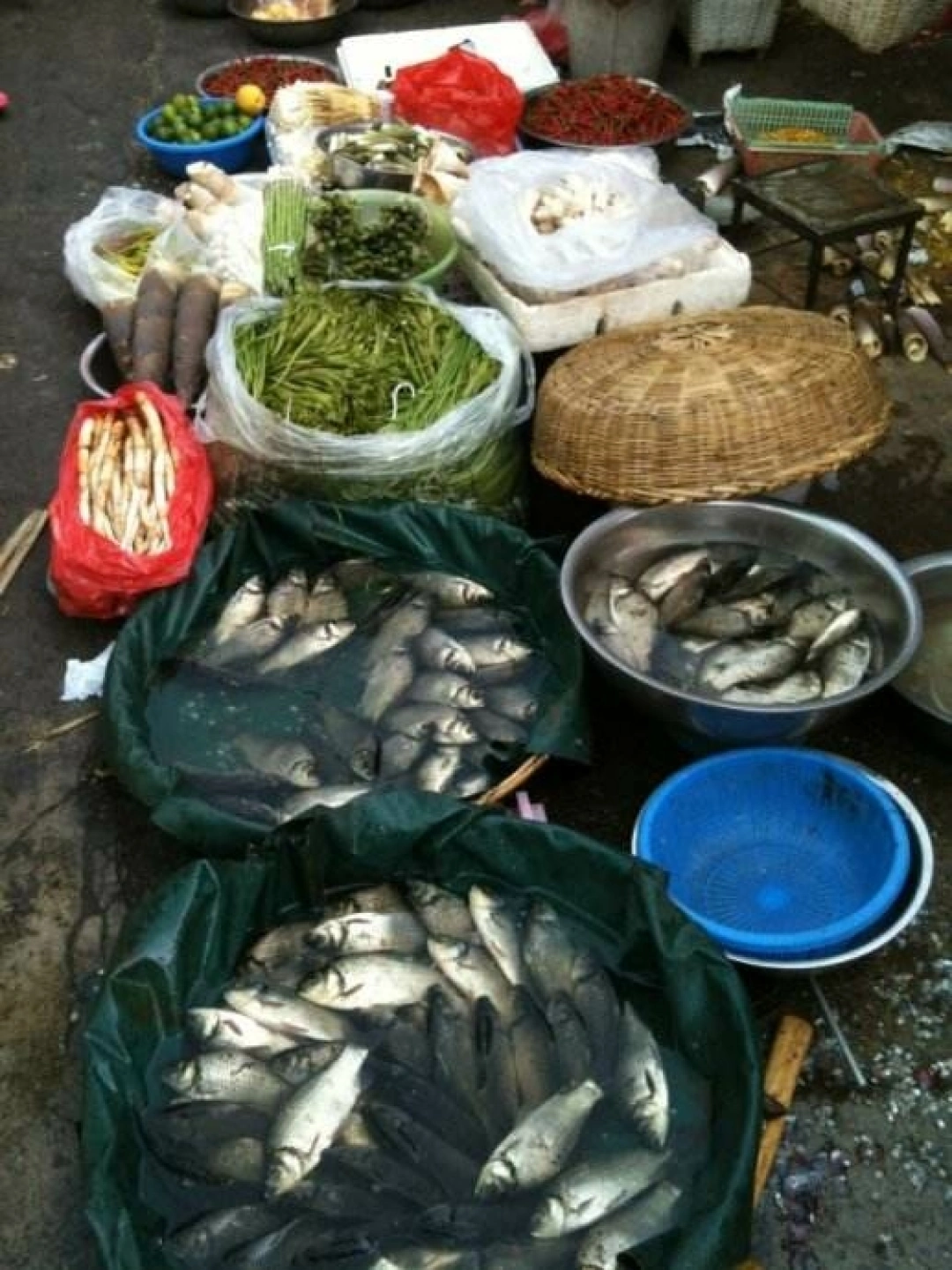
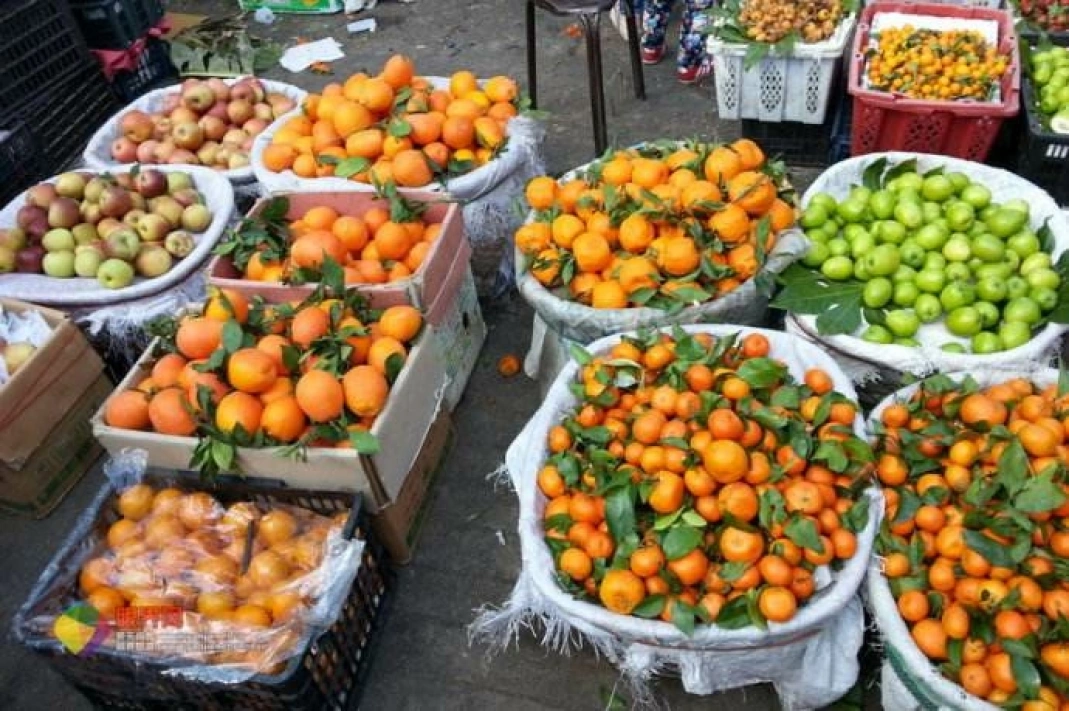
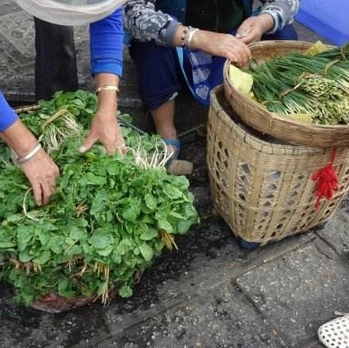
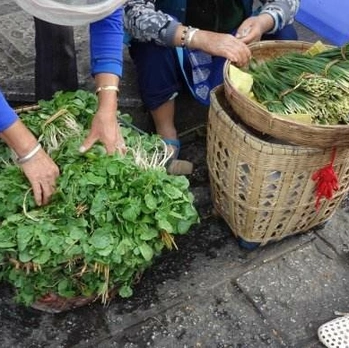
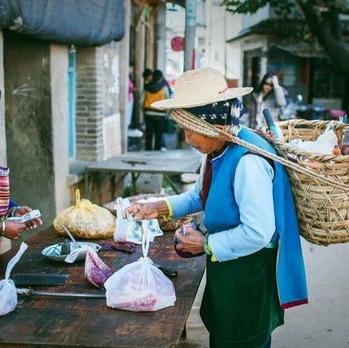
Located near the intersection of Bo'ai Road and Pingdeng Road, the Dali Ancient City Market is the largest market in the old town, right next to the North Gate. There's no fancy decoration here, no刻意 (deliberately staged) artistic ambiance—just the most authentic scenes of daily life: Bai grandmothers carrying bamboo baskets to sell vegetables grown in their own courtyards, vendors shouting in the Bai dialect, live fish splashing in basins, and the air thick with the mingling scents of spices and fresh flowers.
If you happen to arrive on the second, ninth, sixteenth, or twenty-third day of the lunar month (market days), the scene is even more lively. Year after year, this market plays on like an old movie that never ends, every frame capturing the pure essence of life.

The first thing you must do here is eat breakfast.
The breakfast shop opposite the Sifangjie Supermarket at the southern side entrance of the market—this is the taste I've grown up with. When I was a kid, I'd come here with my mom to buy groceries, and I absolutely had to have a bowl of his er si (rice noodle strips) or mi xian (rice vermicelli) before I'd agree to go home. Now my aunt's family has moved away, but every time they return to Dali, their first stop is still this shop, ordering a bowl of za jiang er si (rice noodle strips with minced pork sauce). Even her little cousin insists on coming here to eat when he's back in Dali.
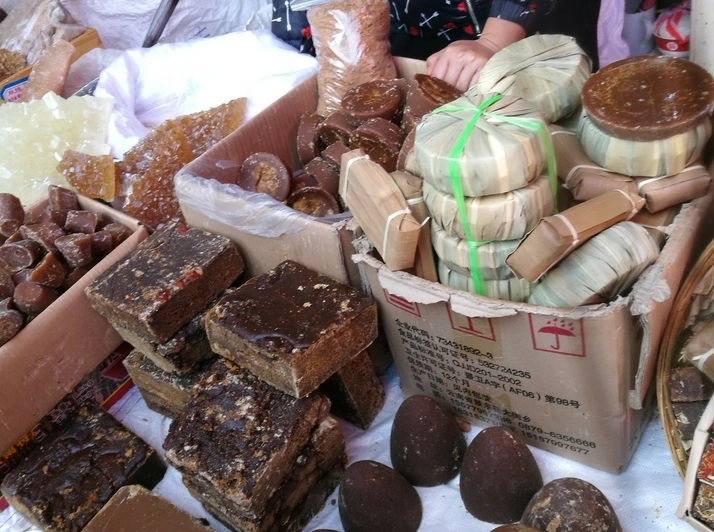
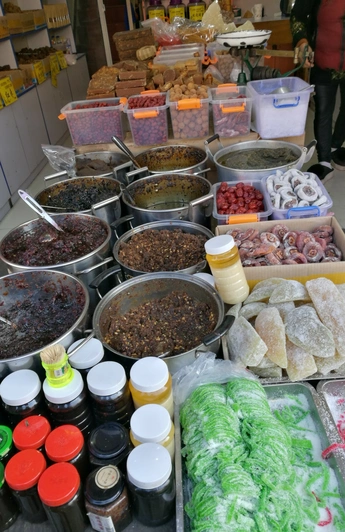
Besides er si and mi xian, the shop also offers excellent xi dou fen (pea jelly), you tiao (fried dough sticks), shao er kuai (grilled rice cakes), and huang dou fen (soybean flour sweets). There's also an unassuming old brown sugar shop that's been open for over twenty years. My grandmother has always bought her brown sugar here to make rose petal jam. Recently, influenced by a friend, I've started drinking their brown sugar too—sweet but not cloying, fairly priced, and reassuring to consume.
Many of the flavors from my memory can only be found around this market now. Everywhere else has changed, but here, you can still recapture that original feeling.
Late Morning: Wandering Through History and Faith
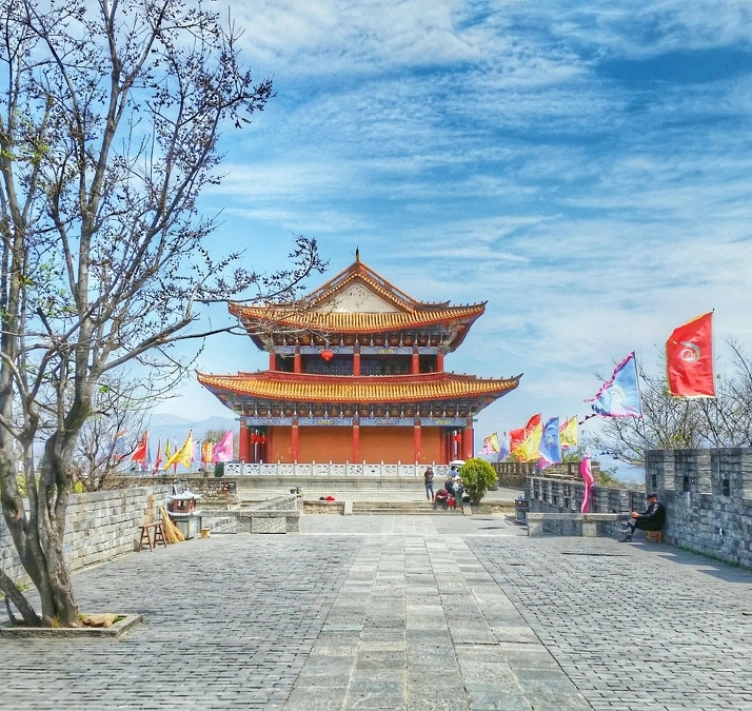
North Gate (An Yuan Men)—The Quietest Corner of the Ancient City
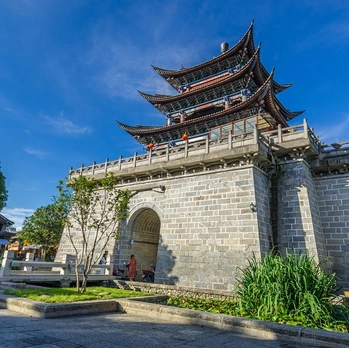
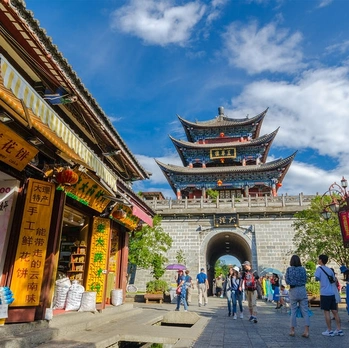
Compared to the bustling Fuxing Road, the North Gate feels like a forgotten corner. It's far from the tourist hotspots, and most people passing through are local residents. The gate was first built in 1382, one of the four gates of the ancient city. Its tower features a double-eave hip-and-gable roof, preserving Ming dynasty architectural style. Standing beneath it, you can feel a profound, quiet weight of history.
Dali Ancient City Christian Church—A Century-Old Blend of East and West
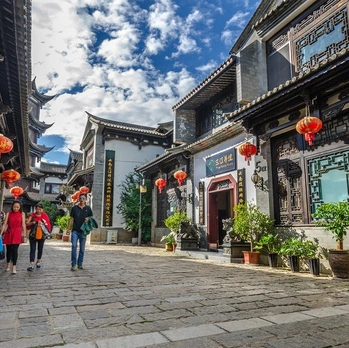
Walking south from the North Gate, turn into a quiet alley near the intersection of Fuxing Road and Pingdeng Road, and you'll find this church, first built in 1904. With 114 years of history, it is listed among China's century-old churches. Its most striking feature is its architectural style—the main structure has a timber-and-earth four-slope tiled roof, combining Western European church design with strong Bai architectural elements. It's a perfect example of East-West fusion. Weekend services are held here and are worth a visit.
Dali Rural Film History Museum—Memories of a Bygone Era
For anyone who grew up in Dali Ancient City, this place is familiar. Who didn't watch a movie here as a child?
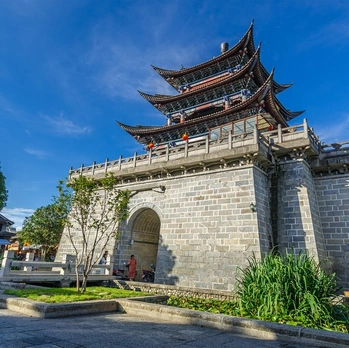
The museum captures that yellowed era—when the last glow of sunset faded, a white screen was raised amid the village head's shouts, and everyone rushed over with their little stools. On the screen, The Reconnaissance Across the Yangtze was playing, while the projectionist, head down, smoking a cigarette, was calculating the cost of his son's new bicycle.
Those dusty times, those lost youth—all are quietly preserved here. If you too miss that era, feel free to come in and sit for a while.
Noon: By Cangshan Gate, Beside March Street
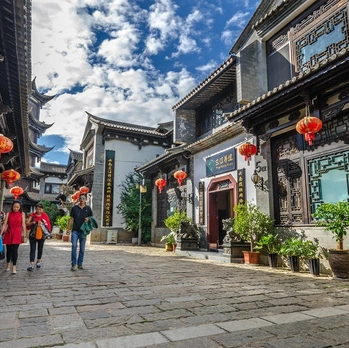
West Gate (Cangshan Men)—The Closest Point to Cangshan Mountain
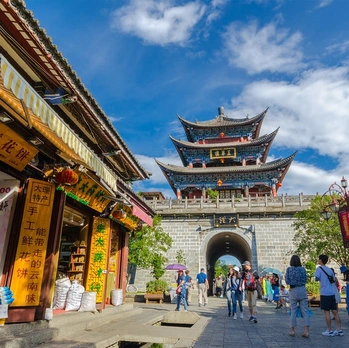
This is the gate closest to Cangshan Mountain, and it looks majestic from afar. Sunlight filters through the leaves, casting dappled shadows on the bluestone pavement. A gentle breeze sways, waking up the big yellow dog sleeping on the ground. The aroma of grilled er kuai (rice cakes) wafts over, and you can't resist running to a Bai sister's stall to buy a freshly grilled one—slathered with local spicy sauce and meat sauce, stuffed with shredded potatoes, pickled vegetables, you tiao (fried dough sticks), or ham sausage. Hot and steaming, one bite brings pure satisfaction.
March Street—A Thousand Years of a Single Market
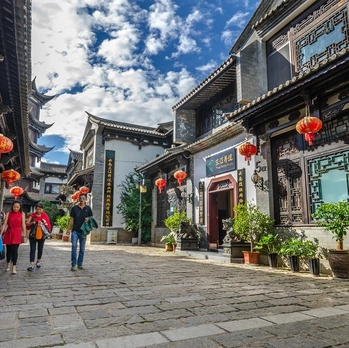
Just across the street from Cangshan Gate lies March Street, the site of the Bai people's most magnificent folk festival. Held annually starting on the fifteenth day of the third lunar month, lasting seven to ten days, it is the oldest and most prosperous trade fair in western Yunnan, as well as a grand festival for folk arts, sports, and cultural exchange.
"A thousand years of a single market, a single market for a thousand years"—this saying captures the historical depth of March Street. During this time, guests pour in from all directions, creating a sea of people. The road from the ancient city's west gate to the fairground, stretching a full kilometer, is lined with long canopies, bustling with commerce and an array of goods. Special attractions like Tibetan Medicine Street and the Horse Racing Meet are truly dazzling.
Afternoon: Ginkgo, Camellias, and Intangible Heritage
Yu'er Road—Golden Romance
From November to December each year, the ginkgo trees lining Yu'er Road turn a brilliant gold. A gentle breeze sends yellow leaves swirling through the air, like a shower of ginkgo rain. While not as spectacular as the ginkgo village in Tengchong, nor as ancient as the thousand-year-old ginkgo at the Guanyin Zen Temple on Zhongnan Mountain, Dali's ginkgo has its own unique charm—they quietly accompany this thousand-year-old city, at the foot of Cangshan Mountain and the shore of Erhai Lake. Amid this sea of gold, all worries seem to melt away.
Yu'er Park—Camellias Second to None
Yu'er Park is located on the north side of the middle section of Yu'er Road, covering 28 mu (about 4.6 acres). It gathers the essence of Bai architecture, featuring intricately shaped white stone flower beds where Dali's famous rare flowers and plants are cultivated.
"Yunnan's camellias are second to none, and Dali's camellias are the best in Yunnan!" After the beginning of spring, over 700 camellia plants in the park burst into bloom, with more than 300 varieties—Hen Tian Gao (Sky-High Hatred), Tong Zi Mian (Child's Face), Ma Nao (Agate), Mu Dan Cha (Peony Camellia), and many more. From a distance, they appear as clusters of white, pink, deep red, peach, purple-red, and mixed red-and-white colors. Up close, the flower shapes range from curved-petal, lotus, pinecone, trumpet, to magnolia forms... "Gorgeous but not vulgar, living for centuries"—these are the ten virtues of the camellia.
Jiang Gong Ci—Yunnan's First Intangible Heritage Museum
If you don't have time to personally experience Dali's intangible cultural heritage, Jiang Gong Ci is an excellent choice. It displays items such as jia ma zhi (paper horse prints), rao san ling (a three-part ritual dance), exhibits on the Ancient Tea Horse Road, Heqing silver carving, and Jianchuan wood carving. It allows you to appreciate Dali's profound cultural heritage in a short time.
Evening: Where Art and Everyday Life Coexist
The Bed Sheet Factory—Dali's "985"
Hidden at No. 56 Cangping Street, the narrow alley grows narrower and quieter until you reach its end—the Bed Sheet Factory Art District. Converted from a disused bed sheet factory, it retains the basic industrial architecture of the 1990s while incorporating modern artistic design, creating a vintage yet contemporary feel.
Here you'll find a photography museum, art galleries, coffee shops, a small theater, original clothing stores, tea houses, independent publishing bookstores, and a pottery studio. A cup of coffee, a book, a lazy afternoon—this is the true Dali slow time.
Renmin Road—Gentle Under the Evening Lights
As night falls, the nightlife on Renmin Road quietly unfolds. Lively, crowded, commercial—it can accommodate all the bustle, yet also reveal the gentleness of the night.
"Rain falls softly over the ancient city, Renmin Road brings me a good mood." When you walk down the street in linen clothes and sandals, no one thinks you're out of place. Listening to the music from the bars, reading postcard messages by the streetlights, it feels like you've returned to another era. I love listening to singers on Renmin Road tell their stories in their own way—I have wine, do you have a story?
Honglong Jing—Poetic Beauty of Small Bridges and Flowing Water
Stream water from Cangshan Mountain flows gently down into the ancient city, creating the waterscape street of Honglong Jing. The water softly caresses four disc-shaped stone troughs as it slowly flows eastward. I love sitting at a small shop on either side of Honglong Jing, ordering a cup of coffee, and watching the water flow—I could spend the whole day doing just that.
Night: Climb High and Gaze Down at the Ancient City
Wuhua Tower—The Highest Point of the Ancient City
Climbing Wuhua Tower offers a panoramic view of Dali's scenery. Built in 856 during the reign of King Quan Fengyou of the Nanzhao Kingdom, it once served as the state guesthouse. According to records, Wuhua Tower was five li (about 2.5 km) in circumference, one hundred chi (about 30 meters) high, could hold ten thousand people above, and could raise a five-zhang (about 16.5 meters) flag below. It is the highest point of the ancient city. Within this majestic tower, the passage of time and the vicissitudes of history are silently told.
South Gate (Cheng'en Lou)—The Symbol of the Ancient City
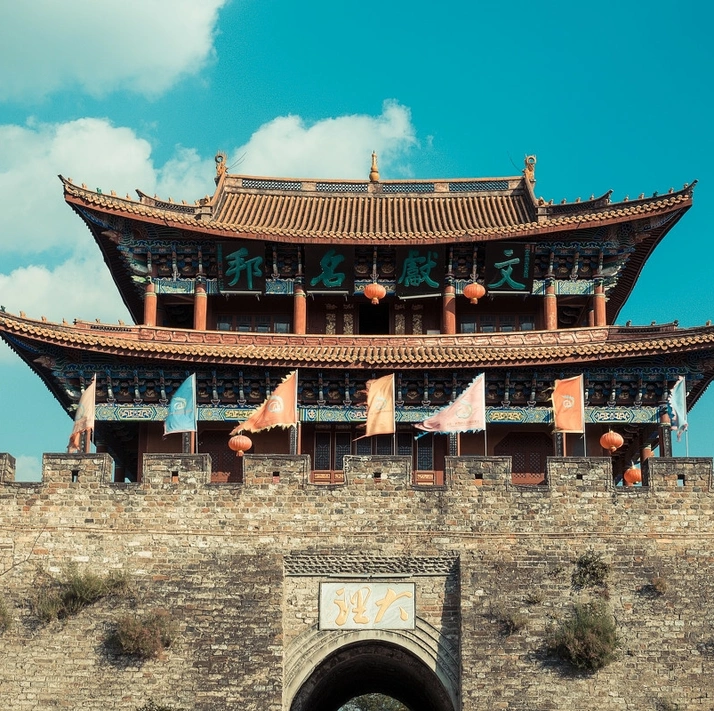
The South Gate is the foremost of the four gates, first built during the Hongwu period of the Ming dynasty, over 600 years ago. The towering gate tower features interlocking brackets, flying eaves, and intricately carved beams and painted pillars—a classic example of ancient palace-style architecture and the most photographed "standard image" in films and TV shows.
Standing atop the South Gate, you can overlook the entire ancient city. The view of Cangshan Mountain from here is completely different from what you see from within the city.
Bonus: Unmissable Hidden Photo Spots
- Jilipo (Couple's Trees) : At the intersection of Renmin Road and Bo'ai Road, two thousand-year-old banyan trees are known as the "Couple's Trees," a symbol of love. Every year after the Dragon Boat Festival dinner, local residents come here for a walk, believing it can ward off a hundred ailments.
- Catholic Church : Located on Xinmin Road in the middle section of Renmin Road, this church has a unique architectural style, blending Bai, Han, and Western elements with flying eaves, interlocking brackets, and delicate painted decorations.
- Wuhui Temple : The only indigenous god temple among the 30,000 Wuhui Temples worldwide, it was first built in the seventeenth year of the Hongwu period of the Ming dynasty, almost as old as the ancient city itself.
- Confucian Temple and Wenxian Tower : Dali values both martial arts and culture. The Confucian Temple and Wenxian Tower bear witness to the city's scholarly heritage. The plaque reading "Wen Xian Ming Bang" (A Famous City of Culture) speaks to the city's cultural depth.
Final Thoughts
Dali Ancient City has never been just a hollow shell of commerce and art. It is a living ancient city, with the morning market's clamor, the quiet beneath the old city walls, the romance of falling ginkgo leaves, and the splendor of blooming camellias.
The hidden heartbeat of everyday life—that is the true soul of Dali Ancient City.
If you come to Dali, please don't just walk the labeled paths. Spend a day venturing into these places that only locals know—and you will discover that Dali is worth far more than you imagined.
I'm in Dali, waiting for the wind, waiting for the rain, and waiting for you.
You should also read:

Into the Hidden Valley: A Solo Journey Through the Mysterious Dulong River
Into the Hidden Valley: A Solo Journey Through the Mysterious Dulong River Deep in the northwestern corner of Yunnan Province, tucked away from the modern world, lies a place that feels like a secret whispered among mountains. The Dulong River Valley is not just a…
Continue reading...
Tengchong·Heshun: Finding Life as It Should Be in a Border Town Where Time Stands Still
Tengchong·Heshun: Finding Life as It Should Be in a Border Town Where Time Stands Still The long journey of over twenty days was over. On my first day back at the office, I was still in a daze. My fingers couldn't find the keys on…
Continue reading...
Two Girls' Graduation Trip: Dali and Shuanglang – A Poetic Farewell to Mountains and Sea
Two Girls' Graduation Trip: Dali and Shuanglang – A Poetic Farewell to Mountains and Sea Preface: Catching the Tail of Youth, Heading South During our senior year of college, my roommate and I – two girls studying in Beijing – decided to bid farewell to…
Continue reading...