Dali: Finding Your True Self Amidst Wind, Flowers, Snow, and Moonlight
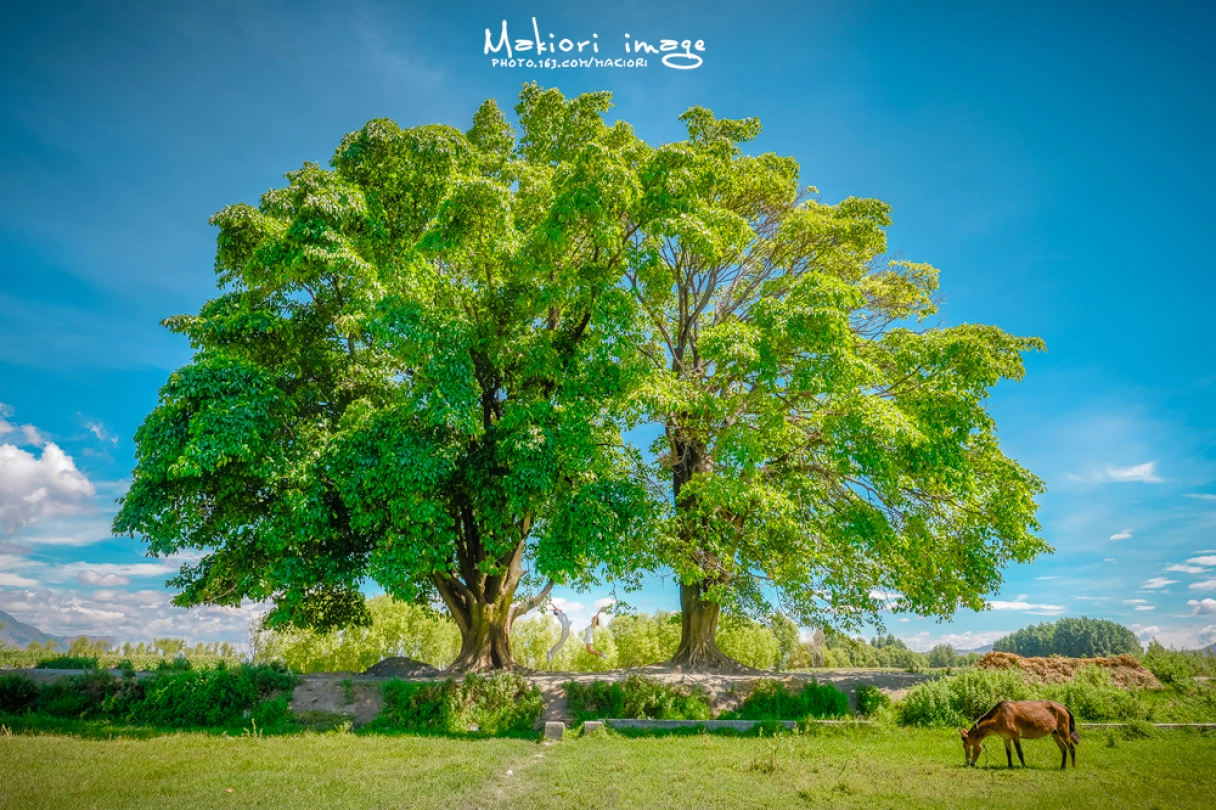
Dali: Finding Your True Self Amidst Wind, Flowers, Snow, and Moonlight
A Belated Encounter
Some places are destined to be visited at the right time. Dali—a place I had missed for three years—finally entered my life in the summer of 2015, through a blend of work and travel.
As a Getty Images contributing photographer, I’ve been to countless places: the raw wilderness of Yubeng, the majestic beauty of Meili Snow Mountain, the mystery of Shangri-La, the romance of Lijiang… But Dali was like a deliberately blank chapter waiting for me to fill. This time, I packed my camera, my drone, and a heart in need of healing, and set foot on this land in Yunnan.
Some say travel doesn’t need too much meaning. Life is already exhausting enough—why force extra reasons onto a trip? Just go out, have fun, and let everything else go to hell.
Pre-Trip Prep: What You Absolutely Need to Know

Getting There
From Lijiang to Dali, I strongly recommend taking the train. It’s a two-hour ride, and the ticket costs only a third of what you’d pay for a bus. The only downside is that departures are concentrated in the early morning and late evening—there are almost no trains during the day. That’s a head-scratcher, for sure.
If you’re flying from Chongqing directly to Lijiang, two tickets will cost about 1,200 RMB, or 600 RMB per person—a reasonable price.
Where to Stay

Accommodation in Dali ranges from budget to luxury. Over three days, we stayed at three different levels: the cheapest at 168 RMB, the most expensive at 2,688 RMB, and one frustrating dud at 680 RMB. Lesson learned: in Shuanglang, you can find decent rooms under 200 RMB, but there are also ones costing over 1,000 RMB. The key is to book in advance. If you show up without a reservation, you’ll get gouged.
Itinerary Planning
Three days is enough to cover Dali’s core areas: - Day 1: Dali Old Town - Day 2: Xizhou Ancient Town - Day 3: Shuanglang
For transportation, you can share a ride (25 RMB per person from the old town to Shuanglang) or rent an electric scooter. Small scooters cost 40 RMB/day, larger ones 50 RMB/day, and you just leave your ID card as a deposit. But beware: you have to return the scooter to the same place you rented it—not very flexible.
If you’re traveling light, I recommend the electric scooters from “Iron Horse Station”—they have pickup and drop-off points at different locations, giving you much more freedom.
Photography Gear

This time I brought my Nikon D800 with the “Big Three” lenses (14-24mm, 24-70mm, 70-200mm). The weight almost made me cry, but for the shots, I gritted my teeth and carried them.
Other gear included: - Tripod, SB800/SB700 speedlights - B+W polarizing filter, LEE graduated neutral density filters and ND filters - Picolor wireless shutter release (a selfie essential) - Various color gels, softboxes, and reflectors
What to Wear
Don’t underestimate Dali’s UV rays! Even though it’s not high-altitude, two days without sunscreen will turn you into a lobster. Long sleeves, a hat, and sunglasses are non-negotiable. When riding a scooter, wrap yourself up completely.
Moisturizer is a must—face cream, face masks, lip balm—bring as much as you can. The wind here is refreshing but also very drying.
Day 1: Strolling Through Dali Old Town, Feeling a Thousand Years of Pulse

After a three-hour bus ride from Lijiang, I arrived in Xiaguan in the afternoon. After spending three hours finishing up work, I finally had three days to fill in the gap I’d missed before.
The climate of Yunnan instantly won me over. The air was so fresh it felt like it could clean your lungs, and the wind was dry and comfortable. I had to keep hydrating, but the sense of freedom was something you’d never find in the city.
First Impressions of the Old Town
We stayed at the “Wind, Flower, Snow, and Moon Hotel” near the east gate—the name alone captured Dali’s essence. Thanks to my partner’s old gaming buddy (yes, from our World of Warcraft days), we got a room originally priced at 2,688 RMB for just 400 RMB. The room was ridiculously spacious—the bathroom was big enough for a soak, and the bed was so large that sleeping alone felt wasteful.
The old town isn’t huge, but it’s not small either. From the east gate to Renmin Road (People’s Road), it’s about two kilometers. There are electric carts along the way for 2 RMB per ride, passing by the main sights—saves time and energy.
Renmin Road and Foreigner Street

Renmin Road is the main artery of the old town and a pedestrian street. On the first day of the holiday, it was packed with tourists from all over China. Despite the commercial development, Dali still retains a rare simplicity compared to Lijiang or Fenghuang.
Foreigner Street, originally called “Huguo Road” (National Protection Road), was named to commemorate the Yunnan people’s opposition to Yuan Shikai’s attempt to restore the monarchy. Now it’s a hub for foreign tourists. By day, it’s lined with shops; by night, it turns into a bar street. But Dali has a good rule—no loud music after 11 PM. I loved that. I’d rather chat and joke with friends than be dominated by music.
The Vicissitudes of Wuhua Tower

Continuing south, I came to Wuhua Tower. This structure, with over 1,200 years of history, was once a famous official banquet venue during the Nanzhao and Dali Kingdoms. In ancient times, it stood five stories high and could hold 10,000 people. Unfortunately, it was destroyed and rebuilt several times. The current Wuhua Tower was reconstructed in 1998, standing over 20 meters tall with four levels.
The lotus pond below was beautiful, shaded from the sun and pleasantly cool. Unfortunately, the stairs to the top were locked when I visited, so I couldn’t climb up for a panoramic view of the old town.
The Three Pagodas of Chongsheng Temple
From the old town to the Three Pagodas, a taxi costs only 15 RMB. Drivers are happy to take you because if you buy tickets as a walk-in, they get a 30 RMB commission—an open secret.
The ticket is 121 RMB, which isn’t cheap, but the pagodas are worth it. The main pagoda, also called Qianxun Pagoda, is 69.13 meters tall with 16 tiers—a classic dense-eave, hollow, square brick pagoda. The two smaller pagodas to the north and south each have 10 tiers and stand 42.17 meters tall. The three pagodas stand like a tripod, enduring a thousand years of wind and rain.
I couldn’t resist launching my drone here. From above, the pagodas and the temple complex behind them formed a magnificent picture. After a large-scale reconstruction of Chongsheng Temple in 2005, the century-long situation of “having pagodas but no temple” finally ended. Now, pagoda and temple complement each other beautifully.
Day 2: Xizhou—A Paradise for Wedding Photos and Love
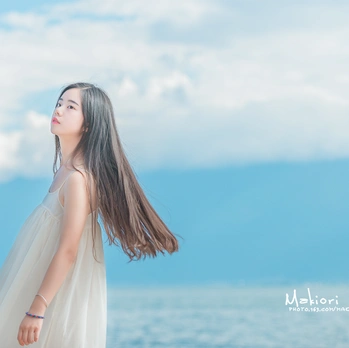
Day two was actually half a workday. I had arranged to shoot wedding photos for a few couples in Xizhou—probably the best place in Dali, besides Shuanglang, for photography.
The Romance of the West Lakeside Road
Riding along the West Lakeside Road, I soon spotted the famous “Couple Trees.” If I had come a few months earlier, the leaves on both sides would have been different colors, stunning enough to take your breath away.
This is also a prime spot for portrait photography. Watching the couples jump and laugh against the blue sky and white clouds, every moment was worth freezing. I shot them with a wide-angle lens—small figures blending into the grand landscape. That’s the kind of “environmental portrait” I love.
The Surprise of Haishe Park
Haishe Park (Tongue Park) is free, and the water is clear enough to splash in. Bamboo shades the paths, making it perfect for photos and leisurely walks.

I paid special attention to the oddly shaped trees—they’re the best natural props. Finding the right angle, I had the bride’s train spread out on the water, with Cangshan Mountain and Erhai Lake in the background. Every shot was a masterpiece.
Of course, there were other tourists around during the shoot. But with good direction, I could get the couples into the zone and capture natural, lively photos. During a break, I stepped into the water in my sandals—it was cool and refreshing, so comfortable I didn’t want to leave.
Nearby, a few young people were striking poses from One Piece. Youth should be just like that—simple and full of passion.
Practical Tips and Pitfall Avoidance Guide
About Food
You must try roasted milk fan (roasted goat’s milk cheese), 5 RMB per skewer. If you like goat’s milk, you’ll love it; if not, skip it. I thought it was tasty, but it’s a bit chewy—a workout for your teeth.
Other local specialties depend on personal taste. I just tried whatever caught my interest, but what I could always stomach was KFC—don’t laugh, sometimes your stomach just tells the truth.
About Sun Protection
This is no joke. Dali’s UV rays will really turn you into a lobster. Sunscreen (SPF 50+), a hat, sunglasses, and a sun-protection face mask—don’t leave any out. When riding an electric scooter, wrap yourself up completely.
About Budget

Over three days, per-person costs vary. Accommodation ranges from 168 RMB to 2,688 RMB, food is flexible, and transportation isn’t expensive. The key is to plan ahead and book in advance—it saves you a lot of wasted money.
Final Thoughts
Dali’s beauty doesn’t need many words. Wind, flowers, snow, and moonlight—these four words sum it all up. But what truly moved me was the pace of life here.
Walking through the old town, watching an elderly grandmother sell vegetables at a street stall, seeing a grandparent and grandchild stroll together, observing the clear water flowing slowly in the canals… you realize that life can be very simple.
On this trip to Dali, I took many photos and met some interesting people. My partner’s drone-flying buddy, the anti-drug police officer from our World of Warcraft days, and the couples I shot wedding photos for… each of them interpreted the word “Dali” in their own way.
Finally, I want to say: if you’re thinking of going to Dali, do it soon. Shuanglang is still a big construction site, with buildings going up everywhere. Yet still, endless streams of tourists pour in. Prices are rising, visitors are changing, but Dali’s clouds are always low and majestic.
As Song Dongye sang in Anhe Bridge: “I know those summers, like you, will never return.” So go to Dali now.
Go feel the wind, chase the flowers, look up at the snow, and embrace the moonlight.
And don’t forget to bring your camera. Because here, every moment is worth remembering.
You should also read:
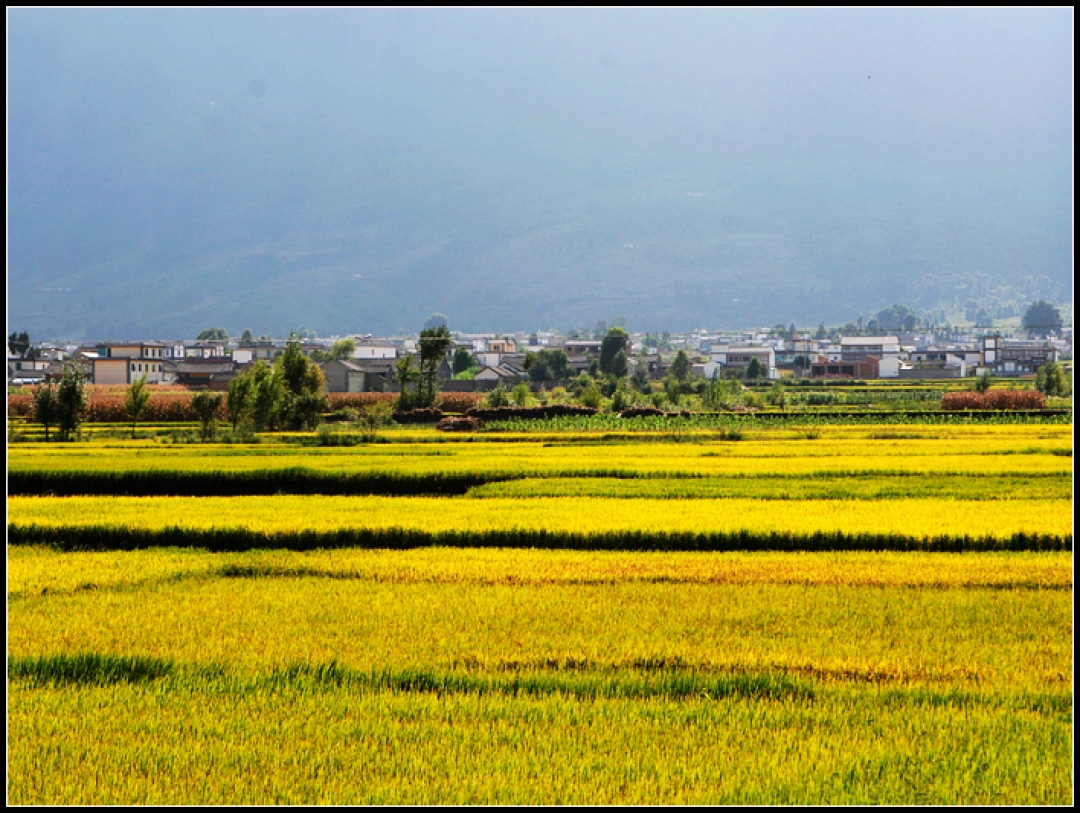
A 9-Day Yunnan Journey: From Lijiang to Dali to Tengchong – A Trip Toward Self-Reconciliation
A 9-Day Yunnan Journey: From Lijiang to Dali to Tengchong – A Trip Toward Self-Reconciliation Some say travel is simply going from a place you're tired of to a place other people are tired of. It stings to hear, but it's painfully true. Yet there's…
Continue reading...
Tengchong·Heshun: Finding Life as It Should Be in a Border Town Where Time Stands Still
Tengchong·Heshun: Finding Life as It Should Be in a Border Town Where Time Stands Still The long journey of over twenty days was over. On my first day back at the office, I was still in a daze. My fingers couldn't find the keys on…
Continue reading...
God’s Abandoned Palette: A Self-Drive Journey Through Yunnan’s Dongchuan Red Land
God’s Abandoned Palette: A Self-Drive Journey Through Yunnan’s Dongchuan Red Land Travel has never been about reaching some distant geographic coordinate. It’s about encountering, along the way, the version of yourself buried beneath the rubble of daily routine. During this May Day holiday, I finally…
Continue reading...