Dali: More Than Just Wind, Flowers, Snow, and Moon — A Time Thief in Shaxi, Xizhou, Weishan, and the Ancient City
Dali: More Than Just Wind, Flowers, Snow, and Moon — A Time Thief in Shaxi, Xizhou, Weishan, and the Ancient City
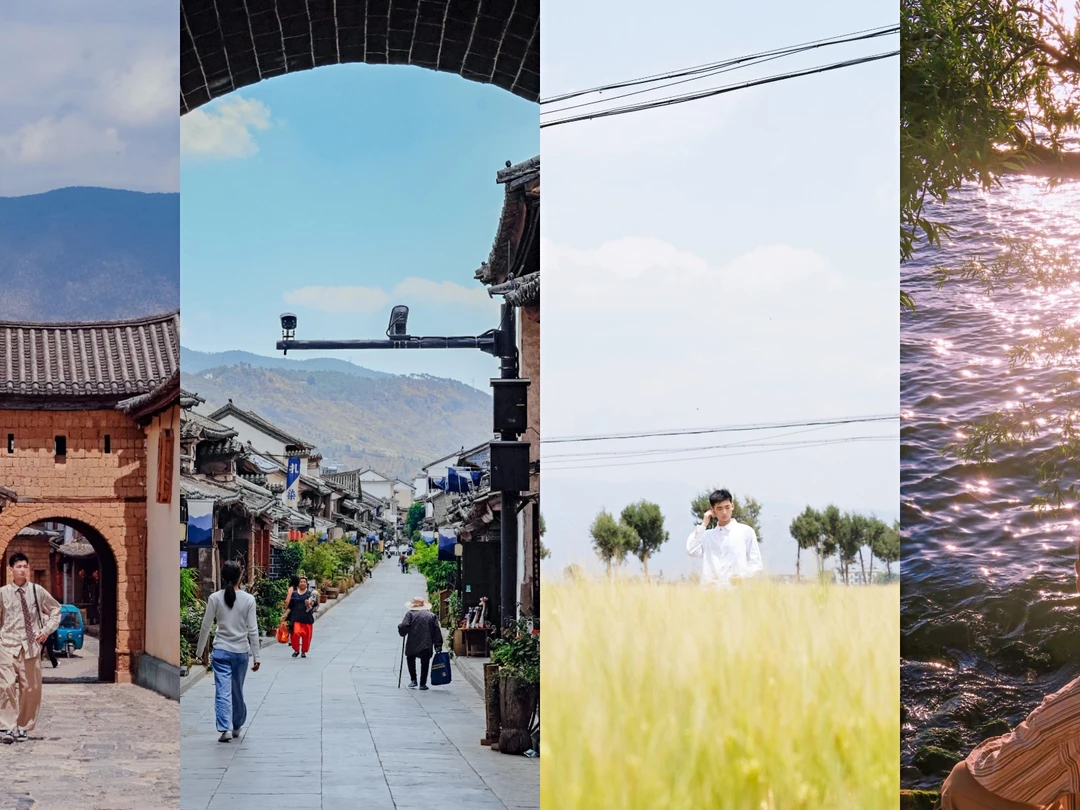
Xu Wei once sang: "The sun is always so brilliant, the sky so azure blue, the eternally verdant Cangshan Mountains." Every time I hear "Warmth," I think of Dali. But it wasn't until my fifth visit to this land that I finally realized — the Dali I thought I knew was nothing more than an overexposed postcard. The real treasures are hidden in the corners far from the clamor of Erhai Lake.
If you, too, are tired of rushed sightseeing and want to become a "time thief" in Dali, perhaps these words can hand you the key.
I · Dali Ancient City: More Than Just a Tourist Hub
Many say Dali Ancient City is too commercialized, but I believe its charm lies precisely in the奇妙 coexistence of "earthly烟火" and "artistic flair." After five visits, I still love it here — for its brilliant sunshine, its gentle breeze and light clouds, and even more for the surprises tucked away in its deep alleys.
Wuhua Tower: The Vicissitudes and Splendor of a Millennia-Old Pavilion
Walking down Fuxing Road, you can hardly miss the imposing pavilion. Wuhua Tower is the soul landmark of Dali Ancient City. It once served as a venue for banquets honoring distinguished guests during the Nanzhao and Dali Kingdom eras, standing five stories high and capable of holding ten thousand people. After over 1,200 years of wind and rain, five times destroyed by fire and five times rebuilt, what we see today is a four-story structure reconstructed in 1998. When the night lights come on, Wuhua Tower shines brilliantly. Climbing to the top, you can take in the panoramic view of Cangshan Mountain and Erhai Lake.
The Catholic Church: When Bai Folk Houses Meet Jesus

If you think Dali Ancient City only has Bai architecture, you'd be wrong. Tucked away in a small alley on Renmin Road, you'll find a church you'd never expect — the Holy Trinity Church. Built by French missionaries in the 20th century, this church completely subverts the traditional European church aesthetic. With upturned eaves, vermilion pillars, intricate stone carvings, and colorful paintings, it is an authentic "Bai-style" Catholic church. Chinese and Western cultures blend here in a奇妙 way. Over a hundred years later, French tourists still stand in awe before this "Chinese-style" church.
Dafang Bookstore: Warming a City with a Bookshop
Strolling after dinner, I stumbled upon this bookstore by chance, and it became the warmest memory of my trip. The predecessor of Dafang Bookstore was the Zhonghua Bookstore, founded in 1993, and it was officially renamed in 2014. "Dafang" comes from the Zhuangzi chapter "Autumn Floods," meaning someone with broad knowledge and experience. Here, you'll find not just books but also delicate trinkets and cozy decor. The most photogenic spot is the staircase leading to the second floor, along with the iconic sign there that reads "This is Dali." Holding a cup of coffee and flipping through a book — this is Dali's slow time.
Wutong Academy: A Quiet Corner in a Deep Alley
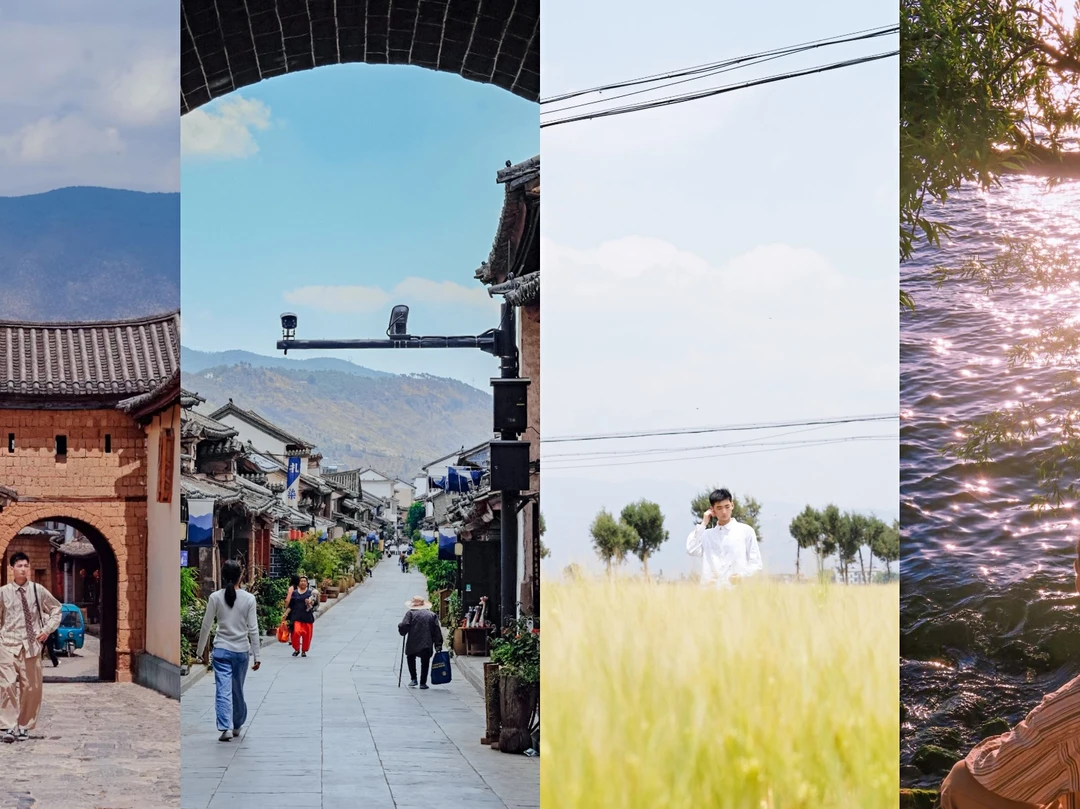
If you want to completely avoid the crowds, Wutong Academy is the perfect choice. It's hidden in a quiet alley, with only a small sign by the roadside. Enter the gate, and you'll find a small courtyard with drinks for sale on the first floor. When I went in, the entire bookstore was empty, as if I had rented it out. With its wooden desks, bright lighting, and poetic windows, even a brief rest stop here lets you feel the exclusive tranquility.
Confucian Temple: A Historical Witness to the "Land of Literature"
Walking along Fuxing Road, you'll come across a building with flying eaves and interlocking brackets — the Dali Confucian Temple. Though located in a bustling area, it attracts few tourists. Coming here in the morning is especially refreshing and cool. The temple faces east, with wooden structures that reflect Bai architectural style. The bridge at the entrance is called the "Zhuangyuan Bridge" (Number One Scholar Bridge), said to be passable only by those who achieved the top rank in the imperial exams. The "Pan Pond" beneath it was believed in ancient times to promote academic success. The Confucian Temple is a historical testament to Dali's reputation as a "Land of Literature," and every year, many students and their parents come here to make wishes and pray.
Dali City Museum: A Miniature Version of the "Forbidden City Red"
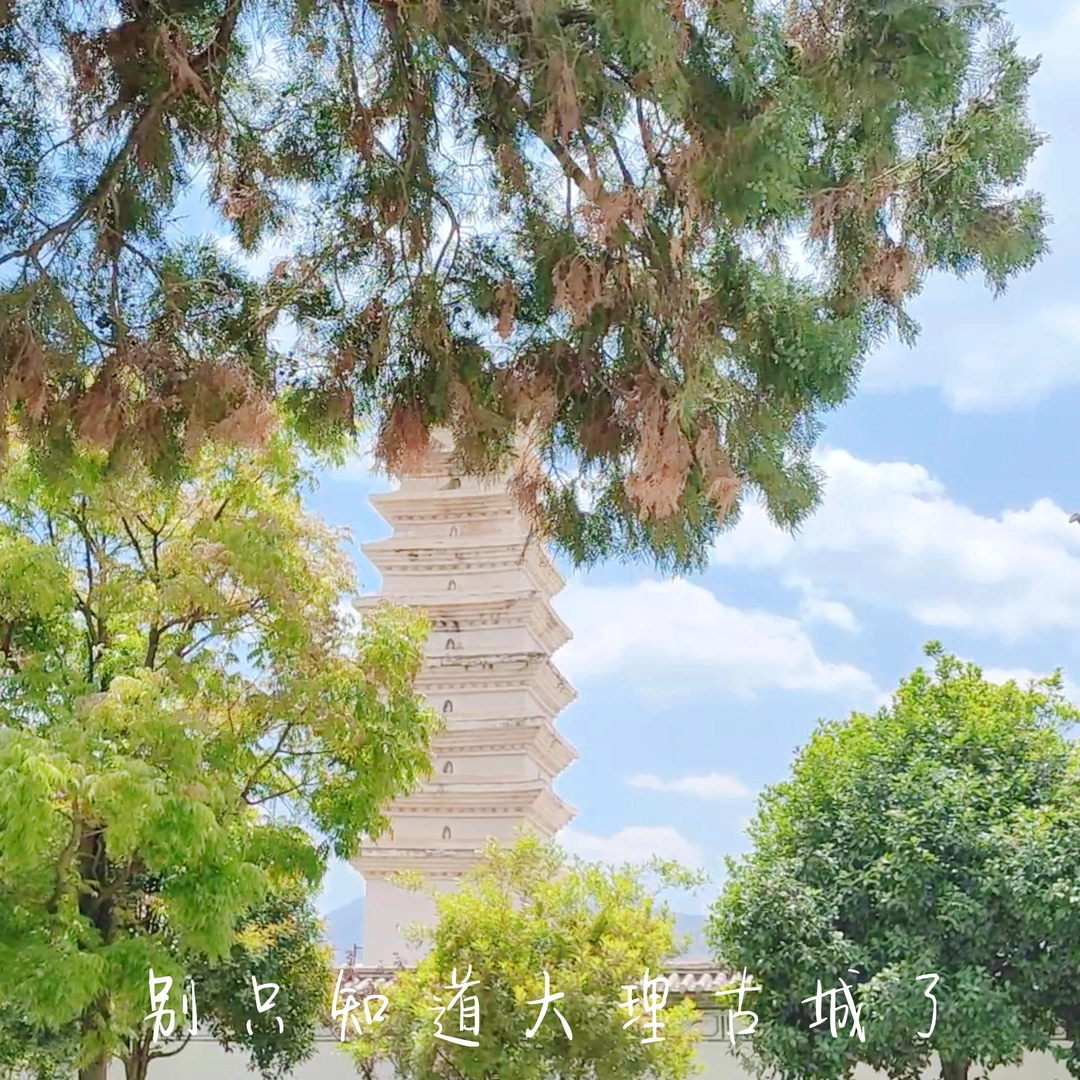
99% of people don't know that the Dali City Museum is right inside the ancient city! Its predecessor was the Qing Dynasty Yunnan Governor's Office and Du Wenxiu's Mansion. Leveraging its prime location in the ancient city, the museum integrates exhibition halls with classical gardens. Red walls, green tiles, and dappled shadows of trees make it feel like a miniature Forbidden City. The museum houses nearly 10,000 artifacts, ranging from the Neolithic Age to modern times, and features six permanent exhibition halls and a stele forest area. Sunlight filtering through the leaves onto the vermilion walls creates a poetic atmosphere.
Ancient City Cuisine: Dali on the Tip of Your Tongue
- Street Food Recommendations: 烤乳扇 (grilled milk fan — "milk fried like a pancake" from the Yunnan Eighteen Oddities), 云龙卷粉 (Yunlong rolled rice noodles — soft, chewy, and super bouncy), 漾濞卷粉 (Yangbi rolled rice noodles — sour, spicy, sweet, with rich walnut paste), 鲜花饼 (flower cakes — Yunnan's most iconic food).
- Restaurant Recommendation: A quaint, ancient-style eatery I visited twice, hidden in a small alley off Renmin Road. With its cherry-blossom-decorated entrance, wooden pavilions, and paper lanterns, it felt like a trip back in time. Recommended dishes: 翡翠胭脂雪花鱼 (jade rouge snowflake fish — beautifully presented with tender fish), 大理饵块辣子鸡 (Dali's glutinous rice cake spicy chicken — moderate heat), 风花雪月 (wind, flower, snow, moon — peach blossom brew or plum wine, just the right buzz), 特色泡鲁达 (special coconut milk drink with bread — a must-order). When I left, the owner gave me a hand-drawn map, which I still treasure.
II · Xizhou Ancient Town: Wind Through the Wheat Waves, Time Stands Still
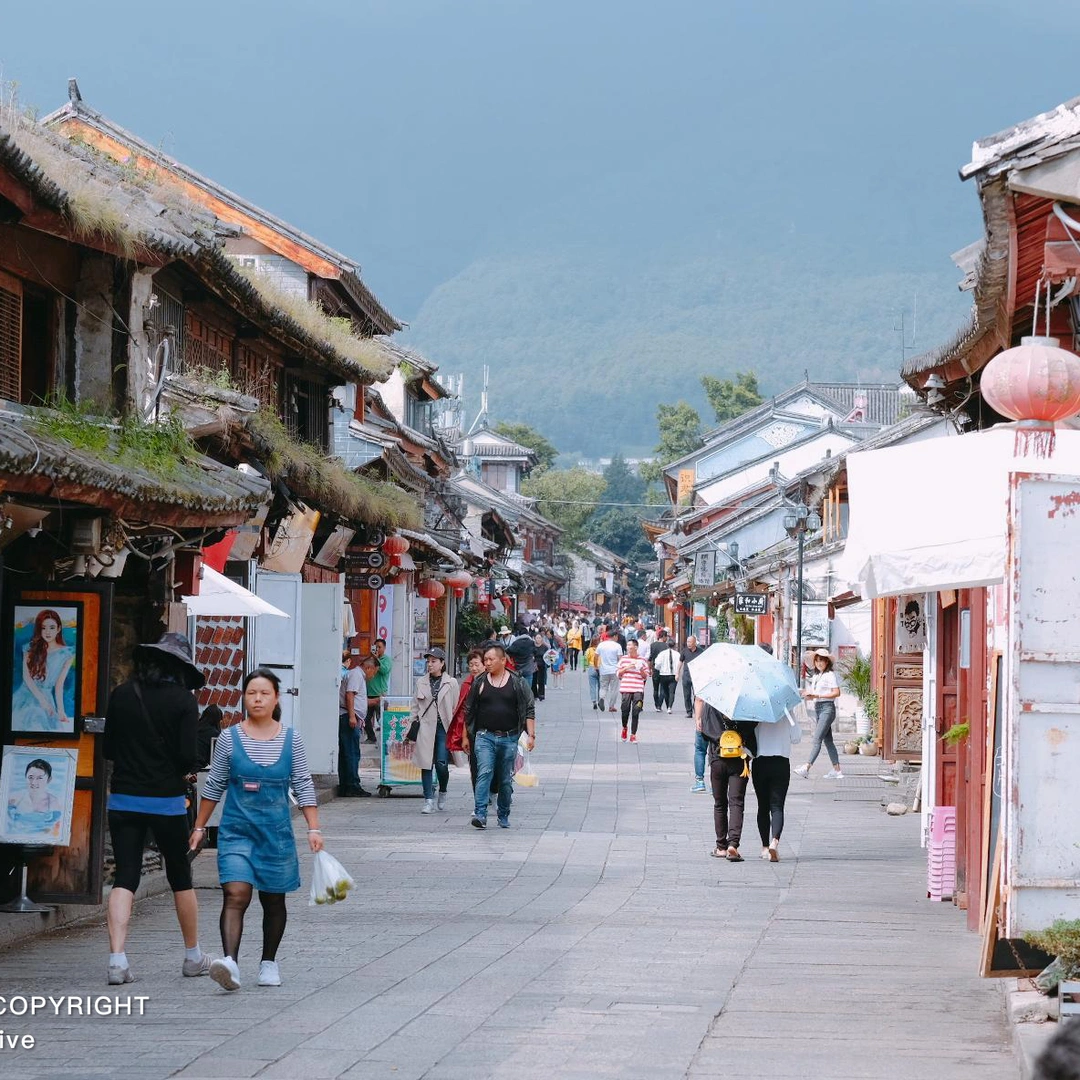
If Dali Ancient City is lively, then Xizhou is reserved and introverted. Every time I come to Dali, I never miss Xizhou. It lacks the noise of Dali Ancient City but possesses a magic that calms the soul.
Xilinyuan: Yellow Walls, Wheat Fields, Like an Ink Painting
The orange-yellow exterior walls of Xilinyuan are my favorite backdrop for photos. Beneath the gray old tiles, the continuous orange-yellow walls reflect the blue sky, white clouds, and endless rice paddies, like a traditional ink painting. In spring, the fields outside the walls are golden with rapeseed flowers; in autumn, they turn into golden rice paddies. No matter the season, it's as beautiful as a painting. Change your poses freely, and every shot looks stunning.
Corner Tower: Xizhou's Iconic Landmark
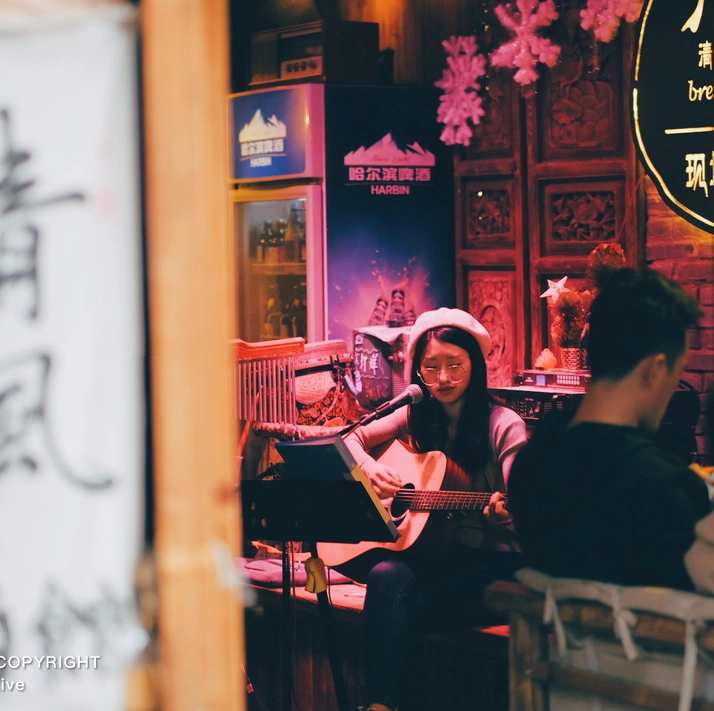
Located at No. 119 Shiping Street in Xizhou Ancient Town, the Corner Tower was built in 1945 and is the most structurally unique building among Xizhou's folk houses. With its two street-facing sides, a blend of Chinese and Western styles, and a curved arc shape, it has become a hugely popular photo spot. I recommend going before 10 a.m., or you'll have to wait in line for a picture.
Lanxu Tie-Dye Shop: The Romance of Blue and White
This tie-dye shop, tucked away in an alley, is a destination many people seek out. It's free to visit, and the owner warmly welcomes you to sit down. The first floor is a blue tie-dye experience area, while the second floor overlooks Xizhou's small fields. Glass windows, circular arches, and a small terrace offer great photo opportunities. Go in the morning; afternoons tend to be crowded.
Kelizhuang: A Miyazaki Wheat Field
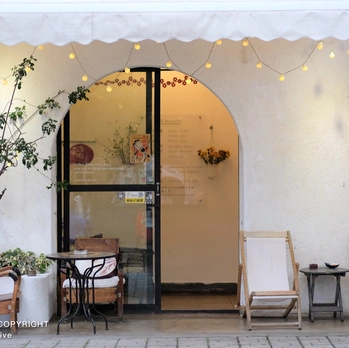
"Have you ever seen the shape of the wind?" By the roadside near Kelizhuang, close to Xizhou, I found the answer. Navigate to "Kelizhuang" and follow the Dali-Lijiang Road to get there. Photography costs 10 yuan per person with no time limit. The best time to visit is before April, when the wheat sways in the wind, dreamlike as a Hayao Miyazaki manga. Bring props like an easel, a kite, or a butterfly net. Just be careful not to trample the wheat.
Xizhou Cuisine
Xizhou baba (a type of flatbread) is a must-try, famously featured on A Bite of China. It comes in sweet and savory varieties, baked between two layers of charcoal fire and brushed with lard until crispy. Recommended restaurants: Güzide Garden Restaurant, Amaying Pea Flour, and Jisisi Café.
III · Weishan Ancient City: Earthly烟火, the Ancient Capital of Nanzhao
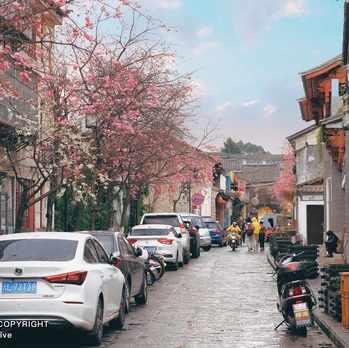
Because of Dali Ancient City, this ancient town, tucked away over a hundred miles away, has become a forgotten gem. When I set foot in this city with over 600 years of history, I regretted discovering it so late despite visiting Yunnan multiple times. Its detached, unworldly temperament made me hesitate before writing about it — afraid it might become commercialized and lose its original flavor. But in the end, I decided to show it in its most beautiful form, so the world knows that Yunnan today can still be the Yunnan of old.
Mengyang Park: A Living Picture of Birdsong and Flowers
My first stop in Weishan was a serendipitous visit to Mengyang Park. This is the locals' favorite spot, which they simply call "Big Park." Women watering flowers, elderly people exercising, children running around... Birdcages hang from every tree — Weishan has many bird enthusiasts, and morning bird walks are part of their daily routine. The park features nearly century-old structures like the Yanfang Pavilion, Chongsheng Temple, and Zunjing Pavilion, as well as the "Nanzhao Chess Academy," home to many skilled chess players. With ancient trees, pavilions, ponds, and corridors, you can brew a pot of tea and spend an entire afternoon here.
Nanzhao Museum: Unveiling the Mysteries of the Ancient Nanzhao Kingdom
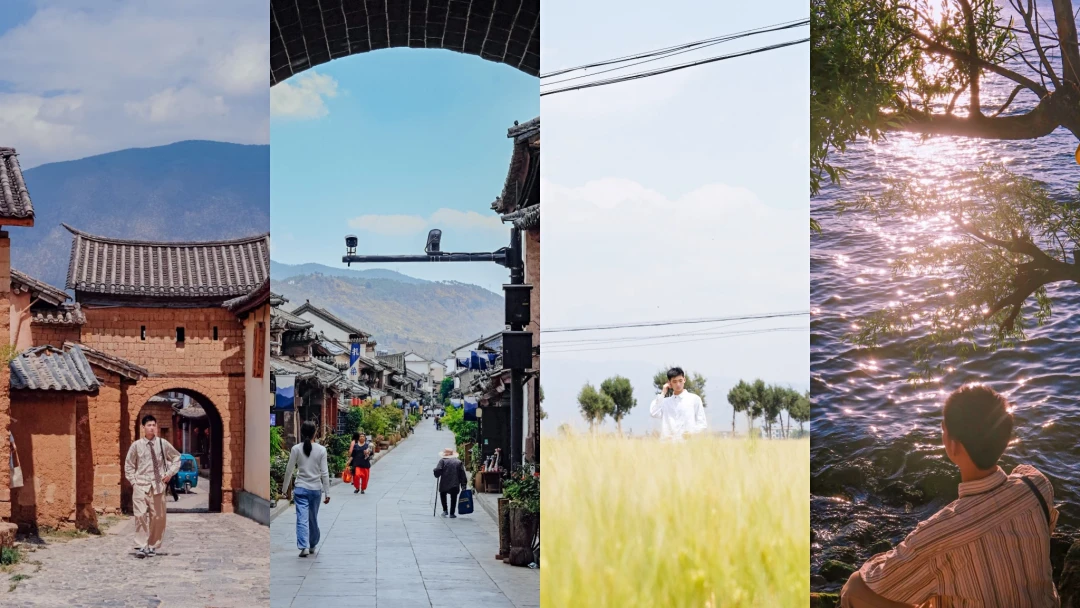
When you come to Weishan, you must visit the Nanzhao Museum! Located on Baoguo Street and completed in 2015, it combines modern museum exhibits with the display of ancient architecture. The dome ceiling of the entrance hall features a painted Nanzhao Pictorial, the earliest surviving painted artwork in Yunnan. While the museum's collection isn't vast, it contains the essence of Nanzhao culture. The museum's architecture itself is worth seeing — the Sun Palace, built in the 16th year of the Yongle era of the Ming Dynasty (1418), is majestic; the Twin Pagodas of Dengjue Temple look especially mysterious in the sunlight, with wind chimes singing softly.
Confucian Temple: The Myriad-Ren Wall, Weathering the Ages
The Weishan Confucian Temple shares a wall with Mengyang Park and is grand in scale, covering about 10,000 square meters. At the front stands a screen wall inlaid with a marble plaque reading "Myriad-Ren Wall," a phrase from the Analects of Confucius. Outside the temple, there's a street of lanterns and a street of paper umbrellas, which look stunning in the sunlight, as if welcoming visitors to the temple.
Epilogue: Be a Time Thief
On my fifth visit to Dali, I finally understood: Dali is more than just wind, flowers, snow, and moon. Shaxi, Xizhou, Weishan, and Dali Ancient City — these four ancient towns are the true treasures of Dali.
In Xizhou, I heard the sound of wind through wheat waves; in Weishan, I touched the history of the Nanzhao Kingdom; in Dali Ancient City, I found a warm bookstore hidden in a deep alley; in Shaxi, I saw time stand still.
If you, too, are tired of hurried travel, come to Dali and be a time thief. At the foot of Cangshan Mountain, by the shores of Erhai Lake, in those forgotten corners, rediscover your first spark of wonder.
Finally, a few tips for you: - Time Allocation: Five days is enough — 1 day for Dali Ancient City, 1 day for Xizhou, 1 day for Weishan, 1 day for Shaxi, and 1 day as a buffer. - Best Season: Visit before April for wheat fields, October for rice paddies, and any time of year for just idling. - Transportation: Renting a car or hiring a driver is most convenient, as the distances between ancient towns are significant. - Accommodation: Guesthouses in Xizhou and Weishan offer great value for money, while Dali Ancient City has the most options.
May you find your own "Ideal Land" in Yunnan.
You should also read:
2012, Conquering Lugu Lake and Lijiang: A World of Azure and a City of Splendor
2012, Conquering Lugu Lake and Lijiang: A World of Azure and a City of Splendor Prologue: Three Guys on a Youthful Expedition Just after the May Day holiday in 2012, my buddies Hui Ge, Xiao Chen, and I—three strapping young men—shouldered our backpacks and set…
Continue reading...
Before the Tongue: Discovering Nuodeng, the Ancient Salt Town Time Forgot
Before the Tongue: Discovering Nuodeng, the Ancient Salt Town Time Forgot There’s a peculiar magic in places that have been left behind by history. They don’t try to impress you. They don’t have polished welcome centers or laminated maps. They just are—worn, quiet, and utterly…
Continue reading...
A Journey Through Time: The Earthen Forest of Yuanmou — April 2011 Chuxiong & Yuanmou Self-Drive Guide
A Journey Through Time: The Earthen Forest of Yuanmou — April 2011 Chuxiong & Yuanmou Self-Drive Guide Some journeys are destined to take root in your memory. In April 2011, I set out from Shuhe in Yunnan, heading north toward the Chuxiong Yi Autonomous Prefecture,…
Continue reading...