Dali | Tengchong: A Self-Drive Journey to the Place Where the Wind Blows
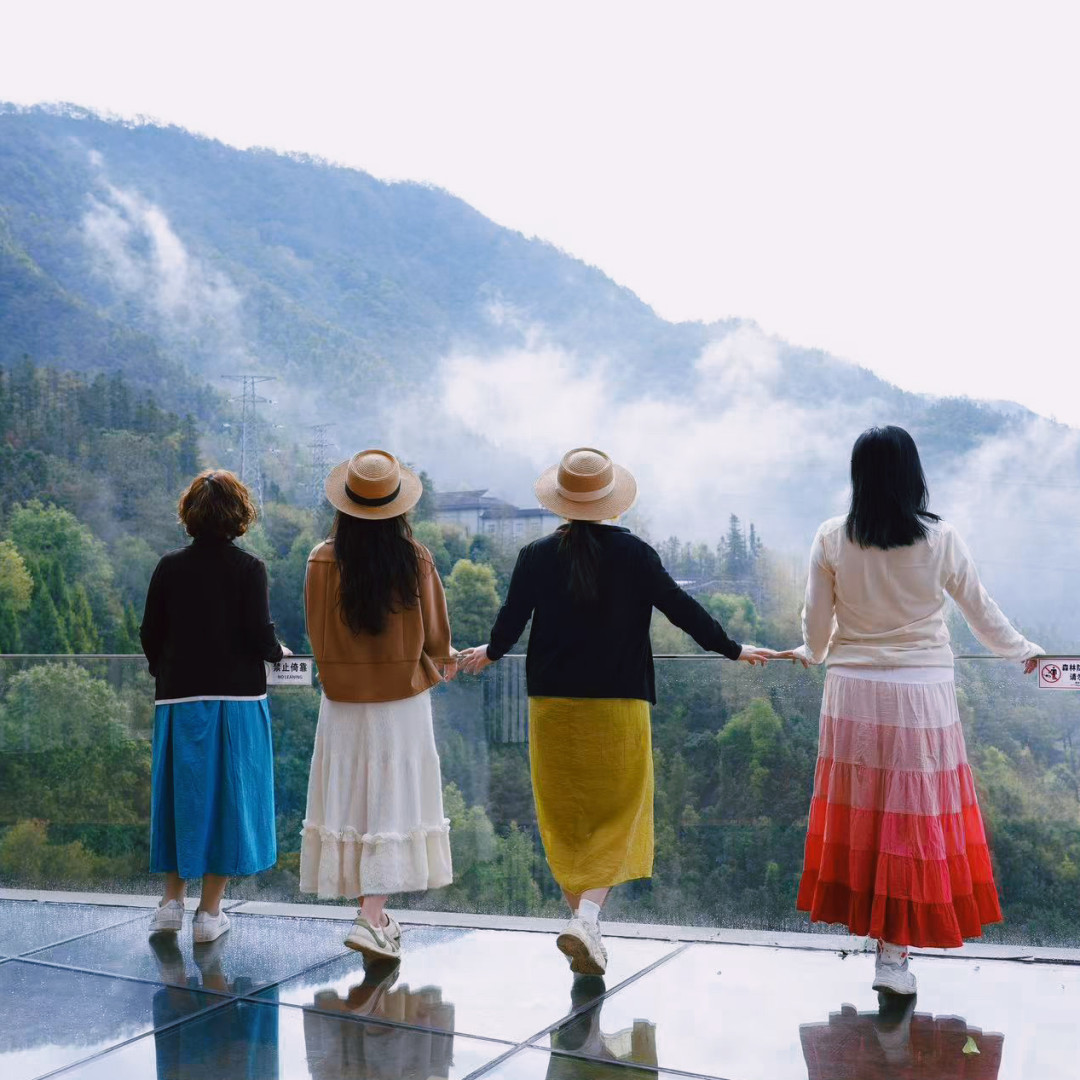
Dali | Tengchong: A Self-Drive Journey to the Place Where the Wind Blows
Dali, Tengchong, Mangshi: Four Women's "Escape from Home," Finding Themselves in Wind and Freedom
"Let's take a leave of absence from life—no wife, no mom."
That sentence was both the starting point and the destination of our trip.
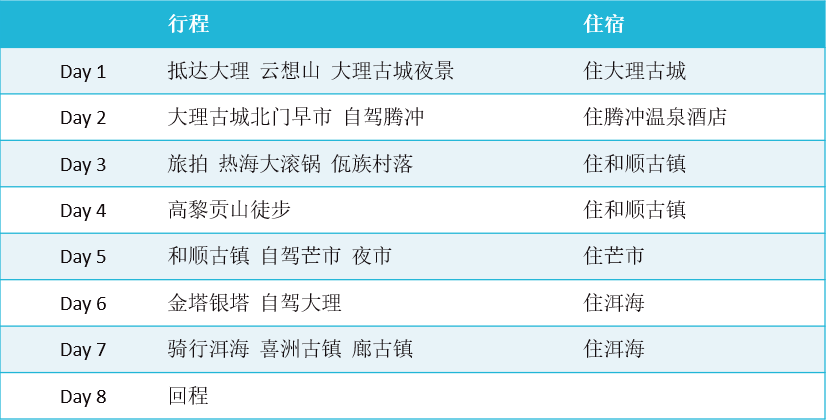
Four women, casually chatting in a WeChat group about wanting to "get away and clear our heads." Within half an hour, plane tickets were booked, the destination locked in—Dali, Tengchong, Mangshi. Work reports, kids' homework, husbands' dinners—everything hit pause. We decided to take freedom all the way, and the only way to do it was by car.
Heading west, to the place where the wind blows. Amid Yunnan's romantic landscapes and gentle everyday life, we'd rediscover the selves buried by daily routines.
Pre-Departure Hiccups: Renting a Car, Hotels, and the Art of "Letting Go"

Renting a Car: Don't Let Fine Print Ruin Your Road Trip Dream
We booked a car on the ShenZ platform. Two days before departure, we noticed a detail buried in the terms: "Only the renter is authorized to drive." If someone else drove and got into an accident, the insurance might not pay. Customer service gave vague answers. Insurance follows the car, not the driver? That logic was baffling. With so much competition in the market, if communication is poor, just switch platforms.
We moved to the XieC platform. The customer service made it clear: as long as the driver has a valid license and no offenses like drunk driving, they're covered. That's how it should be. So when renting a car, always read the fine print. Don't let details ruin your journey.
Hotels: The Luxury of Off-Season Choices
My travel buddies put me in charge of booking hotels. Traveling in the off-season means plenty of options and great value. We stayed in a guesthouse inside the ancient city, a lodge by Erhai Lake, a luxury hot spring hotel in Tengchong, and also tried a budget-friendly guesthouse and a hotel in Mangshi with strong Dai ethnic style. Every place was worth recommending, especially the restaurant suggestions from the hotel staff—spot-on and satisfying.
Itinerary: From "Greedy" to "Relaxed"
We originally planned to visit Ruili, but realized the schedule was too tight. Apart from the border checkpoint, Ruili didn't have many attractions. We decisively dropped it and extended our stay in Tengchong to three nights. That turned out to be a brilliant move. Travel isn't about ticking off checkpoints; it's about leaving time for the scenery to slowly sink into your soul.
Road trip tip: Fly directly into Dali, drive to Tengchong and Mangshi, then fly back to Shanghai from Mangshi. That saves you half a day of backtracking to Dali. The highway from Dali to Tengchong is smooth, road conditions are good, and parking is cheap.
Day 1: Dali—First Glimpse of Wind, Flowers, Snow, and Moonlight

Yunxiang Mountain: Overlooking Erhai Lake and Cangshan Mountain
After landing in Dali, we picked up the car and headed straight for Yunxiang Mountain. On the way, we passed Xingsheng Bridge, which blends the rustic charm of ethnic minority architecture with a touch of European elegance.
Yunxiang Mountain is about 20 kilometers from the ancient city. From the top, you can see the entire city and Erhai Lake, with Cangshan Mountain in the distance. The lawn at the summit is perfect for zoning out or having afternoon tea. Unfortunately, the clouds were thick that day, completely hiding Cangshan. The villas at the top were still under renovation, and the scenic area was still being developed. We drove straight to the summit; there's also a cable car halfway up. The mountain go-karts at the themed park looked thrilling, but since it was off-season, no one was riding them.
Entering the lawn area costs 38 yuan—worth it for some quiet time. The wind picked up in the evening, so we didn't go in, but standing at the summit was already enough to lift our spirits.
Dali Ancient City: A Thousand-Year Story in the Night
Dali, once called Yeyu, was the capital of the Nanzhao and Dali Kingdoms for five hundred years. Amid its romantic landscapes lies half of Yunnan's history.
The ancient city has four gates: the South Gate offers a view of Erhai Lake from above; the North Gate leads to the Three Pagodas of Chongsheng Temple; the West Gate enters Cangshan Mountain; and the East Gate faces Erhai Lake. We stayed near the East Gate and walked along Renmin Road into the old town. Bars, coffee shops, and quirky boutiques lined the streets. Even the dogs were out "working," though they didn't look too happy about it.
The entrance to the Myanmar National Pavilion was quite distinctive. The second floor was full of jade—dazzling and overwhelming.
Day 2: North Gate Morning Market—The Scent of Everyday Life
Seeing Life Through Different Eyes
At 7:30 in the morning, a light rain was falling, but the North Gate Morning Market was already bustling. Everywhere we looked, there were vegetables and flowers with names we couldn't pronounce. We were like curious kids, getting close to each one, taking photos, asking questions. It was both novel and healing.
We wandered into a random shop and ordered 稀豆粉 (thin chickpea jelly) with fried dough sticks. It was delicious. The girl at the next table confidently ordered 粑肉饵丝 (braised pork with rice noodles). Her confidence made us think she was a local. After chatting for a bit, we found out she was also a tourist who had done her homework. The owner said, "You came early; soon there'll be a line." We had accidentally stumbled into a trendy spot.
We bought a small woven bamboo basket, and the young vendor gave us a "first customer of the day" discount. We walked from the North Gate to the West Gate, then took a taxi back to the hotel, where our other travel buddies were waiting for us to have breakfast.
Road Trip: From Dali to Tengchong—A Rollercoaster of Altitude
The drive was supposed to take 4.5 hours, but because of the rain, the GPS showed 5 hours. The highway was nearly empty, and the road was smooth. Suddenly, all of us felt our ears pop. It turns out that northwest Yunnan is high, while the southeast is low. The altitude drops sharply from north to south—from over 4,000 meters above sea level in the snowy plateaus down to just a few hundred meters in the southern tropical valleys. As we sped south, the sudden drop in altitude caused our ears to pop.

Half an hour in, the traffic police stopped us. Because of the rain, all cars were ordered off the highway and onto the national road. The national road was in good condition, but the rain was getting heavier, and we were stuck behind large trucks, unable to go fast. We stayed on that road until Yongping, where we finally got back on the highway.
The weather gradually cleared, and we finally saw what Yunnan truly looks like: a clear blue sky, white clouds stretching lazily, distant mountains rolling endlessly, and scattered white houses dotting the open countryside. We immediately pulled over, got out, and stood there, lost in the view.
The closer we got to Tengchong, the wider the landscape opened up. The entire drive took nearly six hours, with the four of us taking turns behind the wheel, working together seamlessly, all in good spirits.
Day 3: Tengchong—Morning Mist, Hot Springs, and Hidden Gems
The Hot Spring Hotel: A Poetic Retreat in the Mountains
Our hotel was perched on Dongshan Mountain, east of downtown Tengchong. It sat against the Gaoligong Mountains and faced the entire Tengchong basin. The view was expansive, the scenery stunning. They upgraded us to a larger room. When we opened the balcony door, all we saw was green.
That evening, after soaking in the hot springs in our rooms, we set up our cameras and tripods and practiced a group dance. The moves were simple—looked easy enough. But when we tried, we kept messing up, laughing until we couldn't stand. We thought about how we often scold our kids for "not using their brains." Turns out, we're no different. But hey—as long as we're having fun.
Photoshoot: Stretching Out in the Morning Mist
At 6:30 in the morning, I tiptoed to the balcony. Everything was a hazy gray. I thought it was the curtains, but when I reached out, it was thick fog. I wrapped myself in a thin jacket and lay on the tatami mat, watching the sky slowly brighten. The fog began to lift, revealing the outlines of the forest. A few bird calls broke the silence.
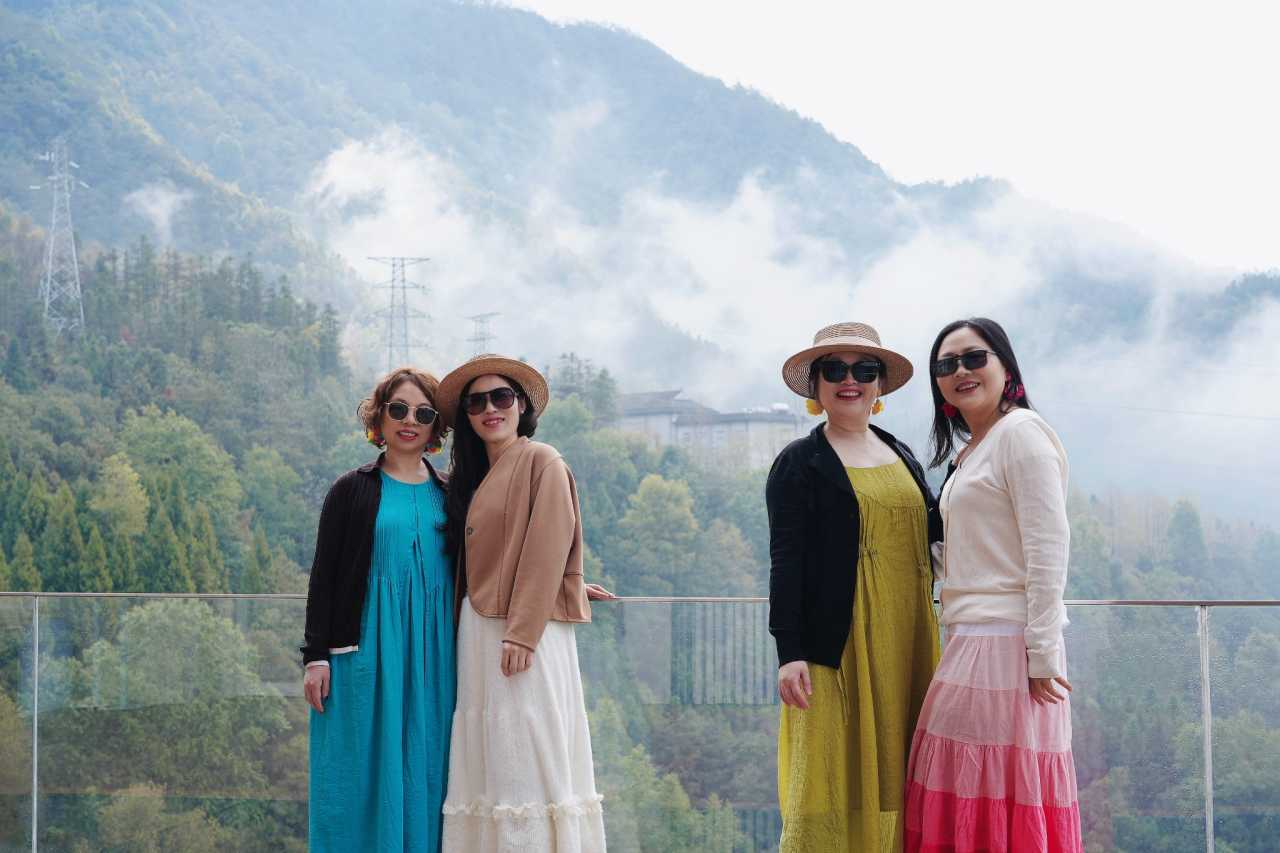
When our scheduled photoshoot started, the fog was still thick. But as it cleared, the open countryside emerged, mist swirling like a fairyland.
What makes Tengchong special is its gentle year-round temperature of 15°C (59°F). The Gaoligong Mountains shield it from harsh winds, so winter isn't cold. It's so humid that we didn't need lip balm for days. But this city is a bit "out of the way"—to get in or out, you usually have to go through Baoshan or Mangshi. Flights are limited and often canceled due to weather, and there's no high-speed rail. But because it's hard to reach, there's less noise and more peace.
Rehai Big Boiling Pot: A Geothermal Wonder

Rehai (Hot Sea) Big Boiling Pot is about 10 kilometers from the city center. It's one of the most representative high-temperature boiling springs in China's three major geothermal areas. There are about 80 hot spring groups, with water temperatures exceeding 90°C (194°F). The Big Boiling Pot is a basin-shaped boiling pool about 1.5 meters deep. It churns year-round at 97°C (207°F), with steam shooting into the air and the water a brilliant blue.
Local villagers use the steam vents nearby, covering them with straw to steam sweet potatoes and potatoes. We took the scenic shuttle to the first stop, walked around, saw the Big Boiling Pot, then took the shuttle back out. By the time we came out, the line was so long we couldn't see the end. Even in the off-season, it was packed—during peak season, you'd definitely want to go at off-peak hours.
The air was thick with the smell of sulfur, and the color of the water was unmistakably natural.
Simola Wa Village: Ancient, Mysterious, and Happy
After leaving Rehai, the GPS showed a shortcut of only 4.7 kilometers, but recommended a 9.9-kilometer main road. The hotel staff had suggested taking the main road, saying the village roads were narrow. But when we heard "village road," we imagined driving through a hamlet with blooming rapeseed flowers on both sides—exactly the kind of scenery we wanted for our road trip.
I turned onto the narrow path. Just past a construction site, the road instantly narrowed to barely one car's width. Then we entered the mountains, with the slope nearly 60 to 70 degrees. Our hearts tightened, but there was no turning back. I gripped the steering wheel and pressed the accelerator. My friends prayed no car would come from the opposite direction. Fortunately, this nerve-wracking stretch was only about 2 kilometers. Later, we learned it was a shortcut between village groups, usually only used by motorcycles. If a car had come the other way, we would have had to abandon the car and call the rental company for a drop-off elsewhere—ha!
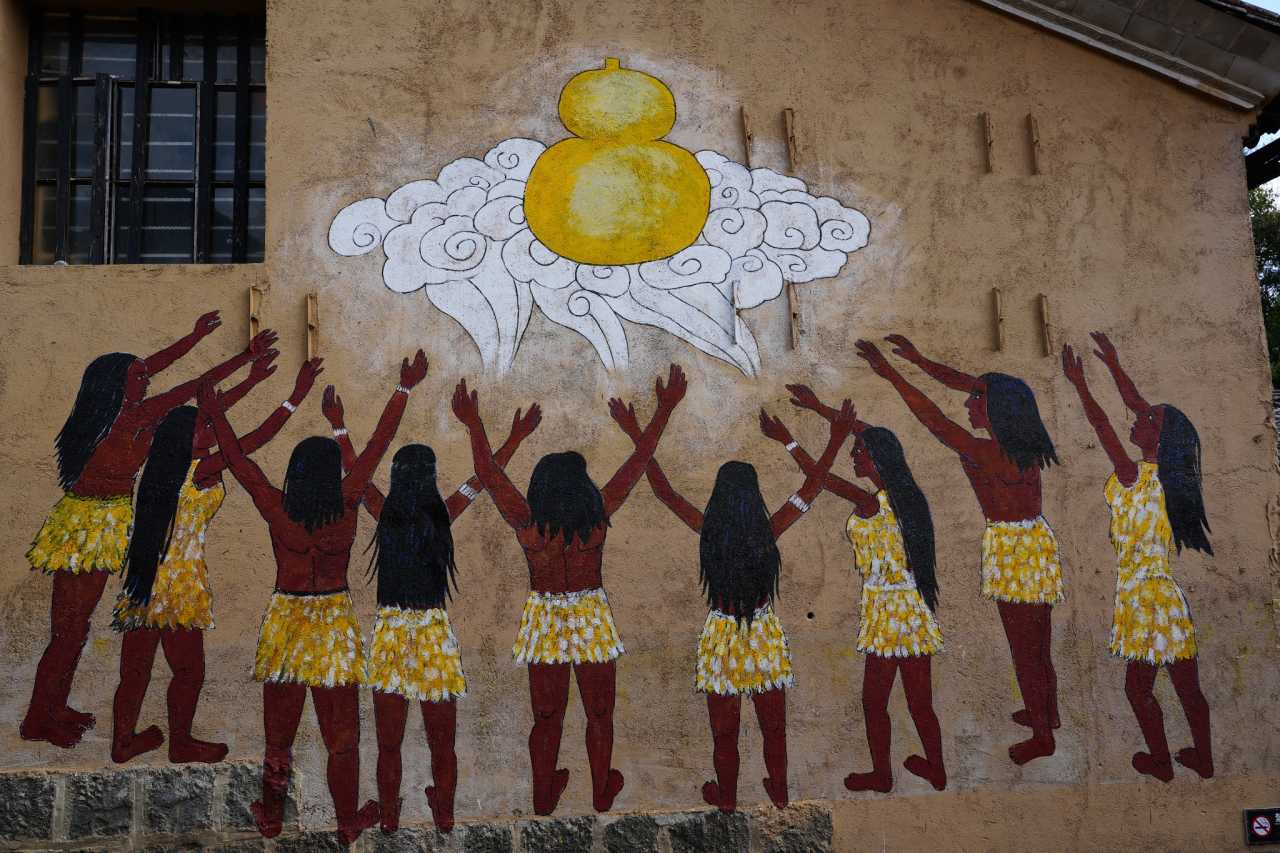
"Simola" means "a happy place" in the Wa language. This ancient Wa settlement has over 500 years of history. There's no entrance fee; the scenic shuttle costs 20 yuan. The rapeseed flowers were in full golden bloom, and the terraced fields looked like the fingerprints of the earth. The yellow mud walls were painted with Wa totems, ancient and mysterious. An ancient banyan tree was hung with ox-head totems—a sacred site for Wa worship.
In the fields, an auntie carrying a baby on her back was selling dried goods. The aroma of Sichuan pepper was rich and intense, so I bought half a pound on the spot. I also picked up some dried matsutake mushrooms—great price, and they were particularly well-dried.
Heshun Ancient Town: Harmony Within and Without
Heshun Ancient Town was built during the Ming Dynasty. It was originally called "Heshun" (River Harmony) because a small river winds around the village. Later, the name was changed to "Heshun" (Peace and Harmony) based on the phrase "scholars are harmonious, people are compliant." With 600 years of history as a hometown of overseas Chinese, its white walls and black tiles reflect off the emerald water. Ancient bridges, ancestral halls, and a library hold the quiet beauty of time.
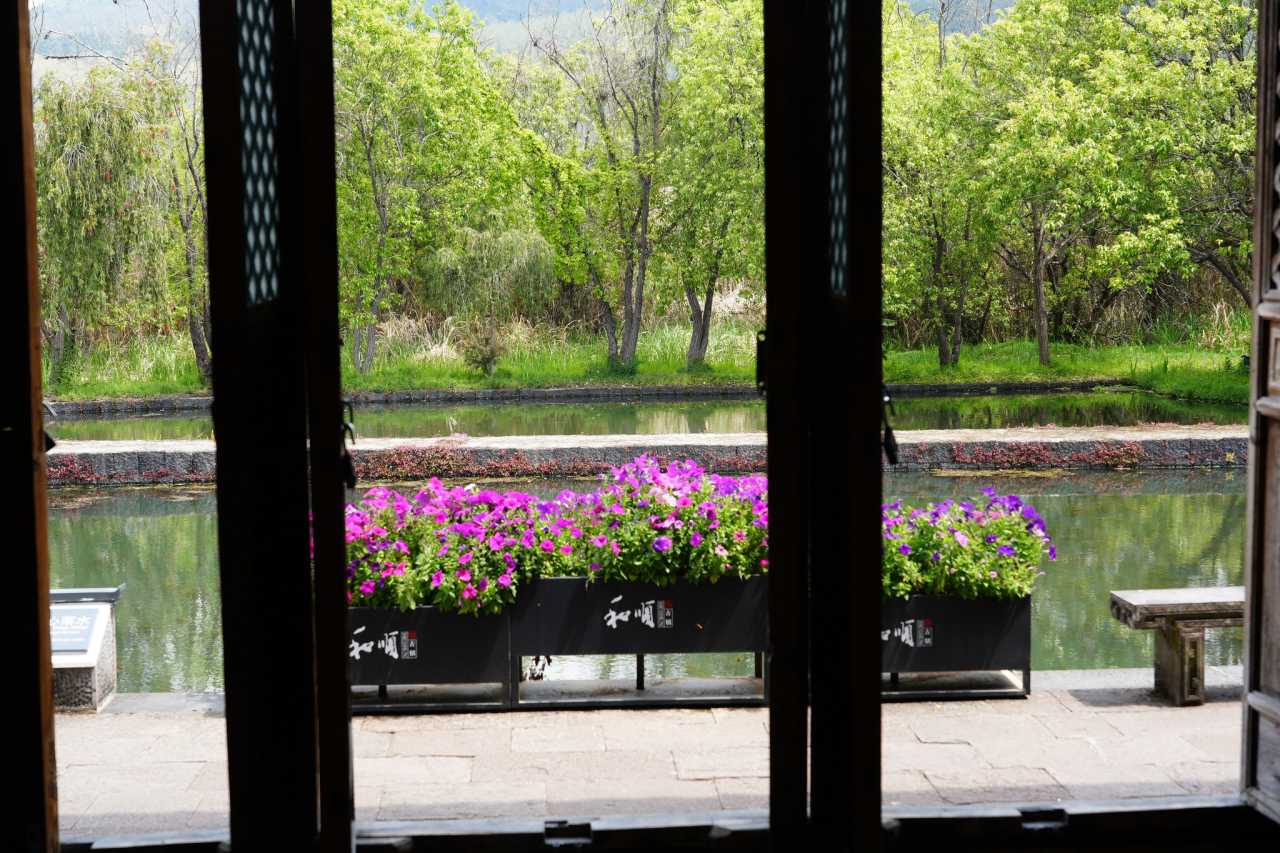
On a screen wall, four characters read: "内和外顺" (Harmony Within, Compliance Without). They were inscribed by Li Ruihuan. I love these four words: harmony within means peace of mind, calm energy, settled spirit—no internal friction, no entanglement, no self-torment. Compliance without means following the way of heaven, following nature, following the times—accepting everything that happens around you.
Heshun is a blend of Central Plains culture, Southeast Asian风情, and caravan trade routes. To this day, over 7,000 original residents still live here. The eight major families are mostly descendants of military households stationed here during the Ming Dynasty's campaign in Yunnan. Since the Qing Dynasty, clan members have "gone to the barbarian lands" to do business in Myanmar and Thailand, bringing a strong Southeast Asian flavor to the town.
The Cun Clan Ancestral Hall is Heshun's earliest and most iconic ancestral hall. Its main gate is in a Southern Asian Western style, while the inner courtyard is a traditional Chinese courtyard. The Heshun Library is China's largest and most well-stocked rural library. Its predecessors were the "Xianxin Society" and the "Reading and Newspaper Society," and it was expanded into a library in 1928. The文创瓦猫 (creative ceramic roof cats) sold at the library are roof guardian spirits—a unique folk creation in Yunnan.
Day 4: Hiking Gaoligong Mountain—Into the Primeval Forest
A Hike That's "A Bit Yunnan"
Gaoligong Mountain is one of the top hiking destinations in Southwest China. We chose a relatively easy route of about 5 kilometers, led by "Xiao Niu Outdoor," recommended by the hotel staff.
It cost 480 yuan per person, including round-trip transportation, outdoor insurance, a mountain entry permit, trekking poles, water, bread, chocolate, fruit, and coffee along the way. After the hike, there was a full meal—grilled pork and ribs, chicken soup, and farm-style vegetables—plenty to go around.
Our guide, Zhang, kept pace with us the whole time, taking photos and videos with patience and professionalism. He introduced us to local plants, and we were like curious schoolchildren. Before long, he spotted some fiddlehead ferns and said they were delicious when cold-brewed. We started looking for them too, picking only the tender ones.
Halfway through, we reached a rest point. Zhang brought out fruit, snacks, and even brewed fresh pour-over coffee on the spot. Out in the wilderness, our needs became simpler. Coffee wasn't about fashion—it was just a taste of nature.
After coming out of the forest, the kitchen had already prepared a meal, and we ate heartily.
Epilogue: Yunnan—Poetry and Faraway Places, Smoke and Romance
Yunnan is vast, with too many choices. In 2014, I backpacked with a close friend through Lijiang, Shangri-La, and Lugu Lake. In 2023, I took my daughter to Kunming, Pu'er, and Xishuangbanna. This time, four women chose Dali, Tengchong, and Mangshi. There's still a route through southeastern Yunnan—saving that for next time.
On this trip, we learned to "allow everything to happen": allow the rain, allow getting lost, allow laughing until we collapsed on the bed, allow ourselves to be happy without using our brains. Relaxation and ease—that was exactly what we were looking for on this journey.
If you also want to give yourself a break, why not try an "escape from home" trip? You don't have to be a guidebook fanatic. You don't have to check off every attraction. Just be on the road. The wind will tell you the answer.
Finally, a few practical tips:
- Renting a car: Make sure the platform allows non-renters to drive. Don't let fine print ruin your trip.
- Itinerary: Fly directly into Dali, drive to Tengchong and Mangshi, then fly back from Mangshi. Saves time and energy.
- Accommodation: Off-season offers more choices and better value. Recommendations from hotel staff are often more reliable than guidebooks.
- Hiking: For Gaoligong Mountain, hire a professional guide. The primeval forest has no trail markers, and it's easy to get lost on your own.
- Mindset: Allow everything to happen. Stay calm and relaxed. That's the highest level of travel.
May you find yourself in the place where the wind blows.
You should also read:
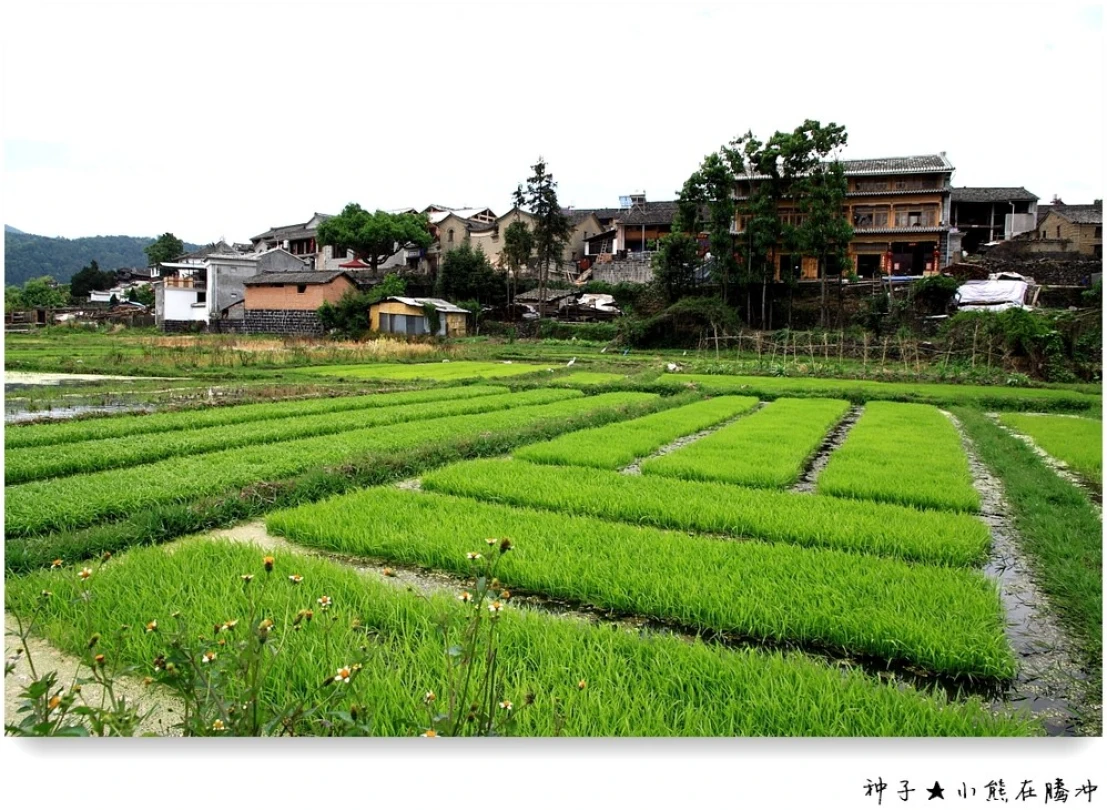
Tengchong·Heshun: Finding Life as It Should Be in a Border Town Where Time Stands Still
Tengchong·Heshun: Finding Life as It Should Be in a Border Town Where Time Stands Still The long journey of over twenty days was over. On my first day back at the office, I was still in a daze. My fingers couldn't find the keys on…
Continue reading...
God’s Abandoned Palette: A Self-Drive Journey Through Yunnan’s Dongchuan Red Land
God’s Abandoned Palette: A Self-Drive Journey Through Yunnan’s Dongchuan Red Land Travel has never been about reaching some distant geographic coordinate. It’s about encountering, along the way, the version of yourself buried beneath the rubble of daily routine. During this May Day holiday, I finally…
Continue reading...
Two Girls' Graduation Trip: Dali and Shuanglang – A Poetic Farewell to Mountains and Sea
Two Girls' Graduation Trip: Dali and Shuanglang – A Poetic Farewell to Mountains and Sea Preface: Catching the Tail of Youth, Heading South During our senior year of college, my roommate and I – two girls studying in Beijing – decided to bid farewell to…
Continue reading...