Dali: Where Sunlight Fills the City, and Time Is Treated with Tenderness
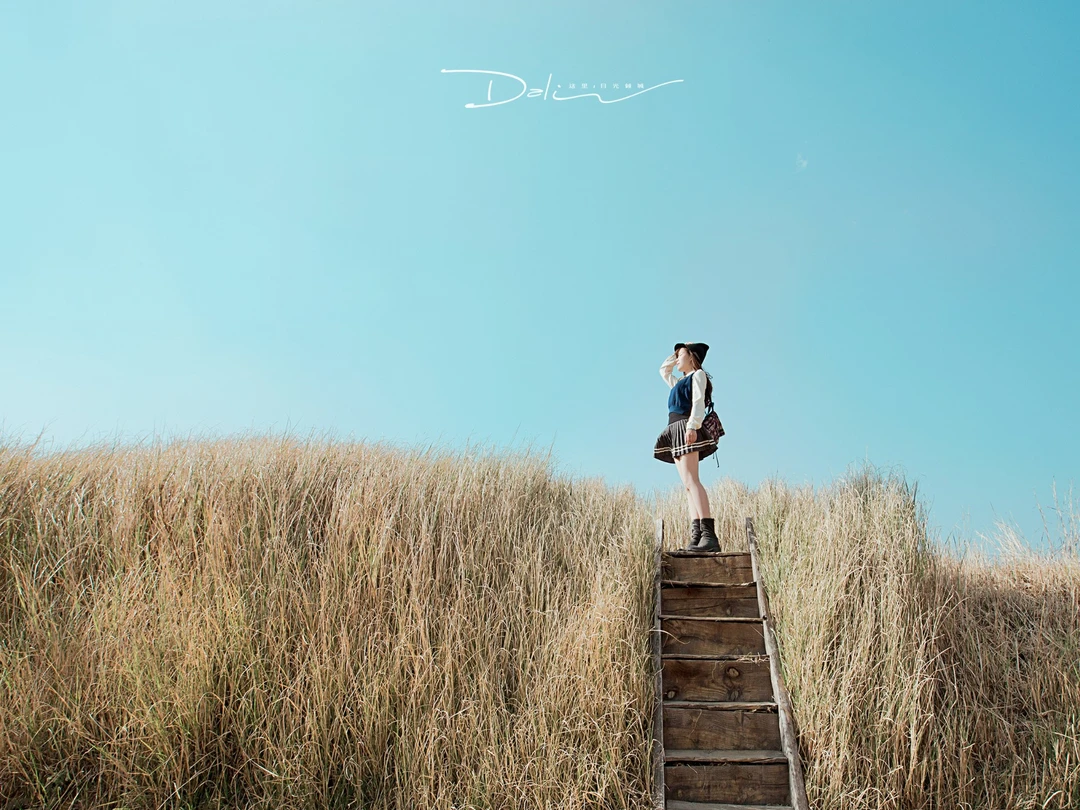
Dali: Where Sunlight Fills the City, and Time Is Treated with Tenderness
I've always felt there's a kind of magical connection between Yunnan and me. Over the years, whether passing through for a quick layover or making a dedicated trip, I've set foot in this land no fewer than five times. The year I graduated from university, I went to Lijiang with my best friend, and that stunning blue of Lugu Lake still sparkles in my memory to this day. When I traveled from Shangri-La into Yading Nature Reserve, I was lucky enough to see the ancient town before it was destroyed by fire. And there's that memory of the Kunming airport late at night — two girls dragging their suitcases, frantically searching for the transfer counter...
Some places you've always wanted to go, but you feel like you're missing an unshakable reason to visit. For me, Dali was exactly that. My trip to Sri Lanka in March started with a one-yuan outbound flight ticket, but the Dali trip that followed came about because my return flight required a transfer in Kunming. To say it was a "necessity" would be a stretch — it was more like "deliberate choice." There were so many routes home, yet I chose to transfer through Yunnan again, just for a chance to see Dali in early spring.
About the Itinerary: A Counterclockwise Lake Tour Without a Plan
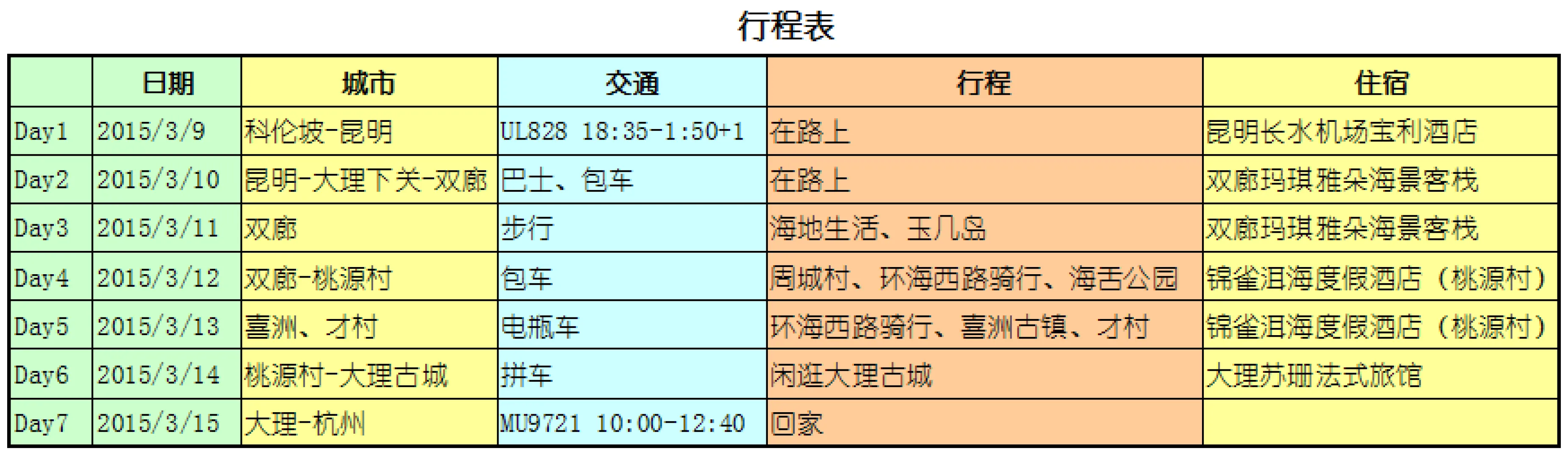
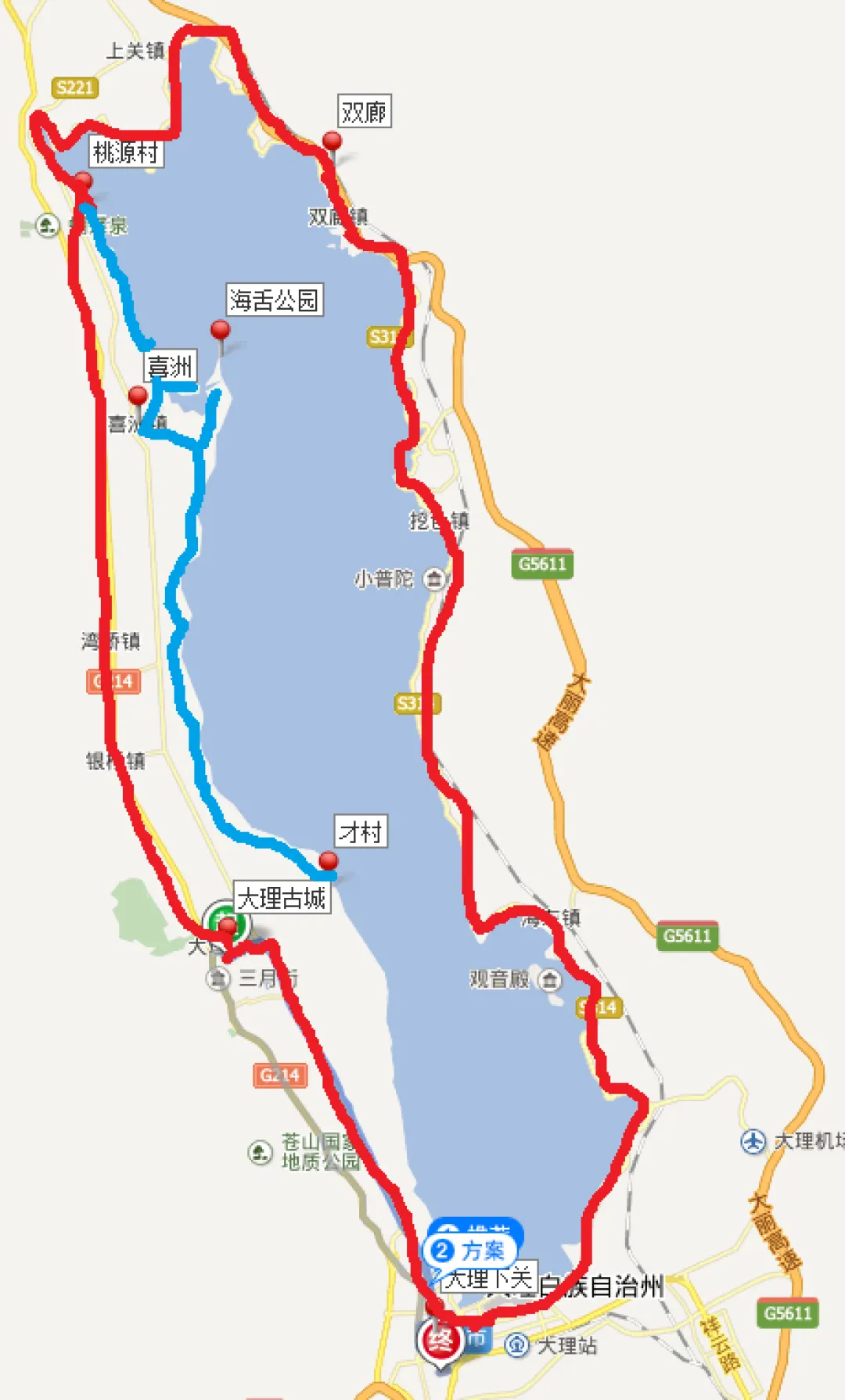
My travel companion, Tuzhi, had been to Dali once before, so aside from booking accommodation in advance, we basically made no other plans. Our route mostly followed what she had done before — a counterclockwise tour around Erhai Lake. Though it looked like a seven-day trip, we only had about four days for actual sightseeing.
Route Overview: The red line shows where we took buses between the various ancient towns; the blue line is the route we rode on electric scooters. Taking the bus along the main roads makes it hard to see the lake scenery — riding along the lakeside is where the real fun begins. The most beautiful sights in Dali are all found along the way.
Per-Person Expenses: Since there was an international flight involved (Colombo-Kunming), that price isn't really a reference point. Just counting food, accommodation, and local transport, it came to about 1,500 yuan per person.

Photography Gear: Canon 5D Mark II, 16-35mm F2.8 wide-angle lens, 50mm F1.4 prime lens, iPhone 5S.
Travel Calendar: Dali is mild in winter and cool in summer, making it suitable for travel year-round. But the best season is undoubtedly spring — "Dali in March is at its finest." This is the perfect time to visit.
Essential Protection: - Dali is located on a low-latitude plateau with extremely strong UV rays — bring plenty of sunscreen. - The climate is dry, so lip balm, hydrating masks, and facial mist are lifesavers. - The temperature difference between morning and evening is significant; even in summer, bring a windproof jacket. - If you plan to rent an electric scooter, a face mask and sunglasses will protect you from both sun and wind.
Transportation: From Hassle to Ease
Kunming to Dali: A Game of Saving Money

Many people choose to fly from Kunming to Dali — the flight takes only 50 minutes, with frequent departures and regular deals. Discounts of 20-30% off are common, bringing the price including tax to just over 300 yuan. Some early morning flights even go for 90% off — for example, we found a ticket for 180 yuan including tax, departing at 7 a.m. The problem was, we didn't arrive in Kunming until 1:30 a.m. If we took that flight, we'd have to stay up all night. To get some rest, we gave up on this quick option and decided to sleep at a hotel before taking the bus.

Why not take an afternoon flight? Because it's expensive!
Buses from Kunming to Dali depart from the Kunming Western Bus Station. There's a direct shuttle from the airport for 25 yuan per person. If you're in a group, just take a taxi — a little over 100 yuan will do. There are many buses running from Kunming to Dali, with two or three departures every hour. The ticket costs 130 yuan, and the journey takes about 4 hours and 30 minutes. Note: The bus arrives at a stop called "Xiaguan" (also known as the New City). If you're heading to Dali Ancient Town, you'll need to take Bus No. 4 or No. 8, which takes about half an hour.
Dali to Shuanglang: A Frustrating Charter Car Experience
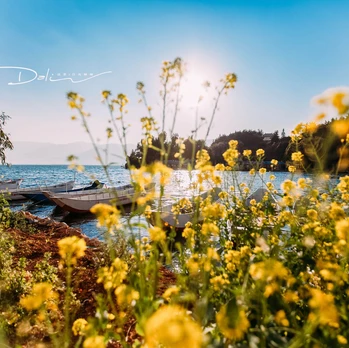
As we stepped out of the Dali Xiaguan Bus Station, a swarm of drivers surrounded us: "Charter car or shared ride to Dali Ancient Town or Shuanglang!" We picked a driver who seemed reasonable and agreed on a price: 160 yuan for a charter car to Shuanglang, and he would help find others to share the ride. Ten minutes passed — no one showed up. Another hour went by — still no one. The driver said dejectedly, "It's getting dark. I don't think anyone's going to share with you today." Frustrated, we hauled our luggage off the car. A snack shop owner told us we could take a taxi to the Northern Bus Station for just over ten yuan, where there are minibuses to Shuanglang for only 15 yuan per person.

The driver said, "Give me 15 yuan, and I'll take you to the Northern Station." Our luggage went back on the car. When we arrived at the Northern Station, it was already completely dark, and there were no more buses. Only then did the driver say, "Actually, there are no buses to Shuanglang at this hour. If you had taken a taxi directly here when you first got off, you might have caught the last one." At that moment, I realized — from the moment he agreed to take us to the Northern Station, he knew this would be the outcome. He was simply leaving us with no other option but to charter his car for 160 yuan.
If we could have canceled our hotel in Shuanglang, we would have stayed overnight at the Northern Station and set out the next day. Booking accommodation in advance gives you peace of mind, but it also locks your itinerary in place. There are pros and cons to both approaches, but next time, I'd still choose to book ahead.
The distance from Dali to Shuanglang isn't long, but there are many curves, so the car can't go fast. The driver kept grumbling about how much he was losing on this trip — but wasn't this the price he quoted himself? When we arrived in Shuanglang, he dropped us off near the bus station, saying, "All cars stop here." But our hotel was still three kilometers away! I opened my phone's navigation and found that the hotel was right across from the ancient stage at the Shuanglang market — easy to find. The driver wasn't lost; he was just making an excuse to refuse us. After receiving so much help during our ten-plus days in Sri Lanka, coming back home felt like a huge letdown. It's not that we worship foreign things, but the service at domestic tourist spots really hasn't kept up. This Dali trip seemed to lose much of its promise because of this bad start.
Shuanglang: Searching for a Hidden Paradise in a Construction Zone
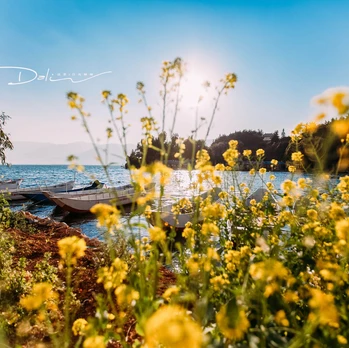
Haili Life: Those Chairs and Tables Facing Erhai Lake
Exhausted from the previous day, we slept until nearly 10 a.m. When we got to the hotel kitchen, the staff was already cleaning up. They scowled as we walked in: "Breakfast is served until 10 a.m. We're already packing up, and you're just showing up." I said there were still a few minutes until 10. She said, "Then eat quickly, and bring your bowls and chopsticks back yourselves!" There was only plain rice porridge and steamed buns — no side dishes at all.
A breakfast with no substance couldn't dampen our enthusiasm for taking photos. Shuanglang Ancient Town isn't large. Though it's heavily commercialized, the street outside our inn had a real sense of everyday life. A sightseeing tram runs through the whole town — for 10 yuan, you can tour the entire place.
Almost every dog here was in the same pose — lazily sunbathing. Stalls offering colorful braids were everywhere, weaving colorful threads into your hair. For 10 yuan, you could get three small braids, and it seemed like nine out of ten girls on the street had them.
The most memorable thing about Shuanglang is probably those chairs and tables facing Erhai Lake at the Haili Life Inn. Haili Life is well hidden — you have to pass through many small alleys to get there, but thankfully, directions are painted on the walls along the way. As Shuanglang's fame has grown in recent years, buildings and hotels are going up everywhere. More than half the town is under construction, with dust flying everywhere — "construction zone" is the most fitting description. So, I wouldn't really recommend visiting Shuanglang for the next couple of years. Once the hotels are built, it should look quite nice, but the commercialization will undoubtedly be even stronger.
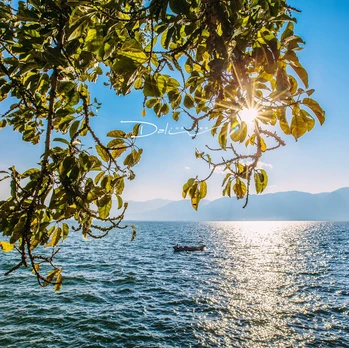
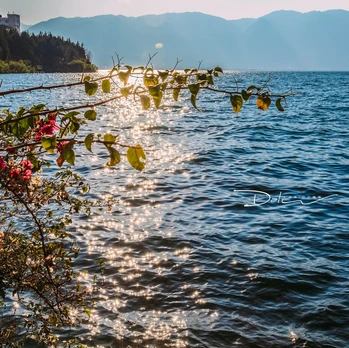
When we finally arrived at Haili Life, we felt cut off from the construction zone. The obligatory "I was here" photo at the landmark spot was a must — and you had to queue for it! Haili Life has several courtyards lined up along Erhai Lake. Despite being called a "sea," Erhai is actually a lake. It's said that the Bai people had never seen the ocean, so to express their longing for it, they named it Erhai (Ear Sea). Flocks of egrets often fly across the water's surface. White is the dominant color here, and the simple furniture feels surprisingly welcoming. The warm spring sun shines through the lush branches, casting dappled shadows on the wooden tables — this is the best of times.
Yuji Island: A Thrilling Boat Ride
Leaving Haili Life, we walked along the lakeside road. Because of the construction, many roads had become dead ends. We walked the same streets over and over, as if trapped in a maze. When we finally made it back to the bustling area, there was no sense of relief — looking at the muddy dirt roads and the scaffolding on building facades, I felt a daze, like returning to a construction zone from a hidden paradise.
Yuji Island is one of the three islands in Erhai Lake, connected to Shuanglang Ancient Town by a bridge. Entry to the island costs 10 yuan. Just as we were about to buy tickets, an elderly woman pulled us aside: "Take our boat out on the lake. A charter boat costs 100 yuan, but there are already three people on board, so it's only 20 yuan each! And you get free entry to Yuji Island." Tuzhi and I exchanged knowing looks and accepted the offer.
When we first got on the boat, I was still posing heroically with my camera. But as the boat slowly moved away from the shore, I realized the waves were much rougher than I had imagined. Maybe the boat was too small — for the entire 20-minute ride, I felt like it could capsize at any moment. Waves kept splashing onto us, and we screamed constantly, while the boatman remained calm and steady. Our boat was the smallest on the lake — the standard ones could seat ten people. My advice to anyone considering a boat ride: don't take a small boat, unless you want to experience the thrill of nearly capsizing and being constantly pelted by waves.
When the boat docked, the woman led us into the Yuji Island scenic area. Yuji Island is tiny — just one road, with all the attractions clearly marked. There are a few small observation decks enclosed by railings where you can overlook Erhai Lake from above. Yuji Island is the top choice for wealthy travelers — there are several high-end hotels on the island, luxurious and secluded. Yang Liping's Sun Palace is located on Yuji Island, built just one meter from Erhai Lake, wrapped around a large tree. It was originally her private villa, but now seven rooms are open for guests to stay in — at about 5,000 yuan per night. Tourists are not allowed to visit.
We left Yuji Island in the evening and strolled along the lakeside scenic promenade, letting the breeze blow over us. This area is also far from the construction, with many cafes, bars, and inns gathered here. The famous sign that many people have posed with — "If you're also in Shuanglang" — is located on this road. There were also stalls selling small trinkets, and a young man playing drums was selling his own CDs. In Dali, there are many young singers like him — talented but undiscovered, forced by circumstance to put a price tag on the music that is their life.
In the evening, you always see beautiful scenes: a young woman in ethnic costume holding her little sister's hand as they walk, a dog out for a stroll that's incredibly photogenic, and a cat being forcibly kissed. The dried fish glinting gold in the sunset light made it impossible not to press the shutter.
Shuanglang is on the eastern side of Erhai Lake, so it's not good for watching the sunrise, but it's the best spot for sunset. When there are many clouds, you often see sunlight scattering across the lake in broad beams, creating a spectacular "Jesus light" effect. So for photographers, a perfectly clear, cloudless day isn't actually the best weather.
At night, Shuanglang is filled with stars. We wrapped ourselves in jackets and went up to the large rooftop terrace, set up our tripod, adjusted the settings, gently pressed the shutter, and waited quietly for 30 seconds. The cold wind couldn't dampen our enthusiasm. But when we saw the result, we almost cried — another blurry star photo! The settings were all correct — what was the problem? Was the tripod not steady enough?
Zhoucheng and Cycling: Encountering Bai Life in the Tie-Dye Hometown
Taoyuan Village: Surprises Come When You Least Expect Them
Saying goodbye to Shuanglang, we headed to Taoyuan! Taoyuan Village is on the western side of Erhai Lake, facing Shuanglang across the water. The distance is just over 20 kilometers, and the most convenient way to get there is by charter car — 60 yuan per car, which isn't bad. When we saw the hotel's large terrace, we were stunned — it was every bit as good as Haili Life in Shuanglang, but even more peaceful, and reserved exclusively for hotel guests.
Zhoucheng: A Living Fossil of Bai Culture
We rented an Aima electric scooter for 70 yuan near our hotel and headed to Zhoucheng Village, about two kilometers away. Zhoucheng is the largest Bai ethnic village in Dali, known as the "Hometown of Tie-Dye." It's a free, open-air Bai cultural tourism village. It's famous not only for the Butterfly Spring within its borders but also because it still perfectly preserves various traditional Bai customs, earning it the title "Living Fossil of Bai Culture."
The most iconic landmark in Zhoucheng is the ancient stage, built in the busiest market area, facing two large trees. Every year during the Torch Festival, a giant torch is erected here, and it becomes the center of celebration and performance. Since it wasn't a holiday, there were no activities in the village, and we barely saw any tourists — just locals going about their daily lives.
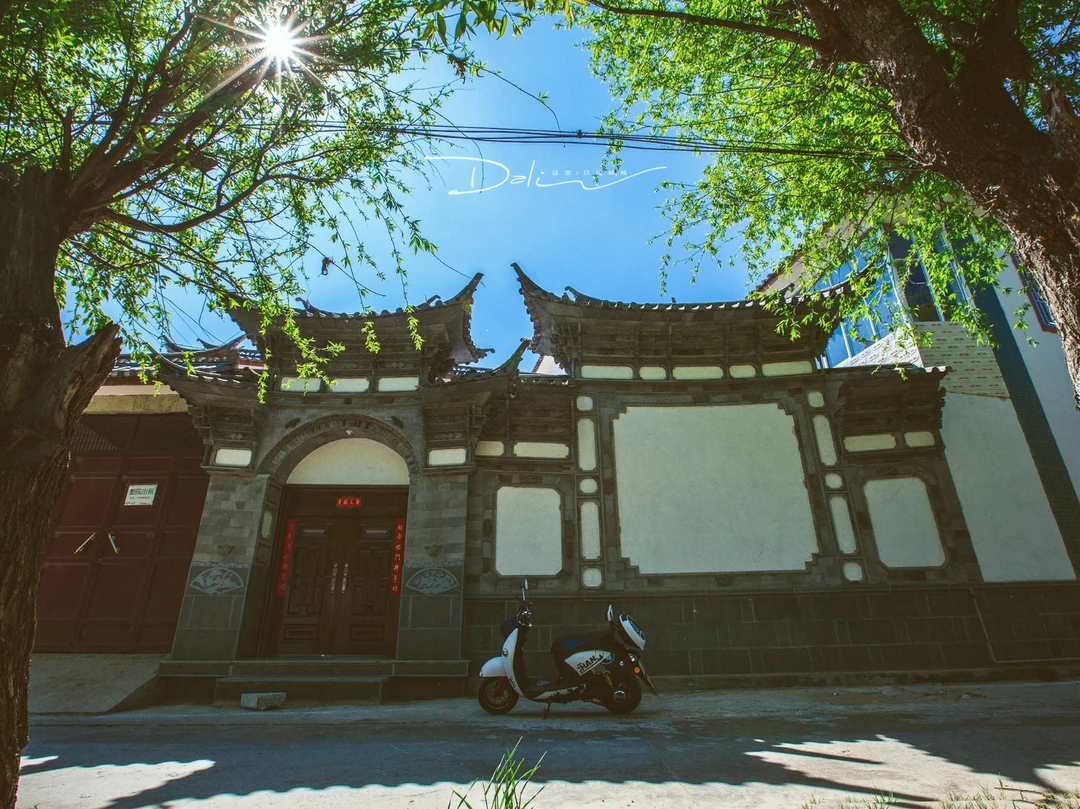
The street near the market has quite a few shops and is the most commercial area in the village. Local women love to wear traditional Bai clothing, and their attachment to tradition is very strong. As we gradually left the commercial area and entered the residential zone, the streets became nearly deserted. Bai-style houses with upturned eaves were scattered throughout the village, some looking centuries old and quite dilapidated. The owners were mostly elderly people with white hair — perhaps they had lived there for decades and didn't want to move, or maybe they wanted to quietly guard these houses in their final days.
Passing through an ancient memorial archway, we continued along an uphill road. The houses here were clearly newer. The freshly painted walls were decorated with calligraphy and paintings. Tuzhi, who walks like an artist, had a perfect profile that made me want to press the shutter.
Since we were in the tie-dye hometown, we naturally wanted to see how tie-dye is made. Just as we were wondering where to go, a Bai woman appeared. She said her family produces tie-dye products and invited us to take a look. She told us we didn't have to buy anything — just taking photos would help promote their local culture. Tie-dye is a dyeing method where parts of the fabric are tied off to prevent them from taking the dye — it's one of China's traditional manual dyeing techniques. The woman patiently explained each step of the process, her words filled with pride. Her tie-dye workshop has a history of over 200 years, passed down from generation to generation, with the craftsmanship of their ancestors elevated over time.
In Zhoucheng, from girls as young as 10 to grandmothers well past 60, everyone knows how to tie fabric. It's a skill, but even more so, an art. The main dye used in tie-dye is indigo, applied through repeated dyeing processes to create vibrant colors that never fade and even have health benefits. The patterns are mostly regular geometric designs, often inspired by plants, animals, and the clothing patterns of ancient nobility, full of the flavor of everyday life. Tie-dye fabric has many uses — it can be made into clothes, pants, scarves, quilts, curtains, and more. The woman's home had many finished tie-dye products, with the cheapest scarves costing less than 100 yuan.
After watching the entire tie-dye process — from printing the pattern to tying, repeated dyeing, and finally drying — all completely handmade — I couldn't help but marvel at the charm of traditional Chinese folk culture!
Cycling Around Erhai Lake: The Most Beautiful Scenery Is on the Road
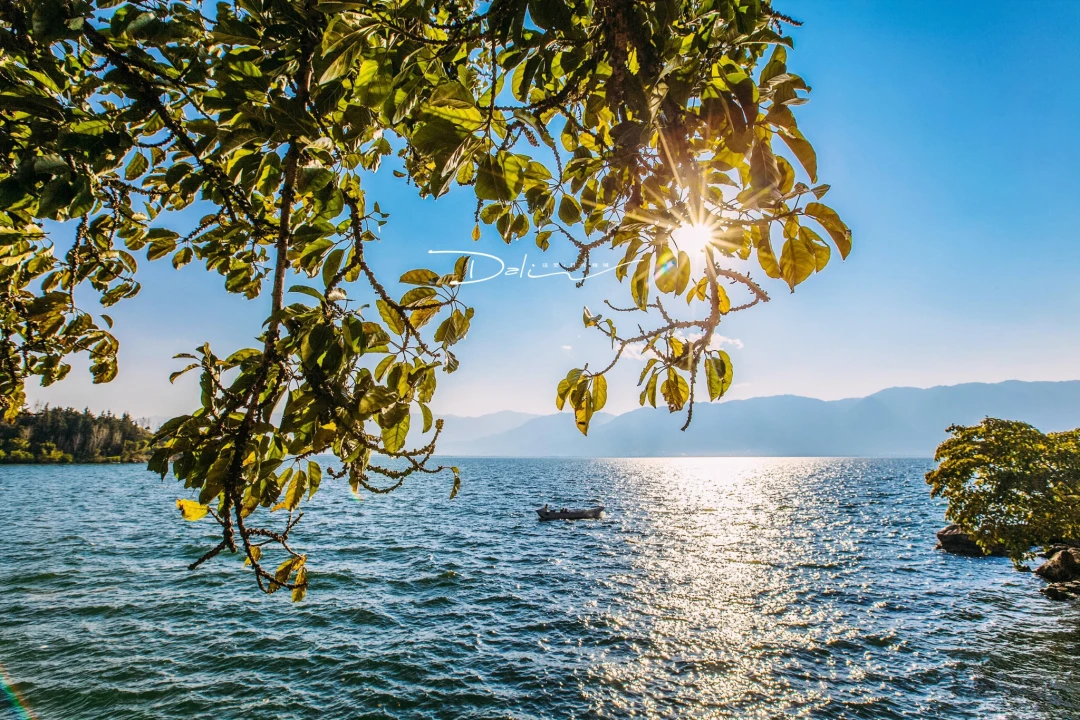
Leaving Zhoucheng, we officially began our cycling tour around Erhai Lake. Tuzhi drove the scooter, and I brought the camera. Dali's Erhai Lake scenic road stretches over a hundred kilometers. The western section, the West Ring Road, starts at Xiaguan and ends at Jiangwei — wide and flat. Riding along the lakeside path is the most enjoyable part of the entire trip. The most beautiful scenery in Dali is all found along the way.
Accommodation: From Disappointments to Delights
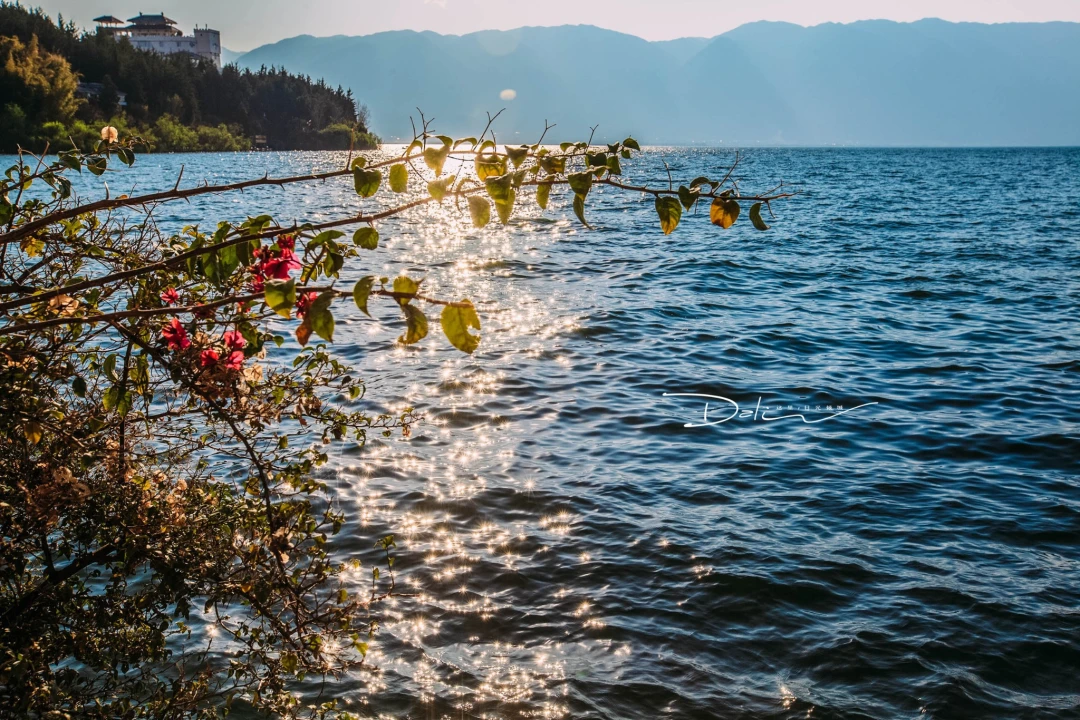
Shuanglang Accommodation: Macchiato Seaview Inn
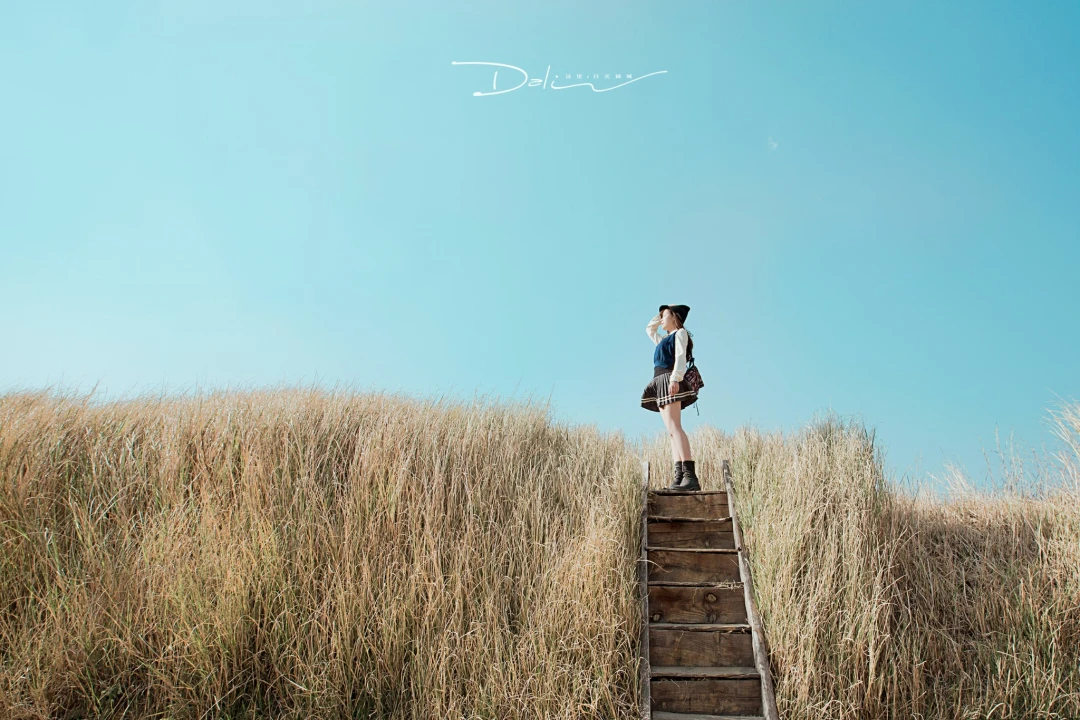
Shuanglang has many accommodation options, but since more than half the town is under construction and noisy, try to choose a place by the lake. We chose the Macchiato Seaview Inn, right by Erhai Lake, and booked the cheapest room — a courtyard twin room for 200 yuan per night, with no balcony or sea view. The staff's service attitude wasn't great, but the room had all the basic amenities, fast WiFi, and a simple free breakfast. The inn is built in a U-shape with a large courtyard in the middle, perfect for stargazing at night. The seaview cafe on the second floor is a great place to curl up with a book for half a day.
Taoyuan Village Accommodation: Jinqu Erhai Lake Resort Hotel (Highly Recommended)

Taoyuan Village is part of the Xizhou area, about 8 kilometers from Xizhou Ancient Town. The whole village is small, right next to Erhai Lake, very peaceful and perfect for a relaxing vacation. We ended up choosing the Jinqu Erhai Lake Resort Hotel, with a twin room for 300 yuan per night. The room and bed were both very large — could easily sleep four people — with a private seaview balcony. The bathroom amenities were also good. The hotel offered a generous free breakfast, and the staff were excellent. Highly recommended!
Dali Ancient Town Accommodation: Susan French-Style Inn (Not Recommended)
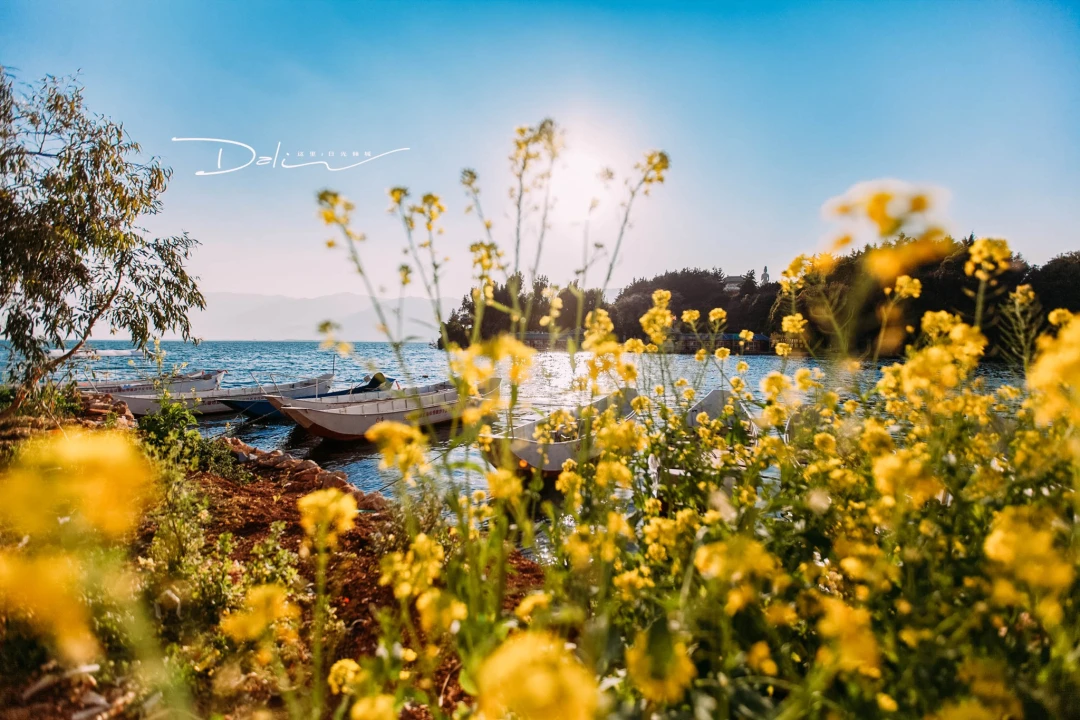
Dali Ancient Town has many accommodation choices. If you want a good night's sleep, don't choose a room on the main street, or you'll be kept awake until the early hours. We chose the Susan French-Style Inn, with a double room for 300 yuan per night including breakfast. This inn is located in a small alley near Yita Temple — quiet yet close to the action. The owner is a Frenchman, and the room design has an exotic feel, with a large round bathtub in the bathroom. But the drawbacks were clear: it's located up a sloping alley, making it tiring to walk back, and many taxi drivers couldn't even find it. The bathroom had no door, just a thin curtain, and the window had only a half-length curtain. As nice as the bathtub was, I didn't dare use it so openly — I even hesitated to turn on the light when using the bathroom, afraid of being seen by people across the way. 300 yuan — not really worth it.
Final Thoughts: Dali Deserves to Be Treated with Tenderness

My trip to Dali had its surprises and its regrets. From the "construction zone" of Shuanglang to the peaceful seaview of Taoyuan Village, from the dishonest charter car driver to the warm tie-dye woman, from the disappointing hotel to the delightful Jinqu — these experiences pieced together my most authentic impression of Dali.

The beauty of Dali isn't in any single attraction — it's on the road. Those sights you stumble upon unexpectedly — the Jesus light over Erhai Lake, the two large trees in front of the ancient stage, the proud smile on the Bai woman's face — these are the most moving parts of this land.
So if you ask me whether Dali is worth visiting, my answer is: yes, it is. But remember, don't pin your expectations on some trendy photo spot. Instead, slow down your heart and soak in the scenery along the way. The most beautiful thing about Dali has never been a destination — it's the moment you meet it.
Practical Tips: - If you have enough time, I recommend going counterclockwise around Erhai Lake: start from Dali Ancient Town, pass through Xizhou, Taoyuan, and Shuanglang, then return to the ancient town. - Cycling is the best way to experience Erhai Lake, but be sure to protect yourself from the sun and wind. - Shuanglang is currently undergoing large-scale construction and the environment isn't great — I suggest waiting a couple of years before visiting. - Booking accommodation in advance will give you peace of mind, but leave some flexibility so your itinerary doesn't trap you. - When chartering a car, make sure to confirm the destination and price, and it's best to check the route in advance to avoid being taken on a detour.
Dali — here, sunlight fills the city. May you meet it with tenderness in the best of seasons.
You should also read:
Before the Tongue: Discovering Nuodeng, the Ancient Salt Town Time Forgot
Before the Tongue: Discovering Nuodeng, the Ancient Salt Town Time Forgot There’s a peculiar magic in places that have been left behind by history. They don’t try to impress you. They don’t have polished welcome centers or laminated maps. They just are—worn, quiet, and utterly…
Continue reading...
Meili Snow Mountain: A Soulful Journey of Dialogue with the Sacred Mountain
Meili Snow Mountain: A Soulful Journey of Dialogue with the Sacred Mountain Prologue: When Travel Becomes Faith Some journeys are forgotten as soon as they end. Others carve themselves into your bones. The trip to Meili Snow Mountain belongs to the latter. Waking up in…
Continue reading...
A Journey Through Time: The Earthen Forest of Yuanmou — April 2011 Chuxiong & Yuanmou Self-Drive Guide
A Journey Through Time: The Earthen Forest of Yuanmou — April 2011 Chuxiong & Yuanmou Self-Drive Guide Some journeys are destined to take root in your memory. In April 2011, I set out from Shuhe in Yunnan, heading north toward the Chuxiong Yi Autonomous Prefecture,…
Continue reading...