Dashanbao | Lost in the Clouds, Found in the Mountains
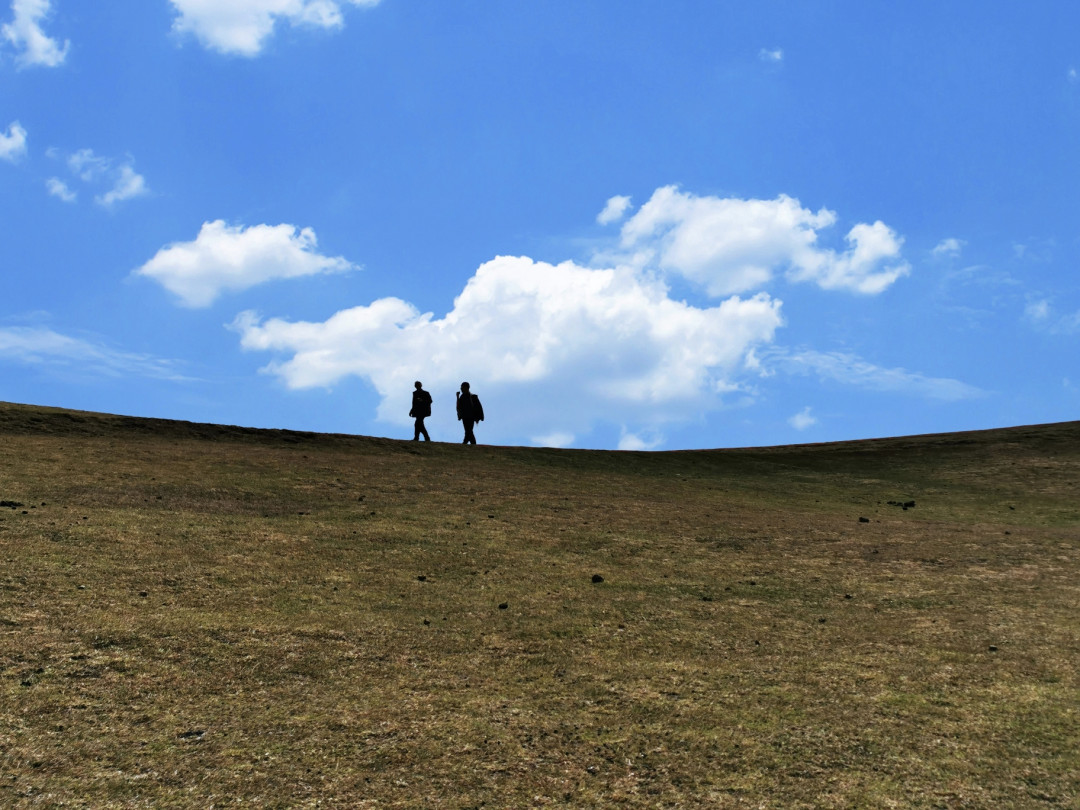
Dashanbao | Lost in the Clouds, Found in the Mountains
An Unexpected Highland Encounter
Some places you visit with high expectations, only to have them dashed by a thick fog that chills you to the bone. Other landscapes you approach with no hope at all, yet they surprise you around every corner. Dashanbao is one of those places that makes you love it and hate it in equal measure.
Tucked deep in the Wumeng Mountains of northeastern Yunnan, its name is as plain as a place can get—Dashanbao, literally "Big Mountain Bundle," because the peaks here pile up and overshadow everything around them. At an elevation of 3,100 to 3,140 meters, it doesn't sound particularly high, but when you actually stand there, you understand what it means to be "lost in the clouds, not knowing where you are."
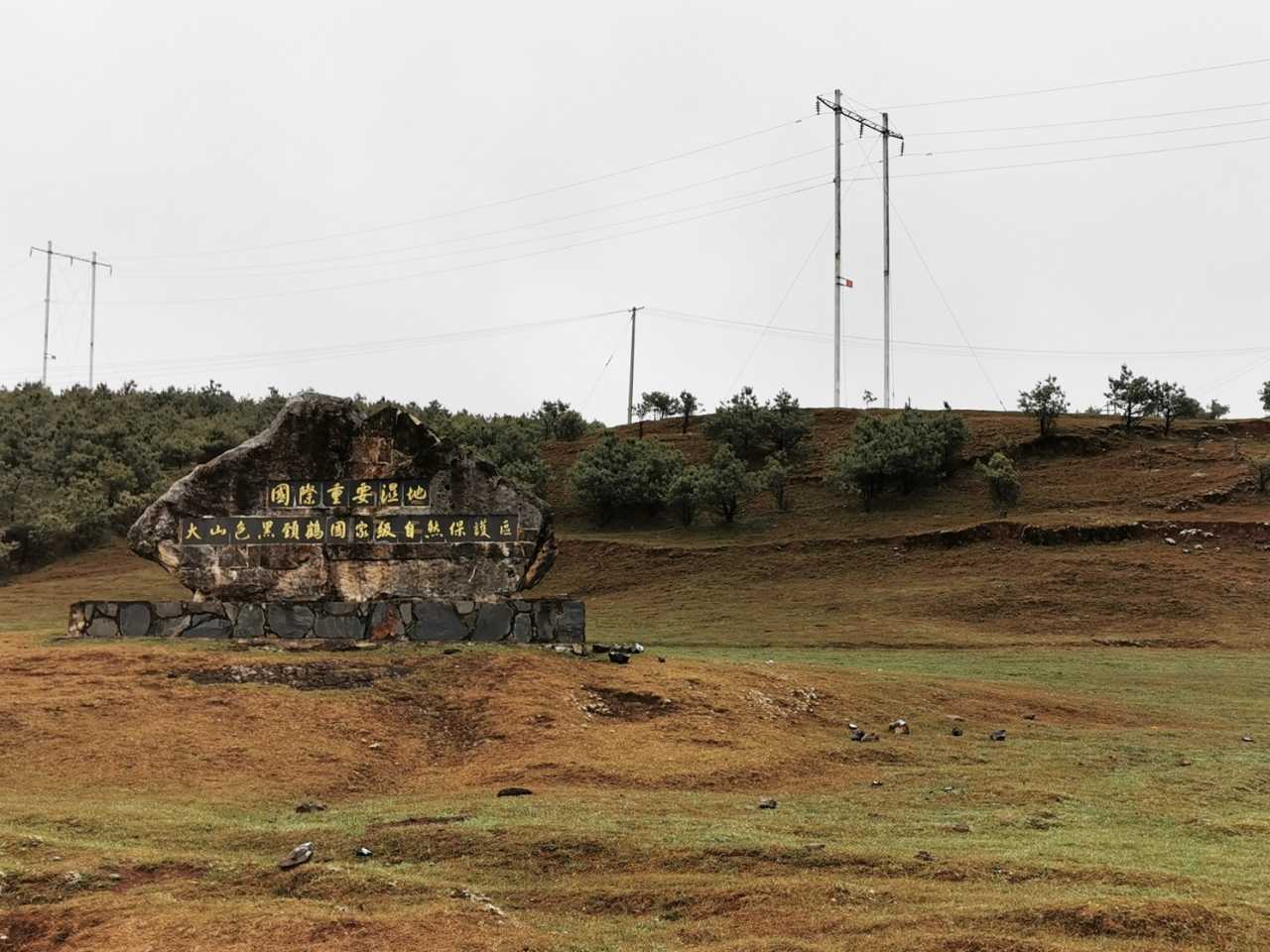
This isn't some trendy Instagram hotspot. It's the winter home of the black-necked crane, a first-class protected species, and one of China's 30 internationally important wetlands. It may not be famous, but its significance is undeniable. Every autumn and winter, when the black-necked cranes fly in from afar, Dashanbao truly comes alive.
First Impressions: From Disappointment to Awe
Before I went, my mind was filled with images of a highland blue sky—sunlight spilling over the meadows, golden waves rippling in the wind. But as soon as the car started climbing the mountain, snowflakes began to fall. The higher we went, the thicker the fog became, reducing visibility to less than ten meters. A local glanced at us and said casually, "This fog won't lift all day."
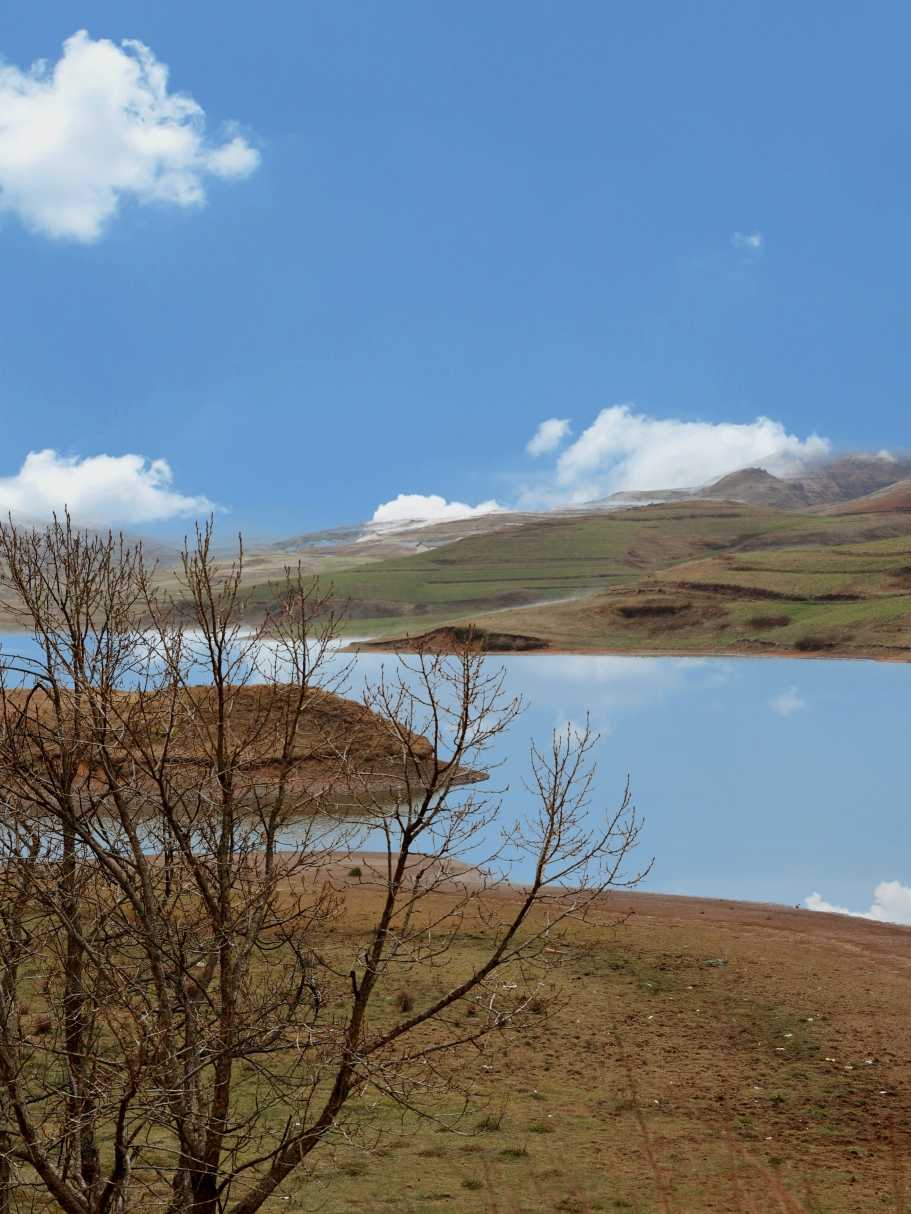
My heart sank.
We had a bowl of hot rice noodles (米线) in Dashanbao Town, warming our hands by a stove. I thought to myself: we're here, we might as well go see it. We bought tickets, hopped on the shuttle bus, and plunged into the fog. Honestly, at that moment, I had zero expectations.
But Dashanbao has a way of defying logic—just when you give up on your fantasies, it decides to show you its most beautiful face.
Glass Jumping Platform: A Heart-Stopping Void
The first stop on the shuttle bus was the glass jumping platform. This is the base for wingsuit flying. Looking down from the platform, sheer cliffs plunge straight into the valley below, an awe-inspiring sight.
After getting off the bus, we had to walk another ten minutes or so. At this altitude, every step left you breathless, but once you reached the platform, it was all worth it—provided you could actually see anything.
That day, the fog was so thick that everything was a white void. I stood on the glass, my feet suspended over nothing, my mind equally empty. Then, suddenly, a gust of wind tore a gap in the fog, revealing a fleeting glimpse of the cliff face. That sensation of stepping into emptiness made my legs go weak.
I waited on the platform for an hour, hoping the fog would clear so I could see the layered peaks and experience that feeling of "looking down on all the mountains." But the fog refused to lift. Bored, I studied the promotional posters for wingsuit flying in the rest area. That's when I learned that in 2015, Dashanbao hosted the Wings for Love World Cup, the largest and most competitive wingsuit event in Asia.
Rooster Mountain: A Cliff in the Sea of Clouds
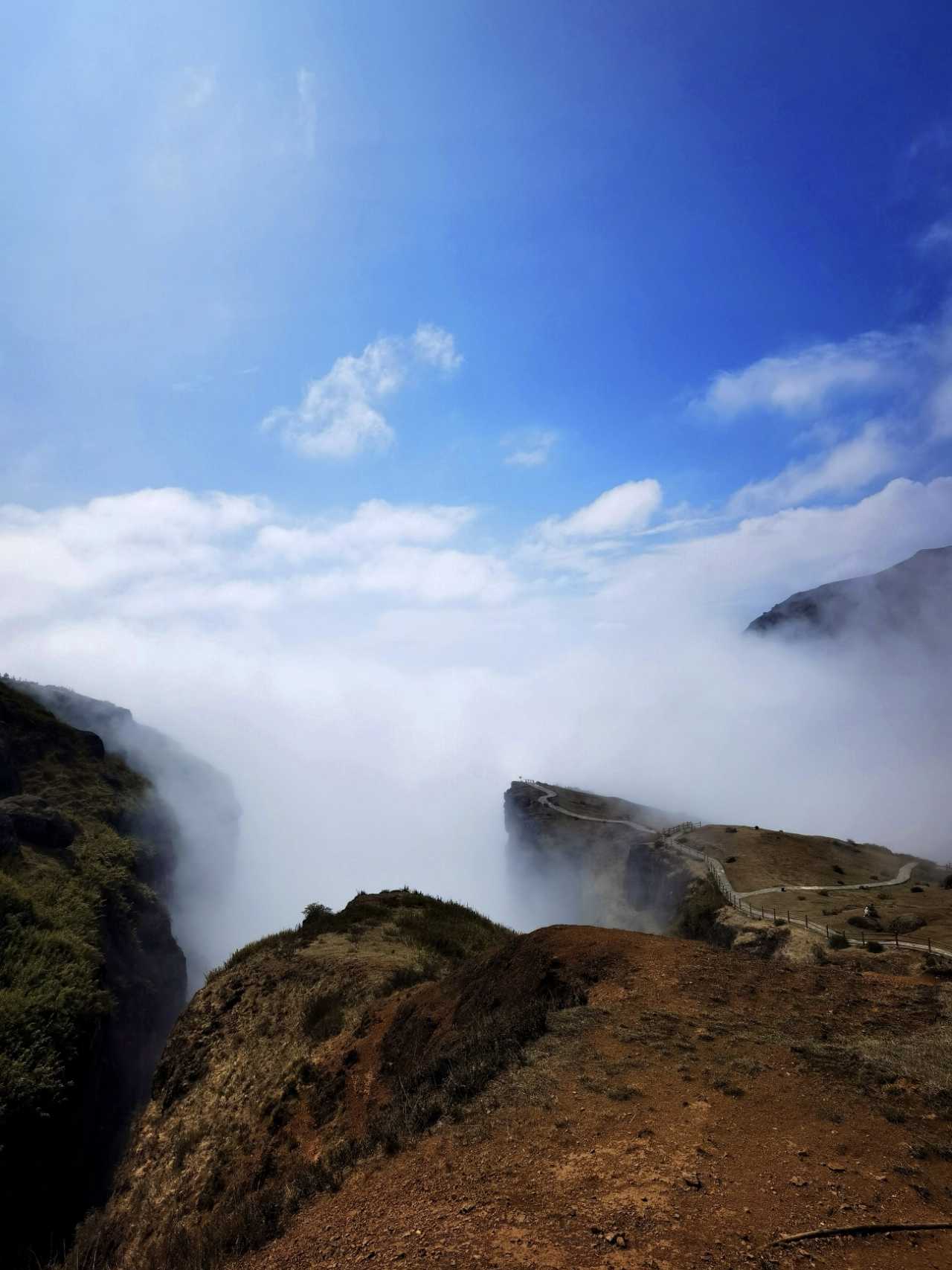
Rooster Mountain (鸡公山) is the soul of Dashanbao. Shaped like a rooster's comb, it's surrounded by sheer cliffs on three sides, with only a narrow, two-foot-wide path leading to the summit. After visiting, the renowned writer Yu Jian declared that the canyon here is in no way inferior to the Grand Canyon in Colorado.
After the shuttle bus dropped us off, we walked downhill along a dirt road for about ten minutes until we reached the entrance to Rooster Mountain. A signpost pointed right for the walking trail and left for the horse path. A one-way horse ride costs 40 yuan, but the best way to explore is on foot—take a loop, entering via the trail and exiting via the horse path.
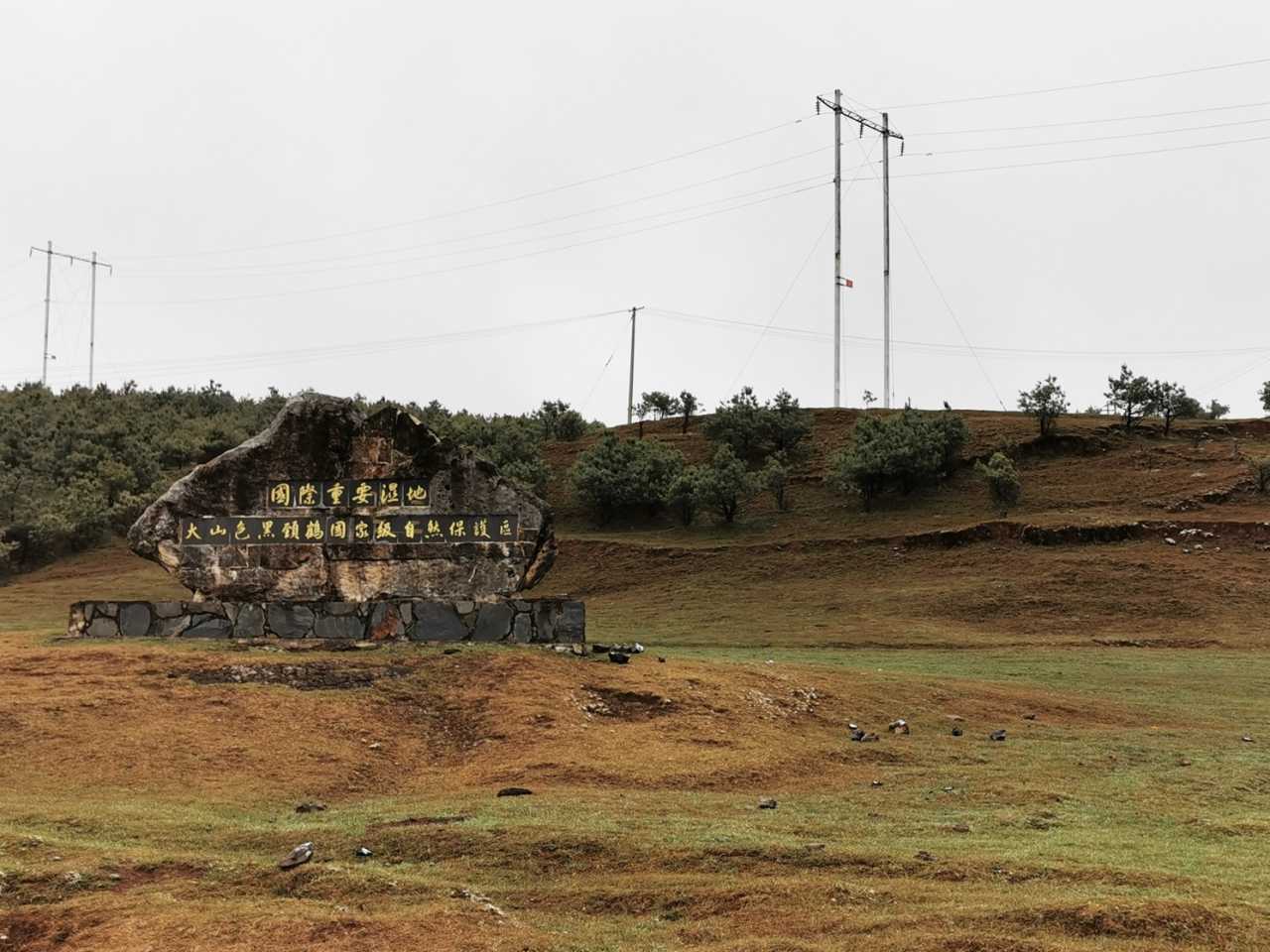
That day, the fog was so thick that we couldn't see anything. The canyon's grandeur was hidden completely, leaving us only to imagine it. But then, in an instant, a breeze swept through, and the fog parted—Rooster Mountain appeared as if suspended in midair, its slopes sparsely covered with shrubs, stark and striking.
The sea of clouds swirled, gathered, and pressed around the peaks, gradually forming a magnificent spectacle. The mist lifted the mountains, some high, some low, wrapping around their waists like a scene from a classical painting. I've heard that the "Buddha's Light" and the sunrises and sunsets here are breathtaking, but we were unlucky that day.
Along the way, we met young children selling grilled eggs. The golden alpine meadow stretched out beneath our feet, vast and serene, so peaceful that I felt like lying down and staying there forever.
Tiaodun Lake: A Sapphire on the Plateau
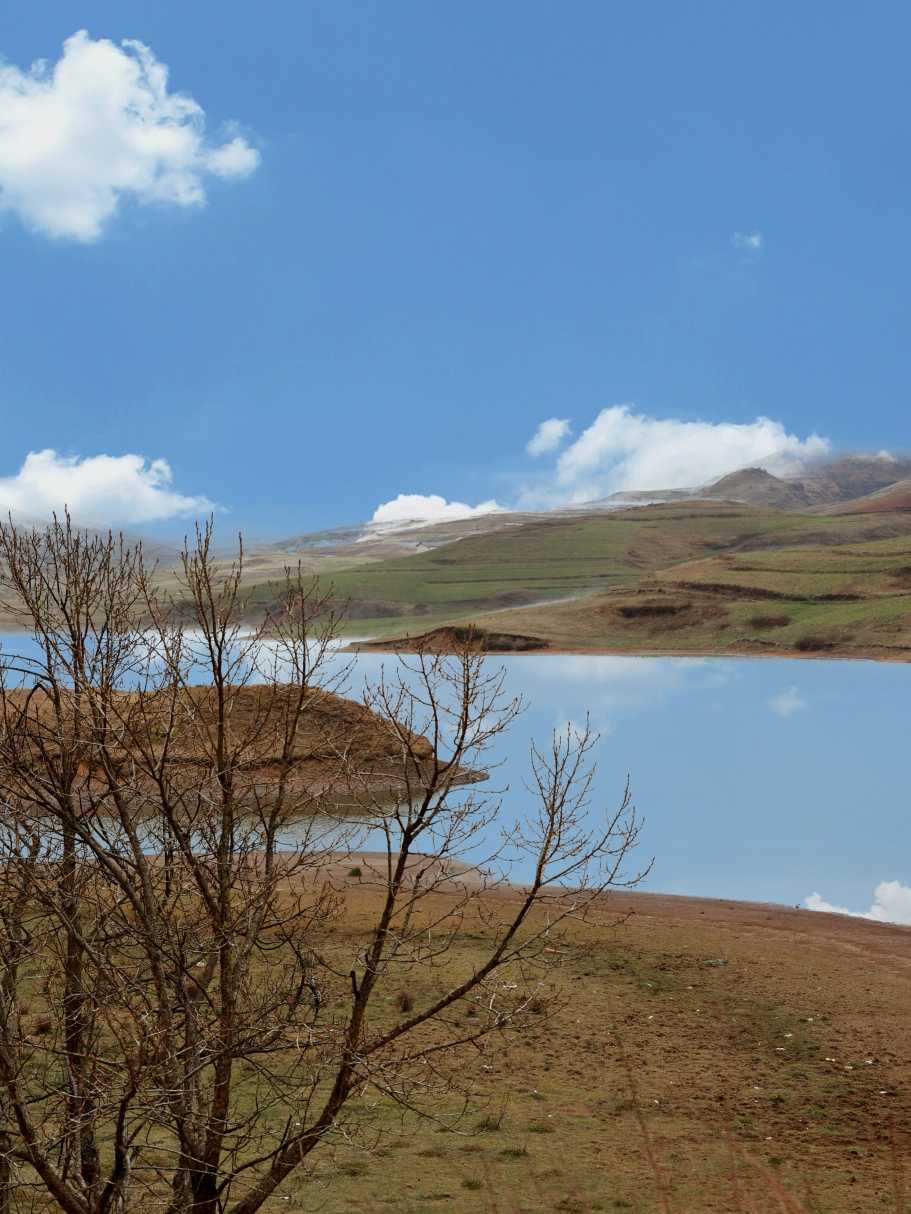
Tiaodun Lake (跳墩河) is actually a reservoir, but locals call it "Sea Eyes"—those natural springs that never stop flowing, day or night. They are the secret to why the Dashanbao wetlands have never dried up, even after a thousand years. Every winter, hundreds of black-necked cranes come here to spend the season, earning it another name: Crane Lake.
It's about a kilometer from the Rooster Mountain entrance. The thick fog shrouded the entire lake, with the village on its shore appearing and disappearing like a mirage. I dipped my hand into the water—it was warm, not cold at all, nothing like the bone-chilling waters of the highland lakes in western Sichuan.
Then a breeze came, the clouds parted, and the blue sky and white clouds were reflected in the jade-like water, shimmering like a giant pearl scattered across the meadow. I've heard the lake is also home to a type of pond smelt, silvery white and almost transparent, with a delicate, delicious flesh.
Immortal Field Meadow: A Little Tibet Illusion
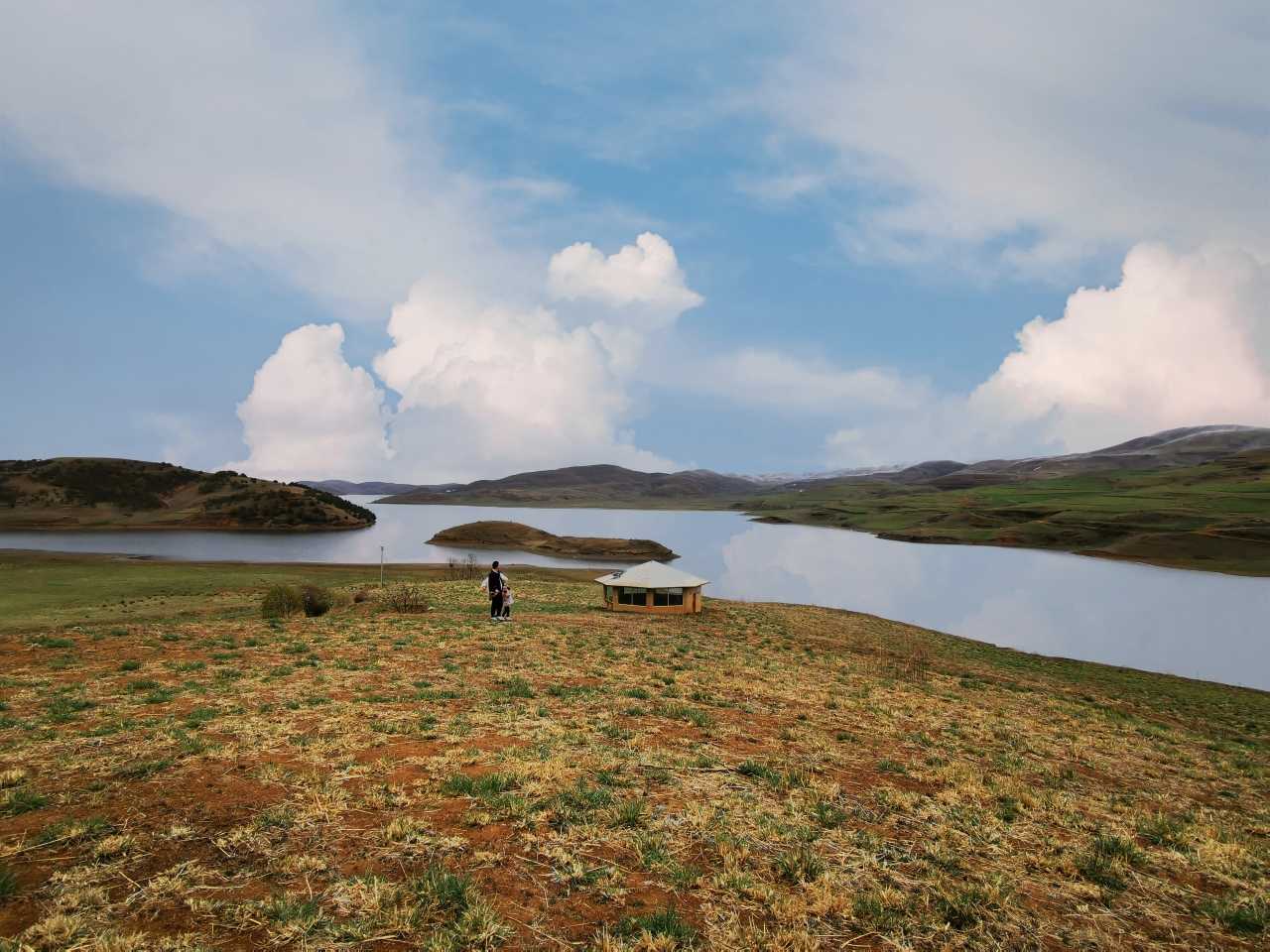
The Immortal Field Meadow (仙人田草场) lies in the northwest of the reserve and is the most perfect example of alpine meadow scenery. The vast grasslands stretch out in rolling waves as far as the eye can see, making you feel as if you've been transported to the frontier or the Qinghai-Tibet Plateau. That's why Dashanbao is also known as "Little Tibet."
The shuttle bus passes through here without stopping, so you can only admire it from the window. But if you get off at Rooster Mountain and walk into the meadow, you can truly immerse yourself in this expansive prairie. Golden grass, thin mist swirling above, leisurely cattle and sheep scattered across the landscape, and rolling hills appearing and disappearing in the fog—at that moment, I really felt like I was in Tibet.
Great Sea: The Secret Realm of the Black-Necked Crane
Great Sea (大海子) is a relatively separate part of Dashanbao. It requires a separate ticket and has a different entrance. When we visited, it was closed to tourists. The staff said it was under maintenance, but I knew the real reason was the black-necked cranes.
Great Sea is where the highest concentration of black-necked cranes can be found. Every winter, over a thousand of them come here to roost, dance, court, and breed. To protect them, the scenic area closes after the cranes leave, prohibiting visitors from entering. This "retreat" is the best form of wetland conservation.
We lingered outside the area for about ten minutes, took a few photos, and left with regret.
Dashanbao Town: The Closest Civilization to the Scenery
Dashanbao Town, named after the mountain, is right next to the scenic area and is the most convenient place for food and accommodation. There are several guesthouses run by locals. The conditions are basic, but they're close to the park. The nights are cold at this altitude; the rooms don't have air conditioning, but they do have electric blankets.
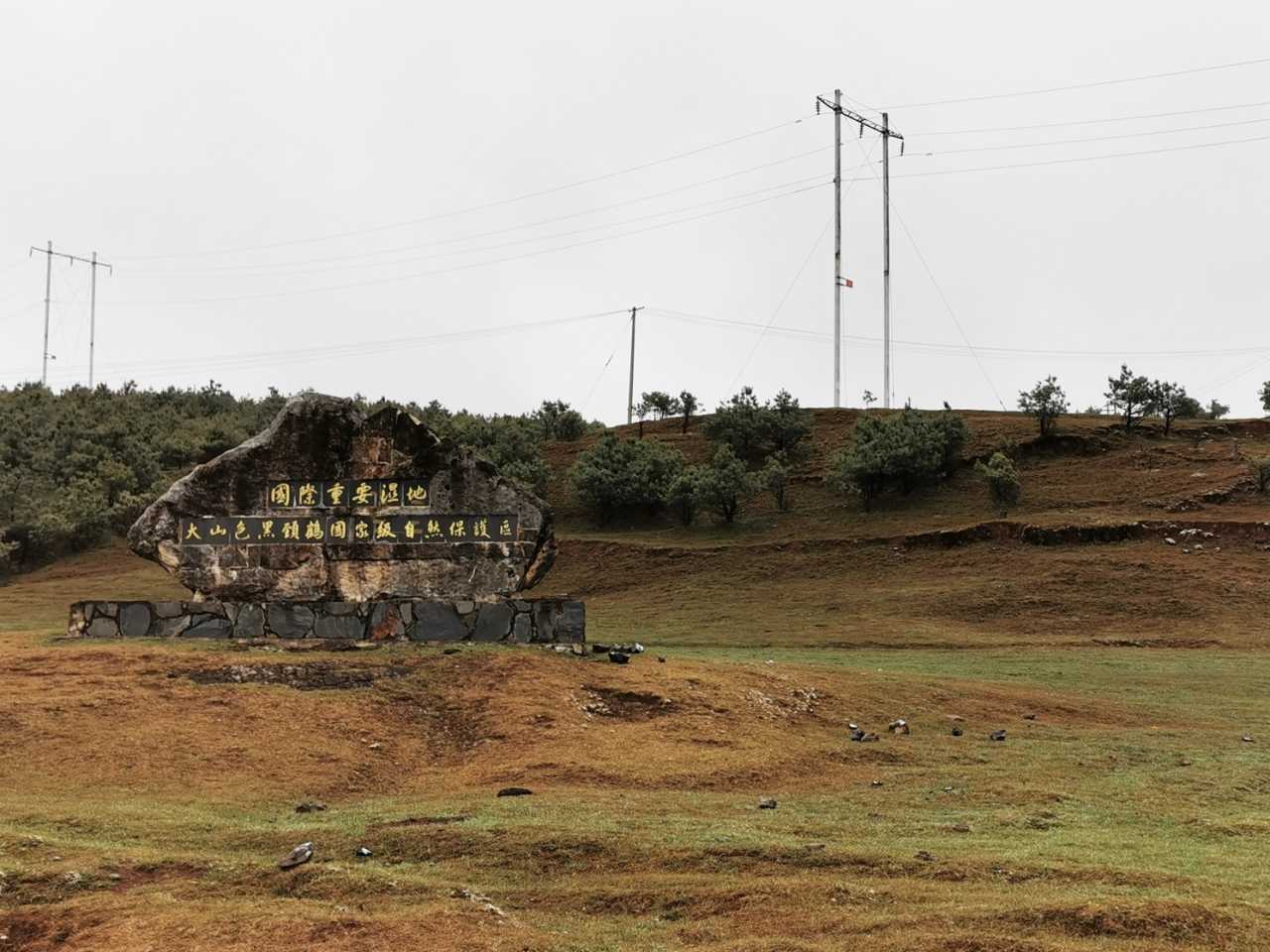
The day we arrived, it was snowing, and we were shivering. Before leaving, we checked the weather forecast, which said the low would be around 7 or 8°C, so we didn't bring heavy clothes. Fortunately, it warmed up a bit after noon.
There aren't many restaurants in town. Breakfast options are limited to potato cakes (洋芋粑) and rice noodles (米线). The potato cakes are made in a unique way: a batter of mashed potatoes is fried into a patty, then two patties are sandwiched together with ingredients like houttuynia cordata (折耳根) and chopped green onions. It was surprisingly delicious. We sat by the owner's stove, ate, and gradually warmed up.
Eating in Zhaotong: A Highland Culinary Journey
The food in Zhaotong deserves a section of its own.

Zhaotong BBQ is a must-try. Masi BBQ (马思烧烤) is the top-ranked place in the city, featured in the documentary A Bite of String. Their signature small skewers of meat are perfectly cooked and seasoned, and once you start, you can't stop. The stuffed tofu (包浆豆腐) is soft and flavorful, with houttuynia cordata, scallions, and various spices blended together—a revelation. The grilled eggplant, wrapped with pickled mustard greens and scallions, has an amazing texture. The grilled potato slices are crispy yet tender, the grilled bread is surprisingly fragrant, and the beef小肠 (small intestines) are rich but not greasy, oily, fragrant, and chewy.
Zhaotong apples are a local specialty. At the highway entrance leaving the city, many fruit farmers sell them. We bought them twice. The first time was in August—the rock-sugar-core apples were sweet, crisp, and juicy. The second time was during the May Day holiday, and the vendor said they were from last year's cold storage, so the texture wasn't as good.
Yunnan rice noodles and grilled potatoes are also essential. At the stalls on Rooster Mountain, grilled potatoes cooked over cow dung are a specialty, and everyone who tries them praises them.
Practical Guide: What to Know Before You Go
Transportation
- Public transport: Shuttle bus from Zhaotong to Dashanbao: 35 yuan/person
- Self-driving: Navigate directly to "Dashanbao Scenic Area"
- Within the scenic area: Shuttle bus: 98 yuan/person/round trip; Great Sea requires a separate ticket
Accommodation
- Inside the scenic area: Previously had farm-style guesthouses, now closed
- Dashanbao Town: Guesthouses and hotels, basic conditions, busy during peak season
- Zhaotong city center: About an hour's drive from the scenic area, better conditions, more choices
Food
- Inside the scenic area: Grilled potatoes, grilled tofu, grilled eggs, meat skewers, rice noodles, and other snacks
- Dashanbao Town: Breakfast shops and Chinese restaurants
- Zhaotong city center: Wide variety of options
Activity Tips
- Opening hours: 09:00–18:00
- Rooster Mountain: Free (the 98 yuan is for the shuttle bus)
- Great Sea: Ticket: 68 yuan/person
- Horse riding at Rooster Mountain: 40 yuan/person/one way
Handy Tips
- Altitude: 3,100–3,400 meters. Protect yourself from the sun and the cold.
- Highlights: Black-necked cranes, Rooster Mountain Canyon, glass jumping platform, sunrise and sunset, Buddha's Light, starry sky
- Best spots: Rooster Mountain for sea of clouds and sunset; Great Sea for sunrise and black-necked cranes
- Best travel times: Autumn and winter (to see black-necked cranes), July–August (wildflowers in bloom), August–early October (buckwheat and oat fields in vibrant colors)
A Final Thought
Dashanbao is not a place that will wow you at first glance. It's more like a silent poet, hiding its best lines in the fog, in the clouds, in the flight paths of the black-necked cranes.
Come with high expectations, and you might be disappointed. Give up on your fantasies, and it will surprise you. That's the charm of Dashanbao—it doesn't try to please anyone. It just stands there, quietly, waiting for someone who understands it.
If you're willing to wait in the fog for a gust of wind, to shiver in the cold for a sunrise, then go to Dashanbao. It won't let you down. It will only teach you that some landscapes are worth the wait.
This travelogue is original content. Unauthorized reproduction is prohibited.
You should also read:
Memories of Yunnan: Finding Another Life at the Edge of Mountains and Clouds
Memories of Yunnan: Finding Another Life at the Edge of Mountains and Clouds Sometimes, travel isn't about reaching a distant destination—it's about finding the version of yourself that everyday life has worn away. In the autumn of 2013, I set off on a journey through…
Continue reading...
Under the Clouds, a Sweet Secret: A Honeymoon Journey for Love and Hiking
Under the Clouds, a Sweet Secret: A Honeymoon Journey for Love and Hiking Before We Set Off: From Mount Kailash Pilgrimage to Yubeng Trek In May 2012, I boarded a bus bound for Ngari Prefecture alone, driven by a single obsession—to perform the sacred circumambulation…
Continue reading...
The Lost Horizon: I Will Keep Walking for You
The Lost Horizon: I Will Keep Walking for You Life is like a box of chocolates — you never know what you're going to get. And travel is the bravest way to open that box. On August 27, 2012, my partner "Big Uncle" and I…
Continue reading...