Deep Autumn in Tengchong: Amidst the Lotus Blossoms, Awaiting a Long-Awaited Reunion
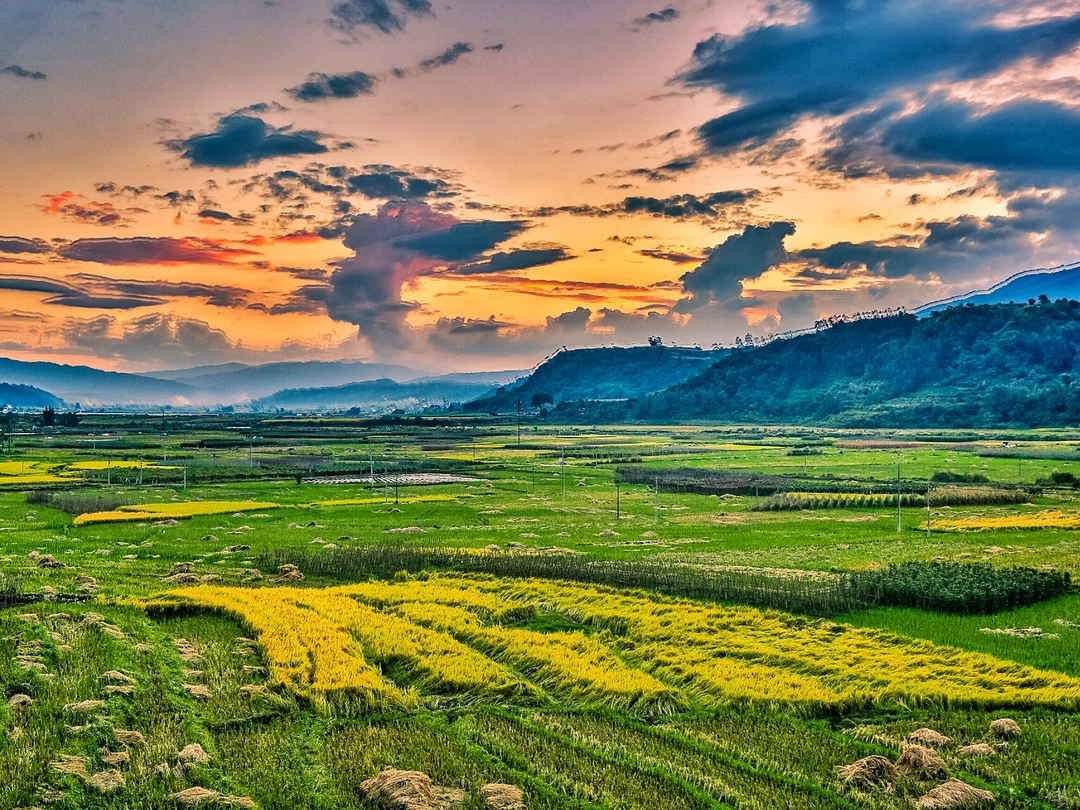
Deep Autumn in Tengchong: Amidst the Lotus Blossoms, Awaiting a Long-Awaited Reunion
Some places only reveal their value after you've missed them. Tengchong, a small town on the western border of Yunnan, slipped through my fingers for thirteen years.
Thirteen years ago, I embarked on a journey to Myanmar, flying directly from Kunming to Yangon, brushing past Tengchong without a second thought. In the years that followed, I visited Yunnan two or three times annually, with Lijiang and Dali becoming my go-to destinations. Tengchong, meanwhile, remained perpetually on my "next time, for sure" list. Last year, I nearly drove south with my mother from Lijiang, but the season wasn't right, so we abandoned the plan.
Then came this October. By chance, I discovered that Nanjing now offers direct flights to Tengchong at reasonable prices. I knew—it was time.
I rallied a few friends, booked the tickets, and a weekend getaway finally filled a long-standing void. What Tengchong gave me in return, however, far exceeded my expectations.
Itinerary Overview: Three Days, Two Nights of Leisurely Time
Travel Date: October 23, 2017
Duration: 3 days
Cost per Person: Approximately 2,000 RMB (including flights, accommodation, meals, and hot springs)
Travel Companions: Friends
Schedule
- Day 1: Nanjing → Tengchong, check in at Lotus Hot Spring Banana Pass Caravan Inn
- Day 2: Explore the Southern Silk Road Caravan Trail → Visit the God of Wealth Temple to see the thousand-year-old spring → Taste local specialties → Experience the forest hot springs
- Day 3: Visit the Stilwell Road Museum → Tengchong → Nanjing
Getting There: How to Reach This Hidden Gem
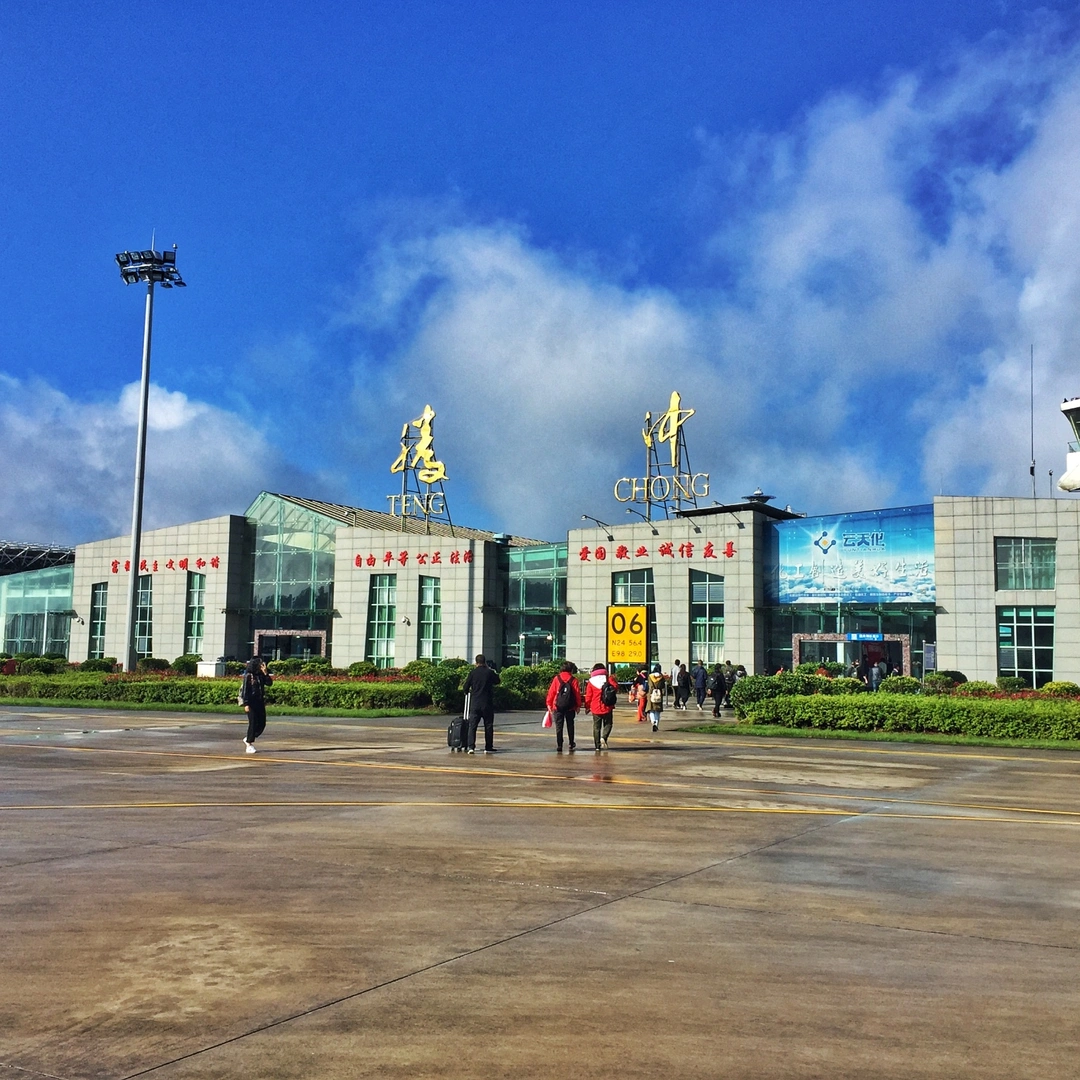
Tengchong Airport is modest in size, with just a single runway, but it already offers direct flights to most major Chinese cities. If there's no direct flight, you can transfer via Kunming. But for a spontaneous trip like mine, flying direct is clearly the less stressful option.
The flight from Nanjing to Tengchong takes about three and a half hours, with a one-way ticket costing around 1,200 RMB. November marks the start of the peak season, when accommodation and airfare prices rise, so advance booking is recommended.
Upon arrival, Lotus Hot Spring provides a free daily shuttle bus. Departing from the city center and passing through Heshun Ancient Town, the journey takes about an hour. If you're driving, just search for "Re Shui Tang Gas Station" (Hot Water Pond Gas Station) on your navigation app. The scenery along the way is beautiful, well worth savoring at a leisurely pace.
Why Lotus Hot Spring? A Promise of Gentle Warmth
Tengchong is hailed as the "City of Hot Springs," with over 80 geothermal hot springs scattered across its territory. Among the many choices, I settled on Lotus Hot Spring for three reasons:

First, exceptional water quality. Lotus Township boasts abundant geothermal resources, with water temperatures reaching up to 98°C (208°F), classifying it as a high-temperature hot spring. Its unique silicic acid spring water is rich in various trace elements beneficial to the human body, making it especially suitable for women seeking beauty and skin nourishment.
Second, comprehensive facilities. As an integrated hot spring resort, it combines dining, accommodation, transportation, and entertainment all in one place—perfect for a short getaway. You can enjoy a complete vacation experience without having to rush around.
Third, pleasant environment. Lotus Town enjoys spring-like weather year-round, with neither harsh winters nor scorching summers. Even in late autumn, the days remain warm like spring. The main catch is the significant temperature difference between day and night, so be sure to pack a jacket.
Day 1: First Encounter with Tengchong, a Moment That Stunned Time
Our flight was delayed due to weather, and we didn't arrive until the afternoon. The resort's shuttle was already waiting, and the staff warmly took our luggage, introducing the surrounding scenery along the way. First impression: warm and thoughtful.
Banana Pass Caravan Inn: Sleeping with the Green Mountains
We checked into the Banana Pass Caravan Inn, built into the mountainside with dense forest at its back and the Daying River Valley stretching out before it. The wooden structure is simple yet elegant. The three-story inn features a viewing platform on the top floor—an ideal spot for watching the sunset on clear days.
The rooms are spacious, continuing the wooden aesthetic that seamlessly blends a resort atmosphere with Tengchong's local character. Opening the window, you're greeted by a sea of green, and the air is so fresh you can't help but take a deep breath. After a hot shower to wash away the fatigue of the journey, I drifted off to sleep to the sound of birdsong.
A Pastoral Symphony at Sunset
When I woke up, the sun was slowly sinking in the west. The sky in Tengchong darkens later than in Jiangnan (the region south of the Yangtze River), so we decided to take a stroll nearby while the twilight lingered.
The area around the inn feels like an ancient town. Bluestone paths wind their way forward, occasionally crossed by elderly locals walking at a leisurely pace. Following the slope upward, a delicate pavilion came into view. As I wandered, time seemed to stand still—this place I had missed for thirteen years was finally appearing before me, in the gentlest of ways.
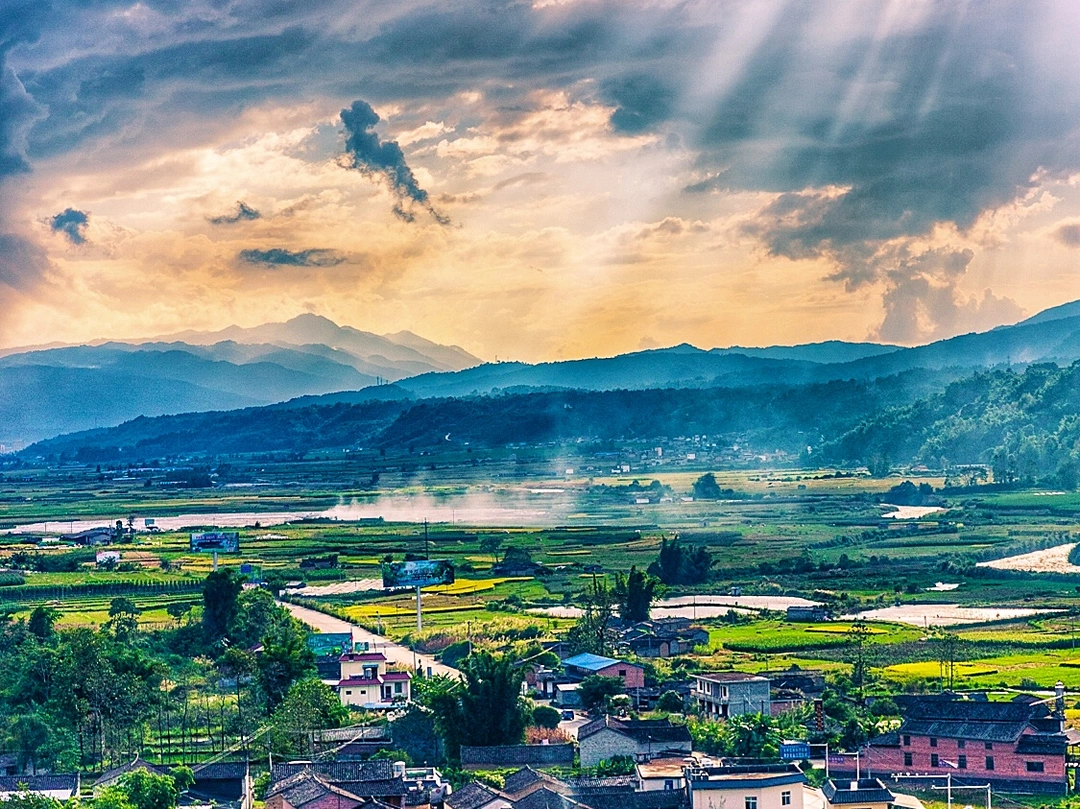
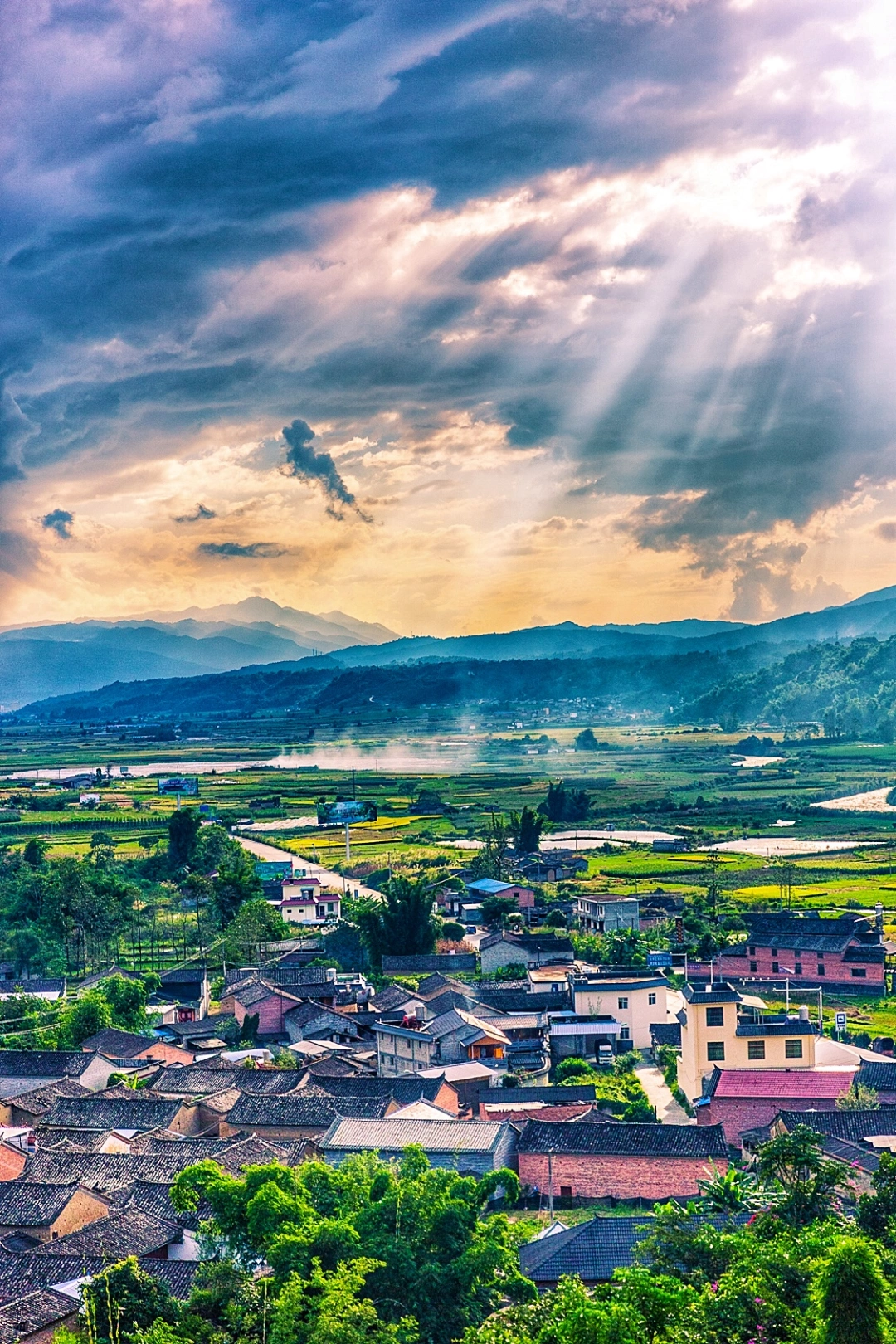
Back on the second-floor lounge platform, the scene before me left me speechless for a long time. Wisps of cooking smoke rose from rooftops, a thin white mist spread across the fields, and the rosy clouds on the horizon gradually spread from a few streaks to fill the entire sky. Trees and fields were draped in a pale golden glow. An elderly farmer, returning home late, led his water buffalo slowly along the path.
Autumn in Tengchong, it turns out, isn't just about the golden ginkgo leaves. The brilliant colors at sunset are enough to render anyone speechless.
As night fell, a bright moon hung in the treetops. The silence here was profound—so quiet you could only hear the wind. Looking up, the sky was filled with twinkling stars. For someone who has lived in the city for so long, this alone was an immense blessing.
Day 2: In the Hot Springs, Finding the Slow Life I'd Dreamed Of
The Caravan Trail: Echoes of a Thousand-Year-Old Trade Route
I slept until sunlight filled the room. After a hearty breakfast at the inn—congee (rice porridge), eggs, milk, plus local specialties like er si (rice noodles) and mi xian (rice vermicelli)—we set off for the Caravan Trail Commercial Street.
If the Silk Road in the north relied on camels, then the Southern Silk Road relied on caravans of horses. For thousands of years, along rugged mountain trails, these caravans carried the burden of trade, journeying stage by stage. This ancient road was the very route the Southern Silk Road caravans took through Tengchong.
The commercial street hadn't opened for business yet in the early morning, but that brought us another kind of peace. Walking along the ancient path, the rushing years, the bygone prosperity, and the wisdom of our ancestors all seemed to settle into the cracks between the bluestones.
Tengchong is also China's largest entry point for jade and jadeite. Since the Yuan, Ming, and Qing dynasties, with the arrival of border guards and military settlers, Chinese jade culture merged with the jade mining wave from northern Myanmar, giving rise to Tengchong's deep and profound jade and gemstone culture. Today, the jade processing workshops in Lotus Town are a continuation of this centuries-old tradition.
The God of Wealth Temple: In Search of a Natural Spring
Coming down from the commercial street, we heard that near the God of Wealth Temple, a natural spring still flows, with water drinkable straight from the source. Curious, we took a sightseeing cart to check it out.
The temple is built on a hill. Originally a place of prayer for locals, it has gradually become a viewing platform thanks to its excellent location and the hot spring source. Standing at the top, the view is expansive. In October, Tengchong's autumn colors are just beginning to show. With clear skies, you can bask in warm sunshine every day.
The temple is small and exquisite, so quiet that there were no other tourists. I love this kind of tranquility—it felt like the entire hilltop was mine alone. Circling around the temple, we reached the spring pool in the back. Steam rose, and white mist filled the air. Scooping up a bowl, the water had a faint, eggy taste. This is the spring water that locals have used for washing their faces for generations.
It's said that even the elderly here have few age spots, all thanks to the nourishment of this natural spring. In that moment, I was genuinely envious.
Taiji Golden Soup Spring: A Gift of Nature
Descending from the temple, we headed to the Taiji Golden Soup Spring (Taiji Jin Tang Quan). This is a rare kaolin clay hot spring. The water has a milky white, rice-soup-like color, rich in trace elements that promote blood circulation, whiten the skin, and repair sensitive skin. It's been dubbed a "whitening holy grail."
As we got closer, we indeed saw a milky white pool, with extremely high temperatures. The staff explained that the forest hot springs in the resort draw their water from this very "Taiji Golden Soup Pool." The underground hot spring reaches 103°C (217°F), meeting international standards for top-quality hot spring water.
Seeing it with my own eyes and experiencing it firsthand, I felt glad I had chosen this place.
Distant Valley Bottom Ethnic Restaurant: A Taste of Tengchong
At noon, we visited the Distant Valley Bottom Ethnic Restaurant within the resort. This is a uniquely designed restaurant, built underground. From the outside, it looks quite ordinary, but as we followed the descending path inside, we couldn't help but marvel at the hidden world within.
The interior can seat up to 1,000 people and features a large stage. We ordered a few local specialties:
- Clay Pot Stew (Tu Guo Zi) : A unique Tengchong dish. Ingredients must be layered in a specific order—first the soup greens, then crispy pork, sliced bamboo shoots, and yellow skin (pig skin), and finally topped with egg rolls and chopped green onions. That's how the magic happens.
- Ginkgo Nut Stewed with Native Chicken (Yin Xing Guo Dun Sheng Tai Ji) : It was the ginkgo harvest season, and Tengchong's ginkgo nuts are actually more expensive than the chicken itself. The broth was incredibly flavorful, and we couldn't resist going back for more bowls.
- Scallion and Small Potato (Cong Hua Xiao Tu Dou) : These little potatoes look like马蹄 (water chestnuts) but have a soft, crumbly texture. It was a variety I'd never seen before.
- Dai-Style Shredded Beef (Dai Wei Gan Ba Si) : Carefully selected beef seasoned with plant-based spices, roasted until reddish-brown and glossy, then pounded into shreds. It was fragrant and delicious.
- Lily Pork Balls (Bai He Rou Tuan) : Minced pork stuffed inside lily bulbs. The preparation was unique, and the result was light and fresh.
As for the fried insects—grasshoppers and bamboo leaf worms—after much urging from my friends, I closed my eyes and ate one. Hmm, it was crispy and fragrant. Not bad at all.
Forest Hot Springs: Soaking in Time
In the afternoon, we finally arrived at the main event of the trip: the forest hot springs.
The hot spring area is right next to the inn, just a short walk away. Entering the lobby, we were greeted by comfortable bamboo sofas and chairs, and the staff smiled and offered warm, attentive service. Through the huge, transparent floor-to-ceiling windows, a magnificent view unfolded before us.
After changing into swimsuits and passing through the steam room, we stepped outside and instantly felt like we had walked into a primeval forest. Over twenty outdoor pools of various shapes and functions were half-hidden among the flowers and trees, with steam rising continuously, creating an ethereal, otherworldly atmosphere.
Each pool was named after a flower. There were low-temperature pools, high-temperature pools, whirlpool pools, and essential oil pools. I preferred the high-temperature pools, around 40°C (104°F). The moment I slipped in, all my worries melted away in the warm current. When I got tired, I rested at the edge of the pool or lay on a lounge chair to sip some tea. Staff would proactively hand me a towel and ask if I needed water.
It's said that to ensure the hot springs' efficacy, all the spring water is sealed, cooled, and then directly piped into the pools through a fully automated water supply and drainage system. The water is changed automatically every day, with no secondary heating and no mixing with any non-natural spring water sources. Looking closely, the fine particles in the water are nature's own "whitening elves"—kaolin clay particles.
When my companions found out that this hot spring has whitening effects, they practically refused to leave.
The afternoon sunlight filtered through the leaves, casting dappled shadows. It wasn't hot at all. We moved from one pool to another—from the essential oil pool to the whirlpool, from the low-temperature pool to the high-temperature pool—enjoying ourselves without a hint of boredom.
Isn't the ideal slow life exactly this? To be immersed in beautiful, spiritually rich landscapes, forget the boundaries of time, and let your soul achieve a true return to simplicity?
Day 3: The Stilwell Road Museum—Imprints of History
On our last day, we visited a unique attraction within the Lotus Hot Spring Resort: the Stilwell Road Museum.
Housed in a traditional wooden courtyard compound, the museum displays over 3,410 precious artifacts. These include traditional folk and ethnic cultural relics from Tengchong, western Yunnan, and northern Myanmar, modern Western industrial relics, and various artifacts from the WWII China-Burma-India theater.
The Stilwell Road was a highway completed in 1944 after the Chinese army's successful counteroffensive in western Yunnan and northern Myanmar. It ran from Ledo in northeastern India to Kunming in China's Yunnan province. Amidst a hail of bullets, this "lifeline of the War of Resistance" transported over 50,000 tons of urgently needed supplies to the Chinese battlefield.
The museum is divided into three main sections: "The Burma Road—A Blood Transfusion Tube for China's War of Resistance," "The Hump Route—A Costly Aerial Supply Line," and "The Ledo Road—A Key Guarantee for Victory in the War of Resistance." Using physical objects as a foundation, supplemented by text and photographic historical materials, it comprehensively and systematically presents that tumultuous period of history.
As soon as you enter the museum, you see a row of vintage bicycles. They aren't Chinese-made but come from different countries, their brand logos on the handlebars telling their stories. Nearby, oil pipelines bear witness to the wartime oil shortage.
Guests who have booked the hot spring or accommodation can visit for free. In this simple, ancient courtyard, history and reality intertwine, inspiring a sense of profound respect.
Conclusion: Tengchong, Worth a Long-Awaited Reunion
Three days passed in a flash, but what Tengchong gave me far exceeded my expectations.
It's not just about the golden ginkgo leaves; it's also the pastoral idyll at sunset. It's not just about the gentle warmth of the hot springs; it's also the historical echoes of the ancient trails. It's not just about the allure of the local cuisine; it's also the weighty memories held within the museum.
If you, too, are looking for a short getaway to experience the slow life, Tengchong's Lotus Hot Spring is an excellent choice. Soak in the natural forest hot springs, walk the thousand-year-old caravan trail, taste the authentic ethnic cuisine, and in the warm sunshine of deep autumn, await a long-awaited reunion.
Practical Tips: - Best Season: October to November. The autumn colors are at their best, and there are relatively fewer tourists. - Essential Items: Sunscreen, a jacket (the temperature difference between day and night is significant), and a swimsuit. - Accommodation Recommendation: Lotus Hot Spring Banana Pass Caravan Inn, 200-300 RMB per night. - Hot Spring Fee: 260 RMB per person for a single entry. Hotel guests can enjoy a discount. - Transportation: Lotus Hot Spring offers a free round-trip shuttle bus. Contact the resort for details.
Tengchong, I was thirteen years late. But in the end, I didn't miss it.
You should also read:
Drunk on Autumn: An Unexpected Surprise in Shangri-La
Drunk on Autumn: An Unexpected Surprise in Shangri-La Preface: When Plans Go Awry Some journeys are destined to go off course before you can truly discover the scenery. As an ordinary office worker who loves photography and travel, I didn't have high expectations for this…
Continue reading...
Strolling Among the Clouds: Gathering Autumn's Light on the Western Sichuan Plateau
Strolling Among the Clouds: Gathering Autumn's Light on the Western Sichuan Plateau Prologue: A Sun Chaser's Journey Autumn sunlight is like a gentle painter, using golden brushstrokes to smear the last traces of warmth across the earth. It slips through the gaps between your fingers,…
Continue reading...
Golden Autumn: A Poetic Tapestry of Light and Shadow in Tengchong's Ginkgo Village
Golden Autumn: A Poetic Tapestry of Light and Shadow in Tengchong's Ginkgo Village A Belated Autumn Rendezvous Everyone harbors a dream about autumn somewhere in their heart. For me, that dream once belonged to Jiuzhaigou—that palette of colors hailed by the world as a "fairy-tale…
Continue reading...