Dehong: A Border Town's Water-Splashing Carnival and Soulful Journey
Dehong: A Border Town's Water-Splashing Carnival and Soulful Journey
In the southwestern corner of Yunnan, there lies a small city forgotten by time—Dehong. Unlike Dali, which teems with tourists, or Lijiang, with its commercial clamor, Dehong rests quietly at the nation's southwestern edge, like a piece of jade polished by the years—understated yet warm. This is where the sun turns around, the homeland of dancing peacocks, and the natural stage for the Water-Splashing Festival.
Two years ago, I had a brief encounter with Mangshi. Back then, what struck me most about this city was its "slowness"—so slow that the flame trees by the roadside could bloom with nonchalance, so slow that the bells of the Golden Pagoda could wander through the clouds for ages, so slow that even the air was steeped in a lazy sweetness. But this time, when the drums of the Water-Splashing Festival began to beat, this sleeping little town seemed to awaken in an instant, revealing its most passionate and vibrant side through an unrestrained carnival.
Prelude to the Water-Splashing Festival: When Mangshi Awakens at Dusk
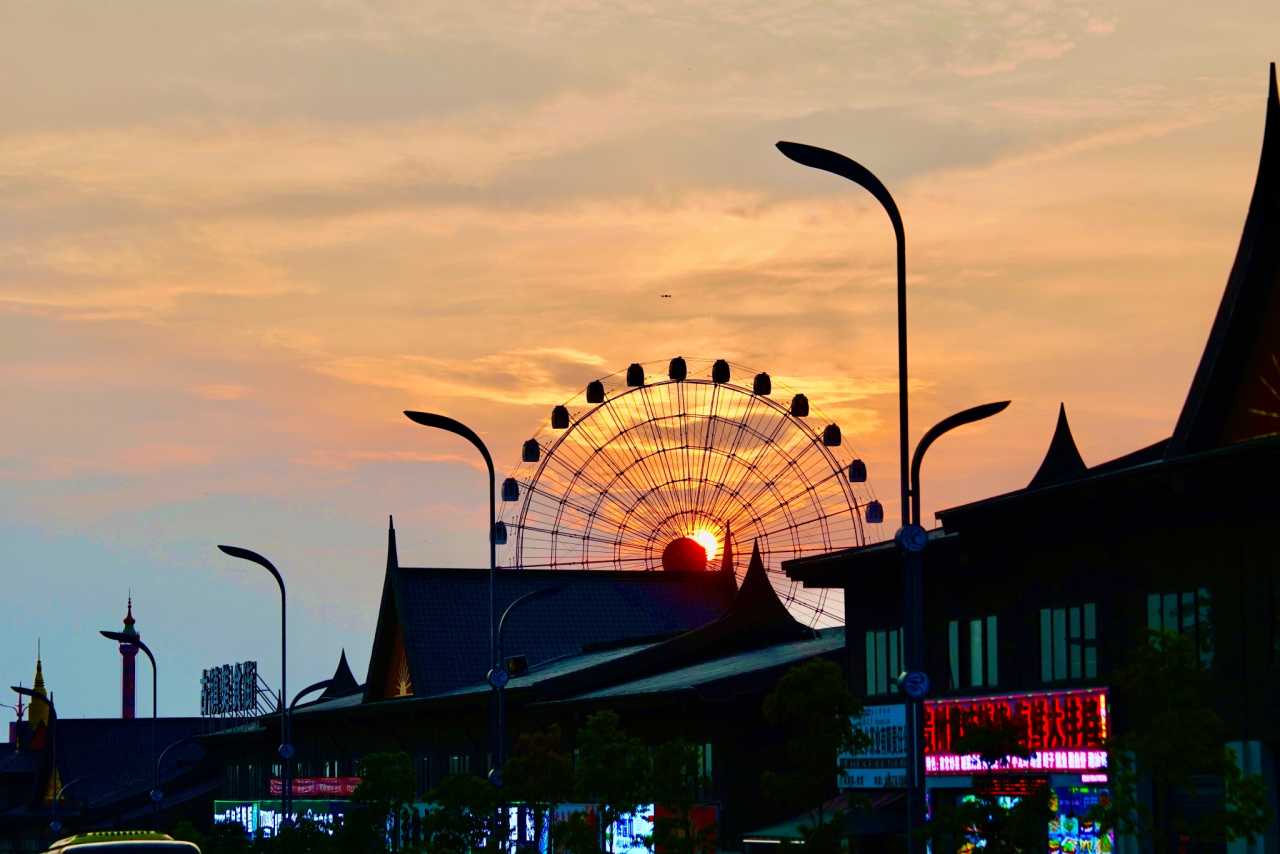
On the eve of the Water-Splashing Festival, Mangshi was like a Dai maiden dressing up—shy yet brimming with barely contained excitement. At six in the evening, the lingering rays of sunset still clung to the eaves, unwilling to leave, as lanterns in the Dai Ancient Town lit up one by one. The bluestone streets were bathed in a warm orange glow, and the air carried the sweet fragrance of 泡鲁达 (Paoluda, a Burmese dessert drink) and the smoky aroma of barbecue stalls.
Stepping into the ancient town felt like falling into a colorful dream. Along the streets, the long skirts (筒裙) in Dai clothing stores shimmered under the lights, while souvenir shop fridge magnets bore patterns of golden pagodas and peacocks. Almost every tourist held a cup of 泡鲁达—a Burmese dessert made with layers of coconut milk, sago, bread crisps, and fresh fruit, sweet but not cloying, the quintessential drink for strolling through the old town.
As night deepened, the barbecue stalls were packed to capacity. On charcoal grills, beef skewers sizzled with glistening oil, pork skin turned golden and blistered, and tilapia on bamboo sticks, coated in cilantro and chili powder, sent irresistible aromas wafting through the air. I found a small shop, ordered a few skewers, and paired them with the Dai specialty dipping sauce—sour and spicy, with a hint of sweetness that awakened every taste bud. The owner also recommended local craft beers infused with rose and latte flavors. The interplay of wine and floral notes seemed to tell a story with every sip in the Mangshi night.
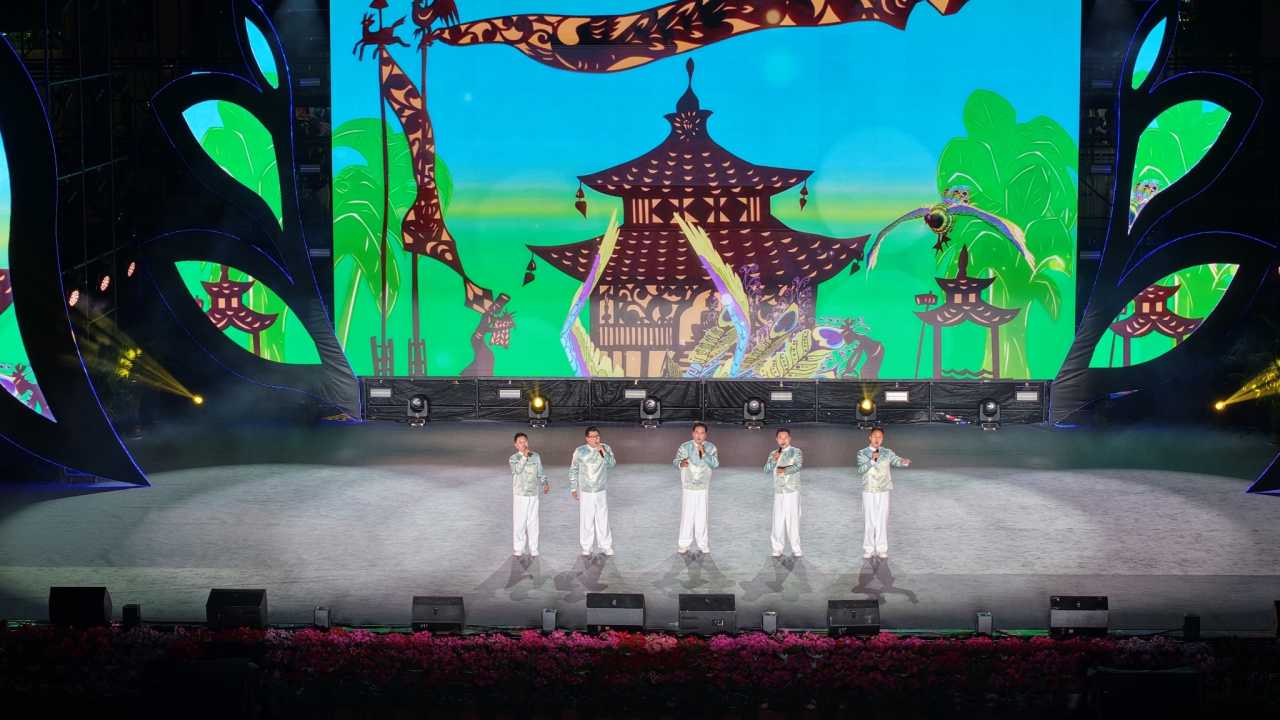
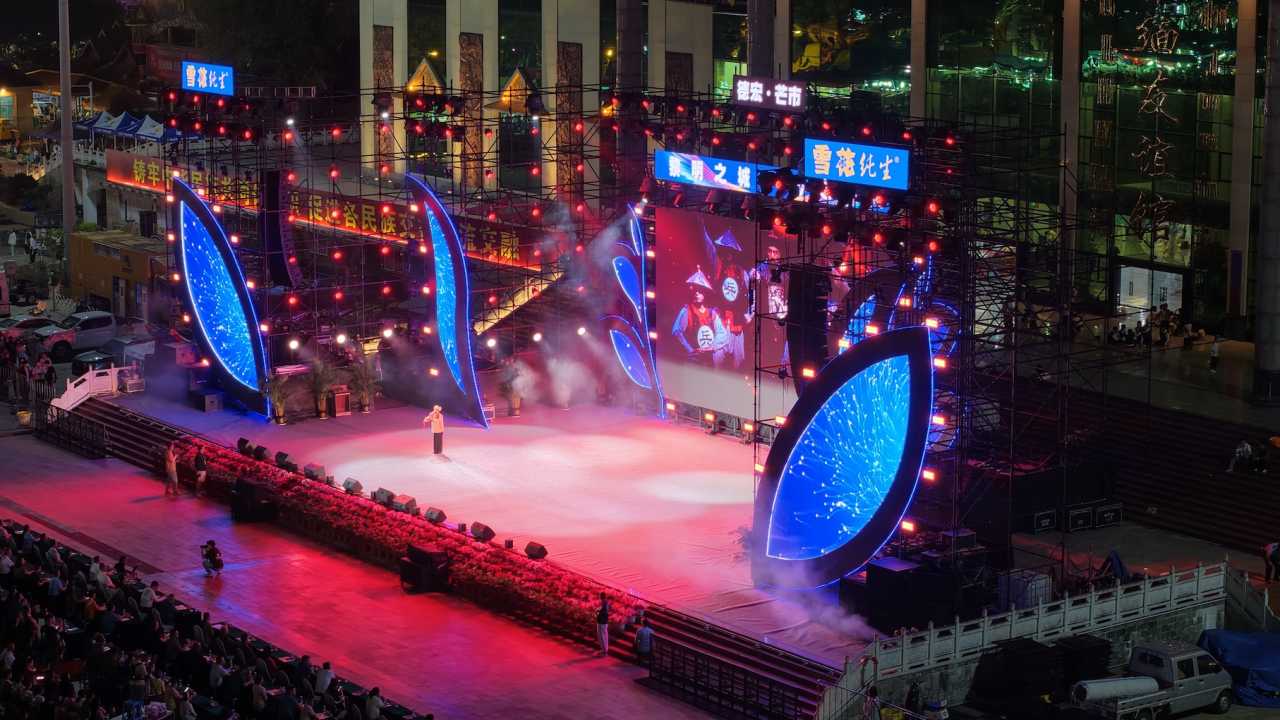
Suddenly, a clear Dai folk tune drifted over, blending traditional melodies with modern chords, singing: "Dear traveler from afar, won't you stay?" Following the sound, I saw performers on stage singing and dancing, presenting Memories of Dehong—a show showcasing the region's culture. The performance was divided into four acts: "Song of Spring," "Passion of Summer," "Romance of Autumn," and "Charm of Winter," encapsulating Dehong's landscapes, customs, history, and cuisine in a play of light and shadow. The highlight was the interactive segment, where I unexpectedly received a floating lantern. I walked to the stage and, together with the performers, released it into the water. In that moment, lights, reflections, and laughter merged, as if the entire ancient town was warming up for the upcoming Water-Splashing Festival.
Flower-Picking and Bathing the Buddha: A Devout Dialogue with Spring
For the Dai people, the Water-Splashing Festival is not just a carnival but also the beginning of their New Year. On the eve of the festival, the flower-picking ceremony is an essential prelude. At dawn, men, women, and children from various townships in Mangshi, dressed in their finest, carrying bamboo baskets and beating elephant-foot drums, marched in grand procession toward the mountains. I joined them to experience this unique folk tradition.
The flower-picking site was deep in the mountains, and the journey was filled with songs and laughter. The locals were gathering a flower called "赏健花" (Shangjian flower)—green branches adorned with catkin-like blossoms, exuding a fragrant aroma. This flower blooms only in April and is unique to the region, symbolizing good fortune and purity. Seeing it for the first time, I couldn't resist leaning in for a sniff. Its scent was a blend of earth and greenery, as if bottling the essence of spring.
At the site, performances of Dai peacock dance, elephant-foot drumming, and De'ang water drumming followed one after another. The lively rhythms of "Gaguang" and "Gaban'guang" (traditional circle dances) drew everyone in. I clumsily attempted the peacock dance, my steps messy, but the sheer joy I felt was far more moving than any precise movement.
The climax of the flower-picking was when everyone began splashing water on each other as a blessing. Water droplets sparkled in the sunlight, laughter echoed through the forest, and everyone was immersed in the anticipation of the coming celebration. Afterward, we gathered under a canopy to enjoy local delicacies—Dai-style roast pork, 撒撇 (sapie, a bitter or sour dipping sauce), hand-grabbed rice, and pounded chicken feet. The array of snacks was dazzling. The most unique was "千包饭" (thousand-wrapped rice), where slightly dry rice was wrapped in banana leaves, filled with crispy fried meat and tangy pickled vegetables, paired with a salted duck egg—simple yet delicious.
In the afternoon, people brought the collected Shangjian flowers to the Dragon Pavilion in Mangshi Square, where they adorned and bathed the Jade Buddha statue. Following local customs, I used clean water to bathe the Buddha, washing away dust and welcoming good fortune. In that moment, I seemed to grasp the true essence of the Water-Splashing Festival—water is not only a vessel for blessings but also a purification of the soul.
The Climax of the Water-Splashing Festival: Citywide Carnival, Freedom in the Water
On the morning of the Water-Splashing Festival, Mangshi's streets and alleys were already buzzing with activity. A grand folk parade stretched from one end of the street to the other, with dancers in peacock costumes twirling gracefully. The beats of elephant-foot drums intertwined with Jingpo wind instruments, as if summoning a cross-ethnic celebration.
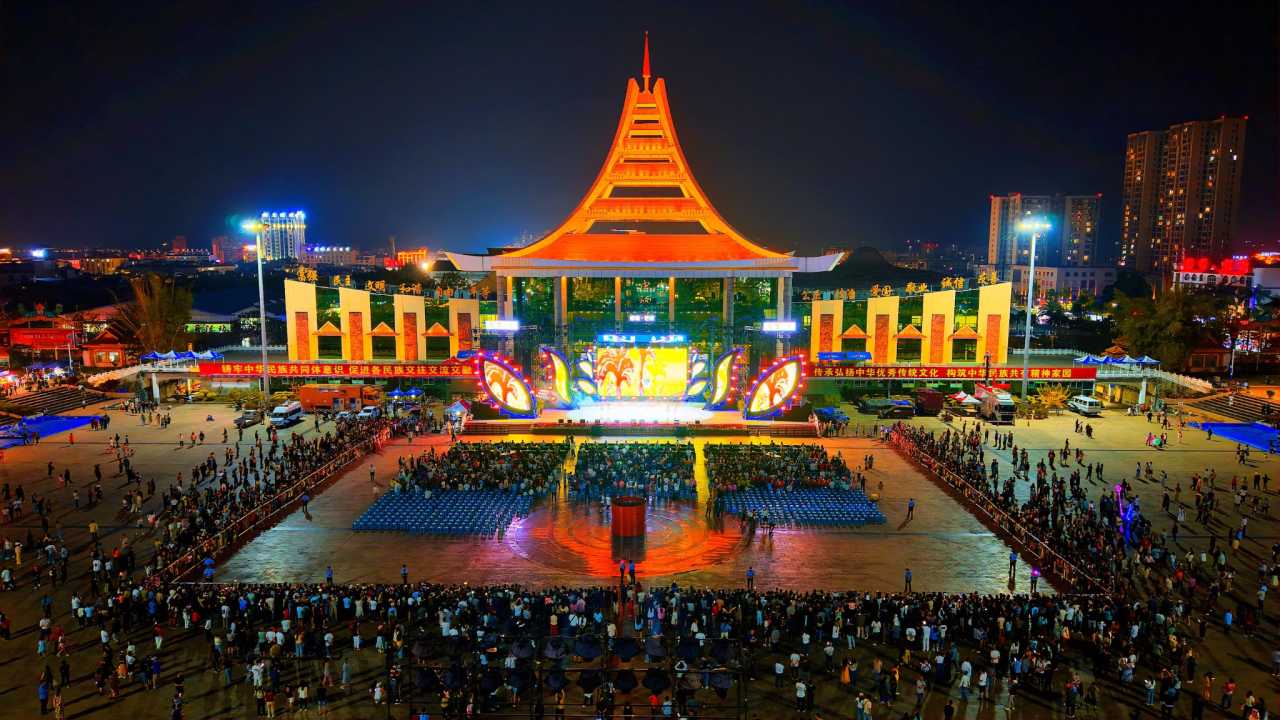
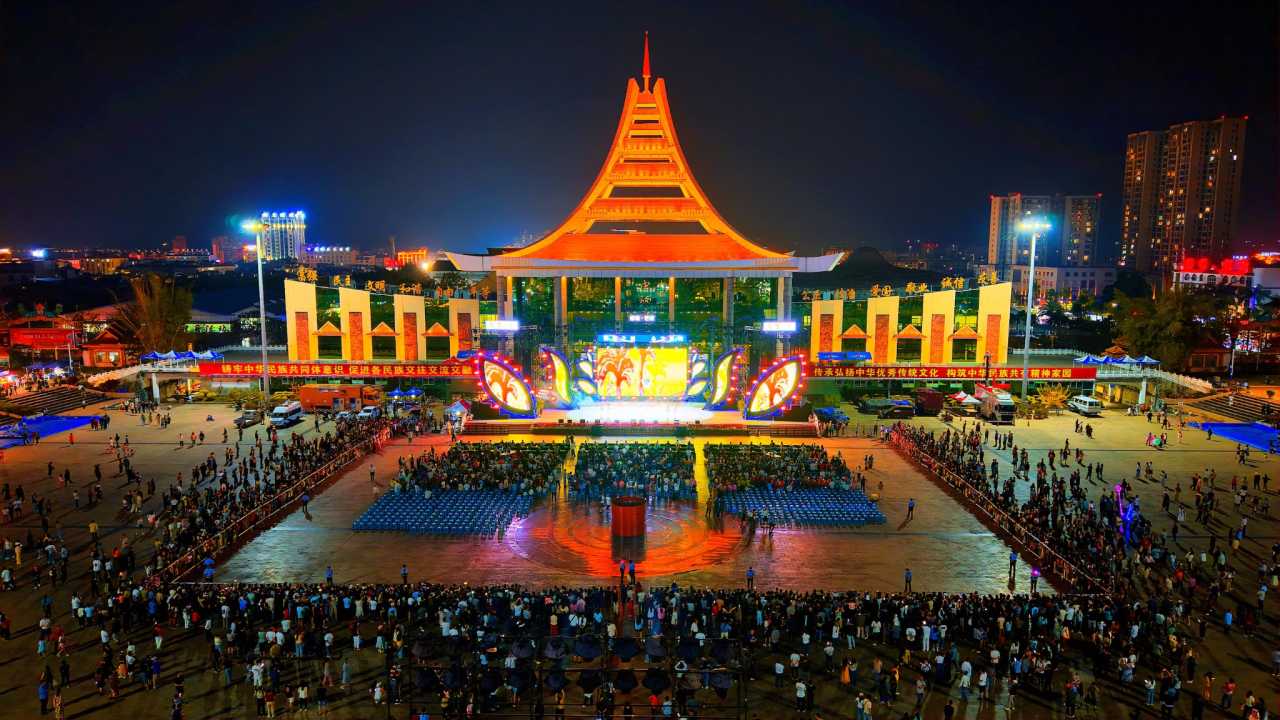
By afternoon, Mangshi Square became the festival's main battlefield. A water column dozens of meters high shot up from the center of the square, and the crowd erupted—buckets, water guns, and even fire truck high-pressure hoses joined the fray. Cool water droplets arced through the air, refracting into rainbow hues. I moved to the rhythm of the music, letting the water soak me completely. In that moment, all worries, stress, and unhappiness splashed away with the water, leaving only pure joy.
Away from the main square, the streets were equally lively. Pickup truck beds had been turned into mobile water reservoirs, shop fronts were lined with buckets and water balloons, and even passing motorcyclists couldn't escape the "blessings"—a basin of water thrown in their faces, met with hearty laughter. I think people love the Water-Splashing Festival so much because, on this day, we can live like children again—free, unrestrained, and carefree.
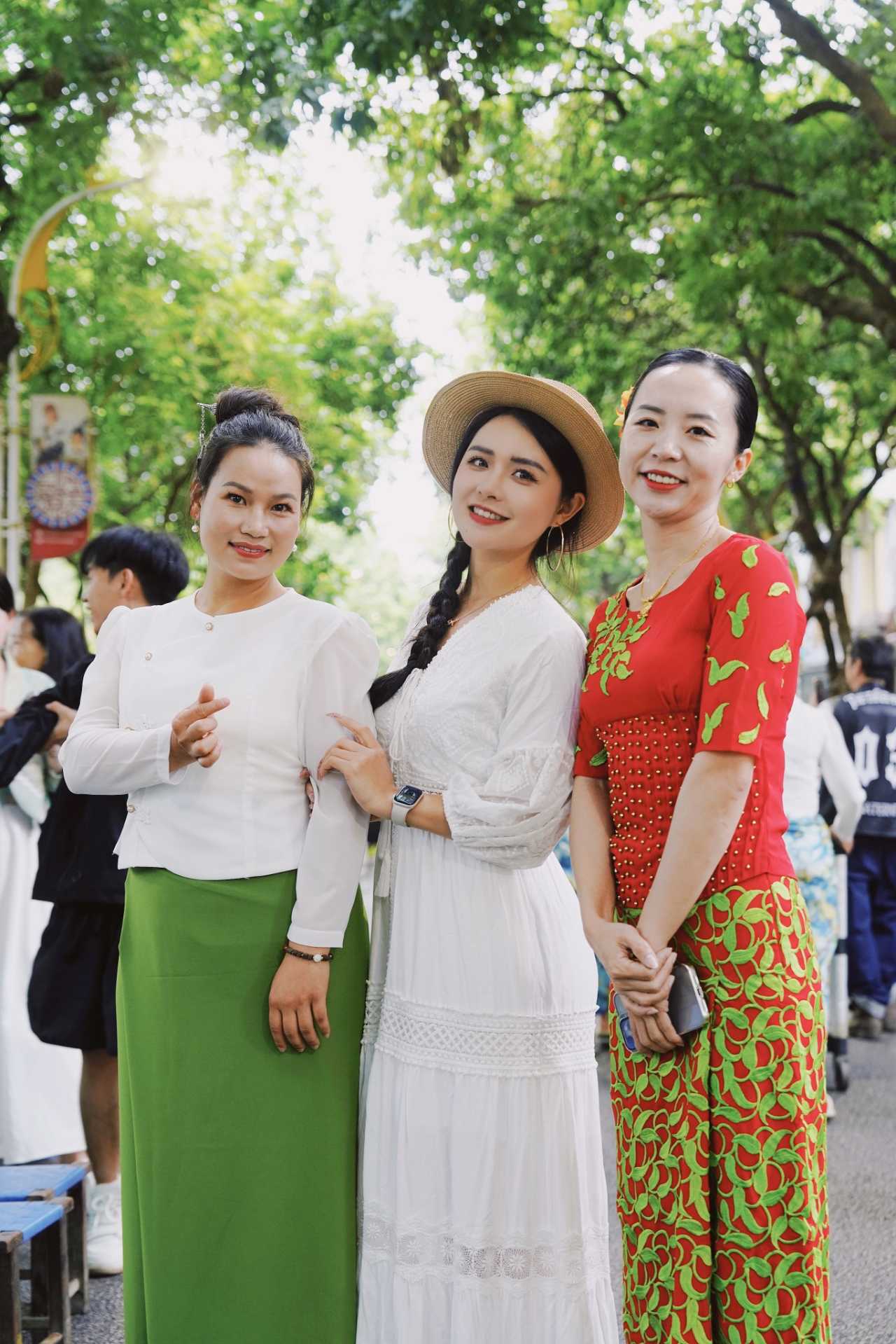
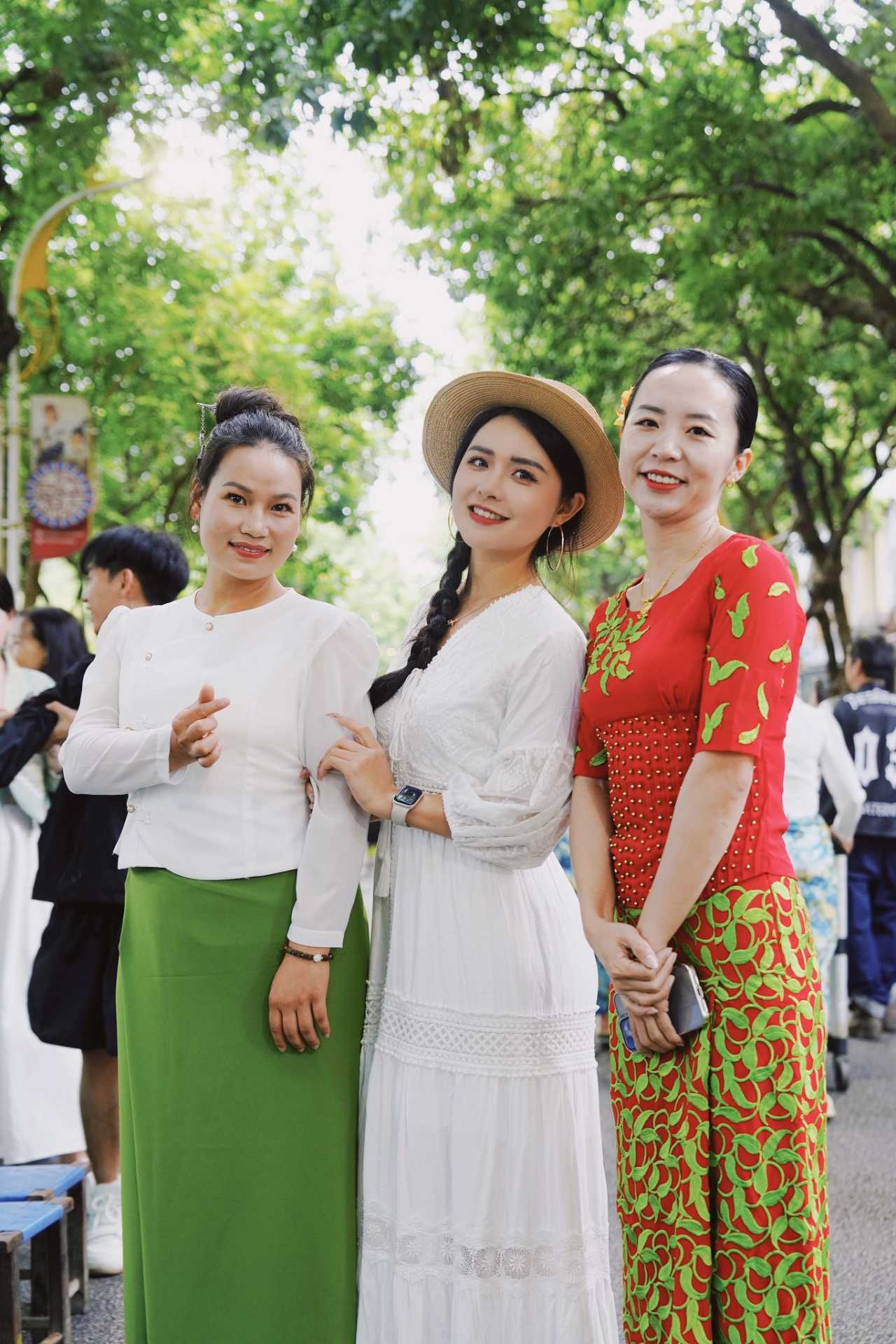
As night fell, the carnival didn't end. A hundred-meter-long communal table was set, filled with tourists and locals from all directions. Dai maidens danced gracefully in the aisle, while a lovely young Dai girl used branches to gently sprinkle water on everyone, offering festival blessings. The table was laden with an array of dishes—稀豆粉 (thin bean jelly), 酸扒菜 (sour braised vegetables), 泼水粑粑 (Water-Splashing Festival rice cakes), cold minced meat with lettuce, and red dates steamed with pumpkin. Each dish was rich in Dehong's character. I joined in, chatting with the local women in traditional attire, feeling the warmth that transcended language and culture.
Menghuan Silver Pagoda: Falling into a Pure White Dream in Western Yunnan
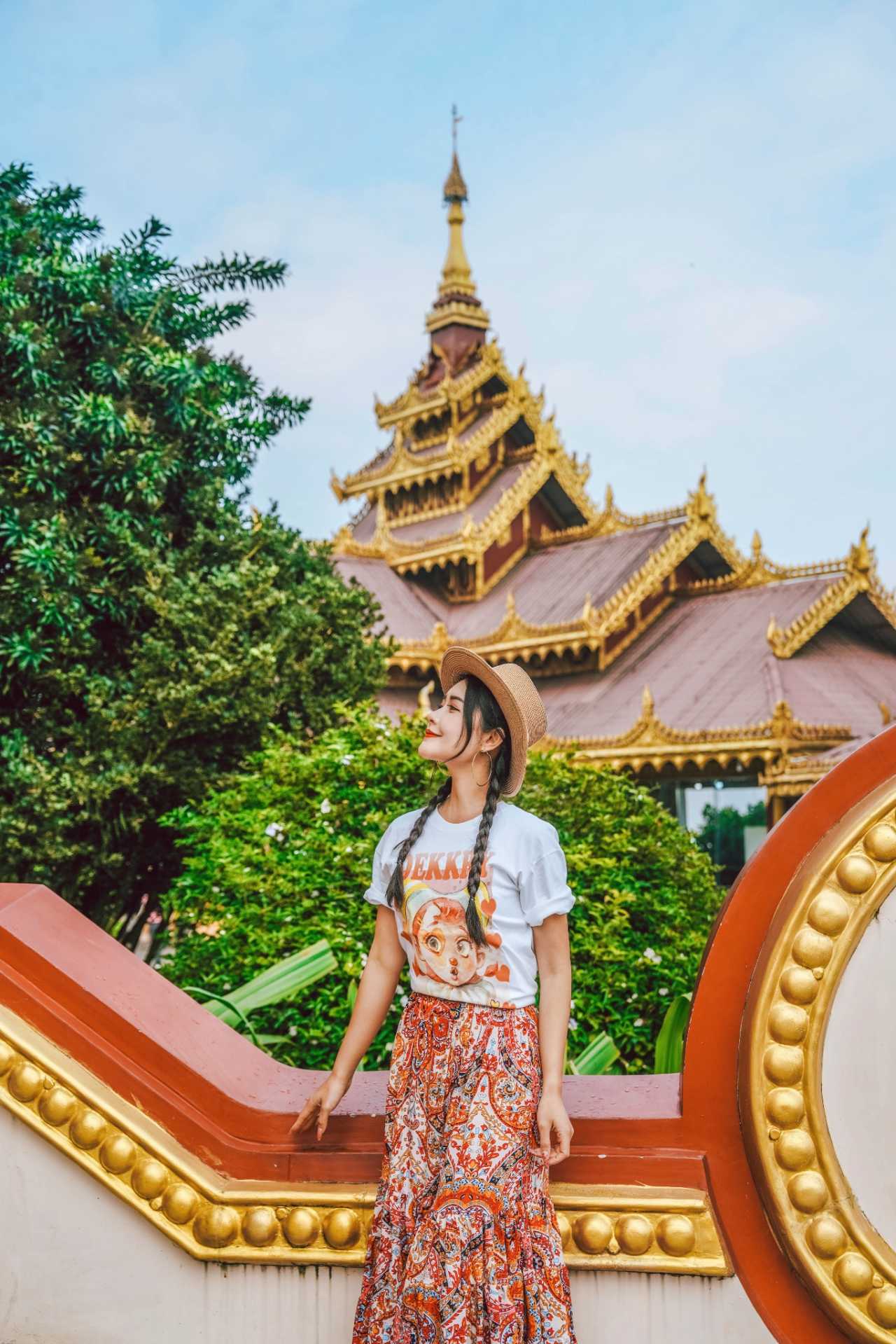
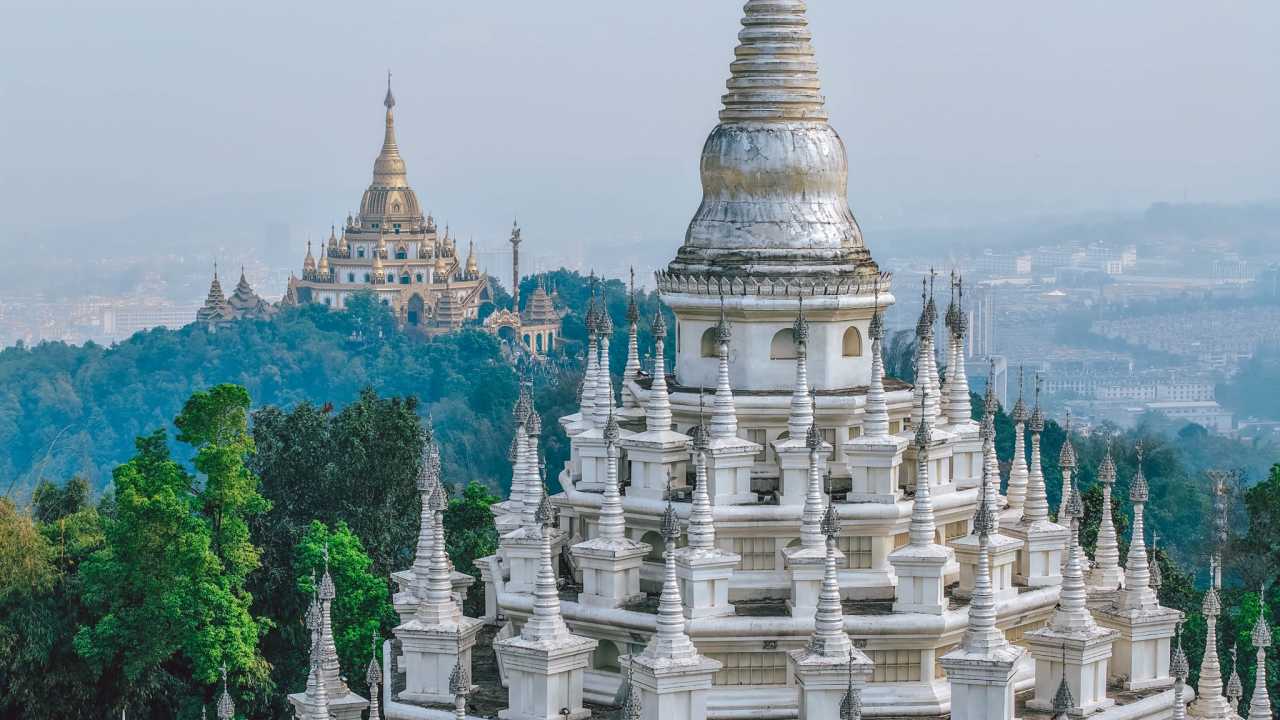
If there's one place in Mangshi that's most photogenic, it's definitely the Silver Pagoda. At 8:30 in the morning, I took a sightseeing car winding up the mountain road, with flame trees on both sides blooming fiery red. As I rounded the last bend, the entire Silver Pagoda suddenly came into view—bathed in morning light, this pure white stupa looked like a Dai maiden in a sari, radiating a holy glow.
After a light rain, the sun gradually broke through the clouds. The pristine white pagoda shimmered against the blue sky, its seven tiers of eaves blooming like lotus petals, and the vase at its tip catching fragments of golden light. Unlike the opulent Menghuan Grand Golden Pagoda, the Silver Pagoda's beauty is understated, like a serene chant that requires quiet contemplation.
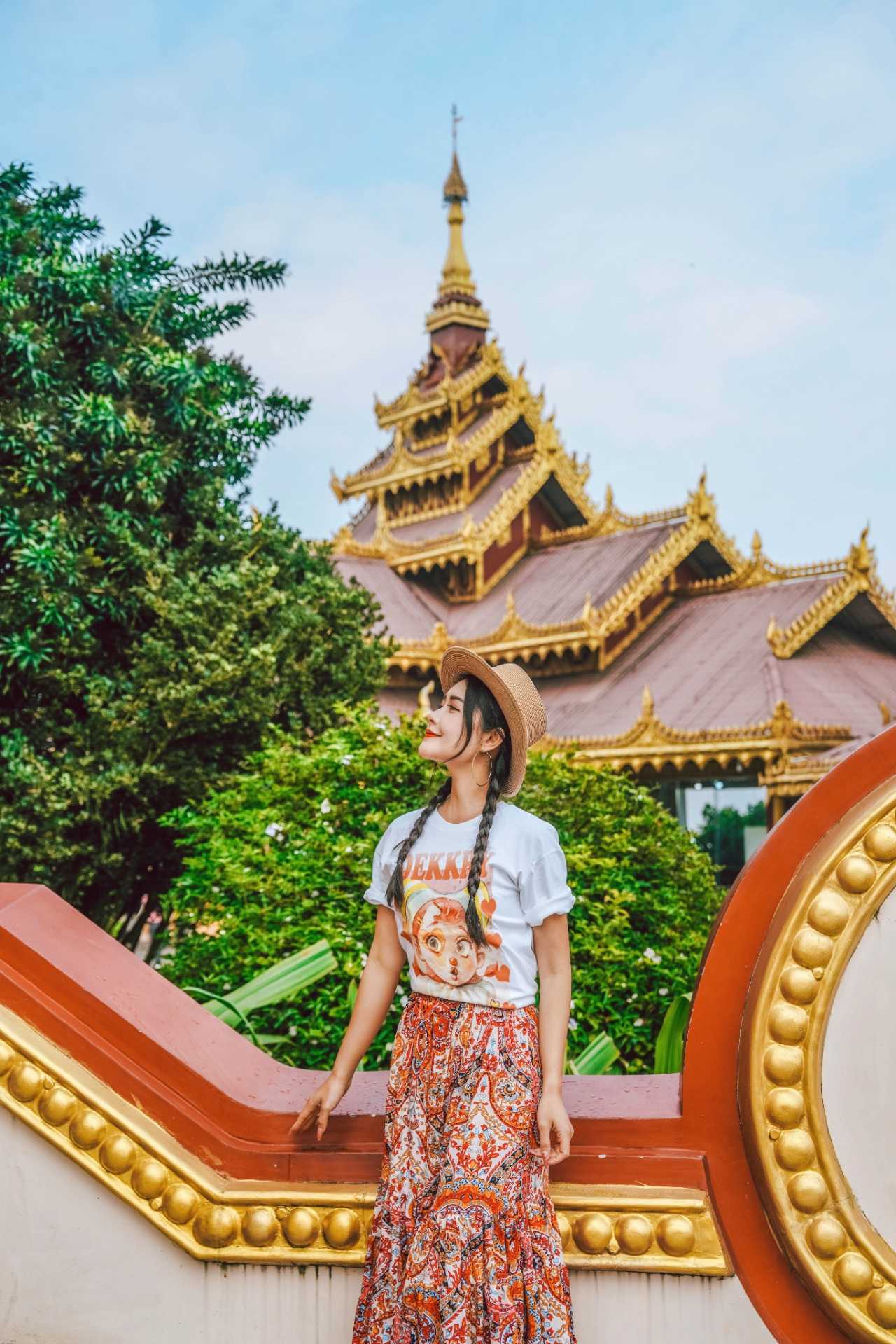
The most special photo spot was the mirror-like "Sky Reflection." Following other tourists, I took off my shoes and stepped onto the platform, feeling as if I had entered another dimension—the blue sky, white clouds, silver pagoda, and my own reflection all mirrored on the glossy surface. Wearing ethnic-style clothing, as my skirt spun, the entire mirror rippled with crimson waves. In front of the pagoda was a green lawn, where the interplay of blue sky, white pagoda, and grass made every shot look like a masterpiece.
Back at the entrance, what moved me most was the sculpture group of twenty-four Buddha hands. Each bronze palm—holding a flower, forming a mudra, or supporting a bowl—formed a solemn arc across the lawn. Using these as foreground, I could capture many evocative and emotional photos.
Menghuan Grand Golden Pagoda: Golden Splendor and Faith
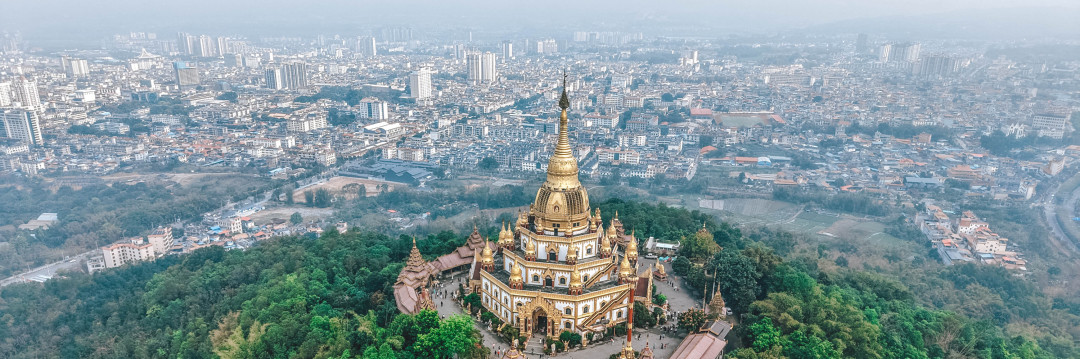
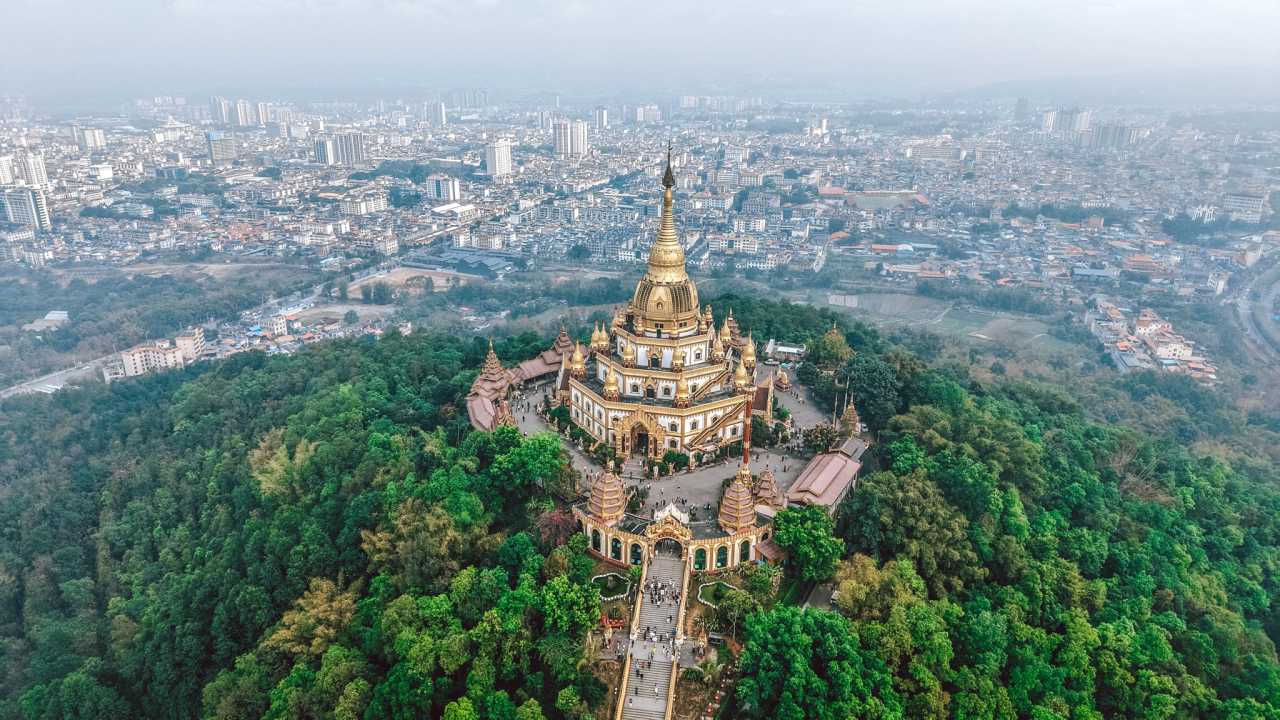
Unlike the Silver Pagoda's elegance, the Menghuan Grand Golden Pagoda is Mangshi's most iconic landmark. As Asia's largest hollow stupa, it features Southern Thai royal palace architecture—majestic, grand, and awe-inspiring. Two years ago, I had stood at its gate but couldn't enter for various reasons. This time, I finally had the chance to experience its splendor up close.
I climbed the stone steps slowly, and from the top, the entire city lay before me. With a 360-degree view, Mangshi's high-rises, blue sky, and green trees stretched out, filling me with a sense of healing. From the main entrance, I could also see the Silver Pagoda in the distance—one gold, one silver, echoing each other. In the sunlight, the golden pagoda gleamed, making every photo a masterpiece. To enter the pagoda, I had to remove my shoes, or I could walk around it three times, making a silent wish.
At the foot of the Golden Pagoda, there was a short food street less than 100 meters long. I bought a fresh avocado juice, with "Mangshi" printed on the cup. Using the Golden Pagoda as a backdrop, it made for a fantastic, uniquely local photo.
Wanding Bridge: Echoes of History on a Border River
The town of Wanding is small, but Wanding Bridge and Wanding Port are its most important symbols. This steel-framed bridge, just 20 meters long, spans the Jiugu River. Its worn wooden planks creaked softly underfoot, as if recounting the rumble of wheels on the Burma Road over 80 years ago. A yellow line ran down the middle of the bridge—on the left, Chinese characters reading "China"; on the right, Myanmar script reading "Myanmar." During the war, this was China's only land route to the international community. Through this bridge, 3,200 overseas Chinese mechanics from Southeast Asia transported a steady stream of aid supplies to the front lines.
We also visited the Memorial Hall for the Overseas Chinese Mechanics. A statue of Mr. Tan Kah Kee gazed eternally toward the Burma Road, as if still concerned for the nation's fate. Behind him stood the Monument to the Returned Overseas Chinese Mechanics, as if the thousands who answered his call still stood with him, ready to respond to their homeland's call once more.
Ruili's One Village, Two Countries: A Strange Experience of Stepping in Two Nations

Yunnan's border hides a red-brick ancient village where one foot can stand in two countries. In 1960, when China and Myanmar demarcated their border, the boundary line passed through a village, splitting it in two—the southern half belongs to Myanmar, called Mangxiu; the northern half belongs to China, called Yinjing. Today, the China-Myanmar Boundary Marker No. 71 attracts many tourists for photos.
The scenic area's entrance is a Dai-style brick pagoda built of red bricks. Inside, the walls are painted with murals of Buddhist stories from Dai culture, making for great photos. From the top of the pagoda, standing on a connecting bridge, I could overlook the two villages. The villagers speak the same Dai language and celebrate the same Water-Splashing Festival. People from the Myanmar side often cross over to the Chinese side, some even settling here. Many of the vendors in the village are from Myanmar. When we bought ice cream, the lady serving us was Burmese, her face still coated with traditional Burmese thanaka sunscreen. The two countries coexist harmoniously—today I visit your home, tomorrow you come to mine for a drink!
Moli Waterfall: A Wizard of Oz Adventure
Entering the Moli Tropical Rainforest felt like stepping into a forgotten fairy tale. The world grew quiet, with only the sounds of insects and birds. Ancient trees towered overhead, vines twisted around them, and streams babbled nearby. This is exactly the kind of world I long for.
On the hike, I encountered many tropical rainforest plants. Strangler vines—the "cold-blooded killers" of the rainforest—wrapped around tree trunks like giant pythons, slowly killing their hosts. There were also tree ferns, known as "living fossils," their giant fan-shaped leaves telling the story of Earth's evolution over millions of years. Along the way, I saw a tree embracing a boulder—a bodhi tree's roots had encased a massive rock like a giant net, the tree still growing, the two intertwined, the roots gripping the ground with astonishing tenacity.
Following the stream uphill, after about 25 minutes of hiking, I finally reached the end—Moli Waterfall. It cascaded like a silver ribbon from a 60-meter cliff, mist filling the air and thunderous sound echoing around. Standing beside the waterfall, I felt the spray of water, bringing a touch of coolness to the hot summer day.
Jiegao Port: A Fantasy Journey Through Duty-Free Shops and Markets
Jiegao Port is rich in ethnic character, located in the southwestern border city of Ruili. Standing before the port, I couldn't help but feel a surge of pride. "Jiegao" means "old city" in Dai. It connects directly to Myanmar's Muse town, with a 4-kilometer border line and nine boundary markers.
Jiegao Port is a four-story frame building modeled after the style of the late Yuan Dynasty Luchuan Si'an King's palace, full of ethnic charm. It was sunset, and the golden light fell on the port, making it gleam. Around the port, most shops sell jade, gemstones, and rosewood furniture, along with local Myanmar-style markets. Here, I could buy many local snacks and Southeast Asian trinkets—it's impossible to leave empty-handed.
Dehong Dai Pottery: A Non-Heritage Journey of Dialoguing with Clay
In Dehong, there is an ancient craft passed down for 4,000 years—Dai slow-wheel pottery. This traditional technique, listed in Yunnan's provincial intangible cultural heritage, attracts more and more tourists with its primitive methods and rustic beauty.
At Zhang Yu Studio, there were highly experienced Dai pottery teachers. Entering the studio felt like stepping into a living museum of earthenware—simple, rustic clay pots, beautifully patterned bowls, and unique pottery ornaments, each piece telling the wisdom and life of the Dai ancestors. The hallmark of Dai slow-wheel pottery is its "slowness." Instead of using modern electric wheels, potters work on a simple wooden slow wheel, relying solely on hand feel and experience to shape clay into various vessels.
Under the teacher's guidance, I tried the basic shaping process. Gently cradling the wet clay in my hands, I adjusted the pressure and angle of my fingers as the wheel turned. The seemingly simple action actually required great patience and skill. Making Dai pottery made me lose track of time, completely focused on the piece before me—too much pressure and it would deform, too little and it wouldn't take shape. Finally, I could carve patterns onto the piece, creating my own logo. After finishing, I could either take the unfired piece home or leave it to be fired.
Water Park: A Cool Carnival to Welcome Summer
Dehong welcomes summer earlier than most parts of China. And since it's summer, what better way to cool off than a water park? Longchuan Happy Water World is located in Long'an Village, Longba Town, Longchuan County, covering 72 acres. It features large-scale water attractions and professional facilities—tsunami pools, abyss slides, rainbow slides, drop-style lazy rivers, basket slides, and children's water forts. These attractions invite you to explore an endless water world, enjoying coolness and freedom. Come for the thrill, release your stress in summer screams—perfect for a weekend family outing.
Dehong Food Paradise: A Border Feast for the Taste Buds
Dehong is truly a food paradise. This border town, adjacent to Myanmar, attracts countless food lovers with its unique ethnic charm and diverse culinary culture. Dai cuisine perfectly blends the culinary essences of Myanmar, Thailand, and China's Yunnan, emphasizing sour and spicy flavors, ideal for cooling off in summer.
Peacock Banquet: A Feast for Eyes and Palate
Dehong is the land of peacocks, and the Peacock Banquet is a traditional Dai feast. We sat in a pavilion, dining outdoors in a setting full of local character. On the table, colorful dishes were arranged to resemble an elegant peacock with its tail fanned out, a riot of colors. Fragrant herb-wrapped pork ribs were tied with lemongrass, crispy and crunchy. Roasted pork belly, roasted chicken, fried pork skin, and fried insects—high-protein snacks, crispy and incredibly fragrant. Each person also had a thousand-wrapped rice parcel, filled with yellow and white rice, to be paired with different dishes. We even got to try making pounded fish—in Yunnan, everything can be pounded! Mixed with various spices and pounded into a fine paste, it had a distinctly tropical flavor.
Myan-Thai Special Tea Restaurant: A Hidden Gem in Ruili
This tea restaurant, set up like a food stall, attracts diners from all over. The owner is a local from Dehong, and the decor is simple—the restaurant is on the ground floor of an old residential building, with the family living upstairs. Recommended dishes include Thai-style cold shrimp salad, curry beef brisket rice, fire-roasted buttered flatbread with condensed milk, fruit 泡鲁达, beef patties, and avocado coconut milk. Every dish is infused with Southeast Asian flair, especially the fruit 泡鲁达, topped with colorful fruits over sweet coconut milk, sago, and bread crisps—a multi-textured delight.
Wanding Fapo Sapie: Authentic Dai Flavor
This restaurant is very famous locally, with many people traveling long distances just to eat here. "Sapie" refers to the dipping sauce—dark brown like amber (bitter sapie) or clear like lemon yellow (lemon sapie), topped with finely chopped cilantro and bird's eye chili, exuding a complex and enticing aroma. The "bitter water" is made by slow-cooking beef bile, rich in herbal essence and believed to have detoxifying and cooling properties. If you can't handle bitter sapie, try the refreshing lemon sapie—fresh lime juice mixed with minced cooked beef, cilantro, and chili for a light, summer-perfect dip. Sapie is served with fried pork skin, beef tripe strips, paper-thin beef slices, rice noodles, cauliflower, and vegetables, all dipped into the sauce for an appetizing meal.
Ruili Mengmao Banquet: Where Ambiance Meets Cuisine
This restaurant's architecture blends Dai and South Asian styles, from the eaves and window carvings to the stone elephant sculptures and the ethnic patterns on the staff's uniforms. Stepping inside feels like entering a tropical garden, with bridges over flowing water, pavilions, and terraces, offering a strong dining experience. Recommended dishes include stone-petal tofu pudding, Dai-style lemongrass chicken, and grandma's vegetable nest buns. The stone-petal tofu pudding is silky smooth, mixed with peanuts, chili oil, edible flowers, and minced pork—stir it all together for a truly satisfying bite.
Conclusion: Dehong—A Water-Splashing Carnival and Soulful Journey
My trip to Dehong gave me a new understanding of this border town. It's not just a tourist destination; it's a place where you can let down all your defenses and rediscover pure joy. The Water-Splashing Festival's carnival showed me Dehong's most passionate side, while the Golden Pagoda, Silver Pagoda, waterfalls, and ancient villages revealed its deep, introspective character.
Here, I learned to laugh like a child, slow down like a local, and bless others with clear water like the Dai people. Dehong, this place where the sun turns around, gave me a Water-Splashing Festival carnival and sent me home with a heart full of memories and emotion. If you're looking for a place to escape the noise and return to your true self, Dehong will not disappoint.
Travel Tips: - The Water-Splashing Festival usually falls on April 13-15 each year; book accommodation in advance - Bring waterproof bags to protect your phone and camera - Wear lightweight, quick-dry clothing; it's best to bring a change of clothes - When trying local food, be mindful of your stomach's adjustment - Respect local customs; remove shoes when entering temples
Keywords: Dehong Water-Splashing Festival, Mangshi tourism, Dai culture, border town, Yunnan cuisine, Water-Splashing Festival guide
You should also read:

Into the Hidden Valley: A Solo Journey Through the Mysterious Dulong River
Into the Hidden Valley: A Solo Journey Through the Mysterious Dulong River Deep in the northwestern corner of Yunnan Province, tucked away from the modern world, lies a place that feels like a secret whispered among mountains. The Dulong River Valley is not just a…
Continue reading...
Tengchong·Heshun: Finding Life as It Should Be in a Border Town Where Time Stands Still
Tengchong·Heshun: Finding Life as It Should Be in a Border Town Where Time Stands Still The long journey of over twenty days was over. On my first day back at the office, I was still in a daze. My fingers couldn't find the keys on…
Continue reading...
God’s Abandoned Palette: A Self-Drive Journey Through Yunnan’s Dongchuan Red Land
God’s Abandoned Palette: A Self-Drive Journey Through Yunnan’s Dongchuan Red Land Travel has never been about reaching some distant geographic coordinate. It’s about encountering, along the way, the version of yourself buried beneath the rubble of daily routine. During this May Day holiday, I finally…
Continue reading...