Diqing: Meeting the Other Half of the World in the Breath of the Snow Mountains
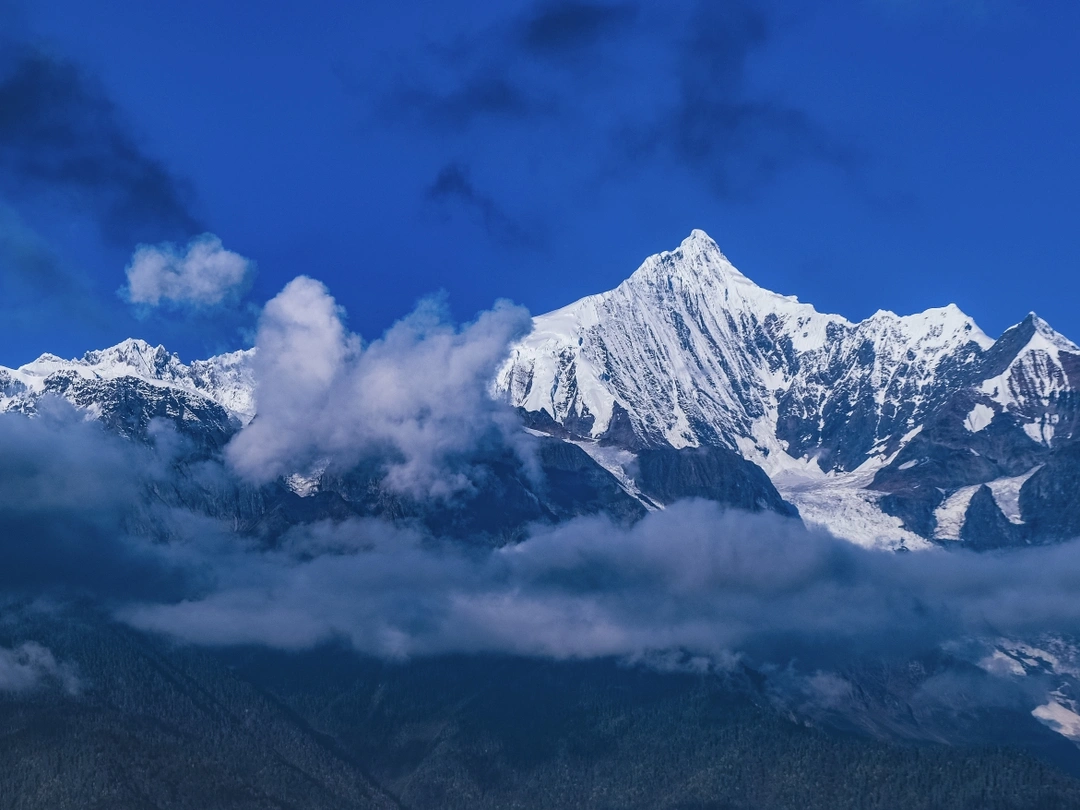
Diqing: Meeting the Other Half of the World in the Breath of the Snow Mountains
Prologue: When the Snow Mountains Begin to Speak
Have you ever wondered why humans instinctively hold their breath when gazing up at snow-capped peaks?
It's not because of altitude sickness. It's something far older stirring within — a sense of awe buried deep by modern life.
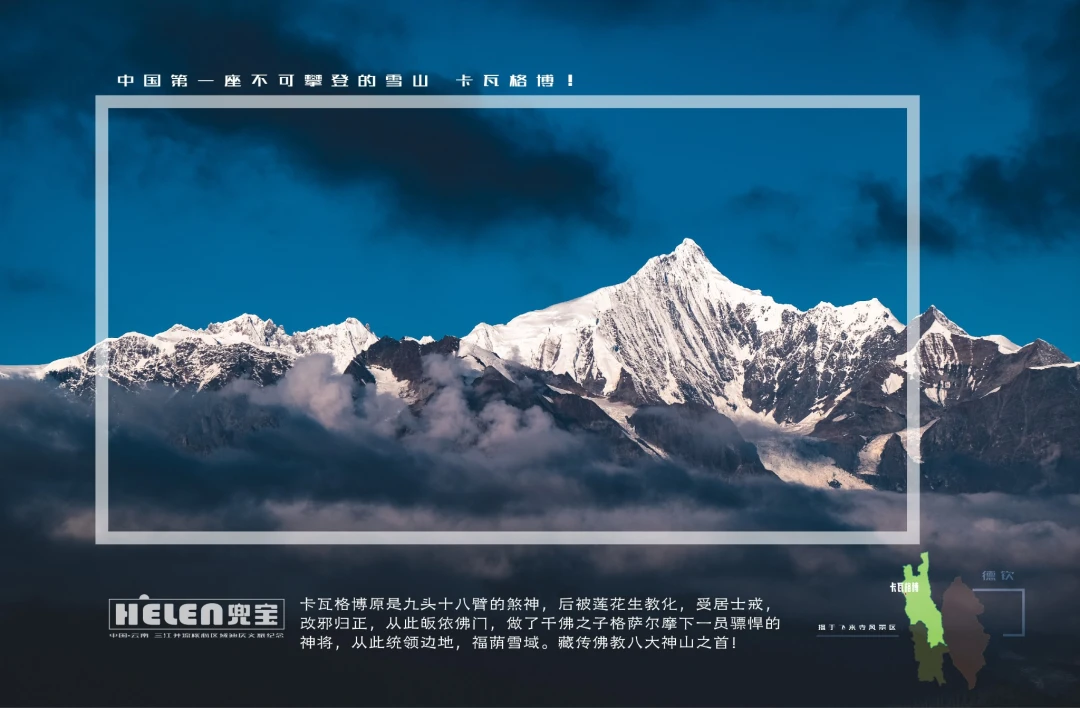
In the folds of southwestern China lies a place called Diqing. Here, mountains are not mere rock formations; they are the dwellings of deities. Water is not just H₂O; it is the nectar of all living beings. Clouds are not condensed vapor; they are prayer flags flowing between heaven and earth. When you stand at the foot of Kawagebo (卡瓦格博), watching glaciers slice through canyons like colossal blades and mist shift atop the peaks in an ever-changing dance, you suddenly understand: Nature never follows a human script. It writes its own epic.

If you come to Diqing only for the scenery, you'll see nothing but arrangements of carbon and water molecules. Only when you perceive the mysteries behind the gathering of mountains and rivers can you truly touch the poetry that natural civilization has inscribed on this planet.
What you can see is not merely the snow mountain —
It is the origin of rivers and peaks, The karmic intersection of all living beings, A religious totem, The convergence of human faith.
Unveil the other half of the world, and you will see the presence of the divine.
Chapter One: Earth's Whirlpool — The Miracle of the Three Parallel Rivers

A "Divine Wonder" 4.6 Billion Years in the Making
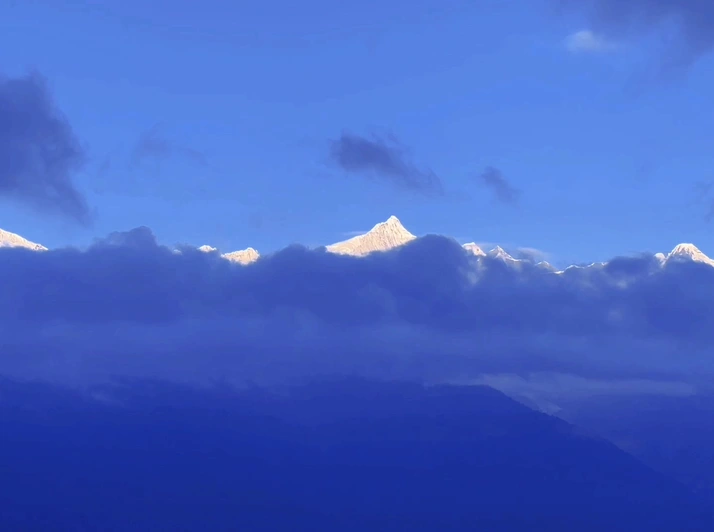
Earth's history has flowed for 4.6 billion years, and every geological transformation has left indelible marks upon the land. Looking down from satellite imagery, you'll witness a breathtaking sight: the east-west trending Himalayas, like a giant mythical beast straddling the Tibetan Plateau, suddenly bend at the border with Yunnan into a massive mountain arc — the Hengduan Mountains (横断山).
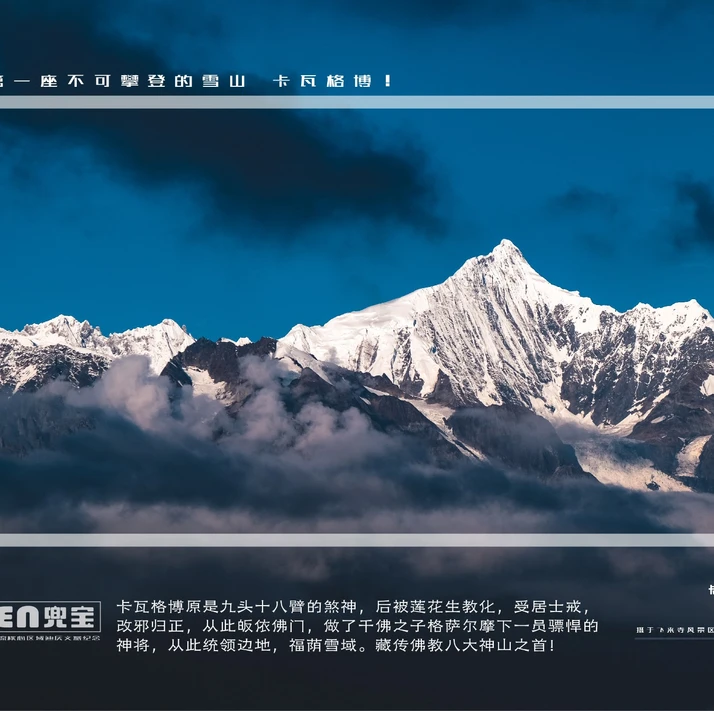
This chain of parallel ranges is squeezed almost to the point of distortion. Towering snow peaks, deeply incised river valleys — tens of millions of years of geological evolution have created the most spectacular combination of high mountains and deep gorges on Earth: the Three Parallel Rivers (三江并流).
The Nujiang (怒江, Salween), the Lancangjiang (澜沧江, Mekong), and the Jinshajiang (金沙江, Upper Yangtze) — three great rivers born from snowy highlands — suddenly converge here, squeezing into the narrow gorges of the Hengduan Mountains. They twist and turn, flowing side by side. And Diqing, where the three rivers narrow to just 65 kilometers apart at their closest point, sits at the heart of this miracle.
This is no coincidence. This is the whirlpool left behind by the turning Earth.
A Vertical, Three-Dimensional World
Diqing occupies less than 6% of Yunnan's territory, yet it concentrates almost all of the province's peaks above 5,000 meters. The highest point, Kawagebo, stands at 6,740 meters, while the lowest river valley drops to just 1,486 meters — a vertical drop of over 5,000 meters, creating a truly three-dimensional world.
From pristine white snow mountains to lush forests, then to deep canyons — glaciers, alpine meadows, lakes, waterfalls, and rivers are densely woven together. This is the most diverse geological wonder in the world's low-latitude, high-altitude regions.

Three mountain ranges run north to south through Diqing:
- The westernmost range: the Nu Mountains (怒山山脉), composed of multiple 5,000- and 6,000-meter snow peaks. The northernmost section is the Meili Snow Mountains (梅里雪山), the middle section is the Taizi Snow Mountains (太子雪山), and the southern section is the Biluo Snow Mountains (碧罗雪山). Among them, the highest of the "Thirteen Peaks of Taizi" is the sacred mountain Kawagebo.
- The central range: the Yunling Mountains (云岭山脉), stretching impressively from north to south. Its extensions include the Wuliang Mountains (无量山) and the Ailao Mountains (哀牢山).
- The easternmost range: the Shaluli Mountains (沙鲁里山), also known in Diqing as the Zhongdian Great Snow Mountains (中甸大雪山), marking the junction of Yunnan, Sichuan, and Tibet. This range includes Balagezong (巴拉格宗).
These three towering mountain ranges intercept massive amounts of moisture from the Bay of Bengal and the Pacific Ocean. During the rainy season, seas of mist surge between the peaks, and thick clouds obscure the summits. Precipitation falls on the high mountains, accumulating and compressing over millennia to form glaciers. At the glacier snouts, rocks and debris rush down like torrential floods.

Glaciers carve the peaks into razor-sharp "blades" and grind valleys into deep channels. Along the paths of these glaciers, glacial lakes are left behind. Meltwater and precipitation converge into rivers that cut relentlessly along fault lines, eventually joining the great rivers. The powerful down-cutting of these rivers carves three narrow, deep channels — the Nujiang, Lancangjiang, and Jinshajiang — separated by just over 60 kilometers at their narrowest point.
The immense vertical drop creates distinct altitudinal vegetation zones, which in turn shape a three-dimensional climate system. Different elevations support different plant life, and from this, the flourishing of life begins.
Diqing is home to 31 types of forests, 6 types of grasslands, over 5,000 plant species, more than 100 types of fungi, and over 1,400 animal species. The Three Parallel Rivers region occupies less than 0.4% of China's land area, yet it contains 20% of China's higher plants and more than 25% of the country's total animal species.
This is a paradise of living beings, a natural science wonderland recognized worldwide.
Chapter Two: The Foundation of Faith — Kawagebo and Tibetan Buddhism
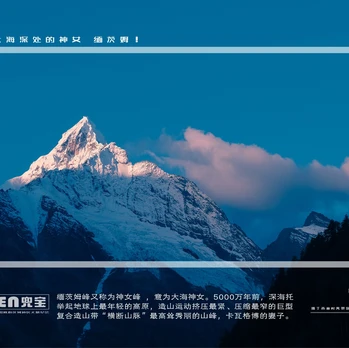
From "Evil Deity" to Protector
In the hearts of Tibetan Buddhist devotees, "Kawagebo" refers not only to the highest peak but to the entire domain of several towering snow-capped mountains.
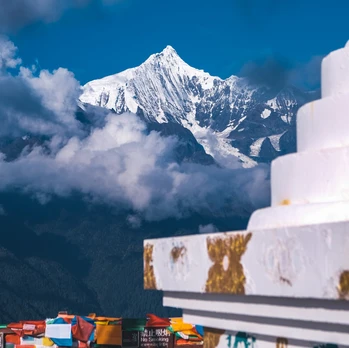
Legend has it that Kawagebo was originally a nine-headed, eighteen-armed "evil deity" who was later subdued by King Gesar and converted to a protector of Buddhism. From then on, he commanded countless earthly guardian deities, becoming the guarantor of peace, stability, and happiness in the region of Rong (present-day Deqin).
When natural grandeur and spiritual origin perfectly merge, the driving force of faith is born.
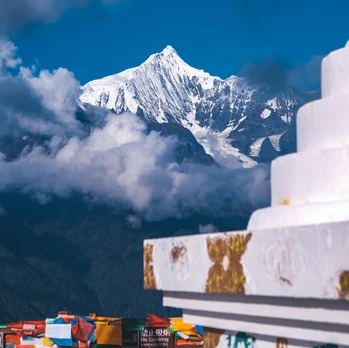
During the Tang Dynasty, the Tibetan Empire rose to power and expanded southward, incorporating northwestern Yunnan's Diqing into its territory. Tibetan culture took root here, and the most influential force was the Nyingma school (宁玛派) of Tibetan Buddhism, the first to enter Diqing. The uniquely shaped highest peak — the natural deity Kawagebo — was chosen as a sacred mountain by the Nyingma. In the name of this natural deity, Tibetan Buddhism began its path of enshrining gods in the Diqing region.
During the Qing Dynasty, the Gelug school (格鲁派, or Yellow Hat sect) rose to prominence with imperial support, quickly replacing the Nyingma. With the emperor's backing, large monasteries were built throughout Diqing, the largest being Ganden Sumtseling Monastery (噶丹·松赞林寺).
But whether in the flourishing Gelug monasteries or the contracting Nyingma ones, many temple murals depict the legendary stories of the mountain deity Kawagebo. The Tibetan Buddhist religious system deeply understood that the mountain god Kawagebo, riding a white horse, held an irreplaceable and sacred position of authority in the hearts of the people — the very foundation of Diqing's Tibetan Buddhist development.
The famous Tibetan epic The Life of King Gesar records that the snow mountain region under Kawagebo's dominion is a pure land of the tantric deity Chakrasamvara and a repository of scriptures for the Nyingma patriarch Padmasambhava. In Tibetan Buddhism, the deity Kawagebo is said to be the protector of the Kagyu school (噶举派).
Kawagebo has always ranked first among the eight great sacred mountains of Tibet.
A Land of Many Gods
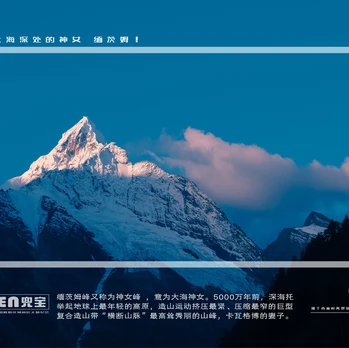
Tibetan Buddhism established the religious foundation of Diqing, but other belief systems — the Dongba shamanism of the Naxi people, the Bimo religion of the Yi, the Nipa shamanism of the Lisu, and the Benzhu worship of the Bai — have never disappeared. The arrival of Catholic churches in the 19th century made Diqing a true land of many gods.
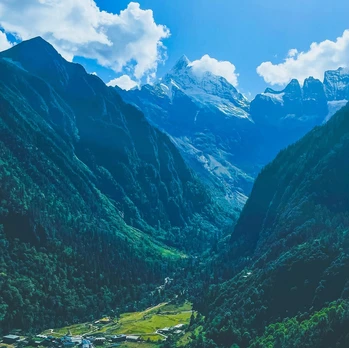
If you ask me whether these diverse beliefs are also rooted in the mountains, I would tell you: Yes. Because in this folded landscape, mountains are not just geographical high points — they are spiritual coordinates. Every ethnic group, every faith, has found its place within this coordinate system.
It's not so much that people believe in religion; rather, they believe in the visible power of nature.
Chapter Three: The Ethnic Mosaic of a Folded Land
Yunnan's extraordinary environmental diversity has nurtured and gathered 26 ethnic groups, making it the most ethnically diverse region in China. Beyond historical migrations triggered by dynastic changes, the highly folded mountain landscape kept various groups relatively isolated for long periods, allowing them to slowly evolve into distinct, diverse minority cultures.
Looking at the timeline of history:
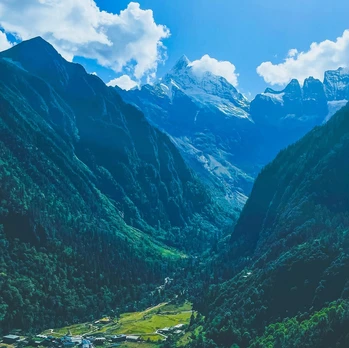
- Eastern Zhou period: The Diqiang (氐羌) peoples from northwestern China, pressured by the Qin state, undertook large-scale, long-distance migrations. They took refuge in the mountains of northern and western Yunnan, where isolation and differentiation intensified, eventually evolving into today's Yi, Bai, Naxi, and Lisu peoples.
- Tang Dynasty: Tibetans who entered Yunnan with the expansion of the Tibetan Empire concentrated around monasteries under the strong influence of Tibetan Buddhism, spreading from north to southeast.
- Late Southern Song and Yuan dynasties: The Hui, Mongol, and Pumi peoples, who arrived with the Mongol armies, found their homes in alpine meadows and wetlands.
- Ming and Qing dynasties: The Miao, Yao, and Manchu peoples, who migrated due to dynastic changes and warfare, formed mountain-village tribal cultures in cold-temperate forest zones.
When various ethnic groups were pushed into Yunnan's folded, three-dimensional natural landscape — especially the most intensely folded Hengduan Mountains — there was a sense of being pushed in by history and unable to get out due to the terrain. But this also reflects a state of human contentment in the face of natural conditions — a key reason for the "dynamic yet settled" character of Diqing's ethnic composition, which is both relatively concentrated and highly diverse.
In Diqing's two counties and one city (Deqin County, Weixi County, and Shangri-La City), there are nine ethnic groups with populations exceeding one thousand: Tibetan, Lisu, Han, Naxi, Bai, Hui, Yi, Miao, and Pumi. They have lived in harmony with nature for generations, developing traditional, diverse lifestyles and creating rich ethnic cultures. Their unique architectural styles, festivals, costumes, and cuisines form a cultural Eden within the natural backdrop of the Three Parallel Rivers.
Chapter Four: Weixi — The Shangri-La of My Heart
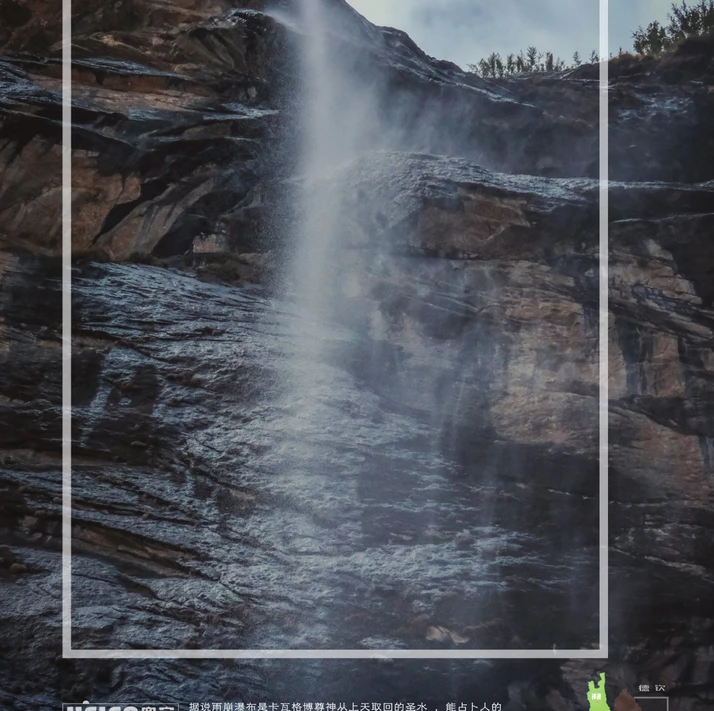
First Stop: The Cave of Patriarch Bodhidharma
After a high-speed train ride of less than four hours from Kunming to Lijiang Station, we didn't hesitate to hire a car and head straight for Weixi Tacheng (维西塔城).
Weixi County lies in the heart of the Three Parallel Rivers World Natural Heritage site, bordered by the Jinshajiang to the east and the Nujiang to the west, with the Lancangjiang flowing through the entire county. The Biluo Snow Mountains and Baima Snow Mountains stand on either side, forming the world-famous Lancang River Grand Canyon. With high mountains and deep valleys, the climate is humid, and the landscape is filled with alpine gorges, lakes, streams, and primeval forests.
Weixi has always been overlooked by travelers. Everyone flocks to the more famous Shangri-La City, but in my heart, Weixi feels closer to the Shangri-La depicted in Lost Horizon than the place that actually bears the name.
Qizong Village in Tacheng Township is a Tibetan settlement. The environment is picturesque — fields and cottages nestled against the mountains and along the river, shaded by the dense foliage of various fruit trees. About six kilometers east of the village rises a mountain called Ahailuo Mountain (阿海洛山), also known as Dharma Mountain (达摩山) because of the Cave of Patriarch Bodhidharma (达摩祖师洞).
Three structures stand in a tripod formation: the Patriarch's Cave, the Dharma Temple (达摩寺), and the Laiyuan Temple (来远寺).
There are two kora (circumambulation) routes: one circles the waist of Ahailuo Mountain, and the other circles its summit. I chose the summit route, because this is where Bodhidharma meditated and attained parinirvana.
Laiyuan Temple
The temple buildings stand proudly on the mountaintop, brightly colored and exquisitely crafted, often mistaken by tourists for the Cave of Patriarch Bodhidharma itself. The main shrine hall is located in a small courtyard to the right below the temple's staircase — and it's well worth exploring inside. Though its exterior is simple, this hall is the primary place for housing Buddha statues, and you can also see various masks used in Tibetan Buddhist ritual ceremonies.
The largest courtyard at the highest point houses the Zhichang Hall (执沧大殿). If you choose the summit kora route, you can pass behind it and admire the architectural details. You've heard of the nine sons of the dragon, right? The ornaments at both ends of the hall's ridge are chiwen (螭吻), the ninth son, symbolizing the extinguishing of fire and the warding off of disaster.
The summit kora path passes through roads lined with prayer flags. When you encounter a mani stone pile, remember to walk around it clockwise one or three times before continuing.
The Patriarch's Cave
The summit kora path leads to the Patriarch's Cave, passing through Tibetan villages along the way. Autumn, when the cosmos flowers (格桑花) are in full bloom, is particularly beautiful. This kora route offers a scenic hiking trail — the shaded front slope is mostly coniferous forest, while the sunny back slope is mostly broadleaf forest. The path is paved with stone slabs, with small mountain streams gurgling here and there, giving you a joyful sense of strolling through a mountain stream.
When you reach a path draped with prayer flags and lined with mani stone piles, you're close to the Patriarch's Cave. Sunlight and gentle breeze adorn the scripture-inscribed fabric banners with a natural, carefree elegance.
From a drone's perspective, the cave is a natural rock grotto. Legend has it that when Bodhidharma traveled from India to China, he wandered far and wide before finally arriving here. Finding the place deeply resonant with the Buddhist spirit, he ascended the mountain and meditated facing the wall in this cave for ten years, attaining enlightenment and Buddhahood here. Hence the name "Cave of Patriarch Bodhidharma." "Gazing at the precipice ten thousand feet high, the ancient temple reaches the clouds" — a five-story structure rises above the cave, and the temple in front is a magnificent sight.
At an altitude of 3,080 meters on the cliff face, the temple is built by chiseling into the rock and stacking timber — red walls, yellow tiles, resplendent and magnificent. Stepping inside, you can see where the Patriarch faced the wall, with the structure built into the mountain, carved from stone and wood. One side reveals natural rock as the wall, with exquisite murals and carvings showing remarkable craftsmanship.
The entire complex consists of over 40 prayer halls and meditation rooms stacked in layers. On a clear day, climbing the temple and looking into the distance, you can see Jade Dragon Snow Mountain (玉龙雪山), Haba Snow Mountain (哈巴雪山), and Biluo Snow Mountain (碧罗雪山) clearly. The Jinshajiang meanders southward like a white ceremonial scarf, with mountains offering their beauty on all sides — a truly magnificent sight.
After paying my respects at the Patriarch's Cave and starting my return journey on the kora path, I looked up and saw "auspicious colorful clouds" (七彩祥云) — a deeply uplifting sight that felt like being blessed by heaven and earth. This good fortune accompanied me throughout the rest of my journey, leading to one unexpected encounter after another!
The Buddhist Academy
Bodhidharma introduced Chan (Zen) Buddhism to China, which teaches "directly pointing to the mind, seeing one's nature and becoming a Buddha, not relying on words, transmission outside the scriptures." Zen transcends language; words and language are merely symbols describing all phenomena. As long as you understand your own mind and nature, you can attain Buddhahood.
Historically, the Cave of Patriarch Bodhidharma has produced many eminent monks and great masters, with devotees spanning the Tibetan, Naxi, Lisu, Bai, and Han peoples of the surrounding four counties and eight regions. Many Tibetan Buddhist tulkus (reincarnate lamas) have resided here to teach the dharma, making it a chosen destination for those seeking Buddhist refuge.
Leaving the Patriarch's Cave and descending the mountain, you pass many small villages nestled in the mountain folds. You can't help but marvel at the industrious people's ability to thrive in these deep folds of Yunnan's mountains. Winding down the mountain and entering the riverside road, the altitude gradually drops, and you feel more refreshed.
Not just in Weixi, but throughout the Hengduan Mountains, most roads are built along rivers. Diqing is the core of the Three Parallel Rivers region, and the valleys carved by the great rivers and their numerous tributaries are all lined with riverside roads. Driving through this landscape, your eyes are filled with stunning scenery — it's intoxicating.
On your way back to Tacheng Town, don't miss the farmhouse restaurants along the road. You absolutely must try the local高原虹鳟鱼 (plateau rainbow trout) — served raw, in hotpot, or with crispy fried skin. Though not as polished as city restaurants, the food is genuinely rustic and delicious. Visiting in October, I was even lucky enough to enjoy the owner's frozen wild mushrooms (the peak season for fresh mushrooms is June to August).
Second Stop: The Yunnan Golden Monkey — A National Treasure Hard to Find
If you're visiting as a tourist, make sure to arrive before 10:00 AM. Once the monkeys have eaten their fill, you won't be able to find them at all!
The park entrance fee is 120 RMB. Be sure to watch the expert documentary playing on a loop in the visitor center — because ordinary tourists simply cannot get close-up photos of Yunnan golden monkeys (滇金丝猴). From the visitor center, take the designated electric shuttle to the "Expert Compound" entrance. From there, it's a matter of "luck" as you head to different monkey-viewing points.
The Expert Compound offers accommodation, typically used by professional researchers and photographers for more convenient and timely observation of the monkeys. Don't even think about sneaking into the forest to find them on your own — the entire park includes Upper Village, Middle Village, and Lower Village, and every villager is a "monkey guardian." Don't take any chances.
The trail into the forest is lush with vegetation. We started heading to the viewing point at 9:00 AM, enjoying the beautiful scenery and fresh air along the way. Occasionally, we spotted strange plants, but honestly, all I could think about was seeing the monkeys.
Now you know why I recommend arriving before 10:00 AM? Yunnan golden monkeys are nothing like the monkeys at Emei Mountain. They are extremely sensitive and won't approach humans without established trust. If the monkey guardians didn't feed them early in the morning, you wouldn't see them at the viewing points at all! The viewing points also change periodically because the monkeys spend so much time swinging from the branches that they damage the trees. The park has no fewer than ten designated viewing points for tourists, and they are rotated regularly.
If you don't have professional "cannon" photography equipment, your smartphone will do just fine.
Yunnan golden monkeys are known for their sexy thick lips and upturned noses — a feature directly linked to their living environment. Because they live at high altitudes, their nasal bones evolved into "snub noses" to reduce breathing resistance in the thin air. Infant monkeys have white fur, only turning dark black-brown as adults, with golden fur still visible on their faces, necks, and chests.
At the viewing points, tourists can observe the monkeys for only about an hour. After eating their fill of "tree beard," they retreat deep into the forest. "Tree beard" is what the monkey guardians feed them daily — its scientific name is Usnea (树花). It's actually a type of lichen that grows in high-altitude forests, soft in texture, and resembling a yellowish-brown beard in color and form, hence the name.
Golden Monkey Viewing Tips: 1. Park entrance fee: 120 RMB. Except on holidays, the park is only open in the morning. 2. Take the shuttle to the starting point of the hike, then follow the designated signs to the viewing points. 3. Arrive at the viewing point before 10:00 AM, then enjoy the mountain scenery at a leisurely pace on your way back. 4. Do not feed the monkeys anything. Do not cross the viewing barriers. 5. No drones, no flash photography, no loud noises.
As a Class I nationally protected animal, the Yunnan golden monkey is also a globally endangered species. Thanks to reforestation and conservation efforts, their population has slowly grown to around 3,000 across their entire range. They are not aggressive toward humans — on the contrary, it was humans who once hunted them mercilessly and destroyed their habitat through logging that created their nightmare.
Today, the protected areas and human production/living zones are relatively strictly separated. With continued conservation policies, I believe the precious Yunnan golden monkey population will gradually recover from the brink of extinction.
Third Stop: Pantiange — The World's Highest Altitude Rice Paddies
Leaving the Yunnan Golden Monkey National Park, our journey continued to Pantiange (攀天阁), an area described as "five rivers sandwiched between four mountains surrounding one basin." This is a region following the various tributaries that flow into the Lancangjiang, gradually approaching the Lancang River itself. I always tell my friends that anywhere in Yunnan close to the Lancang River is bound to be the most fertile land.
The rivers within Pantiange Township belong to the Lancang River watershed. The main rivers include the Yongchun River (永春河), the Anyi River (安一河), the Gongnong River (工农河), the Sancun River (三村河), and the Daxiaohuoshan River (大小火山河), all flowing from east and northeast into the Lancangjiang. Following the deeply incised channel of the Yongchun River tributary, a narrow riverside road twists and turns before opening up into another world entirely.
Pantiange's "Thread of Sky" (一线天) terrain consists of river valleys, mid-mountain areas, and high-altitude flatlands — a stunning pastoral landscape.
The Pantiange basin sits at an altitude of 2,680 meters. The majestic mountains and generous land have endowed the local people with abundant natural biological resources. In our common understanding, Tibet should have high-altitude rice-growing areas, but the only rice-growing region in Tibet, Zayu (察隅), sits at just 2,300 meters. At the end of the 20th century, American agricultural experts who surveyed Pantiange concluded that, globally, few places have terrain as unique as Yunnan's. Even in India and Nepal, rice is not grown at altitudes as high as Pantiange — making it the "world's highest rice-growing region."
Although in recent years, Litang in Sichuan has experimented with 2 mu (about 0.33 acres) of dryland rice grown in greenhouses at 3,000 meters, this cannot compare with the naturally produced black rice of Pantiange in Weixi, Diqing. This black rice has a history of over 800 years and is the world's only origin of rice with the highest amino acid content — a true "living fossil" of rice.
No matter which season you visit Pantiange, you'll be rewarded with breathtaking pastoral scenery. Pantiange Township in Weixi is home to Lisu, Naxi, Tibetan, Pumi, and other ethnic groups, with a long history that has nurtured a rich cultural heritage.
- The Lisu people perform "peacock dances" during their Kuoshi Festival (阔时节)
- The Naxi people have developed blueberry cultivation alongside rice farming
- The Tibetan people have brought their Tibetan Buddhist faith and pastoral traditions here
- The Pumi people were the first to transform the swampland into fertile fields
Every autumn harvest season, people from all ethnic groups gather in the fields to reap this miracle rice grown at high altitude. It is the most harmonious dialogue between humanity and nature.
Epilogue: Seeing the Other Half of the World
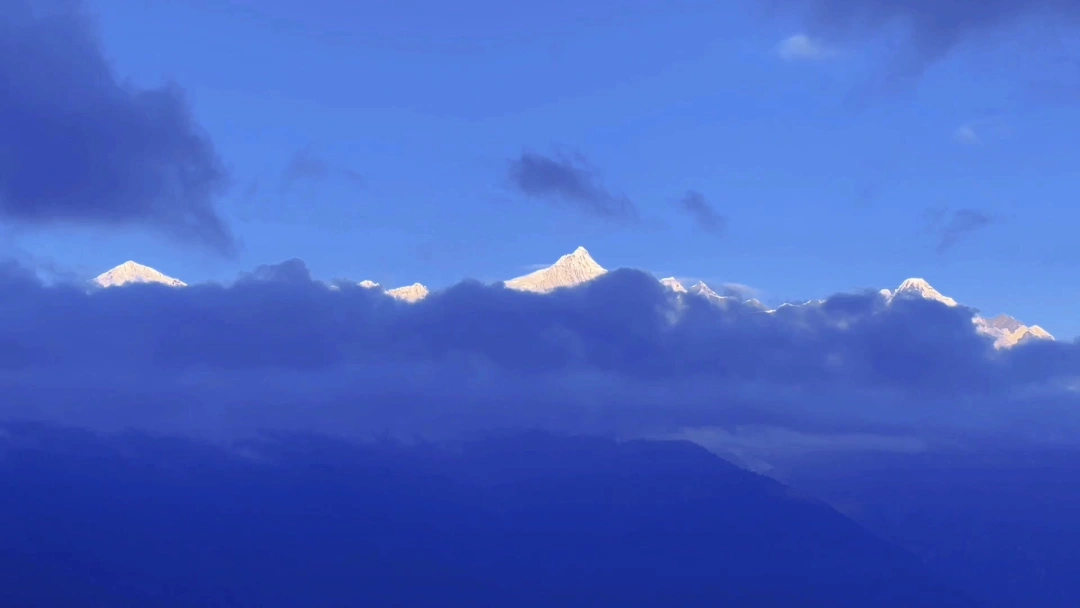
My journey through Diqing taught me one thing: What we usually see is only half of the world.
The other half is hidden in the clouds of the snow mountains, in the crevices of the glaciers, in the flutter of prayer flags, in the eyes of the golden monkeys, in the waves of the rice paddies.
To see this other half, you need more than just your eyes. You need a heart willing to slow down and set aside preconceptions.
Practical Tips:
Best Travel Route: Following the Tibetan Buddhist tradition of clockwise circumambulation, complete a loop through the three counties: first Weixi, then Deqin, and finally Shangri-La.
Best Season: May to October. June to August is the season for wild mushrooms, while September to October offers the most beautiful autumn scenery.
Temple Visiting Etiquette:
- Walk clockwise around temple halls, stupas, incense burners, and mani stone piles.
- Remove hats and sunglasses before entering temple halls. Avoid wearing revealing clothing.
- Do not point at Buddha statues with your index finger; instead, point with all five fingers together, palm facing upward.
- Obtain permission before taking photos inside temples, and try to avoid photographing monks' faces directly.
The traditional time for offering incense in Tibetan areas is in the morning.
Respect Nature, Respect Faith: In Diqing, you are not just facing scenery — you are facing millennia of culture and faith. Approach every mountain, every river, and every living creature with reverence.
When you truly see the other half of the world, you will discover — the divine has always been here.
You should also read:
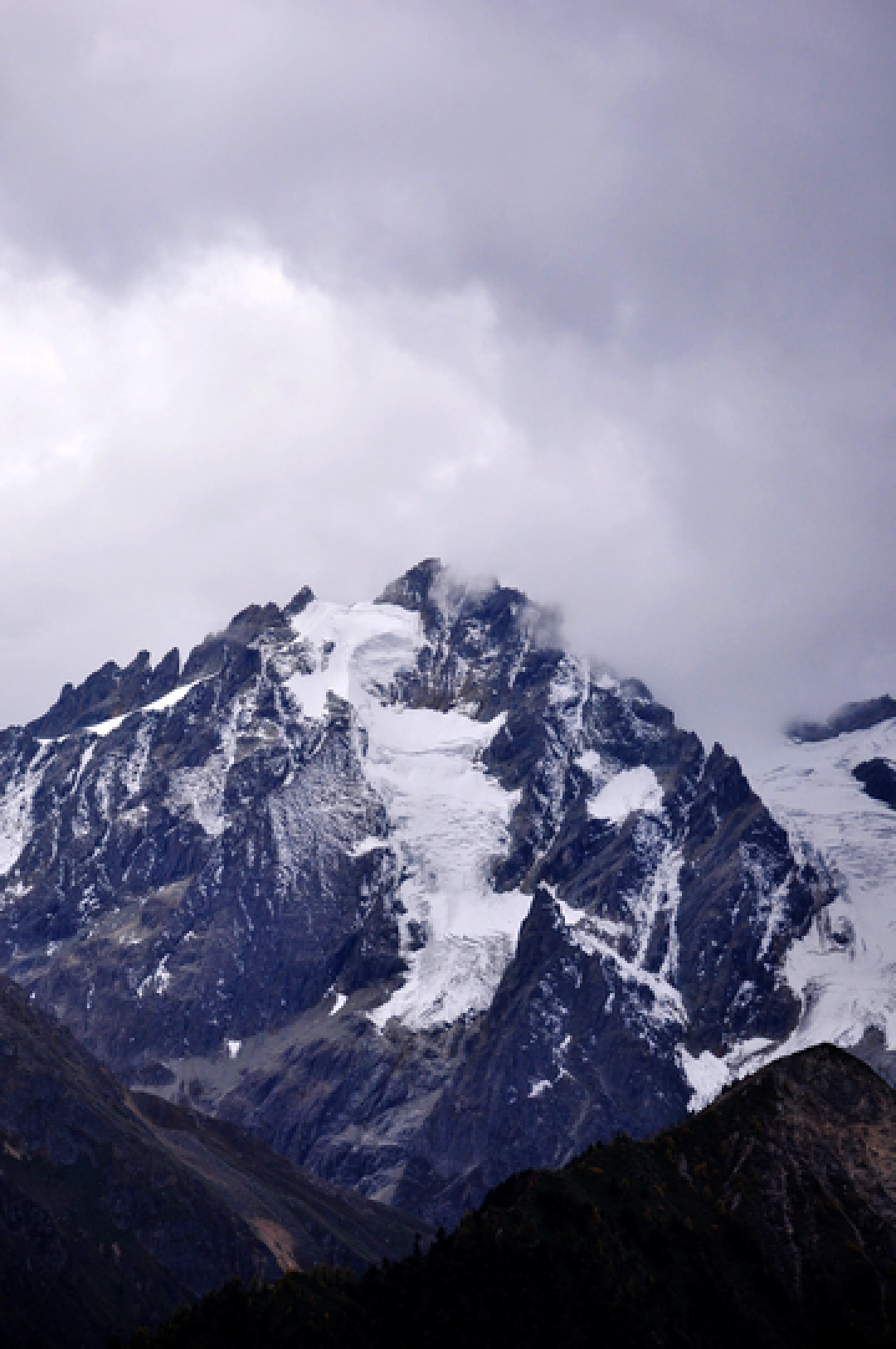
Meili Snow Mountain: A Soulful Journey of Dialogue with the Sacred Mountain
Meili Snow Mountain: A Soulful Journey of Dialogue with the Sacred Mountain Prologue: When Travel Becomes Faith Some journeys are forgotten as soon as they end. Others carve themselves into your bones. The trip to Meili Snow Mountain belongs to the latter. Waking up in…
Continue reading...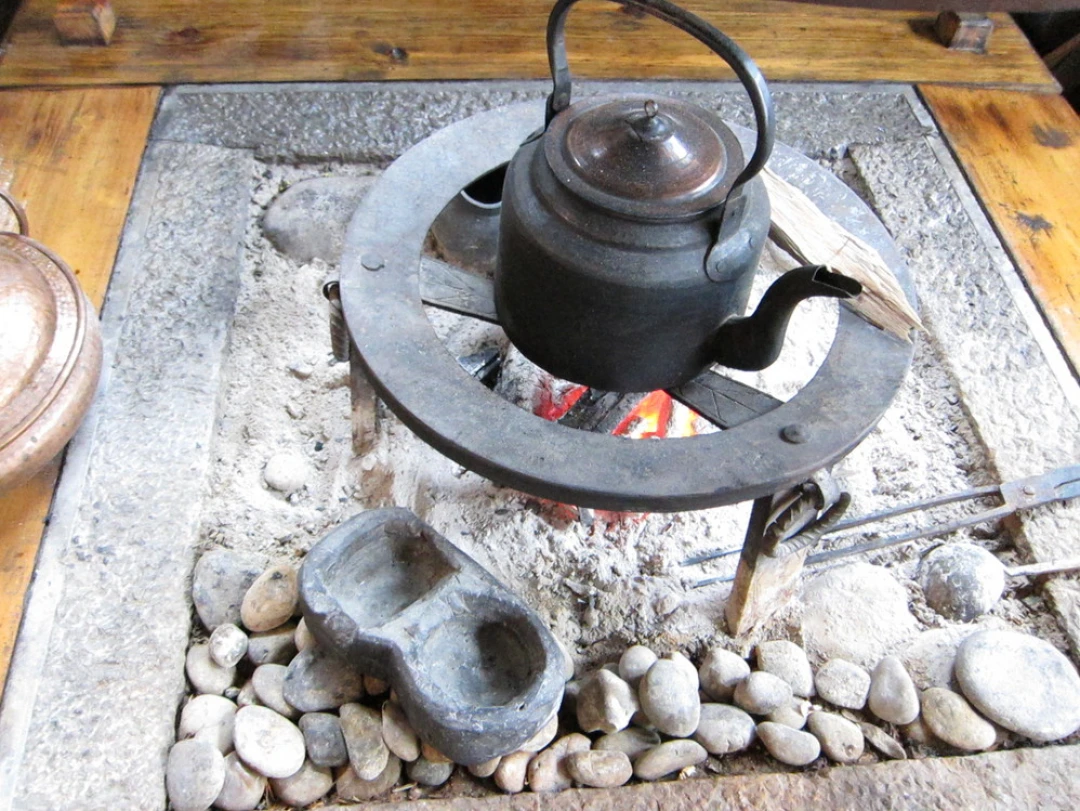
Dreaming of Lijiang, Dreaming of Shangri-La: A Journey That Lets Your Soul Breathe Deeply
Dreaming of Lijiang, Dreaming of Shangri-La: A Journey That Lets Your Soul Breathe Deeply Life is like a long trek. We're always rushing through the concrete jungle, searching for a glimmer of light in the monotony of our days. Then one autumn, I heard the…
Continue reading...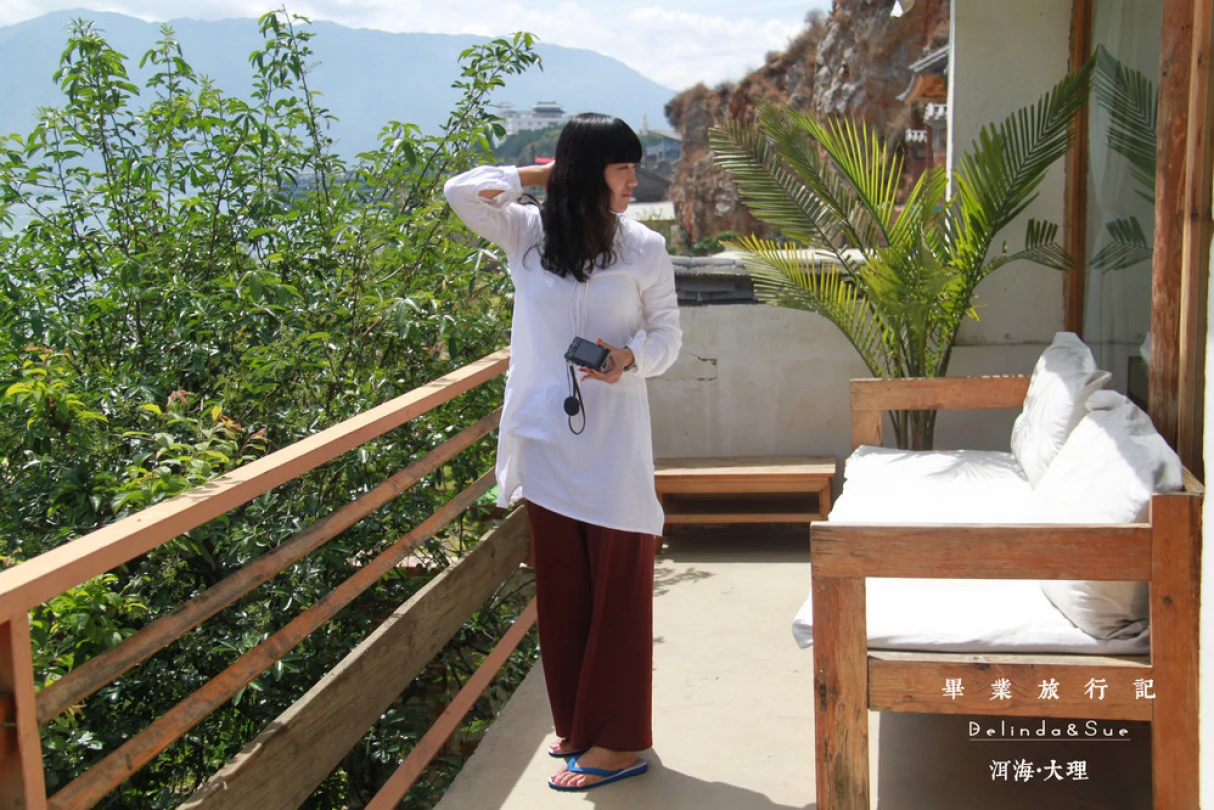
Two Girls' Graduation Trip: Dali and Shuanglang – A Poetic Farewell to Mountains and Sea
Two Girls' Graduation Trip: Dali and Shuanglang – A Poetic Farewell to Mountains and Sea Preface: Catching the Tail of Youth, Heading South During our senior year of college, my roommate and I – two girls studying in Beijing – decided to bid farewell to…
Continue reading...