Discovering Lesser-Known Ways to Explore Lijiang, Immersing in Naxi Culture, and Uncovering the Past and Present of the Ancient Tea Horse Road

Discovering Lesser-Known Ways to Explore Lijiang, Immersing in Naxi Culture, and Uncovering the Past and Present of the Ancient Tea Horse Road
Introduction: A Misunderstood Ancient City
Lijiang—the name carries a certain ambiguity among travelers. Some call it the epitome of romance, others say it has long been swallowed by commercialization, and still others equate it with "casual encounters." Those who love it return year after year; those who hate it visit once and never want to mention it again.
But I'd argue that the city itself hasn't changed—it's people's hearts that have shifted. It's hardly fair to burden an ancient city with every label under the sun.
Back in 2011, I was still a high school student, carrying dreams of distant lands and a backpack, setting foot in Lijiang for the first time. I had little money back then, staying in dormitory-style hostels and eating whatever was cheap, but that one-week experience made me fall completely in love with this city. From then on, Lijiang became my annual pilgrimage—whenever work wore me out, my mood soured, or my career hit a rough patch, my first thought was always to spend a few days in Lijiang.
For me, Lijiang isn't a tourist attraction—it's a cure.
This September, I set out again with my girlfriend for a dual-city trip to Lijiang and Shangri-La. Both cities were key strongholds along the Ancient Tea Horse Road, born and flourished because of this ancient trade route. Our journey, naturally, revolved around this millennium-old path.
Why September?
Zhao Lei might sing in his song "Chengdu" that "parting always happens in September," but I believe September is precisely the perfect time to set off. The scorching heat of August has faded, students have returned to school, and Lijiang's tourist crowds have thinned dramatically, restoring the city to its rightful tranquility.
This is the real Lijiang—in September.
Lijiang Old Town: More Than Just Bars and Casual Encounters

Dawn and Midnight: The True Soul of the Old Town
Many complain that Lijiang is overly commercialized, but let me ask: Did you do your homework before coming? Did you visit during peak season when it's shoulder-to-shoulder? Are you willing to wander into those narrow alleys at six in the morning or eleven at night?
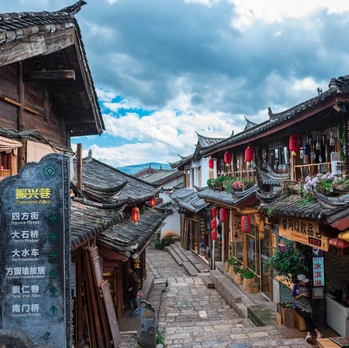
If you only follow the crowds crammed into Sifang Street (Square Street), of course all you'll see is commerce. But if you slow down and meander aimlessly along the cobblestone paths, you might stumble upon a surprise around an unexpected corner.
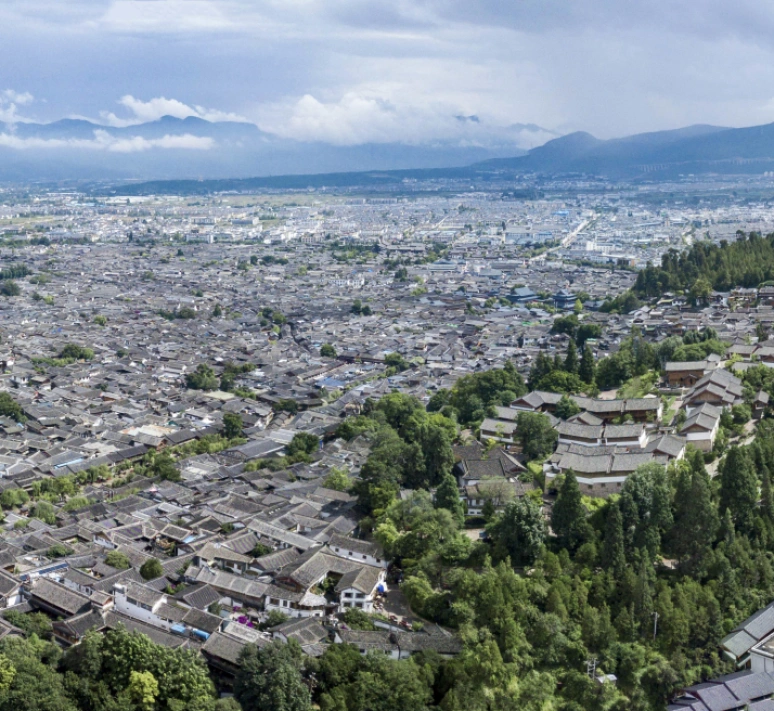
I captured a drone panorama of Lijiang Old Town—Dayan Old Town isn't just Lijiang's tourism招牌; it's a living testament to the flourishing of the Ancient Tea Horse Road. A thousand years of cultural accumulation cannot be dismissed by a few bars or a handful of casual encounters.
Lijiang at Night: Two Faces
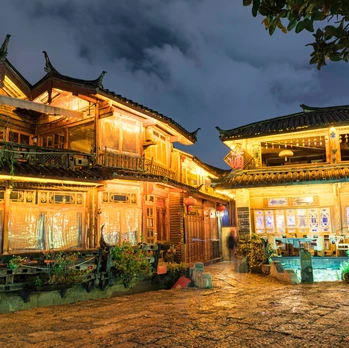
At eight in the evening, Lijiang enters its most bustling hour. Men and women from around the world spill into bars, releasing their excess energy. But later, as shops close one by one, the city gradually quiets down. At eleven-thirty at night, Sifang Street still sees people passing through, but the daytime chaos has faded.
Some say Lijiang is most beautiful at dawn, when the only sound on the cobblestone lanes is your own heartbeat. But I find late-night Lijiang equally charming—of course, I mean that truly quiet late-night hour.
Shuhe Ancient Town: More Ethereal Than Lijiang
Unlike Lijiang's liveliness, Shuhe Ancient Town feels more like a water town in Jiangnan (south of the Yangtze River). Water flows through the town, streets follow the water's course, and a delicate, intimate charm naturally emerges.
The name "Shuhe" itself hints at the abundance of water here. In fact, Shuhe possesses an extra layer of ethereal beauty precisely because of its flowing waterways. Shuhe also has its bar street, but the night here is short-lived—things start quieting down around ten o'clock. And that's when the night scenery is at its best.
Understanding the Ancient Tea Horse Road—Thanks to a Performance
Honestly, the biggest surprise of this trip was gaining a complete understanding of the Ancient Tea Horse Road's past and present—inside a scenic area.
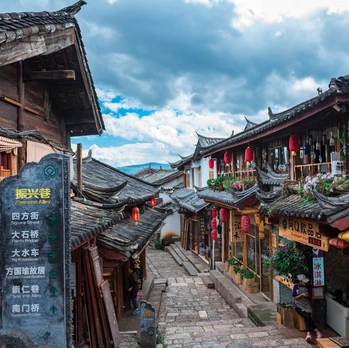
The scenic spot is called Lijiang Love Story of the Song Dynasty (Lijiang Qian Gu Qing), a performance venue under the Songcheng Tourism Group. But it's far more than just a place to watch a show—it's like a condensed version of the Ancient Tea Horse Road itself, with everything about this ancient route showcased in model form.
We booked the 4:30 PM performance. The opening scene was breathtaking: eleven young men in white, resembling a flock of birds, flew toward the audience from far to near, with real waterfalls and flames behind them. The light show is one of the venue's signature attractions—the entire performance rivaled many TV gala productions.
After the show, we enjoyed a hearty meal in the park's food court, strolled around casually, and by the time we left, it was already dark. For two people traveling together, every spot became a photo opportunity.
Trip Details: From Xi'an to Lijiang, Then to Shangri-La
Transportation and Costs
This was a seven-day dual-city trip, starting from Xi'an, flying to Lijiang, then taking a train to Kunming, and finally flying back to Xi'an. The total cost for two people was 6,750 RMB—roughly the price of an iPhone X, buying us a week of joy.
Major Transportation: - Xi'an → Lijiang: 640 RMB/person - Lijiang → Kunming: 142 RMB/person (train) - Kunming → Xi'an: 560 RMB/person
Local Transportation: - Airport to Old Town: 20 RMB/person - Old Town to Shuhe: 30 RMB - Shuhe to Stone Village: 11 RMB/person - Stone Village back to Old Town: 17 RMB - Kunming city transport: approx. 37 RMB
Tickets: - Lijiang Love Story of the Song Dynasty VIP package: 290 RMB/person
Accommodation: - Lijiang Never Say Goodbye Inn: 200 RMB/night (2 nights) - Lijiang Jingting Boutique Inn: 360 RMB/night - Shuhe Wu Ai Tang Inn: 960 RMB/night - Kunming apartment: 110 RMB/night
Meals: Approx. 1,100 RMB for two people over seven days (we tend to sleep in, often combining breakfast and lunch, plus snacking along the way, so we ate fewer full meals).
Other: 100 RMB for flower cakes (鲜花饼), plus miscellaneous expenses totaling around 200 RMB.
Pre-Trip Preparations
Documents: ID card, bank card, student ID (if applicable). You can't go anywhere without an ID card.
Photography Equipment: Nikon D750 + DJI Mavic Pro (Lijiang drone flight limit is 120 meters; don't unlock it casually). Phones used: Huawei Mate 9 and iPhone 8 Plus—about one-third of the photos were taken with phones.
Sunscreen: Lijiang's UV rays are extremely intense; the seemingly gentle sun can easily burn your skin.
Toiletries: Many inns provide low-quality toiletries; it's best to bring your own.
Rain Gear: Yunnan has "different weather within a hundred meters"—it's common to see rain at one end of the street and sunshine at the other. Always carry rain gear.
Good Backpack: Cars are not allowed inside Lijiang Old Town, and dragging a suitcase over cobblestone paths is agonizing. A backpack is much easier.
Warm Clothes: The temperature difference on the plateau is significant; mornings and evenings are completely different seasons from midday. Without warm clothes, you risk catching a cold.
Small Change: Some small shops and public buses don't accept WeChat Pay or Alipay.
Lijiang Food: A Taste of Naxi Culture
Preserved Pork Rib Hotpot (腊排骨火锅)
Lijiang's signature dish, once a main course in the third tier of the Naxi "Three Stacked Dishes" (三叠水)—the Naxi equivalent of a Manchu-Han imperial feast, served only to the most honored guests. Today, preserved pork rib hotpot shops are everywhere, and it has become an everyday meal.
As someone born in Sichuan and raised in Chongqing, I'm well-versed in cured meats. The key to this hotpot lies in the ribs themselves—the flavor after marinating and air-drying directly determines the entire pot's taste.
Stuffed Tofu (包浆豆腐)
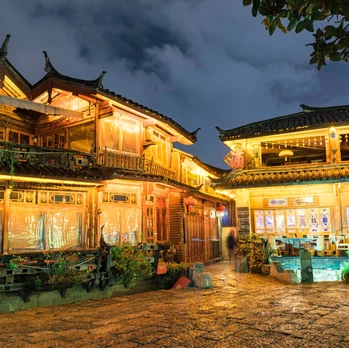
A specialty snack found on Lijiang's streets and alleys, famously featured on A Bite of China. The tofu is incredibly tender, with a crispy exterior from grilling on an iron plate, while the inside remains soft and almost liquid. The texture is superb, but be careful—it's easy to burn your mouth.
Chickpea Jelly (鸡豆凉粉)
This jelly has a dark appearance, unlike the versions found in Sichuan and elsewhere. It's smooth and delicate, pairing wonderfully with congee. The skin is actually the best part, as it absorbs the seasoning. While it may not look appealing, the taste is genuinely excellent.
Naxi Grilled Fish (纳西烤鱼)
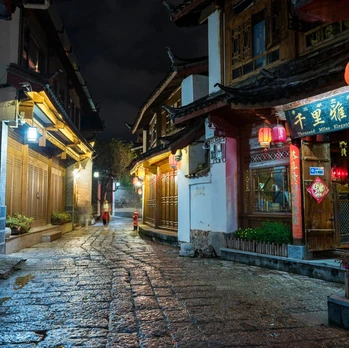
The fish is marinated for a while, then slow-grilled on an iron pan before being deep-fried. This process ensures every bite is flavorful and well-seasoned.
Wild Mushroom Rice Noodles (野菌王米线)
Highly recommended! This shop's rice noodles use no additional seasonings—the broth is made purely from the natural flavors of the ingredients. While the taste might be subtle, the texture is superb, and the portions are generous—my girlfriend and I couldn't finish one pot between us.
Lijiang Accommodation: Inns as Scenery
Lijiang likely has the highest density of inns in all of China. Dayan Old Town alone boasts thousands of inns, lining every street and alley. Prices range from 40-50 RMB to 1,000-2,000 RMB per night, offering an incredibly wide selection.
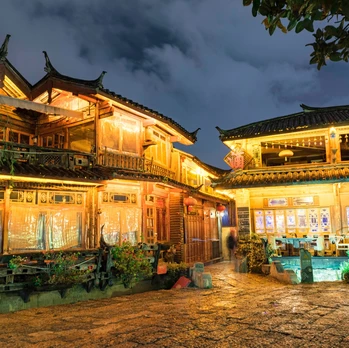
Most inns feature courtyards, which is my favorite aspect—you can bask in the sun or chat with the owner over tea.
This time, we stayed at three inns, each with its own character: - Never Say Goodbye Inn (不再见客栈): The name carries depth; slightly off the main path but peaceful - Jingting Boutique Inn (井庭精品客栈): Great value for money - Wu Ai Tang Inn (吾爱堂客栈): A boutique inn in Shuhe Ancient Town, pricey but offering an exceptional experience
Transportation Guide
Lijiang Sanyi Airport: About 30 km from the Old Town. The Civil Aviation Hotel operates shuttle buses, taking about 45 minutes, costing 20 RMB per person. The earliest bus departs at 6:30 AM, and the latest runs after the last flight lands.
Lijiang Station: Lijiang's main transportation hub, very close to the Old Town. A bus ride takes about 30 minutes. A taxi costs around 30+ RMB.
Lijiang Bus Station: Departures for tourist buses to Kunming, Dali, Shangri-La, and other destinations.
Final Thoughts
Some say that people who love to travel generally have good character—because travelers have a heart that yearns for beautiful scenery and are usually kind-hearted in daily life.
Ever since I finished middle school and bought a train ticket to Lushan with just my household registration booklet, I've been addicted to travel—and I've never looked back. To date, I've visited 181 cities and 4 countries, with a dream of setting foot on every continent.
For me, travel isn't about escape—it's about seeking. Seeking the beauty hidden beneath commercialization and noise, seeking the stories tucked away in alleyways, seeking the version of myself that exists on the road.
Lijiang is exactly that kind of place. It won't volunteer its secrets, but if you're willing to spend the time to discover them, it will reward you with unexpected surprises.
Finally, three pieces of advice for those planning a trip to Lijiang:
- Avoid peak season—Early September or late October means fewer crowds and a better experience
- Wake early or stay out late—The Lijiang of dawn and midnight is the real Lijiang
- Don't just follow guides—Allow yourself time to get lost. Those unexpected corners often hide the most beautiful scenery
May you find your own Ancient Tea Horse Road in Lijiang.
You should also read:
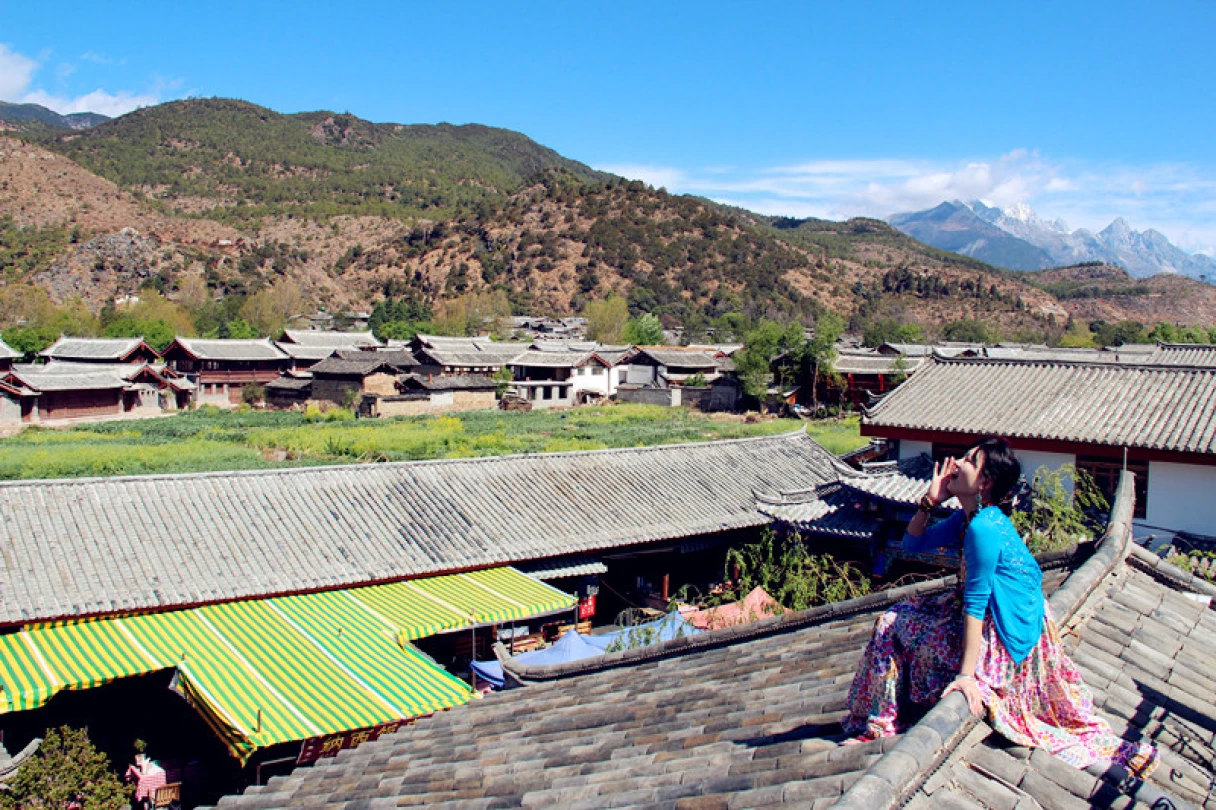
Lijiang Is Still Lijiang, But I Am No Longer Who I Was
Lijiang Is Still Lijiang, But I Am No Longer Who I Was Some places you return to again and again—not for the scenery, but to see how much you've changed. For me, Lijiang is that kind of place. It's like a mirror that never lies.
Continue reading...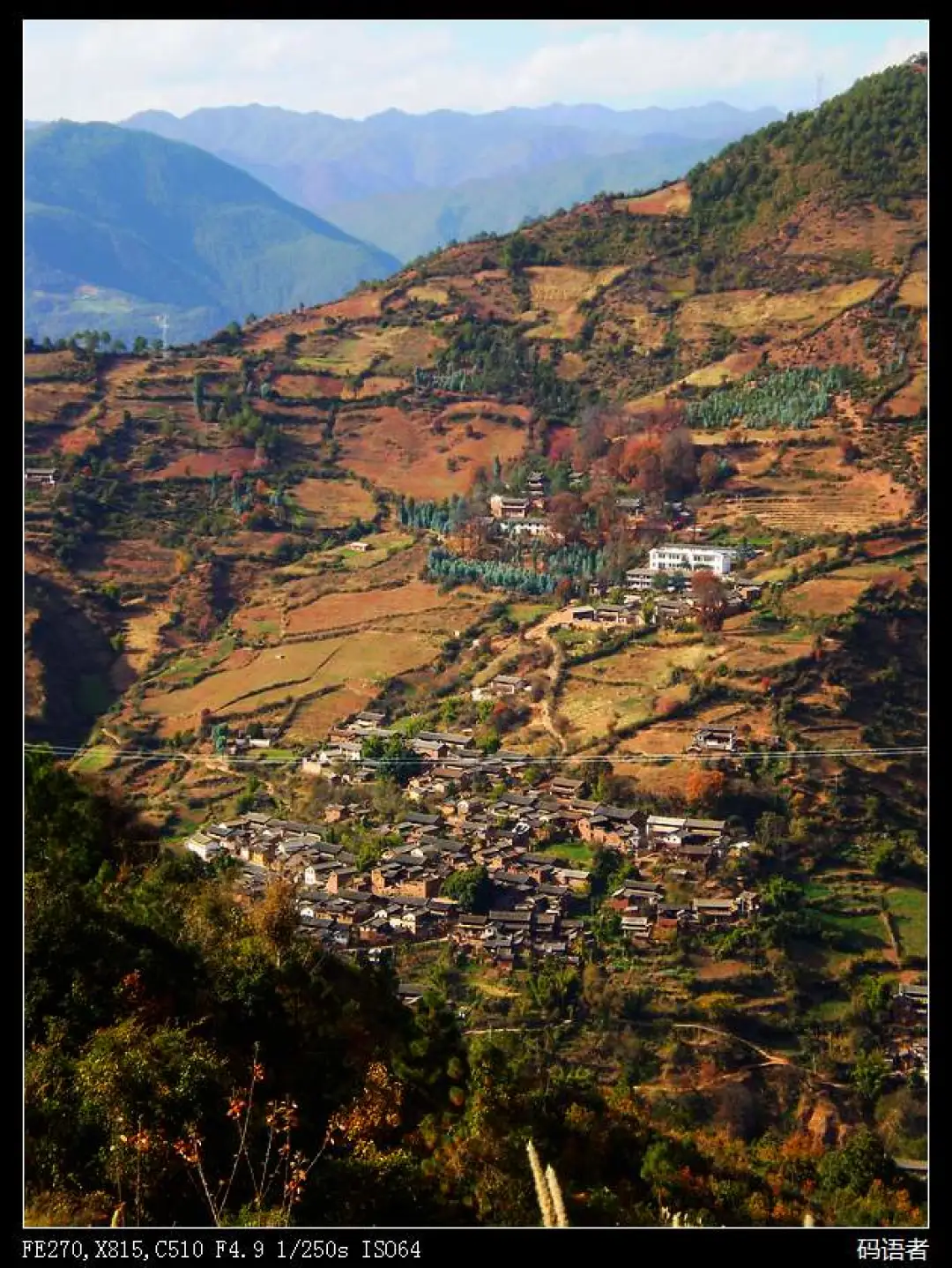
Before the Tongue: Discovering Nuodeng, the Ancient Salt Town Time Forgot
Before the Tongue: Discovering Nuodeng, the Ancient Salt Town Time Forgot There’s a peculiar magic in places that have been left behind by history. They don’t try to impress you. They don’t have polished welcome centers or laminated maps. They just are—worn, quiet, and utterly…
Continue reading...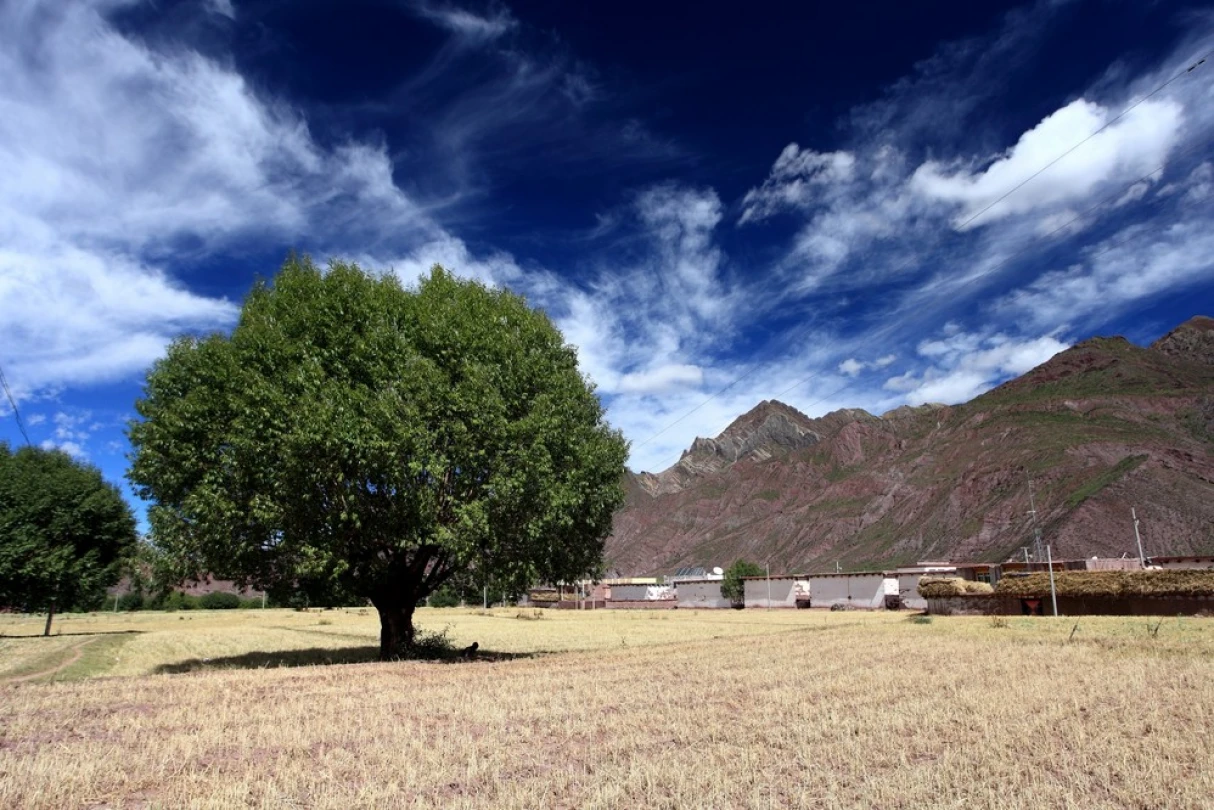
Big Bear and Little Cat Explore China: [A Self-Guided Tour of the Shangri-La Region: That Sky, So Blue It Feels Unreal!]
Big Bear and Little Cat Explore China: [A Self-Guided Tour of the Shangri-La Region: That Sky, So Blue It Feels Unreal!] Prologue: Why Shangri-La? In September 2011, my friend and I followed the Yunnan-Tibet Highway into the Greater Shangri-La region. Six days of travel, without…
Continue reading...