Driving a Smart Around Erhai Lake: A Romantic Rendezvous with Dali
Driving a Smart Around Erhai Lake: A Romantic Rendezvous with Dali
March in Dali: grass grows, birds sing, the alpine azaleas on Cangshan Mountain are in full bloom, jade-belt clouds wrap around the mountainside, and Erhai Lake reflects the cool moonlight. The year's liveliest time—the Third Month Street Fair—sets the entire ancient city abuzz. And I, traveling from afar, came only to keep this romantic rendezvous.
April in Dali feels like a pastoral idyll. Perhaps all that's missing is a lone boat and an old fisherman in a straw cloak, angling alone on a snowy river. But this time, my ride wasn't a boat—it was a purple Smart car. That gradient, magical purple had a futuristic vibe. When I picked up the car, I asked the owner why he hadn't washed it. He said casually, "It rains all the time this season, washing it is pointless." I was speechless, so we hit the road dirty.
I love this kind of weather: dark clouds churning like ink, the sky heavy with oppression, and then a stubborn ray of sunlight tearing through the black clouds, spilling golden light. In a fantasy novel, this would be the moment a thousand-year-old demon appears.
Why a Smart? A Heartfelt Adventure
Dali Airport is windy year-round, and most flights arrive early in the morning. To piece together my vacation, I flew to Kunming after work on Thursday, stayed at an airport hotel, and caught an early transfer to Dali the next day. From the airport to the ancient city, the private car took half an hour—and traffic was already building up.

The pickup point was called "Caiyun Car Rental"—a name so quintessentially Yunnan. I couldn't help imagining it was run by Yun Cai, the girl Wang Pangzi (Fatty Wang) from The Lost Tomb had a crush on. If he ever retired and opened a little car rental shop with her in Dali, playing with antiques they'd dug up, what a happy life that would be.
Outside the shop were three Smarts: gray, black, and this purple one. I told my husband, "Let's go with purple—it's neutral." He agreed. After signing the paperwork, I pulled open the door and froze—the interior had been customized in a shocking "auntie pink." My husband, who fancies himself a stylish guy, was trapped in 360 degrees of pink, his face a mix of emotions. I swear, when I chose the car, I didn't look inside—girls pick cars by looks, you know.
The car was tiny, with only two seats and barely any trunk space. But I was thrilled—the pink matched our suitcases perfectly.
Strolling Through the Ancient City: The Lively Vibe of Third Month Street
After picking up the car, first thing—lunch. The ancient city was gridlocked, so we decided to walk. Forget Smarts, even a Lamborghini couldn't compete with a bowl of crossing-the-bridge noodles for a foodie.
It was the Third Month Street Ethnic Festival, and the place was packed with locals from nearby villages. We entered through the East Gate, where new guesthouses were under construction and crowds thinned out. The sky was blue when we left the rental shop, but by the time we reached the ancient city, it started raining. We ducked into a restaurant.
My husband ordered rice noodles with green honeydew melon juice—sweet and delicious. I ordered wild mushroom porridge, hoping to find some matsutake (pine mushroom) in it, but no luck. The owner was honest; wild mushroom porridge and matsutake porridge were listed separately on the menu.
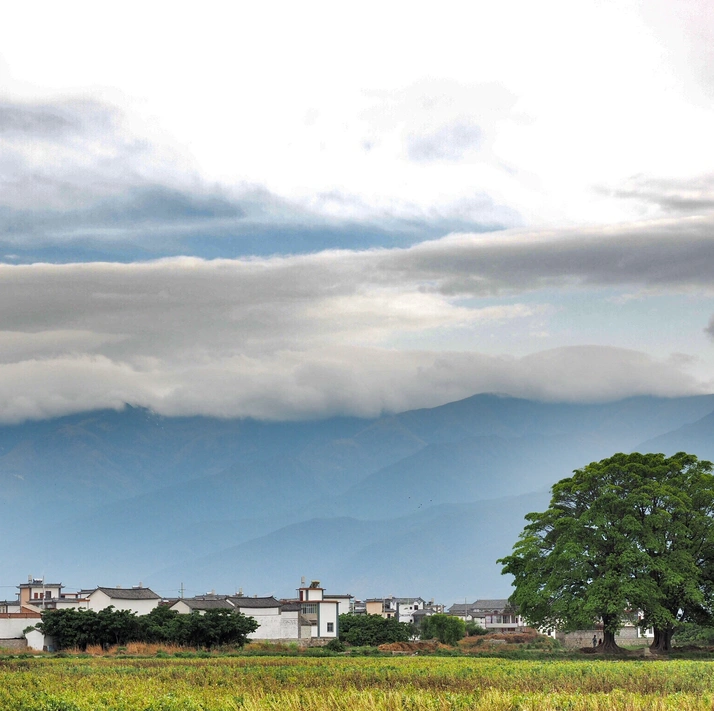
Under the city gate, the rain kept the crowd sparse. The ancient city was full of batik fabrics, a traditional Bai ethnic craft. The weather kept switching between rain and sun. As we walked uphill, the sky suddenly cleared, and we saw Cangshan Mountain—truly vast and imposing. Clouds churned at the summit, shifting visibly by the second. Someone told me the cable car often shuts down due to strong winds this season. I didn't think much of it at the time. When we went to Cangshan on the third day, well... let's just say I learned my lesson.
The West Erhai Lake Road: Slow Time from Caicun to Xizhou
We drove clockwise around Erhai Lake, staying in Xizhou the first night and Shuanglang the second. Just a few dozen kilometers a day, taking it easy.
Leaving the ancient city, we picked up the car and headed along the West Erhai Lake Road toward Xizhou. The lake was visible the whole way, and we could stop whenever we wanted. The Smart was perfect for random parking—though we still parked legally, of course. This little car doesn't have a P gear, only D, R, and N. You have to press the accelerator to move, just like the golf carts I drove on Hamilton Island in Australia.
The wetland park near Caicun Pier was nearly empty, but swarming with tiny flying insects. We took two photos and fled. The wetland faces Erhai Lake, with classic scenes of tree roots submerged in water. I always thought Erhai was blue, but it's not—it's like a deep, translucent sapphire, clear but with a dark, almost black depth in the distance, as if it could swallow your gaze. The water must be very deep. That sense of impenetrable darkness always gave me a slight chill.
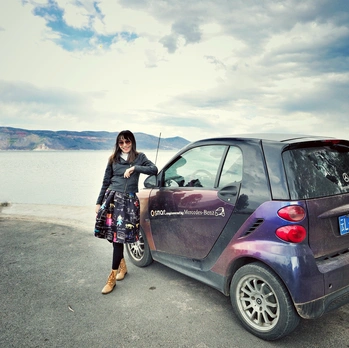
From Caicun to Xizhou, the West Erhai Lake Road is lined with wooden boardwalks leading to platforms over the water. If you can't find them, just follow the wedding photography crews—they know the way. But watch your step; several sections of the boardwalk are broken.
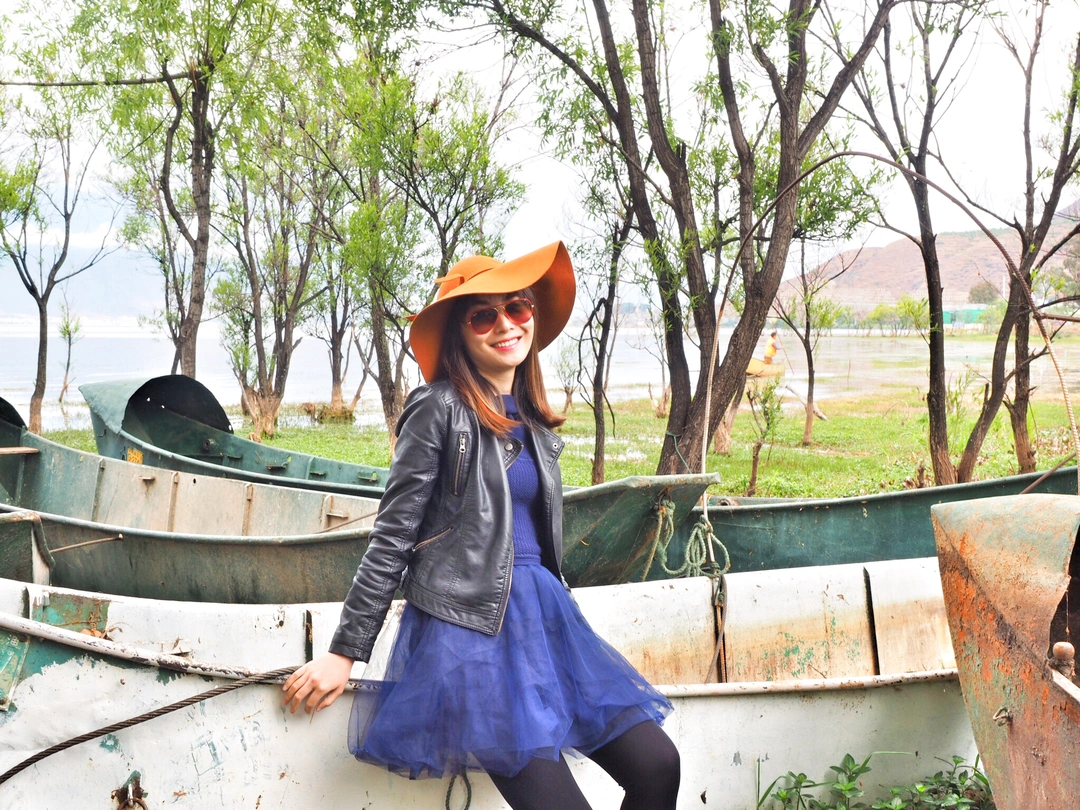
By the lake, I saw a local man fishing. The temperature in Dali this season isn't high—I was wearing a leather jacket, and it felt like around 15°C (59°F). He fiddled with his net for a long time, and I crouched by the roadside watching. It reminded me of the years I spent teaching in a remote Miao village deep in the mountains of Guizhou—teaching kids who could barely speak Mandarin to say, "Hello, How are you? Fine, thank you, and you?" The village was hidden at the junction of three provinces, with no tourism development. Its stilted houses, wind-and-rain bridges, and drum towers rivaled those of Xijiang Qianhu Miao Village. Whenever they slaughtered a pig, the kids would run excitedly to call me. I'd crouch by the bridge, watching the butcher, thinking about life, fate, and education. Those kids had bright eyes on dirty little faces, but reality wasn't a postcard. A grandfather with nothing but bare walls fried the best cured pork for me, unable to speak a word of Mandarin. I had grand speeches planned, but sitting there, I couldn't say a thing.
In the wild wind of Erhai, crouching by the Smart watching the fisherman, I thought of that village, that bridge, those children. Maybe true happiness is simply "finding joy in your own way."
Haishe Ecological Park: Waiting for a Ray of Light
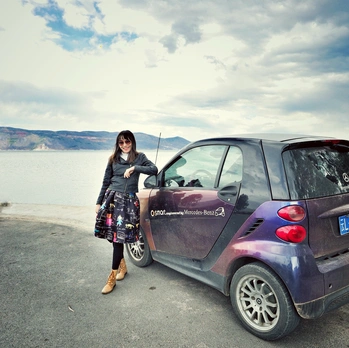
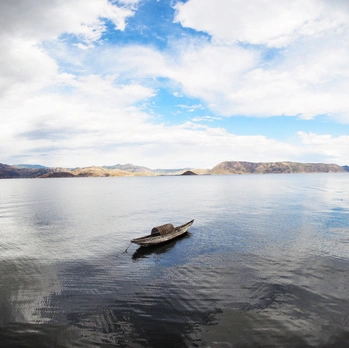
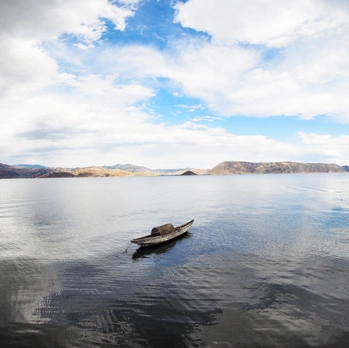
At 3 p.m., we reached our guesthouse on the West Erhai Lake Road. From the sea-view balcony, we could see a lonely boat bobbing, and fishermen returning home under the sunset. Dark clouds pressed down as evening approached. I hesitated about whether to visit Haishe Ecological Park. Just then, sunlight tore through the black clouds, creating surreal light and shadow. I decided to go.
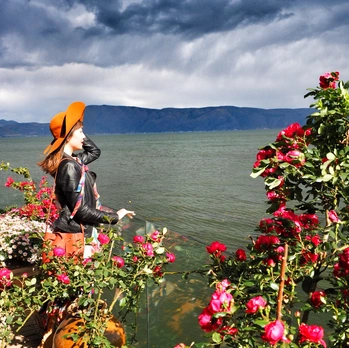
Haishe is a small spit of land jutting into Erhai Lake, a ten-minute drive from Xizhou. From the parking lot to the tip of the spit takes 25 minutes on foot, or you can take a horse-drawn carriage for 10 yuan per person. But walking along the path, with fields on one side and Erhai on the other, felt just right.
The sky had been overcast all day, and I'd been waiting for a ray of light. God said, "Let there be light," and there was light. When it came, I rushed to take photos; when it faded, I waited, watching the clouds shift. Photography is the art of light and shadow—nature provides the canvas.
In the evening, we went to Sifang Street in Xizhou Ancient Town for dinner. The streets were quiet, with more foreigners than locals—a few of them riding bicycles, chomping on Xizhou flatbread (a local savory pancake). It cracked me up. We ordered pomegranate flower stir-fried with pork, Erhai silverfish omelet, crispy fried river shrimp, and seaweed and pork rib soup. Four dishes plus sour plum soup came to about 150 yuan (roughly $20). The food was great—as long as it had salt and wasn't something I could get back home, I loved it.
Shuanglang: Watching Clouds on Yuji Island
A new day began on the guesthouse's shared sea-view balcony. Flowers bloomed at every step. My husband and I took selfies, setting the camera on the table and using our phones to trigger the shutter. After about twenty tries, we finally got one where his expression looked decent—but his friends still mocked it as "stiff."
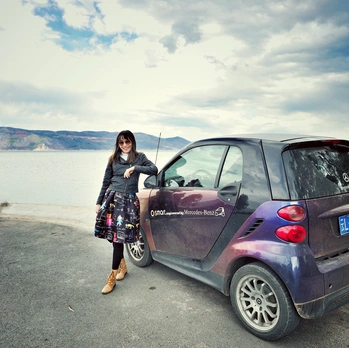
After breakfast, we checked out and continued our journey around Erhai. Our first stop was Butterfly Spring—I know it's cliché, expensive tickets, crowded with tour groups, but I love butterflies. The spring is small but deep, a vivid emerald green, almost like Jiuzhaigou Valley. My husband waited for the water to calm so he could capture the reflection of the characters "Butterfly Spring," but aunties from tour groups kept tossing in coins. It took ages to get that shot.
Leaving Butterfly Spring, we drove north along the West Erhai Lake Road to the northernmost point of the lake—Shangguan Town. "Wind in Shangguan, flowers in Xiaguan, snow on Cangshan, moon over Erhai." The wind in Shangguan was fierce; my hairstyle was completely destroyed. There were many trees in the lake, reminding me of what Sanmao (the Taiwanese writer) once wrote: "If there is an afterlife, I want to be a tree, standing forever, without joy or sorrow. Half serene in the dust, half flying in the wind."
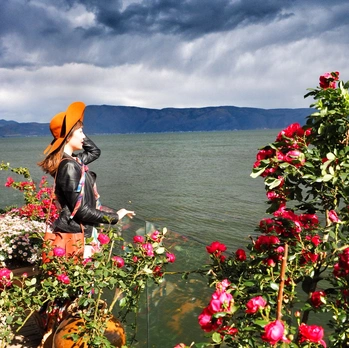
Tonight we stayed on Yuji Island in Shuanglang. The guesthouse called ahead to say cars couldn't enter during the day, so we'd have to park outside. I parked on a high roadside spot, offering a panoramic view of Shuanglang—admittedly, it's a massive construction site, with countless homes converted into guesthouses, but from this angle, it actually looked quite impressive.
Yuji Island is a peninsula connected to Shuanglang, with 270-degree sea views. But since cars can't enter Shuanglang during the day, that meant hauling our luggage on foot. The first 15 minutes were okay with wheeled suitcases, but then came the cobblestone paths, with bicycles, e-bikes, and three-wheelers zipping past. Dragging luggage was brutal. If you're staying on Yuji Island, travel light.
Yuji Island charges a 20-yuan entrance fee, waived if you're staying at a guesthouse inside. The island is tiny—a five-minute walk without stopping for photos. It houses Yang Liping's Sun Palace and Zhao Qing's Qinglu, but unless you're a guest, you can only peek through the gate. We couldn't afford the 5,000-yuan-a-night rooms, so we stayed at a guesthouse next to Sun Palace, facing Erhai Lake, with a courtyard full of daisies.
The Clouds of Dali: A Never-Ending Show
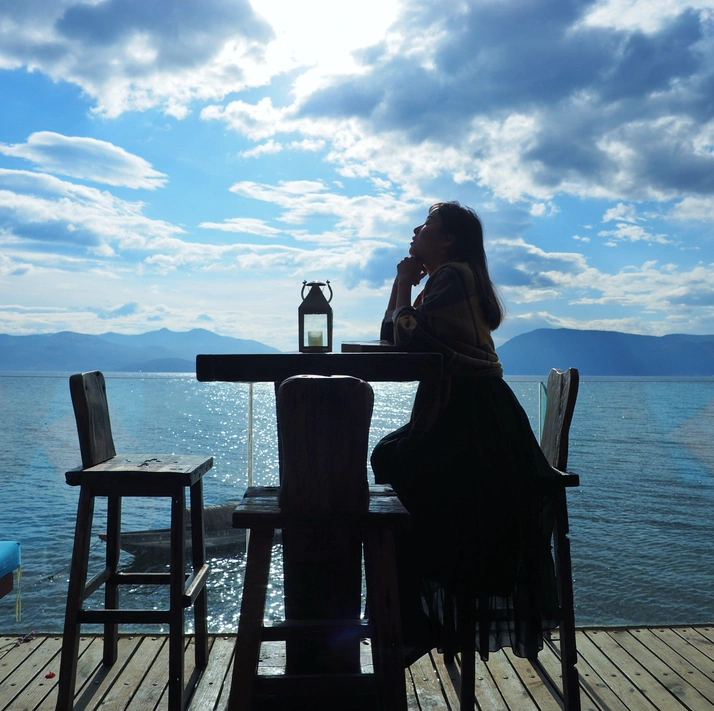
The clouds in Dali are endlessly changing. In the afternoon, "Jesus light" often appears, like a divine miracle. Sitting on the balcony, watching the clouds drift, the breeze brush by, and the flowers bloom—everything felt perfect. I wished time would stop, the sunlight would linger, and our hearts would stay forever light and joyful.
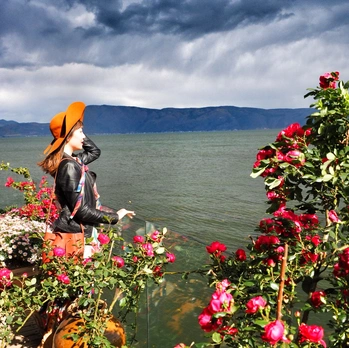
After sunset, we went to Shuanglang Ancient Town for dinner. Along the lake, there were countless guesthouses and restaurants, some with live music. Under the bougainvillea, flowers bloomed like a burst of youth.
Beyond the Romantic Clichés: Another Side of Dali
Beyond the wind, flowers, snow, and moon, Dali also offers clouds—ever-changing, rolling and unrolling. The alpine azaleas on Cangshan bloom among the peaks this season. The trees in Erhai Lake stand lonely but resilient.
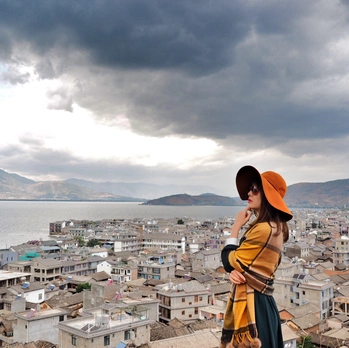
This trip around Erhai taught me: Dali's beauty isn't just in its famous clichés, but in the unexpected moments—fleeing from swarming insects in the wetland, waiting for a ray of light on a broken boardwalk, watching clouds roll by from a guesthouse balcony, and feeling the earthy vibe of foreigners chomping flatbread in an ancient town.
Practical Tips for Your Erhai Lake Road Trip
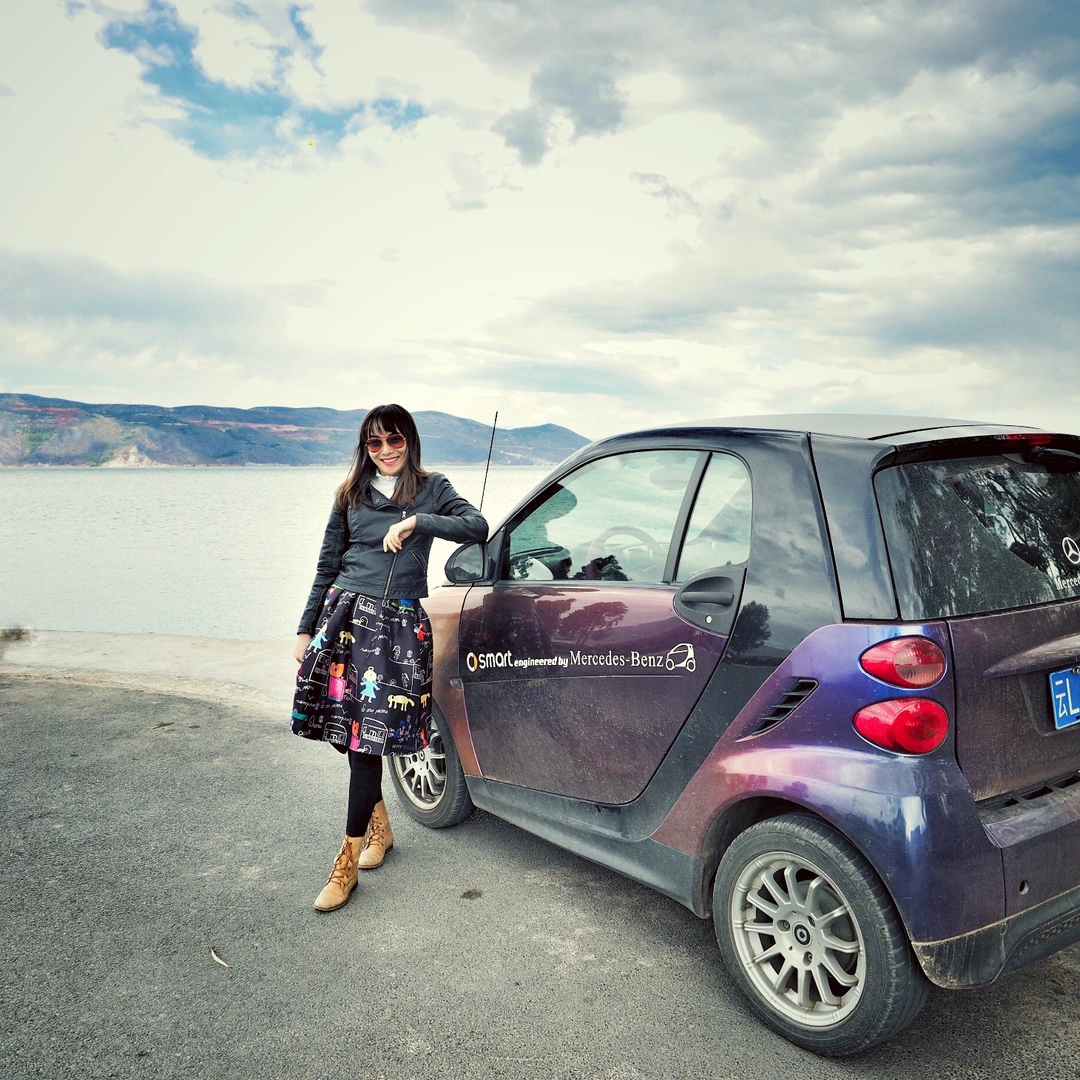
- Car Rental: A Smart is great for couples or two people—easy to park, but tight on space. There are rental points outside Dali Ancient City. Check the interior color if you care about that sort of thing.
- Route: Drive clockwise around Erhai Lake, starting from Dali Ancient City, passing through Caicun, Xizhou, Shuanglang, and back to the ancient city. A few dozen kilometers a day, taking it easy.
- Accommodation: In Xizhou, I recommend Meilan Meilu Guesthouse—great sea-view balcony. In Shuanglang, guesthouses on Yuji Island face Erhai Lake, but cars can't enter during the day, so pack light.
- Food: Small eateries on Sifang Street in Xizhou cost about 50 yuan per person. Try pomegranate flower stir-fried with pork and silverfish omelet.
- Best Season: March to April. The Third Month Street Fair is lively, the azaleas on Cangshan are in bloom, and the weather is mild.
- Things to Note: Dali is windy, especially in Shangguan—dress warmly. The West Erhai Lake Road passes through villages with narrow roads, where the Smart shines. The boardwalks at Haishe Ecological Park have broken sections—watch your step.
Final Thoughts
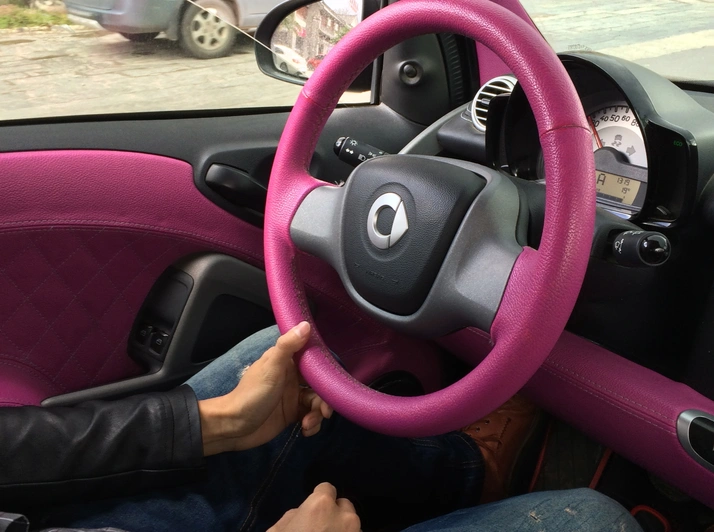
Driving a Smart around Erhai Lake—a romantic rendezvous with Dali. This date included a pink interior full of girlish charm, a sky of churning dark clouds, the patience to wait for a ray of light, and the leisure to watch clouds drift. Dali's beauty isn't in the sights, but on the road—in every moment you stop for a photo, under every beam of "Jesus light," in every moment of finding joy in your own way.
If you want to go, pick a small car, bring a good mood, and set off. The wind, flowers, snow, and moon of Dali are waiting for you.
You should also read:
September: Finding Unexpected Warmth in Yunnan (Kunming, Dali, Shuanglang, Lijiang, Lugu Lake)
September: Finding Unexpected Warmth in Yunnan (Kunming, Dali, Shuanglang, Lijiang, Lugu Lake) Foreword: One Person's Journey, A Crowd's Story Before I set off, like every first-time solo traveler, I printed out a thick stack of travel guides and rehearsed countless possible scenarios in my head—getting…
Continue reading...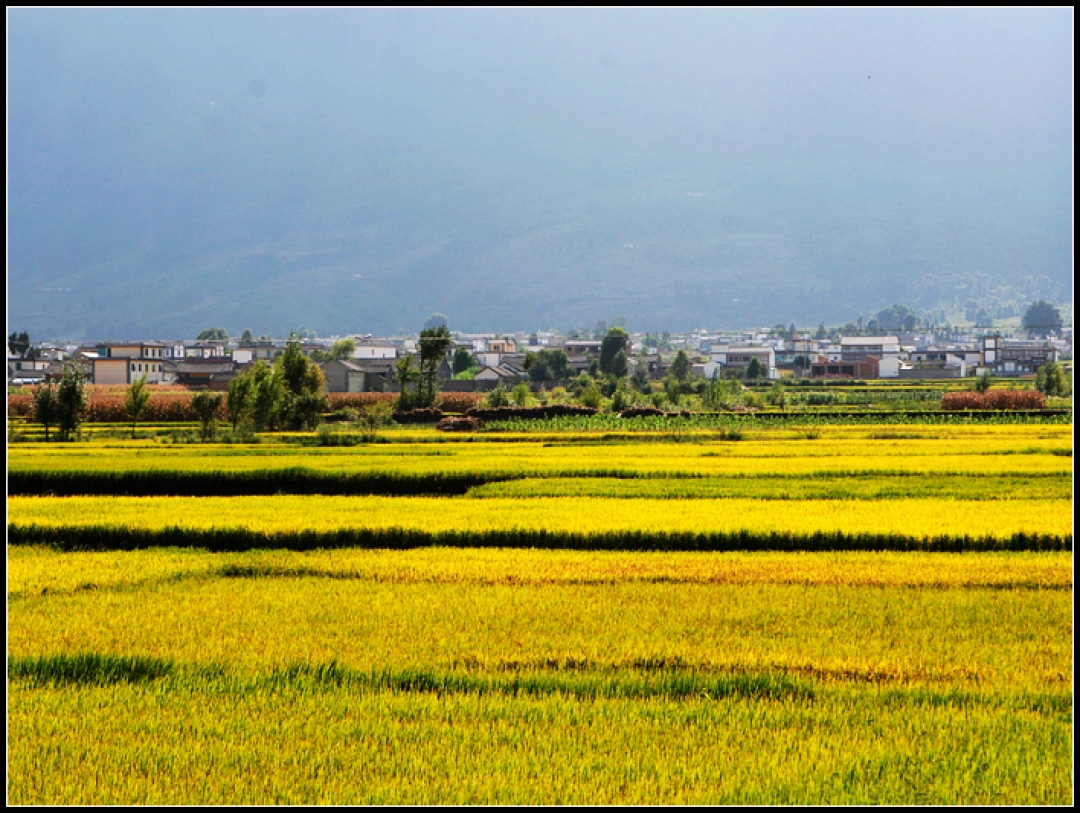
A 9-Day Yunnan Journey: From Lijiang to Dali to Tengchong – A Trip Toward Self-Reconciliation
A 9-Day Yunnan Journey: From Lijiang to Dali to Tengchong – A Trip Toward Self-Reconciliation Some say travel is simply going from a place you're tired of to a place other people are tired of. It stings to hear, but it's painfully true. Yet there's…
Continue reading...
Two Girls' Graduation Trip: Dali and Shuanglang – A Poetic Farewell to Mountains and Sea
Two Girls' Graduation Trip: Dali and Shuanglang – A Poetic Farewell to Mountains and Sea Preface: Catching the Tail of Youth, Heading South During our senior year of college, my roommate and I – two girls studying in Beijing – decided to bid farewell to…
Continue reading...