Driving Notes from Southeast Yunnan, Part 8: Bise Village Caches a Century, Old Streets Load a New Face
Driving Notes from Southeast Yunnan, Part 8: Bise Village Caches a Century, Old Streets Load a New Face
A Time Travel from Terraced Fields to the Homeland of Rice Noodles
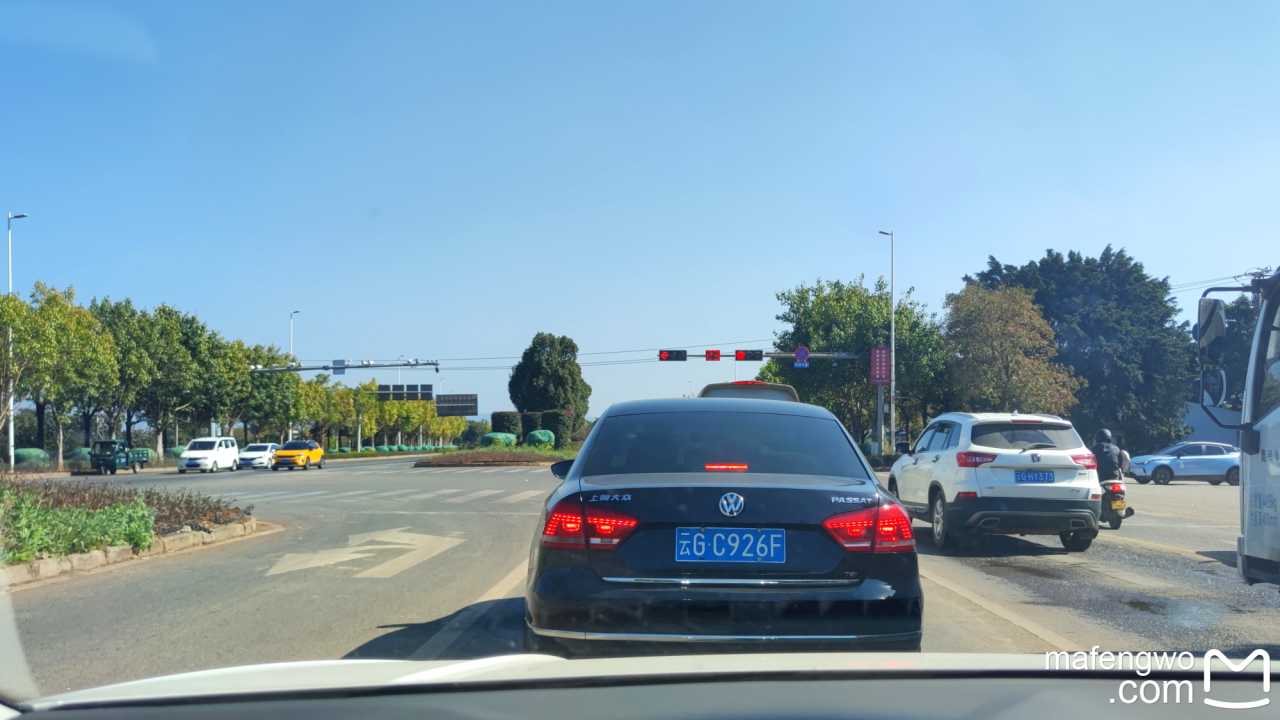
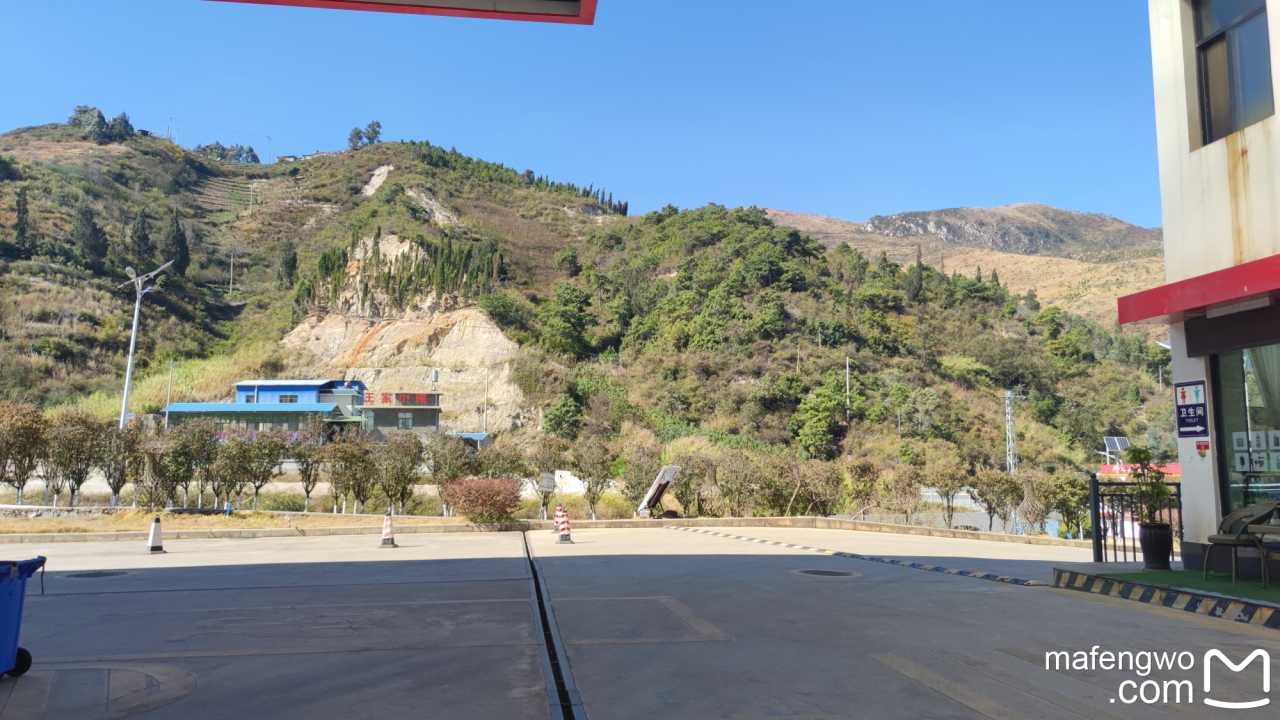
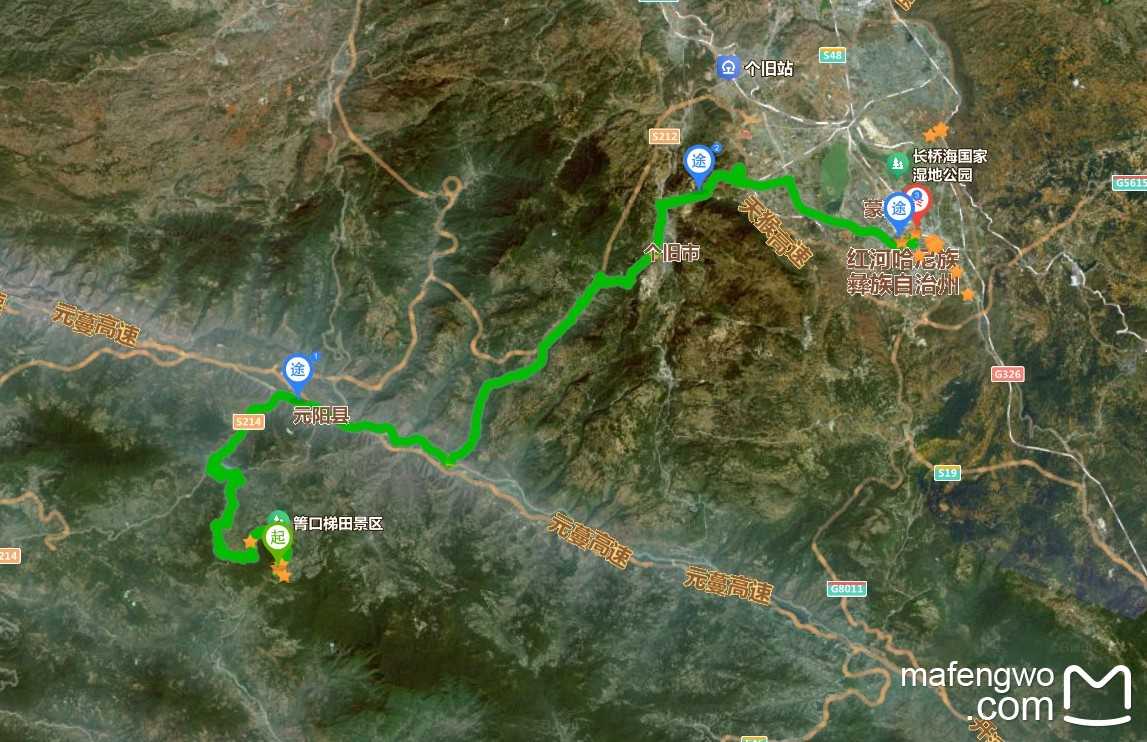
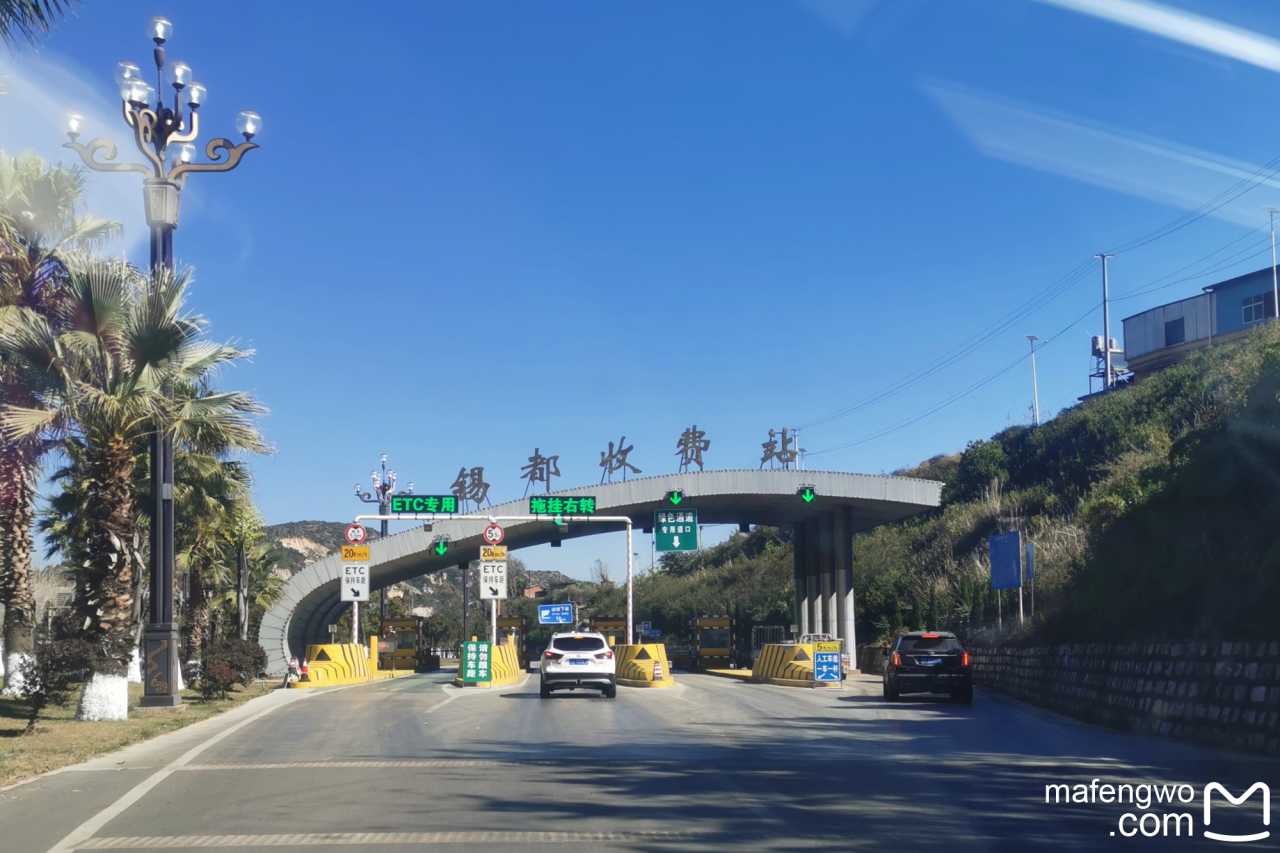
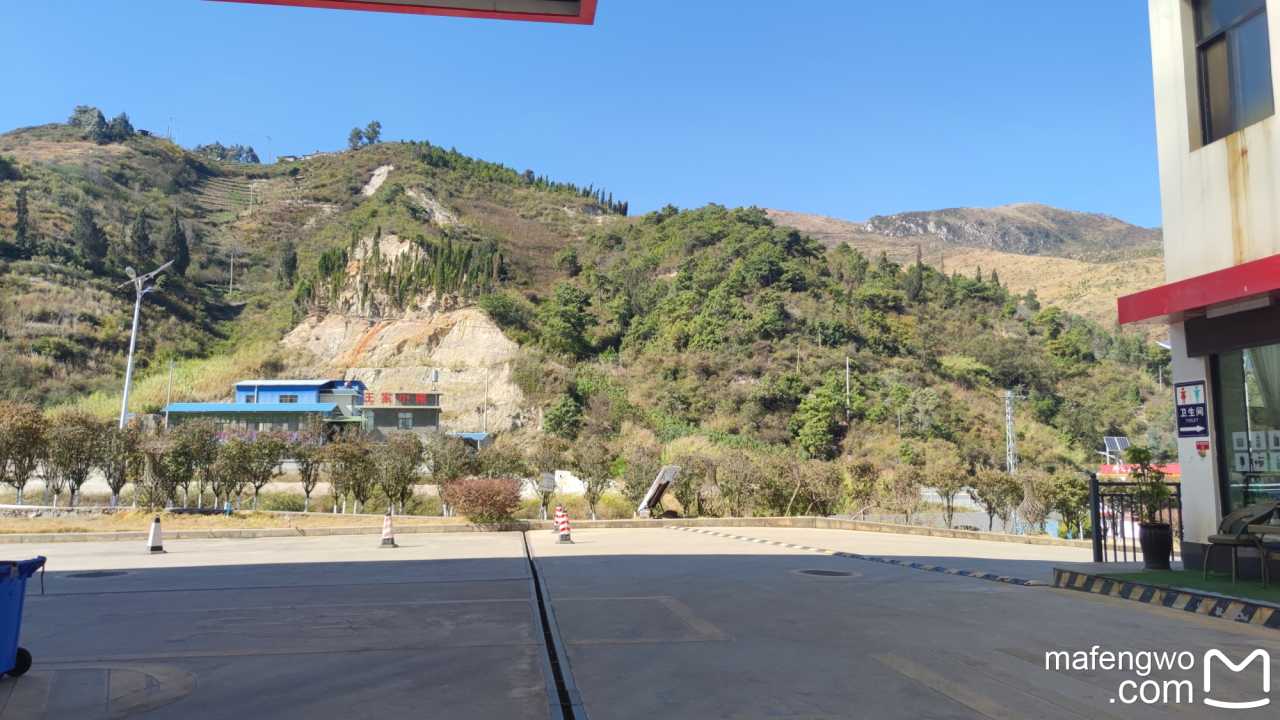
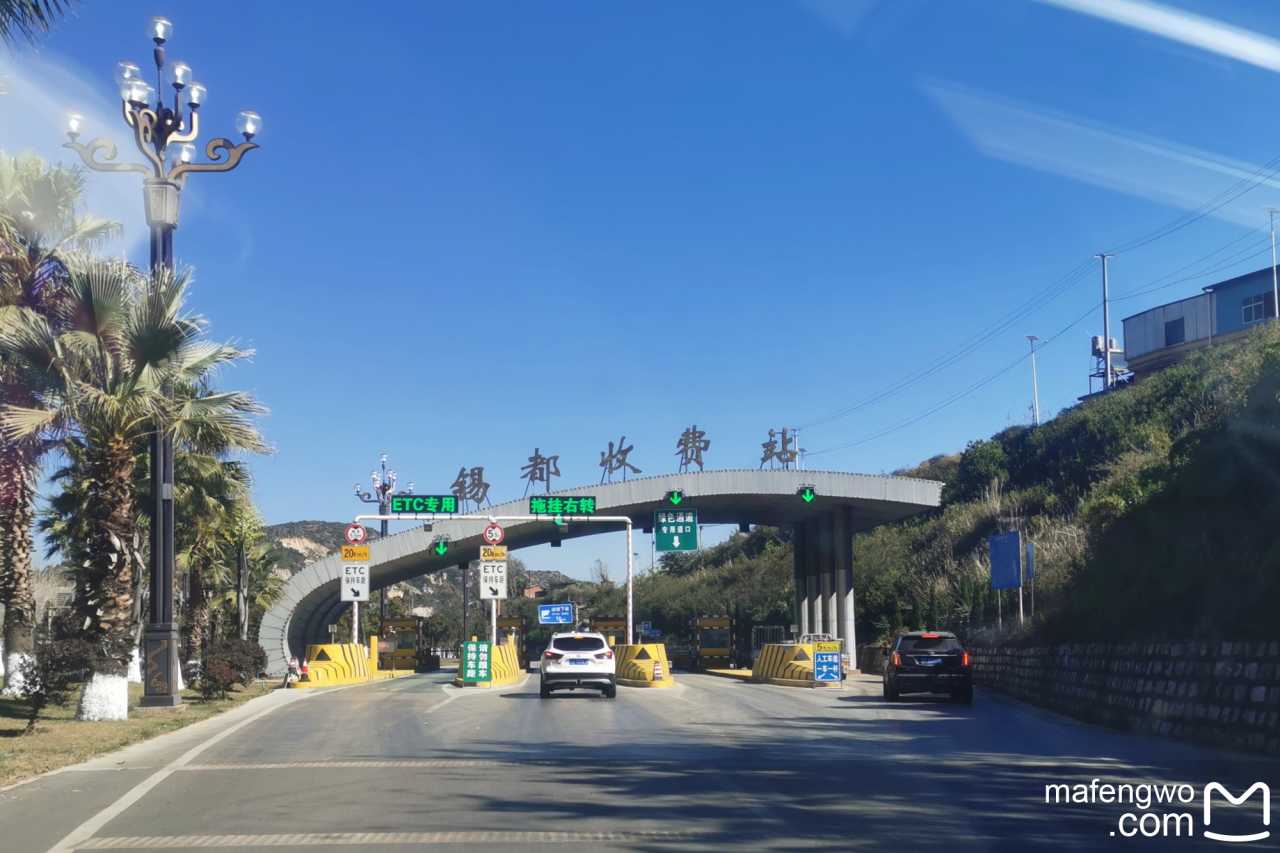
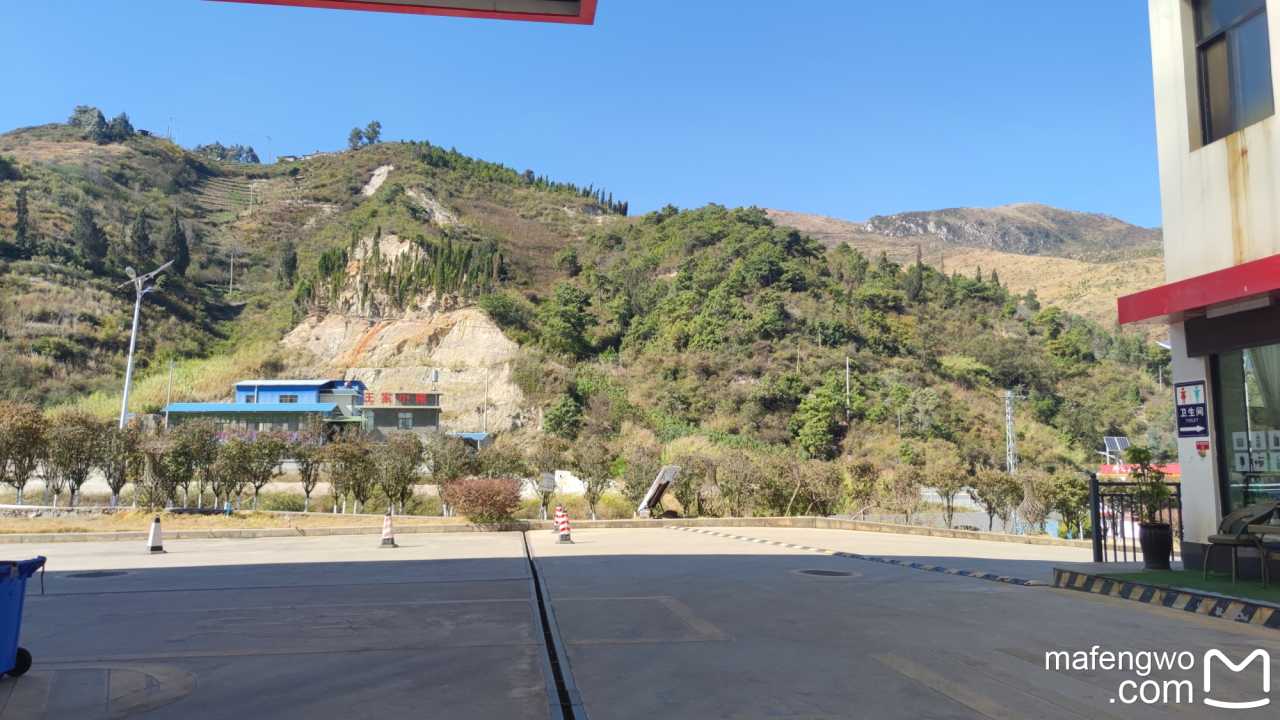
The Yuan Yang morning was still asleep in clouds and mist when our wheels already ground over winding mountain roads, heading toward Mengzi. Over 164 kilometers, from the layered folds of Hani rice terraces to the broad avenues of the Honghe Plain, scenery scrolled past the window like frames of film. After passing through the Xidu toll station and making a brief rest stop at a Sinopec gas station, Honghe Avenue stretched straight ahead, as if showing us the calm and vastness of this land.
Mengzi—a small city famous far and wide for its "crossing-the-bridge rice noodles"—hides far more than just a bowl of savory broth. It is a thick history book, each page filled with the whistles of the Yunnan-Vietnam Railway, the chiseling sounds of the Gejiu tin mines, and the resonant reading voices of teachers and students from the National Southwestern Associated University.
Honghe Prefecture Museum: A City's Memory Code
The "Golden Ox" Puzzle on the Plaza
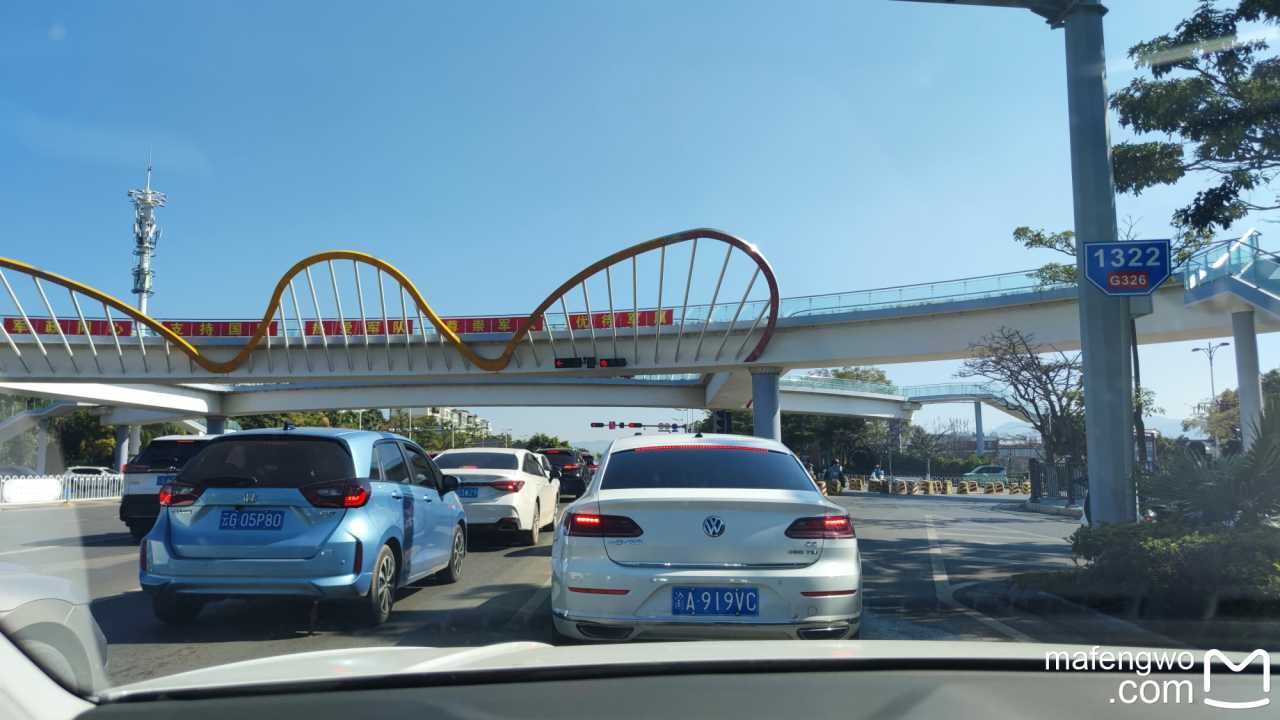
At 14:44, we arrived at Honghe Plaza. On the western side stood the Honghe Prefecture Museum, opposite it the Honghe Prefecture Library, and to the south the imposing Honghe Prefecture Government Building. In the center of the plaza rose the Honghe Bronze Tripod, and in the parking lots on both sides were parked quite a few RV campers—a common sight in Yunnan.
A large golden sculpture in the distance caught my curiosity. Zooming in with my telephoto lens, its plump rear and hind legs looked exactly like a pig's, but the raised front part and the ears made me suspect it was an elephant. In the end, I confirmed it was a "Big Golden Ox." The people of Honghe Prefecture certainly have style—even their mascot gets gilded.
The "Bogu" Misunderstanding at the Museum
The sculpture in front of the museum is named "Bogu" (Embracing Antiquity), but when I first glanced at the stone carving, I almost thought it read "Boshan." Boshan in Shandong is a well-known name—the "Bo" in Zibo comes from it, and Boshan cuisine is a major branch of Lu cuisine. Only when I got closer did I realize that one horizontal stroke of the character "古" (ancient) was perfectly blocked by a stainless steel railing—a classic case of mistaken identity.
This museum covers 3,266 square meters, with a building area of 8,121 square meters, housing a collection of 11,000 artifacts (sets). The architecture blends Chinese and Western styles, incorporating the conical elements of ethnic minorities' "mountain circumambulation" and "circle dance" customs—a uniquely thoughtful design. The three main exhibition halls—"Rich and Beautiful Honghe," "Ancient and Mysterious Honghe," and "Colorful and Splendid Honghe"—display over a thousand artifacts, including bronze ware, ethnic costumes, and tin crafts.
The Atrium Corridor and the Legend of Crossing-the-Bridge Rice Noodles
Unlike other museums, here you don't step directly into the exhibition halls after the entrance hall. Instead, you pass through a tall atrium and then slowly ascend along a winding corridor. On the corridor walls hang paper-cut illustrations of the legend of crossing-the-bridge rice noodles, telling a moving story:
In the early Qing dynasty, a scholar in Mengzi was admonished by his wife to study hard, so he lived alone in a pavilion on South Lake. Every day, his wife brought him meals. Seeing her husband growing thinner, she tried every way to nourish him. One day, she poured chicken soup into a jar and prepared rice noodles and sliced meat. Her young son, being playful, threw the meat slices into the soup. The wife hurriedly fished them out, only to find them already cooked. She tasted them—delicious. Carrying this accidental discovery to the study, she collapsed from exhaustion on the bridge over the lake. The scholar helped his wife up and found that the soup jar, though showing no steam, was scalding hot. His wife recounted the accidental method, and the scholar exclaimed, "My virtuous wife crosses the bridge every day; this dish can be called 'crossing-the-bridge rice noodles.'" Later, the scholar passed the imperial exams, and the story spread as a beloved tale.
Bronze, Blue-and-White Porcelain, and the Echoes of Caravan Trains Across a Millennium
The history of Honghe Prefecture dates back to the Bronze Age, 3,000 years ago. In the exhibition hall, Majiang-type bronze drums and Shizhaishan-type bronze drums sit quietly, telling tales of ancient sacrifices and battles. Jianshui is the hometown of blue-and-white porcelain and the birthplace of purple pottery—from Neolithic pottery to Song dynasty celadon, to Yuan and Ming blue-and-white porcelain, all the way to the late Qing when the unique Jianshui purple pottery developed. The techniques of "incised carving and inlaid fill" and "polishing without glaze" still amaze people today.
River shipping and caravan trains were once vital links connecting Honghe to Southeast Asia. Honghe shipping began in the Qin and Han dynasties and peaked during the Ming and Qing. In 1853, after the copper mines closed, the people of Yisa organized caravan trains to transport goods across the border, initiating cross-border trade. It wasn't until the Yunnan-Vietnam Railway opened in 1909 that caravan trains and river shipping gradually declined.
Gejiu Tin Mine: From the Han Dynasty to Global Glory
The mining of the Gejiu tin mine can be traced back to the Han dynasty, with records in the "Book of Han: Geography." During the Ming and Qing, as policies loosened, the mining area gradually developed. After the Yunnan-Vietnam Railway was completed in 1909, the Gejiu tin mine entered its golden age, producing 90% of China's tin output and accounting for 89.2% of exports, making it one of the world's major tin producers. Tin molds and a double-dragon-eared lion-playing-with-embroidered-ball tin incense burner with a base bear witness to that glorious era.
A Feast of Ethnic Costumes
As a second-tier museum, it doesn't have many top-tier pieces, but the ethnic costume exhibition hall is absolutely worth a stop. Ethnic minorities make up 61.9% of Honghe Prefecture's population, with 11 indigenous groups living and thriving here. On a circular rotating platform in the center of the hall, classic costumes of the Hani, Yi, Miao, Dai, Zhuang, Yao, Hui, Bulang, Lahu, and Buyi peoples are displayed in sequence—even if you visit the homelands of these ethnic groups, you might not see such exquisite costumes, and you certainly wouldn't feel comfortable staring at people. Tools for daily life and production, ethnic musical instruments, silver ornaments, masks—every exhibit exudes a rich ethnic atmosphere.
Vietnamese Flavors: An Exotic Encounter on the Tongue

In the evening, we chose a Vietnamese restaurant themed around the Yunnan-Vietnam Railway. Old photos covered the walls, as if we had traveled back to that era of roaring trains.
The braised fish with yellow-skinned fruit (黄皮果焖鱼) was the surprise of the night—the fruits, the size of soybeans, their sweet-and-sour flavor colliding with the fried fish, completely masking any fishy taste and leaving a unique exotic impression. The Vietnamese steamed rice rolls (小卷粉) came in too large a portion; personally, I still think Cantonese rice rolls are superior. The fried spring rolls had a rich filling, and even the vegetarian version was satisfying. The fresh shrimp rice paper rolls were refreshing and tasty, offering a flavor profile completely different from China's four major cuisines—a refreshing change.
Bise Village: Two Stations, a Century of Vicissitudes
Stumbling into a Hidden Gem
On January 19, after breakfast—which included the complimentary crossing-the-bridge rice noodles from the hotel, a bowl so huge that we couldn't eat anything else—we drove to Bise Village. The navigation led us under an expressway bridge, where a security guard blocked the way: cars couldn't enter the scenic area. We could either walk 2 kilometers in or go to the visitor center 3 kilometers away. We chose the former, parked in a wide spot at the intersection, and walked up the gentle slope along the road.
Papaya trees by the roadside were heavy with fruit—fleshy berries that turn orange-yellow or golden when ripe, with an intoxicating aroma. After walking about a kilometer, we arrived at the Yunnan-Vietnam Railway Historical and Cultural Park.
Bise Village Station on the Ge-Bi-Shi Railway
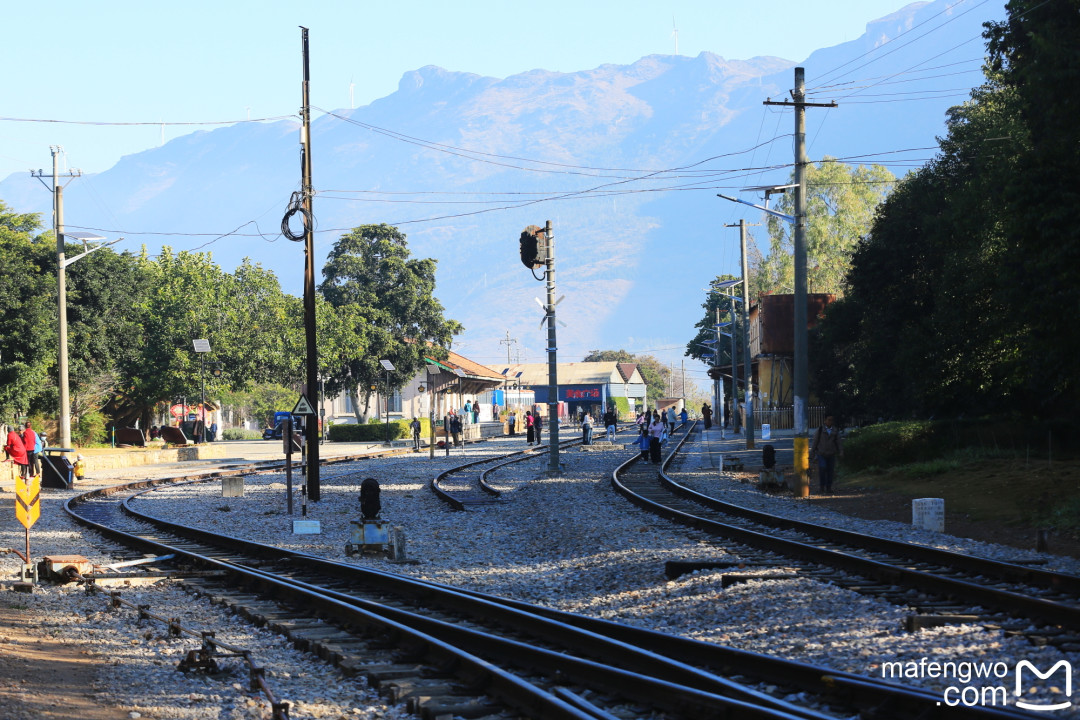
Climbing the steps, Bise Village appeared before us. A simple two-story building served as the platform—yellow station house, a three-faced clock on the wall, benches under the clock, and a narrow-gauge track passing in front—all elements perfectly matching the Bise Village in my memory. In the off-season, there were no tourists; we had the entire station to ourselves.
This was Bise Village Station on the Ge-Bi-Shi Railway. The Ge-Bi-Shi Railway was China's first privately operated railway, proposed in 1909 and construction began in 1914. It stretched 182.5 kilometers and used 6-decimeter narrow gauge (寸轨). The reason they didn't build standard gauge or meter gauge was twofold: political sovereignty—local gentry didn't want to connect with the Yunnan-Vietnam Railway to avoid French takeover of management rights—and topographical constraints—the Gejiu area has elevations over 2,000 meters, and the narrow gauge was more adaptable to steep gradients and sharp curves. The railway was built in three phases, fully opened in 1936, and the Jige section ceased operation in 1990, ending narrow-gauge service.
The station still has a steam locomotive turntable—because the narrow gauge and meter gauge have different track widths, locomotives had to complete cargo transfer at Bise Village and then turn around on the spot. Using the principle of low friction in bearings, it took only four people to push the turntable for a 180-degree turn. This turntable is probably the smallest in China. Nearby stands a century-old water crane, a water supply device used for early steam locomotives.
Bise Village Station on the Yunnan-Vietnam Railway
Walking north along the tracks, I discovered that the real Bise Village Station was actually here. The one we had been at was just a small station; the Bise Village Station on the Yunnan-Vietnam Railway was the true core back in the day.
Bise Village Station was originally named "Bishi Village Station" (壁虱寨站), built in 1909. After the Yunnan-Vietnam Railway was fully completed in 1910, it became the central hub of this railway and was once one of the oldest railway stations in China. It was designated a special-class station in 1918, passenger service ceased in 1992, and the station was abolished in 2010. The station building is a French-style brick-and-wood structure with red tiles and yellow walls, one story above a ground floor, 11.5 meters high, 25.5 meters wide across five bays, and 10.2 meters deep. Nearby are the French staff dormitory, Datong Company, water tower, police station, the Geleshi Hotel, a red clay tennis court, and even a grapevine planted by the French back then.
The famous three-faced clock is an iconic relic here, made in 1910 by clockmakers in Paris, France, with the word "Paris" clearly engraved on the clock body. The two outer faces are slave clocks for passengers to check the time; the inner face is a master clock for staff use. It is now a national second-class cultural relic.
The Train Is Coming!
Just as we were touring, a whistle sounded from afar. Tourists rushed to the platform, and I couldn't resist either. The management staff used loudspeakers to remind everyone to clear the tracks. The train passed through at no more than 5 kilometers per hour. All the tourists aimed their cameras and phones at the train in tribute—only our elder companion remained unfazed. This worldly-wise travel partner was long accustomed to such scenes.
Annan Coffee Shop and the Old Street's New Look
West of the station is Bise Village. The Annan Coffee Shop is located west of the large banyan tree. 110 years ago, a Vietnamese couple opened Yunnan's first coffee shop here. Today, the scenic area has restored this function, allowing people to still taste the flavors of a century ago.
At the eastern end of the market street, the Qing Dynasty Post Office, and the retro decorations in the shops along the street, all make one feel as if traveling back to that bustling era known as "Little Paris." At its peak, Bise Village attracted drifters and merchants from 18 provinces and 108 counties across China, all chasing their "fortune dreams." Over forty pairs of trains stopped here daily, with beautiful women and wealthy merchants, foreign liquor and coffee—a scene of lively prosperity.
South Lake Park: The Birthplace of Crossing-the-Bridge Rice Noodles
In the afternoon, we arrived at South Lake Park. South Lake was originally called "Grass Sea." In the Ming dynasty, it was developed into an irrigation pond, with three artificial hills—Penglai, Fangzhang, and Yingzhou—piled up in the lake. The lake covers about 300,000 square meters, with weeping willows along the embankment and paths connecting the three islands. The Yingzhou Pavilion on the island was first built in the 29th year of Emperor Kangxi's reign (1690). It is a wooden hexagonal pavilion with a pointed roof and three eaves, 22.4 meters high. The plaque on the second level reads "Penglai Is Not Far," and the third level reads "Water and Sky Merge as One."
The legend of crossing-the-bridge rice noodles originated right here—the Jade Belt Bridge on South Lake was where that virtuous wife crossed every day to deliver meals.
Around the park, buildings like the Mengzi Customs Office, the French Consulate, and the Geleshi Foreign Firm are mostly in French style. In the spring of 1938, the College of Arts and Law of the National Southwestern Associated University moved to Mengzi. Due to a shortage of school buildings, these vacant structures became classrooms and dormitories for teachers and students.
Epilogue: Bise Village Caches, Old Street Loads
Bise Village is a station cached by time. A century has passed, the tracks remain, the station building remains, but the roaring trains are no more. Meanwhile, Mengzi's old streets are loading a new face—the aroma of crossing-the-bridge rice noodles still wafts through the air, Vietnamese restaurants are bustling with diners, and young people stop to photograph ethnic costumes in the museum.
From the terraced fields of Yuan Yang to Bise Village in Mengzi, we chased light and shadow while also touching history. The charm of Southeast Yunnan lies not only in its magnificent natural scenery but also in those human imprints that still shine after being polished by time. Bise Village has cached a century, and the old streets are loading a new face—perhaps this is the meaning of travel: at the intersection of history and reality, finding your own moment of emotion.
Practical Tips: - Honghe Prefecture Museum is closed on Mondays; plan your schedule accordingly - Bise Village scenic area is free to enter; morning visits are recommended for good photography light - For Vietnamese restaurants, try the braised fish with yellow-skinned fruit (黄皮果焖鱼) for a unique flavor - The complimentary crossing-the-bridge rice noodles at hotel breakfast buffets are very generous; save your appetite - Bise Village has two stations—don't miss the main station of the Yunnan-Vietnam Railway
You should also read:

Take Me to the Distance: Ten Days in Yunnan, a Poetic Journey Through Our Youth
Take Me to the Distance: Ten Days in Yunnan, a Poetic Journey Through Our Youth Prologue: Setting Off, Just to Be Together Some trips are planned for ages, yet always lack that final spark of spontaneity. We were students, with a tight budget but limitless…
Continue reading...
A 10-Day Yunnan Journey: From Kunming to Lugu Lake — A Slow Travel Adventure with Friends
A 10-Day Yunnan Journey: From Kunming to Lugu Lake — A Slow Travel Adventure with Friends After working for a full year, I finally gathered enough courage and annual leave. I rallied three close friends, packed our bags, and set off for Yunnan. The last…
Continue reading...
Hiking Tiger Leaping Gorge: A Visual Feast of Yunnan, Measured in Footsteps
Hiking Tiger Leaping Gorge: A Visual Feast of Yunnan, Measured in Footsteps A Spontaneous Adventure Some trips are planned. Others are written in the stars. When I stood at the Lijiang bus station, watching the last ticket to Lugu Lake sell out before my eyes,…
Continue reading...