Escaping the Crowds, Embracing the Slow Life in Southwest Yunnan: A 4-Day Deep Dive into Xishuangbanna and Jingmai Mountain
Escaping the Crowds, Embracing the Slow Life in Southwest Yunnan: A 4-Day Deep Dive into Xishuangbanna and Jingmai Mountain
If there’s one province in China that seems born with a “favorite child” label, it’s Yunnan. When you think of it, do you immediately picture Lijiang’s ancient town, Dali’s Erhai Lake, or Shangri-La’s snow-capped peaks? But the treasures of “Colorful Yunnan” go far beyond that. When you’re tired of the same old influencer routes, turn your gaze to a hidden gem tucked away in southwest Yunnan—Jingmai Mountain.
How remarkable is this mountain? In 2021, National Geographic named it one of the best travel destinations of the year. That same year, it completed its application for UNESCO World Heritage status. Not to mention, it served as the filming location for the movie Coffee or Tea? (Chinese title: A Little Bit of Home), starring Liu Haoran and Peng Yuchang. Yet despite all this, Jingmai Mountain remains低调 (low-key), hidden deep in the mountains of the southwest border, preserving its rustic tranquility. It’s not overly commercialized, nor so desolate that it makes you uneasy. If you’re looking for a place to “laze around” and clear your mind for a few days, this place feels tailor-made for your soul.
First Encounter with Xishuangbanna: Overwhelming Warmth
In mid-February, we naively assumed the Spring Festival peak had passed and we could enjoy some peace and quiet while everyone else went back to work. The high-speed train from Kunming to Xishuangbanna was super convenient—just over three hours, and then a ten-minute cab ride to the core scenic area.
But as we happily boarded the train and arrived in Xishuangbanna, we were instantly stunned—apparently, Xishuangbanna has no “off-season,” only “peak season” and “even more peak season.” Under the blazing heat of nearly 30°C (86°F), we started seriously strategizing: how could we experience a “no-man’s-land” vibe amidst the sea of people?
Zongfo Temple (General Buddhist Temple): Catching the Closing Time for a “Private” Shoot
Zongfo Temple is the highest-ranking Buddhist temple in Xishuangbanna, with architecture so exquisite it’s hard to look away. Carved beams, painted rafters, and dazzling gold—whether you’re shooting architecture or portraits, it exudes a sense of sophistication. If you’re interested in Buddhist culture, this is a must-visit: the altar in front of the north wall of the courtyard houses several Buddha statues, and the walls are painted with scenes from the Jataka Tales (stories of the Buddha’s past lives), each worth savoring.
As you enter the main gate, the grand hall greets you with an imposing presence, blending gold, silver, and red into a rich Southeast Asian aesthetic. The main hall is clad in golden walls, topped with brownish-red roof tiles, while silver Buddha niches stand out, framing the guardian deities with added solemnity. Head up the stairs to the second floor, or circle around to the back of the hall, where golden dragon handrails dazzle in the sunlight—snap a photo, and it’s instantly a masterpiece.
Photography Tip: The crowd at Zongfo Temple starts thinning around 4 p.m., but to capture completely empty scenes, you’ll need to wait until after 5 p.m. The temple closes at 5:30 p.m., and those last 10-plus minutes are pure gold—most visitors have left, and the entire temple feels like it’s yours alone.
Pro Tip: When entering the temple, respect the faith—avoid revealing clothing, and don’t photograph Buddha statues directly. Absorb the atmosphere with reverence, and use your camera to capture the beauty of the architecture.
Manting Park: The Dai King’s Back Garden, But Don’t Expect Too Much
Manting Park is known as the “Dai King’s Back Garden,” called “Chunhuan” in the Dai language, meaning “Garden of the Soul.” It’s the oldest park in Xishuangbanna, home to over 500 ancient ironwood trees (Cassia siamea), lush with greenery and a tropical vibe. The trendy Elephant Coffee House and various Dai-style buildings make for perfect backdrops for Dai ethnic costume photos.
But honestly, this is a place where “you’ll regret not coming, and regret coming even more.” Imagine walking into the back garden with high hopes, only to find it swarming with tourists in costume shoots, with even the Elephant Coffee House having a long queue. Want to capture those empty, wide-angle shots you see online? Unless you rush in right when the gates open in the morning, it’s basically impossible.
My Advice: Keep your expectations low. Treat it as a casual stroll in the city, find some small, scenic spots, and snap a few “Dai princess” photos. If you want a deeper experience, I’d recommend the Xishuangbanna Tropical Botanical Garden (Chinese Academy of Sciences)—at least you’ll learn some plant knowledge.
Photo-Worthy Spots: - Royal Elephant Coffee House: Red brick building paired with Dai costumes looks great, but it’s crowded. - White Pavilion: Below the coffee house, the lawn is always packed with people. - Dai King’s Palace: Golden architecture with unique character. - White Pagoda: 360-degree photo opportunities; crowds are more spread out, so it’s easier to wait for a clear shot. - Royal Garden: Just pick a random tropical plant and stand next to it for a photo.
Starry Night Market: A Sea of People, But Still Photogenic
“Welcome to Xishuangbanna~” That familiar line, paired with upbeat Dai disco music, probably gets you excited about the Starry Night Market. But the reality is, it’s a sea of people. From dusk, tourists pour in from all directions, with long queues at every entrance.
Avoid the Pitfalls: The Starry Night Market is free, but you need to reserve online in advance. Many people don’t know this, so they get stuck at the entrance without a QR code, causing even more congestion. Once you manage to squeeze in, it’s shoulder-to-shoulder—forget about taking photos; just navigating is a challenge.
But There Are Highlights: - Shopping: Exquisite handicrafts (not cheap knockoffs) are a bit pricier but very unique; Dai ethnic costumes, shawls, and small accessories cost just a few dozen yuan; souvenirs like fridge magnets are plentiful. - Food: Dai-style barbecue, “jumping shrimp” (small shrimp served live with seasonings), iced coffee, cold-marinated chicken feet (舂鸡脚, chōng jī jiǎo), pickled mangoes, “exploding” tofu (crispy fried tofu), coconut ice cream… the array of treats is dazzling. But don’t let your eyes be bigger than your stomach, or you’ll end up wasting a lot, like we did.
Photography Tips: 1. Find the Right Spot: If you don’t want to squeeze into the market, head to the bar street across the river. The riverside spot offers a backdrop of the Big Gold Pagoda (Dajin Ta) and the riverbank—spend 20 yuan for a stunning night view. The white bridge spanning the river is also a great spot; use a telephoto lens to capture the full pagoda panorama, clean and striking. 2. Use a Wide Aperture: Can’t avoid the crowd? Use a wide aperture on your camera to blur the background, or try long-exposure photography—where there’s a will, there’s a way. 3. Should You Hire a Photographer? My advice: Rent the costume and get your hair and makeup done, but don’t hire a photographer. Here, one photographer usually leads a line of clients, and waiting for your turn is a lousy experience. Plus, the shots are formulaic—same poses, different face, another “masterpiece.”
How to Shoot Yourself: - Find a patient, understanding companion (girlfriends are best; boyfriends, proceed with caution). - Use your phone or camera, but pay attention to composition. Don’t put the subject dead center with a peace sign; place them at the one-third mark of the frame, use plants as foreground, and the atmosphere instantly improves. - Learn a few poses in advance. You don’t have to look at the camera—immerse yourself in the environment for a more natural effect.
Ultimate Advice: If you love crowds, the Starry Night Market is worth a visit. But for a better experience, I’d recommend going during the day.
Early Morning at the Big Gold Pagoda: Peace After the Hustle
When the Starry Night Market sheds its nighttime glamour and the first rays of sunlight hit the Big Gold Pagoda, it reveals an oddly serene side. The night before, we hadn’t even gotten a clear look at the pagoda, so we decided to check it out in the morning.

At 10 a.m., the area around the Big Gold Pagoda was empty. No swarming crowds, no blaring Dai disco music—the daytime Starry Night Market showed its true colors. The bustling market street, packed with people at night, now looked like Hoi An Ancient Town in Vietnam: Southeast Asian-style buildings, colorful lanterns hanging from every corner, and the occasional local cycling through—everything was so peaceful and beautiful.
On the platforms on either side of the pagoda, where crowds had stood the night before, there were now only a few scattered tourists in costume shoots. The Big Gold Pagoda stands about 66.6 meters (218 feet) tall, symbolizing “one river connecting six countries” (referring to the Mekong River). Its quadrilateral structure represents China, Thailand, Laos, and Myanmar. From directly below, using a wide-angle or telephoto lens to capture the full view, we finally got a “tourist photo” with no one else in it.
Setting Off for Jingmai Mountain: From Bustle to Tranquility in 3 Hours
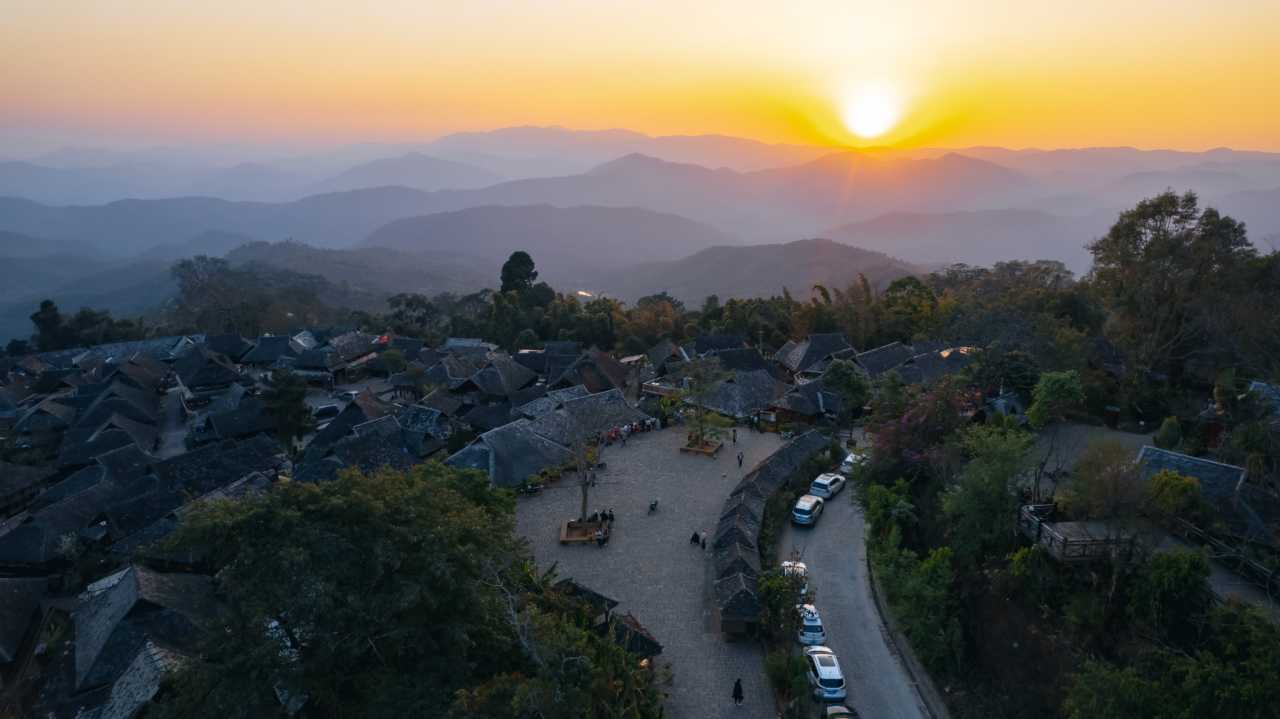
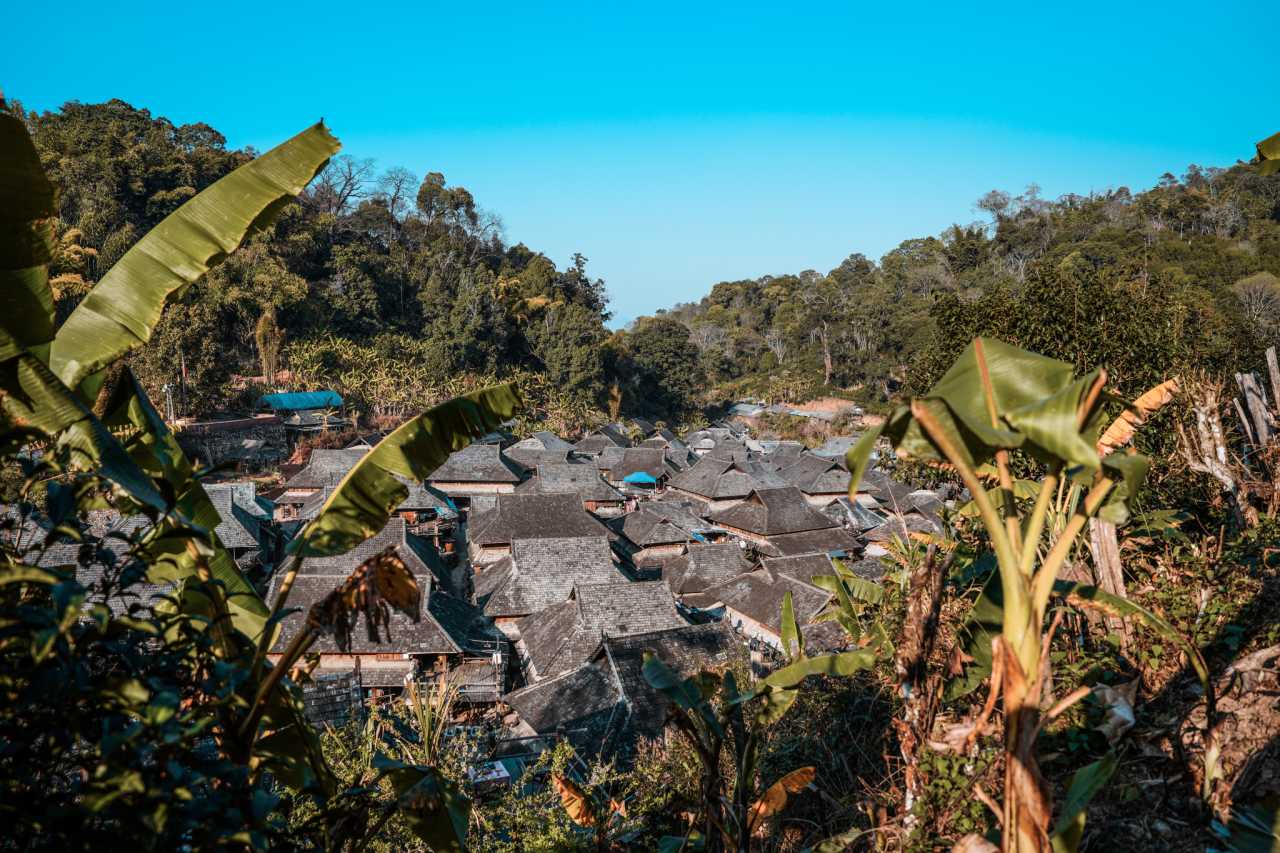
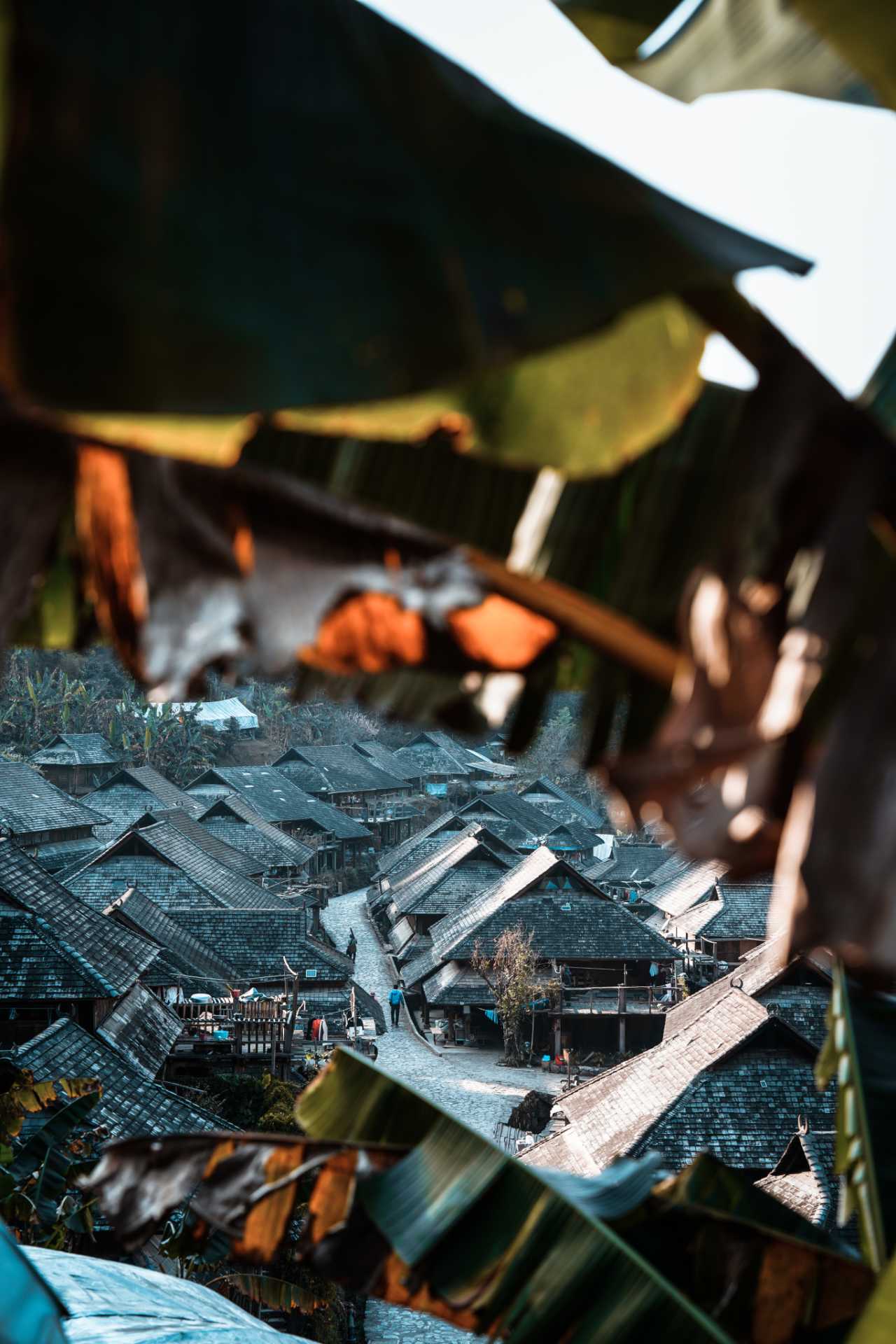
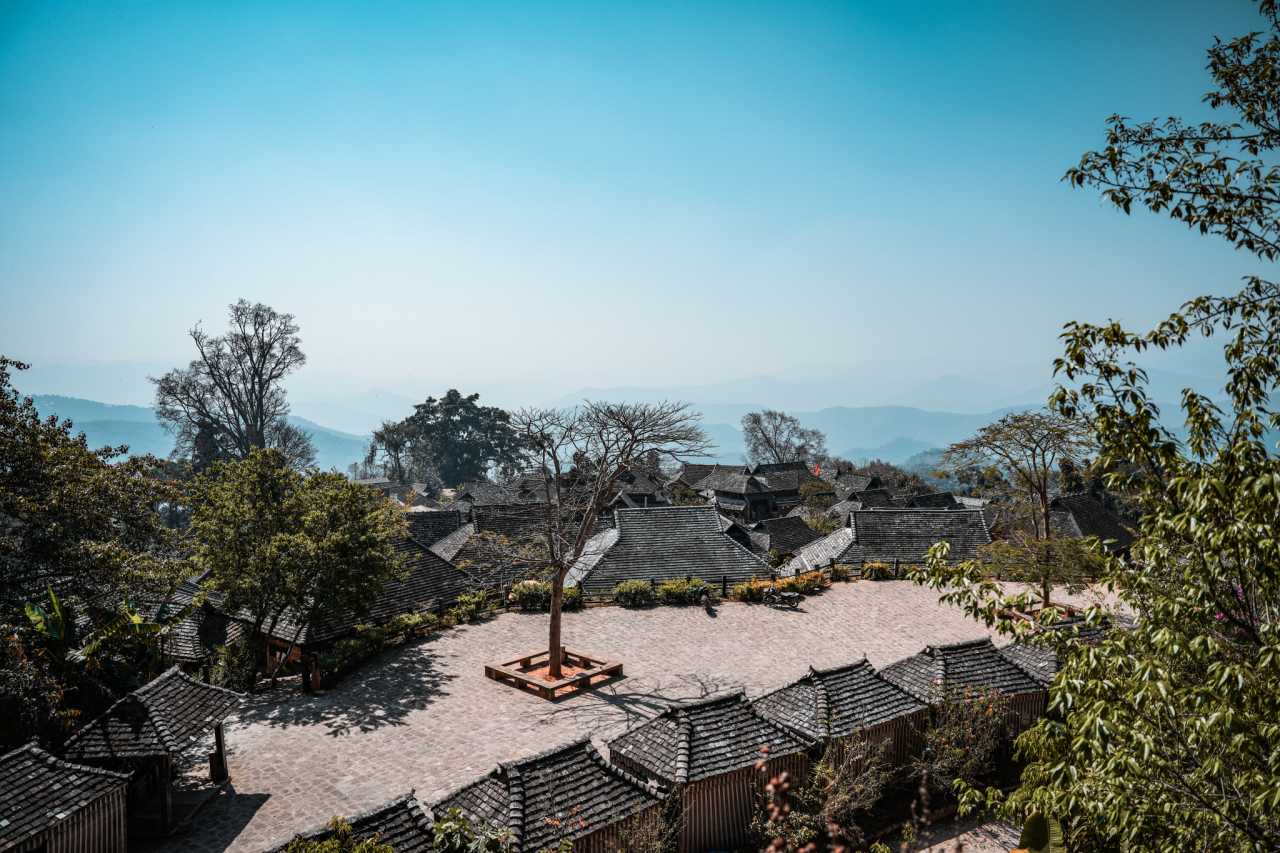
If Xishuangbanna is the epitome of hustle and bustle, a three-hour drive brings you to the epitome of rustic tranquility. Jingmai Mountain lies hidden between Pu’er and Xishuangbanna, home to thousand-year-old ancient villages—Wengji Ancient Village and Nuogan Ancient Village. Even after the passage of time, they retain their understated beauty. Here, time seems to slow down: sip a cup of ancient tea, wander through old alleys, watch a sunset—your whole body and mind unconsciously relax.
Passing Through Menghai: Try Authentic Roast Chicken
On the way from Xishuangbanna to Jingmai Mountain, you’ll pass through Menghai. There’s a hidden gem here—Three Kilometers Roast Chicken (Sangongli Kaoji). Navigate to “Sangongli Kaoji,” and you’ll find several shops, but the one featured on Hunan TV is Zhang Guiying’s. The setting is very basic—a humble little eatery that’s been around for over 20 years.
The roast chicken is a must-order. It’s small, perfect for two people. The meat is tender and juicy, dipped in local seasonings—fragrant, chewy, and delicious. The Dai-style barbecue is also great, especially the grilled shrimp, which is way better than what you’d get at the Starry Night Market. If you’re passing through Menghai, don’t miss this food stop.
Hidden Gems Along the Way: Lesser-Known Temples and Pagodas
From Xishuangbanna to Jingmai Mountain, there are several lesser-known spots along the road—you might not even call them “attractions,” but they’re worth a visit: - Jingzhen Octagonal Pavilion (Jingzhen Bajiaoting): An abandoned scenic area with photo-worthy setups like Buddha hands and a reclining Buddha. - Menghun Jade Buddha Temple (Menghun Yufo Si): A silver-colored main building, unique among the ubiquitous gold temples. - Manlei Pagoda (Manlei Fota): Features an Islamic dome design, with thousands of Buddha statues enshrined inside—a harmonious blend of styles. - Mengzhe Manlyu Jingfo Temple (Mengzhe Manlyu Jingfo Si): Home to one of Xishuangbanna’s rare reclining Buddha statues.
Quick Geography Lesson: Place names in Xishuangbanna follow a pattern. “Xishuangbanna” means “twelve thousand rice fields”; “Jing” means “city”; “Meng” means “place”; and “Man” means “village.” So it’s no surprise that you’ll find “Man*” everywhere.
Following Coffee or Tea? to the Big Banyan Tree
In the movie Coffee or Tea?, the big banyan tree where Liu Haoran and Peng Yuchang often hang out is an iconic Jingmai Mountain landmark. We followed the navigation, winding through over ten kilometers of mountain roads, and finally found it.
Standing under the tree, looking at the two ancient trees that would take over a dozen people to encircle, their towering branches rustling in the wind, we recalled scenes from the film. This quiet little corner truly felt soothing. When we arrived, we ran into a couple camping under the tree, with greenery and cookware set up, creating a cozy, lived-in atmosphere. After chatting, we discovered they were from the same hometown as us—we were so envious of their secluded lifestyle.
Other Ancient Trees Worth Visiting: - Bee God Tree (Fengshen Shu): Located in Mangjing Village, this towering tree is adorned with dozens of beehives—a true spectacle. Navigate to “Jingmai Mountain Abailai Villa” (Jingmai Shan Abailai Shanzhuang), walk uphill, and you’ll see a boardwalk leading to it. - Mangjing Ancient Village Gate Tree: Right on the main road into Mangjing Village, its shape resembles a village gate, making it great for photos. Mangjing Village is also famous for its sea of clouds, best viewed from November to early February.
Wengji Ancient Village: Watch a Stunning Sunset
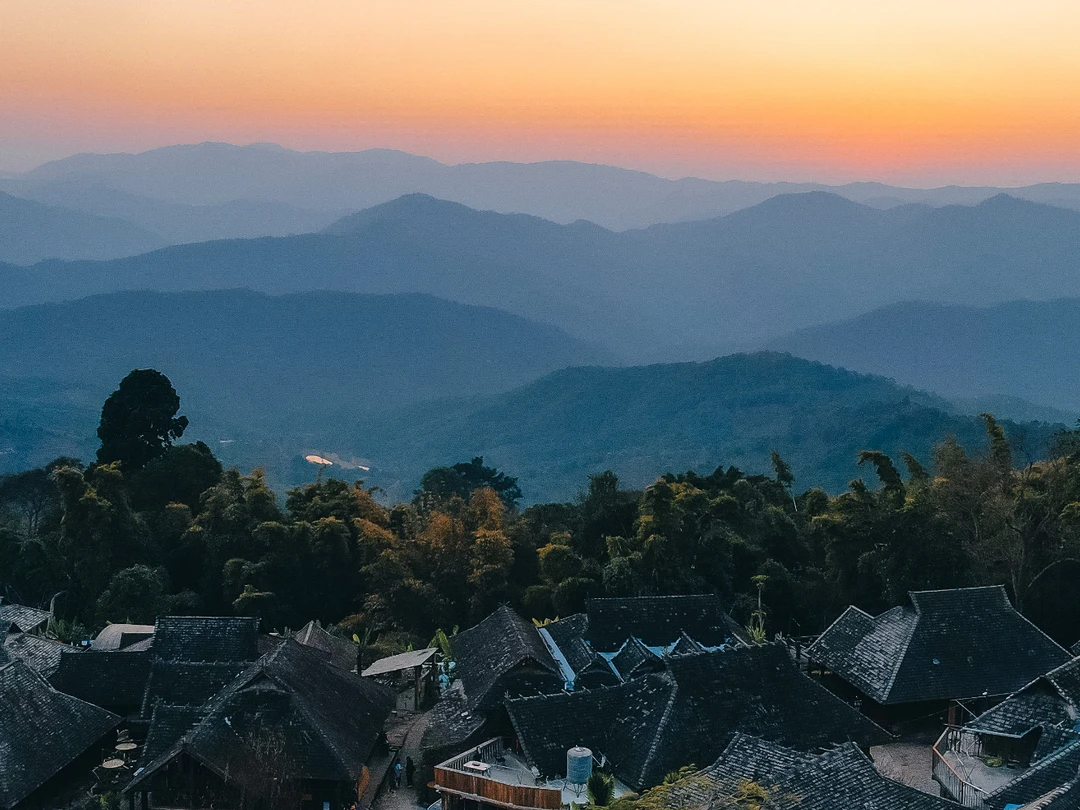
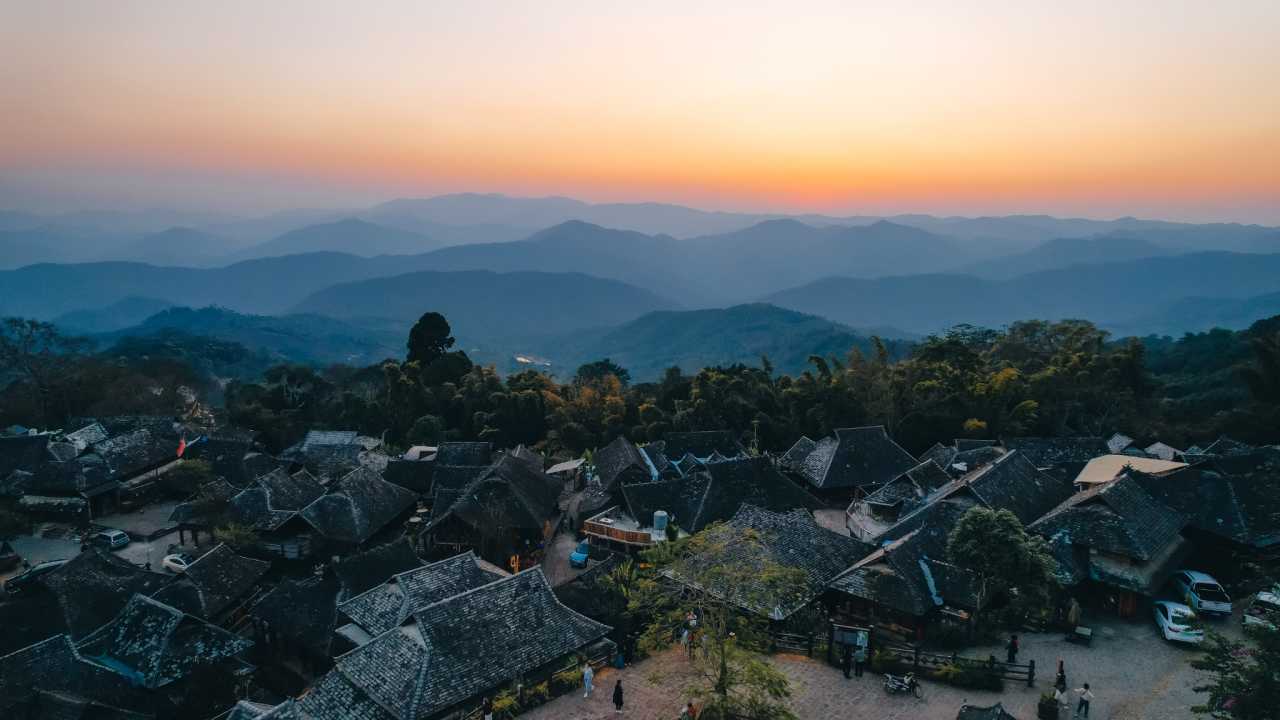
We were lucky enough to catch the first sunset of 2023 at Wengji. Although we missed the sea of clouds at Mangjing, the weather was kind enough to gift us a picturesque, vibrant sunset.
The best spots to watch the sunset in Wengji are two: one is the observation platform at the village entrance, offering a panoramic view of distant peaks, the nearby village, and wisps of cooking smoke; the other is a smaller observation platform deeper in the village, lower down, where the sunset colors on the horizon are as rich as an oil painting.
Beyond sunsets, Wengji is a great place to unwind. Sleep in, open your door to birdsong and chimney smoke. Stroll through the old street, sip a cup of ancient tea, chat with a Buyi grandmother, wander aimlessly with your camera—a day passes by leisurely like that.
Recommended Photo Spots: - Pa’aileng Temple (Pa’aileng Si): Buyi-style architecture paired with tropical plants makes for great shots. - Wengji Observation Platform: Below the temple, offering a bird’s-eye view of the entire village, also the best spot for sunset.
Nuogan Ancient Village: Like Stepping Into a Movie
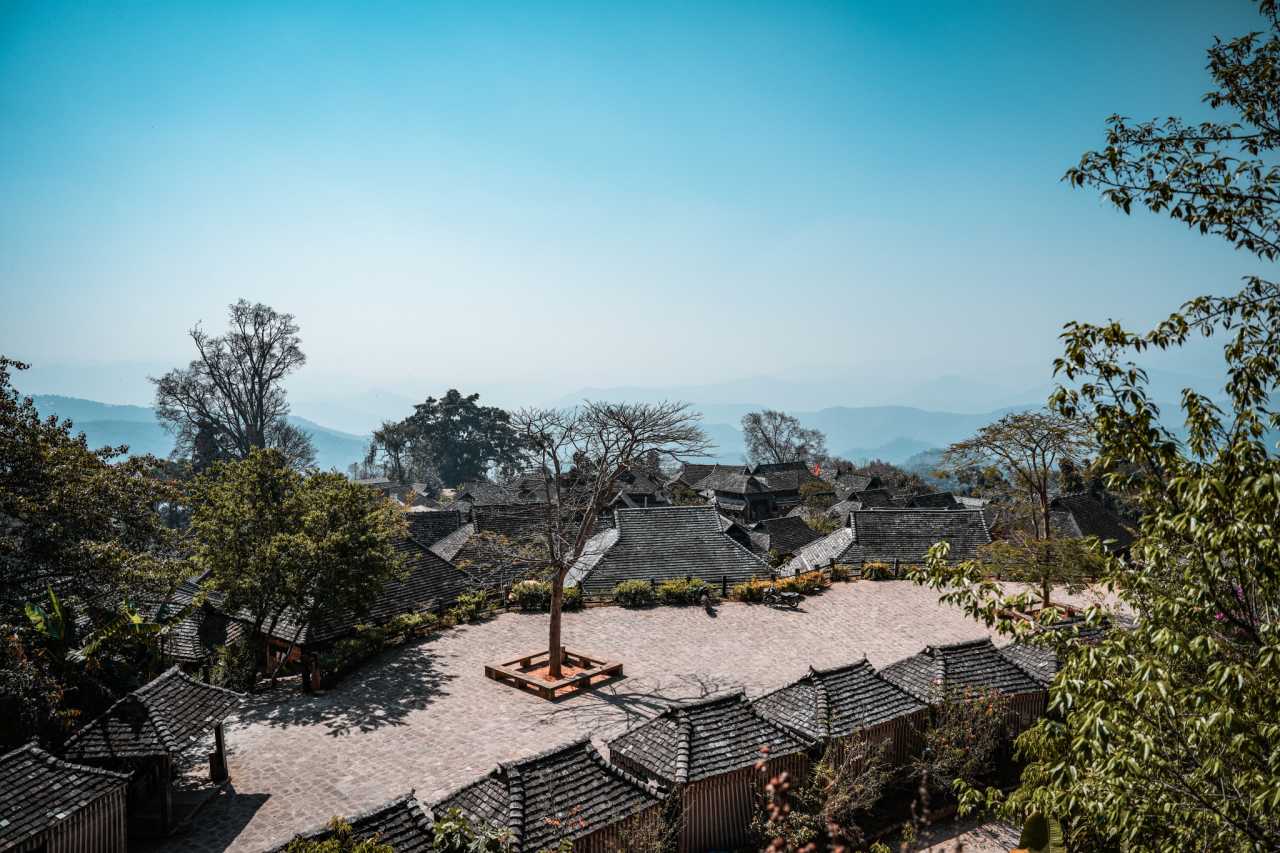
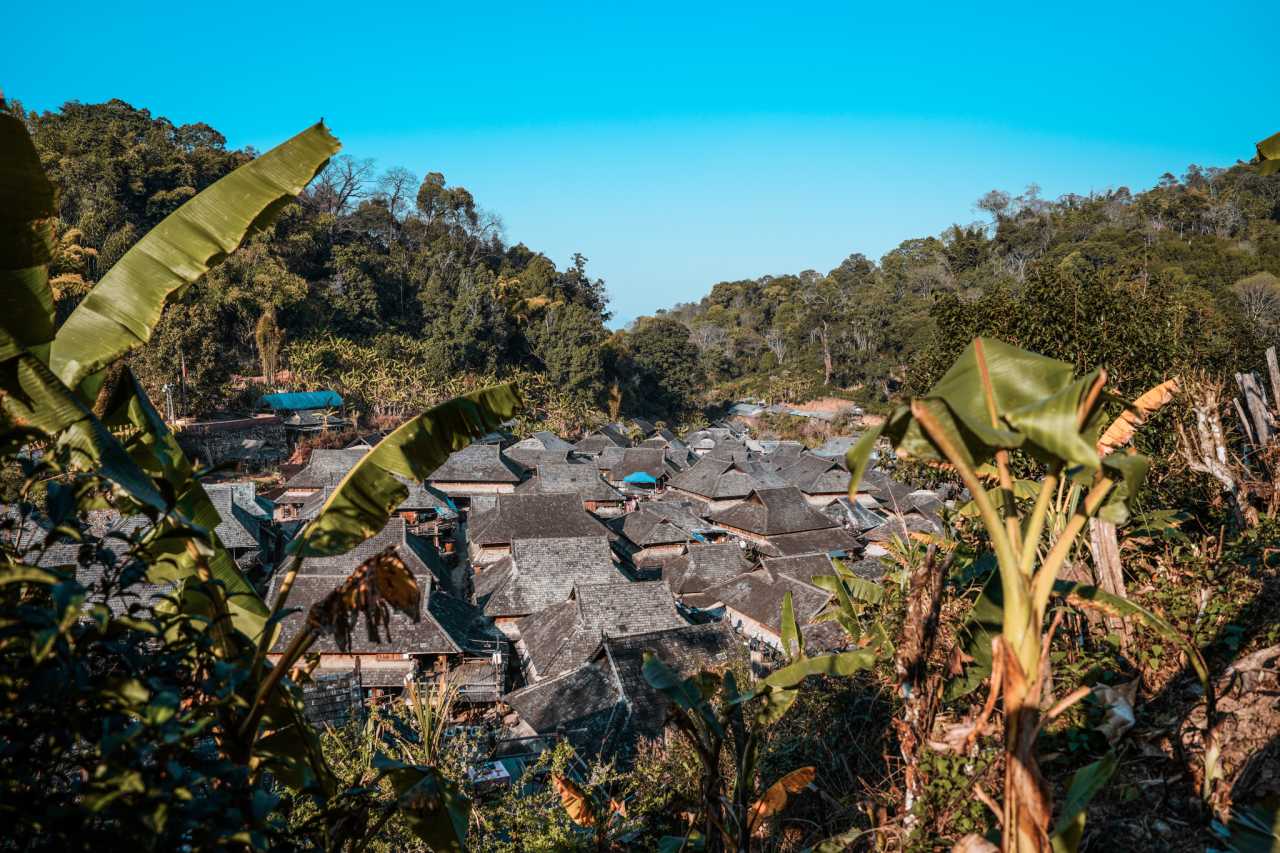
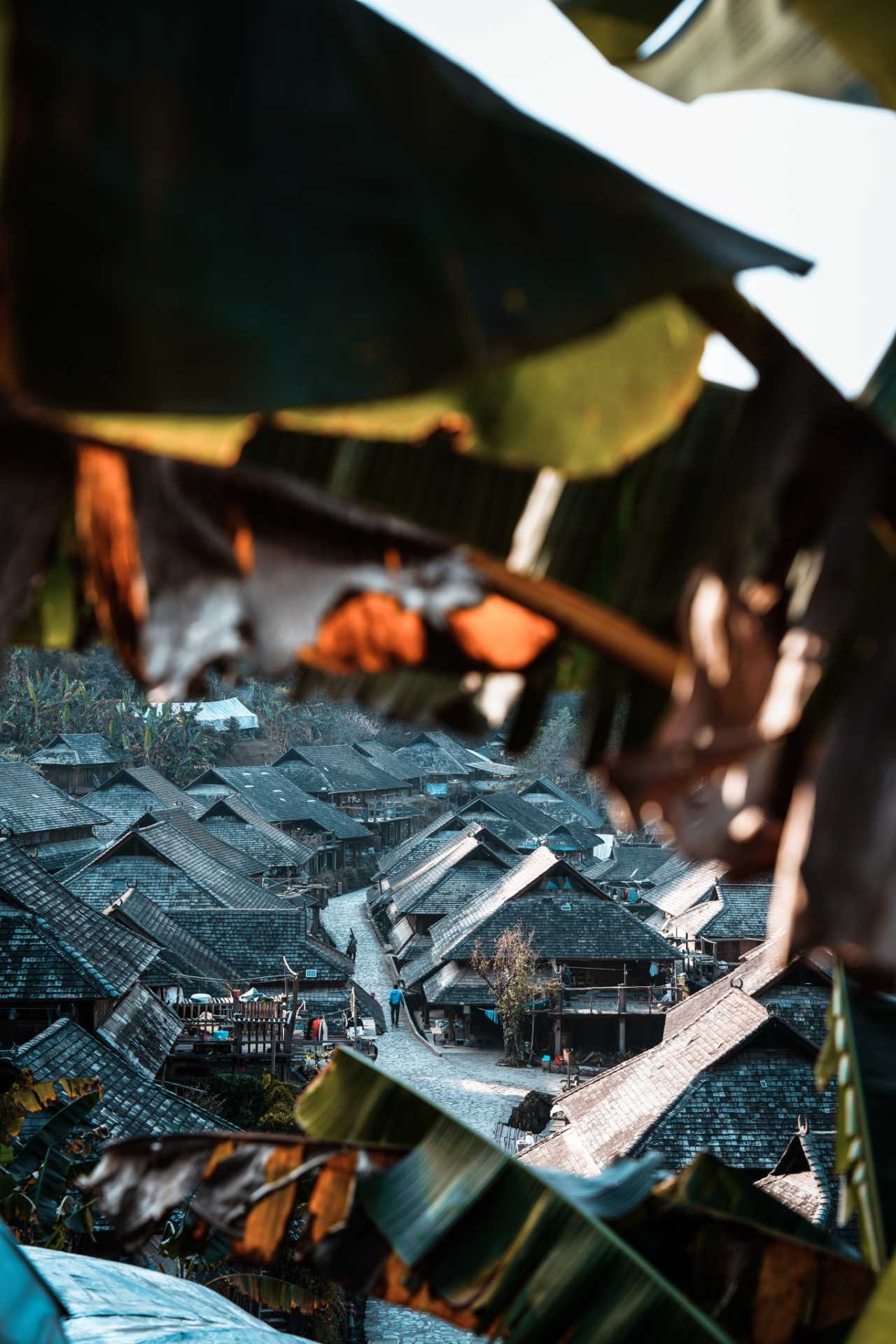
Compared to Wengji, Nuogan feels more like walking into a movie scene. The rows of buildings and winding streets naturally make you imagine a storyline. Climb to the village’s observation platform and walk along the hillside for a panoramic view of the entire village.
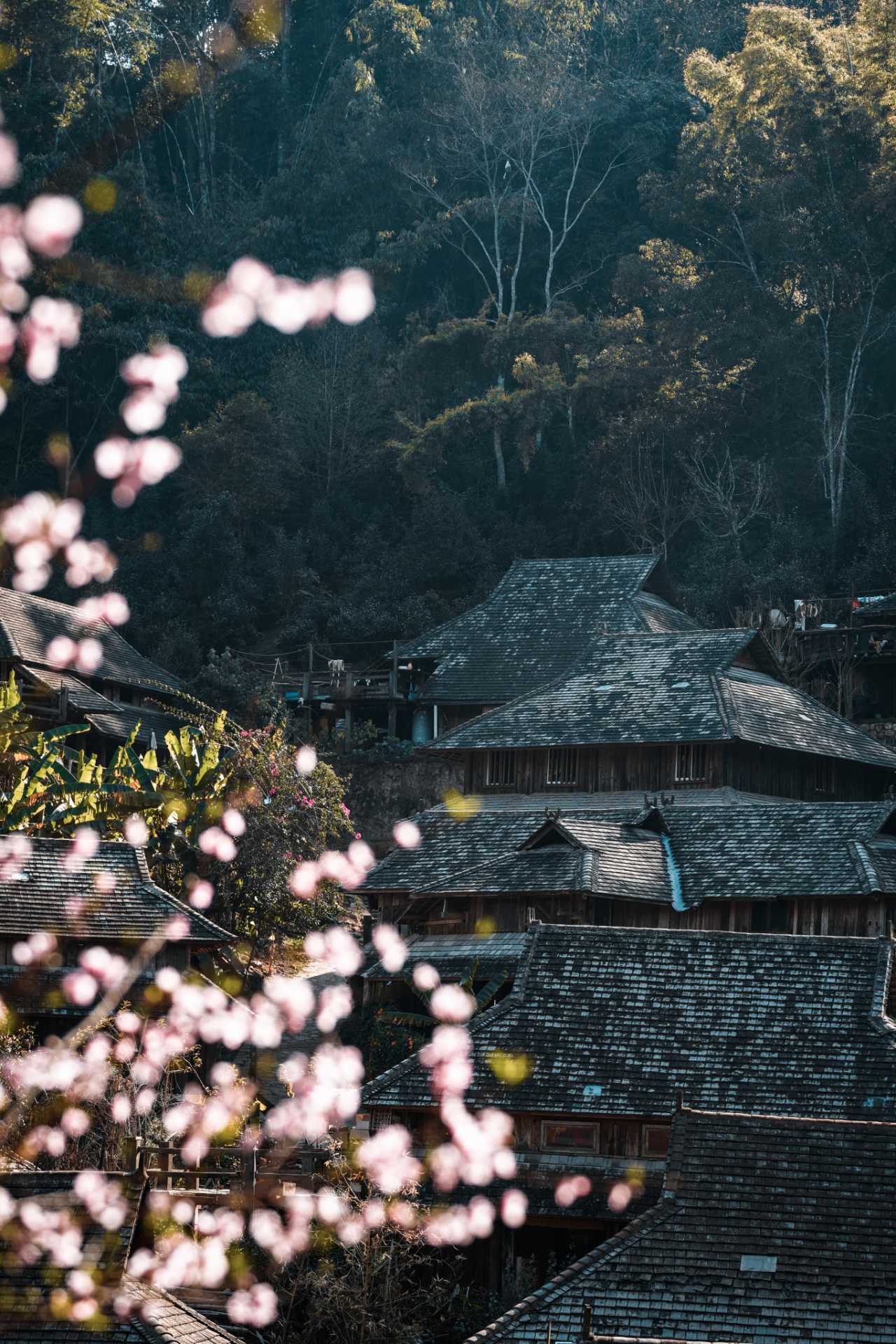
Nuogan preserves about 300 households, making it more primitive than Wengji. The locals have lived off tea for generations; as you wander through the village, you’ll see tea leaves everywhere and locals inviting you for a cup. In the evening, the smoke from home kitchens drifting out is a kind of peace and comfort far removed from city life.
Special Note: Before entering Jingmai Mountain, there’s a strict security check to prevent foreign tea leaves from being mixed in. The ancient tree tea here is the real deal—a true “mountain treasure.”
Final Thoughts: Laziness Is a Luxury, Too
Over four days, from the lively bustle of Xishuangbanna to the rustic tranquility of Jingmai Mountain, it felt like a journey through time and space. The solemnity of Zongfo Temple, the crowdedness of Manting Park, the vibrancy of the Starry Night Market, the peace of the Big Gold Pagoda, the sunset at Wengji, the everyday life at Nuogan… each frame is a unique memory.
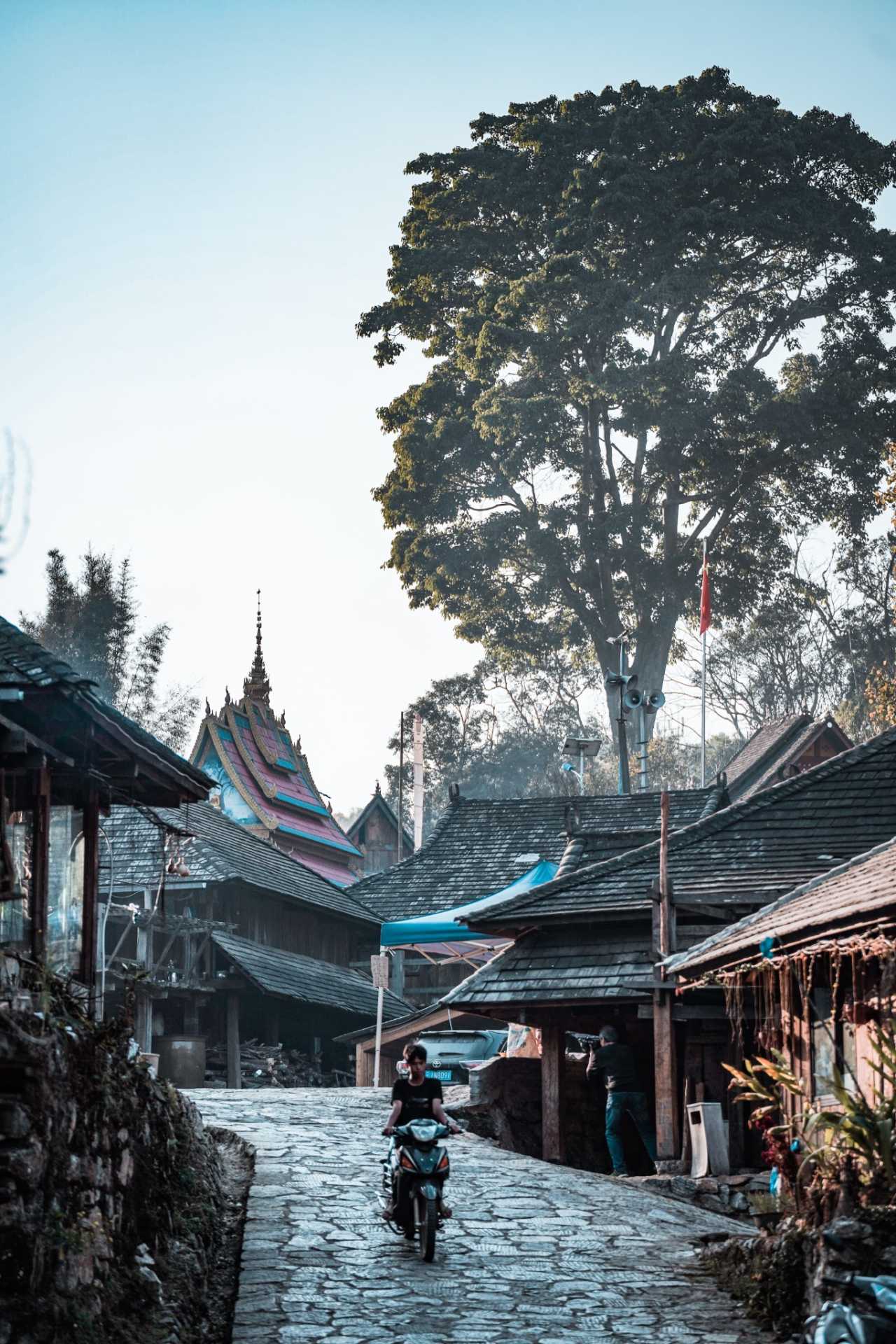
If you also want to escape the monotony of daily life and give yourself a few days to “laze around,” come take a stroll through southwest Yunnan. Here, time slows down, and your mind quiets. You’ll realize that true luxury isn’t about how much you have, but how much you can let go.
A Few Final Notes: - Xishuangbanna has no off-season all year. To avoid crowds, visit popular spots right before closing time. - Jingmai Mountain is best explored by car. The roads are decent, but there are many curves—drive safely. - The ancient villages aren’t overly commercialized, but accommodations are basic—keep your expectations in check. - Respect local culture: don’t photograph Buddha statues casually, and don’t disturb the villagers’ daily lives.
Go take a lazy break in southwest Yunnan. You’ll discover that life can be lived this way, too.
You should also read:
Two Girls' Graduation Trip: Dali and Shuanglang – A Poetic Farewell to Mountains and Sea
Two Girls' Graduation Trip: Dali and Shuanglang – A Poetic Farewell to Mountains and Sea Preface: Catching the Tail of Youth, Heading South During our senior year of college, my roommate and I – two girls studying in Beijing – decided to bid farewell to…
Continue reading...
Xishuangbanna: Encountering an Ideal and Magical Paradise in the Green Wonderland at 21° North Latitude
Xishuangbanna: Encountering an Ideal and Magical Paradise in the Green Wonderland at 21° North Latitude If you ask me which place in China most resembles Southeast Asia, I would answer without hesitation: Xishuangbanna. This is not Thailand, yet it possesses an even richer Buddhist ambiance…
Continue reading...
The Slow Life of Lijiang: A Soft Dream on the Yunnan-Guizhou Plateau
The Slow Life of Lijiang: A Soft Dream on the Yunnan-Guizhou Plateau Some places, just by hearing their name, stir a ripple in your heart. Lijiang is one of those names. It's not the kind of destination that demands you tick off a checklist of…
Continue reading...