Escaping the Heat in Kunming: When the Spring City Meets Yunnan Cuisine, I Gladly Become a Migratory Bird
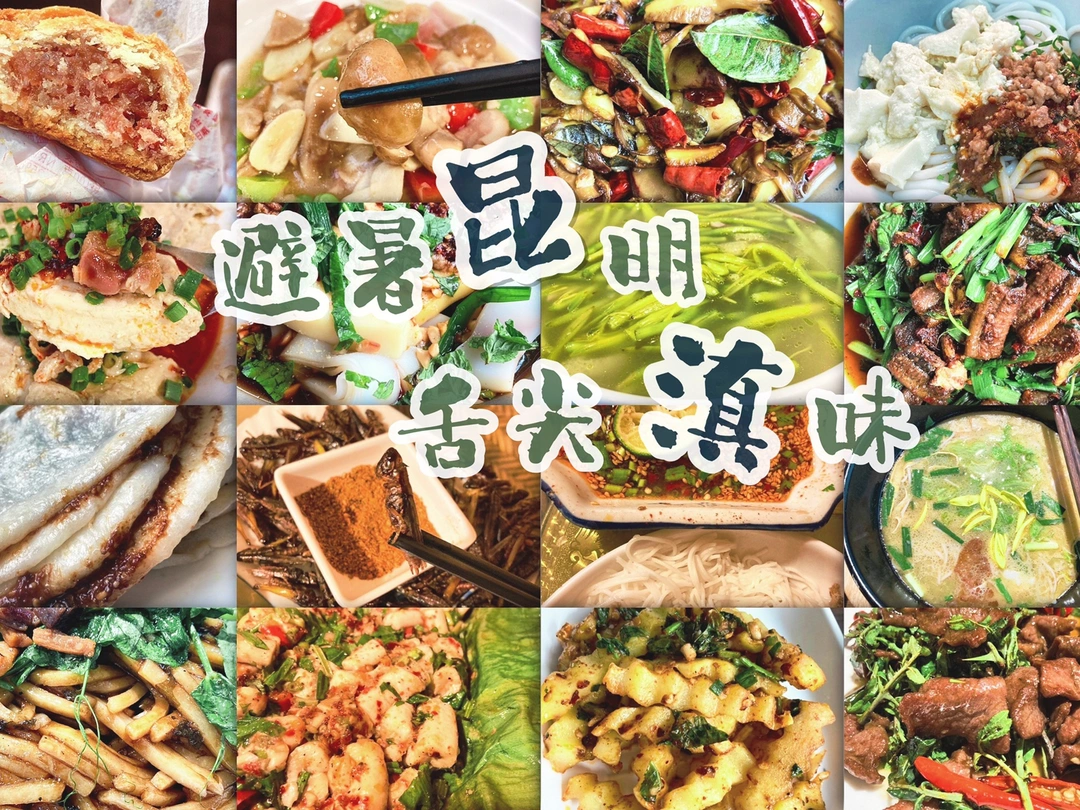
Escaping the Heat in Kunming: When the Spring City Meets Yunnan Cuisine, I Gladly Become a Migratory Bird
July in China feels like a giant microwave, with heat waves sweeping across every corner from east to west, north to south. But there's always an exception—Kunming, perched on the Yunnan-Guizhou Plateau, hits the pause button on this sweltering season with its pleasant twenty-something-degree Celsius coolness.
Many people treat Kunming as a mere transit hub, glancing at it briefly before rushing off to Dali, Lijiang, or Xishuangbanna. They say that when it comes to scenery, Yunnan's border towns are far more captivating than this provincial capital. That's not wrong. But I chose Kunming for a different reason—not because it has any must-see attractions, but because I wanted to simply "be" in this city, just like the locals do.
Having the chance once a year to go and stay for a while in a city that calls to my heart—that's the life I dream of.
A Winding Arrival, a Hostel Wrapped in Greenery
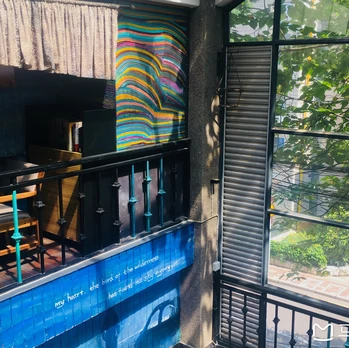
The moment I pushed open the hostel door, I was stunned. The lobby's glass ceiling was draped with layers of lush greenery cascading down like a small forest suspended in mid-air. Sunlight filtered through the leaves, casting dappled shadows—so romantic it felt almost unreal.

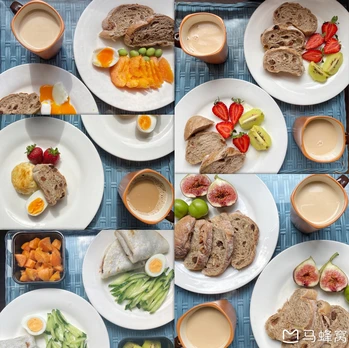
The second-floor common area combined a café, light meals, and activities. I borrowed some tableware and settled into a routine of waking up naturally every day. I'd throw together a simple breakfast, with no rush to hit attractions or check in at trendy spots. Most of my time was spent lounging at the hostel, occasionally venturing out to find food or take a stroll—that was the extent of my outdoor activities.
The Flavors of Yunnan: Every Basin Is a Culinary Kingdom

There's an old saying in Yunnan: "Every basin is a culinary kingdom." Kunming, tucked away in the southwest, is far less developed than the first-tier cities in the east and south, but precisely because of that, it has become a melting pot of Yunnan's food culture. Better yet, the cost of living here is low, making it perfect for eating your way through the city.
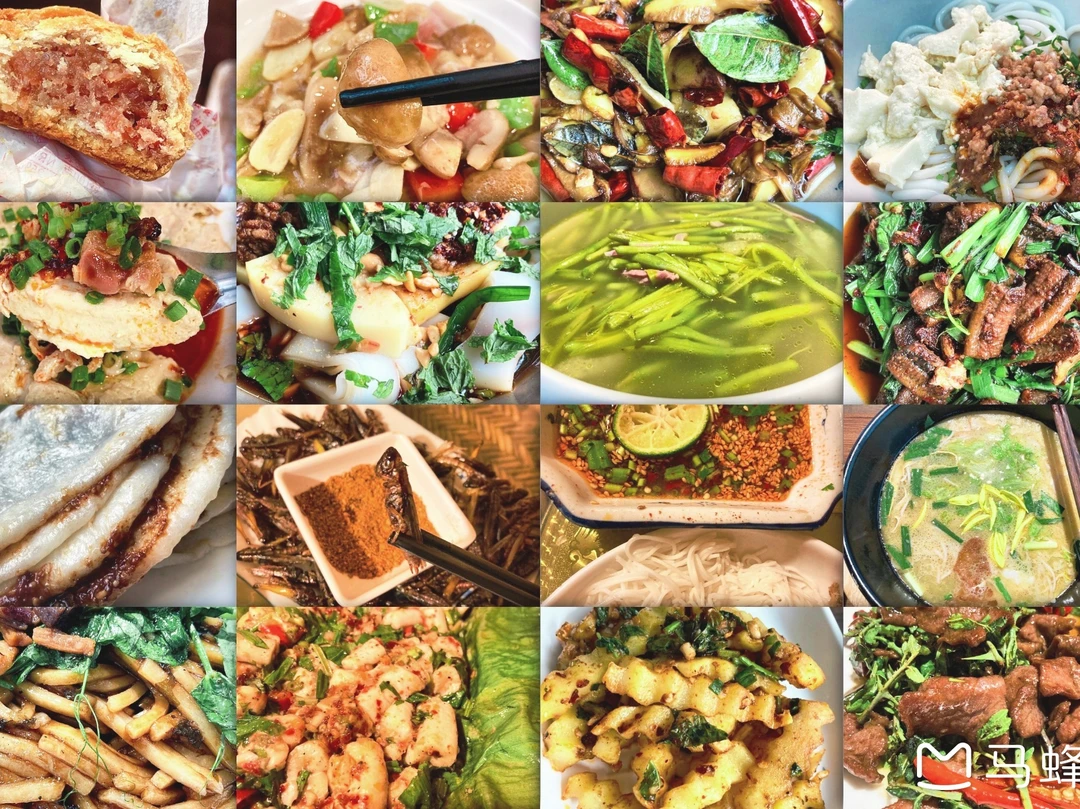
Honestly, before coming to Yunnan, my knowledge of Yunnan cuisine was almost zero. Crossing-the-bridge rice noodles (过桥米线) are probably the most familiar Yunnan dish to outsiders, but ever since I set foot on this land, I can no longer tolerate the "fake crossing-the-bridge rice noodles" sold in my own city—those so-called Yunnan flavors, much like Lanzhou pulled noodles or Shaxian snacks, have long since drifted away from their origins.
My culinary guide was the late writer Wang Zengqi. His essays Kunming's Eats, A Small Guide to Wild Mushrooms, and Seven Years of Cloud and Smoke became my food map. Following his words, I explored the city's taste code step by step.
The Mountain Delicacies Market: Skin-to-Skin Contact with the City
As Chen Xiaoqing said on the talk show Round Table, a food market is a city's skin. Unlike the dressed-up landmarks and historical sites, the market reveals the truest texture of urban life.
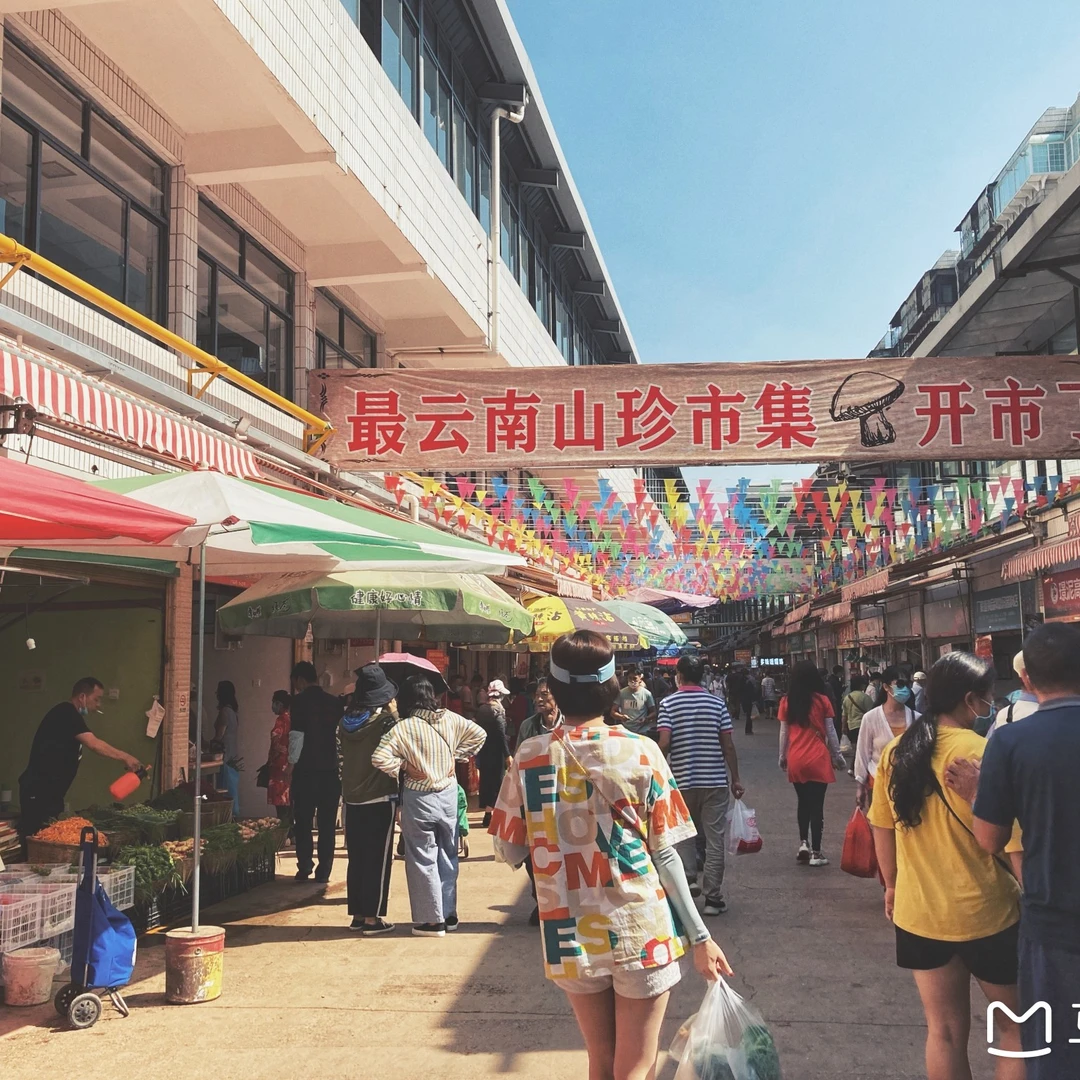
I never expected Kunming to hide a "trendy market"—the Daguangzhuansin Farmers' Market (大观篆新农贸市场). If you think it's just a place to buy groceries, you couldn't be more wrong. It's a gathering spot for the freshest ingredients and the most authentic street snacks. In summer, it even opens a unique "Mountain Delicacies Market," a miniature expo of Yunnan's finest foods.
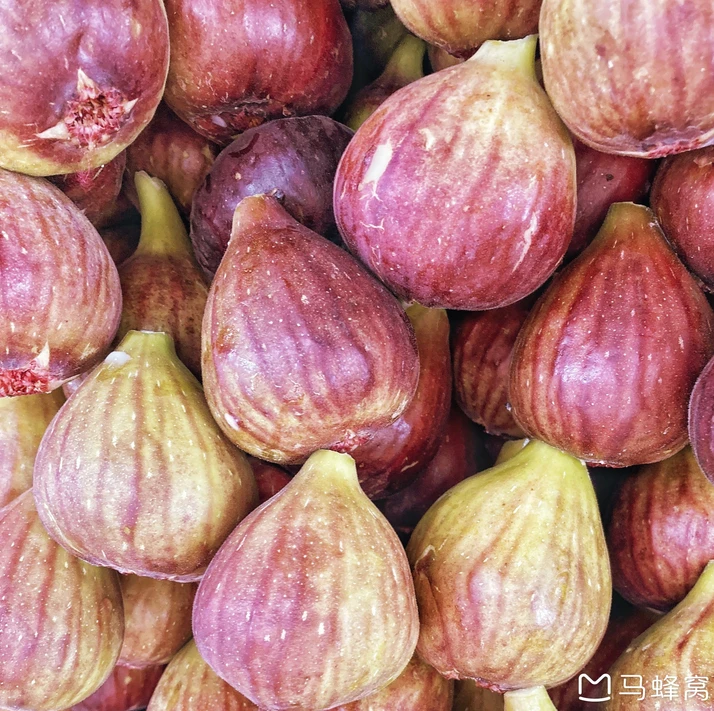
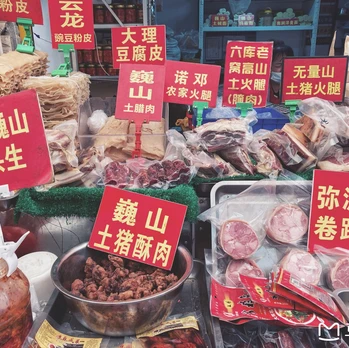
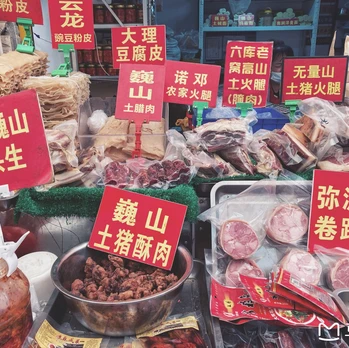
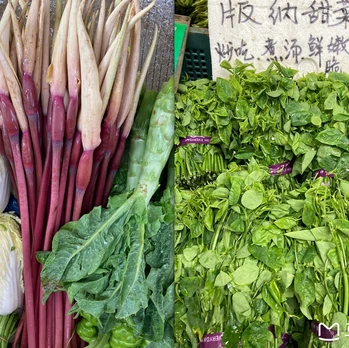
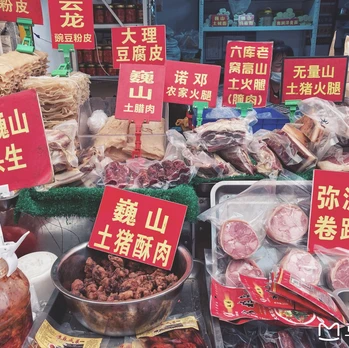
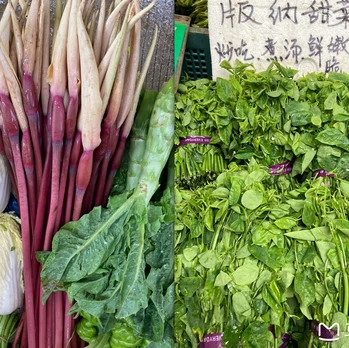
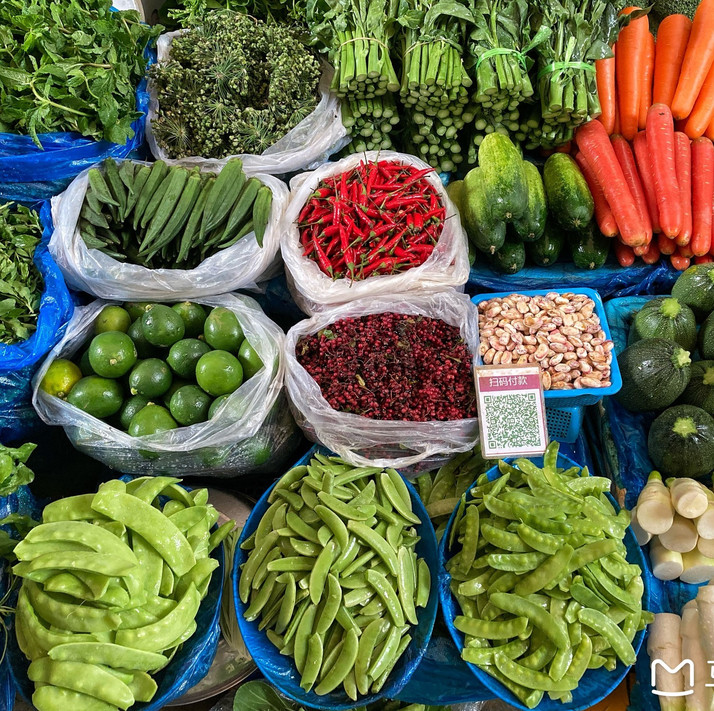
At the entrance, large baskets of plump, deep-purple figs beckoned me. Venturing further in, I found dewy vegetables, varieties I'd never seen before, Nuodeng ham, Dehong Saipie (a Dai-style cold dish), Banna beet greens, Weishan crispy pork, Mile rolled trotters... My eyes feasted first.
Jizong mushrooms (termite mushrooms) and Ganba mushrooms (a type of wild mushroom unique to Yunnan) are the stars of Yunnan's wild fungi. Oil-preserved Jizong is said to lock in its aroma best, but if you see oil-preserved Jizong selling cheaper than fresh ones, it's most likely oyster mushrooms soaked in Jizong's "bathwater." Nuodeng ham gained fame thanks to A Bite of China. The Bouyei people's five-color rice is a vibrant spectacle. Fresh daylily buds and fresh Sichuan peppercorns made me want to pack them all up and take them home.
The flaky steamed buns (破酥包) are the market's star product. I tried a perilla seed bun for just one yuan. The skin was soft and airy, and the filling—a mix of perilla seeds and sugar granules—was sweet without being cloying. Hot buns are only available before 11 a.m.; after that, you'll only find cold ones. These humble buns, with their layered texture, have an almost artistic flair.
Buckwheat cake (荞糕)! Only in Yunnan can I truly appreciate the taste of buckwheat cake. The deliciousness of food seems to have a mysterious connection with the local air. The market only sells cold buckwheat cake, but I came across hot bitter buckwheat pancakes and soft, fluffy rice cakes.
Grilled chili peppers, grilled eggplant—want some? Grilled foods are ubiquitous snacks in Yunnan, and here they still maintain a more rustic, original way of eating.
The Mountain Delicacies Market is on the second floor of the building at the far end of the market. The corridors are adorned with introductions to various mushrooms and illustrations of Yunnan's local culture. The countless varieties of mushrooms are dazzling—remember, never call them "菇" (the general Chinese term for mushrooms); that will give away your outsider status.
From left to right, top to bottom: Ganba mushrooms, black porcini mushrooms, green-headed mushrooms, and truffles. The moment I saw the truffles, I felt like I was meeting an online friend for the first time—who knew you'd look like this? Beautiful appearances are always captivating, like the red porcini mushroom, also known as "见手青" (literally "turns blue when touched")—when you touch its gills, squeeze its stem, or tear its flesh, the originally pale mushroom turns blue. Legend has it that every shaman is a Yunnanese person who has eaten "见手青."
Passing by a small stall, an ethnic minority sister sliced a piece of matsutake mushroom (松茸) for me to taste, saying it was the best seven-centimeter matsutake. I was just browsing without buying, yet I got to enjoy the aristocratic treatment of matsutake sashimi first thing in the morning—I felt truly flattered. I've heard that the Japanese love matsutake with deep passion. Ask a Yunnanese person, and they'll just say, "Matsutake? It's just okay."
Coming down from the market, I headed straight to Lala Snacks (辣辣小吃) for tofu-rice-noodles (豆花米线). I hadn't had them in a while. I asked for less spice, and it hit the spot perfectly. As for Chenggong pea jelly, Xiao Lin's peppercorn chicken, wood ear chicken feet, Zhang's secret braised pork trotters, Wang's Yunnan-style steamed pork belly... next time.
There are only a handful of food markets across China that have made a name for themselves. For the Zhuansin Farmers' Market on the southwestern border to gain such fame is no small feat. I hope this is a beautiful beginning, and that both the local government and every visitor can protect this blessing. Perhaps one day, it can stand alongside Tokyo's Tsukiji Market or Barcelona's La Boqueria.
Tip: If you're not buying groceries at Zhuansin, there's no need to go early. The morning is the busiest time, but it also has the most offerings, including flowers. If you want to take photos, grab a bouquet—it looks great on camera.
Searching for Old Kunming: A Time Tunnel in the Ancient Streets
I still wanted to find traces of old Kunming. The existence of Southwest Associated University (Lianda) made me feel a special fondness for this city. In previous years, I came around the Spring Festival, when the trees and streets were desolate. This summer, I hoped it wouldn't disappoint me.
Strolling through the old city, the fragrance of osmanthus flowers wafted through the air, occasionally mixed with a few red osmanthus trees common in Jiangnan. Combined with the cool twenty-something-degree weather, it felt like an early autumn had arrived.
Kunming's Old Streets
Walking through Kunming's old streets, a basketful of spring and summer goods from the Spring City greeted me. In the past, there would surely have been melodious hawking cries. The old streets house the Nie Er Memorial Hall, which is worth a visit.
Riding through Kunming by car, I still felt a sense of regret about the city today. Many traditional buildings have been demolished, replaced either by disappointing commercial streets or cookie-cutter high-rises. More people, more buildings—a city's sense of breathing space weakens. Old Kunming exists only in those scattered remnants.
The "Victory Wine Glass" still stands in front of the Victory Hall on Guanghua Street—that's the Wine Glass Building, also known as the Sister Buildings. These two arc-shaped structures, blending Chinese and Western architecture, were built to celebrate the victory of the War of Resistance. A Shanghai beauty descended upon the Spring City; the tobacco shops displayed countless grades and styles of cigarette holders, pipes, and tobacco—such meticulous variety. Kunming, this old tobacco city, still has Yunnanese people who love their large tobacco pipes.
The Oriental Bookstore on the old street was an unexpected delight. I ordered a pot of tea and spent time idling away in the bookstore. Many photos hung from the bookstore's beams—familiar yet unfamiliar faces. Marriage certificates from the 1960s looked more ceremonial than today's. Unfortunately, the bookstore is surrounded by restaurants. With more foot traffic, by midday, the bookstore was filled with the smell of cooking oil. When a reading event was held on Saturday afternoon, the shop became stuffy and noisy, and I had to leave early.
Huashan South Road
Not far from my hostel, Huashan South Road still quietly watches the passage of time. This short stretch retains traditional Republican-era commercial buildings, and Ho Chi Minh's former residence was once located here. The red gates overlap like a time tunnel.
Here lies Jixiangqing (吉庆祥), the bakery Wang Zengqi once praised for having "the world's best" Yunnan ham mooncakes. "Dust flying like snow," "jade powder and gold dust"—the plaques hanging inside the shop make it feel like the pastries you're eating could rival the divine delicacies of heaven. As an outsider, I've never had any other Yunnan ham mooncakes. Jixiangqing's version has a crumbly texture, a sweet-and-slightly-savory flavor, and the fragrant Yunnan ham has a satisfying presence. The small size prevents it from becoming cloying. I like to think I ate the same kind Wang Zengqi did—pure satisfaction.
At Jixiangqing, I encountered Yunnan-style pastries for the first time. The store's centerpiece belongs to the Sachima (沙琪玛)—milk fan Sachima, gluten Sachima, bitter buckwheat Sachima, pink Sachima... so many varieties, all infused with Yunnan flavors, yet clearly showing the influence of old Beijing. Back then, when people from Beijing and Tianjin migrated south, they brought about a great fusion of northern and southern cuisines.
Swallow's nest pastry (燕窝酥)—does it really contain bird's nest? No, it just looks like it. Baguettes! European bread! This time-honored brand is embracing new trends, and at such low prices, how could I not give it a try? I bought a whole-wheat soft European-style bread for my breakfast the next day. It was on the dry and chewy side, but the dried fruit and walnuts nearly filled every crevice of the bread.
I wandered aimlessly around Green Lake (翠湖) as my center point. Kunming's Wuhua old district has quite a few hills, so walking requires some effort. But as I strolled and looked around, I could always brush against the dust of the old city's history.
Yunnan Cuisine: A Feast for the Senses You Must Try
Wild Mushrooms: The Backbone of Yunnan Cooking
"Every Yunnanese person has a friend who got poisoned by eating wild mushrooms and saw little people dancing in the air." Mushrooms make up half of Yunnan's culinary landscape. I'd visited the market—now where could I go for a full meal? Without seeing any little people, of course.
Back in the days of Southwest Associated University, restaurants and cafeterias could easily serve up a bowl of mushrooms. Not anymore. Mushroom yields have dropped, and figuring out which places source good mushrooms and which chefs cook them safely and deliciously is a mixed bag that requires some discernment. The wild mushroom hotpot trend that's emerged in recent years—where you boil different mushrooms together in a broth for a one-dimensional burst of umami—feels a bit slapdash, only suitable for those short on time or seeking quantity over quality.
Yuxi Lushun Restaurant (玉溪陆顺饭庄)
Located in the high-tech zone northwest of Green Lake, a bit far from the old city. This year, thanks to even rainfall, the mushrooms from Yuxi are better than Kunming's, and Yuxi chefs are particularly skilled at cooking them.
Eighty years ago, porcini mushrooms were cheaper than green-headed mushrooms, as people thought green-headed mushrooms had a more refined, fragrant flavor. Today, porcini mushrooms have risen in status, now sitting in the second tier of prized mushrooms. Wang Zengqi said porcini mushrooms have thick flesh, a smooth texture, and an incredibly fresh taste, with the aroma of mushrooms and garlic filling the nose and lungs. He Caitou (a famous food writer) declared that dry-frying porcini mushrooms with dried chilies is the only proper way.
I ordered a plate of stir-fried mixed porcini mushrooms with dried chilies (干椒炒杂牛肝菌) for eighty-eight yuan, tasting at least three varieties—red, yellow, white, and black—in one go. Some were soft, some were crisp, some mild, some slightly tangy—a whole spectrum of porcini flavors unfolded. Or I could have ordered a plate of red porcini mushrooms stir-fried solely with dried chilies for one hundred forty-eight yuan—the infamous "见手青" had arrived. The mushroom slices were thin, with a perfect balance of moisture and dryness, offering a slight chewiness and resilience. The aromas of dried chilies, garlic, and mushrooms exploded in my mouth. There was no broth on the plate, only oil.
Lushun's stir-fried eel (炒鳝鱼) is also not to be missed. Summer is the season when eels are plump and delicious. They stir-fry it with mint and chives. The cool fragrance of mint, the hot kick of chilies, and the harmony of chives brought the tender eel to life in my mouth. Even when it got a bit salty toward the end, I couldn't stop myself from reaching for another piece.
Besides that, there are Yuxi-style pea jelly (豌豆粉) and rolled rice noodles (卷粉). The rolled rice noodles have a thick, chewy texture, while the pea jelly has a unique smoky flavor. If you're in a group, order the Citongguan spicy chicken (刺桐关麻辣鸡)—it comes in a basin the size of a washbasin. The potatoes inside are crispy and fragrant; eat them quickly before they soften. The lotus root slices here are sweet and crunchy, far better than what you'd find in Guangdong.
For boiled dishes, Yunnanese people like to dip them in a dipping sauce (蘸水)—a mix of chili powder, Sichuan peppercorn powder, and various spices, moistened with a bit of soup before use. Lushun's chili powder seems to have been roasted, giving it an extra fragrance. The menu and prices aren't fixed—a hallmark of Yunnan restaurants—so you order based on what you see. Eating seasonally is both natural and aesthetic.
Shenmi Xiaochao (神秘小炒, "Mystery Stir-Fry")
Located southwest of Green Lake, in the Xiaoximen commercial center of Kunming. The top choice for home-style Yunnan cuisine. It's an unremarkable restaurant tucked away in a small alley, yet every time I go, there's a line. No menu—you order by looking at the ingredients, so keep an eye on what the locals are ordering most.
I ordered a bowl of braised green-headed mushrooms (烩青头菌) for seventy-eight yuan. Green-headed mushrooms are in the third tier of mushrooms; anything below counts as just "mixed mushrooms." With their grayish-green caps, they look like old poisonous things, but they're actually the safest. Once they hit the wok, that green "evil aura" vanishes, reverting to a plain beige color. Braised mushrooms usually use ham, garlic, and fresh chilies. Only a skilled cook can infuse these aromatics into the green-headed mushrooms. If you want an affordable taste of mushrooms, a bowl of green-headed mushroom soup is also a good choice.
Another must-order is my beloved steamed stinky tofu (蒸臭豆腐). Kunming's stinky tofu is different from elsewhere—its texture falls somewhere between tofu and fermented bean curd. At Shenmi Xiaochao, the steamed stinky tofu is well-fermented, with a soft, melt-in-your-mouth texture. The stink is the mother of its fragrance; chili oil is its soulmate. Use rice noodles or rice as a bridge, and eating it feels like ascending to heaven.
For something lighter, try stir-fried daylily buds with lily bulbs (百合炒黄花菜). The tender green daylily buds were my favorite. Other dishes worth trying include eggplant with taro flowers (茄子芋头花), water fern (水蕨菜), flash-fried pork kidney (爆腰花), Yunnan-style thousand-layer pork belly (滇味千张肉), cold boiled pork (凉白肉), and sweet-and-sour pork ribs (糖醋里脊).
Later, at Shenmi, I also discovered a Yunnan specialty—unparalleled rose-scented preserved mustard root (玫瑰大头菜). Black and shiny, with a sweet-and-savory flavor, it truly has a rose aroma. I also picked up some eggplant pickled in rice flour (茄子鲊) and amber walnuts (琥珀核桃) to take home.
Duogeshui Dai-Style Restaurant (多哥水傣味餐厅)
Located south of Green Lake, near Jinbi Square. When in Yunnan, you have to try something wild—the intense sourness, the intense spiciness, the intense ingredients. Dai cuisine deserves a place on your list. Of course, I only dared to order the "less spicy" versions.
Bao shao (包烧)—wrapping ingredients in banana leaves and grilling them. You can wrap almost anything. I ordered a portion of silky beef marrow, and the seasoning helped tone down some of the gamey smell. The dipping sauce for cold rice noodles (凉米线) was a full-on assault of sour and spicy. Dai cuisine's sourness comes mainly from fresh fruits like lemons and tree tomatoes. I also ordered a sweet coconut milk cabbage soup and stir-fried beet greens for a refreshing touch.
"A Yunnanese person's life is nothing more than seventy-six thousand bowls of dipping sauce." Dipping sauce is a Yunnanese habit. In regions where cooking techniques are less elaborate, the combinations of aromatic, spicy plants and fermented sauces create a kaleidoscope of flavors. The Dai people's dipping sauce is one of the prime examples—don't forget to pay attention to it at Duogeshui.
After the meal, I took a stroll to Xunjin Street. Kunming's nights come late; it was still bright at 7 p.m. Passing by Shulin Street, I saw the Eastern Pagoda (东寺塔) in the distance. Apart from the copper roosters spreading their wings on top, it really looked like the Small Wild Goose Pagoda in Xi'an. It turns out it was built during the Tang Dynasty, in the era of the Nanzhao Kingdom.
Those low buildings lining the street, half-hidden, half-standing, with tiles covering them, windows cracked open, and the setting sun dyeing them red—they seemed to write an ancient dream. This century-old street's small buildings inspired Lin Huiyin to write the poem Kunming Scene: Small Building. During the Qing Dynasty, the Panlong River here frequently flooded, and the Qing government built the "Yunjin Embankment." Later, with the opening of the Yunnan-Vietnam Railway, it developed into a street with an exotic flair. Even today, you can still see French-style buildings and plane trees lining the streets.
The Rice Family: Abundant Rice Delights
The most popular and beloved rice products in Yunnan are rice noodles (米线) and rice cakes (饵块).
A World of Rice Noodles
Rice noodles are incredibly versatile. The "hats" (toppings) you can pair with them are limited only by your imagination: braised pork, quick-boiled pork, beef, lamb, chicken, marinated chicken, pork intestines, flowers, tofu pudding, stinky tofu... And the preparation methods include crossing-the-bridge rice noodles, small-pot rice noodles, cold rice noodles, and more. There are so many types of Yunnan rice noodles that every shop has its own flavor. Ask which one is the best, and a thousand diners will give you a thousand different shops.
Wenshan Hexianju's (文山荷鲜居) chicken rice noodles are incredibly popular. Seeing men and women, young and old, sitting on the roadside slurping their noodles is quite a sight. Qiaoxiangyuan (桥香园) is a large crossing-the-bridge rice noodle chain from Mengzi. Yunnanese say the quality at Qiaoxiangyuan isn't what it used to be, but I think it's still far better than the crossing-the-bridge rice noodle shops in my hometown of Huizhou. Plus, they often offer chrysanthemum crossing-the-bridge rice noodles and flower crossing-the-bridge rice noodles, so I'm happy to pay for them.
This time, I discovered "Baoyanxiang Crossing-the-Bridge Rice Noodles" (宝焱祥过桥米线) north of Green Lake. The hot soup arrived still sizzling—fresh and steaming, with a layer of golden chicken oil floating on top. They use the Hani people's red rice noodles, and the soup was relatively light, the kind of chicken broth you can drink with confidence. The shop doesn't have a huge selection. We also ordered purple papaya water (紫色木瓜水), fried potatoes (炸洋芋), and grilled tofu (烧豆腐). The grilled tofu was bite-sized, soft inside, and the dipping sauce contained chameleon plant (折耳根), which I almost never tolerate. But it was chopped into tiny pieces and mixed with the other seasonings, and to my surprise, I didn't even mind the chameleon plant.
The Chunky Rice Cake
The raw rice cakes sold in the market are mostly oval and flat-cylindrical, larger than an adult's palm, snowy white, but as heavy as an iron ingot—a real chunky fellow. Grilled rice cakes (烧饵块) can be filled with fried dough sticks, sausages, or fried eggs. If you want to taste the rice flavor, don't add anything. The most famous grilled rice cake chain in Kunming now is Yingfeng (英凤烧饵块), which is easy to find. When rice cakes are cut into strips, they're called rice cake strips (饵丝), and they're most commonly boiled. Braised rice cake strips (卤饵丝) are a happy accident—when the soup almost dries up during cooking, boiled rice cake strips become braised ones. The braised rice cake strips at "Duanshi Small Pot" (端仕小锅) on Xuelin Street are said to be the origin, a century-old establishment.
Other Flavors
Nianlun Restaurant (年轮菜馆): A fusion-style restaurant. The love-themed cold rice noodles (爱心凉米线) and daylily bud soup are the highlights. The Cuiyu branch I went to was crowded and smoky, with poor air circulation.
Dianjiwei Restaurant (滇吉味馆): Stir-fried beef with Sichuan peppercorn leaves (花椒叶炒牛肉), ciwujia soup (刺五加汤, a medicinal herb soup), and stir-fried bitter melon with pineapple (苦瓜炒菠萝)—very summery dishes. This place mainly serves home-style food in a nicer environment. They offer a small selection of seasonal wild greens and mushrooms, and the owner will introduce them.
Hu Jiu Snacks (胡九小吃): A wide variety of snacks. The stinky tofu rice noodles (臭豆腐米线) have well-fermented stinky tofu. The cold rice noodles with pea jelly (凉米线加豌豆粉) have a sweet, tangy, and refreshing dressing.
Wanfeng Small-Pot Rice Noodles (万丰小锅米线): A beloved old shop among food connoisseurs, but don't expect much from the ambiance. This used to be my favorite place for stinky tofu rice noodles—rich and flavorful—but the quality is inconsistent.
Yunnan-Style Afternoon Tea: Wasting Time in a Bookstore
That day, I went to a rice noodle shop called "No. 33 Kougang Rice Noodles" (33号口缸米线铺) on Xuelin Street's Culture Alley. I was indifferent to the rice noodles, but I was captivated by their papaya water (木瓜水). This papaya isn't the sweet papaya you're thinking of. The name "papaya water" has been recorded as early as the Song Dynasty's Dongjing Menghua Lu (The Eastern Capital: A Dream of Splendor). Nowadays, it's a translucent jelly made from the seeds of a plant called Nicandra physalodes, which are repeatedly kneaded to extract a viscous liquid, then left to set. Served with brown sugar water, it's a perfect summer refresher.
At No. 33, the jelly was softer and smoother, with a looser texture. It wasn't just paired with brown sugar water but also with rose jam. Compared to drinking it with a straw, the bowl-served papaya water felt more lingering and affectionate in both appearance and texture. Scooping it into my mouth, it was cool but not icy, sweet with a hint of floral, and then a soft, melting sensation settled into my heart. Before, I had only treated it as an accessory to spicy snacks; from this moment on, it had its own independent reason for being.
Yunnan University is nearby, but I didn't go this time. There are several independent bookstores in the area: Manlin Bookstore, Maitian Bookstore, Xiangpi Bookstore, and Daxiang Bookstore. I stopped at Daxiang Bookstore (大象书店), ordered a pot of tea, and another afternoon slipped away. For a tea snack, I'd recommend a flower cake (鲜花饼)—get one from Hualou (花满楼) in advance. It's round and plump, not too sweet, with rose petals that still have a bit of chewiness.
Feeling hungry, I stepped outside and found a "Three Pieces Ten" (三块一拾) shop just a few dozen meters away—three yuan for ten pieces of stuffed grilled tofu (灌浆烧豆腐). The tofu comes from Shiping, which has the reputation of "the most wonderful curd in the world, and grilled tofu whose fragrance spreads beyond the clouds." Holding a paper bag, I walked and ate, feeling utterly content. Or I could head to a nameless grilled tofu stall on Qianju Street, then turn into Ranbu Alley, find Xiaofan Restaurant (小番食馆), and order some fried potatoes or a bowl of mixed cake and lotus root starch (调糕藕粉)—that would make the afternoon complete.
Epilogue: Kunming, a City Worth "Being" In
There are more foreigners in Kunming than I expected. I could easily stumble upon small bakeries run by expats. The famous Salvadoran cuisine restaurant will have to wait for my next visit.
On my last morning in Kunming, I sat on the hostel's terrace, gazing at the city's sky. The twenty-something-degree breeze brushed my face, carrying the scent of osmanthus and the distant clamor of the market.
I suddenly understood that what makes Kunming most enchanting isn't its attractions, but its magical quality that makes you want to "be" here. Here, time slows down, and life becomes simple. You can sleep in, wander through the market, find a small eatery for a bowl of rice noodles, spend an afternoon in a bookstore, or do nothing at all—just stroll the streets.
Being a migratory bird, flying to a city that calls to my heart each year and staying for a while—that's probably the best life I can imagine.
Final Tips:
- Don't rush to the Zhuansin Farmers' Market early, but mornings have the widest selection.
- Always eat wild mushrooms at reputable restaurants—safety first.
- Yunnan's dipping sauces are the soul of the cuisine—don't miss them.
- There are so many types of rice noodles—try a few places to find your favorite.
- Kunming summers are cool, but the UV rays are strong—remember sunscreen.
This city is worth stopping for.
You should also read:
Yunnan Travel Mastery: From Beginner to Pro-Level Player – A Complete Guide
Yunnan Travel Mastery: From Beginner to Pro-Level Player – A Complete Guide "Either travel or read, but your body and soul must be on the road." This quote has been repeated countless times, but very few people truly manage to be "on the road" and…
Continue reading...
Escaping Nanning, Falling Under Lijiang's Spell: Our Four-Person, Ten-Day Yunnan Dream
Escaping Nanning, Falling Under Lijiang's Spell: Our Four-Person, Ten-Day Yunnan Dream Before We Set Off: No Pain, No Obsession Have you ever had that impulse—suddenly tired of the office fluorescent lights, the crush of the subway, the endless parade of identical takeout boxes, and just…
Continue reading...
Solo in Yunnan: A Wanderer’s Guide to the Land of Eternal Spring
Solo in Yunnan: A Wanderer’s Guide to the Land of Eternal Spring There’s something magical about traveling alone. No compromises, no schedules to keep, no one to please but yourself. I’ve been on the road for nearly three months now, and not once have I…
Continue reading...