Escaping the Label of "Wind, Flowers, Snow, and Moon": Finding a Backpacker's Utopia in Dali
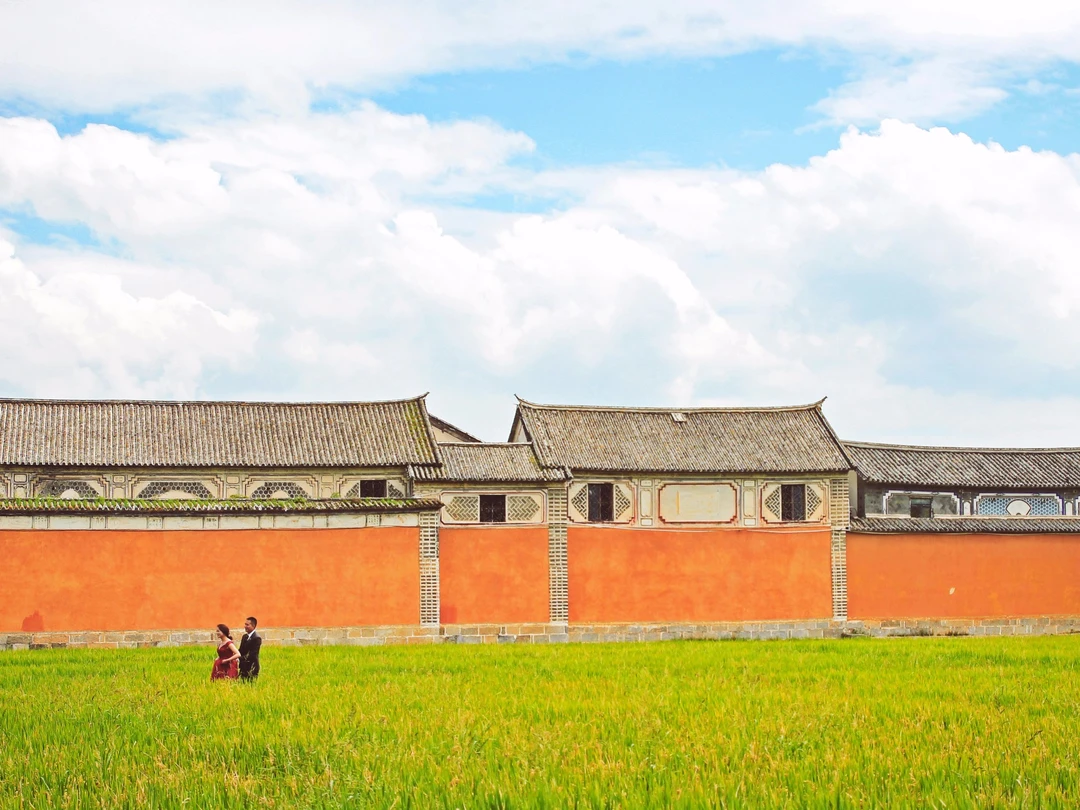
Escaping the Label of "Wind, Flowers, Snow, and Moon": Finding a Backpacker's Utopia in Dali
Dali — the name is almost always tied to the phrase "wind, flowers, snow, and moon" (浪漫风花雪月, a poetic shorthand for romance and beauty), as if you haven't truly been unless you've had a fleeting romance. But if you come with only that expectation, you might miss the real treasure. This small city in northwestern Yunnan is one of the few places in China that still retains a genuine backpacker vibe. It doesn't belong to the hurried tourist; it belongs to those willing to "go up to the mountains and down to the countryside" (上山下乡, originally a Mao-era movement, here repurposed to mean venturing off the beaten path).
In September 2017, I traveled here alone. Over seven days, I wandered through the hidden corners of Cangshan Mountain, the market in Xizhou, the ancient alleys of Weishan, and the pastoral landscapes of Shaxi — searching for that legendary utopia. Below is my real account: not a copy-paste guide, just a share of the experience.
Dali Old Town: Don't Be Fooled by Fuxing Road
Fuxing Road, stretching from the South Gate to Wuhua Tower, is most people's first impression of Dali. To be honest, it's no different from any other tourist street — the same hand-drum shops, the same flower-pastry stalls, the same signs reading "I'm Waiting for You in Dali." But don't be too quick to feel disappointed. The soul of Dali Old Town hides in those unassuming alleyways.

Cangping Street is one such gateway. Turn in and walk to the end, and you'll see the words "Bed Sheet Factory Art District" (床单厂艺术区). This was once a gathering place for Dali's bohemian youth. Now, even though it's taken on a commercial sheen, the Dali Photography Museum and Dolphin Ade Bookstore (海豚阿德书店) still hold their ground. The story of Dolphin Ade is interesting — it moved from Renmin Road to the art district, then to the shore of Erhai Lake. It's like a microcosm of Dali's transformation over the years: from quiet to noisy, from utopia to Instagram hotspot. If you want to find that avant-garde, humanistic Dali, you have to do what I did: "go up to the mountains and down to the countryside."
Cangshan Mountain: The "Don't Rush" Philosophy of the Mo Cui Teahouse
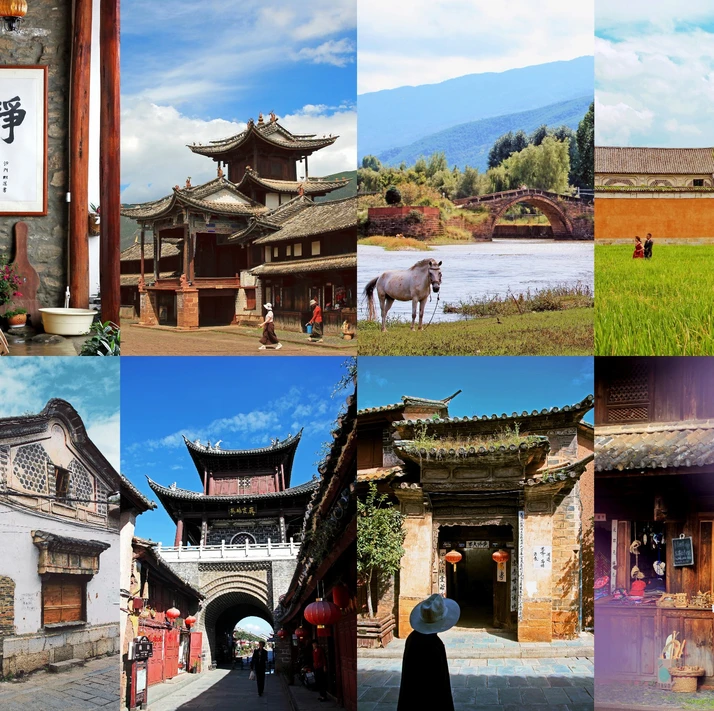
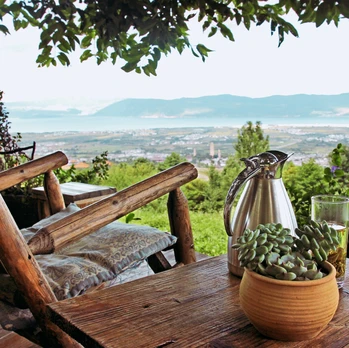
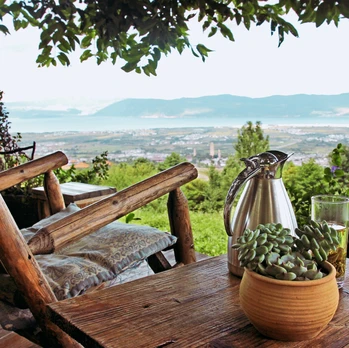
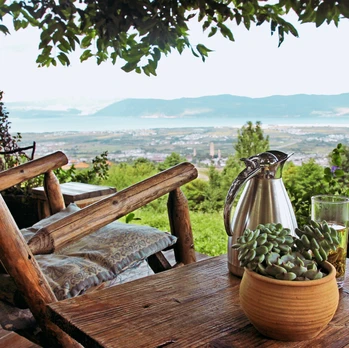
Getting up Cangshan isn't easy, especially when your GPS fails you. I was following a guide to find Mo Cui Teahouse (莫催茶室, literally "Don't Rush Teahouse"), and ended up in a ten-minute standoff with two stray dogs. Then I realized I'd taken a wrong turn in front of a cemetery. What should have been a ten-minute walk took me half an hour. But the silver lining was this: by the time I arrived, the last group of customers was just leaving — the entire viewing platform was mine.
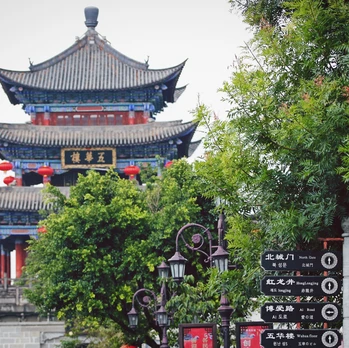
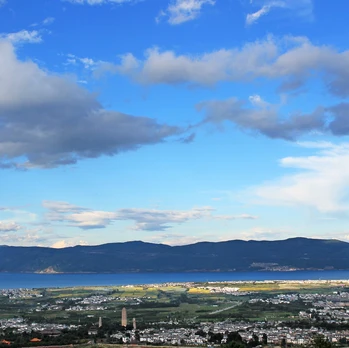
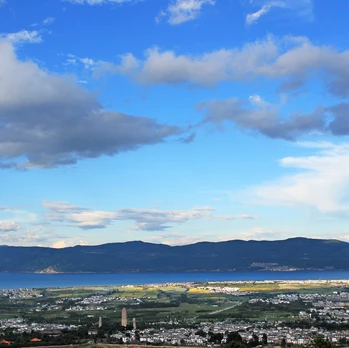
Mo Cui Teahouse is one of the most beautiful viewpoints on Cangshan. From here, you can see the entire Dali basin: the Three Pagodas in the foreground, the old town in the middle, and Erhai Lake stretching into the distance. Clouds rolled across the sky, light shifted over the lake — at that moment, I understood why someone would climb a mountain for this view. The local green tea, earned through my ordeal, was incredibly refreshing. I sat there, feeling time slow down.
But after half an hour, the owner came over and said, "We're closing soon." I couldn't help but laugh — isn't the place called "Don't Rush"? And yet here I was being rushed out. But I figured, fair enough — I didn't want to be passing those wild graves in the dark. So I headed down, satisfied but with a hint of resignation.
Practical Tip: Mo Cui Teahouse is located in Taoxi Valley. Enter via the Gantong Cableway. There are many forks in the road, so download an offline map beforehand. Tea is provided free, but you need to wash your own cups. Best time to visit is early morning or late afternoon, when it's less crowded and the view is at its best.
Chaimiduo Farm Market: Dali's Community Experiment
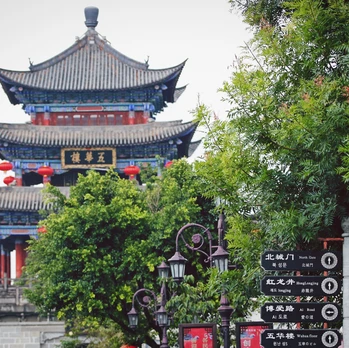
Chaimiduo Farm (柴米多农场) has a restaurant on Yeyu Road that serves Western-style light meals. All ingredients come from their own farm — not cheap, but quality is guaranteed. But what truly blew me away was their big market event at Caicun Village, held roughly once a month on a large lawn by Erhai Lake.
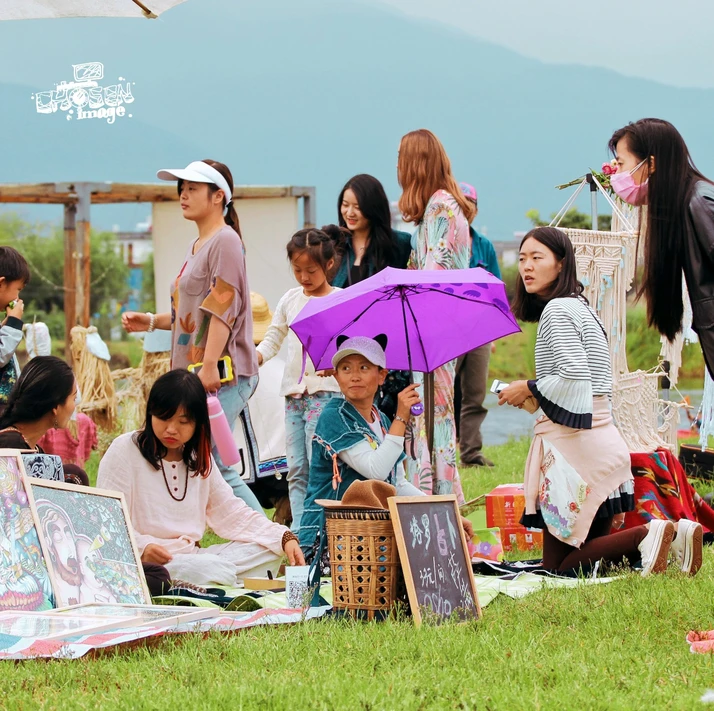
That day, I felt like I'd seen every interesting person in Dali: handicraft shop owners selling handmade trinkets, food vendors feeding the hungry crowd, and visitors who might have been poets, painters, musicians, or just backpackers along for the ride. Some came on foot, some by bike, some zipping in on skateboards. The coolest sight was a tiny tricycle packed full of foreigners — I have no idea how they all squeezed in.
Kids sang and played on the grass, learned kayaking, bounced on trampolines. Dogs ran wild with their owners. The Pinecone Choir (松果合唱团), a local school choir founded by music-loving teachers, brought together local children and the "drifter kids" of Dali. Their singing drove away the drizzle and brought warmth. As someone who studied social work, I was amazed by the level of community integration here — locals and outsiders playing together happily. This was the locals' Dali, and also the outsiders' utopia.
Practical Tip: The Chaimiduo market dates aren't fixed — follow their WeChat public account for updates. If you miss the big market, the restaurant on Yeyu Road is still worth a visit.
Xizhou: Market Day, Small Crafts, and Pastoral Scenery
Lonely Planet ranks market-going as the number one highlight of traveling in Yunnan. Xizhou's morning market was my first taste of a Yunnan market. Stalls sold daily necessities and local produce, alongside various street foods: 稀豆粉 (thin pea jelly), 漾濞卷粉 (Yangbi rice rolls), 包浆豆腐 (stuffed tofu)… A grilled tofu stand was doing brisk business, so I joined the queue. The tofu was just okay — a bit too salty — but while waiting, I saw an old grandmother leading her little grandson. It instantly reminded me of my own grandmother taking me to the seaside morning market when I was a child. In that moment, a wave of warmth hit me. The most moving moments of travel are often these buried memories.
Tourists in Xizhou all gather at Sifang Street. But step just a little way out, and you'll find instant peace. Little horse-drawn carriages clip-clop over the cobblestones, but the drivers aren't in a hurry to do business — they're contentedly playing with their grandchildren. The local crafts are worth a look — embroidery and woodcarving make excellent souvenirs, and the artisans are happy to let you watch them work. A 40-minute walk from the old town takes you to Haishe Peninsula, with pastoral scenery all the way. There's a Dolphin Ade Bookstore by the lakeside where you can have a coffee and wonder why all the tourists are crammed into Sifang Street.
Weishan: Grasshoppers in Soy Sauce and a Poem
Weishan is called an ancient town, but its "ancientness" goes beyond appearances. Gongchen Tower was destroyed by fire a few years ago and then rebuilt — it's lost a bit of its soul, but the quiet of the four surrounding streets makes you forget you're a tourist. Old houses stand one after another, with tufts of grass growing from their rooftops. People gather around notice boards to read obituaries and wedding announcements. In Weishan, you might find scenes from your life twenty or thirty years ago.
Inside a small bookshop under Xinggong Tower, an elderly man was bent over his writing. In Weishan, there are still several shops like this where people write letters or documents for others. A couplet by the door read: "Gladly spend the long days with books, casually pass the remaining years with poetry and wine." Such carefree spirit — I could only admire it.
Speaking of Weishan, you can't skip the snacks. Braised pork with rice noodles (扒肉饵丝) and "one noodle" (一根面) are already in every guidebook. But let me tell you about grasshoppers in soy sauce (酱蚂蚱). I was wandering the streets one day when I saw a sign: "Menghua Sauce Grasshoppers." Menghua is the ancient name for Weishan. Grasshoppers in sauce? Curious, I walked into the shop. There was no shopkeeper — just a few big jars. I peered at the contents, which didn't look anything like grasshoppers to me. I thought: maybe "grasshopper" here means something different?
"Can I help you?" A smiling auntie emerged from the shop across the street. I said I wanted to see the grasshoppers. She laughed. "That's actually shrimp paste in there. The grasshoppers are in this one." (I had to laugh at myself.) She scooped out a spoonful and enthusiastically let me take a photo. This time I saw clearly — a full spoon of grasshoppers, enough to trigger trypophobia. She even urged me to try one. I politely declined. Eating bugs — I just couldn't bring myself to do it. After thanking her, I ran across the street, bought a big cup of papaya water (木瓜水), and downed it in one go. Much better.
Shaxi: The Last Survivor of the Ancient Tea Horse Road
By the time I reached Shaxi, the Shibao Mountain Song Festival had just ended, and there were more tourists than I'd expected. The crowd in front of the ancient stage at Sideng Street was so thick I felt like I was on a replica pedestrian street. So I holed up in a café with a view of the stage, waiting for sunset to see "small bridges, flowing water, and people's homes; ancient roads, west wind, and skinny horses" (a classic Chinese poetic scene).
Shaxi has been popular in backpacker circles for four or five years now. Descriptions of it always sound enchanting — "the last surviving market on the Ancient Tea Horse Road," "Lijiang twenty years ago" — but they always end with "go while you still can." Looks like I came too late. Fortunately, the next day the crowds thinned out, and Sideng Street returned to its peaceful state. The horse caravans now carried tourists instead of goods, but the bells still rang clear. Standing on Yujin Bridge, looking at the Heihui River, it still felt like a hidden paradise.
What left the deepest impression on me were the hiking trails around Shaxi. I chose Shadengqing, the back mountain of Shibao, which lets you cross over to the front and skip the entrance fee. As I started up the mountain, I met a local grandmother. She asked if I was going to Shibao, then kindly pointed the way and told me to be careful. These small kindnesses from strangers along the road always warm the heart. The trail was easy — on my left were locked grottoes, on my right a stream, flowing water, reeds, and butterflies keeping me company. When you see a staircase rising at a 45-degree angle, that's the final grotto. The whole quiet valley belonged to me — the only other person I saw was an old shepherd with his two sheep and a dog.
Dali Cuisine: From Raw Pork Skin to Global Flavors
Dali's food scene perfectly embodies its spirit of inclusiveness. You can't miss the Bai ethnic specialties, but cuisines from all over the world have also found a home here. Bai food tends to be spicy and oily. Signature dishes include 黄焖鸡 (braised chicken, not the fast-food kind) and 木瓜鱼 (papaya fish). Local snacks include 烤乳扇 (grilled milk fan), 雕梅 (carved plums), and 凉鸡米线 (cold chicken rice noodles). The most "shocking" dish is 生皮 (raw pork skin) — half-cooked pig skin wrapped in straw, grilled once, then sliced and served cold. I specifically went to the Dazhaobi Raw Pork Skin Shop near Guanyintang. It has no sign, but Gaode Maps can find it. For 20 yuan, I got a plate of cold raw pork skin. The texture was like northern Chinese pig skin jelly, but fresher, without the gelatinous feel. The pea jelly was also well-made, similar to Sichuan and Chongqing versions.
Practical Tip: Near the East Gate of Dali Old Town, there are several affordable Bai restaurants. For Western food or other regional cuisines, Renmin Road, Fuxing Road, and Yeyu Road are your main options. For the most authentic versions, eat 喜洲粑粑 (Xizhou flatbread) in Xizhou and 巍山过江饵丝 (Weishan cross-river rice noodles) in Weishan.
Accommodation and Transportation: A Practical Guide
Accommodation: I stayed at "Dali, Waiting for Someone Inn" (大理,等一个人客栈) near the South Gate. In the off-season, a decent standard room costs under 100 yuan; a dorm bed in the hostel is around 30 yuan. The front desk sister upgraded me to a room with a view, and on my last morning, I saw the "sunshine on the golden mountain" over Cangshan while brushing my teeth. The owners are a young Bai couple — they felt like my own older brother and sister.
Transportation: - Getting to Dali: The most economical option is the overnight train from Kunming to Dali, with a sleeper berth for just over 100 yuan. The airport has a shuttle bus operated by the Dali Tourism Commission that goes to the old town. - Getting Around: The Dali Tourism Commission's direct shuttle buses are very useful. They run from the old town to the train station, airport, Shuanglang, and the Cangshan cableway. Check the WeChat public account "Dali Tourism Service" for info. To get to Xizhou, take a minibus from the East or West Gate of the old town. For Weishan, take a bus from Xiaguan Xingsheng Road Bus Station. For Shaxi, you first need to go to Jianchuan and then transfer to a minibus.
Conclusion: Dali Is Not Just "Wind, Flowers, Snow, and Moon"
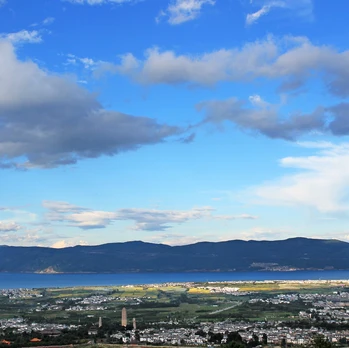
On the day I left Dali, I saw the fleeting "sunshine on the golden mountain" over Cangshan. The beauty of the mountain and the lake is intoxicating, but what I love about Dali is its human atmosphere. It gathers contemporary artists while preserving the open-minded spirit of the indigenous Bai people. There are outsider art markets and local Third Month Street fairs (三月街); there is devotion to the Benzhu (本主, local Bai deities) faith and openness to foreign cultures.
Dali is easily forgotten by those who rush through, but unforgettable to those who love it. That day hiking in the outskirts of Shaxi, the scenery was breathtakingly beautiful. But what I remember most is the smile of the Bai grandmother who stopped to give me directions — like she was looking after her own child.
That's Dali. Not a label of "wind, flowers, snow, and moon." It's the utopia you'll find only if you're willing to "go up to the mountains and down to the countryside."
You should also read:
September: Finding Unexpected Warmth in Yunnan (Kunming, Dali, Shuanglang, Lijiang, Lugu Lake)
September: Finding Unexpected Warmth in Yunnan (Kunming, Dali, Shuanglang, Lijiang, Lugu Lake) Foreword: One Person's Journey, A Crowd's Story Before I set off, like every first-time solo traveler, I printed out a thick stack of travel guides and rehearsed countless possible scenarios in my head—getting…
Continue reading...
A 9-Day Yunnan Journey: From Lijiang to Dali to Tengchong – A Trip Toward Self-Reconciliation
A 9-Day Yunnan Journey: From Lijiang to Dali to Tengchong – A Trip Toward Self-Reconciliation Some say travel is simply going from a place you're tired of to a place other people are tired of. It stings to hear, but it's painfully true. Yet there's…
Continue reading...
Tengchong·Heshun: Finding Life as It Should Be in a Border Town Where Time Stands Still
Tengchong·Heshun: Finding Life as It Should Be in a Border Town Where Time Stands Still The long journey of over twenty days was over. On my first day back at the office, I was still in a daze. My fingers couldn't find the keys on…
Continue reading...