Every Encounter is Beautiful: Heading South to Dali (National Day Road Trip)
Every Encounter is Beautiful: Heading South to Dali (National Day Road Trip)
On the eve of National Day, an unexpected cold front swept across the country, with the southwest region experiencing a dramatic temperature drop and forecasts of relentless rain. Staring at the uniform "rain" icons across every weather app on my phone, I almost gave up on this trip to Dali — if it hadn't been for that non-refundable hotel reservation, I might have truly missed out. But then I reconsidered: the flip side of bad weather is a quiet tourism scene, empty hotels, and affordable prices. Isn't that exactly the kind of confidence we working folks need to travel? Let's take a gamble — bet on whether the weather could turn around against all odds.
A decade later, I'm once again heading to Dali with my wife and daughter. What I miss most is Yunnan's gentle climate, the lush green of Cangshan Mountain and the azure blue of Erhai Lake, and those unhurried, slow-paced moments along the journey.
Confidence Before Departure: An Old Car and a Gold Card
Driving from Sichuan to Yunnan via the expressway is undoubtedly the most cost-effective choice during the National Day holiday. Before setting off, I took my eight-year-old "Big White" (my car) for maintenance, replaced the tires, and fixed all the minor issues that had accumulated over the years, giving me more confidence for this long-distance road trip. We stopped for the night in Panzhihua on the way there, and on the return trip, we set off from the shores of Erhai and drove straight home without stopping.
For accommodation, I chose Hilton chain hotels throughout the trip. The reason was simple: I had a Gold Card trial membership that entitled me to free breakfast, complimentary room upgrades, and points that could be redeemed for cash value — each night's points were worth about over 100 yuan. The Hampton by Hilton in Panzhihua was in a bustling area, offering great value for money. The Hilton in Dali overlooked Erhai Lake and was one of the more reasonably priced high-end options during the National Day holiday.
As for food, we went with the flow. We didn't deliberately seek out trendy restaurants; we ate wherever our travels took us. But we didn't miss out on Yunnan cuisine, mushroom hot pot, or copper hot pot.
In terms of activities, this being our third visit to Dali, sightseeing at famous spots was no longer a priority. Our activities were concentrated on the west side of Erhai, revolving around a "three-point line": the hotel, the ancient town, and Xizhou, plus the ecological corridor along the lake. We also tried tie-dyeing and making flower cakes, which gave us a taste of local culture.
Everywhere you look, there are mountains and seas. Step outside, and you're free.
Day 1 | Through Wind and Rain, Encountering Panzhihua
We set off slowly from Meishan in the morning. Since the Chengdu-Kunming Railway's second line opened, even during the National Day holiday, the Beijing-Kunming Expressway wasn't very congested. The road was clear, but so was the rain. After entering the Panxi Plateau, the usual blue skies and white clouds were nowhere to be seen, replaced by a gloomy sky. We arrived in Panzhihua by 3 p.m. — much earlier than our previous two trips, which had us arriving after dark, confirming the improved road conditions.
The Hampton Inn was located in the bustling eastern district of Panzhihua, surrounded by many restaurants and with convenient parking. We had a hearty hot pot dinner right next to the hotel.
A kilometer away was Donghuashan Sports Park, an urban mountain park. I'd heard that watching the sunset from the trendy coffee shop at the top was especially beautiful. Despite the poor weather, we decided to check it out.

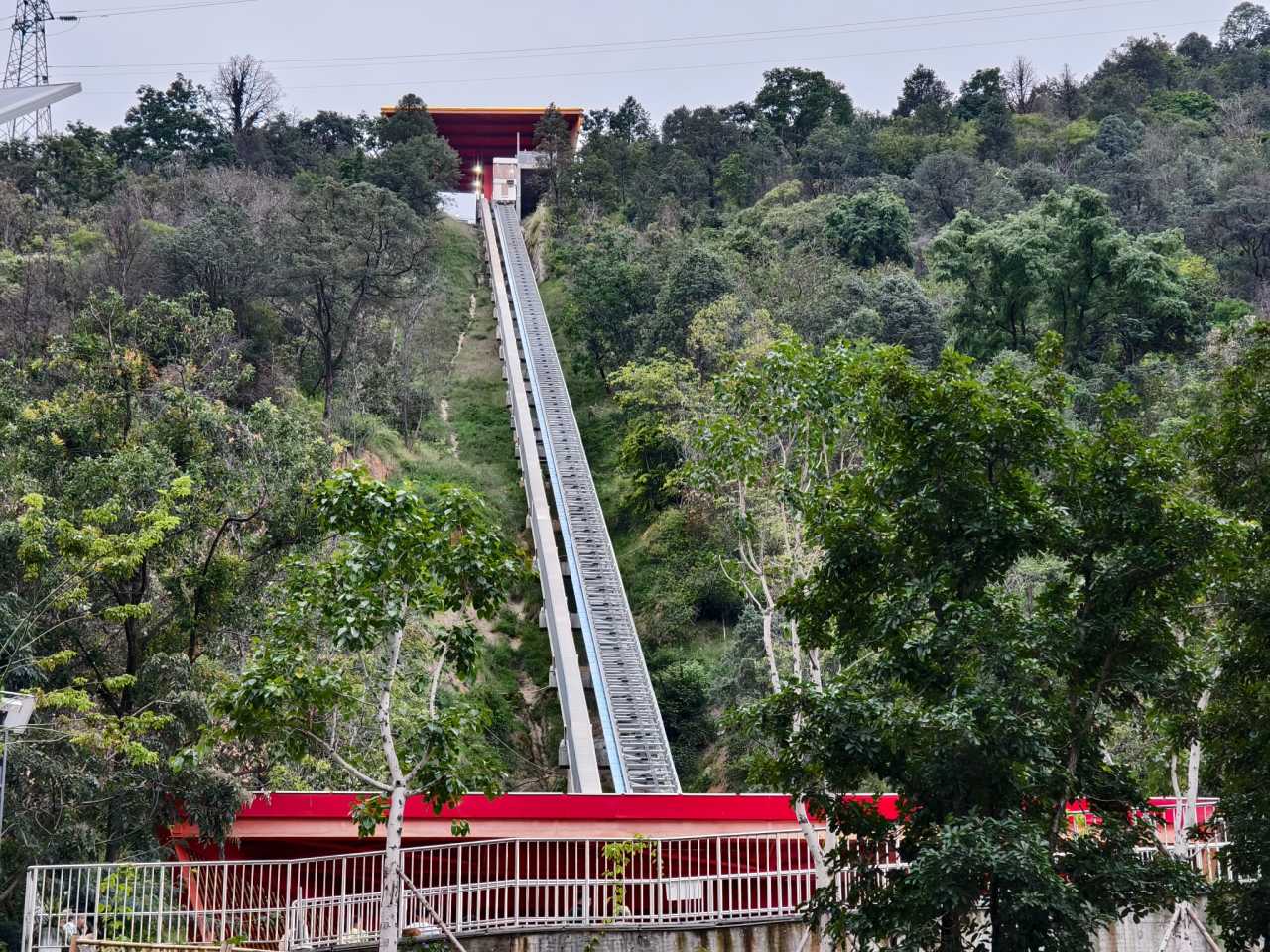
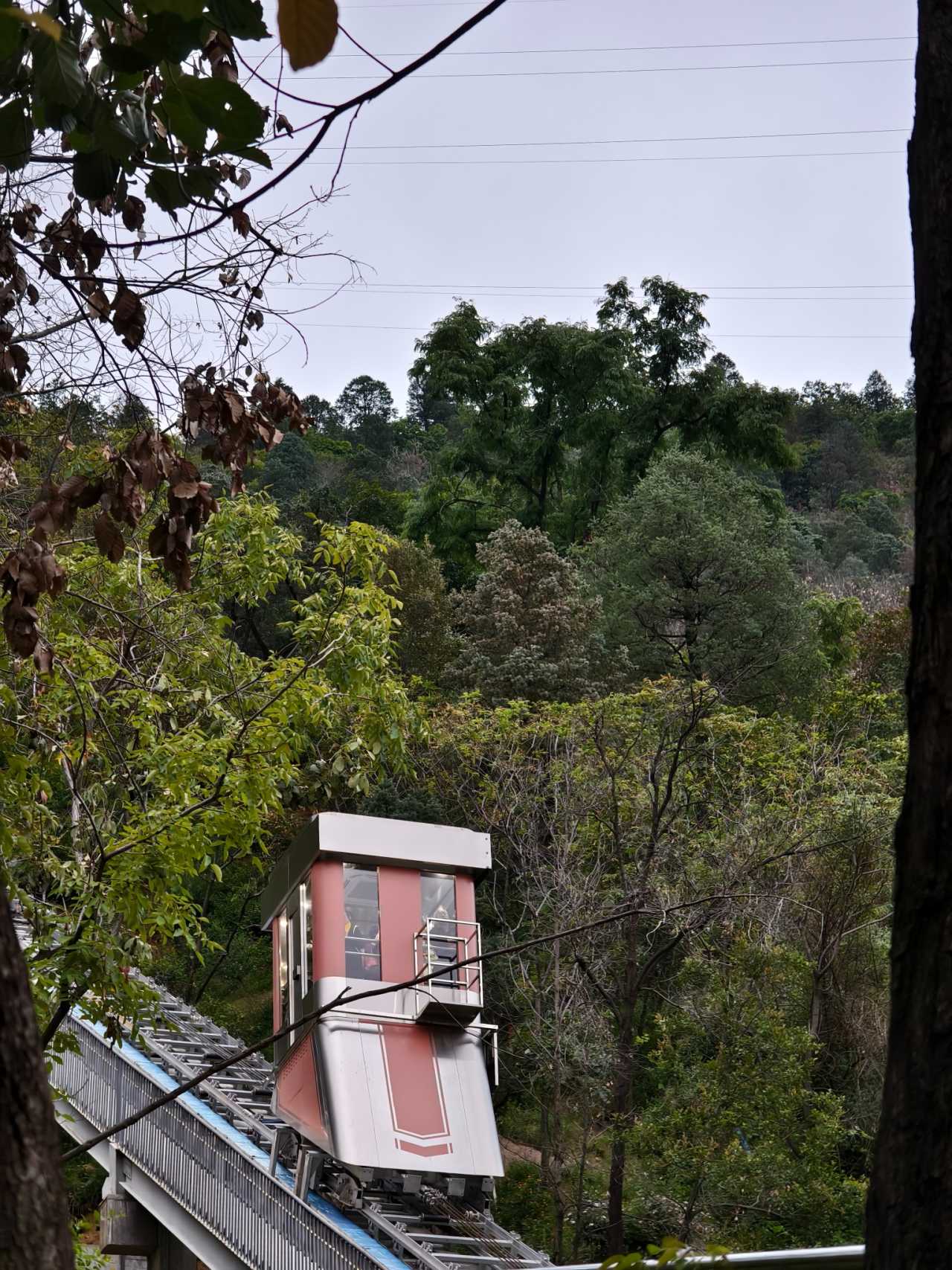
During the holiday, the park was crowded, and the parking lot was small. We waited in line at the entrance for a while before getting in. The park was free, and there was a long inclined elevator to the top, costing 10 yuan per person. It looked interesting, but its capacity was limited, and the queue at the bottom was already long — estimated to take about 40 minutes. After asking around, we learned that climbing on foot would only take about half an hour, so we chose to walk.
Some parts were steep, and the path was winding, but overall, it wasn't too difficult. After working up a bit of a sweat, we reached the top in about half an hour. What made me most proud was that my daughter, Duoduo, walked the entire way on her own, sometimes even leading the pack. Thinking back to all the struggles when she was little, this old dad's heart was full of emotion.
The view from the top of Donghuashan was expansive, and even on an overcast day, we could see far into the distance. Panzhihua, a city born from the "Third Front" construction project, has a unique geography — the urban area is divided by hills, with high-rises and factories embedded like diamonds along the edges of these hills.
The trendy "Banshan Coffee" (Half-Mountain Coffee) at the top was a major draw for many climbers. The coffee shop shared space with a bookstore and was quite large, spanning three or four levels. Both the indoor and outdoor areas were tastefully designed, with plenty of Instagram-worthy spots. The outdoor seating offered unbeatable panoramic views and was more popular than the indoor area. The coffee shop was decked out with National Day decorations, all red and festive. For around 30 yuan per person, you could order a drink and sit for the entire afternoon — affordable for any budget.
In Panzhihua, we wished our motherland a happy birthday.
Day 2 | Misty Rain, First Glimpse of Erhai
The drive from Panzhihua to the Dali Hilton took about three and a half hours — not too short, not too long. Passing by the Chenghai service area again, we finally saw the first ray of sunshine since leaving home. Chenghai is the fourth-largest lake in Yunnan, and while it's not as famous as Dianchi, Erhai, Fuxian, or Lugu Lakes, its surface area is still considerable.
Once we entered Yunnan province, the expressway was clear and uncrowded. The service areas were beautifully built, but unfortunately, the dining facilities weren't operational — empty restaurants without even tables set up. Travelers with meal needs should definitely prepare ahead. We drove all the way to the last service area just before getting off the expressway at Dali's Xiaguan district, where we finally managed to buy some simple food.
When we arrived at Erhai, it was drizzling.

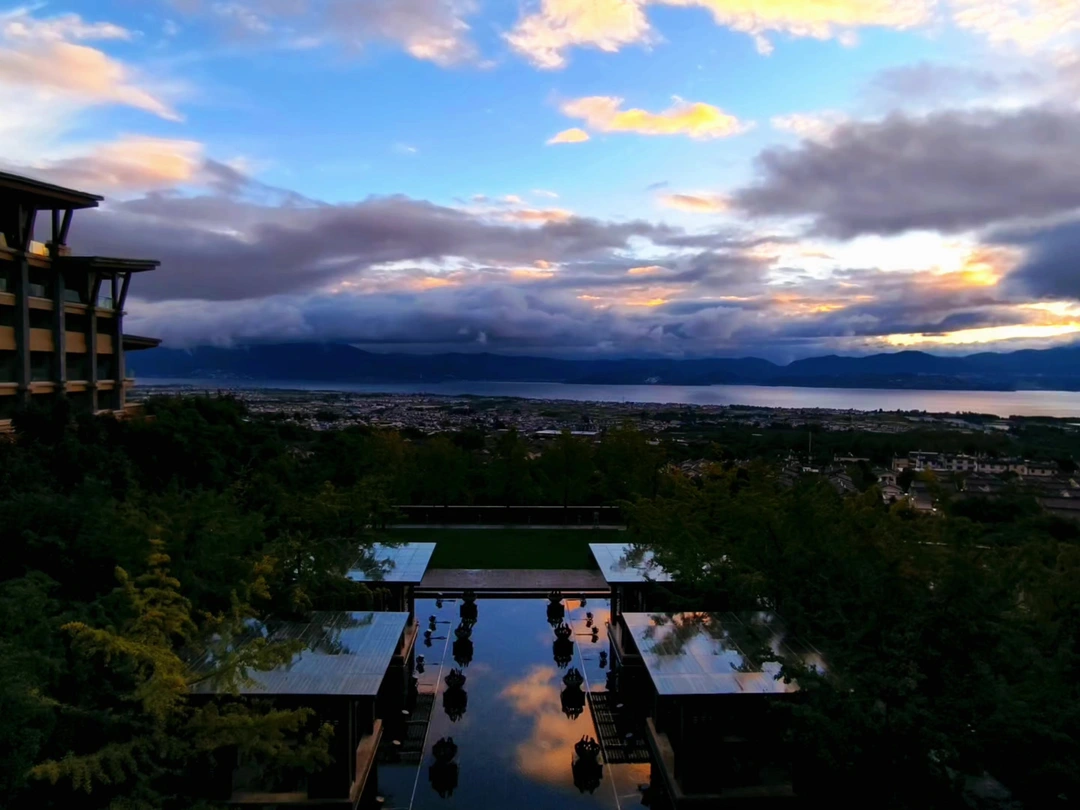
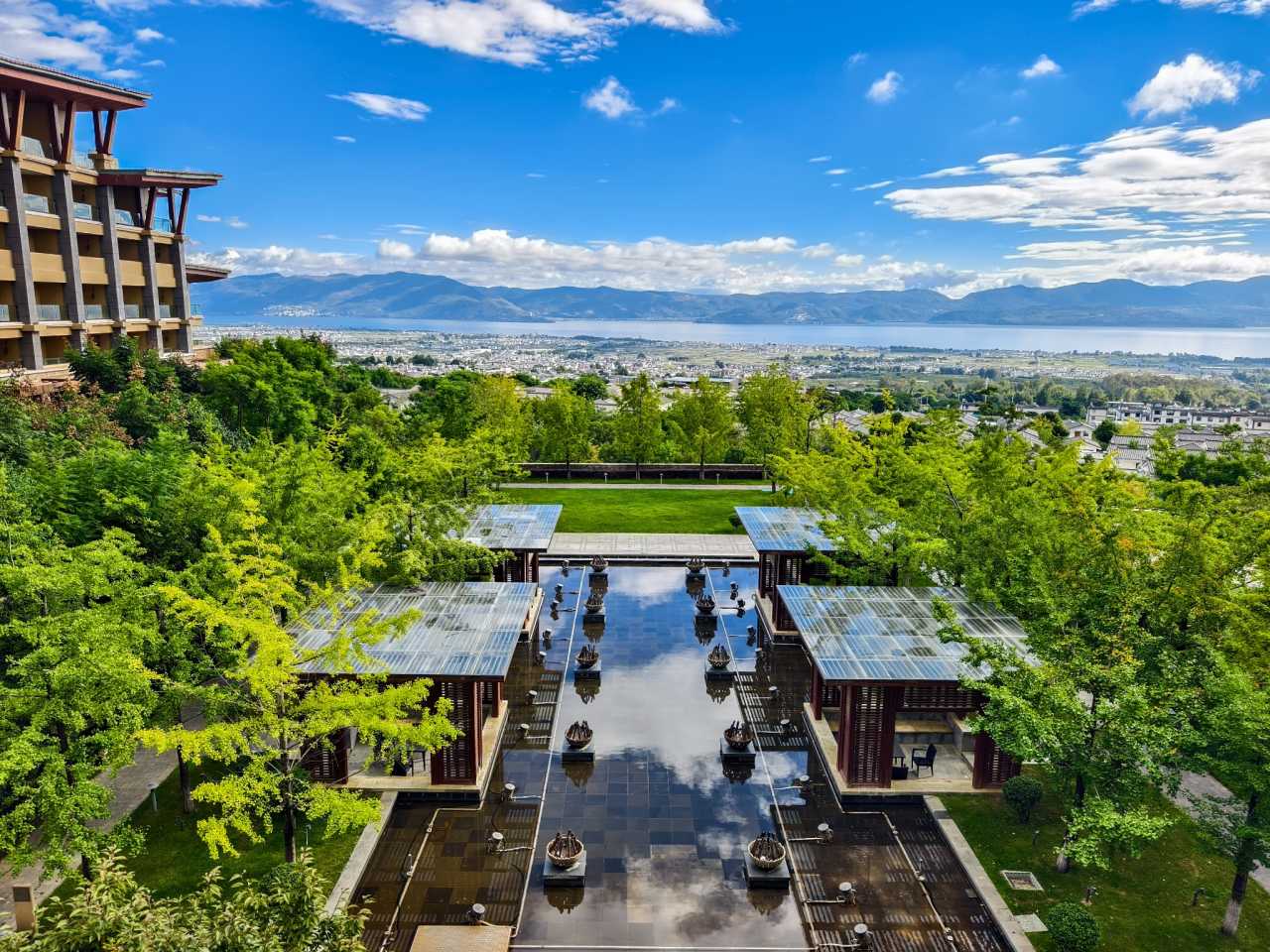
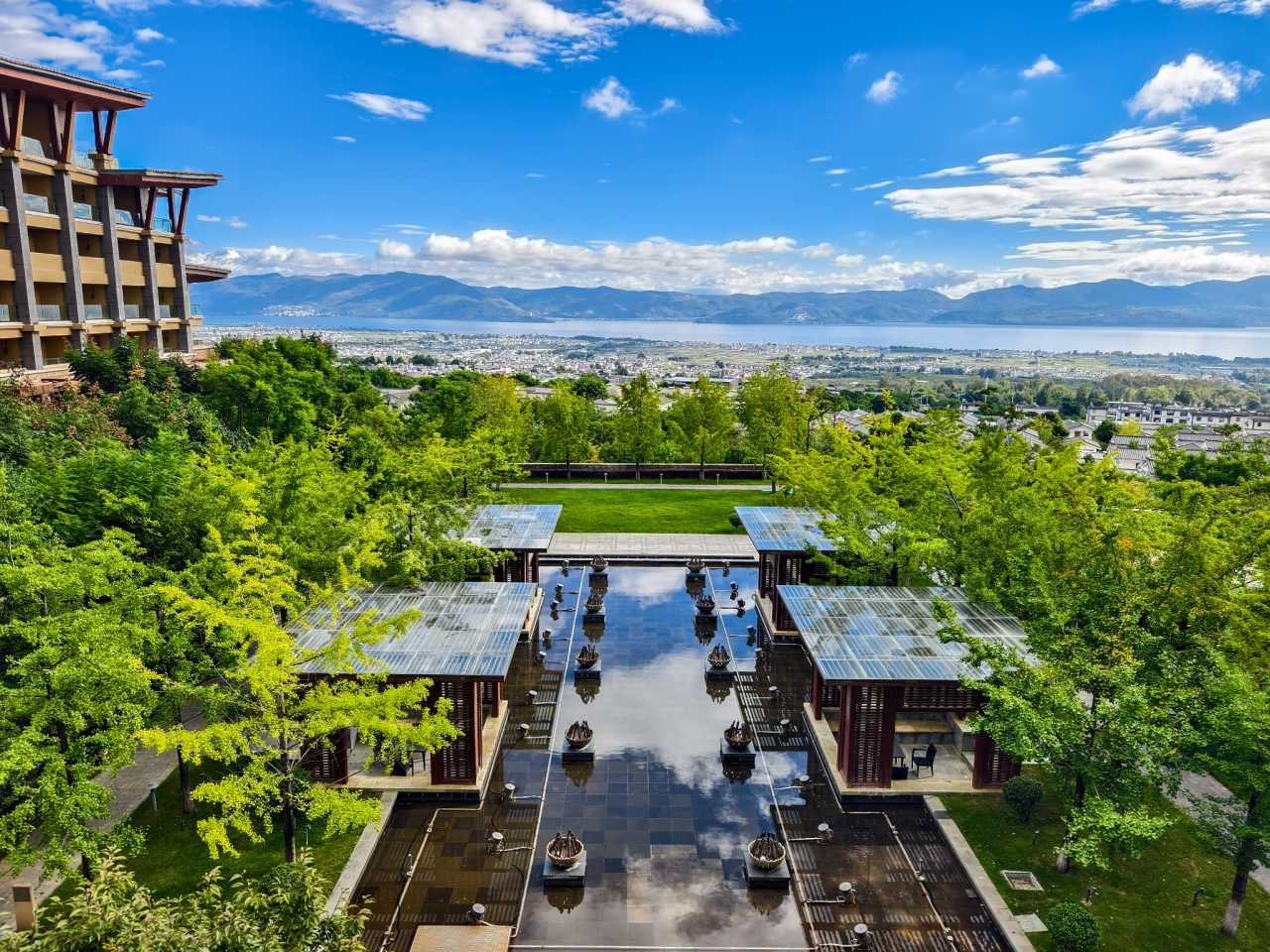
We stayed at the Dali Powerhouse Hilton Hotel, located on the west bank of Erhai, halfway up Cangshan Mountain. Nestled in a villa area, it backed onto Cangshan and overlooked Erhai, with easy access to the lakeshore, Dali Ancient Town, and Xiaguan city center. The hotel was quite large, with over 300 rooms, but judging by the underground parking lot and breakfast situation, there weren't many guests this National Day.
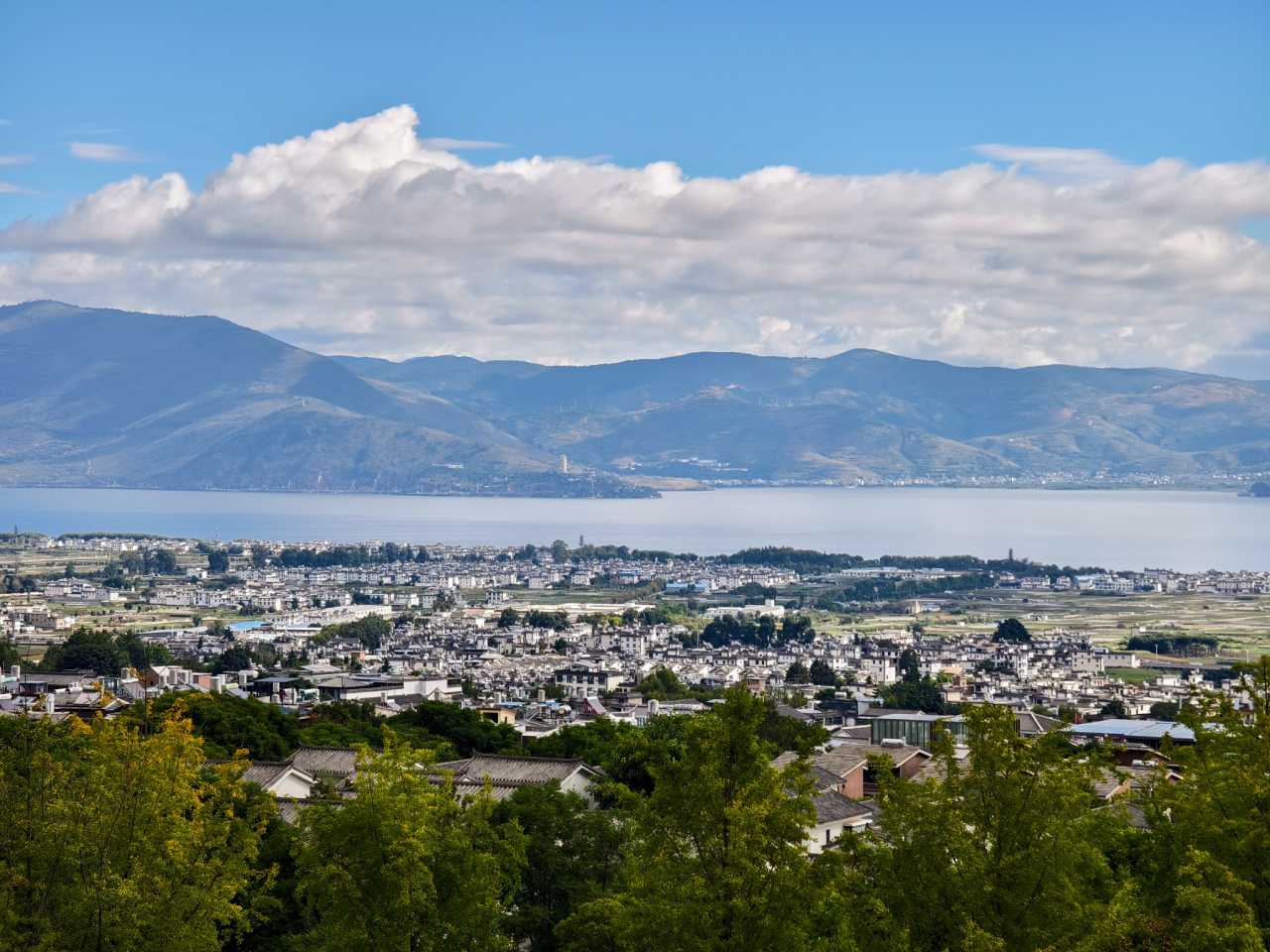
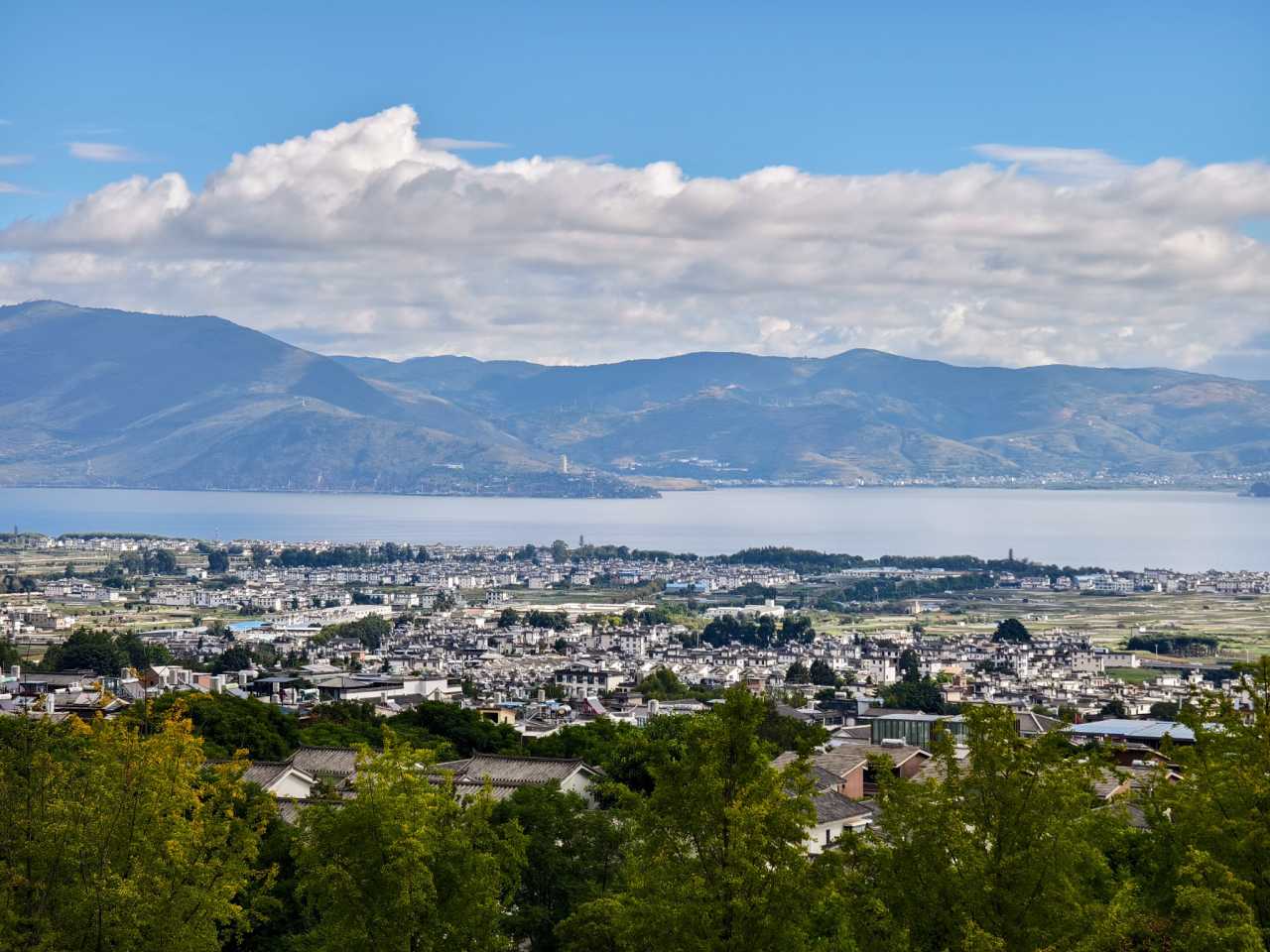
From the terrace outside the lobby, the vast expanse of Erhai stretched out before us, with the white buildings of lakeside villages dotting the landscape like stars. Choosing a large hotel not directly on the lake this time was a completely different experience from staying in lakeside guesthouses in the past.
The sky was still raining, and although we occasionally caught glimpses of blue through gaps in the clouds, it remained mostly overcast. The bellhop helping us with our luggage said it had been raining in Dali for several days straight.
The lobby occupied the best vantage point in the hotel. When checking in, I had originally booked a room without breakfast, but because of my Gold Card membership, we were given complimentary breakfast for two and upgraded to a higher room category — I felt like I'd saved a few hundred yuan. However, the hotel's approach was a bit confusing: when I contacted them in advance, customer service said that due to the owner's requirements, we could only enjoy either free breakfast or a room upgrade, but in the end, we got both. Then the front desk said children over five years old needed to pay half-price for breakfast. After some negotiation, they told us that during peak season, this benefit wasn't offered. We didn't pay, but over three days of breakfast, no one ever mentioned that our child needed to purchase separately. Since they ultimately gave us all the perks, why set up these "hurdles"? It diminished the experience.
Our room was a side sea-view room, quite spacious, with a balcony overlooking Erhai. The so-called room upgrade was essentially just a floor upgrade — the room itself was the same as the base category, just higher up with a better view. It was still raining outside, but the hotel had an indoor heated swimming pool. Duoduo happily changed into her swimsuit and enjoyed the pool, which was small and nearly empty.
First Encounter with Yangnanxi and Sansheng Island
The biggest change I noticed on this trip to Dali was the long ecological corridor built along the lakeshore. The western section alone stretches over 40 kilometers, with wide, smooth paths and a natural, ecological environment — perfect for cycling.
As evening approached, the rain gradually stopped. With some time before dinner, we decided to check out the corridor. The starting point of the western section is at Yangnanxi, just a ten-minute drive from the hotel. The entrance is right by the main road, with a spacious parking lot — unlike most villages on the west side of Erhai, where roads are narrow and parking is scarce.
At the entrance was a large garden, with various bicycles and e-bikes neatly arranged. The entire ecological corridor was under closed management; visitors could only rent vehicles from within the corridor, and outside vehicles were not allowed. Renting required scanning a QR code and paying a deposit, charged by the hour or half-hour. It was convenient but significantly more expensive than outside, with rates varying by season — Spring Festival, May Day, summer vacation, and National Day were all peak seasons with higher prices. Bicycles and small e-bikes were reasonably priced, but larger vehicles were quite expensive, with the most expensive four-person family bike costing 60 yuan per half hour.
A band was performing on the lawn by the shore at Sansheng Island, taking song requests and attracting quite a crowd. As evening fell, it started to drizzle again. We planned to cycle back, but the wind was against us, and it was cold and rainy, so we opted to take an electric sightseeing car back to Yangnanxi. The sightseeing cars charged by the stop, 10 yuan per person per stop — the 5-kilometer distance from Sansheng Island to Yangnanxi counted as two stops, which felt a bit steep.
After leaving the corridor, we were freezing cold and it was still raining. Being unfamiliar with the area, finding a place for dinner wasn't easy. A quick phone search revealed a new Aegean Shopping Center about two kilometers from Yangnanxi, a ten-minute drive away. To our surprise, the mall was huge and bustling, with most upstairs restaurants requiring reservations. We chose a Yunnan cuisine restaurant, and a 100-yuan set meal was more than enough for the three of us.
Visibility was significantly better than during the day. The small town at the foot of Cangshan was quiet, while in the distance, the lights along the shore of Erhai flickered in a riot of color.
Day 3 | Rain and Sunshine, Xizhou Time
When I woke up, the sky was already light. The rain must have just stopped, as the air was thick with moisture, and the clouds overhead were still dense. A Dali livestreamer was giving a real-time weather report from the lakeshore, optimistically claiming there was a 90% chance of seeing the sunrise — I didn't believe it for a second, looking at that sky.
Sure enough, sunlight only occasionally peeked through gaps in the clouds, casting a few rays across the lake. But regardless, the weather was better than the day before — at least there was a glimmer of hope for clear skies.
The hotel's breakfast was quite generous, and there were many guests. By the time we finished eating and left, there was still a line outside. It was the only time over three days of breakfast that we saw a queue in the restaurant.
Traffic conditions in Dali weren't ideal. The roads weren't high-grade, and there was a lot of traffic. The 25-kilometer drive from the hotel to Xizhou Ancient Town took nearly 40 minutes. Along the way, it alternated between rain and sunshine, and we were lucky enough to spot a rainbow, which raised our expectations for the day.
At the entrance to the town, there was a large parking lot, a bit muddy after the rain. We arrived early, so there weren't many cars yet.
Xizhou Town
Xizhou Ancient Town is a thousand-year-old Bai ethnic town and a showcase of traditional Bai-style residential architecture. Strolling along the cobblestone streets felt both artistic and rustic. The town had many tie-dye shops where you could make your own tie-dye crafts, from dresses and bags to hair ties and handkerchiefs. All shops had their prices displayed at the entrance, with little variation.
Not far into the town, there was a large tie-dye experience center. Entering through a small courtyard, it felt less like an experience center and more like a local cultural complex — you could also try making lacquer fans, but the flower cake making experience had moved elsewhere.
Duoduo was quite interested in tie-dyeing. Tie-dye is an ancient binding and dyeing technique, recognized as a national intangible cultural heritage in 2006. It predominantly uses blue and white, creating a rustic aesthetic through color contrast. After thousands of years of development, the use of dyes has become increasingly diverse, and the techniques more advanced.
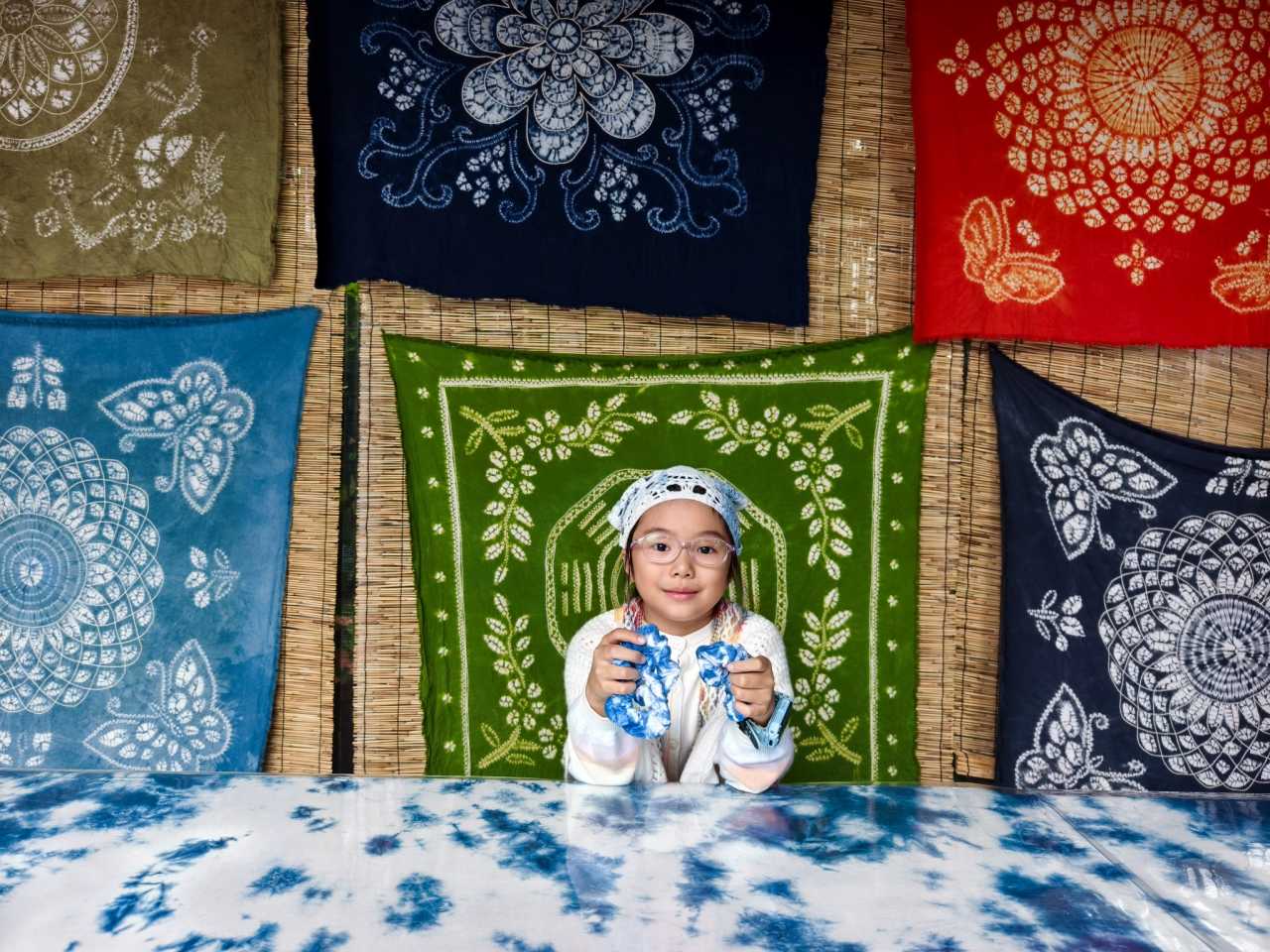
Duoduo was particularly drawn to tie-dye stuffed animals, but only finished products were available for purchase, and the prices at the experience center were four to five times higher than outside — a real rip-off. While waiting, her mother bought Duoduo a beautiful shawl.
We chose the cheapest tie-dye project — hair ties. The auntie patiently explained the process: tie-dye consists of two parts — tying and dyeing. You use thread to create knots in the fabric, then dye it, and finally remove the knots. First, soak the fabric to remove dust and allow better color penetration. Next comes the tying — the tighter and denser the knots, the less dye penetrates, leaving more white space and creating clearer patterns. After tying, dyeing involves six steps: rinse the tied hair ties with clean water, immerse them in indigo dye made from 板蓝根 (a Chinese medicinal herb, Isatis indigotica), remove and rinse, unfold the fabric, spin-dry in a washing machine, and the tie-dye hair ties are complete.
When she showed off her work, Duoduo's face was full of pride.
Leaving the tie-dye shop, we continued wandering through the town's streets and alleys. The roadside stalls of fresh flowers and fruits added vibrant colors to the ancient town, and the air was filled with the fragrance of roses. The continuous rainy season was exactly the time for mushrooms to grow on Cangshan Mountain. During this season, there's another way to experience Dali — hiring a guide to forage for mushrooms on the mountain. I'd seen many posts about it while researching, but I never found a suitable option, so we didn't get to try it.
Passing through the core area of Xizhou Ancient Town, we came to a large wheat field. The wheat wasn't very tall yet, and since it wasn't windy on this overcast day, we didn't get to see the lively scene of wind rippling through the wheat. The area near the wheat field was packed with tourists, and photo spots were fiercely contested — you could easily have someone walk into your frame. Along the roadside by the wheat field were several chain coffee and beverage shops. Duoduo's mother was craving coffee, but the service was painfully slow — we waited nearly half an hour.
Even though it was already noon, none of us were hungry yet. Popular restaurants were crowded during meal times, so we searched online for a flower cake making experience shop. Along the way, there were plenty of small scenes that tempted us to take photos, as well as beautiful cartoon murals with Xizhou signage.
Making Flower Cakes by Hand
Following the navigation through the小巷 (narrow alleys), we finally found the small flower cake shop. Pushing open the door, we entered a cozy garden. Both the front and back doors were tastefully decorated, especially the row of cartoon dogs on the doorframe — very distinctive. The garden was a quiet oasis amidst the bustle, perfect for tea, snacks, and photos. The adorable Duoduo climbed onto the windowsill.
The owner was very welcoming, and business was good. Another little girl was also there to experience making flower cakes, so they teamed up. Flower cakes are a Yunnan specialty snack — fresh rose petals wrapped in dough and baked into fragrant pastries. The process wasn't complicated, and the owner patiently explained and demonstrated each step, making it easy for children to complete on their own.
The most complete experience would start with picking fresh flowers from the garden, but this shop skipped that step — the rose petals and dough were prepared in advance. We tore the petals into small pieces, removed the stems, mixed them with sugar and lard to marinate, then weighed them precisely and rolled them into uniform balls — already fragrant. Next came making the oil pastry and flaky pastry, with the oil pastry on the outside and flaky pastry inside, rolled into long strips and precisely divided. The owner taught us how to roll out the dough on site, wrap the filling without letting it leak, and press it into a mold to form a cake. We could also get creative and shape them however we liked — suns, stars, flowers, smiley faces... After baking in the oven for 25 minutes, the crispy, fragrant flower cakes were ready. They're best eaten warm, when they're most flaky and sweet. Any leftovers could be packed in paper bags and taken away in beautiful gift boxes.
Through making flower cakes together, Duoduo made a new friend.
Searching for the Rice Field Restaurant
Leaving the garden, the houses on the outskirts of town were less dense, with more rural scenery. The wheat fields here were much yellower than those in town, but there were very few people. While making flower cakes, we had reserved a spot at a rice field restaurant in the ancient town online, waiting for nearly an hour. By 2 p.m., our number was almost called, so we didn't have much time to take photos in the wheat fields.
The "Windy" rice field train was adorable. We followed the navigation to find the restaurant, but it was located in a narrow, crowded alley, and the GPS wasn't accurate. It took us a long time to find it, and we almost missed our turn. After weaving through the houses, we finally found the entrance near the wheat field side. To our surprise, even at 2 p.m., the two-story restaurant was completely full. We were lucky — a spot with a view opened up on the second floor just as we arrived. The sky was gradually clearing, and the green mountains, wheat fields, and houses formed a beautiful pastoral scene. The restaurant served Yunnan cuisine at reasonable prices, and the food was decent — nothing extraordinary, but you mainly paid for the ambiance. The first floor offered close-up views of the wheat field.
Cycling in Xizhou, the Covered Bridge, and Haishe
Xizhou Ancient Town was still over two kilometers from the ecological corridor along Erhai. After walking for most of the day, none of us wanted to walk anymore, so we hailed a "fire tricycle" (a three-wheeled motorized vehicle) at the town entrance. Probably due to the holiday, the drivers were quite proud of their prices, and we couldn't bargain them down to the 5 yuan per person we'd seen online. We asked the driver to take us directly to the nearest corridor parking spot.
Xizhou was close to the end of the western ecological corridor — Haishe. We first cycled south toward the corridor's starting point, passing the lively covered bridge. We originally planned to cycle all the way to the网红 (trendy) S-curve, but the further south we went, the worse the weather became — colder and windier. We passed a singer performing moving songs by the roadside and a beautiful lakeside garden. We turned back and cycled toward Haishe, all the way to the end of the corridor. We had visited Haishe many years ago, when there was no reservation system and it was open to everyone — I remembered it as a beautiful spot.
At the end point of Haishe, we hailed another "fire tricycle" to return to Xizhou Ancient Town. We had originally planned to have dinner in Dali Ancient Town, but when we checked the navigation, both the route out of the town and the return trip were heavily congested. So we decided to have dinner in Xizhou before heading back.
Across from the tie-dye experience shop we visited in the morning, we found a mushroom hot pot restaurant. It was a small courtyard with traditional decor, and in the center grew a "persimmon tree" laden with "persimmons" — quite atmospheric. While waiting for the mushroom broth to boil, Duoduo and her mother even did some exercises together. How could you visit Yunnan without enjoying a mushroom hot pot? The delicious mushrooms left a lasting impression. The restaurant was also two stories, with most guests concentrated on the first floor. From the second-floor window, we could see the clean, open streets and the bustling crowds of tourists.
The return trip from Xizhou was much more congested than the morning journey. Passing near Dali Ancient Town, it started to drizzle again, so we canceled our plans for a nighttime visit and went straight back to the hotel to rest. Lying in bed scrolling through my phone that night, I realized that the weather around Erhai that day hadn't been good — most areas had experienced continuous drizzle. The only place with clear skies was Xizhou. What a lucky day!
Day 4 | Partly Cloudy, Cycling Around Erhai
On the third morning at Erhai, the weather began to improve noticeably. I woke up early to shoot a time-lapse. From the terrace outside the hotel lobby, the sky was already glowing with dawn. To the east, a gap appeared in the thick clouds, and I hoped to see the fiery sun leap out from the opening — but the clouds continued to thicken instead. Others who had also woken up early in anticipation of the sunrise were disappointed as the sunlight barely managed to break through, casting only a few beautiful beams of Tyndall light. The weather on the Cangshan side was much better — clear and bright.
Cycling at Yangnanxi, Longkan, and Caicun
Today's main plan was still to cycle along the ecological corridor, but we aimed to go further and try different types of vehicles. The top of Cangshan was capped with a thick layer of clouds. Having already scouted Yangnanxi two days earlier, we were familiar with the area.
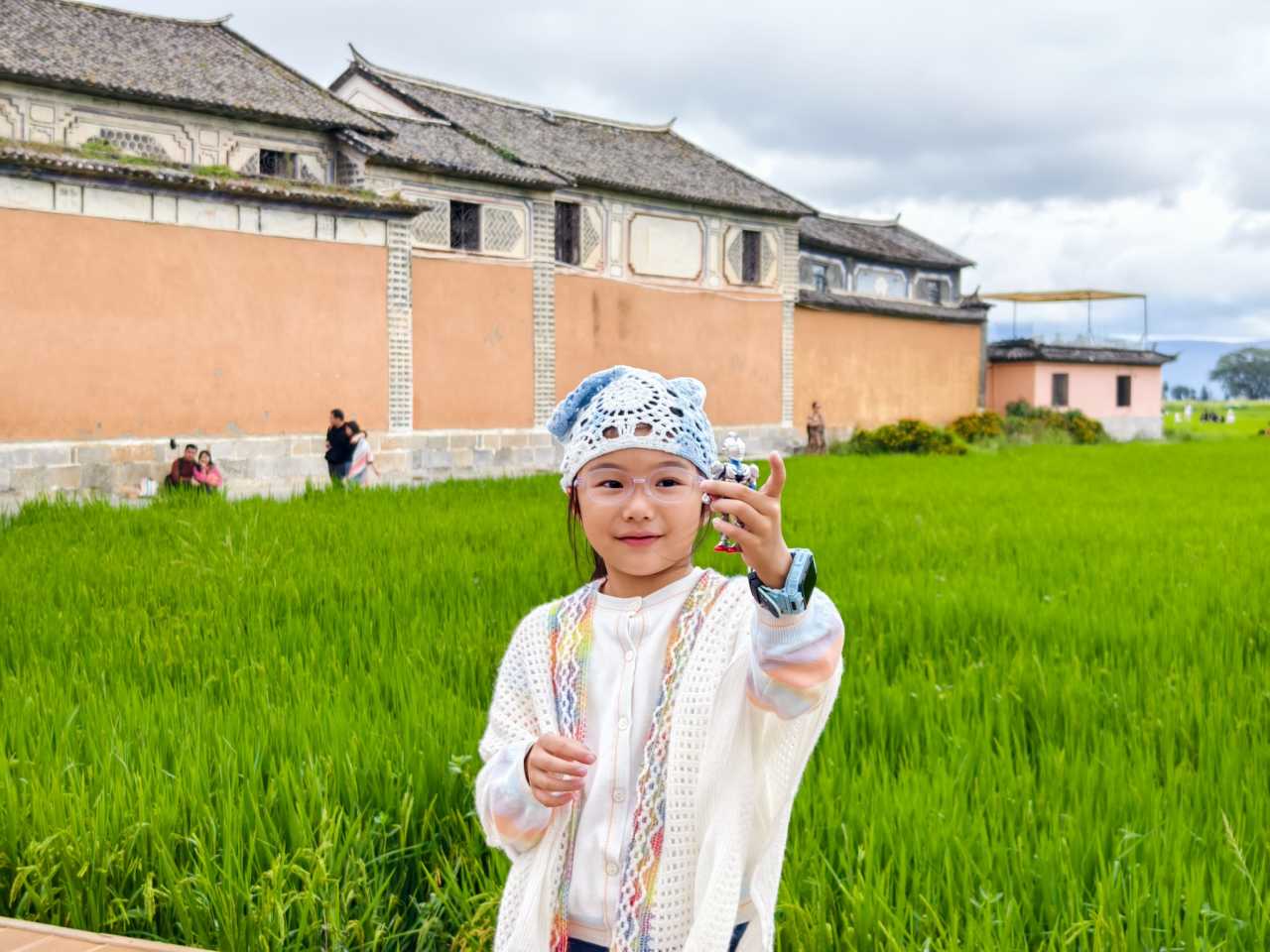
We chose a stylish "big dog" bike — officially called a Snoopy bike — which cost more than double the basic e-bike. The big dog bike could usually seat two people, and our family of three could squeeze in, but it was too heavy and cumbersome to maneuver, not as nimble as an e-bike. Riding it with my wife and daughter required extreme caution, and I couldn't let my guard down for a moment. That little e-bike, on the other hand, despite its size, allowed Duoduo and me to ride together, taking turns telling jokes and laughing all the way — it was pure joy.
We wobbled our way to Sansheng Island. Sansheng Island is an excellent spot for watching the sunrise over Erhai. Every morning, local livestreamers broadcast the sunrise and weather from here. Compared to other well-known villages, Sansheng Island is less famous and less crowded. There's a trendy coffee shop here called Xindi Coffee, which has an annual turnover in the millions. Its popularity isn't because the coffee or desserts are particularly good, but because it's extremely photogenic and perfect for Instagram. The coffee shop has a minimum spending requirement, and there were many young people taking photos, so we didn't go in. Even from the outside, it was clear that the design was very thoughtful — simple yet sophisticated, with unique decorations creating a strong atmosphere. The entire second floor had no doors or windows, blending seamlessly with nature. With carefully designed photo spots, an unbeatable location, and the natural environment, it was almost impossible for it not to become a viral sensation.
The weather at Sansheng Island was perfect — blue skies and white clouds reflected in the beautiful blue of Erhai. We switched vehicles, and Duoduo's mother tried a bicycle that ran on "burning bone oil" (a playful term for leg power). Since e-bikes are speed-limited, bicycles weren't actually slower than e-bikes. With the good weather, the scenery along the ecological corridor was like a painting. Due to the weather over the past few days, Erhai wasn't as blue as usual, and the lake surface wasn't calm either. The houses and guesthouses along the corridor were beautifully renovated, with some novel designs catching our eyes.
We passed through Longkan and Caicun. These two villages are now extremely popular, especially Longkan, which was packed with people — even bicycles could barely get through. Outside Caicun, we finally found a fully charged "top-tier luxury" four-person family bike, the most expensive rental in the corridor. But for safety, it was also the slowest, with an average speed of less than 15 kilometers per hour. Between Caicun and Longkan, there were also unique music bar flower carts, where you could listen to music, sing, drink, and slowly tour Erhai.
Farewell to Longkan
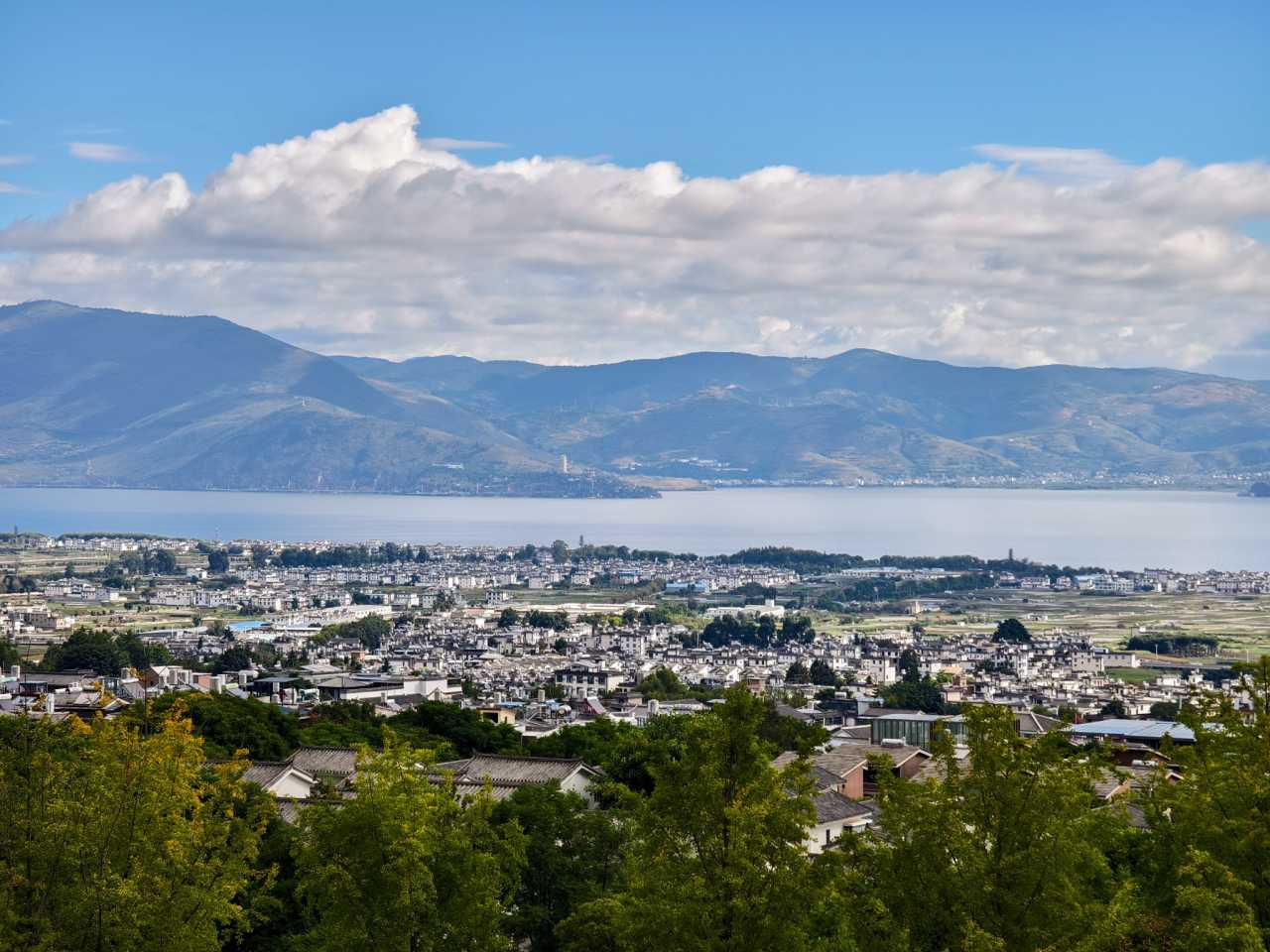
We turned back from Caicun and arrived at Longkan just in time for lunch. I have a sentimental attachment to Longkan. Ten years ago, on my first visit to Dali, I stayed at a guesthouse in Longkan village right by the lake. My impression of Longkan was so good that a few months later, during the Spring Festival, I brought my parents and Duoduo's mother back here again. Now, years later, on my third visit to Longkan, what had changed?
The biggest change was the construction of the ecological corridor along the lakeshore. This was vastly different from the lush trees and fertile vegetable fields that once lined the lake. The Longkan No. 7 Guesthouse, where I had stayed, was completely unrecognizable except for the sign at the door. When I went inside and asked the staff, they said the building and the landlord were the same, but they didn't know about earlier times. Looking at that old photo, even though the angle was different, it was hard to connect it with the current appearance.
Conclusion: Every Encounter is Beautiful
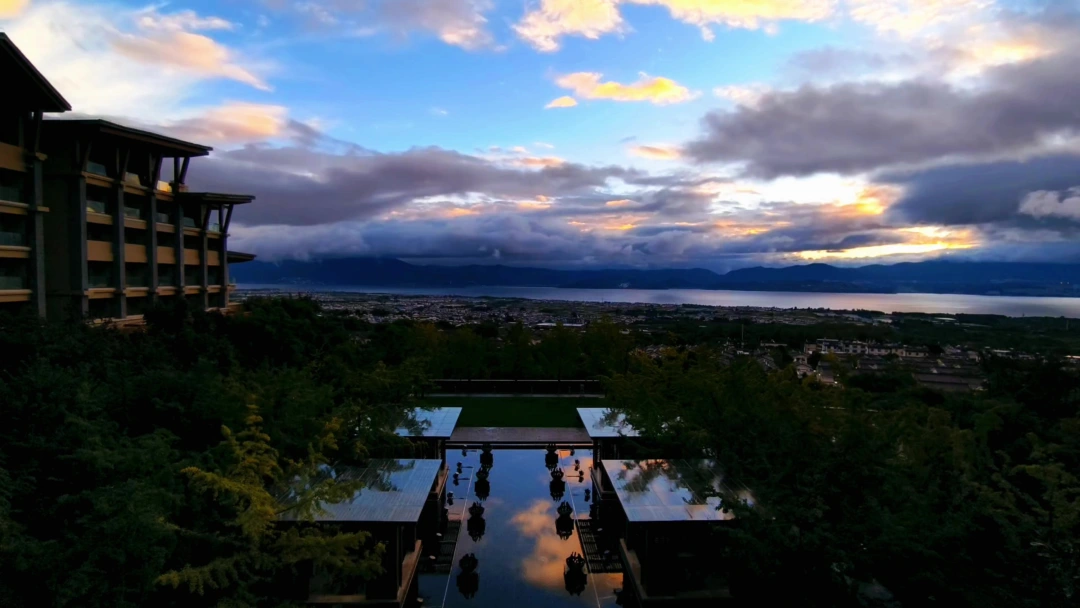
This trip to Dali began with a gamble — betting that the weather would turn around, that the holiday would bring beauty. As it turned out, we won the bet.
Although it was rainy and overcast most of the time, it was precisely these imperfect weather conditions that showed us another side of Dali: the rainbow after the rain, the glow of dawn through the clouds, the brief clear skies over Xizhou, the blue skies and white clouds at Sansheng Island... Every moment was worth cherishing. More importantly, we slowed down, no longer chasing after scenic spots. Instead, we immersed ourselves in the blue and white of tie-dye, the sweetness of flower cakes, the cycling along the ecological corridor, and those unexpected warm moments.
Every encounter is beautiful. Heading south leads to Dali. Next time, we might just take another gamble.
You should also read:
September: Finding Unexpected Warmth in Yunnan (Kunming, Dali, Shuanglang, Lijiang, Lugu Lake)
September: Finding Unexpected Warmth in Yunnan (Kunming, Dali, Shuanglang, Lijiang, Lugu Lake) Foreword: One Person's Journey, A Crowd's Story Before I set off, like every first-time solo traveler, I printed out a thick stack of travel guides and rehearsed countless possible scenarios in my head—getting…
Continue reading...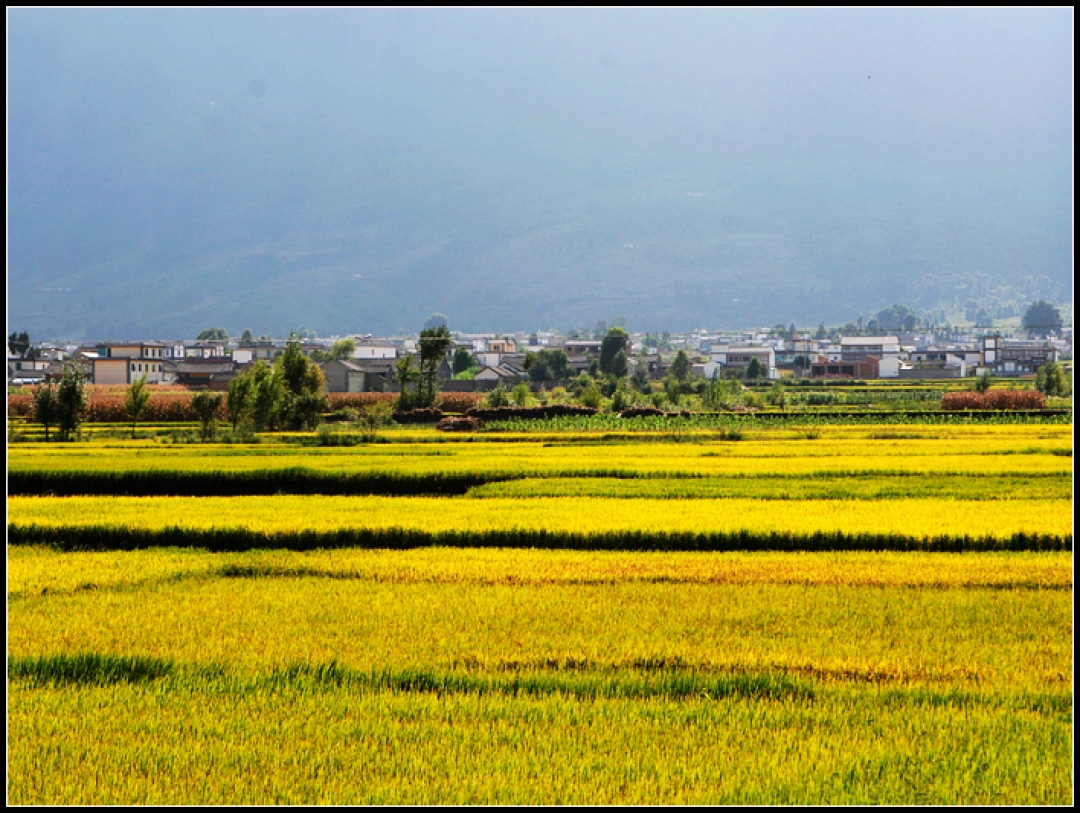
A 9-Day Yunnan Journey: From Lijiang to Dali to Tengchong – A Trip Toward Self-Reconciliation
A 9-Day Yunnan Journey: From Lijiang to Dali to Tengchong – A Trip Toward Self-Reconciliation Some say travel is simply going from a place you're tired of to a place other people are tired of. It stings to hear, but it's painfully true. Yet there's…
Continue reading...
Two Girls' Graduation Trip: Dali and Shuanglang – A Poetic Farewell to Mountains and Sea
Two Girls' Graduation Trip: Dali and Shuanglang – A Poetic Farewell to Mountains and Sea Preface: Catching the Tail of Youth, Heading South During our senior year of college, my roommate and I – two girls studying in Beijing – decided to bid farewell to…
Continue reading...