Exploring Kunming Starts with Green Lake: A Pool of Jade, Half a Chapter of Modern History
Exploring Kunming Starts with Green Lake: A Pool of Jade, Half a Chapter of Modern History
The renowned writer Wang Zengqi once described Green Lake (Cuihu) as "the eye of Kunming." At first hearing, this phrase feels purely poetic, but only when you truly step into it do you realize that these "eyes" hold the very soul and memory of the entire city of Kunming. I have been fortunate enough to visit the Spring City many times, and each time I find myself irresistibly drawn to walk a full circle around Green Lake, as if pulled by an invisible force, intoxicated and unable to tear myself away. If you too want a truly "nourishing" journey—one that lets you feel the pulse of this city—then remember this: to explore Kunming, you must begin at Green Lake.
Around Green Lake: A Pool of Jade, Half a Chapter of Modern History
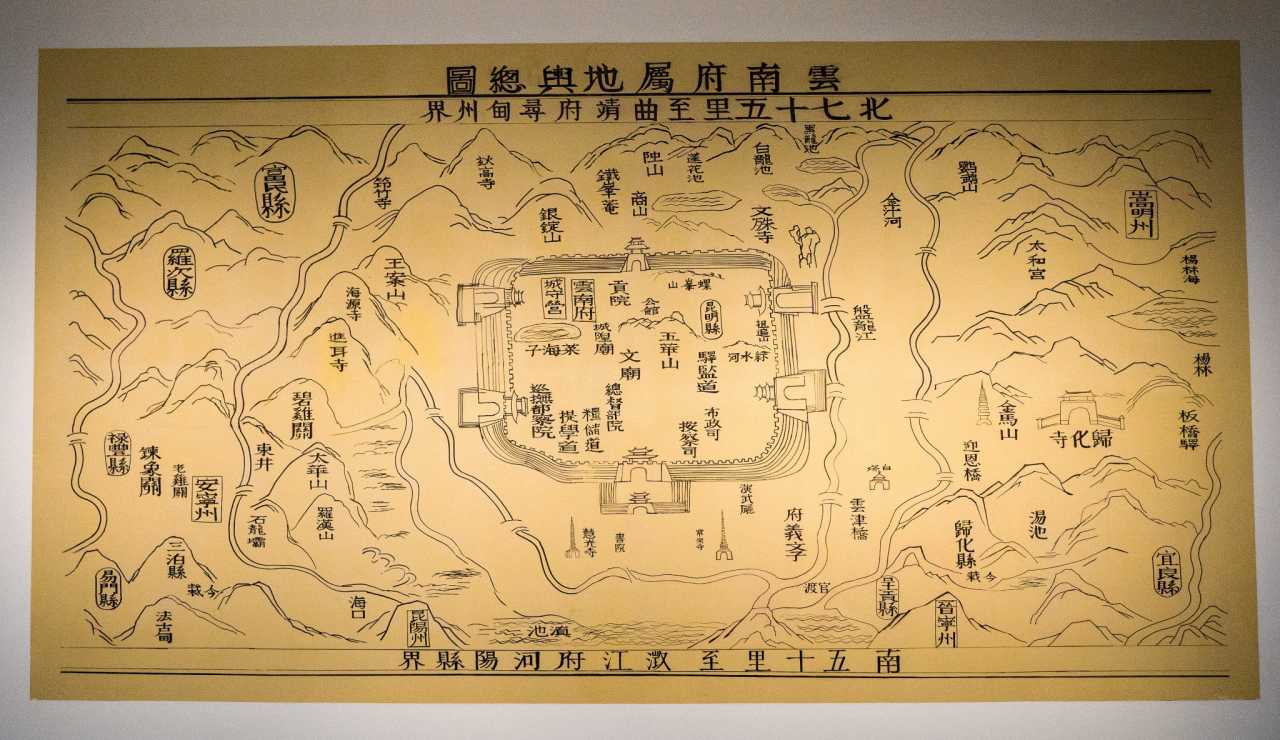
Unfolding the map of history, Green Lake sits in the northwest corner of old Kunming. At the Yunnan Provincial Museum, I once saw a map of Kunming from the Ming Dynasty—the "Cai Haizi" (Vegetable Sea) marked on it is today's Green Lake, the "Gongyuan" (Imperial Examination Hall) is now the site of Yunnan University, and "Luofeng Mountain" is today's Yuantong Hill. From the Qing Dynasty onward, people began building pavilions and causeways on Green Lake, transforming it into the city's scenic heart. During the Republican era, Green Lake was officially established as a park, and its surroundings gradually became the political, military, and cultural center of modern Kunming.
Although the loop around the lake is only about two kilometers, this small patch of land carries the weight of a tumultuous century of history. Every brick, every tile, every street and alley has witnessed figures and events that changed the fate of China.
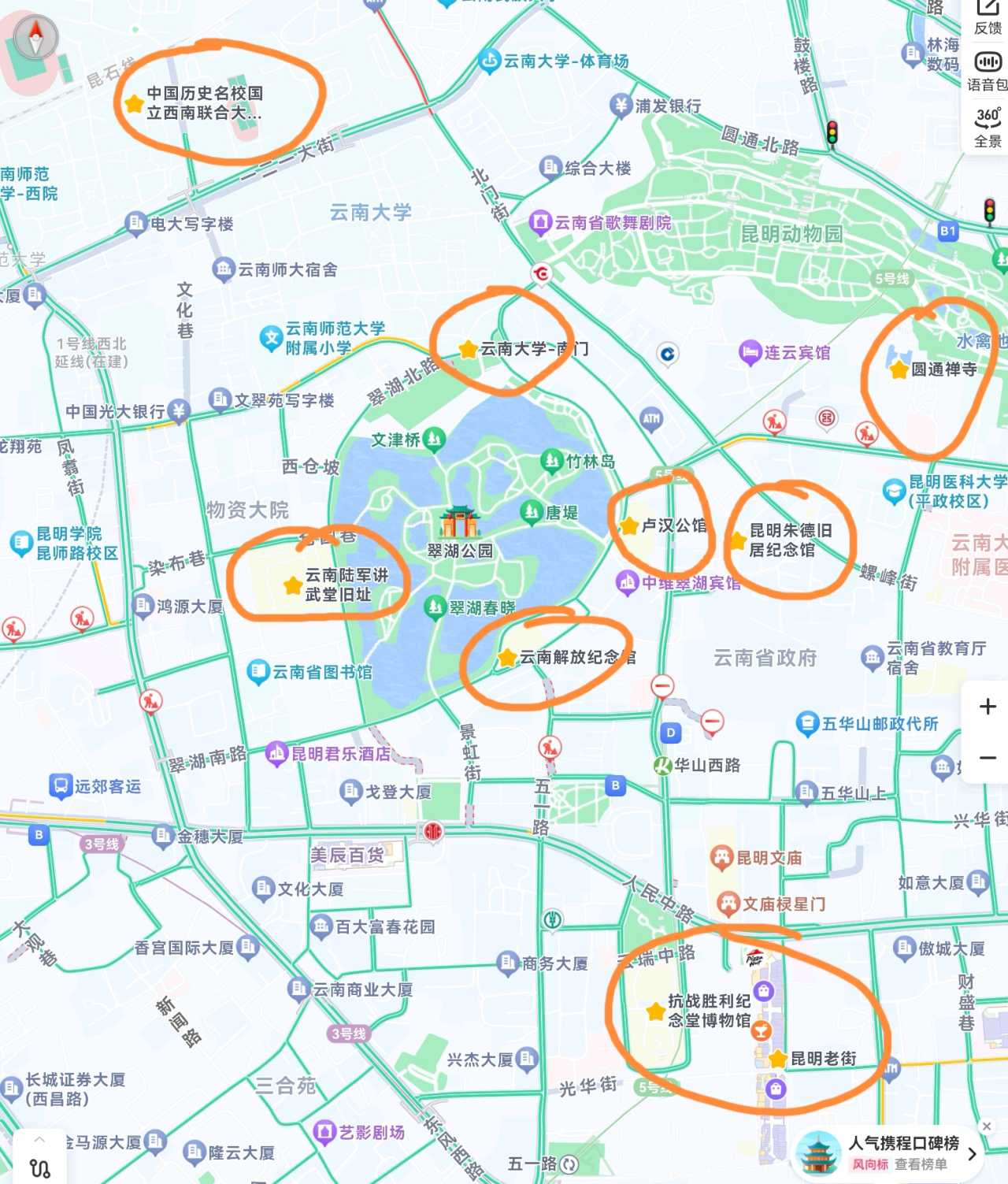
Outside the North Gate of Green Lake Park once stood the Yunnan Gongyuan—the main venue for imperial examinations in Yunnan during the Ming and Qing dynasties. In 1922, Yunnan University was built on the site of the Gongyuan. Just across the street from Yunnan University is Yunnan Normal University, which also bears a more famous name—the site of the National Southwestern Associated University (Lianda).
Outside the West Gate of Green Lake Park stands the former site of the Yunnan Military Academy. This military school, founded in the late Qing Dynasty, produced two founding marshals of the People's Republic of China—Zhu De and Ye Jianying—as well as countless influential figures who shaped the history of both the Republic of China and the People's Republic.
Outside the East Gate of Green Lake Park is the Lu Han Mansion—the private residence of Lu Han, the last "King of Yunnan" before the founding of the People's Republic. Today, it has been converted into the Yunnan Uprising Memorial Hall. Less than 500 meters to the east lies "Jie Yuan" (Pure Garden), the former residence of Marshal Zhu De in Kunming from 1921. Another 600 meters or so further east is Yuantong Chan Temple, one of the oldest Buddhist temples in downtown Kunming, originally built in the Tang Dynasty.
Outside the South Gate of Green Lake Park is the Yunnan Liberation Memorial Hall. This French-style building, completed in 1940, was originally the residence of Lu Chongren, the provincial finance commissioner. After Yunnan's liberation, it became the headquarters of the Kunming Military Control Commission, where General Chen Geng and General Song Renqiong worked and lived. About one kilometer further south is the Victory over Japan Memorial Hall, built on the site of the Qing Dynasty's Governor-General of Yunnan and Guizhou's office. Outside the memorial hall lies Kunming's Old Street, where the people's musician Nie Er was born in a small medical clinic.
The historical anecdotes are too numerous to list. Below, based on my own实地 experience, I will introduce these sites one by one. Those close to each other I will group together for easier itinerary planning.
The Beautiful Green Lake: Scenery in All Seasons, Seagulls in Winter
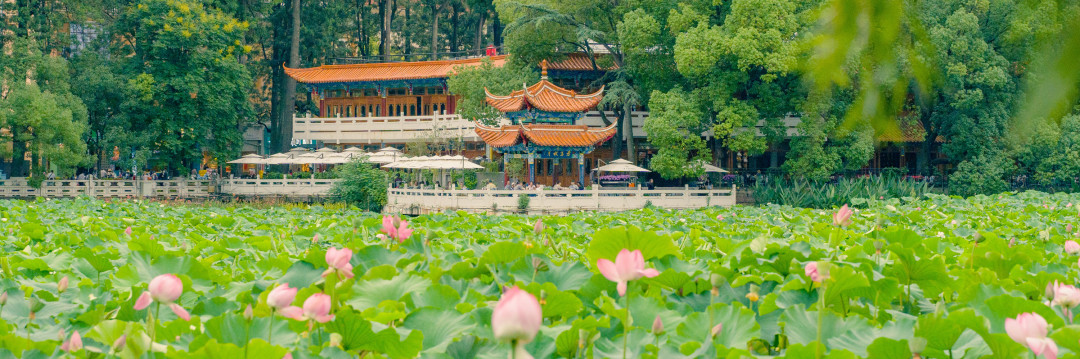
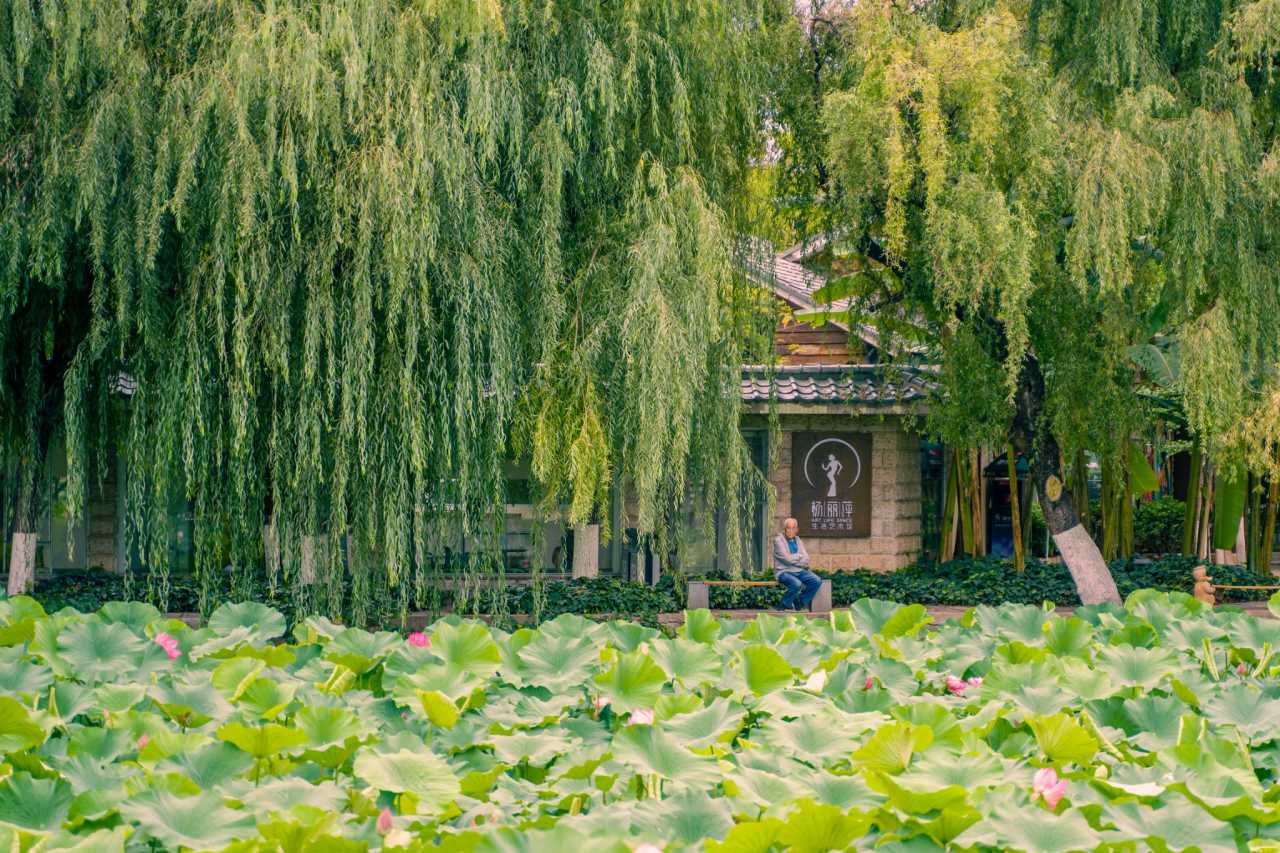
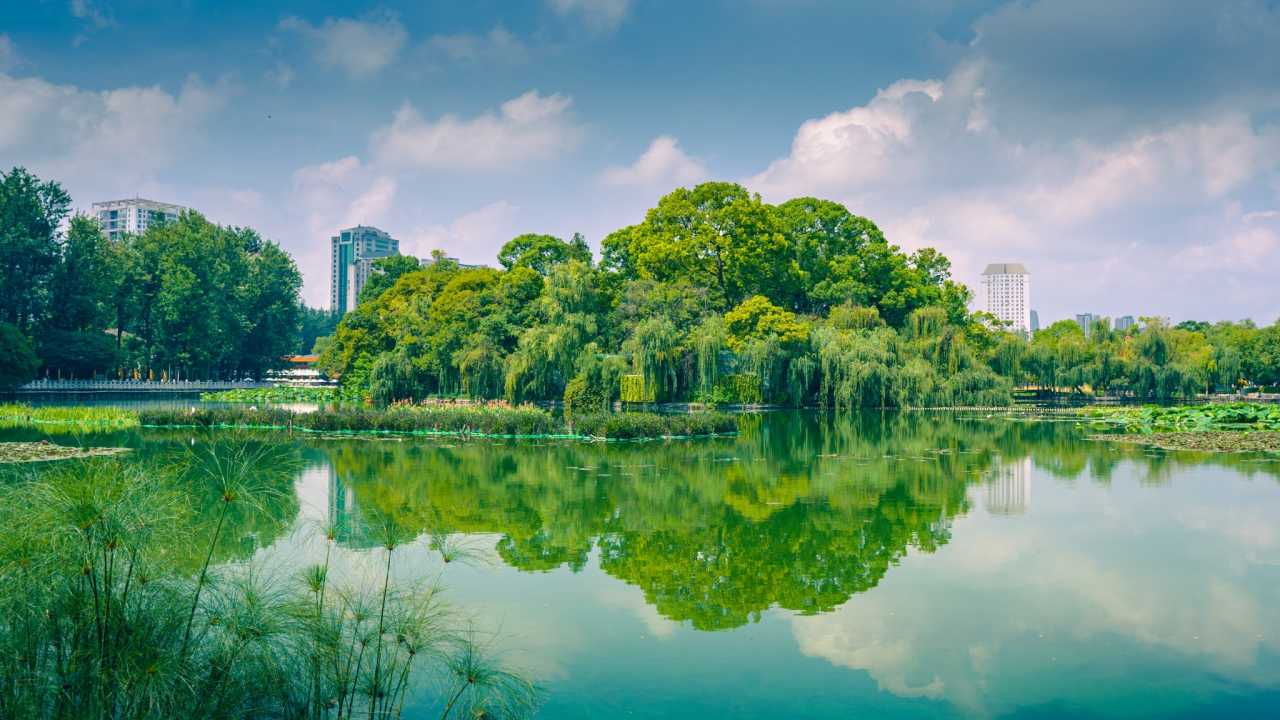
Green Lake was historically called "Cai Haizi" (Vegetable Sea) and "Jiulong Chi" (Nine Dragon Pool). During the Kangxi reign of the Qing Dynasty, Yunnan Governor Wang Jiwen built the Haixin Pavilion (Heart of the Lake Pavilion) on an island in the lake. During the Daoguang reign, Governor-General Ruan Yuan, imitating the "Su Causeway" on West Lake, built the north-south "Ruan Causeway." In 1919, Yunnan military leader Tang Jiyao funded the construction of the east-west "Tang Causeway." Willows were planted along the causeways, and lotuses were cultivated in the lake. The interplay of willows and lotuses, clear and beautiful, formed the basic layout of today's Green Lake Park.
Though small, Green Lake's scenery is exquisitely beautiful. In summer, admiring the lotuses and watching the egrets is naturally elegant. But I prefer Green Lake in winter—you might find it hard to imagine that in an inland city park, what attracts me most is watching seagulls! Since 1985, every winter, large numbers of seagulls fly from Siberia to spend the winter in Kunming, and some of them inhabit Green Lake. Although most seagulls go to Dianchi Lake, Green Lake's water surface is far smaller, so the density of seagulls is actually higher, making the scene even more spectacular.
Despite the crowds, Green Lake Park achieves a harmonious coexistence between humans and animals. Waterbirds calmly hunt for food in the water, squirrels can be hand-fed, and the seagulls act as if they are the winter masters of the park. One of my favorite photos captures a squirrel—traditionally associated with forests—and a seagull—traditionally associated with the sea—together in the same frame by the edge of Green Lake, completely at ease with each other. The animals are the true masters of Green Lake.
Practical Information: Free admission, no reservation required. Opening hours: 6:00 AM to midnight. The park has gates on all four sides—east, west, south, and north. However, the north gate is currently closed due to the construction of the "Jingzheng Academy" cultural and creative project. To go from Green Lake to Yunnan University, you need to exit through the east or west gate and walk north along Cuihu Road.
Centenarian Yunnan University and the Hipster Haven of Wenlin Street
A Century of Yunnan University, a Long Cultural Legacy
Yunnan University is located just north of Green Lake. I first visited the campus in March 2019, when the crabapple blossoms were in full bloom. It was a truly stunning experience that made me fall in love with the university instantly. In the following years, due to pandemic lockdowns, I had no chance to see it again. Now that the campus has reopened to the public and Yunnan University has passed its centennial, I was finally fortunate enough to revisit it.
On December 8, 1922, Yunnan University was officially established, founded by then-Provincial Chairman Tang Jiyao. Tang's pseudonym was "Master of the Eastern Land," so the school was initially named "Private Donglu University." Yunnan University was built on the original site of the Yunnan Gongyuan—the examination hall backed against Kunming's northern city wall, facing Green Lake, and built along the hillside. When the university was established, the Gongyuan's Hengjian Hall was converted into a library, the Zhigong Hall was preserved, and the Mingyuan Tower was rebuilt as the Huize Hall. Huize Hall was named after Tang Jiyao's hometown, Huize, and is a典型的 French-style building. Although only three stories high, because it is built on a hillside, entering from the south gate requires climbing 95 steps to reach it. Ascending the steps, you see towering columns and majestic platforms—an extremely clever design.
The campus also includes the Zhigong Hall, the East Examination Cells (where imperial examination candidates lived and took their exams), and the former residences of two former university presidents, Xiong Qinglai and Li Guangtian. President Xiong Qinglai had a particularly famous student—Hua Luogeng. If you have the chance, be sure to visit Yunnan University and feel its century-long cultural heritage.
Practical Information: Free admission. Campus access hours: 8:30 AM to 5:00 PM. You need to make a reservation in advance on the "Ping'an Yunda" (Safe Yunda) WeChat public account. Select "Donglu Campus," choose "Security Department" as the visiting department, and enter "65033862" as the contact person. If you can't figure it out, go to the south gate and ask the security guard for help; you can fill in the reservation on the spot.
Wenlin Street: A Gathering Place for Hipsters
Where there's a university, there are hipsters, and there's a gathering place for them. Exiting the south gate of Yunnan University and turning right, the sloping road right next to the campus wall is Wenlin Street. Here, cafes and bookstores line the street, with photogenic spots everywhere.
Green Lake is located at the foot of Yuantong Hill and Wuhua Hill. Except for the area outside the west gate, which is relatively flat, leaving from any other direction means encountering slopes. In the late Qing Dynasty, Kunming was said to have "Thirteen Slopes," eleven of which were around Green Lake. Therefore, I suggest you prepare for some uphill walking. Shared electric scooters are the best mode of transport; shared bicycles, use with caution.
I haven't explored Wenlin Street much, but I highly recommend one café—Zhu Yin Cen Jin (Bamboo Shade, Cen's Retreat). This was the former residence of Yuan Xiaocen, a renowned sculptor and painter. He lived and worked in this small courtyard for over 70 years until his death in 2008. The café is hidden within a residential complex, quiet and beautiful, and also functions as an art gallery. On the second-floor terrace, among the vines, there is an exhibition introducing Yuan Xiaocen's art. On the first floor, small art exhibitions are held periodically. When I visited, there happened to be a photography exhibition by the poet Yu Jian—a poet's photographic perspective, uniquely interesting. Such a fascinating café made me, a non-coffee drinker, stay for a full two hours.
Directions: Navigate to "No. 40 Wenlin Street, Wenlin Yaju." Once you see the residential compound gate, walk in, go to the end, and look to the right. You'll see a yellow house—that's it. There's no signboard, but it's worth the effort to find.
The Site of the National Southwestern Associated University: A Legendary Epic
Across Yiyi Avenue from Yunnan University lies Yunnan Normal University, which is also the site of the National Southwestern Associated University (Lianda). After the victory in the War of Resistance, when Peking University, Tsinghua University, and Nankai University returned north, at the request of all sectors of Yunnan society, the Lianda Normal College remained intact in Kunming as an independent institution. Therefore, Yunnan Normal University is the legacy of Lianda in Kunming, and it continues to use the Lianda campus.
The main points of interest on campus include:
The Lianda Museum: The building's exterior is modeled after the Lianda library built during the war, reflecting the difficult conditions of the time. The museum has two floors above ground and one below. The exhibitions are rich in content, especially the audio and video materials, which are very precious. During its eight years in Yunnan, Lianda enrolled over 8,000 students, with about 4,000 graduating. It produced two Nobel laureates, eight "Two Bombs, One Satellite" founding fathers, and 175 academicians. This is a legendary epic; I strongly recommend spending a good amount of time here.
Monument Group and Cemetery: To the east of the museum are the National Southwestern Associated University Monument, the tombs of the four martyrs of the December 1st Movement, the cenotaph of Li Gongpu, and the cenotaph of Wen Yiduo. The National Southwestern Associated University Monument, with its inscription written by Feng Youlan, seal-script title by Wen Yiduo, and calligraphy by Luo Yong, bears on its reverse side the names of 834 Lianda students who joined the army. It is now a key national protected cultural relic.
December 1st Movement Memorial Square: The square features bronze statues of Peking University President Jiang Menglin, Tsinghua University President Mei Yiqi, and Nankai University President Zhang Boling. The December 1st Movement Memorial Hall on the square is currently under renovation and closed to the public.
Democracy Lawn: Here stands a statue of Wen Yiduo. This was a place where Lianda faculty and students held democratic activities and was also the starting point of the December 1st Movement.
Visiting Lianda inevitably involves understanding the December 1st Movement. On December 1, 1945, Kuomintang secret agents and soldiers attacked Lianda and Yunnan University, throwing grenades, killing four people and severely wounding 29, in what became the shocking "December 1st Massacre." Though this history is heavy, it is worth remembering.
Practical Information: Free admission. Opening hours: 9:00 AM to 4:30 PM. Closed on Mondays. You need to make a reservation on the "Southwest Associated University Museum" WeChat public account. Enter through the southwest gate of Yunnan Normal University.
Yunnan Military Academy and Zhu De's Former Residence
A Century-Old Military School, Cradle of Generals and Marshals
Outside the west gate of Green Lake Park stands the former site of the Yunnan Military Academy. This military school was founded in 1907 and was converted into the Fifth Branch of the Central Military Academy in 1935. Its most outstanding graduate from the Qing Dynasty was Marshal Zhu De, and its most outstanding graduate from the Republican era was Marshal Ye Jianying. The academy produced over 300 generals and marshals among its faculty and students.
The main building of the academy that we see today was built in 1918, funded by donations from overseas Chinese. Four two-story buildings, each 120 meters long, 10 meters wide, and 10 meters high, enclose a square, connected by a continuous veranda on the upper floor, forming a massive square "courtyard house" (siheyuan). The interior of the main building houses the Yunnan Military Academy History Museum, featuring the "Century-Old Military School, Cradle of Generals and Marshals" themed exhibition and an exhibition on the Chinese Expeditionary Force. If you are interested in modern Chinese history, you can spend a long time in this museum.
Practical Information: Free admission. Entry hours: 9:00 AM to 4:30 PM. Closed on Mondays. You need to make a reservation on the "Yunnan Military Academy History Museum" WeChat public account.
Zhu De's Former Residence: Jie Yuan (Pure Garden)

From the Military Academy, walk through Green Lake Park, exit the east gate, and walk east for about 500 meters to reach Zhu De's former residence in Kunming. In 1921, when Zhu De was serving as the Commander of the Yunnan Army Gendarmerie, he purchased this property. Initially a Chinese-style courtyard house with a timber and earth structure, he later bought the vacant land to the east, personally designed and built a garden and three two-story brick-and-wood buildings, and named the complex "Jie Yuan" (Pure Garden) to signify "cleansing oneself and maintaining integrity." In 1922, due to warlord conflicts, Zhu De left Kunming, and the property was confiscated by Tang Jiyao.
Today, it is the Zhu De Former Residence Memorial Hall, displaying many precious historical materials from Zhu De's time in Yunnan. Combined with the introduction from the Yunnan Military Academy, you can gain a more comprehensive understanding of his growth journey before joining the revolution.
Practical Information: Free admission. In theory, a reservation is required, but in practice, it is not. Entry hours: 9:00 AM to 4:30 PM (extended to 5:30 PM on weekends). Closed on Mondays.
Yuantong Chan Temple: The "Descending Slope Temple" in the Bustling City
Exiting the east gate of Green Lake Park and walking east along Yuantong Street for about 600 meters, you arrive at Yuantong Chan Temple. This temple, originally built in the Tang Dynasty, is one of the oldest Buddhist temples in downtown Kunming and enjoys a high reputation in Southeast Asia. However, its mountain gate is modestly tucked away beside the lively street. I had been to Kunming many times without ever noticing it. It was only because the hotel I stayed in this time was right across the street that I didn't miss it.
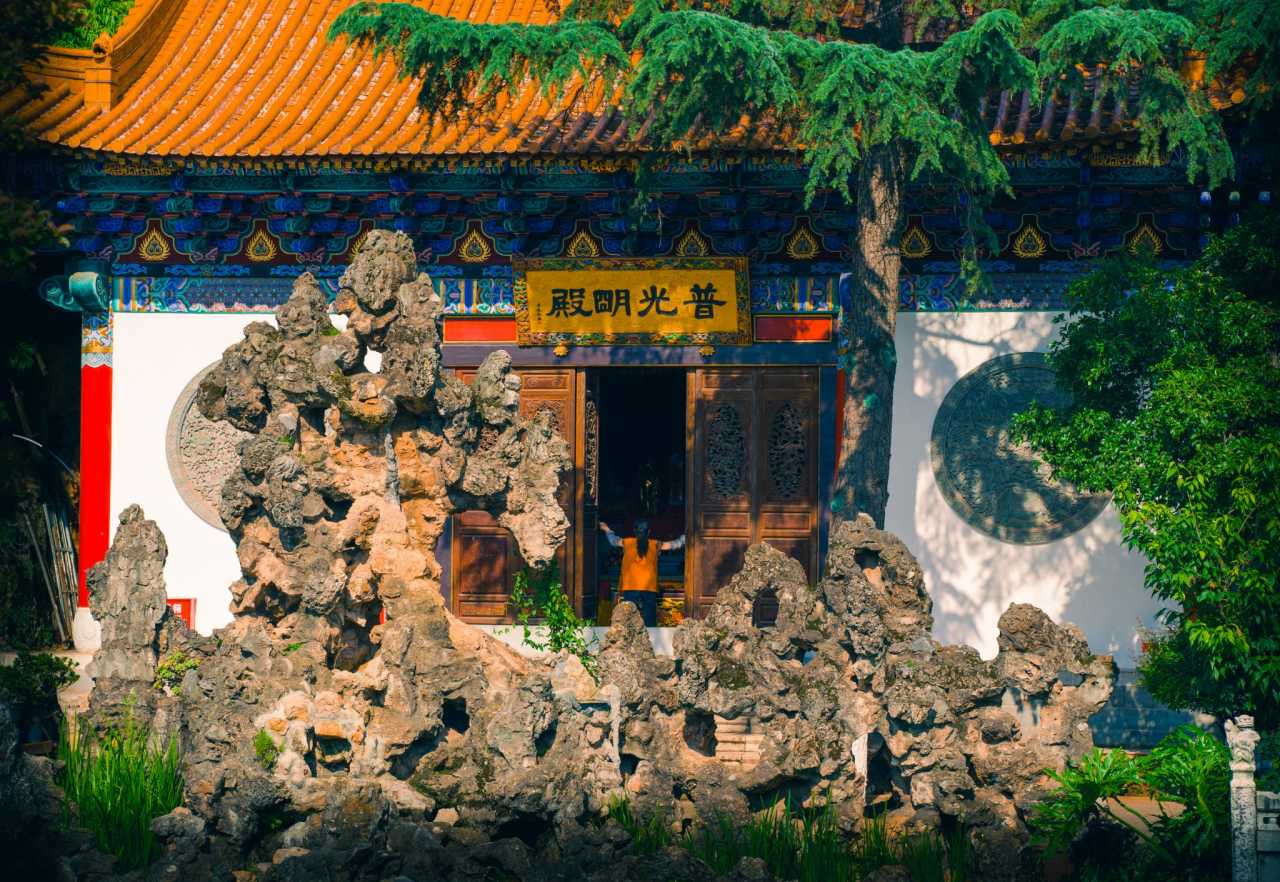
Stepping through the mountain gate, you discover a hidden world inside. Yuantong Chan Temple is a rare "descending slope temple" (tuipo si). Typically, temples are built low in front and high in the back, rising tier by tier to appear majestic. But here, after entering the mountain gate, you follow a gentle downward slope. The Yuantong Baodian (Mahavira Hall) is the lowest point, 10 meters below the temple gate. Behind the temple, Putuo Rock rises abruptly, creating the wonderful effect of "only seeing the temple after entering the gate, and only seeing the mountain after entering the temple." Even if you don't understand Buddhism, the temple's architectural layout reveals the designer's ingenuity everywhere. If you appreciate it with care, every corner is a beautifully crafted scene.
Practical Information: Admission fee: 6 RMB. Opening hours: 7:00 AM to 5:00 PM. No reservation required.
Yunnan's Uprising and Liberation
Outside the east gate of Green Lake Park is the Lu Han Mansion, which is the Yunnan Uprising Memorial Hall. About 400 meters south on foot is the Yunnan Liberation Memorial Hall. These two sites are close to each other, so it's recommended to visit them together.
Yunnan Uprising Memorial Hall
Exiting the east gate of Green Lake Park, you can see a two-story Western-style building, backed by Wuhua Mountain and facing Green Lake, built against the mountain and overlooking the water. This was the private residence of Lu Han, the last "King of Yunnan." Built in 1933 and designed by a French architect, the building's most distinctive features are its steep red flat tiles, triangular gables, five roofs, and 16 wall facades—rich in variation yet simple and bright. In December 1949, Lu Han detained Kuomintang Southwest Administrative Director Zhang Qun and others here, launched the uprising, and ultimately achieved the liberation of Kunming. Today, this site is also the Yunnan Uprising Memorial Hall.
Practical Information: Free admission. In theory, a reservation is required, but in practice, it is not. Entry hours: 9:00 AM to 4:30 PM (extended to 5:30 PM on weekends). Closed on Mondays. Free guided tour times: 9:30, 10:00, 11:00, 13:00, 14:00, 15:00. If there are few visitors and the guide hasn't arrived, you can go to the service center at the main gate to request one; the commentary is quite good.
Yunnan Liberation Memorial Hall
Located at No. 65 Cuihu South Road, this was originally the residence of Lu Chongren, the provincial finance commissioner. When Yunnan was liberated in 1950, it became the headquarters of the Kunming Military Control Commission, where General Chen Geng and General Song Renqiong worked and lived. In 1957, Premier Zhou Enlai also lived and worked here during the Sino-Burmese border demarcation. The exhibition inside presents the complete process of Yunnan's liberation.
Practical Information: Free admission. In theory, a reservation is required, but in practice, it is not. Entry hours: 9:00 AM to 4:30 PM (extended to 5:30 PM on weekends). Closed on Mondays.
Huanggong East Street and Kunming's Last Blue Stone Road
Exiting the Yunnan Liberation Memorial Hall and turning left, you arrive at the Instagram-famous Huanggong East Street. Half yellow wall, half red wall—it's indeed very photogenic, perfect for young women to take pictures. The cafes on the street also have a pleasant atmosphere.
From the photo spot, navigate to "Kunming No. 2 Kindergarten." Walk about 100 meters, and you'll find Kunming's last remaining blue stone road—about 60 meters long. There's not much to describe, but stepping on the blue stones, you can feel the texture of history.
Walk about 300 meters west from Huanggong East Street, and you'll find the Shiping Guild Hall (Shiping Huiguan). This guild hall building was originally built in the Qing Dynasty and later operated as a distinctive restaurant. Unfortunately, it closed for renovation in June of this year, and I missed it by just a few days. I wonder what it will become in the future.
Victory over Japan Memorial Hall and Kunming's Old Street
Walk about one kilometer south from the south gate of Green Lake Park to reach the Victory over Japan Memorial Hall. This site was originally the office of the Qing Dynasty's Governor-General of Yunnan and Guizhou. The memorial hall was completed in 1947 and can accommodate about 1,500 people. The building features flying eaves and upturned corners, with roof ridges, brackets, doors, windows, columns, and corridors all exhibiting ethnic characteristics. The memorial hall is not usually open to the public; it is only used for major gatherings or musical performances.
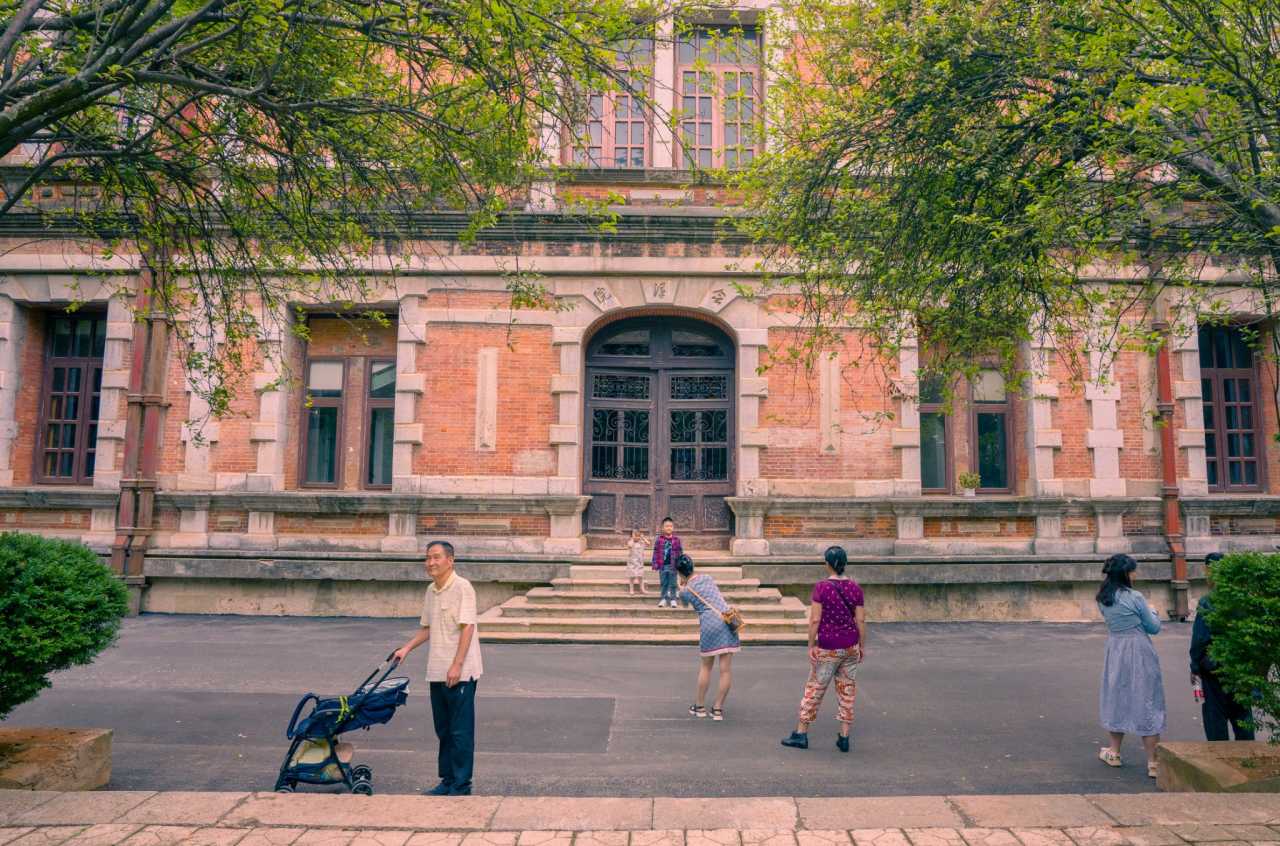
In the square in front of the memorial hall stands the Yunnan People's Heroes Monument, inscribed with Deng Xiaoping's calligraphy: "Eternal Glory to the People's Heroes." Beneath the monument's base, there is an exhibition hall on the "History of the Yunnan People's Revolutionary Struggle." If you have already visited the many museums mentioned earlier, you can probably skip this one.
On either side of the memorial hall's periphery are two symmetrical curved buildings, shaped like wine glasses or crescent moons, elegant and exquisite, known as the "Victory Wine Glasses." Outside lies Yongdao Street, the legendary Kunming Old Street. Today, what is referred to as Kunming's Old Street consists of about ten ancient streets, including Wenming Street, Jingxing Street, Wenmiao Straight Street, Yongdao Street, and Guanghua Street. After commercial renovation, the old street is not old, but it is very commercial—the bustling commercial street has little connection to history anymore.
Two recommended highlights: First, Nie Er's Former Residence on Yongdao Street. This two-story shop house, originally built in 1884, was where Nie Er was born and spent his childhood. A memorial hall was established here in 2011. It is small in size but worth a visit. Second, Mao Lu (Elegant Cottage), located at No. 18-19 Jixiang Lane, Dongfeng West Road, built in 1852. This Qing Dynasty building, combining a Western-style facade with the traditional "one-seal" courtyard house (yikeyin), is now rare in Kunming. It currently houses a restaurant called "Yi Ke Yin" (One Seal), serving local Yunnan specialties, where you can experience the life of old Kunming residents.
Conclusion: Do Your Homework First to Truly Read a City
This basically covers the loop around Green Lake. There are bound to be omissions, and I welcome you to discover them for yourself. In summary, although Green Lake is beautiful, the tour around it does not win on scenic beauty but focuses mainly on cultural and historical sites. I won't make specific itinerary suggestions because the time needed for cultural sites varies greatly from person to person—some might spend a long time in front of a yellow wall on Huanggong East Street, while others might linger for a long time in front of a stone tablet at Lianda.
But one thing is certain: Do your homework beforehand to have a truly nourishing trip. When you understand the stories behind every building around Green Lake, what you see is no longer just scenery, but a condensed history of modern China. From the "eye of Kunming" in Wang Zengqi's writings to the historical corridor before our eyes today, Green Lake, with its calm waters, reflects the city's past, present, and future.
To explore Kunming, start at Green Lake. Then, slowly, you will find that you have stepped into the very heart of this city.
You should also read:

Meili Snow Mountain: A Soulful Journey of Dialogue with the Sacred Mountain
Meili Snow Mountain: A Soulful Journey of Dialogue with the Sacred Mountain Prologue: When Travel Becomes Faith Some journeys are forgotten as soon as they end. Others carve themselves into your bones. The trip to Meili Snow Mountain belongs to the latter. Waking up in…
Continue reading...
September: Finding Unexpected Warmth in Yunnan (Kunming, Dali, Shuanglang, Lijiang, Lugu Lake)
September: Finding Unexpected Warmth in Yunnan (Kunming, Dali, Shuanglang, Lijiang, Lugu Lake) Foreword: One Person's Journey, A Crowd's Story Before I set off, like every first-time solo traveler, I printed out a thick stack of travel guides and rehearsed countless possible scenarios in my head—getting…
Continue reading...
Yunnan! Paradise on Earth – The Yubeng Chapter: A Soul-Cleansing Journey into Seclusion
Yunnan! Paradise on Earth – The Yubeng Chapter: A Soul-Cleansing Journey into Seclusion Prologue: Why Yubeng? If you ask me which place in Yunnan is most worth hiking to, I would answer without hesitation: Yubeng. This is not an answer I give lightly. As a…
Continue reading...