Exploring the Three Parallel Rivers: Discovering a Yunnan I Had Never Seen Before
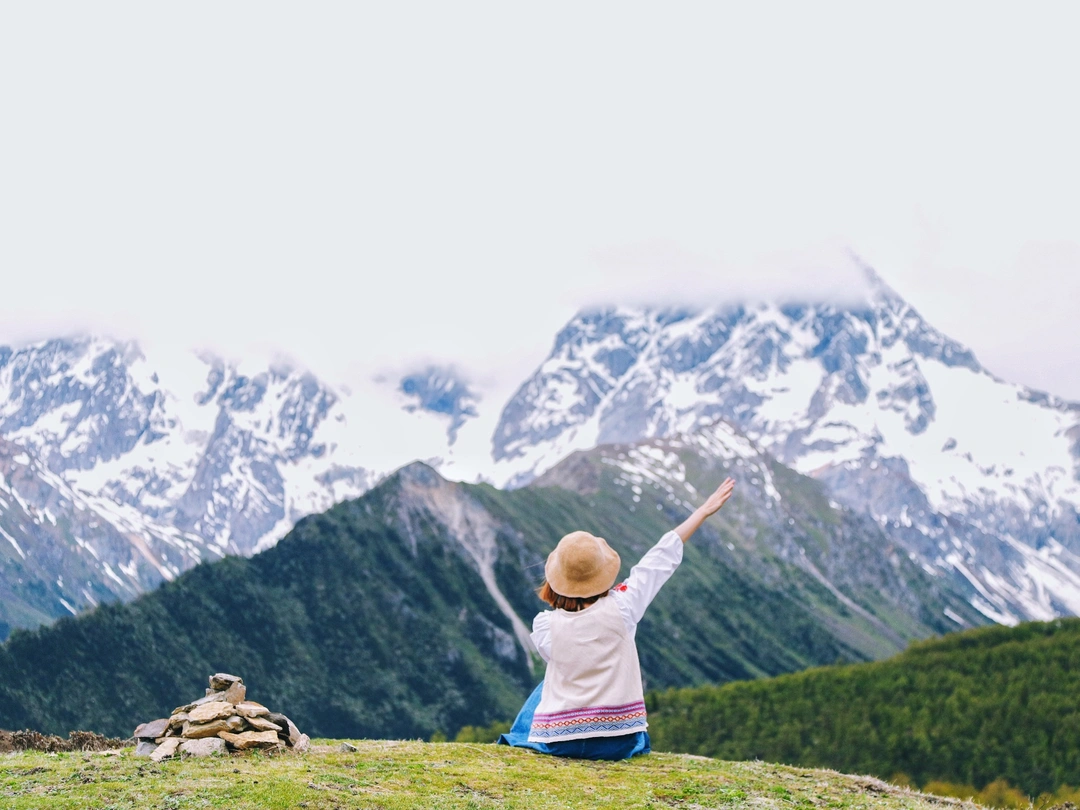
Exploring the Three Parallel Rivers: Discovering a Yunnan I Had Never Seen Before
Growing up in Yunnan, I thought I knew this land inside and out. The exotic charm of Xishuangbanna, the summer freshness of Dali, the noise and quiet of Lijiang, the golden autumn hues of Tengchong—all had left their mark on my memory. Yet Shangri-La remained a blank space—a hidden realm I had long hesitated to touch.
This time, I followed the veins of rivers, crossing surging torrents and passing through golden fields, until I finally encountered the Yunnan I had never seen. This was no simple journey, but a deep dialogue with nature, culture, and faith.
First Glimpse of Lijiang: The Warm Embrace of Songtsam Linka
The plane touched down smoothly at Lijiang Airport. Through the window, the long-lost blue sky and white clouds greeted me. This was the unique air of the Land of Colorful Clouds—fresh and gentle, as if whispering, "Welcome home."
For this trip, I chose Songtsam Hotels' Three Parallel Rivers route. Though I had lived in Yunnan for years, Shangri-La had always been a distant dream. Now, that dream was finally coming true.
Songtsam staff were already waiting at the exit, offering white silk hada (ceremonial scarves). Their warmth instantly melted away the fatigue of travel. This was my fourth visit to Lijiang. The previous three times, I had stayed in the old town, but this time I checked into Songtsam Linka, located in a local village not far from Shuhe and Dayan Ancient Towns—a place where I could truly experience local customs and folkways.
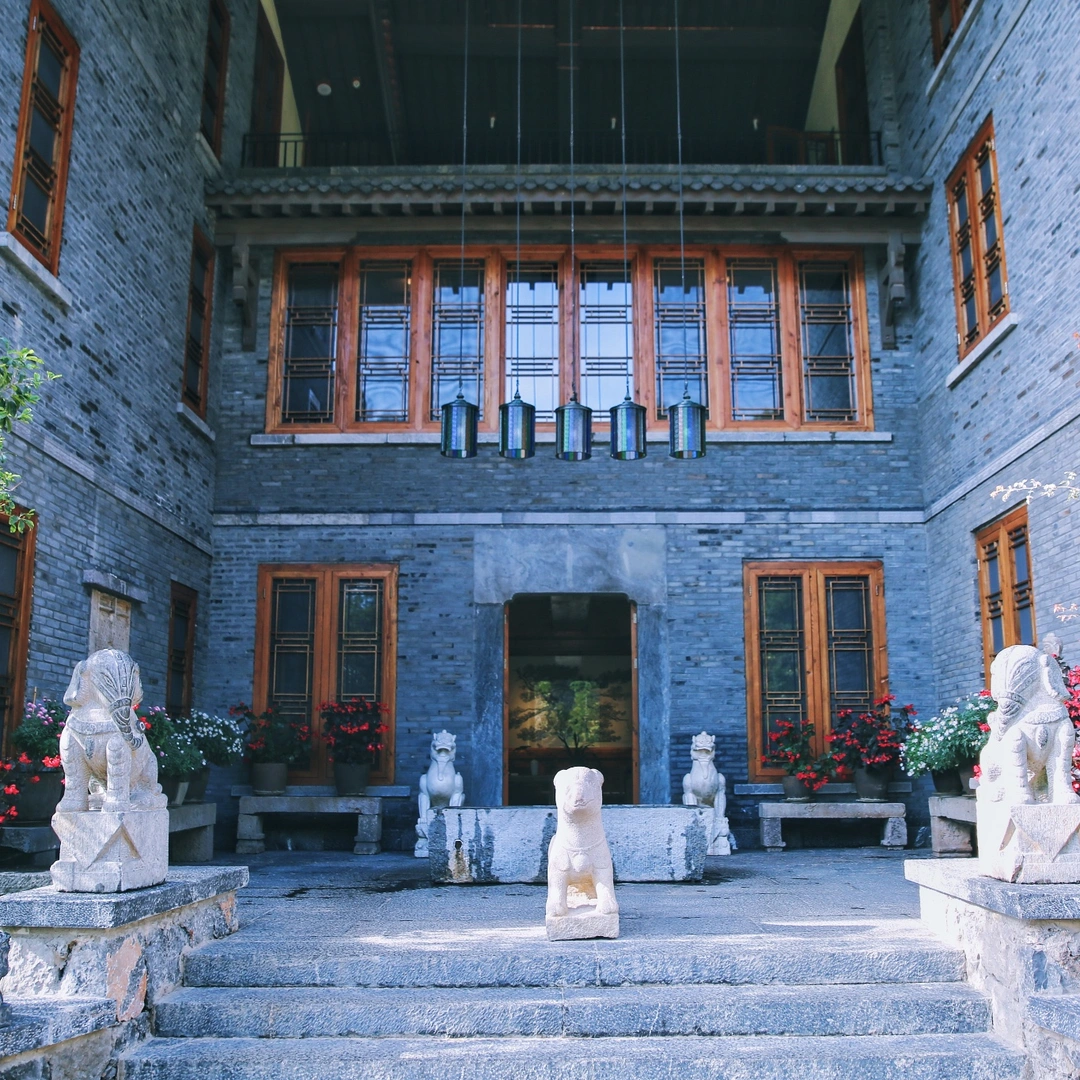
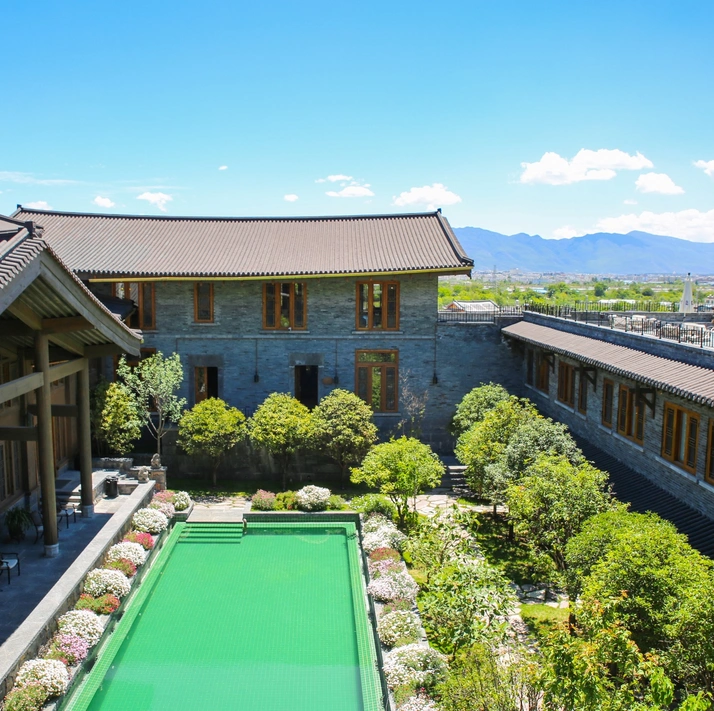
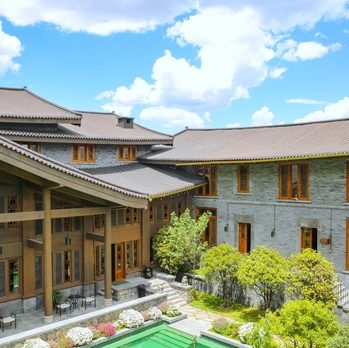
The hotel's architecture blended the essence of Han, Bai, Yi, and Tibetan cultures, while carrying the unique charm of the Naxi people. During check-in, a staff member handed me a pair of cloth slippers—wearing them around the hotel wouldn't disturb others and made me feel as comfortable as at home.
The room's view was breathtaking. Sitting on the balcony, I just wanted to empty my mind. The interior preserved authentic Tibetan and Naxi cultural elements; every handcrafted object was worth savoring. The hotel lobby felt more like a museum, with precious embroideries hanging on the walls and antique decorations placed throughout.

Afternoon tea was an unmissable ritual. As light rain began to fall outside, it was the perfect time to spend a leisurely afternoon here. Rain in Lijiang comes and goes quickly. After the shower, the air, mixed with the scent of earth, felt especially fresh.
The meal arrangements on this trip were nothing short of luxurious—five meals a day: breakfast, lunch, afternoon tea, dinner, and dessert. I highly recommend the hotel's cured pork ribs and grilled fish, both local specialties with outstanding flavors. The final dish, minced eggplant, was so delicious we forgot to take a photo.
After eating and drinking our fill, I experienced the hotel's spa. The quiet environment, skilled techniques, and moderate pressure left my body and mind completely relaxed.
Xuesong Village: Locke's Former Residence and a Morning with Jade Dragon Snow Mountain
Early morning is the most beautiful time in Lijiang. Opening the window, I heard the crisp chirping of birds. Everything was awakening, and the gentle morning sun bathed the earth. The hotel's second-floor restaurant offered a perfect view of Jade Dragon Snow Mountain. Yunnan rice noodles are the best I've ever tasted, and I made sure to have a bowl every morning.
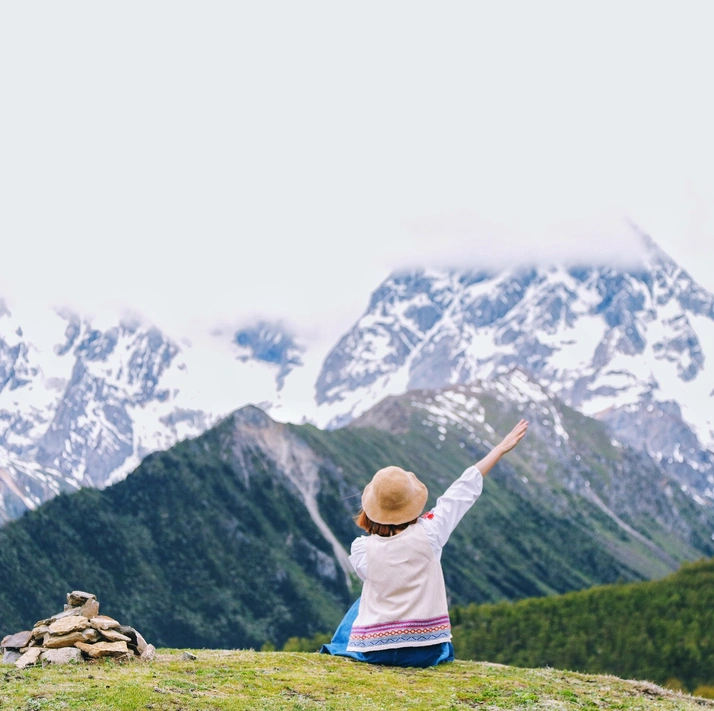
During breakfast, the snow mountain was still fully visible, but by the time I returned to my room for my telephoto lens, clouds had already obscured it. I had to console myself: the beauty was already etched in my heart.
After breakfast, we visited Locke's former residence in Xuesong Village. Also known as Xuehao Village, it sits on the slopes of the pristine Lijiang Snow Mountain range. To the west of the village lies a clear spring, its water as blue as jade, called "Jade Lake"—hence the village's other name, Yuhu Village.
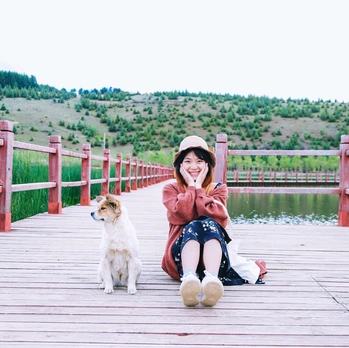
Locke, an Austrian-American explorer, writer, and photographer, entered Yunnan from the Thailand-Myanmar border, traveling from Simao in southern Yunnan to Lijiang in the northwest. He settled at the foot of Jade Dragon Mountain for 27 years, spending most of his time in Yuhu Xuesong Village. Locke's former residence consists of one courtyard with three rooms. The building facing east was once the headquarters of the National Geographic Society's Yunnan expedition team. Upstairs is the living quarters where Locke stayed for over twenty years, preserving his personal belongings.
Because the residence was under renovation, the elderly caretaker made an exception and let us in. In the middle of the courtyard stood a cherry tree in full bloom. The old man invited us to pick and eat the cherries. I tried one—incredibly sweet.
At midday, Xuesong Village had few tourists, offering a rare peace. Back at the hotel, lunch was already prepared. My companion and I both loved the clay pot rice; everyone had several bowls. Besides the rice, we also coveted the pot itself—apparently available for purchase at Songtsam's Green Valley Hotel in Shangri-La.
The First Bend of the Yangtze River: The Most Beautiful Scenery Is on the Road
Whenever I travel to unfamiliar places by car, I force myself to stay awake, because the roadside scenery is the most beautiful.
The mighty Yangtze River, thundering down from the "Roof of the World"—the Tibetan Plateau—enters Yunnan from Batang County, flowing alongside the Lancang (Mekong) and Nu (Salween) Rivers through the deep valleys of the Hengduan Mountains, creating the magnificent "Three Parallel Rivers" landscape.
On the road from Lijiang to Tacheng, you pass the First Bend of the Yangtze River. The scenery here is beautiful—the river flows gently, the valley opens wide, like a small Jiangnan water town. The observation deck is positioned a bit low, but you can still see the shape of the bend. Capturing it without a wide-angle lens is challenging. I heard you can go to a farmhouse on the mountain for photos, but it costs a fee.
A beautiful legend tells of the bend's origin: Three sisters—the Nu, Lancang, and Jinsha Rivers—set out traveling together but quarreled midway. The two elder sisters stubbornly headed south, but the youngest, Jinsha, was determined to seek light and love in the east where the sun rises. At Gugu, she bid farewell to her sisters and resolutely turned eastward. The spot where Jinsha turned became the First Bend of the Yangtze River.
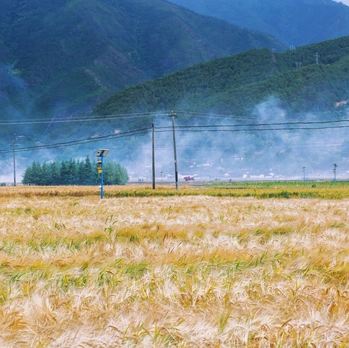
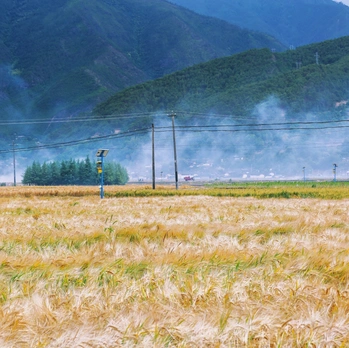
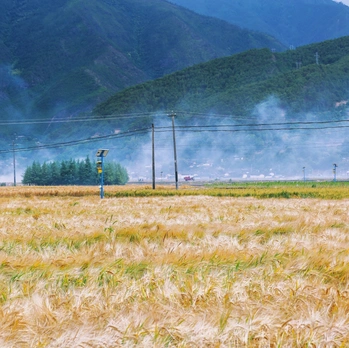
Passing through a small village, we saw bustling activity in the fields on both sides. Our driver and butler asked if we wanted to take photos, and we immediately agreed. As a child, I often saw such scenes when visiting the countryside. Now, living year-round in a big city, I especially appreciate these sights. In the distance, mist swirled; a gust of wind rustled the wheat. The sight of wind-swept wheat fields was truly beautiful.
Tacheng Lodge: A Boutique Hotel on the Terraced Fields
Songtsam Tacheng Lodge sits in Qibei Hada Village, a community inhabited by both Tibetan and Naxi people. The lodge's design is elegant, showcasing traditional Chinese art and style. The floor-to-ceiling windows in the lobby act like a giant picture frame, perfectly presenting the tranquil waterside scenery. We stayed here for two days, spending our time working on our laptops in this space.
Upon arrival, staff warmly offered rice wine and hada (ceremonial scarves). Every sincere smile made us feel at home. Each Songtsam lodge is located in a local village, with unique locations and excellent views. Since there are no restaurants nearby, all meals are included in the room rate—kudos to Songtsam for their thoughtfulness.
The main building doesn't seem to have standard rooms. The building we stayed in had only four rooms. From the outside, it looked like a shipping container, but inside it had everything: heating, air conditioning, a fireplace, a bathroom, and a shower. There was also a spacious balcony. After a recent rain, the valley air was exceptionally fresh. I brewed two cups of coffee and sat outside, quietly savoring this rare moment.
Every meal consisted of four dishes and a soup—more than enough for the two of us. At dinner, we tried the local white wine, which was delicious. After a few drinks, falling asleep was easy. I silently appreciated their service. After dinner came dessert—apple pie so good I wanted a second piece.
Dharma Master Cave: Circling Mountains, Water, and Stupas
Qizong Village in Tacheng Township, Weixi County, is a Tibetan settlement. About six kilometers east of the village rises a mountain called Ahailuo, also known as Dharma Mountain, named after Dharma Master Cave. At the summit is a massive cliff, and Dharma Master Cave is set into its face. The main hall of the cave houses statues of Shakyamuni, Padmasambhava, Tsongkhapa, and patriarchs of the Drikung Kagyu and Karma Kagyu lineages, along with sacred traces of the Dharma Master and a stupa containing his relics.
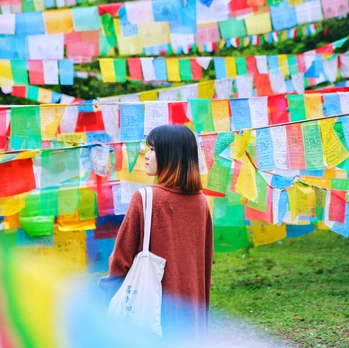
The drive from Tacheng Lodge to the cave takes about forty minutes along a winding mountain road in good condition. In the early morning, a thin mist shrouded the mountain road, making it feel like a fairyland. If you want to experience the devotion of mountain circumambulation, the entrance has signs marking the kora path. Rows of prayer flags dotted the lush green forest, and the stone-paved path made the walk manageable. About a third of the way in, it started to rain. Though the leaves blocked much of the water, we still got a bit wet. Our butler promptly produced umbrellas—another thumbs-up for Songtsam's attentive service.
Our driver, Master Wang, and the butler told us this cave was also called the "Cave of Life and Death." If you could crawl through it, it meant the year ahead would be safe and smooth. If you got stuck, it might portend misfortune. According to legend, even the heaviest person could pass through, while even the thinnest might get stuck if bad luck awaited. I was quite curious to try, but my dress that day made it impractical. I'll leave that curiosity for next time.
Circumambulating at high altitude, even on a smooth path, left me a bit breathless. Having visited the plateau several times in recent months, this hike felt manageable. But after the rain, the path was slippery, and my shoes weren't non-slip, so I walked carefully. Our butler led us through the woods to an open area, where a red building stood at the center, surrounded by prayer flags—a stunning sight.
Approaching Dharma Master Cave, we could see distant villages and the Jinsha River. The red-roofed temple, wrapped in clouds and mist, looked like a celestial realm. Above the cave rose a five-story structure; the temple in front was magnificent, with red walls and golden tiles. Legend has it that when Dharma Master Bodhidharma traveled from India to China, he wandered across the land before arriving here. Finding the place deeply spiritual, he climbed the mountain, meditated in the cave for ten years, and attained enlightenment.
We met some outdoor travelers who remarked, "You must have local guides to find this place." Indeed, few tourists come here, and I loved the tranquility.
On the way down, we found a high vantage point and photographed the village below, still able to trace the mountain road we had come from. During my days in Yunnan, though the roads were mountainous, they were all in good condition. According to our butler, every village had been connected by paved roads in recent years.
Many local villagers were working by the roadside. We stopped to greet them, and they were incredibly warm. While the butler chatted with them, we took photos. Having grown up with such mountain roads, I had no trouble. If you're prone to motion sickness, it's wise to bring some medication.
Hada Village: Experiencing Authentic Rural Life
Tacheng Lodge sits between two villages, with Hada Village just behind it. After lunch and a short nap, we walked to Hada Village. The afternoon sun was intense, but I had prepared with sunscreen. Passing through a small path lined with grapevines, we soon reached a farmhouse—the place where we would experience grinding soy milk and making tofu.
The hostess, a warm and friendly auntie, was already waiting at the door. The entire courtyard was clean and tidy. The host was working on some electrical wiring and greeted us warmly. Sitting in the yard was wonderfully relaxing. Though the sun was strong, it wasn't stuffy; resting in the shade was cool and pleasant.
I tried grinding soy milk the traditional way, but it was too heavy for me, so I had to call the butler for help. After grinding, the auntie heated it up. The kitchen was spotless—my companion and I kept remarking, "Our own kitchens are such a mess."
The soy milk and tofu pudding were the best I've ever tasted—perhaps because we made them ourselves, or because of the traditional hand-grinding process. The dipping sauce the auntie prepared was also fantastic, with chopped red chili and cilantro—absolutely perfect.
After leaving, we took a wider road. From the hotel, we had seen the layered terraced fields and wanted to take aerial photos. The green area behind the village was grapevines, the main source of income for locals. The terraced fields weren't at their best this season—I'd seen photos of lush green terraces from the hotel and decided to save that for another visit.
The building in the photo is Tacheng Lodge itself. Every room has a huge view; opening the window reveals layer upon layer of terraced fields.
Yunnan Golden Monkey National Park: Searching for Forest Spirits
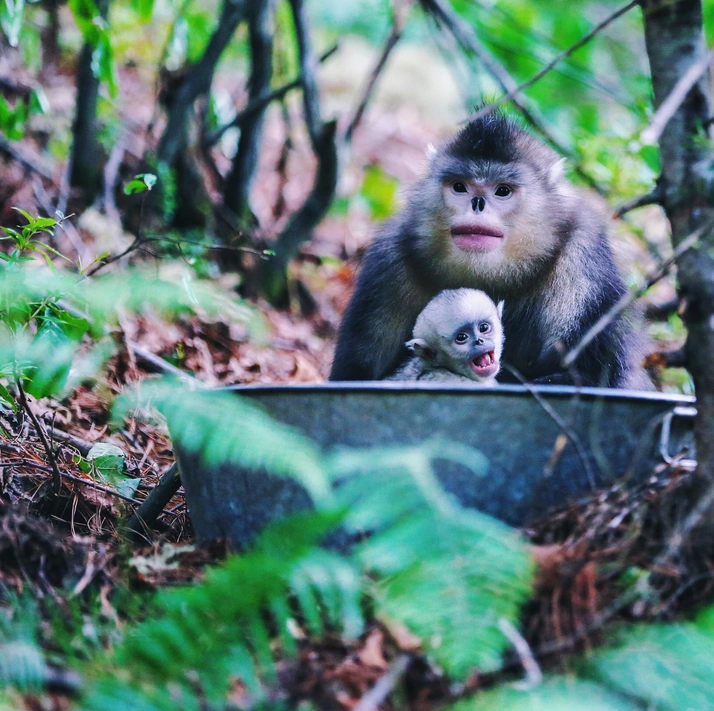
Unlike other golden monkeys, Yunnan golden monkeys have black-and-white fur and live year-round in high-altitude areas. Their diet consists mainly of lichen and moss, which only grow in places with clean air.
The park is located in Tacheng Town, Weixi County, just a short drive from Tacheng. To see the monkeys, you must be accompanied by a park guide—otherwise, you'd never find the viewing spots. From the entrance, you take a sightseeing bus. May's weather can still be cool, so bring a jacket. From the drop-off point, it's about a 40-minute uphill hike. By the end, everyone was exhausted.
The viewing spots change every two to three days, but they're never far apart. There's no water source on the mountain, so dedicated keepers carry water up daily for the monkeys. Volunteers also collect information from every visitor. The path isn't entirely paved—some sections are rough trails—so wear pants. I hadn't brought any and wore a dress the whole time; I had to be very careful walking through the grass.
Upturned noses, sausage lips, and cool hairstyles seem to be their trademarks. Golden monkeys live in groups, typically with multiple males and females in a hierarchical social structure. A family usually consists of one male, two to three females, and several young—a classic polygynous arrangement. Since females give birth only once every two years, these monkeys are especially precious.
Most visitors enter the park in the morning, when food and water are provided, so sightings are common. In the afternoon, they're rarely seen. I loved watching them drink—the scene seemed frozen in time, with no sound of water. We stayed for over an hour before reluctantly leaving.
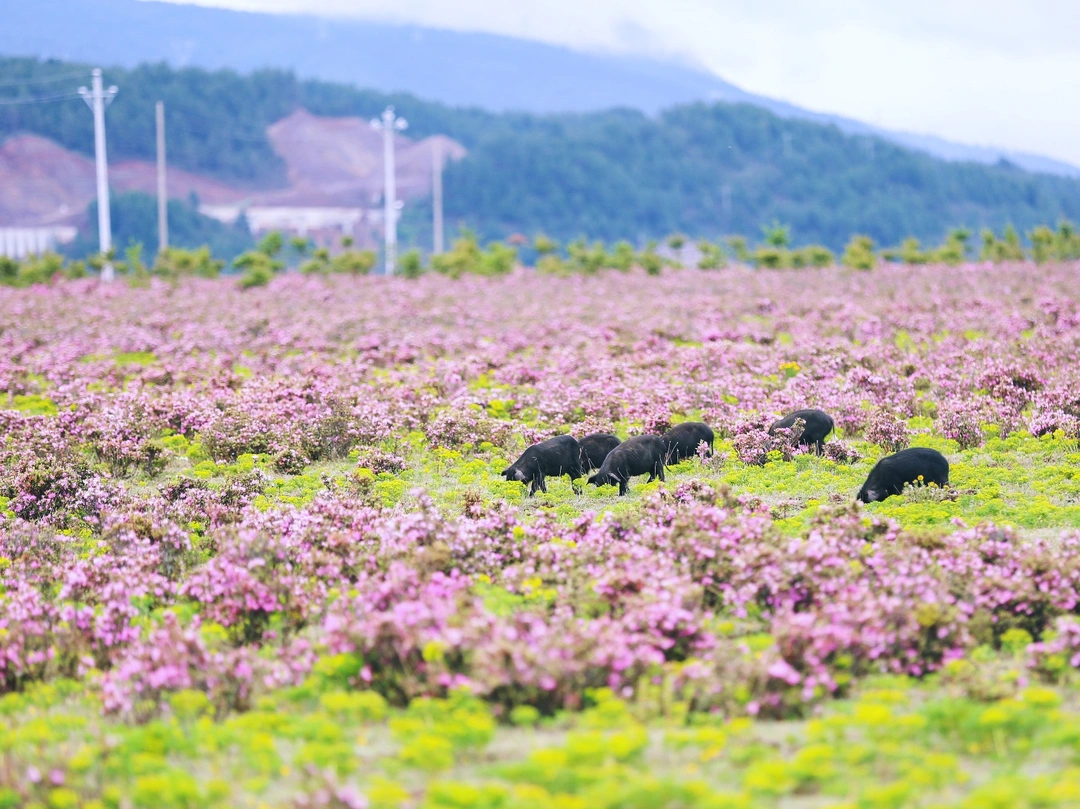
The pigs and cows at the entrance were free-range, perfectly illustrating the harmony between humans and nature.
Cizhong Village: A Small Village Where East Meets West
Following the Lancang River and crossing a bridge, we arrived at this small village. When we got there, the entire village was under construction, looking somewhat messy. Our butler explained that these were relocated families from other areas. The roads were uneven from heavy trucks, which diminished my first impression.
The bridge was newly built. Previously, entering the village required slowly descending from above on a perilous path, then crossing a suspension bridge—the only connection to the outside world.
The village has a Catholic church, also called "Cizhong Church." Built by French missionaries, its overall style reflects Basilica characteristics with Romanesque features. The main building faces east and is constructed of brick and wood. The bell tower at the front has three levels, with a roof featuring traditional Chinese flying eaves. At the top of the bell tower stands a cross.
Most Tibetan people in Diqing are devout Buddhists, making faith a central part of life. The existence of Cizhong Church is something of a miracle. When I entered, apart from the priest, the church was empty. Time seemed frozen on the mottled, damp walls.
The right side of the church has stairs leading to the top. Except for the bell—which cannot be rung—there are no restrictions. Looking down from the second floor, the weathered walls bore witness to the passage of time. Slowly climbing to the top, sunlight streamed through the windows—a beautiful sight. If you visit on Monday, Wednesday, or Friday, you can even attend Mass.
After leaving the church, we headed to Yuzhu Temple. Again following the Lancang River, we turned at a fork covered in blooming bougainvillea. We stopped at the temple's gate without entering. This "temple on a dragon's back" sits in the Meili Snow Mountain valley in Deqin County, having weathered over 600 years of wind and rain.
I was drawn to the rows of white stupas, which looked even more sacred beneath the snow mountains. Yuzhu Temple stood at the highest point, with a village below. I loved the local architecture—multi-story houses blending modern elements with ethnic features. Beside them lay patchwork fields, bustling with activity.
Halfway up the mountain, a white stupa took less than a minute to circle. Many locals were circumambulating it, typically walking around three times. An elderly woman smiled at me when she saw me photographing her. I loved this place—everyone was so open and warm, free from excessive desires.
On the other side of the stupa, under some shade trees, people who had just finished their circumambulation were resting and chatting. From the mountaintop, the Lancang River looked like a small creek. I marveled at the road builders—no matter how high or treacherous the terrain, they always managed to build a road.
Meili Lodge: A Hotel with a View of the Snow Mountain
Songtsam Meili Lodge is built in a remote little village with only five households. On one side stands the majestic Meili Snow Mountain; on the other, Tibetan villages and forests nurtured by the snowmelt.
The lodge has two buildings—the main building and an annex. All rooms in the main building offer views of Meili Snow Mountain, so be sure to book there. If the main building is full, don't worry—the third floor, where breakfast and afternoon tea are served, has a large terrace with the same view.
The weather was poor during our visit. Even after two days, we never saw the full Meili Snow Mountain. Every morning, I'd lie in bed observing the mountain through the window. Seeing the bad weather, I'd just roll over and go back to sleep. I had wanted to show off on social media with a "lying in bed watching the snow mountain" photo—that will have to wait for next time.
The third-floor terrace had a huge wind, strong enough to rattle the chairs. I took two photos and quickly retreated indoors. At high altitude, you can't risk too much wind exposure—it might give you a headache or cold. On the first day, we could still see most of the mountain. The next two days dawned gloomy, completely hiding it, though it cleared up a bit in the afternoon.
I loved the lodge's location, directly facing Meili Snow Mountain. This time, fate wasn't on our side; I'll have to return to see its true face. Avoid the rainy season—your chances of seeing Meili are slim.
Don't miss the hot pot at Songtsam Meili. The pot came loaded with vegetables and meat, with an extra portion just for us. We could ask for more after finishing. That day, I ate a lot of meat—the instant noodles were also delicious, and I practically had to crawl back to my room. I ordered dessert to be delivered to my room, along with a glass of red wine, hoping to drink while facing the snow mountain. But I never saw it—tears.
Baima Snow Mountain: A Summer Blown by the Wind
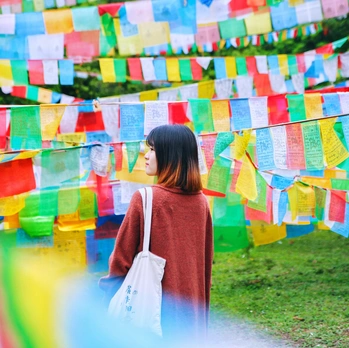
We arrived at Meili Lodge early enough to visit a local household and experience making prayer flags. First, we applied ink to the printing block, then laid the colored cloth flat, and finally used a radish-shaped tool to rub it evenly. The process was simple. The black ink washes off easily from skin, but be careful not to get it on your clothes.
We had planned to go hiking or cycling, but the weather forced us to cancel. Instead, we headed to Baima Snow Mountain, where we saw patches of rhododendrons in pink, white, and purple—stunning against the forest. We took the old national highway; apparently, the newly built road offers far less scenic views.
Passing the Baima Snow Mountain Pass at 4,292 meters (14,081 feet) altitude, I didn't feel any high-altitude effects, but the wind hit me as soon as I stepped out of the car. I quickly put on a hat to protect my head. By the roadside were mani stone piles. Here, people believe stones have life and spirit, stacking them as a form of prayer.
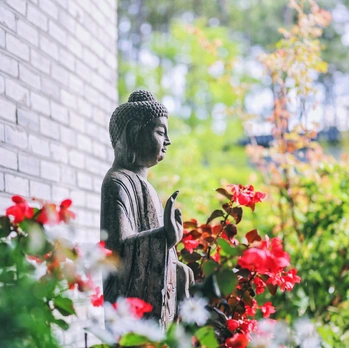
In Tibetan areas, nearly every mountain pass has prayer flags. Their purpose isn't decoration but to pray for good fortune and ward off disaster. Seeing Baima Snow Mountain for the first time—though the weather wasn't great and the mountain wasn't fully visible—I was still awestruck.
Baima Snow Mountain, also called Baimang Snow Mountain, is part of the Yunling Mountain range, with an average elevation of about 4,800 meters (15,748 feet). Its main peak, Zhalaqueni, rises to 5,430 meters (17,815 feet), with a vertical drop of 3,500 meters to the Jinsha River valley on the east side. The mountain boasts diverse vegetation and is called by botanists "the cradle of the north temperate flora," with over 90 species of alpine rhododendrons. In 2005, Baima's rhododendron forests were named one of "China's Ten Most Beautiful Forests" by Chinese National Geography.
Using my telephoto lens, I took two close-up shots of the mountain. Perhaps because it was summer, or maybe due to global warming, Baima Snow Mountain exposed a lot of bare rock with little snow cover. The vegetation at the base was lush and layered, making me marvel at the beauty of our motherland.
Was there a prince charming under Baima Snow Mountain? The answer is no. This summer was truly blown by the wind—a wind that gave me a headache at Baima. I hadn't brought thick clothes, which was a real oversight.
In summer, Baima's snow melts, creating mountain streams everywhere, with rhododendrons in brilliant bloom. It's said that Baima has the widest variety of rhododendron species in China. I loved the pink ones, but most of what we saw were white. When we spotted a pink one, I quickly asked the driver to stop for photos.
The Jinsha River Great Bend: A Stunning U-Shaped Wonder
The Jinsha River, after carving through mountains and valleys, seems to want a rest before bursting out of the Sichuan-Yunnan border pass. It slows down, gracefully tracing a "U"-shaped curve around the pyramid-like Rizhui Peak.
On the road from Meili Snow Mountain to Shangri-La, passing through Benzilan Town, the Great Bend is right by the roadside. But now, two observation decks have been built, requiring tickets for entry. Inside the scenic area, a high point on the deck allows you to take photos with the bend. With no other tourists around, my companion and I had the entire view to ourselves.
The Great Bend is also called Moon Bay. The Dingqu River, flowing north to south, joins the Mayi and Shuoqu Rivers before merging with the Jinsha. At this confluence, the "Three Parallel Rivers" landscape is formed.
Epilogue: The Yunnan I Had Never Seen
Nine days of travel—from Lijiang to Tacheng, from Cizhong to Meili, from Baima Snow Mountain to the Jinsha River Great Bend. I followed the veins of rivers, crossing high mountains and deep valleys, passing through fields and villages, and finally encountered the Yunnan I had never seen.
This was no simple journey, but a deep dialogue with nature, culture, and faith. At the First Bend of the Yangtze River, I heard the legend of Jinsha turning eastward. At Dharma Master Cave, I felt the devotion of circumambulating mountains, water, and stupas. At Yunnan Golden Monkey National Park, I witnessed the harmony between humans and nature. At Cizhong Church, I saw the wonderful fusion of Eastern and Western cultures.
Yunnan—the land where I grew up—still holds countless landscapes I have yet to discover. Every return feels like a journey of rediscovery. And this time, I finally met Shangri-La—the hidden realm that had been a blank space in my memory for too long.
Travel Tips: - Best Season: May to June for rhododendron blooms; September to October for autumn colors - Transportation: Consider hiring a private car or joining a small group tour. Mountain roads are numerous—drive safely - Altitude Sickness: Shangri-La is about 3,300 meters (10,827 feet) above sea level; Meili Snow Mountain area is higher. Prepare accordingly - Clothing: Even in summer, bring a thick jacket. Plateau temperatures vary greatly, and winds are strong - Accommodation: Songtsam hotels are excellent for experiencing local culture, but book well in advance - Food: Don't miss cured pork ribs, grilled fish, local white wine, and hot pot
May there be no regrets in time, and may we share our love until the end. Yunnan, I will return.
You should also read:
Escaping Nanning, Falling Under Lijiang's Spell: Our Four-Person, Ten-Day Yunnan Dream
Escaping Nanning, Falling Under Lijiang's Spell: Our Four-Person, Ten-Day Yunnan Dream Before We Set Off: No Pain, No Obsession Have you ever had that impulse—suddenly tired of the office fluorescent lights, the crush of the subway, the endless parade of identical takeout boxes, and just…
Continue reading...
Solo in Yunnan: A Wanderer’s Guide to the Land of Eternal Spring
Solo in Yunnan: A Wanderer’s Guide to the Land of Eternal Spring There’s something magical about traveling alone. No compromises, no schedules to keep, no one to please but yourself. I’ve been on the road for nearly three months now, and not once have I…
Continue reading...
God’s Abandoned Palette: A Self-Drive Journey Through Yunnan’s Dongchuan Red Land
God’s Abandoned Palette: A Self-Drive Journey Through Yunnan’s Dongchuan Red Land Travel has never been about reaching some distant geographic coordinate. It’s about encountering, along the way, the version of yourself buried beneath the rubble of daily routine. During this May Day holiday, I finally…
Continue reading...