Family Trip to Xishuangbanna: A Slow-Paced Journey Without Rushing
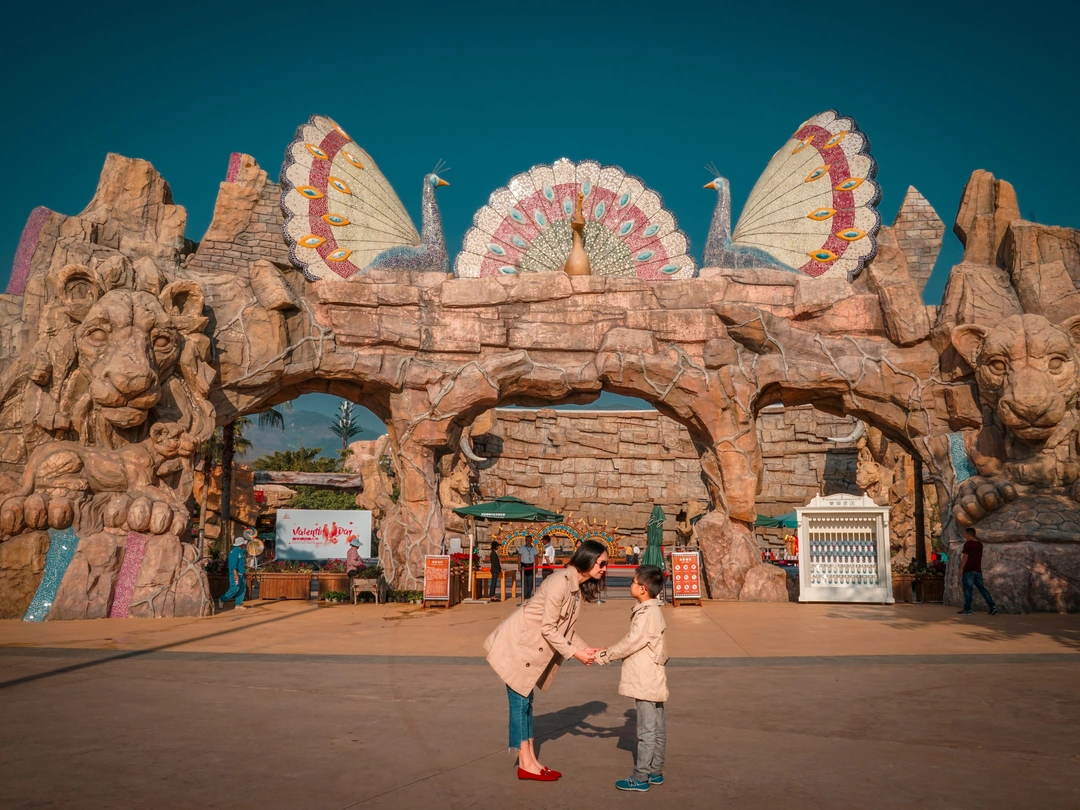
Family Trip to Xishuangbanna: A Slow-Paced Journey Without Rushing
An annual family trip is an unshakable tradition in our household. It's not about ticking off a checklist, but about quietly opening a window to the world for our child as we travel together. A month before the Spring Festival this year, I still hadn't decided on a destination. Finally, I pointed at random — Xishuangbanna. Strangely enough, many parents ask me, "Where should I take my child at what age?" I always feel there's no standard answer. Travel isn't homework; it doesn't need deliberate planning. Any place can be a starting point for a child to understand the world.
Why Xishuangbanna?
"Xishuangbanna" means "twelve administrative districts" in the Dai language. In ancient Dai, it was called "Mengbalanaxi," meaning "an ideal and magical paradise." This is China's only tropical rainforest nature reserve, where rare birds and exotic animals roam freely through the jungle. But in my eyes, it doesn't carry that many光环 — it's simply a warm, humid place at the southernmost tip of Yunnan. Most of its counties and towns start with the character "Meng," which means "a fertile basin with abundant water and soil." No matter when you visit, your eyes are greeted by endless greenery — towering ancient trees, gnarled roots intertwined, sunlight filtering through the leaves. With a glass of cold purple rice drink or a bag of sour-and-spicy pounded chicken feet in hand, time just drifts away slowly.
Our Itinerary at a Glance

This time, we didn't follow the typical tourist route — popular spots like the Xishuangbanna Tropical Botanical Garden (Chinese Academy of Sciences), Wild Elephant Valley, the Big Buddha Temple, and Gaozhuang Xishuangjing are certainly wonderful, but we wanted to experience the warmth of this land through "immersion." Here's our 7-day plan:
- Day 1: Kunming → Jinghong City → Watch "Dai Show"
- Day 2: Sunac Land + Water World
- Day 3: Manfeilong Dai Village
- Day 4: Jinghong → Zhanglang Ancient Village in Menghai County
- Day 5: Zhanglang Ancient Village → Nakeli Ancient Town → Pu'er City
- Day 6: Taiyanghe National Forest Park + Yinsheng Tea Estate
- Day 7: Pu'er → Kunming
Day 1: From Kunming to Jinghong, an 8-Hour Journey
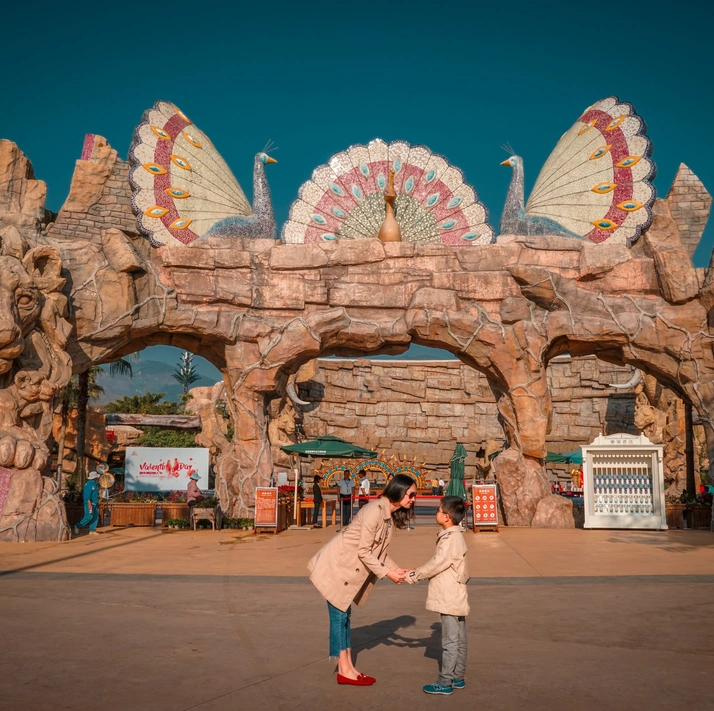
We set off at 6:30 a.m. The highway was almost empty of cars. From darkness to daylight, the scenery outside the window kept shifting — one moment a brilliant blue sky, then through a tunnel, and suddenly misty mountains. We had lunch in Pu'er at 12:30 p.m. and continued toward Jinghong. The stretch from Pu'er to Jinghong is a highway cutting through tropical rainforest, lined with towering ancient trees and tropical plants. In the distance, rubber plantations had shed their leaves for winter, giving off a stark, haunting beauty.
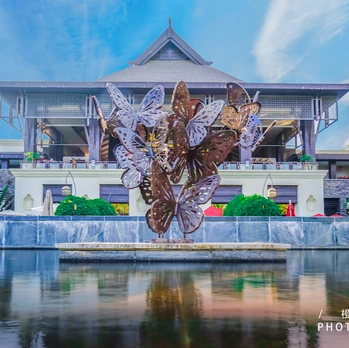
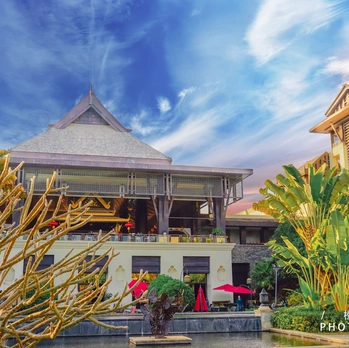
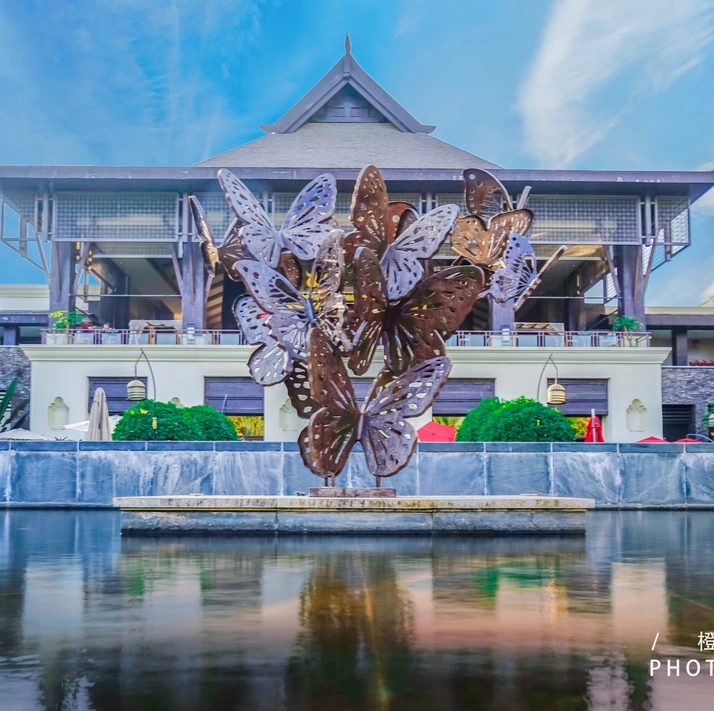
Eight hours later, we drove into Jinghong City. Rolling down the window, a wave of warmth hit us, carrying that distinctive tropical scent. We stayed at a hotel in the Xishuangbanna International Tourism Resort. Prices doubled during the Spring Festival, but normally it offers great value for money. The hotel was designed in Dai style, blending Thai and Chinese elements — elegant yet luxurious. The front desk clerk was very thoughtful, telling us about the room location and facilities, and reminding us to have breakfast early because of the holiday crowds.
From the lobby to the guest rooms, we walked through a long corridor lined with delicate Chinese-style mini landscapes. In the distance were tropical rainforest and a large lawn perfect for weddings. The room perfectly combined European-style furniture with Dai elements. Sitting on the balcony, with blue skies and white clouds above and lush greenery below, I felt completely relaxed. The hotel had three pools — an outdoor pool, a children's play pool, and an indoor heated pool — all surrounded by tropical plants. Even breathing felt fresher.
The Stunning "Dai Show"
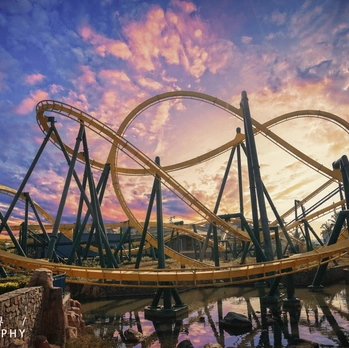
After resting, we went to see the "Dai Show." This performance is on par with Las Vegas's "O" show, Macau's "House of Dancing Water," and Wuhan's "Han Show" — it's a world-class spectacle. After watching it, my son said, "Mom, this is even more amazing than the Chimelong Circus!" And that's saying something, because the Chimelong Circus had always been an unbeatable favorite in his mind.
The "Dai Show" is based on the Xishuangbanna legend "The Peacock Princess." It tells the story of a young man who stumbles into the rainforest and meets a flower spirit princess; together they overcome the trials set by an evil wizard. The 80-minute performance was a non-stop thrill: contortionists whose joints could rotate 360 degrees, a butterfly queen suspended in the air by her hair alone, agile Indian acrobats... The stage design was breathtaking — lighting, 3D effects, and a central water feature left us in awe. What does "the sea turned into mulberry fields" really mean? After watching this show, you'll have the most vivid answer.
Day 2: Sunac Land — Rediscovering Your Inner Child
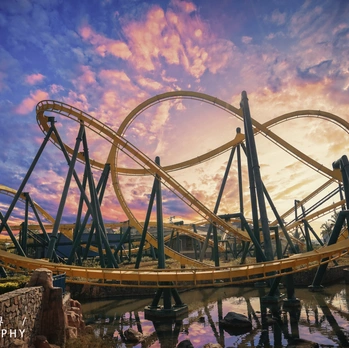
Xishuangbanna Sunac Land is China's only water-and-land theme park set in a tropical rainforest. The land park and water park can be ticketed separately or with a combo pass. Both parks open at 10 a.m., with rides starting at 10:30 a.m.
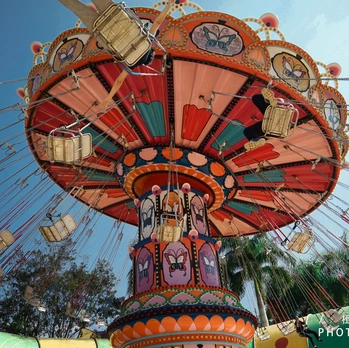
The land park has four themed zones with 15 rides. Going clockwise, the first zone is Jungle Adventure, which features more thrilling rides with height restrictions. The most unique attraction is a heart-shaped roller coaster — maybe you could propose here.
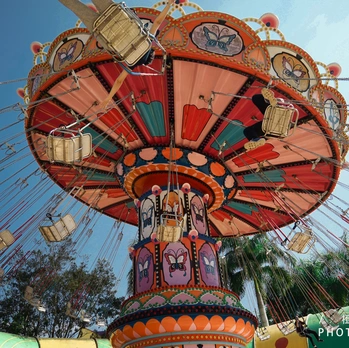
Fisherman's Wharf has water-based rides. The water rafting and water roller coaster will get you wet, but the strong sun dries you off quickly. My son loved the rafting so much we rode it twice. The Ancient Tea Horse Road zone incorporates Pu'er tea elements — the "Ancient Road Flying Horse" and drop tower are quite thrilling. Butterfly Kingdom is colorful and perfect for younger kids.
The water park is smaller, about half the size of the land park. Many slides aren't suitable for children under 140cm, but the wave pool, lazy river, and Dai-style water village are great for little ones. When we visited, it was practically empty — we had the place to ourselves.
Honestly, since having a child, I've visited Hong Kong Disneyland, Singapore's Universal Studios, and Guangzhou's Chimelong under the guise of "for my son"... Each time, it lets me reconnect with my childhood. What impressed me most about Sunac Land wasn't the rides, but the design that blends tropical rainforest and ethnic characteristics — that's its true essence.
Day 3: Manfeilong — An Afternoon Playing in the Mud
From Jinghong to Manfeilong Dai Village is about 45 kilometers, a one-hour drive. There's none of the noise and chaos of other tourist spots, and no boredom either — everything felt just right.
The restaurant at the village entrance served Dai food that was even more authentic than what we'd had in Jinghong city. In the afternoon, we strolled slowly along the village paths, lingering at every intersection, looking for little surprises. Most Dai houses still bear the marks of time. In front of every home, red flowers and green leaves were displayed. Some families making Dai pottery showed off their unique creations.
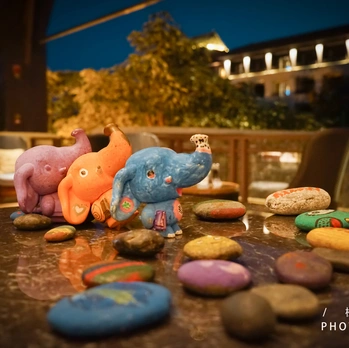
The most special thing about Manfeilong is the Dai slow-wheel hand pottery — a primitive Yunnan handcraft technique. Using a slow wheel, artisans shape clay, then tap patterns onto the surface with textured wooden paddles. The firing method is also distinctive. Best of all, you can try it yourself.
My son and I spent three hours, enduring countless failures, and finally molded a little elephant for good luck. The owner said we could leave our names and school, and he'd fire it and keep it for us to pick up next year. My son generously said, "No need — keep it and sell it!"
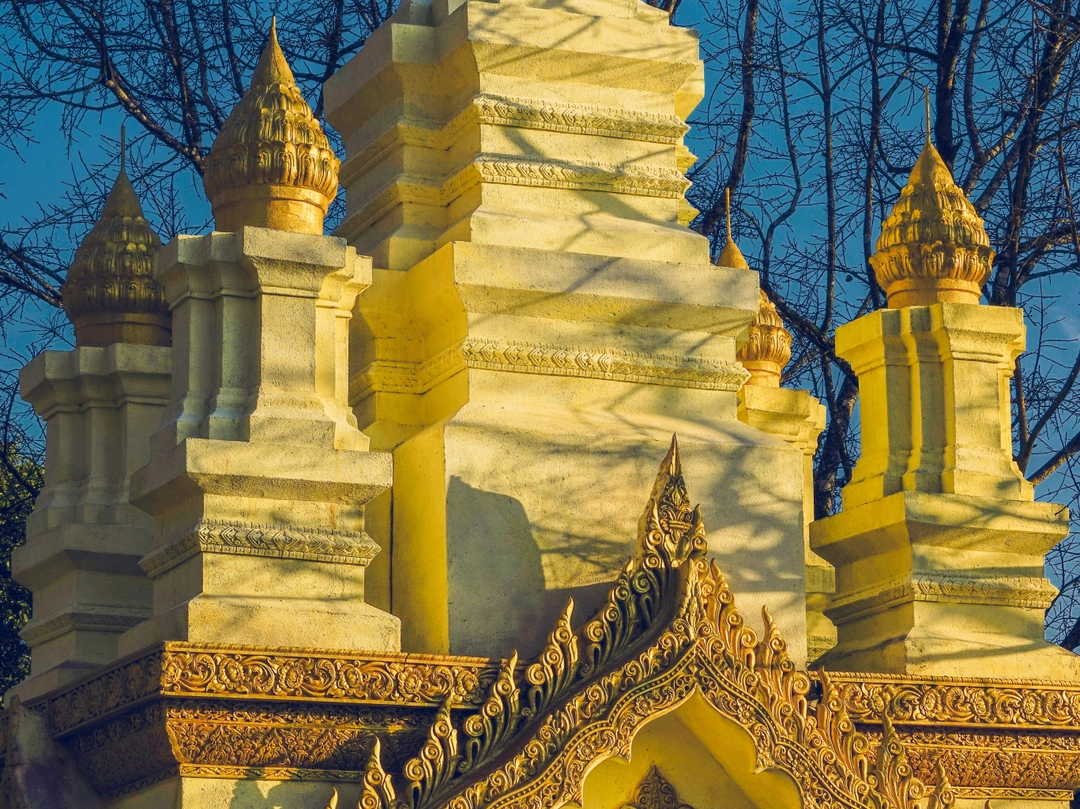
Leaving the pottery workshop, we climbed the stairs shaded by old trees and reached Manfeilong White Pagoda. It stood there quietly, serene and elegant. In the Dai language, this type of pagoda is called "Ta Nuo." Its architecture reflects the artistic features of Theravada Buddhism while maintaining distinct ethnic characteristics.
On the way back, we unexpectedly came across a cockfight. Cockfighting is a Dai tradition — a major event during the Water Splashing Festival, but locals also enjoy it as everyday entertainment. That afternoon, holding my son's hand as we wandered around, traveling with a slow soul at peace.
Back in Jinghong that evening, fireworks were going off along the Lancang River. I love watching couples leaning on each other by the riverbank, and children splashing and playing. Tonight's fireworks made the Lancang River especially enchanting.
Day 4: Zhanglang Ancient Village — A 1,400-Year-Old Blang Settlement
From Jinghong to Zhanglang Village in Menghai County is about 95 kilometers, a 2.5-hour drive. Zhanglang Ancient Village has over 1,400 years of history and is a Blang ethnic settlement. "Zhanglang" means "the place where an elephant froze" in Dai — legend says it was built to commemorate an elephant that carried scriptures for a monk.
During the Spring Festival, many places were packed with people, but Zhanglang had only warm sunshine and villagers moving along the paths. We had lunch at our booked accommodation, then went to visit the Zhanglang Ancient Buddhist Temple. There's a tradition here: boys around age ten enter the temple to become novice monks, staying for one to six years to learn Dai script, scriptures, and other knowledge. After leaving the monkhood, they become the educated elite of the Blang community.
The young monks were very shy — they scattered as soon as they saw us. When the bell for class rang, they all rushed into the prayer hall, sat cross-legged on the floor, and began chanting. My son sighed, "Mom, so you can be a monk and study at the same time in elementary school? Can they eat meat?" I said, "Let's ask the innkeeper tonight."
Leaving the temple, we walked toward the village, passing free-range chickens pecking for insects. A shopkeeper struck up a conversation with us. When he heard we wanted to eat free-range chicken, he said the chickens here are all free-range and can only be caught after 7 p.m. Seeing our disappointment, his wife took us to a villager's home to buy one. In the end, everyone worked together to catch a chicken. It weighed in at 63 yuan — we'd have chicken soup tonight.
At dinner, we learned the innkeeper was also the village's deputy Party secretary. He told us all about Zhanglang's history. My son finally got his answer — the young monks can eat meat; they just can't kill animals themselves. Traveling like this, immersing yourself in local culture and talking with locals, is what it's all about.
That evening, on the inn's balcony — no TV, no internet — we brewed a pot of Pu'er tea, watched the sunset, and chatted. It was life stripped back to its simplest form.
Day 5: Nakeli Ancient Town — Echoes of the Ancient Tea Horse Road
Woken by roosters crowing, we had a simple breakfast, said goodbye to the innkeeper, and headed for Pu'er. The drive from Zhanglang to Pu'er took about 4.5 hours. Nakeli Ancient Town, about 30 kilometers from Pu'er city, was an important post station on the Ancient Tea Horse Road from old Pu'er Prefecture. It's also one of the best-preserved ancient stations.
During the holiday, Nakeli had lost some of its usual tranquility. By 4 p.m., it was bustling with people. Still, you could feel the weight of history in the old horse inns, horse lanterns, and covered bridges. Closing my eyes, I could almost hear the clatter of hooves on cobblestones and the jingle of camel bells.
Day 6: Taiyanghe National Park — Face to Face with Wildlife
The weather was perfect as we headed to Taiyanghe Forest Park, a 40-minute drive from Pu'er city. The park was lush with flowers and trees, birdsong filling the air. An electric cart took us to the boardwalk entrance. Walking through the forest, we saw white rhinos — part of a breeding program to rebuild the population — gibbons swinging through the trees, clumsy black bears, red pandas that came out when they heard a whistle, sloths surrounded by curious onlookers, and red-crowned cranes preening by the water.
How could we visit Pu'er without experiencing tea-making? Yinsheng Tea Estate is hidden among tea mountains, surrounded by hills and a reservoir. The tea master led us into the workshop, where the aroma of tea leaves filled the air. This wasn't the picking season, so we started directly with weighing the tea. Pu'er tea cakes are also called "seven-son cakes" — each cake requires 357 grams of tea leaves. The weighed leaves are steamed at high temperature, hand-pressed into shape, then machine-pressed twice, dried, and wrapped.
Wrapping his own pressed Pu'er cake in rice paper, my son said, "I'll save this for when I get married." There was an indescribable pride in his voice.
Day 7: The Return — The Most Beautiful Scenery Is in Everyday Life
We were like little snails, extending our long antennae to explore the world, then carefully storing all the beautiful experiences in our shells. This trip wasn't about going far away — we only went to a place outside Kunming that I already knew well. But only after the journey ended did I suddenly understand: the most beautiful scenery isn't in foreign lands; it's in the everyday moments of our lives.
In Xishuangbanna, we breathed in the fragrance of the earth and captured the grandeur of the mountains. At Sunac Land, we enjoyed family happiness. In Manfeilong, we experienced the old ways of life. In Zhanglang Ancient Village, we read the touching stories of ordinary village life. On the Ancient Tea Horse Road, we traced the marks of history...
Xishuangbanna is something that can never be fully captured in words or photos. The sights you take in with your eyes, the feelings you keep in your heart — only by experiencing it yourself can you truly understand.
Practical Tips: What You Need to Know for a Family Trip to Xishuangbanna
Transportation Guide
By Air: Xishuangbanna Gasa Airport is the busiest airport in Yunnan after Kunming Changshui. Many cities across China have direct flights. A flight from Kunming to Jinghong takes just 45 minutes, and round-trip tickets cost under 1,000 yuan outside of holidays. The airport is 6-7 kilometers from the city center, with shuttle buses to major attractions, Gaozhuang Xishuangjing, and Manting Park. Many hotels offer airport pickup.
By Bus: From Kunming South Bus Station to Jinghong, there are 16 departures daily, starting at 7:50 a.m. and running every half hour. Tickets cost 223 yuan, and the journey takes about 9 hours.
By Car: Kunming to Jinghong is about 580 kilometers, all highway. Including a lunch break, it takes about 7.5 hours.
Local Transportation: Jinghong has very few buses — roughly one every 30 minutes. The most convenient option is Didi (ride-hailing). For trips to Menghai or Mengla, take a bus from Jinghong Bus Station. Car rental services are also well-developed, and you can pick up a car right at the airport.
Climate and What to Wear
Xishuangbanna has no winter — the climate is similar to Thailand. March to May is the hottest period, with temperatures nearing 40°C (104°F). June to September is rainy, but still hot when it's not raining. October to February is the most comfortable season, though there's a big temperature difference between day and night, so bring a jacket. In December and January, daytime highs can sometimes drop below 20°C (68°F).
Must-Try Foods
Menghai Pounded Chicken Feet Cold Drink Shop — The best cold dish shop in Jinghong, open daily after noon. Pounded chicken feet, pounded potatoes, pounded tofu... basically anything you can think of gets thrown in with lemon, little red chili peppers, and cilantro, then pounded in a wooden mortar. It's sour and spicy, but not overpowering. You can ask for less chili if you can't handle the heat. Address: No. 21 Yiwu Road, Jinghong City.
Purple Rice Drink Shop — Featured on TV, their purple rice drink is crushed ice with chewy purple rice. On a hot day, one cup is pure bliss. It's right across from the pounded chicken feet shop.
Luoluo Ice House — A classic cold drink shop serving Dai-style snacks, cold noodles, cold dishes, and drinks, as well as rice and noodle bowls. I recommend the lemon cold noodles and mixed fruit slushie. Main address: No. 96 Xuanwei Avenue, Jinghong City.
Grilled Fish Alley — A hidden late-night snack spot tucked away in an alley. Opens at 7 p.m. every night and is packed until 1 or 2 a.m.
Final Thoughts
Traveling with kids doesn't need to be overly planned. Let children learn through osmosis, feel the world as they walk through it. Xishuangbanna — this ideal and magical paradise — is worth bringing your children to explore slowly, to see slowly, and to feel slowly.
You should also read:

God’s Abandoned Palette: A Self-Drive Journey Through Yunnan’s Dongchuan Red Land
God’s Abandoned Palette: A Self-Drive Journey Through Yunnan’s Dongchuan Red Land Travel has never been about reaching some distant geographic coordinate. It’s about encountering, along the way, the version of yourself buried beneath the rubble of daily routine. During this May Day holiday, I finally…
Continue reading...
Two Girls' Graduation Trip: Dali and Shuanglang – A Poetic Farewell to Mountains and Sea
Two Girls' Graduation Trip: Dali and Shuanglang – A Poetic Farewell to Mountains and Sea Preface: Catching the Tail of Youth, Heading South During our senior year of college, my roommate and I – two girls studying in Beijing – decided to bid farewell to…
Continue reading...
Cloud Travelogue · Dali of Wind, Flowers, Snow, and Moon: A Three-Day, Two-Night Journey of a Free Spirit
Cloud Travelogue · Dali of Wind, Flowers, Snow, and Moon: A Three-Day, Two-Night Journey of a Free Spirit I am a cultured female foodie with a touch of rogue charm. I slung on my backpack, took my lover's hand, and set off on a spontaneous…
Continue reading...