Finding the Spirit of the New Year Amidst the Hustle, Rediscovering Childhood in the Rainforest — A Spring Festival Travelogue in Xishuangbanna
Finding the Spirit of the New Year Amidst the Hustle, Rediscovering Childhood in the Rainforest — A Spring Festival Travelogue in Xishuangbanna
Preface: When "The New Year Spirit Has Faded" Becomes a Common Refrain
When I was a child, Spring Festival was a grand ritual. Wearing brand-new clothes, clutching red envelopes to buy that long-coveted trinket, laughing and playing with cousins — the whole alley echoed with joy. The most vivid memory I have is the lively scene of families in Guangdong making their own New Year treats in the days leading up to the festival: almond cookies, fried dumplings called 油角 (youjiao), sugar rings called 糖环 (tanghuan), and crispy egg flakes called 蛋散 (dansan) — these names alone carry the warmth of the holiday.

My mother never made these things herself, so I'd always run over to the neighbor's house to "help," which was really just an excuse to join in the fun. A few days before New Year's Eve, the neighbor's big table would be surrounded by people, with children eagerly stuffing almond filling into molds, pressing down hard, then tapping the back to release a cookie stamped with the character "福" (fortune). The more "advanced" tasks like making youjiao and tanghuan were left to the older kids or adults. I tried to pinch the decorative edges of the youjiao, but my hands were clumsy and the results were so ugly I couldn't bear to look at them, so I'd quietly hand them over to the neighbor's older sister for repairs. Making tanghuan was even more baffling to me — I could only watch in awe as the neighbor auntie worked her magic with strips of dough, her fingers dancing to create perfect rings. The fried treats came out golden and crispy, their aroma filling the entire alley. The most satisfying moment was when the neighbor auntie would hand out the finished goods to us little helpers, letting us go home with small bags full of festive cheer.
Nowadays, "the New Year spirit has faded" is the most common complaint I hear every Spring Festival. For me, the "New Year spirit" manifests in two dimensions: atmosphere and mindset. In terms of atmosphere, when I was young, the whole family gathering to watch the Spring Festival Gala was the highlight of the evening. Now, the gala has become my parents' exclusive program — I can no longer sit through it. Neighbors no longer make their own New Year treats; instead, they buy ready-made pastries — convenient, but soulless. In terms of mindset, as a child, when relatives asked about my grades, I'd receive praise and encouragement. Now, the topics have shifted to "work, marriage, children" — one boundaryless question after another, like an end-of-year review that leaves me utterly drained.
And so, the "Spring Festival Escape Plan" was born. Last year, I went to Altay in Xinjiang, seeking purity in the snow. This year, I decided to head to Xishuangbanna in Yunnan, chasing a warm winter paradise to escape those suffocating pleasantries and reclaim my own sense of ritual for the New Year.
About Xishuangbanna: Where Tropical Charm Meets Exotic Culture
Xishuangbanna sits at the southern tip of Yunnan, a land brimming with tropical vibes and the birthplace of Dai culture. The exuberance of the Water Splashing Festival, the unique elegance of Dai bamboo houses, the tantalizing flavors of Dai-style grilled fish and fragrant bamboo rice — all of it immerses you in a rich ethnic tapestry. Bordering Myanmar and Laos, it lets you experience Southeast Asian folk customs without leaving the country. You can take a boat ride along the Lancang River, feeling the river breeze and watching fireworks, or wander through China's largest tropical rainforest as if entering a green labyrinth. In Wild Elephant Valley, the endearing wild elephants, the slow lorises hanging from trees, and the exotic flora in China's largest tropical botanical garden are all gifts from this land.
This trip focused mainly on hitting the classic attractions. If I get another chance, I'd love to delve deeper into the local culture — perhaps joining the lively Water Splashing Festival in April or exploring the original Dai villages to experience a different kind of slow living.
Trip Overview: Regret Is Also Part of Travel's Charm
Our most anticipated destination was Jingmai Mountain. We'd heard it still retains the flavor of original villages, and I couldn't help but wonder: would the New Year spirit feel stronger there? However, when we tried to book hotels, we found that all rooms had been snapped up for the Spring Festival period. Even if we went up for just the day, the cost of a chartered car was exorbitant, and since the roads were all mountain routes, we didn't have the confidence to drive ourselves. So, with some regret, we had to abandon the plan.
Attentive readers might notice that in every trip overview I write, there are always some places I didn't get to visit. Perhaps that's the charm of travel — and of life itself: nothing is ever perfect. Leaving a little regret gives us a reason to return to this land.
Since we had a child with us, the entire itinerary was designed to be relaxed:
- Day 1: Guangzhou South → Xishuangbanna Station → Jinghong Grand Golden Pagoda → Manting Garden → Starry Night Market
- Day 2: Wild Elephant Valley → Starry Night Market
- Day 3: Chinese Academy of Sciences Tropical Botanical Garden
- Day 4: Dai Water City → Manduo Village → Boruo Temple
- Day 5: Jinuo Mountain Hiking
Practical Advice: If you want to spend the New Year in Xishuangbanna, it's best to book accommodation 1-2 months in advance. I recommend staying near Gaozhuang Xishuangjing (告庄西双景), which is convenient for getting anywhere. If the prices there are a bit steep, you can stay near the Water Splashing Square (泼水广场).
Day 1: New Year's Eve — From High-Speed Rail to Fireworks, the Festive Spirit Grows
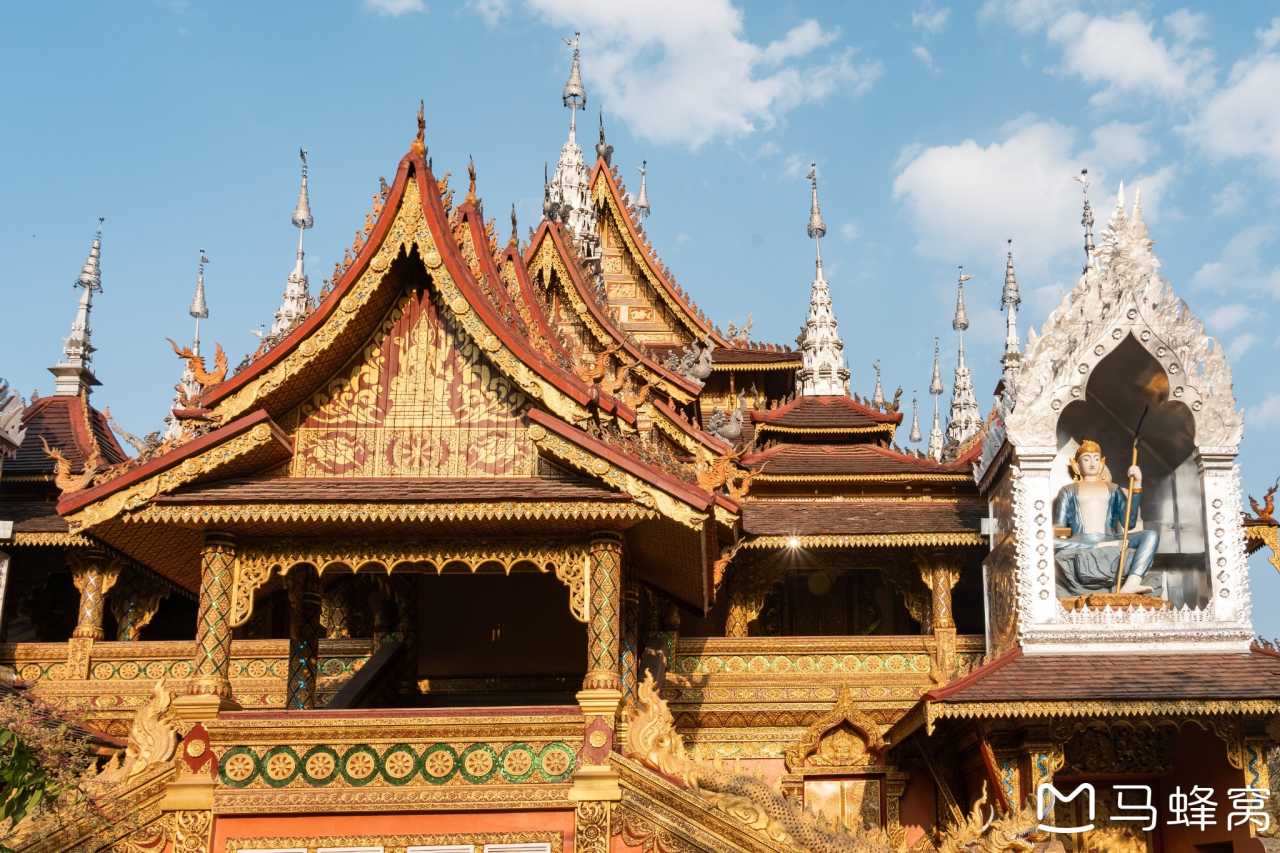
First Encounter with Xishuangbanna: The Backyard of Northeasterners
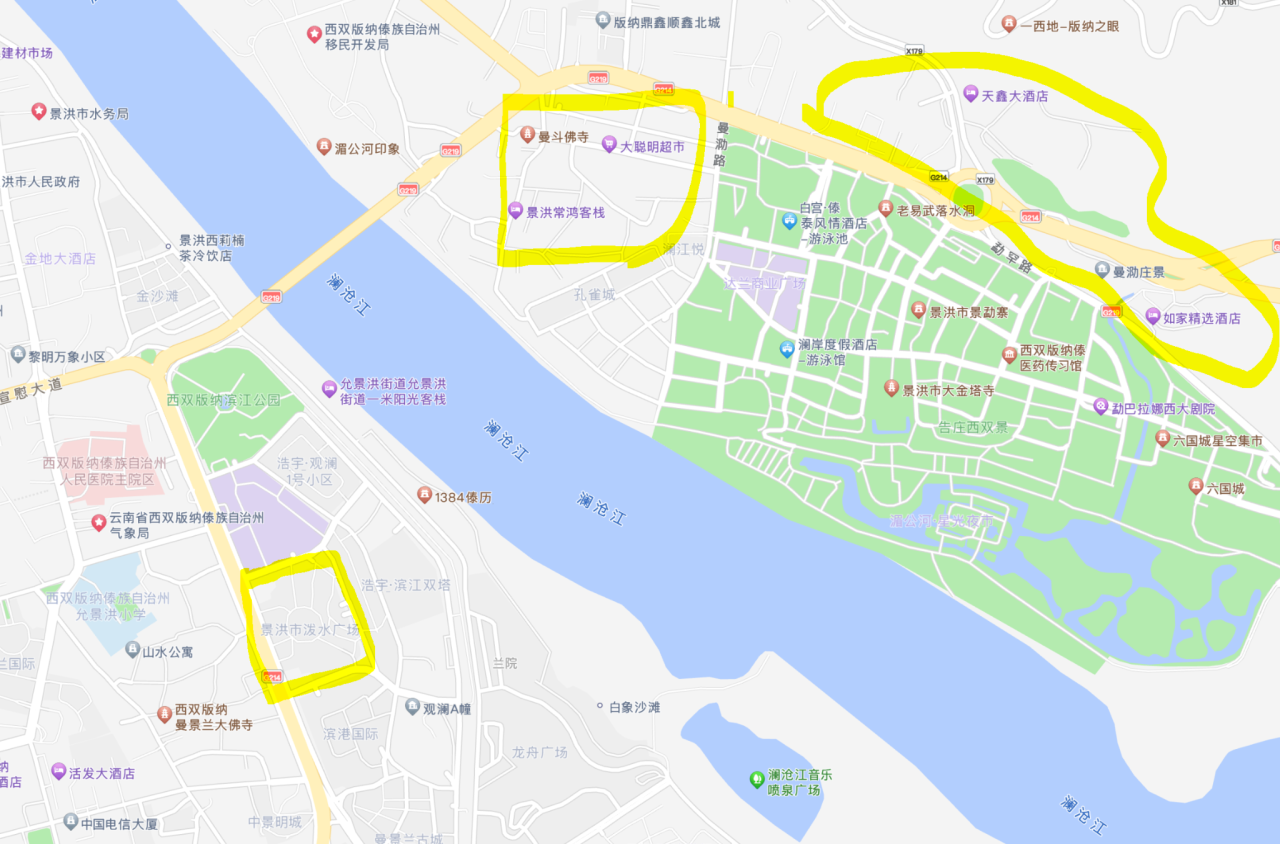
As soon as we stepped off the high-speed train, the heat of Xishuangbanna hit us. For someone coming from the damp, cold south, this slightly muggy weather was a bit uncomfortable. After rushing out of the station, we shed our heavy coats and finally felt some relief.
This was my third time in Yunnan. The first was with my mother to Lijiang; the second was solo to Lugu Lake, where I met a group of interesting friends; this time, I came to Xishuangbanna with my sister and niece. I was looking forward to seeing what stories the next few days would bring.
We hailed a Didi to the hotel, and the driver was incredibly chatty, enthusiastically striking up a conversation as soon as we got in. It's been so long that I can't recall exactly what we talked about, but I vaguely remember him joking, "If Sanya is the paradise for Northeasterners, then Xishuangbanna is their backyard." Thinking about it, the street scene here does resemble Sanya's in some ways: coconut trees swaying everywhere in the breeze. But what truly sets these two places apart at a glance are the peacock and elephant decorations scattered all over Xishuangbanna — elements that give it a unique Dai character, completely different from Sanya. And sure enough, the rest of the trip kept confirming the driver's words: a rough estimate suggests that at least 90% of the tourists in Xishuangbanna during Spring Festival were from the Northeast.
Jinghong Grand Golden Pagoda: A Glittering Landmark
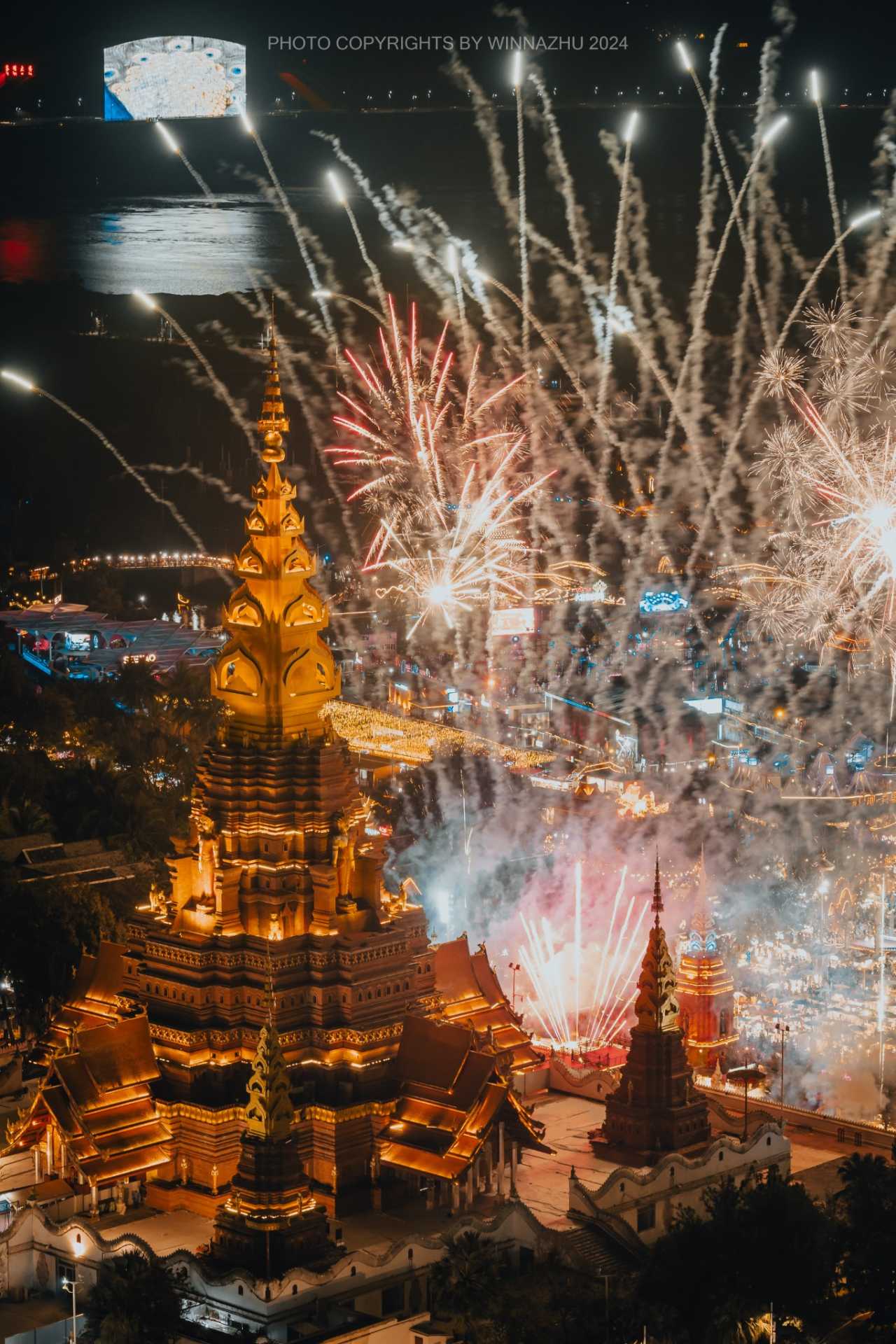
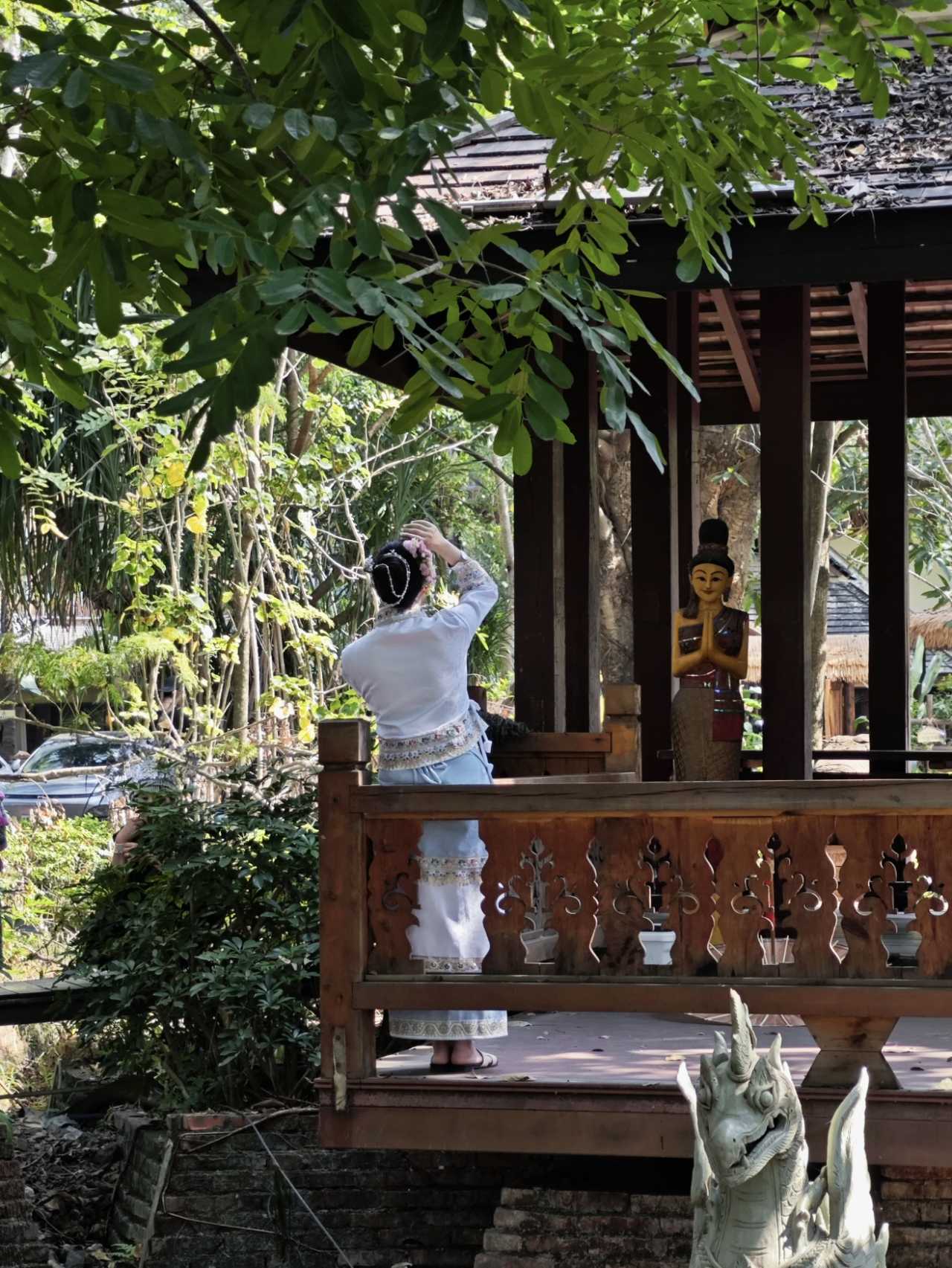
Gaozhuang Xishuangjing (告庄西双景) is a tourist complex that skillfully blends Dai culture with modern commerce, and it's quite popular among visitors. Its most famous attractions include the Grand Golden Pagoda, the Starry Night Market, and various shops full of Dai character. Many tourists choose to rent Dai costumes from nearby clothing stores during the day and take photos among the distinctive buildings. We followed suit and snapped a few shots, soaking in the unique atmosphere.
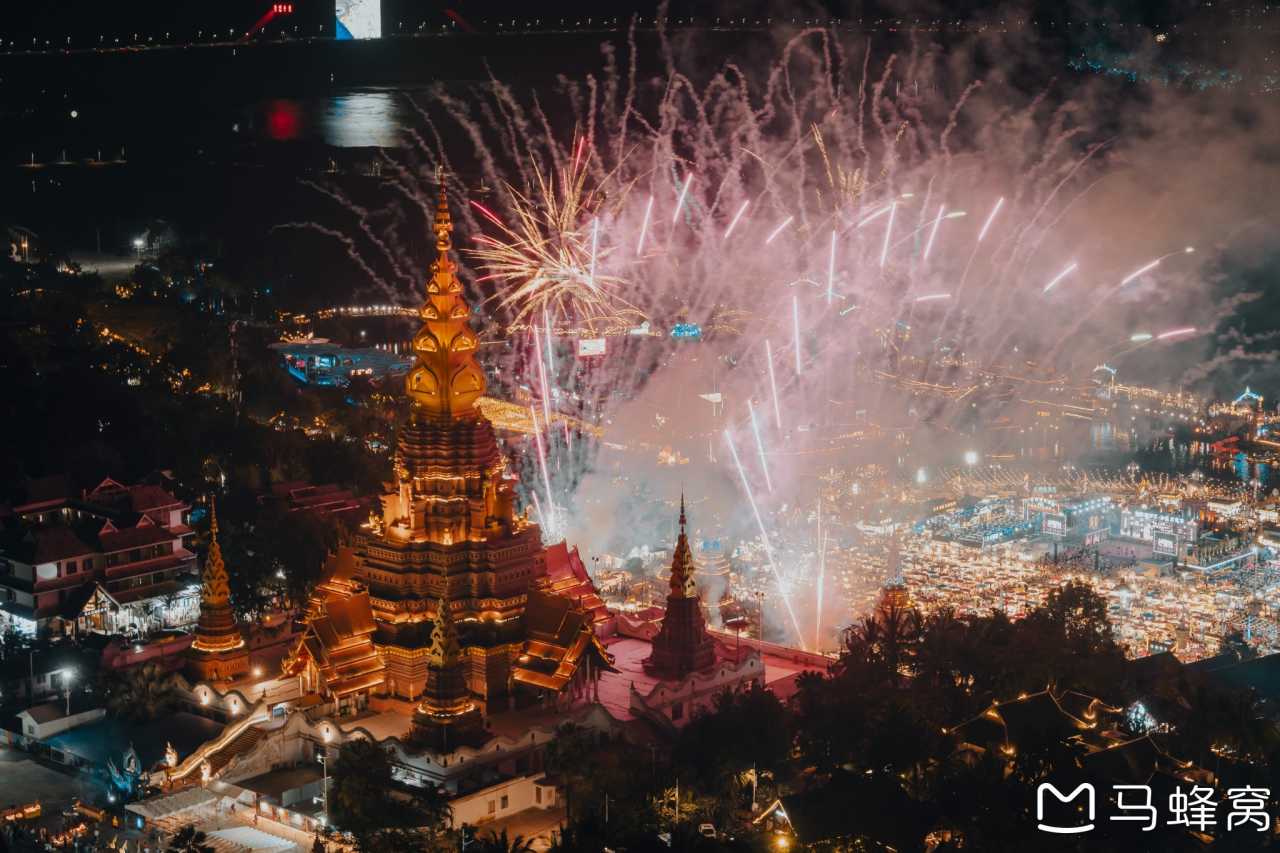
After lunch, we decided to check out the Grand Golden Pagoda first. As the landmark of Gaozhuang Xishuangjing, it's also one of the symbols of Xishuangbanna's culture. The pagoda stands about 66 meters tall, its body covered in gold leaf, glittering brilliantly in the sunlight. Its design draws inspiration from Buddhist stupas in Southeast Asian countries like Myanmar, Thailand, and Laos, while incorporating Dai religious and cultural elements, giving it a unique sense of solemnity and mystery.
However, we found that visiting the pagoda in the afternoon wasn't ideal for photography — the backlighting made the lighting less than perfect. If you want to take beautiful photos, it's best to avoid the afternoon. During Spring Festival, there are also fireworks shows at night, and I'm sure the view with the golden pagoda as a backdrop would be even more enchanting. After a short while, my niece started to droop her head — for a child, Buddhist culture probably isn't all that captivating. So we did a quick tour and hailed a taxi to our next destination.
Practical Info: - Jinghong Grand Golden Pagoda Opening Hours: 10:00-11:30, 16:30-18:00, 20:00-22:00 - Admission: Free - Best Photo Time: Morning and evening
Manting Garden: A Millennium-Old Imperial Garden
Manting Garden is the oldest park in Xishuangbanna. As the imperial garden of the Dai kings, it has a history of over 1,300 years. It was once an important place for the Dai king and his family to relax, celebrate, and perform rituals, earning it the name "Spring Joy Garden," which means "Garden of the Soul."
When we arrived at the park entrance, we immediately felt the Spring Festival crowds. The relatively sparse crowds near the Grand Golden Pagoda had given us the illusion that Xishuangbanna was a "hidden gem," but Manting Garden was clearly bustling. However, this park, covering over 400 mu (about 66 acres), has a spacious layout that disperses the crowds well, so even with many visitors, it didn't feel particularly cramped or uncomfortable.
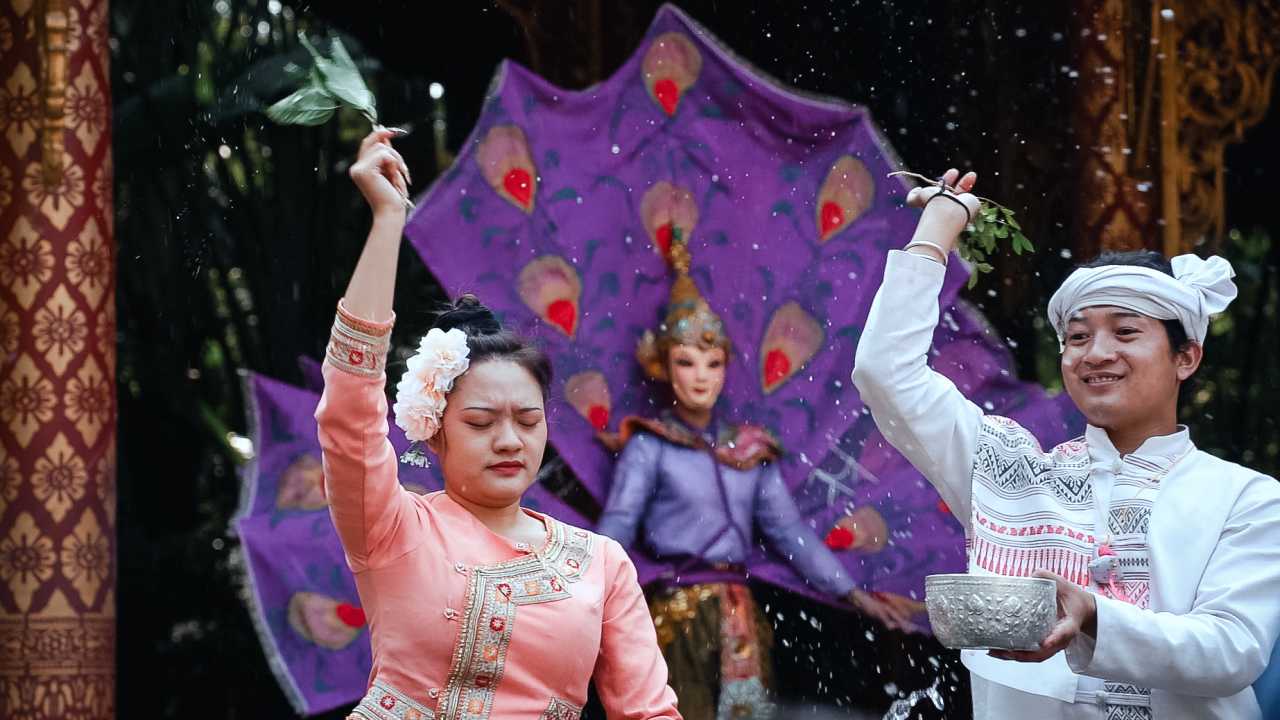
Not long after entering the park, we stumbled upon a performance. We joined the crowd to watch, and on stage, they were performing the famous Dai peacock dance. Halfway through the performance, a Dai girl suddenly picked up a water basin with her left hand and a green leaf with her right, and began splashing water toward the audience. Caught off guard, everyone scrambled to dodge the large droplets. Worried about my camera getting wet, I quickly ducked to the side. This was originally a Dai blessing for visitors, but because it was so sudden, the whole scene turned a bit comical. Still, no one really complained — everyone laughed and accepted this unexpected warmth.
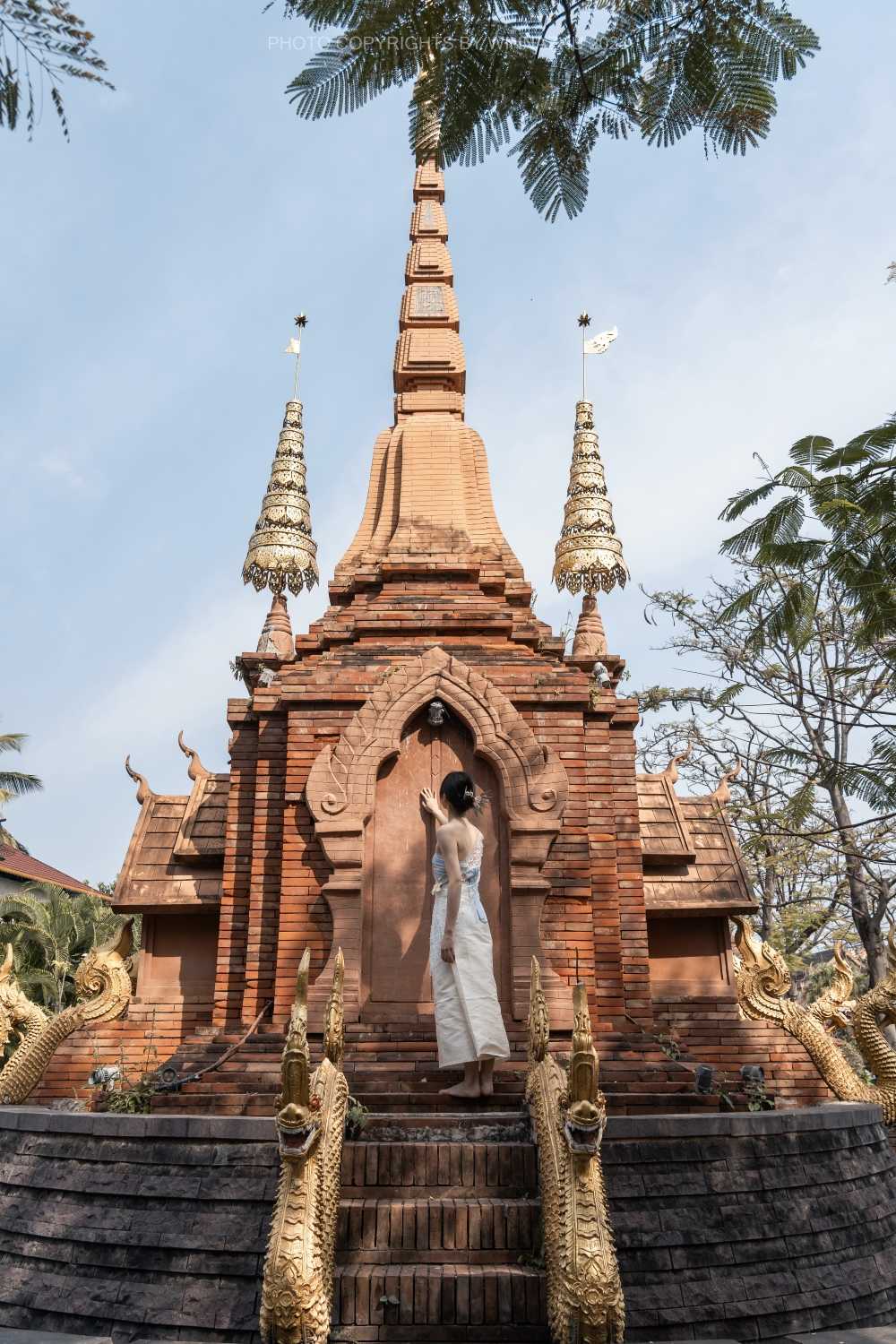
We came to Manting Garden with a relaxed mindset, just wanting to stroll around and soak in the royal atmosphere of the Dai kings, without any particular intention of taking "Instagram-worthy" photos. So we walked slowly and casually, immersing ourselves in this garden where history and nature intertwine, enjoying its tranquility and beauty.
Must-Visit Spots (in walking order):
- Buddha Tooth Temple: Quite popular with incense offerings. The temple is small, so it's worth a quick look as you pass by.
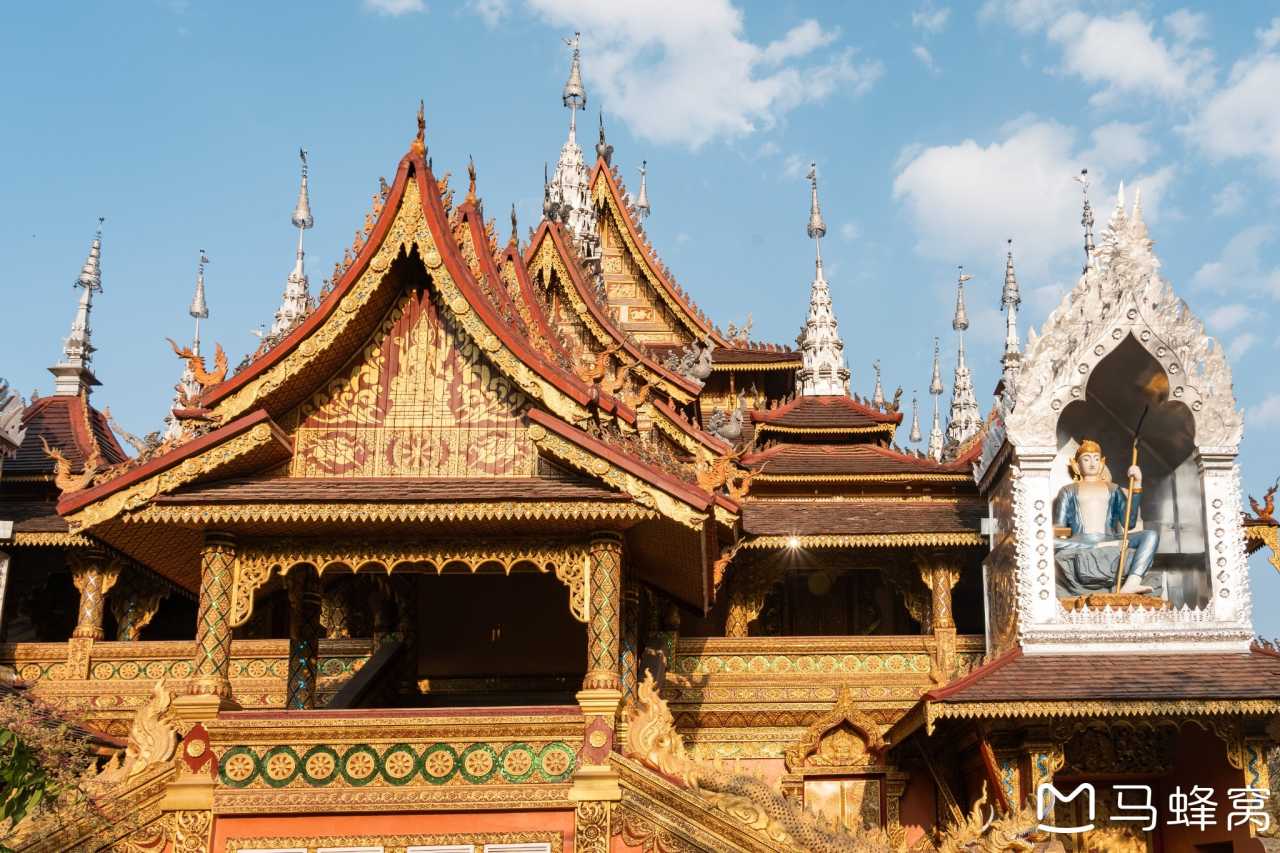
- Dai King's Summer Palace: Originally built as a summer resort for the eighth Dai king's consort, its architecture is uniquely distinctive. The exterior walls and interior halls are adorned with intricate golden patterns, while the eaves and corners are decorated with peacocks and other symbols of good fortune and prosperity. Women in Dai costumes look as if they've traveled back 800 years to the era of the eighth Mengle King.
- Imperial Garden: Planted with a large variety of tropical plants, including phoenix bamboo, flame trees, and palm trees, with flowers blooming all year round. In winter, you can see lotus flowers and bougainvillea.
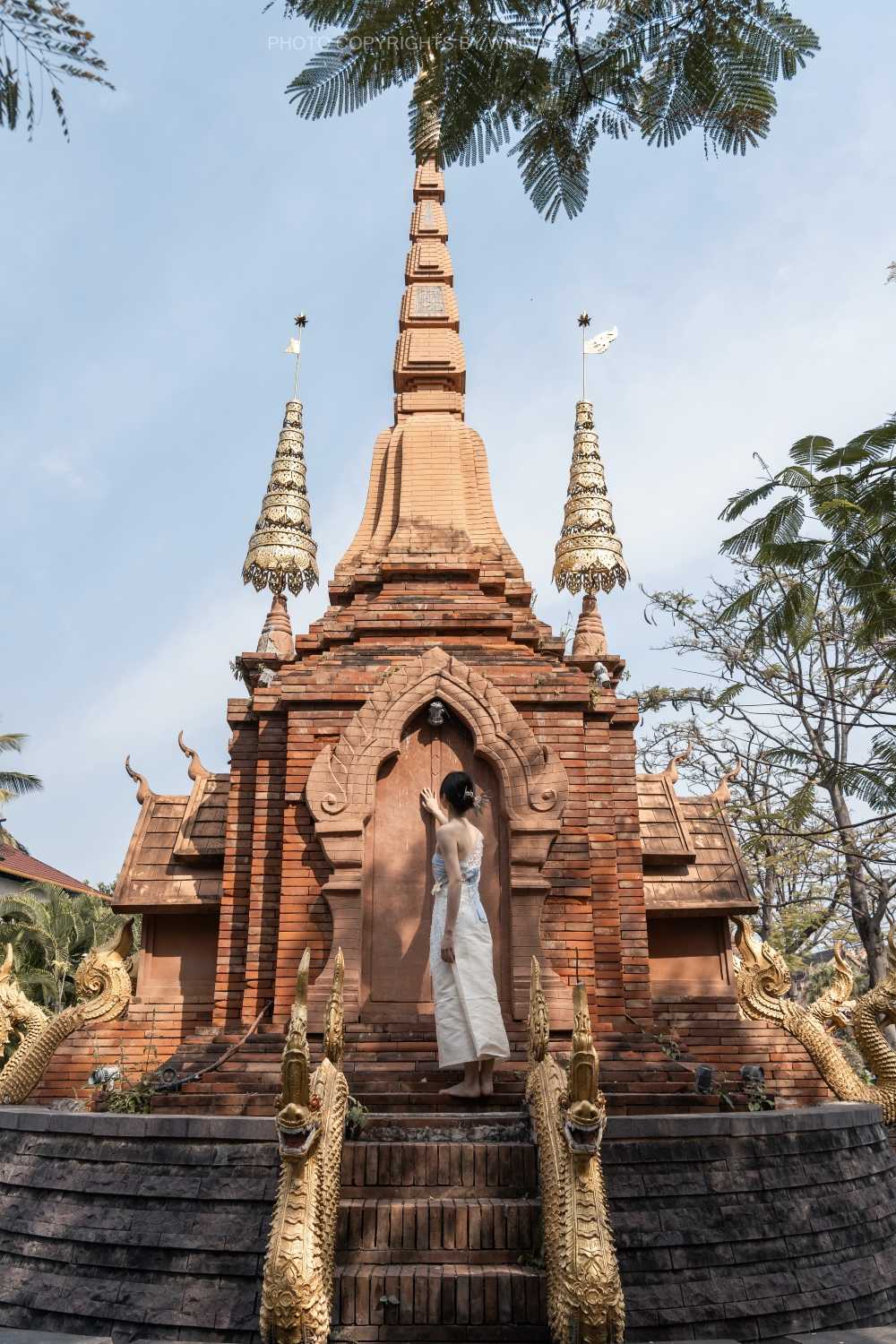
- Twin Pagodas: Two towers built of red brick, with a unique style that makes them an internet-famous photo spot. Even everyday clothing doesn't look out of place here.
- Octagonal Corridor Bridge (Life Release Lake): Life Release Lake is a spot in the park that combines religious and ecological elements, home to fish, turtles, and other creatures. The octagonal corridor bridge over the lake is particularly eye-catching, made of wood with golden dragon motifs and peacock feather patterns adorning the roof.
- White Pagoda: Predominantly white in color, surrounded at the base by eight small niches that once housed Buddha statues. The statues are no longer there, and it's now a spot for tourists to take photos.
- General Buddhist Temple (总佛寺): One of the oldest and largest Buddhist temples in Xishuangbanna, and the spiritual center of Dai Buddhism. If you only have time for one temple, I sincerely recommend this one. The temple buildings are resplendent, combining Dai traditions with Southeast Asian Buddhist styles. The roofs are layered, decorated with intricate dragon and lotus patterns.
A small incident occurred during our visit to the General Buddhist Temple. After offering incense, we walked around the temple and suddenly saw an auntie in Dai attire, with one shoulder largely exposed, entering the temple to take photos. Since her clothing didn't comply with temple regulations, the security guard immediately announced over the loudspeaker for her to leave, but she didn't seem to notice and kept taking pictures. Eventually, the guard had to escort her out. This didn't involve us directly, but it was still a bit regrettable — I hope people will respect local customs.
Before we knew it, closing time arrived. We left through the back gate of the General Buddhist Temple, planning to take a taxi back to the hotel, but we couldn't find one at all. Fortunately, we hadn't walked far before we spotted shared electric scooters and decided to give them a try. The ride from the General Buddhist Temple back to the hotel took only about 15 minutes, about the same time as a taxi would have taken, and it was convenient and fast. After that, we realized that these scooters were a great mode of transport in Xishuangbanna — for the rest of the trip, except for visiting some farther attractions, we mostly chose to ride electric scooters. They are very common here, and every time we rode across the Xishuangbanna Bridge, we'd see a huge swarm of scooters crossing the river, a truly spectacular sight.
Practical Info: - Manting Garden Opening Hours: Daily 08:00-17:00 - Admission: 40 RMB - Parrot Show Times: 9:50, 12:00, 15:40 - Royal Elephant Show Times: 10:30, 14:50, 16:30
Starry Night Market and Fireworks Show: Romance on New Year's Eve
The Starry Night Market is the most popular spot in Gaozhuang Xishuangjing. When night falls, unlike its quiet daytime self, it unfolds like a vivid painting, with light and shadow intertwining in a lively spectacle. Whether you're here for food, shopping, or experiencing exotic culture, this place has something for every visitor. And the fireworks show during Spring Festival adds an extra layer of romance and festive spirit to the market.
The market has everything: Dai-style barbecue is an unmissable specialty here, with the fresh scent of lemongrass mixing with the smoky aroma of charcoal, tempting every visitor's appetite. Besides food, the market is also filled with a dazzling array of handicrafts and souvenirs. If you're thinking of trying on Dai costumes, you can pick a set here — we bought a complete outfit, including headpiece, for under 100 RMB. When you're tired from walking, a Dai-style massage is a perfect way to relax. My sister chatted enthusiastically with the Dai masseuse about Dai customs and daily life, while I closed my eyes, feeling the tension melt away under the pressure of her fingers, nearly drifting off to sleep.
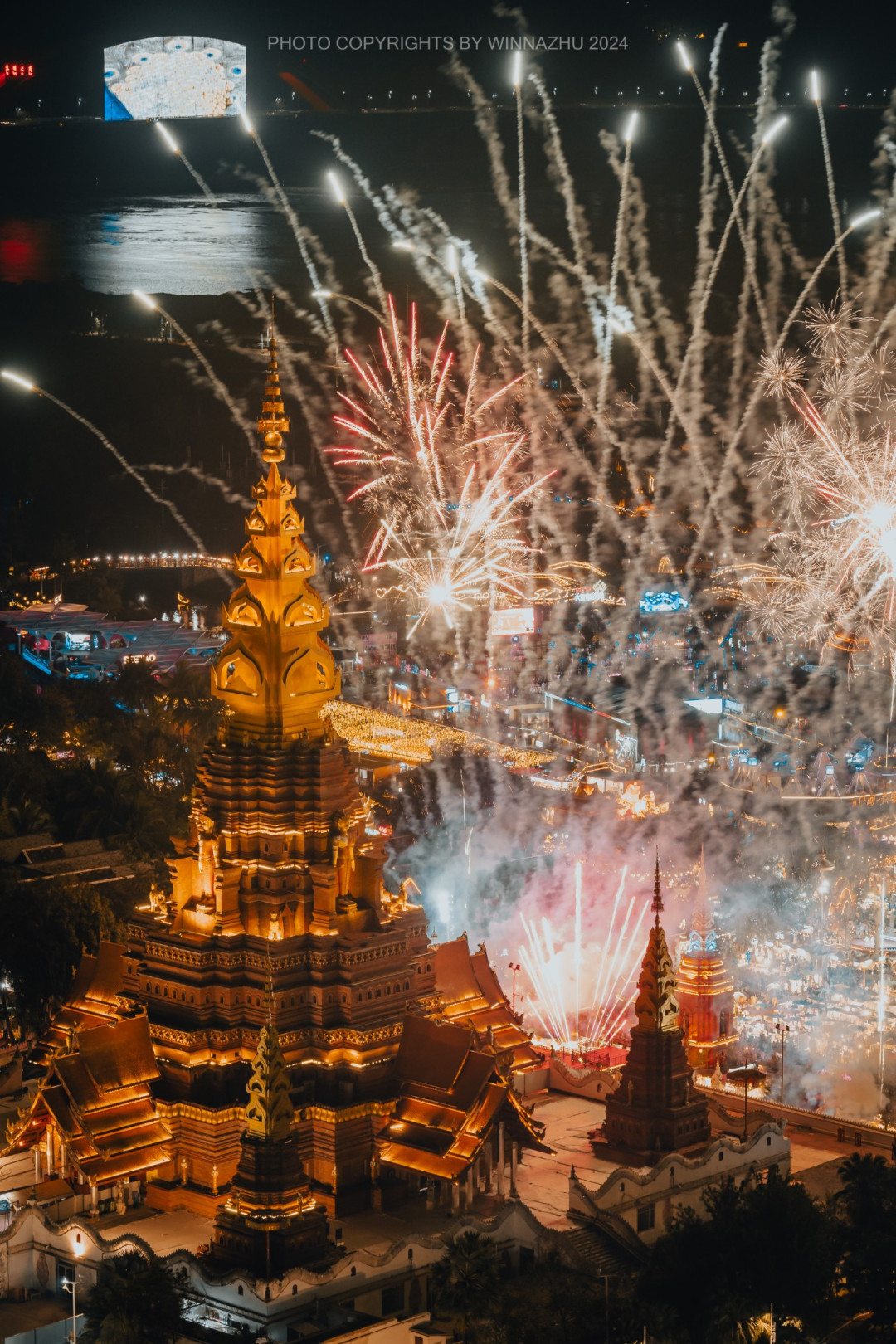
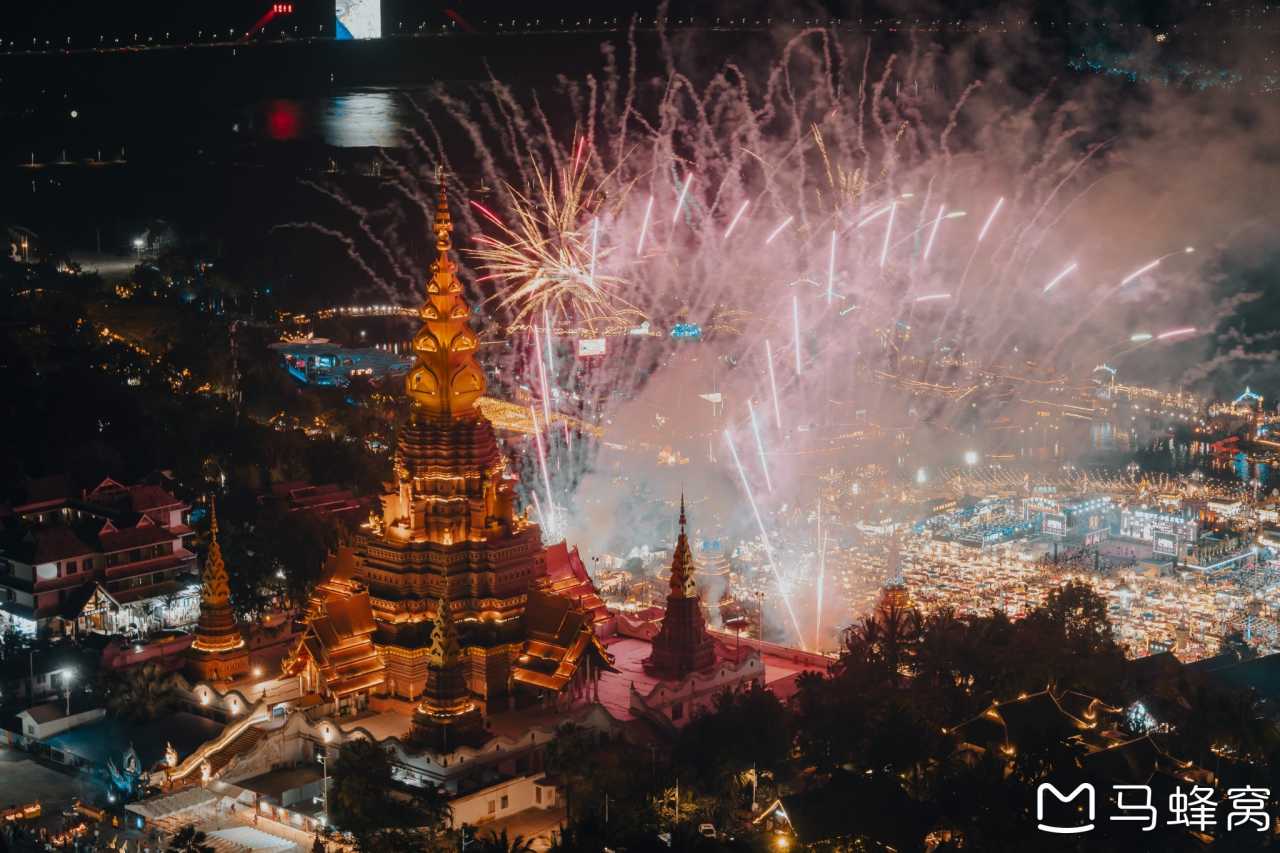
But the highlight of the night was undoubtedly the long-awaited fireworks show. From New Year's Eve to the fifth day of the lunar new year, a grand fireworks display takes place near the Grand Golden Pagoda every night. On New Year's Eve, the shows were scheduled for 20:00, 22:00, and 00:00. However, due to a minor mishap, we missed the first show.
It was a rather frustrating dinner experience. We'd planned to kick off the new year with an auspicious "Peacock Feast" (孔雀宴) on New Year's Eve, but the first restaurant gave us a taste of being "ignored." We picked a highly-rated place on Dianping (a review app) and even called ahead to ask if they had tables. They said yes, so we went. There were indeed tables, but they were all covered with leftovers from previous diners. We asked a server if we could sit there, and she barely acknowledged us. We asked another, and she told us to sit down and said someone would clean up, but then we were just left hanging. After waiting 15 minutes with no attention, my sister and I tried several times to flag down a server, but it was like talking to the air — no one paid us any attention. It was truly bizarre. My niece kept saying she was hungry, so we decisively moved on to the next restaurant.
Fortunately, the next restaurant didn't disappoint. The presentation of the Peacock Feast was more exquisite than I'd imagined. The fragrant lemongrass grilled chicken was tantalizing, the grilled fish was tender and flavorful, and the sweet, sticky pineapple sticky rice really hit the spot. We sat around the table, watching the Spring Festival Gala livestream on our phones, and finally recaptured some of the New Year's Eve ritual we'd been missing.
By the time we finished dinner and headed to the Starry Night Market, it was already 22:30. As soon as we reached the banks of the Lancang River, we were drawn to the fireworks rising from the opposite shore. They bloomed in the sky like flowers, reflected on the river's shimmering surface, creating a dreamlike scene. It had been six years since I last saw such a large-scale fireworks display.
After watching the fireworks, we strolled along the riverbank, waiting for the new year to arrive. The market was so vast that we lost track of time as we wandered, until the first firework of the new year shot up from the Grand Golden Pagoda, announcing its arrival and snapping us back to reality. Besides the fireworks from the pagoda, another display lit up across the river, filling the entire night sky with sparks. The most special among them were the fan-shaped fireworks that resembled a peacock spreading its tail — bursts of color erupting from different angles at once, painting the peacock's most beautiful form. Passersby stopped to gaze upward, the night sky filled with multicolored dots of light. In that moment, all the fatigue, frustration, and trivial worries were swept away by the glow of the fireworks. We held our breath, looking up at this feast, afraid to miss a single moment.
Twenty minutes later, the fireworks faded, and the market gradually returned to calm, but our excitement lingered. The afterglow of the fireworks seemed to hang in our hearts, each burst unforgettable. I couldn't wait to share the photos and videos with friends, and the group chat instantly came alive. Friends from all over sent me scenes of fireworks in their own cities — a night sky full of color, creating a strange sense of shared joy. It turned out that many places had held fireworks shows this Spring Festival. The New Year spirit, it seemed, had truly grown stronger.
Practical Info: - Fireworks show schedule: New Year's Eve at 20:00, 22:00, 24:00; from the 1st to the 5th of the lunar new year at 20:00 and 23:00, each lasting about 15 minutes. - For the latest fireworks info, follow the WeChat public account 【告庄西双景】. - Best Viewing Spots: 1. The main street of the Mekong River Starry Night Market, directly behind the Grand Golden Pagoda. 2. Qingxia Sky Garden Restaurant (try to sit on the balcony facing the pagoda).
Day 2: The First Day of the New Year — Searching for Elephants in Wild Elephant Valley
In Xishuangbanna, elephants are considered "sacred animals." In Dai culture, they symbolize strength, wisdom, and longevity. Legend has it that these divine beasts possess the mysterious power to communicate with heaven and earth, serving as guardian spirits for the Dai people. In this land of tropical charm, how could we miss the chance to meet these sacred creatures?
Wild Elephant Valley is China's first national-level eco-tourism demonstration base centered on wildlife protection and ecological education. Here, you can follow the footprints of elephants, listen to their deep rumbles, and learn about their daily lives. But catching a glimpse of these elephants is no easy feat — they are free, wild, roaming through dense jungle and towering trees, giving them an air of both remoteness and mystery.
We arrived at Wild Elephant Valley at 11 a.m., missing the best time for elephant spotting. Our guide advised us that as soon as we entered the park, we should queue for the cable car and then return via the elevated boardwalk, which might increase our chances of seeing elephants.
The crowds had started to build up today, and we waited over 20 minutes to board the cable car. The cold air seeped through the windows, and the wind sent a chill through us. Once seated, my niece and I decided to divide and conquer, each taking responsibility for watching one side.
The cable car slowly ascended, and the rainforest gradually spread out before us. The sounds of birds, the wind, and the occasional animal calls from afar blended together, carrying a mysterious aura. Just then, tourists ahead of us suddenly exclaimed. We thought they'd spotted elephants, and hope flared in our hearts. We all started looking around, but unfortunately, we saw nothing. My niece's eyes lit up for a moment, then dimmed again. She lowered her head, her disappointment obvious.
I silently watched the ground below the cable car, and suddenly I spotted a sign — some fresh elephant dung, as if an elephant had just passed by. I thought to myself, if we'd come earlier, we might have witnessed that magnificent sight. Just as we were feeling disappointed, a thunderous elephant roar echoed from afar. The tourists on the cable car instantly got excited, standing up and looking into the distance, but the dense forest blocked our view, leaving us still in the dark. All we could do was sense the elephant's presence through the sounds reaching our ears.
And so, with a touch of disappointment and regret, we finished the cable car ride. At that moment, the aroma of grilled sausages wafting through the air immediately caught our attention, making us forget our disappointment for a moment. We quickly bought a few sausages to curb our hunger, took a short break, and then continued our elephant search.
After getting off the cable car platform, we headed for the elevated boardwalk. This walkway stretches over 2,000 meters and reaches a height of 36 meters, offering a bird's-eye view of the entire rainforest and the magnificent sight of a sea of green, while also providing more opportunities to spot wild elephants. Along the way, we saw many abandoned treehouses. Apparently, they were originally built as observation platforms for studying and monitoring the daily movements of Asian elephants. Later, some of these lodges were sold to tourists as guest rooms. Judging by their current dilapidated state, it seems no one stays in them anymore.
Just as we were lost in thought, there was suddenly movement in the forest in the distance. We stopped and watched intently, and then we saw two baby elephants! They were playing and frolicking among the trees, their movements lively and endearing, as if they couldn't care less about us curious tourists. We immediately took out our phones to capture the moment. Although they were far away — some tourists couldn't even see them clearly — with patience, we could make out two adult elephants behind them, playing happily like a family. Their trunks occasionally batted at branches or touched each other, as if they were enjoying the peace and freedom this forest gave them.
Suddenly, my niece said happily, "Listen, that's what an elephant's call really sounds like!" No sooner had she spoken than nearby tourists began imitating the elephant sounds, trying to get their attention. But the elephants seemed unfazed, continuing to revel in their own joyful world.
We chose not to disturb the warm family scene and continued along the boardwalk. Suddenly, a crowd began to gather at one spot, all eyes fixed on the ground below. I looked down and, sure enough, there was a baby elephant foraging around. Some tourists tossed bananas down to try to attract its attention. Lured by the food, the little elephant approached with clumsy steps, its head down, focused on its meal, looking incredibly endearing. A child nearby shouted excitedly, trying to catch its attention, but the elephant paid no mind, absorbed entirely in its food exploration.
Looking further toward the river in the distance, we were delighted to spot a large elephant strolling leisurely, with a baby elephant trotting along behind, following closely. Just then, a melodious song rose from the crowd, its pitch clear and penetrating. Following the sound, we saw a woman in a monk's robe — perhaps a nun. She was singing loudly toward the elephants, the lyrics seemingly some kind of Buddhist chant. Though we couldn't understand them, the song carried an indescribable sense of devotion and serenity. The scene was strangely moving, as if all living beings in heaven and earth were connected by that song.
As we walked further, the elephants gradually disappeared from view, but we unexpectedly encountered another group of lively creatures. Hanging from a tree beside the boardwalk, a few furry little things caught our attention. That black blob was a white-cheeked gibbon — a nationally protected first-class animal. We tried to get a look at the white fur on the sides of its face, but it was lost in a deep sleep. No matter how much we called out, it remained motionless, fast asleep.
Not far away, two orange "meatballs" were nestled in the branches. Those were slow lorises, also a nationally protected first-class animal. Their languid postures created a curious contrast with the vitality of the rainforest.
Conclusion: Rediscovering Childhood in the Rainforest
My five-day trip to Xishuangbanna made me rethink the meaning of "New Year spirit." When I was a child, the New Year spirit was the aroma of frying oil from the neighbor's kitchen, the laughter of the Spring Festival Gala, the simple anticipation of a red envelope. Now, perhaps the New Year spirit doesn't lie in those fixed rituals, but in how we choose to create our own holiday memories.
In Xishuangbanna, I saw the surprise on people's faces as fireworks bloomed, heard the roar of elephants mixed with song in Wild Elephant Valley, and felt the pulse of life in the tropical rainforest. These moments helped me rediscover the pure joy of childhood — not worrying about work, not exhausted by socializing, simply immersing myself in the present and appreciating the beauty of the world.
Perhaps the New Year spirit has never truly faded; we just need to find new ways to discover it. Whether it's the snowfields of Xinjiang or the rainforests of Xishuangbanna, as long as you carry a curious heart, the New Year spirit will quietly emerge in every unexpected moment.
A Few Final Tips: - If traveling during Spring Festival, book accommodation and tickets well in advance. - Electric scooters are the best way to get around Xishuangbanna city. - Respect local customs, especially at religious sites. - If traveling with children, keep the itinerary relaxed. - If time allows, consider exploring original villages like Jingmai Mountain.
May everyone searching for the New Year spirit amidst the hustle find their own piece of peace and warmth.
You should also read:

Solo in Yunnan: A Wanderer’s Guide to the Land of Eternal Spring
Solo in Yunnan: A Wanderer’s Guide to the Land of Eternal Spring There’s something magical about traveling alone. No compromises, no schedules to keep, no one to please but yourself. I’ve been on the road for nearly three months now, and not once have I…
Continue reading...
Tengchong·Heshun: Finding Life as It Should Be in a Border Town Where Time Stands Still
Tengchong·Heshun: Finding Life as It Should Be in a Border Town Where Time Stands Still The long journey of over twenty days was over. On my first day back at the office, I was still in a daze. My fingers couldn't find the keys on…
Continue reading...
Cloud Travelogue · Dali of Wind, Flowers, Snow, and Moon: A Three-Day, Two-Night Journey of a Free Spirit
Cloud Travelogue · Dali of Wind, Flowers, Snow, and Moon: A Three-Day, Two-Night Journey of a Free Spirit I am a cultured female foodie with a touch of rogue charm. I slung on my backpack, took my lover's hand, and set off on a spontaneous…
Continue reading...