For This Set of Wedding Photos, We Crossed the Entirety of Yunnan | An 11-Day Self-Drive Journey Along the Northwest Yunnan Route: Kunming, Dali, Lijiang, and Shangri-La
For This Set of Wedding Photos, We Crossed the Entirety of Yunnan | An 11-Day Self-Drive Journey Along the Northwest Yunnan Route: Kunming, Dali, Lijiang, and Shangri-La
Prologue: Welcoming the New Year at 30,000 Feet
February 9, 2024 — New Year's Eve. While most Chinese were gathered around dinner tables enjoying their reunion feasts, Juanjuan and I were seated on a Boeing 737 bound for Kunming, piercing through the clouds on an adventure of our own.
As the plane flew over Hunan Province, the clock ticked toward midnight. Peering through the window, I spotted scattered fireworks blooming in the darkness below — families celebrating the arrival of the new year. In that moment, an indescribable wave of emotion washed over me. 2024 had arrived, and we had chosen to kick it off with this journey.
This wasn't just an ordinary trip. It carried a deeper purpose: our wedding photoshoot. We wanted every frame of memory from this journey to become a beautiful footnote for the year ahead.
The Origin: A Last-Minute Decision
To be honest, this trip wasn't meticulously planned. "Last-minute impulse" is probably the most accurate description.
A month before the Spring Festival, Juanjuan asked me about our holiday plans. We weren't engaged yet. Going back to our respective families would make everyone wonder if our relationship was strained, but going to just one family together felt awkward too. Ultimately, we decided to spend the holiday traveling — and to knock out the wedding photos we'd planned to take this year anyway.
Choosing the destination was a struggle. While several countries offered visa-free entry for Chinese passport holders, preparation time was too short, and the global situation was unstable — overseas travel was out. Domestically, anywhere too cold was off the list — there was no way I was letting my bride freeze. After weighing climate, scenery, and overall vibe, we settled on Yunnan.
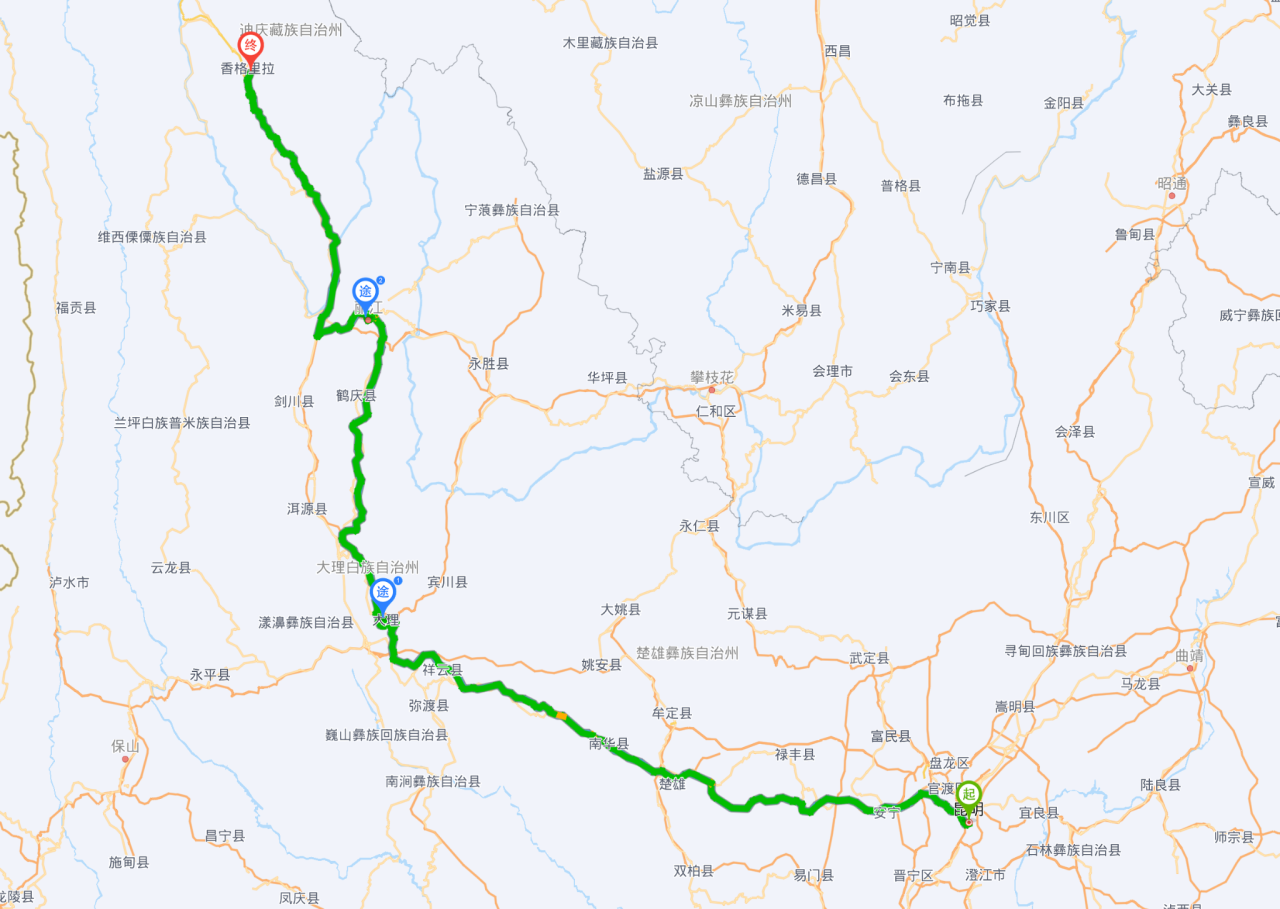
Yunnan's mild winter climate makes it a hot spot for wedding photography. Juanjuan had already been to Xishuangbanna, so we decided on the northwest Yunnan route: Kunming → Dali → Lijiang → Shangri-La — the classic "Kun-Da-Li-Xiang" line popular among Chinese travelers.
I checked the direct flights from Shanghai to Kunming. The prices during Spring Festival were reasonable. The high-speed train was cheaper by 500 RMB (about $70), but it took a grueling 12 hours — instantly ruled out. Then Juanjuan had a stroke of genius: "What if we depart on New Year's Eve, pick a flight that's still in the air past midnight, and celebrate the new year at 30,000 feet?" Without a second thought, I booked the latest flight of the day.
Over the next few days, I planned the itinerary while contacting wedding photography studios. Most studios weren't taking orders during the holiday, and those with availability within the first three days after the break were scarce. After comparing reviews across multiple platforms, we finally settled on a studio in Lijiang.
Everything was set. We just had to wait for New Year's Eve.
Itinerary Overview: 11 Days, 2,000 Kilometers — A Journey Across Four Seasons
Day 1: Shanghai Pudong → Kunming Changshui
Day 2: Dianchi Lake (Haigeng Dam, Haigeng Park) → Guandu Ancient Town → Yunnan Provincial Museum → Dounan Flower Market → Kunming South Station → Dali Station
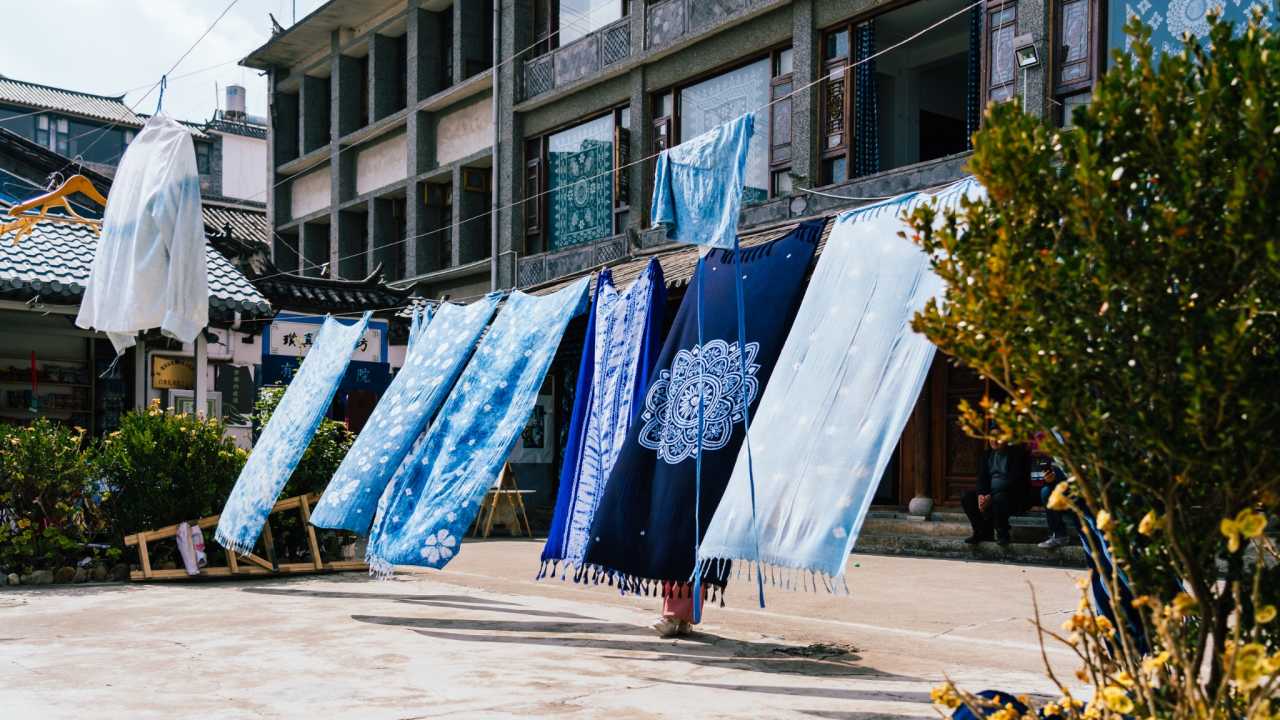
Day 3: Longkan Ancient Ferry → Zhoucheng (Puzhen Tie-Dye Museum) → Haishe → Corridor Bridge → Panxi → Caicun → Shuanglang
Day 4: Shuanglang Ancient Town → Dali-Lijiang Expressway → Lijiang
Day 5: Black Dragon Pool Park → Jade Dragon Snow Mountain (Blue Moon Valley, Spruce Meadow) → Lijiang Old Town
Day 6: Lijiang → Tiger Leaping Gorge (Upper Section) → East Ring Road → Shangri-La → Dukezong Ancient Town
Day 7: Shangri-La → Dari → Napahai Viewpoint → Moon Bay Grand Canyon → Benzilan Town → Jinsha River Big Bend → Dongzhulin Monastery → Baima Snow Mountain → Wunongding → Deqin County Town → Feilai Temple
Day 8: Feilai Temple → Deqin County Town → Shangri-La → Shangri-La Hotel
Day 9: Shangri-La Hotel → Songzanlin Monastery → Napahai Self-Drive Loop → Xili Expressway → Lijiang → Wedding Photoshoot Costume Fitting
Day 10: Wedding Photoshoot → Shuhe Ancient Town
Day 11: Jianshan Courtyard → Baisha Ancient Town → Photo Selection → Lijiang Sanyi Airport → Hefei Xinqiao → Hefei South Station → Shanghai Hongqiao Station
Route Strategy: Fly to Kunming on Day 1; spend Day 2 exploring Kunming, then take the evening high-speed train to Dali; Day 3, cycle along the Erhai Lake west coast eco-corridor, then drive to Shuanglang on the east coast for the night; Day 4, explore Shuanglang in depth before heading straight to Lijiang; Day 5, hit Jade Dragon Snow Mountain and Lijiang Old Town; Day 6, take the tourist loop to Shangri-La; Days 7-8, round trip to Deqin to see Meili Snow Mountain; Day 9, visit Songzanlin Monastery and Napahai before returning to Lijiang for the photoshoot prep; Day 10, all-day shoot; Day 11, wrap up and head home.
Kunming: The Bright Pearl of the Land of Colorful Clouds
Dianchi Lake: Meeting the Romantic Envoys from Siberia
Waking up at 8:30, I pulled back the curtains to a gray sky. The plateau clouds hung unusually low, almost within reach. Juanjuan and I joked: "Looks like Yunnan is greeting us with overcast skies."
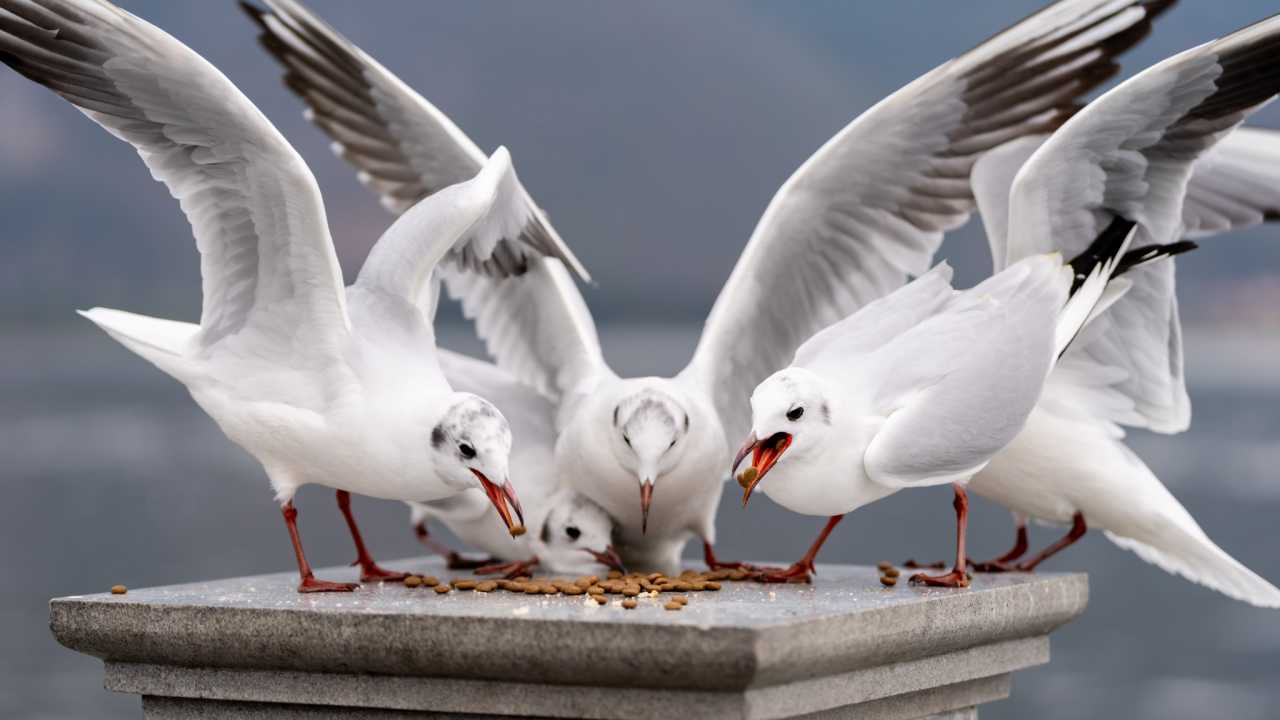
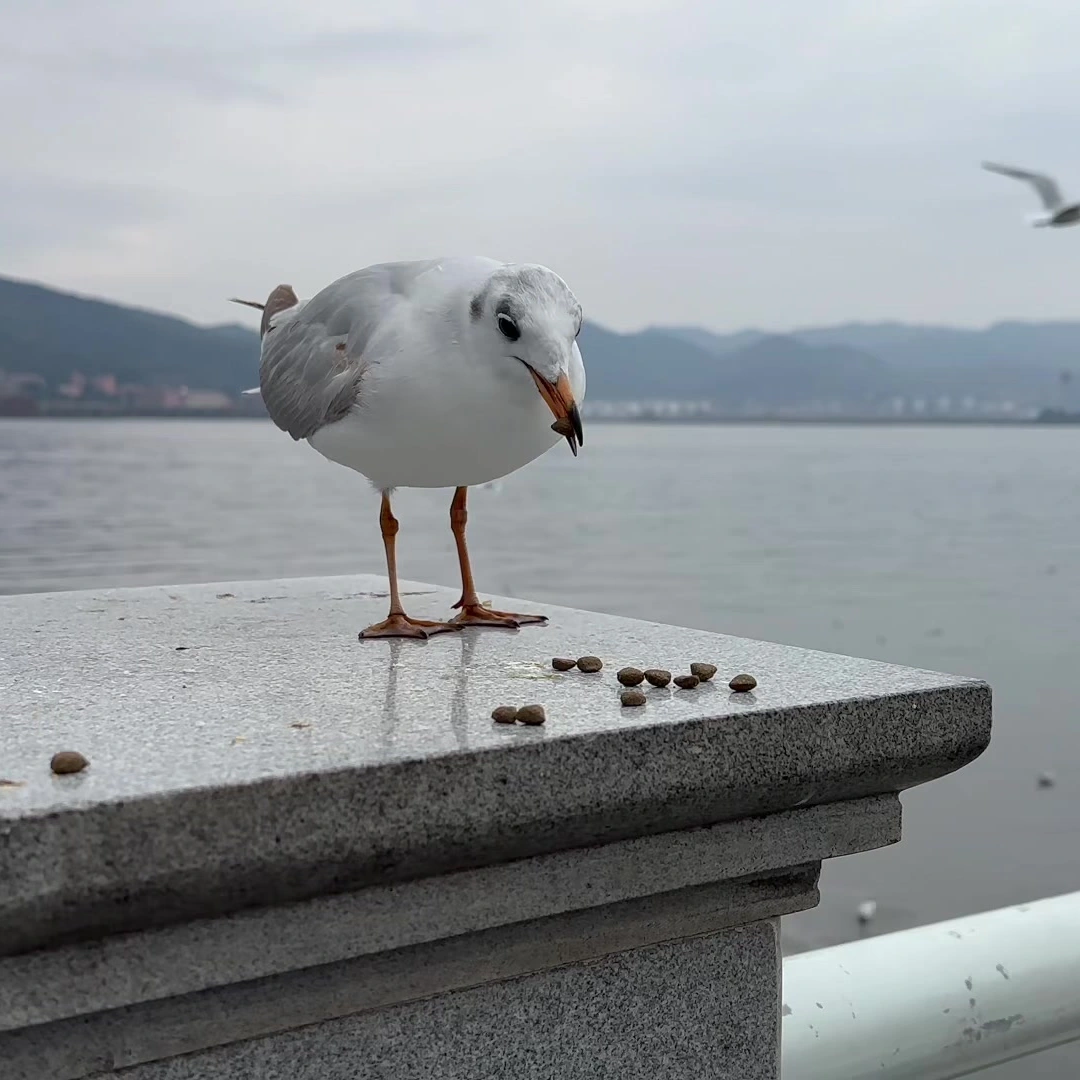
Dianchi Lake is the largest freshwater lake in Yunnan. From October to March each year, tens of thousands of black-headed gulls fly over 3,000 kilometers from Siberia to winter here. Haigeng Dam is the best spot to see these "romantic envoys."
The gulls flocked together, soaring and tracing graceful arcs through the air. They were bold enough to swoop down and peck at food held by tourists. Some people screamed while holding cakes aloft, trying to snap the perfect photo; others held pastries in their mouths, hoping for a "kissing shot" with the birds. Watching them, I thought: Humans are such interesting creatures.
We bought gull feed and scattered it on the marble ground. One cautious gull landed slowly, eyed us with its adorable round gaze, then glanced at the food. It took a timid step forward, quickly pecked up a pellet, and shuffled back. Seeing its wary posture, I chuckled: This guy is so timid — he must be the one who can't snatch bread and has to settle for scraps.
Soon, the others followed suit, swarming the feed in a frenzy of flapping wings and squawks. The scene was lively and chaotic.
Guandu Ancient Town: The Charm of a Thousand-Year-Old Town
Guandu Ancient Town wasn't originally on our itinerary — our Didi driver recommended it. Honestly, China's old towns and ancient streets all feel similar: a bustling pedestrian strip lined with shops. But since we were already there, we figured we'd take a look. The sea of people certainly gave it that festive New Year atmosphere.
We found the restaurant the driver had recommended, "Liuhuan Meishi," and ordered two bowls of 过桥米线 (crossing-the-bridge noodles). The presentation was like edible art — a bowl of broth, a serving of rice noodles, and nine small dishes of toppings that you could add or skip based on your preference.
A distant pagoda caught my eye — the Miaozhan Temple Vajra Pagoda, a landmark of Guandu Ancient Town. Built during the Ming Dynasty, it's the oldest surviving Vajra pagoda among the ten still standing in China. In front of the pagoda sat an ancient stage, where locals often gathered to chat — a scene dripping with theatrical charm.
The Provincial Museum: Unearthing Yunnan's History and Culture
Across from the south gate of Guandu Ancient Town stands the Yunnan Provincial Museum. Admission is free, but advance reservation is required. The museum has three floors: the first houses the service hall and a souvenir shop; the second features exhibits on "Ancient Yunnan," "The Light of Civilization," and "Dominance in the South"; the third floor showcases "The Buddhist Kingdom of Fragrant Incense," "Pioneering the Frontier," and "A Century of Change."
We did a quick walk-through, but the museum's crown jewel — the 银鎏金镶珠金翅鸟 (silver-gilt Garuda inlaid with pearls) — is a must-see. Located in the "Buddhist Kingdom" exhibit, this artifact dates back to the Dali Kingdom of the Song Dynasty and was unearthed in 1978 from the top of the main pagoda at the Three Pagodas of Chongsheng Temple. It's not just a work of art; it's a microcosm of Dali's history and culture.
Dounan Flower Market: Asia's Largest Flower Market
Our last stop in Kunming was Dounan Flower Market, billed as the largest flower market in all of Asia. Juanjuan said the flowers here were cheap and wanted to buy a few bunches to take with us. I thought: You're really trying to max out my luggage, aren't you?
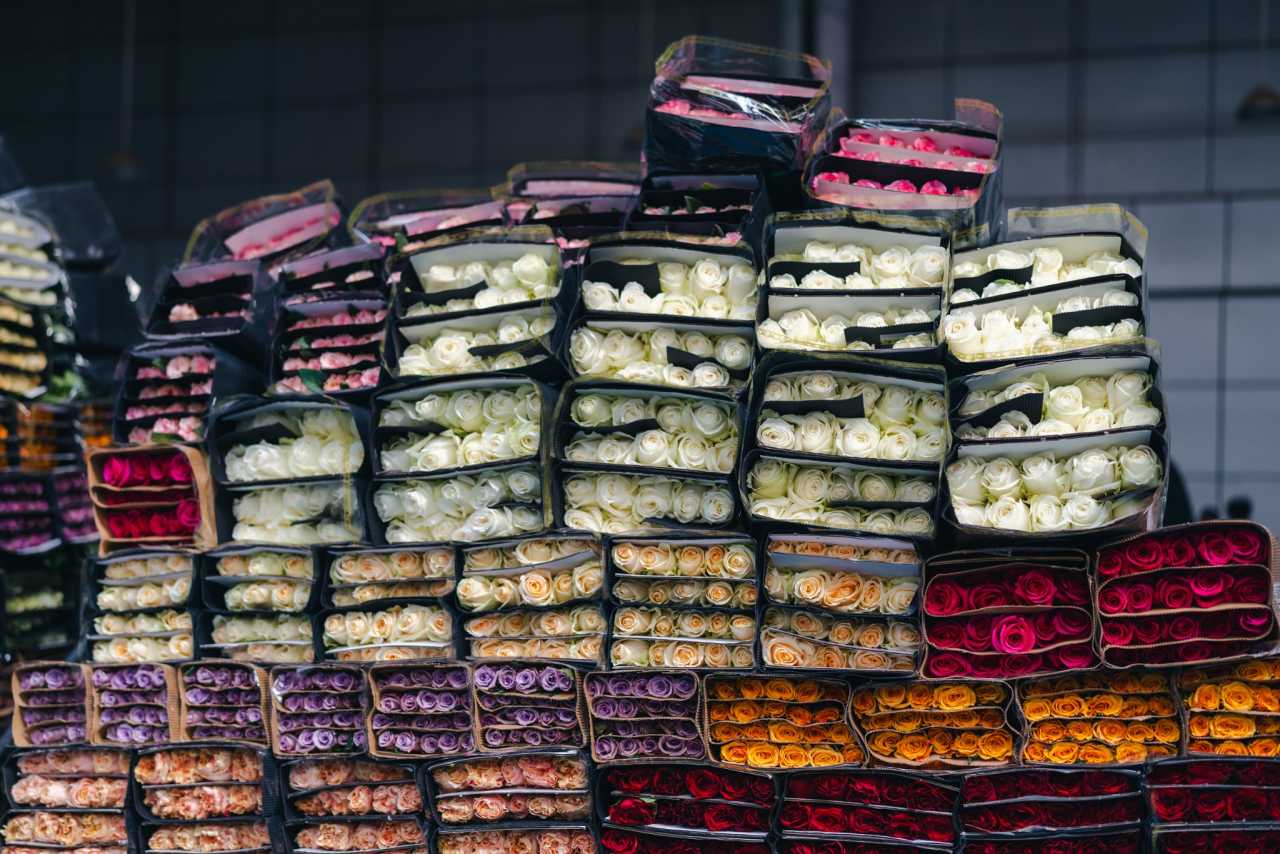
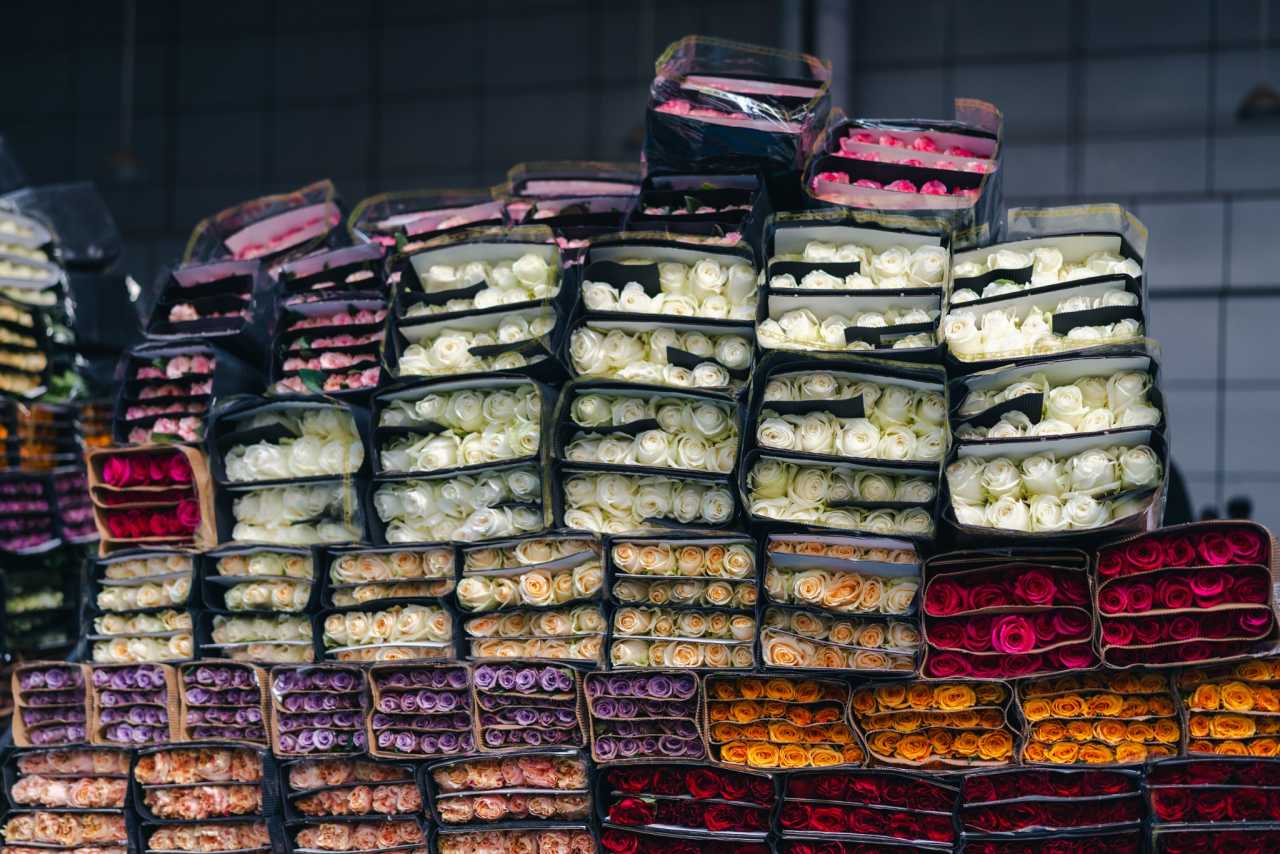
On the first floor of the main hall, piles of colorful flowers were stacked everywhere — roses, lilies, carnations, tulips, you name it. Juanjuan suggested buying a few bundles of unbloomed flowers to use as a bouquet for our wedding photoshoot ten days later. Traveling with flowers would be a hassle, but I couldn't say no. I sighed inwardly and agreed.
We spent ages picking through the sea of blossoms, finally settling on a bundle of "Glory" roses, a bundle of "Luoshen" roses, and a bundle of "Candy Mountain" roses. The first two were 30 RMB (about $4) each; the Candy Mountain, graded as A-quality, was quoted at 68 RMB ($9.50). We haggled and got all three for 128 RMB ($18) — a steal compared to any flower shop outside!
Dali · West Erhai: Cycling the Erhai Lake Eco-Corridor

Dali Bai Autonomous Prefecture is famous for its "Four Wonders": the wind of Xiaguan, the flowers of Shangguan, the snow of Cangshan Mountain, and the moon of Erhai Lake. Last year, the hit drama Meet Yourself added even more fuel to this already popular tourist destination.
We planned to spend two days in Dali — one for the west side of Erhai, one for the east. Our west-side plan involved cycling along the lake, but we reversed the typical route: watch the sunrise at Longkan Pier, then take a taxi to the farthest point, Zhoucheng, to visit the tie-dye museum. From there, we'd rent shared e-bikes at Haishe Ecological Park, ride past the Corridor Bridge, Panxi, and finally return the bikes at Caicun, then drive ourselves to Shuanglang on the east coast for the night.
Longkan: The Best Spot for Erhai Sunrise
At 7:30 in the morning, the sky was just barely light. Juanjuan said the weather looked bad and wanted to sleep more, but as the photographer, I couldn't bear to miss any scenery. I grabbed my gear and headed straight for Longkan Pier.
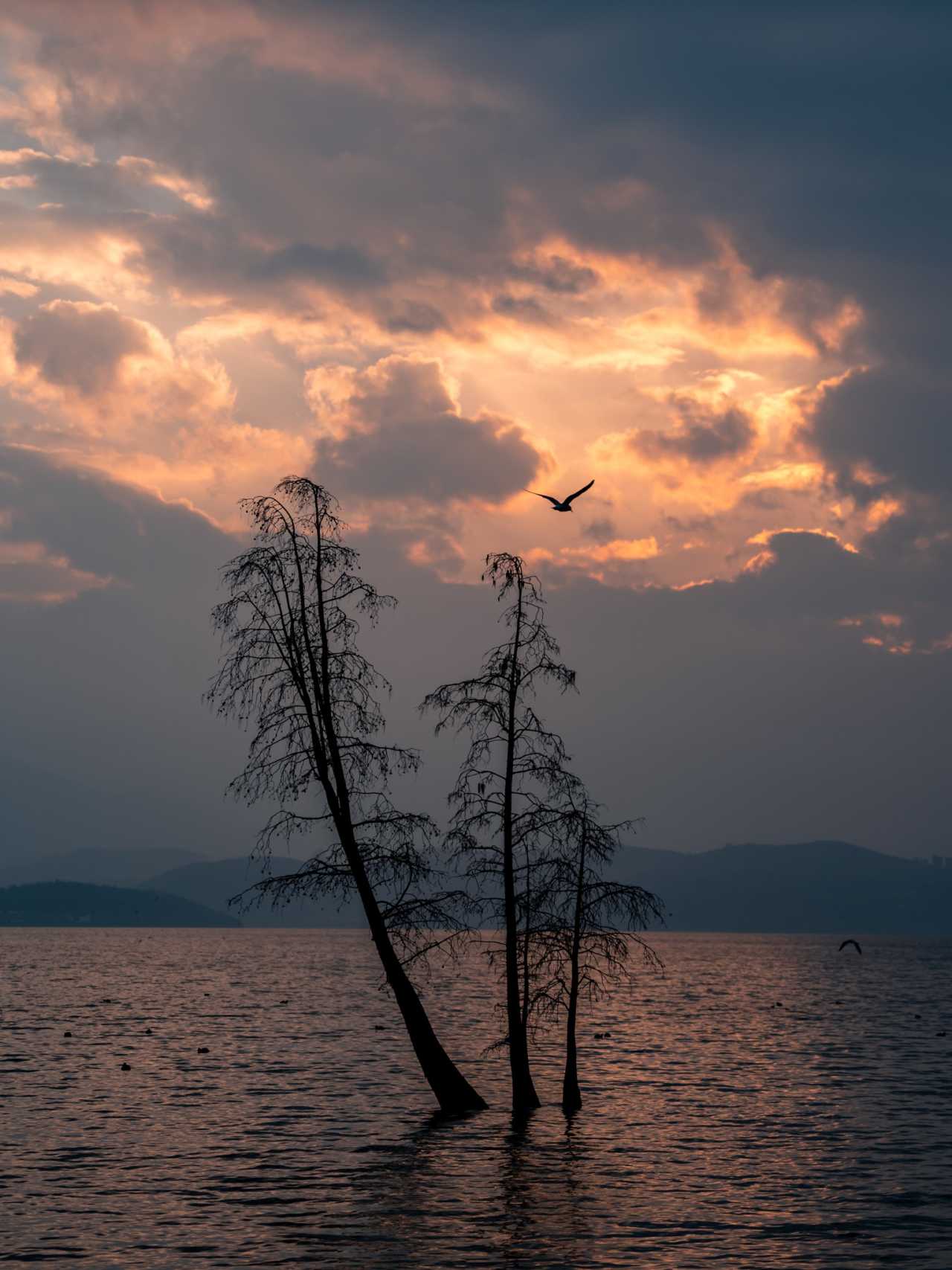
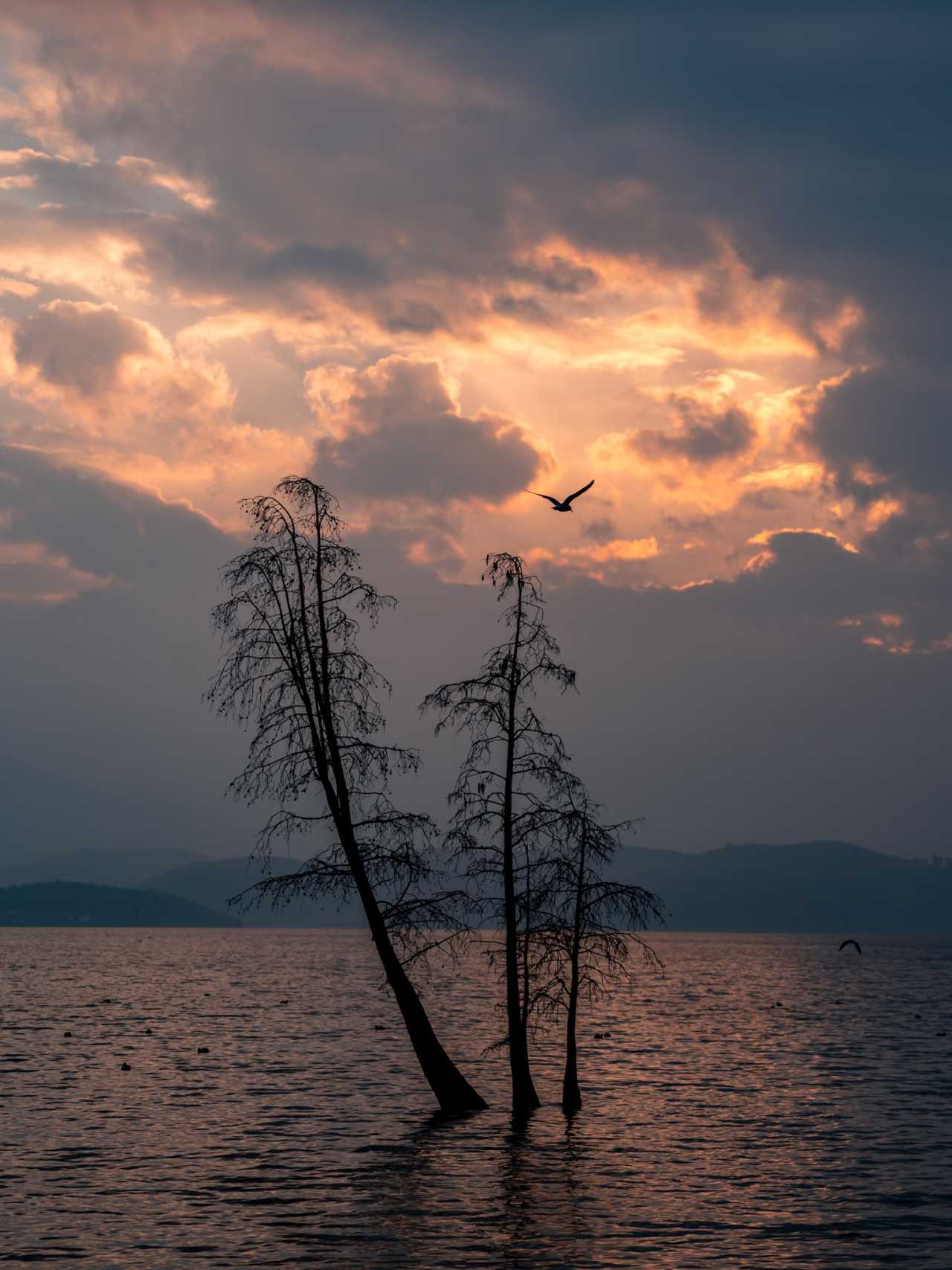
Despite the overcast sky — the sunrise was doomed to be blocked — tourists still gathered hopefully. Near the pier stood a few metasequoia trees, nicknamed "the lonely trees," striking against the empty shoreline. They seemed to stand guard silently, witnessing every sunrise and sunset.
The sunrise time passed without the sun appearing over the horizon. But in the distance, through the clouds, the sky was dyed a warm orange-red. The metasequoias, bathed in the morning glow, looked especially tall and mysterious.
If Haigeng Dam in Kunming is the best place to watch gulls, then Longkan Pier is Dali's equivalent. The gulls, sensing the new day, began circling in the air. Perhaps they knew that as the sky brightened, more tourists would arrive — and with them, a hearty breakfast.
On my way back to the guesthouse, I bought wonton soup, grilled milk, and rice noodles. I returned to wake up my "little sleepyhead" Juanjuan for breakfast.
From Longkan to Zhoucheng: A Pleasant Surprise in Traffic
The 30-kilometer drive from Longkan to Zhoucheng took us along the Dali-Lijiang Highway or National Highway G214. As soon as we hit the Dali-Lijiang First-Class Highway, I was dumbfounded — the entire road was basically at a standstill. The navigation showed severe congestion ahead. Chatting with our Didi driver, I learned that the junction ahead led to Dali's Old Town, and during the holidays, both people and cars multiplied.
Once we cleared the congested intersection, the houses thinned out, and roadside farmers were selling fresh strawberries. Juanjuan's mouth watered at the sight. She had the driver stop so she could buy a big basket. I have to say, those strawberries were huge and delicious.
The entire Dali-Lijiang Highway offered stunning scenery. Though it was winter, the roadside was full of life — wheat fields stayed lush green in the cold wind, and rapeseed flowers were in full bloom.
Lijiang: A Romantic Rendezvous Beneath the Snow Mountain
Jade Dragon Snow Mountain: The Awe of Golden Sunlight on the Peaks
Jade Dragon Snow Mountain is Lijiang's iconic landmark, and the "Golden Sunlight on the Snowy Peaks" phenomenon is a must-capture for photographers. Although our schedule didn't allow us to witness it, Blue Moon Valley and Spruce Meadow were equally breathtaking.
The water in Blue Moon Valley was crystal clear, said to be formed by melting snow from Jade Dragon Snow Mountain. Spruce Meadow offers a close-up view of the mountain — if you can't snag tickets for the upper or middle cable cars, it's the next best choice.
Lijiang Old Town: An Unavoidable Romance
Lijiang Old Town is the city's inescapable heart — not just its most vibrant area, but its defining landmark. We strolled through the ancient streets, soaking in the charm of this historic city.
Shangri-La: A Hidden Paradise on the Plateau
Tiger Leaping Gorge: So Spectacular It Makes You Forget the Traffic
The drive to Tiger Leaping Gorge was stuck in traffic for nearly two and a half hours. But the moment I laid eyes on the spectacle, it was all worth it. The Jinsha River roared through the gorge with breathtaking power and grandeur.
From Tiger Leaping Gorge to Shangri-La, there's a scenic highway with jaw-dropping views. Driving along this road, you can see canyons and snow-capped peaks, as well as colorful forests and villages.
Dukezong Ancient Town: A Sacred Site of Tibetan Buddhism
Dukezong Ancient Town is one of the best-preserved Tibetan Buddhist cultural towns in China and one of the largest Tibetan-style residential complexes. We wandered through its streets, absorbing the rich Tibetan atmosphere.
Songzanlin Monastery: Yunnan's "Little Potala Palace"
Songzanlin Monastery is known as Yunnan's Little Potala Palace and is the largest Tibetan Buddhist monastery in the province. Its golden roofs gleamed under the sun, solemn and sacred.
Napahai: A Magical Plateau Lake
Napahai is a truly magical lake — a seasonal plateau wetland in Shangri-La. It transforms with the seasons, each offering a different kind of beauty. We drove the loop around the lake, marveling at nature's artistry.
The Jinsha River Big Bend: Nature's Spontaneous Masterpiece
The Jinsha River, carving its way through mountains and valleys, wraps around the pyramid-like Rizhui Peak in a sweeping "U" shape — dramatic and breathtaking. This seemingly casual stroke of nature's brush left me in awe of its wonder.
Feilai Temple: Beauty in Disappointment
Unfortunately, a snowstorm prevented us from seeing Meili Snow Mountain from Feilai Temple. But the unexpected events along the way were equally memorable. That's the thing about travel — disappointment breeds anticipation, and missed chances promise reunions.
Shangri-La Hotel: A Five-Star Luxury Experience
The Shangri-La Hotel was my first-ever experience at a five-star property. Here, I tasted true luxury — from the spacious room to the attentive service, every detail was designed for comfort and satisfaction.
The Wedding Photoshoot: The Ultimate Purpose of This Journey
Of course, the most important part of this trip was our wedding photoshoot!
We spent an entire day with the studio in Lijiang, shooting at Blue Moon Valley beneath Jade Dragon Snow Mountain, through the ancient streets of Shuhe, and in the indoor studio. Every photo captured our love story and the beautiful memories of this journey.
Epilogue: The Harvest of the Journey
11 days, 2,000 kilometers — from Kunming to Shangri-La, from Dianchi Lake to Meili Snow Mountain. We had crossed the entirety of Yunnan.
This trip taught me something: The meaning of travel isn't about how many places you visit or how many photos you take. It's about the people you meet and the moments you share with the one you love.
From counting down the new year at 30,000 feet, to cycling along the shores of Erhai; from the fresh flowers at Dounan Market, to the solemn majesty of Songzanlin Monastery; from the roar of Tiger Leaping Gorge, to the sweeping curve of the Jinsha River — every frame is a treasure worth keeping.
And most importantly, along this journey, we used our lenses to document our very own love story.
If you're planning a wedding photoshoot in Yunnan, here are a few practical tips:
- Book Early: Wedding photography studios are in high demand during Spring Festival. Reserve at least a month in advance.
- Choose the Right Time: Yunnan's winter climate is comfortable, but temperature swings between day and night are big. Pack warm layers.
- Self-Driving is Best: The northwest Yunnan route has scattered attractions; driving gives you the most flexibility.
- DIY Flower Bouquet: Dounan Flower Market sells fresh, affordable flowers. Buy them ahead of time to use as props.
- Sunscreen is a Must: The plateau sun is intense. Sunscreen and sunglasses are non-negotiable.
May your Yunnan journey be just as full of surprises and emotions as ours was.
You should also read:
A Spiritual Journey to Lugu Lake in Lijiang: Experiencing the Legend of the Kingdom of Women! (Reproduction and Hotlinking Prohibited)
A Spiritual Journey to Lugu Lake in Lijiang: Experiencing the Legend of the Kingdom of Women! (Reproduction and Hotlinking Prohibited) Off-road自驾, food, hotel and民宿 reviews, Featured Traveler, Tank 300 owner, 200,000 km of self-driving experience. WeChat: y01294987 Ninglang Yi Autonomous County 2010.11.08 · 7 days…
Continue reading...
Hiking Around Lugu Lake: Measuring This Mysterious Highland Pearl on Foot
Hiking Around Lugu Lake: Measuring This Mysterious Highland Pearl on Foot Introduction: A Date with the Lake At the border between Yunnan and Sichuan provinces lies a highland lake embraced by mountains, embedded like a sapphire in the folds of the Hengduan mountain range. Here,…
Continue reading...
The Slow Life of Lijiang: A Soft Dream on the Yunnan-Guizhou Plateau
The Slow Life of Lijiang: A Soft Dream on the Yunnan-Guizhou Plateau Some places, just by hearing their name, stir a ripple in your heart. Lijiang is one of those names. It's not the kind of destination that demands you tick off a checklist of…
Continue reading...