From Architect to Yubeng Guide: The Other Life I Found Deep in the Snow Mountains
From Architect to Yubeng Guide: The Other Life I Found Deep in the Snow Mountains
Preface: When Insomnia Becomes a Mental Map of Mountain Trails
Have you ever had those moments—tossing and turning in bed, counting sheep until you reach a thousand and still not a wink of sleep? I used to. But now, when insomnia hits, my brain automatically plays back every single trail from Yubeng Village to Ice Lake. The crooked tree at the third switchback, which section of the climb tests your lungs the most, which rock looks like a resting yak—these details are etched into my muscle memory. I could walk them with my eyes closed.
In the summer of 2020, I worked as an outdoor trekking guide in Yubeng Village, Yunnan, for six months. Many people ask me: why would a master's graduate in architecture from the Chinese University of Hong Kong give up a respectable career as a designer to become a "high-altitude laborer" on the plateau?
My answer is simple: because it makes me happy.
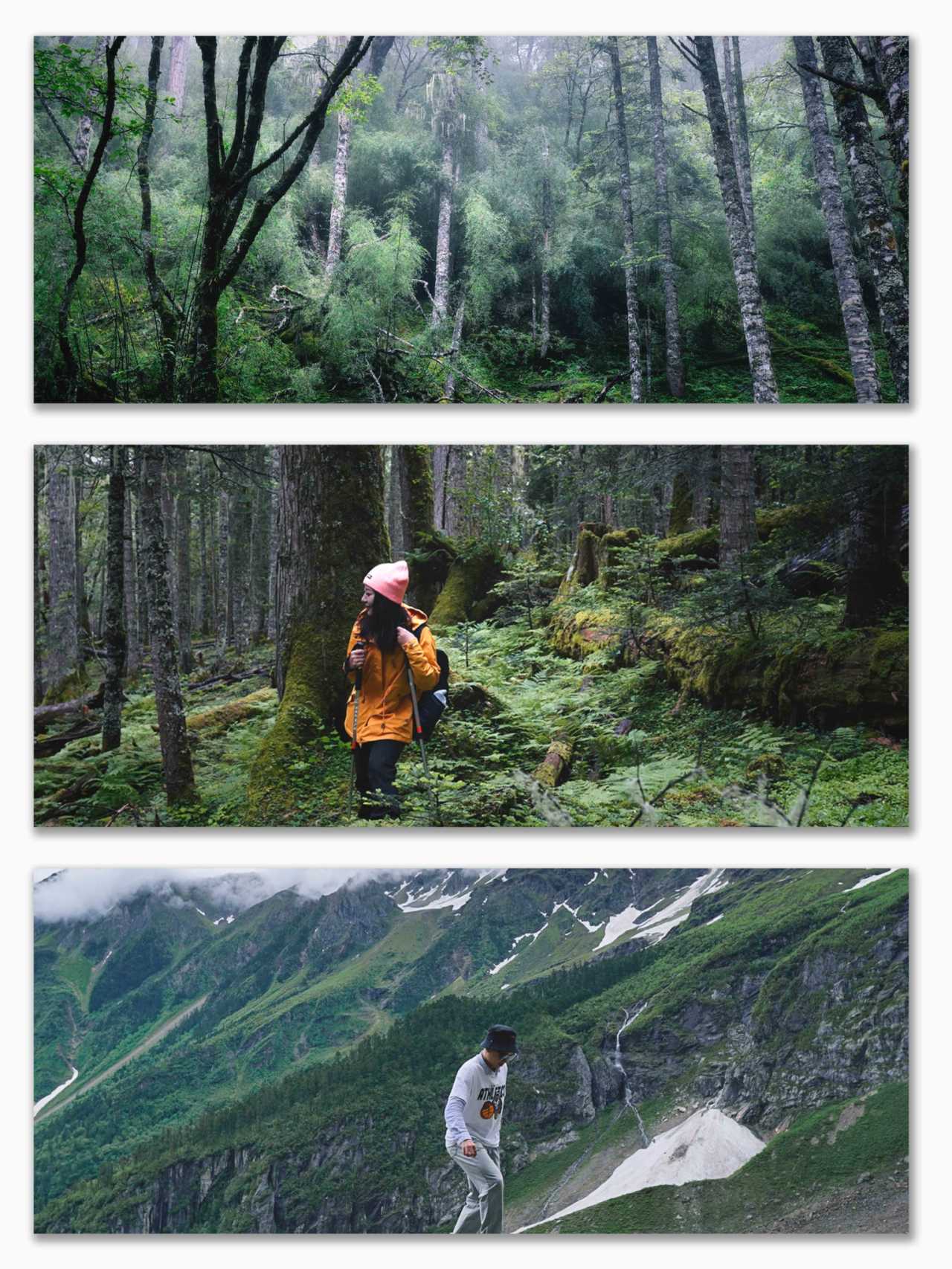
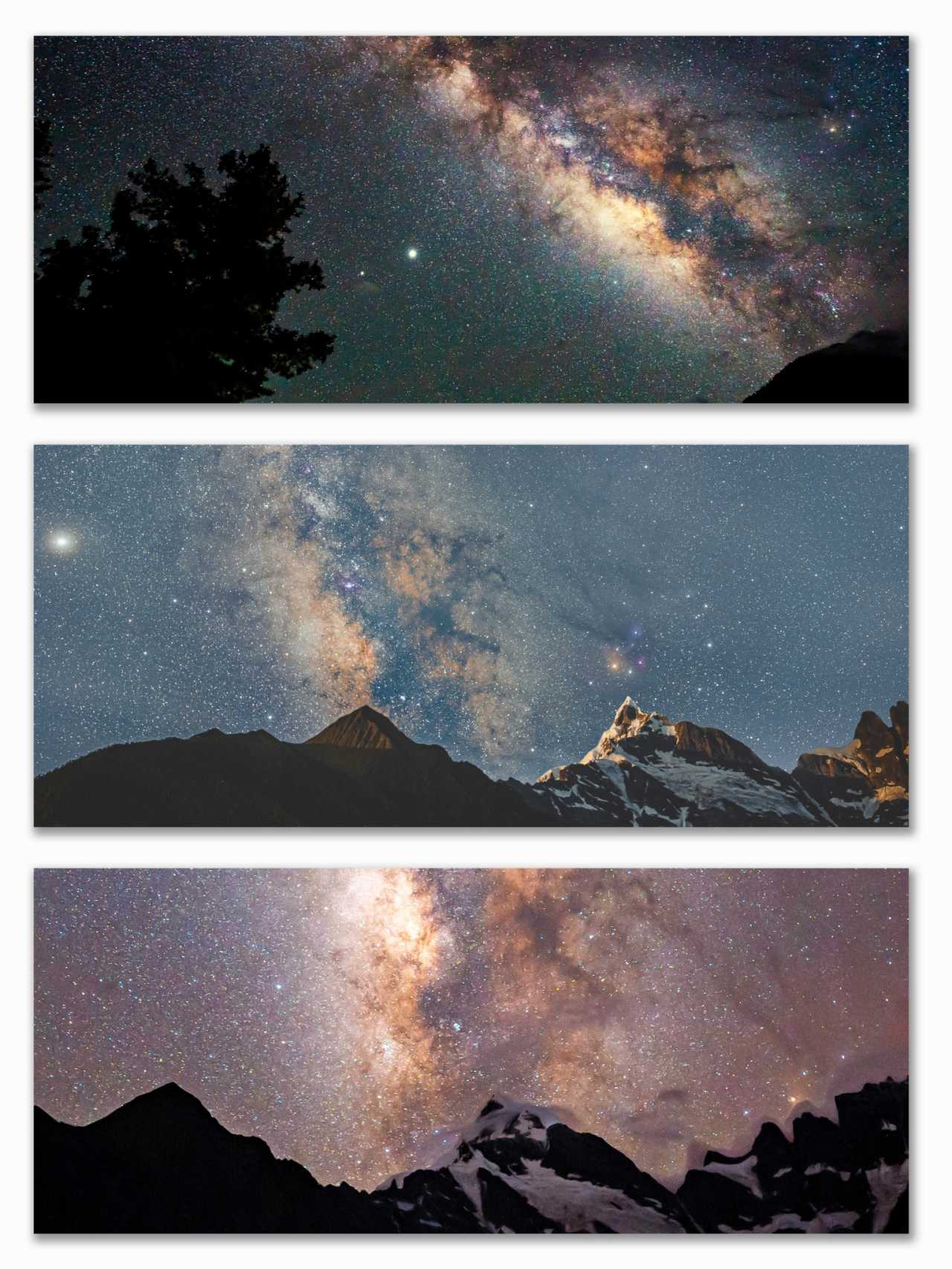
Living in the mountains, hiking under the sun every day, meeting fascinating souls each week, singing, drinking, and dreaming at the foot of sacred peaks. Eating free-range chickens raised on cordyceps and fresh yak meat, and during the rainy season, tasting just-picked matsutake sashimi. Beneath my feet, sacred land; above my head, a brilliant canopy of stars. What's wrong with this kind of healthy, organic life?
Living in Lijiang is equally wonderful. Being fed by skilled high-altitude chefs, climbing Haba Snow Mountain or exploring its northern slopes in my spare time. On weekends, borrowing a friend's car and deciding on a whim to go to Dali—and then being there, drinking and feasting in a room with a view of Erhai Lake. When I'm feeling down, I go for a run through the ancient town of Dayan, weaving through the bustling crowds. Sometimes, hiding among people feels more liberating than hiding in the deep mountains.
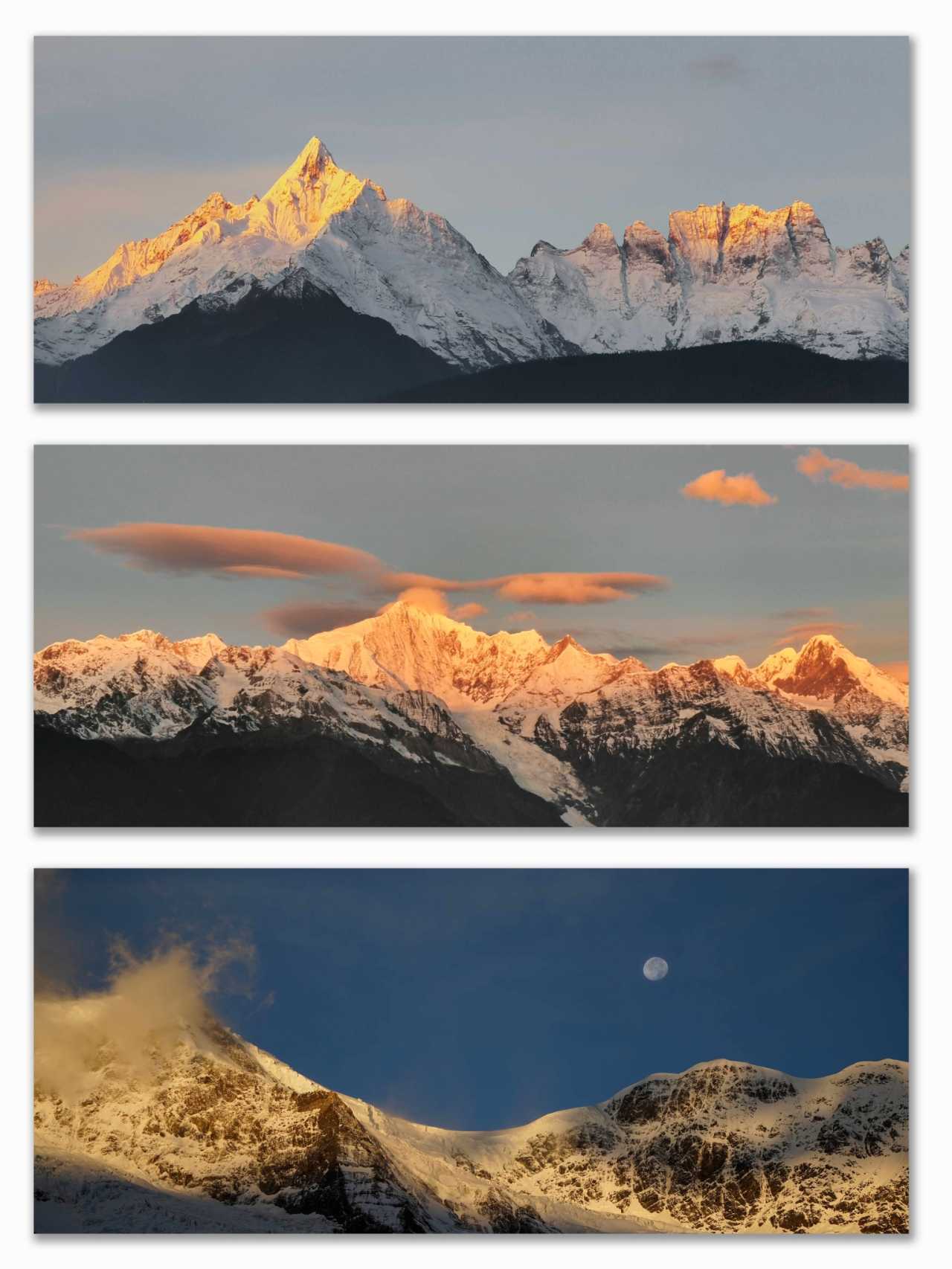
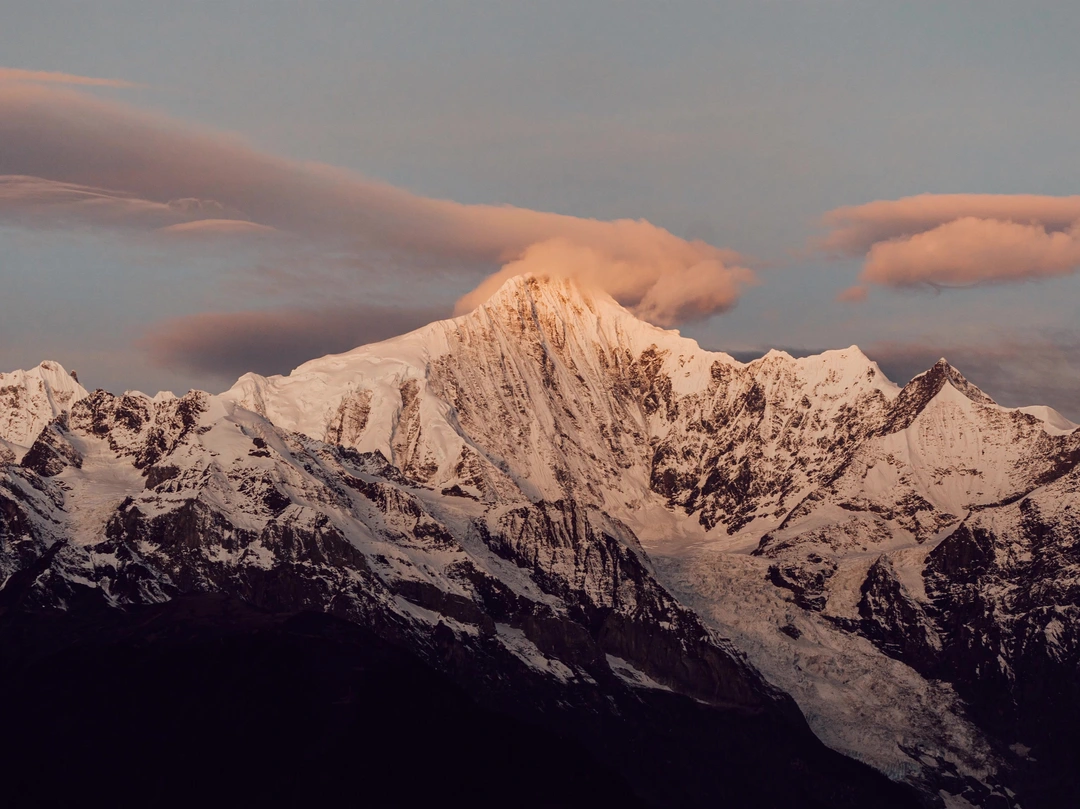
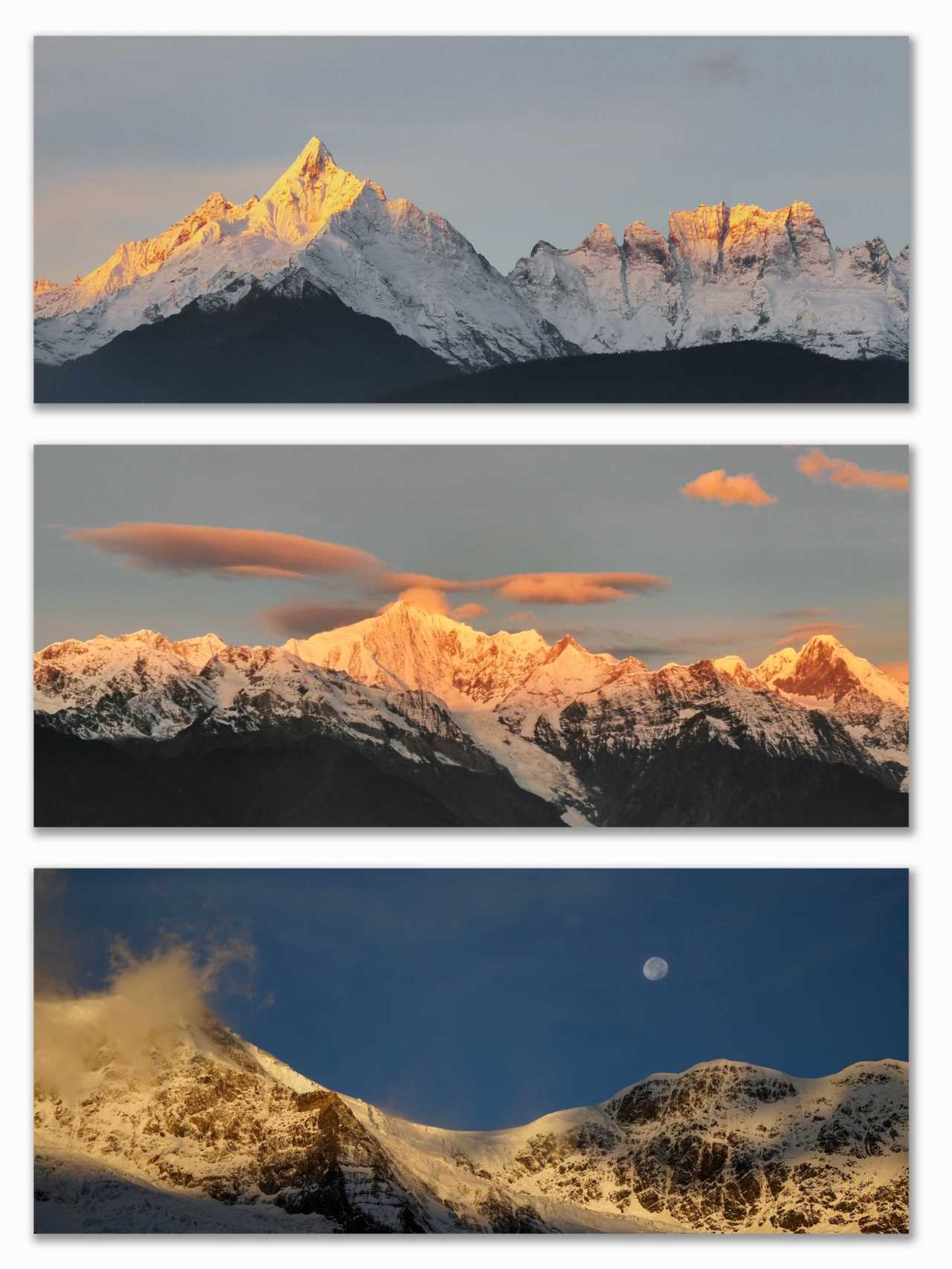
People say that seeing the "Golden Mountain" sunrise over Meili Snow Mountain brings you luck for an entire year. I've already accumulated over a decade's worth of luck. That's enough.
It's not just my calves that have grown stronger—my soul has, too.
From Blueprints to Mountain Trails
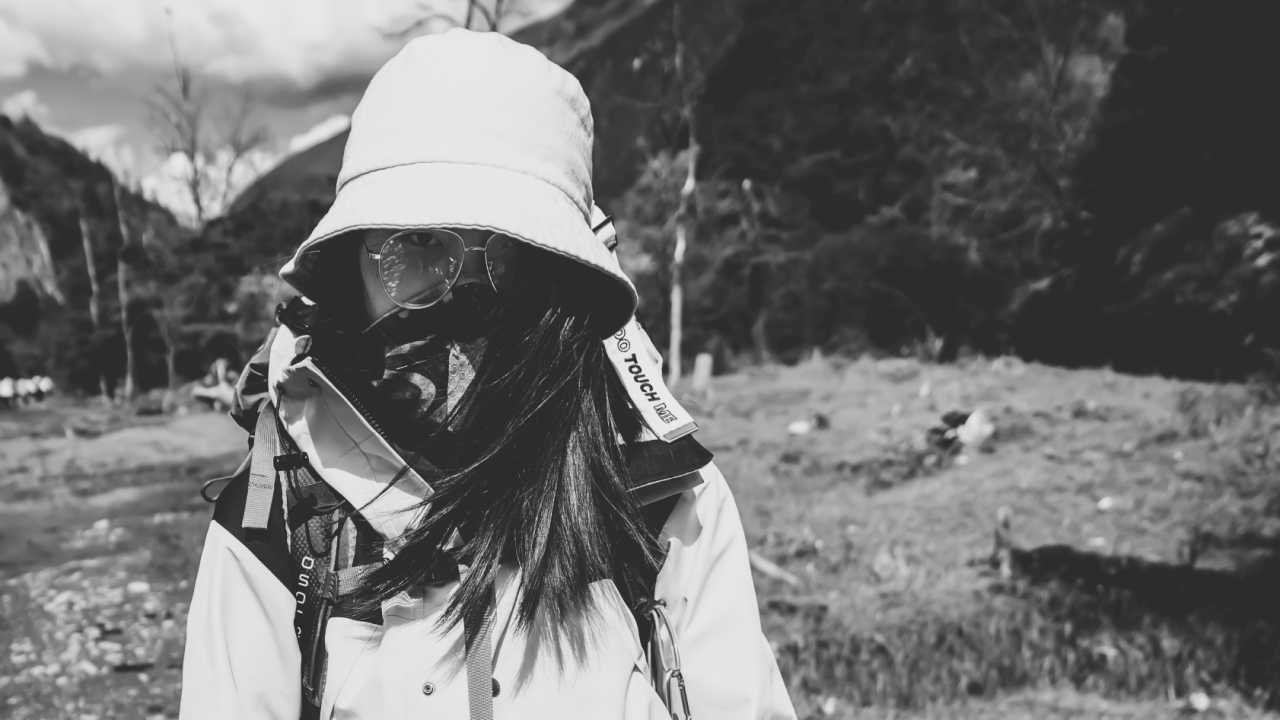
Many people are surprised when they first meet me. This bespectacled, seemingly delicate woman is the guide leading them on a trek? Honestly, I can hardly believe it myself sometimes.
Before becoming a guide, I was an architect, living the same life as everyone else in the industry—endlessly revising designs, working day and night. Anyone in the field knows how cutthroat architecture can be. For the sake of my health and my freedom, I eventually said goodbye to the profession that had consumed eight years of my youth. The first thing I did after quitting was get certified as an outdoor instructor. Then I came to Meili Snow Mountain and became a trekking guide.
The seeds of this change were actually planted back in 2018.
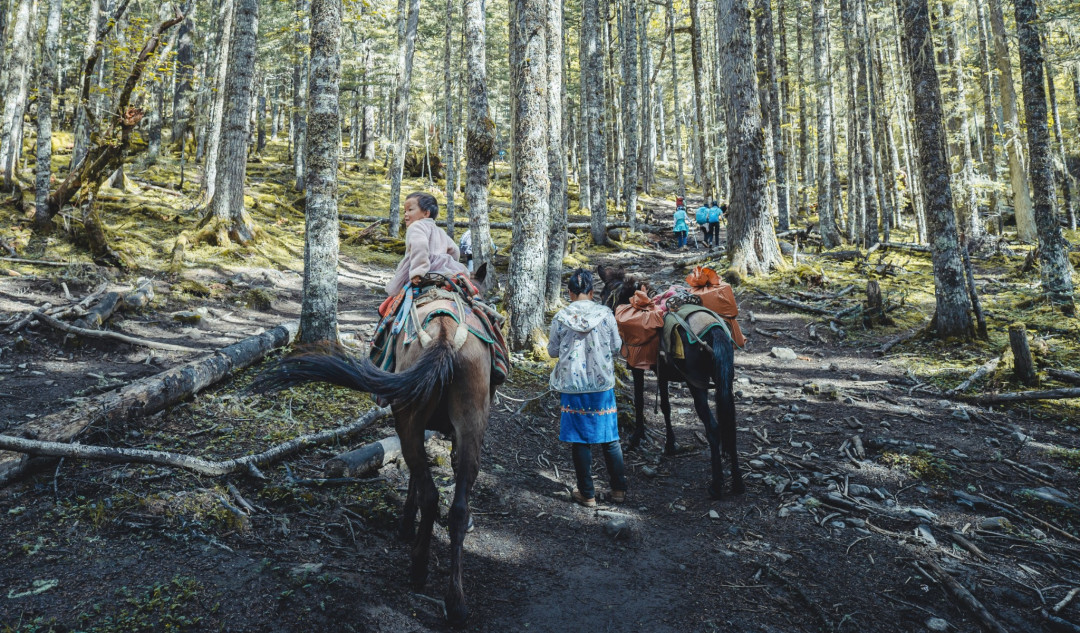
In October of that year, fresh out of grad school, I traveled solo to Yunnan. Between Daocheng and Yubeng, I chose the lesser-known latter. It was my first real high-altitude trek, my first time deep in a primeval forest, and my first experience of the freedom that comes from walking through nature. Back then, Yubeng wasn't as popular as it is now. Hidden deep in the mountains, it was virtually unknown, accessible only on foot through the ancient woods, arriving at a village encircled by peaks. Autumn in Meili was impossibly beautiful—mountains covered in red leaves, a sea of gold. The moment I crossed the pass, the view opened up before me: snow-capped peaks so close I could almost touch them, and a biting wind that sent chills of excitement down my spine. Only those who have truly experienced trekking understand that travel can be this vivid, this profound.
From that moment on, I was hopelessly hooked on the outdoors.
Some say diving is the "blue opium," skiing the "white opium." Well, trekking is the "green opium"—addictive, painful and joyful all at once.
What's the Difference Between a Trekking Guide and a Tour Guide?
People often ask me: what's the difference between an outdoor trekking guide and a regular tour guide?
The difference is huge. I don't have a tour guide license. I can't recite flashy scripts or rattle off a bunch of statistics you'll forget the moment you hear them. But I can teach you what nature has taught me—the most practical survival skills: how to coexist with the forest, how to make peace with your body, how to sense approaching danger, and how to overcome immense challenges to achieve a spiritual cleansing.
That's what trekking is all about.
Yubeng: Heaven in Your Left Hand, Yubeng in Your Right
Yubeng Village is located in northwestern Yunnan, on the border between Yunnan and Tibet, in Deqin County of the Diqing Tibetan Autonomous Prefecture. Nestled in a valley at the foot of Meili Snow Mountain, it's completely isolated from the outside world. Locals say, "Heaven in your left hand, Yubeng in your right," which can also be translated as "Eyes in heaven, body in hell." The reason is simple: the village has no road access—you can only reach it on foot or by horse. Almost everyone living here is Tibetan, though their dialect and customs differ significantly from Tibetans in other parts of Tibet.
For Tibetans, Meili Snow Mountain is a sacred peak. People living along the Yunnan-Tibet border aspire to complete the "Great Kora" (outer circuit) around Meili at least once in their lifetime, and the "Inner Kora" at least once a year. Unlike the kora around Mount Kailash, the pilgrimage to Meili doesn't require prostrating yourself every three steps. Simply trekking to the Sacred Waterfall to pray is considered devout enough. So you'll encounter everyone along the trail—from babies carried in their mothers' arms to elderly people leaning on walking sticks.
The so-called "Meili Inner Kora" pilgrimage route is essentially the Yubeng trekking route. To be precise, the traditional path taken by Tibetans starts from Nong Village, climbs up along the Yubeng River, passes through Lower Yubeng, and arrives at the Sacred Waterfall. The route commonly taken by trekkers—"enter from Xidang, exit from Nong"—is an easier, more convenient variation.
Beyond these, Meili Snow Mountain has many unexplored and even untouched秘境 (hidden realms)—the higher Sacred Lake, the Nise Pass crossing over the Five-Peak Mountain, the eastern and northern slopes of Meili—which are slowly gaining attention.
Spending enough time in the village, you'll hear all kinds of legends. Like how Yubeng was discovered: supposedly in the early 2000s, the owner of Yubeng's first guesthouse, "The Trekker's Home," was a local villager. One day, while hunting, his arrow missed its target and accidentally killed a fellow villager. He was sent to prison, where he learned about the outside world, discovered trekking, and realized that his own hometown was what outsiders called paradise. After his release, he returned home and opened "The Trekker's Home," setting up simple beds over a cowshed to host the first trekkers who made the arduous journey.
Those who visited Yubeng in the early days know how rough the conditions were: a cowshed downstairs, dormitory beds upstairs, a wooden house with gaps in the walls, and the constant clanging of cowbells all night long. But the beauty was pure and unadulterated—no streetlights, no light pollution whatsoever. Just look up, and you'd see an unobstructed, pristine starry sky.
Today, Yubeng has been incorporated into the Meili Snow Mountain scenic area. It's becoming more famous, but the outdoor spirit is fading, and more and more people come just to "stroll around the park." In recent years, a few luxury wilderness hotels have opened. You can even drive in and out without trekking at all, staying a few days at the foot of the snow mountain as a vacation. That's fine, too.
Classic Itinerary: Six Days into the Heart of Meili
A typical Yubeng trek takes 6-7 days:
D1: Lijiang → Feilai Temple (approx. 5-hour drive) D2: Feilai Temple for sunrise over the Golden Mountain → Xidang Hot Spring → 12km trek (approx. 8 hours) to Yubeng Village (or take a scenic area off-road vehicle, 45 minutes) D3: Upper Yubeng → Ice Lake (round trip), 13km, approx. 10 hours D4: Upper Yubeng → Sacred Waterfall (round trip), 14km, approx. 8 hours D5: Upper Yubeng → Nong Grand Canyon trek (14km, approx. 6 hours) → Nong Parking Lot → Shangri-La D6: Shangri-La → Lijiang
A few practical tips: - Most people start from Lijiang, as transportation is more convenient. Shangri-La also has an airport, which is closer to Feilai Temple and can save you 1-2 days - Both Lijiang and Shangri-La have buses to Deqin County town. You can also share a ride or charter a car - Feilai Temple observation deck is the best spot to watch the sunrise over the Golden Mountain, and there are many hotels nearby - The trek starts at Xidang Hot Spring, north of Xidang Village. You can charter a car or share a ride from Feilai Temple - Trips to Ice Lake or Sacred Waterfall are round trips. If you get tired, you can turn back halfway. Stay at the same guesthouse in the village for three nights - If you take a vehicle out of the village, you won't pass through Nong Grand Canyon; you'll have to return the same way via Xidang - Want to challenge the Sacred Lake? The wild trail is steep and slippery, and there are bears. It's best to hire a local guide
Short on time? A three-day express version is also possible: - D1: Shangri-La → Feilai Temple → Xidang Hot Spring → off-road vehicle into Yubeng Village (approx. 9 hours) - D2: Light trek to Sacred Waterfall, then take a vehicle out and stay at Feilai Temple - D3: Watch the sunrise over the Golden Mountain, then return to Shangri-La
But honestly, a superficial visit doesn't do Yubeng justice. Save more time and come to just relax.
Trekking Safety Rules: Don't Play Games with Your Life
Yubeng is getting more and more popular, and with it come more and more people just "strolling around the park." But outdoor trekking is fundamentally different from ordinary tourism. In my six months as a guide, I've seen too many reckless newcomers—people hiking in leather shoes, digging up wild mushrooms, ignoring warnings and venturing onto avalanche-prone ice fields, only to lose their lives.
The outdoors is full of hidden dangers: bad weather, hypothermia, falls, attacks by wild animals, poisoning... Trekking is not a spur-of-the-moment decision. It tests your wilderness survival skills. You need sufficient safety knowledge, a thorough understanding of the destination's geography and weather, and enough experience and equipment. If you're not sure, hire a professional outdoor guide.
The following safety rules apply not just to Yubeng, but to all beginner-level treks:
1. Do your research beforehand — Even if you don't like reading, at least read this safety guide
2. Download offline maps — Baidu Maps won't work in the mountains. Use apps like "Two-Step Road" (两步路) or "Six Feet" (六只脚) to download offline maps of the Yubeng trekking routes
3. Wear appropriate outdoor gear (see equipment list at the end)
4. Manage your time - I often encounter people heading up the mountain when I'm coming down—starting at 3 PM, even with sunset at 8 PM, that's only five hours round trip. The trail to Ice Lake is easy to get lost on even during the day, let alone at night. And there really are bears in the mountains! - Check sunrise and sunset times before you go. The round trip to Ice Lake takes at least 8-9 hours. I recommend starting no later than 9 AM and leaving Ice Lake by 2:30 PM at the latest. The trail to Sacred Waterfall is easier, so use your judgment
5. Beware of avalanches - Some views are best admired from a distance. Climbing onto a hanging ice cap just for a photo? Please don't, and stop others from doing it. The glaciers on the cliffs above Ice Lake and Sacred Waterfall are prone to breaking off. Large avalanches occur every year, and people lose their lives. If you don't respect nature, nature won't respect your life
6. Don't pick mushrooms, eat wild fruits, or touch wild animals - Even Yunnan locals can't always tell which mushrooms are poisonous. What makes you think "this one looks safe"? No restaurant in the village will cook mushrooms you've picked, and some mushrooms are toxic just to touch - Yunnan locals will crush any mushroom they don't recognize to prevent accidental picking, but many poisonous mushrooms are actually endangered species. Just take a photo—don't pick or破坏 (damage) them - The chipmunks in Yubeng are friendly, but they bite
7. Stay on established trails — Follow the trash cans, power poles, and trail markers. There are always people who think they're smart, saying "Follow me, this is a shortcut," or ignoring "No Entry" signs. Don't be that person, and don't trust or follow them
8. Signal issues — Cell reception in the mountains is spotty. China Telecom > China Mobile > China Unicom > China Unicom + iPhone
9. Hire a guide when necessary
10. Don't rely on luck — The guy who died on the glacier was thinking the same thing
11. High-altitude sun protection is crucial — Sunburn will make your skin peel and age you faster. Sunscreen + physical protection (sun hat, buff, sunglasses). Forget the umbrella
12. LNT (Leave No Trace) — I'm not asking you to pick up trash along the trail, but you must take all your own garbage with you!
D1: Crossing the Land of Three Parallel Rivers
The road from Lijiang to Feilai Temple is the famous 214 Yunnan-Tibet Highway, winding through the Hengduan Mountains and crossing the region of the Three Parallel Rivers. It follows the Jinsha River northwest, passing by Jade Dragon Snow Mountain, Haba Snow Mountain, Tiger Leaping Gorge, Moon Bay... Along the way, you'll often see cyclists, trekkers, and even people pushing carts pretending to trek. But the most common sight is yaks—slowly, leisurely lying in the middle of the road, sunbathing, completely unafraid of oncoming traffic. If you're driving, be very careful. If you're a passenger, buckle up.
Jinsha River Big Bend: Admission 30 RMB Baima Snow Mountain: Free
Today, you'll pass the highest point of the entire journey—the Baima Snow Mountain Pass at 4,292 meters. Although the Baima Tunnel is faster, I still recommend taking the detour over Baima Snow Mountain. It adds an hour to the drive, but you'll see the wonder of snow in August and the stunning fir forests in October. However, in winter, the road may be closed due to heavy snow.
In late autumn, Baima Snow Mountain is a sea of gold. The winding mountain road climbs upward, with snow-capped peaks and glaciers right beside you. The view is no less spectacular than Meili, and even surpasses Switzerland or Canada. This is a national nature reserve, not a tourist attraction, so tourism is prohibited. But a driver told me he's seen clouded leopards, sambar deer, and Yunnan golden monkeys here.
Even more fascinating: the town of Benzilan we just passed, at an altitude below 2,300 meters, is in the dry-hot valley of the Jinsha River, with fruit trees lining the roads. Then, at Baima Snow Mountain, it's covered in snow. In just 60 kilometers, you experience a vertical climate shift from subtropical to warm temperate, cool temperate, and finally frigid zone. The vegetation and scenery change in an instant.
Wunongding: Admission 60 RMB. For photography enthusiasts, this is actually the best place to shoot Meili—the mountains look more majestic, and the foreground is richer. But as the name suggests, this place is often shrouded in thick fog. Good weather is a rare blessing.
Feilai Temple Observation Deck: Admission 60 RMB. As you exit the Deqin Tunnel, the silhouette of Meili appears before you. Deqin County town lies in the valley below. The most famous viewing spot for Meili is at Feilai Temple, about ten kilometers away. But is Feilai Temple actually a temple?
What tourists call "Feilai Temple" isn't the temple itself, but a small commercial area around the observation deck. The real Feilai Temple is about 2 kilometers down the road, with over 400 years of history. From stories told by my group members, I've pieced together a legend about its origin: apparently, the original site chosen for the temple wasn't where it stands now. But on the night before construction was to begin, something miraculous happened—the workers found all the prepared building materials had vanished, mysteriously transported to the current location, with the beams already in place. Everyone believed it was a divine sign, so they decided to build there and renamed it "Feilai Temple" (Temple That Flew Here).
Meili Snow Mountain: The Abode of the Gods
"Meili Snow Mountain is a giant ice cream made from 175 ml of milk and 250 ml of fresh cream, with two tablespoons of sugar added." — from the film Kora
A few common misconceptions to clear up: - Meili Snow Mountain is the name of a mountain range, similar to "the Himalayas." The highest peak is called Kawagebo, equivalent to "Mount Everest" - Kawagebo is also known as "Prince Snow Mountain," so Meili is often called the "Thirteen Peaks of the Prince." But it doesn't actually consist of exactly thirteen peaks—"thirteen" is an auspicious number in Tibetan - Yubeng Village is in a valley, so you can only see Goddess Peak, Five-Peak Mountain, and General Peak. You can't see the main peak, Kawagebo
About faith: Meili Snow Mountain is a sacred mountain in the hearts of Tibetans. Due to religious reasons, the Chinese government has officially banned climbing Kawagebo. Although its altitude is just over 6,000 meters, it remains an unclimbed virgin peak. I recommend a documentary called Kawagebo, which recounts the tragic 1990 Sino-Japanese joint expedition—11 Japanese and 6 Chinese climbers all perished on the glacier. Years later, their clothing was found on the Mingyong Glacier. It's one of the worst disasters in international mountaineering history. Kawagebo proved its divine power, and to respect Tibetan beliefs, the government enacted a ban on climbing.
The Yubeng villagers who hosted that expedition are still running horse caravan businesses on the trail to Ice Lake. The boss's son told me he doesn't dare spend the night at Xiaonong Base Camp—he says it feels eerie, with crying sounds everywhere. Maybe he's joking, maybe not. "Xiaonong" means "a gathering place for ten million troops" in Tibetan. Legend has it that every Year of the Sheep, the divine soldiers and generals under Kawagebo's command assemble here for inspection, rewards, and punishments. These are stories that people born here have heard since childhood.
When you're in Tibetan territory, follow local customs and respect local beliefs. Don't point at the sacred mountains. You can gesture with your palm facing up to show respect. And watch your words. Tibetans call the sacred mountain "Ani" Kawagebo—"Ani" means "grandfather," a term of respect.
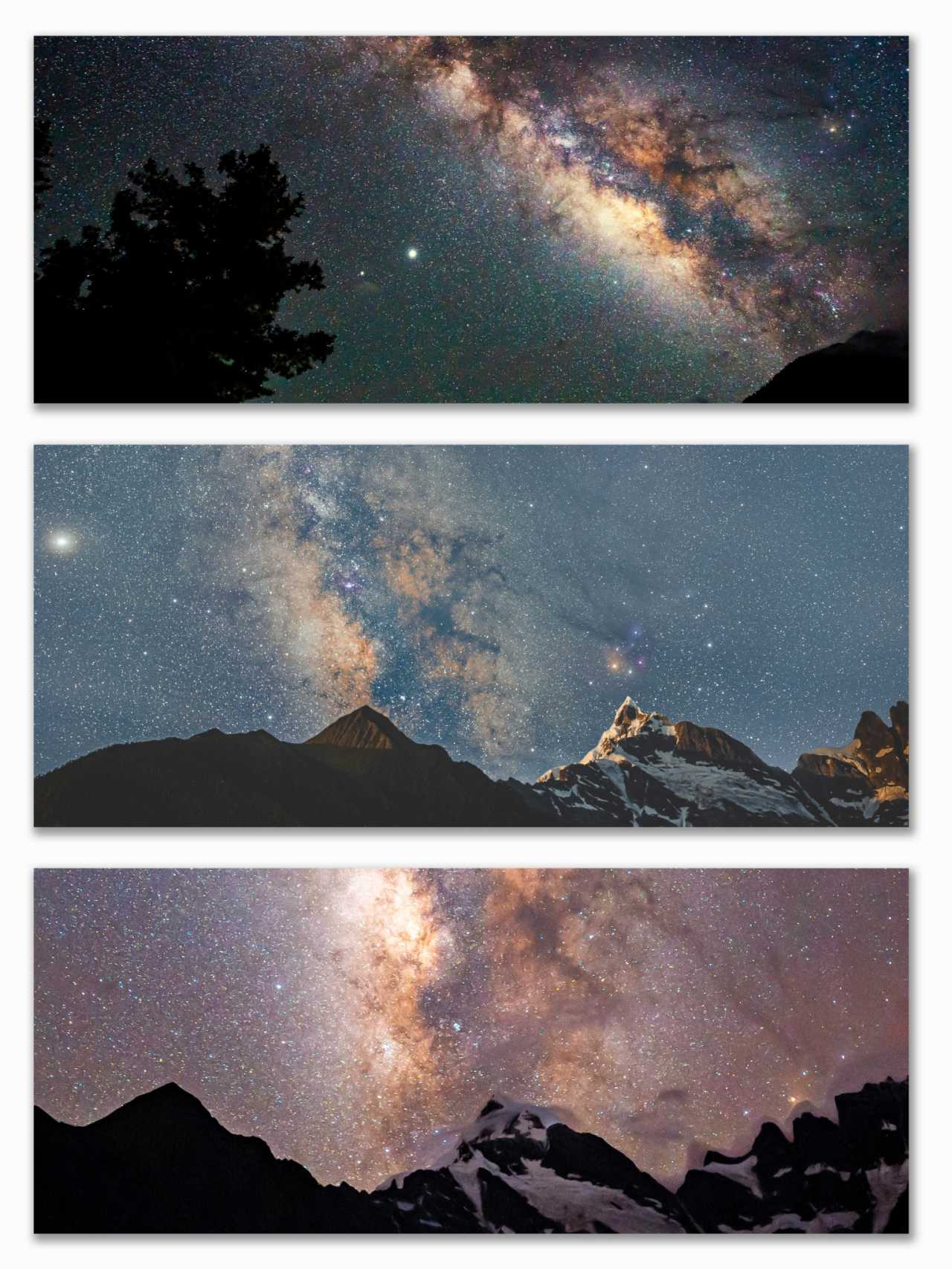
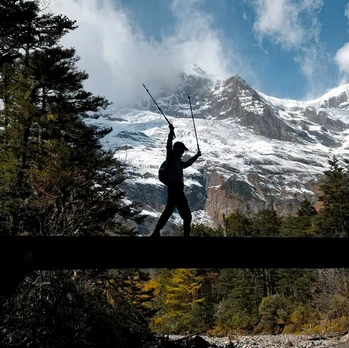
At night, the Feilai Temple observation deck is closed. If you walk a short distance down the 214 highway, you can get a shot of the snow mountain under the stars. No tripod? A wall can serve as a makeshift one.
D2: Morning of the Golden Mountain
For tourists, the Feilai Temple observation deck is where you wait for the sunrise over the Golden Mountain. For Tibetans, it's a sacred site for worshipping the thirteen peaks of Meili. In one corner of the deck is a white incense-burning stove. Pilgrims arrive early to circle the white stupa, their murmured prayers blending with the sunrise, accompanied by the scent of burning pine and cypress branches. Your heart calms along with it.
The observation deck and hotels will have daily sunrise time tables. You can also use apps like "巧摄现场版" (Sun Surveyor) to monitor. Arrive before the blue hour to secure a good spot. Some hotels have their own viewing decks, which are also good options. If you don't see the Golden Mountain sunrise, don't worry—you might still catch it from the village, just from a different angle.
Trekking Start: Xidang Hot Spring
Day 2 Itinerary: Feilai Temple → Xidang Hot Spring → Qingsong Teahouse → Bayi Teahouse → Nanzheng First Pass → Nanzheng Pass → Upper Yubeng Village (1-hour drive, 12 km trek, approx. 8 hours)
Feilai Temple to Xidang: The shuttle vans usually park on the 214 highway by the entrance to the observation deck. Turn left off the highway into the canyon, where a red river rushes by—yesterday it was the Jinsha River; today it's the Lancang River. The Lancang is quite a "cosmopolitan" river—once it leaves China, it becomes the Mekong, which nourishes Thailand, Vietnam, and other Southeast Asian countries. The third river in the Three Parallel Rivers region—the Nu River (Salween)—flows on the other side of Meili, along the Bingchacha route in Tibet.
Mingyong Glacier: Descend all the way to the river to reach the Meili Snow Mountain scenic area ticket office. After crossing the river, turn left for Yubeng, right for Mingyong Glacier. Due to climate change, the glacier's tongue has been retreating year by year, losing its beautiful color. Nowadays, people prefer Yubeng for glacier views. Mingyong feels a bit like a "has-been internet celebrity."
Xidang Hot Spring: Passing through Rongzong Village and Xidang Village, you'll notice these villages have a lot of fruit trees, and a wide variety at that. They even grow grapes—because of the favorable climate and altitude, the grapes here are sold to French wine companies for winemaking. And yes, Xidang really does have hot springs.
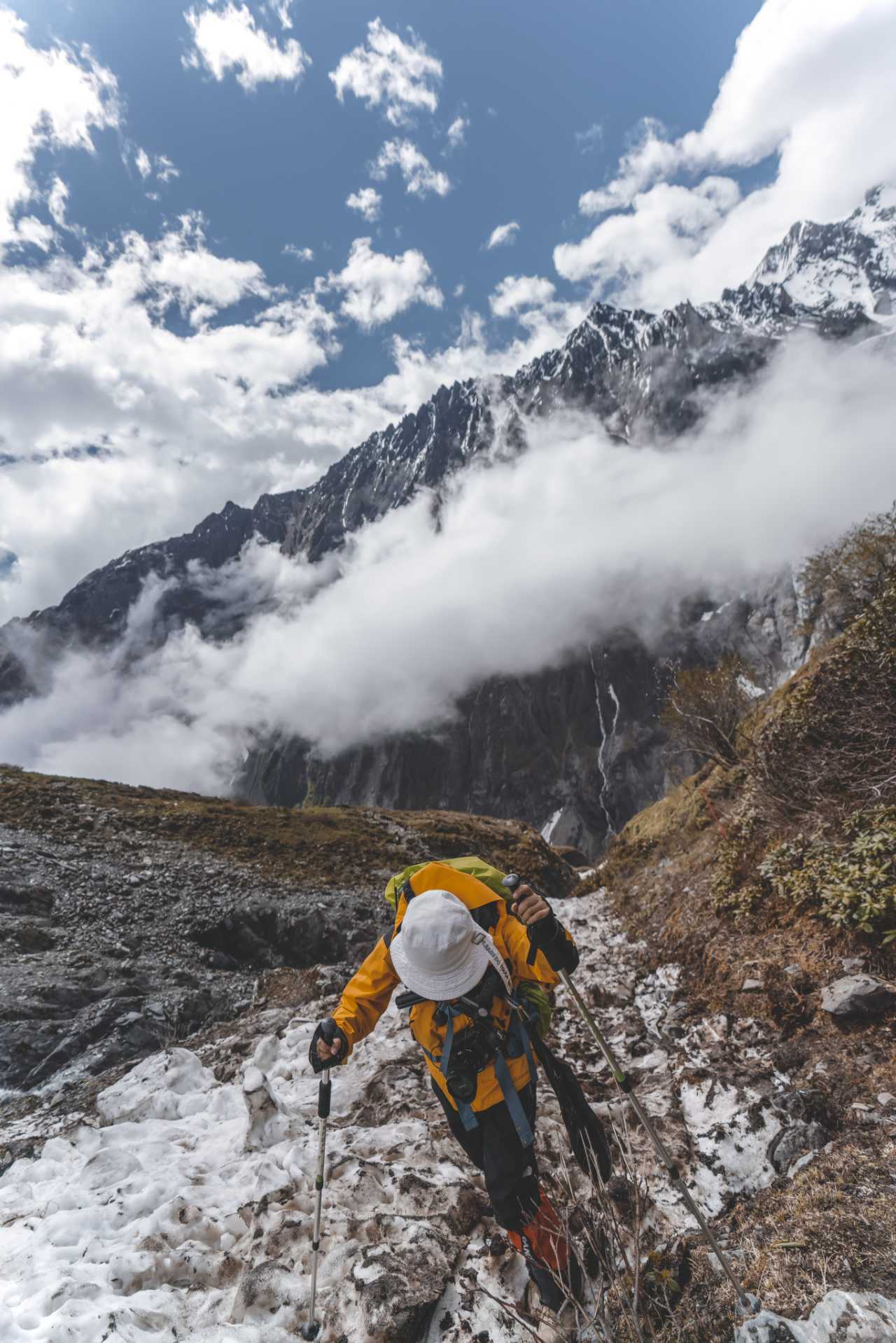
Arrive at the Xidang Hot Spring parking lot, the starting point of the trek. It begins with a steep, continuous uphill climb of about 7 km. After crossing the pass, it's all downhill for about 4 km into Yubeng Village. Mentally prepare yourself. Check your sunscreen, hat, water bottle, and trekking poles. Warm up your wrists and ankles, and get ready to go!
About off-road vehicles and backpack portage: - If you want to take the scenic area off-road vehicle, buy your ticket here - Today's 14 km involves carrying all your own gear (the next two days will be light day hikes). If you really can't manage, you can pay the off-road vehicle team to transport your backpack. But it will be dropped off at the village entrance, so you'll still have to carry it for the last 2 km
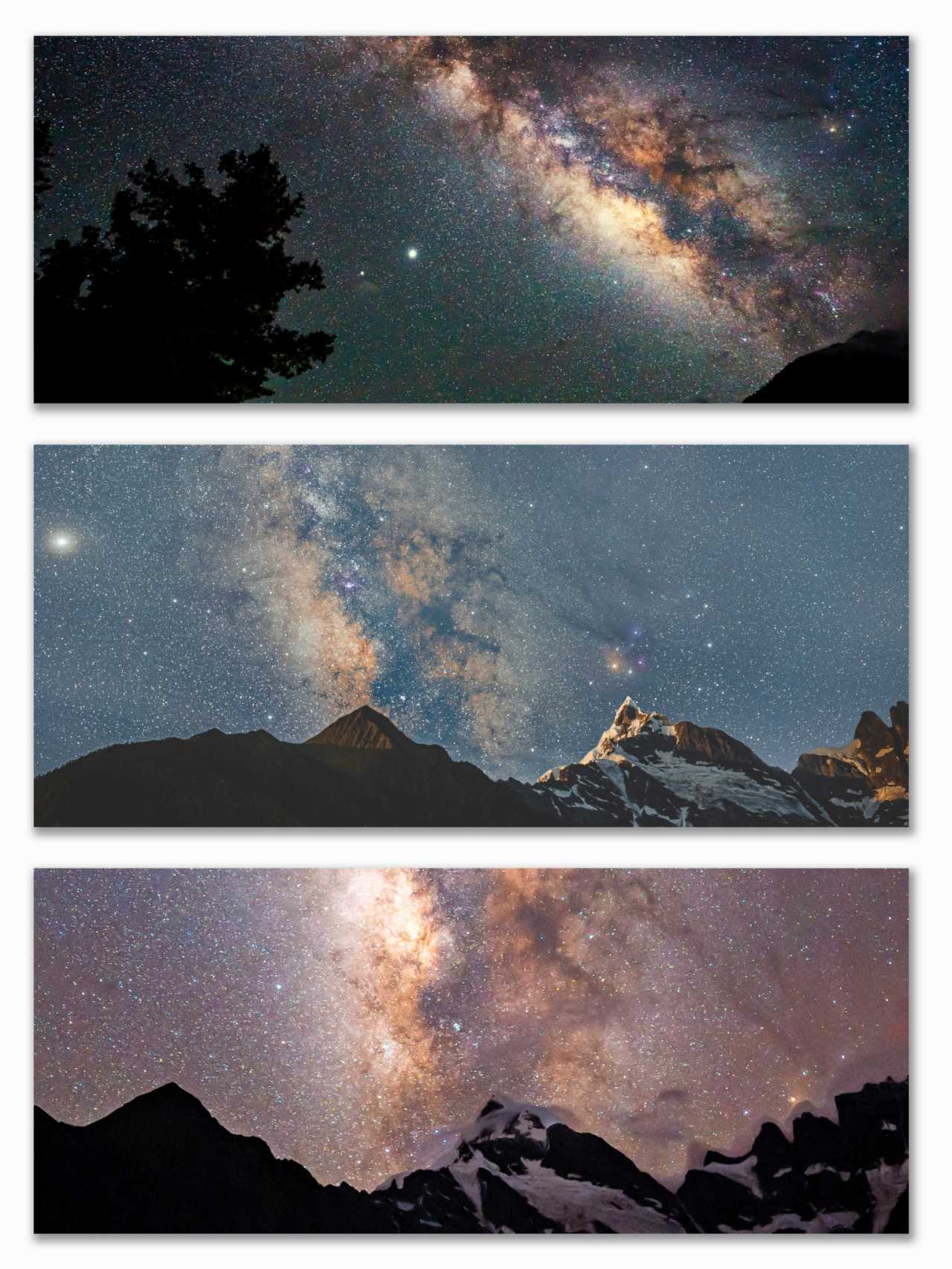
Using trekking poles: Trekking poles reduce pressure on your knees and help with balance on descents. Experienced hikers might say you don't need poles for Yubeng, but beginners and people with weak knees should use two. Proper use greatly reduces fatigue—lengthen them for uphill, shorten for downhill. Remove the rubber tips so the metal ends can dig into the ground; otherwise, they'll slip.
Tree Beard: As you gain altitude, you'll see a green, spiderweb-like plant hanging from the trees, swaying in the wind. This is usnea, also known as "old man's beard" or "tree beard." It has no roots—it literally grows in the air. It's a natural air quality indicator, only found in places with pure air. So don't worry about altitude sickness or lack of oxygen—you can see how abundant the oxygen is here. Usnea is also a favorite food of the Yunnan golden monkey.
The road into the mountains is now paved, and most of the trail follows the off-road vehicle track. There are plenty of rest pavilions along the way, but constantly dodging vehicles and the dust they kick up is annoying. Building the road was the villagers' wish—it makes life easier and is more convenient for tourists. But for trekkers seeking pristine nature, it's like a scar on a beautiful face. Scenic area development rarely prioritizes "protection." Who knows when the decision-makers will change their mindset.
Supply points along the way: - Qingsong Teahouse: Not always open. They have barley butter tea, which you can try for the novelty. Next to it is the only decent public toilet in the mountains—after this, it's just "five-star, unobstructed, natural toilets" - Bayi Teahouse: Also known as "Instant Noodle Prince's Hut." They have more than just instant noodles; the Instant Noodle Prince's fried rice is pretty good, too. Many people can't get used to the salted butter tea, but you must try the yak milk—pure, naturally sweet, no additives, and not at all gamey - There's one last supply point before the descent from Nanzheng Pass, which has also opened a guesthouse
Nanzheng Pass: When you see the sign for "Nanzheng First Pass," it means the long uphill climb is finally over—from here on, it's just flat ground and downhill. You can "take off"! But there's another pass, Nanzheng Pass, after the first one—though it's just a flat stretch. As you emerge from the vast forest, the view opens up, and the snow mountain appears before you. Don't get too lost in the scenery just yet. Walk about 300 meters further downhill, and on your left, there's a hidden little pavilion—the view from there is truly spectacular! Distant mountains, waterfalls, Ice Lake, Sacred Waterfall, and the long, narrow Nong Grand Canyon, all laid out before you.
A continuous range of snow-capped mountains, dark green forests, and hidden within the canyon—a flat, open treasure of a place. You can't help but marvel: this must be the paradise that Kawagebo keeps for itself.
The people of Yubeng call themselves "Lubeng."
A Final Thought
My six months as a guide taught me more than just how to lead a group. They taught me how to coexist with nature and how to make peace with myself. Every time I led a team, watching the members go from exhausted to reluctant to leave, I could feel the transformation that trekking brings—it strips away the restlessness of city life and helps you find inner peace.
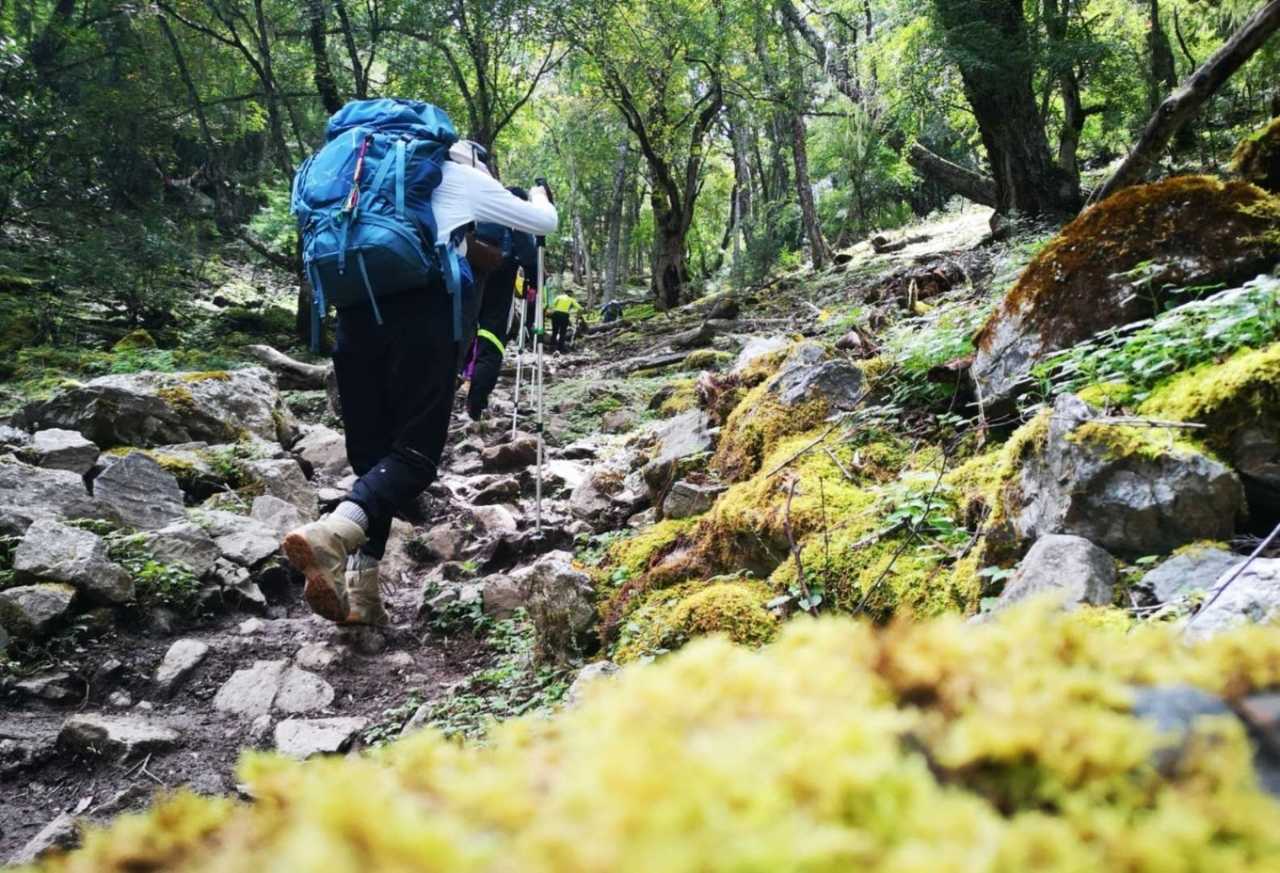
If you want to experience this transformation for yourself, remember three things: respect nature, be prepared, and enjoy the journey.
Yubeng won't disappoint you. Meili won't disappoint you. Trekking won't disappoint you.
But most importantly—don't disappoint yourself.
You should also read:

Two Girls' Graduation Trip: Dali and Shuanglang – A Poetic Farewell to Mountains and Sea
Two Girls' Graduation Trip: Dali and Shuanglang – A Poetic Farewell to Mountains and Sea Preface: Catching the Tail of Youth, Heading South During our senior year of college, my roommate and I – two girls studying in Beijing – decided to bid farewell to…
Continue reading...
Cloud Travelogue · Dali of Wind, Flowers, Snow, and Moon: A Three-Day, Two-Night Journey of a Free Spirit
Cloud Travelogue · Dali of Wind, Flowers, Snow, and Moon: A Three-Day, Two-Night Journey of a Free Spirit I am a cultured female foodie with a touch of rogue charm. I slung on my backpack, took my lover's hand, and set off on a spontaneous…
Continue reading...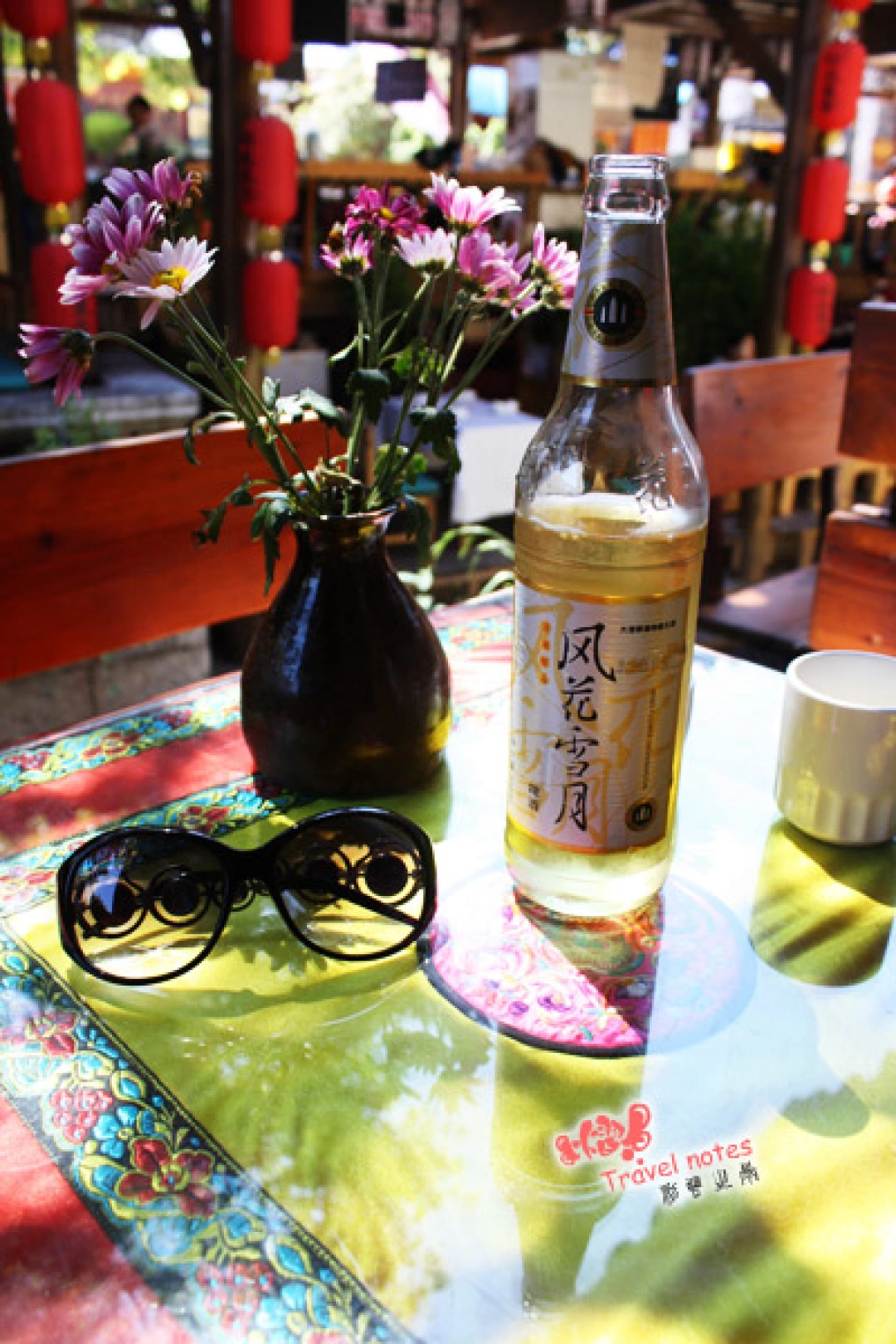
The Slow Life of Lijiang: A Soft Dream on the Yunnan-Guizhou Plateau
The Slow Life of Lijiang: A Soft Dream on the Yunnan-Guizhou Plateau Some places, just by hearing their name, stir a ripple in your heart. Lijiang is one of those names. It's not the kind of destination that demands you tick off a checklist of…
Continue reading...