From Jinan to Shangri-La: A Middle-Aged Woman's Solo Journey and Reconciliation
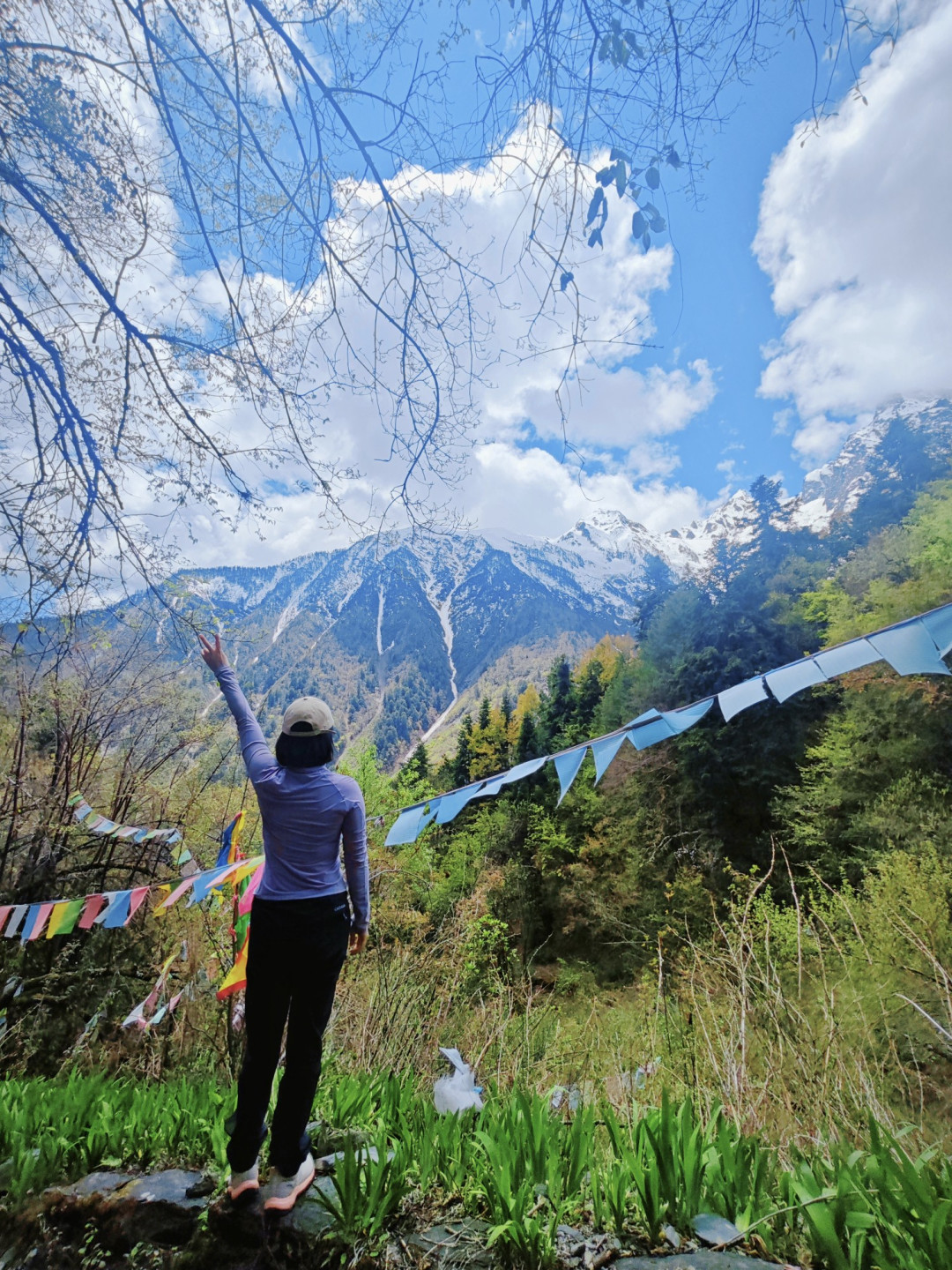
From Jinan to Shangri-La: A Middle-Aged Woman's Solo Journey and Reconciliation
Departure: A Journey Woven with Impulse and Reason
On the first day of May, I set out from Jinan, heading for Shangri-La—a place often called "heaven on earth."
There were no direct flights, as I'd discovered during my pre-trip research. After comparing several options, I chose the most economical route: fly to Lijiang first, then transfer to the high-speed rail. Compared to flying directly to Diqing, this saved me over a thousand yuan without sacrificing much time. From Lijiang Sanyi Airport to the high-speed rail station, it's only a thirty-minute taxi ride, and a first-class ticket costs just one hundred yuan—quite a good deal.
To be honest, half of my impulse for this trip came from a longing for distant places, and the other half from a guesthouse. When I stumbled upon "Yanlu Dukezong Ancient Town Branch" on Ctrip, I was drawn in by its first-floor combination of a bookstore and a bar—Utopia Bookstore paired with Tiaohai Bar. That pairing made me book my flight on the spot. The guesthouse didn't disappoint. The butler was warm and attentive, and the room was clean and tidy. My only complaint was the poor soundproofing; the young guests staying there were full of energy, still chatting loudly past eleven o'clock.
Lying in bed, listening to the laughter and conversation downstairs, I suddenly asked myself: When I was in my twenties, why did I never travel alone? Was it just because I was broke? Or was it because, back then, we always thought there would be plenty of time?
Shangri-La: First Encounters with the Highland's Tenderness
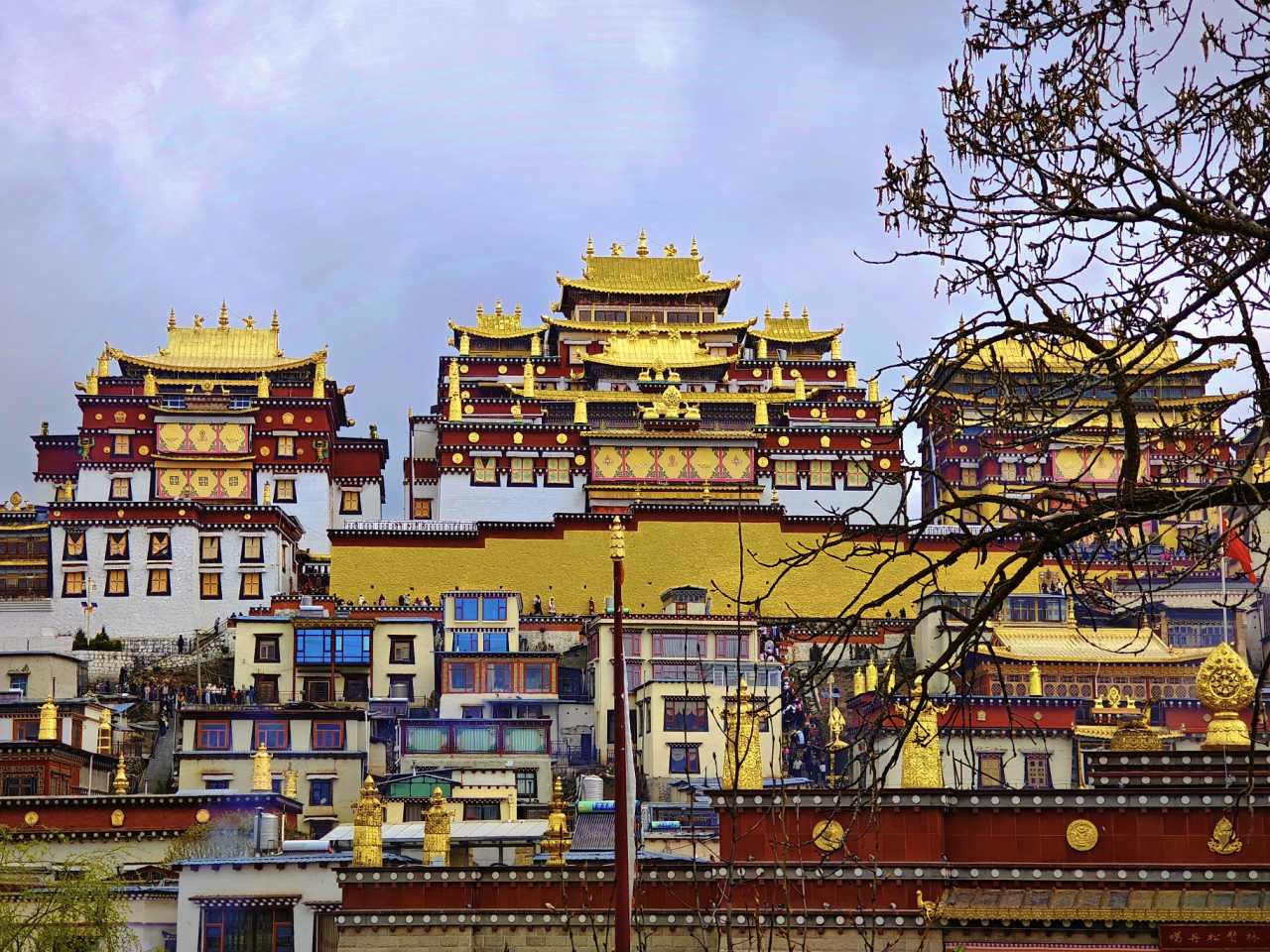
Morning Light at Songzanlin Monastery

The next day, I went to Songzanlin Monastery. Just three kilometers from the city center, this temple is known as the "Little Potala Palace." The visit took only about an hour, and a bus from the entrance goes directly back to Dukezong Ancient Town.
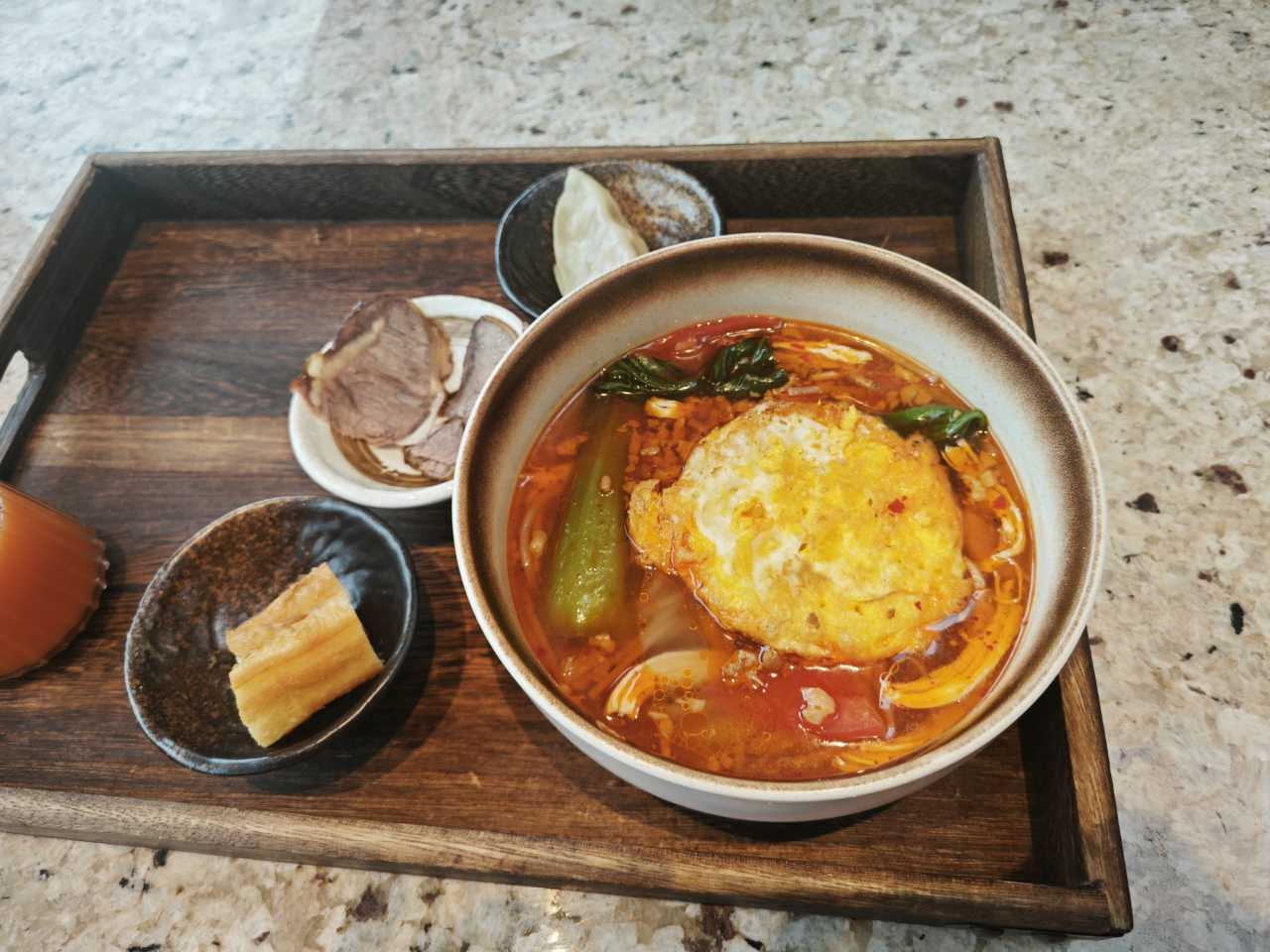
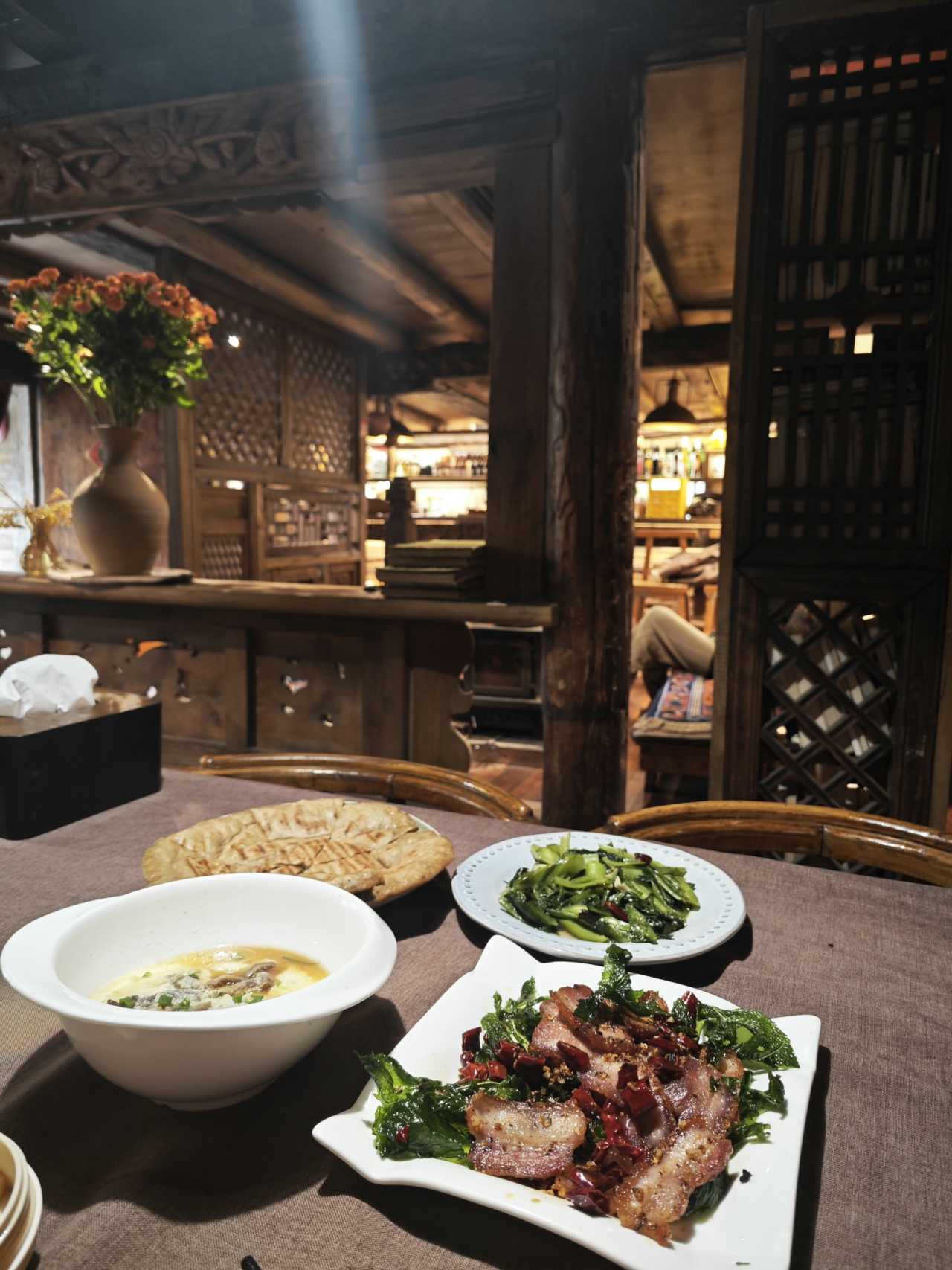
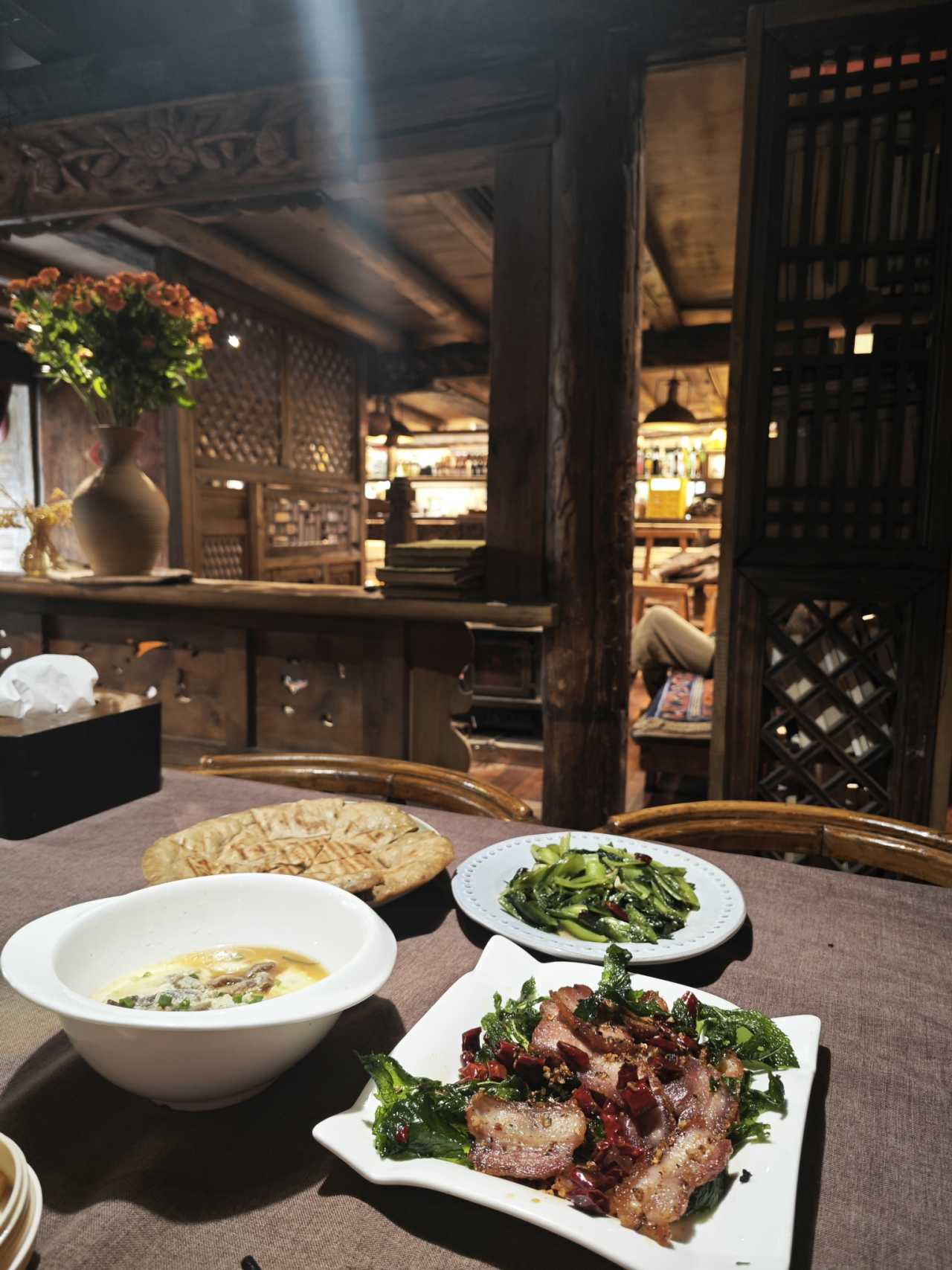
For lunch, I went to a restaurant called "Xiaocai Coffee," recommended by the guesthouse owner. The Tibetan-style roasted pork belly was fragrant and flavorful, loaded with fresh mint leaves that added a refreshing twist. The mushroom steamed egg custard was silky and smooth, and I tried highland barley cake for the first time. I wanted to try every dish, but I only had one stomach. At that moment, I missed my son terribly—he's a little foodie too. If he were here, we could share all these delights together.
After lunch, I browsed a shop specializing in yak wool scarves and rugs. I bought a yak wool scarf for the upcoming Yubeng trek—the highland weather can change in an instant, and hypothermia is no joke. Being used to preparing for the unknown tomorrow is probably a common trait among middle-aged folks.
The Dilemma of Yubeng
My original plan was to stay at Youlejia in Yubeng Village the next day, but a phone call from the guesthouse owner threw everything into chaos. He told me that the road into Yubeng Village was under construction and wouldn't open until June 2026. For now, the only way in was to hike from Nong Village entrance—a 12-kilometer mountain trail taking four to seven hours. If I couldn't make it before dark, I'd be stranded with no lodging and exhausted, and the consequences could be dire.
My indecisiveness flared up again. Walk for seven hours? How exhausting would that be? Why go looking for trouble when there's none to be found? A spontaneous trip sounds romantic, but in reality, without goals or planning, it's not easy—there are too many decisions to make.
From Diqing city center to Nong Village entrance takes over four hours by car. Not confident in my driving skills, I decided to carpool to Feilai Temple. I asked the guesthouse owner for a driver's number and was quickly added to a carpool group chat. The scenery along the way was stunning. There were four of us sharing a car, and the driver stopped at viewpoints for photos. I bought a coffee—it was decent—and thought that if I were driving myself, I could sit there a little longer, which would have been perfect.
Feilai Temple: A Day Spent with the Snow Mountains
Waking Up to the Snow Mountains
I checked into "Waking Up to the Snow Mountains," a guesthouse just three minutes from the popular Feilai Temple photo spot. This place paid incredible attention to detail. From my room, I could see Goddess Peak, and there was a balcony with a view. For the morning "golden sunlight on the snow peaks," I didn't need to fight for a spot at the Feilai Temple viewing platform. A photographer told me that the guesthouse's rooftop was a prime location for capturing that golden light, with views of up to seven peaks.
The butler, a young woman, had pre-heated the underfloor heating and prepared a sweet red bean and tangerine peel soup for a good night's sleep. I tried to go to bed early but ended up lying awake—worried about slippery roads if it rained, worried about running out of energy, worried about getting cold. I'd packed plenty of chocolate, bread, and a raincoat, but I still didn't trust my body. Nearing forty, I play sports and dance every week, but my immune system has always been weak—I catch every cold that comes around.
I woke up in the middle of the night and checked the time: it was only 3:30 AM. To my surprise, my period arrived five days early. At that moment, I felt an overwhelming sense of relief—I'd finally found a reason not to go hiking. I checked out online, guilt-free.
A Solitary Stroll Through the Woods
At dawn, I went out to see the golden sunlight on the snow peaks, but the fog was thick, and I saw nothing. No regrets, though—life is long; there's always next time.
After breakfast at the guesthouse, I decided to take a walk. With the hiking burden lifted, I felt unusually light-hearted. I followed the road to the Feilai Temple viewing platform, meeting only one person along the way—a young man traveling alone—and a cute little squirrel. The forest floor was thick with moss, reminding me of summers spent on my grandfather's mountain as a child. Back then, the woods were full of tall trees, and I loved to hang out there because it was cool. I'd catch a certain kind of beetle, tie a string to its leg, follow it as it flew, then let it go—only to catch it again the next day. Thinking back now, it seems a bit cruel. I want to apologize to those beetles.
My grandparents are both gone now. My grandmother's pan-fried potatoes and rice wine were the best in the world. I heard she studied medicine, and her father was a highly skilled doctor who fled to the remote mountains of Enshi to live in seclusion. By the time I wanted to hear their stories, they were already gone. The forest I remember is now blocked by thorny bushes, impossible to enter.
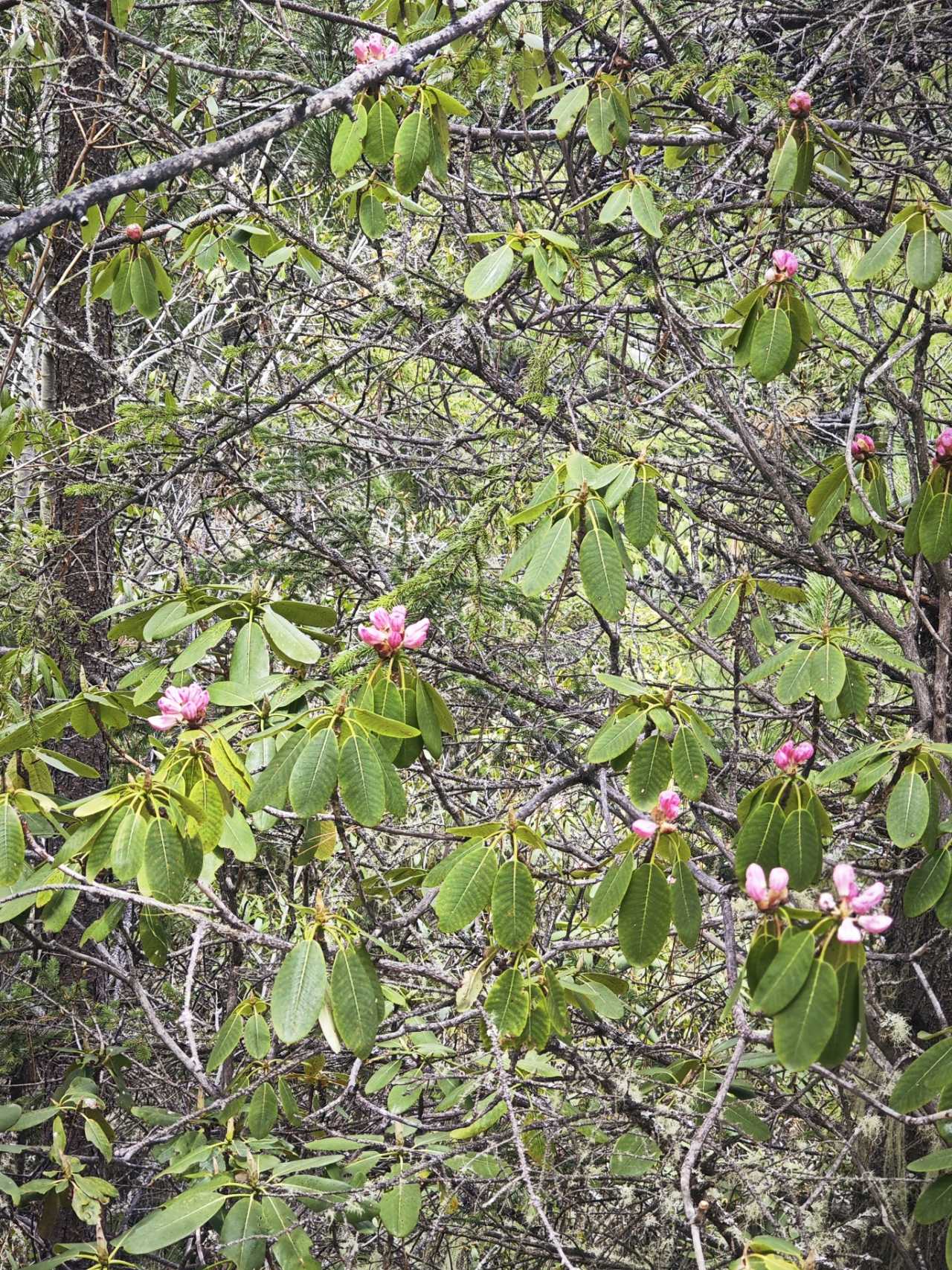
As I walked, I noticed a few pink blossoms on the slope—were they pink rhododendrons? I couldn't tell. Carefully, I climbed up the slope to take a photo. My body had long lost the wildness and agility of my teenage years, when I'd dart through the woods.
Continuing on, my mind started spinning horror stories—I remembered the pregnant woman pushed off a cliff by her Thai husband. No cameras here, a perfect crime scene. I quickly video-called my husband to boost my courage.
I used to want to travel with him all the time, but he's always busy with work. I'd always wanted to share interesting tidbits from my trips with him. But this time, the urge to share wasn't as strong. I've relied on him for over a decade, and on this trip, I wanted to try adapting to solitude. As One Hundred Years of Solitude says, a person's spiritual sustenance can be music, books, sports, work—it can be mountains, rivers, lakes, and seas—but it can never be another person. In this life, many truths must ultimately be understood on your own, and many roads must be walked alone.
On my way back to the guesthouse, it suddenly started raining. I sprinted, hoping to make it back to my room before the downpour. The shower was brief but intense, stopping after just a few minutes. Running like that made me feel incredibly good.
Back in my room, I brewed some tea, gazed at the snow mountains, borrowed a copy of The Moon and Sixpence by W. Somerset Maugham, and read half of it in one sitting. I envied the stockbroker protagonist—a middle-aged man who abandons his middle-class life, leaves his wife and children, and goes off to paint, chasing the value and meaning of life. Thinking of myself, I no longer have any dreams. I live each day like a salted fish.
The guesthouse had a café. When I got tired of reading, I went downstairs to chat with the baristas. I complained that their coffee was too expensive and the espresso lacked crema. He explained that the high altitude affected the coffee machine's pressure. There was also a dirty dog in the café—dogs are like men; no matter how handsome, if they're not clean, you don't want to look twice. The dog's owner was a beautiful, enthusiastic woman who even offered to lend me her new outdoor hat for photos. The succulents in the café were exceptionally plump and vibrant, thriving on their own.
Mingyong Glacier: An Unexpected Surprise
On the fourth day, I finished The Moon and Sixpence and decided to go out—to Mingyong Glacier.
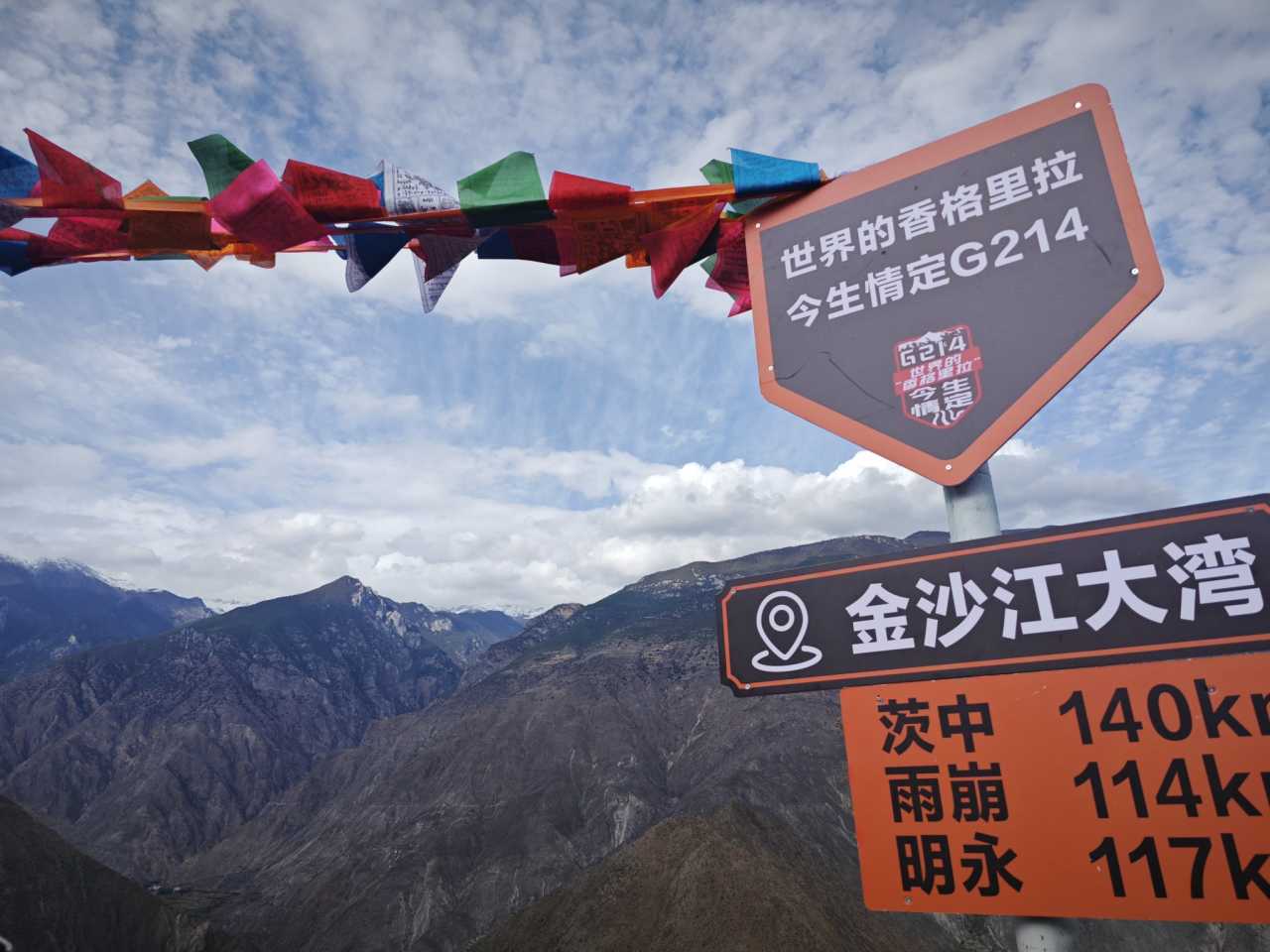
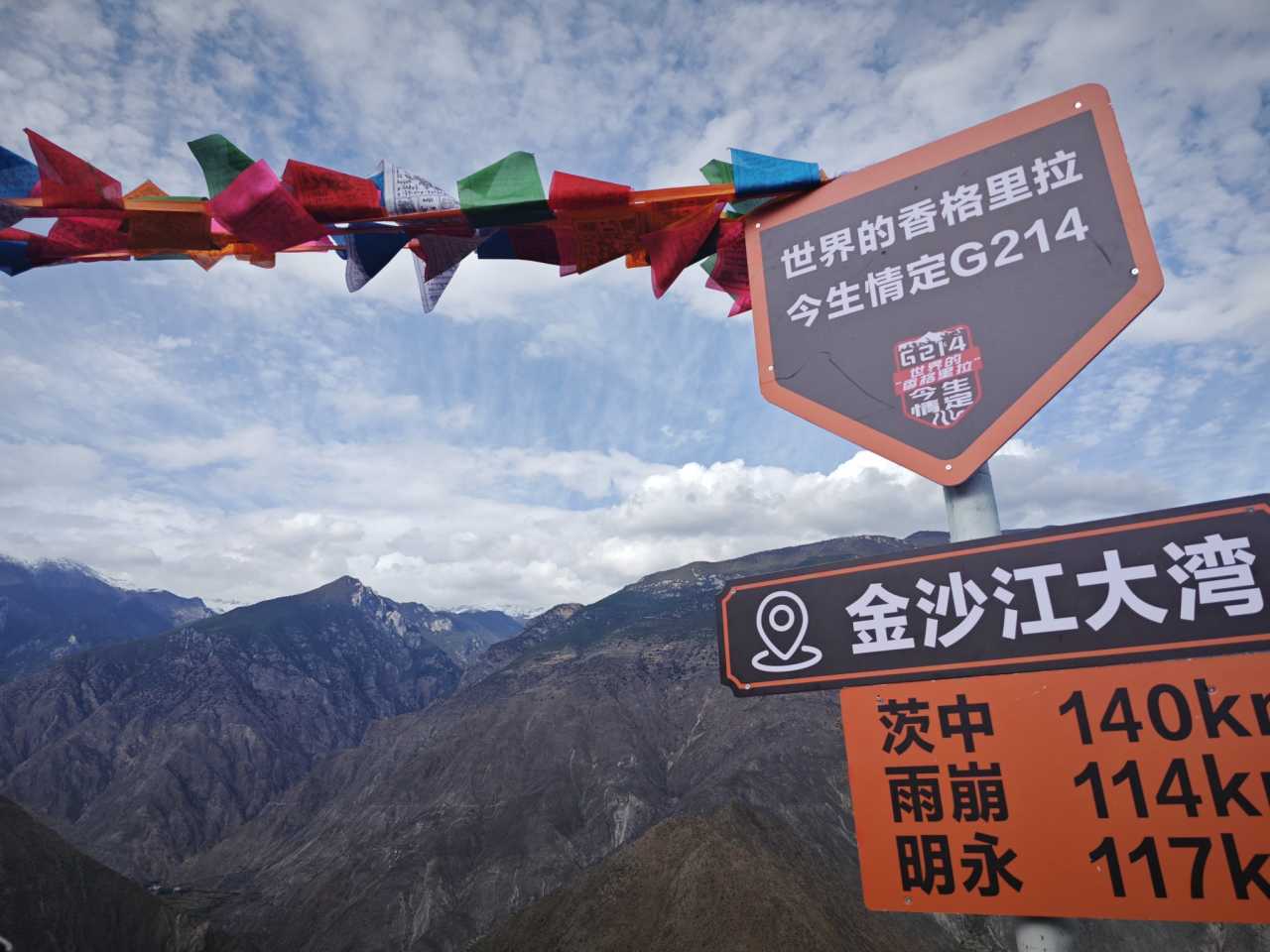
From the Feilai Temple viewing platform to the Mingyong Glacier scenic area visitor center took an hour by car. If Yubeng Village ever becomes a full-fledged tourist attraction, I doubt hiking enthusiasts will flock to it the same way.
From the visitor center, I took a shuttle for about half an hour to the trailhead. There was a turnaround point at 2.5 kilometers, and the summit was at 5 kilometers. When I got tired, I stopped to look at the plants—most were unfamiliar to me, which was refreshing. There were also rhododendrons in several colors. When I reached the top and turned a corner, the glacier came into view—even if I'd walked 10 kilometers, I'd have said it was worth it.
At the summit, I met another woman traveling alone, and we decided to carpool back to Diqing together. She was incredibly good at taking photos of herself, striking various poses with practiced ease.
Our carpool driver took us to the starting point of the Yubeng trek—the entrance to Nong Village—to pick up a few young people who had just finished hiking out of Yubeng. There was a rustic café at the village entrance, where the owner shared some of his experiences and stories about the village. Almost everyone here is Tibetan, and to keep families from splitting up, brothers sometimes share the same wife—interesting, to say the least.
Tiger Leaping Gorge: Another Way to Hike
From Dukezong Ancient Town, I carpooled again, and the driver dropped me off at the starting point of the Tiger Leaping Gorge trek. I walked for about three hours to reach Halfway. The path was narrow, with many spots that were dangerous for photos but offered breathtaking views. Sitting down and watching people risk their lives for a picture was strangely relaxing.
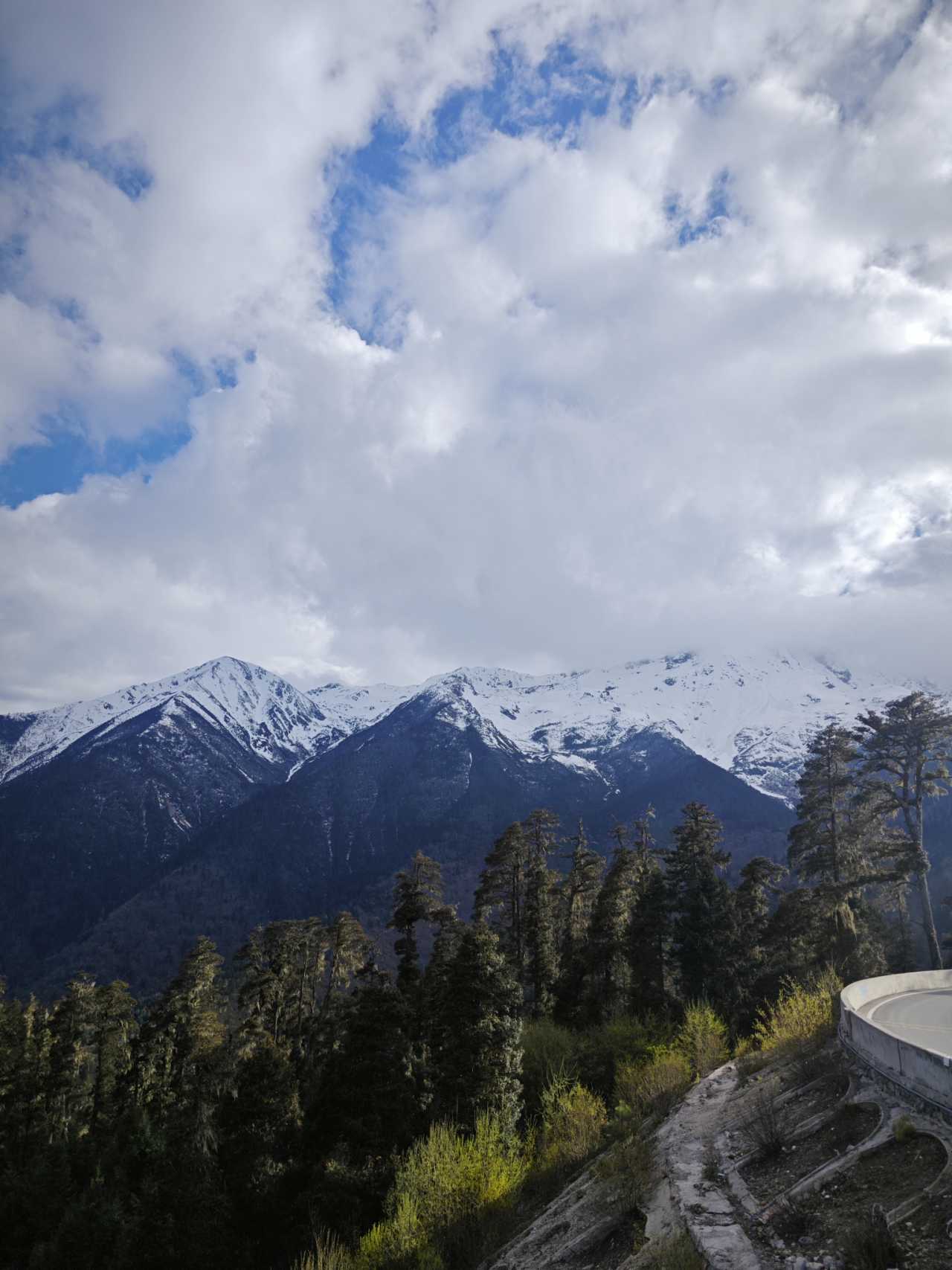
When I arrived at Halfway, I realized it was actually a hostel with a café and a restaurant. I don't know if it was because I'd been walking for hours and was hungry, but the minced beef and diced potato stir-fry at Halfway was the best I've ever had in my life. The service was fantastic. After eating, I went upstairs for a coffee, and the baristas were all handsome—I wondered why such good-looking guys would choose to work in such a remote café.
The hostel had a large terrace for photos, with the snow mountains as a backdrop. A group of young people were going wild, striking all kinds of ridiculous poses. For a moment, I envied their energy and youth. Thinking back to my own youth, I "wasted" it all at barbecue stalls and KTVs in Jinan.
After lunch, I was too exhausted to continue. The hike to Zhang's Teacher Hostel would take another three hours, and I'd heard there was a route down to the river with stunning scenery. But my body just couldn't keep up. I found a car to take me back to Lijiang.
Lijiang: The Final Farewell
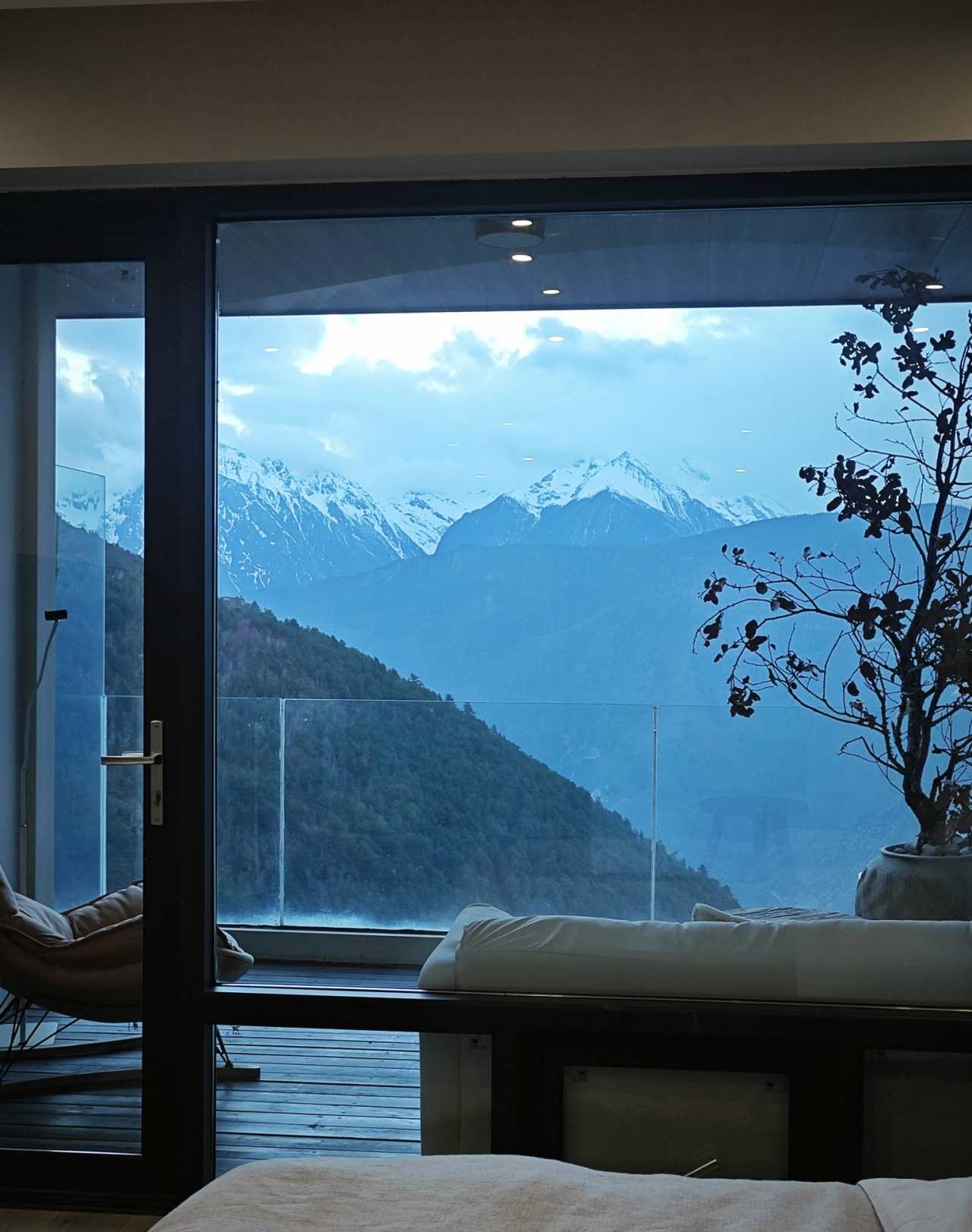
I stayed one night in Lijiang Old Town. Having seen my share of ancient towns, I wasn't as excited as I was seven years ago when I first came here with my best friend. I didn't feel like going to a bar that evening. My only thought was to get a bowl of authentic rice noodles. I searched for a highly-rated place called "Jiuge Rice Noodles," but it was just average.
Then, I returned to Jinan.
In the End: What a Solo Trip Taught Me
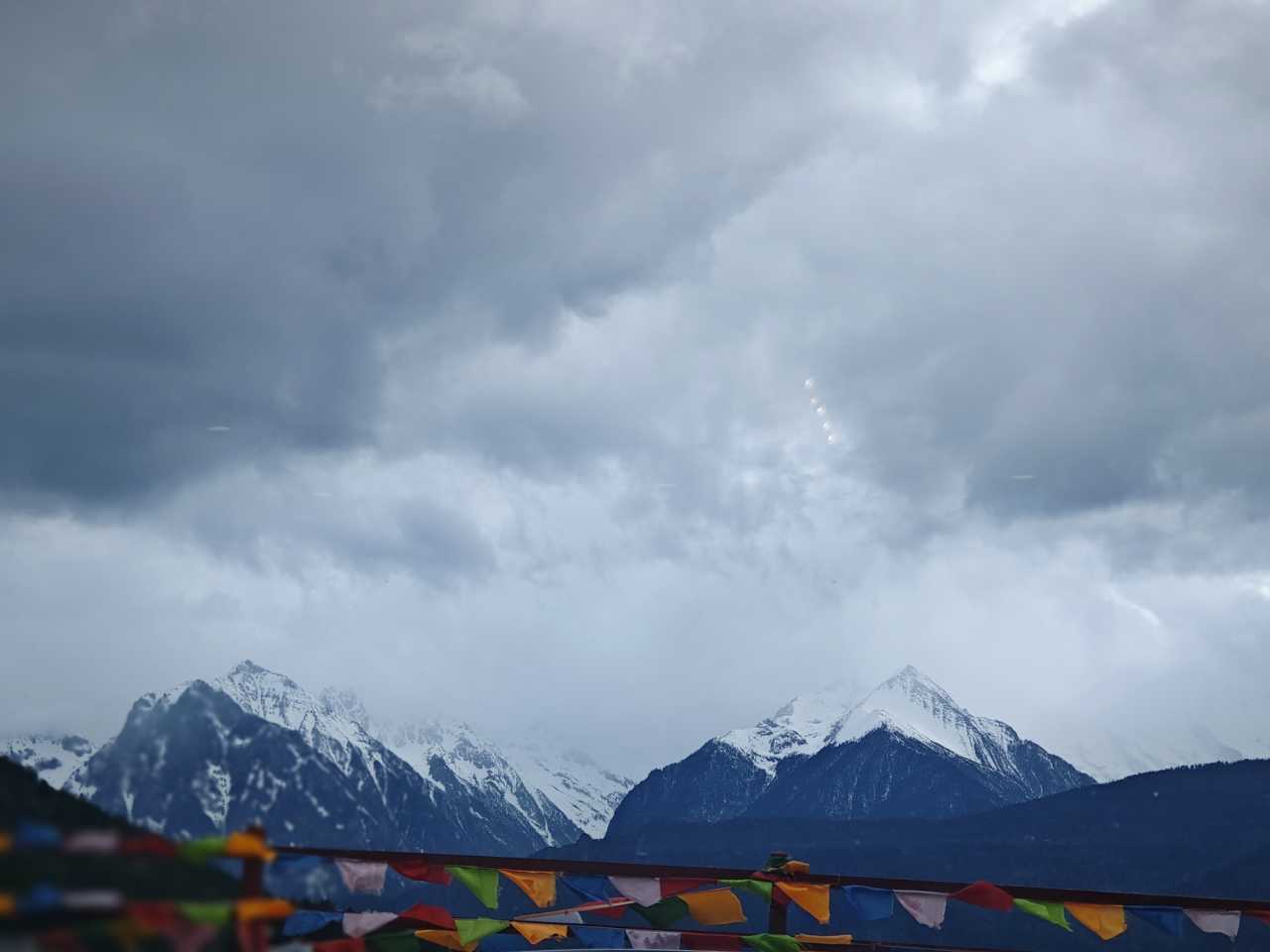
This trip didn't complete the planned Yubeng hike, but I saw the awe-inspiring Mingyong Glacier. I didn't witness the perfect golden sunrise over the snow peaks, but I rediscovered childhood memories while wandering through the woods. I didn't share every interesting moment with anyone, but I learned to coexist with solitude.
Life is like this journey: plans never survive reality. But those unexpected detours often hide the most precious scenery. Nearing forty, I've finally come to understand: not every distant place needs to be reached, and not every path needs to be completed. Sometimes, stopping to look at the flowers by the roadside, chatting with a stranger, or simply sitting quietly with a cup of tea and a book—that, too, is a form of travel.
What matters is that you set out.
You should also read:

Solo in Yunnan: A Wanderer’s Guide to the Land of Eternal Spring
Solo in Yunnan: A Wanderer’s Guide to the Land of Eternal Spring There’s something magical about traveling alone. No compromises, no schedules to keep, no one to please but yourself. I’ve been on the road for nearly three months now, and not once have I…
Continue reading...
Into the Hidden Valley: A Solo Journey Through the Mysterious Dulong River
Into the Hidden Valley: A Solo Journey Through the Mysterious Dulong River Deep in the northwestern corner of Yunnan Province, tucked away from the modern world, lies a place that feels like a secret whispered among mountains. The Dulong River Valley is not just a…
Continue reading...
God’s Abandoned Palette: A Self-Drive Journey Through Yunnan’s Dongchuan Red Land
God’s Abandoned Palette: A Self-Drive Journey Through Yunnan’s Dongchuan Red Land Travel has never been about reaching some distant geographic coordinate. It’s about encountering, along the way, the version of yourself buried beneath the rubble of daily routine. During this May Day holiday, I finally…
Continue reading...