Gazing Upon the Thirteen Peaks of Meili: A Winter Pilgrimage Through Northwestern Yunnan
Gazing Upon the Thirteen Peaks of Meili: A Winter Pilgrimage Through Northwestern Yunnan
Prologue: When Snow Mountains Become Faith
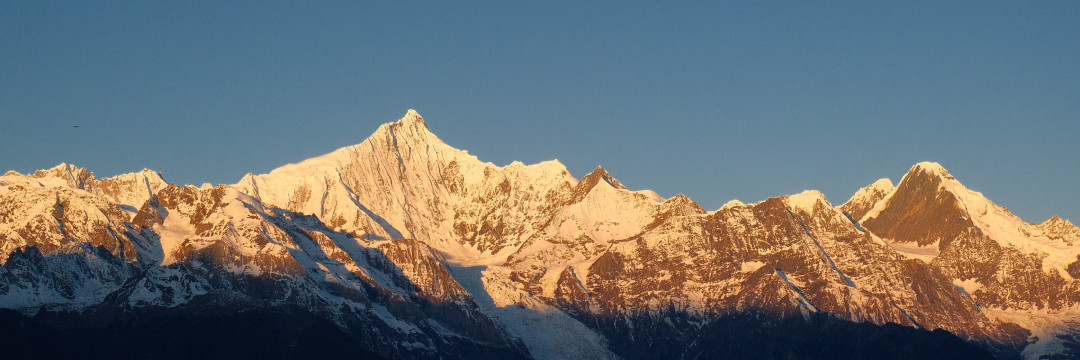
Some places captivate you with their name alone. Meili Snow Mountain, meaning "Snow-Capped Peak" in Tibetan, holds a legend: those fortunate enough to witness the mountain god in its entirety will be blessed with good fortune. When I pushed open the window of our guesthouse at 1 AM, the colossal snow mountain range suddenly appeared before my eyes—the sheer impact remains unforgettable. It stood there, silent, solemn, sacred, as if waiting for every pilgrim to arrive.
This journey, starting from Kunming, passing through Dali and Shangri-La, and finally reaching Feilai Temple (Flying Temple), was an adventure of battling altitude sickness, racing against time, and gambling with the weather. But when I stood at Wunongding (Misty Peak Summit) and saw the panoramic view of Meili's thirteen peaks, all the exhaustion became worthwhile.
Chapter One: From Kunming to Shangri-La—A Long Journey
The Surprise of Air-Rail联运
Choosing to start from Kunming was a wise decision. China Southern Airlines offers free air-rail combined service at Kunming Airport. Simply show your flight ticket and train itinerary within 24 hours, and you can exchange for a train ticket at the ticket booth near the exit. Buses run every half hour; we caught the 11 AM bus and arrived at the train station in 40 minutes.
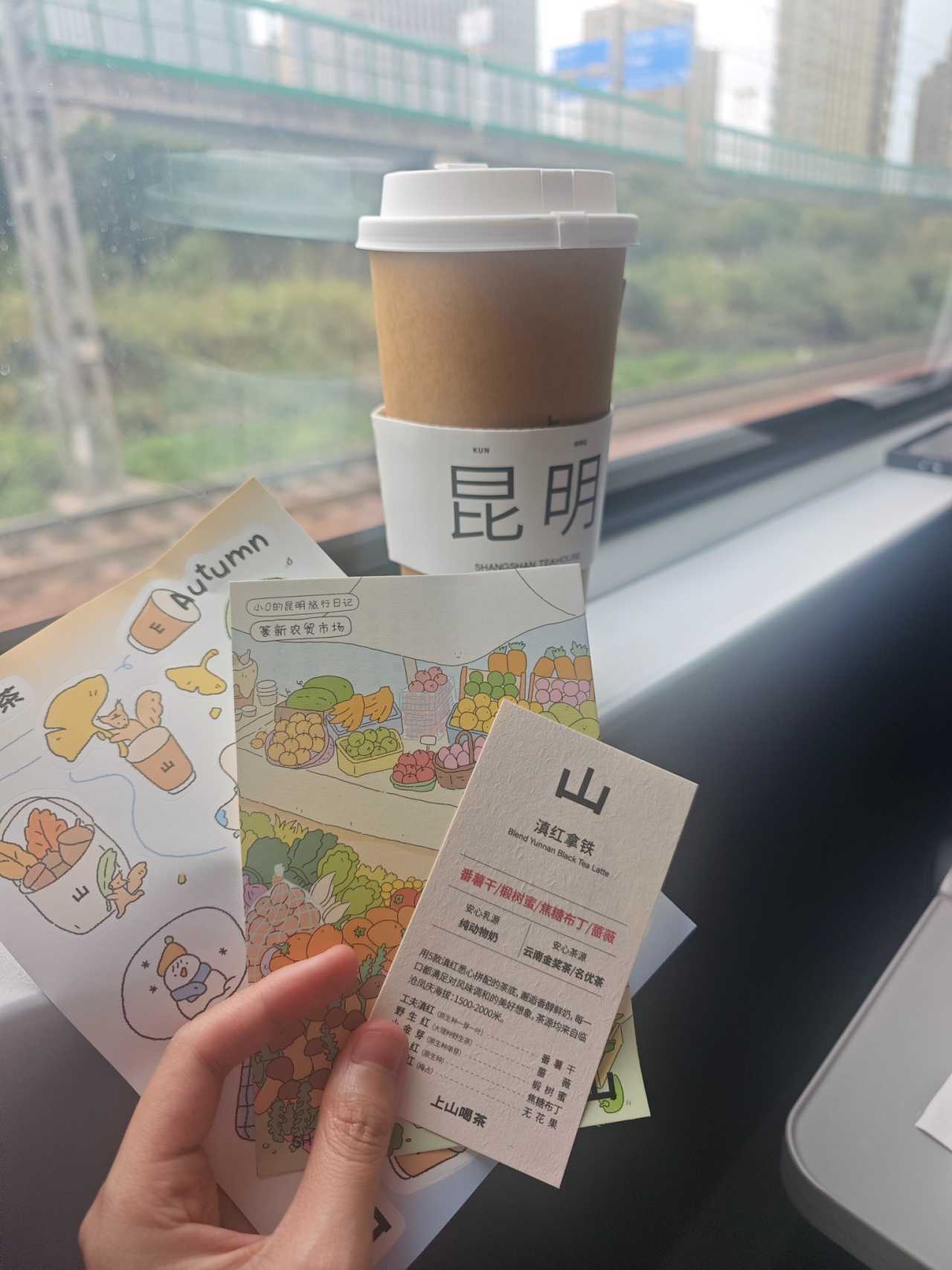
We ordered takeout from "Up the Mountain for Tea" (上山喝茶) to pass the time before our 1 PM high-speed train. The tea was a bit strong—personally, I found it average. But here's a practical tip: on the high-speed trains heading from Kunming to Dali, Lijiang, and Shangri-La, seat F offers views of Erhai Lake, while seat A provides stunning vistas of Tiger Leaping Gorge.
First Impressions of Shangri-La
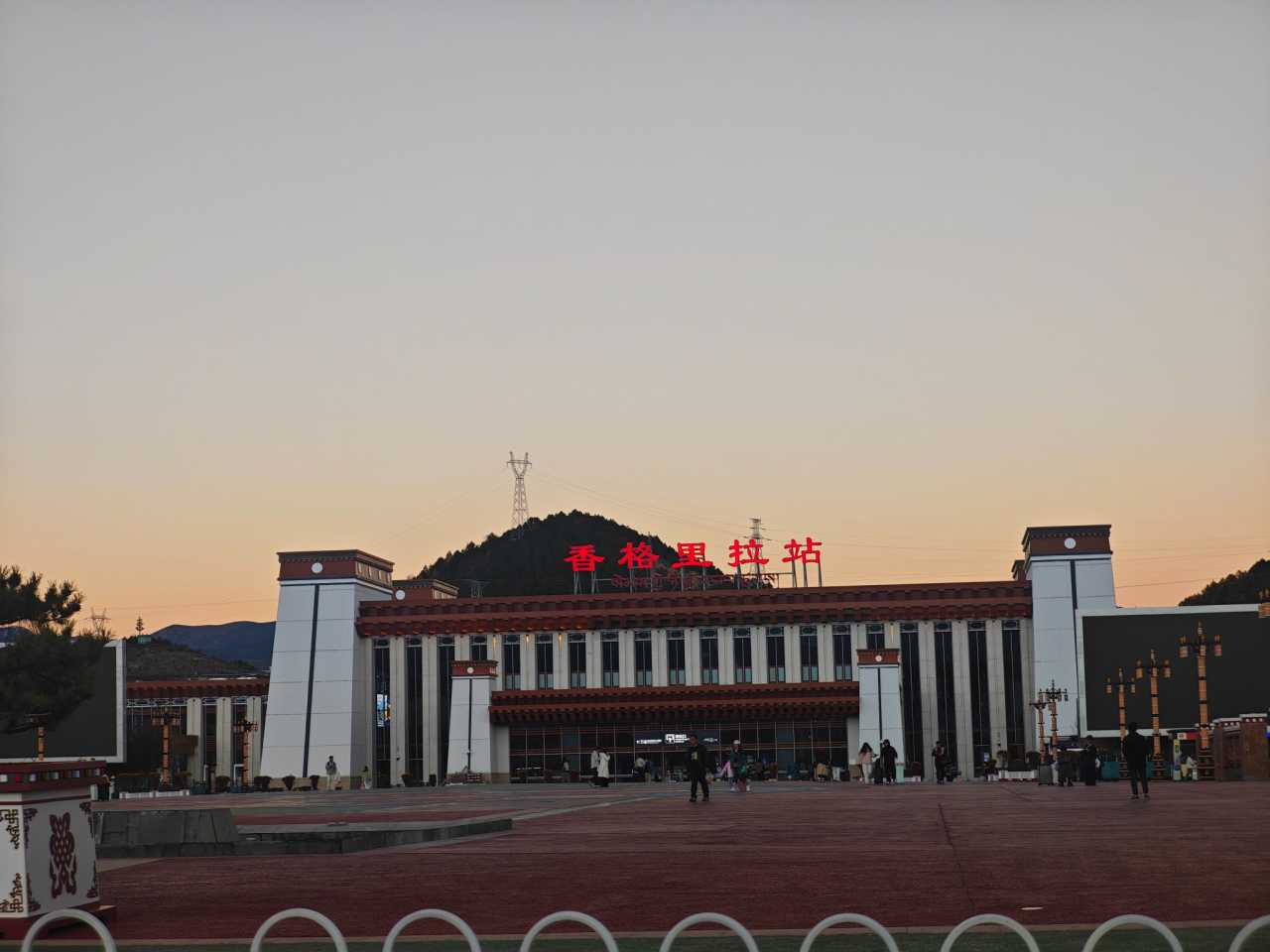
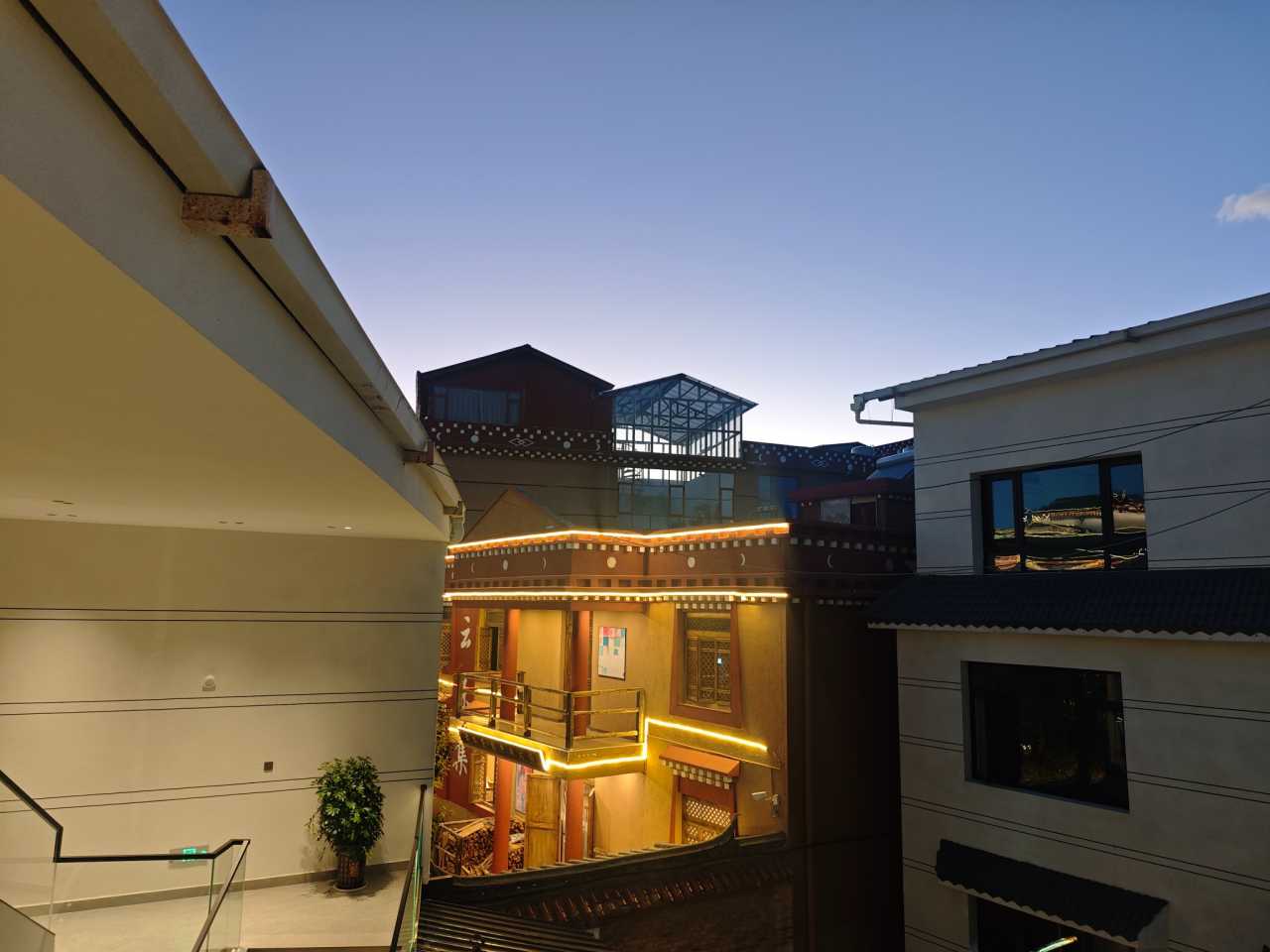
After over five hours of travel, we arrived at Shangri-La Station at 6 PM. The guesthouse owner picked us up at the station, and we checked into "Cloud Trail" (云迹) near the north gate of the old town. The owner gave us a star-viewing room—unfortunately, the clouds were too thick that night, so we couldn't see the stars.
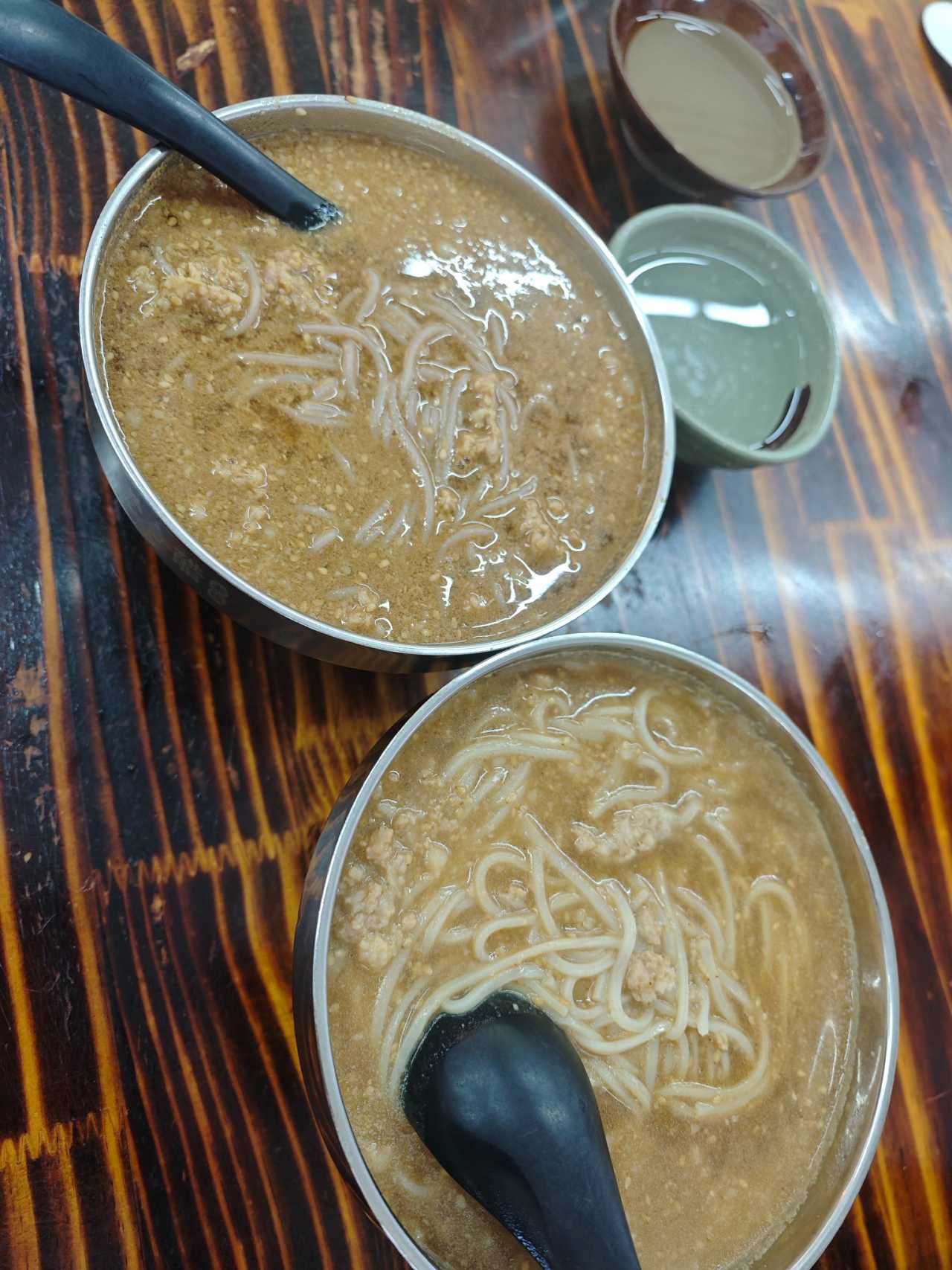
After settling in, we tried the "Small Jar Vinegar Rice Noodles" (小仓醋米线) recommended by a certain social media app. To be honest, the taste was mediocre. What made things worse was that despite the distance being only a few hundred meters, the cold weather combined with my mother starting to show symptoms of altitude sickness (shortness of breath while walking) made the journey feel excruciatingly long.
In Shangri-La, roads that look close always take forever to traverse on the plateau.
Chapter Two: Potatso—Autumn Whispers on the Plateau
Costume and Departure
The next day, we tried Tibetan costume styling. Since we were already there and the price wasn't expensive, we treated it as experiencing local culture. However, I should warn everyone: these rented Tibetan costumes might not be thoroughly cleaned, and some are even worn out. Fortunately, we wore our own clothes underneath, so it wasn't a big deal.
The Autumn Colors of Shudu Lake

Considering my mother's tendency to get altitude sickness, we didn't take the bus from the east gate. Instead, we took a taxi from the north gate of the old town to Potatso National Park. The 30-minute ride cost 66 yuan. The park entrance fee of 138 yuan includes the scenic area bus. After doing some research, we only walked the second section (Shudu Lake) and the third section (Bitahai Lake).
The scenery at Shudu Lake was already stunning. Although the leaves hadn't fully turned yellow, the combination of trees, lake water, and blue sky was refreshing. The yellow straw floating on the water made me feel a bit dazed—it reminded me of Lugu Lake.
A few little squirrels were on the wooden boardwalk, completely unafraid of humans, only interested in finding food. If you have pine nuts or sunflower seeds, they'll approach you willingly. My mother, struggling with altitude sickness and breathing through an oxygen tank, had a squirrel climb directly from her body onto her head. After searching around and finding no food, it heartlessly left—a scene that was both hilarious and exasperating.
The Price of Oxygen
Because I overestimated my mother's altitude sickness, we used up our two oxygen tanks halfway through the second section. Fortunately, there was an oxygen refill station near the bus stop at the end of the lake, costing 30 yuan per session. But what was even more frustrating was that the station also sold oxygen tanks for 50 yuan—while they cost only 10 yuan in the city. At that critical moment, we had no choice but to grit our teeth and buy them. We ended up spending nearly 100 yuan on oxygen.
The Regret of Bitahai
To reach the third section, Bitahai, we first had to take a 20-minute bus ride to the entrance, then transfer to another bus for another 10 minutes. After getting off, we had to walk along a wooden path to reach the destination—an out-and-back route. The return bus only departs when all passengers are present, or every 20 minutes.
Since it was already past 4 PM and the weather was getting cold, plus we still wanted to visit the Great Prayer Flag site, we quickly took a couple of photos and headed back. The return taxi to the old town cost over 80 yuan and was hard to find. Fortunately, there was a bus back to the old town near the entrance, costing 15 yuan per person. We decisively hopped on.
Chapter Three: The Great Prayer Flag and an Unexpected Incident
Blessings Beneath the Prayer Flags
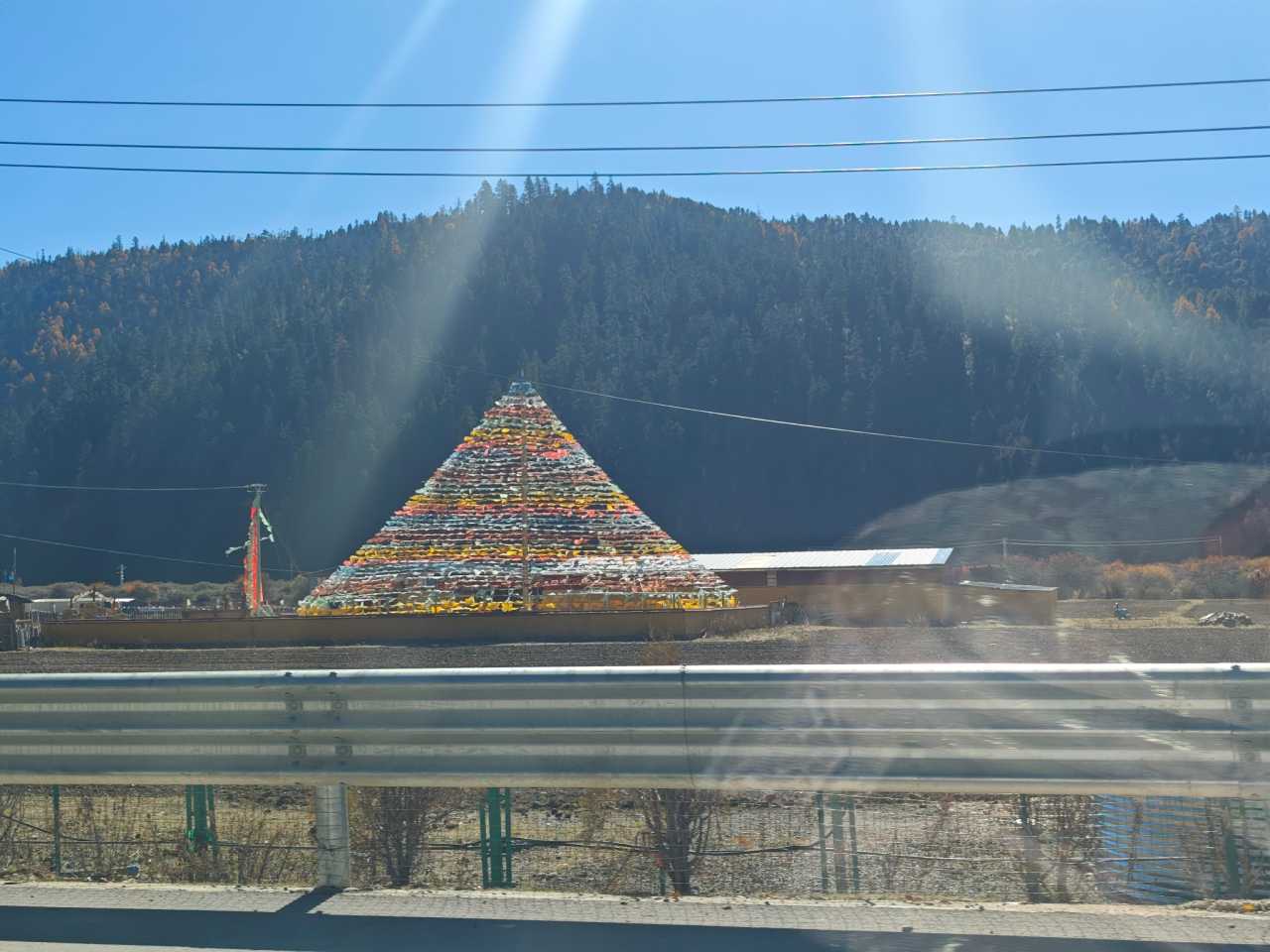
We took a taxi from the east gate area to the Great Prayer Flag site. The driver mentioned there were two prayer flag sites—one double-layered—and let us choose. The entrance fee was 9 yuan. Since we arrived late, the light was gradually fading, and there were fewer people. But the massive, colorful prayer flags fluttering in the wind were still spectacular. "When the wind moves the flags, blessings arrive with the breeze"—this saying felt especially powerful in the plateau's wind.
Exiting the Great Prayer Flag site, the dusk scenery was breathtakingly beautiful.
The Phone Screen Shattering Incident
However, just as I was about to take a photo in front of the "Shangri-La" sign, my tripod wobbled and fell. My phone screen completely shattered—liquid crystal leaked, the bottom half of the screen was completely unresponsive, and I couldn't operate it at all. In this nearly deserted place, I asked a passing woman for help, hoping she could call a taxi and I'd leave my number to transfer the fare later. But in this society rife with scams, her coldness was understandable.
Fortunately, a group of young people was nearby at the Great Prayer Flag entrance. I rushed over and shouted for help. A young couple not only helped me call a taxi but also discovered they were heading back to the old town, so we traveled together. Grateful that there are still kind people in this world.
After returning to the guesthouse and having a good cry, I was relieved that my mother had brought a backup phone. Otherwise, I would have wanted to fly back immediately to get my phone repaired.
Chapter Four: A Night in Dukezong Ancient Town
Rose Milk Fan and the Prayer Wheel
My mother was feeling unwell from altitude sickness and resting in bed, so I went out alone to find food. I checked in at "3294" and ordered rose-flavored milk fan with yogurt (玫瑰乳扇酸奶). It was delicious, with crispy boba inside—rose products are definitely my favorite.
I climbed the slope to the Great Prayer Wheel. This stretch of road on the plateau made me particularly short of breath. I squeezed into the crowd and turned the wheel three times together with everyone else. I'm not sure if it was the altitude from climbing or the crying session, but that night I had a splitting headache when I went to sleep. Fortunately, after breakfast the next morning, my condition improved significantly.
Chapter Five: Heading to Meili—The Pilgrimage Road
The Cancelled Driver and Last-Minute Carpooling
On the third day, we planned to charter a car to Feilai Temple. When I was doing research earlier, I heard that cars from the east gate of the old town needed to pick up passengers at other stops, making the outbound trip longer. Considering my mother's altitude sickness and our desire to see sights along the way, I decided to charter a car for the trip there and take a bus back the next day.
Then, just before 10 AM, I saw a message—the driver had cancelled on me in the early morning. I rushed to the guesthouse front desk to ask about carpooling and was told that usually, you need to book a day in advance, and departures are typically around 4 or 5 PM.
Fortunately, I had added another driver's contact earlier. He said he could pick us up in half an hour. Around 10:30 AM, we finally set off.
Scenery Along the Way
After half an hour of driving, we reached Napahai Lake. We could still see a faint outline of the water prayer flags, though from a great distance, only blurry shadows were visible.
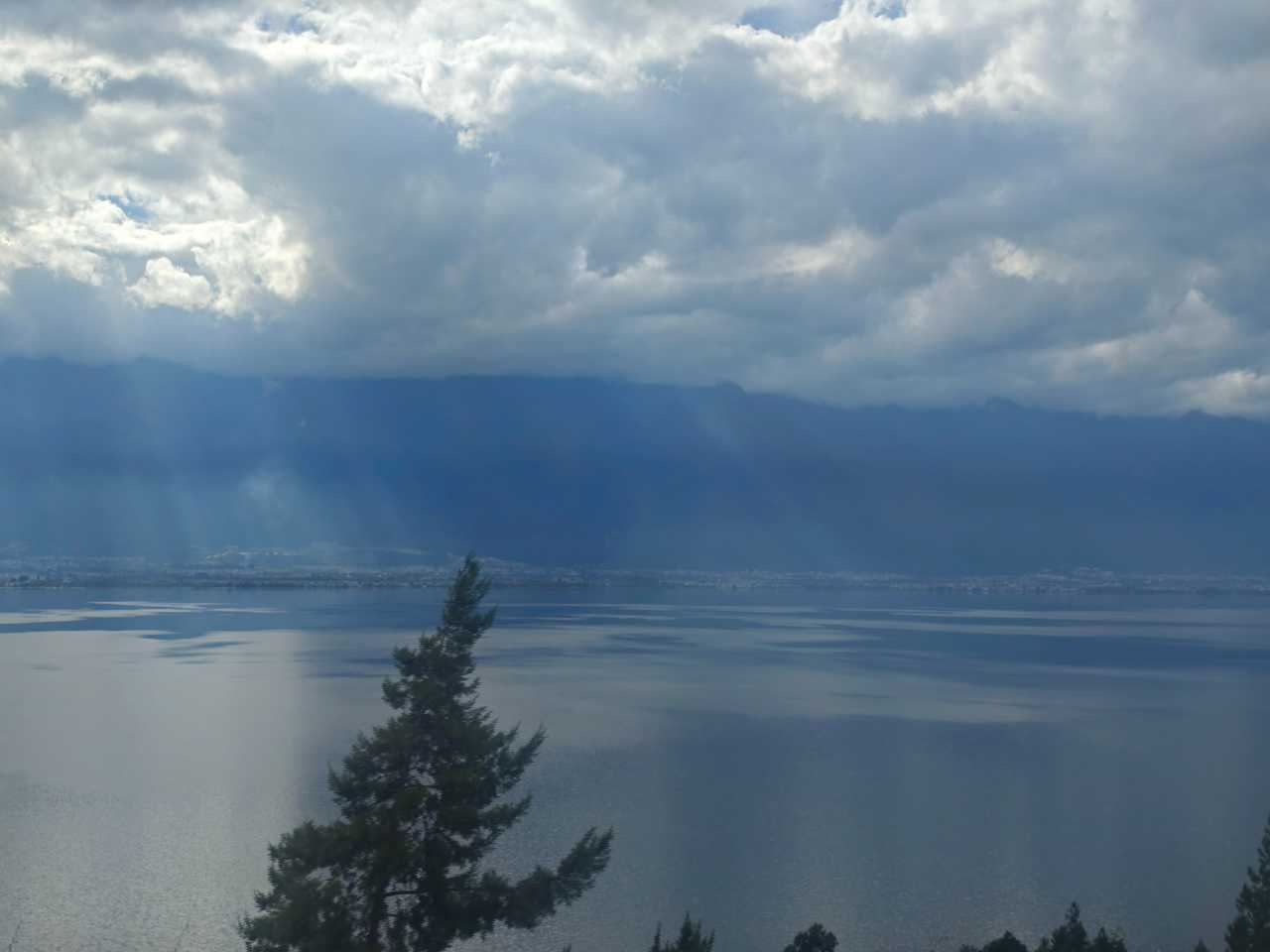
Continuing on, we arrived at the Jinsha River Grand Bend. Apparently, the water used to be yellower; now it's greener, and in winter (January-February), it becomes even bluer.
The driver specially took us to the Baima Snow Mountain Pass. Although he said the autumn colors weren't as vibrant as before, there were still remnants of autumn foliage along the way. As we wound our way up the mountain roads and Baima Snow Mountain gradually came into view, the shock was indescribable.
"Prayer flags fluttering before the mountain are the blessings of the snow peaks and the wind."
This spot had the highest altitude of the entire journey, and walking fast still made us out of breath. I was grateful that the November sun was still warm enough to keep us from being chilled to the bone.
The Pilgrimage at Wunongding
The driver took us to a spot called "One Tree at Wunongding" (雾浓顶一棵树), where you can see the panoramic view of Meili's thirteen peaks. The owner of a nearby coffee stand helped us take photos—from this angle, you can capture Goddess Peak (Shennü Feng).
Due to some reason, the original road couldn't continue to Feilai Temple, so we had to take a detour. Along the way, the driver noticed my mother was feeling nauseous from altitude sickness and picked some sea buckthorn (沙棘) for us. It was my first time eating fresh sea buckthorn—sour and sweet, very unique. The driver said people around here don't even bother picking them, and the branches were densely covered with clusters of berries.
Chapter Six: Feilai Temple—Gazing Upon the Snow Mountains
Checking into Yingshan Mountain Lodge (映雪山舍)

At 4 PM, after stopping and starting along the way, we finally arrived at Feilai Temple and checked into Yingshan Mountain Lodge. Our "Pillow Mountain" room was on the second floor—not high enough for the best views, but we could go to the nearby "Viewing Paradise" rooftop for sunrise.
The 4 PM sunlight poured into the room, making the entire space warm and cozy. Around 6 PM, we went out to the "Seventeen" (拾柒) café next to the Feilai Temple viewing platform. Walking from Yingshan to Seventeen, we passed a row of small stalls—the blend of snow mountains and everyday烟火气 (the warmth of human life) was heartwarming.
At Seventeen, I ordered a rose milk tea for 38 yuan—the tea flavor was quite strong, so I treated it as the café's entry fee. I also packed a pistachio Basque cheesecake for my mother.
The Disappointment of Sunset Golden Mountain
I had hoped to see the sunset golden mountain, but there were too many clouds, and it didn't happen. I later learned there was a Feilai Temple post office where you could buy souvenirs like fridge magnets, but because it was too cold and getting dark, I couldn't browse properly—I regretted it deeply.
After dark, we walked back to the guesthouse. The area was quite lively, but the downhill road was incredibly dark and eerily silent.
The Midnight Surprise
All evening, we couldn't see the snow mountains—just darkness in the distance. Just as I was about to go to sleep at 1 AM, I stepped outside to check. The massive snow mountain range suddenly appeared before my eyes. The first glance was overwhelming. My phone was broken, so I could only take photos with terrible pixel quality, but at that moment, the beauty made me not want to close my eyes.
Chapter Seven: Sunshine Golden Mountain—Checking Off a Bucket List Item
Waiting for the First Light
I asked the guesthouse front desk, and they said sunrise was around 7:30 AM. At 7:10, I was already waiting on the Viewing Paradise rooftop.
At this moment, I was face-to-face with the snow mountains.
Waiting, until the first rays of sunlight touched the snowy peaks. The summits of Kawagebo and Miancimu began to turn pink, and gradually, the sunlight spread across a larger area.
At this moment, Sunshine Golden Mountain appeared before me.
In this moment, I was face-to-face with the snow mountains; face-to-face with the golden sunlight on the peaks.
At this moment, one item was crossed off my bucket list; one "must-see in a lifetime" was checked off.
The Blessing from Yingshan Mountain Lodge
The welcome letter at Yingshan Mountain Lodge read:
"Shake hands with the grass and trees, gaze upon the snow mountains. The road is long, but everything will eventually turn around."
"Meili Snow Mountain, meaning 'Snow-Capped Peak' in Tibetan. Legend says the mountain is shrouded in mist year-round. If you can see the mountain god in its entirety, the fortunate one will receive blessings. The prayer flags fluttering before the mountain are the blessings of the snow peaks and the wind."
"The road stretches long, the night sky is vast, crossing mountains to chase the setting sun. May you once again find the sun and moon within your heart."
Over the years, I've encountered various major and minor misfortunes, always feeling unlucky and unblessed. But thinking back to the good weather I've encountered on this year's travels—the heavy snow that fell the day we left Lugu Lake, while it wasn't too bad when we departed; the nine days in Tokyo with perfect weather, including seeing Mount Fuji with 1000% visibility; the clear skies in Jeju Island that revealed jellyfish-like white sand beaches...
Thinking of these moments, holding onto the small joys in life, makes me feel like I am still a little bit blessed.
They say that those who see Sunshine Golden Mountain will be lucky for an entire year.
Will I be lucky?
Chapter Eight: Dali—Leisurely Time by Erhai Lake
From Snow Mountains to Ancient City
After watching the sunrise, we took a chartered car back around 10 AM. I dozed off intermittently along the way down the mountain. Departing at 10-something, we arrived at Shangri-La Station just after 1 PM. Our original ticket was for a 3 PM high-speed train, but since we arrived early, we changed it to the 1:50 PM departure.
Arriving in Dali around 5 PM, we hit the evening rush hour. Traffic was so bad it took over an hour to reach our guesthouse. After settling in, we went to the ancient city to find food. We had preserved pork ribs hotpot (腊排骨), which, while not as impressive as the first time I had it in Lijiang, was still decent.
Autumn Colors by Erhai
The next day, we visited Fumeiyi and Sansheng Island. There's a large forest area in front of Fumeiyi, and during this season, the leaves had started to turn yellow, carrying the atmosphere of autumn. The fishing lamps at Sansheng Island flickered in the dusk, creating a very poetic scene.
In the evening, we went to the ancient city for a wild mushroom hotpot at "Seven Mountain Treasures Pure Wild Mushrooms" (七朵山珍纯野生菌). For 112 yuan, the portion was generous and the broth was good. Although it wasn't the peak season, it was still worth trying for the novelty.
The Bounty of the Farmers' Market
On our last day, we visited the farmers' market in the ancient city. We bought huge blueberries for 55 yuan per catty—crisp and sweet. We also stopped by the famous "Grandpa's Stall" and bought rose jam, rose powder, and dried roses. The rose jam was available for tasting, with three varieties: sour-sweet, white sugar, and brown sugar. My mother preferred the sour-sweet one, while I bought the white sugar version. It's perfect for making rose milk tea or spreading on milk fan (乳扇).
We were drawn in by the aroma of grilled yellow beef at a passing stall. It was freshly grilled, fragrant and spicy, but at 44 yuan for a small pack, I couldn't bear to eat it all at once.
Unexpected Warmth
I saw "Silver Rice" (银米) cross-bridge rice noodles on the map and walked in on a whim. To my surprise, the ambiance was lovely, and we got a window seat facing Cangshan Mountain. The waitstaff aunties were incredibly warm. When they saw I had bought coupons for yogurt and pudding, they told me I didn't need to—that a certain review app would give them to me for free. So many small details, simple, warm, and kind.
Epilogue: The Journey Home and Reflections
From Dali to Kunming, then flying back to Guangzhou—this journey had come to an end.
Actually, very few people take this route. The typical itinerary is Kunming-Dali-Lijiang-Shangri-La, heading progressively north. But considering my mother wanted to visit Shuanglang (though we ultimately didn't go), and since I had already been to Lijiang twice, with limited time, I chose this path.
Opening Mafengwo, I saw a note I had written in 2022: "I hope to have the chance to check off Meili's Sunshine Snow Mountain and Xishuangbanna in the future. I mean, with you."
This trip successfully checked off Meili's Sunshine Golden Mountain—I was already very lucky, fulfilling this small wish. Although it wasn't with the person from 2022, that person from 2022 has become my husband, providing financial support for this journey.
Some roads, you only know how beautiful they are after walking them. Some mountains, you only know how sacred they are after seeing them.
Practical Tips Summary
- Air-Rail Combined Service: China Southern Airlines offers free air-rail transfer at Kunming Airport, valid within 24 hours
- Train Seat Selection: On the Kunming-Dali-Lijiang-Shangri-La route, seat F offers views of Erhai Lake, seat A offers views of Tiger Leaping Gorge
- Oxygen Preparation: Oxygen costs 10 yuan in Shangri-La city but 50 yuan at scenic spots—prepare in advance
- Car Charter Advice: Book at least a day in advance for trips to Feilai Temple; last-minute arrangements often get cancelled
- Altitude Sickness Response: Shangri-La is at high altitude—move slowly, prepare oxygen and common medications
- Best Mountain Viewing Time: Meili Snow Mountain's Sunshine Golden Mountain typically appears around 7:30 AM—arrive at the viewing platform half an hour early
- Farmers' Market Shopping: The market at the north gate of the ancient city offers various rose products and local specialties at reasonable prices
"The road stretches long, the night sky is vast, crossing mountains to chase the setting sun. May you once again find the sun and moon within your heart."
You should also read:

Solo in Yunnan: A Wanderer’s Guide to the Land of Eternal Spring
Solo in Yunnan: A Wanderer’s Guide to the Land of Eternal Spring There’s something magical about traveling alone. No compromises, no schedules to keep, no one to please but yourself. I’ve been on the road for nearly three months now, and not once have I…
Continue reading...
Into the Hidden Valley: A Solo Journey Through the Mysterious Dulong River
Into the Hidden Valley: A Solo Journey Through the Mysterious Dulong River Deep in the northwestern corner of Yunnan Province, tucked away from the modern world, lies a place that feels like a secret whispered among mountains. The Dulong River Valley is not just a…
Continue reading...
God’s Abandoned Palette: A Self-Drive Journey Through Yunnan’s Dongchuan Red Land
God’s Abandoned Palette: A Self-Drive Journey Through Yunnan’s Dongchuan Red Land Travel has never been about reaching some distant geographic coordinate. It’s about encountering, along the way, the version of yourself buried beneath the rubble of daily routine. During this May Day holiday, I finally…
Continue reading...