Going West to Dali: Encountering a Slow, Romantic Time in the Off-Season
Going West to Dali: Encountering a Slow, Romantic Time in the Off-Season
Prelude: A Song That Planted a Seed
Hao Yun's song "Going to Dali" goes: "Maybe love is waiting by Erhai Lake, maybe stories are unfolding right now." That song was like a seed, quietly taking root in my heart. Finally, on a January morning, my friend Xiao and I boarded a flight to Dali.
Many people asked me: Why choose January? That's the off-season in Dali. I just smiled and said nothing. What's wrong with the off-season? No crushing crowds, no irritable queues, no sky-high hotel prices. More importantly, when you stumble upon a picture-perfect spot, you don't have to stand there fuming behind a wedding photography team—because these days, Dali is a national destination for pre-wedding shoots. During peak season, every half-decent corner is occupied by couples armed with expensive cameras.
Dali enjoys spring-like weather year-round, with moderate temperatures. No matter when you go, the scenery won't disappoint. But January is indeed a bit chilly—ladies can't wear pretty dresses for photos, which is probably the biggest "regret" of the off-season. Still, the benefits are obvious: cheap guesthouses, friendly vendors, empty attractions—all more than enough to make up for that slight chill.
First Impression: A Rainbow Over Weedy Plain
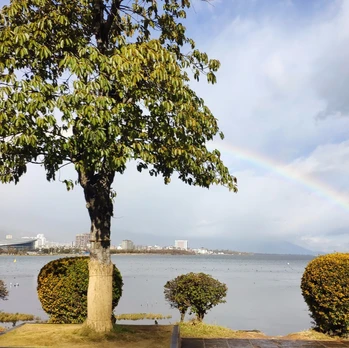
Our flight landed at 10 a.m. at "Dali Weedy Plain Airport." The first time I heard that name, I almost burst out laughing—it's so literal! The area around the airport really is a stretch of weedy plain, nothing but grass as far as the eye could see. But on the way to the ancient city, the sky suddenly cleared, and a massive rainbow arched across Erhai Lake, as if to say: Welcome to Dali.
In that moment, all the fatigue and uncertainty melted away. I knew this trip was destined to be wonderful.
Itinerary Overview: Five Days and Four Nights of Slow Living

Our Dali trip was arranged like this:
- DAY1: Strolling through Dali Ancient City
- DAY2: Exploring the West Erhai Lake Road
- DAY3: Cruising the East Erhai Lake Road
- DAY4: Cangshan Mountain (a place where "you'll regret not going, but regret going even more")
- DAY5: Three Pagodas of Chongsheng Temple (aside from the three pagodas, everything else is a bit dull)
Ten Must-Do Things in Dali: Don't Rush the Road, Feel the Road
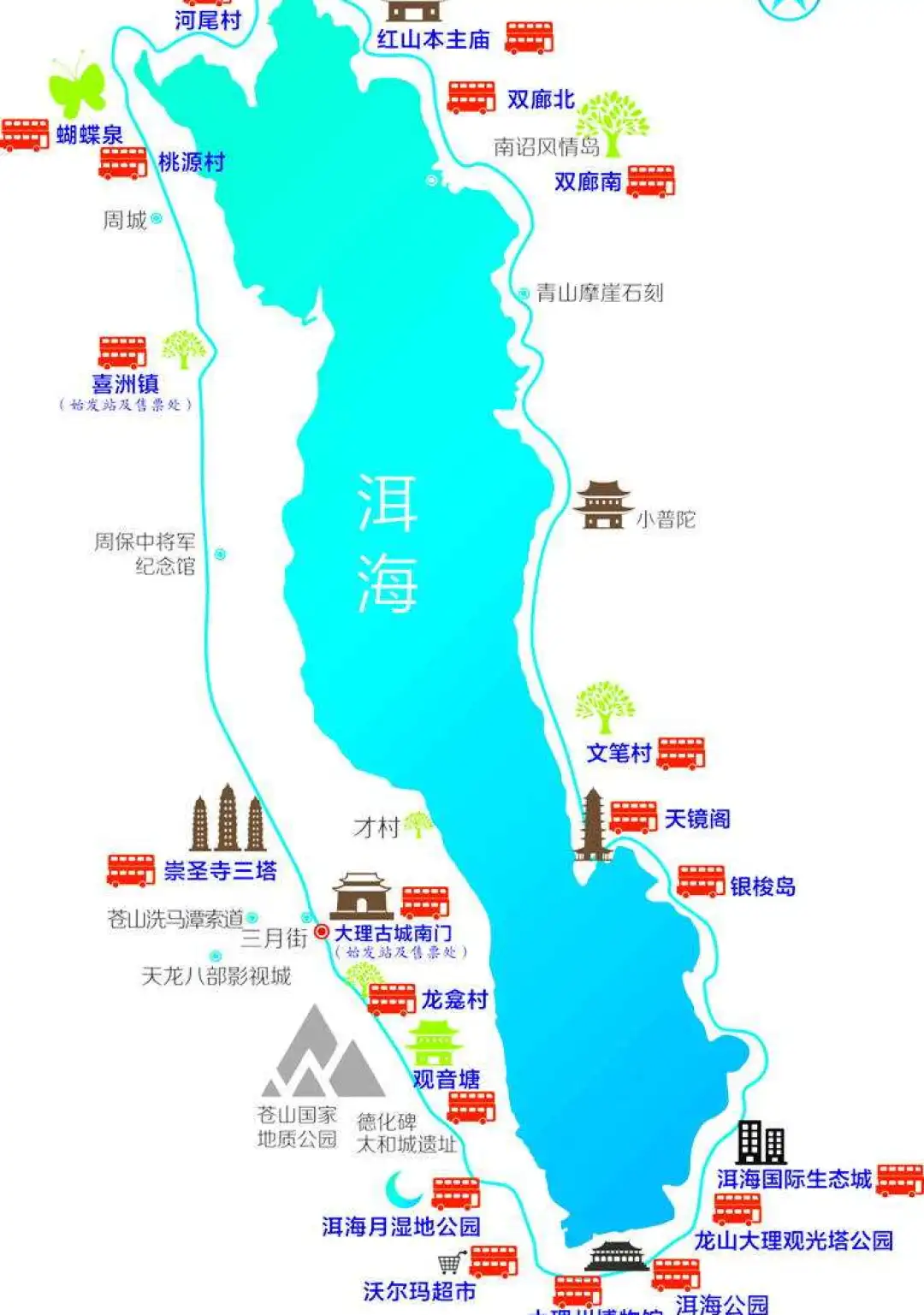
1. Circumnavigate Erhai Lake: A 115-Kilometer Scenic Scroll
Erhai is Yunnan's second-largest freshwater lake. The lakeside tourist road stretches 115 kilometers, divided into the West and East routes. On the west side, you have the lake on one side and farmland on the other; on the east side, the lake on one side and mountains on the other. Both routes have their own charm, but both are breathtakingly beautiful.
West Route: Longkan Village → Caicun Village → Majiuyi Village → Yangjia Village → Gusheng Village → Langqiao Bridge → Haitong Park → Xizhou Ancient Town → Zhoucheng Village → Shangguan
East Route: Hongshan Temple → Shuanglang Ancient Town → Lu'e Mountain → Wase Town → Xiaoputuo Island → Wenbi Village → Tianjing Pavilion → Xiaguan
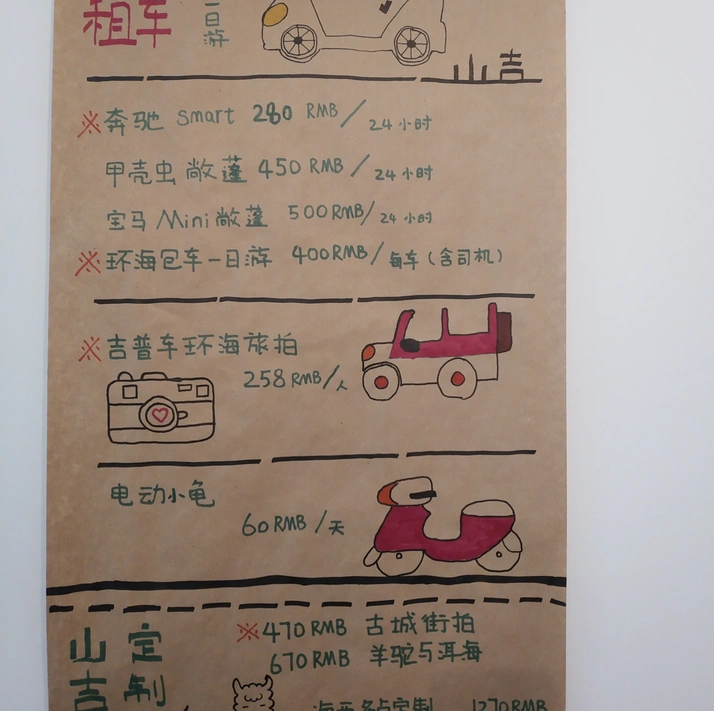
Car Rental Tips: If you only have one day and a decent budget, rent a Smart car or an SUV—bright colors look great in photos. If you want to save money, I recommend Shenzhou Car Rental. We used a new-user deal: two days of rental for just 168 RMB, plus 100 RMB for optional insurance. I could barely believe the price myself. But a word of caution: one day is nowhere near enough for the full loop. We scheduled two days and still almost went over time. So don't be greedy—take it slow.
2. Feed the Black-Headed Gulls: Dancing with Siberian Spirits
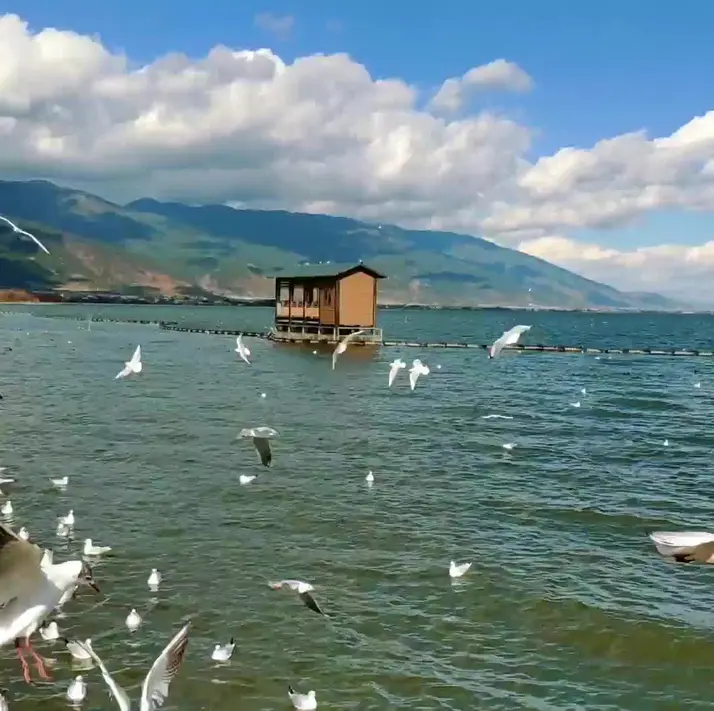
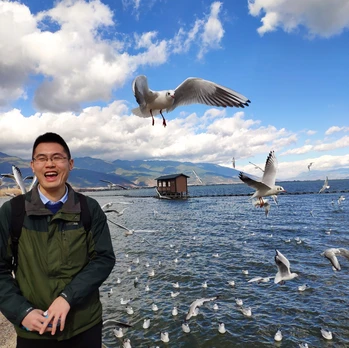
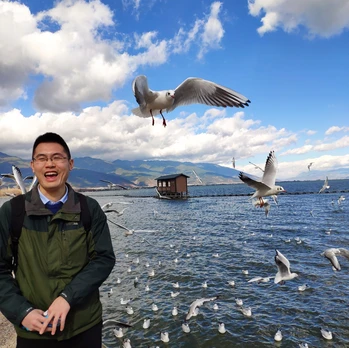
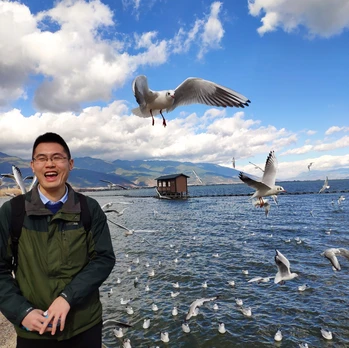
Every year from late November to March, black-headed gulls from Siberia fly to Dali to spend the winter. These little creatures gather in flocks, circling and diving over Erhai Lake—a spectacular sight.
The best spots to see them are three: Majiuyi on the West Route, Hongshan Temple in Shangguan, and Xiaoputuo Island on the East Route (where they're most numerous). Local villagers sell small bear-shaped cookies or bird feed for 5 RMB a pack. While feeding the gulls, I couldn't resist trying one myself—yep, it still tastes like childhood.
3. Get Colored Braids: 10 RMB of Pure Joy
In Dali Ancient City, you'll see elderly women everywhere holding bundles of colorful string. I'd barely taken a few steps before one grabbed me. Off-season price: 8 braids for 10 RMB. But after seeing more braids around, I realized mine were the ugliest... So my advice: check out a few vendors before making your choice.
4. Eat Local Fruit: Yunnan on the Tongue
Yunnan's climate is fantastic, and the fruit is incredibly sweet. Strawberries, blueberries, and small pineapples are all worth trying. There are also some "fruits" you've probably never seen:
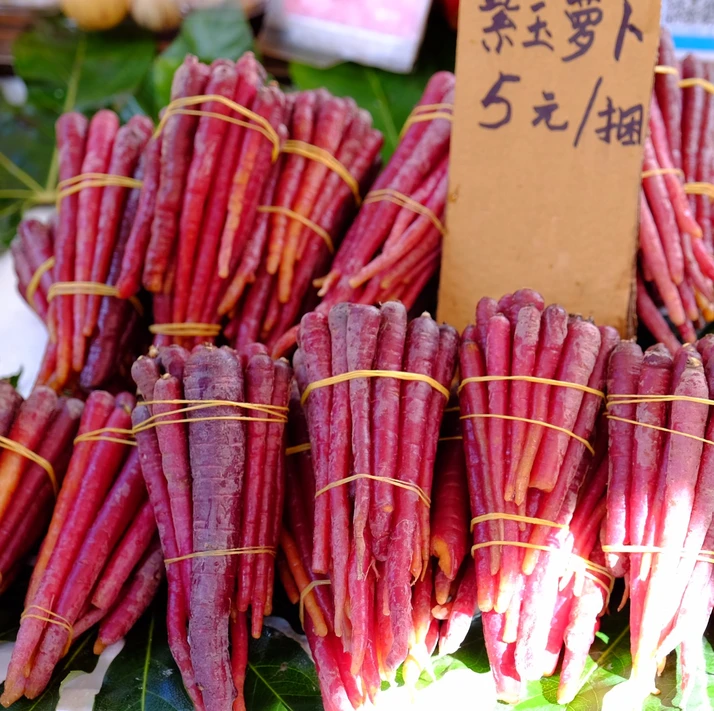
- Purple Jade Radish (zǐ yù luó bo): The vendor said the smaller ones taste better. I plucked up the courage to buy a bunch, but eating them made me feel like a rabbit—I really couldn't get used to it.
- Ginseng Fruit (rén shēn guǒ): Sweet and juicy, but the quality varies a lot between sellers. Look for large ones with clean, yellow skin.
- Plum (xī méi): Sweet and sour, delicious. Highly recommended.
5. Eat Vegetarian Meals at Jizhao Nunnery: Standing Up Is Fine
Jizhao Nunnery is a popular destination, famous for its succulents and vegetarian meals. The meal costs 20 RMB per person, with about 10 dishes. You can get refills, but you can't waste food—if you don't finish, you have to kneel for the length of one incense stick. The taste isn't mind-blowing, but the atmosphere is special: everyone stands, squats, or sits on steps to eat. People from all over the country gather together, creating a strangely ceremonial feeling.
But I strongly recommend going in the off-season. This nunnery is really small; during peak season, you might not even get through the gate. When we went, the queue was already several layers deep. A local told us this was the smallest crowd he'd ever seen for the meal.
6. Stay in a Unique Guesthouse: Let Fatigue Melt in the Details
A good guesthouse can heal a day's exhaustion. We stayed at two this trip: one had a modern, minimalist style with a giant teddy bear on the roof—super cute; the other was antique-style, with every detail in the courtyard worth savoring.
7. Visit the Four Seasons Market: Tasting the World
This was recommended by locals—a market that even residents love. There are band performances, handmade crafts, and food from all over. The key point: these dishes aren't imitations; they're made by the people themselves. Snail rice noodles are sold by a Guangxi native, rice noodle rolls by a Cantonese, takoyaki by two Japanese chefs... Only in Dali can you find so many people from different places living together.
8. Take Photos with Glass Balls and White Tables: A Girl's Obsession
Even though these props have been photographed to death, almost every woman still poses with them—because they really do look good. Usually, these props are either included with your hotel or cost 10 RMB per person.
9. Visit a Music Bar in the Evening: Dali's Nights Are Gentle
Bars are everywhere in Dali Ancient City and Shuanglang Ancient Town. If you don't like loud places, there are also many restaurants that create a bar-like atmosphere. Go in the evening, order a drink, listen to some music—just thinking about it feels cozy.
10. See Cherry Blossoms at Dali University: Missing Out Is Also Scenery
Besides the spring cherry blossoms, Dali also has a winter bloom in December. We went in early January, hoping to catch the tail end, but it had been raining continuously, and the wind had stripped all the flowers. It was a pity, but it gives us a reason to come back.
West Erhai Lake Road: The Poetry of Pastoral Life
Caicun and Longkan Villages: Don't Waste Your Time
Many people recommend Caicun, but I honestly don't see the appeal—a small dock and a tiny wetland park. Longkan Village is the same: boring enough to put you to sleep. If you're short on time, just skip them.
Majiuyi: First Encounter with the Black-Headed Gulls
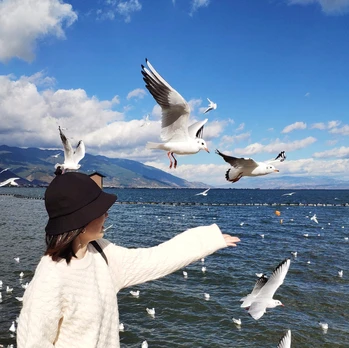
Driving along the West Road, near Majiuyi, we came across a huge flock of black-headed gulls. Seeing so many seagulls for the first time, I was as excited as a child. We played for half an hour, but time was tight, so we had to move on.
Dali Highway: An Unexpected Pastoral Surprise
The West Erhai Lake Road was undergoing demolition—to protect the ecosystem, hotels too close to the lake were being torn down. We had to detour onto the Dali Highway. To our surprise, this road was stunning: colorful fields, classic Bai ethnic houses, and Cangshan Mountain in the distance. Every snapshot was wallpaper-worthy.
Yangjia Village: Upside-Down Colorful Boats and Wedding Photos
Yangjia Village is famous for a row of colorful upside-down boats—great for photos. Every scenic spot has a wedding shoot going on—thankfully, it was the off-season. Along the way, we also saw a group of local women cutting grass, presumably to clean up Erhai Lake.
Langqiao Bridge: An Overhyped "Internet-Famous" Spot
Many people say Langqiao Bridge is great for photos. I thought it was just okay. There aren't many unique spots along Erhai Lake, so when something different comes along, it gets blown out of proportion.
Zhoucheng: The Millennia-Old Art of Tie-Dye
Zhoucheng is famous for its tie-dye (zhā rǎn) technique. In 2007, Zhang Shishen from Zhoucheng was designated a national-level inheritor of the craft. The process involves two steps: tying (binding areas you don't want dyed with thread) and dyeing (using indigo from the bǎn lán gēn plant). Most tie-dye you see is blue, but the most complex pieces require repeated tying and dyeing to create different shades of blue—such works cost 200-300 RMB.
Haitong Park: The Couple Trees and the Tyndall Effect
Haitong Park is a long, tongue-shaped sandbank that juts into Erhai Lake on three sides. About 100 meters to the left of the entrance stand the famous Couple Trees—two giant banyan trees. Standing beneath them feels like traveling through time.
The park is small; you can walk through it in an hour. But Yunnan's weather is unpredictable—one moment blazing sun, the next dark clouds. Here, it's easy to witness the Tyndall effect: sunlight streaming through the clouds, creating an ethereal, fairy-tale glow.
Xizhou Ancient Town: Bai Architecture and Adorable Door Gods
Xizhou is a town inhabited mainly by the Bai ethnic group, preserving the largest and best collection of Bai residential architecture. The shops here are interesting, unlike the cookie-cutter flower-cake stores in Dali Ancient City. I particularly loved a shop with two door gods so cute that I couldn't resist taking photos.
The representative building is the Yan Family Mansion, a sprawling compound with multiple courtyards. The front section features a "four patios and five rooms" layout, while the backyard houses a Western-style villa. Unfortunately, we arrived after closing time. At night, Xizhou is sparsely populated with little entertainment, but luckily our guesthouse was very interesting.
Shuanglang Ancient Town: My Favorite Lake Street and Yang Liping's Moon Palace
Shuanglang Ancient Town is one of Dali's earliest developed scenic areas. Almost everyone who visits Dali goes there. The scenery is beautiful—I loved it. Unfortunately, we only spent three hours there, nowhere near enough. We really should have stayed overnight.
Shuanglang is large, with a long main street and four peninsulas to explore. My favorite was "Lake Street" (hǎi jiē)—a path from Yuji Island along the lake to Daoyipang Peninsula. Facing the lake, eating fruit, and soaking up the sun was the most delightful thing this winter. Of course, don't forget sunscreen.
Moon Palace and Sun Palace: Tree Roots Like Dragon Claws
Yang Liping's Moon Palace is built on a rock, surrounded by massive trees. The most striking feature is a giant banyan tree that grows right through the wall. You can barely see the building's full exterior; the only visible part is a corner of a glass corridor extending over Erhai Lake—that's where she does yoga. Sun Palace is open to the public; you can rent it or go in for tea at 100 RMB per person.
The trees around Moon Palace and Sun Palace look almost supernatural—those claw-like things aren't rocks; they're tree roots! They grow on the rocks and have even taken on the rocks' color.
East Erhai Lake Road: A Dialogue Between Mountain and Lake
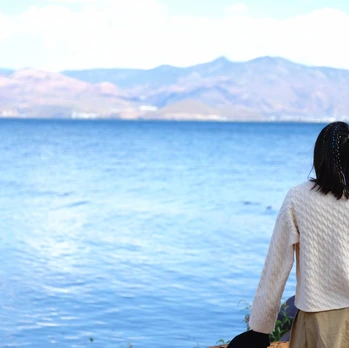
After passing Shangguan, you enter the East Erhai Lake Road. The scenery along the way is overwhelming.
Hongshan Temple: Saying Goodbye to the Gulls
There were many black-headed gulls here too, and we spent a long time playing with them again.
Lu'e Mountain: A Small Seaside Cliff
Lu'e Mountain is a small cliff by the lake, dotted with tall, slender trees. Many wedding photography teams walk along a path leading inward, with some even descending to the cliff base. But there were too many tiny mosquitoes inside, so I gave up halfway.
Wase Dock: The Closed Waterfront Walkway
Wase Dock has a waterfront walkway that's a great spot for photos. But it was temporarily closed when we visited—due to rising water levels, moss accumulation, and no railings, making it unsafe with crowds.
The Multi-Pond System: Erhai's Ecological Guardian
Xiao had visited Dali a few years ago, and back then the lake water was quite dirty. This time, he said it was much clearer. The local government has implemented various environmental measures, one of which is the multi-pond system—using aquatic plants and animals to absorb and purify wastewater before recycling it.
Xiaoputuo Island: A Ming Dynasty Temple and Bird-Watching Haven
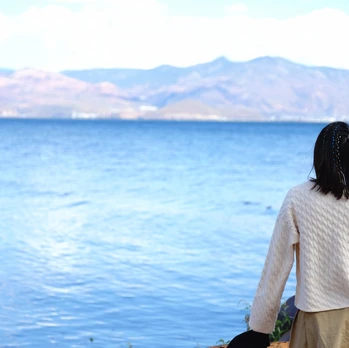
Xiaoputuo Island was built during the Ming Dynasty. It's a two-story pavilion-style structure: the first floor houses a statue of the Tathagata Buddha, and the second floor a statue of Guanyin (the Goddess of Mercy). It's also a prime bird-watching spot, and of course, wedding photography teams don't miss it.
Tianjing Pavilion: Ancient Ships and the Setting Sun
Near Tianjing Pavilion, there are several large, ancient-looking ships. Taking photos there costs a fee, I think 20 RMB per person. Unfortunately, we ran out of time—we had to get back to the ancient city to return the rental car. The setting sun cast its golden light on our return journey.
Dali Ancient City: Nothing Special, But Better Than Cangshan
Dali Ancient City... it's not particularly exciting, but it's still more interesting than Cangshan Mountain and the Three Pagodas of Chongsheng Temple. Wuhua Tower is a representative building, originally the guesthouse of the Nanzhao King. The Bed Sheet Factory (chuáng dān chǎng) is a gathering place for artsy youth, though it falls far short of Chongqing's Eling Second Factory. At night, the ancient city comes alive as various bars start singing, one after another.
Everyone says Dali Ancient City is laid-back, a place where you can sit down and enjoy the slow pace. But I feel that when you're on vacation, you should walk around and see things. If you're just sitting and drinking tea, what's the difference from staying at home?
Cangshan Mountain: You'll Regret Not Going, But Regret Going Even More
Cangshan is the main peak at the southern end of the Yunling Mountain Range, composed of nineteen peaks. Between every two peaks, a stream cascades down into Erhai Lake—this is the famous "Nineteen Peaks and Eighteen Streams." The mountain peaks are covered in white snow, one of the four sights known as "Wind, Flowers, Snow, and Moon" (fēng huā xuě yuè).
But to be honest, Cangshan isn't much to look at. We took the Gantong Cable Car up—a one-way ride of less than 20 minutes—then casually looked around from the halfway point before coming back down. We saw many squirrels in the surrounding forest, which was the only pleasant surprise.
Epilogue: What Dali Taught Me
The five-day trip ended. Sitting on the return flight, I scrolled through the photos on my phone. Those black-headed gulls, the colorful upside-down boats, the blue of the tie-dye, the sunlight on Lake Street, the tree roots at Moon Palace... every frame made me nostalgic.
Dali is not a place for "checking in"—it's a place for "living." It taught me: you don't have to rush your travels, and you don't need to fill every moment with scenery. Sometimes, missing out is also beautiful—like the cherry blossoms we didn't see, the glass ball we didn't photograph, the bar we didn't sit in. These regrets become reasons to come back.
If you want to go to Dali, my advice is: choose the off-season, rent a car, circle Erhai Lake once, feed the black-headed gulls, eat a vegetarian meal, and stay in a unique guesthouse. Then leave the rest to chance—chance encounters with a rainbow, an alley, a conversation with a local.
After all, what's most moving about Dali is never the "must-do lists" in travel guides, but the unexpected surprises.
Finally, three tips:
- Travel in the off-season: Save money, save stress, save time, and enjoy a purer Dali.
- Rent a car for the lake loop: Two days is just right—don't try to do it in one.
- Slow down: Dali isn't for rushing through; it's for experiencing.
May you find your own story by the shores of Erhai Lake.
You should also read:
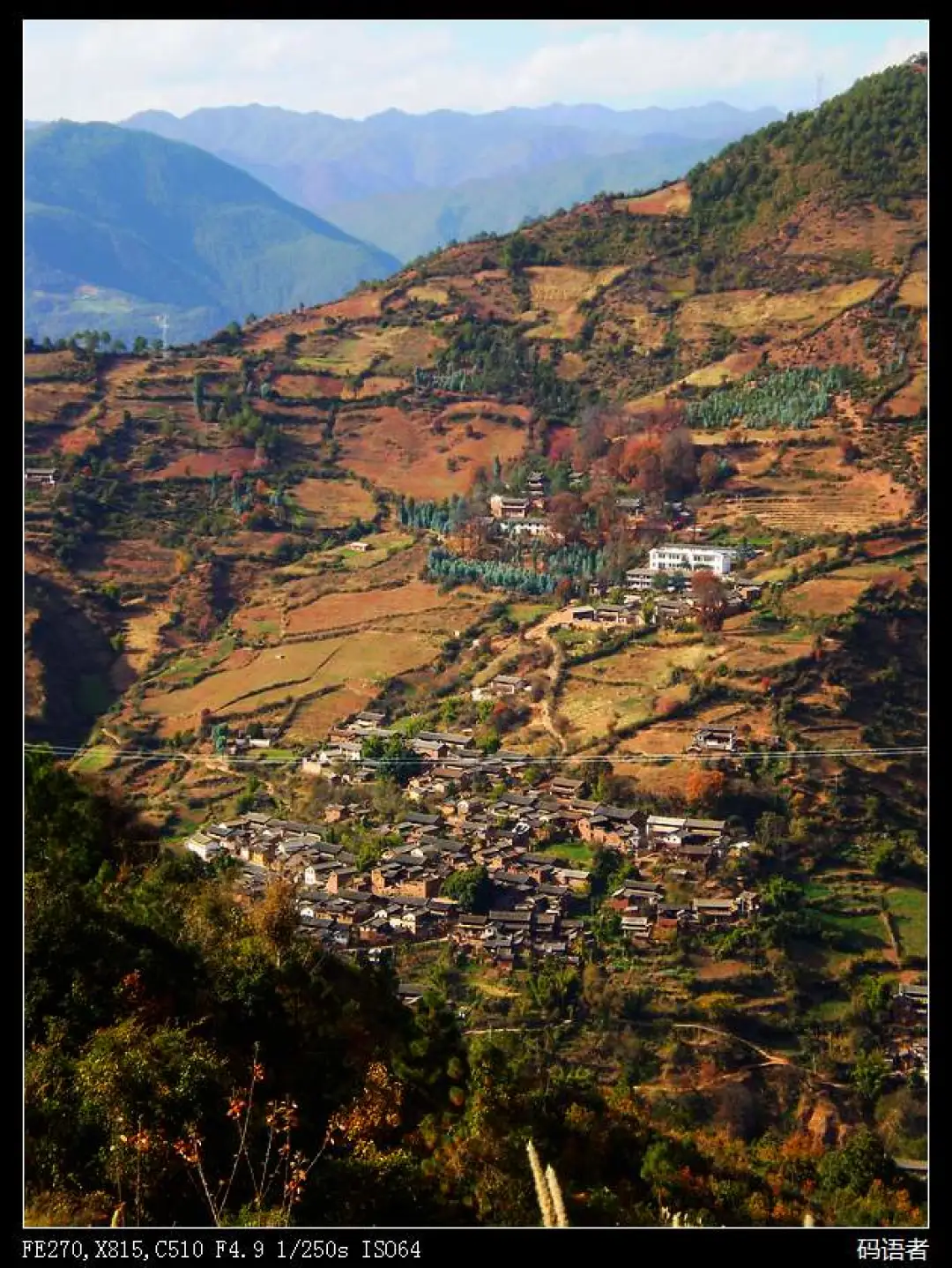
Before the Tongue: Discovering Nuodeng, the Ancient Salt Town Time Forgot
Before the Tongue: Discovering Nuodeng, the Ancient Salt Town Time Forgot There’s a peculiar magic in places that have been left behind by history. They don’t try to impress you. They don’t have polished welcome centers or laminated maps. They just are—worn, quiet, and utterly…
Continue reading...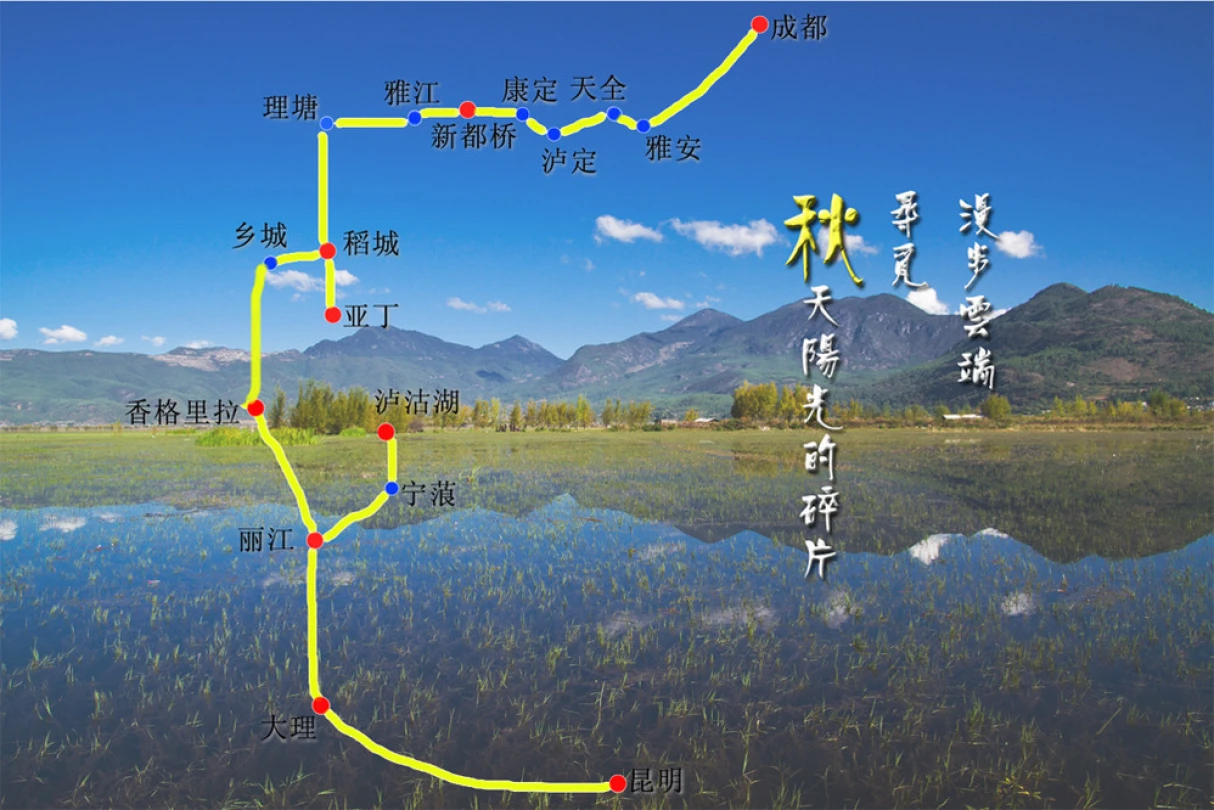
Strolling Among the Clouds: Gathering Autumn's Light on the Western Sichuan Plateau
Strolling Among the Clouds: Gathering Autumn's Light on the Western Sichuan Plateau Prologue: A Sun Chaser's Journey Autumn sunlight is like a gentle painter, using golden brushstrokes to smear the last traces of warmth across the earth. It slips through the gaps between your fingers,…
Continue reading...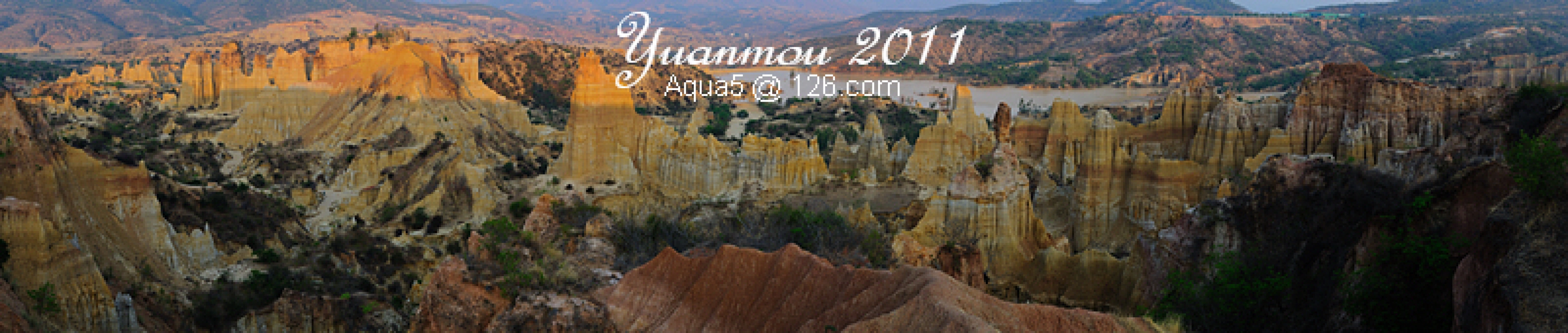
A Journey Through Time: The Earthen Forest of Yuanmou — April 2011 Chuxiong & Yuanmou Self-Drive Guide
A Journey Through Time: The Earthen Forest of Yuanmou — April 2011 Chuxiong & Yuanmou Self-Drive Guide Some journeys are destined to take root in your memory. In April 2011, I set out from Shuhe in Yunnan, heading north toward the Chuxiong Yi Autonomous Prefecture,…
Continue reading...