Hand in Hand Across the World: From Eastern Yunnan to Western Yunnan, from the Smoke of Daily Life to the Poetry of Wind and Moon, We Explored Every Corner of Yunnan
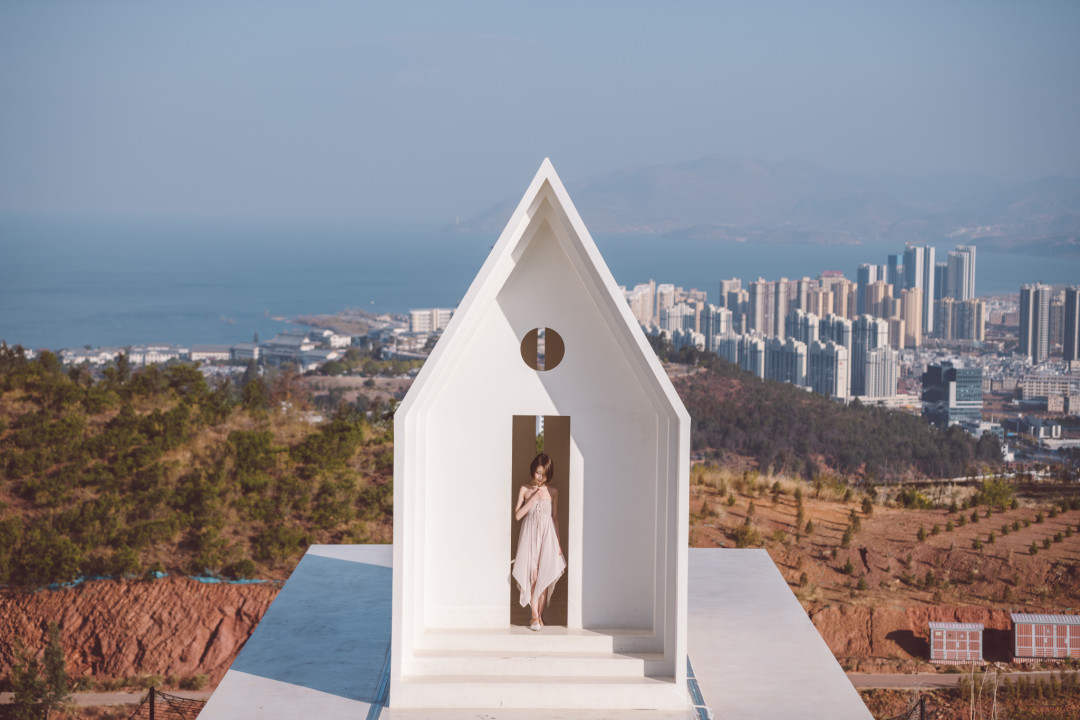
Hand in Hand Across the World: From Eastern Yunnan to Western Yunnan, from the Smoke of Daily Life to the Poetry of Wind and Moon, We Explored Every Corner of Yunnan
There's a certain magic to Yunnan that lingers long after you've left its borders. It's not the kind of beauty that demands you to conquer towering peaks or traverse desolate plateaus. It's gentler, more intimate—a beauty that reaches out and touches you without asking for anything in return. Yet, it also hides in plain sight, revealing itself only to those who take the time to look.
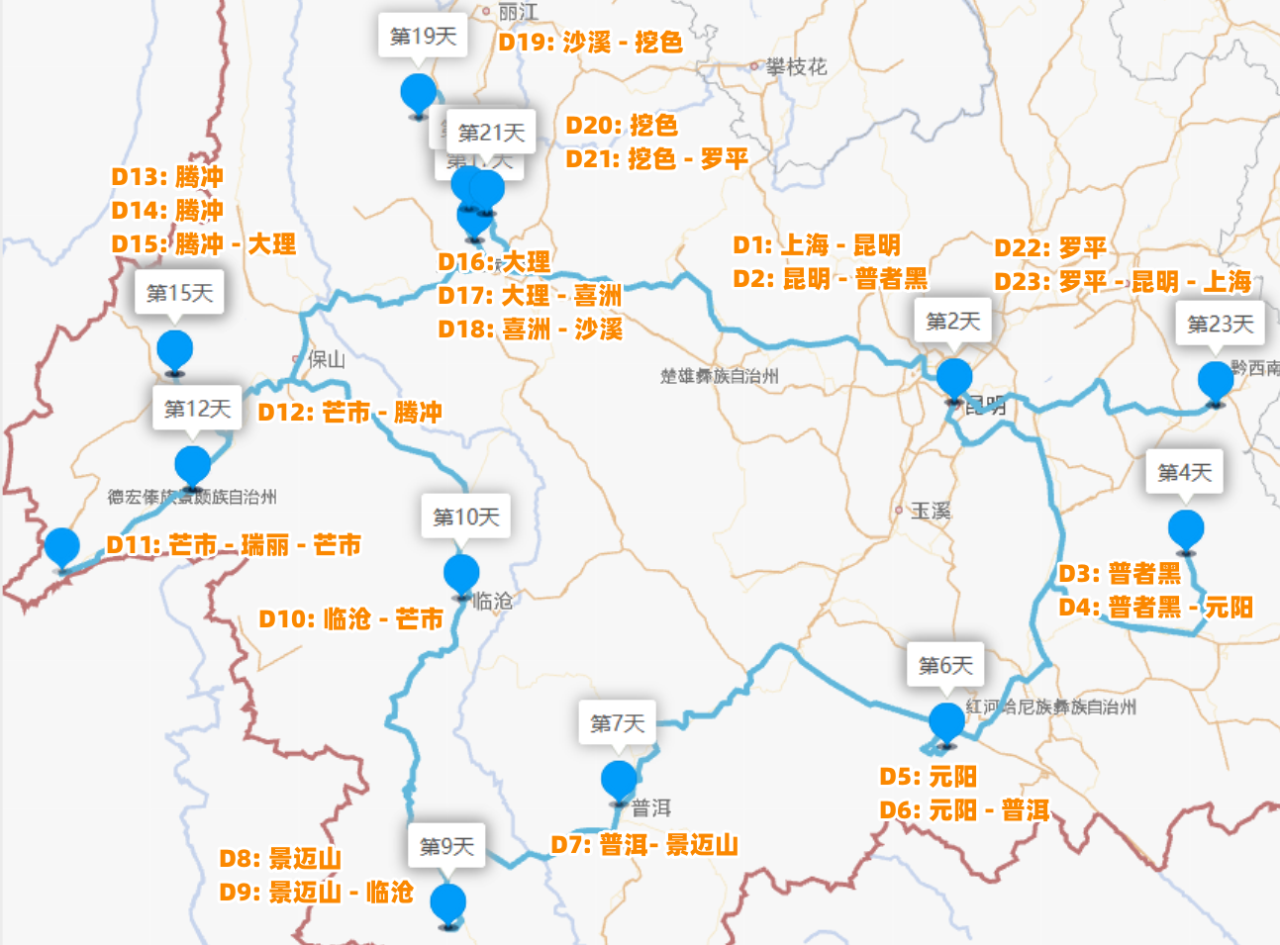
This past winter, my partner and I set off on a 23-day odyssey across Yunnan, from the eastern edges to the western frontiers. We chased sunrises over terraced rice fields, wandered through ancient villages frozen in time, and stood breathless before seas of clouds that seemed to stretch into eternity. We spent 23 days, covered over 1,300 kilometers, and spent roughly 13,000 yuan per person. And we came back with more than just photographs—we came back with stories.
The Opening Act: A Glimpse of What's to Come
They say you take photos not to remember, but to allow yourself the freedom to forget. I've always loved that idea. Because when you're standing on the summit of Qinglong Mountain (Green Dragon Mountain), watching the mist roll over a landscape that looks like it belongs in a Chinese painting, you don't need a camera to remember. You just need to be there.
From the surreal karst peaks of Puzhehei to the misty forests of Shede Grassland, from the terraced masterpieces of Yuanyang to the cloud-kissed mornings of Jingmai Mountain, every corner of Yunnan offered something different. We tasted tea in thousand-year-old villages, chased the golden glow of sunset over endless rice paddies, and stood at the edge of cliffs where the earth seemed to fall away into a sea of clouds.
This is the story of that journey.
Chapter One: Ink Wash Painting in Puzhehei
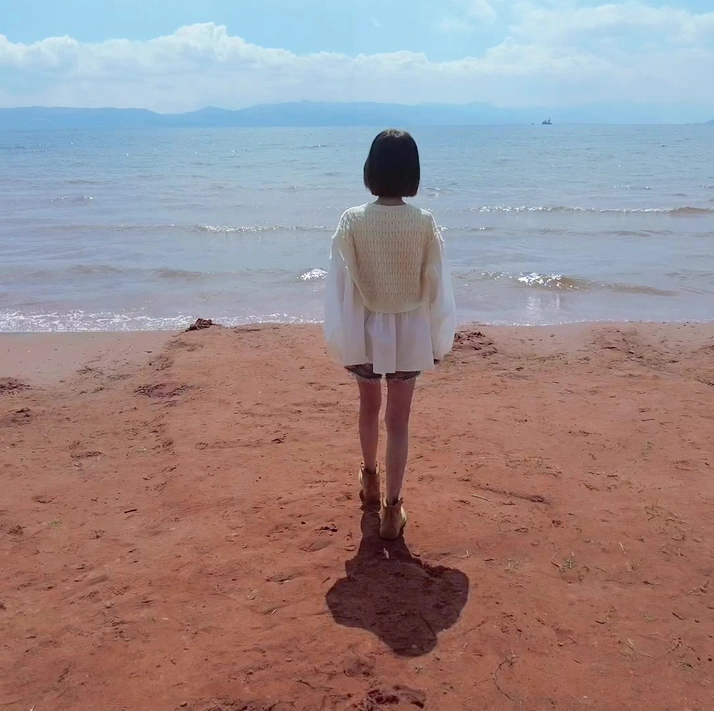
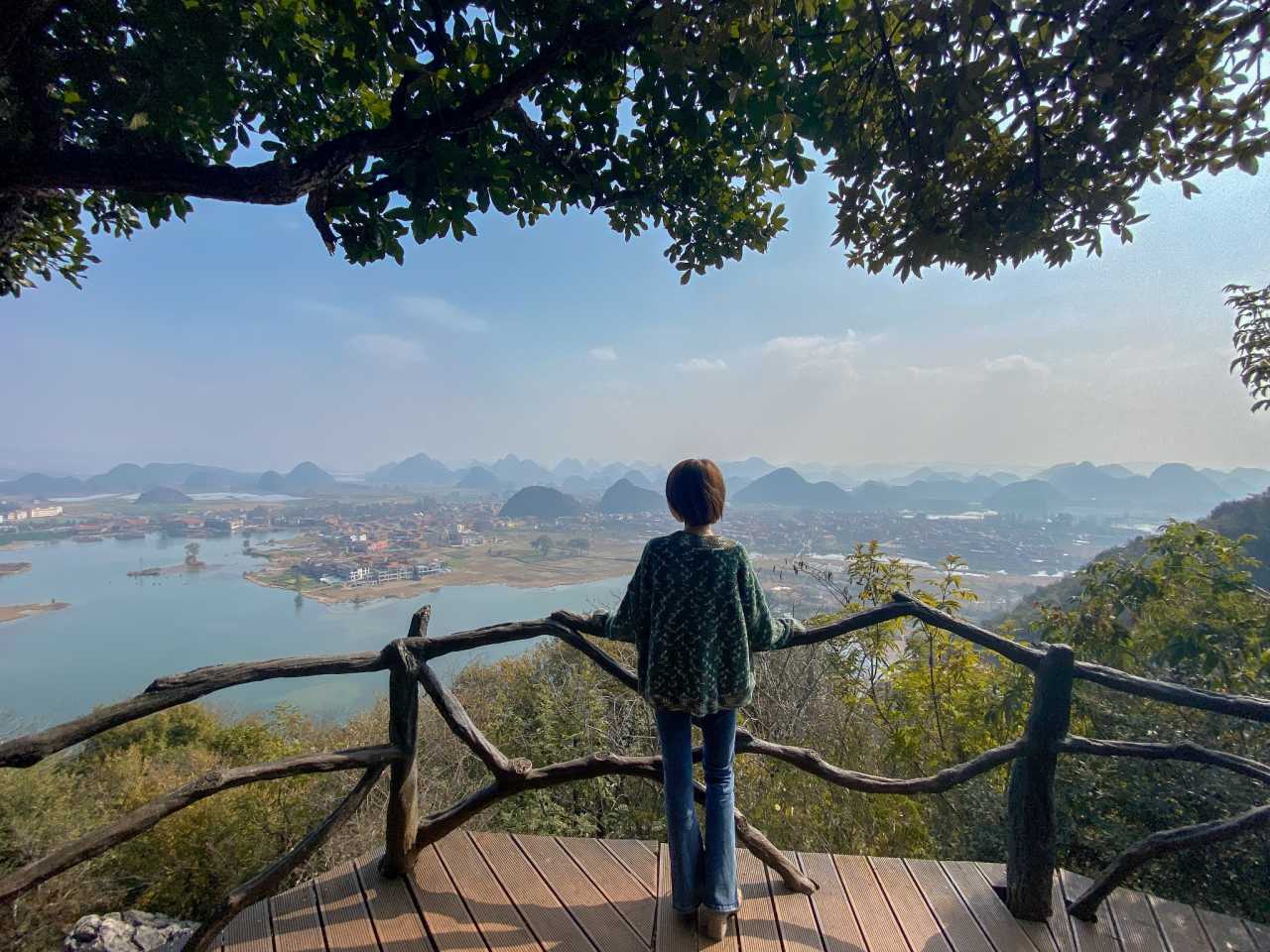
Qinglong Mountain: A View of the Mortal Realm
Some places are simply favored by nature. Puzhehei is one of them. With its jagged karst peaks, winding waterways, and lush wetlands, it feels like a landscape painted by a master artist. Even in winter, when the lotus flowers have withered and the hills have lost their green coats, there's a quiet dignity to the place.
Qinglong Mountain offers the best vantage point. From the summit, you can see the entire valley spread out below—solitary peaks rising from the mist, smoke curling up from village chimneys, and the still waters reflecting the gray sky like a mirror. It's easy to imagine that this is where the mythical Qingqiu realm of Three Lives, Three Worlds was born.
We didn't catch the sunrise or sunset. The weather didn't cooperate. But honestly, the overcast sky gave Puzhehei a melancholic charm that felt almost poetic. The distant mountains faded into the haze, and the reflections in the water blurred into abstract shapes. It was like walking through an ink wash painting.
We took a boat ride through the canals, hoping to stumble upon a hidden lotus grove. The winter chill had cleared the crowds, leaving the waterways silent and still. Occasionally, a few winter cherry blossoms burst into bloom, their pink petals a stark contrast against the muted landscape. That's the thing about travel—there are always small surprises to balance the disappointments.
Practical Tips: - Entry to Puzhehei is free, but boat rides and some attractions charge fees. - No private cars are allowed inside the scenic area; use electric carts or horse-drawn carriages. - Qinglong Mountain is free to climb and takes about 30 minutes. There are two viewing platforms at the top—the left one offers better views. - Stay in Puzhehei Village or Xianrendong Village (Immortal Cave Village); private cars can enter via a detour.
Shede Grassland: A Misty Forest Encounter
Shede Grassland is a hidden gem about 60 kilometers from Puzhehei. The name itself is poetic—shede means "to let go and gain." And we had to let go of our expectations, because the day we visited was shrouded in thick fog.
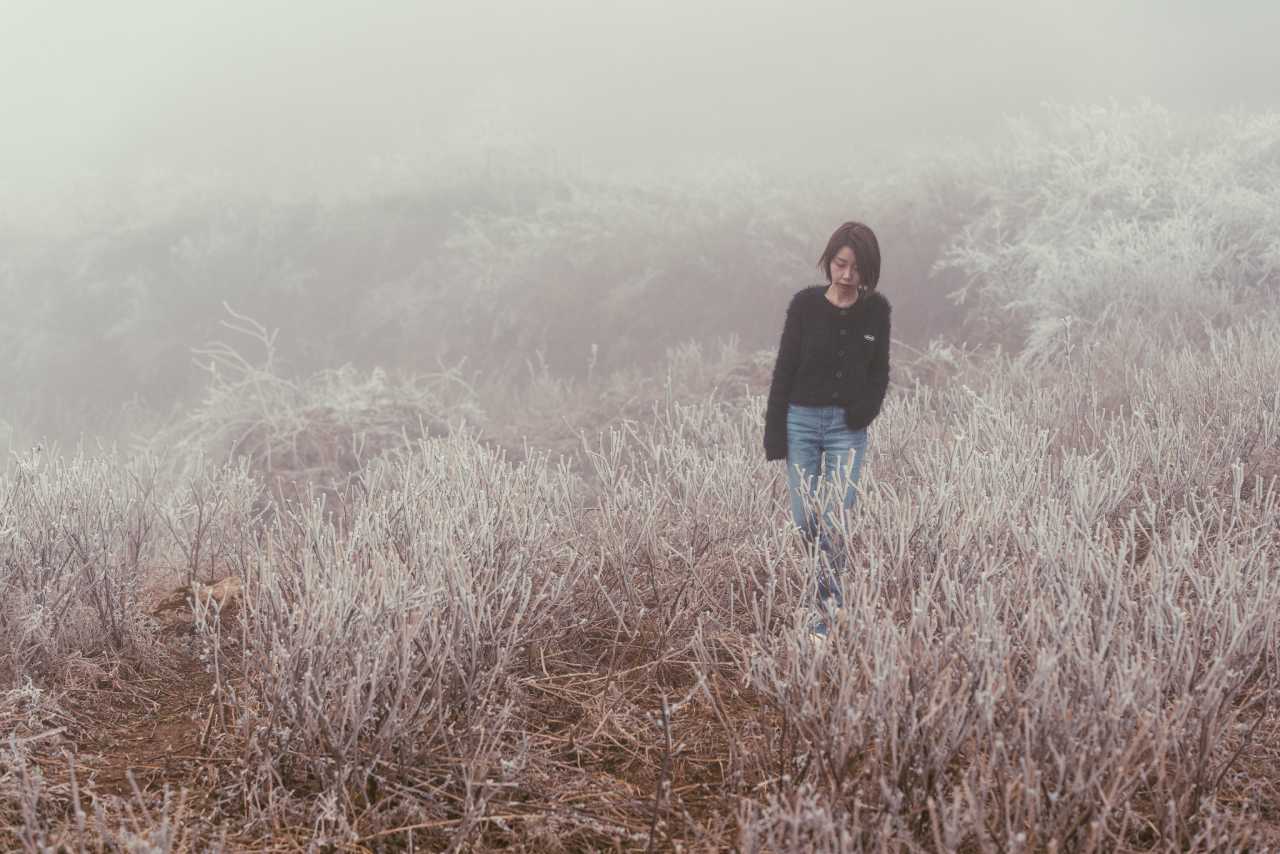
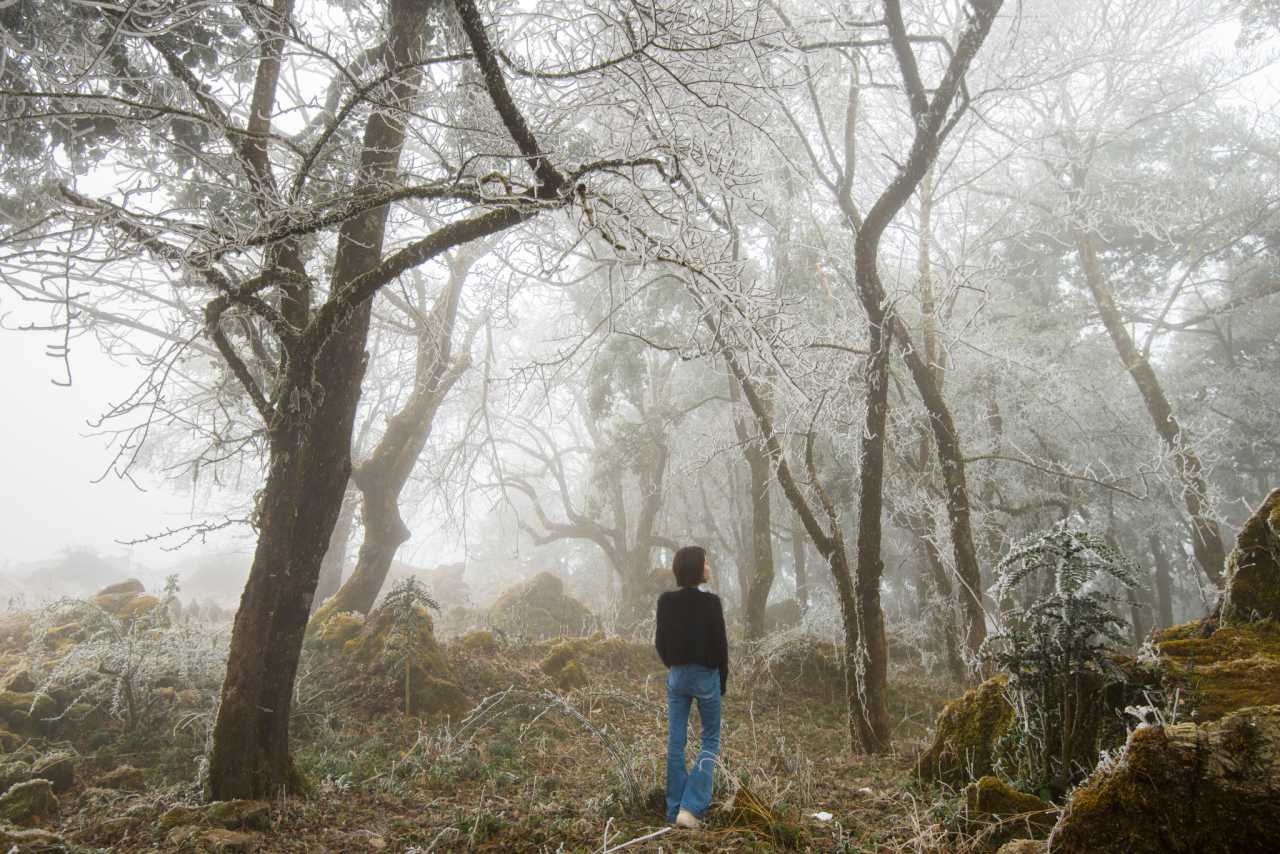
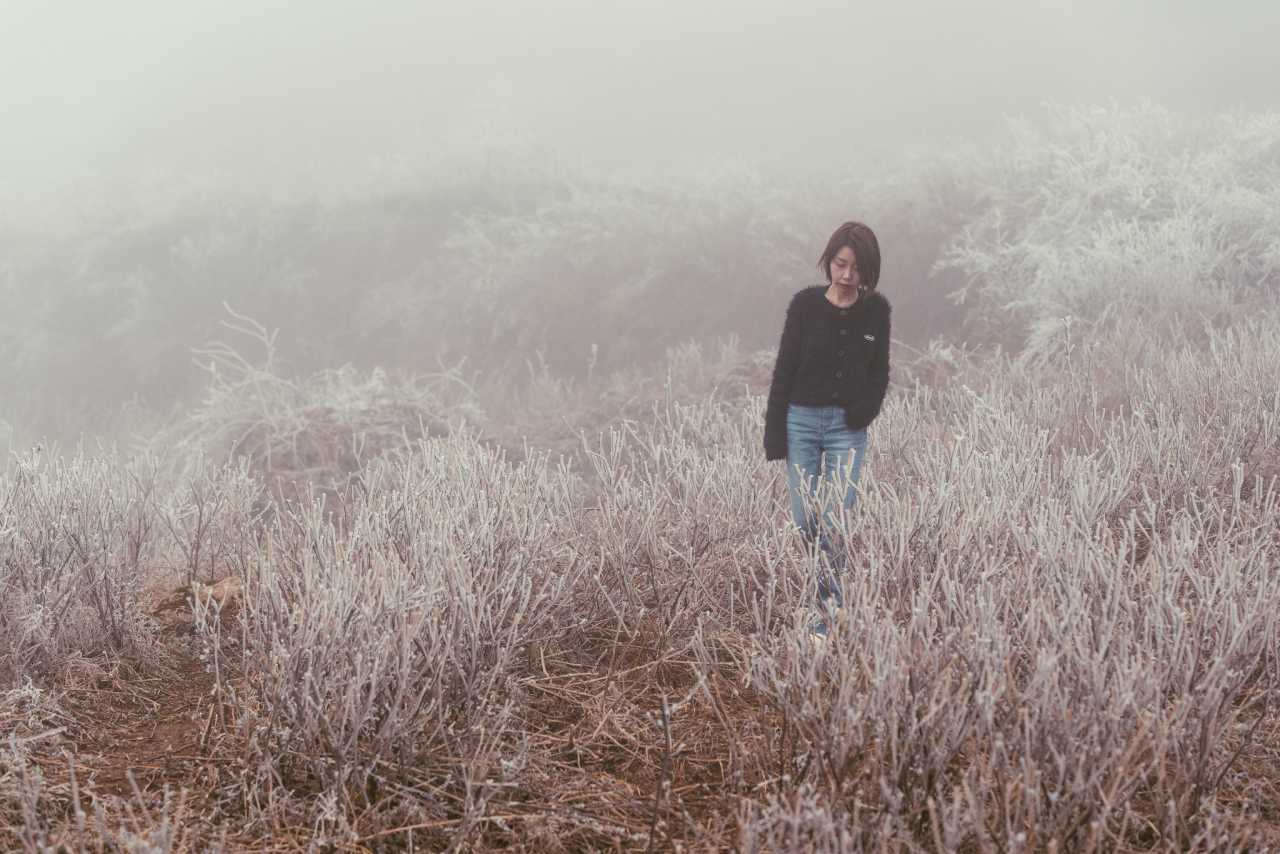
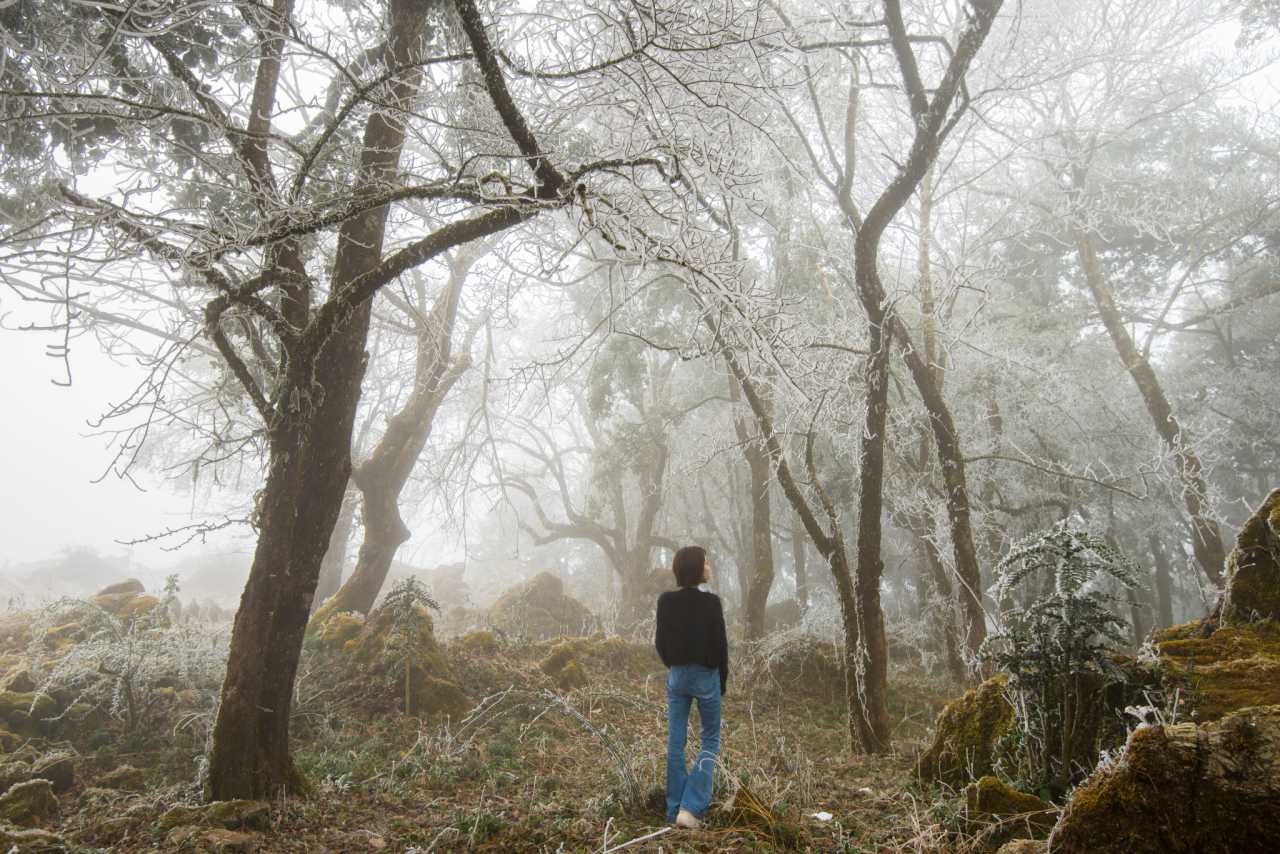
Visibility dropped to less than five meters. Car headlights cut through the mist like beams of light in a fantasy film. But then something unexpected happened. As we climbed higher, the fog froze into rime ice, coating the pine trees in crystalline layers. It was like stepping into a fairy tale—a forest of silver needles, glittering under the occasional ray of sunlight.
We stepped out of the car, and the cold didn't hit us as hard as we expected. The silence was absolute, broken only by the sound of our own breathing. For a moment, I felt like I had wandered into a realm reserved for immortals.
Practical Tips: - The drive from Puzhehei takes about 1.5 hours on winding mountain roads. - Go in the morning for the best chance of seeing the sea of clouds.
Chapter Two: The Eternal Carving of Yuanyang
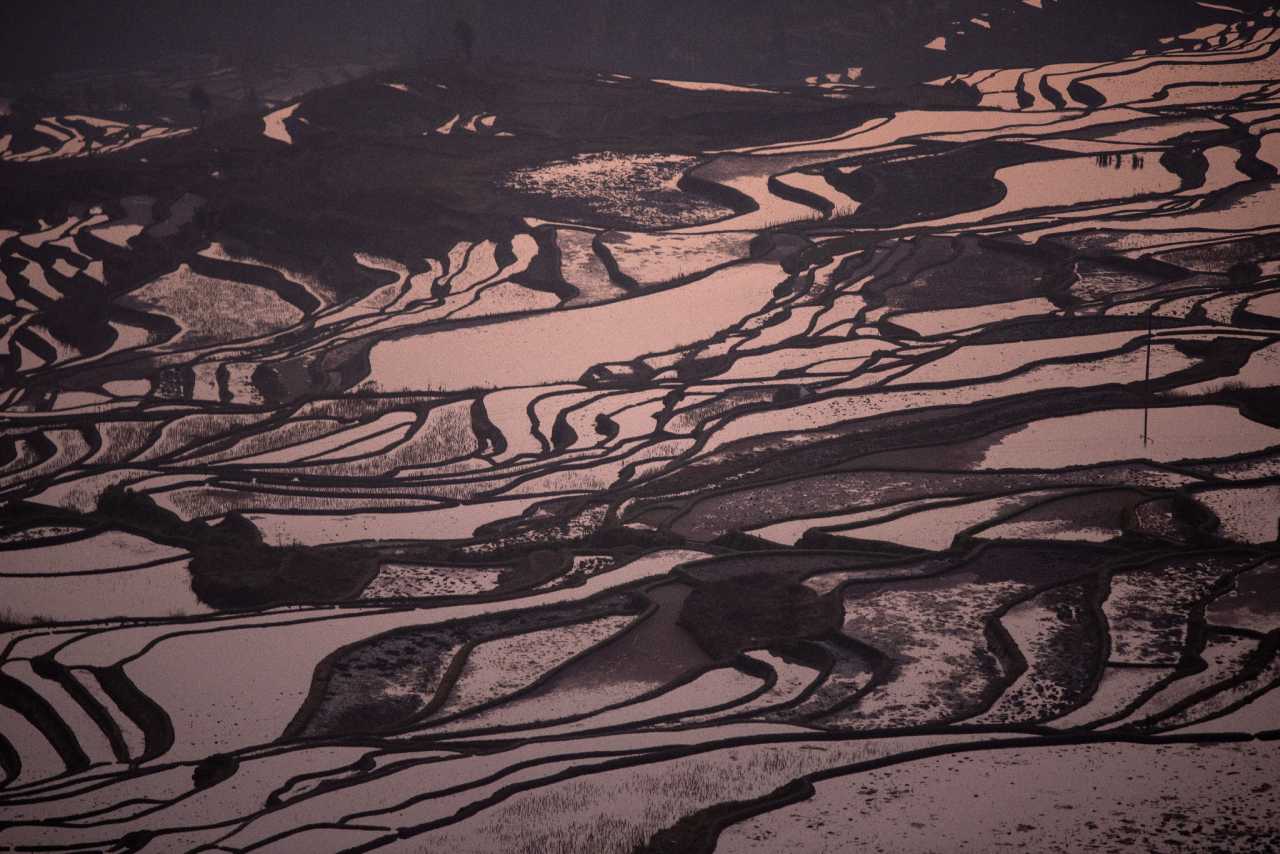
The Hani people have spent over 1,300 years carving the mountains of Yuanyang into terraced rice paddies. It's not just agriculture—it's art. And in winter, when the terraces are flooded with water, they become mirrors that reflect the sky, creating a landscape that changes with every passing cloud.
Duoyishu: Waiting for the Sunrise
Sunrise at Duoyishu is a ritual. We woke up at 6 a.m. to secure a good spot, but the serious photographers had already claimed the best positions. Still, the half-hour before sunrise was the most magical. The sky shifted from purple to pink, and the terraces mirrored every subtle change. The village of Duoyishu emerged from the mist like a mirage.
When the sun finally broke over the horizon, the terraces turned gold. It was brief, but breathtaking. We watched the same sunrise two mornings in a row, and each time, the colors were different. That's the gift of nature—it never repeats itself.
Practical Tips: - The viewing platform has three levels; the top center or rear offers the best angles. - Arrive at least 30 minutes early; the pre-dawn light show is the real highlight. - Traffic is heavy in the morning, so stay near Duoyishu and walk.
Aichun: Searching for the Purest Blue
Just a few turns away from Duoyishu lies Aichun, famous for its blue terraces. On a clear day, the water reflects the sky so perfectly that it turns a brilliant shade of blue. We walked down to the rice paddies—trembling a little on the narrow ridges—to get closer. The Hani farmers working nearby made us feel like clumsy tourists, but the view was worth it.
The blue here is pure and unadorned, a gift from the sky. It only appears between 9 a.m. and 11 a.m., and only on cloudless days.
Practical Tips: - No official viewing platform; you can walk into the terraces for a small fee (5 yuan). - Best visited between 9 a.m. and 11 a.m. on a sunny day.
Azheke: Mushroom Houses in the Clouds
Azheke is an ancient Hani village hidden among the terraces. The houses are built with thatched roofs that look like mushrooms, and the village has remained largely unchanged for centuries. Children played in the courtyards, and elderly villagers sat under trees, chatting in their native tongue.
At the end of the village, we found the terraces again. I asked a local where the best sunset spot was. He shrugged and said, "I've been looking at these terraces my whole life. They all look the same to me." That's the beauty of travel—we go to places that others have grown tired of, and we see them with fresh eyes.
Practical Tips: - Park at the village entrance and walk about 1 km into the village. - The best light is around midday or afternoon.
Old Eagle's Beak: The Earth's Colorful Robe
If you want to see the most colorful terraces in Yuanyang, go to Old Eagle's Beak. It's lesser-known, but the colors here are breathtaking—layers of green, blue, gold, and purple, as if someone had spilled a palette across the hillside.
Standing at the cliff's edge, I felt like I was looking at a living painting. The terraces clung to the mountain like a multicolored robe, each fold revealing a different shade.
Practical Tip: Visit in the late afternoon for the warmest light and the most dramatic shadows.
Chapter Three: Jingmai Mountain – The Aroma of a Thousand Years
From the terraces of Yuanyang, we drove westward toward Jingmai Mountain, home to some of the oldest tea plantations in the world. The road wound through endless hills, and with every kilometer, the air grew cooler and richer with the scent of damp earth and green leaves.
Wengji Village: A Thousand-Year-Old Tea Dream
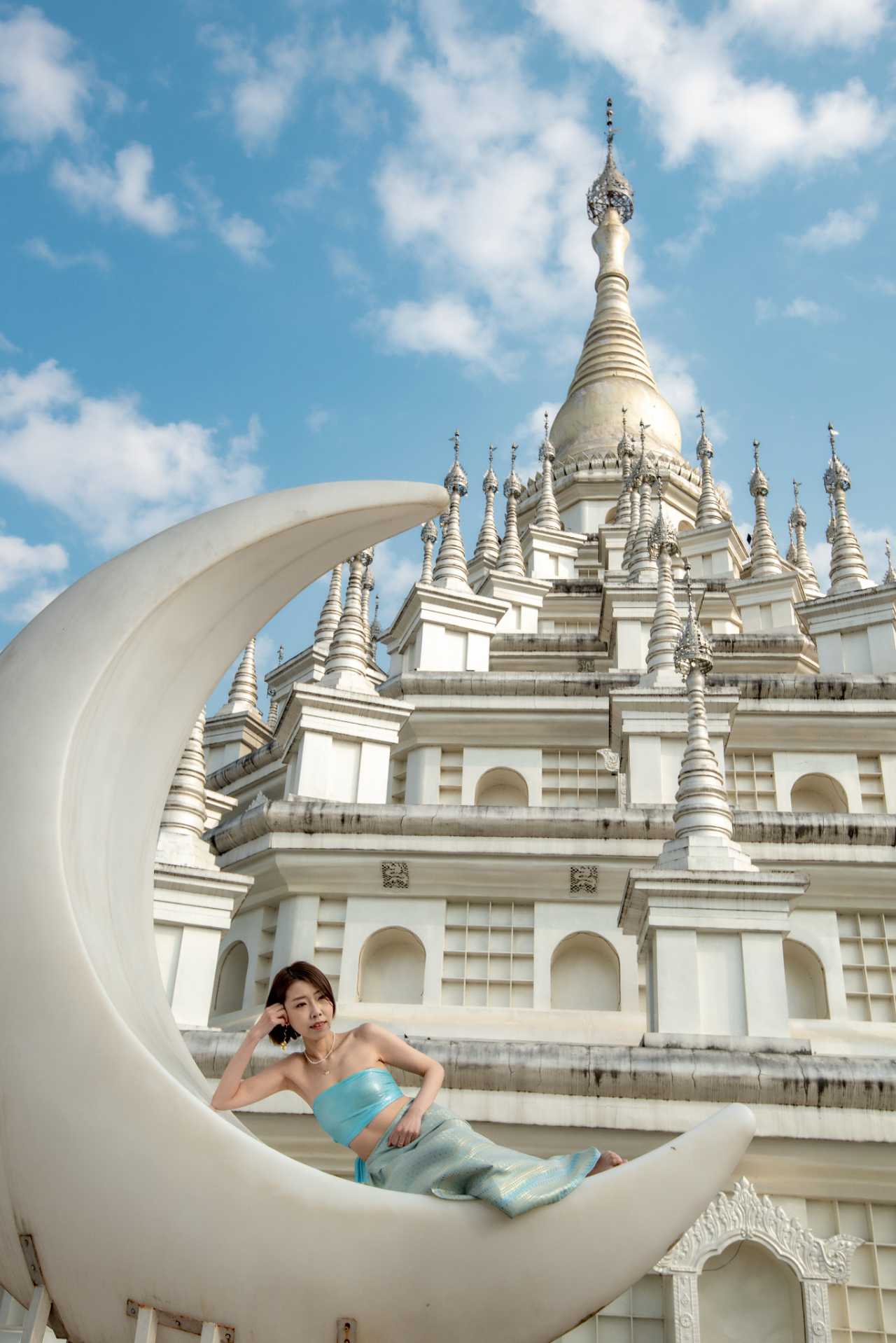
Wengji Village is a Bulang settlement that has been growing tea for over a millennium. The village is perched on a hilltop, surrounded by ancient tea trees that rise like gnarled giants from the mist. We arrived in the late afternoon, just as the last rays of sunlight filtered through the clouds.
The villagers were drying tea leaves in their courtyards, and the air was thick with the aroma of roasting tea. We sat down with an elderly woman who offered us a cup of raw pu'er (pu'er tea). It was bitter at first, then sweet—a flavor that seemed to carry the memory of a thousand mornings.
Practical Tips: - Jingmai Mountain is free to enter, but some villages charge a small parking fee. - Stay in Wengji or Nuogang villages for the full experience. - The best time for photography is early morning, when the mist settles over the tea terraces.
Nuogang Village: Where the Clouds Drink Tea
Nuogang is even higher than Wengji, and on a clear day, you can see the clouds drifting below the village. We woke up at dawn and walked to the viewing platform. The sea of clouds stretched out before us, and the tea terraces emerged like green islands in a white ocean.
We spent the morning wandering through the village, watching tea farmers pick the tender leaves. They moved with a quiet rhythm, their hands dancing over the branches. It was meditative to watch—a reminder that some of the best things in life are the simplest.
Practical Tip: The sea of clouds is most common from November to February, especially after a rainy night.
Chapter Four: Dali – The Wind, the Flowers, and the Snow
From the tea-scented hills of Jingmai, we continued west to Dali, a city that needs no introduction. It's the stuff of Chinese poetry—the wind from the Cangshan Mountains, the flowers of the Erhai Lake, the snow on the peaks, and the moonlight over the ancient city.
Erhai Lake: A Cyclist's Paradise
We rented electric scooters and set off to circle Erhai Lake. The 120-kilometer route took us through fishing villages, past fields of winter rapeseed flowers, and along the shimmering edge of the lake. The water was so clear that we could see the pebbles at the bottom.
We stopped at a small pier and watched the fishermen cast their nets. A heron stood motionless on a wooden post, waiting for its own catch. The sun was warm on our faces, and the wind carried the faint smell of fish and wildflowers.
Practical Tips: - The full circle takes about 6-8 hours on an e-scooter; start early to avoid the afternoon wind. - The western shore (Xizhou to Shuanglang) is more scenic and less crowded. - Rent an e-scooter for around 80-100 yuan per day.
The Ancient City of Dali: A Taste of Slow Life
Dali's old town is a labyrinth of cobblestone streets, flowing streams, and courtyard cafes. We spent two days just wandering—sipping coffee on a rooftop, browsing the handicraft shops, and eating freshly made rose-flavored cakes.
The city has a relaxed vibe that's hard to find elsewhere. Street musicians play folk songs, artists paint the Cangshan Mountains from their easels, and everyone seems to move at a slower pace. It's the kind of place where you can sit in a square and watch the world go by, and somehow, the world doesn't seem to mind.
Practical Tips: - The old town is best explored on foot; leave your car outside the city walls. - Try the local specialty, 饵丝 (rice noodles in soup), and 烤乳扇 (grilled milk fan), a crispy, cheesy snack.
Shuanglang: The Perfect Sunset
Shuanglang is a small town on the eastern shore of Erhai Lake, famous for its sunsets. We arrived just before golden hour and found a seat at a lakeside café. The sky turned from blue to orange to pink, and the lake reflected the colors like a watercolor painting.
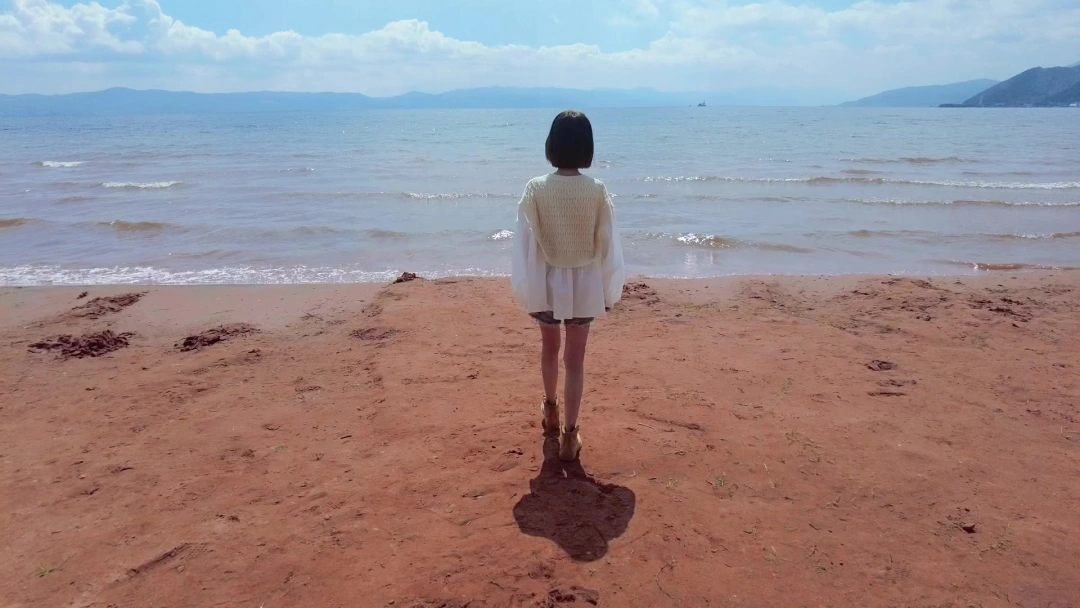
Boats drifted lazily on the water, and the distant Cangshan Mountains turned purple in the fading light. It was one of those moments that you want to bottle up and carry with you forever.
Practical Tip: The best sunset views are from the pier near the town center or from a rooftop café.
Chapter Five: Lijiang – The Ancient Melody of the Naxi
Our final stop was Lijiang, a city that has become synonymous with Yunnan tourism. But even with the crowds, there's a magic to Lijiang that's hard to deny.
The Old Town: A Maze of Memories
Lijiang's old town is a UNESCO World Heritage Site, and for good reason. The canals that run through the city are fed by meltwater from the Jade Dragon Snow Mountain, and the water is so clear that you can see the algae swaying at the bottom.
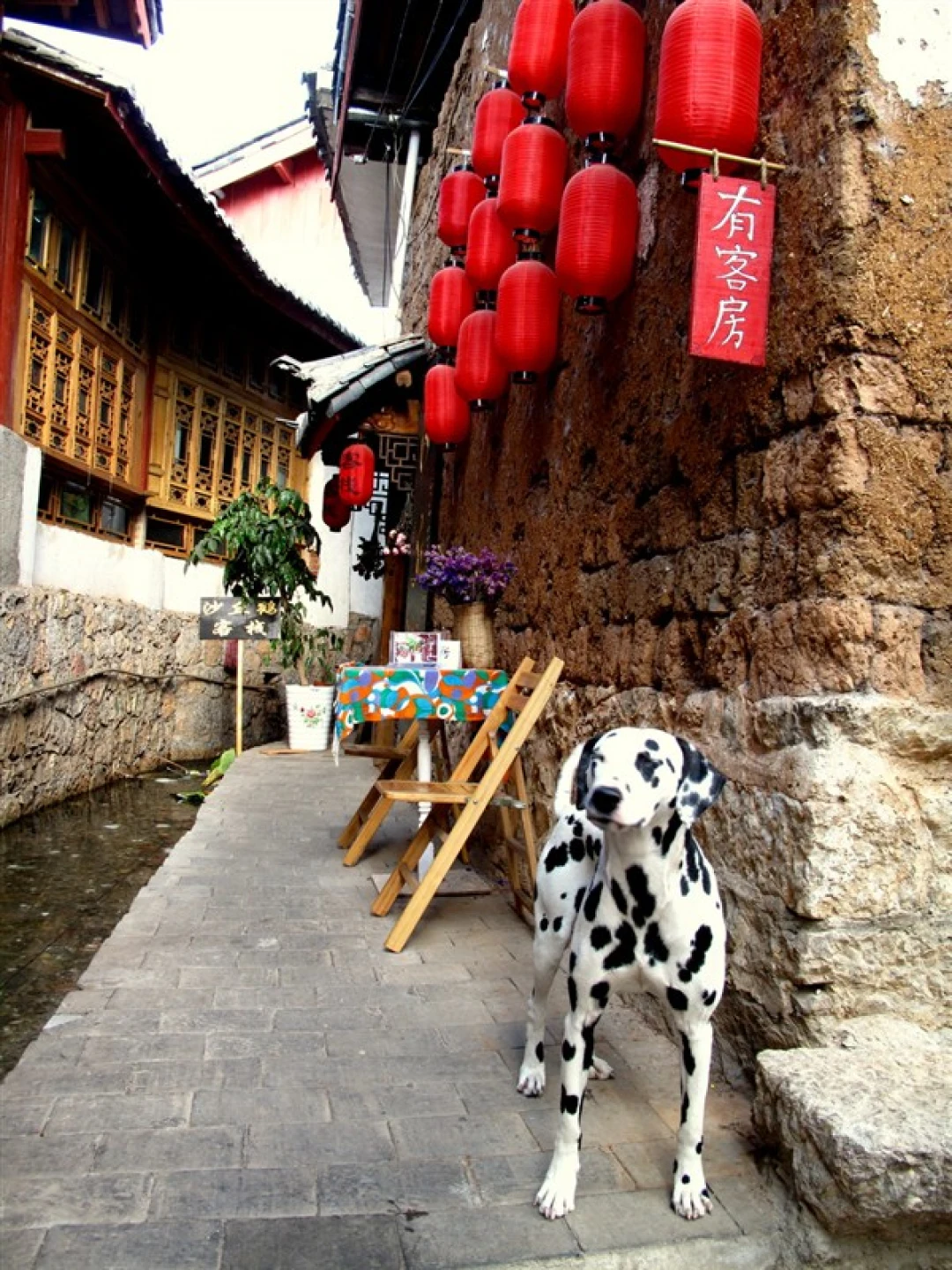
We got lost in the narrow alleys, which is really the only way to explore Lijiang. Every turn revealed a new courtyard, a hidden café, or a shop selling hand-painted fans. The Naxi people have lived here for centuries, and their culture is woven into every stone and wooden beam.
Practical Tips: - The old town is free to enter, but some attractions like the Mu Palace charge an entry fee. - Avoid the main tourist streets; explore the quieter alleys near the northern edge. - Try the local Naxi cuisine, such as 腊排骨火锅 (smoked pork rib hotpot).
Jade Dragon Snow Mountain: A White Giant
On our last day, we took a cable car up to the Jade Dragon Snow Mountain. The ride was dizzying—the ground fell away, and the peaks rose up to meet us. At the top, at over 4,500 meters above sea level, the air was thin and cold.
The snow-covered peaks stretched out in every direction, and the glaciers glittered like diamonds. We stood there, shivering and breathless, and felt incredibly small. It was a fitting end to our journey—a reminder that nature is the greatest artist of all.
Practical Tips: - Book your cable car tickets in advance; they sell out quickly. - Bring warm clothes and oxygen canisters; altitude sickness is common. - The best time to visit is early morning, when the snow is brightest.
Epilogue: The Road Home
Twenty-three days. Over 1,300 kilometers. Countless memories.
As we drove back to Kunming, the landscape slowly changed from mountains to plains. The terraces gave way to flat farmland, and the mist cleared to reveal a blue sky. We were tired, but happy—the kind of tired that comes from a journey well spent.
Yunnan had given us everything we asked for and more. It had shown us the smoke of daily life in its villages and the poetry of wind and moon in its mountains. It had taught us that beauty is not something you conquer, but something you let wash over you.
And as the sun set on our last day, I knew we would be back. Because Yunnan is not a place you visit once. It's a place you return to, again and again, like an old friend who always has a new story to tell.
Total Cost Breakdown (per person): - Transportation (rental car, gas, tolls): 4,500 yuan - Accommodation (23 nights): 4,000 yuan - Food and drinks: 3,000 yuan - Attractions and activities: 1,500 yuan - Total: 13,000 yuan
This article was originally published on Mafengwo. Follow us for more travel stories from around the world.
You should also read:
Yunnan Travel Mastery: From Beginner to Pro-Level Player – A Complete Guide
Yunnan Travel Mastery: From Beginner to Pro-Level Player – A Complete Guide "Either travel or read, but your body and soul must be on the road." This quote has been repeated countless times, but very few people truly manage to be "on the road" and…
Continue reading...
Solo in Yunnan: A Wanderer’s Guide to the Land of Eternal Spring
Solo in Yunnan: A Wanderer’s Guide to the Land of Eternal Spring There’s something magical about traveling alone. No compromises, no schedules to keep, no one to please but yourself. I’ve been on the road for nearly three months now, and not once have I…
Continue reading...
Tengchong·Heshun: Finding Life as It Should Be in a Border Town Where Time Stands Still
Tengchong·Heshun: Finding Life as It Should Be in a Border Town Where Time Stands Still The long journey of over twenty days was over. On my first day back at the office, I was still in a daze. My fingers couldn't find the keys on…
Continue reading...