Harmony and Tranquility: A Slow Journey into the Hidden Wonders of Western Yunnan
Harmony and Tranquility: A Slow Journey into the Hidden Wonders of Western Yunnan
Prologue: A Trip Hijacked by Nostalgia
I had originally planned to visit Jiangxi, unlocking a new province on my travel map. I'd drafted several itineraries and checked flight prices multiple times. Then one evening, the TV was playing Meet Yourself, and those lazy pastoral scenes struck a chord deep within me. I'd been to Yunnan over twenty years ago, but this time I decided to take a different path—not Dali, but Tengchong.
The October holiday had just ended, and it was the off-season. This trip was decidedly "impulsive": I only booked my round-trip flights, the first night's guesthouse, and travel insurance before setting off. Call it a spur-of-the-moment decision, but I'd actually done my homework—I just hadn't pressed "pay." This way, I could adjust flexibly based on real-time conditions. As it turned out, this was a wise choice. We ran into two consecutive days of rain, but thanks to thorough preparation, we adjusted our schedule smoothly with minimal impact.
Heshun Ancient Town: A Living Ming and Qing Dynasty Museum
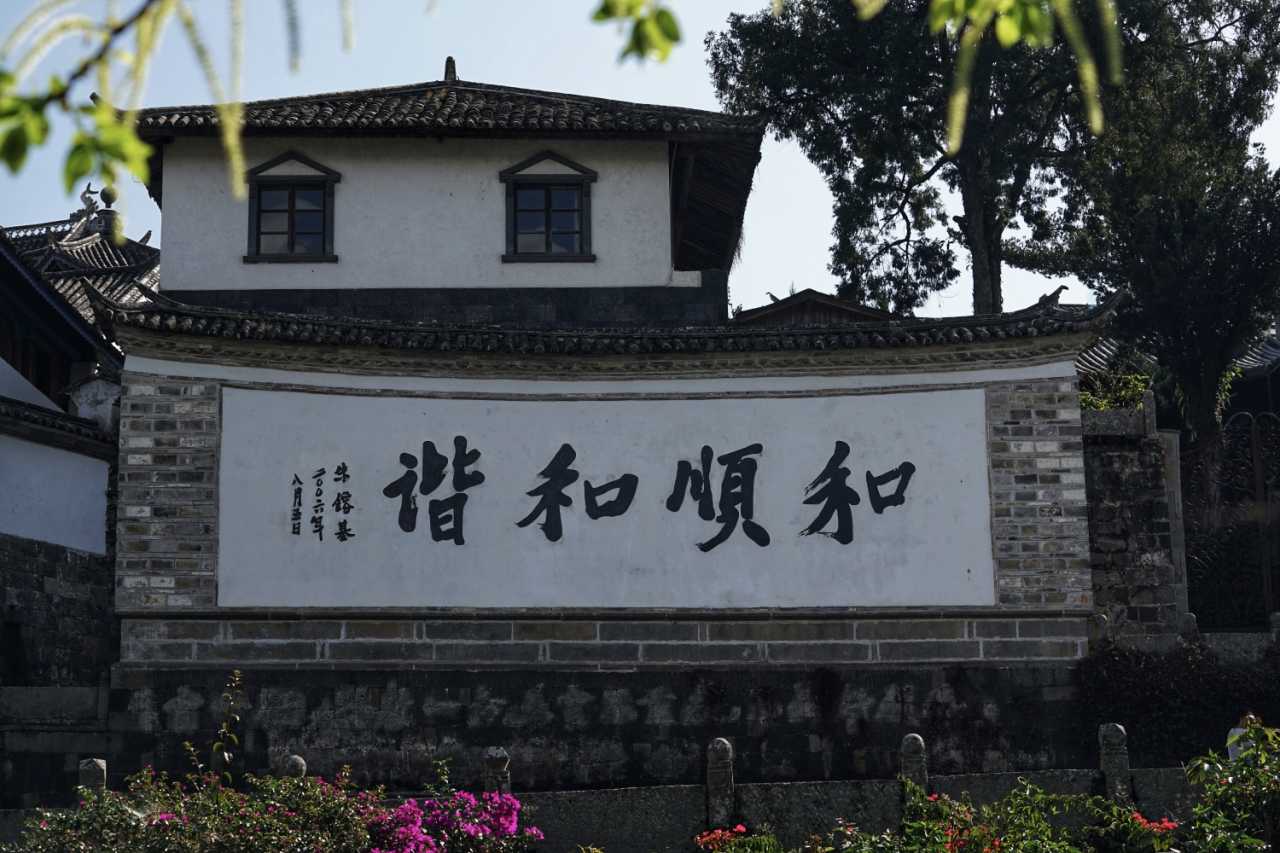
The Meaning Behind "Harmony and Civility"
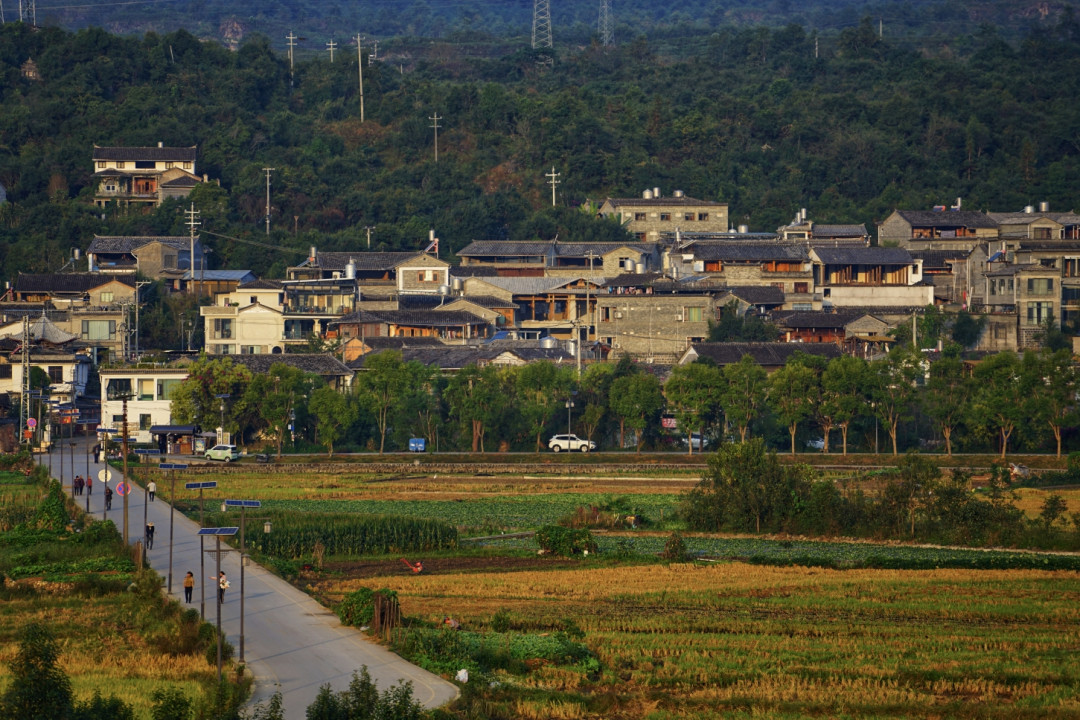
Heshun Ancient Town lies 4 kilometers west of Tengchong city center, earning it the title "The First Town at the Frontier." With an average annual temperature of around 22°C, it's an ideal summer retreat. The town was first built during the Ming Dynasty and originally called "Heshun" (River Harmony) because a small stream wound around the village. Later, scholars and literati changed the name to "Heshun," drawing from the phrase "士和民顺" (scholars are harmonious, and the people are compliant), meaning harmony and civility. Another theory suggests the name originates from a poetic line—"Clouds surge with auspiciousness, winds blow with harmony"—reflecting the locals' aspirations for a good life.
Heshun is a famous hometown of overseas Chinese in Yunnan, a key stop on the Ancient Tea Horse Road, and a必经之地 (must-pass point) on the Southwest Silk Road. The town is built along a hillside, rising gradually from east to west, stretching two to three kilometers. Ming and Qing dynasty ancestral halls, memorial archways, and ancient residences are scattered throughout. In front of the town lies a vast expanse of fields, with clear streams winding around the village and willows brushing the banks—a harmonious pastoral scene.
The Unique Charm of a Pure Han Chinese Ancient Town
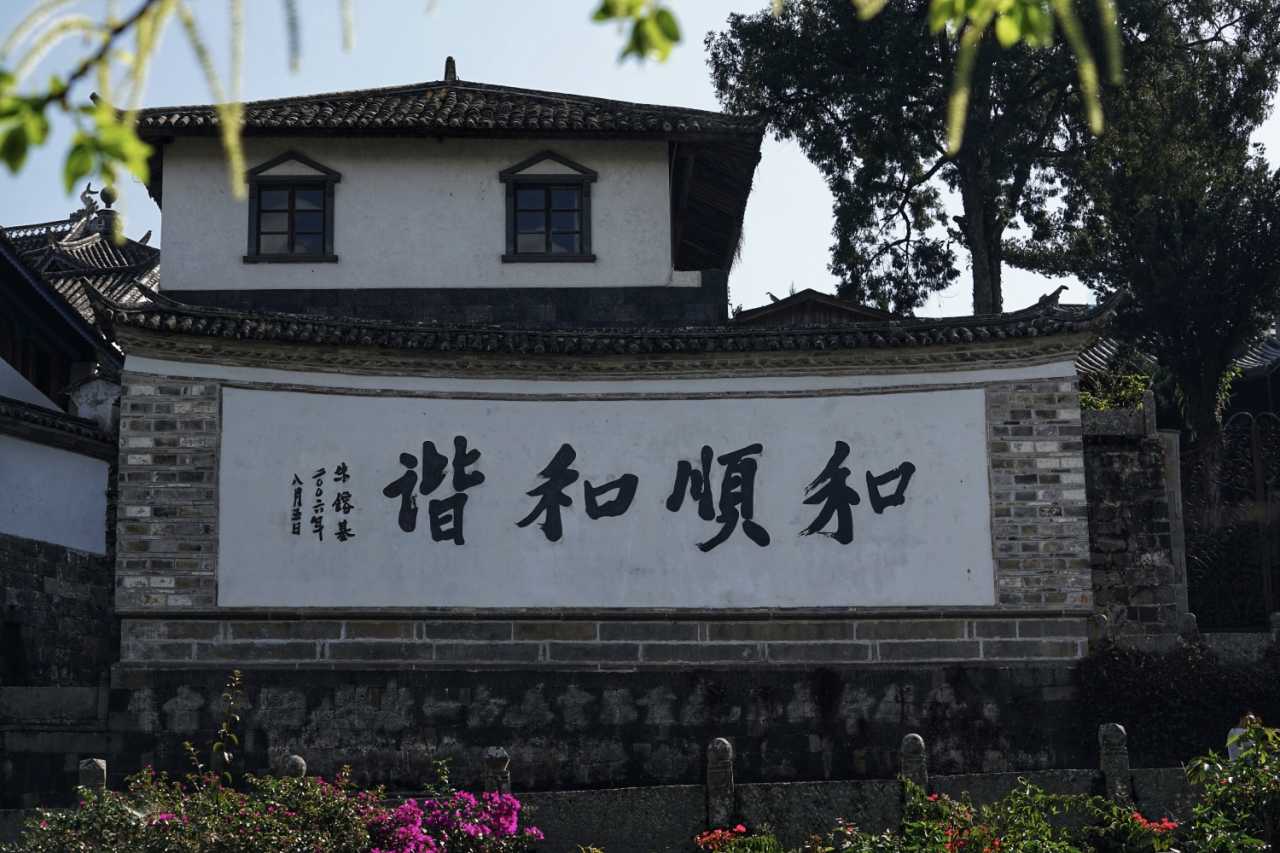
As a border city, Tengchong preserves many ancient villages. Yunnan is a province rich in ethnic diversity, but Heshun is a pure Han Chinese ancient town. Its closed, traditional, and stable environment has allowed the complete preservation of Ming and Qing Han culture, earning it the nickname "Living Fossil of Ancient Chinese Architecture."
Although the town now has guesthouses under development, it remains quiet and peaceful. Unlike Dali or Lijiang—bustling and lively, with noisy bars—Heshun has only one or two quiet pubs. If you love tranquility, Heshun is your place. It retains the authentic atmosphere of a town: the most common establishments are guesthouses, followed by jade shops, and then cafés.
Six Hundred Years of Family Heritage
The earliest residents of Heshun were soldiers sent to Yunnan during the Ming Dynasty to fight and guard the border, along with their families. According to the Ming History: Annals of Emperor Taizu, in the 15th year of the Hongwu era (1382 AD), generals Lan Yu and Mu Ying captured Dali and then dispatched troops to Heqing, Lijiang, and Jinchi (present-day Tengchong). To protect the frontier, soldiers from Sichuan, Hunan, Jiangsu, and Jiangxi traveled thousands of miles to Heshun for military garrison duty.
The Ming Dynasty implemented a military garrison system: "Three parts for drills, seven parts for farming." Each soldier was a household, known as a "military household," allowed to bring family and inherit the position for generations. Starting from the Hongwu era, ten major clans—Cun, Liu, Li, Yin, Jia, Zhang, Yang, Chuan, Xu, and Zhao—settled here one after another. Central Plains Han culture took root and flourished, passed down to this day. For six hundred years, these great families have coexisted harmoniously, and the village still preserves ancestral halls for eight of them.
Architecture: A Timeless Mashup
Heshun's residents came from different regions, and its overseas Chinese are spread across more than ten countries, including Myanmar, India, Thailand, Indonesia, Singapore, Japan, Canada, and the United States. As a result, the architecture here displays a variety of styles.
There are over a thousand traditional residences, including more than a hundred from the Qing Dynasty. The entire building complex faces south, stretching two to three kilometers from east to west. With open fields in front and hills behind, it seems there was no grand plan—those who arrived first built at the foot of the slope, while later arrivals had to build higher up. There are two relatively orderly horizontal roads, but the vertical alleys are like a maze, winding and hidden, often confusing strangers.
In 2005, when Cui Yongyuan represented Heshun at the "China's Charming Ancient Towns" awards ceremony, he commented: "It's a bit chaotic—there are Huizhou-style buildings, Jiangnan water town styles, European styles, and Chinese-Western fusion. The architecture hasn't been updated much; it's still preserved exactly as it was."
Washing Pavilions and Zhongtian Temple
In the tranquil Heshun countryside, a gentle stream encircles the village. Every so often, a small pavilion stands by the water—these are washing pavilions where locals clean clothes and vegetables. With upturned eaves and open sides, they sit above the water. Beneath the pavilion, stone slabs form a well-like structure, with benches nearby for resting.
Zhongtian Temple lies at the foot of the southwest mountain behind Heshun. Built in the 8th year of the Ming Chongzhen era (1635 AD), it enjoys a commanding position, surrounded by greenery, with exquisite halls and spectacular views. As the highest point in Heshun, the temple has a terrace offering a bird's-eye view of the entire town. Dusk is the most beautiful time in Heshun.
Heshun Library: China's Top Rural Library
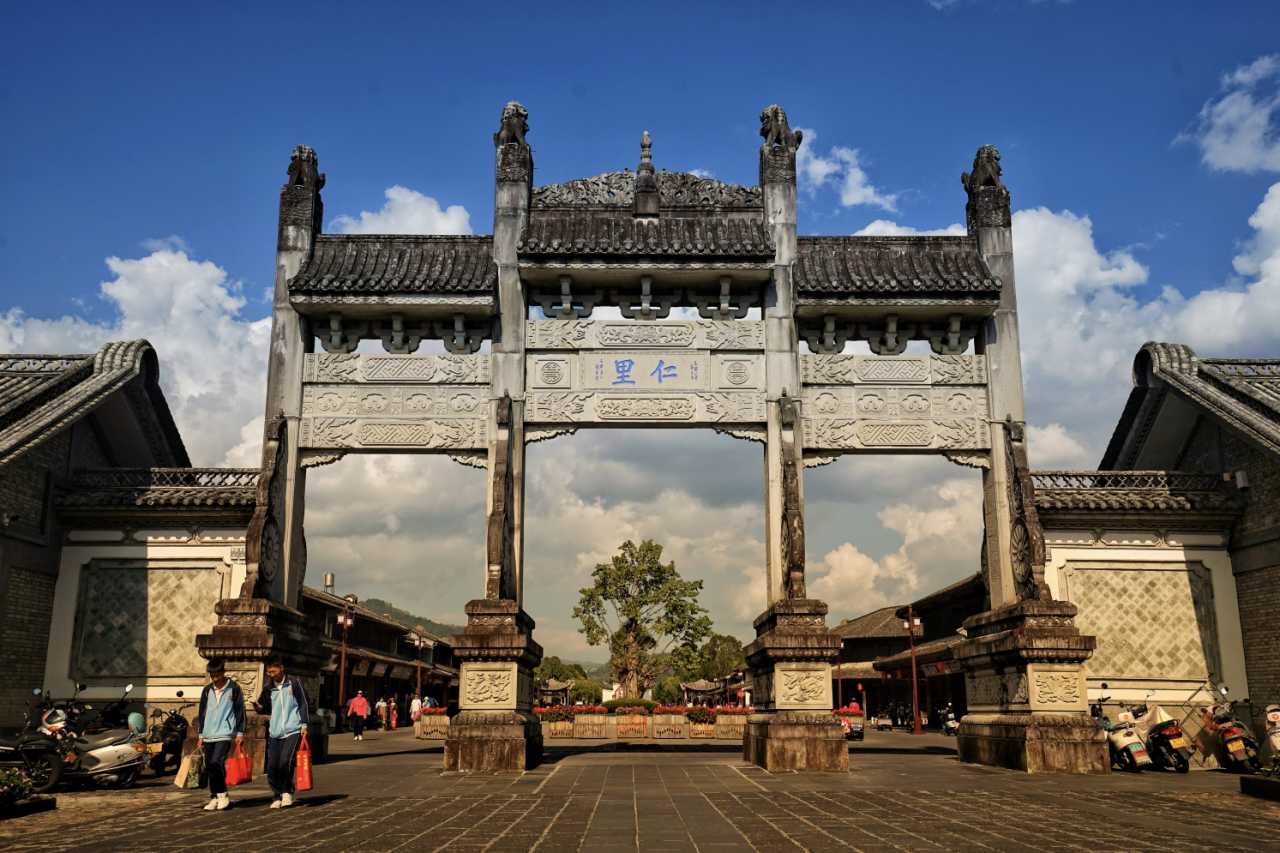
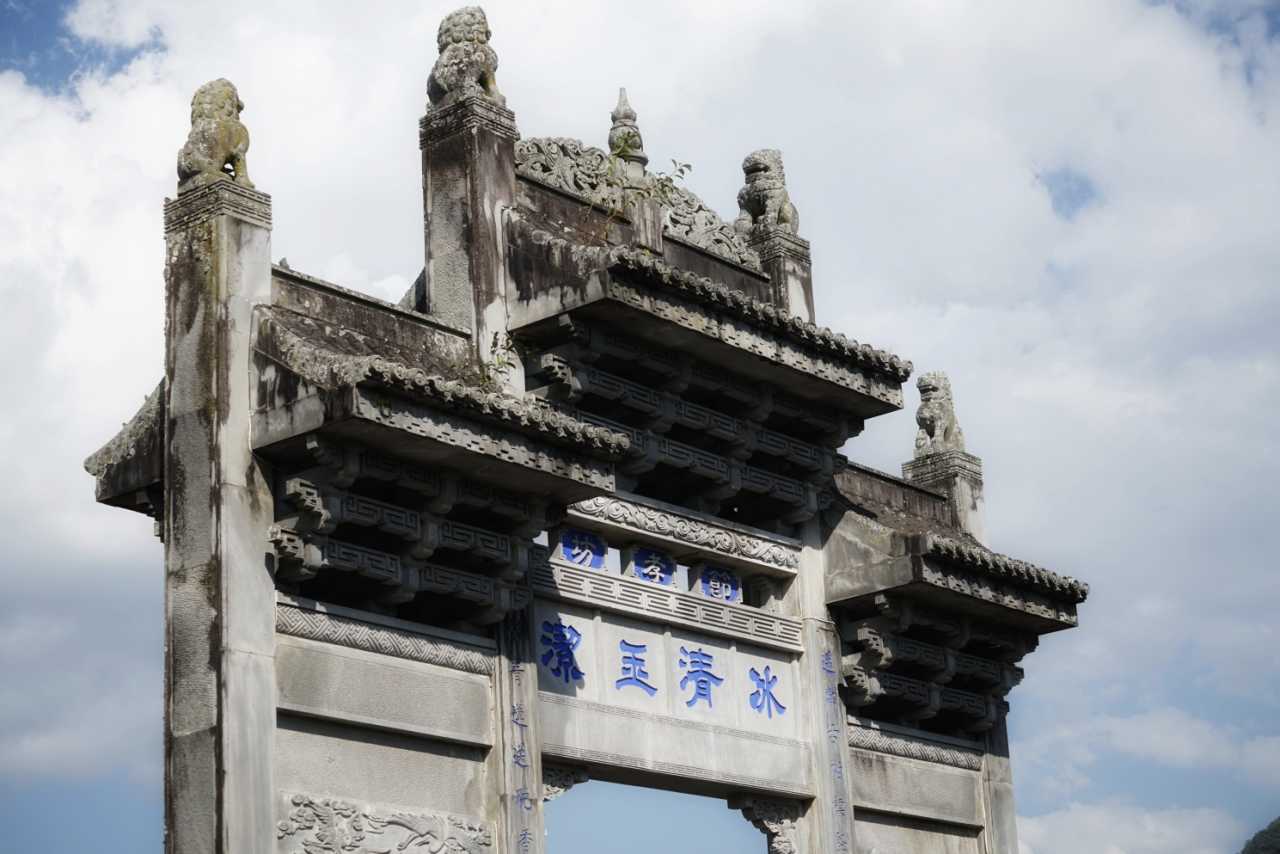
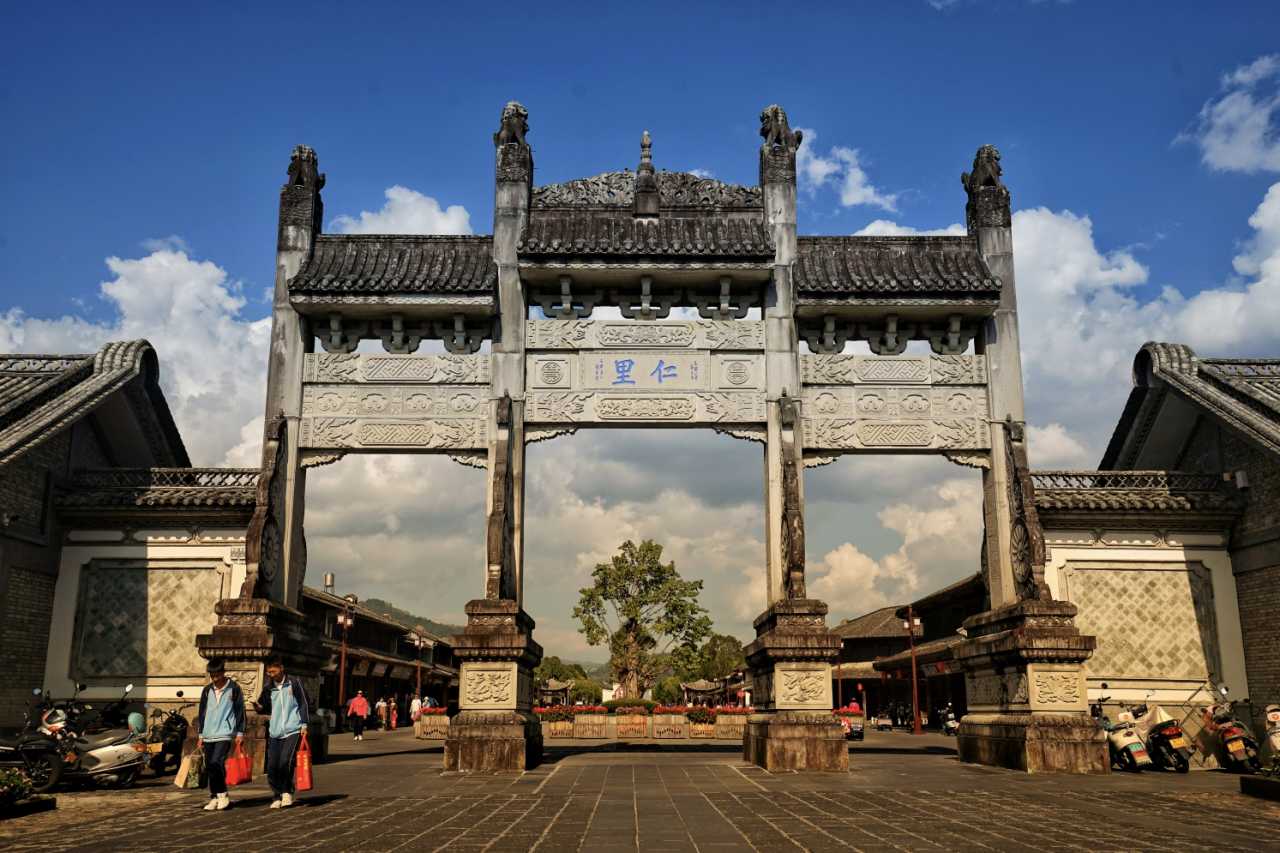
Anyone who visits Heshun is astonished to find a library of this scale in an ancient town. The library sits on a hillside not far from the town's main gate. After passing through the memorial archway and the Double Rainbow Bridge, it's the first thing you see. In front is a small square, with a giant banyan tree on a half-moon platform. Above a high flight of steps lies a cluster of classical Chinese-style buildings—white walls, black tiles, red lacquer doors, and two large red lanterns hanging beneath the door lintel. Above the door hangs a plaque inscribed "Heshun Library" by Zhang Li, a Qing Dynasty scholar from Heshun, in striking white characters on a blue background.
This 96-year-old library was funded by local overseas Chinese to revitalize rural culture and education. Its predecessor was the "Xianxin Society," organized by Tongmenghui member Cun Fuqing, and the "Reading and Book Club" established in 1924. Through donations from overseas Chinese and locals, it was expanded into a library in 1928. The library houses a rich collection of documents, currently holding 130,000 books, including over 10,000 rare ancient texts. Treasures like the Continuation of the Tripitaka and Imperial Wuying Palace Series, along with numerous ancient manuscripts and celebrity manuscripts, are preserved here. In terms of history and collection size, it's truly China's top rural library.
Though it looks like a tourist attraction, it still lends books, carries daily newspapers, and staff report for work as usual. In this border town with a population of just over 7,000, Heshun Library has issued more than 3,000 library cards—a vivid testament to the belief that "wealth may not last three generations, but the fragrance of books can endure for centuries."
Ai Siqi Memorial Hall and Wenchang Palace
Wenchang Palace, built during the Daoguang era of the Qing Dynasty, is the cradle of Heshun's culture, dedicated to the God of Literature (Wenchang Star). Together with the library next door—separated only by a wall—they form a perfect pair.
Among Heshun's residents, none is more celebrated than Ai Siqi, the renowned Chinese philosopher. His memorial hall is a Chinese-Western fusion courtyard house built of brick and wood, facing the Yuanlong Deep Pool in front and backed by Fengshan Mountain, surrounded by beautiful scenery. In the courtyard stands a statue of the philosopher.
A Taste of Heshun
Copper Pot Beef Hotpot
Tengchong's copper pot beef hotpot originates from Bao Mountain's Golden Rooster Township in western Yunnan, with a long history. The handcrafted copper pot is shallow and heats quickly, making the beef more delicious and tender. This dish carries the culinary culture of the Tea Horse Road caravans—as early as the Tang Dynasty, Tengchong's mule caravans traveled the Tea Horse Road between Yunnan and Tibet, developing a unique caravan food culture, with copper pot beef being one of its highlights.
Century-Old Food Street: A Slice of Life
The morning market at Cross Street, also known as the "Century-Old Food Street," is the liveliest spot in the ancient town. Though small, it's the soul of Heshun. Breakfast snacks abound: freshly baked flatbreads and rice cakes (erkuai). There are also seasonal fruits, spices, seasonings, mushrooms, and the freshest meats and vegetables.
Someone once said: "Heshun's alleys—gathered, they are the烟火 (hustle and bustle of daily life); spread out, they are the world." Looking around, the alleys are filled with bustling crowds. A handful of homegrown vegetables, a steaming bowl of rice noodle soup (ersi)—these unique flavors attract visitors from far and wide. Many villagers sell pine flower cakes on the roadside; I bought one to try, and the red bean filling was quite good. The century-old "Aunt Yang" breakfast shop serves a classic combo: pea flour porridge (xidoufen) with fried dough sticks. A bowl of that warms you right up.
Rehai (Hot Sea): The Earth's Boiling Marvel
Tengchong's Rehai Scenic Area is a national-level scenic spot and the most concentrated, richest geothermal area in the region. Streams of hot steam coil around the mountainside, turning the entire range into a steaming, vibrant place. The hot springs here contain sulfur—the strong smell of rotten eggs hits you as soon as you enter.
Our hired driver helped us buy a combo ticket (248 yuan per person, including Rehai entry, hot spring experience, rice noodle soup, and Volcano Geothermal Park entry). When we scanned the QR code at the gate, the screen showed "Group of Two"—the legendary two-person tour group.
Hot Spring Experience
The combo ticket includes one hot spring session, with two options: the Beauty Pool halfway up the mountain and the Bath Palace at the summit. Tour groups are usually led to the top to see the Big Boiling Pot and then to the Bath Palace for a soak (reportedly with a one-hour limit from the guide). So we chose the Beauty Pool—no tour groups, very quiet, and a great experience.
Remember to hydrate while soaking. There's also a local specialty: cupping therapy using bamboo tubes. Deep mountain bamboo from the Gaoligong Mountains is carved into tubes, soaked in 80°C+ hot spring water, and then, using the principle of thermal expansion and contraction, applied to acupoints and meridians on the body. This helps unblock meridians, warm the channels, dispel cold, and relieve fatigue. Each area costs 40 yuan (back or waist). Following the "since we're here" principle, I opted for both back and waist—80 yuan total.
The Big Boiling Pot
The most famous feature in Rehai is the Big Boiling Pot. Shaped like a Bagua (eight trigrams) symbol, it resembles a giant boiling cauldron, with water temperatures reaching 102°C. Approaching the Big Boiling Pot, you can feel the heat radiating through your shoes. The emerald water churns violently, leaping a foot into the air, creating massive splashes. Locals use the steam to cook food—corn, eggs, peanuts. Raw eggs are cooked in just five minutes. The steamer lid is a giant straw hat, confirming one of the "Eighteen Oddities of Yunnan": "Take off your straw hat and use it as a pot lid."
Simola Wa Village: A Place of Happiness
Simola, meaning "a place of happiness" in the Wa language, is a Wa ethnic village with over 500 years of history. Built along a hillside, the village features wetlands, forests, bamboo groves, terraced fields, and springs, exuding the primal atmosphere of the ancient Wa mountains. In the past, only crops were grown here, with low incomes. The government encouraged villagers to plant cash crops like walnut trees and tree tomatoes, helping them develop tourism.

Walking down the mountain path, you arrive at the Seven Springs and the Tree God Worship Platform. The Seven Springs, located in a grove of ancient trees at the village entrance, are formed by seven springs converging. Each spring represents one of the village's seven surnames, symbolizing the Wa people's unity and shared pursuit of a better life.
On January 19, 2020, after a visit from General Secretary Xi Jinping, the Wa people worked even harder to build their homeland, turning Simola into a new model village for poverty alleviation and prosperity. Today, it has become a well-known internet-famous spot in Tengchong.
Volcano Geothermal Park: The Scar of Dakong Mountain
Tengchong's geology is dominated by volcanoes, geothermal activity, and earthquake formations. The Volcano Geothermal Park contains the youngest Cenozoic active volcanic group, including 97 volcanoes, 23 of which have complete craters. Dakong Mountain, at 2,080 meters above sea level, is a flat-topped conical volcano. Walking on it, if you step heavily, you can hear a hollow echo.
The stone steps up the mountain number 597, and down, 598—a play on the Chinese saying "seven up, eight down," implying an unsettled journey. After assessing our stamina, we chose to ride horses up the mountain, negotiating the price to 80 yuan. Dakong Mountain is 100 meters high, with a crater 200 meters in diameter and 50 meters deep. The crater walls are overgrown with weeds and shrubs, while the outer rim has been worn into paths by visitors, allowing you to circle the crater.
Walking counterclockwise around the crater from where we dismounted, we found many charred tree stumps—a fire broke out here on April 17, 2023, turning the volcano into an "empty mountain." Nearby Xiaokong Mountain was unaffected, still lush and vibrant.
Ginkgo Village and the Western Yunnan Anti-Japanese War Memorial Hall
Ginkgo Village: The Biggest Letdown
From the parking lot to the village entrance, both sides are lined with snack stalls. But once inside the village, it's a different story—shops have fenced off ginkgo trees, swept fallen leaves into piles for tourists to pose with, and set minimum spending requirements. Tour groups swarm around the thousand-year-old ginkgo trees, snapping chaotic photos. Ginkgo Village was the biggest disappointment of the trip.
Western Yunnan Anti-Japanese War Memorial Hall: Remembering History
When in Tengchong, you absolutely cannot miss the Western Yunnan Anti-Japanese War Memorial Hall. It's China's only memorial hall dedicated to the Expeditionary Force, opened on August 15, 2013. Upon entering, a wall of 1,003 steel helmets, riddled with bullet holes, strikes you with overwhelming force—as if telling the brutal story of the Western Yunnan Campaign.
In 1944, the Chinese Expeditionary Force recaptured Tengchong. This was the first time since the Opium War of 1840 that the Chinese people drove an invader out of their homeland. The moment I stepped into the hall, a surge of emotion welled up in my chest. A series of numbers on the floor marks key dates: the Mukden Incident, the Marco Polo Bridge Incident, the construction of the Burma Road, the outbreak of the Pacific War, the fall of western Yunnan, the Chinese Army in India's counteroffensive, the Western Yunnan Expeditionary Force's counteroffensive, the joining of forces, and the victory of the war.
I highly recommend watching the TV series My Chief and My Regiment, which tells the story of the Chinese Expeditionary Force in Tengchong. It has a Douban rating of 9.6.
Practical Tips
Itinerary Planning
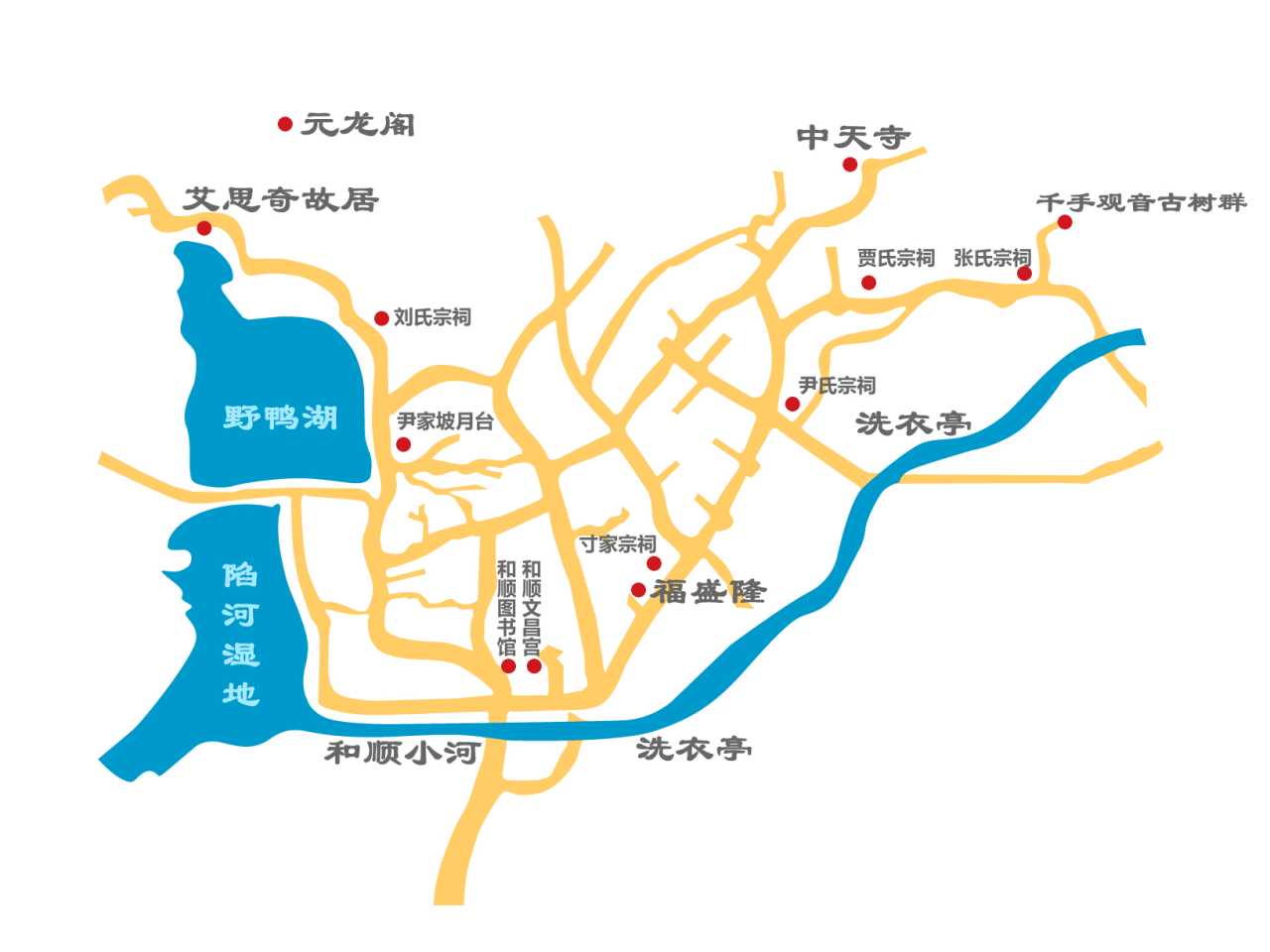
I originally planned to spend two days wandering the ancient town. But since our flight arrived at Tuofeng Airport half an hour early, we had two hours to explore the town on the first evening. Combined with a full day of walking the next day, we hit most of the planned spots. We squeezed out one day for the surrounding area: Rehai and the Wa village on one day, and the Volcano Geothermal Park (hot air balloon) plus Ginkgo Village and the Western Yunnan Anti-Japanese War Memorial Hall on another. Hiring a driver for two days cost 560 yuan (300 yuan per day).
Climate and What to Wear
Tengchong has a subtropical monsoon climate. Winter and spring are sunny and warm; summer and autumn are cool and pleasant. The average annual temperature is 15.4°C, with lows down to -4.2°C and highs up to 31.4°C. Rainfall is concentrated in summer, accounting for 84.3% of the annual total. The ancient town sits at a certain elevation, so it's advisable to bring a jacket.
Food Recommendations
- Copper Pot Beef Hotpot: A must-try
- Pea Flour Porridge (Xidoufen) + Fried Dough Sticks / Rice Noodle Soup (Ersi): Classic breakfast
- Earthen Pot (Tuguozi): A Tengchong culinary tradition passed down for centuries, featuring one soup and six side dishes
- Pine Flower Cake (Songhuagao): A roadside snack
Epilogue: This Is What a Peaceful Life Looks Like
From the washing pavilions of Heshun Ancient Town to the Big Boiling Pot of Rehai, from the Seven Springs of Simola to the charred tree stumps of the volcano crater, the land of Tengchong is both gentle and fierce. It has distilled six hundred years of history into the tranquility of "harmony and civility," while also writing an unyielding chapter with the blood and tears of the Expeditionary Force.
Someone once said: "Heshun's alleys—gathered, they are the hustle and bustle of daily life; spread out, they are the world." For me, every scene in Tengchong is the same: gathered, they are stories; spread out, they are life itself. Here, there is no Dali's clamor, no Lijiang's glitz—only the truest face of a border town.
If you also yearn for a slow-paced journey, come to Tengchong. Here, you'll discover—this is what a peaceful life looks like.
You should also read:
A Journey Through Time: The Earthen Forest of Yuanmou — April 2011 Chuxiong & Yuanmou Self-Drive Guide
A Journey Through Time: The Earthen Forest of Yuanmou — April 2011 Chuxiong & Yuanmou Self-Drive Guide Some journeys are destined to take root in your memory. In April 2011, I set out from Shuhe in Yunnan, heading north toward the Chuxiong Yi Autonomous Prefecture,…
Continue reading...
September: Finding Unexpected Warmth in Yunnan (Kunming, Dali, Shuanglang, Lijiang, Lugu Lake)
September: Finding Unexpected Warmth in Yunnan (Kunming, Dali, Shuanglang, Lijiang, Lugu Lake) Foreword: One Person's Journey, A Crowd's Story Before I set off, like every first-time solo traveler, I printed out a thick stack of travel guides and rehearsed countless possible scenarios in my head—getting…
Continue reading...
A 9-Day Yunnan Journey: From Lijiang to Dali to Tengchong – A Trip Toward Self-Reconciliation
A 9-Day Yunnan Journey: From Lijiang to Dali to Tengchong – A Trip Toward Self-Reconciliation Some say travel is simply going from a place you're tired of to a place other people are tired of. It stings to hear, but it's painfully true. Yet there's…
Continue reading...